Soy Allergy Symptoms, Signs, and When to Act in 2026
Soy allergy symptoms range from mild skin itching and stomach cramping to severe, life-threatening anaphylaxis, and every person’s reaction pattern depends on which soy proteins triggered their immune response and which body systems those proteins reached. Recognizing the difference between a mild reaction you can manage at home and a systemic response that requires emergency care is the most important practical skill anyone with a soy allergy can have.
According to Food Allergy Research and Education (FARE), soy is one of the nine major food allergens recognized under U.S. federal law, affecting an estimated 0.4% of children and a growing proportion of adults. The American Academy of Allergy Asthma and Immunology (AAAAI) notes that soy allergy is among the most complex food allergies to characterize because the same legume produces reactions through at least three distinct immunological mechanisms, each with a different symptom pattern, onset timing, and clinical management approach.
This article covers the full clinical spectrum of soy allergy, from the first skin signs through systemic anaphylaxis, addresses how symptoms differ by age, biological sex, and pre-existing condition, explains the difference between soy allergy and soy intolerance, and gives you specific, clinical guidance on when to call 911, when to see an allergist, and what to tell your doctor at your first appointment.
Soy Allergy Symptoms: What Your Body Is Actually Reacting To
Soy allergy symptoms occur when the immune system identifies proteins in soy as foreign threats and triggers a defensive response that affects the skin, gut, airways, and cardiovascular system simultaneously or in sequence.
Soy contains hundreds of proteins, but the clinical research identifies a specific family called the Gly m proteins as the primary drivers of allergic reactions. According to a 2019 review published in the Journal of Allergy and Clinical Immunology, Gly m 5 (beta-conglycinin) and Gly m 6 (glycinin) are storage proteins that are heat-stable, meaning they survive cooking and processing, and are associated with the more severe, systemic reactions. Gly m 4, by contrast, is a Bet v 1 homolog, structurally similar to the major birch pollen allergen, and is responsible for most of the milder mouth-and-throat symptoms seen in birch-sensitive adults.
Understanding which protein is driving your reaction matters clinically. If your symptoms are limited to mild mouth tingling after raw soy, your immune system may be responding primarily to Gly m 4. If you develop hives, vomiting, and difficulty breathing, Gly m 5 and Gly m 6 are almost certainly involved, and your reaction profile is more serious.
Here is a summary of how the major Gly m proteins map to symptom patterns:
| Gly m Protein | Heat Stability | Reaction Severity | Typical Symptom Pattern |
|---|---|---|---|
| Gly m 4 | Low (denatured by cooking) | Mild to moderate | Mouth/throat tingling, oral itching |
| Gly m 5 | High (survives processing) | Moderate to severe | Hives, GI distress, systemic reactions |
| Gly m 6 | High (survives processing) | Moderate to severe | Systemic reactions, anaphylaxis risk |
| Gly m 1 (hull) | Variable | Mild | Occupational asthma, contact dermatitis |
What Is a Soy Allergy and How Does It Work
A soy allergy is an IgE-mediated type I hypersensitivity reaction in which the immune system produces immunoglobulin E (IgE) antibodies specifically targeted at soy proteins, causing mast cells and basophils to release inflammatory mediators when soy is consumed again.
The process begins during an initial exposure when antigen-presenting cells in the gut-associated lymphoid tissue process soy protein fragments and present them to naive T lymphocytes. Th2 cytokines, particularly interleukin-4 (IL-4) and interleukin-13 (IL-13), instruct B lymphocytes to produce soy-specific IgE antibodies. These antibodies bind to high-affinity IgE receptors (FcεRI) on the surface of mast cells throughout the body’s mucosal surfaces and skin.
On a subsequent soy exposure, soy proteins cross-link two adjacent IgE-FcεRI complexes on the mast cell surface. This cross-linking is the trigger. Within seconds to minutes, the mast cell degranulates, releasing histamine (causing vasodilation, itch, and mucus secretion), tryptase (a serine protease that serves as a diagnostic marker), leukotriene C4 (causing prolonged bronchial smooth muscle contraction), and prostaglandin D2 (causing vasodilation and platelet effects).
Think of mast cells as pre-loaded defensive grenades stationed throughout your skin, gut lining, and airways. The first soy exposure pins the IgE on them. The second exposure pulls the pin. The explosion happens in whichever tissues have the highest concentration of loaded mast cells, which explains why one person’s soy allergy shows up mainly in their skin and another person’s shows up mainly in their airways.
Not all soy reactions are IgE-mediated. Some are driven by T-cell-mediated delayed hypersensitivity or by non-immune gastrointestinal mechanisms, which produce entirely different symptom patterns covered in later sections.
Soy Allergy Skin Symptoms
Skin reactions are among the most recognizable soy allergy symptoms, typically appearing within minutes to 2 hours of soy ingestion as urticaria (hives), angioedema, or a flare of pre-existing atopic dermatitis (eczema).
Urticaria from soy allergy presents as raised, red, intensely itchy welts that can appear anywhere on the body. Individual hive lesions typically resolve within 24 hours, but new ones may continue to form as long as histamine is being released. The mechanism is histamine acting on H1 receptors in cutaneous blood vessels, causing localized vasodilation and increased vascular permeability, which forces plasma proteins and fluid into the dermis.
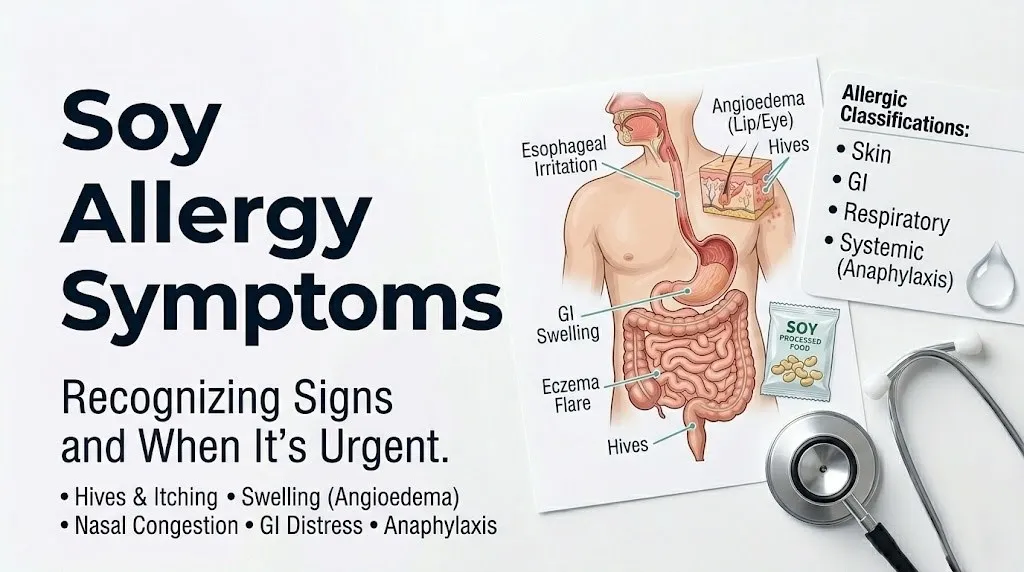
Angioedema is a deeper version of the same process, occurring in the subcutaneous and submucosal tissue rather than in the superficial dermis. It produces swelling of the lips, eyelids, tongue, throat, or hands, often without the characteristic itch of urticaria. Angioedema of the tongue or throat can compress the airway and represents a medical emergency.
In people with atopic dermatitis, soy exposure can trigger or worsen eczema flares through a process involving Th2-skewed immune activation and elevated IL-4 and IL-13 signaling, which disrupts the skin’s filaggrin-dependent barrier function. A 2020 study published in the Journal of Allergy and Clinical Immunology found that children with atopic dermatitis and a food allergy sensitization pattern, including soy, had measurably higher trans-epidermal water loss, indicating greater barrier dysfunction during allergic exposure.
People with darker skin tones may not see the classic red appearance of hives, but will feel the intense itch and raised texture. Clinicians should assess by palpation and patient-reported sensation, not by color change alone.
Key skin symptoms to tell your allergist about:
- Hives appearing within 2 hours of soy ingestion, especially if they spread rapidly
- Swelling of the lips, tongue, or around the eyes
- Eczema that consistently worsens 12 to 48 hours after soy consumption
- Contact dermatitis or redness at the site of skin contact with soy-containing products
Soy Allergy Digestive Symptoms
Digestive symptoms are among the most common soy allergy symptoms reported in clinical practice, affecting the esophagus, stomach, small intestine, and colon through a combination of mast cell degranulation in the gastrointestinal mucosa and disruption of the enteric nervous system.
When soy proteins reach the gastrointestinal tract, mucosal mast cells lining the gut wall respond by releasing histamine and other mediators directly into the intestinal submucosa. Histamine acts on smooth muscle cells throughout the gut, increasing motility and causing cramping. It also acts on secretory cells to increase fluid secretion into the intestinal lumen, producing the loose stools or diarrhea that many people experience. Serotonin released from enterochromaffin cells in the gut lining further accelerates intestinal transit and triggers nausea.
Common GI symptoms of a soy allergy include:
- Nausea, beginning within 30 to 90 minutes of soy ingestion
- Abdominal cramping and pain, often located in the periumbilical region or lower abdomen
- Vomiting, which may be repetitive in moderate to severe reactions
- Diarrhea, often watery, occurring within 1 to 3 hours
- Bloating and increased gas production
Older adults with soy allergy may experience more pronounced GI symptoms and less obvious skin symptoms compared to younger adults, because histamine receptor density shifts with age and the baseline inflammatory tone of the aging gut lining affects how mucosal mast cells respond. A primary care physician should evaluate persistent GI symptoms in older adults before attributing them to food allergy, as the differential diagnosis includes inflammatory bowel disease, celiac disease, and colorectal malignancy.
The American College of Allergy, Asthma and Immunology states that gastrointestinal symptoms appearing alone, without skin or respiratory involvement, may represent either mild IgE-mediated allergy, non-IgE-mediated hypersensitivity, or food intolerance, and that clinical testing is the only reliable way to distinguish these.
Soy Allergy Respiratory Symptoms
Respiratory symptoms from soy allergy occur when histamine and leukotriene C4 act on the bronchial smooth muscle, nasal mucosal vasculature, and laryngeal tissue, producing a spectrum from mild nasal congestion to severe airway obstruction.
Nasal symptoms include congestion, runny nose, sneezing, and itching of the nasal passages, driven primarily by histamine acting on H1 receptors in the nasal mucosal vasculature. This causes local vasodilation, increased mucus secretion from goblet cells, and stimulation of sensory nerve endings that trigger sneezing. These symptoms typically appear within minutes of exposure.
Lower respiratory symptoms are more serious and occur when leukotriene C4 and prostaglandin D2 act on bronchial smooth muscle, causing sustained contraction that narrows the lower airways. The result is wheezing, chest tightness, and shortness of breath. In people with pre-existing asthma, soy exposure can trigger a severe asthma exacerbation because the baseline airway inflammation means the allergic response travels farther down the severity spectrum faster.
A 2021 study published in the Annals of Allergy, Asthma and Immunology found that approximately 30% of children with soy allergy who also had physician-diagnosed asthma experienced respiratory symptoms during soy-related allergic reactions, compared with approximately 11% of soy-allergic children without asthma. This nearly threefold difference is a critical reason why people with both conditions need a documented anaphylaxis action plan from a board-certified allergist/immunologist.
Respiratory symptoms to report immediately to a provider:
- Wheezing or audible breathing during or after soy consumption
- Chest tightness or a sensation of pressure across the chest
- Hoarseness or voice change (suggests laryngeal involvement)
- Stridor (a high-pitched, squeaky sound during breathing, suggesting upper airway narrowing)
Key Takeaway: Soy allergy skin, GI, and respiratory symptoms are all driven by the same mast cell degranulation cascade, but the specific mediator that dominates, whether histamine for skin and nose or leukotriene C4 for airways, determines which organ system is hit hardest in each person.
Mild Soy Allergy Symptoms
Mild soy allergy symptoms are those involving a single organ system without any signs of cardiovascular compromise, respiratory distress, or progressive spread to multiple body systems simultaneously.
The most common mild presentation is a cluster of symptoms limited to the skin (a few isolated hives, mild lip tingling) or the gastrointestinal tract (mild nausea, brief cramping, soft stools) without any involvement of the airways or blood pressure. These reactions typically begin within 30 minutes to 2 hours of soy ingestion and resolve within a few hours without treatment, or respond to an oral antihistamine such as cetirizine or loratadine within 1 to 2 hours.
| Symptom | Typical Onset | Typical Duration | Self-Management |
|---|---|---|---|
| Isolated hives, limited area | 15 to 60 min | 1 to 4 hours | Oral antihistamine (if diagnosed) |
| Lip or mouth tingling | 5 to 20 min | 30 to 60 min | Removal of trigger food |
| Mild nausea | 30 to 90 min | 1 to 3 hours | Rest, hydration |
| Mild abdominal cramping | 30 to 120 min | 1 to 4 hours | Monitor for worsening |
| Runny nose, sneezing | 15 to 45 min | 1 to 3 hours | Oral antihistamine (if diagnosed) |
An important clinical point: mild symptoms do not predict future mild reactions. The National Institute of Allergy and Infectious Diseases (NIAID) notes that previous mild reactions to a food allergen do not reliably predict the severity of subsequent reactions. A person who experienced only hives on first exposure can develop anaphylaxis on a later exposure, particularly if the dose of allergen consumed is higher, if they have recently exercised (exercise amplifies mast cell reactivity), or if their baseline atopic condition has worsened.
Children with mild soy allergy symptoms should have their reactions documented and reviewed by a pediatric allergist, who can assess whether the clinical profile warrants prescription of an epinephrine auto-injector as a precaution.
Severe Soy Allergy Symptoms and Anaphylaxis
Severe soy allergy symptoms involve anaphylaxis, a life-threatening, multi-system allergic reaction in which simultaneous mast cell and basophil degranulation throughout the body produces cardiovascular collapse, airway obstruction, or both within minutes.
Anaphylaxis is clinically defined by the rapid development of symptoms involving two or more organ systems simultaneously, or by any symptom of cardiovascular or severe respiratory compromise regardless of whether other systems are involved. According to the AAAAI clinical practice parameters, anaphylaxis is most commonly diagnosed when the following pattern occurs after allergen exposure: skin symptoms (hives, flushing, angioedema) plus at least one of the following: respiratory compromise (bronchospasm, stridor, hypoxia), cardiovascular compromise (hypotension, syncope, tachycardia), or severe gastrointestinal symptoms (vomiting, diarrhea, cramping).
Severe soy allergy symptoms requiring immediate emergency action:
- Throat tightening or a sense that the throat is closing
- Stridor or wheezing developing rapidly after soy ingestion
- A sudden drop in blood pressure (presenting as lightheadedness, dizziness, or fainting)
- Pale, clammy skin or loss of color (indicating circulatory shock)
- Rapid pulse (tachycardia) accompanied by weakness or confusion
- Loss of consciousness
A particularly important risk that most online health content omits is biphasic anaphylaxis: a second wave of severe symptoms occurring 1 to 72 hours after the initial reaction, even without additional allergen exposure. Research published in the Journal of Allergy and Clinical Immunology found that biphasic reactions occur in approximately 4% to 23% of anaphylaxis cases. This is why anyone who has experienced anaphylaxis should be monitored in an emergency department for a minimum of 4 to 6 hours after epinephrine administration, even if they feel fully recovered.
People taking beta-blockers for heart disease or hypertension face a specific danger: these medications blunt the cardiovascular response to epinephrine, meaning the standard epinephrine auto-injector dose may be less effective, and the anaphylaxis may be harder to reverse. A cardiologist and allergist should coordinate care for this population.
Delayed Soy Allergy Symptoms
Delayed soy allergy symptoms typically occur 2 to 48 hours after soy ingestion, driven by mechanisms that do not rely on the immediate IgE-mast cell pathway but instead involve T-cell-mediated immune responses or slower mucosal mast cell recruitment processes.
The most recognized form of delayed soy reaction is a worsening of atopic dermatitis, which can appear 12 to 48 hours after soy exposure in sensitized individuals. This delay occurs because the reaction involves T-helper 2 cell activation and cytokine release, particularly IL-4 and IL-31 (a potent itch-inducing cytokine), which takes hours to produce measurable tissue effects. Parents of children with eczema often describe the pattern as a “two-day delay” between eating soy and a dramatic worsening of skin condition.
Delayed gastrointestinal symptoms can also occur in individuals with eosinophilic esophagitis (EoE) triggered by soy, a condition in which eosinophils accumulate in the esophageal mucosa over days to weeks of repeated soy exposure. Symptoms of soy-triggered EoE include difficulty swallowing, food getting stuck in the throat (dysphagia), heartburn that does not respond to standard acid-suppression medications, and chest pain unrelated to the heart. EoE is not a standard IgE-mediated allergy and does not respond to antihistamines. Diagnosis requires endoscopy with esophageal biopsy showing at least 15 eosinophils per high-power field.
Adolescent males represent a population at elevated risk for EoE. A 2022 analysis published in Clinical Gastroenterology and Hepatology found that EoE affects males at a rate approximately 3 times higher than females, with a peak incidence in adolescence and young adulthood. Soy and milk are among the most common dietary triggers identified through elimination diet studies in EoE patients.
Quick Tip:
- If eczema consistently worsens 1 to 2 days after eating soy products, keep a written food-symptom diary for 2 to 4 weeks and bring it to your appointment with a board-certified allergist/immunologist.
- Difficulty swallowing that is intermittent, occurs with solid foods, and has not been explained by reflux testing warrants an upper GI endoscopy referral through a gastroenterologist.
- Delayed reactions can be the hardest to connect to a food trigger because time elapsed obscures the cause-and-effect relationship.
Key Takeaway: Delayed soy allergy symptoms, including eczema flares 12 to 48 hours post-ingestion and difficulty swallowing from soy-triggered eosinophilic esophagitis, are driven by T-cell-mediated mechanisms, not IgE, and will not respond to antihistamines or show up on standard allergy skin prick tests.
Symptoms of Soy Intolerance in Adults
Symptoms of soy intolerance in adults are gastrointestinal in nature, driven not by an immune response but by the fermentation of soy oligosaccharides (specifically raffinose and stachyose) by bacteria in the colon, producing gas, bloating, cramping, and altered bowel habits.
This is a fundamentally different process from soy allergy. The human small intestine lacks alpha-galactosidase, the enzyme needed to break down the raffinose-family oligosaccharides found abundantly in soybeans. When these oligosaccharides reach the colon undigested, they serve as substrates for colonic bacterial fermentation, producing carbon dioxide, methane, and hydrogen gas. The resulting distension of the colon and stimulation of colonic wall stretch receptors produces bloating, cramping, and the feeling of excessive gas.
Unlike soy allergy symptoms, soy intolerance symptoms do not involve hives, angioedema, anaphylaxis, or any immune activation. They do not put the person at risk of anaphylaxis. They are uncomfortable but not dangerous. They do not require an epinephrine auto-injector. They are dose-dependent, meaning small amounts of soy may be tolerated while larger amounts produce symptoms.
| Feature | Soy Allergy | Soy Intolerance |
|---|---|---|
| Mechanism | IgE-mediated immune response | Colonic fermentation of oligosaccharides |
| Onset after ingestion | Minutes to 2 hours | 1 to 6 hours |
| Skin involvement | Yes (hives, angioedema, eczema) | No |
| Respiratory involvement | Possible (in moderate to severe allergy) | No |
| Anaphylaxis risk | Yes | No |
| Dose-dependent | Partially | Yes, typically |
| Diagnosed by | Skin prick test, soy-specific IgE blood test | Clinical history, elimination trial |
Adults with irritable bowel syndrome (IBS) may experience amplified soy intolerance symptoms because of visceral hypersensitivity. The same gas production that causes mild discomfort in a person without IBS can trigger severe cramping and urgency in someone with IBS because their intestinal pain signaling pathways are upregulated.
A gastroenterologist is the appropriate specialist for adults whose symptoms are GI-only and have not been confirmed as IgE-mediated allergy. A board-certified allergist/immunologist should evaluate anyone whose GI symptoms are accompanied by any skin, respiratory, or systemic features.
Soy Allergy Symptoms in Women
Soy allergy symptoms in women can be influenced by the hormonal effects of soy isoflavones, which are phytoestrogens (specifically genistein and daidzein) that bind to estrogen receptor alpha (ER-alpha) and estrogen receptor beta (ER-beta) and produce estrogen-agonist or estrogen-antagonist effects depending on tissue type and endogenous estrogen levels.
This isoflavone pathway is separate from the allergic immune response. It does not cause hives or anaphylaxis. It is relevant to women with hormone-sensitive conditions, including those with a history of estrogen receptor-positive breast cancer, polycystic ovary syndrome (PCOS), endometriosis, or uterine fibroids, for whom the estrogenic activity of soy may have clinical implications that warrant discussion with a gynecologist or oncologist before making soy a regular dietary staple.
For women with atopic conditions, the relationship between estrogen levels and mast cell reactivity is clinically relevant. Research published in Frontiers in Allergy (2022) found that estrogen can upregulate FcεRI expression on mast cells, potentially increasing the sensitivity of the allergic response. This may explain the clinical observation that some women with soy allergy report more intense reactions in the days before menstruation, when estrogen levels decline sharply and mast cell reactivity may shift.
Women taking oral contraceptives or hormone replacement therapy should discuss their soy allergy and dietary soy intake with their prescribing physician. The interaction between exogenous estrogen and endogenous soy isoflavone estrogenic activity is not fully characterized in controlled clinical trials, but the available evidence supports transparent disclosure.
Women who are pregnant and have a known soy allergy require specific anaphylaxis management considerations. If anaphylaxis occurs during pregnancy, left lateral positioning (to relieve aortocaval compression by the pregnant uterus) must be used alongside intramuscular epinephrine and immediate 911 activation. An obstetrician-gynecologist and allergist should co-manage care for pregnant women with a history of severe soy reactions.
Soy Allergy Symptoms in Babies and Children
Soy allergy symptoms in infants and young children often present differently from adult presentations, with gastrointestinal symptoms more prominent and skin symptoms appearing alongside feeding difficulties, irritability, and failure to thrive in the most severe cases.
Infants on soy-based formula are a specific at-risk group. According to the AAAAI, approximately 10% to 14% of infants with cow’s milk protein allergy will also react to soy protein, because the molecular structure of some cow’s milk and soy proteins share sufficient homology to produce cross-sensitization. Symptoms in formula-fed infants may include persistent vomiting or spitting up, blood or mucus in stool, colic-like irritability, and poor weight gain.
In school-age children, soy allergy symptoms often follow the more classical adult pattern of hives, GI distress, and in some cases respiratory symptoms. The AAAAI and ACAAI note that children are more likely to outgrow soy allergy than adults, with studies estimating that approximately 50% to 70% of soy-allergic children achieve clinical tolerance by age 7. This outgrowing process involves the development of soy-specific T-regulatory cells that suppress the Th2 immune response to soy proteins.
Symptoms in infants and children to report to a pediatric allergist immediately:
- Blood or mucus in the stool of a formula-fed infant
- Persistent vomiting after every soy formula feeding
- Failure to gain weight appropriately, particularly in an exclusively formula-fed infant
- Hives, swelling, or breathing changes within 2 hours of any soy-containing food
- Severe lethargy or limpness in an infant after feeding (possible FPIES presentation)
Key Takeaway: Children are significantly more likely than adults to outgrow soy allergy as T-regulatory cell tolerance develops, but infants on soy formula with persistent GI bleeding, vomiting, or weight loss need evaluation by a pediatric allergist, not watchful waiting.
Can You Develop a Soy Allergy as an Adult
Yes, adults can develop a soy allergy with no prior history of reaction, through a process called adult-onset food allergy, which typically involves a change in the balance between Th2 pro-allergic immune signaling and T-regulatory suppressive immune signaling.
The FARE reports that adult-onset food allergy is more prevalent than previously recognized, with surveys of self-reported food allergy finding that approximately 45% of food-allergic adults in the United States developed at least one food allergy as an adult. Soy is among the foods reported in adult-onset cases. The exact mechanism driving this shift is not fully understood, but proposed factors include changes in gut microbiome composition (which modulates mucosal immune tolerance), increased intestinal permeability (often called “leaky gut” in popular media, more precisely called increased intestinal epithelial permeability), and the development of new cross-sensitivities through aeroallergen sensitization.
An adult who develops a new sensitivity to birch or alder pollen, for example, may begin reacting to soy foods they previously tolerated. This occurs because the Gly m 4 protein in soy is structurally homologous to Bet v 1, the major birch pollen protein. The immune system, already sensitized to birch pollen, recognizes Gly m 4 as similar enough to mount a response, producing mouth tingling or throat irritation after consuming raw soy foods such as edamame.
Adults who notice new reactions to soy after years of tolerating it should be evaluated by a board-certified allergist/immunologist. The evaluation should include a history of any new environmental allergies, a review of recent changes in gut health, medications (some medications alter gut permeability or immune function), and a structured soy-specific IgE panel using component-resolved diagnostics to identify exactly which Gly m proteins the immune system is targeting.
Pollen-Food Allergy Syndrome and Soy Cross-Reactivity
Pollen-food allergy syndrome (PFAS), previously called oral allergy syndrome, is a specific soy allergy presentation in which the immune system reacts to Gly m 4 in soy because it is structurally similar to Bet v 1, the major allergen in birch pollen, to which the person was primarily sensitized through airborne exposure.
PFAS symptoms are characteristically mild, localized to the mouth and throat, and include tingling or itching of the lips, tongue, and inner mouth; mild swelling of the lips or tongue; and a scratchy sensation at the back of the throat. These symptoms typically begin within minutes of eating raw soy or edamame and resolve within 30 to 60 minutes without treatment. Importantly, the Gly m 4 protein is heat-labile, meaning it is destroyed by cooking. Most people with PFAS can tolerate fully cooked soy products (tofu, tempeh, soy milk that has been heated) without triggering oral symptoms, because the protein has been denatured by heat.
This creates a distinctive clinical pattern that helps distinguish PFAS from primary soy allergy. If a person reacts to edamame or fresh soy products but tolerates tofu and cooked soy without any symptoms, the clinical picture points strongly toward Gly m 4-driven PFAS rather than Gly m 5/Gly m 6-driven primary soy allergy.
Adults with birch pollen hay fever who have begun experiencing new reactions to soy, apples, peaches, or hazelnuts are experiencing PFAS through Bet v 1 homolog cross-reactivity, and should be evaluated by an allergist who can perform component-resolved diagnostics to confirm the specific protein targets.
Quick Tip:
- If you react only to raw soy but tolerate cooked soy without any symptoms, mention this specifically to your allergist. It is a key clinical distinction.
- PFAS caused by soy does not typically require an epinephrine auto-injector, but any throat swelling, difficulty breathing, or systemic symptoms beyond the mouth warrant immediate 911 activation regardless of suspected mechanism.
- People with seasonal hay fever who have never previously reacted to soy but begin having mouth symptoms in their 20s or 30s should be evaluated for PFAS before assuming they have developed primary soy allergy.
FPIES: Non-IgE-Mediated Soy Reaction Symptoms
Food Protein-Induced Enterocolitis Syndrome (FPIES) caused by soy is a non-IgE-mediated gastrointestinal allergic reaction that does not produce hives, wheezing, or any of the classic allergy signs, but instead causes profuse, repetitive projectile vomiting beginning 1 to 4 hours after soy ingestion, often accompanied by lethargy, pallor, and in severe cases, dehydration and shock.
FPIES is driven by a T-cell-mediated mechanism that causes intestinal inflammation and increased permeability rather than the rapid mast cell degranulation seen in IgE-mediated allergy. The specific immune pathway is not as completely characterized as IgE-mediated allergy, but the AAAAI/ACAAI consensus guidelines on FPIES (2017) confirm it as a distinct clinical entity that requires different diagnostic and management approaches from standard food allergy.
Soy is one of the two most common triggers for FPIES in infants (along with cow’s milk). According to a 2017 consensus guideline published in the Journal of Allergy and Clinical Immunology, FPIES affects an estimated 0.34% of infants, and soy-triggered FPIES can be particularly severe because many infants receive soy-based formula as a cow’s milk substitute, resulting in repeated high-dose exposure.
The key clinical features that distinguish FPIES from standard soy allergy:
| Feature | IgE-Mediated Soy Allergy | Soy FPIES |
|---|---|---|
| Onset timing | Minutes to 2 hours | 1 to 4 hours |
| Vomiting pattern | Possible, often not the main feature | Profuse, repetitive, projectile |
| Skin symptoms | Common (hives, angioedema) | Absent |
| Respiratory symptoms | Possible | Absent |
| Lethargy/pallor | Uncommon in mild-moderate | Common, can be severe |
| IgE testing result | Positive | Usually negative |
| Emergency risk | Anaphylactic shock | Dehydration/hypovolemic shock |
| Treatment | Antihistamines, epinephrine | Intravenous fluids, ondansetron |
Parents who observe their infant becoming profoundly lethargic, pale, and unresponsive with repetitive vomiting after soy feeding should call 911 immediately, as FPIES can produce hypovolemic shock. An epinephrine auto-injector will not help in FPIES, because the mechanism is not IgE-mediated.
Key Takeaway: FPIES caused by soy mimics severe gastroenteritis or food poisoning in infants and is repeatedly misdiagnosed because it produces no hives, no wheezing, and will test negative on standard allergy skin tests; a board-certified pediatric allergist is the correct specialist for any infant with this presentation pattern.
How Is Soy Allergy Diagnosed
Soy allergy is diagnosed through a structured clinical evaluation that begins with a detailed history and proceeds through objective testing, with the oral food challenge (OFC) under medical supervision remaining the definitive diagnostic standard.
The diagnostic process typically unfolds as follows:
- Detailed clinical history: The allergist records the specific symptom pattern, timing from ingestion to symptom onset, foods consumed, quantity of soy, cooking state of soy (raw vs. cooked), and any concurrent exposures (exercise, alcohol, aspirin/NSAIDs, which can amplify allergic reactions).
- Skin prick test (SPT): A small amount of standardized soy extract is introduced into the superficial skin layer. A raised wheal of 3 mm or more above the negative control after 15 minutes indicates sensitization to soy proteins. A positive SPT confirms sensitization but not necessarily clinical allergy.
- Soy-specific IgE blood test (ImmunoCAP): Measures the concentration of soy-specific IgE in nanograms per milliliter. Higher levels correlate with higher probability of clinical reactivity but do not directly predict reaction severity.
- Component-resolved diagnostics (CRD): Tests for specific Gly m protein fractions (Gly m 4, Gly m 5, Gly m 6). This is the most clinically informative test for adults with uncertain reaction profiles. Gly m 5 and Gly m 6 positivity indicates higher risk of systemic reactions.
- Oral food challenge (OFC): The patient consumes incrementally increasing doses of soy under direct medical supervision in a clinical setting equipped to treat anaphylaxis. This is the definitive test and the gold standard for confirming or ruling out soy allergy.
- Elimination diet trial: Soy is removed from the diet for 4 to 8 weeks with monitoring of symptom resolution. Used primarily for non-IgE-mediated conditions such as FPIES and EoE.
People with a history of anaphylaxis should inform their allergist at the first appointment, because a prior anaphylaxis history changes the risk calculation for whether an OFC is safe to perform and under what conditions.
Emergency Symptoms: When to Call 911 for a Soy Allergy Reaction
Certain symptoms associated with a soy allergy reaction require immediate emergency evaluation. Do not wait to see if these resolve on their own.
Call 911 or go to the nearest emergency room immediately if you or someone near you experiences:
- Throat tightening, a sensation that the throat is closing, or difficulty swallowing saliva
- Hoarseness or a sudden change in voice quality developing after soy ingestion
- Stridor (a high-pitched sound while breathing in, indicating upper airway narrowing)
- Wheezing or difficulty breathing that develops rapidly, especially with chest tightness
- Sudden dizziness, lightheadedness, or loss of consciousness
- Pale, blue, or mottled skin, or skin that feels cold and clammy
- Rapid, weak pulse
- Confusion or inability to respond normally
- Hives spreading rapidly across the body, especially combined with any other system involvement
- Any two or more organ systems simultaneously affected after soy ingestion (for example, hives plus vomiting plus difficulty breathing)
- In an infant: profound lethargy, pallor, and repetitive projectile vomiting within 1 to 4 hours of soy feeding
If an epinephrine auto-injector has been used, call 911 even if symptoms appear to improve. Biphasic anaphylaxis can occur 1 to 72 hours after the initial reaction, and emergency department monitoring for a minimum of 4 to 6 hours after epinephrine use is the current standard of care recommended by the AAAAI.
These presentations can indicate anaphylactic shock, laryngeal edema, or hypovolemic shock from FPIES, and all require emergency medical assessment, not an urgent care appointment or a phone call to a primary care office.
Frequently Asked Questions About Soy Allergy Symptoms
What are the first signs of a soy allergy?
The first signs of a soy allergy are typically skin or oral symptoms appearing within 30 minutes to 2 hours of soy ingestion, including itching or tingling of the lips and mouth, hives on the skin, or a mild scratchy sensation in the throat.
In some individuals, particularly those sensitive to Gly m 5 or Gly m 6 soy proteins, the first signs may include rapid-onset nausea or abdominal cramping alongside skin changes.
Any first-time suspected allergic reaction to soy warrants evaluation by a board-certified allergist/immunologist to confirm the diagnosis and determine whether an epinephrine auto-injector is warranted.
How long do soy allergy symptoms last after eating soy?
Mild soy allergy symptoms such as isolated hives, nasal congestion, and mild nausea typically resolve within 1 to 4 hours without treatment or with an oral antihistamine.
More severe reactions involving bronchospasm or systemic symptoms may require epinephrine and can last several hours, particularly if biphasic anaphylaxis occurs as a delayed second-wave reaction 1 to 72 hours after the initial episode.
Delayed reactions such as eczema flares or eosinophilic esophagitis symptoms driven by soy can persist for days after the triggering exposure and require separate management through an allergist or gastroenterologist.
What is the difference between a soy allergy and soy intolerance?
A soy allergy is an immune-mediated reaction involving IgE antibodies, mast cell degranulation, histamine release, and the potential for anaphylaxis, affecting the skin, gut, and airways.
Soy intolerance is a non-immune gastrointestinal response in which undigested soy oligosaccharides (raffinose and stachyose) are fermented by colonic bacteria, producing gas, bloating, and cramping without any risk of anaphylaxis.
Soy allergy is confirmed by skin prick testing or soy-specific IgE blood testing; soy intolerance is identified through clinical history and an elimination diet trial.
Can soy allergy symptoms be delayed by hours or days?
Yes, some soy allergy reactions are delayed by hours to days, particularly those driven by non-IgE mechanisms such as T-cell-mediated atopic dermatitis flares or eosinophilic esophagitis triggered by cumulative soy exposure.
Eczema worsening related to soy can appear 12 to 48 hours after ingestion, while eosinophilic esophagitis symptoms may build over days to weeks of repeated exposure and are not captured by standard allergy testing.
Food Protein-Induced Enterocolitis Syndrome (FPIES) caused by soy produces a distinctive delayed vomiting episode 1 to 4 hours after ingestion that is often misdiagnosed as food poisoning or viral gastroenteritis.
Can you suddenly develop a soy allergy as an adult?
Yes, adult-onset soy allergy is documented and more common than previously recognized, with FARE data indicating that approximately 45% of food-allergic adults in the United States developed at least one food allergy during adulthood.
New soy reactions in adults often involve Gly m 4-driven cross-reactivity in individuals who have developed birch or alder pollen allergy, though primary adult-onset soy allergy involving Gly m 5 and Gly m 6 also occurs.
Any new unexplained reaction pattern after eating soy in an adult warrants evaluation by a board-certified allergist/immunologist, including component-resolved diagnostic testing to identify the specific protein targets.
What does a soy allergy rash look like?
A soy allergy rash most commonly appears as urticaria (hives): raised, red or skin-colored, intensely itchy welts ranging from a few millimeters to several centimeters in diameter, appearing anywhere on the body within minutes to 2 hours of soy ingestion.
In people with atopic dermatitis, a soy allergy rash may instead appear as a worsening of existing eczema patches, with increased redness, weeping, and itch in areas already affected, typically 12 to 48 hours after soy exposure.
Swelling of the lips, eyelids, or tongue (angioedema) can accompany the rash and, when it involves the throat or airway, constitutes a medical emergency requiring immediate 911 activation.
Closing
Soy allergy symptoms range across every organ system from the skin to the airway, and the most important thing you can take from this is that symptom severity the first time does not predict what happens the next time. A mild reaction one week can become anaphylaxis the next, depending on the dose of soy protein consumed, whether you exercised beforehand, and the current state of your immune system. A confirmed diagnosis from a board-certified allergist/immunologist is the foundation for every other decision: whether you carry an epinephrine auto-injector, what foods you actually need to avoid, and what a reaction plan looks like for your specific clinical profile.
If your symptoms are primarily gastrointestinal with no skin or respiratory involvement, the distinction between soy allergy and soy intolerance matters both for safety and for how much dietary restriction is genuinely necessary. Get the right test rather than assuming the worst or the mildest interpretation.
If you have experienced any reaction involving your throat, your breathing, or a combination of symptoms across more than one body system after eating soy, contact a board-certified allergist/immunologist this week, not after the next reaction.