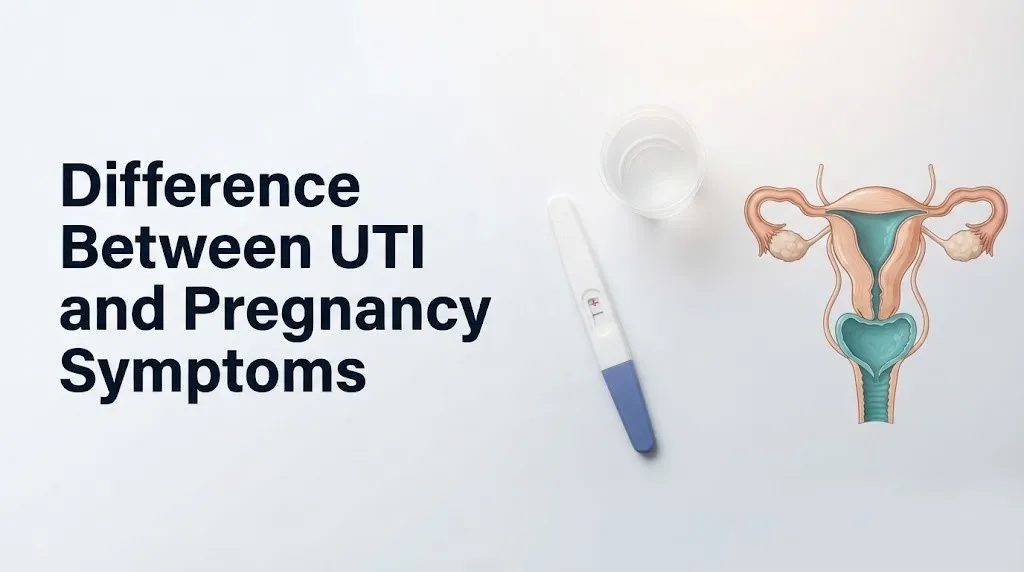
Difference Between UTI and Pregnancy Symptoms Guide 2026
The key difference between UTI and pregnancy symptoms is that a urinary tract infection produces dysuria (painful or burning urination), cloudy or foul-smelling urine, and urinary urgency from bacterial inflammation of the bladder wall, while early pregnancy produces a missed period, breast tenderness, and nausea from rising beta-human chorionic gonadotropin (beta-hCG) and progesterone. The complication is that both conditions cause urinary frequency, fatigue, and lower abdominal discomfort through entirely different mechanisms, making symptom-based self-assessment unreliable without testing.
According to the National Institute of Diabetes and Digestive and Kidney Diseases (NIDDK), UTI affects approximately 60 percent of women at some point in their lives, making it one of the most common bacterial infections in people with female anatomy. The American College of Obstetricians and Gynecologists (ACOG) reports that UTI occurs in 2 to 7 percent of all pregnancies, and that untreated urinary tract bacteria in pregnant women progress to kidney infection (pyelonephritis) in 20 to 40 percent of cases compared to roughly 1 to 2 percent in non-pregnant women.
This article explains the specific physiological mechanisms behind every overlapping and distinguishing symptom, provides a structured comparison of UTI-only versus pregnancy-only symptoms, clarifies what home tests can and cannot tell you, covers the elevated stakes of UTI during pregnancy, and gives you a clear framework for when self-assessment ends and professional evaluation must begin.
Difference Between UTI and Pregnancy Symptoms: The Key Clinical Distinction
The clinical distinction between UTI and pregnancy symptoms rests on two features that do not overlap: the presence of dysuria, cloudy urine, or visible blood in the urine strongly points to a UTI, while a missed menstrual period, breast tenderness, and a positive home pregnancy test specifically indicate pregnancy.
Both conditions share urinary frequency as a prominent early symptom, and both can produce lower abdominal discomfort and fatigue. This overlap is the source of genuine clinical confusion, and it is not merely anecdotal: a 2022 review in Clinical Infectious Diseases noted that many women presenting to primary care with urinary symptoms in reproductive age have either both conditions or a UTI that was initially attributed to early pregnancy without testing.
The safest clinical approach when symptoms could match either condition is to test for both simultaneously rather than assuming one and treating the other. A home urine pregnancy test and a urine dipstick can both be used within the same bathroom visit. Neither replaces formal clinical evaluation, but together they significantly narrow the diagnostic possibilities before a physician appointment.
Summary of the key clinical distinction:
| Feature | Points to UTI | Points to Pregnancy | Can Be Both |
|---|---|---|---|
| Dysuria (burning urination) | Yes | No | Possible if UTI during pregnancy |
| Cloudy or foul-smelling urine | Yes | Rarely | Yes |
| Blood in urine (hematuria) | Sometimes | No | No |
| Urinary frequency | Yes | Yes | Yes |
| Pelvic or suprapubic discomfort | Yes | Yes | Yes |
| Missed period | No | Yes | Yes |
| Breast tenderness | No | Yes | No |
| Nausea and vomiting | Rarely, in severe infection | Yes (first trimester) | Possible in pyelonephritis |
| Positive pregnancy test | No | Yes | Yes |
| Fever and chills | In kidney infection (pyelonephritis) | No | In pyelonephritis with pregnancy |
Women over 65 face a distinct diagnostic challenge: postmenopausal estrogen deficiency causes atrophic urethritis (thinning and inflammation of the urethra from low estrogen), which produces urinary burning and frequency that can closely mimic a UTI even without bacterial infection. This population requires a urinalysis with culture to confirm actual bacteriuria before antibiotic treatment.
How a UTI Develops: Anatomy and Mechanism of Bladder Infection Symptoms
A urinary tract infection develops when bacteria, most commonly Escherichia coli (responsible for approximately 80 to 85 percent of community-acquired UTIs according to Infectious Diseases Society of America (IDSA) clinical practice guidelines), ascend from the periurethral area through the urethra into the urinary bladder and colonize the urothelium (transitional epithelium lining the bladder).
The female urethra is anatomically short (approximately 3 to 5 centimeters, compared to 15 to 20 centimeters in males) and opens near the perineum, where fecal and vaginal bacteria are naturally present. This anatomical proximity is the primary reason women experience UTIs at dramatically higher rates than men. Sexual intercourse facilitates bacterial translocation toward the urethral opening. E. coli expresses surface proteins called fimbriae (type 1 and P fimbriae) that bind specifically to receptors on urothelial cells, allowing the bacteria to resist flushing by urine flow and establish a colonized biofilm.
Once E. coli is attached to the urothelium, the infected cells activate toll-like receptor 4 (TLR4), a pattern-recognition receptor that detects the bacterial outer membrane component lipopolysaccharide. TLR4 activation triggers the nuclear factor kappa B (NF-kB) signaling cascade, producing a rapid inflammatory response: interleukin-6 (IL-6) and interleukin-8 (IL-8) are released, recruiting neutrophils from blood vessels into the bladder wall (creating pyuria, detectable as white blood cells in the urine). Simultaneously, prostaglandin E2 (PGE2) is produced via the cyclooxygenase-2 (COX-2) pathway, and substance P is released from local sensory nerve endings. PGE2 sensitizes bladder stretch receptors, producing urinary urgency. Substance P activates urothelial nociceptors, producing the burning sensation of dysuria.
Women with type 2 diabetes mellitus face elevated UTI risk because glucosuria (glucose in the urine) provides a growth substrate for E. coli and because impaired neutrophil chemotaxis reduces the effectiveness of the TLR4-triggered immune response, allowing infections to establish more readily and progress more rapidly to upper urinary tract involvement.
How Early Pregnancy Produces Symptoms: The Hormonal Mechanism
Early pregnancy produces its characteristic symptoms through two primary hormonal signals: rising beta-hCG from the developing placenta and rising progesterone from the corpus luteum, both of which act on multiple organ systems simultaneously to create the distinct symptom cluster of early pregnancy.
After fertilization, the developing embryo implants into the endometrium of the uterus approximately 6 to 10 days after conception. The syncytiotrophoblast cells of the implanting embryo immediately begin producing beta-hCG. Beta-hCG prevents the corpus luteum (the remnant of the follicle that released the egg) from regressing, which would otherwise drop progesterone levels and trigger menstruation. The corpus luteum continues producing progesterone under beta-hCG stimulation until the placenta takes over this function at approximately 8 to 10 weeks of pregnancy.
Progesterone is a smooth muscle relaxant. In the bladder, it relaxes the detrusor muscle, reducing the bladder’s functional capacity and increasing urinary frequency even at low urine volumes. In the ureters, progesterone reduces the efficiency of ureteral peristalsis (the muscular contractions that propel urine from the kidneys to the bladder). This produces physiological hydroureter (mild dilation of the ureters), which slows urine transit, increases urinary stasis, and is one of the reasons UTI in pregnancy can progress more easily to kidney involvement.
Beta-hCG itself is believed to contribute to nausea and vomiting of pregnancy (NVP) by stimulating the area postrema (the vomiting center in the brainstem). Research published in the American Journal of Obstetrics and Gynecology has found that women with higher beta-hCG levels (including those carrying twins) experience more severe NVP. Rising estradiol and progesterone stimulate proliferation of mammary gland ductal tissue, producing breast tenderness and swelling that is characteristically an early pregnancy symptom distinct from UTI.
Overlapping Symptoms of UTI and Pregnancy and Why They Share Them
UTI and early pregnancy share urinary frequency, lower abdominal discomfort, fatigue, and occasionally nausea as overlapping symptoms because both conditions affect the same anatomical structures (the bladder and lower urinary tract) or produce similar systemic physiological effects (fatigue from immune activation in UTI and from progesterone and metabolic changes in pregnancy) through completely different mechanisms.
Understanding why these symptoms overlap is clinically more useful than simply knowing that they do. Consider urinary frequency. In UTI, PGE2-mediated sensitization of bladder stretch receptors produces urgency and frequency even when the bladder contains very little urine. The brain receives a stretch signal at volumes that would not normally trigger it. In early pregnancy, progesterone reduces detrusor muscle tone, so the bladder reaches its functional capacity sooner, producing actual physical frequency from a smaller-than-normal reservoir. The sensation feels similar, the mechanism is entirely different.
Fatigue in UTI results from the systemic inflammatory response: IL-6 released during the TLR4/NF-kB cascade acts on the hypothalamus to produce the sickness behavior response (fatigue, reduced appetite, low-grade temperature elevation). Fatigue in early pregnancy results from the metabolic demands of early embryogenesis, the rise of progesterone (which has a sedative effect through modulation of gamma-aminobutyric acid (GABA) receptors in the central nervous system), and in some women, a mild reduction in blood pressure from progesterone-mediated vasodilation.
Lower abdominal discomfort in UTI arises from inflammation of the bladder’s trigone (the triangular base of the bladder, densely innervated with pain-sensing fibers), producing suprapubic aching. Lower abdominal discomfort in early pregnancy arises from uterine expansion, round ligament stretching, and in the first few weeks, from the implantation process itself. The location is similar. The source structure is different.
The American Academy of Family Physicians notes that the symptom overlap between UTI and early pregnancy is one of the most common reasons women delay testing for either condition, which can result in untreated UTI in early pregnancy progressing to pyelonephritis.
Key Takeaway: Urinary frequency, lower abdominal discomfort, and fatigue are shared by both UTI and pregnancy through entirely different physiological mechanisms, which is why symptoms alone cannot reliably distinguish the two conditions without testing.
Symptoms Unique to a UTI and Not Caused by Pregnancy
The symptoms that are specific to a UTI and not produced by early pregnancy are dysuria (painful or burning urination), cloudy urine, a foul or unusually strong urine odor, visible blood in the urine (hematuria), and urinary urgency that wakes the person from sleep at night.
Dysuria is the most reliable distinguishing symptom. It results directly from substance P-mediated activation of urothelial nociceptors at the site of bacterial colonization. Early pregnancy does not produce dysuria in the absence of a concurrent UTI. If urination burns, that symptom requires urinalysis regardless of pregnancy status.
Cloudy urine in UTI results from pyuria (white blood cells), bacteriuria, and sometimes red blood cells (hematuria from mucosal bleeding at the inflamed trigone). Urine in early pregnancy is typically clear to pale yellow. However, pregnancy increases renal blood flow and glomerular filtration rate, which can produce mild physiological proteinuria, rarely causing urine to appear slightly foamy (not cloudy in the turbid, bacterial sense).
Urine odor changes can occur in both conditions: in UTI, E. coli metabolism produces ammonia and other compounds that create a distinctly foul smell. In early pregnancy, increased urinary excretion of waste products from accelerated metabolism and the concentrated urine from morning dehydration can produce a stronger smell, but not the characteristically putrid odor of bacterial colonization.
Hematuria (blood in urine) is not a pregnancy symptom. Its presence in urine, whether visible (gross hematuria, pink or red urine) or detectable only on dipstick (microscopic hematuria), always warrants urinalysis. In a person with urinary symptoms, hematuria points firmly toward UTI, urinary stone, or other urinary tract pathology, not pregnancy.
UTI-specific symptoms not produced by early pregnancy:
- Dysuria (painful, burning urination) at any urine volume
- Grossly cloudy or turbid urine (from pyuria and bacteriuria)
- Foul-smelling urine with a distinctly bacterial odor
- Gross hematuria (pink, red, or brown urine coloration)
- Nocturnal urgency that specifically wakes from sleep
- Urethral discharge (if concurrent sexually transmitted infection is also present)
Symptoms Unique to Pregnancy and Not Caused by a UTI
The symptoms specific to early pregnancy that are not produced by a UTI are a missed menstrual period, breast tenderness and swelling, nausea and vomiting that are worst in the morning or with certain foods or smells, light implantation bleeding, and a positive result on a urine home pregnancy test.
A missed period is the single most reliable indicator of pregnancy in a woman with a regular menstrual cycle. A UTI does not affect the hypothalamic-pituitary-ovarian axis that governs the menstrual cycle, and therefore cannot cause a missed period. Severe systemic illness (including severe pyelonephritis with sepsis) can disrupt menstrual timing through cortisol and catecholamine-mediated suppression of gonadotropin-releasing hormone (GnRH), but an uncomplicated lower urinary tract infection (cystitis) does not.
Breast tenderness in early pregnancy results specifically from estradiol-driven proliferation of mammary gland ductal tissue and progesterone-driven development of lobular alveolar tissue. This type of breast change is hormonally specific to pregnancy (or the luteal phase of the menstrual cycle if pregnancy has not occurred). A UTI does not circulate reproductive hormones and does not cause this pattern of breast change.
Nausea and vomiting of pregnancy, while mechanistically related to beta-hCG stimulation of the brainstem area postrema, is distinct in its timing and triggers from the occasional nausea of systemic infection. UTI-related nausea, when it occurs, accompanies systemic symptoms (fever, rigors, flank pain) suggesting the infection has ascended to the kidneys. Isolated nausea in the first trimester without fever, without dysuria, and with breast tenderness is far more consistent with early pregnancy than with a lower urinary tract infection.
Implantation bleeding is a light, brief spotting that occurs approximately 6 to 12 days after fertilization as the blastocyst embeds in the endometrium. It is shorter, lighter, and earlier than a typical menstrual period. A UTI does not cause vaginal bleeding. Any vaginal bleeding that accompanies a positive pregnancy test warrants evaluation by an obstetrician-gynecologist within one to two days to exclude ectopic pregnancy.
Urinary Frequency in UTI vs. Pregnancy: Why the Same Symptom Has Different Causes
Urinary frequency in a UTI results from prostaglandin E2-mediated sensitization of the bladder’s stretch receptors (producing a false urgency signal at low bladder volumes), while urinary frequency in pregnancy results from progesterone-mediated detrusor muscle relaxation that reduces the functional bladder capacity.
This mechanistic distinction produces subtly different characteristics of urinary frequency that are clinically useful. UTI-related frequency is typically accompanied by urgency (a sudden, difficult-to-defer urge to urinate) and dysuria (burning during or after urination). The volume voided is often small despite the strong urge. In early pregnancy, frequency tends to be less urgent in character. The person feels the need to urinate more often but can typically delay it briefly, and urination is painless.
The timing pattern can also differ. UTI frequency often begins abruptly over hours to a day or two and is present throughout the day and at night. Pregnancy-related frequency tends to develop gradually over the first few weeks, worsens progressively through the first trimester, may partially improve in the second trimester as the uterus rises out of the pelvis, and returns in the third trimester as the enlarging uterus directly compresses the bladder.
According to the Mayo Clinic, pregnancy-related urinary frequency without pain, without cloudy urine, and without any sensation of incomplete bladder emptying is not by itself an indication for a urine test to exclude UTI. However, the presence of any of the UTI-specific symptoms alongside pregnancy-related frequency warrants a urinalysis, because UTI and pregnancy frequently coexist in the same person at the same time.
Adolescent women deserve specific mention here. First pregnancies in younger women aged 15 to 19 are more frequently undiagnosed in the first trimester, and urinary frequency from early pregnancy may be attributed entirely to a UTI, leading to unnecessary antibiotic treatment without pregnancy confirmation. Any antibiotic prescribed in the first trimester of pregnancy should be selected specifically for pregnancy safety, which requires a confirmed or excluded pregnancy test before prescribing.
Key Takeaway: Painful, urgent urinary frequency that came on over a day or two points strongly to UTI. Painless, gradually increasing frequency over several weeks of the first trimester, especially with a missed period, points to pregnancy. Only testing confirms which.
Pelvic and Lower Abdominal Pain: UTI or Pregnancy?
Pelvic and lower abdominal pain in UTI arises from inflammation of the bladder’s trigone and surrounding pelvic floor structures, producing a suprapubic aching or pressure sensation directly above the pubic bone, while pelvic pain in early pregnancy arises from uterine expansion, round ligament stretching, and corpus luteum activity in the ovary.
The location of pain provides the most useful distinguishing information. UTI-related pelvic pain is typically centered directly above the pubic symphysis (suprapubic), corresponds to the anatomical position of the bladder’s trigone, and is often described as pressure or aching that is worse with full bladder and partially relieved after urination. Pregnancy-related pelvic discomfort is often more diffuse, may be slightly asymmetric (from the side where ovulation occurred and the corpus luteum is active), and may be accompanied by a sensation of pelvic fullness or heaviness without the bladder-centric pressure of UTI.
Round ligament pain in early-to-mid pregnancy is a sharp, brief, stabbing pain on one or both sides of the lower abdomen, triggered by sudden movements, standing up quickly, or coughing. It results from stretching of the round ligaments (connective tissue bands running from the uterus to the inguinal region) as the uterus grows. Round ligament pain has no UTI equivalent and is a distinctly pregnancy-specific symptom pattern that helps distinguish the two conditions in the late first or second trimester.
One pain pattern warrants emergency attention in any context: severe, one-sided pelvic pain in a woman with a positive or possible pregnancy test. This pattern may indicate ectopic pregnancy (implantation of the fertilized egg outside the uterus, most commonly in the fallopian tube), where the growing embryo can rupture the fallopian tube, causing internal hemorrhage. Ectopic pregnancy is the leading cause of pregnancy-related death in the first trimester, according to ACOG. Any severe unilateral pelvic pain in early pregnancy, particularly with shoulder-tip pain (from diaphragmatic irritation by intraperitoneal blood), lightheadedness, or fainting, requires immediate emergency evaluation.
Back Pain as a Symptom: UTI vs. Pregnancy and the Critical Difference
Back pain in the context of a UTI indicates that the infection has ascended from the bladder through the ureters into the renal pelvis of one or both kidneys, producing pyelonephritis, while back pain in early pregnancy results from progesterone-mediated ligament laxity, increased lumbar lordosis, and postural changes as the center of gravity shifts.
This distinction is one of the most clinically important in the entire UTI-versus-pregnancy comparison, because pyelonephritis is a serious bacterial infection that requires prompt medical treatment and can produce sepsis, preterm labor (in pregnant women), and permanent renal scarring.
The back pain of pyelonephritis is characteristically located in the costovertebral angle (CVA): the area at the lower back where the lower ribs meet the spine, directly overlying the kidneys. This location is approximately at the level of the 12th rib posteriorly. CVA tenderness, elicited by a clinician tapping the fist gently against the CVA, is a clinical sign specific to kidney involvement and is not produced by musculoskeletal back pain or pregnancy-related back pain. Pyelonephritis back pain is typically unilateral (one kidney is more affected), accompanied by fever above 38°C (100.4°F), rigors (shaking chills), nausea, and vomiting.
Back pain in early pregnancy is lower (lumbar or sacral) rather than costovertebral, bilateral or central rather than one-sided, aching and muscular in character rather than visceral, and not accompanied by fever or systemic illness. It is produced by the sacroiliac joint and lumbar facet joint laxity from progesterone and relaxin (a peptide hormone produced by the corpus luteum that loosens ligaments in preparation for childbirth), combined with the postural changes of early uterine growth.
Back pain combined with fever and urinary symptoms in any context requires same-day evaluation by a primary care physician or emergency medicine physician, and by an obstetrician-gynecologist if the woman is known to be pregnant. Delay in diagnosing pyelonephritis in pregnancy significantly increases the risk of preterm labor and maternal sepsis.
Nausea, Fatigue, and Breast Tenderness: UTI or Pregnancy?
Nausea and fatigue can occur in both UTI and early pregnancy, but breast tenderness is specific to pregnancy and does not occur as a symptom of a lower urinary tract infection, making breast tenderness the single most useful systemic symptom for differentiating the two conditions.
A UTI can produce mild nausea and fatigue through the systemic inflammatory response: IL-6 acts on the hypothalamus to produce sickness behavior, including reduced appetite, fatigue, and a general feeling of malaise. However, the nausea of UTI-related systemic inflammation is typically accompanied by fever or at minimum a sense of feeling feverish, and it does not have the food-aversion, smell-sensitivity, or morning-pattern quality of pregnancy nausea. Nausea without fever, without dysuria, and with morning predominance and specific food or smell triggers is far more consistent with the beta-hCG-driven mechanism of pregnancy than with a UTI inflammatory response.
Fatigue in early pregnancy is often described as profound, disproportionate to the level of activity, and present continuously through the first trimester. The mechanisms include progesterone’s GABA-receptor-mediated central sedative effects, the significant metabolic energy cost of early placental development, and the cardiovascular adaptations of early pregnancy (including increased plasma volume and cardiac output). UTI-related fatigue is typically more acute in onset and accompanied by the sick feeling of active infection rather than a gradual, pervasive tiredness.
Breast tenderness from early pregnancy begins approximately one to two weeks after conception, coinciding with rising progesterone and estradiol. It affects the entire breast including the nipples and areolae, often worsening with touch or pressure from clothing. This hormonally driven breast change has no UTI equivalent. According to MedlinePlus, breast tenderness or sensitivity is among the earliest symptoms of pregnancy, frequently noticed before a missed period in women who are attuned to their body’s monthly cycle.
Women with premenstrual syndrome (PMS) may experience breast tenderness cyclically in the luteal phase. This symptom in the days before an expected period, in the absence of a positive pregnancy test, does not confirm pregnancy and requires testing to distinguish late luteal phase PMS from early pregnancy.
Can a UTI Affect a Pregnancy Test Result?
A UTI cannot cause a false positive result on a urine pregnancy test, because the test detects beta-hCG (a hormone produced specifically by placental syncytiotrophoblast cells), and UTI does not produce or stimulate beta-hCG production in any tissue.
Home urine pregnancy tests are immunoassays that use antibodies specific to the beta subunit of human chorionic gonadotropin. E. coli, Staphylococcus saprophyticus, and other UTI pathogens do not produce beta-hCG or any structurally similar molecule that would cross-react with these antibodies under normal test conditions. Research on home pregnancy test accuracy published in journals reviewed by the U.S. National Library of Medicine has consistently confirmed that bacterial infection does not interfere with the beta-hCG immunoassay mechanism.
A UTI can, however, affect the quality of the urine sample used for a pregnancy test in practical terms. Highly concentrated, cloudy, or very foul-smelling urine from a bacterial infection may contain sediment or pigmentation that makes reading a dipstick-style test more difficult visually. The immunochemical detection of beta-hCG itself is not affected, but the background color of turbid urine can sometimes make the test line harder to read clearly. Using the first morning urine (which is the most concentrated and therefore highest in beta-hCG if pregnancy is present) remains the recommended approach regardless of concurrent UTI suspicion.
Quick Tip:
- A UTI cannot create a false positive pregnancy test. If your pregnancy test is positive, you are pregnant regardless of UTI status.
- A UTI can create a false negative urine test result for UTI if the urine sample was dilute, not midstream, or contaminated. A urine culture (grown in a lab from a properly collected sample) is the definitive UTI diagnostic test.
- Women with interstitial cystitis (chronic bladder pain syndrome) may have urinary symptoms that chronically mimic UTI without infection; this population should confirm both UTI and pregnancy with testing rather than assuming either diagnosis based on symptoms alone.
Key Takeaway: A UTI cannot cause a false positive pregnancy test. If you get a positive test, it indicates pregnancy, and you should contact an obstetrician-gynecologist to confirm the pregnancy and screen for concurrent UTI, because the two conditions frequently coexist.
How to Tell the Difference at Home: What Tests Actually Work
The two home tests that provide reliable preliminary information are a urine home pregnancy test (detecting beta-hCG in urine) and a urine dipstick test (detecting leukocyte esterase and nitrites, which indicate white blood cells and bacterial activity), but neither test definitively diagnoses or excludes either condition.
To perform meaningful home testing:
- Obtain a first-morning urine sample, which is most concentrated and therefore most likely to detect low levels of beta-hCG (important if testing before a missed period) and most likely to show significant pyuria if a UTI is present.
- Collect a midstream clean-catch sample: clean the urethral opening with a wipe, begin urinating, let the first few seconds pass, then collect the middle portion of the urine stream in a clean cup. This technique reduces contamination of the sample with periurethral bacteria, which can produce false-positive nitrite results on dipstick.
- Perform the home pregnancy test first, before any urine dipstick test, as pregnancy testing requires reading the sample before it is potentially mixed with dipstick chemicals.
- Read the pregnancy test result at the time specified in the instructions (typically 1 to 3 minutes). A faint second line still indicates a positive result: any beta-hCG detection means beta-hCG is present.
- Perform the urine dipstick test on the same sample. A positive leukocyte esterase result (indicating white blood cells) or a positive nitrite result (indicating bacteria capable of reducing nitrate to nitrite, including E. coli) suggests UTI, but false negatives occur in approximately 15 to 20 percent of confirmed UTI cases according to IDSA guidelines.
- If both tests are positive, or if either test is positive but you remain uncertain, contact a primary care physician or obstetrician-gynecologist for formal urinalysis, urine culture, and clinical examination within 24 to 48 hours. Do not attempt to self-treat with antibiotics purchased online, because antibiotic selection in pregnancy differs from the standard non-pregnant approach.
Home dipstick tests cannot detect all UTI pathogens (Staphylococcus saprophyticus, for example, does not consistently reduce nitrate and may produce a false-negative nitrite result). A negative dipstick does not exclude UTI if symptoms are present.
UTI During Pregnancy: Why the Stakes Are Higher
UTI during pregnancy carries substantially higher clinical risk than UTI in non-pregnant women because the progesterone-mediated changes of pregnancy (ureteral dilation, reduced ureteral peristalsis, urinary stasis) create an anatomical pathway from the bladder to the kidney that is more patent than in the non-pregnant state, and because the Th2 immune shift of pregnancy (a shift toward anti-inflammatory immune responses that supports fetal tolerance) reduces the intensity of the immune response against ascending bacteria.
The progression rate from simple bladder infection to pyelonephritis (kidney infection) is approximately 20 to 40 percent in pregnant women with untreated bacteriuria, compared to approximately 1 to 2 percent in otherwise healthy non-pregnant women, according to research published in Obstetrics and Gynecology and confirmed by Cochrane systematic reviews of antibiotic treatment trials. This dramatic difference in progression risk is the reason ACOG recommends universal urine culture screening for asymptomatic bacteriuria at the first prenatal visit (typically 12 to 16 weeks), regardless of the absence of symptoms. Asymptomatic bacteriuria in non-pregnant women does not require treatment according to IDSA guidelines, but in pregnancy it does.
Pyelonephritis in pregnancy is not merely a kidney infection. According to ACOG, it is associated with preterm labor (from prostaglandin and cytokine release triggered by bacterial endotoxin stimulating uterine contractility), maternal sepsis, acute respiratory distress syndrome in severe cases, and low birth weight. These outcomes make prompt diagnosis and treatment of any urinary tract infection during pregnancy a clinical priority, not an optional intervention.
The antibiotic choice for UTI in pregnancy differs specifically from non-pregnant treatment because several first-line non-pregnant UTI antibiotics are contraindicated in specific trimesters. Fluoroquinolones (such as ciprofloxacin) are generally avoided in pregnancy. Trimethoprim is typically avoided in the first trimester. Nitrofurantoin is generally avoided near term. Safe options (such as cephalexin or amoxicillin-clavulanate, for context) require a clinician’s prescription and consideration of local resistance patterns. This is one specific reason why a pregnant woman who suspects a UTI should not self-treat with any antibiotic without physician evaluation.
Emergency Symptoms: When to Call 911 or Go to the ER
Certain symptoms associated with UTI or early pregnancy require immediate emergency evaluation. Do not wait to see if these resolve on their own.
Call 911 or go to the nearest emergency room immediately if you experience:
- Severe unilateral (one-sided) pelvic or abdominal pain with a positive or possible pregnancy test, especially with shoulder-tip pain, lightheadedness, or fainting. These are the warning signs of ectopic pregnancy with rupture, the leading cause of first-trimester pregnancy-related death. Every minute of delay increases blood loss from internal hemorrhage.
- Fever above 38°C (100.4°F) with back or flank pain and urinary symptoms during known pregnancy. This combination indicates pyelonephritis in pregnancy, which can trigger preterm labor and progress to maternal sepsis. It requires intravenous antibiotic treatment in a hospital setting, not oral antibiotics at home.
- Fever above 38.5°C (101.3°F) with rigors (shaking chills), rapid heart rate, and confusion or extreme weakness combined with UTI symptoms. This presentation suggests urosepsis (sepsis originating from a urinary tract infection), a life-threatening systemic infection requiring emergency resuscitation.
- Heavy vaginal bleeding in early pregnancy (soaking more than one pad per hour) combined with pelvic pain. This indicates a possible miscarriage with hemorrhage or ectopic pregnancy rupture, not a UTI, and requires emergency evaluation.
- Inability to urinate at all (urinary retention) combined with severe suprapubic pain. This can indicate severe bladder inflammation or neurological complication requiring same-day evaluation.
These presentations can indicate ectopic pregnancy, pyelonephritis with sepsis, or urosepsis, and require emergency medical assessment, not an urgent care phone call or a home observation period.
When to Seek Urgent or Emergency Care for UTI or Pregnancy Symptoms
The appropriate level of care for overlapping UTI and pregnancy symptoms depends on the specific symptom combination present and whether pregnancy has been confirmed.
| Symptom Pattern | Urgency | Recommended Action |
|---|---|---|
| Urinary frequency alone, no pain, no fever, period late | Low | Home pregnancy test; primary care or OB-GYN within one week |
| Mild dysuria and urinary frequency, no fever, not pregnant | Low-Moderate | Urine dipstick at home; primary care within 1 to 2 days |
| Mild dysuria with positive pregnancy test | Moderate | OB-GYN or primary care within 24 hours; do not self-treat |
| Any UTI symptoms with confirmed pregnancy | Moderate-High | OB-GYN within 24 to 48 hours; urine culture needed |
| Back or flank pain with urinary symptoms, any fever | High | Same-day evaluation: primary care physician or urgent care |
| Fever above 38°C with flank pain during pregnancy | Emergency | Go to the emergency room immediately |
| Severe unilateral pelvic pain with positive pregnancy test | Emergency | Call 911 or go to the emergency room immediately |
| Rigors, confusion, rapid heartbeat with UTI symptoms | Emergency | Call 911 immediately |
Women who are immunocompromised (from HIV, chemotherapy, corticosteroid use, or organ transplant immunosuppression) should treat any urinary symptoms as moderate-urgency regardless of pregnancy status, because their reduced immune response allows bacterial infections to progress faster than in immunocompetent women.
Populations Where Distinguishing UTI From Pregnancy Symptoms Is Harder
Distinguishing between UTI and pregnancy symptoms is clinically more difficult in specific populations where standard symptom patterns are altered by hormonal status, immune function, chronic disease, or anatomical changes.
Women with type 2 diabetes: Impaired neutrophil function from hyperglycemia can reduce the inflammatory response to UTI, making dysuria and pyuria less pronounced even in the presence of significant bacteriuria. A woman with diabetes may have a substantial UTI without the classic burning and cloudy urine that would otherwise trigger testing. Urinary frequency from diabetic autonomic neuropathy (neurogenic bladder) can also mimic both UTI frequency and pregnancy frequency simultaneously. This population should have a urine culture performed whenever urinary symptoms change, regardless of how mild they appear.
Women with recurrent UTI history: These women may have become accustomed to UTI symptoms and begin self-treating at the first sign of urinary discomfort, potentially missing an early pregnancy in which UTI symptoms are co-occurring. A pregnancy test should be part of the evaluation for any woman with recurrent UTI who has had unprotected intercourse since her last period.
Postmenopausal women: Estrogen deficiency produces genitourinary syndrome of menopause (previously called atrophic vaginitis/urethritis), causing urinary frequency, urgency, burning, and pelvic discomfort from urothelial and urethral atrophy rather than from bacterial infection. These symptoms can closely mimic both UTI and early pregnancy (though pregnancy is not a concern in confirmed postmenopause). However, postmenopausal women face a higher rate of asymptomatic bacteriuria than premenopausal women, and the background symptom noise makes clinical differentiation particularly difficult without formal urinalysis.
Adolescents: Younger women aged 15 to 19 are less likely to recognize early pregnancy and more likely to attribute symptoms exclusively to UTI. They are also at elevated risk of both STIs (which can produce UTI-mimicking symptoms) and UTI from new sexual activity. This population benefits from a pregnancy test as a standard part of any UTI evaluation when they are sexually active.
Women using intrauterine devices (IUDs): If pregnancy occurs in a woman using an IUD (which is rare but possible), the risk of ectopic pregnancy is elevated compared to the general population. Any positive pregnancy test in a woman with an IUD in place requires urgent evaluation by an obstetrician-gynecologist to exclude ectopic pregnancy, even if pelvic symptoms are currently mild.
Frequently Asked Questions About the Difference Between UTI and Pregnancy Symptoms
Can a UTI feel like early pregnancy symptoms?
A UTI can feel like early pregnancy in that both conditions cause urinary frequency, lower abdominal discomfort, and fatigue through different physiological mechanisms.
The key difference is that a UTI produces dysuria (painful or burning urination) and often cloudy or foul-smelling urine, which are not symptoms of early pregnancy in the absence of concurrent infection.
A home pregnancy test and a urine dipstick used together provide reliable preliminary information, but a urinalysis with urine culture from a primary care physician or obstetrician-gynecologist remains the only definitive way to distinguish the two conditions.
What symptoms are only from a UTI and not pregnancy?
Dysuria (burning or painful urination), cloudy urine from pyuria, foul-smelling urine from bacterial metabolism, and visible blood in the urine (hematuria) are symptoms specific to UTI and are not produced by early pregnancy.
These symptoms result from TLR4-mediated bacterial inflammation of the urothelium, a mechanism that does not occur in pregnancy.
Any of these symptoms in a woman who may be pregnant warrants urinalysis to confirm or exclude UTI before any treatment decision is made.
What symptoms are only from pregnancy and not a UTI?
A missed menstrual period, breast tenderness and swelling, nausea and vomiting with morning predominance, and a positive urine pregnancy test are specific to pregnancy and are not produced by a lower urinary tract infection.
These symptoms are driven by beta-hCG and progesterone from the developing placenta and corpus luteum.
Implantation bleeding (light spotting at approximately 6 to 12 days after conception) is also specific to pregnancy and does not occur in UTI.
Can having a UTI affect the result of a pregnancy test?
A UTI cannot cause a false positive pregnancy test because the test detects beta-hCG, which is produced only by placental syncytiotrophoblast cells, not by bacteria or by the body’s immune response to infection.
Very cloudy or turbid urine from a UTI can make reading a dipstick-style test line more difficult visually, but the underlying immunoassay chemistry is not affected.
If your pregnancy test shows a positive result in any context, including with concurrent UTI symptoms, the result indicates pregnancy.
How do I know if I need to see a doctor or can I test at home?
You can use a home pregnancy test and a urine dipstick as preliminary screening tools, but neither replaces a urinalysis with urine culture for confirmed UTI diagnosis or ultrasound for confirmed intrauterine pregnancy.
If both tests are positive, if either is positive during confirmed pregnancy, or if any fever, back pain, or severe pelvic pain is present, contact a primary care physician or obstetrician-gynecologist within 24 to 48 hours.
Go to the emergency room immediately if severe unilateral pelvic pain accompanies a positive pregnancy test, or if fever above 38°C accompanies flank pain and urinary symptoms during pregnancy.
Is a UTI more dangerous if I am pregnant?
A UTI during pregnancy is substantially more dangerous than in non-pregnant women because progesterone-mediated ureteral dilation and urinary stasis allow bacteria to ascend to the kidneys more easily, and because the Th2 immune shift of pregnancy reduces the inflammatory response that would otherwise contain the infection.
According to research published in Obstetrics and Gynecology, 20 to 40 percent of untreated urinary bacteria in pregnant women progress to pyelonephritis, compared to approximately 1 to 2 percent in non-pregnant women.
Any urinary symptom in a confirmed pregnancy, including no symptoms at all if bacteria are found on a prenatal urine culture, requires antibiotic treatment chosen specifically for pregnancy safety by an obstetrician-gynecologist or primary care physician.
Closing
The core clinical reality here is straightforward: symptoms alone cannot reliably tell you whether you have a UTI, are pregnant, or have both. The overlap is real and physiologically grounded. Testing is not optional if you need an actual answer.
Use a home pregnancy test and a urine dipstick as your first step. If either is positive, contact your primary care physician or obstetrician-gynecologist within 24 to 48 hours and tell them your test results, your specific symptoms (especially whether urination burns and whether your period is late), and the date of any recent unprotected intercourse.
If you have severe pelvic pain with a positive pregnancy test, fever with back pain, or signs of systemic illness alongside urinary symptoms, do not wait for an appointment. Those presentations require emergency evaluation without delay.