Sinus Infection Symptoms vs COVID: Real Differences 2026
Sinus infection symptoms vs COVID-19 are genuinely difficult to distinguish because both conditions inflame the same upper respiratory structures, but two features separate them with reasonable clinical reliability: the character of smell loss and the presence of systemic body-wide symptoms. A sinus infection produces smell loss from nasal congestion blocking odor access to your nose; COVID-19 produces sudden, complete smell loss even when your nose feels relatively clear.
The distinction matters more than most symptom checkers acknowledge. According to the Centers for Disease Control and Prevention (CDC), COVID-19 remains a circulating respiratory illness with evolving variant profiles, and misidentifying it as a sinus infection can lead to missed isolation, delayed antiviral treatment in high-risk individuals, and inadvertent spread to vulnerable contacts. At the same time, millions of Americans develop acute sinusitis each year and need clinical guidance, not just a COVID test.
This article covers the physiological reasons each condition produces its symptoms, the features that overlap versus differ, how the two conditions are diagnosed, and when symptoms from either condition require immediate medical attention.
Sinus Infection Symptoms vs COVID: The Key Differences
The most clinically reliable difference between sinus infection symptoms and COVID-19 is this: COVID-19 causes sudden, complete smell loss without nasal congestion in a proportion of patients, while sinus infection causes smell reduction that occurs alongside and because of nasal congestion and facial pressure.
Beyond smell loss, the presence of systemic symptoms (body aches, profound fatigue, chills, fever reaching 38.9°C or above) strongly favors COVID-19 over uncomplicated sinusitis. A sinus infection concentrates its inflammation in the paranasal sinus cavities; COVID-19 triggers a systemic cytokine response that floods the entire body with inflammatory signals.
The table below summarizes the most practically useful distinguishing features:
| Feature | Sinus Infection | COVID-19 |
|---|---|---|
| Smell loss type | Conductive (with congestion) | Sensorineural (often without congestion) |
| Facial pain/pressure | Prominent, location-specific | Mild or absent |
| Systemic body aches | Mild or absent | Often present |
| Fever | Low-grade or absent | Frequently present, can be high |
| Thick discolored nasal discharge | Common | Less common |
| Fatigue | Mild | Often significant |
| Cough | Mild, post-nasal drip | Often dry, persistent |
| Timing of smell loss | With or after congestion onset | Can precede other symptoms |
| Onset speed | Gradual (days) | Often rapid (24 to 48 hours) |
For people with pre-existing allergic rhinitis or chronic nasal congestion, distinguishing a new sinusitis episode from COVID-19 is harder because their baseline congestion already impairs smell. These individuals should have a lower threshold for COVID-19 testing when symptoms change character or systemic symptoms appear.
What Is a Sinus Infection and How Does It Develop
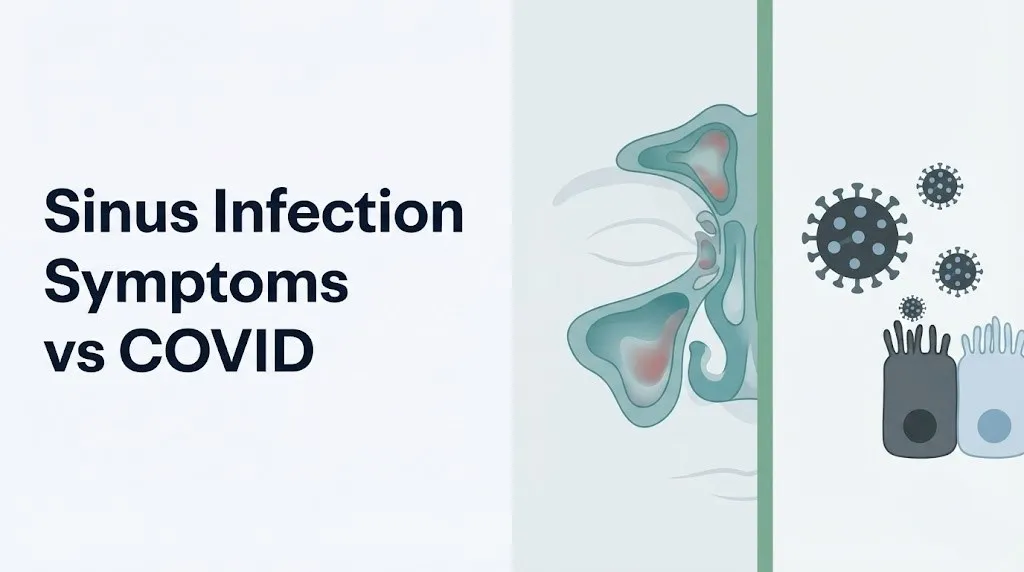
A sinus infection (clinically called acute rhinosinusitis) is an inflammatory process of the mucosal lining of one or more of the four pairs of paranasal sinuses: the maxillary sinuses (in the cheekbones, the largest and most commonly involved), the frontal sinuses (above the eyebrows in the frontal bone), the ethmoid sinuses (a honeycomb of small air cells between the eyes, medial to the orbits), and the sphenoid sinus (posterior, at the skull base behind the eyes).
The development of sinusitis follows a predictable anatomical chain. A viral upper respiratory infection or allergic reaction causes mucosal swelling of the nasal turbinates (the scroll-like bony projections inside the nasal cavity covered in mucosa). This swelling narrows or completely blocks the sinus ostia, the small drainage openings where each sinus connects to the nasal cavity. The most clinically important drainage region is the ostiomeatal complex: a shared drainage pathway for the maxillary, anterior ethmoid, and frontal sinuses. When this complex becomes blocked, all three sinus groups can become inflamed simultaneously.
Think of the sinuses like a network of drain pipes behind the walls of a house. As long as the central junction stays open, everything drains. Block that junction with swollen tissue and every connected chamber backs up at once.
Acute sinusitis is defined by symptoms lasting less than four weeks. Subacute sinusitis lasts four to twelve weeks. Chronic rhinosinusitis (ICD-10 J32) persists beyond twelve weeks and involves a different, more complex inflammatory pattern with eosinophil predominance and often nasal polyp formation.
The American Academy of Otolaryngology-Head and Neck Surgery (AAO-HNS) clinical practice guidelines state that approximately 90 to 98% of acute sinusitis cases are caused by viruses (rhinovirus, coronavirus strains other than SARS-CoV-2, influenza), not bacteria. Antibiotics are not indicated for most acute sinusitis cases. Bacterial superinfection, caused most commonly by Streptococcus pneumoniae, Haemophilus influenzae, or Moraxella catarrhalis, occurs in approximately 0.5 to 2% of viral sinusitis cases.
Children’s sinusitis presents somewhat differently because the frontal sinuses do not fully develop until adolescence. Pediatric sinusitis most often involves the ethmoid and maxillary sinuses. Children are more likely to present with nasal discharge, daytime cough, and less clearly localized facial pain than adults.
COVID-19 Symptoms in 2026: What Current Variants Cause
COVID-19 symptoms in 2026 are predominantly upper respiratory in character, reflecting the continued dominance of Omicron subvariants (including JN.1, KP.2, KP.1.1, and related XEC lineage variants) that show strong tropism for the upper respiratory tract rather than the lower respiratory tract compared to earlier SARS-CoV-2 variants.
The CDC continues to list the core COVID-19 symptom profile as: fever or chills, cough, shortness of breath or difficulty breathing, fatigue, muscle or body aches, headache, new loss of taste or smell, sore throat, congestion or runny nose, nausea or vomiting, and diarrhea. Not all of these occur in every case. The Omicron subvariant era has shifted the frequency distribution: upper respiratory symptoms (congestion, sore throat, runny nose) are now reported more frequently than in the Delta wave, while severe lower respiratory symptoms (pneumonia, respiratory failure) are less common in vaccinated populations, according to CDC surveillance data updated through 2024 and 2025.
The shift toward upper respiratory dominance is why COVID-19 is now more frequently mistaken for a sinus infection or common cold than in 2020 or 2021. Fever is less universally present with Omicron subvariants than with earlier strains. A 2023 study published in JAMA Internal Medicine found that Omicron-era COVID-19 cases were less likely to present with anosmia as a prominent early symptom compared to the original Wuhan strain and Delta variant, though smell changes still occur in a meaningful proportion of cases.
People who are immunocompromised (including those on chemotherapy, organ transplant recipients, or people with HIV with low CD4 counts) may not mount a typical febrile response to COVID-19, making their presentation look more like a mild viral upper respiratory infection or sinusitis. A primary care physician or infectious disease specialist should evaluate any immunocompromised person with new upper respiratory symptoms, regardless of how mild they appear.
Overlapping Symptoms of Sinus Infection and COVID
The overlapping symptoms of sinus infection and COVID-19 occur because both conditions inflame the same anatomical region: the nasal mucosa, the upper respiratory epithelium, and the mucosal lining of the nasal turbinates.
When the nasal mucosa becomes inflamed by any mechanism (viral, bacterial, or allergic), several symptoms are essentially inevitable: nasal congestion (from mucosal edema of the inferior and middle turbinates), runny nose (from increased mucus production by goblet cells in the respiratory epithelium), sore throat (from post-nasal drip of mucus onto the posterior pharyngeal mucosa), mild headache (from pressure changes in the paranasal sinuses and sinus ostia), and fatigue (from the metabolic cost of the immune response).
Key overlapping symptoms and why both conditions share them:
- Nasal congestion: Both conditions cause mucosal edema of the nasal turbinates through different primary mechanisms (bacterial/viral ostial obstruction in sinusitis; ACE2-mediated viral inflammation of nasal epithelium in COVID-19), producing the same subjective congestion experience
- Runny nose: Both conditions stimulate increased goblet cell mucus secretion via inflammatory cytokine signaling
- Headache: Both conditions can increase pressure in and around the paranasal sinuses via different mechanisms
- Sore throat: Both conditions produce post-nasal drip and direct pharyngeal inflammation
- Mild fatigue: Both conditions activate the immune system and require metabolic energy for an immune response
- Low-grade fever: Both conditions can elevate temperature, though through different biochemical pathways
According to the National Institute of Allergy and Infectious Diseases (NIAID), the symptom overlap between viral upper respiratory infections (including COVID-19) and viral sinusitis is so substantial that clinical differentiation based on symptoms alone, without testing, is unreliable in many cases. Testing is the definitive differentiator when one condition must be distinguished from the other for clinical or public health reasons.
Key Takeaway: The overlapping symptoms of sinus infection and COVID-19 exist because both conditions inflame the same upper respiratory structures through different primary pathways, making symptom-only differentiation unreliable and COVID-19 testing the definitive tool when the distinction clinically matters.
Smell Loss: COVID Anosmia vs Sinusitis Smell Reduction
The type of smell loss produced by COVID-19 is physiologically distinct from sinusitis-related smell reduction, and this distinction is the single most clinically reliable differentiating feature between the two conditions.
Sinusitis-related smell reduction is conductive hyposmia: inflammatory edema of the nasal mucosa, particularly in the olfactory cleft (the narrow superior nasal passage that leads to the olfactory epithelium), physically blocks odorant molecules from reaching the olfactory receptor neurons on the olfactory epithelium. The olfactory neurons themselves are intact and functional. Smell reduction in sinusitis always accompanies nasal congestion, fluctuates with congestion severity, and improves when congestion improves. It is never complete or sudden; it is proportional to the degree of nasal obstruction.
COVID-19 anosmia is mechanistically different at the cellular level. A landmark 2020 study published in Nature Neuroscience established that SARS-CoV-2 does not directly infect olfactory receptor neurons (which express very low levels of the ACE2 receptor). Instead, the virus infects sustentacular (support) cells in the olfactory epithelium, which do express high levels of ACE2 receptors and TMPRSS2 (the serine protease that primes viral entry). Sustentacular cells maintain the ionic composition of the mucous layer overlying the olfactory neurons and provide metabolic support to olfactory receptor neurons. When sustentacular cells are damaged, the chemical microenvironment of the olfactory epithelium collapses, and olfactory receptor neurons stop signaling, even though the neurons themselves are physically intact.
The result is sudden, often complete anosmia that can occur with minimal or no nasal congestion. Some COVID-19 patients wake up one morning with no sense of smell and no blocked nose. This presentation does not occur in sinusitis.
People over 65 have a higher baseline rate of olfactory decline from age-related olfactory receptor neuron loss, which can complicate assessment of COVID-19-related anosmia in this population. A primary care physician should evaluate persistent smell loss in any older adult after acute illness.
Fever Patterns: Sinus Infection vs COVID-19
Fever in COVID-19 and sinusitis arises through different biochemical pathways, producing distinct fever patterns that can help clinically distinguish the two conditions.
COVID-19 fever results from a systemic cytokine release. When SARS-CoV-2 is recognized by innate immune pattern recognition receptors (RIG-I, MDA5) in infected nasal epithelial cells, these cells release type I interferons and activate the NF-kB transcription pathway, triggering macrophage and T lymphocyte activation. Activated macrophages and T lymphocytes release IL-6, TNF-alpha, and IL-1beta into the systemic circulation. These circulating cytokines reach the hypothalamus, where they trigger prostaglandin E2 synthesis in the organum vasculosum of the lamina terminalis (OVLT), producing hypothalamic temperature set-point elevation. COVID-19 fever is systemic, often reaching 38.9°C (102°F) or higher, and accompanies the other systemic symptoms of chills, sweating, and profound fatigue.
Sinusitis fever, when present, is typically low-grade (below 38.3°C or 101°F) and is driven by localized PGE2 production within the inflamed sinus mucosa itself, with limited systemic spillover. Many cases of bacterial sinusitis produce no fever at all. The AAO-HNS clinical practice guidelines note that high fever (above 39°C) combined with severe unilateral facial pain and purulent nasal discharge suggests bacterial sinusitis, but even in these cases the fever is generally lower than in COVID-19.
Quick Tip:
- A fever above 38.9°C (102°F) accompanying nasal symptoms points more toward COVID-19 or influenza than a sinus infection
- A low-grade temperature (37.5°C to 38.3°C) with localized facial pressure and thick discharge without body aches is more consistent with acute bacterial sinusitis
- In adults over 65 and in people taking corticosteroids or NSAIDs long-term, fever may be suppressed even in the presence of significant COVID-19 infection; these individuals should not use the absence of fever to rule out COVID-19
Nasal Discharge, Congestion, and Facial Pain Compared
Nasal discharge color, consistency, and associated facial pain pattern are useful secondary differentiators of sinus infection and COVID-19 that work best when considered together rather than individually.
Nasal discharge in sinusitis: The inflammatory response in obstructed paranasal sinuses drives mucus production by the sinus and nasal epithelium, and when bacterial superinfection occurs, neutrophil degranulation produces thick, purulent (yellow or green) discharge. This discharge drains from the sinus ostia into the nasal cavity and can be seen posteriorly in the throat as post-nasal drip. Mucopurulent discharge (thick, yellow-green, sometimes blood-tinged) emerging from one side of the nose predominantly is a specific clinical sign of maxillary or ethmoid sinusitis on that side. The AAO-HNS guidelines describe this as a key clinical diagnostic criterion for bacterial sinusitis.
Nasal discharge in COVID-19 is typically clear and watery in the early phase, reflecting viral-induced goblet cell stimulation without bacterial superinfection. COVID-19 rarely produces thick, unilateral purulent discharge in the acute phase unless a secondary bacterial sinusitis has developed.
Facial pain in sinusitis is location-specific and follows the anatomical territory of the affected sinus:
- Maxillary sinus pain: cheek pressure, upper tooth pain, infraorbital pressure (under the eye)
- Frontal sinus pain: forehead pressure or pain above the eyebrow, worsens when bending forward
- Ethmoid sinus pain: pain between the eyes, behind the bridge of the nose
- Sphenoid sinus pain: deep, diffuse, often behind the eyes or at the vertex of the head (less common, more severe)
COVID-19 headache is typically generalized, bifrontal or diffuse, and not location-specific in the way sinus pain is. It does not worsen on bending forward (a clinical test that increases sinus pressure and worsens maxillary/frontal sinusitis pain). If bending forward significantly worsens facial pain, sinusitis is a more likely explanation.
Headache in Sinus Infection vs COVID-19
Headache in a sinus infection is caused by trigeminal nerve (cranial nerve V) pressure signaling from obstructed, pressure-filled sinus cavities, while COVID-19 headache results from systemic inflammatory cytokine signaling affecting cerebral vasculature and central pain processing.
In sinusitis, elevated pressure within the obstructed sinus cavity activates pain-sensing nerve endings in the trigeminal branches that innervate each sinus region. The ophthalmic branch (V1) supplies the frontal sinus; the maxillary branch (V2) supplies the maxillary sinus and cheek area. This is why sinusitis headache is pressure-like, location-specific, worsened by leaning forward, and often described as a dull, heavy facial pain rather than a classic head-pounding headache. It is also typically unilateral or bilateral but confined to the anterior face.
COVID-19 headache, reported by approximately 10 to 15% of COVID-19 patients in studies published in JAMA, is more often bifrontal, bitemporal, or holocephalic (felt across the entire head). It can be moderate to severe in intensity, pulsating in quality, and resistant to standard over-the-counter analgesics. A 2021 study published in the journal Headache found that COVID-19-associated headache frequently met criteria for a new daily persistent headache pattern in some patients, with a pressing or tightening quality rather than the sinus-pressure pattern of sinusitis headache.
People with a personal history of migraines should be aware that COVID-19 can trigger migraine attacks, and their headache may not resemble the typical COVID-19 headache description. A migraine during a COVID-19 illness is still COVID-19; the headache character alone does not exclude the diagnosis.
Key Takeaway: Sinus headache is location-specific facial pressure worsened by bending forward, caused by trigeminal nerve activation from obstructed sinus cavities; COVID-19 headache is diffuse, bilateral, and driven by systemic cytokine effects on cerebral vasculature, and these patterns are clinically distinguishable when present in their typical form.
Body Aches, Fatigue, and Systemic Symptoms Compared
Body aches and profound fatigue are systemic inflammatory symptoms that appear in COVID-19 and are generally absent or mild in uncomplicated sinusitis, making them one of the more reliable clinical differentiators when present.
Myalgia (muscle aches) in COVID-19 results from the systemic release of IL-6 and TNF-alpha from activated immune cells. These cytokines act on skeletal muscle fibers by upregulating nuclear factor-kappa B (NF-kB) signaling within muscle cells, increasing prostaglandin production locally in muscle tissue and activating muscle nociceptors. The result is diffuse, bilateral muscle aching that is not localized to any injured area, which is the classic “flu-like body aches” description. According to CDC symptom surveillance data, myalgia is reported by approximately 36 to 44% of COVID-19 patients across multiple studies.
Sinusitis does not cause significant myalgia. The inflammatory process is contained within the sinus cavities and adjacent mucosa. The localized cytokine activity does not spill into the systemic circulation at concentrations sufficient to activate widespread muscle nociceptors. A patient with prominent body aches alongside nasal symptoms has a clinical picture significantly more consistent with COVID-19 or influenza than with sinusitis.
Fatigue follows a similar pattern. COVID-19 fatigue is driven by the metabolic cost of a systemic immune response and by direct viral effects on cellular energy metabolism. It is typically described as debilitating: lying down, difficulty concentrating, profound physical exhaustion disproportionate to the activity level. Sinusitis produces mild fatigue from immune activation and disturbed sleep from congestion, but it rarely produces the severe fatigue profile associated with COVID-19.
Older adults with COVID-19 may present with atypical symptoms where fatigue and confusion are the dominant features rather than respiratory symptoms. This atypical presentation can be mistaken for a sinusitis-related functional decline. A primary care physician or geriatrician should evaluate any older adult with unexplained acute fatigue, confusion, or functional decline, particularly when a COVID-19 test has not been obtained.
Sinus Infection vs COVID in Children and Older Adults
Children and older adults represent the two populations in whom distinguishing sinus infection symptoms from COVID-19 is clinically most challenging because both groups have atypical symptom presentations compared to the general adult case.
Children and sinusitis: Pediatric paranasal sinuses are anatomically immature. The ethmoid sinuses are present and pneumatized at birth; the maxillary sinuses reach adult size by age 12; the frontal sinuses do not develop until age six to seven and continue growing through adolescence. Because of this developmental anatomy, young children with sinusitis predominantly develop ethmoid and maxillary disease rather than frontal sinusitis. The clinical presentation in children differs from adults: instead of the classic facial pressure and headache, children with sinusitis more typically show persistent (longer than 10 days) nasal discharge with daytime cough that worsens at night, without improvement. The American Academy of Pediatrics (AAP) clinical practice guidelines for pediatric sinusitis specify that “persistent” or “worsening” nasal symptoms beyond 10 days, or “severe onset” symptoms (high fever with purulent discharge for 3 or more consecutive days), are the two key diagnostic patterns in children.
Children and COVID-19: Children generally have milder COVID-19 than adults, per CDC data. Fever, runny nose, and cough are the most common pediatric COVID-19 presentations. The complete smell loss that helps differentiate COVID-19 from sinusitis in adults is less commonly reported in younger children, partly because young children are less reliable at reporting subtle sensory changes.
Older adults and COVID-19: People over 65 are at elevated risk of severe COVID-19 despite vaccination. Their presentations may be atypical: reduced fever response, greater fatigue, confusion, or a fall as the presenting symptom rather than respiratory symptoms. Older adults with nasal symptoms and unusual fatigue should be tested for COVID-19 regardless of the absence of fever.
According to The Lancet, women are reported to have higher rates of Long COVID symptoms including persistent fatigue and neurological symptoms compared to men, though the mechanistic basis for this sex difference is not yet fully established at the level of well-controlled prospective trials.
Can COVID-19 Cause a Sinus Infection
COVID-19 can cause or predispose a person to developing a secondary bacterial sinus infection, though it is not a direct or inevitable consequence of the viral illness.
When SARS-CoV-2 infects the nasal epithelium, the resulting mucosal inflammation causes the same mucociliary dysfunction and ostiomeatal complex obstruction that any viral upper respiratory infection causes. The mucociliary clearance system (the coordinated beating of cilia on respiratory epithelial cells that sweeps pathogens and debris toward the nasopharynx) is impaired both by direct viral damage to ciliated epithelial cells and by the hypoxic, inflammatory environment inside partially obstructed sinuses. This creates the same conditions that allow secondary bacterial sinusitis to develop after any viral upper respiratory infection.
Research published in JAMA Otolaryngology-Head and Neck Surgery (2021) found that patients with COVID-19 had measurable changes in paranasal sinus imaging consistent with sinus mucosal inflammation in a notable proportion of cases, suggesting that sinus involvement occurs more frequently during COVID-19 than clinical symptom reporting captures.
An important note: in severely immunocompromised patients (those on high-dose chemotherapy, organ transplant recipients on intense immunosuppression, or patients with poorly controlled diabetes and ketoacidosis), COVID-19 has been associated with invasive fungal rhinosinusitis caused by Mucorales species (mucormycosis), particularly in the context of high-dose corticosteroid treatment for severe COVID-19. The CDC and IDSA issued guidance on this during the Delta wave, noting cases predominantly in countries with high rates of poorly controlled diabetes (particularly India). A primary care physician or otolaryngologist should evaluate any immunocompromised person with COVID-19 who develops unilateral facial pain, black eschar on the palate or nasal mucosa, or sudden visual changes.
Chronic Sinusitis vs Long COVID: The Post-Acute Comparison
Chronic rhinosinusitis and post-acute sequelae of SARS-CoV-2 infection (PASC, commonly called Long COVID) can produce strikingly similar symptom profiles weeks to months after an acute illness, and distinguishing them is a genuinely challenging clinical problem that requires specialist evaluation rather than self-assessment.
Chronic rhinosinusitis (persisting beyond twelve weeks) involves a sustained inflammatory process in the paranasal sinuses characterized by eosinophil and mast cell infiltration of the sinus mucosa, often with nasal polyp formation in the Type 2 inflammatory subtype. Symptoms include persistent congestion, facial pressure, post-nasal drip, hyposmia, and fatigue from chronically disrupted sleep and persistent infection burden. According to the AAO-HNS, chronic rhinosinusitis affects approximately 11% of adults in the United States and is one of the most common chronic conditions seen in primary care.
Long COVID (ICD-10 U09.9) is characterized by symptoms persisting more than four weeks after acute COVID-19 infection that cannot be explained by an alternative diagnosis. Common Long COVID symptoms include persistent fatigue, post-exertional malaise, cognitive dysfunction (“brain fog”), persistent hyposmia or parosmia (distorted smell), and breathlessness. A 2022 study published in Nature Medicine estimated that approximately 6% of people who contract COVID-19 develop Long COVID symptoms lasting three months or more.
The specific overlap feature is persistent smell disturbance. A person who had COVID-19 and whose smell has not returned fully after three months may experience:
- Persistent hyposmia: reduced smell sensitivity (can also occur with chronic sinusitis)
- Parosmia: smell distortion where familiar odors smell wrong or foul (strongly characteristic of post-COVID olfactory nerve regeneration, rarely seen in sinusitis)
- Phantosmia: smell of odors with no external source (can occur in both conditions but is more characteristic of COVID olfactory nerve involvement)
Parosmia and phantosmia following COVID-19 are distinctly different from sinusitis smell changes and indicate ongoing neurological changes in the olfactory system. An otolaryngologist or neurologist with experience in olfactory dysfunction should evaluate anyone with persistent parosmia or phantosmia beyond three months.
Key Takeaway: Parosmia (distorted smell) and phantosmia (smelling things that aren’t there) following COVID-19 indicate ongoing olfactory nerve system changes and do not occur in typical sinusitis, making them a clinically specific post-COVID marker that warrants evaluation by an otolaryngologist or neurologist.
How Sinus Infection and COVID-19 Are Diagnosed
Diagnosing a sinus infection and diagnosing COVID-19 follow different clinical pathways, use different tests, and have different accuracy implications for the results they produce.
COVID-19 diagnosis:
The two primary diagnostic tools are the rapid antigen test (detects SARS-CoV-2 viral proteins in a nasal swab sample, results in 15 to 30 minutes, high specificity but moderate sensitivity particularly early in infection when viral load is low) and the RT-PCR test (reverse transcriptase polymerase chain reaction, detects viral RNA, the most sensitive and specific test available, results in several hours to 24 hours). The CDC guidance recommends that if a rapid antigen test is negative but symptoms are present and COVID-19 is clinically suspected, a repeat test 48 hours later or an RT-PCR test improves sensitivity. A negative rapid antigen test on day one of symptoms does not reliably exclude COVID-19.
Sinusitis diagnosis:
Per AAO-HNS clinical practice guidelines, acute uncomplicated sinusitis is a clinical diagnosis based on symptom history and physical examination. No imaging or laboratory tests are routinely required for uncomplicated acute sinusitis.
The diagnostic criteria used clinically:
- Symptom duration greater than 10 days without improvement (persistent sinusitis pattern)
- Symptoms that initially improve then worsen after 5 to 7 days (“double worsening” pattern, a specific indicator of bacterial superinfection)
- Severe onset symptoms: fever above 39°C with purulent discharge and unilateral facial pain for 3 to 4 consecutive days
Imaging (CT scan of the paranasal sinuses) is reserved for cases with complications, surgical planning, or where the diagnosis is uncertain after clinical evaluation. Plain X-rays have low diagnostic accuracy for sinusitis and are not recommended in current guidelines.
People with recurrent sinusitis (four or more episodes per year), nasal polyps visible on examination, or symptoms unresponsive to standard treatment should be referred to an otolaryngologist (ENT specialist) for nasal endoscopy and possible CT scan.
When to See a Doctor for Sinus Infection or COVID Symptoms
Knowing when to seek professional evaluation separates manageable home illness from conditions requiring clinical assessment and, in some cases, prompt treatment.
For suspected COVID-19, a primary care physician, urgent care clinic, or telehealth provider should be contacted if:
- Symptoms are not improving after 5 to 7 days
- You are over 65, immunocompromised, pregnant, or have diabetes, heart disease, lung disease, or other risk factors for severe COVID-19
- You are within the first 5 days of symptoms and a high-risk profile applies (nirmatrelvir-ritonavir antiviral therapy has a narrow treatment window, and timing matters; discuss this with a primary care physician before it closes)
- Shortness of breath develops, even mild
- Fever persists beyond four to five days or spikes above 39.4°C (103°F)
For suspected sinusitis, a primary care physician should evaluate:
- Symptoms lasting more than 10 days without improvement
- Symptoms that improve then worsen (double-worsening pattern)
- Severe facial pain, particularly unilateral, with fever and purulent discharge
- Any periorbital (around the eye) swelling, redness, or changes in vision
- Recurrent sinusitis (four or more episodes per year)
- Persistent smell loss beyond four weeks after acute illness resolution
To prepare for any clinical appointment for upper respiratory symptoms:
- Note the exact date symptoms began and whether they have worsened, improved, or stayed the same
- Describe the character of nasal discharge (clear versus yellow versus green, one side versus both sides)
- Report your COVID-19 vaccination and prior infection history
- List all current medications, including nasal sprays, decongestants, and antihistamines
- Note whether smell loss is complete and sudden versus partial and with congestion
- Report any recent close contact with a confirmed COVID-19 case in the previous 5 days
Emergency Symptoms: When to Call 911 or Go to the ER
Certain symptoms associated with sinus infection or COVID-19 require immediate emergency evaluation. Do not wait to see if these resolve on their own.
Call 911 or go to the nearest emergency room immediately if you experience:
- Difficulty breathing or shortness of breath at rest: can indicate COVID-19 pneumonia, pulmonary embolism (a known COVID-19 complication), or severe respiratory compromise
- Persistent chest pain or pressure: can indicate COVID-19-related myocarditis, pericarditis, or pulmonary embolism
- Confusion, inability to stay awake, or altered mental status: indicates systemic inflammatory involvement of the central nervous system or severe hypoxemia
- Periorbital (around the eye) swelling, bulging of the eye (proptosis), vision changes, or double vision: indicates orbital cellulitis or orbital abscess, a life-threatening complication of ethmoid or frontal sinusitis requiring emergency surgical evaluation
- Sudden severe headache unlike any you have experienced before (“thunderclap” headache): can indicate intracranial abscess from frontal sinusitis spread, subarachnoid hemorrhage, or other neurosurgical emergency
- Stiff neck combined with fever and headache: indicates possible bacterial meningitis, a potential complication of ethmoid or sphenoid sinusitis extension into the meninges
- Oxygen saturation below 94% on a home pulse oximeter: indicates clinically significant hypoxemia requiring emergency evaluation
- High fever (above 39.4°C or 103°F) that does not respond to standard fever-reducing medication, accompanied by confusion or difficulty walking
These presentations can indicate orbital cellulitis, intracranial abscess, bacterial meningitis, COVID-19 pneumonia with respiratory failure, or pulmonary embolism, and require emergency medical assessment in an emergency department, not an urgent care appointment or a telehealth call.
Frequently Asked Questions About Sinus Infection Symptoms vs COVID
How can I tell if I have a sinus infection or COVID-19 at home?
The most reliable home differentiating feature is the character of smell loss: if your smell is reduced alongside significant nasal congestion and improves as congestion improves, sinusitis is more likely.
If you wake up with sudden, complete smell loss and your nose is relatively clear, or if you have significant body aches, chills, or profound fatigue alongside nasal symptoms, COVID-19 is more likely.
A COVID-19 rapid antigen test is the only way to confirm or exclude COVID-19, and a negative test in the first 24 hours of symptoms should be repeated at 48 hours if symptoms continue.
Does COVID-19 smell loss feel different from sinus congestion smell loss?
COVID-19 smell loss is typically sudden and complete, occurring without proportional nasal congestion, because SARS-CoV-2 damages sustentacular support cells in the olfactory epithelium rather than physically blocking odor access.
Sinusitis smell loss is gradual and partial, always correlates with congestion severity, and improves when congestion improves because it is caused by inflammatory mucosal edema blocking the olfactory cleft rather than nerve or cell damage.
The persistence of smell loss after nasal congestion resolves strongly points toward COVID-19 rather than sinusitis.
Can you have a sinus infection and COVID at the same time?
Yes, it is possible to develop secondary bacterial sinusitis during or after COVID-19 because viral upper respiratory infections (including SARS-CoV-2) impair mucociliary clearance and obstruct sinus ostia, creating conditions for bacterial superinfection.
A person with COVID-19 who notices their nasal symptoms worsening after initial improvement, developing thick unilateral discharge, or experiencing new localized facial pain should contact a primary care physician to assess whether bacterial sinusitis has developed.
COVID-19 rapid testing can confirm active COVID-19 infection, but sinusitis diagnosis requires clinical examination by a physician.
Do I need to test for COVID if I have sinus symptoms?
A COVID-19 test is advisable any time you have new nasal symptoms, particularly if you have had close contact with a confirmed COVID-19 case, are in a period of elevated local COVID-19 transmission, have risk factors for severe disease, or have symptoms including body aches, sudden complete smell loss, or fever above 38.3°C (101°F).
Testing helps protect others: if you are infectious with COVID-19 and believe you have a simple sinus infection, you may expose vulnerable contacts unnecessarily.
The CDC recommends testing when you develop symptoms consistent with COVID-19, regardless of vaccination status.
How long does a sinus infection last compared to COVID-19?
Viral sinusitis typically resolves within 7 to 10 days without treatment; bacterial sinusitis that requires antibiotics generally improves within 5 to 7 days of starting treatment, with full resolution in 2 to 4 weeks.
COVID-19 acute symptoms in vaccinated adults typically resolve within 5 to 10 days, though some symptoms like fatigue and smell changes can persist for weeks to months in a subset of patients (Long COVID).
If sinus symptoms last beyond 10 days without any improvement, evaluation by a primary care physician is warranted to assess whether bacterial sinusitis has developed or another condition is present.
What are the warning signs that sinus infection symptoms are becoming serious?
The most urgent warning signs are periorbital swelling (swelling around the eye), proptosis (the eye bulging forward), vision changes, or severe eye pain, which indicate orbital cellulitis from ethmoid sinus infection extending into the orbital cavity.
A sudden severe headache, stiff neck, or fever with confusion alongside sinus symptoms can indicate intracranial spread of bacterial sinusitis, including meningitis or brain abscess.
Go to the emergency room immediately if any of these develop, because orbital and intracranial complications of sinusitis can cause permanent vision loss, brain damage, or death if not treated within hours.
Distinguishing a sinus infection from COVID-19 comes down to two physiologically grounded questions: is your smell loss accompanied by congestion and improving with it, or is it sudden and complete despite a relatively clear nose? And are your symptoms primarily in your face and head, or are they systemic, reaching your muscles, your energy, and your whole body?
If you’re unsure, test. A COVID-19 rapid antigen test used on day one and again at 48 hours if negative gives you meaningful information that no symptom comparison chart can replace. If your symptoms include any of the emergency features listed in this article, skip the at-home assessment entirely.
The person to call is your primary care physician. Bring your symptom timeline, your COVID-19 test result if you have one, your vaccination status, and a clear description of your smell loss. That combination gives any clinician what they need to evaluate you accurately and quickly