Unbalanced Tires Symptoms: Health Effects on Your Body
The most recognized unbalanced tires symptoms are steering wheel vibration, seat vibration, and back pain after highway driving, and these are not just comfort inconveniences: they reflect measurable mechanical forces acting on your spine, muscles, and peripheral nervous system every minute you drive. Tire imbalance generates whole-body vibration that has been classified as a documented occupational health hazard by the National Institute for Occupational Safety and Health (NIOSH) and regulated by international standards because of its association with lumbar disc degeneration and peripheral nerve damage.
Most drivers experience steering wheel shake and assume it is simply an annoyance. Research published in Occupational and Environmental Medicine has found that professional vehicle operators exposed to whole-body vibration levels consistent with normal highway driving on worn or imbalanced tires show accelerated rates of lumbar intervertebral disc degeneration compared to non-driving control populations. The physiology behind that finding is specific, mechanically explainable, and directly relevant to anyone spending hours behind a vibrating wheel.
This article covers every physical health symptom associated with unbalanced tires, the exact mechanical and biological pathways behind each one, the populations at greatest risk, and the specific thresholds at which your symptoms cross from minor inconvenience into genuine medical territory.
Unbalanced Tires Symptoms: What They Are and Why They Matter for Your Health
Unbalanced tires symptoms include steering wheel vibration, seat vibration, fatigue-type back pain, hand and arm tingling, and neck stiffness, all produced by the mechanical forces transmitted from a spinning, mass-asymmetric wheel through the vehicle structure into the driver’s body.
A perfectly balanced wheel has its mass distributed evenly around the rotational axis. When the mass is uneven, the heavier section generates an outward centrifugal force with each revolution. At low speeds, this force is too small to feel. As speed increases, the force increases with the square of the rotational velocity, producing the characteristic vibration that peaks at specific speed thresholds for each vehicle.
That vibration does not stay in the wheel. It travels through the wheel hub, through the suspension assembly, through the vehicle frame and seat structure, and into every tissue of the driver’s body making contact with the vehicle. The musculoskeletal system, the peripheral nervous system, and at high cumulative exposures the autonomic nervous system’s vascular control functions are all affected.
The symptoms divide into two mechanically distinct categories:
- Whole-body vibration (WBV) symptoms: Lumbar back pain, sacroiliac joint pain, fatigue of the erector spinae and multifidus paraspinal muscles, seat and floor vibration sensation, motion sickness at low vibration frequencies
- Hand-arm vibration (HAV) symptoms: Steering wheel tremor felt in the hands, tingling or numbness in the fingers, hand fatigue, cold-provoked finger blanching in severe or prolonged cases
The key point most drivers miss is that the physical symptoms can persist after the drive ends. Paraspinal muscle fatigue from WBV does not resolve in minutes. Disc compression effects accumulate with repeated exposures. Peripheral nerve sensitization from HAV builds over months to years of regular driving with tire or drivetrain imbalance.
How Unbalanced Tires Generate Whole-Body Vibration
Unbalanced tires generate whole-body vibration by creating a rotating centrifugal force imbalance that oscillates at the wheel’s rotational frequency, transmitting sinusoidal vibration energy through the suspension and vehicle structure into the occupant’s body.
Think of spinning a washing machine with a poorly distributed load. The drum generates intense vibration because the mass is not centered. The machine shakes, the floor vibrates, and the vibration travels into the building structure. An unbalanced tire works by the same physics, but the “building structure” absorbing that vibration is your spine, pelvis, and paraspinal musculature.
The vibration frequency experienced by the driver depends on vehicle speed and tire diameter. A standard passenger vehicle tire rotating at 60 mph produces approximately 14 to 16 Hz of primary rotational frequency. However, the suspension system and vehicle body have their own resonant frequencies, and when the tire imbalance frequency approaches the natural resonance frequency of the seat-human body system (typically 4 to 8 Hz for the lumbar spine, as documented in ISO 2631-1), vibration amplitude amplifies dramatically. This is why many drivers report that vibration is worst at a specific speed range, often 55 to 70 mph, and may partially diminish at higher speeds.
According to ISO 2631-1, the internationally recognized standard for whole-body vibration evaluation, prolonged exposure to vibration at frequencies between 1 and 80 Hz with sufficient magnitude constitutes a measurable health risk to the lumbar spine and associated structures. The standard defines a daily vibration exposure action value of 0.5 m/s² and a limit value of 1.15 m/s², above which health risk is considered unacceptable for occupational exposure.
Older drivers with pre-existing disc degeneration reach the symptomatic threshold at lower vibration magnitudes, because the nucleus pulposus of a degenerated disc has already lost hydration and load-distribution capacity before WBV exposure begins.
Steering Wheel Vibration From Tire Imbalance: What Your Hands and Arms Feel
Steering wheel vibration from tire imbalance is felt as a rhythmic tremor through the steering wheel that worsens with speed, is transmitted through the palms, wrists, and forearms, and when chronic, begins to produce tingling, numbness, and reduced grip sensitivity in the hands.
The ulnar nerve and median nerve, which supply sensation and motor function to most of the hand and fingers, travel through a confined anatomical space in the wrist (the carpal tunnel, through which the median nerve passes beneath the flexor retinaculum) and along the medial elbow (where the ulnar nerve traverses the cubital tunnel). Prolonged vibration transmitted through a steering wheel applies repeated mechanical stress to these nerves along their entire course, from the palm to the forearm.
Most drivers initially notice the vibration as a tactile sensation only. With repeated or prolonged exposure, the vibration begins to feel less like shaking and more like a subtle buzzing that persists even after stopping the vehicle. That persistent sensation is not the wheel anymore. It reflects altered sensory processing in the peripheral nerve endings of the hand following repeated mechanical stimulation.
Quick Tip:
- If steering wheel vibration produces tingling that persists for more than 30 minutes after your drive ends, document the duration and bring this information to your primary care physician, as this pattern suggests early peripheral nerve sensitization from hand-arm vibration.
- Wearing padded, vibration-attenuating driving gloves reduces HAV transmission to the palmar nerve endings and can reduce cumulative exposure in long-distance drivers.
- Individuals with pre-existing carpal tunnel syndrome are at heightened risk because the median nerve is already compressed and any additional mechanical stress from HAV pushes it toward symptomatic threshold faster.
Key Takeaway: Steering wheel vibration from tire imbalance is not just annoying: it delivers hand-arm vibration (HAV) to the ulnar and median nerves, and tingling that persists more than 30 minutes after parking is an early sign of peripheral nerve stress worth documenting for your physician.
Back Pain From Unbalanced Tires: The Lumbar Spine Connection
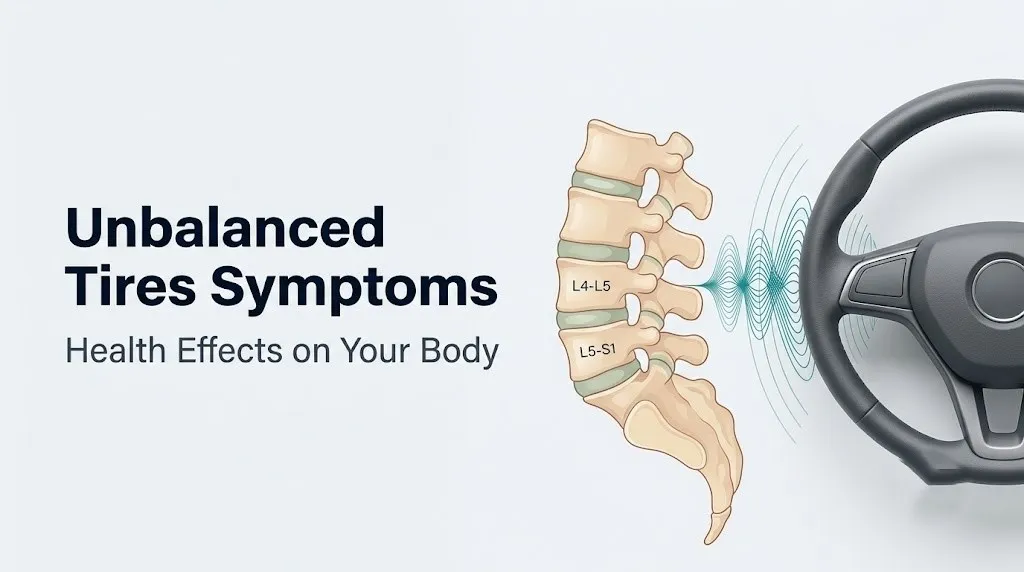
Back pain from unbalanced tires is produced by cyclic compressive and shear loading applied to the lumbar intervertebral discs, lumbar facet joints, and paraspinal musculature by whole-body vibration, with the discs at the L4-L5 and L5-S1 levels being the most biomechanically vulnerable.
The intervertebral discs of the adult lumbar spine are avascular structures: they receive their nutritional supply exclusively through diffusion across the cartilaginous endplates from the adjacent vertebral body capillary beds. This diffusion is driven partly by the alternating compression and decompression of the disc during normal movement (a pumping mechanism). Cyclic vibration at frequencies that do not match the disc’s natural loading rhythm disrupts this diffusion process. Research published in Spine has found that vibration at 4 to 8 Hz (which corresponds to the resonance frequency of the lumbar spine-seat system) significantly impairs endplate diffusion efficiency and accelerates nucleus pulposus dehydration.
A dehydrated nucleus pulposus loses its ability to distribute compressive load evenly across the endplate. The load then concentrates on the annulus fibrosus, the fibrocartilaginous outer ring of the disc, and on the lumbar facet joints. The annular fibers undergo fatigue-type microcracking with repeated compressive loading, and the facet joint cartilage experiences increased shear stress. Both processes are pain-generating through release of prostaglandin E2 and substance P from stressed disc and joint tissue.
The erector spinae and multifidus muscles, the primary spinal stabilizers, must continuously co-contract to dampen the vibration transmitted to the lumbar spine during driving. This sustained low-level activation without rest produces the characteristic dull aching fatigue-type back pain that drivers notice after long highway trips in an imbalanced vehicle.
People with pre-existing lumbar disc herniation at L4-L5 or L5-S1 are at particular risk, because even small additional vibration-induced nucleus pulposus displacement can significantly worsen existing nerve root compression.
Neck Pain and Upper Back Symptoms From Driving With Unbalanced Tires
Driving with unbalanced tires causes neck pain and upper back symptoms through transmission of vibration forces to the cervical spine, sustained isometric contraction of the cervicothoracic paraspinal muscles maintaining head position against vibration, and postural loading of the cervical facet joints at the C5-C6 and C6-C7 levels.
The cervical spine bears the weight of the head, approximately 10 to 12 pounds in the neutral position, continuously during driving. In a vibrating vehicle, the head acts as a pendulum mass at the top of a vibrating column. The cervical paraspinal muscles (semispinalis capitis, splenius capitis, upper trapezius, and levator scapulae) must contract continuously to stabilize the head against the vibration-induced movement impulses transmitted up through the spine from the seat.
This sustained isometric cervicothoracic muscle activation, without the relaxation intervals that voluntary movement provides, produces the fatigue-related neck ache and upper trapezius tightness that many drivers attribute simply to stress or poor posture. The cervical facet joints at C5-C6 and C6-C7 are the most commonly affected intervertebral joints in the cervical spine from vibration loading, because these levels have the greatest mobility and the most mechanically demanding transition between the relatively mobile mid-cervical region and the stiffer cervicothoracic junction.
Research published in the Journal of Occupational Health has found that professional drivers, including bus, truck, and taxi drivers, report significantly higher rates of cervical spine symptoms than non-driving comparison populations, and that vehicle vibration characteristics were among the identified contributing factors independent of driving posture.
Women, who on average have smaller cross-sectional cervical paraspinal muscle mass than men, may reach the muscle fatigue threshold faster during prolonged vibration exposure, producing earlier onset of cervicothoracic symptoms at equivalent driving durations.
How Vibration Frequency and Speed Affect Symptom Severity
Vibration frequency and driving speed determine symptom severity because the body’s resonance response amplifies vibration energy at specific frequencies, turning what seems like mild shaking into concentrated mechanical loading at vulnerable anatomical structures.
Every physical system has a natural resonance frequency: the frequency at which it vibrates most easily when external energy is applied. The human lumbar spine-pelvis-seat system resonates at approximately 4 to 8 Hz, as established by research evaluated in ISO 2631-1. The head and cervical spine system resonates at approximately 20 to 30 Hz. When tire imbalance generates vibration at or near these frequencies, the body does not passively absorb the energy: it amplifies it, producing much larger displacement at the resonant structures than the input vibration magnitude alone would predict.
| Vehicle Speed | Approximate Tire Rotation Frequency | Likely Resonance Effect | Primary Symptom Site |
|---|---|---|---|
| 30 to 45 mph | Low frequency, below spinal resonance | Mild vibration sensation only | Seat and floor contact points |
| 50 to 65 mph | Approaches lumbar spine resonance (4-8 Hz with suspension harmonics) | Amplified lumbar loading | Lumbar spine, sacroiliac joint |
| 65 to 80 mph | Approaches cervicothoracic junction resonance | Combined lumbar and upper back loading | Lumbar and cervicothoracic junction |
| Above 80 mph | Possible multiple harmonic frequencies | Unpredictable resonance amplification; vehicle control risk increases | All spinal levels; safety risk |
The practical implication is clear: symptom severity is not simply proportional to speed. A mild tire imbalance may produce minimal symptoms at 35 mph and significant lumbar pain at 60 mph, because the higher speed places vibration frequency closer to the lumbar resonance band. This is exactly why many drivers report that their back hurts after highway driving but not city driving, even in the same vehicle.
Hand-Arm Vibration Symptoms From a Vibrating Steering Wheel
Hand-arm vibration (HAV) symptoms from a vibrating steering wheel range from early-stage tingling and hand fatigue to late-stage vascular changes, including finger blanching and persistent numbness, classified clinically as hand-arm vibration syndrome (HAVS).
Hand-arm vibration syndrome is a recognized occupational disease in multiple regulatory systems, including the UK Industrial Injuries Disablement Benefit scheme and the EU Physical Agents (Vibration) Directive. It develops through two parallel injury pathways: peripheral nerve damage and peripheral vascular damage to the digital arteries of the fingers and hand.
The neurological component of HAVS involves progressive sensitization and eventual demyelination of the large-diameter sensory nerve fibers (A-beta fibers) in the palmar and digital nerves. These fibers normally carry vibration sense, light touch, and two-point discrimination. When vibration-induced mechanical stress damages their myelin sheaths, the fibers lose their ability to accurately transmit sensory information, producing the characteristic complaint of hands that feel “dead,” “buzzing,” or numb even at rest.
According to the EU Physical Agents (Vibration) Directive 2002/44/EC, the daily HAV exposure action value is 2.5 m/s² A(8), above which employers must implement vibration reduction measures. The limit value is 5.0 m/s² A(8), above which exposure must not occur. Steering wheel vibration from severely unbalanced tires can generate HAV values that approach or exceed the action value during extended highway driving.
Men constitute the majority of documented HAVS cases in occupational health literature, primarily because male-dominated industries (construction, forestry, heavy vehicle operation) involve higher vibration tool and equipment use. However, women driving professionally for extended daily durations face equivalent HAV risk from steering wheel vibration at comparable exposure levels.
Key Takeaway: Hand-arm vibration syndrome (HAVS) from steering wheel vibration is a recognized occupational disease with two parallel injury pathways: peripheral nerve damage and digital artery injury, and the early warning sign is tingling or numbness that outlasts the drive itself.
Peripheral Nervous System Effects of Chronic Vibration in Drivers
Chronic vibration exposure in drivers damages the peripheral nervous system through mechanical stress to nerve myelin sheaths and axons in both the lumbar nerve roots (from WBV) and the upper limb peripheral nerves (from HAV), producing a progression from intermittent symptoms to persistent neurological deficits.
The peripheral nervous system connects the central nervous system to the body’s sensory receptors, muscles, and organs through myelinated and unmyelinated nerve fibers. Vibration is not electrically neutral to nerve tissue: repeated mechanical deformation of nerve fibers produces inflammatory changes in the endoneurium (the connective tissue sheath surrounding individual nerve fibers) and reduces local blood flow in the vasa nervorum (the small blood vessels supplying peripheral nerve tissue).
In the lumbar spine, WBV-induced compression of the L4-L5 and L5-S1 discs can progressively narrow the intervertebral foramina through which the sciatic nerve roots exit the spinal canal. As the foramen narrows, the exiting nerve root is subjected to intermittent compression with each vibration cycle, producing the familiar sciatica pattern: radiating pain from the lower back through the buttock, thigh, and into the calf or foot. This pattern is not the tire imbalance itself: it is the disc damage accumulated from months of WBV exposure expressing itself as a radicular nerve compression symptom.
Research published in the International Journal of Industrial Ergonomics has documented that professional drivers with more than 10 years of occupational WBV exposure show measurably reduced nerve conduction velocity in the lower limb peripheral nerves compared to age-matched non-driving control subjects, consistent with vibration-induced peripheral neuropathy rather than compression alone.
Older drivers, particularly those over age 55, face faster symptom progression because age-related reduction in myelin repair capacity means vibration-induced nerve damage accumulates faster than the peripheral nervous system can repair it.
Unbalanced Tires vs. Other Vehicle Problems: How to Tell the Difference
Unbalanced tires produce a specific vibration pattern that is speed-dependent and wheel-location-specific, distinguishing it from the vibration patterns produced by worn shock absorbers, wheel bearing failure, brake rotor warping, and drive shaft imbalance.
Knowing which vehicle problem is generating the vibration matters for health, not just for repair costs. Different vibration sources produce different vibration frequencies, different transmission pathways through the vehicle, and consequently different anatomical structures bear the primary mechanical load. Worn shock absorbers, for example, allow the entire suspension to oscillate more freely, transmitting lower-frequency, higher-amplitude vertical vibration through the seat that places greater compressive stress on the lumbar discs than the higher-frequency vibration from mild tire imbalance.
| Vehicle Problem | Vibration Pattern | Primary Physical Sensation | Speed Dependency |
|---|---|---|---|
| Tire imbalance | Rhythmic, smooth, oscillating | Steering wheel and seat | Worsens at specific speed range (typically 55-70 mph), may improve above |
| Worn shock absorbers | Bouncing, low-frequency oscillation over bumps | Entire body through seat | Road surface-dependent, not speed-specific |
| Wheel bearing failure | Humming or growling, constant | Seat and floor, one side | Speed-proportional, constant above 30 mph |
| Warped brake rotors | Vibration only during braking | Brake pedal and steering wheel | Braking-only, not constant |
| Drive shaft imbalance | Vibration at specific RPM range | Floor and seat, rear-biased | Engine RPM-related, not simply speed-related |
People with pre-existing lumbar disc disease or cervical spondylosis should be aware that worn shock absorbers typically produce more harmful WBV to the spine than tire imbalance of equivalent perceived severity, because the larger displacement amplitude at lower frequencies aligns more closely with lumbar resonance frequency. Prioritize shock absorber evaluation alongside tire balancing if you have known spinal disease.
Key Takeaway: Tire imbalance vibration peaks at a specific speed window, typically 55 to 70 mph, and is felt in the steering wheel and seat; worn shock absorbers produce low-frequency bouncing over any road surface and are actually more harmful to the lumbar spine than mild tire imbalance.
Who Is Most at Risk for Health Effects From Unbalanced Tires
People at greatest risk for health effects from unbalanced tires are those who drive high daily mileage, already have lumbar disc disease or peripheral neuropathy, grip a vibrating steering wheel for extended periods, or have pre-existing Raynaud’s phenomenon affecting their digital vasculature.
Risk is not uniform. The dose-response relationship between WBV exposure and lumbar disc damage means that a person driving four hours daily on a highway with tire imbalance accumulates far greater spinal loading than a person driving 20 minutes to work on local roads. Duration and magnitude together determine total vibration dose.
Risk factors for WBV-related lumbar injury:
- Daily driving exceeding two to three hours, particularly at highway speeds where WBV magnitude is highest
- Pre-existing lumbar disc herniation or degenerative disc disease at L4-L5 or L5-S1
- Age over 50 (reduced disc hydration and annular fibrocartilage resilience)
- Obesity (body mass index above 30): higher body weight amplifies compressive force at the disc endplate during each WBV cycle
- Pregnancy: the EU Physical Agents (Vibration) Directive specifically identifies pregnant workers as a group requiring vibration exposure reduction, because WBV at higher magnitudes has been associated with adverse pregnancy outcomes in occupational epidemiology research
- Operating a vehicle without adequate seat suspension or lumbar support
Risk factors for HAV-related peripheral nerve and vascular injury:
- Pre-existing Raynaud’s phenomenon or Raynaud’s disease (dramatically increases digital vascular vulnerability)
- Pre-existing carpal tunnel syndrome (median nerve already compromised)
- Tobacco smoking (reduces peripheral vascular reserve capacity, worsening vibration-induced vasoconstriction)
- Cold ambient temperature during driving (vasoconstriction compounds vibration-induced digital artery injury)
Professional and Commercial Drivers: WBV Exposure and Spine Health
Professional and commercial drivers represent the highest-risk occupational group for WBV-related spinal health consequences, because their daily vibration exposure duration substantially exceeds that of private vehicle users and frequently approaches or exceeds the action value established by the EU Physical Agents (Vibration) Directive 2002/44/EC.
Long-haul truck drivers, bus operators, taxi drivers, and rideshare drivers operating for eight or more hours daily are the populations in which vibration-associated lumbar disc degeneration is most thoroughly documented. A systematic review published in Occupational and Environmental Medicine identified whole-body vibration as one of the most consistent occupational risk factors for lumbar disc degeneration in vehicle operators, with professional drivers showing adjusted odds ratios of 1.5 to 3.0 for disc herniation compared to non-driving workers in the same age groups.
The American College of Occupational and Environmental Medicine (ACOEM) recommends that occupational physicians evaluate professional drivers with low back pain for WBV exposure history as part of the clinical assessment, specifically asking about vehicle type, daily driving hours, road surface exposure, and vehicle maintenance status including tire condition.
For professional drivers, unbalanced tires represent a particularly modifiable risk factor. Vehicle operators have no control over road surface roughness or the fundamental physics of suspension design. They do have control over tire maintenance, including maintaining correct inflation pressure (which affects vibration transmission), rotating tires at manufacturer-specified intervals, and scheduling dynamic wheel balancing at the first symptom of steering wheel vibration.
Female professional drivers, who represent a growing proportion of commercial driving occupations, should be aware that pregnancy changes the clinical threshold for acceptable WBV exposure. Any pregnant professional driver experiencing vehicle vibration should raise the issue with their obstetrician-gynecologist and their occupational medicine physician simultaneously, rather than waiting for symptomatic onset.
How Long Before Unbalanced Tires Cause Physical Symptoms
Acute driving discomfort from unbalanced tires can appear within a single long-distance trip, while cumulative musculoskeletal and neurological symptoms from repeated WBV or HAV exposure typically develop over weeks to months of regular driving.
This distinction between acute and chronic symptom onset matters for how a driver interprets what they’re feeling. Paraspinal muscle fatigue after a three-hour highway drive in an imbalanced vehicle is an acute response to a single high-dose WBV exposure session. It resembles the muscle soreness of unaccustomed exercise and typically resolves within 24 to 48 hours with rest. This pattern does not indicate structural damage.
The chronic symptom pattern is different. It develops after repeated WBV or HAV exposures, each of which causes small increments of microtrauma to disc tissue, nerve myelin, or digital vasculature that the body partially but incompletely repairs between exposures. The cumulative deficit eventually crosses the threshold for persistent symptoms.
| Symptom Type | Typical Onset Pattern | Duration Without Treatment | Reversibility |
|---|---|---|---|
| Paraspinal muscle fatigue and ache | Single long drive | 24 to 48 hours | Fully reversible with rest |
| Lumbar disc microtrauma | Weeks to months of repeated WBV | Persistent and worsening | Partially reversible if WBV is removed; disc changes may be permanent |
| Cervicothoracic muscle fatigue | Single long drive | 24 to 48 hours | Fully reversible with rest |
| Early HAV tingling (during exposure) | First weeks of regular HAV | Resolves after exposure ends initially | Reversible at Stage 1; becomes persistent at Stage 2-3 |
| Established peripheral neuropathy from HAV | Months to years of regular exposure | Persistent, present at rest | Poorly reversible at advanced stages |
| Vibration-induced Raynaud’s phenomenon | Months to years | Triggered by cold or vibration, then progressively more frequent | Partially reversible if exposure removed early |
Younger drivers (under 30) tend to recover from acute vibration exposures more completely than older drivers, because disc hydration, annular fibrocartilage integrity, and peripheral nerve repair capacity are all greater in younger musculoskeletal tissue.
Key Takeaway: Acute muscle soreness after one long drive resolves in 48 hours and is not structural injury; persistent or recurring symptoms after repeated drives signal cumulative disc, nerve, or vascular microtrauma that requires tire correction first and medical evaluation if symptoms persist beyond two weeks.
Diagnosing Vibration-Related Musculoskeletal Symptoms in Drivers
Diagnosing musculoskeletal symptoms in drivers with a history of WBV exposure requires a specific occupational history, targeted physical examination, and selected diagnostic imaging or nerve conduction testing to distinguish vibration-induced pathology from other causes of back pain, neck pain, or hand numbness.
When you visit a primary care physician or orthopedic spine specialist about back pain or neck pain that you believe is related to driving, the clinical assessment needs specific occupational exposure information that many physicians do not automatically ask for. Providing it proactively makes the evaluation more accurate.
To describe your vibration-related symptoms accurately to a physician:
- Document your daily and weekly driving hours, distinguishing highway from local road driving, as WBV magnitude is substantially higher at highway speeds.
- Describe the onset pattern: whether symptoms are worst immediately after long drives, the next morning, or are now present regardless of driving.
- Note whether the symptoms include any of these neurological features: leg pain radiating below the knee, foot numbness or weakness, hand tingling that persists after driving, finger color changes in cold weather.
- Bring information about the vehicle and its maintenance history, including when tires were last balanced and whether you have noticed steering wheel vibration.
- Note any change in symptom pattern after driving a different, better-maintained vehicle.
Diagnostic tests a physician may order include:
- Magnetic resonance imaging (MRI) of the lumbar or cervical spine to evaluate disc hydration, annular integrity, facet joint condition, and nerve root compression
- Nerve conduction velocity (NCV) testing and electromyography (EMG) to assess peripheral nerve function in the lower or upper limbs
- X-ray of the lumbar spine (limited value for soft tissue but can show disc space narrowing or spondylolisthesis)
- Doppler ultrasound of digital arteries for suspected vibration-induced vascular changes in the hands
When Driving Vibration Symptoms Require Medical Evaluation
Driving vibration symptoms require medical evaluation when they persist beyond 48 hours after the drive ends, produce any neurological feature, affect driving safety, or have been present and progressively worsening over weeks to months.
Specific thresholds that warrant a physician appointment:
- Back pain after driving that persists for more than two weeks despite rest and cessation of driving in the imbalanced vehicle
- Leg pain, tingling, or numbness radiating from the lower back into the buttock, thigh, calf, or foot, which may indicate lumbar radiculopathy from disc herniation exacerbated by WBV
- Numbness or tingling in the hands or fingers that persists for more than 30 minutes after the drive ends
- Finger blanching (white or blue discoloration) triggered by cold or vibration exposure, which may indicate early vibration-induced Raynaud’s phenomenon
- Any weakness in the legs that was not present before the onset of driving-related symptoms
- Neck pain accompanied by arm tingling or hand weakness, suggesting cervical nerve root involvement
- Symptoms that are worsening in severity or frequency over time despite reduced driving
A primary care physician is the appropriate first contact for any of these presentations. Orthopedic spine specialists or physiatrists (physical medicine and rehabilitation physicians) manage confirmed lumbar or cervical disc and nerve root pathology. Neurologists evaluate peripheral neuropathy from HAV exposure. Vascular medicine specialists or rheumatologists assess vibration-induced Raynaud’s phenomenon. Occupational medicine physicians specifically assess and document WBV and HAV exposure in the context of work-related driving.
How to Reduce WBV Health Risk While Driving
Reducing whole-body vibration health risk while driving requires addressing vibration at its source (the vehicle) and at the transmission pathway (the seat and driving posture), with tire balancing as the first and most modifiable intervention.
Getting tires dynamically balanced at the first sign of steering wheel vibration eliminates the rotational mass asymmetry that drives WBV and HAV generation. Dynamic wheel balancing places small counterweights at precisely calculated positions around the wheel rim to neutralize the centrifugal force imbalance. The National Institute for Occupational Safety and Health (NIOSH) identifies vehicle maintenance as the primary vibration control hierarchy measure for professional drivers.
Beyond tire correction, evidence-based WBV reduction strategies include:
- Maintaining correct tire inflation pressure: underinflated tires increase vibration transmission by reducing the tire’s ability to absorb road surface irregularities
- Using a seat with an integrated air-suspension system if driving professionally for extended hours: active seat suspension systems reduce WBV transmission to the occupant by 30% to 60% compared to rigid seats, based on engineering studies
- Maintaining proper lumbar support: a contoured lumbar support keeps the lumbar spine in its natural lordotic curve, reducing the shear stress applied to L4-L5 and L5-S1 discs during WBV
- Taking driving breaks every 90 minutes to allow paraspinal muscles to recover from sustained isometric activation
- Checking wheel alignment at the same service appointment as balancing: misalignment adds lateral vibration forces that compound the effects of rotational imbalance on the steering system and upper limb
- Wearing padded anti-vibration driving gloves if HAV symptoms are present: these attenuate high-frequency vibration transmission to the palmar and digital nerves
Pregnant drivers should prioritize all of these measures simultaneously and discuss their driving hours with their obstetrician-gynecologist, as WBV exposure during pregnancy carries specific maternal and fetal considerations beyond the musculoskeletal concerns relevant to non-pregnant drivers.
Emergency Safety Situations Caused by Severely Unbalanced Tires
Severely unbalanced tires symptoms include a sudden emergency vehicle safety risk when imbalance is severe enough to cause structural tire failure, loss of steering control at speed, or wheel separation, all of which can occur without warning and require immediate emergency response.
Certain situations associated with unbalanced tires require immediate emergency action. Do not wait to see if these resolve on their own.
Call 911 immediately or pull over and stop the vehicle as safely as possible if you experience:
- Sudden, violent steering wheel pulling or jerking that you cannot control: this may indicate tire failure, wheel separation, or suspension component failure related to the imbalance-induced mechanical stress
- A sudden loud bang or rapid loss of vehicle height on one side while driving: possible tire blowout, which can cause immediate loss of directional control
- Any sudden change in the vehicle’s straight-line tracking that requires continuous steering input to maintain lane position at highway speed
- Visible wobbling of a wheel or tire visible in mirrors or reported by another driver: severe dynamic imbalance can cause wheel fastener fatigue; this is a wheel separation risk
Go to the nearest emergency room immediately if you experience any of the following after a drive in a severely vibrating vehicle:
- Sudden onset of severe back pain with bilateral leg weakness: this may indicate cauda equina syndrome from acute disc herniation exacerbated by extreme WBV, which is a surgical emergency
- Loss of bladder or bowel control combined with back pain and leg numbness: Go to the emergency room immediately. This is cauda equina syndrome until proven otherwise.
- Sudden arm weakness combined with neck pain: may indicate acute cervical disc herniation with spinal cord or nerve root compression
Call 911 for any vehicle emergency involving loss of control. Go to the nearest emergency room for any sudden onset neurological emergency after a driving episode involving severe vibration. These presentations require emergency medical assessment, not an urgent care appointment or a phone call.
Frequently Asked Questions About Unbalanced Tires Symptoms
Can unbalanced tires cause back pain?
Yes, unbalanced tires cause back pain by generating whole-body vibration that applies cyclic compressive and shear loading to the lumbar intervertebral discs, lumbar facet joints, and erector spinae and multifidus paraspinal muscles.
Research published in Occupational and Environmental Medicine has documented accelerated lumbar disc degeneration in professional drivers with high whole-body vibration exposure, consistent with a dose-response relationship between vibration magnitude, exposure duration, and spinal injury.
Back pain that is worst after long highway drives and improves with rest may point to WBV as a contributing factor, particularly if the vehicle produces noticeable steering wheel or seat vibration.
What do unbalanced tires feel like when driving?
Unbalanced tires produce a rhythmic vibration felt most distinctly in the steering wheel and driver’s seat, which typically worsens at a specific speed range, most commonly between 55 and 70 mph, and may partially diminish at higher speeds.
The vibration is sinusoidal and smooth, distinguishing it from the bumpy oscillation of worn shock absorbers or the constant humming of a failing wheel bearing.
Many drivers describe the sensation as the steering wheel “shaking itself” rather than in response to road surface irregularities.
How do I know if my symptoms are from tire imbalance or something else?
Back pain or hand tingling that appears only after highway driving and resolves within 24 to 48 hours of rest suggests WBV from tire imbalance as a contributing factor, particularly if the vehicle produces noticeable vibration at highway speeds.
Symptoms that persist regardless of driving, occur in other non-driving situations, or are associated with fever, unexplained weight loss, or unilateral leg weakness below the knee require medical evaluation because a spinal or systemic cause must be ruled out before attributing symptoms to vibration alone.
A primary care physician can perform the initial clinical assessment and order imaging or nerve conduction testing to distinguish vibration-associated pathology from other causes.
Can driving with unbalanced tires damage my spine?
Prolonged driving with unbalanced tires can cause cumulative damage to the lumbar intervertebral discs at the L4-L5 and L5-S1 levels, because the whole-body vibration generated by imbalance applies repeated cyclic loading to disc tissue at frequencies that impair endplate diffusion and accelerate nucleus pulposus dehydration.
Research evaluated in ISO 2631-1 identifies vibration at 4 to 8 Hz, which corresponds to the resonance frequency of the lumbar spine, as the most harmful frequency range for disc tissue integrity.
A single short drive rarely causes structural damage; the risk accumulates over weeks to months of repeated high-duration exposures, particularly in drivers with pre-existing disc disease.
How often should I get my tires balanced to protect my health?
Most tire manufacturers and the National Institute for Occupational Safety and Health recommend dynamic wheel balancing every 5,000 to 7,500 miles or any time new tires are installed, wheels are repaired, or steering wheel vibration is noticed.
For professional drivers who drive more than three hours daily, maintaining proper tire balance is a direct occupational health measure, not merely a vehicle maintenance task, because their cumulative WBV exposure makes them the highest-risk group for vibration-induced lumbar disc degeneration.
Any driver who notices a new steering wheel vibration should have tires checked within the next 500 miles, rather than waiting for the next scheduled service, because vibration magnitude typically worsens as imbalance progresses.
When should I see a doctor because of symptoms from driving vibration?
You should see your primary care physician when driving-related back pain, neck pain, or hand tingling persists for more than two weeks after correcting the vehicle’s tire imbalance and reducing driving hours.
Urgent evaluation by a primary care physician within one to two days is warranted if you develop leg tingling or numbness radiating below the knee, hand weakness, or finger blanching triggered by cold or vibration.
Go to the nearest emergency room immediately for sudden onset of bilateral leg weakness, loss of bladder or bowel control, or severe acute back pain with leg numbness after a driving episode.
Unbalanced tires are a vehicle maintenance problem, but their physical consequences are a human health problem. The two most actionable things to do right now are to schedule dynamic wheel balancing if your steering wheel vibrates at highway speed, and to pay attention to whether your back pain, neck pain, or hand tingling follows a driving pattern. If it does, that pattern is diagnostically useful information.
Take that pattern to your primary care physician. Describe your daily driving hours, the road types you cover, and exactly when your symptoms appear and resolve. If you drive professionally, tell your physician specifically: your WBV exposure history belongs in your clinical record.
The drivers who develop chronic disc disease from vibration exposure are not the ones who noticed something was wrong. They are the ones who noticed and waited.