Bad Serpentine Belt Symptoms: 16 Warning Signs (2026)
Bad serpentine belt symptoms range from a high-pitched squeal under the hood to sudden loss of power steering, battery warning lights, and engine overheating. Recognizing these signs early is the difference between a routine belt replacement and being stranded on the side of a highway with an overheated engine.
According to Gates Corporation, one of the largest automotive belt manufacturers in the world, modern EPDM (ethylene propylene diene monomer) serpentine belts can travel 60,000 to 100,000 miles before replacement. But wear progresses invisibly in EPDM belts, unlike the visible cracking seen in older neoprene belts, making symptom recognition the most reliable early warning system most drivers have.
This guide covers every warning sign your serpentine belt may be failing, explains the specific mechanical reason each symptom occurs, and tells you exactly when to pull over rather than drive to a shop.
Bad Serpentine Belt Symptoms
Bad serpentine belt symptoms include squealing or chirping noises from the engine bay, visible cracking or fraying on the belt surface, battery or charge warning lights, loss of power steering assistance, engine overheating, and air conditioning failure. These symptoms often appear in clusters rather than one at a time, because the serpentine belt powers multiple vehicle systems simultaneously.
A single worn belt can trigger warning signs across several vehicle systems at once. A driver who notices the battery light on the same morning their power steering feels heavy is not dealing with two separate problems. They may be dealing with one belt delivering insufficient rotational force to both the alternator pulley and the power steering pump pulley at the same time.
The table below summarizes the most common bad serpentine belt symptoms by urgency level. The progression from mild to severe matters because the response time is different at each stage.
| Symptom | Failure Mode | Urgency Level |
|---|---|---|
| Squealing noise (intermittent) | Belt slipping or glazed | Schedule inspection within 1 week |
| Chirping noise (persistent) | Pulley misalignment or belt wear | Schedule inspection within 3 days |
| Battery warning light | Alternator undercharging | Inspect same day |
| Power steering heaviness | Belt slip on PS pump pulley | Inspect same day |
| AC sudden failure | Belt slip on AC compressor | Inspect same day |
| Engine temperature rising | Water pump drive reduced | Stop driving, call for service |
| Belt pieces visible | Belt shredding or separating | Stop driving immediately |
| Complete belt snap | Total accessory drive failure | Pull over and stop immediately |
Older drivers of vehicles manufactured before approximately 2000 may have V-belts (individual belts per accessory) rather than one serpentine belt. In those vehicles, losing one belt means losing only the components that belt served. A broken serpentine belt in a modern vehicle, by contrast, can disable every powered accessory at the same instant.
What Is a Serpentine Belt and What Does It Do
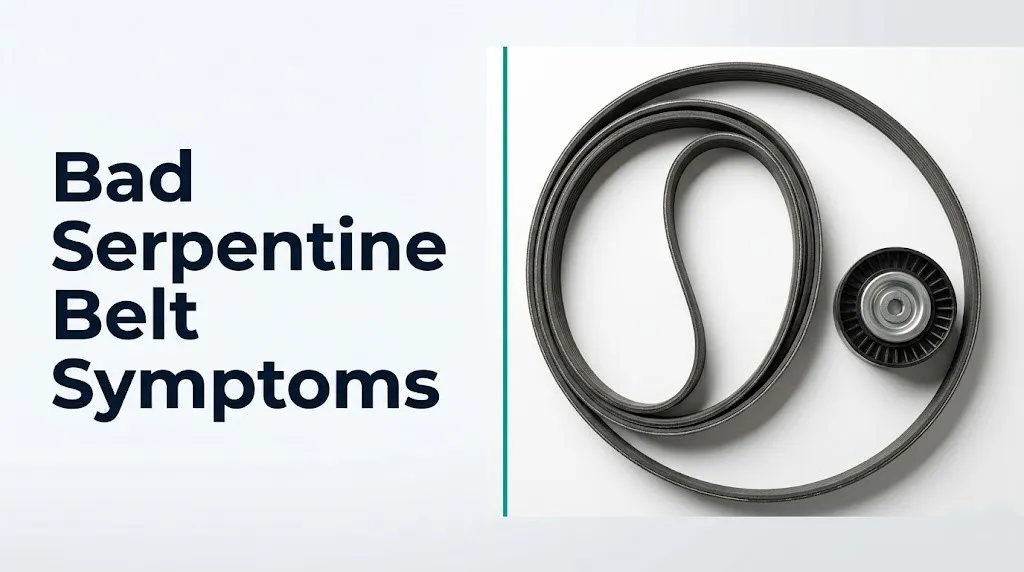
A serpentine belt is a single, continuous, multi-ribbed rubber belt that winds around a series of pulleys in the engine compartment and transfers rotational energy from the crankshaft pulley to multiple accessory components simultaneously. It replaced the older system of multiple V-belts by the 1990s on most passenger vehicles.
Think of the serpentine belt like a single power line that runs to every appliance in your house. The crankshaft is the power plant. The belt is the line. Cut the line in one place and everything downstream loses power at exactly the same moment.
The belt typically drives the alternator (which charges the 12-volt battery and powers electrical systems), the power steering pump (in vehicles with hydraulic power steering), the air conditioning compressor, and in many vehicles the water pump that circulates engine coolant. Some engines also route the belt through an idler pulley (a non-driven guide pulley) and an automatic belt tensioner (a spring-loaded device that maintains consistent belt pressure against the pulleys).
The crankshaft, positioned at the bottom of the engine block, converts the linear force of pistons firing into rotational force. That rotational force enters the serpentine belt at the crankshaft pulley, which is typically the largest pulley in the routing path. Belt width, rib count, and tension are all engineered to the specific torque requirements of the accessories in that vehicle’s configuration.
Vehicles with electric power assisted steering (EPAS), which includes most vehicles manufactured after approximately 2012, do not use a belt-driven power steering pump. In those vehicles, a failing serpentine belt will not produce power steering loss as a symptom. The steering system will function normally even if the belt is completely gone. This is a meaningful population-specific difference: a driver of a newer EPAS-equipped vehicle may not realize their belt has failed because the steering still works.
Symptoms of a Bad Serpentine Belt
The symptoms of a bad serpentine belt fall into three categories: acoustic symptoms (sounds the belt or associated pulleys produce), functional symptoms (specific vehicle systems that stop working properly), and visual symptoms (what you can observe by looking at the belt directly). Understanding which category your symptom falls into helps identify how far the failure has progressed.
Acoustic symptoms tend to appear earliest, often months before functional symptoms develop. A belt that is beginning to slip produces a squeal. A belt with cracking or rib damage produces a rougher chirp or grinding sound. A belt that has completely snapped produces a sudden loud snap followed by immediate silence from the engine accessories.
Functional symptoms follow acoustic symptoms when belt condition deteriorates to the point where it can no longer maintain adequate grip on the pulleys. The order in which functional symptoms appear depends on which accessory loses grip first, which varies by belt routing and pulley load.
Visual symptoms are the most definitive. According to Gates Corporation’s belt wear documentation, EPDM belts do not show the dramatic visible cracking that older neoprene belts showed. Instead, they show rib wear (measured as rib height loss) and micro-cracking that requires a belt wear gauge or close inspection with adequate lighting to identify. Visible chunking, rib separation, fraying at the belt edges, or a glazed, shiny belt surface are late-stage visual symptoms that mean the belt needs replacement immediately regardless of mileage.
Key symptoms of a bad serpentine belt include:
- High-pitched squealing that occurs on cold startup and may diminish as the engine warms
- Persistent chirping under load (turning the steering wheel, activating the AC)
- Battery warning or charge warning light illuminating on the instrument panel
- Engine temperature gauge rising above normal operating range
- Power steering that feels heavy or requires noticeably more effort to turn
- Air conditioning that stops cooling or cycles off under engine load
- Visible cracks, fraying, missing ribs, or a shiny glazed surface on the belt itself
Drivers in colder climates should note that low temperatures increase belt stiffness and can cause belts to squeal on cold startup even when they are not yet at the end of their service life. The American Automobile Association (AAA) reports that cold weather is among the most common triggers for belt noise complaints that turn out to be minor belt stiffness rather than structural wear. The sound should disappear within two to three minutes of the engine reaching operating temperature if cold startup stiffness is the only cause.
Key Takeaway: A bad serpentine belt often announces itself first as a squeal or chirp months before it causes functional failure in the alternator, power steering pump, or water pump, making early sound recognition the most practical early warning system available.
What Does a Bad Serpentine Belt Sound Like
A bad serpentine belt most commonly sounds like a high-pitched squeal or a repetitive chirping noise coming from the front of the engine compartment, typically varying in pitch with engine RPM and often intensifying when electrical or steering loads are applied.
The squeal is produced by belt slip. When a belt has insufficient tension or has become glazed (its rubber surface smoothed by heat and friction), it no longer grips the pulley surface with full efficiency. The pulley continues rotating. The belt surface slides across it. That sliding friction produces the characteristic squeal in the same way dragging rubber across a polished surface creates noise.
Chirping is mechanically distinct from squealing. Chirping is typically caused by a single rib of the belt making intermittent contact with a damaged or misaligned pulley. The sound repeats at a rate that corresponds to pulley rotation speed, creating the rhythmic chirping pattern. This pattern usually means a pulley has developed a flat spot, a slight wobble, or has a surface groove that one rib is catching on each rotation.
| Belt Sound | Most Likely Mechanical Cause | When It Occurs |
|---|---|---|
| High-pitched squeal | Belt slipping on pulley surface | Cold startup, high load, sharp turns |
| Repetitive chirp | Pulley misalignment or rib contact irregularity | Constant at idle, worsens under load |
| Deep squeaking | Belt edge contact with pulley flange | Turning, belt misalignment |
| Grinding or rumbling | Tensioner bearing or idler bearing worn | Constant, worsens at higher RPM |
| Sudden bang or snap | Belt fracture and separation | Single occurrence, immediate system failure |
Drivers should pay attention to whether the noise changes when they turn on the air conditioning, turn the steering wheel sharply, or rev the engine. A squeal that intensifies when the AC is switched on points toward belt slip specifically at the AC compressor pulley. A squeal that worsens when the steering wheel is turned to the lock points toward the power steering pump pulley.
Vehicles with older drivers or higher ambient noise in the cabin (road noise, music, conversation) may not detect early acoustic symptoms. For drivers over 60, who statistically have higher rates of age-related hearing loss in the upper frequency range, a high-pitched belt squeal may simply not be audible inside the cabin. Checking the belt visually at each oil change is a practical compensatory inspection strategy for any driver who cannot reliably hear high-frequency cabin noises.
Loose Serpentine Belt Symptoms
Loose serpentine belt symptoms appear when the automatic belt tensioner has weakened, worn, or failed and can no longer apply adequate spring pressure to keep the belt in firm contact with all pulleys in the routing path. A belt that is technically undamaged but running at insufficient tension will slip and behave like a worn belt.
The automatic tensioner is a spring-loaded arm with a pulley mounted at its end. The spring maintains constant outward pressure against the belt, taking up slack as the belt stretches slightly with heat cycles and age. When that spring weakens, the tensioner arm moves further inward and belt tension drops. A tension gauge reading below the manufacturer’s specification is the diagnostic confirmation of a loose belt condition.
Loose belt symptoms often present differently than cracked or worn belt symptoms. A loose belt tends to produce symptoms that are load-dependent: they appear when electrical or mechanical demand on an accessory spikes, then subside when the load drops. The battery warning light may flash on during hard acceleration then disappear at idle. The power steering may feel normal on straight roads but noticeably heavy during slow parking maneuvers.
Loose serpentine belt symptoms include:
- Intermittent squealing that appears under load and disappears at idle
- Battery warning light that flashes rather than illuminating steadily
- Power steering that feels sluggish only when making tight turns or during slow maneuvers
- Belt that visibly moves or flaps when viewed with the hood open at idle (normal belts maintain steady position)
- Tensioner arm that is visibly bottomed out against its travel limit stop
Vehicles with high-displacement engines (V8 trucks, performance vehicles) place more torque load on the serpentine belt system than smaller four-cylinder engines. A tensioner that is borderline adequate in a four-cylinder application may fail to maintain adequate tension much earlier in a V8 configuration with a larger alternator, larger AC compressor, and hydraulic power steering pump all on the same belt. Owners of larger-engine trucks and SUVs should inspect the tensioner specifically at the 60,000-mile mark regardless of belt condition.
Cracked Serpentine Belt Symptoms
Cracked serpentine belt symptoms may be subtle at first because small surface cracks do not immediately reduce belt function, but progressive cracking leads to rib separation and belt shredding, which produce sudden and complete accessory failure.
Cracking in older neoprene belts is visible as transverse cracks running across the ribbed inner surface of the belt. The widely cited old guideline of replacing a belt at 3 to 4 cracks per inch no longer applies to modern EPDM belts. EPDM belts are significantly more crack-resistant at the surface level, so visual crack counting dramatically underestimates wear in modern vehicles. Gates Corporation’s engineering guidance states that EPDM belts require a belt wear gauge to measure rib height loss, because they can be at end-of-life without showing the cracking pattern that would have condemned a neoprene belt.
What this means practically: a driver of any vehicle built after approximately 2000 who inspects their belt for cracks and sees none should not conclude the belt is healthy. The absence of visible cracking in an EPDM belt does not confirm belt serviceability.
Cracked serpentine belt symptoms include:
- Visible transverse cracks on the ribbed inner surface (more than 3 per inch in older neoprene belts)
- Belt surface that appears dry, weathered, or has a surface checked (fine network of surface cracks) texture
- Missing chunks or pieces of rib material on the belt surface
- Fraying or uneven wear at the belt edges indicating misalignment contributing to wear
- Belt dust or rubber debris visible on accessory components below the belt routing path
- Late-stage symptoms including intermittent squealing progressing to persistent squealing then functional failure
In geographic regions with extreme temperature variation, belt cracking accelerates. Heat causes rubber oxidation. Cold causes the belt material to contract and stiffen. The repeated thermal cycling of driving in climates with large temperature swings (mountain regions, northern states with cold winters, desert regions with extreme heat) shortens belt life below the manufacturer’s stated mileage interval. Drivers in these regions should request belt inspection at every 40,000 to 50,000 miles rather than waiting for the standard 60,000 to 90,000-mile interval listed in the owner’s manual.
Key Takeaway: EPDM serpentine belts (used in most vehicles since approximately 2000) do not show the visible cracking that condemned older neoprene belts, so symptom recognition and mileage-based inspection schedules are more reliable than visual crack counting alone.
Broken Serpentine Belt Symptoms
Broken serpentine belt symptoms are sudden, simultaneous, and unmistakable: multiple vehicle systems fail at exactly the same moment the belt separates, and driving the vehicle safely for more than a minute or two becomes impossible or dangerous.
When the serpentine belt snaps, the crankshaft continues spinning but no power reaches any accessory component. The alternator stops generating electricity within seconds. The battery immediately begins supplying all electrical power from its reserve charge alone, which in most vehicles supports approximately 15 to 30 minutes of operation before complete electrical failure, though this window varies significantly by battery state of charge and electrical load.
The water pump, if belt-driven (which is the case in most gasoline-powered passenger vehicles), stops circulating coolant through the engine. Engine temperature will begin rising almost immediately. In most vehicles, permanent engine damage from overheating can occur within 5 to 10 minutes of coolant circulation stopping, depending on ambient temperature, starting engine temperature, and load.
Broken serpentine belt symptoms include:
- A sudden loud snap or bang from the engine bay followed by immediate changes in vehicle behavior
- Immediate loss of power steering effort (in vehicles with hydraulic systems) making the steering wheel feel dramatically heavier
- Battery warning light illuminating immediately and staying on
- Engine temperature gauge rising rapidly
- Air conditioning failing immediately
- Possible shredded belt material visible in the engine compartment or trailing from the vehicle
- All the above occurring simultaneously rather than progressively
Drivers of EPAS-equipped vehicles (most vehicles 2012 and newer) will not experience the sudden steering weight increase because their power steering is electrically operated and continues running briefly on battery reserve. This means a driver of a newer vehicle may experience a softer initial warning when the belt breaks, losing primarily the battery charge warning and noting the temperature gauge rising before any dramatic steering change occurs. This can create a false sense that the situation is less urgent than it actually is.
Can a Bad Serpentine Belt Cause Overheating
A bad serpentine belt can absolutely cause engine overheating, and in many vehicles this is the fastest and most dangerous consequence of complete belt failure. In any vehicle where the water pump is driven by the serpentine belt rather than by the timing belt or timing chain, belt failure stops coolant circulation immediately.
Here is the mechanical sequence: the engine generates heat every time a fuel-air mixture combusts in the cylinders. The water pump moves coolant from the radiator through the engine block and cylinder head, absorbing that heat, then returns the warmed coolant to the radiator where it releases heat to the air. That cycle depends entirely on water pump rotation, which in belt-driven configurations depends entirely on the serpentine belt.
A belt that is slipping (but not broken) may cause partial reduction in water pump speed, producing gradually rising engine temperatures rather than rapid overheating. This intermittent symptom pattern is an important diagnostic clue: an engine that runs hot only at low speeds or in stop-and-go traffic, then returns to normal at highway speeds (when belt tension improves), points toward belt slipping rather than a coolant system failure.
To check whether your water pump is belt-driven or timing-chain driven in your specific vehicle:
- Locate the belt routing diagram, typically printed on a sticker inside the engine compartment near the hood latch or radiator support.
- Identify whether the water pump pulley is included in the serpentine belt routing path.
- If the water pump pulley is not on the diagram, your water pump is driven by the timing belt or timing chain and will not be affected by serpentine belt failure.
- Consult your vehicle owner’s manual or a qualified mechanic if the routing diagram is not present or is illegible.
Drivers of high-performance vehicles with upgraded cooling systems should note that even a performance radiator cannot compensate for a stopped water pump. Coolant must circulate to transfer heat. Sitting at idle with a broken belt and a high-capacity radiator produces the same overheating timeline as in a standard vehicle.
Can a Bad Serpentine Belt Affect Power Steering
A bad serpentine belt can directly cause loss of power steering assistance in vehicles equipped with hydraulic power steering (HPS) systems. The belt drives the power steering pump pulley, and the pump generates the hydraulic pressure that assists turning effort. Reduced belt grip means reduced pump output. No belt means no hydraulic assistance at all.
In practice, a driver notices this as dramatically increased steering effort. The steering wheel still turns, but it requires approximately three to four times more physical force than normal, particularly at low speeds and during parking maneuvers. At highway speeds, most drivers find the vehicle still steerable because aerodynamic forces and momentum reduce the required turning force, but control is compromised.
According to the National Highway Traffic Safety Administration (NHTSA), sudden unexpected changes in steering response are among the vehicle conditions associated with elevated accident risk. A driver who loses power steering unexpectedly at highway speed may be startled and overcorrect. The safe response is to reduce speed gradually, avoid sudden steering inputs, and exit the road as smoothly as possible.
Vehicles with electric power assisted steering (EPAS) use an electric motor mounted on the steering column or rack rather than a belt-driven hydraulic pump. In these vehicles, a broken serpentine belt does not immediately cause steering loss. The electric steering motor continues operating on battery reserve power. However, as the battery discharges over 15 to 30 minutes without alternator charging, the EPAS system may lose power and steering assistance will then diminish as well. A driver of an EPAS vehicle who breaks the belt and ignores the battery warning light long enough will eventually experience steering loss as a secondary symptom.
Quick Tip:
- If steering suddenly becomes heavy while driving, reduce speed smoothly without sharp corrections.
- Do not attempt to continue driving normally. The physical effort required can cause fatigue-related loss of control.
- For drivers with reduced upper body strength (older adults, individuals with certain musculoskeletal conditions), the steering effort of an unpowered rack is substantially more demanding than for average drivers; pulling over immediately is the correct response.
Key Takeaway: Whether a bad serpentine belt causes power steering loss depends entirely on whether your vehicle uses a hydraulic or electric power steering system, a distinction that depends primarily on your vehicle’s model year.
Can a Bad Serpentine Belt Cause Battery Problems
A bad serpentine belt causes battery problems because the belt drives the alternator, and the alternator is responsible for maintaining the vehicle’s electrical charging. Without adequate alternator output, the battery drains progressively with every electrical demand the vehicle makes.
The alternator works by converting mechanical rotational energy (from the belt turning the alternator pulley, which spins the alternator rotor inside the stator) into alternating current, then into direct current through the rectifier. A healthy alternator in a running vehicle produces approximately 13.5 to 14.7 volts across the battery terminals. The vehicle’s electrical management system monitors this voltage constantly. When belt slip reduces alternator rotor speed enough to drop output below the charging threshold, the battery warning light or charge warning light illuminates on the instrument panel.
A battery warning light triggered by a belt problem looks identical to one triggered by an alternator failure, a failing battery, or a bad alternator voltage regulator. The light alone does not tell you which component is failing. However, if the battery warning appears alongside any other belt symptom (squealing, heavy steering, AC failure), the belt should be the first component inspected.
| Battery Warning Light Cause | Other Symptoms Present | Next Step |
|---|---|---|
| Belt slip on alternator pulley | Squealing, intermittent nature | Belt and tensioner inspection |
| Alternator internal failure | No other belt symptoms | Alternator output test |
| Failing 12-volt battery | Slow cranking at startup | Battery load test |
| Damaged alternator wiring | Intermittent light with no sounds | Wiring and connector inspection |
| Bad voltage regulator | Voltage reading outside 13.5 to 14.7V | Alternator output test |
Drivers with start-stop technology (a fuel-saving system that shuts off the engine at red lights and restarts it automatically) should note that their vehicles place more demand on the alternator and battery than conventional vehicles. In these vehicles, a mildly slipping belt may drain the battery faster than in a conventional vehicle, producing a battery warning sooner and at a less advanced stage of belt wear. This makes start-stop vehicles somewhat better early warning detectors of belt slip, but also more sensitive to mild belt wear that a non-start-stop vehicle might tolerate for longer.
AC Not Working From a Bad Serpentine Belt
Air conditioning failure caused by a bad serpentine belt occurs when the belt can no longer maintain adequate engagement with the AC compressor pulley to spin the AC compressor clutch mechanism. The compressor circulates refrigerant through the air conditioning system. Without the compressor running, the refrigerant stops cycling and cabin cooling stops immediately.
A working AC compressor cycles on and off under normal operation, which is why a small squeal or squeak when the AC is first activated can sometimes be belt-related. As the compressor clutch engages, it briefly increases the rotational load on the belt. A marginally worn or slipping belt may squeal briefly at that engagement point, then quiet down once the compressor reaches operating speed.
This load-at-engagement pattern is diagnostically useful. If your belt squeals exactly when you switch the AC on (rather than continuously), the belt and AC compressor pulley interaction is the most likely source. A mechanic can confirm this by checking belt condition and tension, then observing the system with the AC activated.
Not all AC failures in the context of belt symptoms are belt-caused. The AC compressor has its own internal components that can fail independently. A compressor with a seized bearing will place excessive drag on the belt, potentially causing belt slip and damage even on an otherwise healthy belt. This is an important directional distinction: in most cases, the belt fails first and causes AC problems. But occasionally a failing AC compressor causes belt problems by overloading it.
Younger passengers and drivers in vehicles without functioning AC in extreme heat conditions face a safety risk beyond inconvenience. The Centers for Disease Control and Prevention reports that heat-related illness can progress rapidly in confined vehicle spaces. If belt failure causes AC failure in extreme heat, opening windows and minimizing driving time to reach a shop is the appropriate response, particularly for passengers who are elderly, young children, or those with cardiovascular conditions.
How to Check a Serpentine Belt for Damage
You can check a serpentine belt for damage at home by inspecting the belt’s inner ribbed surface, edges, and overall tension, but a complete assessment of EPDM belt wear requires a belt wear indicator gauge that measures rib height loss.
Follow this inspection sequence for a safe and thorough visual check:
- Turn off the engine completely and allow it to cool for at least 20 minutes before reaching into the engine compartment near any pulleys or belts.
- Locate the belt routing diagram inside the engine compartment. Identify where the serpentine belt runs so you know which components to trace the belt around.
- Use a flashlight to examine the inner ribbed surface of the belt. Look for visible cracks running perpendicular to the ribs, missing chunks of rib material, or ribs that appear flattened or significantly worn.
- Examine the belt edges. Fraying, uneven wear, or material peeling from the edge indicates pulley misalignment and should be reported to a mechanic regardless of belt mileage.
- Check the belt surface for glazing: a shiny, smooth appearance on the rib tops indicates the belt has been slipping against pulley surfaces and is losing grip capacity.
- Press the belt gently between two pulleys (with the engine completely off). A healthy belt should feel firm. A belt with excessive play or slack may indicate a failing tensioner rather than (or in addition to) belt wear.
- If you have a belt wear indicator gauge (available at most auto parts stores), press it against the belt ribs. The gauge indicates whether rib height has worn below the replacement threshold.
A qualified automotive technician should be consulted when:
- The belt is at or past the manufacturer’s recommended replacement mileage
- Any visual abnormality is found during inspection
- Belt symptoms (sounds, functional losses) are present regardless of visual appearance
- The tensioner arm appears to have reached its travel limit stop
Key Takeaway: Visual inspection alone is unreliable for EPDM belts because they wear from the inside out without showing the dramatic cracking pattern of older neoprene belts; a belt wear gauge and mileage-based scheduling are the most accurate combined approach.
Serpentine Belt Tensioner and Idler Pulley Symptoms
Serpentine belt tensioner and idler pulley problems produce symptoms that closely resemble bad belt symptoms, because both the automatic tensioner pulley and idler pulleys contact the belt directly and, when worn, damage it or allow it to slip.
The automatic belt tensioner is a spring-loaded arm that holds the belt at consistent tension across all pulleys in the routing path. It has a pulley of its own (the tensioner pulley) with a bearing inside. When that bearing wears out, the tensioner pulley can wobble, squeak, or seize. A seized tensioner pulley turns into a stationary object that the moving belt grinds against, accelerating belt wear dramatically.
Idler pulleys serve as directional guides for the belt in complex routing configurations. Like tensioner pulleys, they contain internal bearings. Worn idler pulley bearings produce a distinctive grinding or rumbling sound that increases with engine RPM and sounds like it originates deep in the engine bay rather than at the belt surface.
Tensioner and idler pulley symptoms include:
- A grinding or rumbling noise that increases proportionally with engine RPM (distinguishes pulley bearing noise from belt slip squeal, which is more load-dependent)
- Belt that tracks off-center on pulleys, visible as the belt running toward the edge of a pulley rather than centered
- Tensioner arm that oscillates or bounces visibly at idle (healthy tensioners hold steady)
- Belt wear appearing unevenly (more wear on one edge than the other), indicating misalignment from a failed or worn pulley
- Squealing that persists even after the belt has been replaced with a new one (indicating the pulley was the noise source, not the belt)
A useful diagnostic distinction: if you replace the serpentine belt and the squeal persists immediately afterward, the belt was not the noise source. A mechanic should then spin each pulley by hand (with the engine off) to check for roughness, resistance, or play indicating a bearing failure.
Tensioner springs weaken with age even without the internal bearing failing. SAE International’s belt and pulley system engineering standards note that tensioner spring force degrades over time and mileage, and that tensioner replacement is often appropriate at the same service interval as belt replacement in higher-mileage vehicles, rather than replacing only the belt and assuming the tensioner remains serviceable.
Bad Drive Belt Symptoms vs Serpentine Belt Symptoms
Bad drive belt symptoms and bad serpentine belt symptoms refer to the same component in modern vehicles, because the serpentine belt is a type of drive belt. The terminology difference causes confusion, but in any vehicle manufactured in approximately the last 25 years, the serpentine belt is the drive belt.
In older vehicles (generally pre-1990 and some early 1990s models), individual V-belts served separate accessories: one belt drove the alternator, another drove the power steering pump, a third drove the AC compressor. A failing V-belt produced symptoms limited to the one accessory it served. A broken alternator belt caused battery problems without causing power steering loss. This is the core distinction: individual V-belt failure in older vehicles is isolated to a single system, while serpentine belt failure in modern vehicles affects all belt-driven systems simultaneously.
| Term | What It Refers To | Failure Effect |
|---|---|---|
| Serpentine belt | Single multi-rib belt serving all accessories | All belt-driven accessories fail together |
| Drive belt (modern usage) | Same as serpentine belt | Same as above |
| V-belt (older vehicles) | Individual belt per accessory | Only that accessory’s function is lost |
| Timing belt | Internal belt driving the camshaft | Engine may stall or suffer internal damage, not accessory failure |
| Timing chain | Internal chain (no replacement needed typically) | Not a wear item in the same sense |
The timing belt is a separate component located inside an engine timing cover. It drives the camshaft and is not part of the accessory drive system. Confusing a timing belt failure with a serpentine belt failure is common among non-mechanics and produces incorrect self-diagnosis. Timing belt failure typically causes the engine to stall or run very roughly. It does not produce squealing from the engine bay, battery warning lights, or loss of power steering. If the engine runs but squealing and warning lights appear, the accessory serpentine belt is the far more likely candidate.
Owners of older vehicles (generally 1995 and earlier) inspecting multiple belts under the hood should note that each V-belt in the system should be inspected individually. Wear on one belt does not confirm or deny wear on adjacent belts. A mechanic should inspect all V-belts at the same visit.
How Long Can You Drive With a Bad Serpentine Belt
The honest answer to how long you can drive with a bad serpentine belt depends entirely on the type and severity of the belt problem. A belt showing early wear or emitting an occasional squeal may allow many more miles of driving. A belt that is shredding, has significant rib loss, or has caused the battery warning light to illuminate represents an immediate stop-driving situation.
Driving time estimates by failure stage:
| Belt Condition | Safe Remaining Drive Distance | Recommended Action |
|---|---|---|
| Occasional squeal on cold start, clears in 2 min | Potentially hundreds of miles | Schedule inspection within 1 week |
| Persistent squeal at idle or under load | 50 to 100 miles maximum | Inspect within 24 to 48 hours |
| Battery or charge warning light on | 15 to 30 minutes on battery reserve alone | Do not drive; arrange service or towing |
| Engine temperature rising above normal | Less than 5 minutes to possible engine damage | Pull over immediately |
| Visible shredding or rib loss | Zero additional miles | Pull over immediately |
| Belt completely snapped | Zero additional miles | Pull over immediately |
The 15 to 30 minute battery reserve figure assumes a fully charged battery and moderate electrical load (headlights off or on depending on conditions, minimal accessory use). Drivers with headlights on, heated seats active, rear defroster running, and radio on will exhaust the battery reserve significantly faster than drivers who immediately reduce electrical load after the belt breaks.
According to a AAA vehicle breakdown response data analysis, serpentine belt failure is among the top five causes of roadside breakdowns in passenger vehicles. The majority of these failures were preceded by ignored warning symptoms, most commonly squealing noises and intermittent battery warning lights, over a period of weeks to months.
Drivers with passengers who depend on climate control (very young children, elderly passengers, passengers with certain medical conditions) should treat any confirmed belt problem as an immediate service priority regardless of apparent remaining belt life.
Key Takeaway: Once a battery warning light illuminates in the context of other belt symptoms, the vehicle has approximately 15 to 30 minutes of driving time on battery reserve before electrical failure, making this a stop-and-call-for-service situation rather than a drive-to-the-shop situation.
What to Do If Your Serpentine Belt Breaks While Driving
If your serpentine belt breaks while driving, the correct response is to reduce speed safely, activate your hazard lights, move to the shoulder or a safe pull-off area, and stop the vehicle immediately.
Here is the step-by-step response for a serpentine belt break while driving:
- Do not panic. The vehicle will not stop instantly. You retain control. Take a breath.
- Activate your hazard lights immediately so surrounding traffic is warned.
- Reduce engine load by releasing the accelerator and avoiding hard braking where possible.
- In a vehicle with hydraulic power steering: expect the steering to feel significantly heavier immediately. Use more arm strength and slow down before attempting any sharp turns.
- In a vehicle with EPAS (electric power steering): steering will continue normally for 15 to 30 minutes on battery reserve, but do not use this as a reason to keep driving. The engine is overheating and the battery is draining simultaneously.
- Move to the right shoulder of the road, a parking area, or any safe location away from traffic. Use your mirrors, signal, and move at a controlled pace. Do not attempt highway speeds.
- Turn off the engine once stopped. Do not turn it back on. A belt-drive water pump vehicle without a running belt will overheat within minutes if restarted.
- Call for roadside assistance or a tow truck. Do not attempt to drive to a shop.
- Keep the vehicle in park (or in gear if manual transmission) with the parking brake engaged and stay away from traffic while waiting.
- If you are in a location where remaining in the vehicle is unsafe (dark highway, median, active traffic), activate hazard lights, exit the vehicle away from traffic, and wait at a safe distance.
Emergency Symptoms: When to Call 911 or Pull Over Immediately
Certain situations related to serpentine belt failure require immediate action and should not be delayed by looking for a parking lot, calling a mechanic, or waiting to see if the symptom resolves.
Pull over immediately and stop the vehicle if you experience any of the following:
- Sudden dramatic increase in steering effort making it difficult to maintain your lane (hydraulic power steering loss from belt failure)
- Engine temperature gauge rising into the red zone or overheat warning light illuminating
- Smoke or steam visible from the engine compartment
- Warning lights across multiple systems illuminating simultaneously (battery, temperature, and possibly power steering in one event)
- A loud snap or bang from the engine compartment followed by immediate changes in vehicle behavior
- Burning rubber smell from the engine bay while driving
- Shredded belt material visible in the rearview mirror trailing from the vehicle
Call 911 if:
- You are unable to safely reach the shoulder due to traffic conditions, darkness, or road configuration after experiencing steering loss or brake system changes
- You or any passenger experiences a medical response to the emergency (chest pain from stress, heat-related illness in extreme temperatures with no AC)
- The vehicle becomes undriveable on a high-speed highway and you cannot safely exit traffic
Driving with a broken serpentine belt on a highway is a vehicle safety emergency. The National Highway Traffic Safety Administration (NHTSA) data consistently identifies loss of steering control as one of the highest-risk vehicle system failures. An overheating engine that goes unaddressed can seize within minutes, causing the vehicle to become suddenly undriveable without warning. Do not wait.
Frequently Asked Questions About Bad Serpentine Belt Symptoms
What are the first signs of a bad serpentine belt?
The first signs of a bad serpentine belt are usually acoustic: a high-pitched squealing or chirping noise from the front of the engine compartment, often most noticeable on cold startup.
The squeal is produced by belt slip, where reduced belt tension or glazed belt surface causes the belt to slide across pulley surfaces rather than gripping them cleanly.
If you hear this noise consistently or notice it worsening under load (when the AC is on or when turning sharply), schedule a belt inspection with a qualified mechanic within one week.
Can I drive my car with a bad serpentine belt?
Whether you can safely drive with a bad serpentine belt depends entirely on how bad the belt condition is.
A belt showing early wear with intermittent squealing may allow limited driving to a nearby shop, but a belt that has caused a battery warning light to illuminate, an engine temperature rise, or visible structural damage should not be driven further than necessary to reach a safe stopping location.
A fully broken serpentine belt means you should stop the vehicle immediately, because engine overheating and possible loss of power steering create a safety risk within minutes of belt separation.
What does a failing serpentine belt sound like?
A failing serpentine belt most commonly sounds like a high-pitched squeal or a repetitive chirping noise from the engine compartment.
The squeal varies with engine RPM and typically intensifies when electrical or mechanical loads increase (AC activation, sharp turns, acceleration).
A chirping sound that repeats rhythmically at a rate tied to engine speed usually indicates a pulley alignment or bearing issue rather than belt wear alone.
How often should a serpentine belt be replaced?
Most vehicle manufacturers recommend serpentine belt replacement every 60,000 to 90,000 miles, though this varies by vehicle make, model, and belt material.
According to Gates Corporation’s belt specification documentation, EPDM belts (used in most vehicles since approximately 2000) can last up to 100,000 miles in ideal conditions but should be inspected with a belt wear gauge at 60,000 miles regardless of visual appearance.
Consult your vehicle owner’s manual for the manufacturer’s specific replacement interval, and reduce that interval by 20 to 30 percent if you regularly drive in extreme heat or cold.
Will a bad serpentine belt throw a check engine light?
A bad serpentine belt can trigger a check engine light, but this is not guaranteed and depends on what systems the slipping or broken belt affects.
If belt slip causes the alternator to underperform, the vehicle’s onboard diagnostic system (OBD-II) may log a charging system fault code that illuminates the check engine light.
More commonly, a bad belt illuminates specific warning lights (battery warning, engine temperature, power steering warning) rather than the generic check engine indicator, so drivers should not wait for a check engine light specifically as confirmation that the belt is failing.
What happens to the engine when a serpentine belt breaks?
When a serpentine belt breaks, every belt-driven accessory loses power simultaneously, including the alternator, AC compressor, power steering pump, and in many vehicles the water pump.
The most immediately dangerous consequence in vehicles with belt-driven water pumps is loss of coolant circulation, which causes engine temperature to rise rapidly and can produce permanent engine block or cylinder head damage within 5 to 10 minutes without coolant flow.
The engine itself continues running briefly on stored fuel and ignition (the timing belt or chain is separate), but restarting or continuing to drive after belt failure risks severe and expensive engine damage on top of the original belt replacement cost.
The Bottom Line on Bad Serpentine Belt Symptoms
Recognizing bad serpentine belt symptoms early means the difference between a straightforward belt and tensioner replacement (typically completed in under an hour) and a roadside emergency compounded by potential engine damage. The squeal you hear on a cold morning, the battery light that flickers at a stoplight, the power steering that felt slightly heavy last Tuesday: these are not small things to ignore.
The practical standard is this: any belt sound that does not disappear within two minutes of a cold engine warming up deserves inspection. Any battery warning light that appears in combination with any other symptom gets the vehicle off the road that day, not at the end of the week.
Schedule a belt and tensioner inspection with a qualified automotive technician at every oil change interval after 60,000 miles, bring the belt routing diagram from your owner’s manual if you have it, and ask specifically about tensioner spring condition in addition to the belt itself. The belt and the tensioner wear together and are often best replaced together at higher mileages.