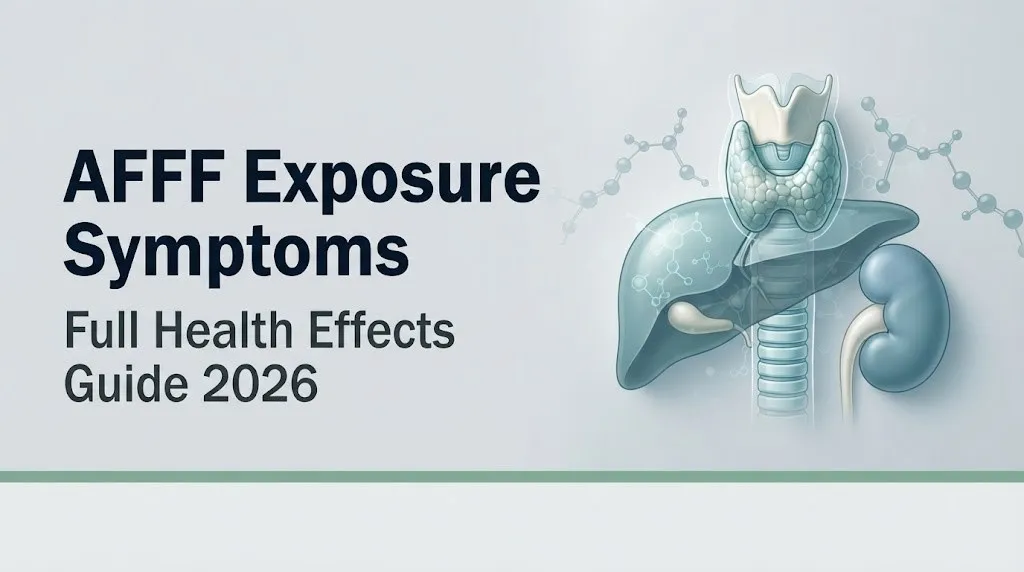
AFFF Exposure Symptoms: Full Health Effects Guide 2026
AFFF exposure symptoms span from immediate chemical irritation of the skin, eyes, and respiratory tract upon direct foam contact to chronic, systemic health effects that develop over years of internal PFAS accumulation, including thyroid disruption, immune suppression, elevated cholesterol, and associations with multiple cancers. The critical distinction that most health content on this topic ignores is that these are two mechanistically different presentations with different timelines, different organ systems, and different clinical management needs.
AFFF (aqueous film-forming foam) contains per- and polyfluoroalkyl substances (PFAS), a class of synthetic chemicals whose carbon-fluorine bonds make them among the most persistent compounds ever manufactured. The 2022 National Academies of Sciences, Engineering, and Medicine (NASEM) report on PFAS Exposure and Health Effects represents the most thorough clinical evidence synthesis available, finding sufficient evidence linking PFAS exposure to kidney cancer, testicular cancer, thyroid disease, dyslipidemia, and reduced vaccine antibody response in exposed populations.
This guide covers every recognized AFFF exposure symptom with its specific physiological mechanism, distinguishes acute from chronic presentations, addresses the populations at highest risk including firefighters, military veterans, pregnant women, and children, and tells you exactly what medical evaluation to pursue and when.
AFFF Exposure Symptoms: What the Research Shows
AFFF exposure symptoms are produced by two overlapping but mechanistically distinct processes: direct chemical irritation from foam contact and long-term systemic toxicity from PFAS bioaccumulation in serum proteins, fatty tissues, and organ systems over months to years.
The research base on AFFF health effects is not a collection of preliminary animal studies. It includes prospective human epidemiological data from over 69,000 participants in the C8 Health Project, the largest PFAS health study conducted to date, involving residents and workers exposed to PFOA released by DuPont’s Washington Works plant in Ohio and West Virginia. Findings from this project, published extensively in Environmental Health Perspectives and American Journal of Epidemiology, established the human evidence base for several PFAS-associated health conditions that have since been replicated in multiple independent cohort studies.
The NASEM 2022 PFAS report provides the most current and authoritative evidence grading, categorizing PFAS-associated health outcomes by evidence sufficiency: from “sufficient evidence of an association” (the highest category, supported by multiple human studies showing consistent findings) to “limited” and “inadequate” evidence categories for emerging associations.
Health outcomes with sufficient evidence of PFAS association according to the NASEM 2022 report include:
- Kidney cancer (renal cell carcinoma)
- Testicular cancer (germ cell tumors)
- Dyslipidemia (elevated total and LDL cholesterol; reduced HDL cholesterol)
- Reduced antibody response to vaccines (immunotoxicity)
- Thyroid disease (hypothyroidism, altered TSH levels)
- Pregnancy-induced hypertension and preeclampsia
- Reduced infant birth weight from gestational exposure
Pregnant women and individuals with pre-existing thyroid disease or kidney impairment are at elevated clinical risk. Their health outcomes from equivalent PFAS exposures may be more severe due to baseline organ system vulnerability.
What Is AFFF and What Makes It Harmful to Health?
AFFF (aqueous film-forming foam) is a firefighting agent developed in the 1960s that contains PFAS compounds specifically chosen for their ability to rapidly spread across hydrocarbon fuel surfaces, suppressing oxygen and extinguishing fires that water alone cannot control.
The PFAS compounds in AFFF responsible for the majority of documented health effects are PFOS (perfluorooctane sulfonate) and PFOA (perfluorooctanoic acid), along with PFHxS (perfluorohexane sulfonate) and PFNA (perfluorononanoic acid). These are all long-chain PFAS compounds characterized by a fully fluorinated carbon chain. The carbon-fluorine bond is one of the strongest in organic chemistry, which is why PFAS compounds do not degrade in the environment and do not break down through normal biological metabolism in the human body.
Think of PFAS in the human body like a chemical that enters your front door and has no back door to leave through. Once PFAS compounds enter the bloodstream, they bind tightly to serum albumin and transthyretin (two major serum transport proteins) and accumulate in protein-rich tissues including the liver, kidney, and thyroid. They are not stored in fat the way lipophilic chemicals like PCBs are. They are stored in blood and protein-rich compartments, which means they circulate continuously and interact continuously with protein-dependent biological functions like hormone transport.
AFFF was used extensively by:
- Military firefighters at air force bases and naval air stations during training and emergency response
- Airport crash rescue teams at civilian and military airports
- Industrial firefighters at oil refineries and chemical plants
- Fire departments that trained with live-fire suppression exercises
The EPA’s 2024 PFAS National Primary Drinking Water Regulation set maximum contaminant levels for PFOA and PFOS at 4 parts per trillion (ppt) each, reflecting the agency’s assessment that no level of PFOA or PFOS exposure below measurable concentrations can be considered without health risk. This standard, the strictest drinking water regulation the EPA has issued for any contaminant, reflects the accumulated evidence of harm from PFAS at extremely low concentrations.
How PFAS Chemicals From AFFF Accumulate in the Human Body
PFAS chemicals from AFFF accumulate in the human body through multiple exposure routes, including inhalation of foam aerosols, skin absorption during foam contact, and ingestion of contaminated groundwater and food, with the resulting internal body burden persisting for years after exposure ends.
The most clinically important feature of PFAS bioaccumulation is its half-life in human serum. PFOS has an estimated human serum half-life of approximately 3.5 to 5 years. PFOA has an estimated half-life of approximately 3.5 to 4 years. PFHxS has an estimated half-life of approximately 7 to 8 years. This means that a firefighter or military member who was exposed to AFFF twenty years ago and has not had significant re-exposure still has measurable PFAS in their blood today.
This persistence is the reason why PFAS health effects are not like acute poisoning syndromes. There is no sudden clear endpoint. Instead, PFAS are present in the body continuously, interacting with biological systems continuously, over a timeframe that spans the career of an exposed worker and beyond.
The three primary exposure routes relevant to AFFF exposure:
- Inhalation: Aerosolized AFFF foam particles and vapors are inhaled during foam application. PFAS in aerosol form can deposit on bronchial epithelium and be absorbed directly into the pulmonary circulation.
- Dermal absorption: Skin contact with foam concentrate or foam solution allows PFAS absorption through the stratum corneum of the dermis, particularly in areas of thin skin or damaged skin barrier.
- Ingestion of contaminated water: AFFF-contaminated groundwater near military bases and airports has produced community-wide PFAS exposures through drinking water, affecting individuals with no direct occupational exposure to the foam.
The Agency for Toxic Substances and Disease Registry (ATSDR) published PFAS clinical guidance noting that dietary intake from PFAS-contaminated drinking water is the primary ongoing exposure route for most community members near AFFF-contaminated sites, even after direct foam use has stopped.
Children absorb a proportionally higher PFAS body burden per unit of body weight from the same contaminated water source, because their daily water intake relative to body weight is higher than in adults.
Key Takeaway: PFAS from AFFF has a serum half-life of 3.5 to 8 years per compound, meaning your body burden from occupational exposure continues to affect your biology for decades after the last foam contact. The absence of current exposure does not mean the absence of current risk.
Acute AFFF Exposure Symptoms From Direct Foam Contact
Acute AFFF exposure symptoms from direct foam contact are produced by the chemical surfactants and fluorinated compounds in the foam irritating the mucous membranes, skin, eyes, and respiratory tract, and they appear within minutes of significant foam contact.
These are mechanistically distinct from chronic PFAS accumulation effects. Acute symptoms result from direct physical and chemical irritation of epithelial surfaces, not from the endocrine or immune disruption pathways that produce long-term health effects. Understanding this distinction helps both exposed individuals and their physicians correctly attribute and triage the presentation.
Acute symptoms of significant AFFF foam contact:
- Eye irritation and conjunctival inflammation: AFFF surfactants disrupt the tear film and irritate the conjunctival epithelium, producing redness, watering, burning, and temporary blurred vision within seconds to minutes of foam contact.
- Skin irritation and chemical dermatitis: Prolonged skin contact with undiluted AFFF concentrate produces redness, itching, and in some cases a chemical dermatitis reaction, particularly in individuals with eczema or damaged skin barrier function.
- Respiratory irritation: Inhaling foam aerosol during high-volume foam application causes bronchial epithelial irritation, producing cough, chest tightness, and in high-concentration exposures, wheezing from bronchospasm.
- Nausea and gastrointestinal irritation: Accidental ingestion of foam (possible during oral and nasal exposure in smoke-filled environments) causes mucosal irritation of the esophageal and gastric epithelium, producing nausea and occasionally vomiting.
- Headache: Headache after significant AFFF inhalation exposure is reported by exposed firefighters and is attributed to systemic absorption of PFAS compounds through the pulmonary circulation, though the specific mechanism is not yet fully characterized at molecular level.
If you or someone else has directly ingested AFFF foam concentrate, Call Poison Control at 1-800-222-1222 immediately. Do not wait for symptoms to develop.
Individuals with pre-existing asthma are at elevated risk for more severe bronchospasm after AFFF aerosol inhalation due to baseline airway hyperreactivity. Any worsening respiratory symptoms after AFFF exposure in an asthmatic person warrant immediate emergency evaluation.
Symptoms of AFFF Exposure: The Chronic PFAS Health Effects
Chronic symptoms of AFFF exposure are produced by PFAS bioaccumulation in serum proteins and organ systems over months to years, affecting the thyroid, immune system, liver, kidneys, and reproductive system through specific molecular mechanisms that are distinct from any acute irritant effect.
Unlike acute contact symptoms, which appear and resolve within hours to days of the exposure event, chronic PFAS health effects develop insidiously. They may not become clinically apparent until years after initial exposure. This delayed presentation is explained by the bioaccumulation mechanism: PFAS body burden builds gradually with repeated or ongoing exposure, and biological disruption from PFAS reaches a threshold of clinical detectability only after sustained accumulation.
The chronic health effects recognized by the NASEM 2022 report as having sufficient evidence of PFAS association include:
| Health Effect | Mechanism | Primary PFAS Implicated | Evidence Level |
|---|---|---|---|
| Thyroid disease (hypothyroidism, altered TSH) | Transthyretin displacement; disrupted T4 transport | PFOA, PFOS, PFHxS | Sufficient (NASEM 2022) |
| Dyslipidemia (elevated LDL, reduced HDL) | PPARalpha activation in hepatocytes | PFOA, PFOS | Sufficient (NASEM 2022) |
| Reduced vaccine antibody response | NK cell suppression; B-lymphocyte dysfunction | PFOS, PFOA | Sufficient (NASEM 2022) |
| Kidney cancer (renal cell carcinoma) | Renal tubular cell proliferative signaling | PFOA, PFOS | Sufficient (NASEM 2022) |
| Testicular cancer (germ cell tumor) | Leydig cell hormonal disruption | PFOA, PFOS | Sufficient (NASEM 2022) |
| Pregnancy hypertension / preeclampsia | Vascular endothelial dysfunction | PFOA, PFOS | Sufficient (NASEM 2022) |
| Reduced infant birth weight | Placental transfer; fetal thyroid disruption | Multiple PFAS | Sufficient (NASEM 2022) |
| Ulcerative colitis | Mucosal immune disruption | PFOA | Limited (NASEM 2022) |
| Bladder cancer | Transitional cell irritation via renal excretion | PFAS class | Limited (NASEM 2022) |
Older adults with pre-existing dyslipidemia or thyroid disease who have had occupational AFFF exposure may have their existing conditions significantly worsened by PFAS body burden, making the attribution of symptom change more clinically complex and requiring careful review of exposure history in context of the current clinical picture.
AFFF Exposure and Thyroid Disruption Symptoms
AFFF exposure disrupts thyroid function through a specific molecular mechanism: PFOA and PFOS structurally resemble thyroid hormones sufficiently to compete for binding sites on transthyretin (TTR), one of the primary transport proteins that carries thyroxine (T4) and triiodothyronine (T3) in the bloodstream, reducing free thyroid hormone availability and altering the hypothalamic-pituitary-thyroid (HPT) axis feedback loop.
Thyroid hormones are not stored in reserve. The thyroid gland produces T4, which circulates bound to transthyretin and thyroid-binding globulin, converting to the active form T3 in peripheral tissues. When PFAS occupy transthyretin binding sites, less T4 reaches peripheral tissues. The hypothalamus detects the change via reduced T3 feedback and responds by increasing thyrotropin-releasing hormone (TRH) production. The anterior pituitary then increases thyroid-stimulating hormone (TSH) output. In some individuals, this compensatory loop maintains adequate thyroid hormone levels despite reduced transport efficiency. In others, particularly those with baseline thyroid vulnerability, it progresses to clinical hypothyroidism.
Recognizable thyroid disruption symptoms in AFFF-exposed individuals:
- Persistent unexplained fatigue that does not resolve with adequate sleep
- Weight gain without corresponding change in diet or activity level
- Cold intolerance: feeling colder than others in the same environment
- Dry skin and hair, brittle nails
- Cognitive slowing or difficulty with concentration and memory (sometimes described as “brain fog”)
- Constipation
- Elevated TSH on routine blood testing, or a trend of rising TSH across serial measurements
- In some cases: hyperthyroid pattern with palpitations, anxiety, and heat intolerance (less frequently)
Research published in Environmental Health Perspectives has found associations between higher serum PFAS levels and altered TSH in both adults and children in epidemiological cohort studies. The effect appears dose-dependent, with higher serum PFAS concentrations correlating with greater TSH deviation from baseline.
Women with pre-existing autoimmune thyroid conditions such as Hashimoto’s thyroiditis may experience accelerated thyroid dysfunction with PFAS exposure, because PFAS immunotoxicity may worsen the autoimmune inflammatory process already targeting the thyroid.
AFFF Exposure and Immune System Symptoms
AFFF exposure suppresses immune function through two primary mechanisms: reduction of natural killer (NK) cell cytotoxic activity and suppression of B-lymphocyte antibody production, producing a state of measurable immunotoxicity that makes exposed individuals more susceptible to infections and less responsive to vaccines.
NK cells are innate immune cells that identify and destroy virally infected cells and early cancer cells without requiring prior antigen presentation. They are among the body’s first-line defenses. PFAS compounds, particularly PFOS, reduce the cytotoxic activity of NK cells through mechanisms that research suggests involve altered cell membrane dynamics and disrupted interleukin-2 signaling, though the complete intracellular pathway remains an area of active study.
The vaccine antibody reduction finding is among the most replicated and well-documented PFAS immune effects in human data. The NASEM 2022 report rates reduced antibody response to vaccines as a health outcome with sufficient evidence of association with PFAS exposure. Studies in children have shown that higher serum PFAS levels are associated with reduced antibody titers following standard childhood vaccinations, including diphtheria and tetanus vaccines, even when vaccination compliance is complete. This means children with high PFAS body burden from contaminated drinking water near AFFF sites may not achieve full protective immunity from their standard vaccine schedule.
Immune system symptoms to watch for in AFFF-exposed individuals:
- Increased frequency of infections (respiratory, urinary, skin) compared to pre-exposure baseline
- Prolonged recovery time from illnesses that previously resolved quickly
- Poor response to influenza vaccination (continuing to develop flu despite annual vaccination)
- Unusual susceptibility to opportunistic infections
The Centers for Disease Control and Prevention notes that PFAS immunotoxicity findings are of public health concern particularly for children and immune-compromised individuals, in whom the reduction in immune competence may cross clinically meaningful thresholds.
Individuals receiving immunosuppressive therapy for autoimmune conditions (rheumatoid arthritis, inflammatory bowel disease) who have AFFF exposure history should disclose that history to their treating rheumatologist or gastroenterologist, as additive immune suppression from PFAS may complicate their clinical management.
Key Takeaway: PFAS from AFFF exposure reduces the effectiveness of childhood and adult vaccines by suppressing B-lymphocyte antibody production, meaning standard vaccination may not provide full protection in highly exposed individuals, a finding rated as sufficient evidence by the 2022 National Academies PFAS report.
AFFF Exposure and Liver and Cholesterol Symptoms
AFFF exposure produces dyslipidemia through PPARalpha activation in hepatocytes, where PFOA and PFOS bind to and activate peroxisome proliferator-activated receptor alpha (PPARalpha), a nuclear receptor that governs hepatic lipid metabolism, increasing LDL cholesterol production and reducing HDL cholesterol synthesis.
PPARalpha normally functions as a lipid sensor in liver cells, regulating the rate at which fatty acids are oxidized for energy versus packaged into lipoproteins for export. When PFAS compounds activate PPARalpha inappropriately, the hepatocyte shifts toward increased lipoprotein production. The result is elevated serum total cholesterol and LDL cholesterol (low-density lipoprotein, the atherogenic lipoprotein associated with cardiovascular disease risk), with concurrent reduction in HDL cholesterol (high-density lipoprotein, the protective lipoprotein).
Elevated ALT (alanine aminotransferase), AST (aspartate aminotransferase), and GGT (gamma-glutamyl transferase), liver enzymes measurable on standard metabolic panels, have been observed in PFAS-exposed populations at rates above background, suggesting a degree of hepatocellular stress beyond lipid metabolism changes alone.
Liver and cholesterol symptoms associated with AFFF-related PFAS exposure:
- Progressively elevated LDL cholesterol on serial blood tests without dietary or lifestyle change explaining the trend
- Reduced HDL cholesterol with no corresponding cardiovascular risk factor change
- Elevated liver enzymes (ALT, AST) found incidentally on routine metabolic panel
- In some individuals: elevated serum uric acid, associated with PFAS effects on renal tubular urate handling, which can contribute to gout
The C8 Health Project, published in Environmental Health Perspectives, found that PFOA-exposed individuals had measurably higher LDL cholesterol levels than comparable non-exposed individuals, with the magnitude of difference correlating with serum PFOA concentration. This dose-response relationship strengthens the epidemiological case for a causal association.
Patients with pre-existing familial hypercholesterolemia who have AFFF exposure history may experience cholesterol levels that are exceptionally difficult to manage with standard therapy. Their treating cardiologist should be informed of the PFAS exposure history to contextualize the lipid panel trajectory.
Cancers Linked to AFFF Exposure
The cancers most consistently linked to AFFF exposure by sufficient epidemiological evidence are kidney cancer (renal cell carcinoma), testicular cancer (testicular germ cell tumors), and bladder cancer, with thyroid cancer and breast cancer in categories of limited but emerging evidence according to the NASEM 2022 PFAS report.
Kidney cancer represents the most established cancer association. The proposed mechanism involves PFAS accumulation in renal tubular epithelial cells, where PPARalpha activation triggers aberrant cell proliferation pathways. Renal tubular cells concentrate PFAS because they attempt to reabsorb these compounds from the filtrate, resulting in higher intracellular PFAS concentrations than most other body tissues.
Testicular germ cell cancer is the second cancer with sufficient evidence of PFAS association. The mechanistic hypothesis involves PFAS disruption of Leydig cell testosterone production and Sertoli cell function during critical periods of testicular development, with epidemiological data from the C8 Health Project and Scandinavian cohort studies showing elevated testicular cancer rates in high-exposure communities.
Cancer associations in PFAS-exposed populations:
- Kidney cancer (renal cell carcinoma): Sufficient evidence (NASEM 2022); risk appears elevated with cumulative PFAS exposure; monitoring includes annual urinalysis with microscopy in high-exposure individuals
- Testicular cancer (testicular germ cell tumor): Sufficient evidence (NASEM 2022); most common cancer in males aged 15 to 35; relevant to military and young firefighter populations
- Bladder cancer: Limited evidence (NASEM 2022); plausible mechanism via PFAS concentrated in urine during renal excretion; hematuria (blood in urine) is the key early symptom requiring evaluation
- Thyroid cancer (papillary thyroid carcinoma): Limited evidence (NASEM 2022); biologically plausible given PFAS thyroid hormone disruption mechanism
- Breast cancer: Limited evidence; estrogen disruption mechanism proposed; ongoing study in several large cohorts
Any firefighter, military member, or community member with documented AFFF exposure who develops hematuria (blood in urine), a testicular mass, unexplained flank pain, or a new thyroid nodule should be evaluated promptly by a board-certified urologist (for kidney and bladder findings), a urologist or oncologist (for testicular mass), or an endocrinologist (for thyroid nodule), with their PFAS exposure history clearly disclosed to the evaluating physician.
AFFF Exposure Symptoms in Firefighters and Military Personnel
Firefighters and military personnel represent the highest-exposure population for AFFF health effects, having experienced direct repeated contact with foam concentrate and foam solution during both training exercises and emergency response operations over careers spanning decades.
Career firefighters who used AFFF during live-fire training exercises inhaled aerosolized foam, experienced dermal absorption from contact with foam-saturated gear, and ingested trace amounts from inadequately decontaminated equipment and turnout gear surfaces. Military air base firefighters additionally operated in environments where AFFF was stored, maintained, and discharged in large volumes, and where groundwater contamination from decades of training produced ongoing low-level exposure through base water supplies.
The NIEHS (National Institute of Environmental Health Sciences) has funded multiple studies examining PFAS body burden in firefighter cohorts. Findings consistently show that active and retired firefighters have serum PFAS concentrations above the general population average, with levels correlating with years of service, frequency of foam use, and whether decontamination protocols were consistently followed.
Specific risk patterns relevant to military and firefighter populations:
- Higher cumulative PFAS body burden from repeated occupational exposures over multi-decade careers
- Compressed latency period for cancer development due to higher cumulative exposure compared to community water-source exposure
- Co-exposure to other carcinogens in combustion products, compressed gases, and structural fires, which may interact with PFAS effects on cancer risk in ways not yet fully characterized
- Post-service screening gaps: veterans who were exposed at military bases and then left service may not be connected to the Department of Veterans Affairs health system or may not have disclosed AFFF exposure history to civilian physicians
Military veterans who served at bases identified by the Department of Defense as having PFAS contamination in drinking water, and who have not yet had a health evaluation specifically addressing PFAS exposure, should contact a primary care physician or an occupational medicine physician and disclose their service location and timeline.
Men in military firefighter roles have a specific elevated testicular cancer consideration because testicular cancer is most prevalent in younger and middle-aged men, exactly the demographic that served as military air base firefighters during peak AFFF use decades.
Key Takeaway: Firefighters and military air base personnel have the highest measured serum PFAS concentrations of any occupational group, and their cancer risk is additionally compounded by co-exposure to combustion carcinogens, making occupational AFFF exposure history a medically material fact that every physician treating these patients needs to know.
PFAS Exposure Symptoms in Women and During Pregnancy
Pregnant women and women of childbearing age face specific and heightened risks from PFAS exposure because PFAS compounds cross the placenta, disrupt estrogen signaling in the maternal reproductive endocrine axis, and alter fetal thyroid hormone development during neurological critical periods.
The placenta does not function as a barrier to PFAS. These compounds, bound to serum albumin and transthyretin, are transported across the placental syncytiotrophoblast epithelium in proportion to maternal serum concentrations. The fetal serum PFAS concentration is typically 30 to 90 percent of the maternal concentration depending on the specific PFAS compound and gestational timing, according to studies published in Environmental Health Perspectives.
The clinical consequences of gestational PFAS exposure documented in human epidemiological studies include:
- Preeclampsia and pregnancy-induced hypertension: The NASEM 2022 report rates this association as sufficient evidence. PFAS are proposed to promote endothelial dysfunction in the placental vasculature, impairing normal placental blood flow regulation.
- Reduced fetal birth weight: Higher maternal PFAS concentrations are associated with lower infant birth weight, a finding replicated across multiple birth cohort studies. A 2020 meta-analysis in Environmental Health Perspectives found that each unit increase in maternal PFOA concentration was associated with a measurable reduction in birth weight.
- Altered fetal thyroid axis: Fetal thyroid hormone development is dependent on maternal T4 crossing the placenta, particularly in the first trimester before the fetal thyroid begins independent function. PFAS-mediated disruption of maternal thyroid hormone transport may reduce the fetal supply of T4 during this developmental window, with potential consequences for fetal neurological development.
- Reduced infant vaccine response: Breast milk contains PFAS at concentrations that transfer measurable PFAS body burden to nursing infants, and studies have documented reduced vaccine antibody titers in breastfed infants with higher breast milk PFAS concentrations.
Women who are pregnant or planning pregnancy and have occupational or community PFAS exposure history should discuss this with their obstetrician-gynecologist before conception if possible, and at minimum at their first prenatal appointment, requesting discussion of serum PFAS testing and its implications for prenatal monitoring decisions.
AFFF Exposure Effects on Children and Infants
Children and infants are disproportionately affected by PFAS exposure from AFFF-contaminated environments because their higher water intake relative to body weight produces greater PFAS body burden per kilogram, their developing organ systems are more vulnerable to endocrine disruption during critical growth windows, and their immune systems are in formative developmental phases during which PFAS immunotoxicity has measurable consequences.
The thyroid hormone axis is particularly vulnerable in the developing infant. In the first years of life, adequate T3 and T4 signaling at the hypothalamic-pituitary-thyroid axis is essential for neurological maturation, including myelination of nerve fibers, synapse formation, and cognitive development. Disruption of this axis by PFAS-mediated transthyretin displacement during this developmental window cannot be fully compensated for later, unlike the thyroid disruption that occurs in adults.
The American Academy of Pediatrics (AAP) has published guidance noting PFAS as chemicals of concern for children’s health, citing evidence of association with altered thyroid function, reduced immune response to childhood vaccines, and potential neurodevelopmental effects in highly exposed pediatric populations.
Observable signs in children living in AFFF-contaminated communities that warrant clinical evaluation:
- Unexplained lower-than-expected antibody titers on post-vaccination serological testing
- Elevated TSH or low free T4 on thyroid screening
- Developmental milestones that are not progressing as expected, particularly in language and cognitive domains (noting that this is a nonspecific finding requiring comprehensive evaluation rather than attribution to PFAS alone)
- Elevated serum total cholesterol identified incidentally on pediatric lipid screening
Pediatric PFAS exposure evaluation should be conducted by a board-certified pediatrician working in coordination with a pediatric endocrinologist if thyroid abnormalities are identified, and with a pediatric immunologist if vaccine response abnormalities are documented. Exposure history must include the child’s primary water source and whether the family residence is near a known AFFF-contaminated site.
AFFF Exposure Symptoms: Early Warning Signs to Watch For
Early warning signs of PFAS-related health effects from AFFF exposure are those that reflect initial disruption of the thyroid, lipid, and immune systems before clinical disease has fully developed, and they are identifiable on standard blood panels even in the absence of symptoms that a patient might independently notice.
The insidious nature of PFAS health effects is that early organ system disruption often produces no symptoms that a person would recognize without blood testing. A person with PFAS-induced dyslipidemia does not feel their LDL rising. A person with early TSH elevation does not necessarily feel different until thyroid function changes enough to cross clinical thresholds. This is why the early warning framework for AFFF exposure relies heavily on periodic laboratory monitoring rather than symptom recognition alone.
Early warning signs that should trigger evaluation in AFFF-exposed individuals:
- Rising LDL cholesterol on serial lipid panels without dietary change or new cardiovascular risk factors
- Rising TSH on serial thyroid tests, even within the laboratory normal range, if the trend is consistently upward across measurements taken a year or more apart
- Declining HDL cholesterol without explanation
- Elevated ALT or GGT on routine metabolic panel
- Reduced immunity to vaccines identified when post-vaccination antibody titers are checked (more commonly done for healthcare workers or military personnel)
- Persistent fatigue in the absence of other explanatory conditions, particularly when accompanied by mild cognitive changes
- Hematuria (blood in urine) on routine urinalysis, which warrants immediate urological evaluation given the kidney and bladder cancer associations
The ATSDR PFAS clinical guidance recommends that clinicians evaluating individuals with documented PFAS exposure obtain a baseline metabolic panel, lipid panel, thyroid function tests (TSH, free T4), complete blood count, and urinalysis, and repeat these at clinically appropriate intervals based on the level of estimated exposure.
Individuals over age 50 with AFFF exposure history face a convergence of age-related cancer risk increase and PFAS-related cancer promotion, making surveillance more time-sensitive than in younger exposed individuals.
How to Get Tested for PFAS Exposure After AFFF Contact
PFAS exposure after AFFF contact is confirmed through direct serum PFAS testing, which measures the concentrations of specific PFAS compounds (PFOS, PFOA, PFHxS, PFNA, and others) in a blood sample, providing a quantitative estimate of current body burden.
Serum PFAS testing is not part of standard clinical laboratory panels. It requires a specific laboratory request, and not all commercial laboratories offer it. The test measures PFAS in whole blood or serum using liquid chromatography-mass spectrometry (LC-MS/MS), which can distinguish individual PFAS compounds and quantify their concentrations in nanograms per milliliter (ng/mL), also expressed as parts per billion (ppb).
The ATSDR and NASEM 2022 report note that serum PFAS concentrations are the most reliable individual measure of current body burden, but that a single measurement reflects only the current state and does not reconstruct past peak exposures (which occurred at the time of highest AFFF contact and have since declined toward their respective half-life curves).
To prepare for a PFAS exposure evaluation with your physician:
- Document your exposure history in writing before the appointment: years of AFFF use or proximity, role (firefighter, military, civilian community), type of AFFF use (training exercise, emergency response, proximity to contaminated water supply), and any known base or airport identification.
- Bring a complete list of current medications and supplements, as some may affect thyroid or lipid testing results.
- Request the following specific tests: serum PFAS panel (specifying PFOS, PFOA, PFHxS, PFNA at minimum), complete metabolic panel, lipid panel (fasting), thyroid function tests (TSH, free T4), complete blood count, and urinalysis with microscopy.
- If any prior blood tests exist from before the suspected exposure period, bring those records to provide a personal baseline comparison.
- Ask specifically whether referral to an occupational medicine physician is warranted, as these specialists have specific training in chemical exposure evaluation and health surveillance.
Serum PFAS testing is available through several certified reference laboratories. An occupational medicine physician or environmental health specialist can order the appropriate panel and interpret results in the context of your specific exposure history and health presentation.
Key Takeaway: Serum PFAS testing using liquid chromatography-mass spectrometry is the definitive individual measure of AFFF exposure body burden, and it must be specifically requested since it is not included in any standard clinical panel. Bring a documented exposure history to your appointment to contextualize the result.
When to See a Doctor for AFFF Exposure Symptoms
Any person with documented occupational or community exposure to AFFF firefighting foam warrants evaluation by a primary care physician, regardless of current symptom status, because the most clinically actionable PFAS health effects are detectable through blood and urine testing before symptoms develop.
The clinical evaluation urgency scales with the nature and duration of exposure and the current symptom picture:
| Exposure and Symptom Pattern | Urgency Level | Appropriate Provider |
|---|---|---|
| Occupational AFFF use, no current symptoms | Within 4 to 8 weeks | Primary care physician or occupational medicine physician |
| Community exposure via contaminated water, no symptoms | Within 2 to 3 months | Primary care physician |
| Occupational exposure with rising cholesterol or TSH trend | Within 2 to 4 weeks | Primary care physician; endocrinologist referral if thyroid abnormal |
| Occupational exposure with persistent fatigue, weight gain, cold intolerance | Within 1 to 2 weeks | Primary care physician; thyroid panel urgent |
| Any AFFF-exposed individual with hematuria (blood in urine) | Within days | Urologist |
| Any AFFF-exposed male with testicular mass or change | Within days | Urologist or oncologist |
| Any AFFF-exposed individual with a thyroid nodule found on imaging | Within 1 to 2 weeks | Endocrinologist |
| Pregnant woman with AFFF exposure history, any trimester | Same week | Obstetrician-gynecologist |
When attending a medical appointment for AFFF exposure evaluation, bring the following information specifically:
- Duration and frequency of AFFF use or proximity
- Military base or civilian facility identification (to cross-reference with known PFAS contamination sites)
- Any prior blood tests showing lipid or thyroid trends
- Family history of thyroid disease, kidney cancer, or testicular cancer
- Current medications that may affect lipid or thyroid test results
Veterans who were stationed at military installations identified by the Department of Defense as having PFAS-contaminated water are eligible for health evaluations through the Department of Veterans Affairs, and should specifically inquire about PFAS exposure health programs when contacting their VA facility.
Emergency Symptoms: When AFFF Exposure Requires Immediate Care
Certain presentations following AFFF exposure require immediate emergency evaluation. Do not wait to see if these resolve on their own.
Call 911 or go to the nearest emergency room immediately if you experience after AFFF contact:
- Severe difficulty breathing, chest tightness, or wheezing after inhaling large volumes of AFFF foam or foam aerosol (indicates acute chemical bronchospasm or pneumonitis from foam inhalation injury)
- Loss of consciousness or altered mental status following direct foam exposure (possible systemic absorption emergency)
- Severe eye pain, vision loss, or inability to open the eye after direct foam contact (chemical eye injury requiring ophthalmological emergency evaluation)
- Vomiting, severe abdominal pain, or difficulty swallowing after accidental ingestion of AFFF foam concentrate
For acute ingestion or large-volume skin or mucous membrane exposure, Call Poison Control at 1-800-222-1222 immediately. The Poison Control toxicologist can advise on the specific AFFF product’s chemical composition and guide immediate management while emergency transport is arranged.
For the ongoing chronic health effects of PFAS exposure, the relevant medical concern is not an acute emergency in most cases. It is a sustained, serious, long-term health risk that warrants scheduled medical evaluation, monitoring, and specialist referral based on specific findings, not a same-day emergency response except in the circumstances above.
These acute emergency presentations indicate chemical injury to the respiratory, ocular, or gastrointestinal system from direct AFFF contact, not the chronic PFAS bioaccumulation effects that develop over years. Both clinical situations require appropriate medical evaluation; only the acute presentations described above require 911 activation.
Key Takeaway: Acute AFFF foam inhalation causing breathing difficulty is a 911 emergency. Chronic PFAS bioaccumulation effects require scheduled medical evaluation within weeks, not hours. Knowing which clinical picture you are in determines the appropriate urgency of your response.
Frequently Asked Questions About AFFF Exposure Symptoms
What are the first signs of AFFF exposure?
The first signs of acute AFFF foam contact are eye irritation, skin redness, and coughing or respiratory irritation from inhaling foam aerosol.
The earliest detectable signs of chronic PFAS bioaccumulation, which develop over months to years after exposure, are typically rising LDL cholesterol and altered TSH on routine blood testing, often before any recognizable physical symptoms appear.
Because early PFAS health effects are laboratory findings rather than felt symptoms, periodic blood testing is the most reliable way to detect AFFF exposure effects at their earliest stage.
How long after AFFF exposure do symptoms appear?
Acute contact symptoms from foam irritation appear within minutes of significant foam exposure and typically resolve within hours to days with removal from exposure.
Chronic health effects from PFAS bioaccumulation develop over months to years and may not become clinically apparent until the PFAS body burden has accumulated sufficiently to cross biological disruption thresholds.
According to the NASEM 2022 PFAS report, some health effects such as altered lipid levels are detectable relatively early in exposure while cancer associations involve longer latency periods typical of chemical carcinogenesis, often a decade or more between initial exposure and cancer diagnosis.
Is there a blood test to detect PFAS from AFFF exposure?
Yes: serum PFAS testing using liquid chromatography-mass spectrometry (LC-MS/MS) directly measures the concentrations of individual PFAS compounds including PFOS, PFOA, and PFHxS in a blood sample.
This test is not part of standard clinical laboratory panels and must be specifically requested; an occupational medicine physician or environmental health specialist can order the appropriate panel.
The ATSDR recommends this test for individuals with documented AFFF exposure history, along with baseline thyroid function tests, lipid panel, complete metabolic panel, and urinalysis.
What cancers are most commonly linked to AFFF exposure?
The cancers with the strongest epidemiological evidence of association with PFAS exposure are kidney cancer (renal cell carcinoma) and testicular cancer (testicular germ cell tumors), both rated as having sufficient evidence of association in the NASEM 2022 PFAS report.
Bladder cancer has limited evidence of association, with the plausible mechanism being PFAS concentration in urine during renal excretion producing transitional epithelial exposure.
Any AFFF-exposed individual with blood in their urine, a testicular mass, or unexplained flank pain should be evaluated by a board-certified urologist promptly, with their AFFF exposure history disclosed at the time of evaluation.
Can AFFF exposure harm an unborn baby?
PFAS from AFFF exposure crosses the placenta and reaches fetal circulation at approximately 30 to 90 percent of maternal serum concentration, according to studies published in Environmental Health Perspectives.
Documented pregnancy effects with sufficient evidence according to the NASEM 2022 report include pregnancy-induced hypertension, preeclampsia, and reduced fetal birth weight; fetal thyroid hormone disruption during the first trimester is an additional area of active research concern.
Pregnant women with AFFF exposure history should disclose this to their obstetrician-gynecologist at the earliest prenatal visit to discuss appropriate monitoring throughout the pregnancy.
Are firefighters at higher risk of AFFF exposure symptoms than the general public?
Career firefighters who used AFFF during live-fire training exercises have consistently higher serum PFAS concentrations than the general population in studies funded by the NIEHS and conducted in multiple firefighter cohorts.
Their elevated body burden reflects both direct occupational foam contact and dermal absorption from PFAS-contaminated turnout gear worn across repeated structural fire incidents, even without direct AFFF use.
Firefighters with 10 or more years of career service who used AFFF in training should request a specific serum PFAS panel and a clinical evaluation by an occupational medicine physician, disclosing the years of service and frequency of AFFF training exposure.
Closing
PFAS chemicals from AFFF do not announce themselves. They accumulate silently in serum proteins and organ systems for years, disrupting thyroid function, lipid metabolism, and immune competence without producing symptoms that most people would connect to a foam their hands touched years ago on a tarmac or in a training bay.
The practical action is specific: if you worked with AFFF, lived near a base or airport with documented PFAS contamination, or served in the military at an installation identified by the Department of Defense as having PFAS-impacted water, book an appointment with a primary care physician or occupational medicine physician and disclose that exposure history. Request a serum PFAS panel, a fasting lipid panel, thyroid function tests (TSH and free T4), a complete metabolic panel, and a urinalysis.
You have the exposure history. You now have the clinical framework to use it