Cat URI Symptoms: Upper Respiratory Infection Guide 2026
Cat upper respiratory infection symptoms include sneezing, nasal discharge, eye discharge, conjunctivitis, reduced appetite, lethargy, and in calicivirus infections, painful mouth ulcers, all produced by viral or bacterial damage to the feline upper airway and ocular mucosal tissue. Recognizing where your cat falls on the severity spectrum, from mildly sneezing to open-mouth breathing at rest, determines whether you are monitoring at home or calling an emergency veterinary clinic right now.
According to the American Association of Feline Practitioners (AAFP), upper respiratory infections are among the most frequently diagnosed conditions in cats, particularly in shelter environments, multi-cat households, and kittens transitioning to new homes. What most pet health content fails to explain is that cats experience URI symptoms differently from dogs or humans because of species-specific physiology that can turn what looks like a simple cold into a medical emergency within 48 hours.
This article covers every observable cat URI symptom with the veterinary physiology behind it, the specific pathogen patterns of herpesvirus and calicivirus, how mild presentations differ from severe ones, which cat populations are at higher risk, and the exact signs that mean your cat cannot wait until morning.
Cat Upper Respiratory Infection Symptoms
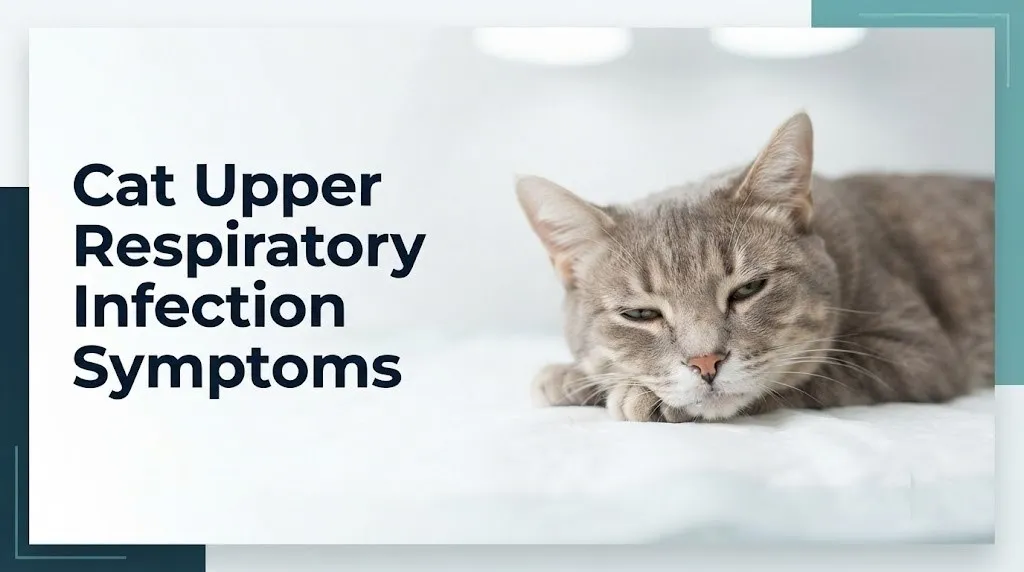
Cat upper respiratory infection symptoms are a combination of nasal and ocular discharge, sneezing, conjunctivitis, lethargy, reduced appetite, and sometimes mouth ulcers or drooling, produced by one or more infectious agents damaging the mucosal lining of the feline upper respiratory tract and ocular surfaces.
The full symptom spectrum spans from barely noticeable to life-threatening within days. A mildly affected cat may sneeze occasionally with clear nasal discharge and maintain normal appetite and energy. A severely affected cat may have swollen eyes matted shut with discharge, complete nasal obstruction, refusal to eat for 48 hours, and labored breathing.
Observable cat URI symptoms by clinical significance:
- Sneezing, ranging from occasional single sneezes to repeated paroxysmal fits
- Nasal discharge, starting clear and becoming yellow-green and thick as secondary bacterial infection develops
- Bilateral eye discharge, from watery and clear to thick, yellow, or crusted
- Squinting or holding one or both eyes partially closed (blepharospasm from conjunctival pain)
- Visible elevation of the nictitating membrane (third eyelid) in one or both eyes
- Reduced appetite or complete food refusal
- Lethargy and increased time sleeping
- Mouth ulcers, excessive drooling, or pawing at the mouth (specific to calicivirus infections)
- Audible congestion or snuffling sounds during breathing
- Fever, identifiable by warm ears and paw pads, hunched posture, and increased lethargy
- Open-mouth breathing at rest (an emergency requiring immediate veterinary evaluation)
According to the Cornell Feline Health Center, the most common pathogens responsible for cat URI symptoms are feline herpesvirus 1 (FHV-1) and feline calicivirus (FCV), which together account for the large majority of feline URI cases. Secondary bacterial invaders including Pasteurella multocida, Bordetella bronchiseptica, and Chlamydophila felis frequently complicate the primary viral infection.
Kittens under 12 weeks of age typically show more severe symptoms than adult vaccinated cats, because their maternally derived antibody protection has waned before their own immune system has fully matured.
What Is a Feline Upper Respiratory Infection and How Does It Affect Cats
A feline upper respiratory infection is an infectious illness affecting the nasal cavity, nasopharynx, larynx, and associated mucosal surfaces of the eyes, caused by one or more viral or bacterial pathogens that replicate in and damage the ciliated epithelial lining of the feline upper airway.
The upper respiratory tract of a cat is anatomically complex and highly specialized. The nasal turbinates, scroll-shaped bony structures lined with highly vascularized mucosa, fill most of the nasal cavity and serve twin functions: air filtration and olfaction (scent detection). FHV-1 specifically targets the epithelial cells lining these turbinates, causing cell death (cytopathic necrosis) that destroys both the air filtration capacity and the olfactory receptor tissue of the nasal mucosa simultaneously.
This dual destruction explains the two most clinically consequential early symptoms: mucosal inflammation producing discharge and congestion, and anosmia (loss of smell) that drives food refusal. Both arise from the same initial viral replication event in the turbinate epithelium.
The connection to the eyes is anatomical. The nasolacrimal duct connects the conjunctival sac of the eye to the nasal cavity. When the nasal mucosa becomes inflamed and swollen, this drainage channel becomes obstructed, causing tears and conjunctival secretions to accumulate in the eye rather than drain normally. This anatomical connection explains why nasal URI so consistently produces ocular symptoms in cats.
Transmission of feline URI pathogens occurs through three routes: direct aerosol droplets (within approximately 3 to 5 feet during sneezing or coughing), direct contact (grooming, nose-to-nose contact, shared food and water bowls), and fomite transmission (virus surviving on bedding, litter boxes, and human hands between contact with different cats).
The American Veterinary Medical Association (AVMA) notes that URI is especially prevalent in shelter environments, multi-cat households, and any situation where cats are densely grouped and under social stress, conditions that simultaneously increase exposure risk and activate viral reactivation mechanisms in previously infected cats.
Why Cats Are Uniquely Vulnerable to URI Symptoms
Cats are uniquely vulnerable to the consequences of upper respiratory infections because they are obligate nasal breathers, a species-specific anatomical fact that transforms nasal congestion from a nuisance into a functional crisis with potentially fatal metabolic consequences.
A cat’s soft palate and oronasal anatomy do not permit sustained comfortable oral breathing during eating and normal activity the way a dog or human can compensate for nasal congestion. When a cat’s nasal passages are congested, they can physically open their mouth to breathe under extreme respiratory distress, but this open-mouth breathing in a cat at rest is itself a sign of respiratory emergency, not a normal adaptive behavior.
The cascade that follows nasal congestion in cats is species-specific and clinically critical. Nasal turbinate inflammation produces anosmia: the cat loses its sense of smell. Cats are driven to eat primarily by olfactory signals, far more than by vision or learned routine. When olfactory input disappears, the appetite stimulus disappears with it. The cat simply stops eating.
Here is where the danger becomes specific to cats. Even 48 to 72 hours of food refusal in an overweight cat triggers fat mobilization from adipose tissue reserves to the liver at a rate the liver cannot process. The liver becomes overwhelmed with lipid, developing hepatic lipidosis (idiopathic feline hepatic lipidosis), a potentially fatal condition requiring aggressive nutritional support. A cat that starts with a URI and stops eating has not simply lost its appetite. It has initiated a metabolic chain reaction.
Think of it like a backup generator that kicks on the moment the power goes out. When the liver realizes glucose from food is not coming, it pulls fat out of storage as emergency fuel. In cats specifically, this emergency response is so aggressive it overwhelms the liver faster than in any other domestic species.
The Merck Veterinary Manual notes that hepatic lipidosis is one of the most common serious liver diseases in cats, and anorexia from any cause, including URI, is a primary precipitating factor.
Key Takeaway: A cat with URI that stops eating for more than 24 hours in a kitten, or 48 hours in an adult cat, is no longer experiencing just a respiratory problem. The anorexia triggered by anosmia creates a direct metabolic risk. Do not wait to see if appetite returns on its own. Contact a licensed veterinarian the same day.
Nasal Discharge and Sneezing in Cat Upper Respiratory Infection
Nasal discharge and sneezing are the most readily observable symptoms of a cat upper respiratory infection, produced by inflammatory mucosal damage to the nasal turbinate epithelium and the subsequent innate immune recruitment of fluid, mucus, and white blood cells to the nasal cavity.
The sneezing reflex in cats is produced by sensory nerve activation: inflammatory mediators including substance P, released from C-fiber nerve endings in the inflamed nasal mucosa, stimulate the nasal sneeze reflex arc via the trigeminal nerve’s ophthalmic and maxillary branches. The cat’s nervous system interprets the nasal mucosal inflammation as a foreign particle that needs to be expelled, producing the characteristic high-velocity sneeze.
The character of nasal discharge provides clinical information:
- Clear, watery discharge: Typical of early-stage viral infection. Reflects serous fluid transudation through inflamed capillaries in the nasal mucosa. Often present in the first 24 to 72 hours.
- White or cloudy discharge: Indicates the beginning of mucopurulent transformation, with increasing white blood cell content in the nasal secretions.
- Yellow or green thick discharge: Indicates established secondary bacterial infection. Neutrophil breakdown products and bacterial byproducts give the discharge its color and thick consistency. This stage warrants veterinary evaluation within 24 hours.
- Blood-tinged discharge (epistaxis): Indicates erosion of the fragile nasal mucosal vasculature from severe inflammation or concurrent ulcerative rhinitis from FHV-1. Warrants same-day veterinary evaluation.
Quick Tip:
- Wipe nasal discharge from your cat’s nostrils with a warm, damp cloth to prevent crusting that can further obstruct airflow.
- Running a humidifier in the room where your cat rests can reduce nasal mucus viscosity and ease congestion temporarily.
- Brachycephalic cats (Persians, Himalayans, Exotic Shorthairs) have anatomically narrowed nasal passages that make any nasal discharge immediately more obstructive than in a cat with a normal nasal structure, and warrant earlier veterinary evaluation.
Eye Symptoms of Cat URI: Conjunctivitis and Discharge
Eye symptoms in cat upper respiratory infections, including conjunctivitis, discharge, squinting, and visible third eyelid elevation, are produced by direct viral or bacterial invasion of the feline conjunctival epithelium and secondary inflammatory obstruction of the nasolacrimal duct.
The feline conjunctival epithelium is specifically targeted by FHV-1, which uses surface receptors on the conjunctival mucosa for viral entry and replication. This tropism explains why cats with herpesvirus URI almost always develop bilateral conjunctivitis. As FHV-1 replicates in conjunctival cells, it produces cell death and the release of inflammatory mediators including IL-1 beta and IL-6, driving neutrophil infiltration into the conjunctival tissue. The result is the redness, swelling (chemosis), and discharge characteristic of feline conjunctivitis.
The nictitating membrane (third eyelid), a feline-specific ocular structure containing the Harderian gland, becomes visibly elevated and protruded across the eye’s surface when periorbital swelling from conjunctivitis develops. Visible third eyelid elevation in one or both eyes is a reliable observer-detectable sign of active conjunctival inflammation in cats. It appears as a pale pink or white membrane moving across the inner corner of the eye toward the pupil.
Eye discharge evolves in character as the infection progresses:
| Discharge Appearance | Clinical Meaning | Urgency |
|---|---|---|
| Clear, watery (epiphora) | Early serous conjunctivitis or nasolacrimal duct obstruction | Monitor 24 hours |
| White or cloudy | Mucopurulent early stage; increasing WBC content | Vet appointment within 24 hours |
| Yellow or green thick | Established secondary bacterial conjunctivitis | Vet appointment within 24 hours |
| Eyes crusted shut | Severe discharge; risk of corneal ulceration | Same-day vet appointment |
| Corneal cloudiness or opacity | Possible corneal ulcer from FHV-1 or trauma | Same-day emergency evaluation |
Cats with active corneal ulcers from FHV-1 will often squint intensely, tear excessively, and resist having their eye touched. Corneal ulcers, if untreated, can progress to corneal perforation. Any cat with eye cloudiness, a visible white spot on the cornea, or an intensely squinting eye that cannot open should be evaluated by a licensed veterinarian the same day.
Cat URI Mouth Sores, Drooling, and Oral Symptoms
Mouth sores, drooling, and oral pain in a cat with URI symptoms are specific indicators of feline calicivirus (FCV) infection, which replicates preferentially in the oral epithelium and produces the characteristic ulcerative stomatitis that distinguishes FCV from herpesvirus clinically.
FCV’s tropism for oral epithelial cells is what separates its clinical picture from FHV-1. The virus replicates in the cells of the tongue, hard palate, and the skin area around the nose (the nasal philtrum), producing apoptosis and necrotic cell death that creates visible, painful ulcerations. The cat’s immune system cannot clear the virus from these replicating foci quickly enough to prevent tissue breakdown, so the ulcers form and can persist for 7 to 14 days even in cats with normal immune function.
Observable oral signs of FCV infection include:
- Small, shallow ulcers visible on the tongue surface, often appearing as red or raw patches
- Ulcers on the hard palate or at the nasal philtrum (the groove between the two nostrils)
- Excessive drooling (hypersalivation), driven by the pain of the oral ulcers and the cat’s attempt to clear the irritated tissue
- Pawing at the mouth or face, reflecting oral discomfort
- Reluctance to eat hard food or difficulty chewing, from oral pain even when nasal smell is partially preserved
- Bad mouth odor (halitosis) from tissue necrosis in the ulcerated areas
According to the Cornell Feline Health Center, some strains of FCV also have tropism for synovial tissue (the lining of joint spaces), producing transient limping or joint pain in affected cats, a symptom that pet owners frequently find confusing when they expected only respiratory signs. This synovial form is more common in certain FCV strains and in cats with more systemic FCV disease.
FCV-positive cats with oral ulcers that are unwilling to eat for more than 24 hours should be evaluated by a licensed veterinarian the same day, both because of the oral pain requiring management and because of the anorexia risk described in the previous section.
Cat Lethargy, Fever, and Appetite Loss in URI
Lethargy, fever, and reduced appetite in a cat with upper respiratory infection symptoms are produced by the systemic effects of the innate immune response to viral replication, specifically the release of pro-inflammatory cytokines interleukin-1 beta and interleukin-6 that act on the feline hypothalamus and central nervous system.
A cat’s normal body temperature ranges from approximately 100.5 to 102.5 degrees Fahrenheit. During an active feline URI, IL-1 beta and IL-6 released from macrophages and neutrophils responding to viral antigens act on the hypothalamus to upregulate prostaglandin E2 synthesis, which resets the hypothalamic temperature set point upward, producing fever. Fever in a cat produces the observable behaviors of lethargy, hunched posture, reduced grooming, warm ears and paw pads, and preference for warm, quiet, enclosed spaces.
Lethargy in URI is also directly produced by interferon-alpha and interferon-gamma, cytokines produced by infected cells as part of the antiviral innate immune response. These interferons induce a sickness behavior state (reduced activity, social withdrawal, reduced appetite) that is physiologically adaptive: conserving metabolic energy for immune function rather than physical activity.
Fever above 104 degrees Fahrenheit in a cat is a veterinary emergency threshold. At this temperature, cellular protein denaturation can occur, and the risk of secondary complications rises sharply. Fever in a cat cannot be reliably assessed without a rectal thermometer. A cat that feels warm to the touch, refuses to move, and has dull unresponsive eyes warrants same-day veterinary evaluation regardless of whether temperature has been confirmed at home.
Cats with underlying hyperthyroidism or cardiac disease may mount a more pronounced or atypical fever response during URI, and even mild lethargy in a cat known to have one of these conditions warrants contact with a licensed veterinarian within 24 hours of onset rather than home monitoring for 48 hours.
Key Takeaway: Lethargy in a sick cat is not just “resting.” It is a physiologically driven sickness behavior produced by interferon and cytokine signaling, and when combined with complete appetite loss or a visibly elevated body temperature, it warrants same-day veterinary evaluation rather than home observation.
FHV-1 Symptoms in Cats: Herpesvirus-Specific Presentation
Feline herpesvirus 1 (FHV-1), the cause of feline viral rhinotracheitis, produces the most recognizable and frequently seen feline URI presentation: bilateral nasal and ocular discharge, conjunctivitis, sneezing, and in severe infections, corneal ulceration, driven by the virus’s specific tropism for nasal turbinate and conjunctival epithelial cells.
After primary infection, FHV-1 does something that has no parallel in most other feline upper respiratory pathogens: it establishes permanent latency in the trigeminal ganglion. The trigeminal ganglion is the sensory nerve ganglion from which the ophthalmic, maxillary, and mandibular branches of the trigeminal nerve originate. FHV-1 hides in the neurons of this ganglion, effectively invisible to the immune system, for the lifetime of the cat.
When the cat experiences a physiological stressor, such as a move to a new home, boarding, surgery, the addition of a new pet, or any illness, cortisol is released from the adrenal cortex. Elevated cortisol suppresses the CD8+ T-cell surveillance that normally keeps the latent FHV-1 inactive. The virus reactivates, travels anterograde along the trigeminal nerve branches back to the nasal and conjunctival mucosa, and produces a recurrent URI episode. The cat may appear to develop a cold “out of nowhere” days after a stressful event.
FHV-1-specific symptoms that distinguish it from other feline URI pathogens:
- Persistent or recurrent bilateral conjunctivitis, with or without concurrent nasal symptoms
- Corneal dendritic ulcers (branching ulcer patterns on the corneal surface, visible with fluorescein dye under a UV light by a veterinarian), pathognomonic for herpesvirus corneal disease
- Facial dermatitis or skin ulceration around the nasal bridge or periocular skin in some cats (uncommon but specific to FHV-1)
- Recurrent URI episodes following identifiable stress events in an otherwise healthy cat
The Journal of Feline Medicine and Surgery has published research confirming that approximately 80 percent of cats infected with FHV-1 become lifelong latent carriers. Stress-triggered reactivation occurs in an estimated 45 percent of latent carriers. For owners of multi-cat households, this means a cat that was infected in kittenhood may periodically shed virus during stressful periods, potentially exposing housemates.
Feline Calicivirus Symptoms: What Makes It Different From Herpesvirus
Feline calicivirus (FCV) produces a distinct pattern of upper respiratory symptoms from FHV-1, distinguished by its oral tropism producing mouth ulcers, its capacity to cause transient joint inflammation and limping, and in some virulent strains, the ability to cause a severe systemic disease with multi-organ involvement.
Unlike FHV-1, FCV does not establish long-term neurological latency in a ganglion. Instead, FCV can establish persistent infection in the oropharyngeal tissues of some cats, producing a “carrier” state where the cat sheds virus from the oral cavity for months to years without showing obvious ongoing illness. These carrier cats are a silent reservoir in multi-cat households and shelters.
The distinction between FHV-1 and FCV symptoms in practical, owner-observable terms:
| Feature | FHV-1 (Herpesvirus) | FCV (Calicivirus) |
|---|---|---|
| Nasal discharge | Prominent, often heavy | Moderate |
| Eye symptoms | Prominent bilateral conjunctivitis; corneal ulcers possible | Mild to moderate conjunctivitis |
| Mouth ulcers | Rare | Characteristic; tongue, palate, philtrum |
| Drooling | Uncommon | Common with oral ulcers |
| Limping or joint pain | Absent | Present in some strains |
| Reactivation from stress | Yes, from trigeminal ganglion | No classic reactivation pattern |
| Carrier state | Latent neurological (trigeminal) | Persistent oropharyngeal shedding |
Virulent systemic FCV (VS-FCV), an uncommon but well-documented severe variant of calicivirus, produces facial and limb edema, skin ulceration, high fever, and multi-organ failure with a high case fatality rate. VS-FCV has been associated with outbreaks in shelter and veterinary clinic environments. A cat showing typical FCV oral symptoms that suddenly develops marked facial swelling, skin sloughing, or rapid deterioration should be taken to a licensed veterinarian or veterinary emergency clinic immediately.
Cats vaccinated with the FVRCP vaccine receive protection against both FHV-1 and FCV, but calicivirus has greater antigenic variability than herpesvirus, meaning vaccinated cats may still contract some FCV strains, particularly in shelter or high-density settings.
Mild Versus Severe Cat URI Symptoms: How to Tell Them Apart
Mild cat URI symptoms are manageable with home monitoring and a scheduled veterinary appointment, while severe cat URI symptoms indicate a clinical emergency requiring same-day or immediate veterinary evaluation, and knowing the specific dividing line between them is the single most practical piece of information this article can give you.
The threshold between mild and severe is not about how long the cat has been sneezing. It is about specific clinical signs that indicate either respiratory compromise, systemic illness, or the onset of the anorexia-hepatic lipidosis cascade.
| Symptom Level | What You Observe | Action Required |
|---|---|---|
| Mild | Occasional sneezing; clear discharge from nose or eyes; normal or slightly reduced appetite; normal energy levels | Monitor at home; vet appointment within 48 to 72 hours |
| Moderate | Increased sneezing; yellow-green discharge; reduced appetite by 50% or more; noticeable lethargy; squinting one or both eyes; third eyelid visible | Veterinary appointment within 24 hours; do not wait |
| Severe | Complete food refusal for 24 hours (kitten) or 48 hours (adult); eyes crusted shut; audible breathing difficulty; high fever (warm ears, unresponsive lethargy); corneal cloudiness | Same-day emergency veterinary evaluation |
| Emergency | Open-mouth breathing at rest; blue or purple gums; collapse or extreme unresponsiveness; cessation of breathing | Take to veterinary emergency clinic immediately |
Cats are physiologically adept at masking illness. A cat that appears “okay but a little off” may have a rectal temperature above 104 degrees Fahrenheit and have not eaten in 36 hours. Do not wait for a cat to display obvious distress before seeking veterinary evaluation. The observable threshold at which cats show distress signs often comes after the clinical danger threshold has already been crossed.
Senior cats over 12 years of age may deteriorate more rapidly from a URI than younger adults because age-related reduction in immune function allows the pathogen to replicate unchecked for longer before an adequate innate immune response develops. Any URI symptom in a senior cat warrants a veterinary appointment within 24 hours rather than 48 to 72 hours.
Cat URI Symptoms in Kittens Versus Adult and Senior Cats
Cat URI symptoms in kittens are more severe, progress more rapidly, and carry a higher risk of life-threatening complications than the same infection in a healthy adult cat, because kittens between 6 and 16 weeks of age experience a predictable immunological gap when maternally derived antibody protection has waned before their own immune system has fully matured.
In the first weeks of life, kittens receive antibodies from their mother’s colostrum (first milk), which provides passive immunity against FHV-1, FCV, and other pathogens. This maternally derived antibody (MDA) protection begins to wane between 6 and 8 weeks of age, creating an immunological window during which the kitten has reduced antibody protection but has not yet generated its own robust adaptive immune response. During this window, even a modest viral exposure can produce rapidly progressive URI with high fever, severe conjunctivitis, nasal obstruction, and complete anorexia within 24 to 48 hours of symptom onset.
The hepatic lipidosis risk described earlier is especially acute in kittens, who have lower body fat reserves than adult cats and therefore enter a hypoglycemic and hepatic crisis from food refusal faster than an adult would.
Any URI symptom in a kitten under 12 weeks warrants contact with a licensed veterinarian the same day symptoms are noticed, not a wait-and-see period.
Adult cats between 1 and 10 years that are vaccinated with a current FVRCP vaccine typically mount a more contained URI response. Their symptoms may resolve in 7 to 14 days with appropriate supportive care, though secondary bacterial infection can extend the course.
Senior cats over 12 years of age have age-related decline in cell-mediated immune function. Their URI presentations may start mildly but worsen more rapidly than a younger adult’s, and they are more likely to develop complications including secondary bacterial pneumonia or chronic sinusitis. Senior cats with URI deserve veterinary evaluation within 24 hours of symptom onset.
Key Takeaway: A sneezing kitten with eye discharge is a same-day veterinary concern, not a “watch and wait” situation. The kitten’s immunological gap makes even mild-appearing URI symptoms potentially dangerous within 24 to 48 hours.
Brachycephalic and Immunocompromised Cats: Higher-Risk URI Presentations
Brachycephalic cat breeds and cats with immune-compromising conditions including feline leukemia virus (FeLV) and feline immunodeficiency virus (FIV) experience URI symptoms with greater severity, faster progression, and significantly higher complication rates than a healthy adult cat of a non-brachycephalic breed.
Brachycephalic cat breeds, including the Persian, Himalayan, Exotic Shorthair, and Scottish Fold, have anatomically shortened nasal passages and reduced nasal turbinate volume as a consequence of selective breeding for flat facial features. Their baseline airflow through the nasal cavity is already reduced compared to normal cat anatomy. When URI-associated mucosal inflammation and discharge are added to this already narrowed airway, nasal obstruction becomes complete or near-complete much faster than in a cat with a standard nasal structure.
A brachycephalic cat with URI that shows the first signs of nasal discharge and sneezing warrants veterinary evaluation within 24 hours, not 48 to 72 hours, because the margin between manageable congestion and respiratory compromise is anatomically narrower in these breeds.
FeLV-positive cats have impaired B-cell function and reduced antibody production capacity. This means that both the initial antibody response to FHV-1 and FCV and the long-term immunological control of latent FHV-1 reactivation are compromised. FeLV-positive cats frequently experience more prolonged, more severe, and more frequently recurrent URI episodes than immune-competent cats.
FIV-positive cats have depleted CD4+ T-helper cell counts. Because CD4+ cells coordinate both antibody production and CD8+ cytotoxic T-cell response, FIV-positive cats have impaired capacity to control viral replication at all stages of the URI pathogenesis. Infections that would resolve in 10 to 14 days in an immune-competent cat may persist for weeks in an FIV-positive cat.
Any URI symptom in an FeLV-positive or FIV-positive cat warrants same-day veterinary evaluation, not routine monitoring. These cats are at risk for secondary bacterial pneumonia, systemic fungal infections, and other opportunistic complications that require aggressive management.
Chronic and Recurrent Cat URI Symptoms
Chronic and recurrent feline upper respiratory symptoms are a recognized clinical syndrome in some cats, most commonly those with a history of severe FHV-1 primary infection that produced permanent damage to the nasal turbinate architecture, resulting in chronic bacterial colonization of the damaged nasal mucosa.
When FHV-1 destroys the epithelial cells lining the nasal turbinates during a severe primary infection, the mucosal tissue does not always regenerate normally. Instead, areas of the nasal turbinate may be replaced by fibrous scar tissue rather than functional mucociliary epithelium. This permanently impairs the nasal cavity’s self-cleaning mechanism (the mucociliary escalator, which normally moves debris and pathogens out of the airway), creating a perpetually hospitable environment for bacterial overgrowth.
The result is chronic rhinitis and sinusitis: a lifelong condition in which the cat cycles through periods of stable mild symptoms (chronic low-volume nasal discharge, occasional sneezing) and acute flare-ups that resemble fresh URI infections but are caused by the chronically colonized nasal tissue rather than new viral exposure.
Signs that distinguish chronic URI from an acute primary infection:
- Persistent low-volume nasal discharge (often unilateral) present for months, not days
- Sneezing episodes that recur cyclically without new cat introductions or obvious viral exposure
- Identifiable stress triggers that produce URI-like symptom flares in a cat with known FHV-1 history
- Episodes that respond temporarily to antibiotic therapy but recur within weeks of antibiotic cessation
- Normal appetite and energy between flare episodes, with symptom deterioration during identifiable stress periods
A cat with chronic, recurrent URI symptoms should be evaluated by a licensed veterinarian for rhinoscopy and possible nasal biopsy to characterize the chronic nasal disease, and a board-certified veterinary internist may be appropriate for complex cases where standard management has not controlled recurrent episodes.
How a Veterinarian Diagnoses Feline Upper Respiratory Infection
A licensed veterinarian diagnoses feline upper respiratory infection primarily through clinical physical examination, with targeted diagnostic testing reserved for cases where the presentation is severe, atypical, or unresponsive to initial management.
The standard diagnostic process for a cat presenting with URI symptoms:
- Complete physical examination: The veterinarian assesses body temperature (using a rectal thermometer), examines the nasal mucosa for discharge character and quantity, evaluates the eyes for conjunctivitis severity, third eyelid position, and corneal integrity, examines the oral cavity for ulcers, palpates the submandibular and cervical lymph nodes for enlargement, and auscultates the lungs for lower respiratory involvement.
- Fluorescein stain: A fluorescent dye is applied to the corneal surface and evaluated under a UV light to detect corneal ulcers, which appear as fluorescent green-staining defects on the corneal surface. This test is performed whenever a cat presents with intense squinting, corneal cloudiness, or excessive tearing.
- Schirmer tear test: Measures tear production to evaluate for keratoconjunctivitis sicca (dry eye disease), which can complicate or mimic URI ocular symptoms and is particularly relevant in cats with chronic herpesvirus ocular disease.
- Complete blood count (CBC): Evaluates white blood cell count (neutrophilia suggests active bacterial infection; neutropenia may suggest viral bone marrow suppression in FCV or secondary conditions), red blood cell parameters, and platelet count.
- PCR testing: Polymerase chain reaction assay of a swab from the nasal mucosa or conjunctival sac can specifically identify FHV-1 and FCV genetic material, and is most useful in severe, atypical, or outbreak situations where pathogen identification affects management decisions.
- Bacterial culture and sensitivity: Performed from nasal or ocular swab samples when secondary bacterial infection is suspected and antibiotic selection needs guidance.
According to the Merck Veterinary Manual, most straightforward URI cases in otherwise healthy adult cats are diagnosed clinically without PCR testing, because management is similar regardless of whether FHV-1 or FCV is the primary pathogen in mild-to-moderate cases. PCR testing adds value in shelter outbreak investigation, severely ill cats, and cases requiring specific antiviral therapy decisions.
Emergency Signs: When to Take Your Cat to the Vet Immediately
Certain cat upper respiratory infection symptoms require immediate emergency veterinary evaluation. Do not wait until morning, and do not wait to see if these signs improve on their own.
Take your cat to a veterinary emergency clinic immediately if you observe:
- Open-mouth breathing at rest (not after vigorous play or extreme heat): cats are obligate nasal breathers and open-mouth breathing at rest indicates severe respiratory compromise requiring immediate airway support
- Blue, purple, or white gum color (cyanosis): indicates dangerously inadequate oxygen delivery to tissues, a life-threatening emergency requiring oxygen supplementation within minutes
- Complete refusal to eat for more than 24 hours in a kitten or more than 48 hours in an adult cat: initiates the hepatic lipidosis cascade in overweight cats and indicates the infection has progressed beyond home-manageable severity
- Collapse, inability to stand, or extreme unresponsiveness to gentle stimulation: indicates systemic illness at a level requiring intravenous support and emergency monitoring
- Corneal cloudiness, white spots on the cornea, or an eye the cat cannot open: corneal ulcers can progress to corneal perforation within 24 to 48 hours if untreated
- Marked facial swelling or skin sloughing combined with URI symptoms: may indicate virulent systemic FCV, a rapidly progressive and potentially fatal condition
- Suspected ingestion of a toxic substance that may be causing respiratory symptoms rather than or alongside URI: Call the ASPCA Animal Poison Control Center at 888-426-4435 immediately
These presentations can indicate life-threatening respiratory failure, hepatic crisis, systemic FCV, or corneal emergency and require veterinary emergency and critical care evaluation, not a wait-and-see period at home.
Frequently Asked Questions About Cat Upper Respiratory Infection Symptoms
What are the first signs of a cat upper respiratory infection?
The first signs of a cat upper respiratory infection are typically sneezing and clear nasal discharge, often appearing within 2 to 5 days of exposure to an infected cat.
Eye discharge, mild squinting, or visible third eyelid elevation usually follows within 24 to 48 hours of nasal symptom onset, as the conjunctival epithelium responds to the same viral pathogen.
Any first sign of URI in a kitten under 12 weeks warrants same-day contact with a licensed veterinarian because kittens can progress from mild to severe within 24 hours.
Can my cat’s upper respiratory infection go away on its own?
Mild cat URI in a healthy, vaccinated adult cat may resolve without veterinary treatment within 7 to 14 days with supportive home care including hydration and caloric support.
However, the infection does not resolve “on its own” in a biologically passive way. The cat’s immune system is actively fighting the pathogen, and that response requires adequate nutrition and hydration to function.
A cat that stops eating, develops yellow-green discharge, or shows worsening symptoms after 48 hours requires veterinary evaluation because secondary bacterial infection and metabolic complications can develop rapidly.
How long do cat upper respiratory infection symptoms last?
Mild to moderate cat URI symptoms in a vaccinated adult cat typically last 7 to 14 days with appropriate supportive care and, when needed, antibiotic treatment for secondary bacterial infection.
Kittens, unvaccinated cats, and immunocompromised cats may experience more prolonged illness lasting 3 to 4 weeks or longer, with greater risk of complications.
Cats with FHV-1 infection may develop chronic, recurrent episodes throughout their lives because herpesvirus establishes permanent latency in the trigeminal ganglion and can reactivate during stress, even after the primary infection resolves.
Is cat URI contagious to other cats in my house?
Cat URI is highly contagious to other cats through aerosol droplets during sneezing (within approximately 3 to 5 feet), direct contact including mutual grooming and nose-to-nose contact, and fomite transmission via shared food bowls, water dishes, bedding, and litter boxes.
The American Association of Feline Practitioners recommends isolating a cat showing URI symptoms from other household cats, ideally in a separate room with its own food, water, and litter box, to reduce transmission while illness is active.
Feline URI pathogens are species-specific and are not transmissible to humans or dogs.
My cat with a URI is not eating. Is this an emergency?
A cat with URI that has not eaten for more than 24 hours if it is a kitten, or more than 48 hours if it is an adult, should be evaluated by a licensed veterinarian the same day.
Anorexia in a cat with URI is not simply a loss of interest in food. It is caused by anosmia (loss of smell from nasal congestion) that removes the primary appetite stimulus in cats, which rely on olfaction for food motivation far more than dogs or humans.
In overweight cats, food refusal lasting 48 to 72 hours can initiate hepatic lipidosis (fatty liver disease), a potentially fatal condition requiring aggressive nutritional intervention.
How do I know if my cat’s URI is serious enough to go to the emergency vet?
Go to a veterinary emergency clinic immediately if your cat shows open-mouth breathing at rest, blue or purple gum color, complete inability to move or respond to stimulation, or marked facial swelling with skin changes.
A same-day emergency appointment is warranted for corneal cloudiness, complete food refusal, or a kitten with any URI symptom that has progressed significantly within 12 hours.
Use the three-level triage framework: mild (clear discharge, eating, alert) warrants a scheduled vet appointment within 48 to 72 hours; moderate (yellow-green discharge, reduced eating, lethargy) warrants a vet appointment within 24 hours; severe (not eating, eye crusting, labored breathing) warrants same-day emergency evaluation.
Closing
The line between a manageable cat URI and a veterinary emergency is specific and observable. Open-mouth breathing at rest, blue gums, complete food refusal, and corneal cloudiness are the four signs that mean your cat needs a veterinary emergency clinic right now, regardless of the hour.
For everything short of those four signs, the practical next step is to assess your cat’s appetite and breathing quality every 12 hours. A cat that is eating at least half of its normal intake and breathing easily through its nose warrants a scheduled veterinary appointment within 24 to 48 hours. A cat that has stopped eating or is struggling to breathe gets evaluated today.
Contact a licensed veterinarian for any URI symptoms in a kitten, any FeLV-positive or FIV-positive cat, or any brachycephalic cat, without waiting to see whether the condition improves on its own. For these populations, early veterinary intervention changes the outcome.