Symptoms of Gastric Vertigo: A Full 2026 Clinical Guide
The symptoms of gastric vertigo include dizziness, spinning sensations, nausea, balance disturbance, and autonomic symptoms such as sweating and pallor that arise when gastrointestinal dysfunction triggers or amplifies vestibular system responses through the neurological connection between the gut and the brain. This symptom complex is real and physiologically grounded, even though “gastric vertigo” itself is not a single formally classified diagnostic entity in Western medical coding systems.
The neuroanatomical link between the stomach and the balance system runs through the vagus nerve, the nucleus tractus solitarius in the brainstem, and the vestibular nuclei, which process both gastrointestinal and balance signals in overlapping brainstem regions. According to the National Institute on Deafness and Other Communication Disorders (NIDCD), dizziness and balance disorders affect approximately 15 percent of adults annually in the United States, and gastrointestinal conditions are among the underrecognized contributors to this burden.
This article explains every recognized symptom of gastric vertigo with the physiological mechanism behind each one. It covers which gastrointestinal conditions most commonly produce vestibular symptoms, how to distinguish the pattern from primary inner ear disease or neurological emergencies, and which type of specialist is appropriate for your specific symptom combination.
Symptoms of Gastric Vertigo: What They Are and How They Feel
The symptoms of gastric vertigo are a cluster of vestibular and autonomic signs, primarily dizziness, nausea, balance instability, and sweating, that appear in temporal relationship with gastrointestinal symptoms such as bloating, reflux, abdominal discomfort, or altered bowel function.
What makes this symptom cluster clinically distinct is the timing and the accompanying context. The dizziness tends to worsen after meals, during flares of a known gastrointestinal condition, or when gastrointestinal symptoms are at their peak. This temporal association with gut activity is the primary clinical clue that differentiates gastric vertigo from inner ear-based vertigo, which is typically triggered by head position changes rather than eating or gastrointestinal disturbance.
The core symptoms, presented in order of clinical frequency:
- Dizziness or lightheadedness, ranging from mild floating sensation to a distinct spinning feeling
- Nausea, often accompanying or immediately following the dizziness
- Unsteadiness or a sensation of imbalance when standing or walking
- Sweating and pallor (skin turning pale), driven by the autonomic nervous system response
- Abdominal discomfort, bloating, nausea, or reflux occurring before or alongside the vestibular symptoms
- Rapid heart rate (tachycardia) or heart pounding, reflecting autonomic system activation
- Fatigue and general malaise accompanying episodes
Pregnant women in the first and second trimesters experience a particularly pronounced overlap of morning sickness with vestibular sensitivity, because progesterone reduces the lower esophageal sphincter tone (worsening reflux) while simultaneously altering inner ear fluid dynamics, producing a combined GI-vestibular symptom pattern that can be difficult to separate clinically.
What Is Gastric Vertigo and Is It a Recognized Medical Condition?
Gastric vertigo refers to vestibular symptoms (dizziness, spinning, imbalance) that are triggered by or closely associated with gastrointestinal dysfunction, mediated through the neurological connections between the gastrointestinal tract and the brainstem vestibular processing centers.
The term “gastric vertigo” is used in clinical practice in several South Asian medical traditions and in some international literature, but it does not appear as a standalone diagnosis in the current ICD-10 classification used in the United States. The symptom complex is real and physiologically explicable. It is most often documented clinically under related diagnoses: functional vertigo, visceral vertigo, or simply as vertigo in the context of a named gastrointestinal condition (gastroparesis, GERD, Helicobacter pylori infection).
Think of the relationship between the stomach and the vestibular system like two departments in the same building that share an intercom system. Most of the time, they operate independently. But when one department starts broadcasting distress signals too loudly and too frequently, the other department picks up the interference and starts responding to it, even though the problem originated elsewhere.
The shared brainstem processing zone is the key. The nucleus tractus solitarius (NTS) in the dorsal medulla receives vagal afferent signals from the entire gastrointestinal tract. It sits adjacent to and projects directly into the vestibular nuclei. Overstimulation of the NTS by gastrointestinal pathology can spill over into vestibular processing, producing genuine vestibular symptoms from a non-vestibular source.
According to research published in Neurogastroenterology and Motility, visceral afferent signaling from the gastrointestinal tract has direct neuroanatomical connections to the vestibulo-cerebellar system, providing the biological basis for gastrointestinal conditions producing balance and dizziness symptoms.
The Vagus Nerve and Vestibular Nuclei: The Neuroanatomy Connecting the Gut and Dizziness
The anatomical basis for gastric vertigo is the vagus nerve’s (cranial nerve X) afferent pathway from the gastrointestinal tract to the nucleus tractus solitarius (NTS) in the dorsal medulla, which projects directly to the four vestibular nuclei (medial, lateral, superior, and inferior), the vestibular cerebellum (nodulus and uvula), and the area postrema (the emetic chemoreceptor zone).
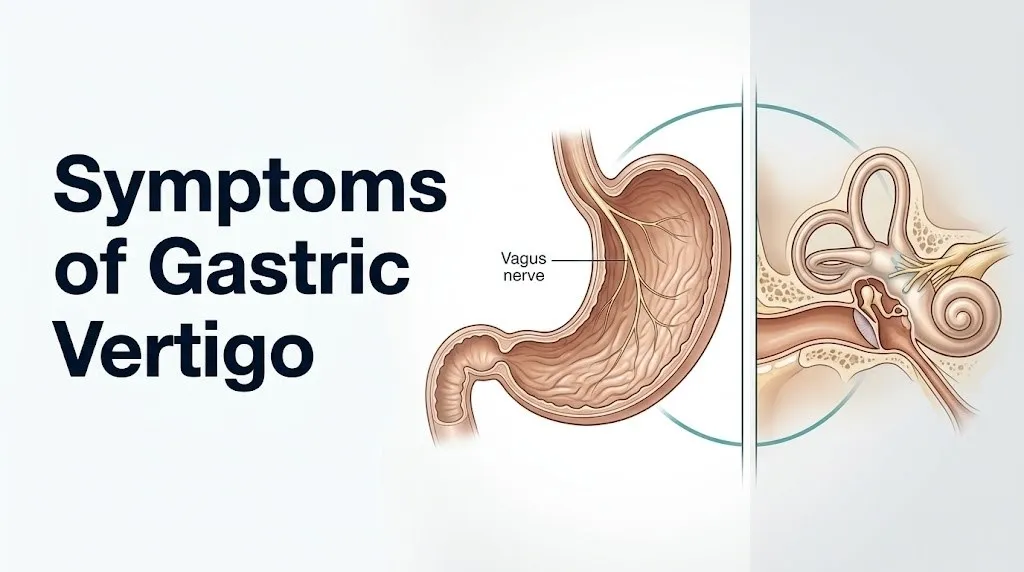
The vagus nerve’s afferent fibers (approximately 80 percent of vagal fibers are afferent, carrying information to the brain rather than commands to the body) originate in mechanoreceptors and chemoreceptors throughout the stomach wall, duodenum, and small intestine. These receptors respond to gastric distension, mucosal inflammation, abnormal pH, abnormal motility patterns, and chemical signals from intestinal hormones including cholecystokinin (CCK), serotonin (5-HT), and substance P.
When the gastrointestinal tract is diseased or dysfunctional, these afferent signals increase in frequency and intensity. The NTS receives this abnormal barrage and, through its projections to the vestibular nuclei, disrupts the normal tonic balance of vestibular activity. The vestibular nuclei are expecting quiet, well-regulated input from the inner ear’s semicircular canals, utricle, and saccule. When the NTS floods them with distress signals from the gut, they interpret this as spatial disorientation, producing the sensation of dizziness or spinning.
The area postrema adds another layer. It sits outside the blood-brain barrier specifically to sample circulating blood for toxic or abnormal chemicals. Bacterial metabolic products from overgrowth, absorbed histamine from a diseased stomach, or circulating inflammatory cytokines from gastrointestinal infection all stimulate the area postrema, triggering nausea and vomiting reflexes that amplify the vestibular symptom complex.
Research published in the Journal of Vestibular Research has documented the anatomical projections between the NTS and vestibular nuclei, confirming the neuroanatomical basis for visceral inputs modulating vestibular function.
Key Takeaway: The stomach and the balance system share a brainstem processing hub. The vagus nerve carries gastrointestinal distress signals to the nucleus tractus solitarius, which projects directly into the vestibular nuclei, making gut pathology a physiologically legitimate cause of dizziness and spinning sensations.
Dizziness and Lightheadedness as Symptoms of Gastric Vertigo
Dizziness in gastric vertigo ranges from a floating, lightheaded feeling (presyncope) to a true spinning sensation (vertigo), depending on which mechanism is driving the symptom: vasovagal autonomic disruption tends to produce lightheadedness and near-fainting, while direct NTS-vestibular nucleus overstimulation tends to produce a more rotational vertigo quality.
The distinction between dizziness types matters clinically. Lightheadedness and the sensation of impending fainting (called presyncope) in the context of gastrointestinal symptoms often reflects a vasovagal mechanism: excessive vagal tone from gastrointestinal distension or discomfort slows the heart rate and reduces cardiac output transiently, dropping cerebral perfusion pressure and producing the characteristic lightheaded, about-to-faint feeling. This typically resolves quickly when the GI trigger resolves or when the person lies down.
True rotational vertigo (the room spinning, or the person sensing they are spinning while stationary) in gastric vertigo reflects more direct NTS-to-vestibular-nuclei overflow. This type is more sustained and more disorienting than simple lightheadedness, and it may be accompanied by nystagmus (involuntary eye movements) in some presentations.
| Dizziness Type | Mechanism in Gastric Vertigo | Duration Pattern | GI Trigger Relationship |
|---|---|---|---|
| Lightheadedness/presyncope | Vasovagal cardiac output reduction from GI vagal hyperactivation | Brief, seconds to minutes | During or immediately after GI symptoms |
| True rotational vertigo | NTS-vestibular nucleus overflow from sustained GI afferent barrage | Minutes to hours | Associated with GI flare, worse after meals |
| Postural instability | Cerebellar nodulus/uvula disruption from NTS overflow | During episodes | Accompanies other gastric vertigo symptoms |
| Floating sensation | Area postrema stimulation, systemic toxins or metabolites | Variable | Associated with systemic GI illness |
Older adults are at elevated risk for the vasovagal/presyncope form of gastric-related dizziness because age-related cardiovascular reflexes respond more slowly and less effectively to sudden drops in cardiac output, making transient cerebral hypoperfusion from GI vagal triggers both more likely and more dangerous.
Nausea and Vomiting in Gastric Vertigo
Nausea in gastric vertigo is produced through two parallel pathways: direct stimulation of the area postrema (the chemoreceptor trigger zone, CTZ) by circulating GI-derived substances, and activation of the vomiting center in the lateral reticular formation of the medulla through NTS projections, producing nausea that is simultaneously gastrointestinal and vestibular in origin.
This dual-origin nausea is what makes it feel so overwhelming. Standard motion sickness nausea comes primarily from vestibular-visual conflict signals. Standard gastroenteritis nausea comes primarily from GI mucosal irritation signaling. Gastric vertigo nausea involves both pathways firing simultaneously, which is why patients often describe it as a particularly intense or persistent nausea that neither anti-nausea medication nor position change fully relieves on its own.
Serotonin (specifically 5-HT released from enterochromaffin cells in the gastrointestinal mucosa in response to distension or inflammation) acts on 5-HT3 receptors on vagal afferent terminals in the gut wall, amplifying the vagal signal to the NTS and the CTZ. This 5-HT3 mechanism is the same pathway targeted by ondansetron (a 5-HT3 antagonist), which explains why this medication class can reduce nausea in both chemotherapy patients and in some patients with severe gastric motility-related nausea.
The American College of Gastroenterology notes that nausea is among the most frequently reported symptoms in functional gastrointestinal disorders, including functional dyspepsia and gastroparesis, and that its intensity does not always correlate with the degree of objectively measurable gastric dysfunction.
Women experience nausea from gastrointestinal causes more intensely and more frequently than men, according to clinical data reviewed in the American Journal of Gastroenterology. This sex difference is driven in part by slower gastric emptying rates in women (related to progesterone effects on gastric smooth muscle motility) and in part by higher visceral sensitivity in women across multiple GI conditions.
Balance Disturbance and Unsteadiness in Gastric Vertigo
Balance disturbance in gastric vertigo manifests as unsteadiness when walking, a tendency to veer to one side, or a feeling that the ground is moving or shifting underfoot, driven by disruption of the vestibulo-spinal reflex and the vestibulo-cerebellar system through the NTS overflow from GI afferent signals.
The vestibulo-spinal reflex normally keeps the body upright by sending constant, rapid corrective muscle activation signals from the lateral vestibular nucleus (Deiters’ nucleus) down the lateral vestibulospinal tract to the limb extensor muscles. When the vestibular nuclei are being disrupted by incoming NTS signals from GI pathology, their output to the vestibulospinal tract becomes temporarily unreliable. The result is subtle postural instability, manifesting as a tendency to stumble, a feeling of being slightly off-balance, or a sensation of the floor gently rising and falling.
The cerebellar component adds further complexity. The nodulus and uvula of the cerebellum (the “vestibular cerebellum”) receive direct projections from the NTS and the vestibular nuclei. They normally serve as the fine-tuning mechanism for vestibular-driven balance control. When GI afferent overflow disrupts this circuit, the fine-tuning fails and postural corrections become sluggish or imprecise, which the person experiences as unsteadiness or clumsiness.
Research published in Otology and Neurotology has documented cases in which treatment of the underlying gastrointestinal condition (particularly H. pylori eradication) led to resolution of previously unexplained vestibular symptoms, providing clinical evidence for the GI-vestibular relationship beyond the neuroanatomical theory.
People taking multiple vestibular suppressant medications (such as meclizine or diazepam) for dizziness without an identified inner ear cause, who also have gastrointestinal disease, should discuss with their prescribing primary care physician or board-certified neurologist whether the GI condition is driving the vestibular symptoms, as vestibular suppressants will not address the root cause.
Key Takeaway: Balance disturbance in gastric vertigo comes from disruption of the vestibulo-spinal reflex via NTS overflow, not from inner ear pathology. Treating the underlying GI condition, not just suppressing the vestibular symptoms, is the clinically logical approach.
Sweating, Pallor, and Autonomic Symptoms in Gastric Vertigo
Sweating, skin pallor, cold hands, and rapid heart rate in gastric vertigo are produced by activation of the sympathetic nervous system as part of the autonomic response to the vagal disruption from gastrointestinal pathology, creating a characteristic pattern that mirrors the general appearance of motion sickness or a vasovagal episode.
The sympathetic response occurs because the body interprets the abnormal vestibular and GI signals as a threat requiring emergency physiological preparation. The hypothalamus receives the distress signals from the NTS and vestibular nuclei, interprets them as a sign of potential danger, and activates the sympatho-adrenal axis. Epinephrine released from the adrenal medulla causes peripheral vasoconstriction (pallor, cold extremities), increased sweat gland activity (cold sweat), and increased heart rate (tachycardia). These are the classic “sick” signs that accompany severe nausea and vestibular disturbance of any origin.
The pallor is anatomically specific: it appears first in the face and lips, reflecting vasoconstriction of the superficial facial arterioles mediated by sympathetic alpha-adrenergic receptor activation. The sweating is the body’s preparation for possible physical exertion (a thermoregulatory error in this context, since no exertion follows). The cold, clammy quality of the skin (technically called diaphoresis in its pathological form) is produced by the combination of vasoconstriction reducing skin warmth and the evaporative cooling effect of the sweat.
According to the Mayo Clinic, autonomic symptoms including sweating, pallor, and rapid heart rate accompanying dizziness and nausea in the context of gastrointestinal disease are consistent with vagally mediated autonomic dysregulation and do not by themselves indicate a cardiac or neurological emergency. However, rapid heart rate combined with severe dizziness and chest pain warrants emergency evaluation.
Individuals with diabetes mellitus and established autonomic neuropathy have a particular vulnerability to this autonomic symptom complex, because diabetic autonomic neuropathy impairs the normal feedback regulation of the sympathetic response, making autonomic symptoms more prolonged and more severe for the same degree of GI stimulation.
GERD and Acid Reflux as Triggers of Gastric Vertigo Symptoms
Gastroesophageal reflux disease (GERD) can trigger gastric vertigo symptoms through three mechanisms: a vasovagal reflex stimulated by acid contact with the esophageal mucosa, histamine release from esophageal mast cells activating vestibular H1 receptors, and transient esophageal spasm triggering a vagally mediated autonomic response that reduces cardiac output and produces cerebral hypoperfusion.
The esophagus is richly innervated with vagal afferent fibers that respond immediately and intensely to acid contact. When acidic gastric contents reflux into the distal esophagus, these afferent fibers send a high-frequency distress signal to the NTS. In susceptible individuals, this NTS stimulation is intense enough to overflow into the vestibular nuclei, producing a brief episode of dizziness or lightheadedness that the person may notice as a “dizzy spell” immediately following heartburn or regurgitation.
The histamine pathway adds another dimension. Esophageal inflammation from chronic acid exposure causes mast cell degranulation and histamine release. Histamine circulating in the bloodstream can reach the area postrema (which has no blood-brain barrier) and stimulate H1 receptors in the vestibular nuclei, amplifying vestibular sensitivity and producing dizziness that may persist beyond the acute reflux episode.
According to the American College of Gastroenterology’s clinical guidelines on GERD, extraesophageal manifestations of reflux disease extend well beyond the throat and lungs and can include neurological and autonomic symptoms in some patients, particularly those with severe or long-standing untreated disease.
Pregnant women in the third trimester are at particularly high risk for GERD-triggered vestibular symptoms because the gravid uterus elevates intra-abdominal pressure, forcing gastric contents upward, while simultaneously progesterone has relaxed the lower esophageal sphincter, creating conditions for frequent, severe acid reflux episodes.
Gastroparesis Symptoms and Vestibular Disturbance
Gastroparesis (delayed gastric emptying) produces vestibular symptoms by generating sustained, high-frequency vagal afferent signals from the persistently distended, food-filled stomach, creating a chronic, low-grade NTS overstimulation that produces a persistent background of dizziness, nausea, and postural instability rather than episodic attacks.
In normal gastric function, the stomach empties its contents into the duodenum within 2 to 4 hours. In gastroparesis, food remains in the stomach for 6, 8, or even 12 hours, maintaining constant mechanical distension of the gastric wall. The gastric wall’s mechanoreceptors, all connected to vagal afferent fibers, remain active throughout this prolonged retention period, sending continuous signals to the NTS.
Think of it like a car alarm that cannot be turned off. A brief GI insult is like a car alarm that sounds once and stops. Gastroparesis is like a car alarm stuck in the on position for hours, constantly broadcasting to the same neighborhood circuits, including the vestibular nuclei.
According to the National Institute of Diabetes and Digestive and Kidney Diseases (NIDDK), gastroparesis affects a disproportionate number of people with type 1 and type 2 diabetes, with diabetic autonomic neuropathy impairing the normal vagal efferent control of gastric smooth muscle that drives emptying. The same autonomic neuropathy that slows gastric emptying also alters the sensitivity of the NTS-vestibular circuit, making diabetic gastroparesis patients particularly prone to vestibular symptoms alongside their GI disease.
Any person with known gastroparesis who develops new or worsening dizziness and balance problems should inform their managing gastroenterologist and request evaluation by a board-certified neurologist or neurotologist to determine whether the vestibular symptoms require independent investigation or are secondary to the gastroparesis.
Key Takeaway: Gastroparesis produces sustained GI vagal afferent firing from prolonged gastric distension, creating a persistent background dizziness and nausea that differs from the episodic attacks typical of inner ear vertigo. Diabetic patients with gastroparesis are at especially high risk for this overlapping symptom complex.
H. Pylori Infection and Dizziness: What the Evidence Shows
Helicobacter pylori (H. pylori) infection has been associated with vestibular symptoms through the inflammatory pathway, where gastric mucosal inflammation generates systemic interleukin-1beta and TNF-alpha that may disrupt the endolymphatic sac’s ion transport function in the inner ear, potentially altering endolymphatic fluid homeostasis and producing vestibular symptoms similar to those of Meniere’s disease.
This is one of the more evidence-supported but still emerging connections in gastric vertigo research. Multiple clinical studies published in Otology and Neurotology have examined whether H. pylori eradication improves vestibular symptoms in patients with Meniere’s disease. Several found that a subset of Meniere’s disease patients who tested positive for H. pylori experienced improvement in their vertigo attack frequency following successful H. pylori treatment with standard antibiotic triple therapy, suggesting an inflammatory connection between the gastric infection and inner ear function.
The proposed mechanism involves the systemic inflammatory burden of active H. pylori infection. The organism triggers a sustained gastric mucosal immune response dominated by IL-1beta and TNF-alpha. These circulating cytokines can potentially alter the tight junction permeability of the endolymphatic sac epithelium, the structure responsible for maintaining the unique ionic composition of endolymphatic fluid in the inner ear. If the endolymphatic sac allows abnormal fluid accumulation (endolymphatic hydrops), the result is pressure changes in the cochlear duct and vestibular end organs, mimicking the pathology of Meniere’s disease.
Research published in Otology and Neurotology by Tschöpe and colleagues found that rates of H. pylori seropositivity were higher in Meniere’s disease patients than in matched controls without vestibular disorders, though this association study does not establish a causal relationship.
Any patient with both confirmed H. pylori infection and recurring vestibular episodes should mention both conditions explicitly when evaluated by either a board-certified gastroenterologist or a board-certified otolaryngologist, as the clinical picture may warrant coordinated investigation of both organ systems.
IBS, SIBO, and Functional Gastrointestinal Disorders Linked to Dizziness
Irritable bowel syndrome (IBS) and small intestinal bacterial overgrowth (SIBO) produce vestibular symptoms through distinct mechanisms: IBS through the shared hypothalamic-pituitary-adrenal (HPA) axis dysregulation and visceral hypersensitivity that amplifies GI afferent signals to the NTS, and SIBO through the production of bacterial metabolic byproducts (particularly D-lactate and other short-chain fatty acids) that reach the area postrema and stimulate vestibular and emetic responses.
IBS is fundamentally a disorder of the gut-brain axis, characterized by visceral hypersensitivity (abnormally amplified pain and discomfort signals from the gut) and altered motility driven by dysregulated autonomic nervous system function. The same HPA axis and autonomic nervous system dysregulation that drives IBS symptoms also lowers the threshold for vestibular symptom production. According to research in the Journal of Vestibular Research, patients with functional gastrointestinal disorders (IBS, functional dyspepsia) have a higher prevalence of vestibular complaints and dizziness than matched controls without GI diagnoses.
SIBO produces a different problem. Bacterial overgrowth in the small intestine generates fermentation products including hydrogen, methane, and organic acids that are absorbed into the portal circulation and eventually reach systemic circulation. The area postrema samples this abnormal blood chemistry and interprets it as a toxicological threat, triggering nausea, lightheadedness, and vestibular disturbance. Patients with SIBO often describe a distinctive pattern of post-meal dizziness and nausea that appears within 1 to 2 hours of eating carbohydrate-rich meals, when fermentation and gas production peak.
People with anxiety disorders have a clinically documented elevated prevalence of both IBS and functional dizziness, because the shared HPA axis and autonomic nervous system dysregulation of anxiety disorders creates a physiological environment that amplifies both visceral and vestibular sensitivity simultaneously. A board-certified gastroenterologist can order hydrogen breath testing for SIBO and colonoscopy for IBS evaluation, while concurrent vestibular symptoms may warrant referral to a board-certified otolaryngologist.
Gastric Vertigo Symptoms in Older Adults and Diabetic Patients
Gastric vertigo symptoms in older adults and people with diabetes mellitus present with greater severity, longer duration, and higher fall risk than in younger adults without diabetes, because diabetic autonomic neuropathy impairs both gastric motility control and the cardiovascular reflexes that normally compensate for the hemodynamic disruption GI-vestibular interactions produce.
Diabetic autonomic neuropathy damages the unmyelinated and small myelinated fibers of the vagus nerve through a process of progressive demyelination driven by advanced glycation end products (AGEs) and oxidative stress in the context of chronic hyperglycemia. This neuropathy impairs the vagal efferent signals that regulate gastric smooth muscle contraction (causing gastroparesis), while simultaneously altering the afferent signaling characteristics of the remaining intact vagal fibers, increasing their spontaneous firing rate and sensitivity. The result is both more persistent GI symptoms and more frequent and severe vestibular symptom overflow.
In elderly adults without diabetes, the normal age-related slowing of gastric emptying, reduced vestibular hair cell reserve (the utricle and saccule lose approximately 40 percent of their hair cells by age 70 according to histological studies reviewed in the Journal of Vestibular Research), and reduced cardiovascular compensatory responses to vasovagal events all combine to make GI-triggered vestibular symptoms more likely and more dangerous.
The most clinically consequential consequence of gastric vertigo in older adults is the fall risk. An elderly person who becomes dizzy and unsteady during or after a meal is at acute risk for a fall with potential hip fracture or head injury. Primary care physicians managing older adults with both GI conditions and recurrent dizziness should assess fall risk specifically and consider a physical therapy referral for vestibular rehabilitation alongside the GI treatment plan.
Gastric Vertigo Symptoms During Pregnancy
Gastric vertigo symptoms during pregnancy are produced by the convergence of three physiologically distinct mechanisms: pregnancy-related nausea and GI dysmotility from progesterone effects, increased gastroesophageal reflux from lower esophageal sphincter relaxation and uterine pressure, and estrogen-related alteration of inner ear fluid regulation.
Progesterone, rising progressively through the first trimester, relaxes smooth muscle throughout the body, including the gastric smooth muscle. This slows gastric emptying and reduces lower esophageal sphincter tone simultaneously. The result is increased gastric distension (triggering vagal afferents), increased reflux (triggering esophageal vagal afferents), and persistent nausea from both CTZ stimulation and NTS overflow.
Estrogen has documented effects on inner ear fluid regulation. The endolymphatic sac expresses estrogen receptors, and fluctuating estrogen levels during pregnancy alter the sac’s ion transport and fluid reabsorption capacity. This makes pregnant women more vulnerable to transient endolymphatic fluid shifts that produce vestibular symptoms, even in the absence of true Meniere’s disease.
The practical consequence is that pregnant women, particularly in weeks 6 to 16, frequently experience a symptom complex of nausea, dizziness, and balance difficulty that has both a gastrointestinal and a vestibular component. Distinguishing this from primary BPPV or a neurological problem requires clinical evaluation.
According to the American College of Obstetricians and Gynecologists (ACOG), dizziness in pregnancy is frequently multifactorial. Any dizziness during pregnancy accompanied by headache, visual changes, one-sided weakness, or speech difficulty warrants immediate evaluation by an obstetrician or emergency medicine physician, as these can indicate preeclampsia or a neurological event.
Key Takeaway: Gastric vertigo symptoms in pregnancy involve progesterone-driven gastric dysmotility, GERD, and estrogen-related inner ear fluid sensitivity all occurring simultaneously, making the symptom complex more pronounced than in non-pregnant individuals. Any neurological symptom accompanying dizziness in pregnancy requires immediate evaluation.
Gastric Vertigo vs. BPPV, Meniere’s Disease, and Neurological Vertigo
Gastric vertigo is distinguished from benign paroxysmal positional vertigo (BPPV) by the absence of clear positional triggering, from Meniere’s disease by the absence of the classic triad (episodic vertigo plus hearing loss plus tinnitus), and from neurological vertigo by the absence of focal neurological signs.
BPPV is caused by displaced otoconia (calcium carbonate crystals) in the semicircular canals, producing brief (seconds to 2 minutes) vertigo that is reliably triggered by specific head position changes (lying down, rolling over, looking up). Gastric vertigo is not positional. It correlates with meals and GI symptoms, not head movements.
| Feature | Gastric Vertigo | BPPV | Meniere’s Disease | Neurological Vertigo |
|---|---|---|---|---|
| Trigger | Eating, GI symptoms, GI flares | Specific head position changes | Spontaneous, unpredictable | Spontaneous or with neurological signs |
| Duration | Minutes to hours | Seconds to 2 minutes | 20 minutes to 12 hours | Variable |
| Nausea | Prominent | Mild to moderate | Prominent | Variable |
| Hearing changes | Absent | Absent | Fluctuating hearing loss | Sometimes |
| Tinnitus | Absent | Absent | Present | Sometimes |
| GI correlation | Yes, temporal relationship | No | No | No |
| Focal neuro signs | Absent | Absent | Absent | Often present |
| Positional testing | Negative | Positive (Dix-Hallpike) | Negative | Variable |
| Emergency indicator | No (usually) | No | No | YES if sudden onset severe |
The most clinically dangerous misattribution is labeling a posterior fossa stroke as gastric vertigo. Vertebrobasilar stroke (involving the posterior inferior cerebellar artery or anterior inferior cerebellar artery territory) presents with sudden-onset severe vertigo, nausea, vomiting, and unsteadiness, and is frequently misidentified as a gastrointestinal illness in the early hours. The distinguishing features are sudden onset (seconds), inability to walk without falling even with eyes open, and any accompanying focal signs.
A board-certified otolaryngologist or neurotologist performs the Dix-Hallpike maneuver and the video head impulse test (vHIT) to assess inner ear function. A board-certified gastroenterologist performs the GI investigation. Both evaluations are warranted when the clinical picture does not clearly fit a primary inner ear diagnosis.
Emergency Symptoms: When to Call 911 or Go to the ER
Certain presentations of dizziness combined with gastrointestinal symptoms require immediate emergency evaluation. Do not wait to see if these resolve on their own.
Call 911 or go to the nearest emergency room immediately if you experience:
- Sudden severe dizziness or vertigo with onset measured in seconds, combined with inability to walk without falling (possible posterior fossa stroke or cerebellar hemorrhage)
- Dizziness with any of the following: facial drooping on one side, arm or leg weakness, sudden speech difficulty or slurring, double vision, or severe sudden headache (possible vertebrobasilar stroke)
- Dizziness with chest pain, jaw pain, or left arm pain (possible cardiac arrhythmia or acute myocardial infarction with GI symptoms)
- Dizziness, vomiting, and abdominal pain that is severe, sudden, and worsening, in an older adult or diabetic patient (possible mesenteric ischemia or other vascular GI emergency)
- Loss of consciousness or near-fainting combined with dizziness and GI symptoms (possible severe vasovagal event, hemorrhage, or cardiac event)
- Dizziness with fever, neck stiffness, and light sensitivity (possible meningitis or encephalitis)
- In a pregnant woman: dizziness with severe headache, visual disturbance, swelling of the face or hands, or elevated blood pressure (possible preeclampsia)
These presentations can indicate stroke, cardiac events, meningitis, or preeclampsia and require emergency medical assessment, not a scheduled appointment or a phone call to your primary care physician.
How Gastric Vertigo Is Diagnosed and Evaluated Clinically
Gastric vertigo is evaluated through a two-track diagnostic approach: a vestibular assessment to characterize and rule out primary inner ear or neurological causes, and a gastrointestinal evaluation to identify the specific GI condition driving the vestibular symptoms.
The vestibular evaluation is performed by a board-certified otolaryngologist or board-certified neurotologist. Standard tests include:
- Videonystagmography (VNG): measures eye movements to assess vestibular function and identify specific patterns of inner ear dysfunction
- Video head impulse test (vHIT): assesses the semicircular canals’ function in response to rapid head movements, identifying vestibular nerve hypofunction
- Dix-Hallpike maneuver: clinical bedside test for BPPV; negative result in gastric vertigo
- Audiometry: assesses hearing and identifies the low-frequency hearing loss pattern of Meniere’s disease; typically normal in gastric vertigo
The gastrointestinal evaluation is performed by a board-certified gastroenterologist and may include:
- Gastric emptying scintigraphy: nuclear medicine test measuring how quickly the stomach empties after a standardized meal; the standard diagnostic test for gastroparesis
- Upper GI endoscopy: visualizes the esophageal, gastric, and duodenal mucosa; identifies GERD-related changes, H. pylori-associated gastritis, ulcers
- Urea breath test or stool antigen test for H. pylori: non-invasive confirmation of active H. pylori infection
- Hydrogen and methane breath test: standard diagnostic test for SIBO
- Esophageal pH-impedance monitoring: 24-hour ambulatory recording of esophageal acid exposure; confirms GERD diagnosis and correlates reflux events with symptom timing
To prepare for your gastroenterologist or otolaryngologist appointment:
- Keep a symptom diary for 2 weeks before the appointment, noting the time and content of meals, the onset and quality of GI symptoms (bloating, reflux, nausea, pain), and the onset, quality, and duration of any dizziness or balance symptoms.
- Note any positional component to the dizziness (does it change with head movement?).
- List all current medications including over-the-counter antacids and vestibular suppressants.
- Report whether dizziness occurs before, during, or after GI symptoms.
- Bring a list of prior vestibular or GI diagnoses and any previous testing results.
Frequently Asked Questions About Symptoms of Gastric Vertigo
What does gastric vertigo feel like?
Gastric vertigo feels like dizziness, lightheadedness, or a spinning sensation that occurs alongside or shortly after gastrointestinal symptoms such as nausea, bloating, reflux, or abdominal discomfort.
The dizziness may range from a gentle floating sensation to a distinct rotational vertigo, often accompanied by sweating, pallor, and an intensely nauseous feeling that does not fully resolve until both the GI and vestibular symptoms subside.
The timing relative to meals or GI flares is the key distinguishing feature: gastric vertigo correlates with gut activity rather than with head position changes the way inner ear vertigo typically does.
Can stomach problems really cause dizziness and vertigo?
Yes: stomach and intestinal problems can cause dizziness and vertigo through the vagus nerve’s direct anatomical connections to the nucleus tractus solitarius and vestibular nuclei in the brainstem.
This connection is a well-documented neuroanatomical pathway, and research published in the Journal of Vestibular Research has confirmed that visceral afferent signals from the gastrointestinal tract directly modulate vestibular nucleus activity.
Conditions including gastroparesis, GERD, H. pylori infection, and small intestinal bacterial overgrowth have all been associated with vestibular symptoms through named, physiologically grounded mechanisms.
How do I know if my dizziness is from my stomach or my inner ear?
Dizziness from a gastrointestinal cause typically correlates with meals, GI flares, or GI symptoms, is not triggered by specific head position changes, and is accompanied by prominent GI symptoms occurring before or alongside the dizziness.
Inner ear vertigo (BPPV) is triggered reliably by specific head movements, lasts seconds to a few minutes, and is not correlated with eating or gastrointestinal symptoms.
A board-certified otolaryngologist or neurotologist can perform the Dix-Hallpike maneuver and video head impulse test to distinguish these patterns definitively; self-assessment alone is not sufficient for confident differentiation.
Can GERD cause vertigo?
GERD can trigger dizziness and lightheadedness through vasovagal reflexes activated by acid contact with the esophageal mucosa, histamine release acting on vestibular H1 receptors, and transient cardiac output reduction from esophageal spasm.
The dizziness associated with GERD-triggered gastric vertigo typically occurs during or shortly after heartburn episodes, particularly after large meals, alcohol, or lying down after eating.
According to the American College of Gastroenterology, extraesophageal manifestations of GERD extend beyond the throat and airways and can include autonomic and neurological symptoms in susceptible individuals.
What type of doctor treats gastric vertigo?
Gastric vertigo requires evaluation by two specialists: a board-certified gastroenterologist to identify and manage the underlying GI condition, and a board-certified otolaryngologist or board-certified neurotologist to assess and characterize the vestibular symptom component.
A primary care physician is the appropriate first contact, who can order initial blood work, a urea breath test for H. pylori, and coordinate referrals to the appropriate specialists based on the predominant symptom pattern.
In some cases, a board-certified neurologist may also be involved if the vestibular symptoms do not clearly fit an inner ear pattern and central neurological causes need to be excluded with brain imaging.
Is gastric vertigo dangerous?
Gastric vertigo itself, meaning vestibular symptoms caused by a gastrointestinal disorder, is not typically dangerous in the sense of being immediately life-threatening when the underlying GI cause is benign.
The danger lies in misidentifying a serious condition (vertebrobasilar stroke, cardiac arrhythmia, or preeclampsia) as gastric vertigo, because these conditions present with overlapping dizziness and GI symptoms but require emergency treatment.
Any sudden-onset severe vertigo, especially with difficulty walking, facial weakness, speech difficulty, or severe headache, must be evaluated as a potential stroke emergency: call 911 immediately rather than attributing the episode to a stomach problem.
The connection between gastrointestinal health and the vestibular system is not a folk medicine concept. It runs through named brainstem structures (the nucleus tractus solitarius and vestibular nuclei), named nerve pathways (the vagus nerve), and named biochemical mediators (serotonin, cholecystokinin, substance P, histamine) that are documented in the peer-reviewed literature on both gastroenterology and neurotology.
If your dizziness consistently follows meals, worsens with GI flares, or has never responded to standard inner ear treatment, request coordinated evaluation by both a board-certified gastroenterologist and a board-certified otolaryngologist or neurotologist. Ask your primary care physician specifically about gastric emptying scintigraphy for gastroparesis, urea breath testing for H. pylori, and videonystagmography for vestibular function.
You now have the physiological framework to describe your symptom pattern precisely and the clinical knowledge to ask for the right investigations from the right specialists.