Dirty Air Filter Symptoms: Health Effects and What to Do
Dirty air filter symptoms that affect your health include recurring headaches, allergy flares, worsening respiratory irritation, persistent fatigue, and increased asthma symptoms, all produced when a vehicle’s degraded cabin air filter allows elevated concentrations of allergens, fine particulate matter, and microbial contaminants into the air you breathe during every drive. The filter responsible for these health effects is specifically the cabin air filter, not the engine air filter, and that distinction matters enormously for understanding why your body reacts the way it does.
The U.S. Environmental Protection Agency identifies in-vehicle environments as a significant source of fine particulate matter (PM2.5) and allergen exposure, noting that people in the United States spend an average of more than one hour per day in vehicles. A degraded cabin air filter can increase PM2.5 concentrations inside a vehicle cabin to levels that exceed EPA outdoor air quality thresholds, delivering that contaminated air directly to the respiratory mucosa of every passenger.
This article covers the full clinical picture: the physiological mechanisms by which a dirty cabin air filter produces specific health symptoms, which populations face the highest risk, what the research says about vehicle cabin air quality and respiratory health, and exactly when your symptoms warrant evaluation by a primary care physician, a board-certified allergist/immunologist, or an emergency medicine physician.
Dirty Air Filter Symptoms: What Is Actually Happening to Your Health
Dirty air filter symptoms that affect human health are produced specifically by the vehicle cabin air filter degrading to the point where it no longer effectively removes allergens, fine particles, mold spores, and chemical contaminants from the air circulated through the HVAC system into the passenger compartment.
Most people searching this topic are thinking about the engine air filter, the component that filters air entering the combustion chamber. That filter protects the engine. It does not filter the air you breathe inside the car. The cabin air filter is a separate component, typically located behind the glove compartment or under the dashboard, and it is the one that has direct and measurable effects on the health of vehicle occupants.
When a cabin filter becomes saturated with particulate matter, compressed with debris, or colonized by mold and bacteria during months of moisture exposure, it stops intercepting the contaminants that would otherwise flow through the vehicle’s ventilation ducts directly into the cabin air. The result is air inside your vehicle that contains higher concentrations of biological and chemical irritants than the outdoor air the system is drawing from.
The symptoms this produces are not mechanical. They are physiological responses from your respiratory mucosa, your immune system, and your central nervous system to airborne exposures that your body recognizes as threats.
| Contaminant Type | Source | Primary Body System Affected | Symptom Produced |
|---|---|---|---|
| Pollen particles | Outdoor air | Upper respiratory mucosa, immune system | Sneezing, rhinorrhea, itchy eyes |
| Dust mite fecal proteins | Recirculated cabin dust | Bronchial mucosa, immune system | Allergic rhinitis, asthma exacerbation |
| Mold spores | Wet/damp filter | Upper and lower respiratory tract | Cough, wheeze, sinus pressure |
| PM2.5 particles | Outdoor pollution, combustion | Alveolar epithelium, cardiovascular system | Headache, fatigue, pulmonary inflammation |
| VOCs (volatile organic compounds) | Mold metabolites, interior offgassing | Nasal mucosa, CNS | Headache, dizziness, nausea |
| Bacteria/bioaerosols | Accumulated organic matter on filter | Upper respiratory tract | Sore throat, increased infection risk |
People with pre-existing allergic rhinitis experience symptoms at lower contaminant thresholds than non-sensitized individuals, because their immune systems have already produced allergen-specific IgE antibodies that remain bound to mast cells lining the nasal and bronchial mucosa, ready to trigger an inflammatory response at minimal allergen re-exposure.
Cabin Air Filter vs Engine Air Filter: Which One Affects the Air You Breathe
The cabin air filter is the only vehicle air filter that directly affects the air occupants breathe. The engine air filter filters combustion intake air and has no connection to the vehicle’s HVAC system or passenger compartment air supply.
This distinction is almost universally absent from content written about “dirty air filter symptoms,” and it is clinically important. If you are experiencing respiratory symptoms, allergy flares, headaches, or fatigue related to time spent in your vehicle, the engine air filter is not the source. A dirty engine air filter affects engine performance (fuel economy, combustion efficiency, exhaust output) but does not alter the concentration of allergens, particulates, or mold spores in the air reaching your lungs.
The cabin air filter is positioned within the vehicle’s HVAC ductwork, typically behind the glove compartment (in most passenger vehicles), under the hood near the firewall, or beneath the dashboard depending on the vehicle model. All air drawn through the ventilation system, whether in “fresh air” mode pulling from outside or “recirculation” mode cycling cabin air, passes through this filter before entering the passenger compartment through the dashboard vents.
Think of the cabin air filter like the filter in a home HVAC furnace. A clean furnace filter traps dust, pollen, and debris before they reach your living space. A clogged, moldy furnace filter either restricts airflow or actively releases accumulated contaminants into the air you breathe. A cabin air filter works by exactly the same principle, in a much smaller, more enclosed space where you spend time every day.
Quick Tip:
- Cabin air filter replacement intervals vary by vehicle and driving environment: most manufacturers recommend replacement every 12,000 to 15,000 miles, but filters in high-pollen, high-dust, or high-pollution environments may need replacement every 6,000 to 8,000 miles.
- Drivers with known pollen allergies or asthma should check the cabin filter at the start of each allergy season regardless of mileage.
- A cabin air filter that smells musty when the HVAC is turned on is a reliable indicator of mold colonization, which is a separate health concern from simple particulate saturation.
Symptoms of a Dirty Cabin Air Filter
The symptoms of a dirty cabin air filter include persistent sneezing during drives, nasal congestion that worsens while in the vehicle, itchy or watery eyes, coughing, headache, unusual fatigue after driving, and worsening of pre-existing respiratory conditions, all of which tend to improve when the person is out of the vehicle and in clean outdoor air.
The pattern of symptom onset and resolution is the most clinically useful diagnostic clue. Symptoms that begin during a drive, worsen with time in the vehicle, and improve within 30 to 60 minutes of exiting the car suggest that the vehicle cabin environment is the exposure source. This pattern distinguishes vehicle-related air quality symptoms from other causes of headache, fatigue, or respiratory irritation.
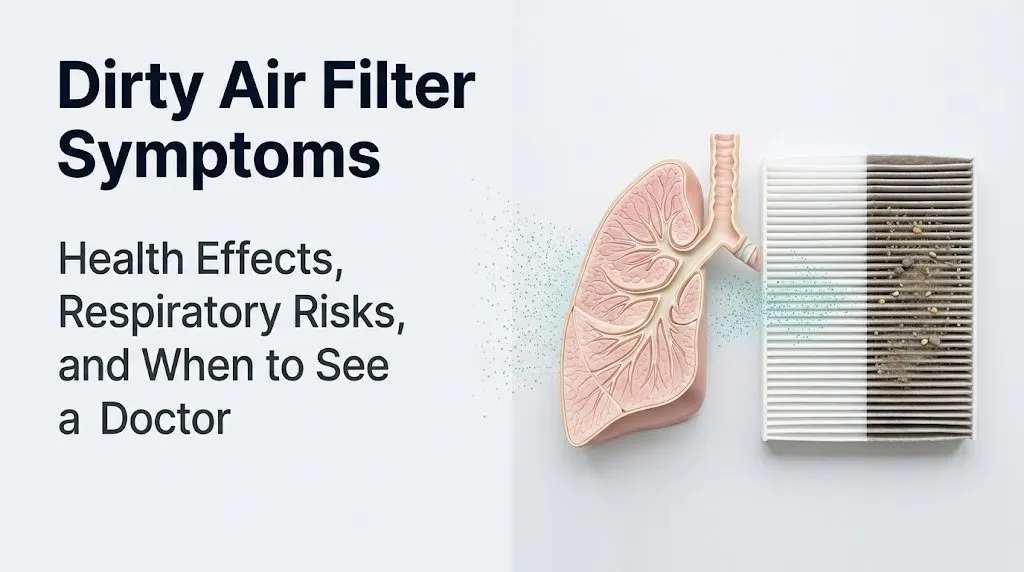
Symptoms of a dirty cabin air filter in order of typical clinical presentation:
- Sneezing and rhinorrhea (runny nose) during or shortly after entering the vehicle
- Nasal congestion that worsens with the HVAC running
- Itchy, watery, or red eyes (allergic conjunctivitis) during drives
- Dry or scratchy throat during extended driving periods
- Persistent cough that begins during drives and may linger for an hour after
- Headache beginning during drives, particularly in stop-and-go traffic
- Fatigue and reduced concentration after commutes
- Worsening of asthma symptoms (wheeze, chest tightness, shortness of breath) in previously well-controlled patients
- Musty or stale odor from the vents, indicating microbial growth on the filter
People taking antihistamines for seasonal allergies may notice that their medication becomes less effective during periods of heavy vehicle use. This can indicate that cabin allergen exposure is raising their total allergen burden above the threshold their medication can adequately suppress. Switching to a high-efficiency cabin air filter and replacing it on schedule is a practical first step before increasing medication doses.
Key Takeaway: The cabin air filter, not the engine air filter, is the component that directly affects the air you breathe in your car, and its degradation produces specific, recognizable respiratory and neurological symptoms that improve after filter replacement.
How a Clogged Cabin Air Filter Changes the Air You Breathe
A clogged cabin air filter changes in-vehicle air quality in two ways: it progressively fails to remove contaminants from incoming air, and in advanced stages of degradation, it becomes an active source of contaminants itself, releasing accumulated particulates, mold spores, and bacterial metabolites directly into the HVAC airstream.
A new, properly functioning cabin air filter with a MERV (Minimum Efficiency Reporting Value) rating of 8 to 12 captures particles between 1 and 10 micrometers, effectively removing most pollen grains (10 to 100 micrometers), many mold spores (3 to 30 micrometers), and a portion of fine dust. Higher-efficiency cabin filters rated as HEPA-equivalent can capture particles down to 0.3 micrometers, including most bacteria and larger viral aggregates.
As the filter loads with debris, its filtration efficiency paradoxically improves briefly (the accumulated debris layer acts as an additional filter medium) before declining sharply as the pressure differential across the clogged filter increases and air begins bypassing the filter through gaps or poorly sealed edges. At this stage, unfiltered air enters the cabin with a contaminant load reflecting outdoor air quality plus any material dislodged from the degraded filter itself.
The National Institute of Environmental Health Sciences has linked elevated PM2.5 concentrations in vehicle cabins to measurable increases in respiratory inflammation markers in commuting adults, with effects detectable even during short commutes in moderate traffic conditions.
Reduced airflow from a severely clogged filter also means the HVAC system cannot adequately dehumidify the cabin air in warm or humid conditions. Elevated relative humidity inside the cabin (above 60%) creates conditions that promote mold and bacterial growth on the filter surface, converting a particulate filtration problem into a biological contamination problem with a different and more persistent set of health effects.
Dirty Air Filter Allergy Symptoms
Dirty air filter allergy symptoms occur when allergen particles that a functioning cabin filter would have captured instead reach the nasal mucosa and bronchial mucosa, triggering IgE-mediated mast cell degranulation and the release of histamine, leukotrienes, and prostaglandins that produce the classic allergic response.
The nasal turbinates contain a dense network of submucosal blood vessels and mast cells loaded with IgE antibodies produced during prior allergen sensitization. When pollen or dust mite fecal protein particles land on the nasal mucosa in a sensitized individual, they bind to IgE on mast cell surfaces, triggering rapid degranulation. Within seconds to minutes, histamine floods the local tissue, causing vasodilation (producing mucosal swelling and congestion), increased vascular permeability (producing rhinorrhea), and stimulation of sensory nerve endings (producing sneezing and itching).
The American Academy of Allergy, Asthma and Immunology notes that vehicle cabins can concentrate allergen exposure, particularly during pollen season when fresh air mode draws outdoor air continuously through a degraded filter, delivering a steady stream of airborne pollen directly to seated passengers at close range and with no outdoor dilution. This is qualitatively different from walking outdoors in the same pollen conditions, where body movement and distance from concentrated pollen sources provide natural dilution.
Allergy symptoms specific to dirty cabin air filter exposure include:
- Bilateral nasal congestion that worsens after 5 to 10 minutes in the vehicle with HVAC running
- Repetitive sneezing episodes beginning shortly after turning on the ventilation system
- Watery, itchy, or puffy eyes (allergic conjunctivitis) correlated with driving rather than outdoor time
- Post-nasal drip and throat clearing during and after drives
- Worsening symptoms during allergy season compared to non-allergy months (suggesting pollen as the primary allergen source)
- Symptom improvement when driving with windows down versus HVAC on (suggesting the filter/duct system is the source, not outdoor air directly)
People with latex allergy should be aware that some vehicle interior components offgas latex-related compounds, and a dirty cabin filter no longer effectively traps particles from deteriorating interior materials, potentially increasing occupant exposure to non-pollen allergens within the cabin.
Can a Dirty Air Filter Cause Headaches and Fatigue
A dirty cabin air filter can cause headaches and fatigue through two distinct physiological mechanisms: histamine-mediated cerebrovascular vasodilation triggered by the allergic response to airborne allergens, and PM2.5-mediated systemic neuroinflammation that disrupts normal cerebrovascular regulation and increases oxidative stress in brain tissue.
The headache produced by allergen exposure follows a specific pathway. Histamine released during nasal mast cell degranulation does not stay confined to the nasal tissue. At significant allergen loads, systemic histamine levels rise enough to act on histamine H1 receptors on cerebrovascular smooth muscle, producing vasodilation of the cerebral vasculature. This intracranial vasodilation stretches the pain-sensitive walls of cerebral blood vessels, generating the throbbing, pressure-type headache that many people with seasonal allergies recognize as part of their typical allergy presentation.
The fatigue mechanism is separate. Research published in Environmental Health Perspectives has found that elevated PM2.5 exposure is associated with measurable increases in circulating inflammatory markers including IL-6 and TNF-alpha. These cytokines act on the hypothalamus and brainstem, producing the physiological state called sickness behavior: fatigue, reduced motivation, cognitive slowing, and mood lowering. This is the same cytokine-mediated fatigue pathway activated during viral illness. A dirty cabin filter that allows elevated PM2.5 into the cabin can activate this pathway even at sub-clinical particulate concentrations during daily commutes.
People with hypothyroidism who already experience baseline fatigue may find that vehicle-related PM2.5 and allergen exposure exacerbates their tiredness in ways that are clinically indistinguishable from thyroid-related fatigue without careful attention to the temporal relationship with driving. If fatigue worsens specifically during periods of heavy commuting and improves on days without vehicle use, a cabin air quality problem deserves investigation alongside thyroid function testing.
Quick Tip:
- Track whether headaches begin during or within 30 minutes of starting a drive, and whether they resolve within an hour of leaving the vehicle. This temporal pattern is clinically meaningful.
- Headaches that occur consistently on workdays but not weekends, in individuals who commute by car on workdays, are a recognized pattern in occupational and environmental medicine.
- Children who develop headaches during school runs that resolve after arriving at school may be experiencing cabin air quality effects, particularly if the vehicle’s cabin filter has not been replaced in over a year.
Key Takeaway: A dirty cabin air filter causes headaches through histamine-driven cerebrovascular vasodilation from allergen exposure, and causes fatigue through PM2.5-mediated IL-6 and TNF-alpha release that activates the same cytokine sickness pathway as viral illness.
Respiratory Symptoms from a Dirty Cabin Air Filter
Respiratory symptoms from a dirty cabin air filter range from mild nasal congestion and throat irritation to worsening bronchospasm and reduced peak expiratory flow in people with pre-existing airway disease, depending on the specific contaminants passing through the degraded filter and the individual’s airway sensitivity.
The upper respiratory tract, from the nasal passages through the larynx and trachea, is the first line of contact with airborne contaminants drawn through the HVAC vents. The ciliated pseudostratified columnar epithelium lining these airways normally traps particles in a mucus layer and sweeps them toward the pharynx for clearance. When particulate and allergen load exceeds the capacity of this mucociliary system, particles penetrate deeper into the bronchial mucosa and, in the case of PM2.5, reach the alveolar epithelium directly.
At the bronchial level, allergen deposition in sensitized individuals triggers eosinophilic inflammation mediated by IL-4, IL-5, and IL-13, the Th2 cytokine pathway central to asthma pathophysiology. This produces edema of the bronchial mucosa, hypersecretion of mucus, and contraction of bronchial smooth muscle (bronchospasm). The clinical result is cough, wheeze, chest tightness, and reduced airflow that can persist for hours after the allergen exposure ends.
The American Lung Association states that fine particulate matter exposure is a well-documented trigger for respiratory inflammation across the population, not only in people with pre-existing lung disease. In healthy adults, repeated PM2.5 exposure from a chronically dirty cabin filter can gradually increase airway inflammatory markers over weeks to months, potentially contributing to new-onset respiratory symptoms in people who previously had no respiratory diagnosis.
Older adults over 65 with reduced pulmonary function reserve are at higher risk for clinically meaningful respiratory symptom deterioration from cabin air quality compared to younger healthy adults. A previously asymptomatic older adult developing new cough, wheeze, or shortness of breath during their daily driving routine deserves evaluation by a primary care physician, with disclosure of the potential vehicle cabin air quality exposure.
Mold and VOC Exposure from a Clogged Cabin Filter
A mold-colonized cabin air filter is a source of active biological and chemical contamination in the vehicle cabin, releasing mold spores, mycotoxins, and volatile organic compounds (VOCs) produced by fungal metabolism directly into the HVAC airstream during every drive.
Mold colonization of cabin air filters occurs when moisture accumulates on the filter medium. This happens readily in humid climates, after driving through rain, or when condensation from the air conditioning evaporator (which sits directly adjacent to the cabin filter in most vehicle configurations) drips onto the filter repeatedly. The mold species most commonly found on vehicle HVAC filters and components include Cladosporium, Aspergillus, and Alternaria, all of which are recognized respiratory allergens and, in the case of some Aspergillus strains, potential respiratory pathogens in immunocompromised individuals.
The clinical effects of mold spore inhalation overlap substantially with other allergen exposures (rhinitis, conjunctivitis, asthma exacerbation) but also include symptoms not seen with pollen or dust mite exposure: persistent sinus pressure and headache, a chronic productive cough that persists beyond the typical post-infection recovery period, and in some individuals, symptoms of mucous membrane irritation (burning eyes, throat rawness, hoarseness) that reflect the non-IgE-mediated direct cytotoxic effects of mycotoxins on mucosal epithelial cells.
VOCs produced by mold metabolism (fungal microbial VOCs, or MVOCs) include compounds such as 1-octen-3-ol, 3-methylfuran, and geosmin, which cause direct irritation of the nasal mucosa, conjunctival epithelium, and upper airway at concentrations achievable inside a vehicle cabin with a heavily mold-colonized filter. Research in Indoor Air journal has documented elevated MVOC concentrations in vehicle cabins with visually mold-positive HVAC components, correlating with higher self-reported headache, eye irritation, and fatigue in regular occupants.
People who are immunocompromised, including those receiving chemotherapy, taking chronic oral corticosteroids, living with HIV, or following solid organ transplant, face a higher risk of invasive fungal respiratory infection from sustained mold spore inhalation. This population should have vehicle cabin air filters inspected and replaced immediately if any musty odor is present when the HVAC is running, and should discuss vehicle air quality concerns with their primary care physician or the specialist managing their underlying condition.
Key Takeaway: A musty smell from your vehicle vents is not cosmetic. It indicates mold colonization of the cabin filter or HVAC components, producing mycotoxin and VOC exposure that causes persistent headache, sinus pressure, eye irritation, and throat rawness through direct mucosal cytotoxicity.
Dirty Air Filter Symptoms in People with Asthma and COPD
People with asthma or chronic obstructive pulmonary disease (COPD) experience dirty cabin air filter symptoms at lower allergen and PM2.5 thresholds than healthy adults, because their baseline airway inflammation and reduced pulmonary function reserve leave them with less physiological capacity to absorb additional airborne insults before clinical deterioration occurs.
In asthma, the airways already demonstrate chronic eosinophilic inflammation, mucosal edema, and smooth muscle hypertrophy even between symptomatic episodes. The result is airway hyperreactivity: a state in which the bronchial smooth muscle contracts at lower provocation thresholds than in a healthy airway. When allergen or PM2.5 concentrations in the vehicle cabin rise due to a dirty filter, an asthmatic individual may develop bronchospasm at exposures that produce only mild nasal congestion in a non-asthmatic passenger.
The Centers for Disease Control and Prevention reports that approximately 1 in 13 Americans has asthma, and that identified environmental triggers including allergens and fine particulate matter are responsible for a large proportion of uncontrolled asthma episodes. Vehicle commuters with asthma who experience more frequent reliever inhaler use during periods of heavy driving should consider cabin air quality as a contributing trigger and report this pattern to their managing pulmonologist or allergist/immunologist.
COPD presents a different but equally serious risk profile. In COPD, the bronchioles and alveolar walls are structurally damaged from chronic inflammation (most commonly from tobacco smoke exposure), producing permanently reduced FEV1 (forced expiratory volume in 1 second) and limited pulmonary functional reserve. Any additional airway inflammation from particulate or allergen exposure can tip a COPD patient from a compensated baseline into an acute exacerbation, producing worsened dyspnea, increased mucus production, and in severe cases, respiratory failure requiring hospitalization.
For people with asthma or COPD:
- Report any change in inhaler use frequency or new worsening of respiratory symptoms to your managing pulmonologist or primary care physician
- Ask your mechanic to check the cabin air filter at every oil change, and replace it at least annually or every 10,000 miles in normal driving conditions
- Consider upgrading to a HEPA-equivalent or activated carbon cabin air filter, which provides higher particle capture efficiency for both allergens and chemical contaminants
- Avoid running the vehicle HVAC in “recirculation” mode in heavy traffic when the engine ahead of you is producing elevated exhaust, as recirculation mode continually cycles the same air without diluting it with cleaner air
Particulate Matter Exposure Inside a Vehicle Cabin
Fine particulate matter (PM2.5), defined as airborne particles with an aerodynamic diameter of 2.5 micrometers or less, penetrates past the upper respiratory tract defense systems and reaches the alveolar epithelium directly, where it triggers inflammatory responses, oxidative stress, and in chronic high-level exposure, endothelial dysfunction and cardiovascular effects.
The EPA has established outdoor air quality standards for PM2.5 at a 24-hour average of 35 micrograms per cubic meter (mcg/m3). Research published in Environmental Health Perspectives has measured PM2.5 concentrations inside vehicle cabins during rush-hour commutes in urban traffic at levels ranging from 20 to over 100 mcg/m3, with concentrations peaking in stop-and-go traffic behind diesel vehicles. A properly functioning cabin air filter substantially reduces in-cabin PM2.5 compared to outside concentrations. A degraded filter can fail to provide this protection when its pressure drop causes bypass airflow, or when it has shed captured particles back into the airstream.
Think of PM2.5 particles like smoke particles, because they essentially are. They are small enough to bypass every filtering mechanism in the nose and throat and settle directly onto the gas exchange surfaces of the alveoli. Once there, alveolar macrophages attempt to engulf and neutralize them. This process generates reactive oxygen species (ROS) and triggers release of pro-inflammatory cytokines (IL-6, TNF-alpha, IL-8) that enter systemic circulation and produce effects throughout the body, including in the brain and cardiovascular system.
People who commute in heavy urban traffic for more than 30 minutes daily accumulate substantially higher PM2.5 exposure than the general population. A 2021 observational study published in Environmental Health Perspectives found that commuter PM2.5 exposure was independently associated with increased markers of systemic inflammation and endothelial dysfunction in otherwise healthy working-age adults. A high-efficiency cabin air filter is one of the most accessible interventions available to reduce this exposure.
Dirty Air Filter Car Symptoms That Signal a Health Risk
Dirty air filter car symptoms that signal a genuine health risk, as opposed to inconvenient but non-dangerous vehicle performance issues, are those that reflect declining cabin air quality: odors from the vents, worsening occupant respiratory symptoms, and air distribution problems that increase occupant exposure to unfiltered recirculated air.
The automotive symptoms associated with a dirty engine air filter (rough idle, misfiring, poor fuel economy) are mechanical warnings about the engine, not health warnings about occupants. However, certain vehicle symptoms do correlate directly with occupant health risk. A strong musty or moldy odor from the HVAC vents is the most important, because it signals microbial colonization of the filter or evaporator housing that is actively releasing bioaerosols and VOCs into the cabin air.
A second health-relevant car symptom is reduced airflow from the dashboard vents when the HVAC fan is running at high speed. A clogged cabin filter restricts airflow, which reduces the system’s ability to dehumidify the cabin in warm weather and heat or cool the cabin in extreme temperatures. Reduced dehumidification allows cabin relative humidity to rise above 60%, creating conditions that accelerate mold growth not only on the filter but on the interior fabric surfaces and duct walls, compounding the biological contamination problem.
Health-significant vehicle symptoms to act on immediately:
- Musty, moldy, or earthy odor from vents when HVAC runs on any setting
- Unusual dusty or gritty sensation in the eyes or throat when the fan is first turned on
- Reduced airflow on maximum fan speed without an obvious mechanical cause
- Any occupant developing consistent respiratory, eye, or headache symptoms correlated with vehicle use
- A visible gray-brown or black discoloration visible on the filter when it is removed
The timing of filter inspection matters. A filter that passes visual inspection in winter may harbor significant mold growth by late summer after months of air conditioning condensate exposure. Older adults who spend extended time in their vehicles for medical appointments, shopping, or caregiving have higher daily in-vehicle air exposure than the average commuter, and their cabin filter replacement schedule should reflect that higher exposure duration.
Key Takeaway: A musty odor from your vehicle vents and reduced HVAC airflow on maximum fan speed are the two most health-relevant warning signs that your cabin filter needs immediate replacement, not just a mechanical service note.
Children and Pregnant Women: Elevated Risk from Dirty Cabin Air
Children and pregnant women face elevated health risk from dirty cabin air filter exposure because of specific physiological characteristics that make them more sensitive to airborne allergens, particulate matter, and chemical contaminants at lower concentration thresholds than healthy non-pregnant adults.
Children breathe at higher respiratory rates than adults: a 5-year-old breathes approximately 20 to 30 times per minute versus 12 to 20 times per minute in an adult. Per kilogram of body weight, this translates to a substantially higher volume of air inhaled per hour. In a vehicle with a degraded cabin filter, a child in a rear seat absorbs a proportionally greater dose of whatever contaminants are present in the cabin air than the adult driver in the front seat. Children also have developing immune and respiratory systems that are more susceptible to allergen sensitization: repeated early-life exposure to high allergen and PM2.5 concentrations is associated with increased risk of developing allergic rhinitis and asthma in later childhood, according to research reviewed by the American Academy of Pediatrics.
During pregnancy, progesterone produced by the corpus luteum and later the placenta causes mucosal congestion of the nasal airways (a condition called pregnancy rhinitis affecting up to 20% of pregnant women) that amplifies respiratory sensitivity to airborne irritants. Pregnant women also have a documented increase in tidal volume (air breathed per breath) of approximately 40% above pre-pregnancy baseline, driven by progesterone stimulation of the respiratory center in the medulla oblongata. This means they inhale more air per minute than non-pregnant women of similar body size, increasing their dose of any cabin contaminants proportionally.
PM2.5 exposure during pregnancy is not only a maternal health concern. Research published in JAMA Pediatrics has found associations between elevated gestational PM2.5 exposure and increased rates of preterm birth, low birth weight, and adverse neonatal neurodevelopmental outcomes. The placenta does not prevent PM2.5-triggered systemic inflammatory signaling from reaching fetal circulation. Replacing the cabin air filter before and during pregnancy is a direct and accessible step toward reducing this exposure.
Chronic vs Acute Exposure to Degraded Cabin Air Quality
Acute exposure to a heavily degraded cabin air filter produces an immediate and recognizable symptom pattern, while chronic low-level exposure from a gradually degrading filter produces a subtler, harder-to-attribute symptom picture that can persist and worsen over months before the source is identified.
Acute exposure, for example, driving a borrowed vehicle or rental car with a severely clogged, moldy cabin filter, typically produces rapid onset of nasal symptoms, eye irritation, and headache within 10 to 20 minutes of turning on the ventilation system. The symptoms are severe enough to be uncomfortable, and the temporal connection to the vehicle is obvious. Most people step out of the vehicle feeling better, and the connection is made.
Chronic exposure is the more clinically relevant pattern for the average driver who owns their vehicle. As a cabin filter degrades gradually over months and years of use, the increase in cabin contaminant concentration is slow. The occupant adapts incrementally to worsening symptoms, attributing them to seasonal allergies, workplace stress, general tiredness, or other causes. By the time the filter is severely clogged or mold-colonized, the occupant may have months of accumulated respiratory, cognitive, and immune system symptom burden without recognizing the vehicle as the source.
The key clinical distinction between acute and chronic patterns:
| Feature | Acute Exposure | Chronic Exposure |
|---|---|---|
| Onset timing | Minutes to 20 minutes after HVAC on | Weeks to months of gradually worsening symptoms |
| Symptom recognition | Clear temporal link to vehicle use | Symptoms attributed to other causes |
| Improvement pattern | Rapid improvement after leaving vehicle | Gradual improvement after filter replacement (days to weeks) |
| Severity | Often sharp and uncomfortable | Milder but persistent; progressively worsening |
| Most affected populations | Anyone with high-load exposure | Daily commuters, people with pre-existing conditions |
People who work night shifts and sleep during the day may not notice the temporal pattern linking vehicle use to symptom onset as readily as standard day workers. If you are a shift worker experiencing chronic fatigue, headache, or respiratory symptoms, explicitly tracking the days you drive versus days you do not drive can reveal a vehicle air quality association that a general symptom diary might miss.
When Dirty Air Filter Symptoms Need Medical Evaluation
Dirty air filter symptoms need medical evaluation when they persist after cabin air filter replacement, when they are severe enough to interfere with driving safety or daily function, when they include lower respiratory tract symptoms such as wheeze or shortness of breath, or when they occur in a person with asthma, COPD, cardiovascular disease, or pregnancy.
The clinical threshold for seeking medical evaluation, and which type of provider to see, depends on the specific symptom picture:
- New or worsening allergy symptoms (rhinorrhea, sneezing, nasal congestion, itchy eyes) that are correlated with vehicle use and do not improve within 2 to 4 weeks of cabin air filter replacement: evaluation by a primary care physician or a board-certified allergist/immunologist is appropriate. Ask specifically about allergy skin prick testing or serum-specific IgE testing to identify the triggering allergens and guide treatment.
- Recurring headaches correlated with driving that do not resolve after cabin air filter replacement: evaluation by a primary care physician is appropriate. Bring a symptom diary showing the temporal relationship between driving and headache onset.
- Worsening asthma symptoms (increased rescue inhaler use, new nighttime awakening with cough or wheeze, reduced peak flow readings): contact your managing pulmonologist or allergist/immunologist within 1 to 2 days. Do not wait for a routine appointment if your inhaler use has increased substantially.
- New respiratory symptoms (wheeze, chest tightness, shortness of breath with minimal exertion) in a person with no prior respiratory diagnosis: evaluation by a primary care physician within 1 week, with spirometry requested to assess baseline pulmonary function.
- Musty-smell-associated symptoms that persist after filter replacement: the mold source may be within the HVAC evaporator housing or ducts rather than the filter. Professional HVAC duct cleaning and evaporator treatment may be required, and persistent symptoms warrant evaluation by a primary care physician with disclosure of the suspected mold exposure.
- Pregnant women experiencing new or worsening respiratory symptoms or persistent headache: contact an obstetrician-gynecologist promptly, as both allergen burden and PM2.5 exposure carry fetal as well as maternal risk.
Emergency Symptoms: When to Call 911 or Go to the ER
Certain symptoms that can be triggered or worsened by dirty cabin air filter exposure require immediate emergency evaluation. Do not wait to see if these resolve on their own.
Call 911 or go to the nearest emergency room immediately if you or any vehicle occupant experiences:
- Severe shortness of breath or inability to complete a full sentence without stopping to breathe (indicates severe asthma exacerbation or severe bronchospasm)
- Audible wheeze that does not respond to a rescue bronchodilator inhaler after two doses (indicates refractory bronchospasm requiring emergency treatment)
- Lips, fingernails, or skin turning blue or gray (cyanosis, indicating critically low blood oxygen saturation)
- Throat tightening, swelling of the tongue or lips, or difficulty swallowing combined with respiratory symptoms (indicates anaphylaxis, a life-threatening allergic reaction requiring immediate epinephrine)
- Loss of consciousness or near-loss of consciousness in a vehicle occupant during or after a drive
- Any child who becomes unresponsive, limp, or unable to cry or speak during a drive
Call Poison Control at 1-800-222-1222 immediately if you suspect exposure to a toxic substance from vehicle HVAC contamination, including unknown chemical odors from the vents that are causing immediate neurological symptoms.
These presentations can indicate severe asthma exacerbation, anaphylaxis, or toxic inhalation injury, and they require emergency medical assessment and treatment, not an urgent care appointment or a call to your allergist.
How to Confirm Your Cabin Air Filter Is Causing Your Symptoms
Confirming that your cabin air filter is the source of your symptoms involves a structured observation process combined with a therapeutic filter replacement trial, and if symptoms persist after replacement, clinical testing by a board-certified allergist/immunologist or primary care physician to characterize the specific allergen or irritant involved.
To systematically confirm or rule out the cabin air filter as your symptom source:
- Document your symptom pattern for one full week before making any changes. Note which days and times symptoms occur, whether the HVAC is running, whether symptoms worsen with time in the vehicle versus time outside, and whether symptoms improve or resolve after leaving the vehicle.
- Inspect the cabin air filter visually. Most cabin air filters are accessible behind the glove compartment without tools. A filter that is visibly gray-brown with accumulated debris, shows dark discoloration (mold), or emits a musty odor when held near the face has almost certainly been contributing to your in-vehicle air quality problem.
- Replace the cabin air filter. Use the replacement interval specified in your vehicle owner’s manual, or choose a high-efficiency option with a MERV rating of 12 or above, or a HEPA-equivalent cabin filter if available for your vehicle model.
- Track symptoms for 2 to 4 weeks after replacement. Some symptom improvement (particularly nasal and eye symptoms from allergen exposure) may be rapid, within days. Others, particularly symptoms related to mold exposure or systemic PM2.5 inflammatory effects, may take 2 to 4 weeks to fully resolve as inflammatory pathways downregulate.
- Test with different HVAC settings. If symptoms improve with windows down but persist with HVAC on, even after filter replacement, the problem may extend to mold within the evaporator housing or ducts, and professional HVAC treatment of the vehicle interior should be considered.
- If symptoms do not improve after filter replacement, schedule an appointment with a primary care physician and bring your symptom diary. Request evaluation for allergic rhinitis, asthma, or other respiratory conditions with allergy skin prick testing or spirometry as appropriate to your symptom picture.
Key Takeaway: A filter replacement trial followed by structured symptom tracking over 2 to 4 weeks is the most practical first step to confirm a dirty cabin air filter as the source of your health symptoms, with clinical allergy testing as the next step if symptoms persist.
Frequently Asked Questions About Dirty Air Filter Symptoms
Can a dirty air filter in my car actually make me feel sick?
Yes, a dirty cabin air filter in your car can produce real, physiologically grounded health symptoms by allowing allergens, PM2.5 particles, mold spores, and VOCs to enter the cabin air at higher concentrations than a clean filter would permit.
The symptoms produced include nasal congestion, sneezing, eye irritation, headache, fatigue, and worsening of pre-existing respiratory conditions including asthma and allergic rhinitis.
The National Institute of Environmental Health Sciences has linked elevated in-vehicle PM2.5 and allergen exposure to measurable respiratory and systemic inflammatory effects in commuting adults.
What are the most common health symptoms of a dirty cabin air filter?
The most common health symptoms of a dirty cabin air filter are persistent sneezing and nasal congestion during or after driving, itchy or watery eyes, recurring headaches correlated with vehicle use, fatigue after commutes, and worsening of allergy or asthma symptoms.
These symptoms are produced by allergen particles and PM2.5 bypassing the degraded filter and reaching the respiratory mucosa, where they trigger IgE-mediated mast cell degranulation and, in the lower airways, eosinophilic inflammation.
Symptoms typically improve within days to weeks after replacing the cabin air filter with a high-efficiency replacement unit.
How do I know if my headache is from a dirty cabin air filter?
A cabin air filter headache characteristically begins during or within 30 minutes of starting a drive with the HVAC running and improves within 30 to 60 minutes of exiting the vehicle into fresh outdoor air.
The headache is typically diffuse and pressure-type rather than sharp or one-sided, and it may be accompanied by nasal congestion or eye irritation that follows the same temporal pattern.
If your headaches consistently follow this vehicle-correlated pattern, replacing the cabin air filter and tracking headache frequency over the following two to four weeks is a reasonable first clinical step before seeking a physician evaluation.
Is a dirty cabin air filter dangerous for someone with asthma?
A dirty cabin air filter poses a genuine health risk for someone with asthma because it allows allergen particles and PM2.5 into the cabin air at concentrations that can trigger bronchospasm, increase rescue inhaler use, and in severe cases, precipitate a serious asthma exacerbation.
People with asthma have chronically hyperreactive airways that respond to allergen and particulate provocation at much lower thresholds than non-asthmatic individuals, meaning the same filter that causes mild nasal congestion in a healthy adult can cause significant bronchospasm in an asthma patient.
Any person with asthma who notices increased inhaler use or new chest tightness during commuting periods should contact their managing pulmonologist or allergist/immunologist and replace the cabin air filter as an immediate practical step.
How often should a cabin air filter be replaced to protect respiratory health?
Most vehicle manufacturers recommend cabin air filter replacement every 12,000 to 15,000 miles or once per year, whichever comes first, but drivers with asthma, allergic rhinitis, or other respiratory conditions should consider replacement every 6,000 to 10,000 miles.
People who drive in high-pollen environments, heavy urban traffic with elevated PM2.5, or humid climates where mold colonization of the filter is more likely should inspect the filter visually at every oil change and replace it as soon as visible contamination or odor is detected.
A musty odor from the vents is sufficient reason to replace the filter immediately, regardless of mileage, because it indicates active mold colonization that is releasing bioaerosols into the cabin air.
What should I do if I think my car’s air filter is making my allergies worse?
Replace the cabin air filter immediately and track whether your allergy symptoms improve over the following two to four weeks, as this confirms the vehicle cabin as the exposure source.
If your symptoms do not improve after replacing the cabin filter, schedule an evaluation with a board-certified allergist/immunologist, bring your symptom diary showing the temporal relationship to vehicle use, and ask specifically about allergy skin prick testing to identify your trigger allergens and guide treatment decisions.
If the musty odor persists after filter replacement, the mold source may be within the HVAC evaporator or ducts, and a professional vehicle HVAC cleaning should be arranged before assuming the filter was the sole cause.
Closing
A dirty cabin air filter is not just a maintenance item on a mechanic’s checklist. It is a direct determinant of the air quality inside a space where many people spend 60 or more minutes every day. The physiological consequences of breathing allergen-laden, PM2.5-contaminated, or mold-spore-carrying cabin air are real, documented, and clinically meaningful, particularly for people with asthma, COPD, allergies, or pregnancy.
The practical action is straightforward. Check and replace your cabin air filter according to your vehicle manufacturer’s schedule, more frequently if you drive in high-pollen or high-traffic conditions, and immediately if you detect a musty odor from the vents. Track whether your symptoms improve over the following weeks.
If your symptoms persist after filter replacement, take your symptom diary to a primary care physician or board-certified allergist/immunologist. You now have the physiological framework to describe exactly what is happening in your body, which makes that clinical conversation specific, efficient, and far more likely to produce answers.