Razor Blade COVID Symptoms: Why Your Throat Hurts So Much
The razor blade sensation in the throat is one of the most distinct and distressing of all razor blade COVID symptoms, caused by SARS-CoV-2 directly infecting and damaging the cells lining your pharynx. This is not the same as an ordinary sore throat from a cold. It is sharper, deeper, and often severe enough to make swallowing water feel like a genuine physical injury.
According to the Centers for Disease Control and Prevention (CDC), sore throat has been reported in a substantial proportion of COVID-19 cases, with pharyngeal involvement increasing notably since the emergence of Omicron subvariants, which preferentially replicate in upper respiratory tissue rather than deep lung tissue. The pain quality many patients describe as razor blades, broken glass, or swallowing knives has a specific biological explanation rooted in how the virus interacts with throat tissue and the immune system’s response to that interaction.
This article explains the physiology behind the throat pain in clinical detail, distinguishes it from dangerous complications, walks through how the symptom differs by variant, age, and health status, and gives you clear guidance on when home management is appropriate and when the pain you are feeling requires immediate professional evaluation.
Razor Blade COVID Symptoms: What You’re Actually Experiencing
Razor blade COVID symptoms refer to the intensely sharp, cutting, or laceration-like throat pain that many people experience during active SARS-CoV-2 infection, most pronounced with swallowing and sometimes present even at rest.
The sensation is technically classified as odynophagia: painful swallowing with a quality that goes well beyond the scratchy discomfort of a typical cold. What makes COVID-related odynophagia distinctive is both its intensity and its mechanism. The virus does not merely irritate the throat from the outside. It enters and replicates inside the epithelial cells of the posterior pharyngeal wall, the tissue lining the back of the throat that your body must flex and contract every time you swallow.
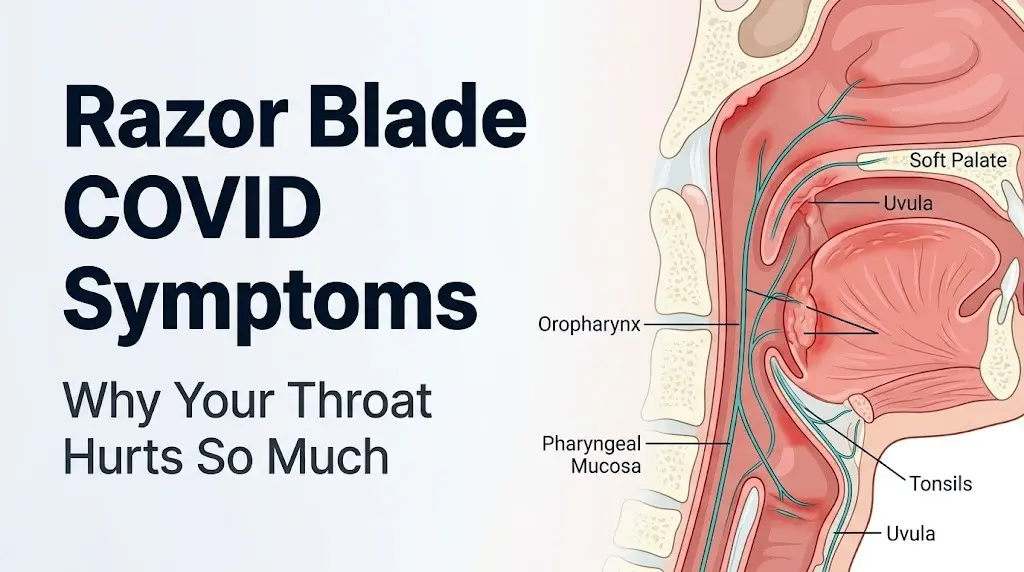
When those cells are infected and dying, and when the local immune system floods the area with inflammatory molecules, the mucosal surface becomes raw, swollen, and highly sensitized to any movement or contact. Think of it like a sunburn on the inside of your throat: the tissue is damaged, the nerve endings are exposed and hypersensitive, and even gentle contact (a sip of water, a breath of cold air) registers as disproportionate pain.
Most people experiencing this describe it as:
- Sharp, stabbing pain with each swallow
- A persistent ache between swallows, like something is stuck or cut
- Burning that intensifies when eating solid food or acidic liquids
- Significant neck tenderness at the jaw line (from swollen jugulodigastric lymph nodes)
- Ear pain during swallowing, a referred pain pattern through the glossopharyngeal nerve (cranial nerve IX)
Quick Tip:
- Referred ear pain during swallowing is a real feature of COVID pharyngitis, not a separate problem. The glossopharyngeal nerve innervates both the throat and part of the ear canal.
- Children often report ear pain as their main complaint, while adults more frequently describe the throat sensation directly.
- Older adults may not use the “razor blade” descriptor but report severe difficulty swallowing or decreased oral intake, which should be taken as seriously as any explicit pain report.
What Causes the Razor Blade Feeling in a COVID Throat
The razor blade feeling in a COVID throat is caused by a sequence of events starting when SARS-CoV-2 binds to ACE2 (angiotensin-converting enzyme 2) receptors on the surface of pharyngeal epithelial cells and replicates inside them, triggering tissue damage and an intense local immune response.
ACE2 receptors are expressed in high density throughout the upper respiratory tract, including the oropharynx, nasopharynx, and tonsillar crypts. Research published in Nature Medicine has confirmed that ACE2 expression is particularly dense in the oral cavity and pharyngeal lining. The SARS-CoV-2 spike protein binds these receptors with high affinity, allowing the virus to enter the cell and begin replicating.
As infected epithelial cells die and viral particles spread, the innate immune system launches a local inflammatory response. Macrophages and dendritic cells in the pharyngeal mucosa release pro-inflammatory cytokines: interleukin-6 (IL-6), interleukin-1 beta (IL-1beta), and tumor necrosis factor alpha (TNF-alpha). These cytokines increase vascular permeability in the mucosal blood vessels, causing swelling (edema) and redness (hyperemia) throughout the pharyngeal lining.
The same cytokines, particularly IL-6 and IL-1beta, drive production of prostaglandin E2 via the COX-2 (cyclooxygenase-2) enzyme pathway in inflamed tissue. Prostaglandin E2 is a potent sensitizer of pain receptors (nociceptors) in the pharyngeal mucosa, which are carried primarily by branches of the trigeminal nerve (cranial nerve V) and the glossopharyngeal nerve (cranial nerve IX). Sensitization means these nerve fibers now fire at lower thresholds: stimuli that would normally register as mild pressure become perceived as sharp, cutting pain.
Bradykinin, a plasma-derived peptide that accumulates in inflamed tissue, adds to this pain amplification. COVID-19 is known to dysregulate the bradykinin pathway (sometimes called a bradykinin storm in severe cases), which contributes to both local tissue pain and the systemic body aches many patients feel.
| Mediator | Source | Role in Razor Blade Pain |
|---|---|---|
| IL-6 | Macrophages, epithelial cells | Drives mucosal inflammation and edema |
| IL-1beta | Activated macrophages | Sensitizes nociceptors, promotes COX-2 activity |
| TNF-alpha | Macrophages, lymphocytes | Increases vascular permeability, contributes to tissue damage |
| Prostaglandin E2 | COX-2 pathway in inflamed cells | Directly sensitizes pain nerve endings in pharyngeal mucosa |
| Bradykinin | Plasma-derived, dysregulated by SARS-CoV-2 | Potent nociceptor sensitizer; amplifies pain signal |
What Does a COVID Sore Throat Feel Like Exactly
A COVID sore throat feels like being cut or scraped with each swallow, a sensation that many patients describe as more severe and more distinctly sharp than any sore throat they have had from influenza, rhinovirus, or other common respiratory infections.
The texture of the pain is the distinguishing feature. In a typical cold, throat discomfort is scratchy, raw, and dull. In COVID-19 pharyngitis, particularly during Omicron-era infections, patients consistently report a sharper, more localized pain that they describe as razor blades, broken glass, swallowing gravel, or a cut that opens with each swallow.
Research published in the BMJ during early Omicron surveillance (late 2021 through 2022) found that sore throat was reported by up to 70 percent of Omicron-infected individuals, compared with roughly 30 to 40 percent of those infected with the original SARS-CoV-2 strain. The qualitative shift toward sharper, more pharynx-dominant pain reflects Omicron’s preference for upper respiratory ACE2-expressing tissue over lower respiratory tissue.
The full clinical picture of a COVID sore throat includes:
- Severe odynophagia (painful swallowing) that may momentarily make the patient brace before each swallow
- Dry, raw sensation in the posterior oropharynx even without swallowing
- Visible redness and swelling of the posterior pharyngeal wall when viewed in a mirror
- Swollen, tender lymph nodes below the jaw and along the front of the neck
- Possible white coating or exudate on the tonsils in some cases (which can make strep differentiation clinically necessary)
- Associated hoarseness if the laryngopharynx is involved
Pregnant people are worth noting here specifically. According to the American College of Obstetricians and Gynecologists (ACOG), COVID-19 in pregnancy carries higher risk of severe respiratory complications, and any difficulty swallowing accompanied by fever in a pregnant person warrants same-day contact with their obstetric provider, not a wait-and-see approach.
Key Takeaway: The razor blade throat in COVID is not the same as a typical sore throat. It results from direct viral infection of pharyngeal epithelial cells, followed by cytokine-driven sensitization of trigeminal and glossopharyngeal pain nerves, making each swallow register as sharp, cutting pain rather than dull scratchiness.
How Severe Is the Razor Blade Throat Pain in COVID
COVID-19 throat pain ranges from moderate discomfort to severe pain that interferes with eating, drinking, sleeping, and speaking, with the most extreme cases causing patients to avoid swallowing entirely due to anticipatory pain.
On a Visual Analog Scale (VAS) for pain intensity, where 0 is no pain and 10 is the worst imaginable pain, COVID-related odynophagia clusters in the 6 to 8 range during peak severity for many Omicron-era patients, according to patient-reported data analyzed in multiple COVID symptom tracking studies. This is notably higher than the 3 to 5 range typically reported for rhinovirus-related pharyngitis.
The clinical severity of the razor blade throat matters because dehydration is a real risk. When swallowing is too painful to tolerate, fluid intake drops. In children, older adults, and anyone with a condition affecting kidney function, even a few hours of inadequate hydration during a COVID infection can compound the physiological stress of the illness. Pain severe enough to prevent drinking requires medical evaluation regardless of how the person feels otherwise.
| Severity Level | Clinical Description | Appropriate Action |
|---|---|---|
| Mild (VAS 1-3) | Scratchy, uncomfortable with swallowing; can eat and drink | Home management with OTC analgesics and hydration |
| Moderate (VAS 4-6) | Sharp pain with each swallow; soft foods tolerable; liquids manageable | Home management; contact PCP if no improvement in 5-7 days |
| Severe (VAS 7-9) | Swallowing liquids is very painful; eating essentially impossible | Contact primary care physician or urgent care within 24 hours |
| Emergency | Cannot swallow saliva; drooling; stridor; throat visibly swollen; trouble breathing | Call 911 or go to the ER immediately |
People with a history of chronic tonsillitis or recurrent strep throat should be aware that their baseline tonsillar tissue is already altered. A COVID infection layered on top of chronically enlarged or scarred tonsillar tissue can produce more severe mechanical obstruction and pain than in someone with no prior tonsillar disease, and their threshold for seeking care should be lower.
Omicron Razor Blade Throat: Why This Variant Hits Differently
Omicron subvariants, including the dominant circulating lineages of 2025 and 2026 such as KP.2 and its descendants, produce more prominent razor blade throat symptoms than earlier SARS-CoV-2 strains because of a fundamental difference in where the virus replicates most efficiently in the body.
Original SARS-CoV-2 and Delta replicated most aggressively in the lower respiratory tract, primarily the bronchiolar epithelium and alveolar cells of the lungs, which is why those variants caused more pneumonia, oxygen desaturation, and severe lung disease. Omicron’s spike protein mutations shifted its ACE2-binding affinity toward the upper respiratory tract, where the nasopharynx, oropharynx, and laryngopharynx are richest in ACE2 receptors.
A study published in Nature in early 2022 using animal models and human airway tissue confirmed that Omicron replicates approximately 70 times more efficiently in bronchial tissue (upper airway) than in lung parenchyma, compared with Delta. This replication preference translates directly into the throat: the virus loads up in pharyngeal tissue, triggers the same cytokine cascade described earlier, and produces more intense upper respiratory symptoms including the razor blade sensation even as it produces less pneumonia.
According to data published in The Lancet tracking Omicron symptom profiles across multiple countries, sore throat was the single most commonly reported symptom in Omicron-era infections, surpassing both cough and fever. This was a reversal of the symptom hierarchy seen with earlier variants.
The takeaway for 2026 circulating variants is that razor blade throat pain should be expected as a primary early symptom, not a secondary one. It often appears within the first 24 to 48 hours of symptom onset and can precede fever and cough by 12 to 24 hours.
COVID Throat Symptoms in 2026: What’s Changed
By 2026, the clinical profile of COVID-19 throat symptoms reflects a virus that has continued to evolve toward upper respiratory dominance, with current circulating variants producing a symptom pattern that the CDC describes as closely resembling severe influenza or strep throat in its early presentation.
The razor blade throat symptom remains a defining feature of active COVID-19 infection in 2026, though the broader illness context has shifted. Most adults in 2026 have some combination of vaccination-derived and infection-derived immunity, which generally compresses the duration of symptoms and reduces the rate of lower respiratory complications. However, immunity does not prevent pharyngeal infection or its associated pain. A breakthrough infection in a vaccinated individual can still produce several days of severe odynophagia.
Current variants in circulation retain the Omicron-lineage preference for upper respiratory tissue. The World Health Organization (WHO) has confirmed that successive Omicron subvariants through 2025 and into 2026 have maintained upper respiratory tropism, meaning the throat remains a primary site of viral replication and symptom generation.
What has changed in clinical practice is the differential diagnosis landscape. In 2026, clinicians evaluating a patient with severe COVID-like throat pain use rapid antigen tests and PCR testing together when the clinical picture is unclear, because co-infection with Group A Streptococcus (Streptococcus pyogenes) in COVID-positive patients is more commonly recognized than it was in 2020 and 2021. The American Academy of Family Physicians (AAFP) now includes co-infection screening as a consideration in pharyngitis management guidelines when COVID is confirmed but symptoms are disproportionately severe or bacterial features (fever above 102.5 degrees Fahrenheit, significant exudate, anterior cervical lymphadenopathy) are present.
Key Takeaway: Omicron and its 2026 descendant variants replicate primarily in upper respiratory tissue, making the razor blade throat a hallmark first symptom that can precede fever and cough, and a throat culture or rapid strep test is worth considering when fever and exudate are prominent alongside COVID positivity.
How Long Does the Razor Blade Throat Last With COVID
The razor blade throat sensation in COVID typically peaks within 2 to 3 days of symptom onset and resolves for most people within 5 to 7 days, though some individuals experience persistent throat discomfort for up to 10 to 14 days.
The timeline follows the arc of mucosal healing. Once the viral replication load peaks and begins declining, immune-mediated tissue repair begins. The damaged pharyngeal epithelium regenerates, cytokine levels drop, prostaglandin E2 production decreases, and the nociceptors in the mucosa return toward their baseline firing threshold. Pain doesn’t disappear instantly but diminishes progressively over several days.
According to symptom-tracking data from the ZOE COVID Symptom Study (published through BMJ), sore throat during Omicron-era infections had a median duration of approximately 5 days in vaccinated adults. Unvaccinated adults and immunocompromised individuals showed longer median durations, with some reporting persistence beyond 10 days.
The pattern of improvement matters for recognizing when something has gone wrong:
- Days 1 to 2: Pain onset, often severe and worsening as viral load peaks
- Days 2 to 3: Peak severity of the razor blade sensation; eating may be difficult
- Days 3 to 5: Gradual softening of the sharp quality; still painful but trending better
- Days 5 to 7: Significant improvement for most people; residual rawness but manageable
- Days 7 to 14: Full resolution in most cases; lingering mild discomfort in some
- Beyond 14 days: Throat pain that has not meaningfully improved by day 10 to 14 warrants evaluation by a primary care physician to rule out bacterial superinfection, peritonsillar abscess, or, in rare cases, post-COVID inflammatory effects
Adults over 65 should not use this timeline as a strict reference. Older immune systems respond more slowly to viral clearance, and the inflammatory resolution phase takes longer. A primary care physician should be contacted if a person over 65 is still experiencing moderate throat pain at day 7 without clear improvement.
Why COVID Throat Pain Gets Worse at Night
COVID throat pain gets worse at night primarily because of three overlapping physiological factors: reduced salivary protection of the pharyngeal mucosa during sleep, gravity-dependent post-nasal drip, and the natural circadian dip in cortisol that allows inflammatory processes to become more active in the overnight hours.
During the day, the parotid, submandibular, and sublingual glands produce saliva continuously. Saliva is not just a digestive aid. It contains antimicrobial proteins, provides mechanical lubrication, and bathes the pharyngeal mucosa in a protective film that slightly buffers the already-damaged epithelium. During sleep, saliva production drops significantly, which is why most people wake with a drier, scratchier throat that is briefly more painful before the salivary glands resume normal output after waking.
Post-nasal drip is the second contributor. COVID infection generates significant mucosal secretions in the nasopharynx. When you lie down, these secretions flow by gravity down the posterior pharyngeal wall, the most damaged and sensitized surface in active COVID infection. Each passage of mucus over raw, inflamed mucosa acts like dragging coarse fabric across an open wound.
The cortisol connection is real but often overlooked. Cortisol, produced by the adrenal cortex through the hypothalamic-pituitary-adrenal (HPA) axis, has natural anti-inflammatory properties. Cortisol follows a circadian rhythm with its lowest levels between midnight and approximately 3 a.m. The National Institutes of Health has published research on how circadian cortisol rhythms influence the severity of inflammatory pain conditions, with pain consistently reported as more intense during the overnight nadir. COVID pharyngitis follows this same pattern.
Quick Tip:
- Sleeping with the head of the bed elevated 15 to 30 degrees reduces post-nasal drip contact with the pharyngeal wall.
- Humidifying the bedroom air (target 40 to 50 percent relative humidity) reduces the drying effect of breathing on already-damaged pharyngeal tissue.
- People with GERD should know that COVID infection combined with nighttime acid reflux creates a particularly painful combination: viral mucosal damage plus acid exposure on the same already-sensitized tissue.
Key Takeaway: COVID throat pain worsens at night due to reduced saliva production during sleep, gravity-driven post-nasal drip coating the damaged pharyngeal wall, and the overnight dip in cortisol that allows inflammatory pain signaling to intensify without its natural anti-inflammatory brake.
Razor Blade Throat in Vaccinated vs. Unvaccinated COVID Patients
Vaccination against COVID-19 does not prevent the razor blade throat sensation from occurring in breakthrough infections, but it is associated with shorter duration and lower peak severity of pharyngeal pain in most clinical observations.
The protective mechanism is not a complete block on pharyngeal infection. Current COVID-19 vaccines, including updated mRNA formulations targeting Omicron-lineage variants, generate antibody responses that primarily reduce systemic viral load and lower respiratory complications. Vaccine-elicited mucosal IgA (immunoglobulin A) in the upper respiratory tract is present but less durable than systemic antibody responses, meaning the pharyngeal epithelium in a vaccinated person is somewhat protected but not fully shielded from Omicron-lineage infection.
Published data in JAMA Internal Medicine and the ZOE COVID Symptom Study found that vaccinated individuals with Omicron breakthrough infections reported shorter sore throat duration (median approximately 4 to 5 days) compared with unvaccinated individuals experiencing primary Omicron infection (median approximately 6 to 8 days), though the initial severity of the razor blade sensation was often similar in the first 48 to 72 hours.
For unvaccinated individuals, the risk profile adds a second layer beyond duration. Without vaccine-primed T-cell and antibody responses to reduce viral clearance time, unvaccinated people carry higher peak viral loads in the pharynx, which drives more intense cytokine production, more mucosal damage, and higher risk of the bacterial superinfections (primarily Group A Streptococcus) that can develop when viral pharyngitis creates a disrupted mucosal barrier.
People who are immunocompromised deserve special mention here: vaccine response is blunted or absent in patients on immunosuppressive therapy, those with B-cell depleting conditions, and organ transplant recipients. This population should not assume vaccine-level protection against severe pharyngeal involvement regardless of vaccination history, and their threshold for seeking care is lower than that for immunocompetent patients.
COVID Throat Pain in Children: What Parents Need to Know
COVID-related razor blade throat pain in children presents with the same underlying mechanism as in adults but is often harder to recognize, more frequently misinterpreted as strep throat, and more likely to cause rapid dehydration due to avoidance of swallowing.
Children’s pharyngeal tissue contains a proportionally larger amount of tonsillar and adenoidal lymphatic tissue compared with adults. The palatine tonsils and pharyngeal tonsils (adenoids) are primary immune surveillance structures that are heavily seeded with ACE2 receptors. When COVID infects these structures, the inflammatory response in children can produce rapid, visually dramatic tonsillar swelling, sometimes with white exudate, that mimics strep throat closely enough that clinical differentiation requires a rapid strep test.
According to the American Academy of Pediatrics (AAP), Omicron-lineage COVID-19 in children has a higher rate of upper respiratory symptom predominance compared with earlier variants, with sore throat and rhinorrhea often preceding fever. Parents who see a child with dramatic throat pain and swollen tonsils should not assume it is strep without testing, especially if the child has had known COVID exposure.
The dehydration risk in children with severe COVID throat pain is real and moves faster than it does in adults. Children have a smaller total body fluid volume, and a child who stops drinking because swallowing hurts can become meaningfully dehydrated within 6 to 12 hours.
Signs that a child with COVID throat pain needs same-day evaluation by a pediatrician or pediatric urgent care physician:
- Refusing to drink liquids for more than 4 to 6 hours
- No urination for 8 or more hours
- Drooling or visible difficulty managing saliva
- Muffled or “hot potato” voice quality
- Neck stiffness or inability to fully open the mouth
- Visible asymmetric swelling of the throat or soft palate when the child opens wide
COVID Throat Symptoms in Immunocompromised Patients
In immunocompromised patients, COVID-19 throat symptoms including the razor blade sensation may be more prolonged, more severe, and more prone to progressing to serious complications than in immunocompetent individuals.
Immunocompromised patients include those receiving chemotherapy, biological agents (including TNF-alpha inhibitors and B-cell depleting therapies like rituximab), chronic corticosteroid therapy, post-transplant immunosuppressive regimens, and those with primary or acquired immunodeficiencies including HIV with low CD4 counts. In these individuals, the immune system’s ability to generate the initial cytokine response is altered, and paradoxically, the throat pain may initially be less intense even as the viral load in pharyngeal tissue is higher.
The National Institute of Allergy and Infectious Diseases (NIAID) has consistently noted that prolonged SARS-CoV-2 replication in immunocompromised hosts creates conditions for ongoing mucosal damage, higher likelihood of viral evolution within the host, and elevated risk of bacterial superinfection.
The key clinical concern is timing. In an immunocompetent person, the razor blade throat should trend toward improvement by days 5 to 7. In an immunocompromised person, a throat that is not improving or is worsening at day 5 should prompt a call to the physician managing their underlying condition, not a wait-and-see approach. This applies equally to people on chronic corticosteroid therapy for conditions like asthma, lupus, or inflammatory bowel disease.
An immunocompromised person with COVID pharyngitis who develops fever above 101 degrees Fahrenheit, increasing throat swelling, drooling, or any difficulty breathing should seek emergency evaluation, as these presentations in this population can escalate to airway compromise faster than in healthy adults.
Key Takeaway: In immunocompromised patients, COVID throat symptoms can be prolonged and deceptively understated in the early days even as viral load remains high, making day 5 without improvement the clinical threshold for contacting their managing physician rather than continuing home observation.
COVID vs. Strep Throat Symptoms: How to Tell the Difference
COVID-19 pharyngitis and Group A Streptococcus (strep throat) can both produce a razor blade-quality throat pain, but they differ in several clinically meaningful ways that help distinguish them, though definitive differentiation requires testing in most real-world presentations.
Both conditions cause severe odynophagia, pharyngeal redness, lymph node swelling in the anterior cervical chain, and in some cases white exudate on the tonsils. The overlap is genuine and significant, which is why the Centor criteria, a clinical decision tool used by physicians to estimate strep probability, includes fever, absence of cough, tonsillar exudate, and swollen tender anterior cervical lymph nodes as its four components. COVID-19 can fulfill all four Centor criteria, making clinical differentiation without testing unreliable.
Key distinguishing features, where they exist:
| Feature | COVID-19 Pharyngitis | Strep Throat |
|---|---|---|
| Associated cough | Common (dry cough frequent) | Unusual; cough suggests COVID over strep |
| Nasal congestion / runny nose | Common | Uncommon |
| Fever pattern | Often low-grade (99-101°F) early; can be higher | Often high fever (101-104°F) abrupt onset |
| Body aches and fatigue | Prominent | Less prominent |
| Headache | Common | Common (overlap) |
| Nausea or vomiting | Possible | More common in children with strep |
| Rash | Rare | Scarlatina rash possible with strep |
| Rapid antigen test | Positive COVID antigen test | Positive rapid strep test |
| Antibiotic responsiveness | No (viral; antibiotics not indicated) | Yes (Group A Strep requires antibiotics) |
The practical point: if you test positive for COVID and have a razor blade throat, strep co-infection is possible and matters because untreated strep carries risks including rheumatic fever and post-streptococcal glomerulonephritis. A primary care physician or urgent care provider can run a rapid strep test alongside a COVID test. If both are positive, antibiotic treatment for the strep component is indicated while the COVID infection follows its natural course.
Emergency Symptoms: When to Call 911 or Go to the ER
Certain symptoms associated with COVID-19 throat pain require immediate emergency evaluation. Do not wait to see if these resolve on their own.
Call 911 or go to the nearest emergency room immediately if you or someone you are with experiences:
- Stridor: a high-pitched, audible noise when breathing in, which signals narrowing of the upper airway and possible epiglottitis or severe supraglottic swelling
- Inability to swallow saliva or drooling in an adult, which indicates severe pharyngeal or supraglottic obstruction
- A “hot potato” voice quality: a muffled, thick vocal quality as if speaking around a large object in the mouth, which is a classic sign of peritonsillar abscess or retropharyngeal abscess
- Visible swelling of the neck externally or a sensation that the throat is closing
- Difficulty breathing or any sense of air hunger separate from nasal congestion
- Trismus: inability or significant difficulty opening the mouth fully, which signals deep space neck infection
- Throat pain that changes from bilateral to unilateral and becomes distinctly worse on one side, with deviation of the uvula to the opposite side when the mouth is opened (peritonsillar abscess presentation)
- Fever above 104 degrees Fahrenheit (40 degrees Celsius) combined with any of the above signs
- Any breathing difficulty in a child with COVID throat pain, regardless of how well the child appears otherwise
These presentations can indicate peritonsillar abscess, retropharyngeal abscess, or epiglottitis: three potentially life-threatening complications of severe pharyngitis that require emergency medical assessment, surgical drainage in some cases, and possible airway management. None of these conditions are appropriate for urgent care or a next-day appointment.
How to Soothe the Razor Blade Throat From COVID
The goal of home management for razor blade COVID throat pain is to reduce the sensitizing inflammatory mediators in the pharyngeal mucosa, protect the damaged mucosal surface, maintain adequate hydration, and manage pain effectively enough to prevent the secondary complication of dehydration.
Analgesics: Over-the-counter NSAIDs such as ibuprofen address COVID throat pain through a specific mechanism: they inhibit the COX-2 enzyme that produces prostaglandin E2 in inflamed pharyngeal tissue. Since prostaglandin E2 is a primary nociceptor sensitizer in COVID pharyngitis, ibuprofen targets the mechanism directly, not just the symptom. Acetaminophen (paracetamol) works through a separate central and peripheral pain modulation pathway and is appropriate for those who cannot take NSAIDs due to gastric issues or kidney concerns. Neither medication should be recommended at specific doses here; follow package instructions and the guidance of a pharmacist or physician.
Salt water gargling: A warm salt water gargle (approximately a quarter to half teaspoon of table salt in 8 ounces of warm water) creates a mildly hypertonic solution at the pharyngeal surface. This draws fluid out of swollen mucosal tissue through osmosis, temporarily reducing edema in the posterior pharyngeal wall and providing transient pain relief. The American Academy of Family Physicians supports salt water gargling as a safe, effective home adjunct for pharyngitis symptom relief.
Hydration and cold fluids: Cold liquids temporarily numb sensitized nociceptors in the pharyngeal mucosa through local vasoconstriction and nerve fiber slowing. Ice chips, cold water, and cold herbal teas are often reported as more tolerable than warm liquids during peak COVID throat pain, though warm liquids are better for reducing mucosal dryness overnight.
What to avoid:
- Alcohol-based mouthwashes, which further dry and irritate already-damaged mucosa
- Acidic beverages (citrus juice, carbonated drinks), which lower mucosal pH and increase nociceptor stimulation on raw epithelium
- Throat lozenges with menthol as the sole active ingredient in people with asthma, as menthol can trigger bronchospasm in sensitive airways
Key Takeaway: Ibuprofen is mechanistically the better choice for COVID throat pain relief because it directly inhibits the COX-2-prostaglandin E2 pathway driving nociceptor sensitization in the pharyngeal mucosa, not merely the pain signal itself.
COVID Throat Recovery and What to Expect as You Heal
COVID throat recovery follows a predictable pattern tied to the biology of mucosal healing: as viral replication decreases and the cytokine storm in the pharyngeal tissue resolves, the sharp razor blade quality of pain gives way first to a rawer, scratchier discomfort, and then to mild soreness before full resolution.
The pharyngeal epithelium regenerates relatively quickly once viral replication ceases. Stratified squamous epithelial cells of the oropharynx have a turnover rate of approximately 5 to 7 days under normal conditions. In the context of COVID-related damage, this regeneration occurs while the immune system is still clearing viral debris and resolving the local inflammatory response. The practical result is that the razor blade quality of pain tends to resolve before complete mucosal healing is achieved, which is why mild throat rawness can persist for 1 to 2 weeks after the sharp pain has subsided.
Signs that recovery is progressing normally:
- The sharp, stabbing quality of pain with swallowing softens into a duller ache by days 4 to 6
- Solid foods, while still uncomfortable, become tolerable by days 5 to 7
- Lymph node swelling in the neck begins to decrease by the end of the first week
- Energy levels improve before the throat feels completely normal, which is expected and not a sign of worsening
Signs that recovery is not proceeding as expected and warrant evaluation by a primary care physician:
- No meaningful improvement in throat pain severity by day 7 to 10
- Worsening of pain after an initial period of improvement (suggests bacterial superinfection or abscess development)
- Reappearance of high fever after initial defervescence
- Increasing difficulty swallowing that was not present at symptom onset
- New voice changes appearing days into the illness
People with a history of recurrent tonsillitis or prior peritonsillar abscess should be aware that their risk of a COVID-related abscess complication is higher than in the general population. A prior history of peritonsillar abscess warrants contacting an otolaryngologist (ENT specialist) early if COVID throat pain is particularly severe or one-sided.
Frequently Asked Questions About Razor Blade COVID Symptoms
Why does COVID feel like razor blades in the throat?
COVID creates a razor blade sensation in the throat because the SARS-CoV-2 virus directly infects and damages the epithelial cells lining the pharynx through ACE2 receptor binding, and the resulting inflammatory cytokines (IL-6, IL-1beta, TNF-alpha) sensitize pain-sensing nerve endings in the mucosal tissue to produce sharp, cutting pain with swallowing.
This sensitization means that normal swallowing movements, which the body would ordinarily not perceive as painful, are now interpreted by the trigeminal and glossopharyngeal nerves as intense, acute pain.
The mechanism is distinct from a standard cold sore throat, where irritation is primarily surface-level; COVID causes both deeper mucosal damage and a stronger inflammatory nerve-sensitizing response.
How long does the razor blade throat feeling last with COVID?
The razor blade throat feeling in COVID typically lasts 5 to 7 days from symptom onset in most vaccinated adults, according to symptom-tracking data published through the ZOE COVID Symptom Study.
Peak severity usually occurs on days 2 to 3, after which the sharp quality gradually softens to a rawer, less acute discomfort.
Throat pain lasting beyond 10 to 14 days without improvement should prompt evaluation by a primary care physician to rule out bacterial superinfection or another complication.
Is razor blade throat a symptom of all COVID variants?
Razor blade throat is most strongly associated with Omicron-lineage variants, which have dominated global COVID infections since late 2021 and remain the primary circulating lineage in 2026.
Omicron preferentially replicates in upper respiratory tract tissue, where ACE2 receptors are highly expressed, producing more severe and more frequent pharyngeal symptoms than earlier Delta and original SARS-CoV-2 strains.
Earlier variants caused sore throat in roughly 30 to 40 percent of cases; Omicron-era variants have been associated with sore throat in up to 70 percent of cases based on large-scale symptom surveillance data.
Can razor blade throat in COVID be a sign of something serious?
Razor blade throat is expected in uncomplicated COVID-19, but it can also be the presenting symptom of serious complications including peritonsillar abscess, retropharyngeal abscess, or epiglottitis.
Call 911 or go to the nearest emergency room if the throat pain is accompanied by a muffled “hot potato” voice, inability to swallow saliva, visible one-sided throat swelling, difficulty opening the mouth, stridor, or any breathing difficulty.
These complications require emergency medical treatment and cannot be managed safely at home or in an urgent care setting.
Does the COVID razor throat feel different from strep throat?
Both COVID pharyngitis and strep throat can produce a similar razor blade-quality throat pain, making clinical differentiation based on symptoms alone unreliable.
Key differences are that COVID is more likely to come with cough, nasal congestion, and body aches, while strep throat is more likely to present with abrupt high fever, absence of cough, and significant tonsillar exudate; however, these distinctions are not absolute.
A rapid COVID antigen test combined with a rapid strep test is the most reliable way to differentiate the two conditions and determine whether antibiotic treatment is needed.
What is the fastest way to relieve razor blade throat pain from COVID?
Ibuprofen is among the most mechanistically targeted pain relief options for COVID razor throat because it inhibits the COX-2 enzyme responsible for producing the prostaglandin E2 that sensitizes pharyngeal pain receptors; use it according to package instructions and with medical guidance if you have any kidney, liver, or stomach concerns.
Cold fluids and ice chips temporarily numb sensitized nociceptors in the pharyngeal mucosa and are often tolerated better than warm drinks during peak severity.
Warm salt water gargles help reduce mucosal edema through osmosis and are supported by the American Academy of Family Physicians as a safe, effective home adjunct for pharyngitis pain.
Closing
The razor blade throat that comes with COVID-19 is one of the more physically disabling symptoms of the disease, but understanding why it happens puts you in a much better position to manage it well and recognize when it stops being something you can handle at home. Most people will get through it with adequate pain relief, hydration, and about a week of recovery. The mechanism is real, the biology is specific, and the sensation will improve.
Watch the timeline. A throat trending toward improvement by days 5 to 7 is doing what it should. A throat worsening after initial improvement, producing one-sided pain, or making it impossible to swallow your own saliva is a different clinical situation that needs professional evaluation.
If you have any doubt about whether your symptoms cross into emergency territory, the answer is to go. Stridor, drooling, muffled voice, or any difficulty breathing alongside COVID throat pain means a call to 911 or an immediate trip to the ER. Those symptoms don’t wait.