High B12 Symptoms: 2026 Complete Patient Clinical Guide
High B12 symptoms are not usually caused by the elevated vitamin B12 itself: in most cases, the symptoms experienced alongside a high B12 blood test result are produced by the underlying medical condition that is causing B12 to rise, including liver disease, blood cancers, or kidney disorders. This is one of the most clinically misunderstood facts about elevated serum B12, and getting it right changes what needs to happen next.
The distinction matters because high serum B12 from supplement use in a healthy adult is almost never toxic, while high serum B12 arising without a clear supplement explanation can be an early marker for a serious underlying condition. A large Danish cohort study published in the European Journal of Cancer found that unexplained elevated serum B12 was associated with a two- to fourfold increased risk of being diagnosed with certain malignancies within the following year.
This article covers every recognized clinical pattern associated with high B12, explains the physiological mechanism behind why serum B12 rises in each condition, identifies which symptom presentations are red flags for serious disease, and provides the specific blood test findings that should prompt urgent evaluation.
High B12 Symptoms: What They Actually Mean Clinically
The symptoms described in association with high B12 levels include nausea, fatigue, tingling, skin flushing, anxiety, and headaches, but the clinical evidence suggests that these symptoms are almost always produced by the underlying condition causing elevated B12 rather than by B12 itself acting as a direct toxin.
This distinction is clinically important. Vitamin B12 is water-soluble. Healthy kidneys efficiently filter and excrete excess circulating B12 through the renal proximal tubules, which is why true B12 toxicity from dietary or supplement intake in a person with normal renal function is extremely rare. The body does not have a functional way to overdose on B12 in the way it can overdose on fat-soluble vitamins such as vitamin A or vitamin D, which accumulate in adipose tissue.
What a high serum B12 number on a blood test actually represents depends on why it is high. In a person taking high-dose B12 supplements, it usually means transient excess of circulating unbound B12 before the kidneys excrete it. In a person not taking supplements, a high B12 number usually means either liver damage releasing stored B12, or a bone marrow or blood disease overproducing the carrier proteins that bind B12 in the bloodstream.
The primary symptoms associated with elevated B12 in clinical presentations, in order of investigative importance:
- Unexplained fatigue and weakness (often from the underlying cause)
- Nausea and gastrointestinal discomfort
- Tingling or numbness in hands or feet
- Skin flushing or mild rash (particularly with injectable B12 forms)
- Headache
- Anxiety or restlessness (rare, primarily reported with injectable high-dose forms)
- Symptoms of the underlying condition causing the elevation (jaundice, weight loss, night sweats, splenomegaly)
Older adults deserve particular attention here. In this population, high serum B12 without supplement use is more often associated with underlying systemic disease than in younger adults, and the threshold for investigation should be lower.
What Is a High B12 Level and What Does It Indicate?
A high B12 level, clinically called hypercobalaminemia, is defined as a serum cobalamin concentration above the laboratory reference range, typically above 900 to 1,000 picograms per milliliter (pg/mL) or 664 to 738 picomoles per liter (pmol/L), though reference ranges vary slightly between laboratories.
Not all high B12 values carry the same clinical significance. The number itself is only the starting point. What matters is the degree of elevation, whether the person takes B12 supplements, whether they have any known medical conditions, and what the rest of their blood work shows alongside the B12.
According to the Mayo Clinic, a mildly elevated B12 in a person actively taking high-dose B12 supplements or who received a recent B12 injection is typically expected and does not require investigation beyond stopping the supplement and rechecking. A high B12 in a person who is not taking any B12-containing supplements, or a very high B12 (above 2,000 pg/mL), requires investigation to identify an underlying cause.
| Serum B12 Level | Clinical Interpretation | Recommended Action |
|---|---|---|
| Normal range (typically 200 to 900 pg/mL) | No abnormality | Routine monitoring |
| Mildly elevated (900 to 1,500 pg/mL) with supplement use | Likely supplement excess | Stop supplements; recheck in 4 to 6 weeks |
| Mildly elevated (900 to 1,500 pg/mL) without supplements | Requires investigation | Primary care evaluation within 2 to 4 weeks |
| Moderately elevated (1,500 to 2,000 pg/mL) | Requires investigation regardless of supplement use | Primary care evaluation within 1 to 2 weeks |
| Highly elevated (above 2,000 pg/mL) | High concern for underlying disease | Urgent primary care or hematology evaluation within one week |
| Extremely elevated (above 5,000 pg/mL) | Strong concern for hematological malignancy or acute liver failure | Prompt evaluation same week |
Women who are pregnant have physiologically altered B12 transport due to changes in carrier protein production, meaning a mildly elevated B12 in pregnancy requires different interpretation than the same level in a non-pregnant adult.
True Hypercobalaminemia vs. Pseudohypervitaminosis B12 Explained
The most clinically important distinction in high B12 medicine is between true hypercobalaminemia (genuine excess of biologically available vitamin B12) and pseudohypervitaminosis B12 (elevated total serum B12 with normal or depleted functional B12, caused by an abnormal increase in the carrier protein haptocorrin/transcobalamin I).
Think of this like the difference between having a warehouse full of goods versus having a warehouse full of empty boxes. In pseudohypervitaminosis B12, the blood has a high total B12 reading because there are an enormous number of carrier protein “boxes” (haptocorrin molecules) binding and holding B12 molecules. But the biologically active fraction, the B12 actually being delivered to cells by transcobalamin II, may be normal or even low. The patient’s blood test says B12 is high, but the cell-level reality is different.
This distinction explains why some patients with markedly elevated serum B12 can simultaneously have clinical features that look like B12 deficiency: low energy, poor neurological function, and elevated methylmalonic acid (MMA) levels in their blood or urine. In these cases, the elevated serum B12 is mostly locked into haptocorrin, not available for the methylcobalamin and adenosylcobalamin functions that cells actually use.
According to research published in the Annals of Internal Medicine, when unexplained high serum B12 is evaluated systematically, the most frequent underlying causes are liver disease (accounting for approximately 30 to 40 percent of cases), followed by myeloproliferative neoplasms and renal insufficiency.
The practical implication: testing holotranscobalamin (active B12 fraction) and methylmalonic acid alongside total serum B12 gives a far more complete clinical picture than the total serum B12 alone. These tests are available through standard laboratory panels and can be ordered by a primary care physician.
Key Takeaway: A high total serum B12 does not always mean your cells have too much B12. Pseudohypervitaminosis B12 is a carrier protein problem, not a true excess, and requires investigation of the underlying cause, not reduction of B12 intake.
How Vitamin B12 Is Transported and Stored in the Body
Vitamin B12 follows a specific, multi-step absorption and transport pathway that directly explains why different disease states cause serum B12 to rise through different mechanisms: liver disease releases stored B12, while blood disorders overproduce the carrier proteins that elevate serum B12.
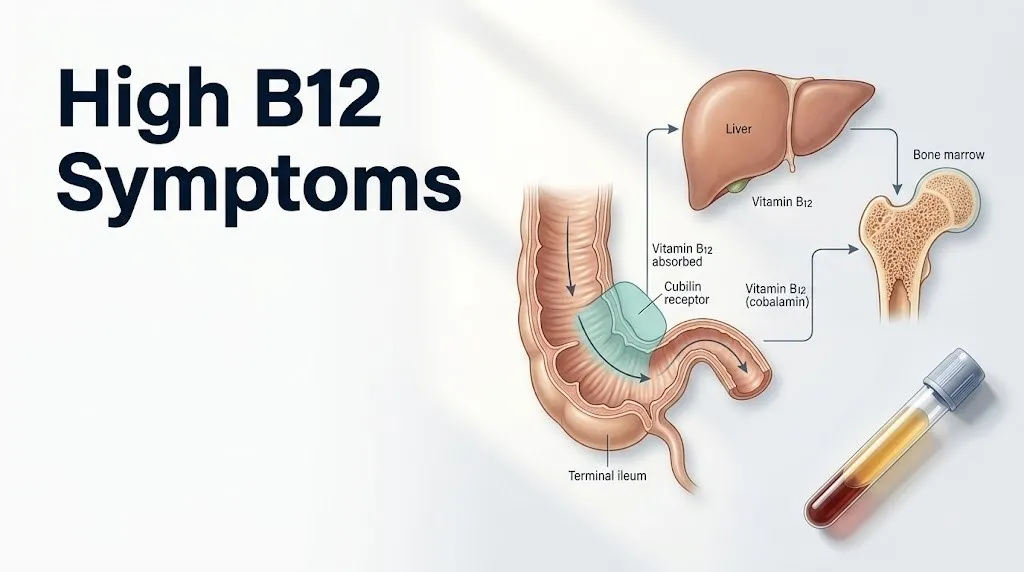
Dietary B12 is released from food proteins by stomach acid and pepsin. In the stomach, it binds to haptocorrin (R-protein) secreted by salivary glands and the gastric mucosa. In the duodenum, pancreatic proteases digest the haptocorrin-B12 complex, freeing B12 to bind intrinsic factor secreted by parietal cells in the gastric fundus. The intrinsic factor-B12 complex travels to the terminal ileum, where the cubilin-amnionless receptor complex on ileal enterocytes absorbs it.
After entering the portal circulation, B12 is transported bound to transcobalamin II (synthesized by endothelial cells), which is the delivery transporter that delivers B12 to all body cells. The liver is the primary storage depot, holding 1 to 10 milligrams of B12 in hepatocytes. The liver can maintain adequate B12 supply for 2 to 5 years even without dietary intake, explaining why deficiency takes years to develop.
Approximately 80 to 90 percent of serum B12 is carried by haptocorrin (transcobalamin I), which is produced primarily by granulocytes (a type of white blood cell). Only 10 to 20 percent is carried by transcobalamin II. When granulocyte production increases dramatically (as in myeloproliferative neoplasms), haptocorrin production rises proportionally, binding more B12 and elevating the total serum B12 reading without reflecting any actual increase in biologically available B12.
The National Institute of Diabetes and Digestive and Kidney Diseases (NIDDK) notes that B12 is filtered by the glomeruli and substantially reabsorbed by renal proximal tubules, which is why healthy kidneys efficiently prevent true B12 accumulation from dietary or supplement sources.
Nausea, Vomiting, and Gastrointestinal High B12 Symptoms
Nausea and gastrointestinal symptoms attributed to high B12 in clinical settings most frequently originate from the underlying condition causing the elevated B12, particularly liver disease or hematological malignancy, rather than from elevated cobalamin itself acting as a direct gastrointestinal irritant.
When liver cells are damaged by cirrhosis, hepatitis, alcoholic liver disease, or hepatocellular carcinoma, stored B12 leaks from hepatocytes into the bloodstream, raising serum B12. The same liver damage that releases B12 also impairs the liver’s role in bile production, protein synthesis, and detoxification. Nausea in this context comes from impaired hepatic function, elevated bilirubin, portal hypertension, and the inflammatory cytokine environment of active liver disease. It is not the elevated B12 molecule itself causing nausea.
True gastrointestinal symptoms directly attributable to high B12 are primarily described in case reports of very high-dose injectable B12 administration, particularly hydroxocobalamin and cyanocobalamin given in pharmacological doses for the treatment of cyanide poisoning or specific metabolic disorders. These doses are far in excess of anything achievable through oral supplementation.
The American Association for the Study of Liver Diseases (AASLD) identifies elevated serum cobalamin as a recognized, though nonspecific, laboratory marker in liver disease, found in a proportion of patients with acute and chronic liver conditions. The gastrointestinal symptoms in these patients require full hepatic evaluation, not reduction of dietary B12.
People with irritable bowel syndrome (IBS) or functional gastrointestinal disorders who also take high-dose B12 supplements sometimes attribute nausea to the supplement, but research has not established a direct causal link between oral B12 supplementation at standard doses and gastrointestinal symptoms in otherwise healthy adults.
Fatigue and Weakness as Symptoms Associated With Elevated B12
Fatigue associated with high B12 levels almost always reflects the underlying medical condition producing the elevated B12 rather than a direct effect of excess cobalamin on energy metabolism or mitochondrial function.
The irony is that B12 deficiency also causes profound fatigue, from megaloblastic anemia and impaired neurological function. When someone has very high serum B12 but that B12 is mostly locked in haptocorrin (pseudohypervitaminosis), their cells may actually be functionally B12-deficient despite the high serum number. The fatigue in such patients comes from inadequate adenosylcobalamin for the methylmalonyl-CoA mutase reaction in mitochondria (essential for energy substrate metabolism) and inadequate methylcobalamin for the methionine synthase reaction (essential for DNA synthesis in rapidly dividing cells like red blood cell precursors).
In myeloproliferative neoplasms like polycythemia vera and CML, fatigue is a cardinal symptom of the disease itself. The American Society of Hematology (ASH) identifies fatigue as one of the most burdensome symptom in myeloproliferative neoplasm patients, mediated by the disease’s effects on red blood cell production, spleen enlargement, and systemic inflammatory cytokine release.
Fatigue in the context of unexplained high B12 (especially above 2,000 pg/mL) without supplement use should be treated as a clinical warning sign rather than a routine complaint. It warrants a full blood count, peripheral blood smear, and liver function tests ordered by a primary care physician within one to two weeks. Patients with severe fatigue, night sweats, unintentional weight loss, or enlarged lymph nodes alongside high B12 should be evaluated the same week.
Key Takeaway: Fatigue with a high B12 blood result is not reassuring just because B12 is water-soluble. When B12 is high without a supplement explanation, fatigue combined with elevated B12 is a pattern that requires investigation of the underlying cause, not dismissal.
Tingling, Numbness, and Nerve-Related High B12 Symptoms
Tingling and numbness in the hands and feet that co-occur with a high serum B12 result create a diagnostic puzzle, because B12 deficiency causes peripheral neuropathy from impaired myelin synthesis, but high serum B12 from an underlying disease can also coexist with functional B12 deficiency at the cellular level.
The myelin sheath wrapping peripheral nerve axons requires methylcobalamin for the methionine synthase reaction that supports myelin basic protein synthesis. Without adequate active B12, myelin degenerates, and the dorsal column tracts of the spinal cord and peripheral nerves lose their insulating sheath, producing the paresthesias (tingling, numbness) and proprioceptive loss characteristic of subacute combined degeneration.
In pseudohypervitaminosis B12, the total serum B12 is high, but the active fraction (holotranscobalamin) may be inadequate. The result is that a patient can simultaneously have a high B12 blood test and functional B12 deficiency in peripheral nerves. Testing methylmalonic acid (MMA) levels clarifies this: elevated MMA indicates functional adenosylcobalamin deficiency at the cellular level, regardless of what the total serum B12 shows.
Tingling associated with a genuinely high B12 from excess supplementation in healthy adults is rarely reported in the clinical literature. Most case reports of paresthesias with supplement-induced high B12 involve very high doses (typically above 5,000 micrograms per day) used for prolonged periods.
Research published in Neurology has found associations between very high-dose injectable B12 supplementation and exacerbation of neuropathy symptoms in patients with pre-existing nerve damage, but this is distinct from routine oral supplementation in healthy adults. Any new onset tingling or numbness, regardless of B12 status, warrants evaluation by a primary care physician, who can order holotranscobalamin and MMA to clarify whether B12 function at the cellular level is normal.
Skin Symptoms and Flushing Associated With Elevated B12
Skin flushing, redness, and mild rash reported in association with high B12 are most commonly caused by the histamine-releasing properties of hydroxocobalamin and cyanocobalamin forms given by injection at high doses, not by elevated serum B12 from oral supplementation or disease-related elevation.
Injectable B12 preparations, particularly hydroxocobalamin used in high doses for cyanide poisoning treatment or certain metabolic disorders, contain concentrations of cobalamin that can trigger local and systemic histamine release from mast cells in the skin and connective tissue. This produces the characteristic flush, urticaria (hives), and occasionally more pronounced reactions in sensitive individuals. The reaction is dose-dependent and form-dependent: hydroxocobalamin is more likely than cyanocobalamin to produce these effects at pharmacological doses.
Oral B12 supplementation, even at doses far exceeding the recommended daily intake, does not typically produce skin reactions through this mechanism because the absorbed oral dose is far lower than injectable pharmacological doses, and B12 must cross the gastrointestinal epithelium, which limits the rate of absorption. The National Institutes of Health Office of Dietary Supplements notes that no tolerable upper intake level has been established for B12, and adverse effects from oral B12 supplementation in healthy individuals are rare.
A rash in a patient with simultaneously high B12 and a known underlying medical condition (liver disease, myeloproliferative neoplasm) is more likely to reflect the skin manifestations of that underlying condition than a direct effect of elevated B12. Jaundice (yellowish skin from bilirubin accumulation), pruritus, and petechiae are all skin findings associated with conditions that also elevate B12. These findings require the same evaluation as the underlying condition, not reduction of B12 intake.
High B12 From Supplements: Is It Actually Dangerous?
High B12 from oral supplementation in healthy adults is almost never clinically dangerous, because the kidneys efficiently excrete excess water-soluble cobalamin and no defined toxic dose has been established for oral B12 in humans with normal renal function.
Unlike fat-soluble vitamins (A, D, E, K), which accumulate in adipose and liver tissue and produce toxicity syndromes at elevated doses, B12 is water-soluble and the body excretes what it cannot use through the kidneys. The National Institutes of Health Office of Dietary Supplements states that no tolerable upper limit for vitamin B12 has been established based on available evidence, and no evidence of toxicity from oral supplementation in healthy individuals has been consistently demonstrated in controlled studies.
This does not mean high B12 from supplements requires no attention at all. A very high B12 result in a supplement user can obscure an underlying disease-related elevation, particularly if the person then stops supplements and the level remains high. The appropriate step when a supplement user has a high B12 result is to stop B12-containing supplements for 4 to 6 weeks and recheck. If B12 remains elevated after cessation of supplements, the residual elevation requires investigation for an underlying cause.
People with chronic kidney disease (CKD) stage 3 or higher have reduced renal excretion capacity for B12 and may accumulate higher serum B12 levels from oral supplementation than people with normal renal function. These individuals should discuss appropriate B12 supplementation doses with their nephrologist or primary care physician rather than self-dosing.
Pregnant women who take high-dose prenatal supplements containing B12 will typically show elevated serum B12. The elevation is expected and does not warrant investigation in an otherwise healthy pregnant woman with no other concerning symptoms or blood test abnormalities.
Key Takeaway: Oral B12 supplementation rarely causes genuine toxicity in healthy adults. But high B12 in someone not taking supplements is a different story and always requires investigation, because it most often reflects liver disease, a blood disorder, or occult malignancy.
High B12 Caused by Liver Disease
High B12 caused by liver disease occurs when damaged hepatocytes (liver cells) release their stored cobalamin reserves into the bloodstream, producing serum B12 elevations that correlate with the degree and acuity of hepatic injury rather than with dietary B12 intake.
The liver stores approximately 1 to 10 milligrams of B12 in hepatocytes, representing the body’s primary reserve. Under normal conditions, hepatocytes gradually release small amounts of B12 into the portal circulation for distribution. When hepatocytes are damaged by alcohol, viral hepatitis, non-alcoholic steatohepatitis (NASH), autoimmune hepatitis, or hepatocellular carcinoma, the integrity of the cell membrane is compromised. B12 leaks from damaged cells into the bloodstream in amounts far exceeding normal hepatic release, producing elevated serum B12.
The degree of elevation roughly corresponds to the extent of liver cell death. Acute liver failure can produce extremely high serum B12 levels (sometimes above 5,000 pg/mL) as large numbers of hepatocytes are simultaneously destroyed. Chronic liver disease produces more modest but persistent elevation. Cirrhosis and hepatocellular carcinoma both produce elevated B12 through this hepatocellular release mechanism.
According to research published in Hepatology, serum cobalamin levels are elevated in a meaningful proportion of patients with alcoholic liver disease, viral hepatitis, and hepatocellular carcinoma, and the magnitude of elevation has shown correlation with liver disease severity in some studies.
High B12 accompanied by jaundice (yellowing of the skin or eyes), right upper quadrant pain or tenderness, abdominal swelling (ascites), or dark urine requires evaluation by a primary care physician within 24 to 48 hours, who should order liver function tests including AST, ALT, alkaline phosphatase, bilirubin, and albumin, with referral to a board-certified gastroenterologist or hepatologist based on the findings.
High B12 and Myeloproliferative Disorders: Leukemia and Polycythemia Vera
High B12 in myeloproliferative neoplasms (MPNs), including chronic myeloid leukemia (CML) and polycythemia vera, results from massive overproduction of haptocorrin (transcobalamin I) by the abnormal malignant myeloid cells, which binds and holds large quantities of B12 in the bloodstream without making that B12 functionally available to cells.
Think of this like a city where one massive warehouse company has taken over, producing millions of empty delivery trucks that drive around the city’s roads blocking traffic, while the actual delivery trucks (transcobalamin II) that carry real cargo can no longer move freely. The malignant granulocytes in CML are like those massive warehouse companies: they flood the bloodstream with haptocorrin carrier proteins that bind B12, elevating the total serum B12 reading dramatically without increasing cellular B12 availability.
CML is characterized by the BCR-ABL1 gene fusion produced by the Philadelphia chromosome translocation. The malignant CML clone produces massive quantities of granulocytes and their precursors, each generating haptocorrin. Serum B12 levels in untreated CML can reach 10 to 50 times the upper limit of normal.
Polycythemia vera is characterized by the JAK2 V617F mutation, which drives excessive production of red blood cells, white blood cells, and platelets from bone marrow progenitors. The elevated white cell count contributes additional haptocorrin, raising serum B12. According to the American Society of Hematology, elevated serum B12 (along with elevated lactate dehydrogenase and leukocytosis) is a clinical feature that can accompany myeloproliferative neoplasms.
Any person with high B12 and any of the following warrants urgent evaluation by a board-certified hematologist within one week: elevated white blood cell count on CBC, enlarged spleen, unexplained night sweats, unexplained weight loss, or a peripheral blood smear showing immature blood cells.
High B12 as a Cancer Marker: What the Research Shows
Elevated serum B12 without a clear supplement explanation has an established research-based association with underlying occult malignancy, particularly hematological cancers and solid tumors involving the liver, lung, and gastrointestinal tract, and this association is one of the strongest clinical reasons to investigate unexplained high B12 promptly.
The landmark study on this association is a large Danish prospective cohort study published in the European Journal of Cancer, which found that among adults with newly identified unexplained elevated serum B12, the risk of being diagnosed with a cancer within the following year was two to fourfold higher than in the general population without elevated B12. The association was strongest for hematological malignancies and hepatocellular carcinoma.
The mechanism varies by cancer type. Hematological malignancies (CML, polycythemia vera, essential thrombocythemia, myelofibrosis) elevate B12 through haptocorrin overproduction, as described above. Solid tumors of the liver produce B12 elevation through hepatocellular damage and leakage. Solid tumors of the lung and other sites can elevate B12 through paraneoplastic mechanisms: tumors can produce haptocorrin-like proteins or induce inflammatory states that alter B12 carrier protein production.
Critically, this association does not mean that high B12 causes cancer. It means elevated B12 in the right clinical context serves as a marker pointing toward an underlying malignancy that may not yet be producing obvious symptoms. Clinical guidelines in several European countries now recommend oncological screening in adults with unexplained persistently elevated serum B12.
Any adult with serum B12 above 1,500 pg/mL without an identified cause after basic blood tests should be referred by their primary care physician to a board-certified hematologist for further investigation, which may include bone marrow evaluation and imaging.
High B12 Levels in Pregnancy and Other Special Populations
High B12 levels in pregnancy are most often the result of high-dose prenatal vitamin supplementation and do not typically require investigation when they occur in an otherwise healthy pregnant woman with no other abnormal blood findings.
During pregnancy, the body’s demand for B12 increases because the vitamin is transferred across the placenta to support fetal neurological development and DNA synthesis in rapidly dividing fetal tissues. Most prenatal vitamins contain B12 at doses well above the recommended dietary allowance, and serum B12 can rise accordingly. The American College of Obstetricians and Gynecologists (ACOG) notes that prenatal vitamin use is expected to alter various blood nutrient levels, and mildly elevated B12 in a healthy pregnant woman is not considered clinically worrisome.
However, very high B12 in pregnancy (above 2,000 pg/mL) without high supplementation warrants the same investigation as in non-pregnant adults, as liver disease and hematological disorders do not spare pregnant women and may actually present differently during pregnancy due to altered immune and inflammatory physiology.
In older adults, unexplained high B12 carries a higher concern weight than in younger adults because the prevalence of myeloproliferative neoplasms, liver disease from alcohol and metabolic causes, and occult solid tumors all increase with age. A retrospective analysis published in the American Journal of Medicine found that in adults over 65 with unexplained elevated serum B12, the proportion with an identifiable underlying medical condition was substantially higher than in younger adult populations.
Children with high B12 on blood tests require evaluation by a pediatrician, who should assess whether the finding reflects supplementation, formula feeding in infants, or a rare underlying metabolic or hematological condition. High B12 in childhood without a supplementation explanation is uncommon and warrants specialist input.
Key Takeaway: High B12 in pregnancy from prenatal vitamins is usually expected and not worrying. High B12 in an older adult without supplements is a different situation entirely and requires investigation, not reassurance.
What B12 Blood Level Is Actually Concerning and Why
A serum B12 above 1,000 pg/mL in a person not taking B12 supplements or injectable B12 treatments is the clinical threshold at which most internal medicine guidelines recommend investigation of an underlying cause, with values above 2,000 pg/mL warranting more urgent evaluation.
These thresholds are not absolute toxicity levels. They are clinical decision thresholds based on where research indicates the probability of finding an underlying disease increases substantially. Below 1,000 pg/mL in a non-supplement user, mild elevations can reflect dietary variation, recent high animal protein intake, or early liver stress. Above 1,000 pg/mL without supplements, the probability of an underlying condition rises meaningfully.
The reference ranges for B12 vary between laboratories and between measurement methods (radioimmunoassay vs. chemiluminescence vs. competitive binding assays). A result just above the upper limit of normal at one laboratory may be within the normal range at another. This is why the clinical context (symptoms, supplement use, other blood test results) matters as much as the absolute number.
| Scenario | B12 Level | Clinical Action |
|---|---|---|
| On B12 supplements, no symptoms | Any elevated level | Stop supplements for 4 to 6 weeks; recheck |
| Not on supplements, level 1,000 to 1,500 pg/mL | Mildly elevated | CBC, LFTs, CMP within 2 to 4 weeks; primary care |
| Not on supplements, level 1,500 to 2,000 pg/mL | Moderately elevated | Above tests plus holotranscobalamin, MMA; primary care within 1 to 2 weeks |
| Not on supplements, level above 2,000 pg/mL | Highly elevated | Urgent primary care or hematology within one week |
| Extremely elevated (above 5,000 pg/mL) | Very high concern | Same-week evaluation; exclude CML, liver failure |
| Any level with abnormal CBC or symptoms | Any | Urgent evaluation regardless of level |
People taking metformin (a diabetes medication) are prone to B12 deficiency even while taking supplements, because metformin impairs B12 absorption at the ileal cubilin receptor. If a person on metformin shows high serum B12, the holotranscobalamin and MMA tests are particularly important to determine whether functional B12 is adequate.
Emergency Symptoms: When High B12 Warrants Immediate Evaluation
High B12 as an isolated laboratory finding does not typically require a 911 call. However, certain combinations of symptoms alongside high B12 indicate conditions that are life-threatening emergencies requiring immediate care.
Go to the nearest emergency room immediately or call 911 if high B12 accompanies:
- Sudden onset jaundice (yellowing of the eyes or skin) with abdominal pain and confusion (possible acute liver failure, which is a medical emergency)
- Extreme pallor, severe shortness of breath at rest, and very low red blood cell count alongside very high B12 (possible blast crisis in CML or other hematological emergency)
- High fever, severe abdominal pain, and rapidly worsening jaundice (possible acute hepatic decompensation requiring emergency hospitalization)
- Sudden confusion or altered mental status with abnormal blood counts alongside high B12 (possible central nervous system involvement of hematological malignancy)
- Massive, rapidly enlarging spleen causing severe left-sided abdominal pain (possible splenic infarction or rupture, a surgical emergency)
These presentations indicate acute liver failure, hematological emergency, or oncological crisis and require emergency medical assessment, not a scheduled appointment or phone call.
For non-emergency but urgent situations: any person with serum B12 above 2,000 pg/mL not explained by supplements, any abnormal white blood cell count or blood smear finding alongside high B12, or any combination of unexplained weight loss, night sweats, and high B12 should arrange evaluation by a primary care physician within one week.
How Elevated B12 Is Diagnosed and Investigated Clinically
Elevated B12 is investigated through a structured diagnostic approach that begins with a detailed medication and supplement history, proceeds to targeted blood tests, and escalates to imaging and specialty evaluation based on the findings.
The initial evaluation by a primary care physician includes:
- Stopping any B12 supplements for 4 to 6 weeks and rechecking the serum B12 to determine whether the elevation was supplement-driven.
- Ordering a complete blood count (CBC) with differential to look for abnormal white blood cell counts, abnormal red blood cell indices, or platelet abnormalities suggestive of myeloproliferative neoplasm.
- Ordering liver function tests (LFTs) including AST, ALT, alkaline phosphatase, bilirubin, albumin, and gamma-glutamyl transferase to assess for hepatic disease.
- Ordering a comprehensive metabolic panel (CMP) to assess kidney function, as chronic kidney disease alters B12 excretion.
- Ordering holotranscobalamin (active B12 fraction) and methylmalonic acid (MMA) to assess whether functional B12 delivery to cells is adequate, regardless of the elevated total.
- Reviewing a peripheral blood smear (microscopic examination of blood cells) if CBC shows any abnormality.
If the above tests suggest hematological malignancy (elevated WBC, abnormal smear, very high LDH), referral to a board-certified hematologist is appropriate for JAK2 V617F mutation testing, BCR-ABL1 PCR, and potentially bone marrow biopsy.
If liver disease is identified, referral to a board-certified gastroenterologist or hepatologist for evaluation including abdominal ultrasound or MRI of the liver and hepatitis serologies is the next step.
Older adults with persistently high B12 after supplement cessation and normal initial blood tests may benefit from whole-body imaging (CT scan of the chest, abdomen, and pelvis) to screen for occult solid tumors, ordered in coordination with a primary care physician or internist.
Frequently Asked Questions About High B12 Symptoms
Can high B12 levels actually cause symptoms?
High B12 from oral supplementation in healthy adults rarely causes symptoms, because B12 is water-soluble and efficiently excreted by healthy kidneys without producing a defined toxicity syndrome.
Symptoms that occur alongside a high B12 blood result are almost always caused by the underlying medical condition producing the elevated B12 (liver disease, myeloproliferative neoplasm) rather than by excess cobalamin itself acting as a toxin.
The exception is very high-dose injectable B12, which can produce transient skin flushing, nausea, or rare allergic reactions through direct pharmacological effects at pharmacological concentrations.
What B12 level is considered dangerously high?
No universally defined “dangerous” serum B12 level exists, but levels above 2,000 pg/mL in someone not taking B12 supplements warrant urgent investigation within one week, and levels above 5,000 pg/mL warrant same-week evaluation for conditions including chronic myeloid leukemia and acute liver failure.
According to the Mayo Clinic, the clinical concern at elevated B12 is not toxicity from B12 itself but the possibility of an underlying condition causing the elevation.
The urgency of evaluation scales with the magnitude of elevation, the presence of symptoms, and the findings on accompanying blood tests including the complete blood count and liver function tests.
Is high B12 a sign of cancer?
High B12 without a supplement explanation is associated with an increased probability of underlying malignancy, but it does not cause cancer and is not a definitive cancer diagnosis.
A large Danish cohort study published in the European Journal of Cancer found that adults with unexplained elevated serum B12 had a two- to fourfold higher risk of cancer diagnosis within the following year compared to the general population, particularly for hematological cancers and hepatocellular carcinoma.
Any adult with unexplained high B12 above 1,000 pg/mL should arrange evaluation by a primary care physician within two to four weeks to determine whether the elevation requires further oncological or hematological investigation.
What are the symptoms of too much B12 from supplements?
True symptomatic toxicity from oral B12 supplementation in healthy adults with normal kidney function has not been established in controlled clinical research.
The National Institutes of Health Office of Dietary Supplements states that no tolerable upper intake level has been established for B12 based on adverse effects from supplement use.
Symptoms appearing while taking B12 supplements should prompt evaluation by a primary care physician to determine whether the supplement is the cause or whether an underlying condition coincidentally exists alongside the supplement use.
Why would B12 be high without taking supplements?
High B12 without supplements almost always reflects liver disease releasing stored hepatic cobalamin, or a myeloproliferative neoplasm overproducing the carrier protein haptocorrin that binds and elevates serum B12.
Both of these causes require medical investigation, as they are not benign explanations: liver disease ranges from mild NAFLD to hepatocellular carcinoma, and myeloproliferative neoplasms include conditions like chronic myeloid leukemia and polycythemia vera.
Any person with a high B12 result who has not been taking B12 supplements should contact their primary care physician within two to four weeks to begin the appropriate workup, which starts with a complete blood count and liver function tests.
Should I stop taking B12 supplements if my levels are high?
Stopping B12 oral supplements for 4 to 6 weeks and rechecking the level is the standard first step when a supplement user receives a high B12 blood test result.
If the B12 level returns to the normal range after stopping supplements, the elevated reading was most likely supplement-driven and does not require further investigation.
If the B12 remains elevated after the cessation period, the residual elevation indicates an underlying cause unrelated to supplementation, and evaluation by a primary care physician is warranted with the same urgency as any unexplained high B12 finding.
The central clinical message of high B12 is this: the number on a blood test is only meaningful in context. In a healthy adult taking high-dose supplements, a high B12 is expected and almost never harmful. In a person not taking supplements, high B12 is a laboratory clue pointing toward something the body is doing internally, and figuring out what that is requires a structured diagnostic approach.
The first step is straightforward: if you take B12 supplements, stop them for 4 to 6 weeks and recheck. If you do not take supplements and your B12 is above 1,000 pg/mL, contact your primary care physician within two to four weeks and ask specifically for a CBC, liver function tests, and holotranscobalamin alongside your repeat B12 measurement.
You now have the mechanistic understanding to ask exactly the right questions and to distinguish a benign lab finding from one that needs prompt follow-through.