What Causes Pimples Around the Mouth: Full 2026 Guide
What causes pimples around the mouth ranges from the four-step bacterial and hormonal cascade of acne vulgaris to a frequently misidentified inflammatory condition called perioral dermatitis to contact reactions from your toothpaste or lip balm, and identifying the correct cause matters because the wrong treatment for one of these conditions will actively worsen another.
The perioral region is not a random site for breakouts. According to the American Academy of Dermatology (AAD), acne affects approximately 50 million Americans annually, with the face, particularly the lower third (the chin, jaw, and perioral zone), representing the most common adult acne distribution. The concentration of pimples around the mouth reflects a convergence of anatomical, hormonal, and environmental factors specific to that facial region.
This article explains every named cause of perioral pimples with the specific physiological mechanism behind each one, why the mouth area is uniquely susceptible to breakouts, how to tell the causes apart clinically, which ones apply specifically to females, males, teenagers, or adults, and exactly when a board-certified dermatologist needs to evaluate what you are seeing.
What Causes Pimples Around the Mouth
What causes pimples around the mouth includes acne vulgaris (the most frequent cause), perioral dermatitis, hormonal acne from androgen fluctuations, contact reactions from toothpaste or lip products, stress-driven cortisol and androgen pathways, rosacea, folliculitis from shaving, and herpes labialis (cold sores), each with a distinct mechanism requiring a different management approach.
The clinical appearance of pimples in the perioral zone spans a spectrum. A closed comedo (whitehead) sitting at the nasolabial fold represents a different pathological process than a cluster of tiny red papules along the upper lip margin. A single tender nodule on the chin involves different biology than a ring of small pustules around the vermilion border. Recognizing these visual distinctions helps narrow down the cause before any treatment is started.
The table below summarizes the primary causes by mechanism and clinical feature:
| Cause | Primary Mechanism | Visual Appearance | Most Affected Population |
|---|---|---|---|
| Acne vulgaris | C. acnes, DHT, follicular hyperkeratinization | Comedones, papules, pustules, nodules | Adolescents, adult females 20-40 |
| Perioral dermatitis | Corticosteroid rebound, microbiome disruption | Tiny papulopustules, clear zone around lip | Women 20-45, corticosteroid users |
| Hormonal acne | Luteal phase androgen surge | Deep papules and cysts, cyclical pattern | Females with PCOS or menstrual acne |
| Contact dermatitis | Type IV T-cell hypersensitivity | Red, itchy, weeping patches | Any age; lip product users |
| Folliculitis | Bacterial infection of shaved follicles | Pustules at hair base; perioral or chin | Males with facial hair |
| Herpes labialis | HSV-1 reactivation | Clustered vesicles on vermilion border | Any age; immunocompromised at higher risk |
| Rosacea | Demodex-associated inflammation | Diffuse redness with papules; no comedones | Adults 30-60 |
A board-certified dermatologist can clinically differentiate these causes in most cases without invasive testing. The treatment pathway diverges sharply depending on the cause: applying benzoyl peroxide to perioral dermatitis or herpes labialis will not work and may worsen symptoms.
Why the Perioral Region Is Prone to Pimples and Breakouts
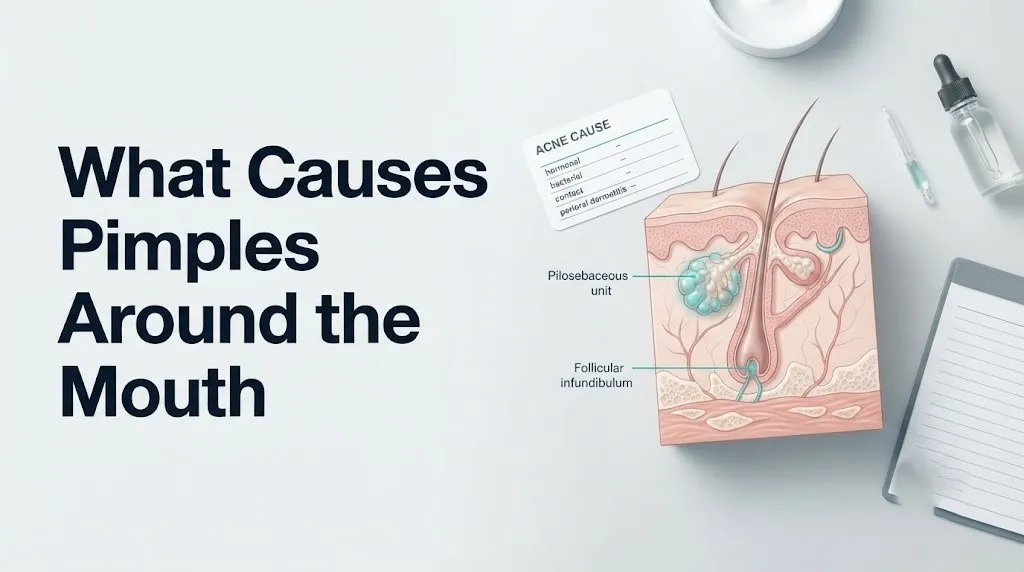
The perioral region is anatomically predisposed to breakouts because it combines a high density of pilosebaceous units per square centimeter with repeated daily exposure to multiple comedogenic and irritant stimuli that are largely absent in other facial zones.
Think of the perioral skin as a patch of ground where the soil is already fertile for a particular kind of growth, and people keep adding fertilizer multiple times a day without realizing it. The combination of dense follicles, regular lipid contact from food, product residue from lip products applied repeatedly throughout the day, and fluoride-containing toothpaste contacting the perioral skin during brushing creates a near-continuous cycle of follicular irritation and comedogenic exposure.
The anatomical and environmental factors that concentrate breakouts in this region:
- High pilosebaceous unit density: The perioral dermis contains a high concentration of sebaceous glands relative to the surrounding skin. More sebaceous glands per square centimeter means more potential sites for follicular plugging and bacterial colonization.
- Repeated occlusion from lip products: Lip balms, lipstick, and lip gloss containing comedogenic ingredients (lanolin, coconut oil, certain synthetic waxes) are reapplied multiple times daily, providing sustained comedogenic stimulus directly at the follicular openings around the mouth.
- Fluoride toothpaste perioral contact: Toothpaste residue left in the perioral skin folds during and after brushing delivers fluoride compounds that can disrupt the skin barrier and trigger inflammatory reactions in susceptible individuals.
- Mechanical irritation from oral movement: Eating, speaking, and repetitive lip touching mechanically disturb the follicular openings more in the perioral region than anywhere else on the face.
- Saliva enzyme exposure: Perioral skin can be exposed to salivary amylase and other digestive enzymes at the mouth corners, which may contribute to localized irritation in some individuals.
Women who wear lip-line products daily and then cleanse the perioral area incompletely are especially at risk of accumulated comedogenic product residue in the perioral follicles, even when the same products do not cause breakouts elsewhere on the face.
Acne Vulgaris: The Most Frequent Cause of Pimples Around the Mouth
Acne vulgaris is the most frequent cause of pimples around the mouth and is produced by the interaction of four named biological processes occurring within the pilosebaceous unit of the perioral dermis.
The pathogenesis sequence is specific and sequential. Understanding it explains why certain treatments work and others do not. The four steps operate like a chain reaction: disrupt any link in the chain, and the inflammatory lesion either does not form or does not progress to a papule or pustule.
The four-step acne pathogenesis in the perioral pilosebaceous unit:
- Follicular hyperkeratinization: IL-1 alpha, a proinflammatory cytokine released by keratinocytes lining the follicular infundibulum, stimulates hyperproliferation of those keratinocytes and impairs their normal shedding (desquamation). The result is an accumulating plug of keratin cells and sebum that blocks the follicular opening, forming the microcomedo. This is the foundational lesion of all acne.
- Androgen-mediated sebum hypersecretion: Dihydrotestosterone (DHT), formed locally within the sebaceous lobule by the enzyme 5-alpha-reductase acting on circulating testosterone, binds to androgen receptors on sebocytes. DHT binding stimulates sebocyte proliferation and dramatically increases sebum synthesis. The follicular canal is now simultaneously blocked (from step 1) and overfilled with sebum.
- Cutibacterium acnes colonization: The anaerobic, lipid-rich, oxygen-depleted environment created by the blocked follicle is the ideal habitat for C. acnes. The bacterium metabolizes sebum triglycerides using bacterial lipases, converting them into proinflammatory free fatty acids that further irritate the follicular wall.
- TLR2/TLR4 innate immune activation: C. acnes cell wall components activate TLR2 and TLR4 pattern recognition receptors on follicular keratinocytes, triggering NLRP3 inflammasome assembly. The NLRP3 inflammasome produces active IL-1 beta via caspase-1, and the resulting IL-1 beta, IL-6, and TNF-alpha drive the innate immune response that produces the clinical papule or pustule.
According to the National Institute of Arthritis and Musculoskeletal and Skin Diseases (NIAMS), acne vulgaris is the most common skin condition in the United States. Adult females are the population in whom perioral acne most commonly persists beyond adolescence, due to continued hormonal androgen fluctuations throughout the reproductive years.
How Cutibacterium Acnes and Sebum Production Drive Perioral Breakouts
Cutibacterium acnes (formerly called Propionibacterium acnes) drives perioral inflammatory breakouts not through simple infection but through its capacity to convert the lipid-rich sebum environment of blocked perioral follicles into a proinflammatory biochemical signal that activates the skin’s innate immune system.
C. acnes is a normal resident of the skin microbiome, living harmlessly in the follicular canal under ordinary conditions. The problem begins when the follicular environment changes: blocked drainage (from step one of the acne cascade), increased sebum production (from step two), and the resulting oxygen-depleted anaerobic microenvironment tip the balance from harmless commensal to active inflammatory trigger.
The specific biochemical event is precise. C. acnes produces a lipase enzyme that cleaves the ester bonds in sebum triglycerides, releasing free fatty acids including oleic acid and linoleic acid. These free fatty acids penetrate the follicular wall, irritating the surrounding dermis and activating keratinocyte TLR2 receptors. Activation of TLR2 by C. acnes cell wall peptidoglycans simultaneously initiates the NLRP3 inflammasome sequence, producing the avalanche of IL-1 beta that creates the visible red papule or pus-filled pustule above the skin surface.
Research published in the Journal of Investigative Dermatology has confirmed that C. acnes strains differ in their inflammatory potential. Certain phylotypes of C. acnes (particularly phylotype IA1) are more strongly associated with inflammatory acne lesions, while others appear to play a commensal role without producing clinical acne. This variation in bacterial phylotype, combined with individual variation in TLR2 receptor sensitivity, explains why two people with similar sebum production and comedonal burden can have very different degrees of inflammatory acne.
Males with higher baseline testosterone and DHT concentrations produce more sebum per follicle than females at baseline, providing C. acnes with a richer substrate for lipase-driven proinflammatory fatty acid production. This is one anatomical reason why adolescent male acne tends to be more inflammatory than female acne at the same hormonal age.
Key Takeaway: The pimples around your mouth from acne vulgaris are not caused by dirt or poor hygiene. They are caused by a four-step biological cascade involving blocked follicles, androgen-driven sebum excess, bacterial lipase activity, and innate immune TLR2/TLR4 activation. Treating only one step (bacteria alone, or oil alone) without addressing the others is why many over-the-counter treatments produce incomplete results.
What Causes Acne Around Mouth and Chin: The Hormonal Connection
Acne concentrated around the mouth and chin, often called “hormonal acne,” is produced by androgen-driven overstimulation of the pilosebaceous units in the lower face, a pattern that reflects the specific anatomical sensitivity of chin and perioral sebaceous glands to dihydrotestosterone (DHT) compared to sebaceous glands in the upper face.
The sebaceous glands of the lower face, particularly the chin and perioral region, express higher concentrations of androgen receptors and higher 5-alpha-reductase enzyme activity than upper-facial sebaceous glands. This regional difference in androgen sensitivity explains why hormonal acne concentrates preferentially in the lower face rather than distributing evenly across all facial zones. Think of it like watering a garden where certain plants have deeper root systems that absorb more water. The same hormonal signal hits the entire face, but the lower-facial glands absorb and respond to it more.
The hormonal cascade producing perioral and chin acne differs by the source of androgen surplus:
- In females with regular menstrual cycles: the luteal phase (days 15 to 28 of the cycle) produces a relative rise in progesterone and some androgen metabolites, combined with a decline in estrogen’s sebum-suppressing effects. This creates a cyclical perioral and chin acne flare in the week before menstruation.
- In females with polycystic ovary syndrome (PCOS): chronically elevated DHEA-S (from the adrenal cortex) and LH-driven excess ovarian testosterone produce sustained DHT elevation at the sebaceous gland, generating persistent rather than cyclical lower-face acne.
- In post-menopausal females: declining estrogen reduces the counterbalancing effect of estrogen on androgen activity at the skin, and the relative androgen excess that results can trigger new-onset perioral and chin acne that may have been absent during the reproductive years.
According to the American Academy of Dermatology, adult female acne is the fastest-growing demographic of acne presentation in clinical dermatology practices, with the lower-face hormonal pattern representing the most frequently identified presentation.
Perioral Dermatitis: A Frequently Misidentified Cause of Mouth-Area Pimples
Perioral dermatitis (ICD-10: L71.0) is a specific inflammatory skin condition producing clusters of tiny papules and pustules around the mouth and chin that closely resembles acne but has a different mechanism, a different histological appearance, and worsens with acne treatments that would help true acne.
The defining clinical feature that separates perioral dermatitis from acne is the sparing of a thin zone of normal skin immediately adjacent to the vermilion border of the lips. Perioral dermatitis produces papulopustules that ring the mouth but leave a clear margin of unaffected skin directly at the lip edge. Acne vulgaris does not spare this zone.
The mechanism of perioral dermatitis involves two overlapping processes. First, repeated topical corticosteroid use in the perioral region (from a face cream containing low-dose hydrocortisone, or from accidental spread of a prescribed corticosteroid) suppresses the local innate immune response. Upon corticosteroid reduction or withdrawal, a rebound inflammatory overshoot occurs in the perioral dermis that produces the papulopustular eruption. Second, fluorinated compounds in toothpaste may independently disrupt the stratum corneum barrier of the perioral skin, potentiating the inflammatory reaction. Histologically, the lesion contains a lymphohistiocytic and granulomatous infiltrate with giant cells, not the neutrophilic follicular inflammation of acne.
Research published in the Journal of the American Academy of Dermatology has documented that perioral dermatitis is diagnosed predominantly in women between 20 and 45 years of age, with topical corticosteroid exposure being the single most consistently identified precipitating factor. Men can develop perioral dermatitis but do so at substantially lower rates.
The practical consequence of misidentification is direct: applying benzoyl peroxide or salicylic acid (standard acne treatments) to perioral dermatitis produces irritation and worsening. The clinically appropriate approach for perioral dermatitis requires a board-certified dermatologist to confirm the diagnosis and guide management, which typically includes discontinuation of the causative topical agent and a specific treatment protocol.
Key Takeaway: If your perioral pimples worsen with standard acne treatments and spare a thin clear border directly at the lip edge, perioral dermatitis is far more likely than acne vulgaris, and it requires a different treatment pathway that begins with identifying and stopping the causative product.
Toothpaste, Lip Products, and Contact Causes of Pimples Around the Mouth
Toothpaste and lip products are among the most frequently overlooked causes of pimples around the mouth because they are applied to or near the perioral skin every single day, making their cumulative effect on follicular biology difficult to recognize without deliberately removing them as variables.
Toothpaste causes perioral pimples through two distinct mechanisms. In individuals predisposed to perioral dermatitis, fluoride compounds and sodium lauryl sulfate (the foaming agent in many toothpastes) contact the perioral skin during brushing and disrupt the stratum corneum’s lipid barrier, allowing inflammatory mediators to penetrate more readily into the perioral dermis. In individuals with standard acne pathophysiology, toothpaste residue containing waxy or oily ingredients that are not fully rinsed from the perioral skin after brushing can act as a comedogenic occlusive agent at perioral follicular openings.
Lip products produce perioral breakouts through the mechanism of acne cosmetica: comedogenic ingredients in lip balms, lipsticks, and glosses occlude the pilosebaceous openings in the skin immediately adjacent to the lips. The most consistently comedogenic lip product ingredients include:
- Lanolin and lanolin derivatives (highly comedogenic occlusive agents derived from sheep wool wax)
- Coconut oil (moderately comedogenic, frequently used in natural lip balms)
- Petroleum-derived mineral oil in some formulations
- D&C red dyes (used in many lipstick formulations, associated with comedogenicity in susceptible individuals)
- Certain synthetic waxes and emollients at high concentrations
Contact dermatitis from lip products or dental hygiene products follows a different mechanism: a type IV T-cell-mediated delayed hypersensitivity reaction to a specific allergen in the product (most commonly fragrance compounds, preservatives, or acrylates). Unlike acne cosmetica, contact dermatitis produces redness, itching, and sometimes weeping or scaling in addition to papules, and it is not confined to follicular openings.
Patients who use retainer or dental appliance adhesive products, or who wear orthodontic rubber bands that contact the perioral skin, may develop localized perioral breakouts from adhesive or latex-related contact reactions.
What Causes Breakouts Around the Mouth From Stress and Cortisol
Stress causes breakouts around the mouth through a named biological pathway: the hypothalamic-pituitary-adrenal (HPA) axis activates cortisol and corticotropin-releasing hormone (CRH) release, both of which directly amplify the sebaceous gland’s androgenic response and increase inflammatory mediator activity in the perioral skin.
The connection between psychological stress and perioral acne is not metaphorical. It is mechanistically grounded in two distinct pathways that converge at the pilosebaceous unit:
Pathway 1: HPA axis cortisol elevation. Psychological stress activates the hypothalamus to release CRH, which signals the pituitary to release ACTH, which drives the adrenal cortex to produce cortisol. Elevated cortisol upregulates androgen receptor expression in sebaceous gland cells, making them more responsive to even baseline levels of circulating DHT. The same DHT level that was insufficient to cause a breakout in a rested state now produces sebum hypersecretion because the receptor is more sensitive.
Pathway 2: CRH direct skin effect. Research published in the Journal of Investigative Dermatology has documented that sebaceous glands express CRH receptors independently of the pituitary pathway. CRH released locally from nerve endings in the perioral dermis during stress directly stimulates sebaceous lipid synthesis without requiring adrenal cortisol as an intermediary.
Substance P, released from sympathetic C-fiber nerve endings in the perioral skin during stress, also activates mast cell degranulation and histamine release in the dermis, producing local neurogenic inflammation that worsens the severity of existing perioral acne lesions.
Patients who are managing chronic stress conditions and simultaneously taking oral corticosteroids (for inflammatory or autoimmune conditions) are at elevated risk for both standard acne exacerbation and corticosteroid-induced perioral dermatitis, and their perioral skin changes warrant evaluation by a board-certified dermatologist rather than self-management.
Diet and Food-Related Causes of Acne Around the Mouth
A high-glycemic-index diet and high dairy consumption are the two dietary patterns most consistently associated with increased acne severity, and the mechanism linking them to perioral breakouts runs through the insulin-like growth factor 1 (IGF-1) signaling pathway that amplifies sebaceous gland androgen receptor activity.
The IGF-1 pathway works as follows: foods with a high glycemic index (white bread, refined sugars, processed carbohydrates) produce rapid spikes in blood glucose and insulin. Elevated insulin stimulates the liver and peripheral tissues to produce more IGF-1. IGF-1 then acts on sebaceous gland cells to upregulate 5-alpha-reductase enzyme activity and androgen receptor expression, effectively amplifying the sebaceous gland’s response to circulating androgens beyond what baseline androgen levels alone would produce.
Dairy consumption, particularly skim milk, produces a parallel effect. Dairy contains IGF-1 from bovine origin and also triggers endogenous IGF-1 production in humans. Research published in the Journal of the American Academy of Dermatology found an association between higher dairy consumption and acne prevalence and severity in multiple epidemiological studies. The association is stronger for skim milk than for full-fat dairy, possibly because fat reduces the glycemic response of dairy products.
Important nuance: this is an observed association, not a proven direct causation for every individual. The diet-acne relationship is real at the population level but varies considerably by individual. A person with very low androgen receptor sensitivity in their sebaceous glands may eat a high-glycemic diet with no acne consequence. A person with high sensitivity may see a direct correlation between dietary glycemic load and perioral breakout frequency.
Chocolate, which is often anecdotally linked to acne, has been studied in small controlled trials. The evidence for a direct chocolate-acne link independent of its sugar and milk content is not well-established by current research.
Patients with diabetes mellitus or insulin resistance are at elevated IGF-1 levels chronically, which places them at higher baseline risk for acne exacerbation from even moderate dietary glycemic load additions.
Key Takeaway: If your perioral breakouts follow a pattern of worsening after dietary splurges involving high-glycemic foods or dairy, the IGF-1 pathway linking blood glucose and insulin spikes to sebaceous androgen receptor upregulation is the biological explanation, and it is worth discussing dietary modification with a board-certified dermatologist.
Causes of Pimples Around the Mouth in Females: Hormonal Variation
Pimples around the mouth in females are most frequently driven by the cyclic hormonal fluctuations of the menstrual cycle, specifically the rise in androgen metabolites and the fall in estrogen during the luteal phase, which together amplify DHT-driven sebum production in the perioral and chin sebaceous glands during the week before menstruation.
The luteal phase mechanism is specific. During days 15 to 28 of a standard 28-day cycle, progesterone rises sharply after ovulation. Progesterone itself has mild androgenic activity and can weakly stimulate sebaceous gland androgen receptors. Simultaneously, estrogen concentrations fall from their mid-cycle peak. Estrogen at higher concentrations suppresses 5-alpha-reductase activity and reduces sebum production. When estrogen falls in the luteal phase, this sebum-suppressing effect diminishes, unmasking the androgenic drive at the sebaceous gland. The result is a predictable perioral and chin acne flare in the premenstrual window.
Additional hormonal causes specific to females:
- Polycystic ovary syndrome (PCOS): Chronically elevated LH-to-FSH ratio drives excess ovarian testosterone production. Elevated free testosterone is converted by peripheral 5-alpha-reductase to DHT at the sebaceous gland, producing persistent, treatment-resistant perioral and chin acne. Females with PCOS who have acne, irregular cycles, and other androgenic features (hirsutism, hair thinning) should be evaluated by a gynecologist or board-certified endocrinologist with a hormonal panel including serum total testosterone, free testosterone, DHEA-S, LH, FSH, and fasting insulin.
- Stopping hormonal contraceptives: Certain combined oral contraceptives with anti-androgenic progestins (such as drospirenone) suppress sebum production during use. When stopped, the withdrawal of anti-androgenic protection produces a rebound acne flare, often concentrated in the perioral and chin region.
- Pregnancy: Elevated progesterone (with partial androgenic activity) in the first trimester can produce perioral acne flares, particularly in women who did not have acne prior to pregnancy. Treatment options during pregnancy are more limited and should be discussed with an obstetrician-gynecologist before any topical or systemic product is started.
Causes of Pimples Around the Mouth in Males: Shaving and Folliculitis
In males, pimples around the mouth and chin are frequently caused by folliculitis, an infection or inflammation of the hair follicle produced by shaving trauma to the perioral and chin region, which disrupts the follicular epithelium and creates entry points for Staphylococcus aureus or other skin bacteria.
The shaving mechanism is distinct from acne pathogenesis. A razor blade passing across the perioral skin cuts the hair shaft at or just below the skin surface. If the blade is dull, angled incorrectly, or passed repeatedly over the same area, it produces microabrasions in the follicular epithelium and disrupts the follicular infundibulum. These disruptions allow S. aureus, which colonizes the perioral skin surface in many individuals, to enter the follicle and initiate an acute suppurative (pus-producing) infection. The resulting lesion is a pustule at the base of the hair shaft, which looks identical to an acne papule or pustule but has a different cause and requires a different treatment approach.
Pseudofolliculitis barbae is a related condition specific to males (and some females) with curly or coarse facial hair. When a curly hair is cut at or below skin level by a razor, the curved hair tip re-enters the skin as it grows, triggering a foreign body inflammatory reaction in the perioral dermis. This produces persistent papules and pustules in the perioral chin region that are often mistaken for acne.
Males with atopic dermatitis (eczema), pre-existing seborrheic dermatitis, or immune-compromising conditions such as poorly controlled diabetes mellitus are at elevated risk for recurrent folliculitis in the beard area, because these conditions impair the skin barrier and innate immune function that normally prevent S. aureus follicular invasion.
Males who use electric shavers rather than blade razors generally have lower rates of folliculitis because electric shavers do not cut below the skin surface, reducing the risk of hair-tip re-entry and microabrasion injury to the follicular epithelium.
Cold Sores, Rosacea, and Other Conditions That Mimic Pimples Around the Mouth
Several skin conditions produce pimple-like lesions around the mouth that are not acne or perioral dermatitis and require completely different clinical management, making accurate identification by a board-certified dermatologist the appropriate first step before starting any treatment.
Herpes labialis (cold sores): Caused by herpes simplex virus 1 (HSV-1) reactivation from the trigeminal ganglion, where the virus establishes latency after primary infection. HSV-1 reactivation produces a cluster of small fluid-filled vesicles (not solid papules) at or immediately adjacent to the vermilion border of the lips. The vesicles rupture over 24 to 48 hours to form crusted erosions. A prodromal tingling or burning sensation typically precedes the visible lesion by 12 to 24 hours. Herpes labialis is NOT acne. Applying acne treatments to a cold sore does not treat the virus.
Rosacea (perioral subtype): Rosacea produces facial redness, papules, and pustules but characteristically does not produce comedones (whiteheads or blackheads). This is the single most reliable clinical differentiator between rosacea and acne vulgaris. Research published in the Journal of the American Academy of Dermatology has associated elevated Demodex folliculorum mite density in the perioral sebaceous follicles with rosacea, with the mite-associated innate immune activation producing the inflammatory papulopustular pattern. Rosacea worsens with sun exposure, heat, alcohol, and spicy foods.
Milia: Tiny white cysts containing trapped keratin, typically 1 to 2 mm in diameter, with no surrounding redness. Milia form when keratin accumulates in a small pocket just below the skin surface without follicular involvement. They are frequently mistaken for whiteheads but do not respond to acne treatment because they lack an active inflammatory component.
Fordyce spots: Benign, visible sebaceous glands on the vermilion border of the lips or immediately adjacent perioral skin, appearing as small yellowish-white dots with no surrounding inflammation. These are normal anatomical variants, not pimples, and require no treatment.
Older adults who develop a new perioral pimple-like eruption should have it evaluated promptly by a board-certified dermatologist, because perioral squamous cell carcinoma can occasionally present as a persistent papule or plaque at the lip margin that does not heal.
Causes of Pimples Around the Mouth in Teenagers Versus Adults
Perioral pimples in teenagers are driven primarily by the sudden activation of androgen production during puberty, while adult perioral breakouts more often reflect hormonal cycle variations, stress, product exposure, or a condition distinct from acne vulgaris entirely.
In adolescents, the dramatic increase in adrenal and gonadal androgen output that begins in puberty (adrenarche at ages 6 to 9, gonarche at ages 10 to 14 in girls and 11 to 15 in boys) floods the sebaceous glands with DHT for the first time. The pilosebaceous units, previously dormant or minimally active, suddenly receive a high-intensity androgenic signal and respond with sebum hypersecretion. The perioral and chin zone, with its high density of androgen-sensitive sebaceous glands, becomes one of the first and most affected areas.
Teen perioral acne typically presents as a mixed comedonal-inflammatory pattern: open comedones (blackheads), closed comedones (whiteheads), papules, and pustules appearing together, because the follicular hyperkeratinization and sebum-overproduction steps of the cascade are both newly active simultaneously.
Adult perioral acne in females tends to be more purely inflammatory (papules and cysts) with fewer comedones, because the adult acne driver is less about new sebaceous gland activation and more about repeated androgen surges at already-established sebaceous glands. According to the Cleveland Clinic, adult female acne is more persistent and more likely to require hormonal management than adolescent acne.
A teenager with severe, rapidly worsening perioral and chin acne that does not respond to over-the-counter treatments within eight weeks should be evaluated by a board-certified dermatologist rather than continuing self-management, because early treatment of moderate-to-severe acne reduces the risk of permanent scarring, which is not reversible with subsequent treatment.
When to See a Dermatologist for Pimples Around the Mouth
A board-certified dermatologist should evaluate perioral pimples when they persist beyond eight to twelve weeks without improvement, worsen with standard acne treatments, include painful nodules or cysts, leave scarring, or fit a pattern inconsistent with typical acne.
Specific circumstances requiring dermatologist evaluation:
- Perioral pimples that worsen when using benzoyl peroxide, salicylic acid, or retinoid products (suggests perioral dermatitis rather than acne)
- Pimples around the mouth that are cyclically severe and associated with irregular menstrual cycles, unwanted hair growth, or scalp hair thinning (suggests PCOS-related hormonal acne requiring a hormonal panel evaluation with a gynecologist or endocrinologist)
- Any pimple-like lesion at the lip margin that does not resolve within two to three weeks (requires dermatologist evaluation to rule out herpes labialis and, in older adults, to rule out a perioral malignancy)
- Nodular or cystic perioral acne (lesions larger than 5 mm, painful to palpation, deep within the dermis) that is actively producing scarring
- A spreading, warm, tender, or swollen perioral skin eruption with fever (requires same-day evaluation)
- Perioral pimples in a patient who is immunocompromised (HIV, active chemotherapy, organ transplant recipient), particularly if the lesions are vesicular or crusting, because HSV-1 in immunocompromised patients can disseminate and requires urgent antiviral management
What to bring to a dermatology appointment:
- A complete list of all topical products used on the face, including toothpaste brand and type, lip products, and any prescription topical agents
- Information about the timing pattern of breakouts relative to the menstrual cycle (for females)
- Any systemic medications including hormonal contraceptives, corticosteroids, lithium, or antiepileptic drugs
- Photographs of the breakout at its worst, if the lesions are not currently active at the appointment
- Previous treatments tried, including over-the-counter products and their duration of use
How Pimples Around the Mouth Are Diagnosed
A board-certified dermatologist diagnoses the cause of perioral pimples primarily through clinical examination of lesion morphology, pattern, and distribution, with targeted laboratory or procedural testing reserved for cases where the clinical picture is ambiguous or suggests a specific underlying systemic cause.
The clinical diagnosis process:
- Lesion morphology assessment: The dermatologist identifies the primary lesion type: open comedon, closed comedon, papule, pustule, nodule, cyst, vesicle, or plaque. The presence or absence of comedones is the single most reliable distinguishing feature between acne vulgaris (comedones present) and rosacea or perioral dermatitis (comedones absent).
- Distribution pattern: The location of the clear zone at the vermilion border distinguishes perioral dermatitis from acne. Vesicular clustering at the lip edge distinguishes herpes labialis from all other causes.
- Skin surface examination: A dermatoscope allows visualization of follicular plugging patterns, vascular changes (telangiectasia characteristic of rosacea), and surface features that are not visible to the naked eye.
- Targeted testing when indicated:
| Test | What It Identifies | When It Is Ordered |
|---|---|---|
| Bacterial skin culture | S. aureus or other bacteria in folliculitis | Persistent pustular eruption not responding to treatment |
| KOH preparation | Fungal hyphae (Malassezia folliculitis) | Perioral pustules unresponsive to all acne treatments |
| Tzanck smear or viral PCR | HSV-1 in herpes labialis | Vesicular lesion at or near vermilion border |
| Patch testing | Contact allergen in contact dermatitis | Eczematous, itchy, weeping perioral reaction |
| Hormonal panel (testosterone, DHEA-S, LH, FSH) | PCOS or adrenal androgen excess | Female with treatment-resistant cyclical perioral acne |
| Skin biopsy | Confirms granulomatous histology of perioral dermatitis | Uncertain diagnosis after initial clinical assessment |
Patients who have used multiple over-the-counter products without improvement should specifically tell the dermatologist which products have been tried, for how long, and what the response was. This information guides both the diagnostic assessment and the treatment planning.
Frequently Asked Questions About What Causes Pimples Around the Mouth
What is the most common cause of pimples around the mouth?
Acne vulgaris is the most common cause of pimples around the mouth, produced by the combination of androgen-driven sebum hypersecretion, follicular hyperkeratinization, Cutibacterium acnes colonization, and TLR2/TLR4-mediated innate immune activation in the pilosebaceous units of the perioral dermis.
Perioral dermatitis is the second most frequently identified cause, particularly in women aged 20 to 45 who have used topical corticosteroid products in the perioral area.
The distinction between acne and perioral dermatitis is clinically important because standard acne treatments worsen perioral dermatitis.
Can toothpaste really cause pimples around the mouth?
Toothpaste can contribute to pimples around the mouth through two mechanisms: disruption of the perioral skin barrier by fluoride compounds and sodium lauryl sulfate in susceptible individuals, and comedogenic occlusion of perioral follicles by toothpaste residue that is not fully rinsed away after brushing.
The available evidence points to toothpaste as a precipitating or worsening factor in perioral dermatitis specifically, rather than as a primary driver of acne vulgaris in the perioral zone.
Switching to a fluoride-free, sodium lauryl sulfate-free toothpaste for six to eight weeks while monitoring the perioral skin response is a clinically reasonable approach to assess whether toothpaste is contributing, and a board-certified dermatologist can guide this evaluation.
Why do I keep getting pimples around my mouth before my period?
Premenstrual perioral breakouts are produced by the luteal phase decline in estrogen and the relative rise in progesterone, which together remove estrogen’s sebum-suppressing effect on 5-alpha-reductase activity while progesterone provides mild androgenic stimulation at the sebaceous gland.
The result is a predictable surge in DHT-driven sebum production in the perioral and chin sebaceous glands during the week before menstruation, producing the cyclical lower-face breakout pattern that many women recognize as hormonally driven.
A gynecologist or board-certified endocrinologist can evaluate this pattern, particularly if associated with other hormonal signs such as irregular cycles or hirsutism, and discuss whether hormonal management is appropriate.
How do I know if my mouth-area pimples are acne or perioral dermatitis?
Perioral dermatitis characteristically spares a narrow band of normal skin immediately adjacent to the vermilion border of the lips, while acne vulgaris does not respect this border.
Perioral dermatitis also lacks comedones (no whiteheads or blackheads), while acne vulgaris typically produces a mixed comedonal and inflammatory lesion pattern.
If your perioral pimples worsen with benzoyl peroxide or salicylic acid, or if you have been using a topical corticosteroid-containing cream in or near the perioral area, perioral dermatitis is the more likely diagnosis and requires evaluation by a board-certified dermatologist.
Can stress cause pimples specifically around the mouth?
Stress causes perioral breakouts through the HPA axis, where cortisol upregulates androgen receptor expression in perioral sebaceous glands, and through corticotropin-releasing hormone (CRH) that directly stimulates sebaceous lipid synthesis via CRH receptors on sebocytes.
Substance P released from sympathetic nerve endings in the perioral skin during stress also triggers mast cell degranulation and neurogenic inflammation that worsens existing acne in the perioral zone.
Research published in the Journal of Investigative Dermatology has confirmed that sebaceous glands express both cortisol-responsive androgen receptors and direct CRH receptors, establishing the biological basis for the clinical observation that psychological stress worsens acne.
When should I see a doctor for pimples around my mouth?
See a board-certified dermatologist within two to four weeks if your perioral pimples worsen with standard acne treatments, if they leave scarring, if they are associated with irregular menstrual cycles or other signs of hormonal imbalance, or if they follow a vesicular pattern at the lip border that could represent herpes labialis.
Go to an emergency room or urgent care the same day if your perioral skin eruption is warm, spreading, swollen, or accompanied by fever, because these signs can indicate bacterial cellulitis requiring immediate medical evaluation.
Immunocompromised patients who develop any perioral skin eruption, including one that resembles a cold sore, should contact their primary care physician or infectious disease specialist the same day.
Closing
The perioral zone is a convergence point for multiple independent causes of breakouts, which is exactly why pimples around the mouth are so frustrating and so often treated incorrectly. Identifying whether you are dealing with acne vulgaris, perioral dermatitis, a hormonal pattern, a product reaction, or a completely different condition like herpes labialis or rosacea determines whether benzoyl peroxide will help or hurt, whether a dietary change is worth trying, and whether a dermatologist needs to order a hormonal panel or a skin culture.
The most actionable step right now is to audit what touches your perioral skin every day: your toothpaste, your lip products, any face creams that might contain corticosteroids, and how thoroughly you rinse the perioral skin after brushing. Those product variables are often the fastest and cheapest thing to control before moving to clinical evaluation.
If your perioral breakouts have persisted beyond eight weeks, worsen with treatment, or show any of the red flag features covered above, a board-certified dermatologist can make the clinical diagnosis that transforms this from a frustrating recurring problem into a specifically identified and appropriately treated skin condition.