Stomach Hernia Symptoms: What You Need to Know in 2026
Stomach hernia symptoms vary widely depending on which type of hernia you have, ranging from a soft reducible bulge and a dull ache in the groin to persistent acid reflux, chest pressure, and severe abdominal pain that requires emergency surgery. Recognizing the specific symptom pattern of your hernia type is the difference between an appropriate watchful-waiting conversation with your doctor and a delayed diagnosis of a surgical emergency.
According to the National Institute of Diabetes and Digestive and Kidney Diseases (NIDDK), abdominal hernias affect hundreds of thousands of Americans each year, with inguinal hernias alone accounting for approximately 800,000 surgical repairs annually in the United States. The clinical reality that most general health content misses is that different hernia types produce distinctly different symptom profiles driven by the specific anatomical structure involved and the degree to which abdominal contents are compressed or displaced.
This article covers every major hernia type, explains the physiological reason behind each symptom, identifies the precise warning signs that separate a manageable presentation from a life-threatening surgical emergency, and provides population-specific clinical guidance for women, men, older adults, and others whose presentations differ from the standard clinical picture.
What Is a Stomach Hernia
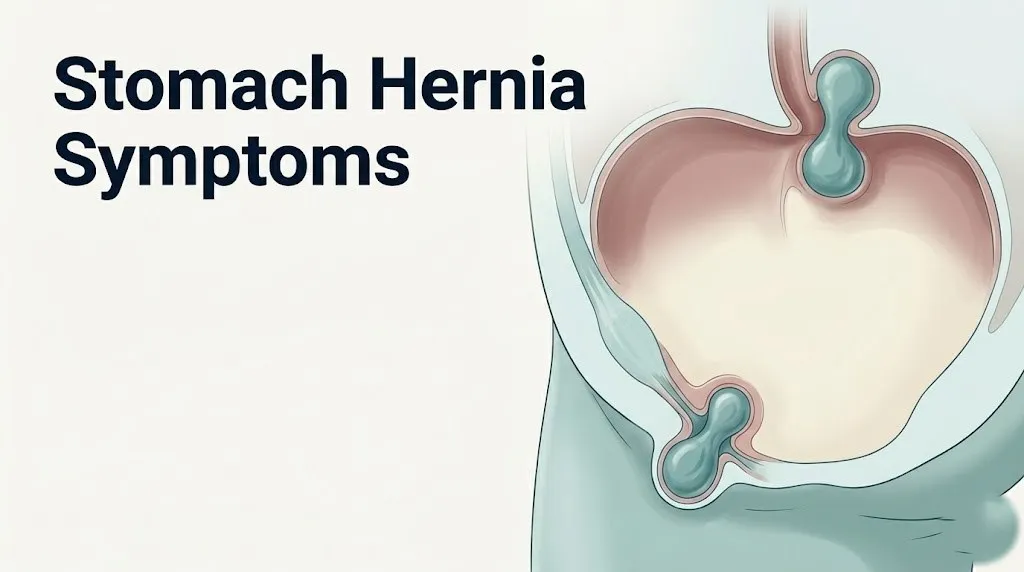
A stomach hernia, more precisely called an abdominal or gastrointestinal hernia, occurs when an internal organ or fatty tissue pushes through a weakened area or defect in the surrounding muscle or connective tissue wall that normally contains it.
The term “stomach hernia” is commonly used by patients to describe any hernia in the abdominal region, though clinically it refers most often to a hiatal hernia, in which a portion of the actual stomach pushes up through the esophageal hiatus of the diaphragm into the chest cavity. Hernias in the groin, navel, or prior surgical scar sites involve different anatomical structures but are grouped under the same patient-facing label.
Every hernia shares one foundational problem: a fascial or muscular barrier has failed to contain the organs it was designed to hold in place. The peritoneum, the thin membrane lining the abdominal cavity, typically forms a sac around the displaced tissue. This sac and its contents protrude through the defect under conditions of elevated intraabdominal pressure, such as coughing, straining, or lifting.
The clinical significance of a hernia depends entirely on three factors: its location, its size, and whether the displaced tissue can be pushed back through the defect (reducible) or is trapped and at risk of vascular compromise (incarcerated or strangulated). A small, reducible hernia in an otherwise healthy 40-year-old carries a fundamentally different risk profile from an incarcerated femoral hernia in a 75-year-old woman.
Quick Tip:
- The word “hernia” comes from the Latin for rupture, though the abdominal wall does not actually rupture. It develops a focal weakness that allows tissue to herniate through.
- Most hernias do not resolve without surgical intervention. “Watchful waiting” for small, symptom-free hernias is a physician-supervised approach, not a home management strategy.
- If you can feel a lump in your abdomen, groin, or navel that was not there before, evaluation by a primary care physician is the appropriate first step.
Types of Stomach Hernias and Their Locations
The five main hernia types each occupy a distinct anatomical location, affect different demographic groups, and produce different symptom profiles, which is why understanding the type matters clinically before evaluating any individual symptom.
| Hernia Type | Anatomical Location | Primary Structures Involved | Most Affected Group |
|---|---|---|---|
| Hiatal hernia | Chest/upper abdomen junction | Diaphragm, esophageal hiatus, stomach | Adults over 50, people with obesity |
| Inguinal hernia | Groin (medial to femoral vessels) | Inguinal canal, internal/external inguinal ring | Males (approximately 25:1 male to female ratio) |
| Umbilical hernia | Navel/belly button | Umbilical ring, linea alba | Infants, pregnant women, adults with obesity |
| Femoral hernia | Upper inner thigh/groin crease | Femoral canal, femoral ring | Postmenopausal women, thin adults |
| Incisional hernia | Prior surgical scar site | Fascial scar tissue, abdominal wall musculature | Anyone with prior abdominal surgery |
Sliding hiatal hernias, in which the gastroesophageal junction and part of the stomach slide above the diaphragm, are the most common type, accounting for roughly 95 percent of all hiatal hernias, according to Mayo Clinic clinical resources. The less common paraesophageal hiatal hernia, in which the stomach rolls alongside the esophagus without displacing the gastroesophageal junction, carries a significantly higher complication risk because the stomach can rotate and lose its blood supply.
Epigastric hernias, occurring between the navel and the breastbone along the linea alba, are less common but frequently underdiagnosed because the bulge may be small and the pain attributed to other causes. Patients with connective tissue disorders such as Ehlers-Danlos syndrome or Marfan syndrome are at elevated risk for multiple simultaneous hernia types due to systemic defects in collagen structure.
How a Hernia Forms: The Physiological Mechanism
A hernia forms when sustained or sudden elevation of intraabdominal pressure forces abdominal contents through a pre-existing point of fascial or muscular weakness, and the driving force behind that process is both mechanical and cumulative.
Think of the abdominal wall like a pressurized container. The rectus abdominis, transversus abdominis, internal oblique, and external oblique muscles form a multi-layered tension system that holds the container sealed. When one layer develops a defect, whether from congenital anatomy, prior surgery, age-related collagen loss, or repeated mechanical stress, the pressure inside pushes tissue toward that weakest point. Every cough, sneeze, bowel strain, or heavy lift is a pressure spike. Over time, those spikes expand the defect incrementally.
In hiatal hernias, the mechanism differs slightly. The esophageal hiatus is a natural opening in the diaphragm through which the esophagus passes. When the connective tissue anchoring the gastroesophageal junction weakens, negative intrathoracic pressure (the relative vacuum created during inhalation) pulls the stomach upward through this opening. Obesity, pregnancy, and chronic cough dramatically accelerate this process by both increasing intraabdominal pressure and mechanically stretching the hiatus over time.
Congenital weakness of the processus vaginalis in males is the dominant mechanism behind indirect inguinal hernias, the most common type in men. The processus vaginalis is a peritoneal projection that forms during fetal testicular descent. It normally closes before birth. When it remains patent, it creates a pre-formed pathway through the inguinal canal. Intraabdominal pressure does the rest.
According to the American College of Surgeons, risk factors that mechanically increase hernia formation include chronic constipation, chronic obstructive pulmonary disease (COPD) with persistent cough, heavy manual labor, pregnancy, ascites (abdominal fluid accumulation), and prior abdominal surgery. All of these operate through the same fundamental pathway: sustained pressure against a structural weak point.
Key Takeaway: A hernia does not form in an instant. It develops through cumulative pressure against a pre-existing point of fascial or muscular weakness, which is why symptoms often begin as intermittent discomfort before progressing to a persistent or palpable problem.
Stomach Hernia Symptoms: The Complete Clinical Picture
Stomach hernia symptoms include a visible or palpable bulge under the skin, a dragging or heavy sensation in the affected area, dull aching or sharp pain that worsens with physical exertion, and, in hiatal hernias specifically, symptoms of acid reflux including heartburn, regurgitation, and chest pressure.
The specific symptom profile depends entirely on which type of hernia is present, its size, and whether the herniated tissue is freely mobile or compressed. A small, asymptomatic hernia may produce nothing beyond an occasional visible bulge during straining. A larger or partially incarcerated hernia produces persistent pain, a non-reducible lump, nausea, and significant discomfort with any activity that raises abdominal pressure.
The National Institutes of Health notes that many hernias are initially discovered incidentally, either by the patient noticing a lump or by a physician during a routine physical examination, before the patient has associated the finding with any specific symptom. This incidental discovery pattern is most common in inguinal and umbilical hernias.
Below is a symptom inventory across the major hernia types:
| Symptom | Hernia Type(s) Most Associated | Physiological Mechanism |
|---|---|---|
| Visible bulge in groin or abdomen | Inguinal, femoral, umbilical, incisional | Organ or omentum protruding through fascial defect |
| Heartburn and acid reflux | Hiatal | LES incompetence from stomach displacement above diaphragm |
| Dull aching pain, worsens with lifting | All types | Traction on peritoneal sac; pressure on surrounding nerves |
| Nausea or vomiting | All types (especially incarcerated) | GI motility disruption; bowel obstruction in severe cases |
| Chest pressure or difficulty swallowing | Hiatal (paraesophageal) | Gastric compression of esophagus within chest cavity |
| Groin heaviness or dragging sensation | Inguinal, femoral | Omentum or bowel loop exerting gravitational pull on tissues |
| Bulge that disappears when lying down | Reducible inguinal, umbilical | Gravity allows spontaneous reduction in supine position |
| Severe constant pain, rigid abdomen | Strangulated any type | Vascular compromise, ischemia, inflammatory response |
Older adults over age 65 may not experience the classic acute pain onset associated with incarceration. A 2021 review published in the Annals of Surgery noted that elderly patients with incarcerated hernias presented more frequently with vague abdominal discomfort, constipation, and fatigue rather than the acute pain pattern seen in younger patients, leading to diagnostic delay. If you are caring for an older adult who reports a persistent lump with any change in bowel habits or appetite, prompt evaluation is warranted.
What Does Hernia Pain Feel Like
Hernia pain typically feels like a dull, aching, or heavy pressure sensation localized to the hernia site that worsens with any activity increasing intraabdominal pressure, such as lifting, coughing, bending forward, or bearing down during a bowel movement.
The pain from a hernia is primarily visceral pain arising from the peritoneal sac being stretched, compressed, or irritated. Visceral pain is characteristically diffuse, poorly localized, and described as aching, cramping, or pressure-like rather than the sharp, well-defined pain associated with somatic (skin or muscle) injury. This diffuse quality is why many people with hernias initially attribute their discomfort to a pulled muscle.
In inguinal hernias, the dragging or burning sensation along the inner groin can radiate into the scrotum in men or the labia majora in women, following the pathway of the ilioinguinal nerve or genitofemoral nerve that traverses the inguinal canal. This radiation pattern frequently leads to misattribution of the pain to a groin strain, a reproductive system problem, or hip pathology.
Hiatal hernia pain has a distinctly different quality. Because the displaced stomach rests against the pericardium and lower esophagus within the chest, the discomfort often presents as chest pressure or burning, particularly after eating. Patients frequently describe it as indistinguishable from cardiac chest pain, which is why any new chest pain, regardless of how “typical” it seems for reflux, requires evaluation to exclude a cardiac cause before assuming a hiatal hernia origin.
Quick Tip:
- Hernia pain that worsens significantly after a meal suggests a hiatal or paraesophageal hernia, where food-induced gastric distension pushes more stomach tissue through the hiatus.
- Hernia pain that eases completely when lying flat and returns on standing is characteristic of a reducible inguinal or umbilical hernia, where gravity is the determining factor.
- Sharp, sudden, severe pain at a known hernia site with no relief from position change is a red flag for incarceration or strangulation and requires same-day emergency evaluation.
Hernia Bulge and Swelling: What to Look For
The classic hernia bulge is a soft, rounded protrusion under the skin at the hernia site that enlarges when standing, straining, or coughing, and reduces or disappears when lying flat, making it one of the most clinically reliable physical signs in medicine.
The bulge forms as the peritoneal sac, carrying the herniated contents, pushes outward through the fascial defect. In a reducible hernia, the tissue slips back through the defect when abdominal pressure drops (lying down) or when the bulge is gently manually compressed. This soft, compressible, position-dependent quality distinguishes a reducible hernia from a fixed mass caused by other conditions.
The size of the visible bulge is not a reliable indicator of severity. A large, soft, easily reducible inguinal hernia in a healthy adult may be less urgent than a small, firm, non-reducible femoral hernia in an older woman, because the femoral ring is narrow and the strangulation risk is higher regardless of size. According to guidelines from the Americas Hernia Society, femoral hernias carry a strangulation risk of 22 to 45 percent if left untreated, one of the highest rates among all hernia types.
In infants with umbilical hernias, the bulge typically appears at the navel when the baby cries, strains, or is upright, and flattens when the baby is calm and lying down. The National Institute of Diabetes and Digestive and Kidney Diseases (NIDDK) notes that most umbilical hernias in infants close spontaneously by age 3 to 4 years as the abdominal wall strengthens. An umbilical hernia that persists beyond age 4 in a child, or that appears in an adult, requires evaluation by a primary care physician or pediatric surgeon.
Skin changes over a hernia bulge are not normal. Redness, warmth, firm non-compressible texture, or blue-gray discoloration of the skin overlying a hernia indicate vascular compromise of the herniated tissue and require immediate emergency evaluation.
Key Takeaway: A hernia bulge that is soft, reducible, and position-dependent is the classic presentation. A bulge that is firm, non-reducible, painful to touch, or associated with skin color changes is a clinical emergency.
Digestive Symptoms Caused by a Hernia
Hernias cause digestive symptoms through two distinct mechanisms: direct mechanical disruption of gastrointestinal anatomy, as seen in hiatal hernias where stomach displacement compromises the acid-reflux barrier, and indirect pressure-related disruption of bowel motility, as seen in any hernia large enough to impair intestinal movement through the hernial ring.
In hiatal hernias, the key mechanism is impairment of the lower esophageal sphincter (LES). The LES is a band of smooth muscle at the gastroesophageal junction that normally maintains a pressure gradient preventing gastric acid from entering the esophagus. When the stomach herniates above the diaphragm, the diaphragmatic crural fibers that normally augment LES closure are displaced and lose their supporting function. The result is gastroesophageal reflux disease (GERD): acid, bile, and stomach contents reflux into the esophagus, producing heartburn, regurgitation, and in chronic cases, Barrett’s esophagus.
Digestive symptoms associated with different hernia types:
- Heartburn and acid regurgitation after meals: hiatal hernia, LES incompetence
- Chest pain or pressure worsening after eating: paraesophageal hiatal hernia, gastric compression
- Difficulty swallowing (dysphagia): large hiatal hernia with esophageal compression
- Nausea after eating: any large hernia with partial bowel obstruction
- Bloating and distension: any hernia impeding normal bowel transit
- Early satiety (feeling full quickly): large hiatal hernia with intrathoracic gastric volume
- Constipation and inability to pass gas: incarcerated hernia, mechanical bowel obstruction
A 2022 study published in JAMA Surgery confirmed that patients with large hiatal hernias (greater than 5 cm diaphragmatic defect) had significantly higher rates of reflux-related esophageal injury compared to patients with smaller defects, supporting the clinical observation that hernia size correlates with symptom severity in the gastrointestinal domain.
Pregnant women with pre-existing hiatal hernias frequently experience worsened GERD symptoms in the second and third trimesters, when the enlarging uterus elevates the diaphragm and increases intraabdominal pressure. This population should inform their obstetrician-gynecologist of any pre-existing hiatal hernia diagnosis, as this affects management decisions around positioning, dietary modification, and acid-suppression therapy.
Hernia Symptoms Without a Visible Bulge
Not all hernias produce a visible external bulge, and the absence of a palpable lump does not rule out a hernia, particularly in obese patients, women with femoral hernias, and patients with early-stage internal hernias following bariatric surgery.
Hiatal hernias, by their internal location above the diaphragm, never produce an external bulge. All hiatal hernia symptoms are internal: reflux, chest pain, regurgitation, belching, and dysphagia. This makes them the most frequently misattributed hernia type, with symptoms commonly attributed to anxiety, cardiac disease, or idiopathic GERD before the structural cause is identified.
In patients with higher body fat or thick abdominal wall musculature, inguinal and femoral hernias may be present without a clinically obvious protrusion. The hernia sac and its contents may be contained within the inguinal canal or femoral ring without breaking the external surface plane visibly. In this presentation, the primary symptom is groin pain, inner thigh aching, or a vague heavy sensation that worsens with activity and eases with rest.
Internal hernias following Roux-en-Y gastric bypass surgery represent a clinically important category that produces no external sign at all. The National Institute of Diabetes and Digestive and Kidney Diseases (NIDDK) notes that internal hernias after bariatric surgery occur in 1 to 5 percent of patients, presenting with intermittent or colicky abdominal pain, nausea, and vomiting that can mimic many other post-surgical complications. Any gastric bypass patient experiencing intermittent crampy abdominal pain, particularly pain that radiates to the back or worsens after eating, requires prompt evaluation by a bariatric surgeon.
Quick Tip:
- If you have known risk factors for a hernia (prior abdominal surgery, obesity, chronic cough, history of heavy lifting) and you experience new or worsening groin, navel, or upper abdominal pain, report it to a primary care physician even if you cannot feel a lump.
- Hernia without a visible bulge is still diagnosed through physical examination (Valsalva maneuver) and imaging, most often CT abdomen and pelvis.
- Women with unexplained lower abdominal or groin pain that is reproducible with activity and not attributable to reproductive or urinary causes should specifically ask their physician about femoral hernia as a diagnostic consideration.
Key Takeaway: The absence of a visible bulge does not rule out a hernia. Hiatal hernias never produce an external bulge, femoral hernias are frequently missed in women, and internal hernias after bariatric surgery produce no external sign at all.
Early Hernia Symptoms vs. Advanced Hernia Symptoms
Early hernia symptoms are typically intermittent, activity-dependent, and mild: a soft bulge that appears only when straining, a dull aching sensation during lifting, or occasional heartburn. Advanced hernia symptoms are persistent, position-independent, and may signal structural failure requiring urgent surgical evaluation.
The progression from early to advanced symptoms follows the natural history of a hernia defect that enlarges over time. As the fascial opening widens, more tissue herniates through, the hernial sac expands, and the risk of incarceration (the hernia becomes trapped) increases. This is not a rapid process in most cases. Many hernias remain in an early symptomatic stage for months to years before progressing, though the timeline is unpredictable and size alone does not reliably predict the rate of progression.
| Stage | Symptom Pattern | Clinical Significance | Recommended Action |
|---|---|---|---|
| Early (reducible, small) | Soft bulge, intermittent aching, worsens with exertion | Low immediate risk, higher long-term complication risk | Evaluate with primary care physician; discuss surgical timing |
| Moderate (enlarging) | Persistent bulge, regular pain, difficulty with activity | Increasing incarceration risk | Referral to general surgeon for surgical planning |
| Advanced (partially incarcerated) | Fixed non-reducible bulge, constant pain, nausea | High risk of full incarceration or strangulation | Same-day evaluation by general surgeon or emergency physician |
| Emergency (strangulated) | Severe pain, rigid abdomen, fever, vomiting, skin changes | Life-threatening; bowel ischemia and necrosis | Call 911 or go to the ER immediately |
Children under age 6 with inguinal hernias progress through this spectrum faster than adults and carry a higher incarceration risk. According to the American College of Surgeons, inguinal hernias in infants and children are repaired promptly after diagnosis rather than managed with watchful waiting, precisely because the incarceration risk in pediatric hernias is substantially higher than in adults. A parent who notices a new groin bulge in an infant should contact a pediatric surgeon or pediatrician the same day.
For adults with asymptomatic or minimally symptomatic inguinal hernias, a 2018 clinical trial published in the New England Journal of Medicine found that watchful waiting was associated with a low but measurable risk of acute incarceration requiring emergency surgery over a 7-year follow-up period. This finding led the Americas Hernia Society to recommend discussing elective repair timing with a general surgeon rather than indefinitely deferring intervention.
Hernia Symptoms in Women
Hernia symptoms in women differ from the standard clinical picture because women are disproportionately affected by femoral hernias, experience hernia complications during and after pregnancy, and have a pelvic anatomy that can make groin hernias easier to mistake for gynecological or musculoskeletal conditions.
The femoral canal, located medial to the femoral vein in the upper inner thigh, is anatomically wider in women due to the broader female pelvis. This anatomical difference makes femoral hernias approximately four times more common in women than in men, according to data from the American College of Surgeons. Femoral hernias present with pain in the inner groin or upper thigh, a small bulge at the groin crease below the inguinal ligament, and discomfort that worsens with standing or walking. Because the presentation overlaps with hip flexor strain, ovarian cyst pain, and lymphadenopathy, femoral hernias in women are frequently misdiagnosed.
Key symptoms of hernia specifically relevant to women:
- Inner groin or upper thigh aching without a clear reproductive or musculoskeletal cause
- A small firm bulge below and medial to the inguinal ligament (femoral hernia site, distinct from the higher inguinal hernia location)
- New or worsening umbilical bulge during pregnancy (umbilical hernias are common in the second and third trimester as intraabdominal pressure rises)
- Hiatal hernia symptoms worsening significantly in the second and third trimesters of pregnancy
- Pelvic pressure or groin heaviness that worsens with physical activity and resolves with rest
Postmenopausal women are at elevated femoral hernia risk. After menopause, reduced estrogen levels contribute to laxity of the pelvic ligaments and connective tissue structures surrounding the femoral ring, widening the canal further and increasing herniation risk. Any postmenopausal woman with new-onset inner groin pain or a palpable groin lump should be evaluated by a primary care physician with femoral hernia as a primary differential consideration alongside lymph node enlargement and vascular abnormality.
Obstetrician-gynecologists should be aware that groin bulges in pregnant patients require evaluation by a general surgeon, as pregnancy increases both hernia formation and the risk of complication from pre-existing hernias.
Hernia Symptoms in Men
Hernia symptoms in men are dominated by inguinal hernia presentations, which account for the vast majority of hernia diagnoses in the male population, largely due to the anatomy of the inguinal canal and the persistence of the processus vaginalis.
The inguinal canal is a passage in the lower abdominal wall through which the spermatic cord descends to the testes. During fetal development, the testes travel from the abdominal cavity down through the inguinal canal to the scrotum, leaving behind a peritoneal sleeve called the processus vaginalis. This sleeve normally closes completely. When it remains patent, or when the posterior wall of the inguinal canal (the transversalis fascia) weakens, bowel loops or omentum can herniate through. According to the American College of Surgeons, approximately 27 percent of men will develop an inguinal hernia at some point in their lifetime, compared to approximately 3 percent of women.
Hernia symptoms most commonly reported by men:
- A visible bulge in one or both sides of the groin that enlarges when standing and reduces when lying down
- Aching, burning, or dragging discomfort in the groin that worsens with prolonged standing, heavy lifting, or coughing
- Pain or a swelling sensation radiating into the scrotum or along the inner thigh
- Scrotal swelling when a hernia sac extends fully into the scrotum (scrotal hernia)
- Sharp groin pain during sudden physical exertion (coughing, sneezing, a fast movement)
- Dull discomfort that worsens throughout the day with activity and improves overnight
Men sometimes attribute these symptoms to a pulled muscle, testicular problem, or hip issue, delaying evaluation. Any man with a groin bulge, scrotal swelling without other urological cause, or reproducible groin pain should be evaluated by a primary care physician who will perform a physical examination that includes the Valsalva maneuver (bearing down while the examiner palpates the inguinal canal) to assess for hernia.
Bilateral inguinal hernias (present on both sides simultaneously) are not uncommon in men and are frequently found during surgical repair of one side. Men with a confirmed unilateral inguinal hernia should ask their general surgeon whether the contralateral side shows any early evidence of weakness.
Key Takeaway: Women are at elevated risk for femoral hernias due to wider pelvic anatomy, and men are at elevated risk for inguinal hernias due to inguinal canal anatomy. Both groups frequently attribute hernia symptoms to musculoskeletal or reproductive causes, delaying diagnosis.
Hernia Symptoms in Older Adults and People With Obesity
Older adults and people with obesity experience hernia symptoms differently and face a higher risk of complications, in part because both populations have altered pain perception, delayed physical examination recognition of a hernia, and underlying anatomical changes that worsen fascial integrity.
In older adults over 65, collagen remodeling changes reduce the tensile strength of the abdominal wall fascia over time. The proportion of type I collagen, the mechanically strong structural form, decreases relative to type III collagen, which is more elastic but less load-bearing. This shift is documented in histological studies of hernia tissue samples and explains why hernia incidence increases sharply with age. At the same time, reduced pain sensitivity and slower inflammatory signaling in elderly patients can blunt the acute pain response that would prompt a younger person to seek care. The result is that older adults often present with larger or more advanced hernias at the time of first evaluation.
For people with obesity, elevated intraabdominal pressure is the primary mechanism driving hernia formation and symptom severity. Every 10 kg of excess body weight increases mean intraabdominal pressure by approximately 8 to 10 mmHg at rest, according to research published in Obesity Surgery. This sustained pressure widens existing defects, prevents post-surgical hernia repairs from healing under normal tension, and dramatically increases the risk of incisional hernia after abdominal surgery. Hernia recurrence rates after open repair in patients with a body mass index above 35 are approximately two to three times higher than in patients with a BMI below 30, according to data reviewed by the Americas Hernia Society.
Specific symptom considerations for these populations:
For older adults:
- Hernia pain may present as vague fatigue, reduced appetite, or constipation rather than acute localized pain
- Incarceration may go unrecognized longer due to blunted pain perception
- Any new, persistent abdominal discomfort in an older adult with a known or suspected hernia warrants same-day evaluation by a primary care physician or emergency medicine physician
For people with obesity:
- External bulge may be obscured by abdominal adipose tissue even when the hernia is clinically significant
- Umbilical hernias are particularly common and may be hidden within the umbilical fold
- Diagnosis frequently requires CT imaging rather than physical examination alone
A general surgeon should evaluate any hernia in these populations, as both surgical risk and complication risk are higher and require individualized operative planning.
Strangulated Hernia Symptoms
A strangulated hernia produces sudden, severe, and unrelenting pain at the hernia site, accompanied by nausea, vomiting, fever, and an inability to push the hernia back in, representing a surgical emergency with a narrow window for intervention before bowel necrosis occurs.
Strangulation occurs when the fascial edges of the hernia defect compress the blood vessels supplying the herniated tissue, most often a loop of small intestine or the omentum. The compression interrupts venous outflow first, causing edema and swelling that further tightens the ring, then impairs arterial inflow. Within hours, the herniated tissue becomes ischemic. Within 12 to 24 hours of complete strangulation, tissue necrosis and perforation can occur, leading to peritonitis (infection of the abdominal cavity) and systemic sepsis. The American College of Surgeons identifies strangulated hernia as one of the most time-critical surgical emergencies in abdominal medicine.
Signs that distinguish strangulation from a symptomatic but uncomplicated hernia:
- Pain that was previously mild or intermittent becomes sudden, severe, and constant
- The hernia bulge becomes hard, extremely tender to touch, and cannot be pushed back in
- Nausea and vomiting develop within hours of pain onset
- Fever develops (typically above 38°C / 100.4°F), indicating systemic inflammatory response
- The skin overlying the hernia turns red, then progresses to a dusky purple or blue-gray color as tissue oxygenation fails
- Abdominal rigidity (board-like firmness of the abdominal wall) indicates peritoneal irritation
- Rapid heart rate (tachycardia) and low blood pressure develop as sepsis progresses
The femoral hernia has the highest strangulation rate among common hernia types because the femoral ring is narrow, rigid, and unyielding. Even a small amount of herniated tissue can become critically compressed. This is why femoral hernias are repaired surgically at diagnosis rather than managed conservatively, regardless of symptom severity at the time of detection.
Elderly patients may not develop a dramatic fever or severe pain as their first strangulation sign. Any older adult with a known hernia who develops new vomiting, worsening abdominal discomfort, or any change in the hernia appearance or texture requires emergency evaluation without delay.
Key Takeaway: Strangulation transforms a hernia from a structural problem into a surgical emergency. The progression from incarceration to strangulation to bowel necrosis can occur within 12 to 24 hours, which is why sudden severe hernia pain with vomiting or fever means call 911, not wait and see.
Incarcerated Hernia Symptoms
An incarcerated hernia occurs when the herniated tissue becomes trapped in the fascial defect and can no longer be manually reduced (pushed back through the opening), producing persistent pain, a firm non-reducible bulge, and early signs of bowel obstruction, but without yet reaching the complete vascular cutoff that defines strangulation.
Incarceration is the step immediately preceding strangulation on the clinical severity spectrum. The tissue is stuck but not yet fully deprived of blood supply. This distinction matters because an incarcerated hernia can sometimes be manually reduced by an emergency physician using sedation and careful pressure technique, potentially avoiding emergency surgery. A strangulated hernia cannot be safely reduced and requires immediate operative intervention.
Symptoms of an incarcerated hernia:
- A hernia bulge that was previously soft and reducible is now firm and will not flatten when lying down
- Pain at the hernia site is persistent rather than activity-dependent
- Nausea may be present, particularly if a bowel loop is involved
- Inability to pass gas or have a bowel movement if intestinal obstruction is developing
- Abdominal distension (bloating, visible belly enlargement) if obstruction is significant
- No fever or skin color change yet (these indicate progression to strangulation)
Distinguishing incarceration from strangulation in a clinical setting requires physical examination by a physician and often CT imaging. From the patient’s perspective, the key practical distinction is this: a hernia that was previously reducible and is now fixed, combined with any new pain or digestive symptom, is an incarcerated hernia until proven otherwise. It requires same-day evaluation by an emergency medicine physician or general surgeon. Do not wait overnight.
The Americas Hernia Society states that all incarcerated hernias require prompt surgical evaluation because the risk of progression to strangulation is unpredictable and cannot be assessed at home or through a telephone consultation.
Emergency Symptoms: When to Call 911 or Go to the ER
Certain symptoms associated with a stomach hernia require immediate emergency evaluation. Do not wait to see if these resolve on their own.
Call 911 or go to the nearest emergency room immediately if you experience:
- Sudden, severe pain at a known or suspected hernia site that does not ease with rest or position change (indicates possible strangulation or incarceration)
- A hernia bulge that was previously soft and reducible has become hard, fixed, and acutely tender (non-reducible incarceration)
- Nausea and vomiting developing alongside hernia site pain (indicates bowel obstruction, possible strangulation)
- Fever above 38°C (100.4°F) accompanied by hernia site pain (indicates systemic inflammatory response from ischemia or perforation)
- Redness, warmth, or blue-gray discoloration of the skin directly over the hernia bulge (indicates tissue ischemia from vascular compromise)
- Board-like rigidity of the abdominal wall (indicates peritoneal irritation, possible perforation or peritonitis)
- Rapid heart rate, low blood pressure, confusion, or cold clammy skin alongside hernia symptoms (indicates sepsis from bowel perforation)
- Sudden severe chest pain combined with difficulty swallowing and inability to vomit (indicates paraesophageal hernia with acute gastric volvulus, a specific emergency requiring immediate surgery)
These presentations indicate strangulated hernia, bowel perforation, peritonitis, or acute gastric volvulus, all of which are life-threatening emergencies requiring surgical management. These cannot be safely managed at an urgent care clinic. They require a hospital emergency department with immediate surgical capability.
For older adults and people with obesity who may not present with the classic acute pain pattern: any sudden change in the appearance, reducibility, or tenderness of a known hernia site, combined with any new systemic symptom such as fever, vomiting, or declining alertness, should be treated as a potential surgical emergency.
How a Hernia Is Diagnosed
A hernia is diagnosed through a combination of clinical history, physical examination, and imaging studies, with the physical examination remaining the primary diagnostic tool for most external hernia types.
During a physical examination for a suspected hernia, a physician will palpate the groin, abdomen, or navel while asking the patient to cough or perform a Valsalva maneuver (bearing down as if having a bowel movement). This maneuver increases intraabdominal pressure, forcing the hernia to protrude through the defect and become palpable. A positive Valsalva sign, meaning a palpable impulse or bulge that was not present at rest, is highly specific for hernia.
Diagnostic approaches by hernia type:
| Hernia Type | Primary Diagnostic Method | Secondary Imaging | Clinical Findings Sought |
|---|---|---|---|
| Inguinal or femoral | Physical exam with Valsalva | Ultrasound, CT pelvis | Palpable impulse in canal, groin bulge |
| Umbilical or incisional | Physical exam | CT abdomen if unclear | Palpable defect in abdominal wall fascia |
| Hiatal | Upper GI series or EGD | CT chest/abdomen | Stomach above diaphragm on contrast study |
| Internal (post-bariatric) | CT abdomen with contrast | MRI if CT equivocal | Bowel herniation through mesenteric defect |
| Paraesophageal | CT chest/abdomen | Esophagogastroduodenoscopy (EGD) | Gastric rotation above diaphragm |
Esophagogastroduodenoscopy (EGD), also called an upper endoscopy, is the definitive diagnostic procedure for hiatal hernias. A gastroenterologist passes a flexible camera through the mouth into the stomach and can directly visualize whether the stomach is displacing above the diaphragm and whether the lower esophageal sphincter is competent. Upper GI contrast studies (a swallowed barium X-ray) are used when dynamic anatomy during swallowing is needed.
CT imaging of the abdomen and pelvis is the most accurate tool for diagnosing hernias that are not accessible by physical examination, including internal hernias after bariatric surgery, obese patients where palpation is limited, and any suspected hernia with signs of bowel obstruction or strangulation. According to a review in the British Journal of Surgery, CT has a sensitivity of greater than 90 percent for detecting incarcerated and strangulated hernias.
To prepare for a hernia evaluation with your primary care physician:
- Note exactly where you feel pain or see a bulge, and whether it changes with position, time of day, or activity
- Record what activities make the bulge appear or worsen (coughing, straining, lifting, prolonged standing)
- Note whether the bulge can be pushed back in and how long it takes to reappear
- Document any digestive symptoms: reflux, difficulty swallowing, nausea, or changes in bowel habits
- List all prior abdominal surgeries with approximate dates
- Bring a list of all current medications, as anticoagulants affect surgical planning if repair is recommended
After a hernia diagnosis is confirmed, a general surgeon is the appropriate specialist for evaluation of all external hernia types. A gastroenterologist should be involved in the management of hiatal hernias with significant GERD symptoms, often working alongside the surgeon when anti-reflux procedures are being considered alongside hernia repair.
Frequently Asked Questions About Stomach Hernia Symptoms
What does a stomach hernia feel like?
A stomach hernia typically feels like a soft, pressure-like bulge or dragging sensation at the affected site, most often the groin, navel, or upper abdomen, that worsens with standing, lifting, or coughing.
In hiatal hernias, the feeling is internal: persistent heartburn, chest pressure after meals, or a sense of food sitting in the chest rather than the stomach.
The pain quality is usually described as aching, burning, or heavy rather than sharp, though sharp sudden pain at a hernia site is a red flag for incarceration or strangulation requiring emergency evaluation.
Can a hernia cause stomach pain without a visible bulge?
Yes, a hernia can cause significant abdominal or groin pain without any externally visible or palpable bulge, particularly in hiatal hernias, femoral hernias in obese individuals, and internal hernias after bariatric surgery.
Hiatal hernias are entirely internal and produce symptoms exclusively through acid reflux, chest pressure, and dysphagia with no external sign whatsoever.
If you have hernia risk factors and experience unexplained groin, abdominal, or chest symptoms, a primary care physician can evaluate through physical examination and, if indicated, CT imaging or upper GI endoscopy.
What are the warning signs that a hernia is getting worse?
A hernia is getting worse when a previously soft, reducible bulge becomes firm, fixed, or non-reducible, or when pain that was intermittent becomes constant and is accompanied by nausea, vomiting, or fever.
These changes indicate progression from a reducible hernia to an incarcerated or strangulated hernia, which is a surgical emergency.
Any of these changes require same-day emergency evaluation, not a scheduled appointment.
Can a hernia go away on its own without surgery?
Hernias do not resolve spontaneously, and no exercise, diet, or home management approach closes a fascial or muscular defect once it has formed.
Some small umbilical hernias in infants close on their own as the abdominal wall matures before age 4, and this spontaneous closure is a normal part of pediatric development.
In adults, all hernias either remain stable, grow, or progress to complications. A general surgeon can discuss whether watchful waiting is appropriate for small asymptomatic hernias or whether elective repair reduces long-term risk for your specific situation.
How do I know if my hernia is strangulated?
A strangulated hernia produces sudden, severe, constant pain at the hernia site that does not ease with rest, combined with a hard, non-reducible bulge that is acutely tender to touch.
Vomiting, fever above 38°C (100.4°F), and skin redness or blue-gray discoloration directly over the hernia site are signs that tissue ischemia has begun and that bowel necrosis may follow within hours.
Call 911 or go to the nearest emergency room immediately if any combination of these symptoms is present. Do not wait to call your doctor’s office.
When should I go to the emergency room for a hernia?
Go to the emergency room immediately for any hernia that was previously reducible and is now firm and cannot be pushed back in, especially if this is accompanied by pain, nausea, or vomiting.
Fever, skin color change over the hernia site, vomiting without relief, abdominal rigidity, or signs of shock (rapid heart rate, low blood pressure, confusion) are all indications that a strangulated hernia or bowel perforation may be occurring.
These are not symptoms to monitor overnight. They require emergency surgical evaluation.
Putting It All Together
Stomach hernia symptoms span a wide clinical range. A soft groin bulge that appears only when you cough is mechanically different from a non-reducible lump with fever and vomiting, but both are signs of the same underlying structural problem: a fascial defect that has allowed abdominal tissue to herniate where it does not belong.
The single most practical thing you can take from this article is the reducibility test. If a bulge at your hernia site, whether groin, navel, or upper abdomen, was previously soft and position-dependent and has become hard, fixed, and painful, that change is a medical emergency. A hernia that is changing is a hernia that is progressing, and progression toward strangulation moves faster than most people expect.
If you have noticed any bulge, unexplained groin or abdominal aching, worsening acid reflux, or digestive symptoms that have no other clear cause, your next step is a physical examination with a primary care physician. They can confirm or rule out a hernia, determine the type, and refer you to a general surgeon or gastroenterologist with the specific information you need for a productive specialist conversation.