How Long Can Heart Attack Symptoms Last? 2026
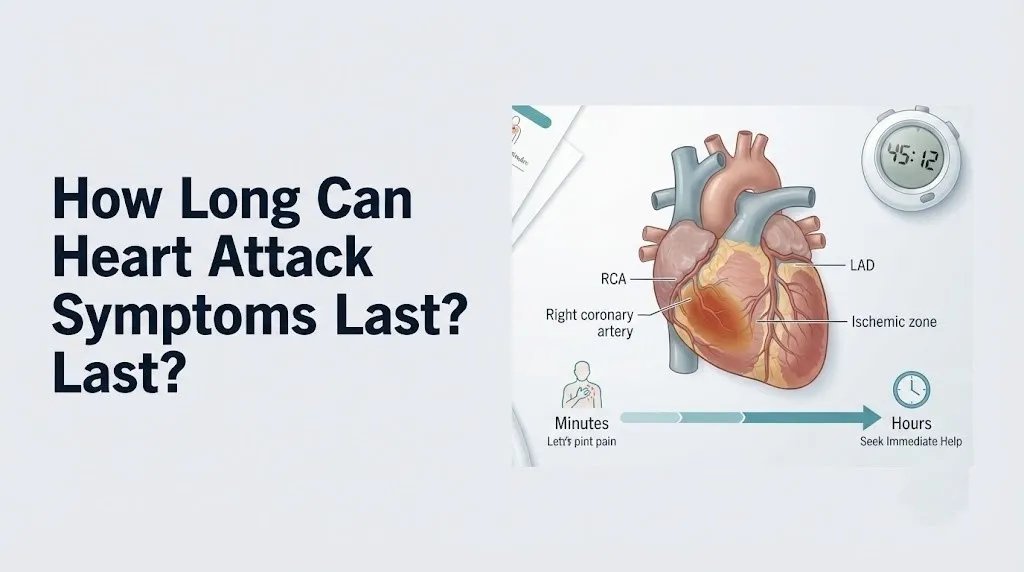
Heart attack symptoms can last anywhere from 15 minutes to several hours, and in some cases, warning symptoms appear days before the actual cardiac event. The duration depends on which coronary artery is affected, whether the blockage is complete or partial, and whether blood flow is restored by emergency treatment.
The American Heart Association reports that approximately 805,000 Americans experience a heart attack each year, making this one of the most medically urgent questions a person can ask. What most people don’t know is that the biology of symptom duration is directly tied to the timeline of myocardial cell death, a process that begins within approximately 20 minutes of complete coronary artery occlusion and can be permanently halted by fast emergency intervention.
This article explains exactly how long different types of heart attack symptoms last, why duration varies by infarct type and individual factors, what prodromal warning signs look like days before the event, and precisely when any symptom duration requires a 911 call rather than watchful waiting.
How Long Can Heart Attack Symptoms Last
Heart attack symptoms typically last at least 15 to 30 minutes and can persist for several hours if treatment is not started, with some presentations involving warning signs that appear intermittently for days before the main cardiac event.
The most important clinical fact about duration is this: symptoms that last longer than a few minutes and are accompanied by pressure, tightness, shortness of breath, or pain radiating to the arm or jaw almost never resolve on their own and warrant immediate emergency evaluation. Angina, which is chest discomfort caused by temporary reduced blood flow rather than a full arterial blockage, typically resolves within 5 to 15 minutes with rest or nitroglycerin. A true heart attack does not resolve that quickly.
Duration alone doesn’t tell the full story. A person can have a non-ST-elevation myocardial infarction (NSTEMI) in which symptoms are less intense but prolonged, or an ST-elevation myocardial infarction (STEMI) in which symptoms are severe and unrelenting. Understanding both patterns matters for recognizing the event and responding correctly.
| Symptom Pattern | Typical Duration | Clinical Significance |
|---|---|---|
| Stable angina | 2 to 15 minutes | Resolves with rest or nitroglycerin; not a heart attack |
| Unstable angina | 15 to 30 minutes | May progress to MI; requires emergency evaluation |
| NSTEMI | 30 minutes to several hours | Partial coronary occlusion; ongoing myocardial injury |
| STEMI | 30 minutes to 6+ hours | Complete occlusion; rapid myocardial necrosis; surgical emergency |
| Silent MI | Variable, often absent | Occurs without recognized pain; discovered on ECG after the fact |
What Happens in the Body During a Heart Attack
A heart attack occurs when a ruptured atherosclerotic plaque in a coronary artery triggers thrombus (blood clot) formation, cutting off oxygen delivery to the downstream myocardium (heart muscle).
Think of it like a water pipe with years of mineral buildup on the inner walls. If a chunk of that buildup cracks, the body’s clotting response rushes to seal the rupture. The resulting clot can partially or completely block the pipe. Downstream, the heart muscle that depends on that blood supply starts running out of oxygen within seconds.
Within 20 minutes of complete occlusion, irreversible cardiomyocyte necrosis begins. This is not a gradual process. Cardiac muscle cells start dying, and without restored blood flow, the zone of necrosis expands outward from the inner layers of the heart wall toward the outer layers over the next 3 to 6 hours.
Pain signals travel through cardiac sympathetic afferent nerve fibers, which enter the spinal cord at the T1 through T4 levels. Because the brain receives these pain signals from the same spinal segments that serve the chest, left arm, jaw, and upper back, the brain can misinterpret where the pain originates. This is why left arm pain, jaw pain, and upper back pain are all recognized features of myocardial ischemia.
The National Heart Lung and Blood Institute (NHLBI) states that the extent of myocardial damage is directly proportional to how long the coronary artery remains occluded. Every minute without treatment increases the volume of permanently damaged heart muscle.
Individual variation note: People with type 2 diabetes may have impaired sympathetic afferent nerve signaling due to autonomic neuropathy, meaning the pain signal pathway is disrupted. For them, ischemia can produce minimal or no pain even during a significant myocardial event.
How Long Does Chest Pain Last During a Heart Attack
Chest pain or pressure during a heart attack typically lasts 30 minutes or longer without treatment, and this is the most reliably distinguishing feature separating true myocardial infarction from other causes of chest discomfort.
The quality of the pain matters as much as its duration. Most people describe a heart attack’s chest sensation not as sharp or stabbing but as a pressure, squeezing, heaviness, or tightening, often described as “an elephant sitting on my chest.” This distinctive quality reflects the mechanism: ischemic myocardium releases bradykinin and adenosine, which activate the cardiac pain afferents. These chemicals don’t produce sharp, knife-like pain. They produce deep, diffuse pressure.
Sharp pain that worsens with breathing, changes position, or can be reproduced by pressing on the chest wall is more likely to come from the pleura, pericardium, or musculoskeletal chest structures rather than from myocardial ischemia. Knowing this difference helps in real-time assessment.
Accompanying symptoms during the painful episode are also time-sensitive. Diaphoresis (cold, clammy sweating) reflects massive sympathetic nervous system activation. Dyspnea (shortness of breath) reflects reduced cardiac output as the ischemic ventricle pumps less effectively. Nausea during chest pain, particularly in inferior wall MIs affecting the right coronary artery, reflects vagal nerve activation from ischemia near the sinoatrial node.
According to the ACC/AHA guidelines for STEMI management, door-to-balloon time (the time from emergency room arrival to restoration of blood flow by percutaneous coronary intervention) should be under 90 minutes. This standard exists precisely because the duration of occlusion determines the extent of permanent heart muscle loss.
Quick Tip:
- Chest pain lasting more than 5 minutes that doesn’t improve with position change or rest requires immediate emergency evaluation.
- Pain that spreads to the jaw, left arm, or upper back while the chest is still hurting strongly suggests myocardial ischemia rather than a musculoskeletal cause.
- People who have taken sublingual nitroglycerin for known angina and whose pain does not resolve within 15 minutes of a second dose should call 911 immediately.
Key Takeaway: Heart attack chest pain typically lasts 30 minutes or longer without treatment, is described as pressure or tightness rather than sharpness, and is driven by the release of bradykinin and adenosine from oxygen-starved myocardial tissue.
STEMI vs NSTEMI: How Symptom Duration Differs by Infarct Type
A STEMI produces more severe, unrelenting symptoms because it involves complete blockage of a coronary artery, while an NSTEMI involves a partial blockage and often produces symptoms that are less intense but may last longer or fluctuate.
This distinction is the most important gap in most heart attack content online. The two types of myocardial infarction have genuinely different symptom duration profiles because they represent different degrees of coronary occlusion.
In a STEMI, the coronary artery is fully occluded by a thrombus. Blood flow to the downstream myocardium stops completely. The ischemic zone rapidly progresses to necrosis. Because the entire affected territory is simultaneously starved of oxygen, symptoms are typically severe, continuous, and worsening rather than intermittent. A STEMI caused by occlusion of the left anterior descending artery (LAD) is called a “widowmaker” because the LAD supplies the largest territory of the left ventricle. These symptoms are almost never subtle.
An NSTEMI involves partial occlusion, typically by a subtotal thrombus or a severe narrowing that hasn’t fully blocked the artery. Blood flow is reduced but not stopped. The myocardium in the affected zone is injured but may not all be necrotic immediately. Symptoms can be less dramatic: moderate pressure, fatigue, mild shortness of breath. But these symptoms may persist or recur over hours to days because the underlying cause is not resolving.
| Feature | STEMI | NSTEMI |
|---|---|---|
| Coronary occlusion | Complete | Partial |
| Primary artery affected | Often LAD, RCA, or LCx | Any; often smaller branches |
| Symptom intensity | Severe, unrelenting | Moderate, variable |
| Typical symptom duration | 30 min to 6+ hours continuous | Hours to days, may fluctuate |
| ECG finding | ST-segment elevation | ST depression or T-wave changes, or normal |
| Biomarker elevation | Troponin I and T elevated | Troponin elevated, often less acutely |
| Emergency treatment | Immediate PCI (within 90 minutes) | PCI within 24 to 72 hours per ACC/AHA |
Individual variation note: People with pre-existing coronary artery disease who have developed collateral circulation (alternate blood vessel routes around a blockage) may have less severe STEMI symptoms because collateral vessels partially compensate. This can lead to a dangerous underestimation of the event’s severity.
How Long Do Mild Heart Attack Symptoms Last
Mild heart attack symptoms, which typically indicate an NSTEMI or a small-territory infarction, can last anywhere from 30 minutes to several hours, and in some cases symptoms recur over one to two days before the person seeks care.
“Mild” does not mean “not dangerous.” An NSTEMI with low-intensity symptoms is still destroying myocardial tissue. A 2020 study published in JAMA Cardiology found that patients who delayed seeking care for mild or atypical MI symptoms had significantly larger infarct sizes and worse outcomes at 30 days compared to those who called 911 at symptom onset. The gentleness of the pain is not a reliable indicator of how much heart muscle is at risk.
Mild presentations often include:
- Unexplained fatigue lasting hours to days
- Vague upper chest discomfort described as “heartburn” or “indigestion” that doesn’t respond to antacids
- Mild shortness of breath during activities previously tolerated without difficulty
- A feeling of heaviness or fullness in the chest without obvious pain
- Intermittent jaw tightness or upper back pressure without prominent chest symptoms
These presentations are particularly common in women, older adults, and people with diabetes, all of whom are more likely to have atypical cardiac symptom profiles. The symptoms may not scream “heart attack” to the person experiencing them, which is exactly why awareness of mild presentations saves lives.
According to the National Heart Lung and Blood Institute, approximately 1 in 5 heart attacks is discovered only during a routine ECG or cardiac imaging study performed for an unrelated reason, indicating that a substantial proportion of MIs produce symptoms mild enough that the person never sought care during the event.
Can Heart Attack Symptoms Come and Go
Heart attack symptoms can come and go, particularly in NSTEMI and unstable angina, but intermittent symptoms do not indicate the situation is resolving or less serious.
The intermittent pattern occurs because partial coronary occlusion can fluctuate. A thrombus over a ruptured plaque may partially dissolve and re-form. Coronary artery spasm (common in Prinzmetal or vasospastic angina) can produce episodic ischemia that comes and goes over hours. In both cases, each episode of ischemia is injuring the myocardium even if the pain subsides between episodes.
Clinicians specifically watch for what the ACC/AHA calls crescendo angina: a pattern where the frequency, duration, or severity of chest pain episodes increases over a short period. This pattern is a recognized marker of unstable coronary disease and acute coronary syndrome risk. Symptoms that came and went twice in one morning and are now happening hourly are not improving; they’re escalating.
Think of a partially blocked drain. Water still flows, but flow is compromised. The partial blockage may clear temporarily if pressure changes, but the root problem has not changed and often worsens. A coronary artery with an unstable plaque and a fluctuating thrombus is that drain, except the consequence of final blockage is myocardial necrosis.
The American Heart Association advises that anyone experiencing chest discomfort that comes and goes over a period of hours should be evaluated as a potential acute coronary syndrome until proven otherwise. This evaluation requires a 12-lead ECG and serial troponin measurements in an emergency setting, not a scheduled outpatient appointment.
Individual variation note: People taking beta-blockers for hypertension or prior cardiac events may have blunted symptom intensity during an MI. The pain may seem to “go away” partly because the medication is suppressing the heart rate and sympathetic response that amplifies pain perception. This is particularly relevant for older adults on multiple cardiac medications.
Key Takeaway: Intermittent heart attack symptoms don’t mean the heart is recovering; they often indicate an unstable coronary plaque that is partially occluding and re-opening, which requires the same emergency evaluation as continuous symptoms.
Can Heart Attack Symptoms Last for Months
Heart attack symptoms themselves do not last for months, but the consequences of a heart attack, including persistent fatigue, shortness of breath, and reduced exercise tolerance, can last months if the MI caused significant myocardial damage or if the person did not receive timely treatment.
It’s worth being precise here. Active myocardial infarction symptoms, meaning the acute phase of ischemia and necrosis, typically resolve within hours of the event, either because blood flow is restored by treatment, collateral vessels compensate, or the infarcted zone stabilizes. What persists is the aftermath: a segment of heart muscle that no longer contracts normally, producing reduced left ventricular ejection fraction and the symptoms of heart failure.
Symptoms that can persist for months after an MI include:
- Shortness of breath on exertion, reflecting reduced cardiac output from damaged myocardium
- Persistent fatigue, reflecting the heart’s reduced ability to meet oxygen demands during daily activity
- Ankle swelling, caused by fluid retention when the left ventricle doesn’t pump efficiently
- Chest discomfort on exertion, which may indicate remaining coronary narrowing or post-infarction angina
People who report “heart attack symptoms for months” are typically describing one of two situations: post-MI heart failure symptoms from myocardial damage, or recurrent angina from incompletely treated coronary artery disease. Both require urgent cardiology evaluation.
A 2022 analysis published in Circulation found that patients with delayed MI treatment, defined as more than 6 hours from symptom onset to percutaneous coronary intervention, had a significantly higher rate of persistent heart failure symptoms at 6-month follow-up compared to those treated within 90 minutes.
Heart Attack Warning Signs Days Before the Event
Up to 50% of people who experience a heart attack report prodromal symptoms in the days or even weeks before the acute event, according to research published in JAMA Internal Medicine.
These early warning signals, called prodromal symptoms, reflect escalating instability in a coronary artery plaque before it fully ruptures. The artery is already compromised; blood flow is periodically restricted; the myocardium is sending distress signals through the cardiac pain afferents. But the signals are often subtle enough that most people dismiss them.
Common prodromal symptoms reported in the days before a heart attack include:
- Unusual fatigue described as profound tiredness with no clear cause, often worse in the morning
- Chest discomfort that comes and goes with exertion and resolves at rest, mimicking stable angina
- Shortness of breath during activities that previously caused no difficulty
- Sleep disturbance and difficulty lying flat (which can reflect early fluid backup into the lungs)
- Indigestion or upper abdominal discomfort that doesn’t respond to food changes or antacids
- A sense of anxiety or “impending doom” with no identifiable psychological trigger
Prodromal symptoms are more commonly reported by women than by men. A landmark 2003 study by McSweeney et al. published in Circulation found that 95% of women who experienced an MI reported prodromal symptoms in the weeks beforehand, most frequently unusual fatigue. Only 30% of those women reported chest pain during the prodromal period.
Individual variation note: Prodromal symptoms are more likely to be recognized in people with a prior history of coronary artery disease because they already know what cardiac discomfort feels like. For people without prior cardiac history, these symptoms are frequently attributed to stress, gastroesophageal reflux disease (GERD), or age-related changes, leading to dangerous delays in seeking care.
How Long Do Women’s Heart Attack Symptoms Last
Women’s heart attack symptoms often last as long as men’s but are more frequently atypical in quality, meaning they may not involve prominent chest pain, which leads to longer delays in seeking care and consequently longer time spent with ongoing myocardial damage before treatment begins.
The biological basis for this difference involves multiple mechanisms. Women are more likely to have microvascular coronary disease, where ischemia occurs in the small coronary vessels rather than in the major epicardial arteries. This type of ischemia is harder to detect on a standard ECG, produces a different pain quality, and is less likely to present as the classic crushing chest pressure that dominates public heart attack awareness campaigns.
Estrogen plays a protective role in cardiovascular health during the reproductive years by maintaining coronary artery elasticity, endothelial function, and favorable lipid profiles. After menopause, the loss of estrogen accelerates coronary atherosclerosis. Research published in The Lancet found that postmenopausal women who experienced MIs were more likely to have non-obstructive coronary artery disease as the underlying mechanism compared to age-matched men.
Symptoms women more commonly report during an MI include:
- Profound, sudden fatigue as the dominant symptom
- Nausea, vomiting, or indigestion without prominent chest pain
- Shortness of breath without chest tightness
- Jaw or neck pain without chest involvement
- Upper back pressure or burning between the shoulder blades
- Lightheadedness or near-fainting
Because these symptoms don’t match the culturally dominant heart attack image, women on average wait 37 minutes longer than men before calling 911 during an acute MI, according to a 2019 analysis in JAMA Internal Medicine. That 37-minute gap represents a measurable increase in myocardial necrosis and a corresponding increase in permanent cardiac damage.
Key Takeaway: Women’s heart attack symptoms are equally urgent and equally time-sensitive as men’s, but are more frequently atypical in quality, making the 37-minute average delay in seeking care a preventable source of additional myocardial damage.
Silent Heart Attack Symptoms and Duration in Diabetics
A silent heart attack, defined as a myocardial infarction that produces no recognized chest pain or classic cardiac symptoms, accounts for approximately 22% of all heart attacks and is significantly more common in people with diabetes due to autonomic neuropathy of the cardiac pain pathways.
People with long-standing type 2 diabetes or type 1 diabetes frequently develop autonomic neuropathy: degeneration of small autonomic and sensory nerve fibers throughout the body. When this neuropathy affects the cardiac sympathetic afferent nerve fibers (the same T1-T4 fibers responsible for transmitting myocardial pain signals), the brain receives a reduced or absent pain signal even during complete coronary occlusion.
The clinical consequence is stark. A person with diabetic autonomic neuropathy can be having a full STEMI with complete LAD occlusion and experience only mild fatigue, slight shortness of breath, or nothing at all. The Framingham Heart Study found that among patients with silent MIs identified on ECG, diabetes was one of the strongest independent predictors. Approximately 50% of MIs in people with diabetes are silent or nearly silent, compared to approximately 20% in the general population, according to data published in Diabetes Care.
What to watch for in diabetics instead of chest pain:
- Sudden onset of dyspnea (shortness of breath) without exertion
- New or worsening fatigue significantly beyond their usual baseline
- Blood glucose that becomes unexpectedly difficult to control without dietary change
- Nausea or sweating without an obvious cause
- Lightheadedness or near-syncope (near-fainting)
Individual variation note: People with peripheral neuropathy affecting their feet and legs are at the highest risk for cardiac autonomic neuropathy as well. If a person with diabetes reports that they “never feel pain normally in their feet,” their cardiac pain sensing is also likely impaired. Their threshold for cardiac evaluation should be lower than standard clinical thresholds.
Heart Attack Symptoms in Older Adults: Duration and Differences
Heart attack symptoms in older adults, typically defined as those aged 75 and above, are more often atypical in character, sometimes shorter in perceived duration due to blunted pain responses, and more frequently complicated by pre-existing cardiovascular conditions that alter how symptoms present.
As the nervous system ages, pain perception changes. Reduced pain sensitivity in older adults reflects both decreased density of peripheral pain receptors and altered central processing of pain signals in the brain and spinal cord. The result is that an elderly person experiencing myocardial ischemia may perceive chest discomfort as much milder than a younger person experiencing equivalent ischemia.
Older adults are also more likely to be taking medications that modify cardiovascular symptoms. Beta-blockers suppress the tachycardia response that typically accompanies MI, reducing the racing heart sensation many people associate with a cardiac event. ACE inhibitors and diuretics alter fluid dynamics that would otherwise produce the early shortness of breath sensation. The pharmacological “masking” of symptoms is a documented clinical challenge.
Common presentations in older adults that differ from classic MI:
- Acute confusion or sudden change in mental status as the dominant symptom
- Generalized weakness or a feeling of profound inability to get up
- Falls without an obvious cause, from reduced cardiac output causing orthostatic hypotension
- Sudden worsening of pre-existing heart failure symptoms
- Shortness of breath disproportionate to activity level
According to the American College of Cardiology, adults over age 75 who experience MIs have worse in-hospital outcomes than younger patients, partly because atypical presentations delay diagnosis and treatment. When an older adult presents with sudden confusion, a new fall, or unexplained dyspnea, a cardiac event should be part of the clinical differential until ruled out by ECG and troponin testing.
Individual variation note: Older women with diabetes represent the highest-risk group for atypical or silent MI presentation. The triple combination of age-related pain blunting, estrogen loss, and autonomic neuropathy means that all three mechanisms for symptom attenuation are operating simultaneously.
Key Takeaway: Older adults with myocardial infarctions frequently present with confusion, sudden weakness, or falls rather than chest pain, because age-related pain blunting, polypharmacy, and pre-existing cardiac conditions modify the standard symptom profile.
How Long Can You Survive a Heart Attack Without Treatment
Survival time during an untreated heart attack depends on which coronary artery is occluded, how much myocardium is at risk, whether collateral circulation exists, and whether the person develops a fatal arrhythmia. Some people survive untreated for hours; others die within minutes.
The reason survival is variable comes back to the anatomy. A complete occlusion of the proximal left anterior descending artery (LAD), which supplies roughly 40% to 50% of the left ventricle’s mass, can produce rapid cardiogenic shock and fatal ventricular fibrillation within minutes to an hour. A smaller occlusion affecting a distal branch of the right coronary artery (RCA) that supplies a limited territory may produce significant chest pain but not immediately threaten life, allowing hours of survival without treatment.
The most dangerous complication in the early minutes and hours of an untreated MI is ventricular fibrillation, where the ischemic heart muscle’s electrical system becomes chaotically disorganized. According to AHA resuscitation data, approximately 80% of sudden cardiac deaths outside the hospital are caused by ventricular fibrillation arising from acute MI. This arrhythmia is fatal within minutes without defibrillation.
People who survive longer without treatment do so for several reasons:
- The infarcted territory is small
- Pre-existing collateral coronary vessels supply partial blood flow to the ischemic zone
- The occlusion is incomplete (NSTEMI rather than STEMI)
- The heart’s own electrical system remains stable despite the ischemic zone
The key clinical point is that surviving symptoms for an hour or two without immediate death does not mean the person is out of danger. Every hour of ongoing occlusion increases infarct size, worsens left ventricular function, and raises the risk of sudden fatal arrhythmia. The phrase “time is muscle” used in cardiology is a precise biological statement, not a metaphor.
How Heart Attack Symptom Duration Differs from Angina
The most reliable distinguishing feature between a heart attack and angina is that true MI symptoms last more than 15 to 20 minutes and do not respond to rest or nitroglycerin, while stable angina characteristically resolves within 5 to 15 minutes with one of those interventions.
Stable angina occurs when a coronary artery with significant narrowing from atherosclerosis can’t supply enough blood during physical or emotional exertion. But the artery isn’t completely blocked. When the person rests or takes nitroglycerin (which causes coronary vasodilation), blood flow returns to the ischemic zone and pain resolves. No permanent myocardial damage occurs.
A true MI involves an acute rupture of an atherosclerotic plaque with thrombus formation that is not going to resolve with rest because the clot is blocking the artery, not just the narrowing. Nitroglycerin may reduce the intensity slightly by dilating surrounding vessels and reducing cardiac workload, but it cannot dissolve the thrombus. Pain persists and typically worsens.
The practical clinical rules for distinguishing the two are:
- Note whether the discomfort started at rest or during exertion. Stable angina almost always starts with activity. MI can begin at rest, especially in the early morning hours when sympathetic tone is high.
- Time from onset to maximum pain. Stable angina often peaks within 1 to 2 minutes and begins fading with rest. MI pain often escalates progressively.
- Response to rest. Stable angina fades completely within 5 to 10 minutes of stopping activity. MI pain does not.
- Response to nitroglycerin (if prescribed). Stable angina typically resolves within 5 minutes of sublingual nitroglycerin. If three doses 5 minutes apart haven’t resolved the pain, treat as a potential MI and call 911.
- Accompanying symptoms. Stable angina rarely produces significant diaphoresis, vomiting, or a sense of impending doom. MI frequently does.
According to the Mayo Clinic, persistent chest pain that does not respond to rest or two doses of nitroglycerin should be treated as a potential myocardial infarction and evaluated emergently, regardless of prior cardiac history.
What Happens if Heart Attack Symptoms Are Ignored
Ignoring heart attack symptoms allows the zone of myocardial necrosis to expand continuously, increases the risk of fatal ventricular arrhythmias, and reduces the probability that emergency intervention will restore meaningful cardiac function.
The biology of delay is unambiguous. Research published in the New England Journal of Medicine on reperfusion therapy outcomes has consistently shown that each additional 30 minutes of coronary occlusion before treatment is associated with approximately a 7.5% increase in one-year mortality. This is not a small or theoretical risk. The longer the delay, the more myocardium dies, and dead myocardium does not regenerate.
The specific complications that develop in untreated MI include:
- Cardiogenic shock: When enough left ventricular muscle is destroyed, the heart cannot maintain adequate blood pressure or cardiac output. Cardiogenic shock complicates approximately 5% to 8% of STEMIs and carries a hospital mortality rate of 40% to 50%, according to the ACC/AHA STEMI guidelines.
- Ventricular fibrillation: Ischemic myocardium creates electrical instability. Fatal ventricular fibrillation can occur at any point during an untreated MI.
- Mitral regurgitation: Infarction of the papillary muscles of the left ventricle can rupture the support structures of the mitral valve, causing acute severe mitral regurgitation and acute pulmonary edema.
- Ventricular wall rupture: In large untreated STEMIs, the necrotic myocardial wall can rupture, causing immediate cardiac tamponade and death.
- Heart failure: Even if the person survives the acute event without treatment, the extent of dead myocardium directly determines the severity of chronic heart failure.
Individual variation note: Younger adults, particularly those without prior cardiac disease, may have more cardiac reserve and survive a longer delay before developing hemodynamic compromise. This does not make delay safer; it means the window for intervention that preserves function is being used up, not that the window doesn’t exist.
Key Takeaway: Every 30 minutes of ignored heart attack symptoms is associated with a measurable increase in one-year mortality, and the specific complications of delay (cardiogenic shock, ventricular fibrillation, wall rupture) are not survivable without emergency intervention.
Emergency Symptoms: When to Call 911 or Go to the ER
Certain symptoms associated with a heart attack require immediate emergency evaluation. Do not wait to see if these resolve on their own.
Call 911 or go to the nearest emergency room immediately if you experience:
- Chest pain, pressure, tightness, squeezing, or heaviness lasting more than 5 minutes, because this duration suggests myocardial ischemia rather than musculoskeletal or gastrointestinal causes
- Chest discomfort that radiates to the left arm, right arm, jaw, neck, upper back, or epigastrium, reflecting referred pain along T1-T4 sympathetic afferent pathways
- Shortness of breath at rest or with minimal activity, particularly when accompanied by chest discomfort or new sweating
- Sudden cold, clammy sweating (diaphoresis) without fever or exertion, reflecting massive sympathetic activation during myocardial ischemia
- Nausea or vomiting accompanying chest or upper abdominal discomfort, particularly without prior gastrointestinal symptoms to explain it
- Sudden lightheadedness, near-fainting, or loss of consciousness, which can indicate cardiogenic shock or hemodynamically significant arrhythmia
- A sudden sense of impending doom or severe anxiety with no identifiable psychological cause, which some patients report as the most memorable symptom of their MI
- Chest pain that you’ve had before for angina, and your nitroglycerin is not relieving it after two doses five minutes apart
- Rapid or irregular heartbeat accompanied by chest pain or shortness of breath
- Sudden confusion or acute change in mental status in an older adult, particularly with any of the above symptoms
Do not drive yourself to the hospital. Call 911. Emergency medical services can begin treatment, including aspirin and ECG monitoring, before you arrive at the hospital. Arriving by ambulance also reduces door-to-balloon time, which directly reduces myocardial damage. These presentations can indicate a STEMI, NSTEMI, or life-threatening arrhythmia and require emergency medical assessment, not an urgent care appointment or a call to a primary care office to schedule next week.
Frequently Asked Questions About Heart Attack Symptom Duration
How long do heart attack symptoms last before the heart attack fully occurs?
Prodromal symptoms can appear days to weeks before a full heart attack, though active MI symptoms themselves begin at the moment of coronary artery occlusion.
Research published in Circulation by McSweeney et al. found that up to 95% of women reported prodromal symptoms in the weeks before their MI, most frequently unusual fatigue and sleep disturbance.
These early warning signs reflect an unstable coronary plaque that is intermittently restricting blood flow before it completely ruptures.
Can heart attack symptoms come and go for days?
Heart attack symptoms, particularly those of an NSTEMI or unstable angina, can come and go over one to two days before the person seeks care.
This intermittent pattern reflects a fluctuating thrombus over a ruptured coronary plaque, where partial dissolution and re-formation of the clot causes episodic ischemia and pain.
Symptoms that are coming and going over hours or days represent an escalating cardiac emergency and require evaluation by an emergency medicine physician the same day, not watchful waiting.
How long can a mild heart attack go unnoticed?
A mild heart attack, typically an NSTEMI or a silent MI in a diabetic or older adult, can go unnoticed for days, weeks, or permanently, and is often discovered only on a subsequent routine ECG.
The National Heart Lung and Blood Institute estimates that approximately 1 in 5 heart attacks is discovered this way, after the fact, because the symptoms were absent, very mild, or attributed to other causes.
Anyone with diabetes, advanced age, or a family history of coronary artery disease who experiences unexplained fatigue, dyspnea, or vague indigestion should mention these symptoms to their primary care physician for evaluation including an ECG and troponin measurement.
What is the difference in symptom duration between a STEMI and an NSTEMI?
A STEMI typically produces severe, unrelenting symptoms that last 30 minutes to several hours or until blood flow is restored, while an NSTEMI often produces less intense symptoms that may fluctuate over a longer period.
The difference reflects the degree of coronary occlusion: a STEMI involves complete blockage, producing immediate, severe ischemia to a large myocardial territory, while an NSTEMI involves partial occlusion with ongoing but less complete ischemia.
Both require emergency evaluation: the ACC/AHA guidelines call for PCI within 90 minutes for STEMI and within 24 to 72 hours for high-risk NSTEMI.
Can heart attack symptoms last for months?
The acute ischemic symptoms of a heart attack do not last for months; they resolve within hours of the event ending, whether through treatment or stabilization.
What can persist for months are the downstream consequences: shortness of breath, fatigue, and reduced exercise tolerance caused by damaged left ventricular muscle function, which is the clinical picture of post-MI heart failure.
Anyone experiencing prolonged shortness of breath, fatigue, or chest discomfort in the weeks to months after a cardiac event should be evaluated by a cardiologist for post-MI heart failure or residual coronary artery disease.
How long after heart attack symptoms should you wait before calling 911?
Do not wait at all. Call 911 immediately at the onset of any symptoms that suggest a heart attack, including chest pressure, shortness of breath, left arm pain, jaw pain, or unexplained diaphoresis.
The American Heart Association is explicit: every minute of delay from symptom onset to treatment increases the volume of permanently damaged myocardium, and the damage begins within 20 minutes of complete coronary occlusion.
There is no safe “watch and wait” period for potential heart attack symptoms; the risk of waiting far exceeds the risk of calling 911 and being evaluated and told it wasn’t cardiac.
The clearest takeaway from all the clinical evidence on heart attack symptom duration is practical and direct: symptoms lasting more than 5 minutes that involve chest pressure, shortness of breath, or pain radiating to the arm or jaw require a 911 call. Not an hour of waiting. Not a drive to urgent care. A 911 call.
The 20-minute irreversible ischemia threshold is real. The myocardium does not care how mild the symptoms feel, how inconvenient the timing is, or whether a prior test was normal. Once a coronary artery is fully blocked, the biological clock starts. Treatment within 90 minutes of a STEMI preserves dramatically more function than treatment at 3 hours.
If something in this article describes what you or someone near you experienced recently, contact a primary care physician or cardiologist today and ask specifically about ECG and troponin evaluation. A heart attack that happened and wasn’t recognized is still a heart attack, and its aftermath, including arrhythmia risk and heart failure, requires the same follow-up care.