Capsular Contracture Symptoms: Signs to Know in 2026
Capsular contracture symptoms range from subtle breast firmness you might barely notice after surgery to severe, distorting pain that alters the visible shape of your implant. Recognizing where your current experience falls on that spectrum is the first step toward getting the right clinical response, at the right time.
According to the American Society of Plastic Surgeons (ASPS), capsular contracture is one of the most frequently reported complications of breast implant surgery, affecting a meaningful proportion of patients with both cosmetic augmentation and implant-based breast reconstruction. The ASPS and the U.S. Food and Drug Administration (FDA) have each published patient safety communications emphasizing the importance of recognizing symptom changes early, particularly given the emergence of a separate but related condition called breast implant-associated anaplastic large cell lymphoma (BIA-ALCL), which can present with overlapping signs.
This article covers every recognized symptom of capsular contracture with the physiological explanation behind it, the Baker Classification grading system explained in plain clinical terms, which symptoms suggest early-stage contracture and which signal a more advanced problem, and the specific presentations that require same-day or emergency evaluation by a board-certified plastic surgeon.
Capsular Contracture Symptoms
Capsular contracture symptoms occur when the normally thin, pliable scar tissue layer surrounding a breast implant thickens, stiffens, and begins to contract inward, compressing the implant and generating a range of physical sensations from mild firmness to severe pain and visible deformity.
The physical experience of capsular contracture is not uniform. Some people notice it as a subtle increase in breast firmness compared to the opposite side. Others notice it first as asymmetry or a slight elevation of one breast. In more advanced cases, the breast can feel rock-hard, appear visibly distorted, and produce constant or activity-related pain in the anterior chest wall.
Core capsular contracture symptoms by clinical frequency include:
- Increasing firmness or hardness of one or both breasts over weeks to months
- Breast tightness or a squeezing sensation, particularly noticeable when lying down or reaching overhead
- Pain or tenderness in the breast or chest wall that was not present earlier post-operatively
- Visible rounding or spherical distortion of the breast shape
- Upward migration of the implant toward the clavicle
- Asymmetry between the two breasts when asymmetry was not previously present
- Reduced natural breast movement or “bounce” with activity
- Skin puckering or surface irregularity over the implant
The symptom timeline matters clinically. According to a 2019 review published in the Aesthetic Surgery Journal, the majority of clinically detectable capsular contractures present within the first two years after implant placement, though late-onset presentations beyond five years do occur and carry a different differential diagnosis that includes BIA-ALCL.
People who have had implant-based breast reconstruction after mastectomy may experience pain symptoms differently than cosmetic augmentation patients, because post-mastectomy changes in chest wall sensation, nerve disruption, and radiation effects alter the baseline sensory landscape against which new symptoms are perceived.
What Is Capsular Contracture and How Does It Develop
Capsular contracture is the progressive fibrotic thickening and pathological contraction of the fibrous capsule that the body naturally forms around any breast implant.
When a breast implant is placed, the body’s immune system recognizes it as a foreign object and initiates a foreign body response. Fibroblasts from the surrounding connective tissue migrate to the peri-implant space and deposit a thin layer of type I and type III collagen, forming a capsule. In most cases, this capsule remains thin, flexible, and clinically undetectable. That is the normal, expected result.
In capsular contracture, this process goes wrong. The fibrous capsule does not remain soft and pliable. Instead, it undergoes progressive thickening and, more specifically, active contraction. Research published in Plastic and Reconstructive Surgery has demonstrated that this pathological progression involves the transformation of ordinary fibroblasts into contractile myofibroblasts, cells that express alpha-smooth muscle actin (alpha-SMA) and have the mechanical ability to shorten and pull the capsule inward around the implant.
Think of it this way: a normal scar tissue capsule behaves like a flexible mesh bag that holds the implant loosely. A contracture-affected capsule behaves more like a tightening fist. The harder that fist closes, the more it compresses the implant and the more it distorts the breast shape from the outside.
The myofibroblast transformation is driven largely by transforming growth factor-beta 1 (TGF-beta 1), a signaling protein released by activated macrophages and platelets in the peri-implant tissue. Several research groups, including investigators published in Annals of Plastic Surgery, have identified elevated TGF-beta 1 levels in capsule tissue from patients with Grade III and Grade IV contractures compared to patients with Grade I and Grade II capsules, suggesting a dose-response relationship between TGF-beta 1 activity and clinical severity.
Older adults and patients with prior radiation therapy may have baseline alterations in fibroblast behavior and TGF-beta signaling that accelerate this process even in the absence of other risk factors.
What Does Capsular Contracture Feel Like
Capsular contracture feels like a progressive increase in breast firmness, often accompanied by a sense of tightening, pressure, or discomfort that worsens as the capsule contracts further around the implant.
The earliest sensation most patients describe is a firmness that feels different from the normal post-surgical healing firmness. Early contracture firmness tends to be localized, sometimes more pronounced at the upper pole of the implant, and it persists rather than gradually softening as expected during normal recovery.
As the contracture progresses, the sensation shifts from firmness to tightness. Patients frequently describe it as feeling like someone is squeezing the breast from inside, particularly when bending forward or lying on that side. This tightening sensation is produced by the physically contracting capsule applying inward compressive force against the implant surface and, secondarily, against the chest wall and pectoralis major muscle in submuscular placements.
The pain component of advanced capsular contracture has a distinct quality that separates it from post-surgical soreness. It tends to be:
- Persistent rather than activity-triggered only
- Present at rest as well as with movement
- Associated with a localized deep ache rather than surface skin pain
- Sometimes radiating to the lateral chest wall or axillary region, following the path of compressed intercostal nerve branches
Cosmetic augmentation patients typically have more intact chest wall sensation than post-mastectomy reconstruction patients, so they tend to perceive early firmness and discomfort more readily. Reconstruction patients, whose breast skin and underlying chest wall may have reduced sensation from mastectomy and nerve disruption, may reach a more advanced grade before symptoms become clearly noticeable.
Early Signs of Capsular Contracture
The earliest clinically detectable signs of capsular contracture typically appear as changes in implant feel and position rather than pain, making them easy to dismiss as normal healing variation.
The most reliable early warning sign is asymmetric firmness: one breast feeling noticeably harder than the other when both were comparable before. Normal post-surgical swelling is bilateral and softens progressively over the first several months. Firmness that returns or increases in one breast after an initial softening period is a specific early-stage signal worth reporting to your plastic surgeon promptly.
Additional early signs that warrant attention:
- A breast that begins to sit higher on the chest wall than it did immediately after surgery or compared to a recent prior baseline
- A subtle reduction in the natural softness or movement of the breast, noticeable when walking or transitioning between positions
- A faint sense of pressure or awareness of the implant that was not previously present
- Slight visible rounding of the breast profile, where the breast previously had a more natural, teardrop contour
- New mild tenderness when the breast is gently compressed, in an area that was previously non-tender
According to the Mayo Clinic, early-stage capsular contracture (corresponding to Baker Grade I and early Grade II) is frequently asymptomatic or only mildly symptomatic and is detected primarily during clinical examination by a plastic surgeon rather than by the patient’s own report.
Patients who perform regular, consistent monthly self-examinations and know their baseline firmness and shape have a practical advantage in detecting early-stage changes. This is particularly relevant for people more than one year out from surgery, when early post-operative changes have fully resolved and any new change represents a departure from their established baseline.
Key Takeaway: Asymmetric breast firmness that returns or worsens after initial post-surgical softening is the most reliable early clinical signal of capsular contracture and warrants a plastic surgery evaluation rather than watchful waiting.
Baker Classification Grades of Capsular Contracture
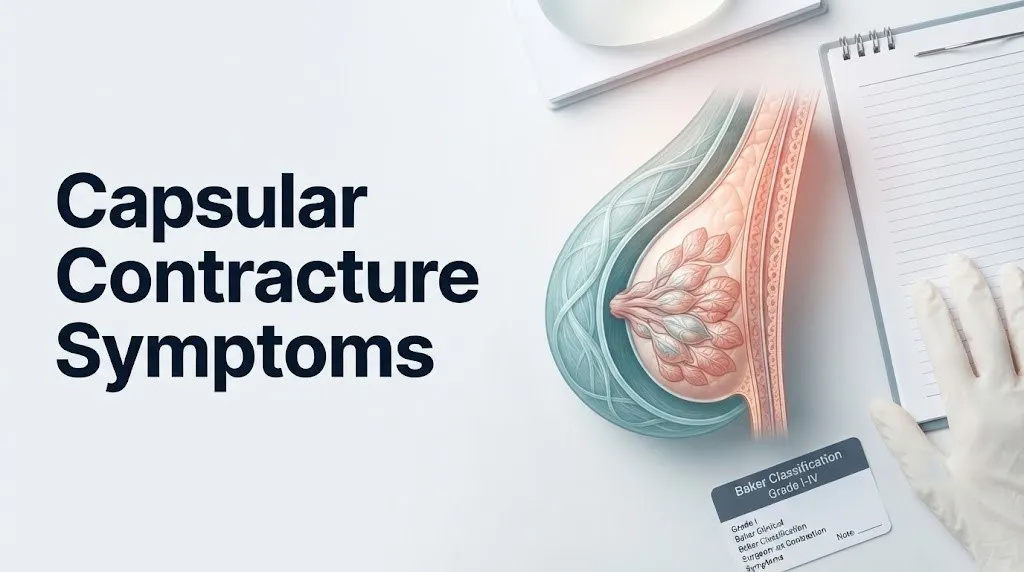
The Baker Classification system is the standard clinical tool used by plastic surgeons worldwide to grade the severity of capsular contracture from Grade I (imperceptible) to Grade IV (severely painful and disfiguring).
Each grade describes a distinct clinical picture that combines physical findings on examination with the patient’s symptom experience. Understanding which grade matches your current presentation helps you communicate your situation accurately to your surgeon and understand the clinical threshold at which treatment becomes necessary.
| Baker Grade | Physical Findings | Patient Symptoms | Clinical Action |
|---|---|---|---|
| Grade I | Implant soft; capsule not palpable; breast appears natural | No symptoms; indistinguishable from non-implanted breast | Monitoring only; no intervention needed |
| Grade II | Implant slightly firm; minimal capsule palpable; appearance normal | Mild firmness awareness; no pain; normal breast contour | Monitoring; surgeon discussion about progression risk |
| Grade III | Implant moderately firm; capsule clearly palpable; visible shape distortion begins | Visible asymmetry or rounding; discomfort or tightness; mild to moderate pain possible | Surgical evaluation recommended; intervention often appropriate |
| Grade IV | Implant very hard; severe distortion; implant may be visibly elevated or displaced | Constant pain; significant deformity; tenderness on palpation; sleep or activity disruption | Surgical intervention typically required |
Grade III and Grade IV contractures, which the ASPS describes as the clinically symptomatic grades, represent the presentations most patients mean when they say they think they have capsular contracture. Grade I and Grade II are normal variants of the foreign body response that do not cause the patient perceivable distress in most cases.
It is important to understand that the Baker Grade does not move only in one direction. In some patients, Grade II firmness remains stable for years. In others, it progresses to Grade III or IV within months. Monitoring an established Grade II contracture with regular plastic surgery follow-up is clinically appropriate and allows early intervention before irreversible capsule thickening occurs.
Patients with bilateral implants can have different Baker Grades in each breast simultaneously, and treatment decisions are made for each side independently based on the grade and symptom severity of that specific breast.
Capsular Contracture Pain: What Causes It and How It Progresses
Capsular contracture pain is produced by mechanical compression of sensory nerve structures in the peri-implant tissue as the thickened, contracting capsule applies inward force against the chest wall, breast tissue, and, in submuscular placements, the pectoralis major muscle.
The intercostal nerves, specifically the lateral and anterior cutaneous branches of the 4th through 6th intercostal nerves that supply sensory innervation to the anterior breast and nipple-areola complex, travel through the connective tissue adjacent to the peri-implant space. As the capsule contracts and thickens, these nerve branches can be mechanically compressed or tethered within the increasingly rigid fibrotic tissue. This produces the deep, aching, sometimes radiating quality of advanced capsular contracture pain that patients often describe as distinct from surface skin discomfort.
Pain in capsular contracture generally follows this clinical progression:
- Early stage (Grade I-II): No pain or barely perceptible awareness. Normal activity produces no discomfort.
- Transition stage (Grade II-III): Mild discomfort with direct pressure on the breast. A sense of tightness with reaching overhead or lying prone.
- Moderate stage (Grade III): Noticeable pain with physical activity, bending, or direct compression. Discomfort may interrupt normal sleep positioning.
- Severe stage (Grade IV): Persistent pain at rest. Tenderness on even light palpation. Significant disruption to daily activity, exercise, and sleep.
Prostaglandins and substance P, both involved in peripheral pain sensitization pathways, are found at elevated concentrations in the peri-implant tissue of Grade III and Grade IV contracture cases according to histological research cited in Plastic and Reconstructive Surgery.
Patients with pre-existing chronic pain conditions, fibromyalgia, or central sensitization syndromes may perceive capsular contracture pain more intensely and at an earlier grade than those without these conditions. This is clinically relevant because it means that pain severity alone does not reliably map to Baker Grade, and physical examination by a plastic surgeon remains the definitive grading standard.
Key Takeaway: Capsular contracture pain is not surface-level breast tenderness. It originates from nerve compression by a contracting fibrous capsule and generally intensifies as the Baker Grade advances, but the correlation between pain severity and grade is not perfect in patients with co-existing pain conditions.
Breast Implant Hardness and Tightening
Breast implant hardness is the hallmark physical sign of capsular contracture and reflects the degree to which the fibrous capsule has thickened and undergone collagen crosslinking into a rigid structure around the implant.
A breast implant without contracture is soft and compressible under gentle pressure, moving freely within its pocket. As capsular contracture develops, the progressive deposition and crosslinking of type I collagen, driven by the enzyme lysyl oxidase, transforms the initially flexible capsule into an increasingly rigid shell. At Grade IV, the implant has lost essentially all natural compressibility. It feels like a hard, fixed sphere beneath the skin, with no give under pressure.
The tightening sensation patients experience is distinct from hardness on palpation. Hardness is what a surgeon or the patient feels when pressing on the breast from outside. Tightening is what the patient feels from inside, generated by the contractile force of myofibroblasts within the capsule actively pulling the collagen fibers shorter. This is the “squeezing from inside” description that clinicians consistently hear from Grade III and Grade IV patients.
According to a peer-reviewed outcomes study published in the Aesthetic Surgery Journal, smooth surface implants placed in the submuscular position have statistically lower rates of clinically palpable hardness at two-year follow-up compared to subglandular placements, suggesting that the mechanical movement of the pectoralis major muscle over the capsule during daily activity may inhibit capsule hardening through a shear-force disruption mechanism.
Patients who have had implants replaced due to prior contracture and then develop hardness in the new implant on the same side should report this promptly. Recurrent contracture on the same side is well-documented in the plastic surgery literature and may indicate a persistent biofilm source in the pocket that requires more aggressive surgical debridement rather than simple implant exchange.
Late-Onset Capsular Contracture Symptoms
Late-onset capsular contracture symptoms appear one year or more after implant placement, sometimes years to decades after surgery, and carry a distinct set of clinical considerations compared to early post-operative contracture.
Typical early capsular contracture presents within the first three to six months after surgery, driven by the acute foreign body inflammatory response. Late-onset contracture, by contrast, often has a different precipitating mechanism. A 2018 study published in Plastic and Reconstructive Surgery identified two primary drivers of late contracture: subclinical (low-grade) periprosthetic bacterial infection and silicone gel particle migration in cases of silent implant shell breakdown. Both of these processes sustain the chronic inflammatory state that drives TGF-beta 1-mediated myofibroblast activity years after the acute surgical inflammatory phase has fully resolved.
Late-onset symptoms that distinguish this presentation from early contracture:
- New firmness or shape change in a breast that had been stable and comfortable for a year or more
- Gradual elevation of an implant that was previously well-positioned
- New asymmetry between breasts that were previously symmetric
- Late-appearing pain that the patient had not experienced during the months immediately following surgery
- A sense that the breast “doesn’t feel right” that the patient cannot easily articulate but notices consistently
The clinical importance of late-onset presentation cannot be overstated. A late-onset symptom cluster, particularly unilateral swelling of rapid onset more than one year post-surgery, is not automatically late capsular contracture. The FDA has specifically identified late-onset unilateral seroma (fluid accumulation) around a breast implant as a presenting feature of BIA-ALCL, and this distinction requires clinical and imaging evaluation by a plastic surgeon, not a watchful waiting approach.
Patients with saline implants who notice late firmness should also be evaluated for silent shell deflation, which can alter the mechanical properties of the implant-capsule interface and accelerate contracture in the remaining shell.
Key Takeaway: New breast firmness, pain, or swelling appearing one year or more after implant placement is not simply delayed healing. It requires prompt plastic surgery evaluation to distinguish late capsular contracture from implant shell changes, subclinical infection, or BIA-ALCL.
Capsular Contracture Causes and Biological Mechanism
Capsular contracture is caused by a pathological amplification of the normal foreign body response, in which the body’s immune system sustains a chronic inflammatory state around the implant that drives fibroblast-to-myofibroblast transformation and progressive capsule contraction.
The central biological driver is TGF-beta 1. Under normal healing conditions, TGF-beta 1 activity peaks early and then subsides as the fibrous capsule matures. In capsular contracture, TGF-beta 1 activity remains elevated, continuously driving fibroblast differentiation into alpha-SMA-expressing myofibroblasts. These myofibroblasts generate sustained mechanical tension within the capsule. The collagen they produce is progressively crosslinked by lysyl oxidase into a rigid matrix that resists normal tissue remodeling.
Several specific causes sustain this chronic inflammatory state:
- Bacterial biofilm: Subclinical colonization of the implant surface by skin commensal bacteria (most commonly Staphylococcus epidermidis) at the time of surgery produces a biofilm, a thin organized bacterial community that resists immune clearance. Biofilm sustains low-grade macrophage and neutrophil activation, continuously feeding TGF-beta 1 into the peri-implant environment. Research published in Plastic and Reconstructive Surgery has identified biofilm in a high proportion of contracture capsules compared to non-contracture capsules.
- Silicone gel bleed: High-viscosity silicone gel from modern cohesive implants releases minimal quantities of low-molecular-weight silicone through the implant shell over time. This particulate silicone is recognized by macrophages, which respond by forming foreign body giant cells and releasing pro-inflammatory cytokines including IL-1 and TNF-alpha.
- Implant surface texture particles: Textured surface implants, particularly those with macrotextured or salt-loss-textured surfaces, shed surface particles into the peri-implant space. This particle shedding activates the same macrophage-mediated inflammatory cascade and has been specifically linked to both accelerated contracture in some patients and to the distinct pathology of BIA-ALCL.
- Hematoma or seroma in the post-operative period: Blood or fluid accumulation around the implant in the weeks after surgery provides a rich culture medium for bacterial growth and a potent pro-inflammatory stimulus for fibroblast activation. The FDA and ASPS have both noted that post-operative hematoma is one of the strongest independent risk factors for subsequent contracture.
Risk Factors for Capsular Contracture
Multiple independent risk factors increase the probability that a patient will develop clinically symptomatic capsular contracture, and several of these risk factors have distinct mechanistic explanations rather than simply statistical associations.
Key risk factors with mechanistic explanations:
- Textured implant surface (macro-textured): Higher surface area and particle shedding increase peri-implant immune activation. The FDA noted in its 2019 safety communication that certain textured surface implants carry both higher BIA-ALCL risk and potentially higher contracture rates compared to smooth surface implants.
- Subglandular placement: Implants placed above the pectoralis major muscle have no mechanical disruption of the forming capsule during daily muscle movement. The submuscular position benefits from pectoralis minor contraction repeatedly disrupting early capsule formation. Research published in the Aesthetic Surgery Journal has consistently shown lower contracture rates in submuscular vs. subglandular placement.
- Post-operative hematoma or seroma: Both create pro-inflammatory environments. Hematoma activates coagulation cascade components and PDGF, both of which stimulate fibroblast proliferation.
- Radiation therapy: Prior or subsequent chest wall irradiation profoundly increases contracture risk by altering the biology of tissue fibroblasts, which become more sensitive to TGF-beta 1 signaling and more prone to myofibroblast transformation even without implant-specific inflammation.
- Prior history of capsular contracture: Having had contracture once on a side significantly increases the risk of contracture recurrence after revision surgery on that side, likely due to persistent biofilm reservoirs in the pocket.
- Smoking: Nicotine impairs microvascular perfusion and alters macrophage polarization, creating a peri-implant immune environment that favors pro-fibrotic M2 macrophage activation.
| Risk Factor | Mechanism | Relative Risk Level |
|---|---|---|
| Subglandular placement | No mechanical capsule disruption by muscle | High |
| Post-op hematoma | Pro-inflammatory coagulation environment | High |
| Prior radiation to breast | Altered fibroblast TGF-beta 1 sensitivity | Very high |
| Prior capsular contracture | Likely persistent biofilm in pocket | High |
| Textured surface implant (macrotextured) | Particle shedding; immune activation | Moderate to high |
| Active smoking | Impaired perfusion; M2 macrophage bias | Moderate |
| Saline vs. silicone (minor factor) | Different shell mechanics | Low to moderate |
Age at time of implant placement has a moderate independent effect. Younger patients with more robust immune responses may mount stronger foreign body reactions, while older patients with altered fibroblast biology may have different contracture dynamics. Neither group is categorically protected.
Capsular Contracture After Radiation and Breast Reconstruction
Capsular contracture after radiation therapy represents the most aggressive form of this complication, with contracture rates reported in some breast reconstruction series that far exceed those seen in cosmetic augmentation patients.
Radiation therapy to the chest wall damages the microvasculature, depletes local fibroblast populations, and fundamentally alters the biology of the remaining fibroblasts. According to a systematic review published in Plastic and Reconstructive Surgery, patients who undergo post-mastectomy radiation therapy (PMRT) with implant-based reconstruction have capsular contracture rates estimated between 30 and 50 percent at five years, compared to rates generally reported between 10 and 20 percent in non-irradiated cosmetic augmentation populations.
The mechanistic reason for this disparity is specific: irradiated fibroblasts have persistently elevated sensitivity to TGF-beta 1 signaling. Even low concentrations of TGF-beta 1 in the peri-implant space, concentrations that would be insufficient to drive myofibroblast transformation in non-irradiated tissue, produce robust myofibroblast differentiation in irradiated fibroblasts. This means that the normal foreign body response to the implant, which generates low-level TGF-beta 1 as part of the standard healing sequence, is sufficient to initiate contracture in post-radiation tissue.
Symptoms in post-radiation contracture patients deserve specific attention:
- Contracture in this population often progresses more rapidly from Grade II to Grade III or IV than in non-irradiated patients
- Pain may be more prominent at earlier grades because the chest wall tissue, already less compliant from radiation fibrosis, has less capacity to accommodate the added mechanical constraint of a contracting capsule
- Visible distortion may appear earlier and be more pronounced due to reduced skin elasticity from radiation-related dermal fibrosis
- Bilateral presentations are common in patients who received bilateral chest wall radiation
Board-certified reconstructive plastic surgeons managing post-radiation contracture may discuss converting from implant-based reconstruction to autologous tissue reconstruction (such as TRAM or DIEP flap) as a more durable solution when multiple implant-based revisions have failed, because irradiated tissue pockets have a high probability of contracture recurrence regardless of implant type or surgical technique.
Key Takeaway: Capsular contracture after radiation therapy progresses faster, presents at earlier grades with more severe symptoms, and has significantly higher recurrence rates than contracture in non-irradiated patients, requiring a different clinical management strategy.
BIA-ALCL Versus Capsular Contracture Symptoms
BIA-ALCL (breast implant-associated anaplastic large cell lymphoma) is a distinct, separate condition from capsular contracture that can present with overlapping symptoms, most commonly late-onset breast swelling, and must be ruled out before assuming a late-presenting symptom cluster represents simple contracture.
The National Cancer Institute classifies BIA-ALCL as a T-cell non-Hodgkin lymphoma that arises in the fibrous capsule surrounding breast implants, most commonly those with macrotextured or salt-loss-textured surfaces. The FDA has received more than 1,000 reports of BIA-ALCL cases globally as of its most recent safety communications, with the vast majority associated with specific textured surface implant designs.
The single most important distinguishing symptom of BIA-ALCL from capsular contracture is late-onset unilateral seroma: a sudden, fluid-filled swelling of one breast appearing more than one year after implant placement, in a patient who had no prior fluid accumulation issues. This swelling is not subtle. It produces visible, rapid breast enlargement on one side, often over days to weeks, without injury or infection.
| Feature | Capsular Contracture | BIA-ALCL |
|---|---|---|
| Primary symptom | Progressive firmness and pain | Sudden unilateral breast swelling (seroma) |
| Onset timing | Often within first 2 years; can be late | Almost always late onset (1 to 30+ years post-op) |
| Implant surface association | All implant types | Predominantly textured surface |
| Breast shape | Distortion, elevation, spherical rounding | Enlargement, asymmetric fullness |
| Pain | Common in Grade III-IV | Variable; may be absent initially |
| Skin changes | Rare | Possible skin thickening or rash in advanced cases |
| Diagnosis | Clinical grading by plastic surgeon | Ultrasound, seroma fluid aspiration, CD30 cytology |
| Specialist | Board-certified plastic surgeon | Plastic surgeon plus hematologist-oncologist |
Any patient with a history of textured surface implants who develops sudden late-onset unilateral swelling should be evaluated by a board-certified plastic surgeon within days, not weeks. The standard evaluation includes breast ultrasound to confirm seroma, followed by ultrasound-guided aspiration of the seroma fluid and cytological analysis with CD30 immunostaining. A positive CD30 result on cytology requires immediate referral to a hematologist-oncologist for staging and management.
BIA-ALCL carries an excellent prognosis when caught early (confined to the seroma fluid and capsule). The five-year survival rate for early-stage BIA-ALCL with complete surgical excision is very high, according to outcomes data published in the Journal of Clinical Oncology. Delays in evaluation significantly worsen the prognosis.
How Capsular Contracture Is Diagnosed
Capsular contracture is diagnosed primarily through clinical physical examination by a board-certified plastic surgeon, with imaging studies used to evaluate implant integrity and rule out alternative diagnoses including BIA-ALCL.
The clinical examination includes visual inspection of breast shape, position, symmetry, and contour, followed by systematic palpation to assess capsule firmness, compressibility, and mobility of the implant within its pocket. The surgeon assigns a Baker Grade based on the combination of physical findings and the patient’s reported symptoms. This grading process is the definitive diagnostic step for capsular contracture itself.
Imaging plays a supporting but not primary diagnostic role:
- Breast ultrasound: The first-line imaging test for evaluating peri-implant fluid, detecting implant shell integrity, and guiding aspiration of seroma fluid when BIA-ALCL is a concern. Ultrasound is particularly useful for identifying even small-volume seromas that may not be clinically obvious on examination.
- Breast MRI: Considered the gold standard for implant rupture detection, with high sensitivity for both intracapsular and extracapsular rupture. MRI can also characterize capsule thickness and peri-implant tissue changes in detail. The FDA recommends MRI surveillance for silicone gel implants starting three years after placement and every two years thereafter.
- Mammography: Less useful for capsular contracture diagnosis specifically, but part of routine breast cancer screening and may incidentally reveal implant displacement or capsule calcification.
When BIA-ALCL is suspected based on late-onset unilateral seroma, the diagnostic process involves:
- Breast ultrasound to confirm and characterize the seroma
- Ultrasound-guided fine needle aspiration (FNA) of the seroma fluid
- Cytological analysis of the fluid with CD30 immunostaining
- If CD30 positive: referral to hematologist-oncologist for staging workup including PET-CT scan
Patients should bring a complete surgical history to their evaluation appointment, including the implant manufacturer, model number, shell surface type, fill type (saline or silicone), placement plane, and date of placement. This information directly affects the differential diagnosis and the imaging interpretation.
When to See a Plastic Surgeon for Capsular Contracture Symptoms
A board-certified plastic surgeon should evaluate any new or changing breast symptom in a patient with breast implants, with the urgency of that evaluation determined by the nature and speed of symptom onset.
Symptoms warranting a routine (within 2 to 4 weeks) plastic surgery appointment:
- New or increasing firmness in one or both breasts that was not present or has worsened compared to your post-surgical baseline
- Mild discomfort or pressure awareness that is new
- Subtle shape or position change in one breast compared to recent self-examination history
Symptoms warranting a prompt (within 1 week) plastic surgery appointment:
- Visible distortion, rounding, or elevation of one breast
- Moderate pain that affects daily activity or sleep
- Asymmetry that has developed or worsened noticeably over weeks
- Any new firmness appearing more than one year after surgery
Symptoms requiring same-day or urgent (within 24 to 48 hours) plastic surgery evaluation:
- Rapid-onset unilateral breast swelling, particularly in patients with textured surface implants
- New swelling with no recent trauma or infection in a breast that was previously stable
- A palpable mass or skin thickening over the implant area that is new
When you contact your plastic surgeon’s office about capsular contracture symptoms, prepare to describe:
- When you first noticed the change and what specifically you noticed first (firmness, pain, shape, swelling)
- Whether it has progressed, stabilized, or fluctuated since onset
- Whether it is one breast, both, or more prominent on one side
- Your implant type (textured or smooth, saline or silicone) if you know it and the date of your last implant surgery
- Any recent illness, injury, or physical activity change that preceded the symptom onset
- Your history of radiation therapy, if applicable
A plastic surgeon evaluating capsular contracture will assign a Baker Grade during the visit and discuss management options ranging from monitoring to surgical intervention. Patients should ask specifically about the risks of recurrence with each proposed approach and about the state of the evidence supporting non-surgical management options like leukotriene inhibitor medications, which have limited and inconsistent published evidence for contracture treatment.
Key Takeaway: Any new unilateral breast swelling appearing more than one year after implant placement in a patient with textured surface implants should be evaluated by a board-certified plastic surgeon within 24 to 48 hours, not at a routine next-available appointment, because of the BIA-ALCL differential.
Emergency Symptoms: When to Call 911 or Go to the ER
Certain symptoms associated with breast implants and capsular contracture require immediate emergency evaluation. Do not wait to see if these resolve on their own.
Call 911 or go to the nearest emergency room immediately if you experience:
- Fever above 101 degrees Fahrenheit with breast pain, redness, warmth, or swelling around an implant (may indicate acute periprosthetic infection or abscess, which can progress to sepsis)
- Spreading redness (erythema) of the breast skin extending beyond a localized area, particularly if the redness is moving outward over hours
- Purulent (pus-containing) discharge from a surgical incision site or any skin area overlying the implant
- Severe chest pain, shortness of breath, or rapid heart rate in the context of new breast symptoms (rules out systemic spread of infection or other acute thoracic pathology)
- Signs of systemic infection including high fever, chills, confusion, or rapid deterioration in how you feel overall
- Implant extrusion or visible protrusion of any implant component through the skin surface
Go to the emergency room the same day if:
- Rapid-onset unilateral breast swelling develops over hours and you cannot reach your plastic surgeon
- A previously stable contracture abruptly becomes acutely painful at a level that prevents normal activity or breathing
These presentations can indicate acute periprosthetic infection, abscess formation, or the initial presentation of a systemic inflammatory response requiring intravenous antibiotic therapy, surgical drainage, or implant removal under emergency conditions, and require emergency medical assessment, not an urgent care appointment or a phone call.
Patients who are unsure whether their symptoms constitute an emergency should call their plastic surgeon’s after-hours line first if they can reach someone within 30 minutes. If no contact is reachable and any of the above symptoms are present, go to the emergency room without delay.
Frequently Asked Questions About Capsular Contracture Symptoms
What are the first signs of capsular contracture after breast augmentation?
The first signs of capsular contracture are typically new or increasing firmness in one breast compared to the other, or compared to how the breast felt during normal healing.
A breast that sits higher on the chest wall than it did previously, or that feels less soft and mobile than it did after initial post-surgical swelling resolved, may indicate early-stage capsular contracture.
A board-certified plastic surgeon can assign a Baker Grade during a clinical examination to confirm whether the changes represent Grade I or II contracture or are within normal healing variation.
Does capsular contracture always cause pain?
Capsular contracture does not always cause pain. Grade I and Grade II contractures are typically painless, producing only mild to moderate firmness that the patient may barely notice.
Pain generally becomes a feature at Grade III, when the contracting capsule begins to generate enough mechanical pressure on the chest wall and intercostal nerve branches to produce a noticeable aching or tightening sensation.
Grade IV capsular contracture almost always produces significant pain, often persistent at rest and worsened by activity or direct pressure.
How do you know if your breast implant has capsular contracture?
The most reliable way to know is through clinical examination by a board-certified plastic surgeon, who will assess firmness, mobility, shape, and position and assign a Baker Grade.
At home, you can observe whether one breast feels noticeably firmer than the other, appears higher or more rounded, moves less naturally, or has produced new discomfort or tightness that was not previously present.
Neither self-examination nor any online symptom checker can replace a clinical Baker Grade assessment, and imaging may be ordered to evaluate implant integrity at the same appointment.
Can capsular contracture resolve on its own without surgery?
True established capsular contracture, particularly Grade III or Grade IV, does not resolve spontaneously. The fibrous capsule is a permanent structure and its progressive thickening and contraction do not reverse without intervention.
Early-stage firmness (Grade I-II) in the first weeks after surgery may normalize as acute post-operative inflammation resolves, but this represents normal healing variability rather than contracture resolution.
Non-surgical treatments including leukotriene inhibitors have been studied, but the published evidence for their effectiveness is inconsistent and they are not a replacement for surgical evaluation in clinically symptomatic contractures.
What is the difference between Grade 2 and Grade 3 capsular contracture?
Grade II capsular contracture means the breast feels slightly firm to the touch but appears visually normal, and the patient experiences no pain or only minimal awareness of the implant.
Grade III contracture means the breast is moderately firm, visible shape distortion or asymmetry has begun, and the patient typically experiences discomfort, tightness, or pain with activity or direct pressure.
The clinical threshold that separates Grade II from Grade III in practice is the appearance of visible shape change combined with patient-reported pain or functional discomfort, and this is the point at which most plastic surgeons discuss surgical intervention.
How long after breast implants can capsular contracture develop?
Capsular contracture can develop at any point after breast implant surgery, from weeks to decades after placement.
The majority of cases present within the first two years, driven by the acute foreign body inflammatory response, but late-onset contracture occurring five or more years after surgery is well-documented and may have a different underlying cause such as subclinical biofilm infection or implant shell breakdown.
According to published outcomes data in Plastic and Reconstructive Surgery, lifelong monitoring of breast implants is recommended because the risk of developing a new complication, including contracture, does not reach zero at any point after implantation.
Closing
Capsular contracture symptoms exist on a spectrum, from barely perceptible firmness that warrants monitoring to severe pain and visible deformity that requires surgical correction. Knowing where your current symptoms fall on the Baker Classification scale, and understanding which changes represent a reason to call your plastic surgeon this week versus which presentations require same-day urgent evaluation, gives you the clinical clarity to act at the right moment rather than waiting too long or reacting prematurely.
The most practical step you can take right now is to establish your baseline. If you have breast implants and have not had a recent plastic surgery follow-up, schedule one. Know your implant type, surface texture, and placement date. Record how your breast feels, looks, and moves today, so that any future change has a reference point your surgeon can use.
If you have noticed new firmness, asymmetry, pain, or late-onset swelling, contact a board-certified plastic surgeon this week. Don’t minimize a symptom that started recently just because your surgery was years ago. The clinical evidence is clear: capsular contracture does not have an expiration date, and neither does BIA-ALCL risk in patients with textured surface implants. Your body will tell you something has changed. This article exists so you know how to listen and what to do next.