Chemical Pregnancy Symptoms: What They Mean in 2026
Chemical pregnancy symptoms include a positive home pregnancy test followed by bleeding and cramping that arrives at or near the expected menstrual period, often heavier or slightly later than usual, produced by a rapid decline in beta-hCG after a very early embryo fails to develop past the implantation stage. Most women who experience a chemical pregnancy do not know it happened unless they tested very early with a sensitive home pregnancy test.
The National Institute of Child Health and Human Development (NICHD) estimates that 10 to 25 percent of recognized pregnancies end in early loss, with chemical pregnancies representing the majority of these losses. Research published in Human Reproduction found that when ultrasensitive hCG assays are used beginning on the day of expected implantation, up to 22 percent of conceived cycles show biochemical evidence of early loss before a clinical pregnancy can be confirmed on ultrasound.
This article covers every symptom of a chemical pregnancy with the specific hormonal and physiological mechanism behind each one, the critical distinction between chemical pregnancy symptoms and ectopic pregnancy warning signs, what the hCG numbers actually mean, and exactly when to go to the emergency room versus when watchful waiting is appropriate.
If you are experiencing thoughts of self-harm or suicide after a pregnancy loss, contact the 988 Suicide and Crisis Lifeline by calling or texting 988 at any time. This service is free, confidential, and available 24 hours a day, 7 days a week.
Chemical Pregnancy Symptoms: What You Are Actually Experiencing
Chemical pregnancy symptoms are the physical signs produced when a very early pregnancy fails after implantation but before a fetal heartbeat or gestational sac can be detected on ultrasound, typically appearing at 4 to 5 weeks of gestation (4 to 5 weeks after the first day of the last menstrual period).
The term “chemical pregnancy” reflects the fact that the pregnancy was detectable only at the biochemical level, meaning through beta-hCG measurement in urine or blood, rather than at the anatomical level visible on imaging. The American College of Obstetricians and Gynecologists (ACOG) classifies chemical pregnancy under early pregnancy loss (ICD-10 code O02.81), acknowledging it as a genuine pregnancy loss despite its very early timing.
The symptom picture varies considerably between women. Some experience symptoms nearly identical to a slightly heavier, slightly late menstrual period. Others have cramping more intense than their typical period. Women who were not actively testing for pregnancy at the time of expected implantation often do not recognize the event at all.
| Symptom | Frequency | When It Appears | Physiological Source |
|---|---|---|---|
| Vaginal bleeding | Most women | Days 4 to 6 of gestational week 5 | Progesterone withdrawal, decidual breakdown |
| Uterine cramping | Most women | Concurrent with bleeding | Prostaglandin-driven myometrial contractions |
| Positive then negative pregnancy test | Definitive diagnostic finding | Positive first, then fading over days | Beta-hCG rise then rapid fall |
| Lower abdominal pressure | Variable | With or preceding bleeding | Uterine distension and contractile activity |
| Breast tenderness resolving | Variable | Resolves as hCG falls | Estrogen and progesterone withdrawal |
| No symptoms | Minority | Throughout | hCG too low to produce systemic effects |
Women over age 35 face a higher rate of chromosomally abnormal conceptions due to meiotic non-disjunction, meaning chemical pregnancies are more frequent in this age group even when overall fertility is maintained.
What Is a Chemical Pregnancy and How Does It Happen
A chemical pregnancy is an early pregnancy loss that occurs when a fertilized egg implants in the uterine lining but the embryo fails to develop further, causing beta-hCG levels to rise briefly and then fall before a gestational sac or fetal pole can be visualized on ultrasound.
The sequence of events begins at fertilization. The egg and sperm unite in the fallopian tube, forming a zygote that undergoes repeated cell divisions as it travels toward the uterine cavity over 5 to 6 days, eventually becoming a blastocyst. The blastocyst hatches from its outer shell (the zona pellucida) and begins to invade the decidua basalis, the specialized endometrial tissue that has developed under progesterone stimulation during the luteal phase. The outer cell layer of the blastocyst, the trophoblast, differentiates into the syncytiotrophoblast and the cytotrophoblast, with the syncytiotrophoblast immediately beginning to secrete beta-hCG into the maternal circulation.
In the vast majority of chemical pregnancies, the embryo carries a chromosomal abnormality incompatible with sustained development. Mayo Clinic states that approximately 50 percent of all miscarriages result from chromosomal problems, and this proportion is even higher for chemical pregnancies, where the embryonic failure occurs so early that structural issues have little time to develop. The embryo’s cellular division halts. The syncytiotrophoblast, no longer receiving signals from a viable inner cell mass, ceases its proliferative activity and hCG production drops.
The process is something like a building project that is abandoned at the foundation stage. The site has been prepared (the uterus has responded to hCG), the first structural elements have been placed (implantation occurred), but the building itself never rises (the embryo does not develop), and the site eventually reverts to its original state (the endometrium sheds).
Women with a history of one chemical pregnancy should understand that a single occurrence does not indicate a recurrent pattern or an underlying medical problem. A board-certified obstetrician-gynecologist can provide individualized guidance based on medical history.
The Hormonal Mechanism Behind Chemical Pregnancy Symptoms
Chemical pregnancy symptoms are produced by the specific sequence of rising then falling beta-hCG, the consequent collapse of corpus luteum progesterone output, and the subsequent prostaglandin-driven breakdown of the uterine lining and myometrial contractions.
Beta-hCG is produced exclusively by the syncytiotrophoblast layer of the developing trophoblast. Its molecular structure shares the alpha subunit with LH (luteinizing hormone), FSH (follicle-stimulating hormone), and TSH (thyroid-stimulating hormone), but its beta subunit is unique, which is why pregnancy tests measure specifically beta-hCG. Beta-hCG binds to LH receptors on the corpus luteum (the temporary endocrine structure that forms from the ovulated follicle in the ovary), stimulating it to continue secreting progesterone. Progesterone maintains the uterine lining in its thick, vascular state and actively suppresses uterine smooth muscle contractility.
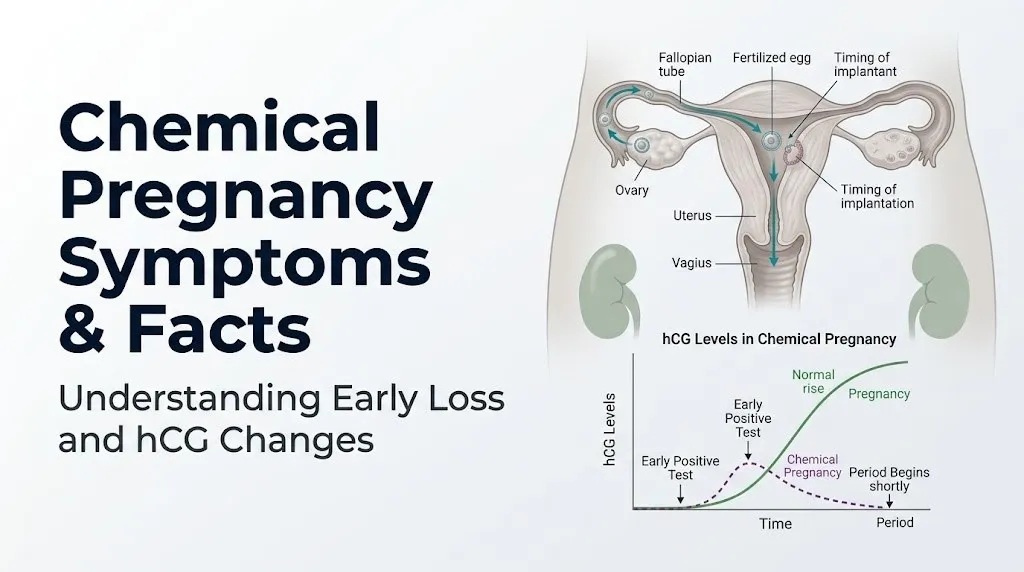
When the embryo fails and trophoblast proliferation ceases, beta-hCG production falls. The corpus luteum, no longer receiving LH receptor stimulation, undergoes luteolysis (programmed regression) and its progesterone output drops sharply. The decidua (the specialized endometrial lining) loses its progesterone support, triggering the release of prostaglandin E2 and prostaglandin F2-alpha from the glandular epithelium and stromal cells. Prostaglandin F2-alpha is a potent uterine smooth muscle contractor. The myometrium begins to contract rhythmically, shedding the decidua in a process physiologically similar to menstruation.
According to the ACOG, this entire sequence from implantation failure to symptomatic bleeding typically occurs within days, which is why chemical pregnancy bleeding is often perceived as a late menstrual period rather than a distinctly different event.
Women using progesterone supplementation in an IVF cycle or in the context of luteal phase support may experience delayed onset of these symptoms because exogenous progesterone partially substitutes for the failing corpus luteum output, postponing the withdrawal bleeding timeline.
Key Takeaway: Chemical pregnancy symptoms are caused by falling beta-hCG collapsing corpus luteum progesterone, which then triggers prostaglandin-driven uterine contractions and endometrial shedding: the same physiological sequence as menstruation, which is why many chemical pregnancies feel like a late, heavier period.
Bleeding as a Chemical Pregnancy Symptom
Vaginal bleeding is the most clinically definitive physical symptom of a chemical pregnancy, occurring when progesterone withdrawal triggers shedding of the decidualized endometrium through the cervical os, typically appearing at approximately 4 to 5 weeks of gestational age (4 to 5 weeks after the last menstrual period) and lasting 5 to 10 days in most cases.
The bleeding of a chemical pregnancy generally resembles a menstrual period in character but may differ in one or more of the following ways: it arrives slightly later than the expected period (by 1 to 7 days in women with regular cycles), it may initially be heavier than a typical period for the first 1 to 2 days, and it may contain small, dark clots or tissue fragments (representing decidual breakdown products) that are less common in a typical period. The color ranges from bright red (indicating active arterial endometrial bleeding) to dark brown (indicating older blood that has been pooled before expulsion).
The volume of bleeding in a chemical pregnancy is generally manageable without medical intervention. Most clinical descriptions in Obstetrics and Gynecology journal characterize chemical pregnancy bleeding as self-limiting within 7 to 14 days, resolving without requiring any specific medical management in women without additional complications.
Quick Tip:
- Soak-through of more than one pad per hour for two or more consecutive hours is a threshold that warrants same-day evaluation by a primary care physician or emergency medicine provider regardless of suspected diagnosis.
- Passing clots larger than a golf ball during chemical pregnancy bleeding requires evaluation, as this volume exceeds typical chemical pregnancy tissue loss.
- Women with bleeding disorders (von Willebrand disease, factor deficiency) face higher risk of heavier bleeding during any uterine shedding event, including chemical pregnancy, and should contact their hematologist or obstetrician-gynecologist if chemical pregnancy is confirmed.
Cramping as a Chemical Pregnancy Symptom
Uterine cramping during a chemical pregnancy is caused by prostaglandin F2-alpha binding to receptors on myometrial smooth muscle cells, triggering coordinated uterine contractions that expel the shedding decidualized endometrium, producing pain perceived as lower abdominal or pelvic cramping ranging from mild to moderately severe.
The cramping of a chemical pregnancy occurs through the identical neurochemical mechanism as primary dysmenorrhea (painful menstruation). Prostaglandin F2-alpha released from the shedding decidua activates FP receptors on smooth muscle cells throughout the myometrium. These receptors couple to the Gq protein signaling cascade, increasing intracellular calcium, activating myosin light chain kinase, and producing myometrial contraction. The contracting myometrium generates intrauterine pressure, and when this pressure exceeds the pain threshold of the uterine nociceptors (innervated by the T10-L1 sympathetic afferent fibers), the woman perceives it as cramping, often radiating to the lower back along those same T10-L1 dermatomal distributions.
In practical terms, chemical pregnancy cramping is typically indistinguishable from moderate menstrual cramps. It tends to peak on the first one to two days of bleeding and then gradually diminish as the decidua clears and prostaglandin production drops. The cramps are typically bilateral and diffuse (midline or spread across the lower abdomen) rather than localized to one side.
One-sided cramping is a clinically important distinction. Persistent, worsening one-sided pelvic pain in the context of a positive pregnancy test and bleeding should raise immediate concern for ectopic pregnancy rather than chemical pregnancy, because an ectopic implant (most commonly in the fallopian tube ampulla) can rupture as pressure builds, causing internal hemorrhage.
Women with endometriosis may experience more severe cramping during a chemical pregnancy because the ectopic endometrial tissue outside the uterus also responds to prostaglandins with inflammatory and contractile activity. A board-certified obstetrician-gynecologist should be made aware of a known endometriosis diagnosis when evaluating chemical pregnancy symptoms.
hCG Levels and What They Tell You During a Chemical Pregnancy
During a chemical pregnancy, quantitative beta-hCG blood levels rise briefly to a low level (often below 100 to 200 mIU/mL) and then decline rather than doubling appropriately, with a failure to achieve the expected 48 to 72-hour doubling pattern in viable early intrauterine pregnancies serving as the key diagnostic indicator of a failing pregnancy.
In a healthy intrauterine pregnancy, beta-hCG doubles approximately every 48 to 72 hours from the time of implantation through approximately 8 to 10 weeks of gestation, when it reaches its peak and begins to plateau or slightly decline as the placenta takes over progesterone production independently of the corpus luteum. This doubling pattern reflects exponential trophoblast growth and is a reliable indicator of developmental viability. According to ACOG guidelines on early pregnancy evaluation, a rise of at least 53 percent over 48 hours (rather than strict doubling) is considered the minimum expected increase in a viable intrauterine pregnancy.
A chemical pregnancy produces an hCG curve that either plateaus (fails to rise at the expected rate), peaks at a very low level and then begins to fall, or in some cases never reaches a level detectable on standard urine-based home tests. The specific numeric value of the peak hCG in a chemical pregnancy is not a fixed threshold: chemical pregnancies can show peak hCG values ranging from below 5 mIU/mL to occasionally above 1,000 mIU/mL in women with slightly more advanced trophoblast development before embryo failure.
| hCG Pattern | Clinical Interpretation | Recommended Action |
|---|---|---|
| Doubles every 48-72 hours, rising appropriately | Consistent with viable IUP | Serial monitoring per OB-GYN guidance |
| Rising but less than 53% per 48 hours | Indeterminate: possible ectopic or failing IUP | Urgent OB-GYN evaluation within 24-48 hours |
| Plateauing then declining from low peak | Consistent with chemical pregnancy or early loss | Serial monitoring; OB-GYN evaluation |
| Rising hCG with pelvic pain, no IUP on TVS | Possible ectopic pregnancy | Emergency evaluation immediately |
| Rapidly falling hCG, bleeding starting | Resolving chemical pregnancy | Monitor for completion; OB-GYN follow-up |
Women in IVF cycles have serial beta-hCG monitoring built into their protocol. Women who conceived naturally and suspect a chemical pregnancy should ask their primary care physician or obstetrician-gynecologist to order quantitative beta-hCG testing on two occasions 48 hours apart to assess the trend.
Chemical Pregnancy Symptoms vs Normal Period Symptoms
Chemical pregnancy symptoms overlap substantially with a normal menstrual period because both are produced by progesterone withdrawal and prostaglandin-driven uterine contractions, but specific distinguishing features exist in timing, bleeding character, and the presence of a positive pregnancy test.
The most definitive distinguishing feature is the pregnancy test result. A normal menstrual period does not occur in the context of a recent positive pregnancy test. If a woman has had a positive urine or blood pregnancy test and then develops bleeding and cramping at approximately the time her period was due, this presentation cannot be a normal period regardless of how similar the symptoms feel. The positive test confirms a conception event occurred; the subsequent bleeding and cramping represent the body resolving a failed pregnancy.
Beyond the test result, chemical pregnancy bleeding may differ subtly in the following ways: it tends to begin slightly later than the expected period date (by a few days to a week in women with regular cycles), it may include a brief initial phase of light spotting before the main flow begins (reflecting the time between implantation hCG production and the eventual endometrial shedding), and it may contain slightly more clotted or tissue-like material in the first one to two days compared to a typical menstrual flow.
Research published in Human Reproduction using daily urine hCG monitoring in naturally cycling women found that the majority of women who experienced a biochemically confirmed chemical pregnancy described the bleeding as “like a normal period” or “a slightly heavier, later period” in retrospective interviews, underscoring how clinically indistinguishable the symptom presentation is from menstruation without laboratory confirmation.
Women with very regular 28-day cycles who notice their period arriving more than 5 to 7 days late after recent unprotected intercourse should consider testing before attributing the delay and subsequent bleeding to a normal period.
Key Takeaway: The only reliable way to distinguish a chemical pregnancy from a normal late period is a positive pregnancy test obtained before or during the early bleeding, because the physical symptoms alone are clinically indistinguishable without laboratory confirmation.
Chemical Pregnancy With No Symptoms
A chemical pregnancy with no physical symptoms occurs in women whose beta-hCG levels peak at very low values and fall before producing sufficient prostaglandin-driven myometrial activity to generate perceptible cramping, or in women whose menstrual pain threshold is high enough that mild chemical pregnancy cramping is not perceived as distinct from background cycle discomfort.
This presentation is more common than many women realize. Women who are not actively using sensitive home pregnancy tests beginning around the time of expected implantation (approximately day 22 to 26 of a 28-day cycle) will not capture the brief window during which beta-hCG is detectable before it falls. In a prospective study design using daily urine hCG monitoring (the methodology used in landmark early pregnancy loss research), a proportion of chemical pregnancies produce peak hCG values below the detection threshold of standard over-the-counter urine tests, meaning the pregnancy is never biochemically confirmed and the subsequent bleeding is indistinguishable from a normal menstrual period.
Even in women who do detect the initial positive test, the physical symptom burden of a chemical pregnancy can be minimal. Not all women experience cramping beyond their normal level, not all experience bleeding heavier than their usual period, and not all experience the breast tenderness or fatigue that sometimes accompanies the early hCG rise.
The absence of symptoms does not indicate that the pregnancy loss was less real or less emotionally significant. The emotional response to a confirmed chemical pregnancy is valid regardless of the physical symptom intensity. Women who learn retrospectively (through serial beta-hCG testing in fertility monitoring) that they experienced a chemical pregnancy without recognizing it symptomatically often experience a delayed grief response when the diagnosis is explained to them. A primary care physician or obstetrician-gynecologist can provide context and referral to appropriate support resources.
Women undergoing fertility monitoring with daily or every-other-day beta-hCG testing are most likely to identify asymptomatic chemical pregnancies. Women not in active fertility treatment typically do not know these events occurred.
Emotional and Psychological Symptoms of a Chemical Pregnancy
Emotional and psychological symptoms of a chemical pregnancy include acute grief, sadness, shock, anger, a sense of disconnection from the pregnancy experience (particularly when others minimize the loss as “just a chemical”), and in some women, clinical depression or anxiety requiring professional mental health support.
The emotional response to a chemical pregnancy is not proportional to the gestational age of the loss. The American Psychological Association recognizes perinatal grief as a distinct form of grief that can follow pregnancy loss at any gestational stage, including very early losses. Research published in Obstetrics and Gynecology has found that women who experience early pregnancy loss, including biochemical pregnancies, report grief responses comparable in intensity to those following later losses when the pregnancy was consciously acknowledged (through positive testing, intentional conception efforts, or prior pregnancy awareness).
The grief of a chemical pregnancy is frequently characterized as disenfranchised grief: grief that others may not recognize or validate because the loss occurred so early and there was “nothing to see” anatomically. Well-meaning comments (“at least it was early,” “at least you know you can get pregnant”) can intensify the sense of isolation. This specific pattern of dismissal is documented in perinatal bereavement research and is one reason women with chemical pregnancy loss benefit from providers who name the loss explicitly and acknowledge its emotional validity.
If you are experiencing thoughts of self-harm or suicide after a pregnancy loss, contact the 988 Suicide and Crisis Lifeline by calling or texting 988 at any time. This service is free, confidential, and available 24 hours a day, 7 days a week.
A board-certified obstetrician-gynecologist or a licensed clinical psychologist with perinatal mental health specialization can evaluate whether grief-related symptoms have developed into clinical depression or anxiety requiring structured treatment. The PHQ-9 (Patient Health Questionnaire-9) is a validated tool used to screen for depression in perinatal settings and can help establish whether support beyond peer resources is warranted.
Women with a prior history of depression, anxiety disorder, or prior pregnancy loss face an elevated risk of more intense grief responses after a chemical pregnancy and should discuss this proactively with their mental health provider.
Chemical Pregnancy Symptoms After IVF
Chemical pregnancy symptoms after IVF (in vitro fertilization) present with the same physical symptom pattern as naturally conceived chemical pregnancies but are typically identified earlier and more definitively because IVF protocols include serial quantitative beta-hCG testing beginning 9 to 14 days after embryo transfer, making every pregnancy loss detectable at the biochemical stage regardless of symptom presence.
In IVF cycles, the luteal phase is pharmacologically managed rather than dependent on the patient’s own corpus luteum function, because the ovarian stimulation process often suppresses or ablates natural luteal function. Luteal phase support (typically exogenous progesterone administered vaginally, orally, or intramuscularly) replaces the progesterone that the corpus luteum would otherwise provide. This has a specific effect on chemical pregnancy symptom timing: because exogenous progesterone is continued until the beta-hCG result is known, women who have a chemical pregnancy after IVF may experience a delay in bleeding onset compared to natural cycle chemical pregnancies. The bleeding often does not begin until progesterone supplementation is discontinued by the reproductive endocrinology team after falling hCG levels confirm the loss.
According to data published in Fertility and Sterility, chemical pregnancies (defined as a positive beta-hCG test that subsequently fails to develop into a clinical pregnancy visible on ultrasound) occur in approximately 10 to 15 percent of IVF embryo transfer cycles, with rates varying based on embryo quality, the number of prior failed cycles, maternal age, and the use of preimplantation genetic testing (PGT-A, which screens embryos for aneuploidy before transfer).
Women who experience a chemical pregnancy after IVF often carry a compounded emotional burden: the physical and financial investment of an IVF cycle, the high expectations generated by a positive beta-hCG result, and the abrupt loss of that hope when hCG fails to progress. A board-certified reproductive endocrinologist and a perinatal mental health specialist working in coordination provide the most appropriate combined medical and psychological support for this population.
Risk Factors and Populations More Likely to Experience Chemical Pregnancy
Chemical pregnancy is most strongly associated with chromosomal aneuploidy of the embryo, which increases with advancing maternal age due to meiotic non-disjunction errors in oocytes, but several additional maternal and paternal factors increase the risk independently of embryo chromosomal quality.
The primary and most frequently occurring cause of chemical pregnancy is chromosomal abnormality in the embryo, specifically trisomies (three copies of a chromosome instead of two), monosomy X, and polyploidy (triploidy or tetraploidy). These arise most commonly from errors during the first or second meiotic division of the oocyte, a process that becomes increasingly error-prone with advancing maternal age. Research published in Human Reproduction found that the rate of chromosomally abnormal oocytes rises from approximately 10 to 20 percent in women in their 20s to above 60 to 70 percent in women over age 42.
Beyond chromosomal causes, recognized risk factors include:
- Antiphospholipid syndrome (APS): antiphospholipid antibodies (anti-cardiolipin, anti-beta-2-glycoprotein-I, lupus anticoagulant) promote thrombosis in the early placental vasculature, disrupting trophoblast invasion and hCG production. APS is the most treatable recognized cause of recurrent early pregnancy loss.
- Thyroid autoimmunity: elevated anti-TPO antibodies are associated with a two- to threefold higher miscarriage risk per meta-analyses published in JAMA, even in women with normal TSH levels, through mechanisms involving thyroid receptor autoimmunity affecting endometrial receptivity.
- Uncontrolled thyroid disease: hypothyroidism and hyperthyroidism both impair corpus luteum function and endometrial receptivity. TSH levels above 2.5 mIU/L are associated with increased early pregnancy loss risk in some fertility-focused clinical guidelines.
- PCOS: through insulin resistance, elevated LH, and poor oocyte quality, PCOS is associated with higher early pregnancy loss rates.
- Balanced chromosomal translocation in either partner: produces embryos with unbalanced chromosomal material at high frequency, causing recurrent losses across multiple conception attempts.
- Uterine structural abnormalities: septate uterus, submucous fibroids, and intrauterine adhesions reduce endometrial receptivity and implantation success.
- Advanced paternal age: research suggests that sperm DNA fragmentation increases with advancing paternal age and may contribute to early embryo developmental failure, though the evidence is less established than for maternal age effects.
Key Takeaway: Antiphospholipid syndrome is the most clinically important treatable cause of recurrent chemical pregnancy, and a woman who has experienced two or more consecutive early pregnancy losses should ask her obstetrician-gynecologist specifically for antiphospholipid antibody testing.
Recurrent Chemical Pregnancy: When Symptoms Point to an Underlying Condition
Recurrent chemical pregnancy, defined clinically as two or more consecutive early pregnancy losses confirmed by positive beta-hCG followed by decline before ultrasound viability, warrants a structured diagnostic evaluation by a board-certified reproductive endocrinologist to identify treatable underlying conditions.
The ACOG defines recurrent pregnancy loss (RPL) as two or more failed pregnancies and recommends systematic evaluation after two losses in women over age 35 or after three losses in younger women, though many reproductive endocrinologists initiate workup after two losses regardless of age given the emotional burden and the clinical value of early identification of treatable causes. Chemical pregnancies count toward this threshold in ACOG guidance when confirmed by biochemical testing.
A recurrent pregnancy loss workup typically includes the following components. First, antiphospholipid antibody testing (anti-cardiolipin IgG and IgM, anti-beta-2-glycoprotein-I IgG and IgM, and lupus anticoagulant), which must be confirmed on two occasions at least 12 weeks apart to meet diagnostic criteria for APS. Second, karyotyping of both partners to identify balanced chromosomal translocations. Third, thyroid function testing (TSH, free T4) and thyroid autoantibody testing (anti-TPO). Fourth, uterine cavity evaluation (hysteroscopy or saline infusion sonohysterography) to identify structural abnormalities. Fifth, thrombophilia panel (factor V Leiden mutation, prothrombin gene mutation, protein C and S deficiency) in selected patients based on personal or family history. Sixth, a discussion about preimplantation genetic testing (PGT-A) in women pursuing IVF, which can identify chromosomally normal embryos for transfer.
Women who have experienced repeated chemical pregnancies and have been told “it’s just bad luck” without a structured evaluation deserve a more thorough investigation. A board-certified reproductive endocrinologist should evaluate anyone with two or more consecutive early losses to determine whether a treatable underlying cause is present.
Chemical Pregnancy vs Ectopic Pregnancy Symptoms
Chemical pregnancy and ectopic pregnancy both present with a positive pregnancy test followed by bleeding and pain, but ectopic pregnancy is a life-threatening emergency that can cause fatal internal hemorrhage if not diagnosed and treated promptly, making the distinction between these two presentations one of the most clinically urgent differentiations in early pregnancy care.
Think of the distinction like two roads that start from the same point (positive pregnancy test, bleeding, pain) but lead to entirely different destinations: one roads ends in self-resolution, the other ends at a surgical emergency if not identified in time.
A chemical pregnancy resolves in the uterine cavity. The embryo fails after implanting normally in the endometrium, and bleeding exits through the cervix. An ectopic pregnancy occurs when the embryo implants outside the uterine cavity, most commonly in the ampullary portion of the fallopian tube. The fallopian tube cannot accommodate the growing trophoblast indefinitely, and as it expands, the tube eventually ruptures, releasing blood into the peritoneal cavity. This hemoperitoneum can be life-threatening within hours.
The symptom overlap includes: positive pregnancy test, vaginal bleeding, and lower abdominal or pelvic pain. The distinguishing clinical features of ectopic pregnancy include:
- One-sided pelvic pain: persistent, worsening pain localized to one side of the lower abdomen (corresponding to the affected fallopian tube) is not typical of a chemical pregnancy, which produces diffuse, bilateral cramping similar to menstruation.
- Shoulder tip pain (also called Kehr’s sign): blood from a ruptured ectopic leaks into the peritoneal cavity and tracks upward under the diaphragm, irritating the phrenic nerve and producing referred pain at the tip of the shoulder. This is a specific warning sign of internal bleeding.
- Dizziness, lightheadedness, or fainting: these symptoms in a woman with a positive pregnancy test indicate possible hemoperitoneum from a ruptured ectopic causing hemodynamic instability.
- hCG that does not follow expected patterns: a hCG level above the discriminatory zone (1,500 to 2,000 mIU/mL) at which an intrauterine pregnancy should be visible on transvaginal ultrasound, combined with an empty uterine cavity on ultrasound, is the classic ectopic pregnancy presentation requiring urgent management.
Any woman with a positive pregnancy test who develops one-sided pelvic pain, shoulder tip pain, dizziness, or syncopal episodes requires emergency evaluation immediately, not watchful waiting.
Red Flags and Emergency Symptoms During a Chemical Pregnancy
Certain symptoms associated with a confirmed or suspected chemical pregnancy require immediate emergency evaluation. Do not wait to see if these resolve on their own.
Call 911 or go to the nearest emergency room immediately if you experience:
- One-sided pelvic or lower abdominal pain that is persistent, worsening, or severe: this pattern is inconsistent with a chemical pregnancy, which causes diffuse bilateral cramping, and raises strong concern for an ectopic pregnancy or ovarian torsion requiring emergency evaluation.
- Shoulder tip pain (pain at the very tip of one or both shoulders while lying flat): this is Kehr’s sign, caused by diaphragmatic irritation from blood pooling in the peritoneal cavity (hemoperitoneum), and indicates internal bleeding from a possible ruptured ectopic pregnancy.
- Dizziness, lightheadedness, feeling faint, or actual fainting: these symptoms in a woman with a positive pregnancy test and bleeding indicate possible hemodynamic compromise from internal hemorrhage.
- Rapid heart rate, pale or clammy skin, cold sweats alongside bleeding: these are signs of early hemorrhagic shock and require immediate emergency assessment.
- Bleeding that soaks through more than one pad per hour for two or more consecutive hours with no sign of slowing: this volume of blood loss is above what a chemical pregnancy typically produces and requires emergency evaluation for hemorrhage.
- Severe abdominal rigidity or boardlike abdominal tenderness: this indicates peritoneal irritation, a sign of serious intraabdominal pathology requiring immediate evaluation.
These presentations can indicate a ruptured ectopic pregnancy, a rare but possible intrauterine hematoma, or another acute gynecological emergency requiring surgical intervention, not a telephone consultation or an urgent care visit.
How a Chemical Pregnancy Is Diagnosed
A chemical pregnancy is diagnosed by confirming a positive beta-hCG test (in urine or blood) followed by a decline in serial quantitative blood beta-hCG measurements over 48 to 72 hours, in the absence of a visible intrauterine gestational sac on transvaginal ultrasound, ruling out an ectopic pregnancy as an alternative explanation.
To describe your symptoms and history clearly to your obstetrician-gynecologist or emergency provider:
- Note the date of your last menstrual period (LMP) to establish gestational age dating accurately. Gestational weeks are counted from the first day of the LMP, not from ovulation or conception.
- Note the date and result of your first positive home pregnancy test, including the brand and sensitivity of the test if known (standard home tests detect hCG at approximately 20 to 25 mIU/mL; early response tests detect as low as 6 to 10 mIU/mL).
- Note any serial home test results showing fading line intensity, as this correlates with falling hCG and supports the diagnosis.
- Note the character of your bleeding: onset date, flow volume compared to your typical period, presence of clots or tissue, and current trajectory (increasing, stable, or decreasing).
- Note the character and location of any pain: bilateral versus one-sided, cramping versus sharp, and whether you have shoulder tip pain or dizziness.
- Note any current medications, particularly progesterone supplementation (vaginal, oral, or injectable), as this alters the expected symptom timeline.
| Diagnostic Test | What It Measures | When Ordered |
|---|---|---|
| Qualitative urine beta-hCG | Presence or absence of hCG above detection threshold | Initial pregnancy confirmation |
| Quantitative serum beta-hCG | Exact hCG level in mIU/mL | Initial diagnosis, then 48-hour repeat for trend |
| Serial quantitative beta-hCG (48-hour repeat) | Rate of rise or fall; doubling vs. plateau vs. decline | Key for distinguishing viable IUP, failing IUP, and ectopic |
| Transvaginal ultrasound (TVS) | Presence and location of gestational sac; fetal cardiac activity | When hCG above 1,500-2,000 mIU/mL discriminatory zone |
| Antiphospholipid antibody panel | APS diagnosis in recurrent loss context | After two or more confirmed losses |
| TSH, free T4, anti-TPO | Thyroid function and autoimmunity | Recurrent loss workup |
| Karyotype (both partners) | Balanced chromosomal translocation | Recurrent loss workup |
When to Try Again and What to Expect After a Chemical Pregnancy
Most medical guidelines support attempting conception in the cycle following a chemical pregnancy once bleeding has fully resolved, because a chemical pregnancy does not typically damage the uterine lining or require any procedural recovery time, and waiting longer has not been shown to improve outcomes in clinical research.
ACOG clinical guidance on early pregnancy loss does not recommend a mandatory waiting period before resuming conception attempts after a chemical pregnancy or other early loss, provided the woman is physically recovered and emotionally ready. The previously common recommendation to wait at least one or two menstrual cycles was based on concerns about dating accuracy in future pregnancies, not on evidence that waiting improved pregnancy outcomes or reduced recurrence risk.
The next menstrual period after a chemical pregnancy typically arrives 4 to 6 weeks after the onset of the chemical pregnancy bleeding, once hCG has fully resolved to undetectable levels. Ovulation generally resumes in the first cycle following hCG normalization, meaning conception is biologically possible in the first cycle after the loss.
Emotionally, readiness to try again varies considerably between individuals and couples. There is no medically mandated timeline for emotional readiness, and the decision to resume conception attempts should be made in the context of the woman’s and couple’s psychological state, not solely based on the physical recovery timeline. A perinatal mental health specialist or reproductive counselor can provide structured support for this decision-making process.
Women who have experienced a chemical pregnancy in an IVF cycle should discuss with their board-certified reproductive endocrinologist whether additional testing (endometrial receptivity analysis, repeat antiphospholipid antibody testing, or embryo preimplantation genetic testing) is warranted before the next transfer, based on their complete clinical history.
Key Takeaway: ACOG guidelines do not require any waiting period between a chemical pregnancy and the next conception attempt once bleeding has fully resolved, but emotional readiness varies and is equally valid in the timing decision.
Frequently Asked Questions About Chemical Pregnancy Symptoms
What are the first symptoms of a chemical pregnancy?
The first symptom of a chemical pregnancy is typically a positive pregnancy test, followed within days by the onset of bleeding and cramping that feel similar to a menstrual period.
The positive test result reflects the brief rise in beta-hCG produced by the syncytiotrophoblast immediately after implantation, before the embryo fails to develop further.
In women testing very early (before the expected period date), the fading line intensity on serial home tests may be the first observable sign that hCG is declining rather than rising appropriately.
How do you know if you are having a chemical pregnancy?
A chemical pregnancy is identified by the combination of a positive pregnancy test followed by a declining beta-hCG on serial blood testing, in the absence of a visible intrauterine pregnancy on transvaginal ultrasound.
Home pregnancy tests showing a progressively fainter line over several days, combined with the onset of period-like bleeding, are the most accessible early indicators for women without laboratory access.
Only a board-certified obstetrician-gynecologist ordering quantitative beta-hCG testing on two occasions 48 hours apart can confirm the diagnosis definitively.
Is chemical pregnancy bleeding different from a normal period?
Chemical pregnancy bleeding is often indistinguishable from a menstrual period without a prior positive pregnancy test to confirm a conception event occurred.
It tends to arrive slightly later than the expected period date, may be slightly heavier in the first one to two days, and may contain small clots or tissue fragments representing decidual breakdown products.
The positive pregnancy test result is the only feature that reliably distinguishes chemical pregnancy bleeding from a normal menstrual period; the physical symptom characteristics alone are not diagnostically sufficient.
Can a chemical pregnancy have no symptoms at all?
A chemical pregnancy can occur with no perceptible physical symptoms, particularly when the peak beta-hCG level is very low and the subsequent bleeding is indistinguishable from a normal menstrual period.
Women who are not actively monitoring for pregnancy with sensitive tests beginning around the time of implantation typically do not recognize a chemical pregnancy when it occurs.
The absence of physical symptoms does not indicate a less clinically real pregnancy loss, and the emotional response to a confirmed chemical pregnancy is valid regardless of symptom intensity.
How long does a chemical pregnancy last?
A chemical pregnancy typically resolves within 5 to 14 days from the onset of bleeding, once the decidualized endometrium has fully shed and beta-hCG has returned to undetectable levels.
The initial bleeding is usually heaviest in the first one to two days and then tapers to lighter spotting over the following days, following the same general pattern as a menstrual period.
A board-certified obstetrician-gynecologist may confirm resolution with a final quantitative beta-hCG measurement to ensure hCG has returned to baseline (below 5 mIU/mL) before resuming conception attempts.
When should I go to the ER for a chemical pregnancy?
Go to the emergency room immediately if you develop one-sided pelvic pain, shoulder tip pain, dizziness, fainting, or rapid heart rate alongside a positive pregnancy test and bleeding, as these symptoms may indicate a ruptured ectopic pregnancy rather than a resolving chemical pregnancy.
Bleeding that soaks through more than one pad per hour for two or more consecutive hours without slowing also warrants emergency evaluation for hemorrhage.
These presentations require emergency medicine physician evaluation and imaging, not a telephone triage or urgent care appointment.
Closing
The most clinically important thing to carry away from this article is the ectopic pregnancy distinction. A chemical pregnancy resolves on its own. A ruptured ectopic pregnancy does not. If you have a positive pregnancy test and you develop one-sided pain, shoulder tip pain, or dizziness, those symptoms warrant emergency evaluation the same day, not watchful waiting.
If your beta-hCG has fallen to baseline, bleeding has resolved, and you are physically recovered, ACOG guidelines support trying again in the next cycle whenever you feel ready. Emotional readiness is as legitimate a factor in that decision as physical recovery.
If you have experienced two or more early pregnancy losses, ask your obstetrician-gynecologist specifically for antiphospholipid antibody testing and a referral to a board-certified reproductive endocrinologist for a recurrent pregnancy loss workup. The most treatable causes of recurrent chemical pregnancy are identifiable through targeted testing, and you deserve a complete evaluation