PMS vs Pregnancy Symptoms: Key Differences 2026
PMS vs pregnancy symptoms are notoriously difficult to separate becaus both conditions are driven by the same hormone, progesterone, during the same window of the menstrual cycle. The symptoms that make you wonder whether your period is coming or whether you are pregnant, including breast tenderness, fatigue, bloating, and mood shifts, are genuinely shared between the two states at the physiological level, not just superficially similar.
According to the American College of Obstetricians and Gynecologists (ACOG), up to 85 percent of women of reproductive age experience at least some premenstrual symptoms in any given cycle. This means that for most women, premenstrual symptoms are the default expectation, which makes early pregnancy symptoms easy to dismiss as PMS until a test confirms otherwise.
This article breaks down exactly why the two states produce the same symptoms, which features are genuinely more specific to one than the other, how specific populations face a harder time making this distinction, and what you need to know to take a pregnancy test that actually gives you a reliable answer.
PMS vs Pregnancy Symptoms: The Core Comparison
The key difference between PMS and pregnancy symptoms is timing and trajectory: PMS symptoms begin in the luteal phase (typically 7 to 14 days before menstruation), peak in the days just before the period, and resolve within 1 to 2 days of menstrual flow starting, while pregnancy symptoms begin around the time of expected menstruation or shortly after and do not resolve when bleeding would have started.
Both states share a progesterone-dominant hormonal environment, which is why the physical symptoms overlap so precisely. The table below summarizes the most clinically useful distinctions before the sections below explain the mechanism behind each one.
| Symptom | PMS Pattern | Early Pregnancy Pattern |
|---|---|---|
| Breast tenderness | Bilateral; worsens before period; resolves with flow | Bilateral; may be more intense; persists past expected period |
| Cramping | Begins at or just before menstruation; follows flow | Mild, lower; may occur around implantation (day 6 to 12 post-ovulation) |
| Nausea | Mild if present; often tied to progesterone effects on gut | Often stronger; may be persistent; driven by hCG |
| Fatigue | Common in luteal phase | Often more pronounced; persistent beyond expected period |
| Mood changes | Irritability, anxiety, low mood in luteal phase | Variable; may be similar or more emotionally intense |
| Spotting | No spotting typical of PMS | Implantation bleeding possible around day 6 to 12 post-ovulation |
| Missed period | Period arrives | Period does not arrive |
| Urinary frequency | Not a PMS feature | Increases in early pregnancy due to hCG effects on renal blood flow |
For women on progestin-only contraceptives such as the progestin-only pill (POP), implant, or hormonal intrauterine device, baseline progestin exposure can produce persistent PMS-like symptoms regardless of cycle phase, making this comparison harder to apply directly.
What Causes PMS Symptoms and How They Develop
Premenstrual syndrome (PMS) is caused by the interaction of cyclically fluctuating ovarian hormones, primarily progesterone and estrogen, with central nervous system neurotransmitter pathways, particularly the serotonergic system and the gamma-aminobutyric acid (GABA) system, during the luteal phase of the menstrual cycle.
After ovulation, the ruptured Graafian follicle transforms into the corpus luteum, a temporary endocrine structure within the ovary. The corpus luteum secretes progesterone and smaller amounts of estrogen for approximately 12 to 14 days. Progesterone prepares the endometrium for potential implantation by thickening the lining and increasing its vascularity.
When conception does not occur, the corpus luteum regresses. Progesterone and estrogen levels fall sharply. This withdrawal of hormonal support from the endometrium triggers prostaglandin release, uterine contractions, and the start of menstruation. The drop in progesterone also reduces levels of allopregnanolone, a neurosteroid metabolite of progesterone that normally modulates GABA-A receptors in the brain. The reduction in allopregnanolone activity is the specific neurochemical mechanism behind PMS-associated anxiety, irritability, and mood instability.
The National Institute of Child Health and Human Development (NICHD) states that the exact mechanism of PMS is not fully understood, but the current evidence strongly supports the role of abnormal central nervous system sensitivity to normal hormonal fluctuations rather than abnormally high or low hormone levels.
Key characteristics of PMS timing:
- Symptoms begin after ovulation (day 14 to 16 in a 28-day cycle)
- Peak severity in the 2 to 3 days before expected menstruation
- Resolve within 24 to 48 hours of menstrual flow starting
- Absent in the follicular phase (days 1 to 14 of the cycle)
For adolescents with an immature hypothalamic-pituitary-ovarian (HPO) axis, cycles may be anovulatory, meaning no corpus luteum forms and progesterone secretion is low. These cycles often produce fewer or milder PMS symptoms but may also be unpredictable in length, making the comparison with pregnancy symptoms harder to apply.
What Causes Early Pregnancy Symptoms and When They Start
Early pregnancy symptoms are caused by the implantation of a fertilized embryo into the endometrium and the subsequent production of human chorionic gonadotropin (hCG) by the trophoblast, combined with sustained elevated progesterone levels maintained by the rescued corpus luteum.
Fertilization typically occurs in the fallopian tube within 12 to 24 hours of ovulation. The resulting embryo travels toward the uterus over 5 to 7 days, undergoing cell division. Implantation into the endometrium occurs approximately 6 to 12 days after ovulation. At implantation, the outer cell layer of the embryo, the syncytiotrophoblast, begins secreting hCG. This hormone signals to the corpus luteum to continue progesterone production rather than regressing as it normally would.
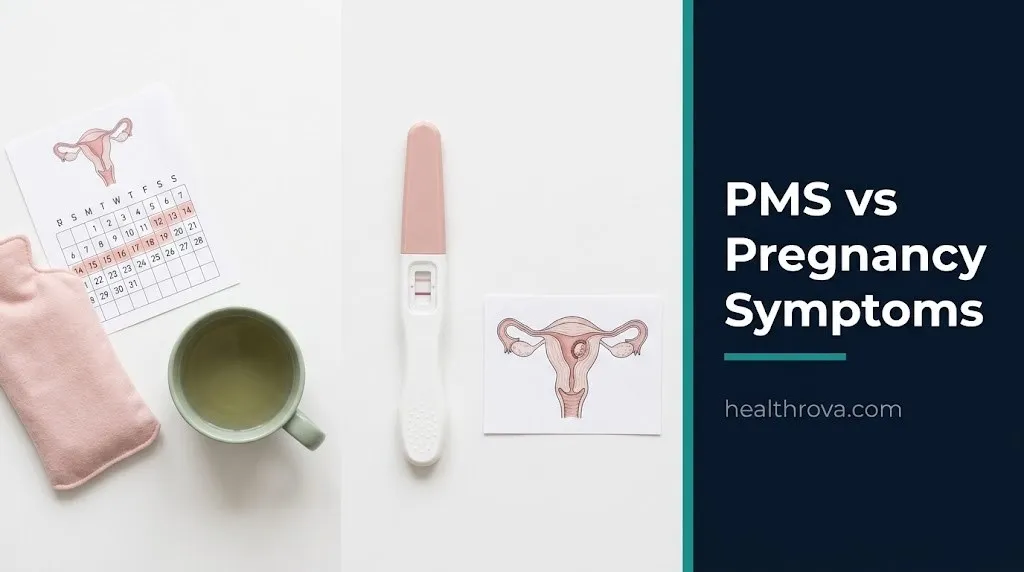
hCG is detectable in blood approximately 8 to 10 days after conception. Urine levels sufficient to trigger a standard home pregnancy test (20 to 25 mIU/mL) are typically reached around the time of the missed period (approximately 14 days post-ovulation) in most pregnancies. hCG doubles approximately every 48 to 72 hours in a healthy early pregnancy during the first 8 to 10 weeks.
The symptoms of early pregnancy are therefore driven by two overlapping mechanisms: the same progesterone-dominant environment that produces PMS symptoms (explaining the overlap), plus additional direct effects of hCG on the gastrointestinal tract and kidneys (explaining the symptoms that differ).
According to the Mayo Clinic, most women first notice pregnancy symptoms around the time of their missed period, though some report breast tenderness and fatigue as early as 1 to 2 weeks after conception.
Women with luteal phase defects, a condition characterized by insufficient progesterone production from the corpus luteum, may have fewer early pregnancy symptoms despite being pregnant, because the progesterone-driven symptom burden is lower. This is a clinically important variation that a primary care physician or obstetrician-gynecologist should evaluate if suspected.
Key Takeaway: Both PMS and early pregnancy produce symptoms because of a progesterone-dominant hormonal state. The difference is that in pregnancy, hCG rescues the corpus luteum, sustaining progesterone and adding its own direct effects on nausea and urinary frequency, which is why the symptom profiles diverge as pregnancy progresses.
Why PMS and Pregnancy Symptoms Overlap Hormonally
PMS and early pregnancy symptoms overlap because both states share a progesterone-dominant hormonal environment in the same window of the menstrual cycle, the luteal phase, driven by the same source: the corpus luteum.
Think of the corpus luteum as a temporary chemical factory that switches on after ovulation regardless of whether fertilization occurred. It produces progesterone in both scenarios. The body’s tissues respond to that progesterone in the same ways: breast ducts and alveolar tissue become engorged, smooth muscle in the gastrointestinal tract relaxes causing bloating and slowed transit, the central nervous system serotonin and GABA pathways shift, and body temperature rises by approximately 0.2 to 0.5 degrees Celsius (the thermal shift measurable with basal body temperature tracking).
What separates the two states hormonally is what happens next. In PMS, the corpus luteum regresses around day 25 to 26 (in a 28-day cycle), progesterone falls, and symptoms resolve when menstruation begins. In early pregnancy, hCG prevents corpus luteum regression. Progesterone stays elevated. And hCG itself adds new physiological effects, including direct stimulation of the area postrema in the brainstem (the chemoreceptor trigger zone), which produces nausea, and increased renal blood flow that drives urinary frequency.
Research published in the journal Fertility and Sterility has documented that progesterone receptor sensitivity in breast tissue, the endometrium, and the central nervous system varies between individuals, which partly explains why some women experience near-identical PMS and early pregnancy symptoms while others notice a clear difference in quality or intensity.
For women with premenstrual dysphoric disorder (PMDD), whose central nervous system shows heightened sensitivity to normal allopregnanolone fluctuations, both PMS and early pregnancy may produce more severe mood and anxiety symptoms than in the general population, making symptom intensity alone an unreliable discriminator between the two states.
Shared Symptoms of PMS and Early Pregnancy
The most clinically shared symptoms of PMS and early pregnancy are breast tenderness, fatigue, bloating, mood changes, food cravings, and mild lower abdominal discomfort, all of which are produced by progesterone acting on the same target tissues in both states.
Progesterone has several consistent physiological effects regardless of whether it is maintaining an early pregnancy or progressing through a normal luteal phase. In breast tissue, progesterone stimulates mammary alveolar cell proliferation and ductal expansion, producing the bilateral heaviness and sensitivity both PMS and pregnancy are known for. In the gastrointestinal tract, progesterone relaxes smooth muscle via its action on smooth muscle cell progesterone receptors, slowing gastric emptying and intestinal transit and producing bloating, fullness, and in some women, constipation or loose stools.
In the central nervous system, fluctuating progesterone metabolites, particularly allopregnanolone, modulate GABA-A receptor sensitivity. This produces the mood volatility, irritability, anxiety, and emotional sensitivity seen in both late PMS and early pregnancy.
| Shared Symptom | Physiological Mechanism | PMS Timing | Pregnancy Timing |
|---|---|---|---|
| Breast tenderness | Progesterone-driven mammary alveolar proliferation | Days 14 to 28 | From implantation onward |
| Bloating | Progesterone smooth muscle relaxation in GI tract | Days 14 to 28 | From implantation onward |
| Fatigue | Progesterone’s sedative effect via GABA-A modulation | Days 14 to 28 | From implantation onward; often intensifies |
| Mood changes | Allopregnanolone GABA-A modulation; serotonin fluctuation | Days 14 to 28; peaks premenstrually | From implantation onward |
| Food cravings/aversions | Hypothalamic response to estrogen/progesterone shifts | Days 14 to 28 | From implantation onward; may be more specific |
| Mild lower abdominal discomfort | Prostaglandin activity; uterine blood flow changes | Days 26 to 28; at menstruation onset | Around implantation; then intermittent |
Women who have been pregnant before may find they can distinguish the two states based on the quality of symptoms rather than the symptoms themselves. Breast tenderness in early pregnancy is frequently described as heavier, more diffuse, and more constant than the pre-menstrual breast soreness that typically concentrates in the upper outer quadrant.
PMS vs Pregnancy Breast Tenderness: What’s Different
Breast tenderness in PMS is typically bilateral, concentrated in the upper outer quadrant of the breast, most intense in the 2 to 3 days before menstruation, and resolves within 24 to 48 hours of the period starting, while pregnancy-associated breast tenderness tends to be more diffuse, heavier in character, affects the areola and Montgomery glands (the small bumps around the nipple that enlarge noticeably in early pregnancy), and does not resolve when the expected period fails to arrive.
In PMS, breast soreness is driven by progesterone-induced swelling of mammary alveolar tissue combined with the premenstrual fluid retention that affects all soft tissue. Once progesterone drops and menstruation begins, this swelling resolves. The tenderness follows the hormonal withdrawal precisely.
In early pregnancy, progesterone remains elevated and is joined by rising estrogen and hCG, which further stimulate breast tissue development. The Montgomery glands (formally the glands of Montgomery, or areolar sebaceous glands) enlarge conspicuously in early pregnancy, often within the first 4 to 6 weeks, in a pattern not typically seen in PMS. Darkening of the areola is also driven by rising estrogen and melanocyte-stimulating hormone levels in pregnancy and is not a feature of PMS.
The Mayo Clinic notes that nipple darkening and Montgomery gland prominence are among the earliest signs that distinguish early pregnancy breast changes from premenstrual breast changes, typically appearing by 4 to 6 weeks of gestation.
Quick Tip for assessing breast symptoms:
- PMS breast tenderness that resolves within 48 hours of menstrual flow starting is consistent with the expected premenstrual pattern
- Breast tenderness that persists or worsens past the onset of expected menstruation, especially with visible Montgomery gland changes or areolar darkening, warrants a pregnancy test
- Women with fibrocystic breast tissue (benign fibrocystic changes) may have chronic breast tenderness that does not follow the cyclic PMS pattern and is unrelated to either PMS or pregnancy
Key Takeaway: Montgomery gland enlargement and areolar darkening in the days around or just after an expected period are specific early signs of pregnancy-driven breast changes that are not produced by PMS, and their presence is a reliable prompt to take a home pregnancy test.
PMS vs Pregnancy Cramping and Lower Abdominal Pain
Cramping in PMS is caused by prostaglandin (specifically prostaglandin F2-alpha, PGF2-alpha) release from the shedding endometrium at menstruation, while implantation cramping in early pregnancy is caused by trophoblast invasion of the endometrium and early decidualization, producing a distinctly different pattern in onset, location, and intensity.
PMS-associated cramping, more precisely called primary dysmenorrhea, begins either at the onset of menstrual flow or in the 24 hours before. It is typically described as rhythmic, wave-like cramping localized to the lower midline abdomen or lower back, coinciding with peak prostaglandin production. The prostaglandins cause myometrial smooth muscle contractions and vasoconstriction of the endometrial blood supply, producing ischemia-driven pain. This cramping generally peaks in the first 24 to 48 hours of menstrual flow and then subsides.
Implantation cramping, when it occurs, happens earlier in the luteal phase: approximately 6 to 12 days after ovulation, before the expected period. It is typically described as a dull, mild pulling or pressure sensation in the lower central pelvis, sometimes with a brief associated spotting. The mechanism is trophoblast invasion of the spiral arteries of the endometrium and the local decidual reaction. This cramping is generally milder and shorter-lasting than menstrual cramping and occurs without significant prostaglandin-driven myometrial contraction because progesterone actively suppresses myometrial contractility in early pregnancy.
The distinction in timing is clinically useful. Cramping that arrives with or immediately before menstrual flow is strongly consistent with PMS/dysmenorrhea. Cramping that occurs before the expected period date and is not followed by normal menstrual flow is more consistent with implantation or early pregnancy.
Women with endometriosis may have chronic pelvic pain that exists independently of the PMS vs. pregnancy distinction and can obscure the typical timing pattern. These women should discuss any change in their cramping pattern with their obstetrician-gynecologist rather than relying on self-assessment alone.
PMS vs Pregnancy Nausea and Appetite Changes
Nausea in early pregnancy is driven primarily by the direct action of human chorionic gonadotropin (hCG) on the area postrema (the chemoreceptor trigger zone) in the brainstem, making it physiologically distinct from the milder gastrointestinal discomfort that some women experience during PMS, which is driven by progesterone-mediated gastrointestinal smooth muscle relaxation without hCG involvement.
PMS-associated nausea, when it occurs, is typically mild, inconsistent, and closely tied to bloating and slowed gastric emptying caused by progesterone’s relaxant effect on the lower esophageal sphincter and gastric smooth muscle. Some women with PMS experience significant nausea, particularly those with PMDD or heightened central nervous system sensitivity, but it rarely reaches the intensity or consistency seen in early pregnancy nausea.
Pregnancy nausea, clinically termed nausea and vomiting of pregnancy (NVP), typically begins between 6 and 8 weeks of gestation (though some women report it as early as 4 weeks) and is associated with peak hCG levels. The American College of Obstetricians and Gynecologists estimates that 70 to 80 percent of pregnant women experience some degree of nausea or vomiting, making it one of the most common early pregnancy signs. The severity ranges from mild morning nausea to hyperemesis gravidarum, a severe form characterized by persistent vomiting, weight loss, and dehydration requiring medical intervention.
Food aversions in early pregnancy are also hCG-mediated and can be intense and highly specific, which is qualitatively different from the food cravings (often for salty or sweet foods) that some women associate with PMS.
For women with a history of gastrointestinal conditions such as irritable bowel syndrome (IBS), the gastrointestinal symptoms of both PMS and early pregnancy may be amplified, making nausea and bloating less reliable as distinguishing features. These women benefit from confirming pregnancy status with a home test rather than relying on symptom interpretation alone.
Key Takeaway: Nausea that is persistent, occurs regardless of time of day, extends past the time when a period was expected, and is associated with specific food aversions is driven by hCG and is a more specific signal of pregnancy than the mild, inconsistent gastrointestinal upset that can accompany PMS.
PMS vs Pregnancy Fatigue and Sleep Changes
Fatigue in both PMS and early pregnancy is driven by elevated progesterone, but pregnancy fatigue is typically more pronounced and may appear earlier in the day, last longer into the day, and persist well past the expected period date because progesterone remains high and is not withdrawn by corpus luteum regression.
Progesterone has a sedating effect on the central nervous system. It does this partly through its metabolite allopregnanolone, which potentiates GABA-A receptor activity, the same inhibitory pathway targeted by sedative medications. This explains why the luteal phase of a normal cycle often produces mild drowsiness and a tendency toward more sleep in the days before menstruation. It also explains why early pregnancy fatigue can feel like an intense, unexpected need for sleep that is difficult to resist even in the middle of the day.
In PMS, fatigue typically has a specific temporal pattern: it worsens in the week before menstruation and resolves within the first 2 to 3 days of the period as progesterone withdrawal eliminates the allopregnanolone effect. If fatigue resolves promptly with the arrival of menstruation, PMS is the more likely explanation.
Pregnancy fatigue, in contrast, often does not resolve at the expected period date. Many women describe first-trimester fatigue as unlike any tiredness they have experienced outside of illness. Research published in the journal Obstetrics and Gynecology has documented that first-trimester fatigue peaks between 6 and 12 weeks of gestation, corresponding to the period of maximum hCG production and maximum progesterone rise from the corpus luteum before placental progesterone production takes over.
For women with thyroid disease, particularly hypothyroidism, fatigue can be severe and persistent independent of both PMS and pregnancy. Women with unexplained, non-cyclic fatigue should have thyroid function evaluated with a thyroid-stimulating hormone (TSH) assay by their primary care physician before attributing the fatigue to either PMS or early pregnancy.
PMS vs Pregnancy Mood Changes and Emotional Symptoms
The mood changes of PMS and early pregnancy both involve the central nervous system’s response to progesterone fluctuations, but they differ in pattern: PMS mood symptoms are cyclically timed (worst in the 5 to 7 days before menstruation and reliably resolving with the period), while early pregnancy mood changes are more variable in timing and do not resolve at the expected period date.
In PMS, the mood symptoms (irritability, sadness, anxiety, emotional reactivity) are directly linked to the decline in allopregnanolone as the corpus luteum begins to regress in the late luteal phase. Research published in Archives of Women’s Mental Health has found that women with PMDD show abnormal GABA-A receptor sensitivity to allopregnanolone fluctuations, producing a paradoxical anxiogenic response to the same neurosteroid that has a sedating effect in other women.
In early pregnancy, the mood picture is more complex. Sustained progesterone prevents the sharp allopregnanolone withdrawal that drives PMS mood symptoms, but rising estrogen, hCG, and the psychological adjustment to a possible pregnancy all contribute to emotional lability, heightened sensitivity, and mood instability. Some women report feeling unusually emotional without a clearly identifiable reason approximately 7 to 10 days after ovulation, before they are even late for a period.
The National Institute of Mental Health notes that pre-existing mood disorders, including major depressive disorder and generalized anxiety disorder, can interact with the hormonal environment of both PMS and early pregnancy to amplify mood symptoms substantially. Women with pre-existing psychiatric diagnoses who are uncertain whether they are experiencing PMS or early pregnancy should discuss the possibility of pregnancy with their obstetrician-gynecologist promptly, as medication safety in pregnancy is a specific clinical concern that requires early evaluation.
Quick Tip for mood symptom assessment:
- Mood changes that reliably appear in the 7 to 14 days before the period and resolve within 2 to 3 days of menstrual flow are clinically consistent with PMS
- Mood changes that do not follow this cyclic pattern, or that persist past the expected period date, are less consistent with PMS and warrant a pregnancy test
- Any mood symptoms severe enough to interfere significantly with work, relationships, or daily function warrant evaluation by a primary care physician or obstetrician-gynecologist regardless of their cause
Key Takeaway: The most reliable single behavioral indicator that separates PMS mood symptoms from early pregnancy mood changes is timing: PMS mood symptoms follow a predictable premenstrual pattern and resolve with the period, while early pregnancy mood changes do not follow that cycle and persist past the expected period date.
Implantation Bleeding vs Period Spotting: How to Tell Apart
Implantation bleeding is light spotting or discharge that occurs approximately 6 to 12 days after ovulation when the syncytiotrophoblast invades the endometrial spiral arteries and surrounding decidual tissue, while menstrual spotting is the start of true menstrual flow driven by prostaglandin-induced endometrial shedding from progesterone withdrawal.
The physical characteristics differ in several clinically useful ways. Implantation bleeding, when it occurs (estimates suggest it affects approximately 15 to 25 percent of pregnant women, though exact prevalence data vary across published sources), is typically described as pink or light brown in color, very light in volume (often just a few spots, not enough to fill a pad or tampon), and lasting 1 to 3 days at most. It does not progress to heavier flow. The color difference reflects the fact that this blood has traveled slowly from the implantation site through the cervix, allowing partial oxidation before it exits.
Menstrual flow, by contrast, begins with darker red or bright red blood, typically increases in volume over the first 1 to 2 days (reflecting the peak of prostaglandin-driven endometrial shedding), and then diminishes over the following 3 to 7 days. Menstrual flow may begin with spotting in some women, but it progresses to a heavier, darker flow within 24 hours in a typical pattern.
| Feature | Implantation Bleeding | Menstrual Spotting/Flow |
|---|---|---|
| Color | Pink or light brown | Bright red or dark red |
| Volume | Very light; spots only | Increases from spotting to flow |
| Duration | 1 to 3 days; does not increase | 3 to 7 days; heavier in days 1 to 2 |
| Timing | 6 to 12 days post-ovulation; before expected period | At expected period date |
| Progression | Does not progress to heavier flow | Progresses to fuller menstrual flow |
| Associated cramping | Mild, brief | Moderate; peaks in first 24 to 48 hours |
Women with very light periods may find implantation bleeding harder to distinguish from a short, light menstrual cycle. Tracking cycle characteristics over several months using a period tracking application or calendar helps establish what a normal light period looks like for a specific individual, making an unusual spotting episode easier to recognize.
Symptoms Unique to Early Pregnancy Not Seen in PMS
Several symptoms are specific to early pregnancy and are not produced by the hormonal environment of PMS because they require either hCG or the sustained, non-withdrawing progesterone of a confirmed pregnancy to develop.
The most clinically specific pregnancy symptom is a missed period in a woman with previously regular cycles. PMS, by definition, precedes menstruation and resolves with it. If the expected period does not arrive, PMS is no longer the physiological explanation for the symptoms.
Increased urinary frequency is a pregnancy-specific symptom in early gestation. hCG stimulates renal blood flow and the glomerular filtration rate rises, increasing urine production. This begins within the first few weeks of pregnancy and is not a feature of PMS. Many women notice needing to urinate more frequently before they realize their period is late.
| Pregnancy-Specific Symptom | Physiological Reason | Typical Onset |
|---|---|---|
| Missed period | Progesterone maintains endometrial lining; no shedding | Expected period date |
| Increased urinary frequency | hCG increases renal blood flow and GFR | Weeks 4 to 6 of gestation |
| Heightened sense of smell (hyperosmia) | hCG and estrogen effects on olfactory sensitivity | Weeks 4 to 8 |
| Metallic taste in mouth | Estrogen-mediated changes in saliva and taste receptor sensitivity | Weeks 4 to 8 |
| Montgomery gland enlargement | hCG and estrogen-driven areolar gland hypertrophy | Weeks 4 to 6 |
| Persistent nausea beyond expected period | hCG stimulation of the area postrema | Weeks 5 to 8 (peaks) |
| Positive urine hCG test | Trophoblast hCG production exceeds test threshold | Approximately day 28 of cycle |
For women over 40 approaching perimenopause, a missed period is not exclusively a sign of pregnancy. It can also reflect declining ovarian reserve and irregular ovulation. A home pregnancy test is the appropriate first step in distinguishing these two explanations. Any positive test in this age group warrants prompt contact with an obstetrician-gynecologist for early prenatal assessment.
Symptoms More Typical of PMS Than Pregnancy
Certain symptoms are more characteristic of PMS than early pregnancy because they are driven by the specific pattern of hormonal withdrawal (falling progesterone and estrogen) rather than the sustained hormonal elevation of pregnancy.
Acne or skin breakouts are closely linked to the premenstrual hormonal environment. As estrogen falls in the late luteal phase, the relative androgenic activity of the skin increases, stimulating sebaceous gland activity and follicular plugging. This androgenic effect is not present in early pregnancy, where rising estrogen tends to improve skin conditions for many women rather than worsen them.
The classic premenstrual abdominal bloating that produces visible distension differs from pregnancy-related bloating in its resolution pattern. PMS bloating resolves within the first 1 to 2 days of menstrual flow as prostaglandins trigger fluid redistribution. Early pregnancy bloating, driven by sustained progesterone and slowed gut motility, does not resolve with the expected period date and may persist and worsen through the first trimester.
Symptoms that favor PMS over early pregnancy:
- Premenstrual acne flares that resolve after the period starts
- Bloating that reliably resolves within 2 days of menstrual flow
- Cramping that begins with or immediately precedes menstrual flow and matches previous cycles in quality
- Joint pain or mild swelling that follows the cyclic pattern and resolves with the period
- Sleep disturbances (insomnia rather than excessive sleepiness) in the late luteal phase
- Diarrhea at the onset of menstruation (prostaglandin effect on intestinal smooth muscle)
According to the Cleveland Clinic, the most reliable single distinguishing feature of PMS is that all symptoms resolve predictably within 4 days of menstrual flow starting and are absent for at least the first 7 days of a new cycle.
Key Takeaway: Symptoms that resolve reliably within 2 to 4 days of the period starting and are absent in the first week of the cycle are consistent with PMS; symptoms that do not resolve when menstruation was expected and include a missed period, persistent nausea, increased urinary frequency, or Montgomery gland changes point strongly toward early pregnancy.
PMS vs Pregnancy Symptoms with PCOS or Irregular Cycles
For women with polycystic ovary syndrome (PCOS) or chronic irregular cycles, the standard timing-based tools for distinguishing PMS from early pregnancy do not apply reliably, because ovulation timing is unpredictable, cycle length varies, and the hormonal environment may not follow the typical luteal phase pattern.
PCOS is characterized by chronic oligo-ovulation or anovulation, elevated androgens, and often an altered progesterone production pattern. Women with PCOS may experience prolonged cycles of 35 to 90 days or longer between periods. A “missed period” in a woman with PCOS does not carry the same clinical significance as in a woman with regular 28-day cycles. She may simply be in a long anovulatory cycle. However, pregnancy is entirely possible even with irregular cycles, and should not be dismissed as unlikely.
The hormonal profile of PCOS can also produce persistent PMS-like symptoms (bloating, mood changes, fatigue) throughout a cycle because of abnormal estrogen and androgen activity, even without a clear luteal phase. This makes symptom-based discrimination between PMS and pregnancy especially unreliable in this population.
A home pregnancy test remains the most reliable first step for any woman with PCOS experiencing symptoms that could indicate pregnancy, taken on any day she suspects she may have ovulated and conceived, or after any period that does not arrive when expected based on her personal cycle pattern.
Women in perimenopause (typically defined as the years before the final menstrual period, usually beginning in the mid-40s) face a similar problem. Irregular ovulation, fluctuating estrogen and FSH levels, and the return of normal ovulatory cycles after periods of anovulation mean that both PMS-like symptoms and unintended pregnancy are genuinely possible. The ACOG specifically notes that pregnancy can and does occur in perimenopausal women, and a positive pregnancy test in this age group warrants immediate consultation with an obstetrician-gynecologist given the higher-risk nature of pregnancy after 40.
For women who have recently stopped hormonal contraceptives: the return of normal ovulation can be unpredictable. Some women ovulate within days of stopping; others take several months to establish regular cycles. During this transition period, PMS symptoms may be exaggerated as the HPO axis recalibrates, and pregnancy is possible even before regular cycles are established.
When to Take a Pregnancy Test and How to Get an Accurate Result
The most accurate time to take a home pregnancy test is the first day of a missed period or later, because by this point hCG levels in urine have typically risen above the detection threshold of most home tests (20 to 25 mIU/mL) in a healthy early pregnancy.
Testing too early is the most common reason for a false-negative result. If implantation occurred later than average (day 10 to 12 post-ovulation rather than day 6 to 8), hCG levels at the time of expected menstruation may still be below the test threshold. A negative test taken 2 to 3 days before the expected period date in this scenario reflects insufficient hCG, not absence of pregnancy. The U.S. National Library of Medicine / MedlinePlus states that testing on the first day of a missed period or after provides the most reliable result with standard home urine pregnancy tests.
Step-by-step for getting an accurate home pregnancy test result:
- Wait until the first day of your expected period, or at least 14 days after the date you believe you may have ovulated, before testing.
- Use the first urine of the morning (first-morning urine), which has the highest hCG concentration of the day due to overnight accumulation.
- Read the result within the time window specified on the test package (typically 3 to 5 minutes). A result read after 10 minutes is unreliable.
- If the result is negative but your period does not start within 3 to 5 days, retest. hCG levels double approximately every 48 to 72 hours, so a borderline result may become clearly positive within a few days.
- Any line in the test result window, no matter how faint, indicates the presence of hCG and a positive result. Faint lines are not invalid results.
- A positive home test result should be followed by contact with an obstetrician-gynecologist or primary care physician to confirm the pregnancy, establish gestational age, and begin prenatal care.
For women with a history of chemical pregnancy (very early pregnancy loss) or ectopic pregnancy: a positive home test requires same-day contact with an obstetrician-gynecologist because early serum hCG monitoring and, in some cases, transvaginal ultrasound are needed to confirm intrauterine location.
When to See a Doctor for PMS or Early Pregnancy Symptoms
You should see a doctor for PMS or early pregnancy symptoms when a positive home pregnancy test is obtained, when symptoms are severe enough to interfere with daily function, when symptoms suggest the possibility of ectopic pregnancy, or when repeated uncertainty about whether symptoms represent PMS or pregnancy suggests an underlying reproductive condition affecting cycle regularity.
A positive home pregnancy test should always be followed by an appointment with an obstetrician-gynecologist or primary care physician within 1 to 2 weeks to confirm the pregnancy, estimate gestational age (typically by transvaginal or transabdominal ultrasound), begin prenatal screening, and assess for pregnancy risk factors including age, prior pregnancy complications, and chronic conditions.
PMS symptoms that warrant evaluation by an obstetrician-gynecologist or primary care physician include:
- Mood symptoms (severe irritability, depression, anxiety) that are so intense in the premenstrual phase that they interfere with work, relationships, or daily activities (this pattern may indicate premenstrual dysphoric disorder (PMDD), which has specific evidence-based treatment options that a physician can discuss)
- Symptoms that do not clearly resolve with the onset of menstruation, suggesting that they may not be PMS at all
- New or changing symptom patterns in a woman over 40 who has not yet had a pregnancy test
- Cycle irregularity lasting more than 3 consecutive months in a woman who previously had regular cycles
What to bring to your appointment:
- A menstrual cycle calendar or phone-based period tracking log showing at least 3 months of cycle data
- A list of all current medications and supplements, including hormonal contraceptives and their method of administration
- A description of specific symptoms, their timing within the cycle, their severity (using a 1 to 10 scale), and how long they have lasted
- The results of any home pregnancy tests taken, including approximate dates
Emergency Symptoms: When to Call 911 or Go to the ER
Certain symptoms in a woman who may be in early pregnancy require immediate emergency evaluation. Do not wait to see if these resolve on their own.
Call 911 or go to the nearest emergency room immediately if you experience:
- Sharp, severe, or stabbing pain in one side of the lower abdomen or pelvis in a woman who has a positive or possible pregnancy test (this pattern can indicate ectopic pregnancy, a life-threatening condition in which the embryo has implanted outside the uterus, most commonly in the fallopian tube)
- Sudden shoulder tip pain (pain felt at the tip of the shoulder rather than the shoulder joint) combined with lower abdominal pain and vaginal bleeding in a woman who may be pregnant (referred shoulder pain from diaphragmatic irritation by internal bleeding is a classic sign of a ruptured ectopic pregnancy)
- Heavy vaginal bleeding accompanied by severe cramping and dizziness or fainting in a woman with a positive pregnancy test
- Fainting, lightheadedness, or a rapid, weak pulse in a woman with lower abdominal pain and a possible pregnancy
- Severe, persistent vomiting leading to inability to keep any fluids down for more than 24 hours in a pregnant woman (possible hyperemesis gravidarum requiring intravenous hydration)
These presentations can indicate a ruptured ectopic pregnancy or severe pregnancy complication that requires emergency surgical and medical assessment, not an urgent care appointment or a phone call to a physician’s office the next day.
Frequently Asked Questions About PMS vs Pregnancy Symptoms
How do you tell the difference between PMS and early pregnancy symptoms?
The most reliable way to tell the difference between PMS and early pregnancy symptoms is timing: PMS symptoms resolve within 1 to 4 days of menstrual flow starting, while early pregnancy symptoms persist past the expected period date because progesterone remains elevated and the period does not arrive.
A home urine pregnancy test taken on the first day of a missed period is the most practical clinical tool for distinguishing the two states, as it detects hCG, a hormone produced only in pregnancy.
Symptom quality alone, without a pregnancy test, cannot reliably confirm or rule out early pregnancy in most women.
Can you have PMS symptoms and still be pregnant?
Yes, you can have PMS symptoms and be pregnant, because both states are driven by the same progesterone-dominant hormonal environment in the luteal phase of the cycle.
The overlapping symptoms (breast tenderness, bloating, fatigue, mood changes) are produced by progesterone acting on the same target tissues in both PMS and early pregnancy.
The clearest signals that PMS symptoms are actually early pregnancy symptoms are that they persist past the expected period date, no menstrual flow arrives, and a pregnancy test is positive.
How soon do pregnancy symptoms start compared to PMS?
PMS symptoms typically begin 7 to 14 days before the expected period, which corresponds to the start of the luteal phase after ovulation.
Early pregnancy symptoms can begin at approximately the same time (because the luteal phase is shared), but pregnancy-specific symptoms driven by hCG (persistent nausea, urinary frequency, Montgomery gland changes) typically become noticeable around the time of the missed period at 4 to 6 weeks of gestation.
This timing overlap means that the two states are virtually indistinguishable by symptom alone during the first 1 to 2 weeks after ovulation.
What does implantation bleeding look like compared to a period?
Implantation bleeding is typically pink or light brown, very light in volume (spotting only), lasts 1 to 3 days, and does not progress to heavier flow the way a menstrual period does.
A menstrual period begins with spotting or red blood and increases in volume over the first 24 to 48 hours before tapering off over 3 to 7 days total.
Implantation bleeding, when it occurs, happens approximately 6 to 12 days after ovulation, which may be 4 to 8 days before the expected period date.
Can PMS symptoms be worse than pregnancy symptoms?
PMS symptoms can be more severe than early pregnancy symptoms in some women, particularly those with premenstrual dysphoric disorder (PMDD), where central nervous system sensitivity to allopregnanolone fluctuations produces intense mood, anxiety, and physical symptoms.
Research published in Archives of Women’s Mental Health has documented that women with PMDD experience a neurosteroid response to normal progesterone fluctuations that produces symptoms disproportionate to their hormone levels.
Severe PMS or PMDD that interferes with daily function warrants evaluation by an obstetrician-gynecologist or psychiatrist, as evidence-based treatments are available.
When should I take a pregnancy test if I think I might be pregnant?
Take a home urine pregnancy test on the first day of your missed period or later for the most reliable result, because this is when hCG levels in urine have typically risen above the 20 to 25 mIU/mL detection threshold of standard home tests.
Testing earlier than the missed period date increases the risk of a false-negative result because hCG levels may not yet be high enough to detect, particularly if implantation occurred later in the luteal phase.
If the first test is negative and your period still has not arrived within 3 to 5 days, retest, because hCG doubles approximately every 48 to 72 hours and a borderline level may become clearly positive within days.
The most important thing to understand about PMS vs pregnancy symptoms is that they share a root cause: progesterone. Trying to distinguish the two states by feeling alone, without a pregnancy test, is unreliable even for women who have been pregnant before. The physical similarities are physiologically genuine, not a failure of perception.
The practical path forward is straightforward. If you are past your expected period date and symptoms have not resolved, take a home pregnancy test on the first morning urine of the day. If it is positive, contact your obstetrician-gynecologist or primary care physician within 1 to 2 weeks to confirm and begin prenatal care. If it is negative but your period still does not arrive within 5 days, retest.
Any combination of a possible positive test with severe, one-sided pelvic pain, shoulder tip pain, dizziness, or heavy bleeding is a medical emergency. Your body’s hormones are doing what they are supposed to do, but only a clinician and a test can tell you which script your cycle is following right now.