Low Transmission Fluid Symptoms and Warning Signs 2026
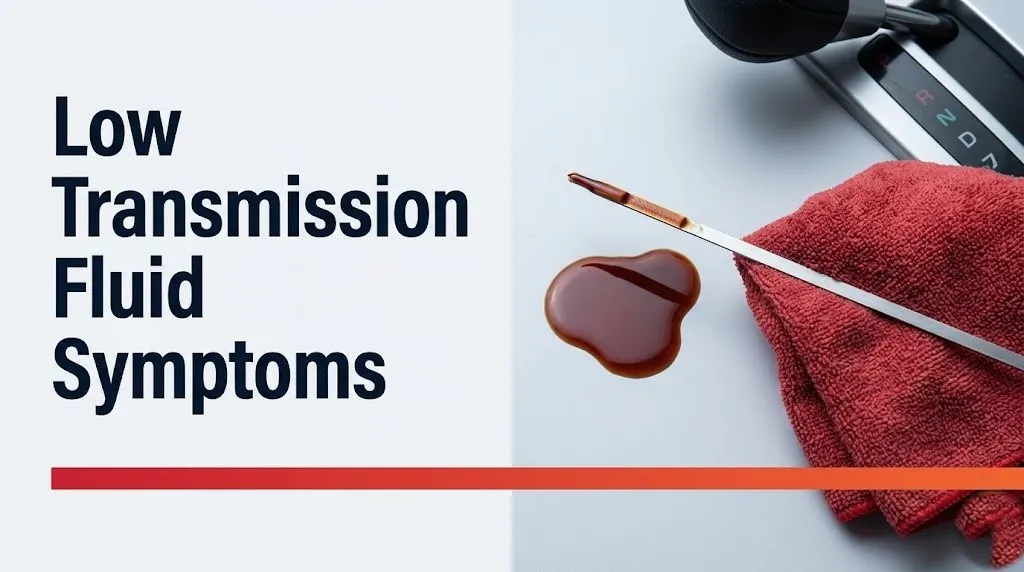
Low transmission fluid symptoms include gear slipping, delayed gear engagement, shuddering during acceleration, unusual whining or grinding noises, a burning smell from underneath the vehicle, and in severe cases, a complete inability to shift gears. These are not vague or ambiguous warning signs: each one has a specific mechanical cause rooted in how your transmission uses pressurized fluid to change gears and protect its internal components from heat and friction.
The automatic transmission is one of the most hydraulically sophisticated systems in a passenger vehicle, and it depends entirely on fluid pressure to function. According to the American Automobile Association (AAA), transmission failure is one of the most expensive mechanical repairs a vehicle owner will face, with rebuild or replacement costs ranging from $1,800 to over $6,000 depending on the vehicle and severity of damage. Most of that damage is preventable if low fluid levels are recognized and addressed early.
This guide covers every recognized symptom, explains the specific mechanical component and hydraulic mechanism responsible for each one, ranks them by urgency, distinguishes acute fluid loss from slow chronic depletion, and tells you exactly when to pull over and when it is still safe to drive to a shop.
What Transmission Fluid Does and Why It Matters
Transmission fluid serves four simultaneous mechanical functions: hydraulic pressure generation, gear clutch engagement, friction surface lubrication, and heat dissipation from internally moving parts.
The front pump, driven directly by the engine through the torque converter, draws fluid from the pan and pressurizes it throughout the hydraulic control circuit. This pressurized fluid is the operating language of the transmission. The valve body, a precisely machined block of channels and solenoid valves, routes that fluid pressure to engage specific clutch packs, which are stacks of friction and steel plates that lock and release the rotating components of the planetary gearsets to produce each gear ratio.
Without sufficient fluid volume, the front pump draws air along with fluid in a process called pump cavitation. Cavitation produces turbulent, aerated fluid that cannot maintain consistent hydraulic pressure. Clutch packs that should hold under load instead slip, generating heat from friction material against steel plates operating without adequate film thickness. That heat degrades the remaining fluid rapidly, creating a compounding failure cycle.
Fluid also carries heat out of the transmission internals to the transmission cooler, a small radiator either built into the main coolant radiator or mounted separately in front of the main radiator. Without adequate fluid volume circulating through this cooling loop, operating temperatures rise past the 200 to 220 degrees Fahrenheit range that most ATF formulations are designed to sustain.
Older vehicles with high mileage transmissions may see heat damage at lower thresholds because friction modifier additives in the ATF degrade over time even when fluid level is maintained. For these vehicles, low fluid compounds existing additive depletion and accelerates internal wear more quickly than in a newer transmission with fresh fluid.
Quick Tip:
- Transmission fluid does not burn off like engine oil. A closed-system transmission that loses fluid has a leak somewhere. Finding and fixing the leak is as important as topping off the level.
- OEM-specified fluid type matters. Using the wrong grade, for example Dexron III in a transmission that specifies Dexron VI, alters the fluid’s friction coefficient and can cause shift quality problems independent of level.
- Vehicles manufactured after approximately 2010 increasingly use sealed transmissions with no dipstick. These require a dealer or lift-accessible check using a fill port on the transmission case.
Low Transmission Fluid Symptoms: The Complete Warning Sign List
The recognized low transmission fluid symptoms, from earliest to most severe, are: subtle hesitation when accelerating from a stop, delayed gear engagement, slipping between gears during acceleration, shuddering or vibration during gear changes, whining or humming noises, rough or hard shifts, overheating warning activation, burning smell, and at extreme depletion, complete failure to move the vehicle.
Not all of these symptoms appear simultaneously. Early-stage low fluid typically produces only one or two intermittent signs, most often slight hesitation or a faint whine under load. These can be easy to dismiss as normal vehicle character, which is why they go unaddressed until more serious symptoms develop.
The timeline from first symptom to irreversible damage depends on two variables: how rapidly fluid is being lost and what the transmission is being asked to do. A vehicle losing fluid through a ruptured cooler line can go from first symptom to catastrophic pump cavitation in a single drive cycle. A vehicle with a slow pan gasket seep may show mild symptoms for weeks before damage accumulates.
Key symptoms by urgency tier:
| Symptom | Urgency Tier | Fluid Level Context |
|---|---|---|
| Slight hesitation from stop | Monitor | Mildly low |
| Delayed engagement (1 to 3 seconds) | Moderate | Noticeably low |
| Gear slipping under acceleration | High | Significantly low |
| Shuddering or jerking shifts | High | Significantly low |
| Whining or humming under load | High | Significantly low |
| Burning smell while driving | Stop driving | Critically low |
| Overheating warning on dash | Stop driving | Critically low or empty |
| Unable to engage drive or reverse | Stop driving | Near empty or empty |
The Society of Automotive Engineers (SAE) technical standards for ATF specify that fluid must maintain adequate viscosity across a temperature range of roughly minus 40 degrees Fahrenheit to over 300 degrees Fahrenheit for sustained reliability. When fluid level drops and operating temperature rises, viscosity falls outside this range, and every one of the above symptoms becomes more likely and more severe.
Symptoms of Low Transmission Fluid in an Automatic Transmission
Low transmission fluid symptoms in a conventional automatic transmission center on failures within the hydraulic control circuit: the pressurized system that tells the transmission which gear to select and holds that selection under load.
A conventional automatic transmission uses a torque converter instead of a manual clutch to transfer engine torque to the transmission input shaft. The torque converter contains a lockup clutch that engages at highway speeds to improve fuel efficiency by creating a direct mechanical link between engine and drivetrain. When fluid is low, the torque converter operates with insufficient fluid coupling, producing a shudder at highway speeds when the lockup clutch engages or disengages.
The valve body controls all gear shifts in a conventional automatic using hydraulic pressure routed through solenoid valves. Low fluid pressure causes these solenoids to command gear changes that the clutch packs cannot fully execute because the actuating pressure is insufficient. The result is a gear change that feels mushy, slow, or incomplete.
Automatic transmissions with six to ten speed ratios, which cover most post-2015 passenger vehicles, are particularly sensitive to low fluid pressure because each additional gear ratio requires precise clutch pack sequencing. According to transmission engineering standards referenced by ATRA (Automatic Transmission Rebuilders Association), even a 10 to 15 percent reduction in hydraulic line pressure measurably degrades shift quality and clutch engagement completeness in multi-ratio automatics.
Older automatic transmissions with three or four gear ratios are slightly more tolerant of pressure variation due to simpler valve body architecture, but they are not immune. In fact, older transmissions often have higher baseline wear on clutch friction material, meaning reduced pressure finds less reserve holding capacity. Drivers of high-mileage vehicles with conventionally automatic transmissions should treat even mild shift quality changes as an early warning.
Quick Tip:
- If delayed gear engagement is worst after a cold start and improves as the transmission warms up, the fluid level may be mildly low or the ATF may be old and thickened from additive breakdown.
- Symptoms that worsen consistently as the transmission heats up suggest critically low fluid, because the remaining fluid loses viscosity faster under heat.
Gear Slipping and Delayed Engagement Explained
Gear slipping occurs when the clutch packs inside the transmission fail to hold the selected gear ratio under engine load, causing the engine RPM to rise without a corresponding increase in vehicle speed.
The mechanism is straightforward: each gear ratio in a planetary automatic transmission is held by a specific set of clutch pack plates pressed together by hydraulic pressure. When the valve body commands a gear, a solenoid opens a fluid circuit that pushes a piston against the clutch pack, compressing the friction plates against the steel plates. If hydraulic pressure is insufficient because fluid volume is low and the pump is drawing aerated fluid, the piston force on the clutch pack is below the threshold needed to prevent slippage under engine torque.
Slipping feels like the engine revving freely, as if you pressed the gas but the car is not accelerating proportionally. You may notice the tachometer climbing while vehicle speed stays flat or climbs slowly. This is the clutch pack slipping rather than holding.
Delayed engagement is a related but distinct problem. When you shift from park or neutral into drive or reverse, normal engagement should take less than one second: the fluid circuit pressurizes, the clutch pack engages, and the drivetrain takes torque. When fluid is low, the pump takes longer to build sufficient pressure in that circuit, so the vehicle sits unresponsively for one, two, or even three seconds before lurching forward or backward as the clutch finally grabs.
| Symptom | What It Feels Like | Component Responsible |
|---|---|---|
| Gear slipping | Engine revs but car barely accelerates | Clutch pack insufficient pressure |
| Delayed drive engagement | Pause after shifting to Drive | Front pump slow pressure buildup |
| Delayed reverse engagement | Pause after shifting to Reverse | Separate reverse clutch circuit |
| Surging during acceleration | Intermittent grab-release sensation | Clutch packs alternating hold and slip |
For older drivers or those with limited driving experience, gear slipping can initially be attributed to road conditions or load. Pay attention to whether the RPM gauge climbs while speed does not: that specific pattern is gear slippage, not road behavior.
Transmission Shuddering and Jerking Symptoms
Transmission shuddering and jerking during gear changes signal that clutch packs are engaging incompletely or that the torque converter lockup clutch is engaging and releasing erratically due to insufficient fluid pressure or degraded fluid quality.
Shuddering feels like a mild vibration or flutter that runs through the vehicle during acceleration, typically most noticeable at moderate speeds between 30 and 50 miles per hour as the transmission sequences through mid-range gear changes. It can feel similar to driving on a rumble strip: a rhythmic vibration through the seat and steering wheel that appears during gear transitions and fades once a gear is held.
Jerking is more abrupt. The vehicle accelerates normally and then kicks forward or backward during what should be a smooth gear change. This happens when a clutch pack engages suddenly after a pressure delay: the hydraulic pressure builds, the clutch grabs all at once rather than progressively, and the resulting torque spike transmits as a jolt through the drivetrain.
According to ATRA technical guidance, torque converter shudder specifically, a shudder that occurs consistently at a specific speed during gentle acceleration on a warm transmission, is one of the most frequently misdiagnosed symptoms. It is often attributed to engine misfires or tire imbalance when it is actually the torque converter lockup clutch engaging against a worn or fluid-starved friction surface.
Shuddering and jerking are high-urgency symptoms. They indicate the transmission is already past the early-warning phase and entering active damage territory. Every rough shift event generates heat from incomplete clutch engagement, and that heat degrades the already-low fluid faster.
Drivers who tow trailers, haul heavy loads, or drive frequently in stop-and-go city traffic will experience these symptoms at lower fluid deficits because the transmission is working harder and generating more heat per mile driven.
Key Takeaway: The three most important early warning signs of low transmission fluid are subtle hesitation from a stop, delayed engagement into drive or reverse, and a faint whining noise under acceleration load. None of these should be dismissed as “how the car drives.”
Unusual Noises That Signal Low Transmission Fluid
A whining, humming, or clunking noise from the transmission area while the vehicle is in gear signals that the front pump, torque converter, or planetary gearset bearings are operating without sufficient fluid lubrication or hydraulic cushioning.
The front pump in an automatic transmission is a gear-type pump that operates whenever the engine is running, whether the vehicle is moving or not. When fluid level is low, the pump draws air into its inlet. The aerated fluid generates a distinctive high-pitched whine that varies with engine RPM, because pump output speed is tied directly to engine speed. A whine that rises and falls with engine RPM, not vehicle speed, typically points to the front pump starving for fluid.
Clunking or thudding sounds during gear changes suggest that planetary gearset components are engaging without adequate hydraulic cushioning. In a properly filled transmission, fluid acts as a hydraulic buffer during gear changes, dampening the mechanical impact as gear components engage. Low fluid removes this buffer, and the impact transmits as an audible thud or clunk.
Grinding noises are a late-stage signal. They indicate metal-to-metal contact between gear or bearing surfaces that have lost their fluid film. At this point, debris from wearing metal surfaces is circulating in the transmission fluid, which accelerates damage to every surface the fluid contacts.
- Whining that rises with engine RPM: front pump cavitation from low fluid
- Whining that rises with vehicle speed: output shaft bearing, differential bearing, or torque converter
- Clunking during gear changes: planetary gearset engaging without hydraulic cushion
- Grinding under load: metal-to-metal contact, advanced fluid starvation
- Buzzing from the valve body area: solenoid valve resonating with low-pressure aerated fluid
For vehicles in cold climates: ATF thickens significantly below freezing. A whining noise during the first few minutes of cold-weather driving that disappears after warm-up may indicate low fluid that is temporarily improving as temperature normalizes, not resolving the underlying deficit.
Burning Smell From the Transmission
A burning smell from the transmission area while driving indicates that clutch friction material is overheating from slippage or that ATF has reached oxidation temperatures, typically above 250 to 300 degrees Fahrenheit, due to critically low fluid volume.
The smell is distinct: a sharp, acrid odor with a slightly sweet undertone that differs from burning engine oil (which smells more like hot metal and petroleum) and burning brake material (which smells sharper and more chemical). ATF burning smells somewhat like burning rubber or hot electronics, particularly when the friction modifier additives in the fluid begin breaking down under excessive heat.
The source of the heat is almost always clutch pack slippage. When clutch packs slip repeatedly, the friction plates generate heat proportional to the load and the degree of slip. The same process that happens to a slipping manual clutch, producing that familiar burnt-clutch smell at track days, happens inside the automatic transmission housing. The difference is that in an automatic, there are multiple clutch packs slipping simultaneously if fluid pressure is critically low across all circuits.
According to SAE technical specifications for automatic transmission fluid, sustained temperatures above 250 degrees Fahrenheit begin to chemically break down ATF base stock and additive packages, producing oxidation byproducts that form varnish on valve body passages and sludge in the fluid pan. This fluid degradation does not reverse when the car cools down. The damage remains in the system.
A burning smell is a stop-driving symptom. Do not attempt to reach a shop by driving further. Pull over safely, turn off the engine, and arrange a tow. Continuing to drive with a burning smell means continuing to run clutch friction material against dry or severely degraded fluid, and each additional mile of operation increases rebuild cost or may convert a repairable situation into a replacement.
Check Engine Light and Low Transmission Fluid
Low transmission fluid can trigger the check engine light by causing transmission solenoid malfunctions, pressure sensor faults, or turbine speed sensor discrepancies that the vehicle’s onboard diagnostic system (OBD-II) registers as electrical or hydraulic faults in the transmission control module.
The transmission control module (TCM) continuously monitors hydraulic pressure sensors, turbine shaft speed sensors, output shaft speed sensors, and solenoid valve current draw. When fluid pressure drops below the programmed threshold for a given operating condition, the pressure sensor reading falls out of range and the TCM logs a diagnostic trouble code (DTC) and illuminates the check engine light or a separate transmission warning light.
Common DTCs associated with low transmission fluid include P0700 (general transmission control malfunction), P0715 (input or turbine speed sensor circuit malfunction, which can result from fluid cavitation disrupting sensor readings), and P0730 (incorrect gear ratio, triggered when the transmission’s actual speed ratio does not match the commanded gear due to clutch slippage).
To read these codes, you need an OBD-II scanner, available at most auto parts retailers for under $30, or available as a free service at many auto parts retail chain stores. A P0700 series code points toward the transmission system. However, the code does not tell you the cause: it could be low fluid, a failed solenoid, a faulty sensor, or an internal mechanical issue. Low fluid is the most straightforward and least expensive cause to check and address first.
The National Highway Traffic Safety Administration (NHTSA) strongly recommends against ignoring a check engine light that is accompanied by noticeable changes in vehicle behavior. A transmission fault code accompanied by shift quality changes warrants same-day evaluation, not a scheduled appointment a week out.
Vehicles manufactured after 2017 increasingly have separate transmission temperature warning lights or dedicated powertrain icons on the instrument cluster. These alert the driver before the temperature reaches critical thresholds, giving a brief window to safely reduce load and find a stopping point.
Key Takeaway: A burning smell from the transmission is a stop-driving-immediately signal, not a monitor-and-see situation. Every mile driven with a burning transmission smell adds to repair cost and risk of irreversible damage.
Transmission Overheating Symptoms
Transmission overheating occurs when fluid volume is insufficient to circulate through the cooling loop at a rate that keeps internal operating temperature below the ATF’s thermal stability threshold, typically in the 200 to 220 degrees Fahrenheit range for most conventional ATF formulations.
The first observable sign of overheating may be a transmission temperature warning indicator on the instrument cluster, which typically appears as a thermometer icon near a gear symbol or as a text alert depending on the vehicle. Many late-model vehicles with transmission temperature monitoring begin limiting shift behavior when temperature rises, reducing the number of available gear ratios or locking the torque converter to reduce slippage-generated heat. This protective behavior appears to the driver as an unexplained change in how the vehicle shifts.
Beyond the warning light, overheating produces its own set of secondary symptoms: the shifting becomes harsh and delayed as viscosity drops with rising temperature, the burning smell intensifies, and in extreme cases the transmission enters a fail-safe or limp mode, limiting the vehicle to a single fixed gear ratio to allow the driver to reach a stopping point without additional damage.
Limp mode feels dramatic: the vehicle suddenly loses access to gear changes, the engine RPM is limited, and acceleration becomes sluggish regardless of how far the accelerator is pressed. This is a programmed protective response, not a random failure, and it indicates the TCM has determined that continued normal operation risks permanent mechanical damage.
Towing and hauling dramatically increase the heat load on a transmission. The AAA advises that vehicles towing near their rated capacity should have transmission temperature monitored carefully and that external transmission coolers are recommended for regular towing use. For a vehicle already low on fluid, towing even a moderate load can push operating temperature past critical thresholds in minutes rather than miles.
Older automatic transmissions without temperature warning systems in vehicles from roughly pre-2010 give no instrument cluster warning before overheating. For these vehicles, the burning smell and shift quality deterioration are the only external signals.
No Transmission Fluid Symptoms: What Happens at Zero
When an automatic transmission has no usable fluid, the front pump cannot generate any hydraulic pressure, no clutch packs can engage, and the vehicle cannot transmit engine torque to the drive wheels: the transmission will appear to be in neutral regardless of gear selection.
This is the end-stage presentation and it escalates rapidly. Before reaching true zero, the pump begins drawing nearly all air, producing violent cavitation and rapidly destroying the pump’s internal gear surfaces. The remaining microscopic film of fluid on bearing and gear surfaces vaporizes from heat. Metal contacts metal without any lubricating film. This damage is audible as grinding and is permanent.
A vehicle with severely depleted or absent transmission fluid typically presents with:
- No forward or reverse movement despite the engine running normally
- A loud grinding or clanking noise when in drive or reverse
- Violent vibration from the drivetrain
- Visible fluid puddle beneath the vehicle if loss was from a rupture
- Strong burning smell even with the engine just started
- Possible transmission warning light and check engine light simultaneously
At this stage, the vehicle requires a tow. Do not attempt to drive it. The pump, valve body, planetary gearsets, and clutch packs are sustaining active metal-to-metal damage with every second the engine runs. Continuing to operate the engine with the transmission in gear can convert a potentially repairable situation into a complete unit replacement.
The practical difference between reaching zero fluid suddenly (ruptured cooler line, catastrophic seal failure) and reaching near-zero through slow depletion is that sudden loss gives almost no warning time. A cooler line failure can drain the transmission to empty in two to three miles of driving. Recognizing the brief window of symptoms (sudden emergence of all warning signs simultaneously) is important: the correct action is to stop the vehicle immediately, not to attempt reaching a nearby shop.
Key Takeaway: No transmission fluid means no hydraulic pressure, which means no gear engagement. If the vehicle moves in neutral or refuses to engage drive at all, stop the engine immediately, do not restart, and call a tow service.
CVT Low Fluid Symptoms
**CVT (continuously variable transmission) low fluid symptoms differ meaningfully from conventional automatic transmission symptoms because a CVT uses a different hydraulic architecture: instead of clutch packs and planetary gearsets, it uses a steel push belt or chain running between two variable-diameter *pulleys*, and the pulley clamping force is generated entirely by *CVTF (continuously variable transmission fluid)* pressure.**
When CVTF level drops, the pulleys cannot generate sufficient clamping force on the belt or chain. The resulting symptom is not discrete gear slipping in recognizable gear intervals. Instead, it feels like continuous, subtle slippage throughout the acceleration range, as if the engine is working harder than the vehicle’s speed justifies. The RPM does not jump in a clear spike the way it does in a conventional automatic. It climbs more gradually and inconsistently.
A CVT with low fluid also produces a distinctive high-pitched whining or buzzing that differs from the pump cavitation whine of a conventional automatic. The CVT belt or chain running on a pulley with insufficient clamping generates a steady mechanical whine that may increase with vehicle speed rather than engine speed, because it is tied to belt movement rather than pump speed.
CVTF is chemically distinct from conventional ATF. Honda, Nissan, and Toyota, among the most common CVT-equipped brands sold in North America, specify proprietary CVTF formulations that are not interchangeable with Dexron VI or Mercon V. Using the wrong fluid in a CVT, even temporarily, can alter the friction coefficient between belt and pulley and produce slip symptoms independent of fluid level. If you are topping off a CVT, the correct fluid specification is in the owner’s manual or on the filler cap.
CVT-equipped vehicles that also show hesitation during initial acceleration from a stop or that produce a hunting sensation where vehicle speed fluctuates slightly at a steady throttle position on the highway may have low CVTF affecting pulley ratio control. These symptoms warrant professional evaluation rather than a fluid top-off and hope, because pulley ratio control at low fluid levels can damage the belt itself.
What Causes Transmission Fluid to Be Low
Transmission fluid does not burn off or evaporate under normal operating conditions: if the level is low, there is either a leak from a seal, gasket, or line, or the transmission was underfilled during a previous service.
The most common sources of transmission fluid loss in passenger vehicles include:
- Pan gasket seep: The transmission pan, which holds the fluid reservoir, is sealed by a gasket that can harden and crack with age. This produces a slow drip visible as reddish-brown fluid on the ground below the transmission. It is gradual enough that fluid may appear slightly low for thousands of miles before becoming a performance issue.
- Axle seal failure: The transmission output shaft exits through an axle seal on each side in front-wheel drive vehicles. These seals wear over time, particularly in high-mileage vehicles, and can allow fluid to weep along the axle shaft.
- Front pump seal: The input shaft seal at the front of the transmission, where the torque converter connects, can fail and allow fluid to leak into the bell housing. This leak is harder to see from outside the vehicle.
- Transmission cooler line fittings: The rubber and metal lines carrying fluid between the transmission and the cooler connect with compression fittings that can loosen or crack. A cooler line failure can produce rapid fluid loss rather than a slow seep.
- Transmission cooler leak within the radiator: In vehicles where the transmission cooler is a tank integrated into the main radiator, a crack between the ATF circuit and the coolant circuit allows fluid to mix. This produces a distinctive milky-pink appearance in the ATF and may allow coolant into the transmission. This is a serious failure requiring immediate attention.
- Overfill error at previous service: Overfilling a transmission also causes problems. Excess fluid is aerated by the rotating planetary components and foams, losing its hydraulic effectiveness. This produces symptoms nearly identical to underfill.
According to NHTSA vehicle maintenance guidance, any active transmission fluid leak should be identified and repaired before fluid is added. Topping off a leaking system delays the leak repair and allows ongoing fluid loss to continue.
How to Check Your Transmission Fluid Level
To check transmission fluid level on a vehicle with a dipstick, the engine must typically be running and at operating temperature, the vehicle must be on a level surface, and the fluid must be checked with the correct procedure specified in the owner’s manual, because most automatic transmissions are checked differently from engine oil.
To check transmission fluid level correctly:
- Park the vehicle on a flat, level surface. Slope will give a false reading.
- Start the engine and allow it to reach operating temperature, usually 5 to 10 minutes of driving or idling.
- With the engine running, cycle the gear selector through each position (Park, Reverse, Neutral, Drive, and back to Park) pausing two to three seconds in each. This ensures all clutch circuit passages are filled.
- With the engine still running (for most vehicles) and the selector in Park, locate the transmission dipstick. It is usually a handle loop near the rear of the engine bay, separate from the engine oil dipstick, and often labeled or color-coded red or yellow.
- Remove the dipstick, wipe it clean with a lint-free cloth, reinsert it fully, then remove it again and read the level against the marked MIN and MAX lines. The fluid should fall between these marks when hot.
- Note the fluid color and smell as you read the level. Healthy fluid is translucent pink or light red. Dark brown or black fluid, or fluid with a burnt smell, indicates degraded ATF regardless of level.
For vehicles without a dipstick (sealed transmission): the fluid level must be checked via a fill port on the transmission case with the vehicle raised on a lift and fluid at operating temperature. This is a procedure for an ASE-certified technician with the correct tools. Do not attempt to check sealed transmission fluid without a lift and proper equipment.
Vehicles with CVTs or dual-clutch transmissions often require the specific fluid temperature to be within a narrow range (typically 95 to 115 degrees Fahrenheit for many Nissan CVTs) for an accurate level check. The owner’s manual or manufacturer service procedure must be followed exactly.
Transmission Fluid Color and Condition Guide
Transmission fluid color is a direct indicator of fluid condition: new fluid is translucent red or pink, degraded fluid darkens progressively through orange-brown to dark brown to black, and contaminated fluid may appear milky, foamy, or have visible metallic particles.
Fluid color tells you not just whether the level is correct but whether the fluid that remains is still capable of protecting the transmission. A transmission filled to the correct level with black, oxidized fluid is not protected adequately because burned ATF loses its friction modifier additives and lubrication film strength even if the volume is right.
| Fluid Color | What It Indicates | Recommended Action |
|---|---|---|
| Translucent red or pink | New or recently serviced, good condition | Monitor per service interval |
| Light orange-brown | Moderate age, slight oxidation | Consider a drain-and-fill service |
| Dark brown | Significantly degraded, additive depletion | Schedule a transmission service promptly |
| Black | Severely oxidized, possible clutch material contamination | Immediate professional inspection required |
| Milky pink or tan | Coolant contamination (radiator leak into ATF) | Stop driving, tow to shop immediately |
| Foamy or bubbly | Overfill or aeration from pump cavitation | Level check and professional inspection |
| Fluid with metallic particles | Internal mechanical wear debris | Stop driving, professional inspection required |
The smell of the fluid matters as well. Fresh ATF has a faint petroleum smell. Degraded fluid smells burnt, similar to overheated electrical insulation. Coolant-contaminated fluid may smell faintly sweet due to ethylene glycol.
Fluid should be checked against the dipstick in natural daylight where possible. Under artificial shop lighting, dark brown fluid can look almost black, and light brown fluid can look more orange. When in doubt about the condition of fluid that is at the correct level, a transmission drain-and-fill service using OEM-specified fluid is a conservative and generally low-cost preventive step. The ATRA recommends against transmission flushes on high-mileage transmissions with degraded fluid and significant sludge accumulation because flushing can dislodge deposits that were passively sealing worn internal seals.
Key Takeaway: Transmission fluid color is as diagnostically important as fluid level. Dark brown or black fluid at the correct level still represents a degraded transmission system that needs professional service.
Can You Drive With Low Transmission Fluid
Whether you can safely drive with low transmission fluid depends entirely on how low the level is, whether you can see active leaking, whether symptoms are present, and what the driving conditions are, and in many cases the correct answer is no.
If the fluid is mildly low (near the MIN mark with no active symptoms and no visible leak), and you can add the correct OEM-specified fluid immediately to bring it back to the MAX mark, driving a short distance to an inspection facility may be reasonable. Mild low fluid with no symptoms and no leak is the narrow safe window.
If any of the following conditions are present, driving is not safe:
- Active fluid leak visible under the vehicle or from a damaged line
- Any of the moderate-to-severe symptoms described above: gear slipping, shuddering, hard shifts, whining noise
- Burning smell present at any level
- Dashboard transmission temperature warning active
- Fluid color is black or milky
- Vehicle is in limp mode
The practical reasoning is straightforward. Operating a transmission that is already symptomatic with every additional mile increases the mechanical damage. A transmission that needs a $300 fluid service today may need a $4,000 rebuild next week if operated under symptom conditions.
Temperature conditions also matter. Operating a low-fluid transmission in high ambient temperatures (summer, stop-and-go traffic, uphill terrain) produces more heat per mile than highway driving in cool weather, meaning the damage threshold is reached faster. According to AAA vehicle maintenance research, transmission repairs that begin with a straightforward fluid-related cause are significantly more expensive when drivers delay seeking service after symptoms appear.
For drivers of vehicles with a towing package who regularly haul: never tow with low or symptomatic fluid. The additional load multiplies heat generation and mechanical stress in a way that can destroy a transmission in a single towing event.
When to Stop Driving and See a Transmission Specialist
Stop driving and arrange a tow if your vehicle shows any of the following: burning smell from underneath the vehicle, transmission warning light illuminated, inability to engage drive or reverse, violent shuddering or jerking that persists across multiple gear changes, or grinding noise under load.
For symptoms that are less severe but present, getting a professional inspection within 24 to 48 hours is appropriate. These include:
- Delayed engagement of one to two seconds into drive or reverse
- Intermittent gear slipping during acceleration
- Whining noise under load that is new and persistent
- Dark brown or black fluid on the dipstick
- Any visible fluid leak from the transmission area
The right professional for transmission diagnosis is an ASE (Automotive Service Excellence)-certified transmission technician at a shop that specializes in or has documented experience with transmission diagnosis and repair. General service shops can perform a fluid check and top-off, but internal transmission diagnosis, solenoid testing, pressure testing, and clutch pack assessment require specialized tools and training.
When you contact a shop, be specific about what you have observed:
- Describe when symptoms occur: from cold start, after warm-up, under load, at specific speeds.
- Mention how long symptoms have been present.
- Note any warning lights by their icon or color.
- Describe any noises with as much detail as possible: whining, grinding, clunking, and whether they are tied to engine RPM or vehicle speed.
- Report any visible fluid on the ground and the color of the fluid.
- Tell them whether you checked the fluid and what the level and color were.
This information allows the technician to prioritize diagnostic steps and order appropriate parts before you arrive, which can reduce shop time and repair turnaround significantly.
Emergency: When to Pull Over Immediately
Certain conditions related to low transmission fluid require you to stop the vehicle as quickly and safely as possible. Do not attempt to reach a nearby exit, service station, or shop when these signs are active.
Pull over immediately and turn off the engine if you notice:
- A burning smell from beneath the vehicle that is getting stronger while driving
- The transmission temperature warning light illuminated on the dashboard
- The vehicle entering limp mode, recognized as a sudden loss of gear changes and limited engine RPM
- A loud grinding or clanking noise that begins suddenly while in gear
- Complete loss of drive or reverse while the engine is running normally
- Visible smoke from beneath the vehicle
- Any sudden loss of power to the wheels combined with warning lights
Do not restart the engine after pulling over. Restarting and operating the engine, even briefly, continues to run the front pump against a dry or nearly dry hydraulic circuit, adding to internal damage.
Call a tow service. Do not accept offers to “just drive it slowly to the shop.” Even slow-speed driving with a critically symptomatic transmission causes ongoing damage. The cost of a tow is a fraction of the repair cost increase that comes from additional operation under these conditions.
If the vehicle is in a hazardous location when symptoms begin, use your hazard lights, move as far from the travel lanes as safely possible, and call roadside assistance through your insurance, AAA, or your vehicle manufacturer’s roadside program before attempting any vehicle inspection yourself.
Frequently Asked Questions About Low Transmission Fluid Symptoms
What are the first signs of low transmission fluid?
The first signs of low transmission fluid are a slight hesitation when accelerating from a stop and a brief delay of one to two seconds when shifting from park into drive or reverse.
A faint whining noise that rises with engine RPM, most noticeable during initial acceleration or when holding the vehicle in place on a slope, is another early indicator that the front pump is drawing aerated fluid.
These early symptoms are often intermittent and easy to overlook, but they are the point at which addressing the fluid level costs the least and prevents the most damage.
Can low transmission fluid fix itself or go back up on its own?
Transmission fluid does not replenish itself or return to a correct level on its own.
Because automatic transmissions are closed systems that do not consume fluid during normal operation, any level drop indicates fluid loss through a leak or previous underfill, and the level will continue to drop until the source is repaired and fluid is added.
Adding fluid to a leaking transmission without repairing the leak only delays the return of low-level symptoms.
How long can you drive with low transmission fluid before damage occurs?
There is no safe universal mileage threshold for driving with low transmission fluid, because the rate of damage depends on how low the level is, whether symptoms are present, and the severity of driving conditions.
A transmission that is mildly low with no active symptoms may tolerate a short drive to a service facility without measurable additional damage, but a transmission that is symptomatic, showing slipping, shuddering, or burning smell, sustains damage with every additional mile driven.
The correct approach when symptoms are present is to stop driving immediately, not to estimate a safe distance.
What does a transmission sound like when fluid is low?
A whining or humming noise that varies with engine RPM is the most characteristic sound of low transmission fluid, produced by the front pump drawing aerated fluid and generating turbulent flow through the hydraulic circuit.
A clunking noise during gear changes indicates that planetary gearset components are engaging without adequate hydraulic cushioning from sufficient fluid.
Grinding sounds are a late-stage signal of metal-to-metal contact and indicate that the remaining fluid film on bearing and gear surfaces has been depleted.
Can low transmission fluid cause the check engine light to come on?
Yes, low transmission fluid can cause the check engine light to illuminate by triggering pressure sensor fault codes or solenoid malfunction codes within the transmission control module.
Common OBD-II codes associated with low fluid-related transmission faults include P0700, P0715, and P0730, each of which can be triggered by hydraulic pressure drops caused by insufficient fluid volume.
An OBD-II scanner reading is the first diagnostic step when the check engine light appears alongside any transmission behavior change.
What is the difference between low transmission fluid symptoms and a bad transmission?
Low transmission fluid symptoms and internal transmission failure produce overlapping symptom patterns, including gear slipping, delayed engagement, rough shifts, and noise, which makes distinction difficult without a professional pressure test and internal inspection.
The key practical difference is that low fluid symptoms should improve immediately after the fluid level is corrected if no internal damage has occurred yet, while symptoms from mechanical failure (worn clutch packs, failed solenoids, damaged planetary gears) persist regardless of fluid level.
If symptoms do not improve within one to two drive cycles after correcting the fluid level with the correct OEM-specified ATF, internal damage is likely present and an ASE-certified transmission technician should perform a full diagnosis.
Closing
Recognizing low transmission fluid symptoms early is the single most effective way to avoid one of the most expensive mechanical repairs a vehicle owner will face. The symptom pattern is specific and learnable: a brief engagement delay, a faint whine under load, an intermittent hesitation from a stop. These signals appear well before serious damage begins, and they appear at a point when topping off the correct fluid and repairing any leak is still a straightforward and low-cost fix.
The escalation is fast once it begins. A transmission that slips goes from a fluid problem to a clutch pack problem within miles. A burning smell that continues means friction material is already gone. The urgency tiers in this guide are based on how transmission hydraulics actually work, not conservative caution: they reflect the real mechanical consequences of continued operation.
When you notice any of these symptoms in your vehicle, check the fluid level and condition first if a dipstick is accessible. Note what you observe. If symptoms are present or the fluid is dark and burnt-smelling, contact an ASE-certified transmission technician today, not this weekend. You now know exactly what to tell them and exactly what is happening inside your transmission.