Symptoms of Bloat in Dogs: Signs to Act On Now
The symptoms of bloat in dogs include a visibly swollen, hard abdomen, repeated retching that produces nothing, hypersalivation, restlessness, and pale or white gums. These are not minor digestive complaints: in dogs, bloat can progress from early distension to cardiovascular collapse within two to six hours.
According to the American Veterinary Medical Association (AVMA), gastric dilatation-volvulus (GDV) is one of the most time-sensitive surgical emergencies in veterinary medicine. Research published in the Journal of Veterinary Emergency and Critical Care has found that dogs with GDV who receive surgical treatment within six hours of symptom onset have survival rates exceeding 80 percent. Dogs treated after that window face significantly worse outcomes.
This article covers every clinically recognized symptom of bloat in dogs, explains the physiological mechanism behind each one, describes how the condition progresses from early warning signs to life-threatening emergency, identifies which breeds and individual dogs face the highest risk, and tells you exactly when to act and how fast.
Symptoms of Bloat in Dogs
The symptoms of bloat in dogs range from a subtly uncomfortable dog who keeps shifting position to one in full cardiovascular collapse within hours of symptom onset. Recognizing even the earliest signs gives you the window you need to act.
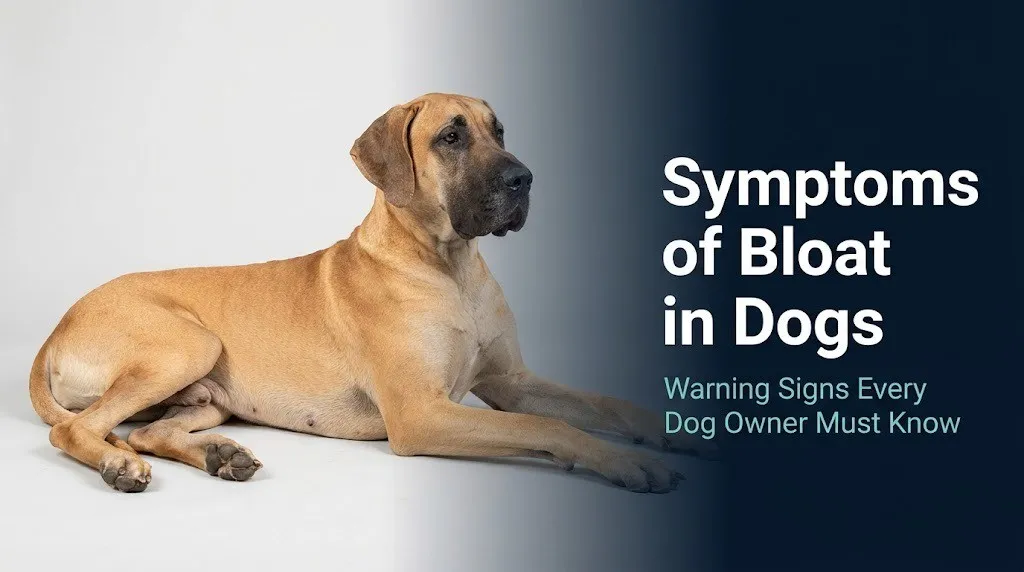
The most recognizable early symptoms include:
- Unproductive retching: attempting to vomit repeatedly but producing nothing or only small amounts of foam or saliva
- Abdominal distension: a belly that looks noticeably rounder, fuller, or feels drum-tight when tapped gently
- Hypersalivation: excessive drooling not related to food or heat
- Restlessness: inability to settle, pacing, repeatedly lying down and getting back up
- Hunched posture: standing with the back arched or elbows splayed outward, a posture that reduces pressure on a distended abdomen
As the condition worsens, the symptom picture shifts toward cardiovascular compromise:
- Pale, white, grey, or bluish gum color (cyanosis)
- Capillary refill time greater than 2 seconds (press a fingertip against the gum, release, and count how long it takes the pink color to return)
- Rapid, shallow breathing
- Weak, thready, or rapid pulse at the femoral artery (inner thigh)
- Sudden weakness or inability to stand
- Collapse
Individual variation matters here. Senior dogs over 7 years of age may show less dramatic early restlessness due to reduced pain responsiveness and generally lower activity. A senior dog that simply seems “off,” refuses food, and has even slight abdominal fullness warrants the same urgency as a younger dog showing obvious distress.
What Is Bloat in Dogs (GDV Explained)
Bloat in dogs refers to the abnormal accumulation of gas, fluid, or food in the stomach, and in its most dangerous form, involves rotation of the stomach on its own axis, a condition called gastric dilatation-volvulus (GDV).
Think of the stomach like a partially inflated balloon held in place by two rubber bands, the ligaments that attach it to the liver and spleen. When that balloon overfills with air, it can rotate. Once it rotates past a certain point, both ends of the balloon get twisted shut. Nothing can get in. Nothing can get out. Pressure builds relentlessly.
The cardia (the junction between the esophagus and the stomach) closes off when the stomach rotates, preventing the dog from belching gas out. The pylorus (the valve between the stomach and the small intestine) twists closed simultaneously, blocking the only other escape route. The trapped gas and fluid cause the stomach to expand further, pressing up against the diaphragm and compressing the caudal vena cava (the major vein returning blood to the heart).
According to the Merck Veterinary Manual, this vascular compression reduces venous return to the right side of the heart, dropping cardiac output and triggering cardiovascular shock. The gastric mucosa (the stomach’s inner lining) begins to die from ischemia within minutes of volvulus. The spleen, attached to the stomach’s greater curvature via the gastrosplenic ligament, rotates with the stomach and becomes engorged and ischemic simultaneously.
This is why GDV is not a condition that will improve on its own. It is an active, progressive mechanical catastrophe.
Dog Bloat Symptoms: The Full Clinical Picture
The full clinical picture of dog bloat symptoms covers three overlapping body systems: the gastrointestinal system (producing abdominal signs), the cardiovascular system (producing signs of shock), and the respiratory system (producing breathing abnormalities).
According to the Veterinary Emergency and Critical Care Society (VECCS), the clinical presentation of GDV includes a combination of gastrointestinal, cardiovascular, and respiratory signs that vary in severity depending on how much time has passed since volvulus occurred.
| Symptom | Body System Affected | Clinical Significance |
|---|---|---|
| Unproductive retching | Gastrointestinal | Cardia obstruction prevents vomiting; high specificity for GDV |
| Abdominal distension | Gastrointestinal | Gas and fluid trapped by dual-outlet obstruction |
| Hypersalivation | Gastrointestinal / Autonomic nervous system | Vagal stimulation from gastric distension; nausea response |
| Restlessness / inability to settle | Behavioral / Pain response | Visceral pain from distension and ischemia |
| Pale or white gums | Cardiovascular | Peripheral vasoconstriction from hypovolemic shock |
| Rapid shallow breathing | Respiratory | Diaphragm compressed by distended stomach; reduced tidal volume |
| Weak or rapid pulse | Cardiovascular | Reduced venous return; compensatory tachycardia |
| Collapse / sudden weakness | Cardiovascular | Cardiovascular shock; multi-organ oxygen deficit |
Dogs with confirmed GDV may show all or only some of these signs at any given moment. A dog in early GDV may appear uncomfortable but still ambulatory. A dog in late GDV may present in collapse. Both need emergency care at the same urgency level, because the trajectory of GDV is not predictable from the outside.
Female dogs and intact male dogs show similar symptom patterns in GDV. No significant sex-based difference in symptom presentation has been identified in published research, though some epidemiological studies from Purdue University School of Veterinary Medicine suggest intact males may carry slightly higher lifetime risk.
Key Takeaway: Unproductive retching combined with any degree of abdominal distension is the two-symptom combination that most reliably signals GDV, and it requires emergency veterinary evaluation, not monitoring at home.
Early Symptoms of Bloat in Dogs
Early symptoms of bloat in dogs appear in the first 30 to 90 minutes of gastric distension and are often subtle enough that owners mistake them for ordinary digestive upset or anxiety.
The earliest observable sign is usually behavioral restlessness. The dog keeps trying to find a comfortable position, lies down, gets up, paces, and lies down again. This restlessness is driven by visceral discomfort from gastric distension stretching the stomach wall’s sensory nerve endings. It is not yet dramatic pain, but it is persistent and unusual for the dog’s baseline behavior.
Within minutes to an hour, hypersalivation typically appears alongside a posture change. The dog may stand with its elbows splayed outward and its back slightly arched, a posture that instinctively reduces intra-abdominal pressure. This is different from a dog simply relaxing in a stretch. The posture looks effortful and tense.
To assess early symptoms at home before transport to an emergency clinic:
- Note the exact time you first noticed unusual behavior or belly appearance.
- Observe the abdomen from directly behind: does the belly look symmetrically rounder than usual, especially on the left side behind the ribcage?
- Gently tap the left side of the abdomen with your fingertips: a bloated stomach often produces a hollow, drum-like resonance rather than the soft sound of a normal belly.
- Watch for retching: any attempt to vomit that produces nothing is a high-priority sign.
- Check gum color by lifting the upper lip: the gums should be bubble-gum pink. Pale, white, grey, or bluish gums mean transport to an emergency clinic should be happening right now.
- Note pulse rate by pressing two fingers against the inner thigh (femoral artery): a rapid or weak pulse adds urgency.
Owners of dogs over 7 years of age should be aware that older dogs’ early restlessness may be less dramatic because of reduced mobility generally, not because the condition is less severe.
Signs and Symptoms of Bloat in Dogs Owners Can Observe
The signs and symptoms of bloat in dogs that owners can observe at home fall into three tiers: behavioral signs, physical signs visible to the eye, and signs detectable by simple touch and inspection.
Behavioral signs are often the first thing owners notice, before any obvious abdominal change:
- Pacing or walking in circles
- Repeatedly trying to lie down and standing up again
- Looking at or pawing at the abdomen
- Refusing food or treats that the dog would normally take eagerly
- Appearing anxious, distressed, or “not right” in a way the owner cannot immediately define
Physical signs visible without touching the dog:
- Left-sided abdominal swelling: the stomach sits primarily on the left side, so GDV distension often appears most prominently behind the left ribcage before becoming bilateral
- A belly that appears rounder or lower-slung than usual
- A dog that is breathing faster or with more effort than normal without having exercised
- Hunched or stiff posture with elbows out
Signs detectable by gentle inspection:
- Abdomen that feels taut or drum-hard rather than soft and compressible
- Tympanic (hollow, drum-like) sound when tapped gently
- Gum color that is lighter than normal pink
According to the AVMA, owners who recognize these observable signs in their dogs, particularly the combination of abdominal distension and unproductive retching, should not wait to observe whether symptoms improve before seeking emergency veterinary care.
For dogs with thick, long coats (such as Old English Sheepdogs or Saint Bernards), visible abdominal distension may be harder to detect. Owners of these breeds should rely more on behavioral signs and gum color assessment than on visual abdominal inspection.
Dog Bloat Stages: How the Condition Progresses
Dog bloat progresses through recognizable clinical stages, moving from early gastric distension to volvulus to cardiovascular failure if left untreated.
Stage 1: Gastric Dilatation (without volvulus)
Gas, fluid, or food accumulates in the stomach and the stomach distends. The stomach has not yet rotated. The dog is uncomfortable and restless. Retching may be present or absent. At this stage, there is still a narrow window where veterinary intervention (passing an orogastric tube to release gas) may resolve the condition without surgery, though veterinary evaluation remains immediately necessary because distinguishing stage 1 from early stage 2 requires radiography, not visual inspection.
Stage 2: Volvulus Onset
The distended stomach rotates on its mesenteric axis. The cardia and pylorus both become occluded. Venous compression of the caudal vena cava begins. The dog’s condition deteriorates noticeably: retching becomes more frequent, the abdomen feels harder, and early signs of cardiovascular compromise (slightly pale gums, mild increase in respiratory rate) begin to appear.
Stage 3: Cardiovascular Compromise
Full hypovolemic and obstructive shock is underway. Cardiac output drops. Peripheral vasoconstriction produces pale to white gums. The sympathetic nervous system drives compensatory tachycardia (heart rates above 140 to 160 beats per minute in large breeds). The dog may be too weak to stand or may collapse. Ventricular arrhythmia (ventricular premature contractions or ventricular tachycardia from electrolyte disturbances and myocardial ischemia) can occur.
Stage 4: Gastric Necrosis and Systemic Failure
Ischemic gastric mucosa begins to die. Peritonitis (inflammation of the peritoneal lining from gastric mucosal breakdown) may develop. Disseminated intravascular coagulation (DIC) can occur as a downstream complication. Survival rates at this stage drop sharply even with aggressive surgical intervention.
Key Takeaway: The progression from Stage 1 to Stage 3 can happen in under two hours in some dogs. Stage 1 and Stage 2 are not clinically distinguishable at home.
GDV Symptoms in Dogs: When Simple Bloat Becomes Dangerous
GDV symptoms in dogs signal that the condition has crossed from simple gastric distension into the surgical emergency category. The transition is defined by one event: gastric rotation.
Simple gastric dilatation (gas distension without torsion) can cause significant discomfort and requires veterinary evaluation, but it may be manageable without surgery. GDV (dilatation with volvulus) is always a surgical emergency. The problem is that an owner cannot tell from external observation which one their dog has. Both look like an uncomfortable, bloated dog. Only abdominal radiographs taken by a veterinarian can confirm the difference.
The symptom pattern that most strongly suggests volvulus has occurred rather than simple distension:
- Unproductive retching that continues despite multiple attempts: with simple distension, a dog may burp or produce some vomit. With volvulus, the cardia is sealed shut. Nothing comes up.
- Abdomen that is hard and tympanic: pure gas distension produces a drum-like resonance. Simple food-gas discomfort typically produces a softer, more variable feel.
- Cardiovascular signs appearing: any pale gum color, weakness, or change in breathing that accompanies abdominal distension is a red flag for volvulus with shock.
- Rapid deterioration: a dog that was mildly uncomfortable 30 minutes ago and is now clearly distressed is progressing through stages, not resolving.
A 2019 study published in the Journal of Veterinary Emergency and Critical Care found that blood lactate levels above 6.0 mmol/L at presentation are significantly associated with gastric necrosis and worsened surgical outcomes. Veterinarians use this value as part of their early prognostic assessment, which is one reason rapid transport matters: arriving sooner allows treatment to begin before lactate climbs to those levels.
Puppies and dogs under 2 years old are at low but not zero risk for GDV. In this age group, simple gastric dilatation is more common than true GDV, but the presentation is similar enough that veterinary evaluation is still necessary.
Bloated Dog Symptoms: What the Abdomen Tells You
Bloated dog symptoms centered on abdominal appearance provide some of the most diagnostically meaningful information an owner can observe before veterinary assessment.
The stomach in a dog of normal weight sits in the mid-abdomen, primarily on the left side when the dog is standing. In GDV, gas fills the rotated stomach to capacity, and the distension pushes the abdominal wall outward. The left side behind the ribcage becomes the most visibly and palpably affected area first, before the distension spreads across the full abdomen.
Three specific abdominal observations matter:
- Asymmetric left-sided fullness: the left flank (between the last rib and the hip bone) appearing noticeably fuller than the right. This is one of the earlier visual signs.
- Abdominal tympany: tapping gently with one fingertip against the left flank produces a resonant, hollow sound similar to tapping a taut drum. A normal dog’s belly produces a duller, softer sound.
- Abdominal rigidity: the belly that feels board-hard rather than soft and yielding. This rigidity is produced by the tension of gas-filled stomach pressing outward against the abdominal wall.
Abdominal guarding (the dog tensing its core muscles when you press gently on the belly) indicates pain. Any combination of guarding with visible distension should be treated as an emergency presentation.
According to VCA Animal Hospitals, abdominal distension in a dog that is also retching unproductively represents one of the clearest emergency presentations in veterinary medicine, regardless of how otherwise “okay” the dog may appear.
Obese dogs or dogs with thick, heavy coats may mask abdominal distension visually. Owners of thick-coated breeds (Bernese Mountain Dog, Old English Sheepdog, Leonberger) should place both hands flat against the sides of the abdomen and press gently, feeling for unusual firmness rather than relying on visual inspection.
Key Takeaway: A hard, drum-like abdomen on the left side behind the ribcage, combined with any retching, means your dog needs an emergency vet within the hour, not the morning.
Dog Bloating Symptoms vs. Normal Gas: How to Tell the Difference
Dog bloating symptoms overlap with the signs of ordinary gas discomfort, and understanding the specific differences can help owners make a faster, more confident decision about whether to go to an emergency clinic.
Ordinary gas discomfort in dogs produces:
- Visible mild abdominal distension that is soft rather than drum-hard
- Audible intestinal gurgling (borborygmi), sounds that come from gas moving through loops of bowel
- Flatulence (actual passage of gas rectally)
- Successful belching, even if infrequent
- Mild restlessness that resolves within 20 to 30 minutes without worsening
- A dog that can still be distracted by a toy, treat, or familiar cue
GDV bloating symptoms produce:
- Abdomen that is hard and tympanic, especially on the left side
- No flatulence and no successful belching after the volvulus phase
- Retching that produces only foam or saliva, never actual stomach contents
- Restlessness that does not improve and typically worsens over time
- A dog that cannot be distracted, is clearly distressed, and is declining rather than stabilizing
| Feature | Normal Gas | GDV Bloat |
|---|---|---|
| Abdominal feel | Soft, slightly full | Hard, drum-tight |
| Retching | Rare or absent | Frequent, unproductive |
| Gas passage | Flatulence present | None after volvulus |
| Borborygmi (gut sounds) | Present, often loud | Absent or absent on left side |
| Gum color | Normal pink | Pale, white, or grey |
| Restlessness | Mild, resolves in 30 min | Progressive, worsening |
| Dog’s interest in surroundings | Present | Absent or declining |
The single most useful differentiating feature is the retching pattern. A dog with simple gas may retch once or twice and then stop. A dog with GDV retches repeatedly without producing anything, because nothing can exit the stomach in either direction.
When in doubt, go to the emergency vet. A simple gas episode evaluated by a veterinarian is a minor inconvenience. An unrecognized GDV is not.
What Causes Bloat in Dogs
Bloat in dogs has multiple contributing causes, but all of them produce the same dangerous outcome: a stomach that fills with gas faster than it can empty it, creating the conditions for rotation.
Primary physiological driver: impaired gastric motility
The stomach normally moves gas and liquid forward through the pylorus via rhythmic muscular contractions (peristalsis). When gastric motility is impaired, gas accumulates. The cause of that motility impairment varies:
- Aerophagia (air swallowing): dogs that eat rapidly swallow large amounts of air with their food. Fermentation of certain foods in the stomach also produces gas. Both mechanisms fill the stomach quickly.
- Delayed gastric emptying: stress, recent exercise before eating, or certain anatomical factors can slow the pyloric outflow rate, allowing gas to accumulate rather than move forward.
- Dietary factors: large single meals, foods that ferment rapidly in the stomach, and feeding immediately after vigorous exercise all contribute to the conditions needed for dilatation.
What causes the volvulus (rotation)?
The exact trigger for gastric rotation is not fully understood. The leading hypothesis, supported by Purdue University School of Veterinary Medicine epidemiological research, is that a stomach already distended with gas is mechanically more susceptible to rotation when the dog rolls, jumps, or runs. The weight of gas and fluid pulls the stomach in the direction of rotation, and the gastric ligaments, particularly in deep-chested breeds with longer, more lax ligaments, cannot hold the stomach in place.
Contributing risk factors that increase the probability of GDV:
- Feeding one large meal per day rather than two smaller ones
- Exercising vigorously within one to two hours of eating
- Elevated food bowls (despite early belief that they protected against bloat, research including a large study from Purdue found elevated bowls actually increased GDV risk in large breeds)
- A history of anxiety, fearfulness, or a stressed temperament
- Family history of GDV in first-degree relatives
Symptoms of Bloat in Puppies and Young Dogs
Symptoms of bloat in puppies and young dogs differ from adult presentations primarily in cause and frequency, though the clinical signs remain the same if true GDV occurs.
True GDV is rare in puppies under 12 months of age. The giant breed dogs most predisposed to GDV typically develop their highest risk in middle to senior age. However, simple gastric dilatation (distension without volvulus) can occur in puppies who eat rapidly, swallow excessive air, or ingest inappropriate material.
Symptoms of gastric distension in puppies include:
- A belly that looks or feels more distended than normal after eating
- Visible abdominal discomfort: whining, squirming, or unwillingness to move normally after a meal
- Attempts to retch or gag shortly after eating
- Excessive drooling after eating
- Restlessness or crying out when the abdomen is touched
The key consideration for puppy owners is that intestinal foreign body obstruction and intussusception (a telescoping of one segment of bowel into another) can produce abdominal distension and retching that resembles bloat in young dogs. These are also surgical emergencies and are actually more common than GDV in dogs under 2 years. A puppy retching unproductively with a distended belly needs emergency evaluation regardless of which of these conditions is the actual cause.
Breeds including Great Danes, Weimaraners, and German Shepherd Dogs that are known to develop GDV as adults can begin showing heightened susceptibility to gastric dilatation in adolescence (6 to 18 months). Owners of these breeds should establish a twice-daily feeding schedule and restrict exercise for at least one hour after meals starting from puppyhood.
The AVMA recommends discussing prophylactic gastropexy (a surgical procedure that permanently anchors the stomach to the abdominal wall, preventing rotation) with your veterinarian for high-risk breeds, typically at the time of spay or neuter surgery.
Key Takeaway: Puppies rarely develop true GDV but can develop gastric distension or other abdominal emergencies that look identical. A puppy retching unproductively with a swollen belly is always a veterinary emergency.
Which Dog Breeds Are at Highest Risk for Bloat
Certain dog breeds are at dramatically higher risk for bloat and GDV due to their thoracic depth-to-width ratio, gastric ligament anatomy, and stomach size relative to their body frame.
The common anatomical thread is a deep, narrow chest. In deep-chested dogs, the stomach sits lower in the abdomen and has more physical space to rotate before the abdominal wall stops it. The ligaments suspending the stomach are longer and have more mechanical laxity, which makes them less effective at preventing rotation when the stomach fills with gas.
Highest risk breeds (by lifetime risk estimates from published research, primarily from Purdue University School of Veterinary Medicine):
- Great Dane: estimated lifetime GDV risk of approximately 36 to 42 percent in some study populations, the highest of any breed
- Weimaraner: approximately 4 to 6 times the risk of mixed-breed dogs
- Saint Bernard
- Gordon Setter
- Irish Setter
- Standard Poodle
- Basset Hound (despite shorter stature, has notable GDV risk due to chest anatomy)
- Doberman Pinscher
- Old English Sheepdog
- German Shepherd Dog
- Bloodhound
Additional risk factors that compound breed risk:
- Being male (intact males appear to carry slightly higher risk in some epidemiological reports)
- Being underweight (thin, lean dogs with deep chests may have less abdominal fat buffering stomach movement)
- Having a first-degree relative (parent or sibling) who has had GDV
- Having a fearful or anxious temperament
Mixed-breed dogs can develop GDV, particularly those who inherit a deep-chested body type from a predisposed purebred parent. Breed alone is not a sufficient risk assessment: body conformation matters more than breed registration.
Can Dog Bloat Resolve on Its Own
Dog bloat in its GDV form cannot resolve on its own. Once volvulus has occurred, the mechanical obstruction of the cardia and pylorus is permanent until surgically corrected. No home remedy, position change, exercise, or wait-and-see approach reverses a gastric torsion.
Simple gastric dilatation (gas distension without volvulus) may partially resolve as gas moves through the bowel, but the owner has no way to confirm whether their dog has simple dilatation or GDV without veterinary radiographs. Choosing to wait and hope for spontaneous resolution is gambling with a condition that can be fatal within hours.
According to the Merck Veterinary Manual, even cases of simple gastric dilatation that appear to resolve without treatment carry risk of recurrence, and recurrence is often more severe. Dogs who have had one episode of simple dilatation are at elevated risk for progression to GDV in a subsequent episode.
Common home interventions that owners attempt and why they do not work for GDV:
- Walking the dog: does not release trapped gas from a rotated stomach; may worsen cardiovascular compromise in a dog already in early shock
- Giving simethicone or Gas-X: may modestly assist with gas in simple dilatation; has no effect on volvulus because the gas cannot exit the stomach regardless of its bubble size
- Changing the dog’s position: cannot mechanically reverse a gastric torsion; the stomach’s ligamentous attachments hold it in its rotated position
- Offering water: a dog in GDV cannot move water through the obstructed stomach
There is no circumstance in which waiting overnight to “see how your dog is in the morning” is the appropriate response to suspected GDV. A dog showing abdominal distension with unproductive retching should be in transit to an emergency veterinary clinic, not being observed at home.
How Veterinarians Diagnose GDV in Dogs
Veterinarians diagnose GDV in dogs through a combination of physical examination, imaging, and bloodwork that together confirm whether volvulus has occurred and assess the severity of secondary complications.
Step 1: Physical examination on arrival.
The veterinarian assesses gum color and capillary refill time, pulse rate and quality, respiratory rate and effort, abdominal distension and tympany, and the dog’s level of consciousness and responsiveness. These assessments take under two minutes and immediately guide whether the dog goes directly to stabilization before imaging or to imaging first.
Step 2: Abdominal radiographs (X-rays).
Right lateral recumbency (lying on the right side) and ventrodorsal positioning allows the veterinarian to identify the pathognomonic radiographic sign of GDV: the “double bubble” sign (also described as a “Popeye arm” or “compartmentalized stomach” appearance), in which the pylorus is visible as a separate gas-filled compartment displaced cranially and to the left. Simple gastric dilatation shows a large gas-filled stomach without this compartmentalization.
Step 3: Blood lactate measurement.
Blood lactate above 6.0 mmol/L is associated with gastric necrosis and worsened prognosis, according to research published in the Journal of Veterinary Emergency and Critical Care. This single measurement helps the surgical team anticipate how much of the stomach may require resection.
Step 4: Complete blood count and serum chemistry panel.
These identify secondary effects including hemoconcentration (rising packed cell volume from fluid shifts), electrolyte disturbances (hyperkalemia from ischemic tissue), and markers of hepatic and renal stress.
Step 5: Electrocardiogram (ECG).
Ventricular arrhythmia (ventricular premature contractions or ventricular tachycardia) is a recognized complication of GDV due to myocardial ischemia and electrolyte imbalance. ECG monitoring guides whether antiarrhythmic treatment is needed alongside surgical preparation.
Surgical treatment involves gastric decompression (releasing trapped gas via orogastric tube or needle trocarization), correction of volvulus by rotating the stomach back to its normal position, assessment of gastric and splenic viability, and gastropexy (permanently suturing the stomach to the right abdominal wall to prevent future rotation).
Key Takeaway: The radiographic “double bubble” sign is the definitive diagnostic confirmation of GDV, and it takes a veterinarian with X-ray equipment to see it, not a visual examination at home.
Dog Bloat Survival Rate: Why Time Is the Critical Factor
The dog bloat survival rate with prompt surgical treatment is between 70 and 85 percent overall, but that rate falls sharply with every hour of delay between volvulus onset and surgical correction.
A retrospective study published in the Journal of Veterinary Emergency and Critical Care found that the mortality rate for GDV treated within 6 hours of estimated symptom onset was significantly lower than for dogs presenting after 6 hours. Dogs presenting in cardiovascular shock had mortality rates two to three times higher than those arriving in compensated or pre-shock states.
Several factors independently predict survival outcome:
- Blood lactate at presentation: levels above 6.0 mmol/L at the time of initial blood draw are strongly associated with the need for partial gastrectomy (removal of a portion of the dead stomach wall) and with post-operative mortality
- Presence of cardiac arrhythmia: ventricular tachycardia at presentation is associated with worsened short-term prognosis
- Spleen viability: if the spleen has become necrotic and requires removal (splenectomy), the surgical complexity and risk increase
- Gastric necrosis extent: the proportion of the gastric wall that is non-viable at surgery directly predicts post-operative mortality
Post-operative monitoring is intensive. Cardiac arrhythmias from reperfusion injury (the toxic inflammatory cascade that occurs when oxygen returns to ischemic tissue) typically peak 12 to 72 hours after surgery. This is why dogs recovering from GDV surgery remain hospitalized under ECG monitoring for at least 24 to 48 hours.
The survival picture for dogs who undergo gastropexy at the time of GDV correction is better than for those who do not. Gastropexy reduces the recurrence risk of GDV from approximately 75 percent to under 5 percent. For high-risk breeds, prophylactic gastropexy performed electively (before any GDV episode occurs, typically at the time of spay or neuter) eliminates the majority of future GDV risk without the emergency context.
Emergency Signs: When to Take Your Dog to the Vet Immediately
Certain symptoms of bloat in dogs represent a life-threatening emergency. Do not wait to see if these signs resolve on their own.
Take your dog to an emergency veterinary clinic immediately if you observe any of the following:
- Unproductive retching or gagging that produces no vomit, foam only, or small amounts of saliva, especially if it has been happening for more than 15 to 20 minutes
- Abdominal distension that is visibly or palpably present, especially on the left side behind the ribcage
- Abdomen that feels hard, drum-tight, or tympanic when tapped gently
- Gum color that is pale pink, white, grey, or blue rather than the normal bubble-gum pink
- Capillary refill time greater than 2 seconds after pressing and releasing on the gum surface
- Pulse that is rapid and weak (a racing heart that you can barely feel at the inner thigh)
- Rapid, labored, or shallow breathing that is not explained by heat or exercise
- Sudden weakness: a dog who was standing and walking but has now become unsteady or is unable to stand
- Collapse or unconsciousness
- Extreme restlessness that has been progressing for more than 20 to 30 minutes without any improvement
If your dog has ANY combination of abdominal distension with unproductive retching, do not wait. Drive to the nearest emergency veterinary clinic immediately, regardless of the time of day or night.
These signs indicate a potential GDV in progress. GDV requires emergency surgical intervention and will not improve without it. A 24-hour emergency veterinary clinic is the appropriate destination, not a regular daytime practice that is currently closed.
If you suspect your dog has ingested a toxic substance in addition to showing these signs, call the ASPCA Animal Poison Control Center at 888-426-4435 while transporting your dog to the emergency clinic. A consultation fee may apply.
Frequently Asked Questions About Bloat in Dogs
What are the first symptoms of bloat in a dog?
The first symptoms of bloat in a dog are restlessness, hypersalivation (excessive drooling), and a subtle change in abdominal appearance, particularly left-sided fullness behind the ribcage.
Unproductive retching, where the dog gags repeatedly without producing vomit, typically follows within minutes to an hour and is one of the most clinically meaningful early signs.
Any dog showing these signs together, restlessness, drooling, abdominal fullness, and unproductive retching, needs emergency veterinary evaluation without delay.
Can a dog bloat and still seem normal or be acting okay?
Yes, in the very early stage of gastric dilatation before volvulus occurs, a dog may appear only mildly uncomfortable or “not quite right” without showing dramatic distress.
The danger is that the transition from mild discomfort to cardiovascular shock can happen in under two hours, and the dog’s outward demeanor in the early phase does not reliably predict how rapidly the condition is progressing.
Any dog with a distended abdomen and unproductive retching should be treated as an emergency regardless of how alert or relatively normal the dog appears.
How fast does dog bloat progress?
GDV can progress from early gastric distension to life-threatening cardiovascular shock in as little as two to six hours from the onset of volvulus.
The speed of progression varies depending on the degree of gastric rotation, the dog’s baseline cardiovascular health, and how rapidly ischemia develops in the gastric mucosa.
Research published in the Journal of Veterinary Emergency and Critical Care consistently identifies time-to-treatment as one of the strongest predictors of survival, making early transport to emergency care the single most important factor in outcome.
What does a dog’s stomach feel like when it has bloat?
A dog’s stomach affected by GDV feels hard, taut, and drum-tight rather than the soft, yielding feel of a normal abdomen.
Tapping the left side of the abdomen gently with one fingertip produces a resonant, hollow sound, called tympany, rather than the dull soft sound of a normal belly.
This combination of visible distension and tympanic feel on palpation is one of the most useful owner-observable signs of GDV.
Can dog bloat go away without treatment?
Gastric dilatation-volvulus cannot go away without treatment. Once the stomach has rotated and both the cardia and pylorus are occluded, the mechanical obstruction will not resolve without surgical correction.
Simple gastric dilatation without volvulus may partially improve as gas redistributes, but there is no way for an owner to confirm whether volvulus has occurred without veterinary radiographs.
Waiting to see if bloat resolves at home risks a condition that can be fatal within hours and has no safe period of watchful waiting once symptoms are present.
What should I do if I think my dog has bloat at night?
If you think your dog has bloat at night, do not wait until morning. Drive to the nearest 24-hour emergency veterinary clinic immediately.
Call ahead while you are on your way so the clinic can prepare for your arrival, note any symptoms you have observed (including how long they have been present), and bring information about your dog’s breed, age, weight, and any prior medical history if easily accessible.
Time is the critical variable in GDV survival, and waiting hours for a regular veterinary practice to open is not an appropriate response to suspected bloat.
Closing
The symptoms of bloat in dogs, particularly the combination of unproductive retching with abdominal distension, are among the most time-critical presentations in all of veterinary medicine. Understanding the physiological cascade behind GDV, from gastric rotation to venous compression to cardiovascular shock, gives you a concrete reason to act rather than wait.
If your dog is showing any combination of the signs described in this article, especially a hard or drum-like belly alongside repeated gagging that produces nothing, the right next step is not a phone call, a wait-and-see period, or a home remedy. It is transport to an emergency veterinary clinic right now.
You are the person who knows your dog’s normal baseline best. If something feels wrong, trust that instinct, act on it tonight, and let the emergency veterinary team confirm or rule out GDV with the tools only they have access to.