Fever With No Other Symptoms: Causes and When to Act
A fever with no other symptoms is one of the most common and, for parents especially, most unsettling clinical presentations: the body’s temperature is elevated, but there is no cough, no runny nose, no sore throat, and no obvious explanation. In most adults under 65 with no underlying health conditions, an isolated fever lasting under 48 hours is most likely caused by a self-limiting viral infection, but the absence of other symptoms does not mean the fever is always benign.
The American Academy of Pediatrics states that fever is the single most common reason children are brought to medical attention in the United States, accounting for roughly 20 percent of all pediatric emergency visits annually. In any infant under 3 months old, a rectal temperature at or above 38°C (100.4°F) without any other visible symptoms is a medical emergency requiring same-day evaluation, regardless of how well the child appears.
This article covers the physiological mechanism behind fever, the most likely causes across every age group, the clinical thresholds that determine whether you can monitor at home, and the specific symptoms that require emergency evaluation right now.
Fever With No Other Symptoms: What the Clinical Picture Means
A fever with no other symptoms means the immune system has activated its pyrogenic response and raised core body temperature above the normal range, but the infection or trigger causing that response has not yet produced tissue-level symptoms visible in a specific organ system.
This presentation has a name in clinical medicine: isolated fever or undifferentiated fever. It is distinct from fever that accompanies a cough, rash, or localized pain. The absence of localizing symptoms makes it harder to identify the cause without laboratory testing.
The clinical significance of isolated fever depends on four factors: the person’s age, the height of the temperature, the duration of the fever, and the presence or absence of certain high-risk features even when other classic symptoms are absent. A 38.2°C (100.8°F) fever in a healthy 30-year-old who felt fine the next day is clinically different from the same temperature in a 6-week-old infant or a person currently on chemotherapy.
| Population | Fever Threshold Requiring Evaluation | Timing |
|---|---|---|
| Newborn under 28 days | Any temperature above 38°C (100.4°F) rectally | Immediately, same day |
| Infant 28 to 60 days | 38°C (100.4°F) or above | Same day, emergency evaluation |
| Child 2 to 36 months | 39°C (102.2°F) or above persisting beyond 48 hours | Within 24 hours |
| Child over 3 years | 39.4°C (103°F) or above lasting more than 3 days | Call pediatrician today |
| Healthy adult under 65 | 39.4°C (103°F) or persisting more than 72 hours | Primary care within 24 to 48 hours |
| Adult over 65 | 37.8°C (100°F) or above | Same day evaluation |
| Immunocompromised adult | Any measurable fever | Same day, emergency evaluation |
| Pregnant woman | 38°C (100.4°F) or above | Contact obstetrician same day |
What Does It Mean to Have a Fever With No Other Symptoms
Having a fever with no other symptoms means your body has detected a pathogen, inflammatory trigger, or foreign substance and has initiated a systemic immune response, but that response is not yet concentrated enough in any one tissue to produce localized symptoms like a cough, rash, or painful urination.
Fever is not itself a disease. It is a coordinated physiological defense mechanism. The body deliberately raises its temperature because many pathogens, particularly bacteria, replicate less efficiently at higher core temperatures. The absence of other symptoms simply means the infection or trigger has not yet produced enough local tissue inflammation to create organ-specific symptoms, or that the cause is not infection at all.
Several categories of conditions can produce isolated fever with no other symptoms:
- Viral infections in their early incubation phase, before tissue-level symptoms develop
- Urinary tract infections and pyelonephritis, which frequently present with fever as the only symptom in young children and sometimes in adults
- Medication or vaccine reactions, where fever results from immune activation rather than pathogen replication
- Autoimmune disease flares, where cytokine activity is elevated without a triggering infection
- Early bacterial infections before abscess or organ-specific symptoms localize the source
- Non-infectious inflammatory conditions including malignancy
The National Institutes of Health MedlinePlus resource states that the most common cause of short-duration isolated fever in otherwise healthy individuals is a self-limiting viral infection, with the fever typically resolving within 3 to 7 days as the immune response clears the pathogen.
How the Body Generates Fever: The Pyrogenic Mechanism
Fever is produced when the anterior hypothalamus, the brain’s primary thermoregulatory center located in the preoptic area, receives a biochemical signal to raise its temperature set point above the normal range of 36.1°C to 37.2°C (97°F to 99°F).
Think of the anterior hypothalamus like a home thermostat. Normally, it keeps the temperature within a narrow band. When a pyrogenic signal arrives, it’s as if someone has reached up and pushed the thermostat setting several degrees higher. The body then does everything it can to reach that new set point: shivering to generate heat through skeletal muscle contraction, cutaneous vasoconstriction to retain heat, and behavioral changes like seeking warmth.
The signal that pushes the thermostat higher comes through a cascade. Exogenous pyrogens (bacterial lipopolysaccharide from gram-negative bacteria, viral RNA or DNA, fungal cell wall components) bind to Toll-like receptors (TLRs) on the surface of macrophages and dendritic cells in the blood and peripheral tissues. These immune cells respond by releasing endogenous pyrogens: interleukin-1 beta (IL-1 beta), interleukin-6 (IL-6), and tumor necrosis factor-alpha (TNF-alpha).
These cytokines travel through the bloodstream to the organum vasculosum of the lamina terminalis (OVLT), a circumventricular organ at the base of the brain where the blood-brain barrier is incomplete, allowing circulating pyrogens to communicate with hypothalamic neurons. There, they stimulate cyclooxygenase-2 (COX-2) enzyme activity in the endothelial cells of the hypothalamic vasculature, triggering the conversion of arachidonic acid to prostaglandin E2 (PGE2). PGE2 binds to EP3 receptors on preoptic neurons and raises the thermoregulatory set point.
This entire cascade can be fully active before localized tissue inflammation is sufficient to produce organ-specific symptoms. That is the precise physiological reason fever can appear alone, without a sore throat, cough, or any other localizing sign.
Quick Tip:
- Antipyretic medications like acetaminophen and ibuprofen work by inhibiting COX-2, which blocks PGE2 synthesis and lowers the hypothalamic set point.
- Treating fever with antipyretics in a healthy adult does not slow the immune response, but in infants, fever control is managed in the context of comfort, not immune suppression.
- Elderly individuals over 65 have reduced prostaglandin sensitivity, which blunts their febrile response, making even a modest temperature elevation clinically meaningful.
Common Causes of Fever With No Other Symptoms in Adults
The most common causes of isolated fever in adults are self-limiting viral infections, urinary tract infections (particularly pyelonephritis in women), medication reactions, and in some cases early bacterial infections before localized symptoms develop.
Viral infections account for the majority of acute isolated fevers in healthy adults. Many common respiratory viruses produce a prodromal fever, meaning the temperature elevation precedes the development of a cough, sore throat, or nasal congestion by 12 to 48 hours. This is why an adult may have a fever for a day or two with no other symptoms and then develop a full cold picture. The pyrogenic cytokine cascade is ahead of the tissue-level mucosal inflammation.
Urinary tract infections, including bladder infection (cystitis) and kidney infection (pyelonephritis), are a clinically important and frequently overlooked cause of isolated fever in women. A significant proportion of women with pyelonephritis present with fever as the only initial symptom, without the classic urinary burning, frequency, or flank pain. The American Academy of Family Physicians notes that upper UTI in women can present as a systemic febrile illness before urinary symptoms emerge.
Common causes of isolated fever in adults, by likelihood:
- Viral infection (most common): adenovirus, influenza, Epstein-Barr virus (EBV), cytomegalovirus (CMV), COVID-19 in prodromal phase
- Urinary tract infection / pyelonephritis: particularly in women aged 18 to 50
- Medication or vaccine-induced fever: antibiotics (especially beta-lactams), anticonvulsants, post-vaccination immune activation
- Tick-borne infections: Rocky Mountain spotted fever, Lyme disease (especially in summer months in endemic regions)
- Early bacterial infection before localization: occult bacteremia, early pneumonia without respiratory symptoms
- Autoimmune flare: systemic lupus erythematosus, rheumatoid arthritis, adult-onset Still’s disease
- Lymphoma or leukemia: fever is often the presenting symptom of hematological malignancy, particularly Hodgkin lymphoma
Men over 50 presenting with isolated fever warrant evaluation for occult bacteremia from a urological source, since prostatitis and prostate-related urinary infections frequently produce fever without obvious urinary symptoms in this age group.
Key Takeaway: Fever with no other symptoms in adults is most often viral and self-limiting under 72 hours, but in women, pyelonephritis should always be considered, and in anyone over 65 or immunocompromised, any isolated fever warrants same-day evaluation rather than watchful waiting.
Fever With No Other Symptoms in Children
Fever with no other symptoms in children most commonly indicates a viral infection in its early phase, but in children aged 6 months to 3 years, roseola infantum caused by human herpesvirus 6 (HHV-6) is a distinct, highly recognizable pattern that produces 3 to 5 days of high isolated fever followed by a characteristic rash as the fever resolves.
Children differ from adults in their fever physiology in one clinically relevant way: they have a higher baseline metabolic rate and a less mature immune system, which means fever can develop faster, reach higher temperatures, and still resolve without serious underlying cause. This does not make pediatric fever uniformly reassuring. It means the evaluation framework is different and more nuanced.
Roseola infantum is worth understanding because it is specifically a fever-with-no-other-symptoms condition. A research summary published in the journal Pediatrics notes that HHV-6 primary infection accounts for approximately 30 percent of febrile visits in children under 2 years of age. The child has a temperature of 39°C to 40°C (102.2°F to 104°F) for 3 to 5 days with no other visible symptoms, appears relatively well despite the high temperature, and then develops a rose-colored macular rash on the trunk as the fever breaks. The rash confirms the diagnosis retrospectively. There is no antiviral treatment and the condition is self-limiting in immunocompetent children.
Other fever-without-other-symptoms causes in children include:
- Viral infections in the prodromal phase (most common overall)
- Urinary tract infection, which frequently presents as isolated fever in toddlers who cannot describe urinary symptoms
- Otitis media (ear infection) in its early phase before ear pain becomes apparent
- Pneumonia without respiratory symptoms (occult pneumonia), seen in some children with bacterial pneumonia before cough develops
- Post-vaccination fever, typically within 24 to 48 hours of immunization and self-limiting
For any child aged 3 months to 3 years with fever above 39°C (102.2°F) persisting more than 48 hours with no other identifiable symptoms, evaluation by a pediatrician is appropriate to rule out UTI, occult pneumonia, and bacteremia through urine testing, chest X-ray, and a complete blood count.
Fever With No Other Symptoms in Babies and Newborns
Any fever in a baby under 3 months old, defined as a rectal temperature at or above 38°C (100.4°F), with or without other symptoms, requires immediate medical evaluation the same day because the immune system in this age group cannot adequately contain bacterial infections, and life-threatening conditions including bacterial meningitis, sepsis, and neonatal herpes simplex virus infection can present as isolated fever before other signs become apparent.
The American Academy of Pediatrics 2021 clinical practice guidelines for febrile infants distinguish three age groups with different risk profiles and evaluation protocols:
| Age Group | Risk Level | Recommended Action |
|---|---|---|
| Under 28 days (neonate) | Highest risk | Full sepsis evaluation including lumbar puncture; hospital admission |
| 28 to 60 days | High risk | Blood culture, urinalysis, CBC, +/- lumbar puncture; evaluation in ER |
| 61 to 90 days, well-appearing | Intermediate risk | Risk stratification using CBC, CRP, procalcitonin, urinalysis |
Neonates (babies under 28 days) have immature Toll-like receptor function on their macrophages and dendritic cells, which means the pyrogenic response to bacterial infection is less reliable than in older children. A neonate with a serious bacterial infection may produce a fever of only 38.1°C (100.6°F) and appear deceptively well. The infection can be advancing rapidly in the bloodstream or central nervous system simultaneously.
Rectal temperature is the standard for infants because tympanic (ear) thermometers and axillary (armpit) measurements have documented inaccuracy in this age group. The AAP recommends rectal measurement for any infant under 3 months.
Parents should also be aware that teething does not cause fever above 38°C (100.4°F). A 2016 study published in Pediatrics found that teething is associated with a slight elevation in gum temperature but not with systemic fever meeting clinical thresholds. Any fever above 38°C in an infant should not be attributed to teething without medical evaluation.
Low-Grade Fever With No Other Symptoms
A low-grade fever is defined as a temperature between 37.3°C and 38.2°C (99.1°F and 100.8°F), and when it persists for several days with no other symptoms, it may indicate a chronic low-level infection, an autoimmune condition, or in some cases a medication effect or early malignancy.
Low-grade fever without other symptoms is often dismissed as insignificant, but its clinical importance depends heavily on duration. A temperature of 37.6°C (99.7°F) for one day in an otherwise healthy adult is unlikely to be worrisome. The same temperature persisting for two or more weeks without explanation is a different clinical picture entirely.
The Centers for Disease Control and Prevention notes that some tick-borne illnesses, particularly Lyme disease caused by Borrelia burgdorferi and anaplasmosis caused by Anaplasma phagocytophilum, can produce persistent low-grade fever without a visible rash in their early stages. These conditions are frequently missed because the fever is not high enough to prompt emergency evaluation, and the tick bite may not have been noticed.
Persistent low-grade fever without other symptoms should prompt consideration of:
- Subacute or chronic viral infection (EBV, CMV, HIV in early seroconversion)
- Autoimmune conditions (systemic lupus erythematosus, inflammatory bowel disease)
- Endocarditis (infection of the heart valves), which classically presents as low-grade fever with fatigue, often without other obvious symptoms in its early phase
- Tuberculosis, particularly in individuals who have traveled to or immigrated from endemic regions
- Medication-induced fever, which can produce a consistent low-grade temperature without rash or other drug reaction signs in some individuals
Postmenopausal women experiencing persistent low-grade temperature elevations without other symptoms should discuss this with their primary care physician, as reduced estrogen affects thermoregulatory function and can alter normal temperature patterns, making the distinction between genuine low-grade fever and thermoregulatory fluctuation diagnostically relevant.
Key Takeaway: A low-grade fever persisting more than 7 days with no identifiable cause warrants blood work including a complete blood count, CRP, ESR, and urinalysis rather than continued home monitoring, because the differential at that point includes conditions requiring specific treatment.
High Fever With No Other Symptoms
A high fever, defined as a core body temperature at or above 39.4°C (103°F) in adults or 39°C (102.2°F) in children, with no other accompanying symptoms, is more likely to represent an active bacterial or viral infection and warrants prompt medical evaluation when it persists beyond 24 to 48 hours without a clear cause.
High isolated fever produces symptoms of its own through the intense pyrogenic cascade activation: shivering or rigors (uncontrollable muscle shaking that represents the body’s thermogenic response during set point elevation), profuse sweating during defervescence (the diaphoresis that occurs as the fever breaks and the hypothalamic set point drops back toward normal), generalized myalgia from the systemic cytokine activity of IL-6 and TNF-alpha on skeletal muscle, and tachycardia as cardiac output increases to support the metabolically expensive febrile state.
For every 1°C rise in core body temperature, resting heart rate increases by approximately 8 to 10 beats per minute and metabolic rate increases by approximately 10 to 13 percent. This is why high fever is physically exhausting even without a localized infection producing direct organ symptoms.
The Mayo Clinic states that temperatures at or above 41.1°C (106°F) can cause direct cellular damage through protein denaturation, a condition called hyperpyrexia, which is a medical emergency distinct from ordinary high fever. The cellular machinery of the brain is particularly vulnerable at these extreme temperatures.
High fever with no other symptoms by age group:
- Children aged 6 months to 6 years with high fever are at risk of febrile seizures, which occur in approximately 2 to 5 percent of children in this age range according to the National Institutes of Health. A febrile seizure lasting less than 15 minutes in a child with no prior neurological condition is called a simple febrile seizure and does not cause brain damage, but any seizure in a febrile child requires immediate emergency evaluation.
- Adults with high fever and a recent return from international travel should be evaluated promptly by an emergency medicine physician, because malaria, typhoid fever, and dengue fever can all present as high isolated fever before other symptoms develop.
Random or Unexplained Fever With No Other Symptoms
A random or unexplained fever with no other symptoms means the elevated temperature appeared without any identifiable preceding exposure, contact, or triggering event the person can identify, though this does not mean a cause is absent; it means the cause is not yet apparent from the history alone.
Many viral infections are transmitted asymptomatically by close contacts who may not realize they are infectious. Adenovirus, rhinovirus, and influenza virus are all shed by infected individuals before and during their symptomatic period, which means the index case (the person who infected you) may have appeared perfectly healthy during the exposure. The apparent “randomness” of the fever is really just the incubation period playing out: the time between viral entry and immune system detection ranges from 1 to 3 days for influenza to 2 to 14 days for SARS-CoV-2.
Post-vaccination fever is another commonly underrecognized cause of apparently random isolated fever. Vaccines trigger a deliberate immune response through adjuvant-mediated activation of innate immune pattern recognition receptors, producing the same IL-1 beta and IL-6 cascade that generates fever during natural infection. This is not an adverse reaction in the clinical sense; it confirms immune activation. Post-vaccination fever typically appears within 12 to 24 hours of administration and resolves within 48 hours.
According to the Centers for Disease Control and Prevention, mRNA COVID-19 vaccines produce fever as a systemic reaction in approximately 10 to 16 percent of recipients after the first dose and up to 50 to 60 percent after the second dose, most commonly in adults under 55.
For individuals who cannot identify any plausible exposure or triggering event and whose fever persists beyond 5 to 7 days without a diagnosis, blood cultures, urinalysis with culture, a complete metabolic panel, and a thorough medication review are the appropriate next steps with a primary care physician.
Fever With No Other Symptoms Lasting 3 Days or More
A fever with no other symptoms that persists for 3 days or more moves out of the typical self-limiting viral illness timeline and warrants clinical evaluation to rule out bacterial infection, tick-borne illness, a medication reaction, or an early autoimmune or hematological process.
Most self-limiting viral infections that cause isolated fever produce a temperature elevation that peaks within 24 to 72 hours and then resolves as the innate immune response gains control. When the fever persists beyond 72 hours with no other symptoms developing, the clinical probability of a bacterial cause, a non-infectious inflammatory cause, or a less common viral infection increases substantially.
The clinical rule used in primary care and emergency medicine: a fever lasting more than 3 days with no other symptoms justifies a minimum evaluation that includes a urinalysis (to rule out UTI and pyelonephritis), a complete blood count with differential (to look for leukocytosis with left shift indicating bacterial infection or lymphocytosis suggesting viral etiology), and a CRP or procalcitonin level to distinguish inflammatory from infectious causes.
Duration-based clinical framework for isolated fever:
| Duration | Most Likely Causes | Recommended Action |
|---|---|---|
| Under 24 hours | Early viral infection, post-vaccination reaction | Monitor at home if no high-risk features |
| 24 to 72 hours | Viral infection, early UTI | Monitor at home in healthy adults; see pediatrician for children under 3 |
| 3 to 7 days | Viral infection, bacterial infection, tick-borne illness | Medical evaluation: CBC, urinalysis, CRP |
| 7 to 21 days | Bacterial infection, EBV, CMV, tick-borne illness, medication fever | Expanded workup with blood cultures, serologies |
| More than 3 weeks, above 38.3°C | Fever of unknown origin (FUO) | Specialist referral: infectious disease, rheumatology |
For children under 3 years, a 48-hour rather than 72-hour threshold applies. Any child in this age group with persistent fever above 39°C (102.2°F) beyond 48 hours without other identifiable symptoms should be evaluated by a pediatrician the same day.
Key Takeaway: Isolated fever persisting beyond 72 hours in adults or 48 hours in children under 3 years is the threshold at which monitoring at home stops being appropriate and laboratory evaluation becomes necessary.
Fever of Unknown Origin: When Isolated Fever Becomes a Diagnosis
Fever of unknown origin (FUO) is a specific clinical diagnosis defined by Petersdorf and Beeson’s original criteria as a temperature above 38.3°C (101°F) documented on multiple occasions over a period of more than 3 weeks, with no identified cause despite at least one week of thorough clinical investigation.
FUO is not a common presentation, but it is one that primary care physicians and internists encounter regularly enough that a structured approach exists. The differential diagnosis is extensive and is traditionally organized into four major categories:
- Infectious causes (approximately 30 to 40 percent of FUO cases): subacute bacterial endocarditis, abdominal or pelvic abscess, tuberculosis, brucellosis, fungal infection in endemic areas
- Non-infectious inflammatory causes (approximately 20 to 30 percent): adult-onset Still’s disease, systemic lupus erythematosus, giant cell arteritis (particularly in adults over 50), polymyalgia rheumatica
- Neoplastic causes (approximately 15 to 20 percent): Hodgkin lymphoma, non-Hodgkin lymphoma, leukemia, renal cell carcinoma
- Miscellaneous and undiagnosed (approximately 10 to 20 percent): drug fever, factitious fever, rare hereditary fever syndromes
A research review published in JAMA Internal Medicine found that advances in imaging technology (particularly positron emission tomography / CT combined scanning, or PET-CT) have improved diagnostic yield in FUO cases significantly, allowing identification of inflammatory or neoplastic sources that older evaluation approaches missed.
The workup for FUO is carried out by an internist or infectious disease specialist and typically includes blood cultures on multiple occasions, comprehensive serological testing, imaging of the thorax and abdomen, and in selected cases, bone marrow biopsy or guided tissue biopsy when lymphoma is suspected. In adults over 60, giant cell arteritis is an underappreciated cause of FUO, and temporal artery biopsy may be warranted when other workup is unrevealing.
Fever With No Other Symptoms During Pregnancy
Any fever during pregnancy, defined as a temperature at or above 38°C (100.4°F), requires same-day contact with an obstetrician-gynecologist, because sustained elevated core body temperature in the first trimester is associated with neural tube defects and other fetal structural anomalies, and because pyelonephritis is the most common serious bacterial infection in pregnancy and frequently presents as isolated fever before urinary or flank symptoms develop.
Pregnant women are physiologically more susceptible to pyelonephritis (kidney infection) than non-pregnant women for two reasons. First, elevated progesterone during pregnancy relaxes the smooth muscle of the ureters, slowing urine flow and allowing bacteria to ascend more easily from the bladder to the kidneys. Second, the enlarging uterus mechanically compresses the ureters, adding to urinary stasis. The American College of Obstetricians and Gynecologists identifies pyelonephritis as the most common non-obstetric cause of hospitalization during pregnancy.
The fetal risk from sustained high fever is highest during the first trimester, when organogenesis is occurring. Research published in Obstetrics and Gynecology found an association between first-trimester maternal fever above 38.9°C (102°F) and increased risk of neural tube defects and congenital heart malformations, particularly when the fever lasted more than one day without treatment.
What pregnant women experiencing isolated fever should do:
- Measure temperature with an oral or tympanic thermometer. Confirm a reading of 38°C (100.4°F) or above.
- Contact your obstetrician-gynecologist or midwife immediately by phone, even if it is outside regular office hours.
- Do not take ibuprofen or naproxen, as these medications are associated with fetal risk, particularly after the 20th week. Acetaminophen at recommended doses is the antipyretic considered appropriate in pregnancy, under physician guidance.
- Inform your provider if you have any urinary symptoms, flank pain, or recent travel, as these narrow the differential quickly.
- Go to the nearest emergency room or labor and delivery unit if your fever rises above 39.4°C (103°F) or if you develop chills, rigors, or feel acutely unwell.
Fever With No Other Symptoms in Elderly and Immunocompromised Individuals
Elderly adults over 65 and immunocompromised individuals of any age represent two populations in whom isolated fever is more likely to indicate serious underlying infection, and in whom the absence of a high fever does not provide the reassurance it would in a healthy younger adult.
The physiological reason for this is specific and clinically important. Older adults have reduced basal prostaglandin synthesis, decreased sensitivity of hypothalamic EP3 receptors to PGE2, and lower baseline core temperature compared to younger adults. This means the pyrogenic cascade produces a smaller temperature elevation in response to the same infectious stimulus. A 2019 clinical review published in Annals of Internal Medicine found that elderly adults with serious bacterial infections, including bacteremia and pneumonia, frequently present with temperatures below 38°C (100.4°F) and that a threshold of 37.8°C (100°F) is more appropriate for this population.
Immunocompromised individuals face a different but equally serious risk profile. In patients with absolute neutrophil counts below 500 cells per microliter (the threshold for febrile neutropenia as defined by the Infectious Diseases Society of America), any temperature above 38.3°C (101°F) on one occasion or 38°C (100.4°F) sustained over one hour triggers a medical emergency protocol. The normal signs of localized infection (pus, redness, swelling) depend on functional neutrophils. Without them, fever may be the only clinical sign of a rapidly progressing and potentially fatal infection.
High-risk populations requiring same-day evaluation for any fever:
- Adults over 65 with temperature above 37.8°C (100°F)
- Cancer patients currently receiving or recently completing chemotherapy
- Solid organ transplant recipients on immunosuppressive therapy
- Individuals with HIV and CD4 count below 200 cells per microliter
- Patients on long-term corticosteroid therapy (prednisone at 10 mg daily or higher for more than 2 weeks)
- Individuals with asplenia (absent or non-functional spleen) from surgery, sickle cell disease, or other causes
The specific provider for a febrile immunocompromised individual is an emergency medicine physician, not an urgent care center. Urgent care facilities typically cannot manage febrile neutropenia, which requires intravenous antibiotics, blood cultures, and hospital-level monitoring.
How to Monitor Fever With No Other Symptoms at Home
A fever with no other symptoms can be monitored at home in healthy adults with temperatures below 39.4°C (103°F) lasting under 48 hours, provided there are no high-risk features such as immunocompromise, pregnancy, age under 3 months, or age over 65.
Effective home monitoring is not passive. It requires a structured, time-specific approach so that deterioration is recognized early rather than missed.
To monitor fever with no other symptoms at home:
- Measure temperature accurately using an oral thermometer (adults) or rectal thermometer (infants under 3 months). Tympanic measurements in infants under 3 months have a documented error rate that makes them unreliable for clinical decisions at this age.
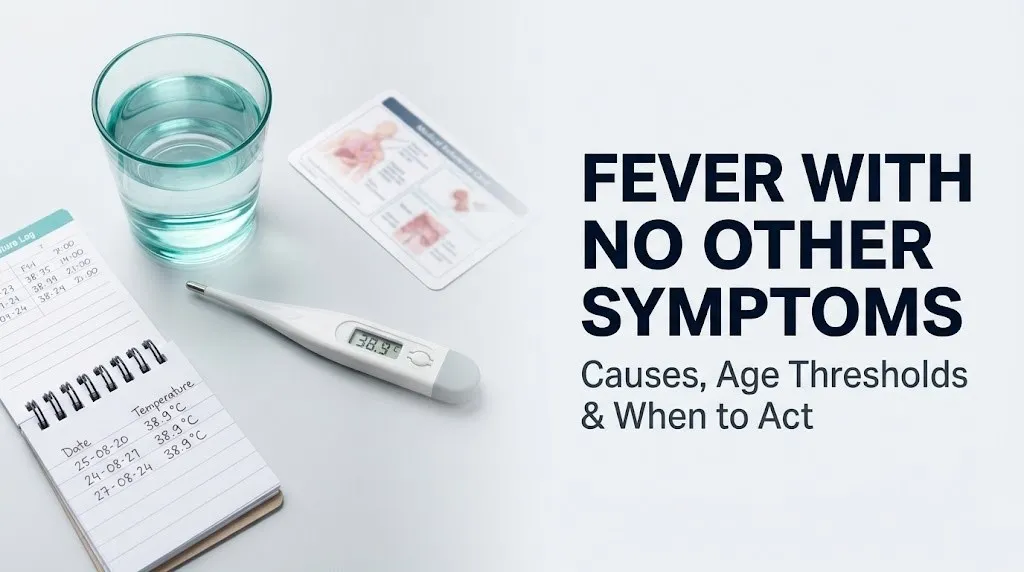
- Record the temperature, the time of measurement, and whether an antipyretic was given and when. This log is clinically useful if you need to contact a provider.
- Measure temperature again every 4 hours while awake. Note whether the fever is rising, stable, or falling.
- Monitor hydration. Fever increases insensible fluid losses through sweating and increased respiratory rate. Adults should aim for at least 2 to 3 liters of fluid per day during a febrile illness.
- Watch for the appearance of any new symptoms: rash, neck stiffness, confusion, difficulty breathing, pain on urination, flank pain, or severe headache. Any of these changes the clinical picture immediately and warrants medical evaluation that day.
- Set a clear decision point before going to sleep: if the fever is above 39.4°C (103°F) at your last evening measurement, plan to contact a primary care physician in the morning rather than waiting to see how the next day develops.
Children require more frequent temperature monitoring than adults, particularly infants aged 3 to 12 months, where the clinical picture can change rapidly. Parents should measure temperature every 2 to 4 hours in a febrile infant and track both temperature values and behavioral changes: feeding behavior, consolability, and alertness are all clinically relevant.
Key Takeaway: Home monitoring of isolated fever is only appropriate for healthy adults and older children with temperatures under 39.4°C (103°F), duration under 48 hours, and no high-risk features; write down temperatures and times so you have a clear clinical picture to share with your provider if the fever persists.
When Fever With No Other Symptoms Requires Medical Attention
Fever with no other symptoms requires medical attention when it meets age-specific temperature thresholds, persists beyond the normal viral illness timeline, appears in a high-risk individual, or is accompanied by any symptom suggesting serious underlying infection even if that symptom appears later.
The decision about when to seek care is not binary. There is a meaningful difference between calling your primary care physician for a next-day appointment and going to an emergency room right now.
Call your primary care physician within 24 to 48 hours if:
- You are a healthy adult with temperature between 38.3°C and 39.4°C (101°F and 103°F) that has persisted more than 72 hours
- A child over 3 years has a fever above 38.9°C (102°F) lasting more than 3 days with no other symptoms
- You have recently returned from international travel in the past 3 weeks and developed any fever
- You are taking a new medication started in the past 2 to 4 weeks and have developed unexplained fever
Go to urgent care or an emergency room today if:
- Any fever in a child under 3 months (see the emergency section)
- Adult fever above 39.4°C (103°F) that is not controlled with over-the-counter antipyretics
- Fever in any immunocompromised individual at any temperature
- Fever above 38°C (100.4°F) in a pregnant woman
- Any fever lasting more than 5 days in an adult with no identified cause
Things to tell your doctor to make the evaluation more precise:
- Exact temperature readings and the time they were measured
- Whether you took any antipyretics and how much the temperature dropped
- Recent travel history, including domestic travel
- Any new medications, supplements, or vaccines in the past 4 weeks
- Any sick contacts, even people who seemed only mildly unwell
- Your complete medical history including any immune-affecting conditions
- Occupation and relevant exposures (healthcare worker, food handler, animal contact)
Emergency Symptoms: When to Call 911 or Go to the ER
Certain presentations associated with fever with no other symptoms require immediate emergency evaluation. Do not wait to see if these resolve on their own.
Call 911 or go to the nearest emergency room immediately if any of the following apply:
- Any fever at or above 38°C (100.4°F) in a baby under 3 months old, measured rectally, regardless of how well the baby appears
- Any fever with a petechial or purpuric rash (flat, pinpoint red or purple spots that do not blanch when pressed with a finger), which may indicate bacterial meningitis or meningococcal septicemia requiring emergency antibiotics within minutes
- Fever accompanied by neck stiffness, severe headache, and sensitivity to light, which together represent the classic triad of bacterial meningitis
- Fever with confusion, altered mental status, or unresponsiveness in any age group
- Fever with difficulty breathing, rapid breathing, or cyanosis (blue coloration of lips or fingertips)
- A febrile seizure lasting more than 5 minutes, or any second seizure in the same febrile illness
- Fever above 40°C (104°F) that does not respond to antipyretic medication
- Fever in any person with absolute neutrophil count below 500 cells per microliter (febrile neutropenia protocol)
- Fever with hypotension (dizziness on standing, feeling faint, rapid weak pulse) suggesting sepsis-associated distributive shock
- Fever with severe localized pain, rapidly expanding skin redness, or skin that feels hard and crackling (signs of soft tissue infection including necrotizing fasciitis)
- Any fever in a person who has returned from a malaria-endemic region in the past 30 days
These presentations can indicate bacterial meningitis, meningococcal septicemia, febrile neutropenia with sepsis, or other rapidly progressing life-threatening infections that require emergency medical assessment, intravenous antibiotics, and hospital-level monitoring, not an urgent care appointment or a next-day physician call.
Frequently Asked Questions About Fever With No Other Symptoms
What causes a fever with no other symptoms in adults?
The most common causes of fever with no other symptoms in adults are early-phase viral infections (including influenza, COVID-19, EBV, and CMV), urinary tract infections especially pyelonephritis in women, and post-vaccination immune responses.
Less common but important causes include tick-borne illnesses like Rocky Mountain spotted fever, medication-induced fever, autoimmune disease flares, and early bacterial infections before localized symptoms develop.
Any isolated fever persisting beyond 72 hours without an identifiable cause warrants a primary care evaluation that includes urinalysis, complete blood count, and CRP.
When should I take my child to the doctor for a fever with no other symptoms?
Take your child to a pediatrician or emergency room the same day if they are under 3 months with any temperature above 38°C (100.4°F), or if they are aged 3 months to 3 years with a temperature above 39°C (102.2°F) lasting more than 48 hours.
Children aged 3 to 5 years with temperatures above 39.4°C (103°F) persisting more than 3 days with no other symptoms also warrant a pediatrician visit the same day to rule out UTI, occult pneumonia, and bacteremia.
The American Academy of Pediatrics recommends against attributing any fever above 38°C in an infant to teething without medical evaluation.
Can a fever with no other symptoms last for several days?
A fever with no other symptoms can last 3 to 7 days when caused by viral infections like EBV or CMV, both of which produce prolonged febrile illness without prominent localizing symptoms in some individuals.
Roseola infantum in children aged 6 months to 3 years characteristically produces 3 to 5 days of high fever with no other symptoms, followed by a rash as the fever resolves.
Any fever persisting beyond 7 days without an identified cause meets the criteria for an extended evaluation and should not be monitored at home without medical guidance.
What temperature is considered a high fever with no other symptoms?
A temperature at or above 39.4°C (103°F) is considered a high fever in adults and warrants medical evaluation if it persists beyond 24 hours without a clear cause.
In children under 3 months, a high fever threshold is much lower: any temperature at or above 38°C (100.4°F) rectally is medically significant in this age group regardless of other symptoms.
Temperatures at or above 41.1°C (106°F) in any age group represent hyperpyrexia, a condition associated with direct cellular damage that requires emergency evaluation regardless of other symptoms.
Is a fever with no other symptoms a sign of COVID-19?
Fever with no other symptoms can be an early sign of COVID-19, particularly in the prodromal phase before respiratory symptoms develop.
The Centers for Disease Control and Prevention lists fever as one of the primary symptoms of COVID-19, and some individuals with COVID-19 experience isolated fever for 24 to 48 hours before cough, fatigue, or other symptoms appear.
A rapid antigen test or PCR test for SARS-CoV-2 is appropriate for any person with unexplained fever, particularly during periods of elevated community transmission.
When is a fever with no other symptoms a medical emergency?
A fever with no other symptoms becomes a medical emergency when it occurs in a baby under 3 months old, when it is accompanied by a petechial rash, neck stiffness, or altered mental status, or when it occurs in an immunocompromised individual at any temperature.
Call 911 or go to the nearest emergency room immediately for fever with purpuric rash, confusion, difficulty breathing, or any febrile seizure lasting more than 5 minutes.
Fever above 40°C (104°F) that does not respond to antipyretic treatment is also an emergency threshold requiring same-day hospital evaluation.
Getting Clear on the Right Next Step
An isolated fever without other symptoms is genuinely common, and most of the time in healthy adults and older children, it resolves on its own within 3 to 5 days as the immune response clears a viral infection. The challenge is that the same presentation, in the wrong age group or the wrong clinical context, can represent something that moves fast and cannot wait.
The framework here is simple: age determines your baseline urgency level, height and duration of the fever refine it, and the presence of any high-risk feature (immunocompromise, pregnancy, recent travel, an infant under 3 months) overrides the general rules entirely.
If you’re unsure where your situation falls, the safest question to ask is not “is this probably fine?” but “does anything about this situation put me in a high-risk category?” If the answer is yes, contact your primary care physician or obstetrician-gynecologist today, and go to the emergency room if the fever is above 39.4°C (103°F) or if any new symptom appears that concerns you