What Causes Chronic Hives and Why They Keep Returning
Chronic hives causes range from autoimmune dysfunction and infection to medication reactions and neuroimmune stress responses, but in roughly half of all cases, no specific underlying trigger can be identified despite thorough medical investigation. What matters most is understanding that chronic hives are not simply a prolonged allergic reaction: they represent a distinct disease process driven by dysregulated mast cell activation in the skin, and identifying the cause changes everything about how they are treated.
According to the American Academy of Allergy Asthma and Immunology (AAAAI), chronic urticaria affects approximately 1% of the global population at any given time, with most cases persisting for one to five years without adequate diagnosis or targeted treatment. Research published in the British Journal of Dermatology has found that patients with chronic urticaria wait an average of two to three years from symptom onset before receiving a formal diagnosis and appropriate specialist care.
This article covers the full spectrum of chronic hives causes, the specific immunological and neuroimmune mechanisms that produce each one, the clinical distinction between what triggers a flare and what actually sustains the chronic state, how diagnosis works, and the precise threshold at which specialist evaluation becomes the right call.
What Are Chronic Hives and How Are They Defined
Chronic hives, clinically termed chronic urticaria (CU), are defined as the recurrence of urticarial wheals (raised, itchy, reddened skin welts), angioedema, or both, on most days of the week for at least six consecutive weeks.
The six-week threshold matters clinically because it separates acute urticaria (which is most commonly allergic or viral in origin and typically self-resolves) from chronic urticaria (which requires a completely different diagnostic and management approach). The EAACI/GA2LEN/EDF/WAO Urticaria Guidelines 2022, published in the journal Allergy, divide chronic urticaria into two major subtypes based on whether a specific physical trigger can be identified.
Chronic spontaneous urticaria (CSU) occurs without any identifiable physical trigger and is the more common subtype, accounting for approximately 70% to 80% of chronic urticaria cases. Chronic inducible urticaria (CIndU) is produced by specific and reproducible physical stimuli including cold temperature, pressure, vibration, heat, or sunlight exposure.
Individual wheals in chronic urticaria are typically transient, lasting less than 24 hours at any single skin site before resolving without bruising or scarring, even as new wheals appear elsewhere. This migratory pattern is a distinguishing clinical feature from other skin conditions such as urticarial vasculitis, where individual lesions persist beyond 24 hours and may leave bruising.
How Common Are Chronic Hives and Who Gets Them
Chronic urticaria affects approximately 0.5% to 1% of the population at any given point in time, with a lifetime prevalence estimated at around 1.8% according to epidemiological data reviewed by the AAAAI. This makes it a relatively common condition in absolute terms, affecting millions of people in the United States alone.
Women are approximately two to three times more likely to develop chronic spontaneous urticaria than men, a disparity that holds across multiple population studies and appears linked to both the higher baseline prevalence of autoimmune disease in biological females and sex hormone effects on mast cell reactivity. Peak incidence occurs in adults between the ages of 20 and 40, though chronic urticaria can develop at any age including childhood and late adulthood.
A 2019 population-based study published in JAMA Dermatology found that the economic and quality-of-life burden of chronic urticaria is comparable to that of moderate-to-severe asthma, with sleep disturbance, anxiety, and work impairment reported by the majority of affected patients. This context is relevant because it underscores why the cause matters: finding and addressing an underlying driver of CSU can substantially shorten the disease course.
Chronic urticaria also clusters with other conditions. Research has found an association between chronic spontaneous urticaria and concurrent autoimmune thyroid disease in approximately 14% to 33% of patients, and between CSU and elevated antinuclear antibodies (ANA) in a subset suggesting broader autoimmune dysregulation. Physicians who see a patient with new-onset chronic urticaria should consider this systemic context, not just the skin findings.
Chronic Hives Causes: The Full Clinical Picture
The causes of chronic hives fall into three mechanistically distinct categories: autoimmune and immune-mediated, identifiable external triggers, and idiopathic (no identifiable cause despite thorough evaluation).
Understanding this framework prevents the common mistake of treating every case of chronic urticaria as an allergy. In classic allergy, an allergen drives the immune reaction and removing the allergen resolves the condition. In autoimmune chronic urticaria, the immune system is attacking components of the mast cell’s own surface, meaning no external allergen is involved and removal of environmental triggers does not resolve the disease.
Here is the clinical breakdown of cause categories:
| Cause Category | Estimated Proportion of CSU Cases | Requires Medical Diagnosis |
|---|---|---|
| Autoimmune (IgG autoantibodies against FcεRI or IgE) | 35% to 45% | Yes: specialist evaluation, autoimmune serology |
| Idiopathic (no cause found despite workup) | 40% to 50% | Yes: workup required to confirm “no cause” |
| Infection-associated | 10% to 15% | Yes: specific testing for identified pathogens |
| Medication-induced or exacerbated | 10% to 30% (exacerbation) | Yes: medication review and provocation history |
| Inducible physical triggers (CIndU) | 20% to 30% of all CU | Yes: provocation testing for specific trigger type |
| Food and pseudoallergen-related | Less than 10% of CSU | Yes: elimination and rechallenge under supervision |
| Thyroid autoimmune disease-associated | 14% to 33% concurrent prevalence | Yes: thyroid function and antibody testing |
The percentages above overlap because individual patients can have more than one contributing mechanism operating simultaneously. A patient with autoimmune CSU may also have NSAID sensitivity, a concurrent low-grade Helicobacter pylori infection, and high psychological stress, each of which independently amplifies mast cell reactivity.
How Mast Cells Cause Chronic Hives
Mast cells are the central effector cells in all forms of chronic urticaria, and understanding how they produce hives explains why the condition is so difficult to control and why the cause matters so much for treatment selection.
Think of dermal mast cells like overstocked warehouses packed with inflammatory chemicals. Normally, these warehouses receive a specific delivery authorization (an allergen crosslinking IgE on the mast cell surface) before releasing their inventory. In chronic urticaria, the authorization system malfunctions. The warehouses start releasing their contents without waiting for the correct signal, flooding the skin with histamine and other mediators continuously or repeatedly.
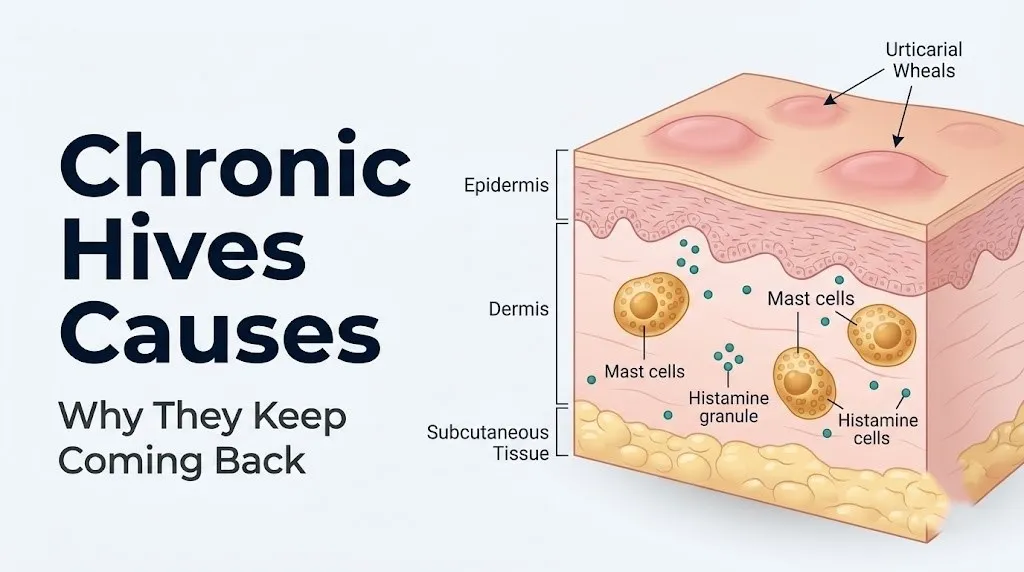
Mast cells in the upper and mid dermis store histamine, tryptase, heparin, and chymase in membrane-bound secretory granules. When activated by any of several mechanisms, they undergo degranulation: the granules fuse with the cell membrane and release their contents into the surrounding dermal tissue. Simultaneously, mast cells synthesize and release newly formed lipid mediators including prostaglandin D2 (via the cyclooxygenase pathway from arachidonic acid) and leukotriene C4 (via the 5-lipoxygenase pathway).
Released histamine binds H1 receptors on postcapillary venule endothelial cells in the dermis, triggering vasodilation and increased vascular permeability. Plasma leaks from the vessel into the surrounding dermal tissue, producing the raised, fluid-filled wheal. Simultaneous arteriolar dilation from axon reflex activity produces the surrounding erythematous flare. The itch sensation arises from histamine binding H1 receptors on sensory C-fibers in the skin.
The AAAAI states that three distinct mechanisms can activate dermal mast cells in chronic urticaria: IgE crosslinking by allergen (allergic mechanism), IgG autoantibody binding to FcεRI or IgE itself (autoimmune mechanism), and direct non-immunological activation by physical stimuli, drugs, or neuropeptides. Each mechanism produces an identical wheal-and-flare response at the skin surface, which is why the appearance of the hive gives no information about its underlying cause.
Autoimmune Causes of Chronic Hives
Autoimmune activation is the single most frequently identified underlying cause of chronic spontaneous urticaria, accounting for an estimated 35% to 45% of CSU cases according to data reviewed in the EAACI Urticaria Guidelines 2022.
The autoimmune mechanism works like this: the immune system produces IgG autoantibodies that target either the FcεRI receptor (the high-affinity IgE receptor on the mast cell surface) or IgE itself. When these IgG autoantibodies bind their targets on the mast cell surface, they crosslink adjacent receptor molecules, triggering the same intracellular signaling cascade that allergen-IgE crosslinking would produce, without any allergen involved. The mast cell degranulates and releases histamine just as it would during an allergic reaction, but the trigger is the patient’s own immune system.
This mechanism explains why autoimmune chronic urticaria is often unresponsive to allergen avoidance strategies and why identifying the specific food trigger is futile for these patients. The mast cell activation is self-perpetuating and independent of what the person eats, touches, or breathes.
Autoimmune chronic urticaria is also strongly associated with other autoimmune conditions:
- Hashimoto’s thyroiditis (autoimmune hypothyroidism): Present in 14% to 33% of CSU patients in multiple prospective studies. Thyroid peroxidase antibodies (TPO-Ab) are detectable in a substantial proportion of CSU patients even without clinical thyroid disease.
- Graves’ disease (autoimmune hyperthyroidism): Less common co-occurrence than Hashimoto’s but documented in the CSU literature.
- Systemic lupus erythematosus (SLE): Urticaria-like lesions occur in lupus, and true CSU can coexist with SLE. Positive ANA testing in CSU patients warrants rheumatological evaluation.
- Sjögren’s syndrome: Associated with urticarial presentations in a subset of patients.
- Type 1 diabetes and rheumatoid arthritis: Research has found associations with CSU but not yet established mechanistic causation.
Women with CSU and concurrent thyroid disease or elevated TPO-Ab represent a population where treating the underlying autoimmune thyroid condition occasionally improves urticaria control, though the evidence for this relationship is observational rather than confirmed by large controlled trials.
Key Takeaway: In chronic spontaneous urticaria, the most frequently identified underlying mechanism is IgG autoantibody-mediated mast cell activation targeting FcεRI or IgE, which means no external allergen is driving the reaction and allergen avoidance strategies will not resolve the condition.
Infections as a Cause of Chronic Hives
Specific bacterial, viral, and parasitic infections are recognized causes of chronic urticaria, accounting for approximately 10% to 15% of identifiable CSU cases, according to research reviewed in the Journal of Allergy and Clinical Immunology.
Helicobacter pylori, the gram-negative bacterium responsible for peptic ulcers, has the strongest published association with chronic urticaria among bacterial infections. Multiple prospective studies and meta-analyses have found that H. pylori eradication in CSU patients with confirmed infection leads to partial or complete urticaria remission in a proportion of cases, though the precise mechanism is not fully characterized. The working hypothesis involves H. pylori-driven chronic immune activation increasing systemic histamine production and potentially contributing to cross-reactive IgE responses, though this remains an area of ongoing research rather than established fact.
Parasitic infections are a well-recognized trigger, particularly Anisakis simplex, a marine parasite transmitted through raw or undercooked seafood. Anisakis sensitization produces IgE-mediated mast cell activation and has been identified as a cause of recurrent urticaria in coastal populations with high seafood consumption. Other parasitic associations include Toxocara, Giardia, and Strongyloides in specific geographic or exposure contexts.
Viral infections including hepatitis B, hepatitis C virus (HCV), and Epstein-Barr virus have been documented to trigger or sustain chronic urticaria during active infection or in the post-infectious phase. HCV-associated urticaria may also involve cryoglobulinemia as a contributing mechanism. Patients with chronic urticaria and risk factors for HCV infection (history of injection drug use, prior blood transfusion before 1992, certain occupational exposures) should have HCV serology included in their diagnostic workup.
Patients born in or with travel history to tropical regions with endemic parasitic exposure present a higher probability that infection is contributing to their chronic urticaria. Eosinophilia on a complete blood count in a CSU patient should specifically prompt evaluation for parasitic infection.
Medications That Cause or Trigger Chronic Hives
Medications are a clinically critical cause category for chronic hives because drug-induced urticaria can mimic autoimmune or idiopathic CSU, and the condition will not resolve until the offending agent is identified and discontinued.
Nonsteroidal anti-inflammatory drugs (NSAIDs), including aspirin, ibuprofen, naproxen, and other cyclooxygenase (COX) inhibitors, are the most commonly implicated medication class. NSAIDs worsen chronic urticaria in approximately 30% of CSU patients by inhibiting cyclooxygenase-1 (COX-1), which shifts arachidonic acid metabolism away from prostaglandins and toward leukotrienes via the 5-lipoxygenase pathway. Elevated leukotriene C4 and D4 levels directly activate mast cells and amplify the urticarial response. This is a pharmacological mechanism, not an allergic one, which is why it can occur with structurally unrelated NSAIDs and why it requires leukotriene receptor antagonists rather than standard antihistamines for control.
ACE inhibitors (angiotensin-converting enzyme inhibitors, such as lisinopril or enalapril) cause a distinct type of swelling called bradykinin-mediated angioedema through a non-histamine pathway. This is not true urticaria and will not respond to antihistamines. Recognizing ACE inhibitor angioedema as a separate mechanism from mast cell-driven chronic hives is clinically essential because the management is entirely different.
Other medications associated with chronic urticaria include:
- Opioid analgesics: Produce direct, non-immunological mast cell degranulation via opioid receptors on mast cell surfaces (MOR, KOR). Codeine and morphine are the most documented.
- Vancomycin: Causes “red man syndrome” through direct mast cell degranulation, rate-dependent and not IgE-mediated.
- Radiocontrast media: Can trigger non-immunological mast cell activation in susceptible individuals.
- Certain antibiotics: Ampicillin and amoxicillin are associated with urticarial reactions, though distinguishing true IgE-mediated allergy from drug hypersensitivity requires specialist evaluation.
Patients should bring a complete medication list, including over-the-counter drugs and supplements, to any medical appointment for chronic hives. Ibuprofen taken “as needed” for headaches can perpetuate CSU for months before the connection is recognized.
Food and Dietary Triggers in Chronic Hives
Dietary factors play a smaller role in chronic hives than most patients expect, and the clinical evidence for specific food causes is weaker than the evidence for autoimmune and medication mechanisms.
True IgE-mediated food allergy as a cause of chronic spontaneous urticaria is uncommon. Research consistently shows that less than 10% of CSU patients have identifiable food allergy as a primary driver. When food allergy does contribute, it typically produces acute urticaria rather than the persistent daily pattern of CSU. Patients who eliminate every suspected food from their diet and still have daily hives are almost certainly dealing with a non-dietary underlying mechanism.
The more relevant dietary category for chronic hives is pseudoallergens: food components that trigger mast cell activation through non-IgE mechanisms, without producing traditional allergy test results. These include:
- Natural salicylates (present in many fruits, vegetables, and spices)
- Food additives including artificial colors (tartrazine), benzoates, and sulfites
- Biogenic amines including histamine (in fermented foods, aged cheese, wine, canned fish) and tyramine (in aged meats and cheeses)
- Glutamate (present in processed foods and as a food additive, monosodium glutamate)
A low-pseudoallergen diet followed for three to four weeks under supervision by a registered dietitian can help determine whether dietary pseudoallergens are contributing to urticaria flares. This should not be attempted as an unguided self-experiment, because the elimination is nutritionally restrictive and reintroduction must be systematic to identify specific triggers.
Women who notice that urticaria flares worsen around menstruation should be aware that dietary histamine intake and progesterone levels interact with mast cell reactivity, because progesterone enhances mast cell sensitivity during the luteal phase. Eliminating histamine-rich foods during the luteal phase may reduce cycle-linked flares for some patients, though this requires evaluation by an allergist to confirm the pattern.
Key Takeaway: Food allergy is a minor contributor to chronic spontaneous urticaria in fewer than 10% of cases; the more clinically relevant dietary category is pseudoallergens (salicylates, food additives, biogenic amines) that activate mast cells through non-IgE mechanisms and will not show up on standard allergy skin or blood testing.
Stress and Chronic Hives: The Neuroimmune Connection
Psychological stress does not simply “worsen” chronic hives in a vague, nonspecific way. It activates a specific and well-characterized neuroimmune pathway that directly triggers mast cell degranulation in the skin.
The pathway begins in the hypothalamus, which releases corticotropin-releasing hormone (CRH) in response to psychological stress. CRH is typically thought of as the initiating hormone of the hypothalamic-pituitary-adrenal (HPA) axis, stimulating adrenocorticotropic hormone (ACTH) release from the anterior pituitary and ultimately driving cortisol production from the adrenal cortex. But CRH also acts peripherally: cutaneous neurons and mast cells themselves express CRHR1 receptors, the CRH receptor type 1, and when CRH binds these receptors on dermal mast cells directly, it triggers degranulation without involving the HPA axis at all.
Research published in the Journal of Allergy and Clinical Immunology has confirmed that dermal mast cells express functional CRHR1 receptors and that CRH application produces histamine release from these cells in vitro. This peripheral pathway explains why stress-induced hives can occur rapidly (within minutes of a stressful event) and why cortisol-reducing interventions do not consistently control stress-linked urticaria.
Substance P, a neuropeptide released from cutaneous sensory nerve endings in the dermis, provides a second neuroimmune route. Substance P binds NK1 receptors on mast cells, triggering degranulation. Physical and psychological stress both increase substance P release from peripheral sensory neurons. Nerve growth factor (NGF), elevated during chronic stress, further sensitizes mast cells by upregulating their expression of surface receptors, making them more reactive to any subsequent stimulus.
The clinical significance: patients with chronic urticaria and high psychological stress burden are not imagining a stress-hives connection. It is a real mechanistic pathway, and stress management approaches including cognitive behavioral therapy (CBT) have been studied as adjuncts in chronic urticaria management. A 2023 systematic review in Allergy found that psychological interventions improved urticaria activity scores in studies where they were assessed, though the evidence base remains preliminary rather than definitive.
Physical and Inducible Causes of Chronic Hives
Chronic inducible urticaria (CIndU) refers to urticaria reliably produced by a specific, identifiable physical stimulus, and it accounts for approximately 20% to 30% of all chronic urticaria cases.
Unlike chronic spontaneous urticaria, CIndU has a clearly identifiable cause: the physical trigger. The challenge is that the trigger is often something unavoidable in daily life, such as cold temperature, friction, or sweating, making complete avoidance impractical and treatment necessary.
The recognized subtypes of chronic inducible urticaria include:
| CIndU Subtype | Specific Physical Trigger | Diagnostic Test |
|---|---|---|
| Symptomatic dermographism | Firm skin stroking or friction | FricTest dermographometer (standardized pressure application) |
| Cold urticaria | Cold contact (water, air, objects) | Ice cube test (2 to 3 minutes on forearm skin) |
| Pressure urticaria | Sustained perpendicular pressure | Weighted dermographometer (delayed, 4 to 6 hours after stimulus) |
| Cholinergic urticaria | Heat, exertion, emotional stress (core body temperature rise) | Exercise provocation test or hot water bath challenge |
| Solar urticaria | UV light exposure (specific wavelengths vary) | Phototesting with defined wavelengths |
| Aquagenic urticaria | Water contact at any temperature | Wet compress applied to skin for 20 minutes |
| Vibratory urticaria | Vibration stimulus | Vortex mixer applied to forearm |
Cholinergic urticaria deserves specific attention because it is frequently misinterpreted as a generalized heat or exercise allergy. The actual trigger is the rise in core body temperature driven by exercise, hot baths, fever, or emotional stress. The mast cell activation pathway in cholinergic urticaria involves acetylcholine binding muscarinic receptors on mast cells, distinguishing it mechanistically from other CIndU subtypes.
Young men are disproportionately affected by symptomatic dermographism and cholinergic urticaria, while cold urticaria has a more equal sex distribution. Cold urticaria requires particular caution: immersion in cold water (swimming in cold ocean or lake) can trigger rapid, widespread mast cell activation producing systemic symptoms including hypotension and anaphylaxis, not merely localized wheals.
Chronic Hives With No Known Cause: Idiopathic Urticaria
Idiopathic chronic urticaria is diagnosed when hives persist for more than six weeks and no identifiable underlying cause is found after thorough clinical and laboratory investigation.
Approximately 40% to 50% of chronic spontaneous urticaria patients receive an idiopathic classification after comprehensive evaluation, according to data from large prospective CSU registries. This does not mean the condition is imaginary or that investigation was unnecessary. It means the cause falls outside what current diagnostic tools can detect, which may reflect unrecognized autoimmune mechanisms, subtle mast cell hyperreactivity from genetic variation in mast cell signaling proteins, or mechanisms not yet characterized in the clinical literature.
It is important to distinguish truly idiopathic urticaria from prematurely labeled idiopathic urticaria. Research published in JAMA Dermatology in 2021 found that a proportion of patients labeled idiopathic had not received complete autoimmune serology, thyroid antibody testing, or H. pylori testing before the idiopathic diagnosis was applied. A complete workup is required before “no identifiable cause” is an accurate conclusion.
Idiopathic chronic urticaria is not a static diagnosis. Some patients whose initial workup is negative develop identifiable autoimmune markers on repeat testing months later. Annual reassessment of idiopathic CSU is standard practice in specialist care settings because the underlying immune landscape can evolve over time.
The natural history of idiopathic chronic urticaria is variable. A prospective study published in the British Journal of Dermatology found that approximately 35% of CSU patients achieved spontaneous remission within one year, approximately 50% within three years, and approximately 20% had persistent disease beyond five years. Patients with more severe disease at onset and concurrent autoimmune markers tended to have longer disease duration.
Key Takeaway: An idiopathic classification in chronic urticaria is only clinically valid after a complete diagnostic workup including autoimmune serology, thyroid antibody testing, and infection screening; approximately 40% to 50% of CSU cases remain unexplained after thorough investigation, but this proportion shrinks when the full recommended panel is actually performed.
Chronic Hives Risk Factors and Who Is Most Affected
Certain patient characteristics consistently predict a higher probability of developing chronic urticaria or a more persistent disease course once it develops.
Established risk factors for chronic spontaneous urticaria:
- Female biological sex: Women develop CSU at two to three times the rate of men in all major epidemiological studies, with peak incidence during reproductive years (ages 20 to 40). Sex hormone influences on mast cell reactivity are documented: estrogen upregulates mast cell expression of FcεRI receptors and promotes histamine synthesis, while progesterone increases mast cell sensitivity during the luteal phase.
- Personal or family history of atopic disease: Individuals with asthma, allergic rhinitis, or atopic dermatitis have a modestly elevated risk of developing CSU, though the majority of CSU patients are not atopic. The atopic connection is stronger for acute urticaria than for CSU.
- Autoimmune disease history: Any personal history of autoimmune thyroid disease, rheumatoid arthritis, SLE, or type 1 diabetes increases the probability that a new chronic urticaria presentation has an autoimmune mechanism.
- Chronic NSAID use: Patients taking NSAIDs regularly (for osteoarthritis, cardiovascular prophylaxis, or chronic pain) are at elevated risk for NSAID-exacerbated chronic urticaria and may not recognize the medication as a contributing factor.
- Chronic psychological stress and psychiatric comorbidity: Research published in Allergy has found that depression and anxiety disorder are present in approximately 30% to 40% of chronic urticaria patients, and that pre-existing high stress burden is associated with greater disease severity at diagnosis.
- Obesity: A 2020 observational study published in JAMA Dermatology found that higher body mass index was associated with more severe urticaria activity scores in CSU patients, potentially mediated by adipose tissue-derived pro-inflammatory cytokines amplifying mast cell responsiveness.
Chronic Hives in Specific Populations
Chronic hives present and behave differently across specific populations, and standard diagnostic and management approaches sometimes need to be adjusted for these groups.
Children and adolescents:
Chronic urticaria occurs in children but is less common than in adults, with a reported prevalence of approximately 0.1% to 0.3% in pediatric populations. In children under 12, infectious triggers (particularly recurrent upper respiratory viral infections and streptococcal pharyngitis) are proportionally more common than autoimmune mechanisms compared to adults. A 2022 review in Pediatrics noted that H. pylori eradication benefits in pediatric chronic urticaria are less well-established than in adult populations. Children with persistent CSU unresponsive to second-generation antihistamines should be referred to a board-certified pediatric allergist/immunologist for further evaluation.
Pregnant women:
Urticaria during pregnancy presents a diagnostic challenge because the differential diagnosis includes specific pregnancy dermatoses (polymorphic eruption of pregnancy, pemphigoid gestationis) that require entirely different management. Histamine metabolism is altered during pregnancy: placental diamine oxidase (DAO) degrades histamine in the gut, and low DAO activity in some women may increase histamine availability. Standard chronic urticaria medications require safety review during pregnancy; second-generation antihistamines like cetirizine or loratadine are generally considered compatible with pregnancy, but the prescribing decision belongs to the patient’s obstetrician-gynecologist in consultation with an allergist.
Older adults:
Chronic urticaria in patients over 65 carries a higher index of suspicion for underlying systemic disease including malignancy, because neoplastic processes (particularly lymphoma and solid tumors) are rare but documented causes of CSU in this age group. Any CSU onset in an older adult without an obvious preceding trigger should prompt age-appropriate cancer screening in addition to standard urticaria workup.
Immunocompromised patients:
People on immunosuppressive therapies (for organ transplantation, inflammatory bowel disease, or rheumatological conditions) may have atypical presentations of infectious triggers causing chronic urticaria, and the diagnostic workup should include opportunistic infection screening alongside standard CSU evaluation.
Chronic Hives and Angioedema: When It Goes Deeper
Angioedema occurs when the same mast cell-mediated plasma extravasation that produces dermal wheals instead occurs in the deeper subcutaneous tissue and submucosa, producing swelling rather than raised itchy welts on the surface.
Approximately 40% of chronic urticaria patients develop angioedema at some point during their disease course, according to the EAACI Urticaria Guidelines 2022. In CSU, angioedema is histamine-mediated and typically involves the lips, eyelids, hands, feet, genitalia, or face. It is uncomfortable and sometimes disfiguring but in most CSU patients it is not acutely life-threatening, because it does not affect the airway.
The exception is angioedema involving the tongue, throat, or larynx. Submucosal swelling in these locations can obstruct the upper airway and represents a medical emergency.
It is equally important to distinguish histamine-mediated angioedema (occurring with urticaria in CSU) from bradykinin-mediated angioedema, which occurs without hives and is driven by a completely different mechanism. Bradykinin-mediated angioedema is caused by ACE inhibitors, hereditary angioedema (C1-inhibitor deficiency), or acquired angioedema from C1-inhibitor consumption. These presentations will not respond to antihistamines and require different emergency and long-term management.
Patients with recurrent angioedema without urticaria (no hives accompanying the swelling episodes) should be evaluated specifically for bradykinin-mediated causes, not simply treated with higher antihistamine doses. A board-certified allergist/immunologist should assess complement levels (C3, C4, C1-inhibitor level and function) and review all current medications for ACE inhibitor or angiotensin receptor blocker use.
How Chronic Hives Are Diagnosed
Diagnosing chronic hives requires a structured clinical history, targeted laboratory testing, and, for inducible subtypes, specific physical provocation tests.
The diagnostic process for chronic urticaria, as outlined in the EAACI Urticaria Guidelines 2022:
- Take a detailed clinical history covering onset date, frequency, duration of individual wheals, body distribution, associated angioedema, suspected triggers, medication use (prescription, over-the-counter, supplements), prior infections, diet, stress level, and family history of urticaria or autoimmune disease.
- Perform a complete physical examination including assessment of dermographism (applying firm stroking pressure to the forearm with a blunt instrument and observing for linear wheal formation after 5 to 10 minutes).
- Order a basic laboratory panel as first-line investigation: complete blood count (CBC) with differential, C-reactive protein (CRP), erythrocyte sedimentation rate (ESR), and thyroid function tests including TSH and thyroid peroxidase antibodies (TPO-Ab).
- Expand the panel based on clinical suspicion: antinuclear antibody (ANA), hepatitis B and C serology, H. pylori testing (stool antigen test or urea breath test preferred over serology for accuracy), specific IgE or skin prick testing if a food or inhalant allergen is specifically suspected from history.
- For suspected autoimmune mechanism: consider autologous serum skin test (ASST) or basophil activation test (BAT) at a specialist center. ASST involves intradermal injection of the patient’s own serum; a positive wheal response suggests the presence of autoreactive factors (IgG autoantibodies) in the serum.
- For suspected physical trigger (CIndU): perform specific provocation testing appropriate to the suspected subtype (ice cube test for cold urticaria, FricTest for symptomatic dermographism, phototesting for solar urticaria).
- Assess disease severity using the validated Urticaria Activity Score 7 (UAS7), which patients complete daily over seven days, rating itch intensity and wheal number on a 0 to 3 scale.
Routine allergy panel testing (skin prick testing or specific IgE to common foods) is not recommended as a first-line investigation for CSU because food allergy contributes to less than 10% of CSU cases and broad allergy panels produce high rates of false-positive results that mislead patients into unnecessary dietary restriction.
Chronic Hives Treatment and When to See a Specialist
Treatment for chronic hives is matched to the identified cause and the severity of disease, and it begins with first-line agents that address the mast cell histamine pathway regardless of the underlying cause.
First-line treatment per the EAACI Urticaria Guidelines 2022 and AAD clinical guidance: modern second-generation H1-antihistamines (including cetirizine, loratadine, fexofenadine, and bilastine) at standard doses. Unlike first-generation antihistamines (diphenhydramine, hydroxyzine), second-generation agents selectively block H1 receptors without significant anticholinergic or sedating effects at standard doses.
If standard-dose second-generation antihistamines do not control symptoms within two to four weeks, guidelines recommend increasing the dose up to fourfold under medical supervision before escalating to other agents.
Treatment approach overview for refractory chronic urticaria:
| Treatment Approach | Mechanism | Evidence Basis | Provider Who Manages It |
|---|---|---|---|
| Second-generation H1-antihistamines | H1 receptor blockade on dermal endothelium and sensory nerves | Well-established by randomized controlled trials | Primary care physician |
| High-dose second-generation H1-antihistamines (up to 4x standard dose) | Enhanced H1 receptor occupancy | Supported by clinical guidelines and RCTs | Allergist/immunologist or dermatologist |
| Omalizumab (anti-IgE monoclonal antibody) | Binds free IgE, reduces FcεRI expression on mast cells | Well-established by phase 3 RCTs (ASTERIA I, ASTERIA II, GLACIAL trials) | Allergist/immunologist |
| Cyclosporine | Broad immunosuppression reducing mast cell and T-cell activity | Supported by controlled trials; second-line for refractory CSU | Allergist/immunologist or dermatologist |
| Short-course systemic corticosteroids | Broad anti-inflammatory effect | Not appropriate for long-term use; short courses for acute severe flares only | Primary care physician or specialist |
| H. pylori eradication (if confirmed infection) | Removes infectious driver of immune activation | Supported by prospective studies (effect size variable) | Primary care physician with specialist confirmation |
| NSAID discontinuation (if implicated) | Removes pharmacological mast cell sensitization | Clinical observation; mechanism well-established | Primary care physician |
Patients should ask to be referred to a board-certified allergist/immunologist when: hives have persisted for more than six weeks, symptoms are not controlled by standard antihistamines after four weeks of use, angioedema accompanies the hives, a specific underlying cause (autoimmune disease, infection) is suspected but has not been tested for, or the condition is affecting sleep, work, or daily functioning.
Key Takeaway: Omalizumab is the most evidence-supported treatment for antihistamine-refractory chronic spontaneous urticaria, with phase 3 randomized controlled trial data showing response rates of approximately 52% to 68% in patients who failed high-dose H1-antihistamines, and it works by reducing free IgE levels, which in turn decreases FcεRI expression on mast cell surfaces and lowers baseline mast cell reactivity.
Emergency Symptoms: When to Call 911 or Go to the ER
Certain symptoms associated with chronic hives can represent an acute life-threatening emergency. Do not wait to see if these resolve on their own.
Call 911 or go to the nearest emergency room immediately if you experience:
- Throat tightening, difficulty swallowing, or a sensation that your airway is narrowing, indicating possible laryngeal or pharyngeal angioedema with airway obstruction risk
- Difficulty breathing, wheezing, or stridor (high-pitched breathing sound) accompanying hives, indicating possible anaphylaxis with bronchospasm
- Swelling of the tongue or lips that is progressing rapidly rather than stable, indicating advancing angioedema with potential airway compromise
- Dizziness, lightheadedness, or loss of consciousness alongside hives and swelling, indicating anaphylaxis with cardiovascular collapse (distributive shock from massive histamine release causing peripheral vasodilation)
- Rapid heart rate (tachycardia) with hypotension or feeling faint alongside hives, indicating anaphylactic shock
- Widespread hives appearing suddenly within minutes of eating, a medication, an insect sting, or latex exposure, accompanied by any systemic symptom listed above
If an epinephrine auto-injector (EpiPen or equivalent) has been prescribed to you, use it immediately and call 911 even if symptoms improve after the injection, because biphasic anaphylactic reactions can occur hours later.
These presentations indicate anaphylaxis and require emergency medical assessment, intravenous resuscitation, and monitoring in an emergency department, not an urgent care visit or a telephone triage call.
Frequently Asked Questions About Chronic Hives Causes
What is the most common cause of chronic hives?
The most commonly identified cause of chronic spontaneous urticaria is autoimmune mast cell activation driven by IgG autoantibodies targeting the FcεRI receptor or IgE itself, accounting for an estimated 35% to 45% of cases.
However, approximately 40% to 50% of CSU cases remain unexplained after full investigation and are classified as idiopathic.
A thorough diagnostic workup including autoimmune serology, thyroid antibody testing, and infection screening is required to determine whether an identifiable cause is present in any individual case.
Can stress cause chronic hives to develop?
Psychological stress can trigger and worsen chronic hives through a specific neuroimmune pathway involving corticotropin-releasing hormone (CRH) binding CRHR1 receptors on dermal mast cells, causing direct mast cell degranulation and histamine release.
This pathway operates independently of the hypothalamic-pituitary-adrenal axis, which is why stress-linked hives can develop rapidly and why cortisol reduction alone does not consistently control them.
Whether stress alone can initiate chronic urticaria without a pre-existing underlying susceptibility has not been definitively established; it is more accurately described as a significant exacerbating and perpetuating factor in already susceptible individuals.
What autoimmune diseases are linked to chronic hives?
Autoimmune thyroid diseases including Hashimoto’s thyroiditis and Graves’ disease are present concurrently in 14% to 33% of chronic spontaneous urticaria patients.
Systemic lupus erythematosus, Sjögren’s syndrome, rheumatoid arthritis, and type 1 diabetes have all been associated with chronic urticaria in the published literature.
Any chronic urticaria patient with systemic symptoms including joint pain, fatigue, dry eyes or mouth, or unexplained weight changes should have autoimmune serology including ANA testing included in their evaluation.
How do I know if my chronic hives are caused by food?
True food allergy is an identifiable cause in fewer than 10% of chronic spontaneous urticaria cases, so food is statistically unlikely to be the primary driver in most patients.
If food consistently produces hives within 15 to 60 minutes of consumption, specific IgE testing or supervised skin prick testing for the suspected food may be informative.
Pseudoallergen-related dietary reactivity (from salicylates, food additives, or biogenic amines like histamine) requires a structured low-pseudoallergen elimination diet conducted under the supervision of a registered dietitian and a board-certified allergist to assess accurately.
Do chronic hives ever go away on their own?
Yes, approximately 35% of chronic spontaneous urticaria patients achieve spontaneous remission within one year of onset, and approximately 50% achieve remission within three years, according to prospective natural history data published in the British Journal of Dermatology.
Approximately 20% of patients have persistent disease beyond five years, with higher rates of persistence in those with severe initial disease and concurrent autoimmune markers.
Spontaneous remission does not depend on finding the underlying cause; it reflects the natural disease course of CSU, though appropriate treatment during active disease reduces the quality-of-life burden substantially.
When should I see a doctor about chronic hives?
Any person experiencing urticarial wheals occurring on most days for more than six weeks should be evaluated by a primary care physician, who can initiate the recommended diagnostic workup and prescribe first-line treatment.
Referral to a board-certified allergist/immunologist or board-certified dermatologist is appropriate if symptoms are not controlled by antihistamines after four weeks, if angioedema accompanies the hives, or if an autoimmune or infectious underlying cause is suspected.
Bring a written diary of when hives occur, what you had eaten or taken in the preceding two hours, and a complete medication list including over-the-counter drugs and supplements to your first appointment.
Closing
Chronic hives are not a mystery condition that simply happens to some people for no reason. There is always a mechanism, even when specific testing cannot pinpoint it. The framework of mast cell activation, IgG autoantibodies, neuroimmune stress pathways, physical triggers, and identifiable infections gives both patients and clinicians real tools for narrowing down what is driving the condition in any individual case.
If you have had hives for more than six weeks, the next step is evaluation by a primary care physician with a request for the baseline diagnostic panel: CBC with differential, CRP, ESR, TSH, and thyroid peroxidase antibodies. That panel is the appropriate starting point, and it frequently identifies actionable findings.
A board-certified allergist/immunologist is the specialist best positioned to evaluate refractory or complex chronic urticaria, order advanced testing including autologous serum skin testing or basophil activation testing, and manage treatment escalation when antihistamines are not enough. You now have the clinical context to ask the right questions and push for the workup your condition actually warrants.