What Causes Snoring in Females? The Real Reasons Why
What causes snoring in females is a specific and physiologically distinct question from what causes snoring in general, because female sex hormones, reproductive status, and unique anatomical risk factors all shape when and why a woman’s airway narrows during sleep. For many women, snoring is not random or simply a matter of sleeping position: it is tied directly to progesterone levels, menopausal transition, pregnancy, thyroid function, or an undiagnosed sleep disorder that presents very differently in women than in men.
According to the American Academy of Sleep Medicine (AASM), obstructive sleep apnea affects an estimated 26 percent of women between the ages of 30 and 70, yet women remain substantially underdiagnosed compared to men because their symptoms often look like fatigue, insomnia, or depression rather than the loud witnessed snoring that prompts most male referrals. That diagnostic gap is not a minor inconvenience. Untreated sleep-disordered breathing in women carries documented cardiovascular and metabolic consequences.
This article covers the specific named physiological and hormonal mechanisms behind female snoring, explains why certain life stages dramatically increase snoring risk, and gives you a clear framework for knowing when snoring in a woman warrants watchful waiting versus a conversation with a sleep medicine physician or obstetrician-gynecologist.
What Causes Snoring in Females: The Core Answer
What causes snoring in females is the partial collapse and vibration of soft tissues in the upper airway during sleep, driven by a combination of reduced pharyngeal muscle tone, airway narrowing, and increased airflow turbulence, with hormonal factors specific to female biology playing a central role at key life stages.
Snoring is not a single condition. It represents a spectrum from simple primary snoring with no breathing pauses to upper airway resistance syndrome (UARS) to fully obstructive obstructive sleep apnea (OSA), where breathing repeatedly stops for ten seconds or longer throughout the night. Women can present at any point on this spectrum, and the specific cause driving the airway narrowing determines where on that spectrum they fall and what evaluation or treatment is appropriate.
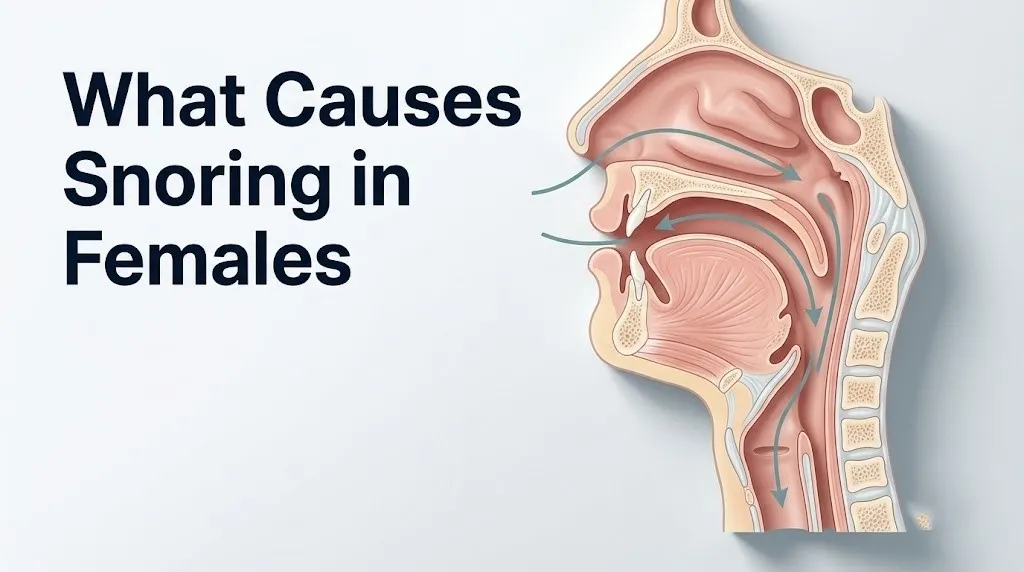
The physiological endpoint is always the same: air moving through a partially narrowed passage creates turbulent flow. Turbulent flow causes the soft palate, uvula, and lateral pharyngeal walls to vibrate against each other or against the posterior pharyngeal wall. That vibration is the snoring sound. What narrows the airway differs depending on whether the primary driver is low hormonal protection, excess tissue, nasal obstruction, structural anatomy, or a systemic condition like hypothyroidism.
Key causes of snoring in females, ranked by frequency in clinical populations:
- Hormonal changes at menopause (most common new-onset cause in women over 50)
- Overweight and obesity with parapharyngeal fat deposition
- Nasal congestion from allergic rhinitis, chronic rhinitis, or deviated nasal septum
- Pregnancy-related airway changes (affects 25 to 35 percent of women in the third trimester)
- Alcohol use within three to four hours of sleep
- Hypothyroidism (underdiagnosed but mechanistically well-supported)
- PCOS (three to tenfold higher OSA risk than age- and weight-matched controls)
- Supine sleep position
- Undiagnosed obstructive sleep apnea
Why Women Snore Differently Than Men
Women snore differently than men because female biology provides a degree of hormonal protection against upper airway collapse that men do not have, and the loss of that protection at specific life stages is a major driver of new or worsening snoring in women.
Before menopause, women have substantially lower rates of OSA than age-matched men. The Wisconsin Sleep Cohort Study, one of the largest longitudinal sleep studies ever conducted, found that OSA prevalence in premenopausal women is approximately two to three times lower than in same-age men. After menopause, that protective gap narrows to near parity. The mechanism is progesterone-mediated respiratory stimulation and upper airway neuromuscular protection, which is discussed in detail in the hormonal section below.
Women’s upper airways are also anatomically different from men’s. On average, women have shorter and wider pharyngeal airways, which partially offsets the disadvantage of having lower baseline airway muscle mass. However, women’s pharyngeal fat pads respond differently to weight gain: fat deposited in the neck and parapharyngeal region narrows the airway, but this fat distribution is less common in premenopausal women because estrogen preferentially directs adipose storage to the hips and thighs rather than the neck and torso.
The clinical presentation of snoring-related OSA differs by sex in ways that create a serious diagnostic problem. According to research published in JAMA Internal Medicine, women with OSA are significantly more likely than men to report insomnia, fatigue, morning headache, mood disturbance, and restless legs as their primary complaints, rather than loud snoring and witnessed apneas. This atypical presentation means their symptoms are frequently attributed to depression, anxiety, or thyroid disease before OSA is ever considered or tested for.
| Feature | Women with OSA | Men with OSA |
|---|---|---|
| Primary complaint | Fatigue, insomnia, mood changes | Loud snoring, witnessed apneas |
| Bed partner report | Often absent or less dramatic | Frequently triggers referral |
| Apnea pattern | REM-predominant, shorter events | All sleep stages, longer events |
| Diagnostic delay | Average 3 to 5 years longer | Often diagnosed more quickly |
| Cardiovascular risk | Equivalent or higher per AHI unit | Well-established |
Upper Airway Anatomy and How Snoring Occurs in Women
Snoring in women occurs when the coordinated neuromuscular activity of the pharyngeal dilator muscles during sleep is insufficient to keep the upper airway open against the negative intraluminal pressure created by each breath in.
Think of the upper airway during sleep like a flexible garden hose. When water flows through a rigid pipe, it flows smoothly. When the same water flows through a partially collapsed flexible tube, it creates turbulence and the tube walls flutter and vibrate. The upper airway is that flexible tube. Its diameter during sleep depends entirely on the tension maintained by the muscles surrounding it.
The primary muscle responsible for airway patency is the genioglossus, the large fan-shaped muscle forming the anterior wall of the oropharynx. The genioglossus protrudes the tongue forward, pulling the base of the tongue away from the posterior pharyngeal wall and maintaining the airway opening. It is innervated by the hypoglossal nerve (cranial nerve XII). During sleep, the firing rate of hypoglossal motor neurons decreases substantially, genioglossus tone falls, and the tongue base descends toward the posterior pharyngeal wall. At that point, only a narrow passage remains for air to flow through, and turbulence and vibration follow.
The velopharynx, the region of the pharynx directly behind the soft palate, is the most common anatomical site of airway obstruction in both OSA and primary snoring. Narrowing here is amplified by any factor that increases tissue bulk around the airway (enlarged tonsils, parapharyngeal fat pads, myxedematous tissue in hypothyroidism), or that reduces the active muscular support holding the pharyngeal walls open.
Quick Tip:
- Snoring that is loudest when lying on the back and quieter or absent when lying on the side suggests the tongue base is the primary collapsing structure, since gravity pulls the tongue toward the posterior wall in supine position.
- Snoring accompanied by a high-pitched whistle-like component suggests nasal airway narrowing as a contributing or primary site.
- Snoring with intermittent complete silence (indicating apnea) followed by a gasping or choking sound requires professional evaluation regardless of severity.
Key Takeaway: Women snore for physiologically specific reasons that differ from men, and the loss of progesterone’s airway-protective effects at menopause is the single biggest reason why snoring rates in women rise sharply after age 50, often reaching parity with men by the mid-60s.
Hormonal Causes of Snoring in Women
Hormonal causes of snoring in women center on progesterone, a hormone that acts as a direct respiratory stimulant and enhances the neuromuscular tone of the upper airway, with estrogen playing a supporting role in mucosal and muscular tissue maintenance.
Progesterone produced by the corpus luteum after ovulation in each menstrual cycle, and in dramatically higher quantities by the placenta during pregnancy, sensitizes the medullary respiratory centers in the brainstem to carbon dioxide. This effect increases the drive to breathe and directly stimulates motor neurons in the hypoglossal nucleus, increasing genioglossus muscle activation during sleep. Research published in the journal Sleep has confirmed that upper airway collapsibility, measured as the critical closing pressure of the pharynx (Pcrit), is measurably lower (meaning more protected) during the luteal phase of the menstrual cycle when progesterone is at its peak, compared to the follicular phase when it is low.
Estrogen contributes to airway protection through several additional mechanisms: it maintains the thickness and compliance of upper airway mucosal tissue, supports nasal mucosal health reducing nasal resistance, and modulates fat distribution away from central and parapharyngeal regions toward peripheral (hip and thigh) depots, keeping the airway relatively free of compressive adipose tissue. When both progesterone and estrogen fall at menopause, these three layers of protection are removed simultaneously.
Women taking combined hormonal contraceptives that suppress ovulation also experience blunted progesterone levels compared to natural cycles, though the clinical evidence on whether this meaningfully increases snoring risk is still emerging and primarily based on observational data. Women using progestin-only contraceptives or menopausal hormone therapy with a progestin component may retain some degree of airway protection, but the specific progestin molecule and dose matter because synthetic progestins vary in their binding affinity at progesterone receptors and in their respiratory stimulant potency.
Menopause and Snoring in Women
Menopause causes snoring in women by removing progesterone and estrogen-mediated upper airway protection simultaneously, producing a sharp increase in pharyngeal collapsibility that makes postmenopausal women’s OSA risk approach that of age-matched men.
The Wisconsin Sleep Cohort Study found that postmenopausal women not using hormone therapy had approximately three times the odds of developing OSA compared to premenopausal women of similar age and BMI. That is not a modest difference. It represents one of the steepest hormonal-driven changes in sleep-disordered breathing risk of any life stage transition in either sex.
The mechanism operates through multiple pathways at once. Progesterone withdrawal reduces hypoglossal motor neuron firing during sleep, lowering genioglossus tone and increasing pharyngeal collapsibility. Estrogen withdrawal alters fat distribution: postmenopausal women gain proportionally more central and neck adiposity compared to their premenopausal pattern, increasing parapharyngeal fat pad volume and physically narrowing the airway. Estrogen withdrawal also affects nasal mucosal health: vasomotor rhinitis, a non-allergic form of nasal congestion driven by altered autonomic innervation of nasal mucosa, is disproportionately common in postmenopausal women and increases nasal resistance, promoting mouth breathing, which bypasses the nasal airway’s role in airflow regulation.
Women undergoing perimenopause, the transition phase before the final menstrual period, typically experience irregular cycles with progressively lower and less predictable progesterone levels. Snoring that begins or worsens during perimenopause, even before the final period, is directly related to these progesterone fluctuations. A perimenopausal woman who develops new snoring should discuss it with her primary care physician and request evaluation for OSA before attributing the change solely to hormonal transition.
Pregnancy Snoring Causes
Pregnancy causes snoring in women through a combination of upper airway mucosal edema, increased nasal congestion from hormonal and circulatory changes, weight gain compressing the pharyngeal airway, and diaphragmatic elevation from the enlarged uterus.
Gestational snoring affects an estimated 25 to 35 percent of pregnant women in the third trimester, compared to approximately 4 to 15 percent of non-pregnant women in the same age range, according to research reviewed by the American College of Obstetricians and Gynecologists (ACOG). The increase across pregnancy is progressive: first trimester rates are modest, second trimester rates rise as the uterus grows and circulating blood volume increases, and third trimester rates are highest as all contributing factors reach their peak simultaneously.
Elevated progesterone during pregnancy might seem protective based on the previous section’s mechanism, but the other factors driving snoring in pregnancy outweigh its airway-protective benefit. Rising estrogen during pregnancy dramatically increases blood flow to nasal mucosa, causing nasal turbinate engorgement and increased nasal resistance. This is called pregnancy rhinitis and affects up to 20 percent of pregnant women. Nasal congestion forces mouth breathing, which eliminates the airway-regulating role of the nasal passages and promotes pharyngeal vibration. The growing uterus also elevates the diaphragm, reducing functional residual capacity (the air remaining in the lungs at the end of a normal exhale), making breathing effort during sleep greater and respiratory-driven airway collapse more likely.
Women who snored before pregnancy, had obesity before conception, or are carrying multiple fetuses face a disproportionately higher risk of gestational OSA rather than simple primary snoring, and this distinction has important pregnancy-specific safety implications covered in the gestational risk section below.
Key Takeaway: Menopause is the single life-stage transition most associated with new or worsening snoring in women, because it simultaneously removes progesterone’s airway-muscle-protecting effect, shifts fat distribution toward the neck and airway, and promotes nasal congestion through vasomotor rhinitis.
Menstrual Cycle and Snoring in Women
Snoring in women fluctuates across the menstrual cycle because progesterone rises sharply after ovulation and falls steeply in the late luteal phase, producing measurable changes in upper airway neuromuscular tone timed to the hormonal cycle.
Research published in Sleep documented that upper airway collapsibility, measured by Pcrit (critical closing pressure of the pharynx), is lowest during the mid-to-late luteal phase when progesterone is at peak levels, meaning the airway is most protected from collapse. As the late luteal phase transitions to menstruation and progesterone drops rapidly to its lowest levels, airway collapsibility increases. Women who already have borderline upper airway anatomy or mild underlying OSA may experience snoring primarily or predominantly around menstruation for this reason.
The late luteal phase also brings nasal congestion as a prostaglandin-mediated phenomenon. Rising prostaglandin levels before menstruation cause vascular dilation in nasal mucosal tissue, increasing nasal turbinate engorgement and nasal resistance. This adds a second mechanism that compounds progesterone’s withdrawal effect on airway patency in the days before a period begins.
Women who notice that their snoring, witnessed apneas, or morning fatigue worsens predictably in the week before menstruation should specifically mention this cyclical pattern to a primary care physician or sleep medicine physician. Cycle-linked snoring that is accompanied by fatigue, insomnia, or mood changes may represent cycle-phase-amplified OSA and warrants evaluation with a sleep study scheduled to capture both cycle phases for comparison.
Quick Tip:
- Track snoring onset relative to your cycle for two to three months using a sleep journal or a bed partner’s observations to identify a luteal phase pattern.
- Women on combined hormonal contraceptives suppressing ovulation may have a blunted or absent cyclical snoring pattern since progesterone fluctuations are reduced.
- If snoring and fatigue worsen in the week before your period every month, request a TSH level and a sleep evaluation from your primary care physician at the same visit, since both hypothyroidism and OSA can amplify premenstrual symptoms.
Weight Gain and Snoring in Women
Weight gain causes snoring in women by increasing the volume of parapharyngeal fat pads, adipose tissue deposits lateral to the pharynx that physically compress the airway diameter from the outside inward, reducing the cross-sectional area available for airflow.
The pharyngeal airway is surrounded by soft tissue structures. When fat accumulates in the parapharyngeal and submental regions, it adds external compressive force to the already-low-pressure, muscle-dependent tube. Research published in the American Journal of Respiratory and Critical Care Medicine established that neck circumference is one of the strongest independent predictors of OSA severity, with each one-centimeter increase in neck circumference associated with a measurable increase in Apnea-Hypopnea Index (AHI). For women, a neck circumference above 38 centimeters (15 inches) is associated with elevated OSA risk, according to clinical guidelines from the American Academy of Sleep Medicine.
The relationship between weight and snoring is stronger after menopause in women than before, because postmenopausal fat redistribution directs adipose tissue preferentially to central and neck regions rather than the hip-and-thigh pattern seen in premenopausal women. A 10-pound weight gain in a postmenopausal woman produces greater parapharyngeal fat deposition and greater snoring risk than the same 10-pound gain in a premenopausal woman, because of this hormonal shift in adipose tissue distribution.
Weight gain during pregnancy is separately relevant and covered in the gestational sections. Outside of pregnancy, the clinical reality is that even modest weight reduction, in the range of five to ten percent of body weight, has been shown in multiple controlled studies to produce measurable reduction in AHI and snoring severity in women with weight-related OSA. However, weight management as a sole intervention is insufficient when OSA is already established, and a woman with symptoms suggesting OSA should not defer sleep evaluation while attempting weight loss.
Nasal Congestion and Allergies Causing Snoring in Women
Nasal congestion causes snoring in women by increasing nasal airway resistance, forcing mouth breathing during sleep, and eliminating the nasal airway’s role in regulating airflow temperature, humidity, and volume before it reaches the pharynx.
The nose normally accounts for approximately 50 percent of total airway resistance during waking hours. During sleep, nasal resistance rises further as blood redistribution to the nasal venous sinusoids occurs in the supine position. When nasal resistance becomes high enough from congestion that breathing comfortably through the nose requires excessive respiratory effort, the sleeper naturally switches to mouth breathing. Mouth breathing bypasses the nasal valve, introducing a direct high-velocity airstream into the oropharynx, which dries the pharyngeal mucosa, reduces surface tension on the airway walls, and dramatically increases the likelihood of soft palate and uvular vibration.
Allergic rhinitis, caused by IgE-mediated mast cell degranulation in nasal mucosa following allergen exposure (most commonly dust mite proteins, pollen, pet dander, and mold), is one of the most prevalent conditions in women of reproductive age. The National Heart Lung and Blood Institute (NHLBI) notes that allergic rhinitis affects approximately 10 to 30 percent of adults in the United States, with no meaningful sex-based difference in prevalence. However, women with perennial allergic rhinitis who also have any underlying upper airway anatomy that predisposes to collapse carry a compounded snoring risk, because chronic nasal obstruction and chronic mouth breathing continuously destabilize the pharyngeal airway across sleep.
A deviated nasal septum, which can be congenital or acquired through facial trauma, may contribute to predominantly unilateral nasal obstruction that forces chronic partial mouth breathing and positional snoring. Women who snore primarily on one side may have a structural nasal asymmetry worth discussing with an otolaryngologist (ENT specialist). Nasal polyps, more common in women with aspirin sensitivity or chronic sinusitis, can produce severe bilateral nasal obstruction and are a correctable structural cause of snoring.
Key Takeaway: Nasal congestion from allergic rhinitis, deviated septum, or nasal polyps is one of the most correctable structural contributors to snoring in women, and treating the nasal airway specifically with intranasal corticosteroids or structural correction often reduces snoring without any other intervention.
Hypothyroidism and Snoring in Women
Hypothyroidism causes snoring in women through three distinct mechanisms: macroglossia from myxedematous tissue infiltration of the tongue, infiltration and thickening of pharyngeal soft tissues narrowing the airway directly, and reduced hypoglossal nerve motor activity secondary to low thyroid hormone levels.
Thyroid disease is six to ten times more common in women than in men. The National Institutes of Health estimates that approximately one in eight women will develop a thyroid disorder during her lifetime, with hypothyroidism being the most prevalent form. Despite this epidemiology, hypothyroidism is systematically underrecognized as a cause of snoring and OSA in women because the symptoms of fatigue, weight gain, and mood changes are frequently attributed to other causes before a thyroid-stimulating hormone (TSH) level is ever checked.
In hypothyroidism, insufficient thyroxine (T4) and triiodothyronine (T3) lead to the accumulation of glycosaminoglycans (primarily hyaluronic acid and chondroitin sulfate) in soft tissues throughout the body. In the tongue, this produces macroglossia: an enlarged tongue that occupies more of the oropharyngeal space, reducing the posterior airway opening. In the pharyngeal walls and soft palate, the same infiltration adds tissue bulk that narrows the velopharyngeal airway directly. At the neuromuscular level, thyroid hormone is required for normal myelination and motor neuron function in the hypoglossal nucleus; low thyroid hormone reduces the firing efficiency of the genioglossus muscle during sleep.
A woman with new or worsening snoring who also has fatigue, weight gain, cold intolerance, constipation, dry skin, hair loss, or a family history of thyroid disease should discuss TSH measurement with her primary care physician. Hypothyroid-related snoring and OSA can be substantially reduced by correcting thyroid hormone deficiency with levothyroxine therapy, though a sleep study may still be warranted after euthyroid state is achieved to confirm resolution of OSA.
Alcohol and Snoring in Women
Alcohol causes snoring in women by acting as a central nervous system depressant that suppresses the activity of upper airway dilator muscles through potentiation of GABA-A receptors and inhibition of hypoglossal motor neuron firing, dose-dependently reducing genioglossus muscle tone during sleep.
Think of alcohol’s effect on snoring like a software update that partially disables the system responsible for keeping the airway propped open. The genioglossus muscle normally maintains baseline tone even during sleep, activated by reflex pathways triggered by any increase in upper airway resistance. Alcohol blunts these reflexes. When resistance increases because of normal sleep-related muscle relaxation, the genioglossus response that would normally compensate is delayed or absent, allowing the airway to narrow further before any corrective action occurs.
Research published in Sleep found that alcohol consumed within three to four hours of bedtime increases AHI in subjects with both existing OSA and in subjects with primary snoring. Women appear to be more sensitive than men to the airway-suppressing effects of alcohol at equivalent blood alcohol concentrations, partly because women generally have lower body water content and higher baseline blood alcohol levels per standard drink, and partly because women’s baseline pharyngeal collapsibility is lower (due to hormonal protection) meaning that alcohol’s depression of that protection produces a more dramatic relative change.
Women who snore primarily or exclusively on nights when they have consumed alcohol, without snoring on alcohol-free nights, can often eliminate their snoring by avoiding alcohol within three to four hours of sleep. This is one of the few causes of snoring in women where a specific behavioral change is likely to produce measurable improvement without any additional medical intervention. Women who snore regardless of alcohol use should not defer evaluation waiting for alcohol cessation to resolve the problem.
Sleep Position and Snoring in Females
Sleep position causes or worsens snoring in women through gravity-assisted descent of the tongue base and soft palate in the supine (back-sleeping) position, which physically narrows the hypopharyngeal and velopharyngeal airway in a way that lateral (side-sleeping) positioning prevents.
In the supine position, the tongue base falls posteriorly under gravitational force, reducing the anteroposterior dimension of the hypopharynx. The soft palate and uvula similarly descend toward the posterior pharyngeal wall. Combined, these shifts can reduce the cross-sectional area of the oropharyngeal airway by 30 to 50 percent compared to the lateral sleeping position, depending on individual anatomy. Women with retrognathia (a jaw that is positioned further back than typical) or a naturally shorter anteroposterior pharyngeal dimension are more vulnerable to this positional effect.
Positional snoring is defined clinically as snoring that occurs predominantly or exclusively in the supine position and substantially improves in the lateral position. Positional OSA follows the same pattern. Research published in the Journal of Clinical Sleep Medicine found that positional OSA accounts for approximately 50 to 60 percent of all OSA cases, with lateral positioning reducing AHI by more than 50 percent in a substantial proportion of positional OSA patients.
Identifying whether snoring is positional requires observation over multiple nights in both sleep positions. A bed partner’s report is the most reliable indicator. Positional therapy options include specially designed positional pillows, wearable devices that create a mild vibration when the person rolls supine, and positioning wedges. These are appropriate for confirmed positional snoring but should not be used as a substitute for professional evaluation when any symptoms of OSA (fatigue, morning headache, witnessed apneas) are present.
Key Takeaway: Positional snoring is one of the most actionable and correctable snoring patterns in women: if snoring occurs exclusively when lying on the back, sleeping on the side can reduce or eliminate it, but persistent snoring in all positions or any associated fatigue or apnea requires a formal sleep evaluation.
Obstructive Sleep Apnea Symptoms in Women
Obstructive sleep apnea in women causes snoring as one of its features but presents with a cluster of symptoms that differs markedly from the male pattern, making OSA in women systematically underrecognized by both patients and clinicians.
OSA occurs when the pharyngeal airway collapses completely during sleep, stopping airflow for ten seconds or longer, multiple times per hour. The Apnea-Hypopnea Index (AHI) measures the number of apneas (complete airway closure) and hypopneas (partial closure with oxygen desaturation or arousal) per hour of sleep. Mild OSA is defined as an AHI of 5 to 14 events per hour, moderate OSA as 15 to 29 events per hour, and severe OSA as 30 or more events per hour, per AASM clinical criteria. Each apneic event ends with a brief arousal from sleep, fragmenting sleep architecture even when the woman does not consciously remember waking.
According to a study published in the Journal of Clinical Sleep Medicine, women with OSA most commonly report insomnia (difficulty initiating or maintaining sleep), unrefreshing sleep, daytime fatigue, morning headache, cognitive difficulties, and mood disturbance as their primary complaints. Loud habitual snoring and witnessed apneas are less commonly reported in women than men, even when AHI values are equivalent. This difference in symptom presentation is partly because women have more frequent partial airway obstruction (hypopneas) and shorter, less dramatic apneic events, particularly during non-REM sleep stages, compared to men. Women’s apneas are more concentrated during REM sleep, which occurs mainly in the second half of the night, meaning bed partners observing only the beginning of sleep may not witness the apneas occurring later.
Women with suspected OSA who are evaluated by a primary care physician should bring:
- A record of snoring frequency and pattern (from bed partner or a recording app)
- Their completed Epworth Sleepiness Scale (ESS) questionnaire scores
- Answers to the STOP-BANG questionnaire (Snoring, Tiredness, Observed apnea, high blood Pressure, BMI, Age, Neck circumference, Gender)
- A list of all current medications, particularly sedatives, antihistamines, opioids, and benzodiazepines that suppress upper airway tone
- Any history of mood disorder diagnoses, since OSA and depression co-occur and are frequently confused in women
PCOS and Snoring in Women
Polycystic ovary syndrome (PCOS) causes snoring and OSA in women through elevated androgen levels that promote central adiposity, parapharyngeal fat deposition, and insulin resistance-mediated metabolic changes that all increase upper airway collapsibility.
PCOS affects an estimated 6 to 12 percent of women of reproductive age in the United States, according to the National Institutes of Health, making it one of the most common endocrine disorders in women. The elevated androgens (testosterone and androstenedione) characteristic of PCOS promote a male-pattern fat distribution: more visceral and central adiposity, more neck and parapharyngeal fat deposition, and less protective hip-and-thigh fat storage. This anatomical shift narrows the pharyngeal airway in exactly the same way that weight-related parapharyngeal fat deposition does in any woman, but the driver is hormonal rather than simply caloric.
Research published in the Journal of Clinical Endocrinology and Metabolism found that women with PCOS have a three to tenfold higher risk of OSA compared to age- and weight-matched women without PCOS, with the elevated androgen level being an independent predictor of OSA severity beyond BMI alone. This means a normal-weight woman with PCOS can have clinically significant OSA, a presentation that may be even more easily missed than OSA in an overweight woman because the clinician may not consider OSA without obvious weight-related risk factors.
Women with PCOS who snore, or who experience fatigue, insomnia, or non-restorative sleep, should specifically request OSA evaluation from their primary care physician or the gynecologist or endocrinologist managing their PCOS. A referral to a board-certified sleep medicine physician for home sleep apnea testing or attended polysomnography is appropriate when PCOS and any snoring or sleep symptoms coexist.
Snoring During Pregnancy Risks and When to Seek Help
Snoring during pregnancy carries specific clinical risks beyond the discomfort it creates, because gestational snoring complicated by obstructive sleep apnea has been associated with increased rates of preeclampsia, gestational hypertension, gestational diabetes, fetal growth restriction, and preterm birth.
The American College of Obstetricians and Gynecologists (ACOG) acknowledges that sleep-disordered breathing during pregnancy is associated with adverse maternal and fetal outcomes. Research published in Obstetrics and Gynecology found that women with habitual snoring during pregnancy had significantly higher odds of developing gestational hypertension and preeclampsia compared to non-snoring pregnant women, even after adjusting for BMI and other confounders. The proposed mechanism involves intermittent hypoxia from apneic events causing oxidative stress and endothelial dysfunction in placental vasculature, reducing placental perfusion and contributing to the hypertensive cascade of preeclampsia.
Simple primary snoring in pregnancy without apneas or oxygen desaturation carries lower risk but still warrants discussion with the obstetrician-gynecologist. Gestational OSA, meaning snoring with documented apneas and oxygen desaturation, warrants the same clinical urgency as OSA in any other clinical context, and treatment options including positional therapy (left lateral sleeping position), nasal dilators, and, when necessary, CPAP therapy are considered during pregnancy when the clinical picture supports it.
The single most important safety signal in a pregnant woman who snores is the development of new hypertension, headache, visual changes (blurred vision, seeing spots), upper abdominal pain (particularly under the right ribs over the liver), or sudden excessive swelling of the face, hands, or feet. These may indicate preeclampsia, a potentially life-threatening obstetric emergency, and require immediate evaluation.
Call 911 or go to the nearest emergency room immediately if a pregnant woman who snores develops any of the above symptoms. Do not wait for a scheduled prenatal appointment.
Emergency Symptoms: When to Call 911 or Go to the ER
Certain presentations associated with snoring in women require immediate emergency evaluation. Do not wait to see if these resolve on their own.
Call 911 or go to the nearest emergency room immediately if you or a pregnant woman who snores experiences:
- New-onset headache, visual disturbances (blurred vision, seeing spots or flashing lights), upper right abdominal pain, or sudden facial or hand swelling during pregnancy: these are warning signs of preeclampsia, which can progress to seizure (eclampsia) and is an obstetric emergency
- Witnessed complete cessation of breathing during sleep lasting more than 20 seconds with the person unable to be roused: this indicates a severe apneic event requiring emergency evaluation
- Sudden severe difficulty breathing during sleep with gasping, choking, and inability to catch breath after waking: may indicate acute upper airway obstruction or severe OSA-related hypoxia
- Any snoring presentation in a woman with known cardiac disease accompanied by new chest discomfort, shortness of breath at rest, or palpitations: OSA-related nocturnal hypoxia can trigger arrhythmias and acute cardiac events, and these combinations require emergency evaluation
These presentations can indicate preeclampsia, severe obstructive sleep apnea with dangerous oxygen desaturation, or OSA-triggered cardiac arrhythmia, and require emergency medical assessment, not an urgent care appointment or a phone call.
Key Takeaway: A pregnant woman who snores and develops new headache, visual changes, or swelling needs to go to the emergency room immediately, because these are warning signs of preeclampsia, and snoring-related oxygen disruption can accelerate the hypertensive cascade in gestational OSA.
When to See a Doctor for Snoring in Women
A woman should see a doctor for snoring when it is accompanied by any symptom suggesting OSA, when it begins during pregnancy, when it develops suddenly without a clear trigger, or when it has persisted for more than four weeks despite addressing obvious contributing factors like nasal congestion or alcohol use.
Many women delay seeking evaluation for snoring because they perceive it as embarrassing rather than medically relevant, or because no one witnesses it. This delay is clinically problematic. The cardiovascular consequences of untreated OSA, including systemic hypertension, atrial fibrillation, increased stroke risk, and metabolic dysfunction, are equivalent in women to those in men with the same AHI, and some research suggests that per AHI unit, women with OSA may face proportionally higher cardiovascular risk than men with equivalent disease severity.
To prepare for a snoring evaluation appointment:
- Record your snoring for two to three nights using a smartphone app (many free options exist) to bring audio evidence and note whether you snore in all positions or only while on your back.
- Note the specific timing of snoring relative to alcohol consumption, your menstrual cycle, or life stage transitions like perimenopause or a recent pregnancy.
- Complete the Epworth Sleepiness Scale online before your appointment and bring your score, since a score above 10 indicates excessive daytime sleepiness warranting sleep evaluation.
- List all medications you are currently taking, including antihistamines, sedatives, opioids, antidepressants, and hormonal contraceptives, since several of these affect upper airway muscle tone or snoring pattern.
- Note whether you have any symptoms suggesting hypothyroidism: unexplained weight gain, cold intolerance, constipation, dry skin, or hair thinning.
- Tell your provider whether a bed partner or family member has ever witnessed you stopping breathing, gasping, or choking during sleep.
| Snoring Pattern | Associated Symptoms | Recommended Action |
|---|---|---|
| Occasional, position-related, no other symptoms | None | Positional changes, monitor 4 weeks |
| Frequent, associated with nasal congestion | Allergic symptoms, runny nose | Primary care physician, consider ENT |
| New onset in pregnancy | Any, discuss at prenatal visit | Obstetrician-gynecologist same visit |
| New onset in pregnancy with headache or visual changes | Swelling, high blood pressure | Call 911 or go to ER immediately |
| Frequent, with fatigue, morning headache, mood changes | Insomnia, unrefreshing sleep | Primary care physician, request sleep evaluation |
| Any snoring with witnessed apneas or gasping | Partner reports breathing stops | Board-certified sleep medicine physician, urgent referral |
| New onset with weight gain, cold intolerance, hair loss | Fatigue, constipation, dry skin | Primary care physician, request TSH measurement |
| PCOS diagnosis with any snoring or sleep symptoms | Any | Primary care physician, endocrinologist, sleep medicine referral |
Frequently Asked Questions About What Causes Snoring in Females
What is the most common cause of snoring in women?
The most common cause of new or worsening snoring in women over 50 is the hormonal changes of menopause, specifically the loss of progesterone’s airway-protective effect on genioglossus muscle tone and pharyngeal collapsibility.
In younger women, nasal congestion from allergic rhinitis, weight gain, alcohol use within four hours of sleep, and pregnancy-related airway changes are the most common contributors.
All women with habitual snoring, regardless of the apparent cause, should be evaluated for obstructive sleep apnea by a primary care physician or board-certified sleep medicine physician.
Can menopause cause a woman to suddenly start snoring?
Menopause can cause a woman to start snoring suddenly or to notice a sharp worsening of pre-existing snoring, because the decline in progesterone and estrogen removes two distinct layers of upper airway protection at once.
The Wisconsin Sleep Cohort Study found that postmenopausal women who are not using hormone therapy have approximately three times the odds of developing obstructive sleep apnea compared to premenopausal women of similar age and body weight.
A woman who develops new snoring during perimenopause or after menopause should discuss OSA evaluation with her primary care physician rather than attributing the change solely to aging.
Is snoring in women a sign of sleep apnea?
Snoring in women is not always a sign of sleep apnea, but it is one of the defining features of obstructive sleep apnea, and women with snoring deserve evaluation rather than reassurance.
According to the American Academy of Sleep Medicine, habitual snoring combined with daytime fatigue, insomnia, morning headache, or mood changes in a woman should prompt referral for a home sleep apnea test or attended polysomnography.
Women with OSA more often present with insomnia and fatigue rather than loud witnessed apneas, which means snoring may be the only externally obvious symptom of a clinically significant sleep disorder.
Why do women snore more during their period?
Women may snore more around menstruation because progesterone falls sharply in the late luteal phase before a period begins, reducing its airway-protective stimulation of genioglossus muscle activity.
Research published in the journal Sleep found that upper airway collapsibility is measurably higher during the low-progesterone follicular and late luteal phases compared to the high-progesterone mid-luteal phase.
A predictable cyclical snoring pattern that worsens premenstrually and improves mid-cycle is worth documenting and discussing with a primary care physician, as it may reflect cycle-amplified underlying OSA.
Is snoring during pregnancy dangerous?
Snoring during pregnancy is not always dangerous, but habitual snoring in pregnancy is associated with higher rates of gestational hypertension, preeclampsia, gestational diabetes, and fetal growth restriction.
The American College of Obstetricians and Gynecologists recognizes sleep-disordered breathing as an obstetric concern worth discussing at prenatal visits, particularly when snoring is loud, frequent, or associated with fatigue, morning headache, or elevated blood pressure readings.
A pregnant woman who snores and develops new headache, visual changes, upper abdominal pain, or sudden swelling should call 911 or go to the nearest emergency room immediately, as these are warning signs of preeclampsia.
When should a woman see a doctor about snoring?
A woman should see a doctor about snoring if it occurs most nights, if a bed partner reports witnessed pauses in breathing or gasping, or if she experiences fatigue, morning headache, insomnia, or mood changes alongside her snoring.
A primary care physician is the appropriate first contact for most snoring evaluations and will typically use the Epworth Sleepiness Scale and STOP-BANG questionnaire to assess OSA risk before referring to a board-certified sleep medicine physician for polysomnography.
Pregnant women with any snoring should discuss it at their next prenatal visit with their obstetrician-gynecologist, and should go to the emergency room immediately if they develop headache, visual changes, or swelling.
Snoring in women is not a trivial issue to be managed with a pillow adjustment or ignored because it seems less dramatic than the loud, witnessed apneas that typically prompt male referrals. The hormonal architecture of female biology creates very specific windows of vulnerability: the late luteal phase before each period, the third trimester of pregnancy, the perimenopausal transition, and the postmenopausal years.
The most important clinical action for any woman who snores habitually is a direct conversation with her primary care physician that includes the full symptom picture: not just the snoring itself, but the fatigue, the morning headache, the difficulty staying asleep, and the phase of her hormonal life. Bring a recording, bring your cycle notes, and ask specifically about OSA evaluation and a TSH measurement if you have any thyroid symptoms.
Your snoring has a specific cause. That cause is treatable. The starting point is a primary care physician who takes female-specific sleep-disordered breathing seriously, and from there a referral to a board-certified sleep medicine physician if the evaluation supports it. You now have the clinical framework to make that conversation specific, accurate, and productive.