Upper Arm Pain Causes: Every Reason Fully Explained 2026
Upper arm pain causes span a wide clinical spectrum, from inflamed tendons and compressed nerve roots to cardiac referred pain that originates in the heart but registers in the arm. Identifying the correct cause matters enormously because the same location of pain, the outer or inner surface of the upper arm between the shoulder and elbow, can indicate something self-resolving in a few days or something that requires emergency evaluation within minutes.
The American Heart Association reports that left arm pain or aching is one of the warning signs of acute myocardial infarction, and this pattern is produced by a specific spinal cord convergence mechanism, not a coincidence of anatomy. At the same time, the National Institute of Arthritis and Musculoskeletal and Skin Diseases (NIAMS) estimates that rotator cuff conditions affect millions of Americans annually, and most of them will experience upper arm pain as a primary symptom before they identify the shoulder as the source.
This article covers every clinically recognized cause of upper arm pain: the anatomy behind each one, the specific nerve root pathways that determine where pain appears, the population-specific patterns that change how you should interpret your symptoms, and the precise emergency thresholds that determine when upper arm pain requires a 911 call rather than an appointment.
Upper Arm Pain Causes: Overview and Anatomy
Upper arm pain causes are most accurately understood by first knowing which structures occupy the region between the shoulder and the elbow, because pain location within the upper arm often directly reflects which structure is injured or irritated.
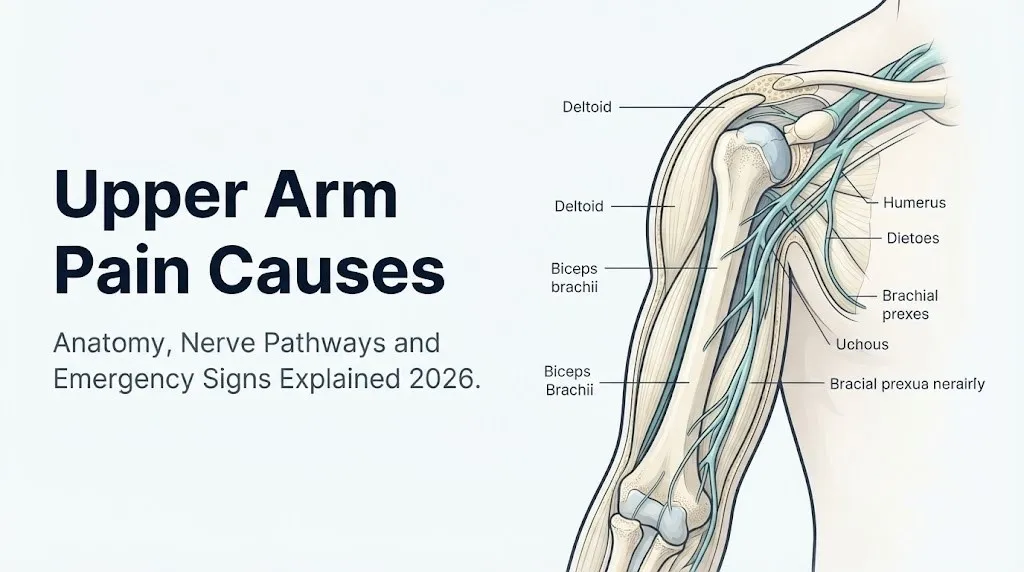
The humerus is the single long bone of the upper arm, running from the glenohumeral joint (shoulder) to the elbow joint. Surrounding it are several key muscle groups: the deltoid muscle covering the shoulder and upper lateral arm (innervated by the axillary nerve, C5-C6), the biceps brachii on the anterior surface (innervated by the musculocutaneous nerve, C5-C7), the triceps brachii on the posterior surface (innervated by the radial nerve, C6-C8), and the brachialis lying deep to the biceps. All of these muscles can generate local pain when strained, inflamed, or compressed.
Equally important are the nerves passing through the upper arm. The radial nerve travels in the spiral groove of the humerus. The median nerve and ulnar nerve pass along the medial side of the arm. All three originate from the brachial plexus, formed by the ventral rami of spinal roots C5 through T1. Compression, injury, or inflammation anywhere along this network from the cervical spine to the peripheral nerve can refer pain into the upper arm.
| Anatomical Structure | Location | Associated Pain Pattern When Injured |
|---|---|---|
| Supraspinatus tendon | Superior rotator cuff | Lateral upper arm, worse with overhead reach |
| Biceps brachii (long head tendon) | Anterior shoulder/upper arm | Anterior upper arm aching, worsens with lifting |
| Deltoid muscle | Lateral and anterior upper arm | Localized lateral arm soreness |
| Radial nerve (spiral groove) | Posterior humerus | Posterior upper arm, forearm weakness |
| Axillary nerve | Surgical neck of humerus | Lateral deltoid numbness, deltoid weakness |
| C5 nerve root | Cervical spine, exits at C4-C5 level | Lateral shoulder and upper arm pain |
| T1 nerve root | Thoracic spine, T1-T4 convergence | Medial upper arm (cardiac referred pain) |
For older adults over age 60, the most common cause of lateral upper arm pain is rotator cuff degeneration rather than acute injury, because tendon tissue undergoes age-related dehydration and collagen disorganization that begins in the fourth decade of life.
Rotator Cuff Injury as a Cause of Upper Arm Pain
Rotator cuff injury is the most common cause of upper arm pain in adults over 40, producing lateral upper arm aching that is often mistaken for deltoid muscle soreness.
The rotator cuff consists of four tendons: the supraspinatus, infraspinatus, teres minor, and subscapularis. Together they stabilize the humeral head within the glenohumeral joint socket and power shoulder rotation and elevation. When any of these tendons is partially or fully torn, or when the subacromial bursa beneath the acromion becomes inflamed, the pain is referred into the lateral upper arm, not just the shoulder.
The reason lateral arm pain occurs instead of pure shoulder pain relates to the nerve supply of the supraspinatus and infraspinatus tendons. Both are innervated by the suprascapular nerve (C5-C6). The C5 dermatome covers the lateral shoulder and the lateral upper arm, which is why rotator cuff pathology consistently produces lateral upper arm symptoms even when the structural problem is at the shoulder joint itself.
According to the American Academy of Orthopaedic Surgeons (AAOS), rotator cuff tears are present in approximately 25 percent of individuals over age 60 and 50 percent of individuals over age 80, with many of these tears producing no symptoms at first. Pain typically develops as the tear enlarges or as the surrounding bursa becomes inflamed. The classic pattern is pain with overhead activity, difficulty reaching behind the back, and aching that worsens at night when lying on the affected side.
Key signs that upper arm pain is coming from the rotator cuff rather than the deltoid:
- Pain specifically worsens when lifting the arm to shoulder height or above
- The aching extends from the shoulder down the lateral upper arm but not below the elbow
- Night pain is prominent, especially lying on the affected shoulder
- There is mild weakness with shoulder abduction (lifting the arm away from the body to the side)
- The pain does not change with neck position or head tilting
Overhead athletes (baseball pitchers, tennis players, swimmers) and manual laborers who repeatedly lift above shoulder height are at the highest risk for rotator cuff injury from cumulative mechanical loading.
Biceps Tendinitis and Upper Arm Muscle Pain
Biceps tendinitis causes anterior (front-surface) upper arm pain by producing inflammation at the tendon of the long head of the biceps brachii, which originates from the supraglenoid tubercle of the scapula and passes through the bicipital groove of the humerus.
This is where the anatomy creates an important diagnostic clue. The long head tendon travels inside the shoulder joint before emerging, which means biceps tendinitis produces pain that starts at the front of the shoulder and radiates down the anterior upper arm, roughly following the path of the bicipital groove. The pain feels like a deep, aching soreness along the front of the arm and typically worsens when the elbow is flexed against resistance (curling motion) or when the forearm is rotated palm-up against resistance (supination).
Think of the long head biceps tendon like a cable running through a tight pulley. When the cable is frayed and the pulley is inflamed, every time you pull on the cable the pain radiates the full length of the cable’s path, which is why the front of the upper arm aches rather than just the shoulder.
MedlinePlus notes that biceps tendinitis frequently occurs alongside rotator cuff problems because the long head tendon and the supraspinatus share the subacromial space. Inflammation in this shared space affects both structures simultaneously. Approximately 90 percent of biceps tendinitis cases involve co-existing rotator cuff pathology, according to data reviewed in the Journal of Bone and Joint Surgery.
Quick Tip:
- To distinguish biceps tendinitis from rotator cuff pain at home: biceps tendinitis pain worsens specifically with elbow flexion against resistance, whereas rotator cuff pain worsens with shoulder abduction and internal or external rotation
- Biceps tendinitis pain concentrates along the anterior groove of the upper arm; rotator cuff pain sits more laterally
- Older adults over age 50 are more likely to have a combined presentation because both conditions share a common anatomical space and common degenerative mechanisms
Deltoid Muscle Strain and Upper Arm Pain
Deltoid muscle strain produces localized lateral upper arm pain directly in the muscle belly, distinct from the deeper or more diffuse aching of rotator cuff or biceps conditions.
The deltoid has three distinct portions: the anterior deltoid (innervated by the anterior branch of the axillary nerve, C5-C6), the middle deltoid (lateral branch of the axillary nerve), and the posterior deltoid (posterior branch of the axillary nerve). When any portion is overstretched or overloaded, microtears form in the muscle fiber, triggering local prostaglandin E2 and substance P release that activates local nociceptors. The result is focal tenderness, swelling, and aching pain that is worst with direct palpation or muscle contraction against resistance.
Unlike rotator cuff pain, deltoid strain pain is typically palpable directly in the muscle belly on the outer surface of the upper arm. It worsens specifically with the motion that loaded the deltoid (anterior deltoid pain with pressing movements, middle deltoid pain with lateral arm raises, posterior deltoid pain with pulling or rowing movements).
NIAMS classifies acute muscle strains into three grades based on severity: Grade I involves less than 5 percent of muscle fiber disruption and typically resolves within 3 to 5 days of relative rest; Grade II involves partial muscle tear with moderate swelling and pain, resolving in 2 to 4 weeks; Grade III involves complete muscle rupture, which is rare in the deltoid specifically and requires surgical evaluation by a board-certified orthopedic surgeon.
Deltoid strains are particularly common in weightlifters performing lateral raises or overhead pressing with improper technique, contact sport athletes absorbing shoulder impacts, and individuals who begin unaccustomed upper body exercise. Adolescent athletes are more susceptible to deltoid injury at the proximal tendon insertion because the apophysis (growth plate at the deltoid origin on the clavicle and acromion) is still developing and is mechanically weaker than fully mature tendon tissue.
Key Takeaway: Lateral upper arm pain that you can reproduce by pressing directly on the muscle belly, and that appeared after a specific loading activity, is most likely a deltoid strain. Lateral upper arm pain that worsens specifically with shoulder elevation or overhead reach and is worse at night points toward the rotator cuff rather than the deltoid muscle itself.
Cervical Radiculopathy and Referred Pain in the Upper Arm
Cervical radiculopathy causes upper arm pain by compressing or irritating a cervical nerve root, with the pain appearing in the upper arm rather than the neck because the arm is where that nerve root’s signals originate in the brain’s body map.
This is the referred pain mechanism. A nerve root compressed at the spine sends abnormal signals along its entire length. The brain, which processes these signals at the somatosensory cortex, interprets them as coming from the skin surface territory that nerve normally covers. The C5 nerve root (exiting at the C4-C5 disc level) covers the lateral shoulder and lateral upper arm. A herniated disc at C4-C5 therefore typically produces pain, tingling, or numbness in the lateral upper arm that has nothing to do with any injury to the arm itself.
The C5-C6 disc level, which is the most commonly herniated cervical disc level according to data reviewed in MedlinePlus, compresses the C6 nerve root, which covers the lateral forearm and thumb rather than the upper arm. So the disc level of herniation determines the arm location of symptoms. Upper arm predominant symptoms with normal forearm sensation points toward C4-C5 compression; forearm and thumb symptoms suggest C5-C6 compression.
| Nerve Root | Disc Level Compressed | Upper Arm Symptom Pattern | Associated Weakness |
|---|---|---|---|
| C5 | C4-C5 | Lateral upper arm pain and numbness | Deltoid weakness, shoulder abduction |
| C6 | C5-C6 | Lateral forearm, thumb | Biceps weakness, reduced biceps reflex |
| C7 | C6-C7 | Middle finger, posterior forearm | Triceps weakness, reduced triceps reflex |
| C8 | C7-T1 | Medial forearm, ring and little finger | Intrinsic hand muscle weakness |
People with pre-existing cervical degenerative disc disease, which is present in approximately 50 percent of adults over age 50 according to the National Institutes of Health, are at elevated risk for acute radiculopathy from minor neck movements. A seemingly trivial activity like sleeping in an awkward position can compress an already narrowed foramen enough to trigger acute radiculopathy symptoms.
Brachial Plexus Injury Causing Upper Arm Pain
Brachial plexus injury produces upper arm pain through direct mechanical damage to the network of nerves formed by the C5 through T1 nerve roots as they exit the cervical spine and travel through the neck and axilla toward the arm.
The brachial plexus is vulnerable at several anatomical points: where it passes between the anterior and middle scalene muscles in the neck, where it crosses under the clavicle, and where it emerges through the axilla. Injury at any of these points can produce pain, weakness, and numbness throughout the distribution of the affected nerve roots. Upper arm pain is a consistent early symptom because the C5 and C6 components of the brachial plexus supply the deltoid, biceps, and upper arm muscles.
Acute brachial plexus injuries occur most often from high-velocity trauma: motorcycle accidents, contact sport tackles, or falls onto an outstretched arm where the shoulder is forced downward while the neck is forced in the opposite direction. This mechanism stretches or tears the plexus at its roots. The resulting pain is described as burning, electric, or sharp, running from the neck into the shoulder and upper arm.
According to Mayo Clinic, less severe brachial plexus injuries from sports tackle mechanisms are called “burners” or “stingers,” affecting an estimated 50 to 65 percent of college contact sport athletes during their careers. Burners typically produce a brief unilateral burning sensation from the neck into the upper arm lasting seconds to minutes, then resolving completely. Recurrent burners in the same athlete raise concern for progressive plexus damage and warrant evaluation by a neurologist.
Adults with cervical spinal stenosis (narrowing of the spinal canal from degenerative osteophytes or disc bulging) are at elevated risk for brachial plexus root involvement because the neural foramen through which each root exits is already narrowed. Any additional mechanical stress on the neck can produce symptoms that would not occur in a healthy cervical spine.
Thoracic Outlet Syndrome and Upper Arm Pain
Thoracic outlet syndrome (TOS) causes upper arm pain by compressing neurovascular structures (the brachial plexus, subclavian artery, or subclavian vein) as they pass through the thoracic outlet, the space between the first rib and clavicle or between the anterior and middle scalene muscles in the neck.
Three types of TOS exist, named by the structure being compressed. Neurogenic TOS (the most common form, comprising more than 90 percent of cases according to Mayo Clinic) involves compression of the lower trunk of the brachial plexus (C8-T1 predominantly), producing pain, tingling, and weakness in the medial upper arm, inner forearm, and ulnar two fingers. Arterial TOS involves subclavian artery compression, producing arm fatigue, coldness, and pallor with overhead use. Venous TOS involves subclavian vein compression, producing arm swelling and heaviness.
For neurogenic TOS specifically, the upper arm pain pattern runs along the medial (inner) surface of the arm, distinguishing it from rotator cuff or cervical C5 radiculopathy, which affect the lateral arm. Pain often worsens with sustained overhead arm positions, carrying heavy bags, or repetitive overhead reach.
People at elevated risk for TOS include:
- Individuals with cervical ribs (an accessory rib at C7, found in approximately 0.5 to 1 percent of the population)
- Overhead athletes (swimmers, baseball pitchers, volleyball players)
- Manual workers who carry heavy loads on their shoulders
- People with poor forward-head posture causing scalene muscle tightening
- Individuals with prior clavicle fractures that healed with bony callus compressing the outlet space
Diagnosis typically requires a combination of clinical examination maneuvers (Adson’s test, Wright’s hyperabduction test), nerve conduction velocity testing, and imaging to rule out other causes before TOS is confirmed. A board-certified neurologist or vascular surgeon manages TOS evaluation.
Key Takeaway: Upper arm pain that runs along the inner (medial) surface, worsens with overhead arm positioning, and is accompanied by hand or forearm tingling points toward thoracic outlet syndrome or C8-T1 nerve involvement rather than the rotator cuff or deltoid.
Cardiac Referred Pain and Left Upper Arm Pain
Left upper arm pain can be a symptom of acute myocardial infarction (heart attack) or cardiac ischemia (angina), produced not by any injury to the arm but by a neurological convergence mechanism at the dorsal horn of the spinal cord.
The mechanism works like this: the heart is innervated by sympathetic afferent pain fibers that travel through the cardiac plexus and enter the spinal cord at thoracic segments T1 through T4. At these same spinal cord levels, somatic afferent fibers from the medial upper arm and inner forearm (the T1-T2 dermatome) also arrive. When the heart generates intense pain signals during ischemia, those signals overwhelm the dorsal horn circuitry at T1-T4. The brain, which relies on that spinal segment’s body map to localize pain, cannot distinguish cardiac input from upper arm somatic input arriving at the same location. The result: the brain reports pain as originating from the left inner arm and forearm, even though the arm is uninjured.
This is why the referred pain almost always affects the left arm. The left side of the heart is the primary site of ischemia in the most common type of heart attack (left anterior descending artery occlusion), and the left-sided cardiac plexus fibers converge with left-sided T1-T2 somatic fibers.
The American Heart Association identifies left arm pain or aching as a primary warning sign of heart attack. The AHA also notes that this symptom can present alongside chest pressure, shortness of breath, jaw pain, nausea, or diaphoresis (sudden sweating without exertion). However, cardiac pain does not always follow the textbook pattern, particularly in women.
People with diabetes may have reduced cardiac pain sensation due to autonomic neuropathy affecting the cardiac pain fibers. This means some diabetic individuals experiencing a heart attack feel only mild arm aching or fatigue rather than severe chest or arm pain. This blunted presentation is clinically well-documented and makes cardiac ischemia harder to recognize in this population.
Brachial Neuritis (Parsonage-Turner Syndrome) and Sudden Upper Arm Pain
Brachial neuritis, clinically known as Parsonage-Turner syndrome (ICD-10: G54.5), causes sudden severe upper arm pain through acute inflammatory injury to the brachial plexus or its branches, often without any preceding mechanical trauma.
The onset is characteristically abrupt. Patients describe the pain as severe, burning or stabbing, starting in the shoulder and upper arm, typically reaching peak intensity within hours. This acute pain phase lasts days to weeks, then transitions to weakness and atrophy of the muscles supplied by the affected nerves (most commonly the deltoid, serratus anterior, and biceps brachii). Many patients are misdiagnosed with a rotator cuff tear or cervical radiculopathy because of the overlapping pain location.
The underlying mechanism involves an autoimmune inflammatory attack on peripheral nerve tissue, supported by clinical observational evidence reviewed by Mayo Clinic. Triggers include recent viral illness, recent vaccination, surgery, or physical stress, though in approximately one-third of cases no trigger is identified. The condition is distinct from SIRVA (discussed in a later section) because the inflammatory process affects the brachial plexus broadly rather than being localized to the subacromial space.
To describe Parsonage-Turner syndrome symptoms to a provider effectively:
- Note the exact onset timing: did the severe pain begin within hours, over a day, or gradually over weeks
- Record whether pain preceded weakness, because in Parsonage-Turner syndrome, profound weakness follows the initial pain phase
- Specify which muscles feel weak: shoulder abduction (deltoid), elbow flexion (biceps), or scapular winging (serratus anterior)
- List any recent illness, vaccination, or surgery in the 4 weeks before symptom onset
- Note whether the pain is bilateral, because Parsonage-Turner syndrome can affect both arms simultaneously in approximately 10 to 30 percent of cases
Diagnosis is confirmed by EMG and nerve conduction velocity testing, which reveal denervation in affected muscles. A board-certified neurologist should manage this evaluation. Recovery is typically measured in months to years, not days.
Upper Arm Pain Causes in Older Adults
Upper arm pain causes in older adults differ substantially from those in younger populations because musculoskeletal tissue degeneration, bone density changes, and systemic disease burden shift the probability distribution of causes.
Rotator cuff degeneration is the dominant cause of lateral upper arm pain in adults over age 65. According to data published in the Journal of Bone and Joint Surgery, full-thickness rotator cuff tears are present in approximately 50 percent of adults over age 80, and many are asymptomatic until a minor additional load triggers acute pain. An older adult who reaches overhead to retrieve something from a shelf and suddenly develops severe lateral upper arm pain may have converted a pre-existing partial tear into a full-thickness tear, even without what they would describe as a significant injury.
Cervical spondylotic radiculopathy (cervical radiculopathy from degenerative bone spurs rather than acute disc herniation) becomes increasingly common after age 60. The osteophytes (bony spurs) that narrow the neural foramen accumulate over decades. Upper arm pain in older adults without a clear injury history and with associated neck stiffness should raise suspicion for this cervical cause.
Polymyalgia rheumatica is a specific systemic inflammatory condition that almost exclusively affects adults over age 50, with peak incidence between ages 70 and 80. It produces bilateral aching in the shoulders, upper arms, hips, and thighs, typically worse in the morning and associated with elevated inflammatory markers (erythrocyte sedimentation rate (ESR) and C-reactive protein (CRP)). The pain mechanism involves synovial inflammation in the shoulder and hip joints and surrounding bursae. Polymyalgia rheumatica is frequently misidentified as bilateral rotator cuff disease, and differentiating them requires blood tests rather than imaging alone. A primary care physician or rheumatologist should evaluate older adults with bilateral upper arm aching and prominent morning stiffness lasting more than 45 minutes.
Key Takeaway: An older adult over age 65 with new lateral upper arm pain after a minor overhead reach may have converted a previously asymptomatic rotator cuff tear into a symptomatic full-thickness tear. This warrants evaluation by a primary care physician within a week, not self-management, because the management pathway differs substantially from a simple muscle strain.
Upper Arm Pain Causes in Women
Upper arm pain causes in women include all the same structural mechanisms as in men, but two specific patterns are disproportionately important to recognize in women: atypical cardiac presentation and autoimmune conditions affecting connective tissue.
The American Heart Association published data from the WISE study (Women’s Ischemia Syndrome Evaluation) demonstrating that women are less likely than men to report classic crushing left chest pain during myocardial infarction. Women more frequently experience upper arm aching (often bilateral), jaw pain, back pain, fatigue, nausea, and shortness of breath as their primary cardiac symptoms. A 55-year-old woman with sudden bilateral upper arm aching, shortness of breath, and fatigue should be treated as a potential cardiac emergency, even in the absence of chest pain.
Autoimmune conditions including rheumatoid arthritis, lupus (systemic lupus erythematosus), and fibromyalgia are significantly more prevalent in women and can produce upper arm pain through synovial inflammation, myofascial sensitization, or peripheral nerve involvement. Rheumatoid arthritis affects approximately 3 times more women than men, according to the National Institutes of Health, and shoulder joint involvement with referred lateral upper arm pain is a recognized feature of the condition.
Postmenopausal women also experience accelerated rotator cuff degeneration related to declining estrogen levels. Estrogen has a documented protective role in tendon collagen maintenance, and its reduction after menopause is associated with increased rates of tendon injury and reduced healing capacity. A postmenopausal woman with persistent upper arm pain that began after menopause should have this hormonal context noted in her clinical history when seeing a primary care physician or orthopedic surgeon.
Women who perform repetitive upper extremity tasks at work (data entry, assembly line work, hairdressing) develop lateral epicondylitis and upper arm overuse injuries at rates equal to or exceeding men in similar occupational groups, according to research in Annals of Internal Medicine.
Upper Arm Pain After Vaccination: SIRVA
SIRVA (shoulder injury related to vaccine administration) causes upper arm pain when a vaccine is injected into the subacromial bursa or subdeltoid space rather than into the deltoid muscle belly, triggering a local inflammatory response that damages the shoulder’s soft tissue structures.
The CDC’s Vaccine Adverse Event Reporting System (VAERS) database identifies SIRVA as one of the most reported adverse events following vaccination. The injury occurs because of incorrect injection technique: if the needle angle is too steep, the injection site is too high on the arm, or the arm circumference is not accounted for in needle length selection, the vaccine antigen and adjuvant are deposited directly into the bursa rather than the muscle.
The subacromial bursa is not equipped to handle the chemical load of vaccine adjuvants. The resulting inflammatory cascade involves complement activation and macrophage recruitment, producing bursitis that can progress to rotator cuff tendinitis and, in severe cases, partial rotator cuff tears. SIRVA presents as upper arm pain beginning within 48 hours of vaccination, persisting beyond 4 weeks, and associated with reduced shoulder range of motion, particularly with arm elevation.
SIRVA is clinically important to distinguish from normal post-injection soreness, which is localized tenderness at the needle site lasting 24 to 48 hours. SIRVA involves:
- Pain starting within 48 hours of vaccination
- Pain and restricted motion lasting more than 4 weeks
- Shoulder range of motion limitation rather than just needle site tenderness
- Symptoms affecting structures above the injection site (subacromial space, rotator cuff)
Women and individuals with lower body weight (less deltoid muscle mass) are at higher relative risk for SIRVA because the shorter anatomical distance from skin to bursa in these individuals increases the probability that a standard-length needle will penetrate beyond the deltoid into the bursa. Anyone with upper arm pain and reduced shoulder function following a vaccination within the past 4 to 8 weeks should report this to their primary care physician, who can order an ultrasound or MRI to assess the bursa and rotator cuff.
Upper Arm Pain at Night: Causes and What It Means
Upper arm pain that specifically worsens at night, waking the person from sleep or making it impossible to find a comfortable sleeping position, carries a specific differential diagnosis that differs from daytime upper arm pain patterns.
Night pain in the upper arm is the hallmark feature of subacromial bursitis and rotator cuff tendinopathy. The anatomical reason: when lying on the affected side, body weight compresses the subacromial space (the gap between the rotator cuff tendons and the overlying acromion), pressing directly on inflamed bursal tissue and tendon. Lying on the opposite side with the affected arm resting unsupported against the trunk puts the shoulder in mild internal rotation, which also narrows the subacromial space. The result is that neither side provides relief, and upper arm aching interrupts sleep.
According to AAOS clinical descriptions, night pain is present in approximately 70 to 80 percent of patients with clinically confirmed rotator cuff tears or subacromial bursitis. It is one of the most diagnostically useful features for distinguishing rotator cuff pathology from other upper arm conditions, because deltoid strains and biceps tendinitis do not consistently produce night pain unless the affected muscle is being directly compressed during sleep.
Brachial neuritis (Parsonage-Turner syndrome) produces some of the most severe nocturnal upper arm pain in the clinical literature. The burning, severe aching of the initial phase is often worse at night and is not positionally dependent, meaning no sleeping position reliably reduces it. This positional independence distinguishes brachial neuritis night pain from rotator cuff night pain.
Older adults over age 70 with night upper arm pain should also have systemic inflammatory conditions (polymyalgia rheumatica, inflammatory arthritis) considered in the differential, as these conditions consistently cause morning-worsening and night-pain patterns. A primary care physician should evaluate persistent upper arm night pain lasting more than 2 weeks.
Upper Arm Pain with Numbness and Weakness: When It Matters
Upper arm pain accompanied by numbness, tingling, or muscle weakness indicates neurological involvement rather than pure musculoskeletal injury, and this combination changes both the urgency and the clinical pathway.
Numbness and tingling alongside upper arm pain suggests either nerve root compression (cervical radiculopathy) or peripheral nerve injury at or below the brachial plexus. The specific distribution of numbness helps localize the level of involvement: lateral upper arm and deltoid region numbness points to axillary nerve or C5 root involvement; biceps region numbness points to musculocutaneous nerve (C5-C7); posterior upper arm numbness points to the radial nerve (C6-C8).
Muscle weakness accompanying upper arm pain is a more clinically urgent sign. Weakness with upper arm pain suggests nerve damage significant enough to impair motor function, not just sensory function. The specific muscle weakness pattern identifies the affected nerve:
- Deltoid weakness (difficulty lifting the arm away from the body): axillary nerve or C5 root
- Biceps weakness (difficulty bending the elbow): musculocutaneous nerve or C5-C6 root
- Triceps weakness (difficulty extending the elbow): radial nerve or C7 root
- Hand intrinsic muscle weakness alongside upper arm pain: brachial plexus lower trunk (C8-T1), raising concern for TOS or Pancoast tumor (superior sulcus lung tumor)
MedlinePlus specifically notes that upper arm pain with hand intrinsic weakness or wasting, without clear trauma or a recognized benign cause, warrants prompt evaluation to exclude serious pathology including Pancoast tumor (a lung tumor at the apex compressing the brachial plexus) or cervical cord myelopathy (compression of the spinal cord itself rather than a single nerve root).
A board-certified neurologist should evaluate any upper arm pain with progressive motor weakness, bilateral arm symptoms, gait changes, or bowel/bladder dysfunction, as these patterns suggest spinal cord level pathology rather than peripheral nerve injury.
Key Takeaway: Upper arm pain with associated muscle weakness is a neurological symptom requiring evaluation by a primary care physician or neurologist, not watchful waiting. The specific weakness pattern identifies which nerve is affected and guides the diagnostic workup.
How Upper Arm Pain Is Diagnosed
Upper arm pain diagnosis requires a systematic approach that combines physical examination, targeted history-taking, and selective imaging or electrodiagnostic testing based on the suspected cause.
The diagnostic process a primary care physician or orthopedic surgeon typically follows:
- History: onset (sudden vs. gradual), location (anterior vs. lateral vs. posterior vs. medial surface), pain character (aching, burning, stabbing, electric), aggravating factors (overhead activity, neck movement, cardiac exertion), associated symptoms (numbness, weakness, chest pain, fever), recent vaccinations, and prior cervical spine or shoulder history
- Physical examination: shoulder range of motion testing, rotator cuff strength testing (empty can test for supraspinatus, external rotation resistance for infraspinatus), biceps tendon palpation (Speed’s test, Yergason’s test), cervical spine provocation (Spurling’s test for radiculopathy, which involves neck extension with lateral tilt toward the affected side to compress the neural foramen), and neurological assessment of sensation and reflexes in the affected arm
- Imaging: shoulder X-ray to identify calcific tendinitis, bony spurs, or glenohumeral arthritis; MRI of the shoulder if rotator cuff tear is suspected; MRI of the cervical spine if radiculopathy is suspected; ultrasound for dynamic assessment of the rotator cuff and biceps tendon
- Electrodiagnostic testing: electromyography (EMG) and nerve conduction velocity (NCV) testing to identify peripheral nerve or nerve root injury in cases of upper arm pain with numbness or weakness
- Blood tests: complete blood count (CBC), erythrocyte sedimentation rate (ESR), and C-reactive protein (CRP) if systemic inflammatory causes (polymyalgia rheumatica, rheumatoid arthritis) are suspected
| Diagnostic Test | What It Identifies | When It Is Ordered |
|---|---|---|
| Shoulder X-ray | Calcific tendinitis, arthritis, fracture | First-line for most upper arm pain evaluations |
| Shoulder MRI | Rotator cuff tear, biceps tendon, bursitis | When X-ray is negative but pain persists over 4-6 weeks |
| Cervical spine MRI | Disc herniation, nerve root compression | When radiculopathy pattern is suspected |
| EMG and NCV | Nerve damage, radiculopathy, plexopathy | When numbness or weakness accompanies pain |
| Ultrasound | Dynamic rotator cuff assessment, SIRVA bursitis | When injection guidance or real-time tendon assessment is needed |
| ESR and CRP blood tests | Systemic inflammation (polymyalgia rheumatica) | In adults over 60 with bilateral arm and shoulder aching |
Women should note that standard strength testing cutoffs in orthopedic examinations were largely derived from male patient populations. A primary care physician evaluating upper arm pain in a woman should request sex-specific normative references if strength testing results are borderline.
When to See a Doctor or Go to the ER for Upper Arm Pain
Upper arm pain that requires emergency evaluation, urgent same-day evaluation, and routine appointment follow-up each represent distinct clinical situations that should not be conflated.
Emergency Symptoms: When to Call 911 or Go to the ER
Certain symptoms associated with upper arm pain require immediate emergency evaluation. Do not wait to see if these resolve on their own.
Call 911 or go to the nearest emergency room immediately if you experience:
- Left arm pain or bilateral arm aching accompanied by chest pressure, tightness, or heaviness, indicating possible acute myocardial infarction with cardiac referred pain to the arm
- Upper arm pain with sudden onset shortness of breath, because this combination can indicate a cardiac event or pulmonary embolism
- Upper arm pain with jaw pain, neck pain, or sudden sweating without exertion, as these are recognized cardiac warning signs even without classic chest pain
- Severe sudden upper arm pain after a fall or direct trauma, with visible deformity or inability to move the arm, suggesting possible humerus fracture requiring imaging and orthopedic evaluation
- Upper arm pain with rapidly progressive arm weakness, inability to lift the hand or arm, or loss of hand grip, suggesting acute nerve injury or spinal cord compression
- Upper arm pain in a woman over age 45 accompanied by unusual fatigue, nausea, or dizziness with no other clear explanation, given the atypical presentation pattern of myocardial infarction in women documented by the American Heart Association
These presentations can indicate acute myocardial infarction, humerus fracture with neurovascular compromise, or acute spinal cord compression, and require emergency medical assessment, not an urgent care appointment or a phone call.
Situations requiring a primary care physician appointment within 48 to 72 hours (not emergency, but not wait-and-see):
- Upper arm pain lasting more than 72 hours without improvement after relative rest
- Upper arm pain with any accompanying numbness, tingling, or weakness
- Upper arm pain that followed a vaccination within the past 4 to 8 weeks and involves shoulder range of motion limitation
- Upper arm pain with morning stiffness lasting more than 45 minutes in adults over age 60, which raises concern for polymyalgia rheumatica
- Night pain severe enough to consistently interrupt sleep for more than 2 weeks
Bring the following to any primary care appointment for upper arm pain:
- The exact date of onset and any preceding activity or event
- A description of where the pain is located on the arm (front, side, back, inner surface)
- A list of what makes it worse and what makes it better
- Any associated symptoms in the neck, hand, or fingers
- Your complete vaccination record for the past 3 months
- Any history of cervical spine problems, prior shoulder surgery, or cardiac conditions
Frequently Asked Questions About Upper Arm Pain Causes
What causes upper arm pain?
Upper arm pain causes include rotator cuff injury, biceps tendinitis, deltoid muscle strain, cervical radiculopathy (nerve root compression from a cervical disc), brachial plexus injury, thoracic outlet syndrome, and cardiac referred pain from myocardial ischemia.
The most common musculoskeletal cause in adults over 40 is rotator cuff pathology, which refers pain to the lateral upper arm via the C5 nerve root dermatome.
Cardiac referred pain affecting the left upper arm is produced by convergence of cardiac afferent pain signals and arm somatic signals at the T1-T4 levels of the spinal cord dorsal horn.
What causes right arm pain specifically?
Right upper arm pain causes are the same musculoskeletal and neurological mechanisms as left arm pain: rotator cuff injury, biceps tendinitis, cervical radiculopathy, and brachial plexus involvement.
Right upper arm pain is less likely to be cardiac in origin because the most common type of heart attack involves the left ventricle, whose pain signals converge with left arm somatic fibers at T1-T4.
However, cardiac events affecting the right coronary artery can occasionally produce right-sided arm symptoms, and any right arm pain accompanied by chest pressure, shortness of breath, or jaw pain should be evaluated as a possible cardiac emergency.
What causes upper arm pain without any injury?
Upper arm pain without an injury most commonly results from cervical radiculopathy, brachial neuritis (Parsonage-Turner syndrome), thoracic outlet syndrome, or referred pain from cardiac or visceral sources.
Rotator cuff degeneration also causes upper arm pain without a specific injury in older adults because the tendon deterioration occurs gradually over years, not from a single identifiable event.
A primary care physician should evaluate upper arm pain with no identifiable injury cause that persists beyond 72 hours, because the absence of a clear musculoskeletal trigger raises the probability of neurological or systemic origins.
Can a heart attack cause upper arm pain?
Yes, a heart attack can cause left upper arm pain through a referred pain mechanism at the T1-T4 level of the spinal cord, where cardiac pain signals converge with somatic signals from the medial upper arm.
The American Heart Association identifies left arm pain as a recognized warning sign of acute myocardial infarction, particularly when it occurs alongside chest pressure, shortness of breath, jaw pain, or sudden sweating.
Women experiencing a heart attack are more likely than men to present with atypical symptoms including bilateral arm aching, fatigue, and nausea rather than the classic left arm and chest pain pattern.
What causes upper arm pain at night?
Upper arm pain at night is most commonly caused by subacromial bursitis or rotator cuff tendinopathy, which worsen when lying on the affected shoulder compresses the subacromial space.
The American Academy of Orthopaedic Surgeons reports that night pain is present in approximately 70 to 80 percent of patients with confirmed rotator cuff tears or bursitis, making it one of the most diagnostically useful features of this condition.
Brachial neuritis (Parsonage-Turner syndrome) also produces severe nocturnal upper arm pain that is not reduced by any sleeping position, distinguishing it from the positionally dependent night pain of rotator cuff conditions.
When should I worry about upper arm pain?
Upper arm pain requires immediate emergency evaluation when it occurs alongside chest pressure, shortness of breath, jaw pain, sudden sweating, or nausea, because these combinations can indicate acute myocardial infarction.
Upper arm pain with progressive muscle weakness, bilateral arm symptoms, or loss of hand grip requires urgent evaluation by a primary care physician or neurologist within 24 to 48 hours, because progressive motor deficit can indicate significant nerve or spinal cord involvement.
Upper arm pain that is localized, appeared after a known physical activity, and has no associated neurological symptoms can be monitored at home for 48 to 72 hours, but should be evaluated by a primary care physician if it does not improve.
Upper arm pain that has a clear cause (a known workout, a specific overhead strain) and stays localized without neurological features is reasonable to monitor for 48 to 72 hours. Upper arm pain that is new, progressive, accompanied by any numbness or weakness, or occurs alongside chest, jaw, or breathing symptoms is a different clinical situation entirely.
The single most actionable distinction in this article: an upper arm pain pattern that changes with neck position or head tilting is probably cervical in origin, not a shoulder problem. An upper arm pain that worsens specifically with cardiac exertion and comes with any chest symptoms is cardiac until proven otherwise. Those two distinctions, applied correctly, change the entire clinical pathway.
Your primary care physician is the right first contact for unexplained or persistent upper arm pain. If any cardiac red flag appears alongside that arm pain, that call should be to 911, not a doctor’s office.