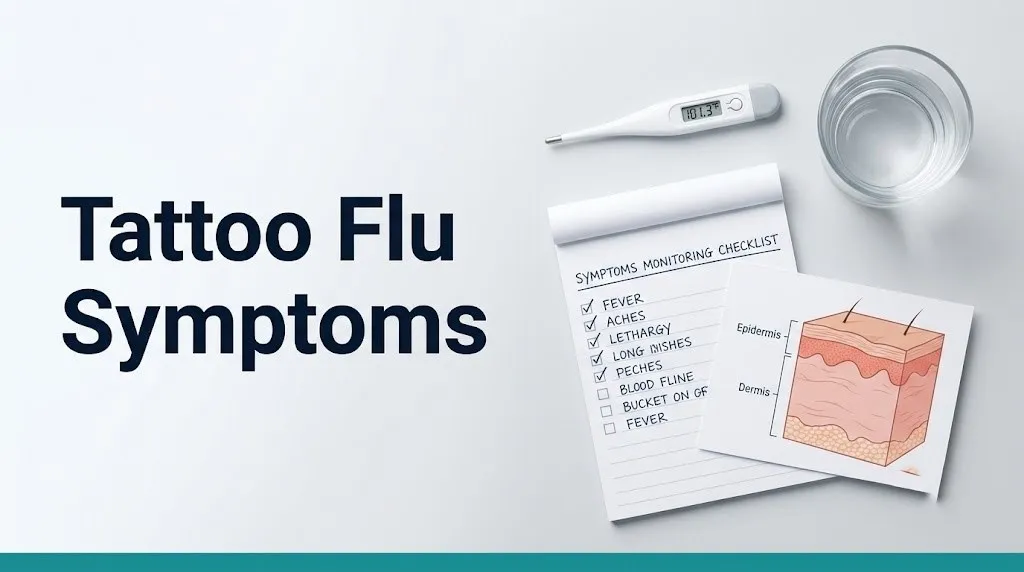
Tattoo Flu Symptoms: What Each Sign Really Means in 2026
Tattoo flu symptoms, including fever, chills, fatigue, body aches, and headache, are a recognized response of the innate immune system to the mechanical trauma and foreign particle introduction that tattooing produces, and for most healthy adults they are self-limiting within 24 to 72 hours. The clinical concern arises when these symptoms follow a trajectory that does not match normal immune resolution: worsening after 72 hours, rising fever beyond the initial peak, or new local wound changes developing after the first day.
According to the Centers for Disease Control and Prevention (CDC), skin and soft tissue infections following tattooing are a documented public health concern, with outbreaks linked to contaminated equipment and non-sterile ink. Understanding which symptoms belong to normal immune activation and which signal a developing infection is the clinical distinction that determines whether home management or medical evaluation is appropriate.
This article covers every tattoo flu symptom with the specific physiological mechanism behind it, a day-by-day timeline framework, a direct comparison between tattoo flu and tattoo infection, the populations who face elevated risk, and the exact symptom thresholds that constitute a medical emergency.
Tattoo Flu Symptoms: What They Are and Why They Happen
Tattoo flu symptoms are systemic, flu-like physical responses produced when the innate immune system activates in response to needle-delivered skin trauma and the introduction of tattoo ink particles into the dermis.
The term “tattoo flu” is a colloquial label, not a formal medical diagnosis. The clinical reality it describes is an acute systemic inflammatory response driven by the same cellular mechanisms that produce illness symptoms during other forms of tissue injury or pathogen challenge. Understanding this mechanism reframes tattoo flu from a mysterious phenomenon to a predictable physiological event.
The pattern is consistent: symptoms begin within 12 to 24 hours of a tattoo session, typically peak between hours 24 and 48, and in normal cases show clear improvement by hours 72 to 96. Symptoms that do not follow this improvement curve warrant clinical evaluation.
The American Academy of Dermatology (AAD) recognizes post-tattoo systemic symptoms as a known reaction to cutaneous trauma and recommends monitoring for signs that distinguish normal healing inflammation from developing infection.
People who receive very large tattoos, multi-session pieces completed in a single long sitting, or tattoos covering extensive body surface area experience more pronounced systemic symptoms. This is a dose-response relationship: more tissue surface area injured means a larger total cytokine release into circulation.
Quick Tip:
- Start monitoring your symptom trajectory from the moment you finish your tattoo session, not from when symptoms first appear.
- Symptoms appearing for the first time beyond 72 hours post-tattoo are more likely to reflect infection than normal immune response.
- Keep a simple log of your peak daily temperature, local wound appearance, and symptom severity during the first week.
Is Tattoo Flu Normal After Getting a Tattoo?
Tattoo flu is a normal and expected immunological response in many people following tattooing, particularly after large-area or multi-hour sessions, but it is not universal and its severity varies substantially based on tattoo size, individual immune response, and general health status.
Clinicians generally observe that mild systemic symptoms occur in a meaningful proportion of people following extensive tattooing, though precise prevalence data in the peer-reviewed literature is limited because “tattoo flu” is not a formal diagnostic category tracked in epidemiological surveillance. What is well-established is the underlying mechanism: it is the same innate immune activation that produces systemic symptoms during any significant cutaneous injury.
Calling it “flu” is accurate in terms of the symptom overlap but potentially misleading in terms of cause. Influenza produces systemic symptoms through viral cytopathic effect and the immune response to viral replication throughout the respiratory tract. Tattoo flu produces similar symptoms through sterile inflammation (no pathogen involved) driven by physical trauma and foreign particle recognition. The end-point cytokines are similar; the trigger is entirely different.
For most healthy adults with no underlying conditions, mild tattoo flu lasting 24 to 72 hours and resolving completely is not a clinical concern. The concern threshold rises considerably for people who are immunocompromised, pregnant, or managing chronic conditions like diabetes. For these groups, even mild systemic symptoms following tattooing warrant a call to their primary care physician, because the normal monitoring approach may not apply.
MedlinePlus, maintained by the U.S. National Library of Medicine, notes that any skin-penetrating procedure carries inherent infection risk, and symptoms following such procedures should always be monitored against a clear improvement timeline.
The Full List of Tattoo Flu Symptoms
The recognized tattoo flu symptoms are fever, chills, fatigue, muscle aches (myalgia), headache, nausea, and swollen regional lymph nodes, all produced through the systemic effects of pro-inflammatory cytokines released at the tattoo wound site.
| Symptom | Physiological Mechanism | Typical Onset | Clinical Significance |
|---|---|---|---|
| Fever (pyrexia) | IL-1β and IL-6 raise hypothalamic set point via PGE2/COX-2 | 12 to 24 hours | Normal if below 38.5°C (101.3°F) and resolving by 72 hours |
| Chills (rigors) | Muscle contractions to generate heat as body raises temperature | Concurrent with fever onset | Normal response to rising thermoregulatory set point |
| Fatigue (malaise) | TNF-α and IL-6 act on CNS via blood-brain barrier signaling | 12 to 48 hours | Normal if improving after 72 hours |
| Myalgia (muscle aches) | TNF-α and IL-1β alter skeletal muscle energy metabolism | 12 to 48 hours | Normal; body-wide aching without local wound association |
| Headache | Cytokine-driven cerebral vasodilation and meningeal inflammation | 12 to 48 hours | Normal if mild; severe or sudden-onset headache is a red flag |
| Nausea | Cytokine effects on the area postrema and vagal nerve signaling | Variable; 12 to 48 hours | Normal if mild; vomiting or inability to keep fluids down warrants evaluation |
| Lymphadenopathy | Regional lymph node activation as Langerhans cells transport ink | 24 to 72 hours | Normal; nodes draining the tattooed area become mildly enlarged and tender |
Adolescents may experience more pronounced versions of all these symptoms compared to adults of the same body weight for an equivalent tattoo area. Their innate immune systems tend to mount more vigorous early responses, producing higher fever peaks and more pronounced fatigue.
Tattoo Fever Symptoms: What a Fever After a Tattoo Means
A fever after a tattoo is produced when interleukin-1 beta (IL-1β) and interleukin-6 (IL-6), released by activated dermal macrophages and Langerhans cells at the wound site, travel through systemic circulation to the hypothalamus and trigger the synthesis of prostaglandin E2 (PGE2) via the cyclooxygenase-2 (COX-2) enzyme pathway, raising the brain’s thermoregulatory set point.
Think of the hypothalamus as the body’s internal thermostat. Under normal conditions, it is set to approximately 37°C (98.6°F). When IL-1β and IL-6 stimulate COX-2 in the hypothalamic vascular endothelium to produce PGE2, that thermostat gets turned up. The body then generates heat (via shivering and increased metabolic rate) to reach the new, higher set point. That’s the fever, and those muscle contractions to generate heat are the chills.
The clinical thresholds to know:
- A temperature up to 38.5°C (101.3°F) in the first 24 to 72 hours post-tattoo, with clear improvement thereafter, is within the expected range of the normal innate immune response.
- A temperature above 38.5°C (101.3°F) persisting beyond 72 hours warrants evaluation by a primary care physician or urgent care provider, with a description of the wound site and a full list of current medications.
- A temperature above 39.5°C (103.1°F) at any point following tattooing, or any fever accompanied by a rapid heart rate above 90 beats per minute and a respiratory rate above 20 breaths per minute, requires same-day medical evaluation and potentially emergency room assessment.
According to the Mayo Clinic, a fever above 39.4°C (103°F) in adults is a threshold that warrants medical evaluation regardless of the suspected cause, and post-procedure fevers that meet this threshold should not be assumed to be benign without clinical assessment.
People taking antipyretic medications (acetaminophen, ibuprofen) regularly for other conditions may have their fever masked, making temperature monitoring less reliable as the sole indicator. These individuals should also monitor pulse rate and wound site appearance as additional data points.
Key Takeaway: A tattoo fever below 38.5°C that clearly improves within 72 hours is a normal cytokine-driven response; a fever above 38.5°C that persists or worsens beyond 72 hours requires a same-day call to a primary care physician and description of both systemic symptoms and the wound site’s appearance.
Chills and Body Aches After a Tattoo: The Immune Mechanism
Chills and body aches (myalgia) after a tattoo are directly produced by tumor necrosis factor alpha (TNF-α) and interleukin-1 beta (IL-1β) acting on skeletal muscle and on the hypothalamic thermoregulatory pathway, not by the spread of any infection through the body.
Chills occur because the rising hypothalamic thermoregulatory set point (driven by PGE2) creates a temperature mismatch: the body perceives itself as too cold relative to the new higher set point, even though its actual temperature is normal or only slightly elevated. The somatic nervous system responds by generating involuntary skeletal muscle contractions, which produce heat. Those involuntary contractions are what chills feel like.
Myalgia (body aches) occurs through a different but related mechanism. TNF-α and IL-1β interfere with normal adenosine triphosphate (ATP) production in skeletal muscle mitochondria. This metabolic interference, combined with altered calcium signaling within muscle fibers, produces a diffuse aching sensation throughout the musculature that is entirely disconnected from the tattoo wound site itself. The muscles ache not because they are injured but because the cytokines circulating in the bloodstream are altering their metabolic function.
Body aches associated with tattoo flu are diffuse: they should feel like the general body aching of influenza, affecting muscles throughout the body without any particular localization to the tattooed area. If aching is localized specifically around the tattoo site, that is a local wound sign rather than a tattoo flu symptom and should be assessed as a potential early infection indicator.
People with fibromyalgia or other conditions involving central sensitization of pain signaling may experience more pronounced and longer-lasting myalgia from the same level of cytokine stimulus as someone without these conditions. A person with fibromyalgia who develops post-tattoo myalgia should monitor closely and contact their primary care physician if symptoms persist beyond 48 hours.
Fatigue and Headache After a Tattoo: Why They Occur
Post-tattoo fatigue and headache are produced when TNF-α, IL-1β, and IL-6 cross the blood-brain barrier through specialized transport mechanisms and act directly on brain tissue, activating microglia (the brain’s resident immune cells) and altering neurotransmitter signaling in ways that produce profound tiredness and head pain.
The fatigue of tattoo flu is not simply the result of blood loss, dehydration, or the physical ordeal of sitting through a tattoo session. Those factors contribute, but the systemic cytokine response is the primary driver. IL-6 and TNF-α suppress the activity of the ascending reticular activating system in the brainstem, reducing arousal signaling to the cortex. This is sometimes called sickness behavior: a conserved biological response that makes animals (including humans) rest during immune activation, diverting metabolic resources toward healing. It is adaptive, not a malfunction.
Headache occurs through a related mechanism. Pro-inflammatory cytokines trigger meningeal inflammation and cerebral vasodilation, particularly through prostaglandin E2 acting on meningeal blood vessels. This produces a pressure-type headache that typically feels like a generalized dull ache, affecting both sides of the head without particular localization.
Post-tattoo headache that is mild and bilateral and that improves with rest and hydration fits the normal tattoo flu picture. A headache that is sudden, severe, and described as “the worst headache of my life” does not fit this picture and is a medical emergency requiring immediate evaluation to rule out subarachnoid hemorrhage, regardless of recent tattooing.
According to the National Institute of Neurological Disorders and Stroke (NINDS), a sudden-onset severe headache reaching maximum intensity within seconds to minutes requires emergency evaluation and should not be attributed to any other condition without ruling out intracranial pathology first.
People currently taking selective serotonin reuptake inhibitors (SSRIs) or serotonin-norepinephrine reuptake inhibitors (SNRIs) may find post-tattoo headache more pronounced, as cytokine-driven serotonin modulation interacts with altered serotonin signaling in medicated individuals.
Nausea and Swollen Lymph Nodes After a Tattoo
Nausea after a tattoo is driven by pro-inflammatory cytokines acting on the area postrema (the brain’s primary vomiting trigger zone, located in the medulla oblongata) and through vagal afferent nerve signaling from the inflamed wound area to the gastrointestinal tract.
The area postrema sits outside the blood-brain barrier, making it directly accessible to circulating cytokines. When IL-1β and IL-6 bind receptors in this region, they activate the vomiting center, producing nausea with or without actual emesis. Additionally, the vagus nerve, which innervates both the skin and the gastrointestinal tract, transmits inflammatory signals from the wound site to the gut, reducing gastric motility and contributing to nausea and reduced appetite.
Mild nausea in the first 24 to 48 hours post-tattoo, particularly when associated with other tattoo flu symptoms and with no vomiting, is within the expected immune response pattern. Persistent vomiting or inability to keep fluids down is a clinical threshold that warrants evaluation, both because it may indicate a more severe systemic response and because dehydration complicates wound healing and immune function.
Swollen lymph nodes (lymphadenopathy) after a tattoo occur through a different mechanism. Langerhans cells in the epidermis, after phagocytosing ink particles and activating during the immune response, migrate through the lymphatic vessels to the regional lymph nodes draining the tattooed area. This transport process activates the receiving lymph nodes, which enlarge and may become mildly tender. For a tattoo on the upper arm, the axillary lymph nodes are typically the ones affected. For a lower leg tattoo, the inguinal lymph nodes are involved.
Regional lymph node swelling that is mild, tender, and limited to the nodes directly draining the tattooed area is a normal finding. Lymph node swelling that is hard, fixed, non-tender, or spreads beyond the immediately draining region warrants evaluation by a primary care physician to rule out other causes.
Key Takeaway: Swollen lymph nodes near a tattoo site are a normal finding produced by Langerhans cell migration; hard, non-tender, or spreading lymph node enlargement is not a tattoo flu sign and warrants a primary care physician evaluation.
How Long Do Tattoo Flu Symptoms Last: A Day-by-Day Timeline
Tattoo flu symptoms typically begin within 12 to 24 hours of the tattoo session, peak between 24 and 48 hours, and show clear, progressive improvement from 48 to 96 hours in healthy adults with no complications.
The timeline is the most clinically useful tool for distinguishing normal tattoo flu from developing infection, because infections follow a different trajectory: rather than improving after an initial peak, they either plateau or worsen after 48 to 72 hours.
| Time After Tattoo | Normal Tattoo Flu Pattern | Concerning Pattern Requiring Action |
|---|---|---|
| 0 to 12 hours | Soreness at wound site, possible early fatigue | Fever above 39°C in first hour; immediate ER if present |
| 12 to 24 hours | Fever onset (up to 38.5°C), chills, fatigue, body aches | High fever (above 39.5°C) at any point; go to ER |
| 24 to 48 hours | Peak systemic symptoms; worst fatigue and body aches | Symptoms at same or higher intensity than 12-hour mark |
| 48 to 72 hours | Clear improvement: fever lowering, energy returning | Any worsening of fever, new wound redness spreading beyond margins |
| 72 to 96 hours | Near-resolution of systemic symptoms | Fever still present; contact primary care physician same day |
| Beyond 96 hours | Complete resolution of systemic symptoms | Any systemic symptoms still present; same-day evaluation required |
| Beyond 7 days | Full wound healing in progress | Persistent wound redness, warmth, discharge; see primary care physician |
According to the American Academy of Dermatology (AAD), any post-procedure skin wound that shows worsening redness, increasing warmth, swelling, or discharge beyond the first 48 hours should be evaluated by a physician rather than managed at home, as these are the early clinical signs of bacterial superinfection.
People with type 2 diabetes mellitus should note that their timeline for wound-related symptoms is different. Impaired wound healing from diabetic microvascular disease and elevated blood glucose can extend the local wound healing phase, and their systemic inflammatory markers may remain elevated longer even without infection. A diabetic person who has systemic symptoms beyond 72 hours should contact their primary care physician or endocrinologist regardless of whether the wound itself looks improved.
What Causes Tattoo Flu: The Immune System Response Explained
Tattoo flu is caused by the activation of the innate immune system in response to mechanical dermal trauma and the introduction of foreign ink particles into the papillary dermis, triggering a localized and then systemic cytokine cascade.
Every tattoo needle penetration breaches the stratum corneum and viable epidermis and deposits ink in the papillary dermis at a depth of approximately 1 to 2 millimeters. This happens at a rate of 50 to 150 insertions per second throughout the session. The mechanical disruption of the dermal architecture activates two cell populations immediately: Langerhans cells (dendritic cells resident in the stratum spinosum of the epidermis) and dermal macrophages in the papillary dermis.
Think of Langerhans cells as the skin’s border patrol. Their job is to identify foreign material that has crossed the skin barrier and alert the immune system. They recognize tattoo ink particles as foreign via toll-like receptors (TLRs) and NOD-like receptors (NLRs), which are pattern recognition receptors that detect structural features common to foreign material. Upon activation, both Langerhans cells and dermal macrophages release the primary pro-inflammatory cytokines: IL-1β, IL-6, and TNF-α.
These cytokines then produce a local-to-systemic cascade. Locally: vasodilation, increased vascular permeability, and neutrophil recruitment produce the redness, warmth, and swelling at the tattoo wound site. Systemically: the same cytokines circulate to the hypothalamus, liver, skeletal muscle, and brain, producing fever, acute phase reactant production, myalgia, and fatigue.
Research published in the Journal of the American Academy of Dermatology has documented that tattoo ink particles are taken up by dermal macrophages at the site and that some particles are also transported by lymphatics to regional lymph nodes, where they persist long-term. This long-term macrophage retention of ink is why tattoo colors last for decades.
People who have received multiple tattoos previously may have a primed macrophage population at prior tattoo sites, which can produce a slightly different immune response profile to new tattooing, though the clinical significance of this phenomenon for systemic symptom severity is still being studied.
Tattoo Flu vs Tattoo Infection: How to Tell the Difference
The critical difference between tattoo flu and a developing tattoo infection lies in the trajectory (improving vs. worsening over time) and in specific local wound signs that indicate bacterial involvement rather than sterile inflammation.
Tattoo flu is sterile inflammation: the immune system is responding to ink particles and wound trauma, not to bacteria. The wound site itself shows normal early healing: redness and warmth confined to the wound margins, moderate swelling, plasma weeping (the clear or slightly yellowish fluid that forms a protective layer over fresh tattoo wounds), and some pain at the wound surface. These are all signs of the normal inflammatory phase of wound healing.
A developing tattoo infection involves bacterial contamination of the wound. The local signs diverge from normal healing in specific, recognizable ways:
| Feature | Normal Healing / Tattoo Flu | Early Tattoo Infection |
|---|---|---|
| Wound redness | Confined to wound margins | Expanding beyond wound margins; spreading edge |
| Wound warmth | Warm at wound surface | Hot to the touch; warmth spreading to surrounding skin |
| Wound swelling | Moderate; improves after 48 hours | Increasing; does not improve or worsens after 48 hours |
| Wound discharge | Clear or slightly yellow plasma weeping | Purulent (cloudy, yellow-green, or foul-smelling) discharge |
| Red streaking | Absent | May be present; extends from wound toward regional lymph nodes |
| Wound edges | Intact; uniform border | Irregular; wound may appear to be expanding |
| Systemic fever trajectory | Peaks and improves by 48 to 72 hours | Persists or worsens beyond 72 hours |
| Systemic symptom onset | Within first 24 hours; improves progressively | May appear or worsen after 72 hours; does not resolve |
The red streaking extending from the wound toward the lymph nodes (visible as a red line tracking up the arm or leg from the tattoo) is a sign of ascending lymphangitis: bacteria spreading through the lymphatic vessels toward the lymph node. This constitutes an urgent medical situation and requires same-day emergency evaluation.
According to the Infectious Diseases Society of America (IDSA) cellulitis guidelines, purulent skin infections producing spreading erythema with systemic symptoms require clinical evaluation, culture of wound discharge where possible, and appropriate antibiotic therapy guided by culture and sensitivity results.
People who have been previously colonized with methicillin-resistant Staphylococcus aureus (MRSA), including those with prior MRSA skin infections or who have had close contact with MRSA carriers, face higher risk that any tattoo wound infection will involve this antibiotic-resistant organism. These individuals should inform any treating physician of their MRSA history when presenting with post-tattoo wound infection signs.
Key Takeaway: The single most reliable distinguishing feature between tattoo flu and infection is trajectory: tattoo flu improves clearly after 48 to 72 hours; infection does not improve and typically worsens or produces new wound signs after this window.
Signs a Tattoo Is Infected and Not Just Healing Normally
A tattoo infection is confirmed not by any single sign alone but by a constellation of local wound changes that deviate from the expected healing trajectory, combined with either worsening or persistent systemic symptoms.
The specific signs that indicate infection rather than normal healing:
- Expanding erythema: Redness that is growing beyond the tattoo’s borders, advancing into surrounding untattooed skin, indicates cellulitis (bacterial infection of the dermis and subcutaneous tissue)
- Increasing warmth: The surrounding skin becoming increasingly hot to the touch beyond the first 48 hours, rather than gradually cooling as acute inflammation resolves
- Purulent discharge: Any cloudy, yellow, green, or foul-smelling fluid from the wound site; normal healing produces only clear or slightly yellow plasma weeping, not pus
- Wound odor: A foul or unusual smell from the wound site that was not present in the first day or two
- Increasing pain: Wound pain that is worsening at 72 hours rather than improving; normal wound pain peaks in the first 24 hours and then declines steadily
- Wound margins breaking down: Edges of the tattooed skin appearing to separate or ulcerate beyond normal scabbing
- Red streaking from the wound: Tracking along the limb toward the body, indicating ascending lymphangitis
- Fever appearing or worsening after 72 hours: New onset fever after an initial symptom-free period, or fever that peaks higher at day 3 or 4 than it did at day 1, strongly suggests bacterial infection rather than sterile tattoo flu
The Centers for Disease Control and Prevention (CDC) has documented outbreaks of Mycobacterium chelonae skin infections associated with tattoo inks contaminated during manufacture, producing a distinctive pattern: slowly evolving skin lesions appearing weeks after tattooing rather than within the first few days. This organism is not associated with acute tattoo flu symptoms and instead causes persistent, non-healing skin lesions at the tattoo site, sometimes weeks to months later. A slow-developing skin lesion at or around a healed tattoo warrants evaluation by a board-certified dermatologist or board-certified infectious disease specialist.
Who Is at Higher Risk for Severe Tattoo Flu Symptoms
People with specific health conditions, medication regimens, or tattoo-related factors face higher risk for either more severe tattoo flu symptoms or for developing a genuine infection with the clinical appearance of tattoo flu.
By tattoo characteristics:
- Large surface area tattoos (full sleeve, full back, large torso pieces): more acinar cells and Langerhans cells activated simultaneously produces a proportionally larger systemic cytokine load, increasing symptom severity
- Multi-hour sessions (over 4 hours): cumulative tissue trauma and extended cytokine release sustain and amplify systemic symptoms
- Multiple tattoos in a single session: additive immune activation from each new wound area
By health condition:
- Diabetes mellitus: impaired neutrophil function, microvascular disease, and elevated blood glucose create higher infection risk and slower resolution of both local wound changes and systemic symptoms
- Chronic kidney disease: reduced cytokine clearance prolongs the inflammatory signal; elevated CRP baseline makes monitoring harder
- Obesity: adipose tissue is metabolically active and produces baseline inflammatory cytokines, meaning the cytokine response to tattooing is added to an already elevated inflammatory background
- Autoimmune conditions: people on immunosuppressive medications (methotrexate, biologics like TNF-α inhibitors) have altered cytokine signaling that may both blunt tattoo flu symptoms and reduce normal infection-fighting capacity
By medication use:
- Corticosteroids (prednisone, dexamethasone): suppress the innate immune response, potentially masking both tattoo flu and early infection signs
- Anticoagulants (warfarin, apixaban, rivaroxaban): increase wound site bleeding and bruising without affecting tattoo flu symptom severity, but complicate wound assessment
- Chemotherapy agents: reduce immune cell populations, impair wound healing, and increase infection risk
By reproductive status:
- Pregnant women: tattooing during pregnancy is generally discouraged by the American College of Obstetricians and Gynecologists (ACOG) due to infection risk to the fetus and altered maternal immune response. If tattoo flu symptoms develop in a pregnant person, evaluation by an obstetrician-gynecologist is appropriate regardless of symptom severity.
Tattoo Flu Symptoms in Immunocompromised and High-Risk Individuals
Immunocompromised individuals face a uniquely difficult clinical picture with tattoo flu because their blunted immune response can mask the early warning signs of serious infection, making the standard symptom-monitoring approach unreliable.
In a person with a healthy immune system, the cytokine cascade that produces tattoo flu is also part of the same immune machinery that fights infection. When immunosuppression dampens that cascade (whether from HIV infection, organ transplant medications, chemotherapy, or high-dose corticosteroid therapy), two things happen simultaneously: the tattoo flu symptoms may be milder than expected, and the immune defense against bacterial wound contamination is also reduced.
This creates a scenario where an immunocompromised person may feel only mildly unwell from a tattoo wound that is actually developing a serious bacterial infection. The warning signals that a healthy person would experience as escalating fever and increasing wound pain may not appear until the infection is well-established.
The National Institute of Allergy and Infectious Diseases (NIAID) notes that immunocompromised individuals have a substantially elevated risk for invasive skin infections following any skin-penetrating procedure, and that standard self-monitoring approaches appropriate for healthy adults are not appropriate for this population.
Practical guidance for high-risk individuals:
- Any person who is immunocompromised, on immunosuppressive medication, or undergoing chemotherapy should discuss the safety and timing of tattooing with their primary care physician or relevant specialist before getting a tattoo.
- If a tattoo has already been received, a baseline wound site photograph taken within 24 hours provides a visual reference for tracking changes.
- Any fever above 38°C (100.4°F) in an immunocompromised person following tattooing warrants same-day physician evaluation, not home monitoring.
- Wound site changes (any new redness, warmth, discharge, or swelling change) should prompt an immediate call to the managing physician rather than a wait-and-see approach.
- A blood culture, complete blood count with differential, and C-reactive protein level are the minimum appropriate laboratory workup for an immunocompromised person with post-tattoo fever.
People with HIV whose CD4 count is below 200 cells per microliter (indicating advanced immunosuppression) face the highest infection risk among immunocompromised tattoo recipients and should be informed that tattooing at this stage carries elevated clinical risk.
Key Takeaway: In immunocompromised individuals, tattoo flu symptoms may be absent or blunted even during a serious developing infection; any fever above 38°C in this population after a tattoo requires same-day medical evaluation, not home monitoring.
Emergency Symptoms: When to Call 911 or Go to the ER
Certain symptoms associated with tattoo flu and post-tattoo infection require immediate emergency evaluation. Do not wait to see if these resolve on their own.
Call 911 or go to the nearest emergency room immediately if you experience:
- A temperature above 39.5°C (103.1°F) at any point following tattooing, accompanied by a heart rate above 90 beats per minute and a respiratory rate above 20 breaths per minute (these three findings together meet criteria for systemic inflammatory response syndrome (SIRS) and require immediate evaluation for sepsis)
- Sudden confusion, altered mental status, or extreme disorientation following tattooing with a fever (these are signs of potential septic encephalopathy and represent a medical emergency)
- Red streaking extending from the tattoo wound up the arm, leg, or toward the torso, which indicates ascending lymphangitis and potential bacteremia requiring urgent antibiotic treatment
- Rapid spreading of wound redness covering a large area of skin (more than 10 centimeters expanding beyond the wound border) within hours, which indicates rapidly advancing cellulitis potentially caused by Group A Streptococcus or MRSA
- Severe, sudden-onset headache reaching peak intensity within seconds to minutes, which is not a tattoo flu symptom and requires immediate evaluation to rule out subarachnoid hemorrhage regardless of recent tattooing
- Difficulty breathing, chest pain, or visible skin pallor with racing heart in someone with a tattoo fever, which may indicate septic hemodynamic compromise
- Loss of consciousness or near-fainting associated with a tattoo fever
These presentations can indicate sepsis, ascending lymphangitis, rapidly invasive cellulitis, or another serious complication of tattoo wound infection, and they require emergency medical assessment in an emergency room, not an urgent care visit or a phone call to a tattoo studio.
How to Manage Tattoo Flu Symptoms at Home Safely
Safe home management of tattoo flu applies only to healthy adults without high-risk conditions whose symptoms are following the expected improving trajectory: peak symptoms within 24 to 48 hours with clear daily improvement thereafter.
Home management focuses on supporting the body’s immune response, maintaining hydration, managing discomfort, and protecting the wound site from contamination:
- Rest actively: Reduce physical activity for 24 to 72 hours. The cytokine-driven fatigue is a physiologically adaptive signal redirecting metabolic resources toward healing; working through extreme fatigue delays resolution.
- Hydrate specifically: Fever and sweating increase fluid losses. Aim for clear urine as a hydration indicator. Plain water, diluted electrolyte drinks, or clear broths all support fluid replacement without additional metabolic burden.
- Manage fever and pain with over-the-counter options as directed by a healthcare provider: Acetaminophen (paracetamol) reduces fever by inhibiting central PGE2 synthesis without impairing platelet function. Ibuprofen (an NSAID that inhibits COX-2) reduces both fever and inflammation but should be avoided by people with kidney disease, gastric ulcers, or those on anticoagulant medications without medical guidance.
- Eat light, easily digestible foods during peak nausea: clear soups, crackers, and bland foods reduce gastric irritation while maintaining caloric intake to support immune function.
- Monitor the wound site twice daily: Check for expanding redness, increasing warmth, discharge changes, or new pain at fixed times (morning and evening) and photograph any changes for comparison.
- Keep the wound site clean and covered per your tattoo artist’s aftercare instructions and the general principles outlined by the American Academy of Dermatology: gentle washing with fragrance-free soap, light moisturizer application, and protection from sun exposure and contaminated water sources.
People taking nonsteroidal anti-inflammatory drugs (NSAIDs) regularly for other conditions should not increase their NSAID dose to manage tattoo flu without first discussing this with their primary care physician, as high-dose NSAID use can impair early wound healing.
How to Prevent Tattoo Flu Before and After Your Session
Tattoo flu cannot be completely prevented because the innate immune response to dermal trauma and foreign particle introduction is a fixed biological response, but its severity can be moderated through specific preparation and aftercare strategies with a physiological basis.
Before your session:
- Sleep adequately in the 48 to 72 hours before your appointment: Sleep is the primary period during which the immune system performs regulatory functions that reduce baseline inflammatory tone. Arriving sleep-deprived amplifies the cytokine response to any new tissue injury.
- Arrive well-hydrated: Adequate hydration supports lymphatic fluid flow, which helps clear cytokines from the wound site more efficiently.
- Eat a balanced meal within 2 hours of your session: Blood glucose stability during a long session reduces cortisol-mediated immune dysregulation from fasting-related stress.
- Discuss current medications with your tattoo artist and primary care physician: Anticoagulants increase wound site bleeding; immunosuppressants alter your infection risk; both factors affect what level of monitoring is appropriate post-session.
After your session:
- Follow the wound aftercare protocol precisely: The wound is an open bacterial entry point for the first several days. The American Academy of Dermatology recommends cleaning fresh tattoos with unscented soap, applying a thin layer of fragrance-free moisturizer, and keeping the site out of bodies of water (pools, hot tubs, natural bodies of water) until fully healed.
- Avoid alcohol for 24 to 48 hours post-session: Alcohol is a vasodilator and can increase wound site bleeding and interfere with normal inflammatory resolution at the dermal level.
- Schedule large tattoo sessions with recovery time: If getting a large piece, plan to have 48 to 72 hours without strenuous activity, travel, or environmental exposure afterward.
According to the CDC, tattoo-associated infections are most often traceable to aftercare failures (contaminated water contact, improper wound handling) rather than to the tattooing procedure itself when performed at a licensed facility. Strict aftercare compliance is the most modifiable factor in post-tattoo infection risk.
Frequently Asked Questions About Tattoo Flu Symptoms
How long do tattoo flu symptoms usually last?
Tattoo flu symptoms typically last 24 to 72 hours in healthy adults, with peak symptoms occurring between 12 and 48 hours after the tattoo session ends.
Symptoms that have not shown clear, progressive improvement by 72 hours post-tattoo warrant evaluation by a primary care physician, as this trajectory is more consistent with developing infection than with normal immune resolution.
Very large tattoos or multi-session pieces completed in a single sitting can extend the symptom peak window slightly, but any symptoms persisting beyond 96 hours should be evaluated clinically regardless of tattoo size.
What temperature fever after a tattoo should make me see a doctor?
A temperature above 38.5°C (101.3°F) that persists beyond 72 hours post-tattoo warrants same-day evaluation by a primary care physician or urgent care provider.
A temperature above 39.5°C (103.1°F) at any point following tattooing, particularly if accompanied by a rapid heart rate above 90 beats per minute, requires same-day emergency room evaluation.
People who are immunocompromised, diabetic, or pregnant should use a lower threshold: any fever above 38°C (100.4°F) warrants a same-day call to their managing physician rather than home monitoring.
Can tattoo flu turn into something serious?
Tattoo flu itself, as a sterile immune response to tattooing, does not progress to a serious condition; however, a developing bacterial infection can present with symptoms that initially resemble tattoo flu and can progress to cellulitis, ascending lymphangitis, or sepsis if untreated.
The distinction between normal tattoo flu and early infection lies in the trajectory: normal tattoo flu improves after 48 to 72 hours, while infection worsens or persists and produces new local wound signs (expanding redness, purulent discharge, or red streaking).
Sepsis following tattoo wound infection is rare but documented in the clinical literature, and the early warning signs (meeting SIRS criteria with high fever, elevated heart rate, and elevated respiratory rate) require emergency room evaluation without delay.
Is it normal to have swollen lymph nodes after a tattoo?
Swollen lymph nodes near a tattoo site are a normal finding produced by Langerhans cells migrating from the tattoo wound to the regional lymph nodes draining that body area, carrying ink particles as antigens.
For an upper arm tattoo, the axillary (armpit) lymph nodes are typically the ones that become mildly enlarged and tender; for a lower leg tattoo, the inguinal (groin) nodes are affected.
Lymph nodes that are hard, fixed, non-tender, or enlarging in areas distant from the tattoo site are not explained by tattoo flu and warrant evaluation by a primary care physician to rule out other causes.
Does tattoo size affect how sick you get from tattoo flu?
Tattoo size directly affects tattoo flu symptom severity because more surface area tattooed means more Langerhans cells and dermal macrophages activated simultaneously, producing a proportionally larger total cytokine release into systemic circulation.
A full back piece or sleeve tattoo completed in a single long session will typically produce more pronounced fever, fatigue, and body aches than a small wrist tattoo, because the volume of immune activation is substantially higher.
The day-by-day monitoring timeline applies equally regardless of tattoo size, but people with very large tattoos should expect a higher symptom peak and should set their “see a doctor” threshold accordingly: any temperature above 38.5°C that is not clearly declining by hour 72 warrants evaluation.
How is tattoo flu different from a real flu infection?
Tattoo flu is a sterile inflammatory response driven by innate immune cytokine release from wound trauma and ink particle recognition; influenza is caused by active viral replication in respiratory tract epithelial cells producing a separate, virally driven cytokine response.
The symptoms overlap substantially (fever, chills, fatigue, body aches, headache) because both conditions elevate the same pro-inflammatory cytokines (IL-1β, IL-6, TNF-α), which produce the same physiological effects regardless of their trigger.
The key distinguishing features are context (tattoo flu begins within 12 to 24 hours of a tattoo session), the absence of respiratory symptoms in tattoo flu (no cough, no sore throat, no nasal congestion), and the absence of any tattoo wound site changes in influenza.
Closing
The single most clinically useful thing to take from this article is the trajectory rule: tattoo flu improves after 48 to 72 hours, and anything that does not improve on that timeline should be evaluated by a primary care physician or urgent care provider the same day.
Watch your daily peak temperature, photograph your wound site every morning, and note whether each symptom is better or worse than the day before. That daily comparison is the monitoring tool that tells you whether you are on the normal healing track or heading toward something that needs antibiotic treatment.
If you are immunocompromised, diabetic, pregnant, or on anticoagulant or immunosuppressive medications, the standard thresholds in this article do not apply to you; contact your managing physician for personalized guidance before and after any tattooing.