Pregnancy Symptoms With an IUD: What They Mean in 2026
Pregnancy symptoms with an IUD are possible, and when they appear, they deserve a specific, methodical clinical response rather than either immediate panic or casual dismissal. IUDs are among the most effective forms of reversible contraception available, but no contraceptive method carries a zero failure rate, and when failure does occur, the clinical picture can be genuinely confusing.
According to the American College of Obstetricians and Gynecologists (ACOG), intrauterine devices have a typical-use failure rate of less than 1% per year, making them more effective than oral contraceptive pills, condoms, or injectable hormonal methods. That low failure rate also means that when symptoms appear in an IUD user, most of the time they are not caused by pregnancy. But the cases where they are require immediate, specific clinical attention.
This article covers exactly what pregnancy symptoms look like in the context of IUD use, why some symptoms overlap with IUD side effects, why a hormonal IUD produces a uniquely complex clinical picture, what ectopic pregnancy looks like in this setting and why it is a genuine emergency, and what to do at each stage of the decision process.
Pregnancy Symptoms With an IUD: The Clinical Picture
Pregnancy symptoms with an IUD present the same way early pregnancy symptoms present in women without contraception, because the underlying hormonal driver is identical: a developing embryo producing human chorionic gonadotropin (hCG).
The trophoblast tissue of the early embryo begins secreting hCG within days of implantation. That hCG signals the corpus luteum in the ovary to continue producing progesterone and estradiol rather than declining as it would in a non-pregnant cycle. These hormones drive the classic early pregnancy symptom cluster: nausea, breast tenderness, fatigue, pelvic heaviness, and a missed period.
The clinical complication in IUD users is that some of these same symptoms can be produced independently by the IUD itself, particularly hormonal IUD types, making it harder to determine whether a given symptom cluster represents pregnancy, a normal IUD adjustment response, or a complication requiring urgent evaluation.
What to watch for as a clinically meaningful symptom cluster in an IUD user:
- Nausea, particularly in the morning or after meals, occurring in a person with no prior history of IUD-related nausea
- Breast tenderness that is heavier or more persistent than the typical pre-menstrual pattern for that individual
- Fatigue that is qualitatively different from normal cyclical tiredness
- Pelvic cramping that is heavier than baseline IUD cramping
- Absence of a menstrual period in a copper IUD user who normally has regular cycles
Nulliparous women (those who have not previously carried a pregnancy) may have baseline IUD cramping that makes pelvic symptom interpretation harder. A reproductive health specialist or obstetrician-gynecologist is the appropriate provider for any IUD user who finds their symptom picture confusing.
Can You Get Pregnant With an IUD?
Yes, pregnancy can occur with an IUD in place, though the probability in any given year is very low. According to the Centers for Disease Control and Prevention (CDC) U.S. Medical Eligibility Criteria for Contraceptive Use, both the copper intrauterine device (Cu-IUD) and the levonorgestrel-releasing intrauterine system (LNG-IUS) carry a failure rate of approximately 0.1% to 0.8% per year with typical use, which means that out of every 1,000 IUD users over one year, between 1 and 8 will experience a contraceptive failure.
That sounds reassuringly rare. Over five years of continuous IUD use, however, the cumulative probability of a failure rises. A person who uses an IUD for five years has approximately a 1 in 100 chance of experiencing a pregnancy over that period.
Several factors increase the probability of IUD failure specifically:
- IUD displacement or partial expulsion, which reduces the device’s mechanical effectiveness
- IUD placement near the end of its approved lifespan (copper IUDs are approved for up to 10 to 12 years; hormonal IUDs depending on the specific device are approved for 3 to 8 years)
- Failure to verify IUD strings after insertion, which can delay recognition of expulsion
- Uterine anatomical variations such as a retroverted uterus or uterine fibroids that may affect IUD positioning
Adolescents have slightly higher IUD expulsion rates than adults, according to data published in the journal Contraception, which modestly increases failure risk in younger users compared to adults with established uterine anatomy.
How IUDs Prevent Pregnancy and When They Fail
IUDs prevent pregnancy through two distinct mechanisms depending on device type, and understanding those mechanisms is the foundation for understanding when and how failure occurs.
The copper IUD works by releasing copper ions into the uterine cavity. Copper is directly toxic to sperm, impairing sperm motility and viability through disruption of the sperm flagellar axoneme and interference with sperm enzymatic function. Copper ions also alter the viscosity and biochemical environment of cervical mucus, creating a second barrier. The endometrial copper ion concentration also produces a local inflammatory response that makes the endometrium inhospitable to implantation.
The levonorgestrel-releasing IUD works through a different primary mechanism: local release of the synthetic progestogen levonorgestrel at a rate of 6 to 20 micrograms per day depending on device type. This creates profound thickening of cervical mucus, making it nearly impenetrable to sperm. It also suppresses endometrial proliferation and, in many but not all users, suppresses ovulation.
Failure occurs when these mechanisms are incomplete. Copper IUD failure most commonly involves inadequate device positioning or expulsion. Hormonal IUD failure is rare but can occur if ovulation is not suppressed in a given cycle, fertilization occurs before sperm is effectively blocked, and the endometrial environment is not sufficiently inhospitable to prevent implantation.
A practical comparison of the two failure mechanisms:
| IUD Type | Primary Failure Mechanism | Most Common Failure Scenario |
|---|---|---|
| Copper (Cu-IUD) | Inadequate sperm toxicity due to displacement | IUD expulsion or malposition |
| Hormonal (LNG-IUS) | Breakthrough ovulation without full cervical mucus block | Cycle at end of device lifespan or partial expulsion |
Key Takeaway: IUD failure is rare, occurring in fewer than 1% of users per year, but it does happen, and the failure mechanism differs between copper and hormonal devices in ways that affect which symptoms to watch for.
Early Pregnancy Symptoms With an IUD
Early pregnancy symptoms with an IUD typically appear during the first four to eight weeks after a missed period, the same window as early pregnancy symptoms in users of any other contraceptive method or no contraceptive at all.
The physiological driver of early pregnancy symptoms is the rapid rise in hCG produced by the developing trophoblast. hCG peaks at approximately 8 to 10 weeks of gestation. Its structural similarity to thyroid-stimulating hormone (TSH) at the TSH receptor is one mechanism contributing to nausea, as high hCG concentrations can mildly stimulate thyroid function. Progesterone, sustained by the corpus luteum in response to hCG signaling, relaxes smooth muscle throughout the body, which slows gastric emptying and contributes to nausea, bloating, and constipation.
Early symptoms that are driven by this hCG and progesterone cascade include:
- Nausea, often peaking between 6 and 10 weeks of gestation, present in approximately 70% to 80% of pregnant individuals according to research published in the American Journal of Obstetrics and Gynecology
- Breast tenderness and fullness, caused by rising estradiol and progesterone acting on breast ductal and glandular tissue
- Fatigue, related to progesterone’s central nervous system sedative properties and the metabolic demands of early placentation
- Increased urinary frequency, caused by increased renal blood flow and early uterine pressure on the bladder
- Food aversions or heightened sense of smell, linked to elevated hCG and possible central nervous system changes
In IUD users, these symptoms should not be assumed to be IUD-related if they represent a new pattern. A symptom that appears for the first time months or years into stable IUD use is more clinically meaningful than a symptom that has been present since insertion.
Pregnant individuals who are younger than 25 may minimize or delay acting on early pregnancy symptoms due to confidence in their contraceptive. A direct pregnancy test is always the appropriate first clinical step regardless of age.
Signs of Pregnancy With an IUD
The signs of pregnancy with an IUD mirror classical early pregnancy signs, but two specific signs carry additional clinical weight in the IUD context: unilateral pelvic pain and irregular bleeding.
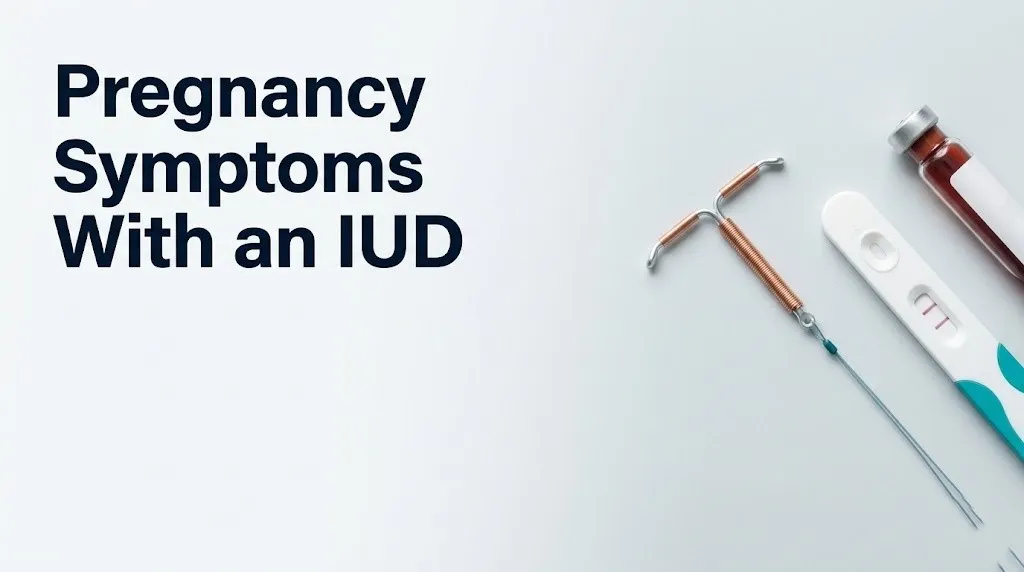
A missed or significantly lighter period in a copper IUD user is a more reliable early sign than in a hormonal IUD user, because copper IUDs do not suppress menstrual flow. Copper IUD users typically continue to have regular, often heavier, menstrual periods. A missed period in a copper IUD user is therefore genuinely out of pattern and warrants a pregnancy test.
A missed or altered period in a hormonal IUD user is less diagnostically useful, because the LNG-IUS routinely causes amenorrhea (absence of menstrual periods) in approximately 20% of users within the first year of use, rising to higher proportions over time. This makes missed period a less reliable sign in hormonal IUD users specifically.
Clinical signs that carry real weight in the IUD context regardless of device type:
- A positive urine or blood pregnancy test
- Nausea and vomiting with a qualitatively different character than prior IUD adjustment symptoms
- Breast changes heavier than normal luteal phase tenderness
- Pelvic pain that is new, unilateral, or worsening rather than the bilateral symmetric cramping typical of IUD insertion adjustment
- Cervical motion tenderness on self-examination or as identified by a clinician
The Mayo Clinic notes that unilateral pelvic pain in a person with a positive pregnancy test and an IUD in place is an ectopic pregnancy until proven otherwise by imaging. This is not a symptom pattern to monitor at home.
Women over 35 who use an IUD may attribute fatigue, breast changes, and cycle irregularity to perimenopause rather than pregnancy, which can delay recognition of IUD failure. Any new symptom cluster in this age group deserves evaluation rather than assumption.
Missed Period With an IUD: Pregnant or Not?
A missed period with an IUD in place is frequently caused by the IUD itself rather than pregnancy, but it always warrants a pregnancy test to exclude pregnancy as the cause.
The levonorgestrel-releasing IUD suppresses the endometrium to the point where menstrual flow is significantly reduced or eliminated in a large proportion of users. According to the ACOG, up to 20% of Mirena users experience amenorrhea within one year, a rate that increases over continued use. For these users, a missed period is simply a normal consequence of the device’s hormonal effects on the endometrial lining, not a sign of pregnancy.
For copper IUD users, the picture is different. The copper IUD works without any hormonal component and does not suppress menstrual cycles. Copper IUD users typically maintain regular, often heavier periods. A missed period in a copper IUD user is therefore a much stronger clinical signal that warrants same-day pregnancy testing.
Steps to assess a missed period correctly in the context of IUD use:
- Confirm the type of IUD in place (hormonal vs. copper) by checking medical records or calling the inserting provider.
- Assess whether this missed period represents a new pattern or a continuation of hormonally suppressed bleeding that began after insertion.
- Take a urine pregnancy test using first-morning urine for highest sensitivity, at least 14 days after the last unprotected sex or suspected contraceptive failure.
- If the test is negative but symptoms persist or a period does not return within 4 more weeks, repeat the test and contact an obstetrician-gynecologist.
- If the test is positive at any point, contact an obstetrician-gynecologist or reproductive health clinic the same day. Do not wait for a scheduled appointment.
Pregnancy Symptoms on an IUD vs. IUD Side Effects
Distinguishing pregnancy symptoms from IUD side effects is one of the most practically important and least adequately addressed questions in IUD contraceptive care.
Both intrauterine pregnancy and IUD adjustment can produce overlapping physical symptoms, including pelvic cramping, light spotting or irregular bleeding, and in the case of hormonal IUDs, symptoms driven by progestin activity that closely resemble early pregnancy. The key clinical differentiation lies in the pattern, timing, and character of the symptoms rather than any single symptom in isolation.
| Symptom | Typical IUD Side Effect | Early Pregnancy Sign |
|---|---|---|
| Pelvic cramping | Bilateral, similar to period cramps, common in first 3 to 6 months post-insertion | Can be unilateral, may worsen over time, new onset in long-term IUD user |
| Spotting/bleeding | Irregular, light, common in first 3 to 6 months especially with hormonal IUD | Implantation bleeding is typically light pink or brown, single episode around day 10 to 14 post-conception |
| Breast tenderness | Mild, cyclic, may occur with hormonal IUD due to systemic progestin | Heavier, more persistent, often described as fuller or different from normal PMS tenderness |
| Nausea | Not a typical IUD side effect | Present in 70% to 80% of early pregnancies per the American Journal of Obstetrics and Gynecology |
| Missed period | Common with hormonal IUD (up to 20% experience amenorrhea) | Expected in pregnancy from approximately 4 weeks gestation |
| Fatigue | Not a characteristic IUD side effect | Common in early pregnancy, driven by progesterone |
The presence of nausea, particularly new-onset nausea that is not a prior pattern for the individual, is a stronger indicator of pregnancy than most other overlapping symptoms. Fatigue that is out of proportion to normal daily demands, occurring alongside other symptoms, also carries clinical weight.
Any IUD user who is uncertain whether their symptoms represent pregnancy or IUD effects should take a pregnancy test rather than attempt to distinguish the cause from symptoms alone.
Key Takeaway: Nausea and fatigue are not typical IUD side effects. When they appear in a long-term IUD user, a pregnancy test is the appropriate clinical first step, not watchful waiting.
Can an IUD Mask Pregnancy Symptoms?
An IUD can partially obscure or complicate the recognition of pregnancy symptoms, particularly in users of hormonal IUD types, through specific physiological mechanisms rather than through any direct suppression of hCG or pregnancy-related biology.
The masking effect is not truly hormonal suppression of pregnancy symptoms. The developing embryo’s trophoblast tissue still produces hCG normally, and the resulting progesterone and estradiol surge still drives nausea, breast changes, and fatigue. What happens instead is a perceptual and interpretive masking: the hormonal IUD user who already experiences breast tenderness, light bleeding, and occasional pelvic cramping as baseline progestin-related effects is less likely to recognize a new layer of pregnancy-driven symptoms as distinct from their established baseline.
Think of it like trying to hear a new sound in a room where the background noise is already constant. The signal exists, but the baseline noise makes it harder to detect the change.
A 2021 study published in the journal Contraception noted that IUD users who did experience contraceptive failure frequently reported delayed recognition of pregnancy compared to women using no contraception or barrier methods, with the delay more pronounced in hormonal IUD users than copper IUD users. This delay has real clinical consequences when ectopic pregnancy is in the differential diagnosis, because ectopic pregnancies that are recognized later are more likely to have ruptured before intervention.
The practical takeaway from this masking effect: any new symptom or change in symptom pattern in a person who has been stable on an IUD for more than six months deserves assessment rather than automatic attribution to the IUD. Symptoms that are new, worsening, or unilateral are particularly important flags.
People with a prior history of ectopic pregnancy have a 10% to 15% risk of recurrence in future pregnancies according to ACOG data. For these individuals, any new symptom pattern in the context of IUD use should be assessed by an obstetrician-gynecologist within 24 to 48 hours rather than monitored at home.
Pregnancy on a Hormonal IUD: What Symptoms to Expect
Pregnancy occurring on a hormonal IUD presents with the same hCG-driven symptom pattern as any other early pregnancy, but the pre-existing progestin environment created by the LNG-IUS adds a layer of clinical complexity that makes early recognition harder.
The levonorgestrel released by hormonal IUDs is a synthetic progestogen that acts locally at the level of the endometrium and, to a lesser degree, systemically. It does not prevent trophoblast implantation in all cases, and once implantation occurs, the developing trophoblast takes over the hormonal signaling, producing hCG that drives a progesterone surge from the corpus luteum. This corpus luteum-derived progesterone is biologically distinct from the IUD-derived levonorgestrel and represents a true pregnancy hormonal environment.
Symptoms specifically worth tracking in hormonal IUD users who may be pregnant:
- Nausea progressing beyond sporadic queasiness to persistent morning nausea or vomiting at any time of day
- Breast tenderness that is heavier or more diffuse than the user’s typical progestin-related baseline
- Absence of the light withdrawal-type bleeding that some hormonal IUD users experience at predictable intervals, particularly in users whose cycle had been detectable
- Pelvic pain that is asymmetric, meaning stronger on one side, which is a particularly concerning pattern when any pregnancy is suspected
- Cervical IUD strings that are no longer palpable, which may indicate displacement, expulsion, or very rarely, an IUD that has been drawn upward by a growing uterus
According to the CDC U.S. Medical Eligibility Criteria for Contraceptive Use, if an intrauterine pregnancy is confirmed with a hormonal IUD in place, the IUD should be removed as early as possible if the strings are visible, because continuing the pregnancy with the IUD in place significantly increases the risk of second-trimester pregnancy loss, preterm labor, and septic abortion.
Pregnant adolescents using a hormonal IUD may be at higher risk of delayed recognition due to irregular baseline bleeding patterns that are common in the first year of hormonal IUD use. A clinician familiar with the individual’s baseline pattern is best positioned to assess new symptoms in this group.
Pregnancy on a Copper IUD: What Symptoms to Expect
Pregnancy on a copper IUD produces a cleaner clinical picture than pregnancy on a hormonal IUD, because the copper IUD does not alter the hormonal environment and does not independently produce symptoms that overlap with early pregnancy.
The copper IUD works without any progestogen component, meaning copper IUD users maintain their natural menstrual cycle and hormonal fluctuations. A missed period in a copper IUD user is therefore a more straightforward clinical signal: it represents a departure from the individual’s established pattern rather than a continuation of device-induced hormonal effects.
The typical symptom presentation of early pregnancy in a copper IUD user is:
- A missed period in a person with previously regular cycles
- Nausea, typically beginning around 4 to 6 weeks of gestation, which is unusual for this individual given no hormonal contraceptive baseline
- Breast tenderness heavier than normal late-luteal tenderness
- Fatigue and increased urinary frequency as described in any early pregnancy
- Pelvic cramping that may be heavier than the copper IUD’s typical heavy-period cramping pattern
One important distinction for copper IUD users: the copper IUD is commonly associated with heavier and more painful periods compared to pre-insertion baseline, according to ACOG guidance on IUD types. This means that pelvic cramping, while a potential pregnancy symptom, can also be a normal part of copper IUD use, making its absence or modification more meaningful than its presence. A change in the character of cramping, particularly if it becomes unilateral or sharper, is the signal to act on rather than the presence of cramping itself.
Copper IUD users should take a urine pregnancy test with first-morning urine if any period is missed. Because the copper IUD offers no hormonal suppression of ovulation or menstruation, a missed period in this context represents a genuine change in reproductive status until proven otherwise by a negative test.
Postpartum women who chose a copper IUD for its non-hormonal profile while breastfeeding face additional complexity, as amenorrhea related to lactation can persist alongside an IUD, making period-based tracking unreliable. An obstetrician-gynecologist should be consulted if any pregnancy symptoms develop in this population.
Key Takeaway: A missed period in a copper IUD user is a meaningful clinical signal that warrants same-day pregnancy testing, because copper IUDs do not suppress menstrual cycles the way hormonal IUDs do.
How to Tell If You’re Pregnant With an IUD
Determining whether you are pregnant with an IUD in place requires a specific sequence of steps rather than relying on symptom pattern alone, because no symptom combination is sufficiently reliable in this clinical context.
How to assess pregnancy status accurately when you have an IUD:
- Take a urine pregnancy test using first-morning urine. First-morning urine has the highest hCG concentration of the day, which maximizes the sensitivity of the test. Standard home pregnancy tests detect hCG at concentrations of 20 to 25 mIU/mL, which corresponds to approximately 4 weeks of gestation.
- Check the test result without a time delay. Read the result in the window specified by the test instructions, typically 3 to 5 minutes. A faint positive line, even very faint, constitutes a positive result.
- If the result is positive, call an obstetrician-gynecologist or reproductive health clinic the same day. Do not interpret a positive result in the context of an IUD as something to wait on. This is not a normal positive pregnancy test situation.
- If the result is negative but symptoms persist, especially nausea or pelvic pain, repeat the test in 48 to 72 hours. Very early ectopic pregnancies can produce hCG levels below standard home test detection thresholds.
- If symptoms include unilateral pelvic pain or shoulder tip pain alongside any suspected or confirmed pregnancy, go to an emergency room rather than waiting for an outpatient appointment. These symptoms require same-day evaluation.
- Bring a list of your IUD type, insertion date, and any string checks performed to your appointment. This information significantly speeds up the clinical assessment.
A serum quantitative beta-hCG blood test, ordered by a clinician, is more sensitive than a urine test and can detect pregnancy earlier and at lower hCG concentrations. Serial quantitative beta-hCG measurements taken 48 hours apart can also distinguish a viable intrauterine pregnancy (where hCG should approximately double every 48 to 72 hours) from an ectopic or failing pregnancy (where hCG rise is slower or plateaus).
hCG Levels and Pregnancy Test Accuracy With an IUD
Pregnancy test accuracy is not meaningfully altered by the presence of an IUD. The IUD does not change the body’s production of hCG if a pregnancy is occurring, and it does not interfere with hCG detection in either urine or blood-based assays.
The urine hCG assay used in home pregnancy tests detects the beta subunit of hCG using antibody-based lateral flow technology. An IUD does not affect the concentration of hCG in urine, the binding of hCG to the test antibodies, or the visual readout. A positive test is a positive test regardless of contraceptive method in use.
Where the IUD context does affect accuracy is timing. Testing too early, before hCG has risen to detectable levels, is the most common cause of false-negative results in this population. IUD users who test immediately after a single episode of unprotected sex, or at the first sign of any symptom, may test before the trophoblast has produced sufficient hCG to trigger the test.
Key hCG timing facts relevant to IUD users:
- hCG first becomes detectable in blood approximately 8 to 10 days after fertilization
- hCG first becomes detectable in urine approximately 12 to 14 days after fertilization
- Standard home pregnancy tests reliably detect hCG at 4 weeks of gestation (counting from last menstrual period)
- Testing before this window can produce false negatives even in the presence of an early viable pregnancy
According to the National Institutes of Health (NIH) MedlinePlus, a serum quantitative beta-hCG test performed in a clinical lab is significantly more sensitive than any home urine test, detecting hCG at concentrations as low as 1 to 2 mIU/mL compared to the 20 to 25 mIU/mL threshold of most home tests. For IUD users with suspected very early pregnancy, a serum hCG test ordered by a clinician is the more reliable first diagnostic step.
The hCG doubling time is also clinically informative. In a healthy intrauterine pregnancy, serum hCG approximately doubles every 48 to 72 hours between 4 and 8 weeks of gestation. A slower rise or a plateau in hCG values is associated with ectopic pregnancy or a failing intrauterine pregnancy. This is why serial hCG measurements, not a single positive test, are the diagnostic standard when pregnancy with an IUD is confirmed.
Ectopic Pregnancy Symptoms With an IUD
Ectopic pregnancy in the context of IUD use is the most clinically serious scenario this article addresses, and it requires clear, specific attention before any other complication discussion.
An ectopic pregnancy occurs when a fertilized egg implants outside the uterine cavity, most commonly in the fallopian tube ampullary region, the widest segment of the tube, which is the site of approximately 70% of all tubal ectopic pregnancies according to ACOG Practice Bulletin No. 191 on Tubal Ectopic Pregnancy. The IUD does not cause ectopic pregnancy in an absolute sense. Both copper and hormonal IUDs reduce the overall risk of any pregnancy, including ectopic pregnancy. But because IUDs are more effective at preventing intrauterine implantation than tubal implantation, when an IUD user does become pregnant, a higher proportion of those pregnancies are ectopic compared to the proportions seen in people using no contraception or less effective methods.
The symptom pattern of a tubal ectopic pregnancy progresses through recognizable stages:
| Stage | Typical Symptoms | Clinical Timeline |
|---|---|---|
| Early (unruptured) | Mild unilateral pelvic pain, light vaginal spotting, positive pregnancy test | 4 to 6 weeks gestational age |
| Intermediate | Increasing one-sided cramping or aching, shoulder tip pain beginning | 6 to 8 weeks gestational age |
| Late (rupture imminent or occurring) | Sudden sharp severe abdominal pain, dizziness, fainting, heavy bleeding | Often 6 to 10 weeks gestational age |
| Ruptured | Severe diffuse abdominal pain, shoulder tip pain (referred diaphragmatic irritation from hemoperitoneum), hemodynamic instability, pallor, rapid heart rate | Acute surgical emergency |
Shoulder tip pain (pain at the tip of the shoulder, distinct from neck or trapezius pain) deserves specific emphasis. It is caused by blood from a ruptured ectopic pooling under the diaphragm and irritating the phrenic nerve, which refers pain to the shoulder tip dermatome. Its presence alongside pelvic pain and a positive pregnancy test is a near-definitive clinical signal for ruptured ectopic pregnancy.
A person with a history of a prior ectopic pregnancy faces a recurrence risk of 10% to 15% according to ACOG, and this group should have a particularly low threshold for seeking evaluation when any pregnancy symptoms appear in the setting of IUD use.
IUD and Pregnancy Complications
When an intrauterine pregnancy occurs with an IUD in place, the IUD does not simply become irrelevant. Its continued presence in the uterine cavity while a pregnancy develops creates a set of specific, named complications that are distinct from the risks of pregnancy without an IUD.
The most clinically important complications of continuing an intrauterine pregnancy with an IUD in situ include:
- Spontaneous abortion (miscarriage): The risk of first-trimester pregnancy loss with an IUD in place is approximately 40% to 50%, compared to a background rate of approximately 15% to 20% in the general pregnant population, according to data published in the New England Journal of Medicine and reviewed in ACOG guidance. This elevated miscarriage rate is substantially reduced if the IUD is removed early in the first trimester while the strings are accessible.
- Septic abortion: Intrauterine infection (sepsis) occurring in the setting of a pregnancy with an IUD in place is a rare but life-threatening complication. Symptoms include fever, chills, foul-smelling vaginal discharge, severe uterine tenderness, and malaise.
- Preterm labor: Pregnancies continued with an IUD in situ face significantly elevated rates of preterm delivery in the second and third trimesters, driven by the mechanical irritation of the uterine cavity.
- IUD perforation of the uterus: Extremely rare but documented, particularly in pregnancies where the growing uterus causes the IUD to migrate through the uterine wall.
- Placental abruption: Premature separation of the placenta from the uterine wall is more common in pregnancies with retained IUDs, representing a source of both fetal and maternal hemorrhagic risk.
People who have experienced a prior cesarean section have a uterine scar that may affect IUD positioning and complicate the clinical management of pregnancy with an IUD in place. An obstetrician-gynecologist with experience in reproductive health management should oversee any pregnancy that occurs in this context.
Key Takeaway: A pregnancy confirmed with an IUD in place is a medical situation requiring same-day contact with an obstetrician-gynecologist, not because it is necessarily an emergency, but because the risk of miscarriage and serious complications is substantially elevated compared to pregnancy without an IUD.
Positive Pregnancy Test With an IUD: What Happens Next
A positive pregnancy test with an IUD in place is a defined clinical situation with a specific evidence-based response pathway, not an ambiguous moment to wait and see.
The first thing a positive test in this context requires is determining where the pregnancy is located, an intrauterine location versus an ectopic location. No home test or symptom assessment can make this distinction. Only a transvaginal ultrasound (TVUS) combined with a serum quantitative beta-hCG measurement can confirm intrauterine location or raise concern for ectopic implantation with enough reliability for clinical decision-making.
The recommended clinical pathway after a positive test with an IUD:
- Contact an obstetrician-gynecologist or emergency medicine physician the same day the positive test is obtained.
- Report any pelvic pain, shoulder pain, dizziness, or vaginal bleeding immediately and describe these as occurring alongside a positive pregnancy test with an IUD in place. This framing helps clinical staff triage appropriately.
- Expect a serum quantitative beta-hCG blood test and a transvaginal ultrasound to be ordered at the first evaluation.
- If the pregnancy is confirmed as intrauterine and the IUD strings are visible at the cervical os, the ACOG recommends IUD removal in the first trimester to reduce pregnancy loss risk.
- If the strings are not visible, removing the IUD carries a risk of disrupting the pregnancy, and the clinical decision becomes more complex. A maternal-fetal medicine specialist or reproductive endocrinologist may be consulted.
- If the pregnancy location cannot be confirmed by initial ultrasound (which is common before 5 to 6 weeks gestational age), serial hCG measurements will be ordered every 48 hours to assess the pattern of rise.
Individuals who are using an IUD while on medications that affect coagulation (such as anticoagulants for clotting disorders) face additional complexity if ectopic pregnancy is suspected, because surgical or medical management of an ectopic pregnancy in this group requires specialist coordination. Disclosing all medications at the time of the evaluation is essential.
Emergency Symptoms: When to Call 911 or Go to the ER
Certain symptoms associated with pregnancy with an IUD in place require immediate emergency evaluation. Do not wait to see if these resolve on their own.
Call 911 or go to the nearest emergency room immediately if you experience:
- Sudden, severe, sharp abdominal or pelvic pain, particularly if it is one-sided
- Shoulder tip pain (at the tip of the shoulder, not the neck), which can indicate blood accumulating under the diaphragm from internal hemorrhage
- Dizziness, lightheadedness, or fainting, especially when combined with pelvic pain
- A feeling of rectal pressure or the urge to defecate without cause, which can result from blood pooling in the pelvic cavity
- Heavy vaginal bleeding (soaking more than one pad per hour) alongside pelvic pain
- Fever above 101°F (38.3°C) with pelvic pain and a positive or suspected pregnancy in the context of IUD use
- Rapid heart rate, pallor, or cold sweating alongside any of the above symptoms
- Any combination of positive pregnancy test, IUD in place, and worsening rather than stable pelvic pain
These presentations can indicate a ruptured ectopic pregnancy or septic abortion, both of which are life-threatening surgical emergencies requiring assessment in an emergency room, not an urgent care appointment or a phone call to an advice nurse.
Frequently Asked Questions About Pregnancy Symptoms With an IUD
Can you have pregnancy symptoms with an IUD and not be pregnant?
Yes, it is possible to experience symptoms that resemble early pregnancy with an IUD in place and not be pregnant.
Hormonal IUDs can independently cause breast tenderness, bloating, light spotting, and mood changes due to their local progestin activity, all of which overlap with early pregnancy symptoms.
A urine or serum pregnancy test is the only reliable way to distinguish IUD-related symptoms from early pregnancy in this setting.
What does pregnancy feel like with an IUD compared to normal pregnancy?
Pregnancy with an IUD feels the same as pregnancy without one in terms of the core symptom pattern: nausea, breast tenderness, fatigue, and missed period.
The clinical difference is not in how the symptoms feel but in the additional risk picture, specifically the elevated risk of ectopic implantation and the complications of a retained IUD.
Because of these risks, the medical response to a confirmed pregnancy with an IUD differs significantly from the response to a straightforward pregnancy without contraceptive failure.
How soon can you get a positive pregnancy test with an IUD?
A home urine pregnancy test can return a positive result approximately 12 to 14 days after fertilization, or around 4 weeks of gestation counted from the last menstrual period.
A serum quantitative beta-hCG blood test ordered by a clinician can detect pregnancy 8 to 10 days after fertilization, several days earlier than the most sensitive home tests.
Testing before 12 to 14 days post-fertilization increases the risk of a false-negative result even in the presence of a real early pregnancy.
Is an ectopic pregnancy more likely if you get pregnant with an IUD?
An IUD does not cause ectopic pregnancy, but when contraceptive failure occurs in an IUD user, a higher proportion of resulting pregnancies are ectopic compared to the background rate.
This is because IUDs are more effective at preventing intrauterine implantation than tubal implantation, so when any pregnancy gets through, it is disproportionately likely to have implanted outside the uterus.
According to ACOG Practice Bulletin No. 191, all pregnant IUD users should be evaluated for ectopic pregnancy before any other clinical pathway is pursued.
Can a hormonal IUD cause symptoms that feel like early pregnancy?
A hormonal IUD can cause symptoms that overlap with early pregnancy, including breast tenderness, light spotting, mood changes, and bloating, due to its progestin activity on the endometrium and mild systemic progestogenic effects.
These symptoms are most common in the first 3 to 6 months after IUD insertion and often stabilize over time.
If these symptoms appear for the first time after months or years of stable IUD use, a pregnancy test is the appropriate next step rather than attributing them to the device.
What should you do first if you think you’re pregnant with an IUD?
Take a urine pregnancy test using first-morning urine, which contains the highest concentration of hCG and maximizes test sensitivity.
If the test is positive, contact an obstetrician-gynecologist or reproductive health clinic the same day, and go to an emergency room immediately if you have any pelvic pain, shoulder tip pain, dizziness, or vaginal bleeding alongside the positive result.
If the test is negative but symptoms persist, repeat the test in 48 to 72 hours and contact your healthcare provider if uncertainty remains.
Closing
Pregnancy symptoms with an IUD demand a clear, specific response rather than either alarm or complacency. The single most practically useful thing you can take from this article is this: a positive pregnancy test in the context of IUD use is always same-day news. It is not a wait-and-see situation, and it is not comparable to a positive test in a person using no contraception.
The next step is always to contact an obstetrician-gynecologist promptly, describe both the positive test and your IUD type, and be assessed for ectopic pregnancy before any other management decision is made. If pelvic pain, shoulder tip pain, dizziness, or heavy bleeding accompany the positive test, that next step becomes going to an emergency room rather than scheduling an appointment.
You now have the physiological framework to understand why your symptoms may be confusing, why the IUD type matters for interpreting them, and exactly where the line between watchful waiting and urgent care sits. Use that information to act quickly and specifically, not with hesitation.