Trazodone Withdrawal Symptoms: What to Expect in 2026
Trazodone withdrawal symptoms include insomnia, anxiety, dizziness, nausea, irritability, sweating, and sensory disturbances such as brain zaps, occurring because stopping the drug removes its simultaneous blocking effects on serotonin 5-HT2A receptors, histamine H1 receptors, and alpha-1 adrenergic receptors, causing those receptor systems to rebound. Most symptoms begin within 24 to 72 hours of dose reduction and resolve within one to four weeks with proper tapering, though some people experience a more prolonged course.
According to the American Psychiatric Association (APA), antidepressant discontinuation syndrome affects approximately 20 to 50% of patients who stop antidepressants abruptly, with the severity and duration depending on the drug’s half-life, dose, duration of use, and individual receptor sensitivity. Trazodone’s relatively short half-life of five to nine hours for the parent compound makes it particularly prone to producing acute onset discontinuation symptoms compared to antidepressants with longer half-lives such as fluoxetine.
This article explains every recognized trazodone withdrawal symptom with its specific physiological mechanism, maps the withdrawal timeline from the first 24 hours through resolution, distinguishes who is at greatest risk for severe symptoms, and gives you the precise clinical thresholds for when to seek physician evaluation versus when home monitoring is appropriate.
Trazodone Withdrawal Symptoms: What You Need to Know
Trazodone withdrawal symptoms are the collection of physical and psychological effects that occur when a person reduces or stops trazodone after their brain and body have adapted to the drug’s multi-receptor activity over weeks or months of use.
The symptoms are clinically grouped under antidepressant discontinuation syndrome (ADS), which is the medically accurate term for what many people call “withdrawal.” The distinction matters. Trazodone does not produce addiction (a compulsive behavioral pattern of drug-seeking). It does produce physical dependence, meaning the brain adapts physiologically to the drug’s presence, and removing it triggers a physiological readjustment process with real, sometimes distressing symptoms.
| Symptom Category | Specific Symptoms | Underlying Receptor System |
|---|---|---|
| Sleep disturbances | Rebound insomnia, vivid dreams, night sweats | Histamine H1 rebound |
| Psychological | Anxiety, agitation, irritability, low mood | 5-HT2A rebound, serotonergic disruption |
| Sensory | Brain zaps, tingling, dizziness | Serotonergic and noradrenergic dysregulation |
| Gastrointestinal | Nausea, vomiting, diarrhea, abdominal cramping | Enteric serotonin (5-HT3/5-HT4) disruption |
| Cardiovascular/autonomic | Sweating, palpitations, rapid heart rate | Alpha-1 adrenergic rebound |
| General | Fatigue, flu-like aching, headache | Multireceptor neurochemical instability |
The severity depends on four primary factors: how long the person has taken trazodone, the dose they were taking, how quickly they stopped or reduced, and individual differences in receptor adaptation. People taking trazodone for longer than eight weeks at doses above 150 mg per day are at the highest risk for more pronounced symptoms, according to clinical observation reported in the Journal of Clinical Psychiatry.
What Is Trazodone Discontinuation Syndrome?
Trazodone discontinuation syndrome is the specific clinical term for the symptoms that arise from stopping or reducing trazodone, produced by the brain’s multi-receptor readjustment after the drug’s pharmacological effects are withdrawn. It is classified as an antidepressant discontinuation syndrome under the broader clinical framework established by the American Psychiatric Association.
The Discontinuation Emergent Signs and Symptoms (DESS) scale, validated in a landmark 1998 study published in the Journal of Clinical Psychiatry by Rosenbaum and colleagues, remains the primary clinical tool for assessing antidepressant discontinuation syndrome severity. The DESS scale documents 43 possible discontinuation symptoms across sensory, sleep, gastrointestinal, and neuropsychiatric categories. Not all 43 apply equally to trazodone, since trazodone’s receptor profile produces a distinct symptom pattern compared to SSRIs.
The critical clinical distinction: trazodone discontinuation syndrome is not a sign that you are addicted to trazodone. The Food and Drug Administration (FDA) prescribing information for trazodone acknowledges that abrupt discontinuation may produce withdrawal-like symptoms and recommends gradual dose reduction. Physical dependence and addiction are mechanistically and behaviorally different, and the vast majority of people stopping trazodone under physician guidance do not display drug-seeking behavior.
Older adults are at heightened risk for a more severe and prolonged discontinuation syndrome because age-related declines in CYP2D6 and CYP3A4 hepatic enzyme activity slow trazodone metabolism, meaning the effective half-life extends with age. When these adults reduce their dose, the neurochemical shift is more abrupt from the brain’s perspective even when the dose reduction schedule appears gradual on paper.
How Trazodone Works and Why Stopping Causes Withdrawal
Trazodone works as a serotonin antagonist and reuptake inhibitor (SARI), simultaneously blocking serotonin 5-HT2A receptors, inhibiting the serotonin transporter (SERT) to reduce serotonin reuptake, blocking histamine H1 receptors to produce sedation, and blocking alpha-1 adrenergic receptors to reduce sympathetic nervous system tone. This four-way receptor action is what makes trazodone effective for depression and insomnia, and it is the exact reason that stopping it causes a multi-system withdrawal response.
Think of trazodone’s action like a sound engineer running four separate audio channels simultaneously: one dampening serotonin receptor activity (5-HT2A antagonism), one boosting serotonin availability (SERT inhibition), one reducing wakefulness signals (H1 blockade), and one calming the fight-or-flight system (alpha-1 blockade). When trazodone is stopped, all four channels are released simultaneously. The brain, which had adapted its own output to account for trazodone’s damping on each channel, now over-fires in all four directions at once. That simultaneous over-firing is the physiological source of trazodone withdrawal symptoms.
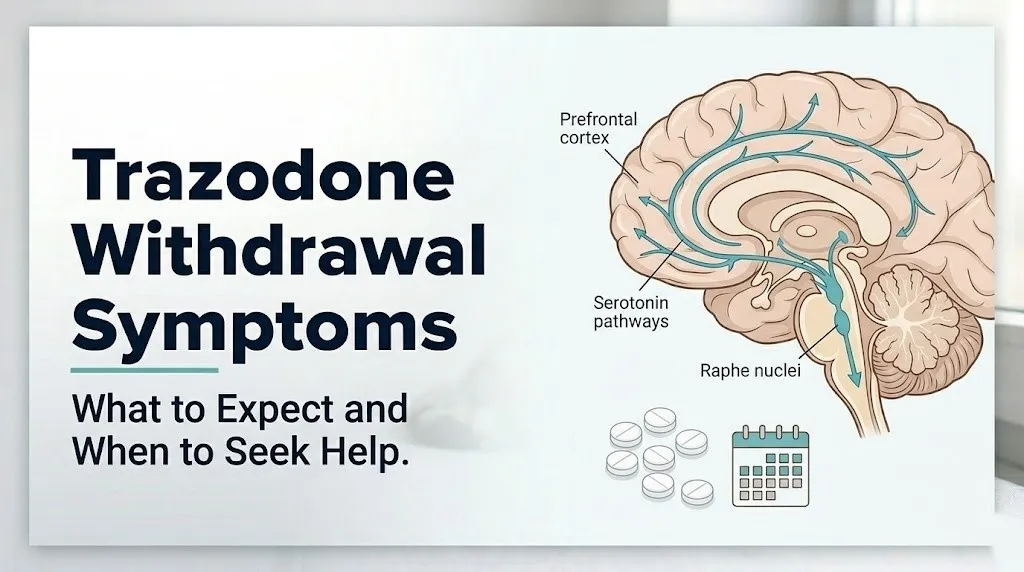
Chronic trazodone use produces compensatory receptor changes in each system. The 5-HT2A receptors upregulate (become more numerous and sensitive) to compensate for the drug’s blocking. The H1 receptors upregulate to compensate for the sedation. When trazodone is removed, the supersensitized receptors respond to normal levels of serotonin and histamine with exaggerated responses.
The raphe nuclei of the midbrain and pons, which produce most of the brain’s serotonin, are centrally involved. So is the locus coeruleus in the pons, the brain’s primary noradrenergic nucleus, which governs the autonomic stress response and contributes to the sweating, palpitations, and anxiety seen during withdrawal.
Women of reproductive age appear to experience more pronounced serotonergic rebound symptoms based on observational data, likely because estrogen modulates serotonin receptor density and serotonin transporter expression, making the serotonergic system more sensitive to pharmacological perturbation across the menstrual cycle.
Key Takeaway: Trazodone withdrawal affects four receptor systems simultaneously (5-HT2A, SERT, histamine H1, and alpha-1 adrenergic), producing a more complex discontinuation syndrome than SSRI withdrawal, which primarily involves only SERT. This is why trazodone withdrawal can feel different from what people expect based on general “antidepressant withdrawal” descriptions.
Trazodone Withdrawal Timeline and How Long It Lasts
Trazodone withdrawal symptoms typically begin within 24 to 72 hours of the last dose or the first substantial dose reduction, and in most patients who taper gradually, resolve within two to four weeks, though a subset of patients experience prolonged symptoms lasting six to twelve weeks.
The timeline is driven by trazodone’s pharmacokinetics. The parent compound has a half-life of five to nine hours in most adults. Its primary active metabolite, meta-chlorophenylpiperazine (mCPP), has a half-life of approximately four to fourteen hours. By the time 24 hours have passed after the last dose, plasma concentrations have fallen to a fraction of their therapeutic level, which explains the rapid onset of early discontinuation symptoms.
| Timeline Phase | Timing | Typical Symptoms |
|---|---|---|
| Early acute | Hours 12 to 48 | Insomnia, irritability, flu-like aching, nausea, sweating |
| Peak acute | Days 2 to 5 | Anxiety, dizziness, brain zaps, gastrointestinal upset, rebound insomnia |
| Subacute | Days 5 to 14 | Mood instability, fatigue, intermittent sensory symptoms, sleep normalization beginning |
| Resolution | Weeks 2 to 4 | Gradual symptom decrease; sleep and mood approaching baseline |
| Prolonged (subset) | Weeks 4 to 12+ | Persistent anxiety, intermittent brain zaps, low mood; may indicate depression recurrence |
The American Psychiatric Association distinguishes between true discontinuation syndrome (which improves over two to four weeks) and depression recurrence (which does not improve and typically worsens over weeks). This distinction matters clinically. If symptoms are worsening after four weeks rather than improving, a psychiatrist should evaluate whether what appears to be withdrawal is actually a return of the underlying depressive or anxiety disorder.
People who used trazodone primarily for insomnia at lower doses (50 to 100 mg) typically experience shorter and milder withdrawal timelines than those who used it at antidepressant doses (150 to 400 mg) for major depressive disorder.
Early Trazodone Withdrawal Symptoms (First 24 to 72 Hours)
The first symptoms of trazodone withdrawal appear within 24 to 72 hours of dose reduction or cessation, typically beginning with flu-like physical discomfort, restlessness, and sleep disruption before psychological symptoms become prominent.
The rapid onset is a direct consequence of trazodone’s short half-life. Within 24 hours of the last dose, receptor-level effects begin to reverse. The histamine H1 receptors, which had been chronically blocked by trazodone, are now exposed to normal histamine signaling again. Since they have upregulated in response to chronic blockade, normal histamine now produces an exaggerated wakefulness-promoting effect, which is why insomnia is often the first symptom that appears.
Early symptoms to recognize in the first 24 to 72 hours:
- Difficulty falling or staying asleep (histamine H1 rebound producing heightened arousal)
- Restlessness and inner agitation (early serotonergic and noradrenergic rebound)
- Muscle aching similar to flu symptoms (multireceptor neurochemical instability affecting autonomic regulation)
- Nausea, possibly with loose stools (enteric serotonin system disruption affecting gastrointestinal motility via 5-HT3 and 5-HT4 receptors in the gut wall)
- Mild dizziness or a sense of unsteadiness (vestibular serotonergic disruption)
- Profuse sweating, particularly at night (alpha-1 adrenergic rebound increasing sympathetic tone)
- Headache (serotonergic and vascular effects of serotonin withdrawal affecting cerebral blood vessel tone)
According to the Mayo Clinic, early antidepressant discontinuation symptoms are frequently misidentified as a recurrence of the original illness or as a viral infection because of the flu-like quality of the physical symptoms. Keeping a symptom diary from the first day of dose reduction helps distinguish drug discontinuation effects from other causes.
People with a personal or family history of anxiety disorders may experience a more intense early phase because of pre-existing differences in baseline serotonergic and noradrenergic tone that make them more sensitive to receptor-level perturbations.
Trazodone Withdrawal Insomnia and Rebound Sleep Disruption
Trazodone withdrawal insomnia is caused by the rebound upregulation of histamine H1 receptors, which had adapted to chronic trazodone blockade by increasing their density and sensitivity, producing an exaggerated wakefulness-promoting response when trazodone’s sedating H1 antagonism is removed.
Trazodone is one of the most widely prescribed sleep aids in the United States, used off-label for insomnia by an estimated several million adults, according to data reported in the American Journal of Psychiatry. This broad use means insomnia is the withdrawal symptom most frequently reported by people stopping trazodone, and it is often more severe than the original insomnia that prompted trazodone prescribing in the first place.
The histamine H1 rebound mechanism works like releasing a compressed spring. Chronic H1 blockade compresses the histaminergic arousal system. Remove the blockade suddenly, and the spring releases with force. The result is hyperarousal at bedtime, difficulty achieving sleep onset, and multiple nighttime awakenings.
A second sleep-related effect occurs from the serotonergic disruption: REM sleep rebound. Trazodone suppresses REM sleep to some degree. When it is stopped, REM sleep rebounds with increased intensity, producing vivid, sometimes disturbing dreams that further disrupt sleep quality even when the person does manage to sleep.
Quick Tip:
- Maintain a consistent sleep schedule during trazodone tapering (same bedtime and wake time daily, regardless of how poorly you slept)
- Avoid caffeine after noon during the withdrawal period, as caffeine also blocks H1 receptors and can worsen the rebound pattern
- Older adults stopping trazodone for insomnia should work with their primary care physician to establish a non-pharmacological sleep intervention (cognitive behavioral therapy for insomnia, or CBT-I) before beginning the taper, as their rebound insomnia risk is higher due to reduced histamine system compensatory capacity
Key Takeaway: Rebound insomnia during trazodone withdrawal is worse than regular insomnia because it involves two simultaneous mechanisms: histamine H1 receptor upregulation producing hyperarousal and REM rebound producing vivid disturbing dreams. Gradual tapering reduces but does not eliminate this effect.
Trazodone Withdrawal Anxiety and Psychological Symptoms
Trazodone withdrawal anxiety arises primarily from two concurrent neurochemical events: the upregulation and supersensitivity of 5-HT2A receptors in the prefrontal cortex and amygdala, and the rebound of alpha-1 adrenergic receptor activity in the locus coeruleus pathway, both of which amplify the brain’s threat-detection and stress-response systems when trazodone is removed.
The amygdala, the brain’s primary fear-processing center, receives dense serotonergic input from the raphe nuclei. When 5-HT2A receptors in the amygdala upregulate during chronic trazodone use and are then released from blockade, normal serotonin signaling produces exaggerated fear and anxiety responses. At the same time, the locus coeruleus, which had been suppressed by trazodone’s alpha-1 adrenergic blockade, rebounds with increased norepinephrine output, mimicking the neurochemical state of acute stress.
Psychological symptoms that commonly appear during trazodone withdrawal:
- Anxiety ranging from mild nervousness to panic attacks
- Irritability and a lowered threshold for frustration or anger
- Emotional volatility, where moods shift more rapidly than usual
- Depersonalization, a feeling of being detached from one’s own body or thoughts
- Derealization, a sense that the environment feels unreal or distant
- Low mood or sadness that may or may not represent depression recurrence
- Difficulty concentrating, mental fogginess, or cognitive slowing
According to the National Institute of Mental Health (NIMH), distinguishing antidepressant discontinuation syndrome from depression recurrence is one of the most clinically challenging aspects of managing antidepressant cessation. Discontinuation syndrome typically improves within two to four weeks. Depression recurrence typically worsens progressively unless treated.
People with pre-existing generalized anxiety disorder or panic disorder should plan trazodone discontinuation specifically with a psychiatrist, not a primary care physician alone, because the anxiety rebound in these populations can reach a severity that triggers a full disorder relapse and may require a more extended, smaller-step tapering schedule.
Trazodone Withdrawal Physical Symptoms: Dizziness, Nausea, and Sweating
Trazodone withdrawal physical symptoms, including dizziness, nausea, abdominal cramps, and sweating, are caused by the simultaneous disruption of serotonergic signaling in the gastrointestinal tract and the rebound of alpha-1 adrenergic tone in the peripheral autonomic nervous system when trazodone is stopped.
Dizziness during trazodone withdrawal has two distinct mechanisms. First, serotonin modulates vestibular pathway signaling, and the serotonergic disruption during withdrawal destabilizes the vestibular nuclei in the brainstem, producing vertigo or a floating sense of unsteadiness. Second, trazodone’s alpha-1 adrenergic blockade had been suppressing vascular tone; removing it can produce transient blood pressure fluctuations, including orthostatic hypotension (a drop in blood pressure when standing), that manifest as dizziness or lightheadedness on position change.
Nausea arises from the enteric nervous system. The gastrointestinal tract contains approximately 90% of the body’s total serotonin, stored in and released by enterochromaffin cells in the gut wall, and regulated by 5-HT3 and 5-HT4 receptors on enteric neurons. Disruption of serotonergic signaling in the gut produces nausea, vomiting, cramping, and altered bowel habits, which is why gastrointestinal symptoms closely parallel the pattern seen with other serotonergic drugs during discontinuation.
Sweating, palpitations, and a sensation of physical tension or inner trembling reflect the rebound of sympathetic nervous system tone after alpha-1 adrenergic blockade is lifted. These symptoms are physiologically similar to the symptoms of mild adrenergic excess.
People with cardiovascular disease, hypertension, or orthostatic hypotension are at elevated risk for more disruptive physical symptoms during trazodone withdrawal, particularly from the blood pressure rebound effects. Their primary care physician or cardiologist should be informed before any dose reduction begins so blood pressure monitoring can be arranged.
Brain Zaps and Sensory Disturbances in Trazodone Withdrawal
Brain zaps, clinically described as brief, electric shock-like sensations in the head or radiating through the body, are among the most commonly reported and most distressing sensory symptoms of antidepressant discontinuation syndrome, including trazodone withdrawal, and are caused by abnormal serotonergic modulation of sensory and proprioceptive pathways in the central nervous system.
The exact mechanism of brain zaps has been studied in the context of antidepressant discontinuation syndrome. Research published in the Primary Care Companion for CNS Disorders and observations from clinical neurophysiology suggest that brain zaps may represent brief episodes of abnormal cortical excitability occurring when serotonergic stabilization of sensory cortex and dorsal column pathways is suddenly reduced. The sensation frequently accompanies rapid eye movements, turning the head quickly, or transitioning between sleep and wakefulness.
Other sensory disturbances during trazodone withdrawal include:
- Paresthesia: tingling, prickling, or numbness in the extremities or face
- Visual disturbances such as trailing after moving objects or increased light sensitivity
- Heightened auditory sensitivity, where normal sounds feel louder or more jarring
- A sense of internal vibration or trembling that others cannot observe
Brain zaps are alarming to experience but are not a sign of neurological damage. They are a functional phenomenon produced by serotonergic readjustment, and they resolve as the nervous system recalibrates to operating without trazodone’s receptor modulation. The timeline for brain zap resolution varies: most people see them reduce and stop within two to four weeks of stabilizing on a taper dose or completing withdrawal.
If brain zaps are accompanied by actual motor movements (visible jerking), loss of awareness, or tongue biting, this is not consistent with antidepressant discontinuation and requires urgent evaluation by an emergency medicine physician to rule out seizure activity.
Key Takeaway: Brain zaps during trazodone withdrawal are a functional serotonergic phenomenon that resolves without treatment in most people, but any brain zap accompanied by motor jerking, loss of consciousness, or tongue biting requires emergency evaluation to rule out a seizure disorder.
Stopping Trazodone Cold Turkey Versus Tapering
Stopping trazodone abruptly (“cold turkey”) significantly increases the severity, speed of onset, and duration of withdrawal symptoms compared to a gradual tapering schedule, because abrupt cessation produces a steep, rapid drop in all four receptor-level effects simultaneously, whereas tapering allows each receptor system to readjust incrementally.
The American Psychiatric Association and the American Academy of Family Physicians consistently recommend against abrupt discontinuation of antidepressants after more than four weeks of use. For trazodone specifically, the FDA prescribing information explicitly notes that gradual dose reduction is preferred whenever discontinuation is planned.
A typical physician-guided taper for trazodone involves:
- Reducing the dose by no more than 10 to 25% of the current dose every two to four weeks
- Observing for two weeks at each reduced dose before proceeding to the next reduction
- Slowing the taper further (smaller reductions, longer intervals) if symptoms emerge at any step
- Pausing the taper and returning to the previous dose if symptoms are severe, before attempting a slower reduction
- Working with a pharmacist to confirm that the dose increment reductions are achievable with available tablet strengths (trazodone is available in 50 mg, 100 mg, 150 mg, and 300 mg tablets, with scored tablets allowing some division)
People who stopped trazodone abruptly and are currently experiencing severe symptoms should not resume a full dose without consulting their prescribing physician or a psychiatrist. Reinstituting the medication at a stabilizing dose and then tapering more slowly is a medically valid option that should be discussed with the prescribing provider, not attempted independently.
People with a history of major depressive disorder carry a specific risk with abrupt discontinuation: the rapid drop in serotonergic tone can precipitate a depressive episode faster and more severely than would occur with gradual tapering.
Trazodone Withdrawal in Older Adults
Trazodone withdrawal in older adults (generally defined as age 65 and older) produces more severe symptoms, a longer duration, and a higher risk of clinically dangerous physical effects compared to younger adults, primarily because of age-related slowing of hepatic CYP2D6 and CYP3A4 enzyme activity, reduced receptor plasticity, and a physiological baseline that has less reserve to compensate for neurochemical shifts.
The slower hepatic metabolism in older adults means that trazodone was already clearing from their system more slowly during regular use. When the drug is reduced, the neurochemical shift can still feel abrupt to the brain despite a nominally gradual taper schedule. This requires more conservative dose reduction steps in this population, typically 10% rather than 25% per reduction interval, with longer observation periods between steps.
Specific risks in older adults during trazodone withdrawal:
- Orthostatic hypotension from alpha-1 adrenergic rebound is more severe and more dangerous in older adults because cerebral autoregulation is less efficient with age, increasing fall and syncope risk
- Cognitive effects including confusion, disorientation, and short-term memory disruption can be mistaken for dementia progression or a new neurological event
- Rebound insomnia is more severe because histaminergic compensatory capacity is reduced with aging, and sleep architecture in older adults is already fragile
- Cardiovascular effects from sympathetic rebound carry greater risk in older adults with pre-existing cardiac disease
According to the American Geriatrics Society, any medication affecting the central nervous system should be discontinued with particular caution in adults over 65, with blood pressure monitoring at each dose reduction step. Older adults stopping trazodone should have their primary care physician involved in planning every step of the taper, with explicit instructions for when to contact the physician between scheduled appointments.
Trazodone Withdrawal During Pregnancy
Trazodone withdrawal during pregnancy requires specific clinical management because abrupt discontinuation near delivery creates the risk of neonatal adaptation syndrome (NAS), while continuing the medication through delivery carries the risk of neonatal sedation and feeding difficulties. This is a nuanced clinical balance that must be managed by an obstetrician-gynecologist in collaboration with a psychiatrist.
Neonatal adaptation syndrome from in utero trazodone exposure can produce in the newborn: tremors, high-pitched crying, sleep disturbances, poor feeding, and, in rare cases, respiratory distress. These symptoms typically appear within hours to days of birth and resolve within the first two weeks of life with supportive neonatal care.
The FDA has not assigned a specific safety category to trazodone under the newer pregnancy labeling system (which replaced the A-B-C-D-X system), but prescribing information acknowledges that neonatal toxicity has been reported with in utero exposure. The decision to continue, taper, or switch medications during pregnancy is not one that can be made from a health article. It requires personalized risk-benefit evaluation by the treating obstetric and psychiatric team.
For women who have already stopped trazodone and are experiencing withdrawal symptoms during pregnancy:
- Do not resume or adjust the dose independently
- Contact your obstetrician-gynecologist within 24 hours of developing significant withdrawal symptoms
- Report the specific symptoms, their severity, and the timing of your last dose
- Ask specifically whether a supervised reinstatement and controlled taper is appropriate given your stage of pregnancy and your underlying diagnosis
Women with a history of peripartum depression are at particular risk if trazodone is stopped abruptly near delivery, as the hormonal shifts of the immediate postpartum period compound the neurochemical instability of trazodone discontinuation.
Key Takeaway: Trazodone withdrawal during pregnancy is not a situation to manage independently. The risk-benefit calculation between continued exposure and discontinuation symptoms requires joint evaluation by an obstetrician-gynecologist and a psychiatrist who can account for gestational age, psychiatric history, and neonatal monitoring capacity.
Trazodone Withdrawal When Taking Other Serotonergic Medications
Stopping trazodone while taking other serotonergic medications, including SSRIs, SNRIs, tramadol, lithium, or St. John’s Wort, creates a complex neurochemical situation where the withdrawal of trazodone’s 5-HT2A receptor antagonism may unmask the full serotonergic activity of the co-administered drugs, potentially producing symptoms that overlap with serotonin syndrome.
When trazodone is present alongside an SSRI, it blocks 5-HT2A receptors while the SSRI increases synaptic serotonin through SERT inhibition. The two drugs partially counterbalance each other’s serotonergic effects. Removing trazodone while the SSRI is still raising synaptic serotonin leaves the now-supersensitized 5-HT2A receptors exposed to elevated serotonin without their previous blockade. The result can be an acute excess of serotonergic activity at those receptors.
Serotonin syndrome is a potentially life-threatening condition of excess serotonergic activity. Distinguishing it from severe antidepressant discontinuation syndrome requires clinical evaluation, because symptoms overlap. The distinguishing features of serotonin syndrome include:
- Hyperthermia (elevated body temperature)
- Clonus (rhythmic, involuntary muscle jerking, particularly in the ankles and knees)
- Hyperreflexia (exaggerated deep tendon reflexes)
- Agitation and confusion
- Diaphoresis (profuse sweating)
- Rapid heart rate and blood pressure instability
Standard trazodone discontinuation does not produce clonus or hyperthermia. If these features appear during trazodone withdrawal in someone on concurrent serotonergic medications, this is a medical emergency requiring immediate emergency room evaluation.
Anyone stopping trazodone while taking another serotonergic medication should discuss the taper schedule with their prescribing psychiatrist or primary care physician before reducing even a single dose, to allow for adjustment of co-administered medications as needed.
How to Manage Trazodone Withdrawal Symptoms Safely
Safe management of trazodone withdrawal symptoms begins with physician-supervised dose tapering before discontinuation, and continues with specific supportive measures for each symptom category during the withdrawal period.
The single most effective intervention for minimizing trazodone withdrawal symptom severity is a gradual, individualized taper designed by the prescribing physician, adjusted at each step based on symptom response. This is supported by clinical guidelines from the American Psychiatric Association and the American Academy of Family Physicians.
To prepare for and manage the withdrawal period:
- Schedule an appointment with your prescribing physician or psychiatrist before reducing any dose, and bring a list of all medications and supplements you take
- Request a written taper schedule specifying the exact dose reductions and the intervals between reductions
- Begin keeping a daily symptom log noting sleep quality (hours, disruptions, dreams), anxiety level (rated 1 to 10), and any physical symptoms with their timing and duration
- Maintain regular sleep and wake times throughout the taper, even on nights with poor sleep
- Reduce caffeine consumption to less than one cup of coffee equivalent per day during the taper, since caffeine exacerbates the H1-mediated insomnia rebound
- Avoid alcohol entirely during the taper period, as alcohol initially sedates but then produces its own rebound hyperarousal that worsens all withdrawal symptoms
- Bring your symptom log to each follow-up appointment so the physician can adjust the taper rate based on actual symptom data
Non-pharmacological interventions with clinical evidence for symptom reduction during antidepressant discontinuation include cognitive behavioral therapy for insomnia (CBT-I) for sleep symptoms, aerobic exercise for mood stabilization through endorphin and neurotrophin modulation, and structured relaxation techniques (diaphragmatic breathing, progressive muscle relaxation) for autonomic symptom management.
Pregnant women and older adults should not follow the same standard management timeline. Their taper must be specifically designed by their physician with population-specific adjustments.
When to See a Doctor for Trazodone Withdrawal
Contact your primary care physician or prescribing psychiatrist for trazodone withdrawal if symptoms are severe enough to interfere with daily functioning, if they have not begun to improve after two weeks at a reduced or discontinued dose, or if new symptoms appear that were not present in the early withdrawal period.
Specific circumstances requiring physician contact within 24 to 48 hours:
- Sleep disruption so severe that you are unable to function at work or care for dependents
- Anxiety or panic attacks occurring daily or multiple times per day
- Persistent nausea or vomiting preventing adequate food and fluid intake
- Significant dizziness, particularly if accompanied by falls or near-falls
- New onset of depression symptoms or worsening of mood beyond what was present before trazodone
- Any symptoms of suicidal thinking, even passive thoughts of not wanting to be alive
Things to tell your doctor at this appointment:
- The exact dose you were taking before reduction and the reduction schedule you followed
- The date you reduced or stopped the medication
- A complete list of all other medications, supplements, and herbal products (particularly St. John’s Wort)
- Your symptom log entries from the withdrawal period
- Whether you have a history of prior antidepressant discontinuation and how that experience compared to the current one
People with a history of suicide attempts, active suicidal ideation, or severe depression during prior antidepressant changes should contact their psychiatrist on the same day any mood-related withdrawal symptoms appear, not wait for a routine follow-up appointment.
If you are experiencing suicidal thoughts right now, contact the 988 Suicide and Crisis Lifeline by calling or texting 988. This service is free, confidential, and available 24 hours a day.
Emergency Symptoms During Trazodone Withdrawal
Certain symptoms during trazodone withdrawal require immediate emergency evaluation. Do not wait to see if these resolve on their own.
Call 911 or go to the nearest emergency room immediately if you experience:
- Hyperthermia (body temperature above 101.5°F / 38.6°C) combined with agitation, muscle rigidity, or rapid heart rate (possible serotonin syndrome, especially if taking other serotonergic medications)
- Clonus (rhythmic involuntary muscle jerking in the ankles or legs) or hyperreflexia alongside agitation and sweating (clinical signs distinguishing serotonin syndrome from standard discontinuation)
- Chest pain, irregular heartbeat, or heart rate consistently above 120 beats per minute during the withdrawal period (cardiovascular effects of sympathetic rebound)
- Seizure-like activity, including motor jerking, loss of consciousness, or tongue biting (requires immediate neurological evaluation to rule out seizure disorder)
- Severe confusion, disorientation, or inability to recognize familiar people or places (particularly in older adults, where this may indicate a medical emergency separate from but triggered by withdrawal)
- Active suicidal intent with a plan (not just passive low mood): Call 911 immediately or have someone bring you to the nearest emergency room
Call Poison Control at 1-800-222-1222 if you or someone you care for may have taken an excessive amount of trazodone by accident or intentionally. Do not wait for symptoms to develop before calling.
These presentations can indicate serotonin syndrome, cardiac arrhythmia, seizure activity, or a psychiatric emergency, all of which require emergency medical assessment in a hospital setting, not an urgent care appointment or a phone consultation.
Frequently Asked Questions About Trazodone Withdrawal Symptoms
How long do trazodone withdrawal symptoms last?
Trazodone withdrawal symptoms typically begin within 24 to 72 hours of dose reduction and resolve within two to four weeks for most people who taper gradually under physician supervision.
A subset of patients, particularly those who took higher doses for longer periods, may experience prolonged symptoms lasting six to twelve weeks.
Any symptoms that worsen beyond four weeks rather than improving should prompt evaluation by a psychiatrist to distinguish prolonged discontinuation syndrome from depression recurrence.
What does trazodone withdrawal feel like?
Trazodone withdrawal typically feels like a combination of flu-like physical discomfort (muscle aching, nausea, sweating) alongside anxiety, restlessness, poor sleep, and, in many people, brief electric shock-like sensations in the head called brain zaps.
The sensory symptoms including dizziness, tingling, and brain zaps are often the most alarming but are not signs of neurological damage.
The psychological symptoms including irritability, anxiety, and emotional volatility reflect the serotonergic and noradrenergic rebound in the prefrontal cortex, amygdala, and locus coeruleus as these systems readjust.
Can you stop trazodone cold turkey?
Stopping trazodone abruptly is not recommended after more than four weeks of use, because the sudden removal of trazodone’s multi-receptor effects produces more severe, faster-onset, and longer-lasting withdrawal symptoms than a gradual taper.
The American Psychiatric Association and the American Academy of Family Physicians both recommend gradual dose reduction for all antidepressants including trazodone.
People who have already stopped abruptly and are experiencing severe symptoms should contact their prescribing physician or psychiatrist about whether a supervised reinstatement and controlled taper is appropriate.
Is trazodone withdrawal dangerous?
Trazodone withdrawal is not dangerous for most healthy adults who taper gradually under physician supervision, but it can become dangerous in specific circumstances.
People taking trazodone alongside other serotonergic medications face a risk of serotonin syndrome during withdrawal, and older adults face elevated fall risk from dizziness and orthostatic hypotension.
The most serious risks are cardiovascular symptoms from sympathetic rebound, serotonin syndrome in people on concurrent serotonergic drugs, and psychiatric emergencies including severe depression or suicidal ideation triggered by the abrupt loss of antidepressant effect.
Do brain zaps from trazodone withdrawal go away?
Brain zaps from trazodone withdrawal resolve in the majority of people within two to four weeks of completing the taper or stabilizing on a reduced dose.
They are a functional phenomenon caused by abnormal cortical excitability during serotonergic readjustment, not a sign of neurological damage.
If brain zaps are accompanied by motor jerking, loss of consciousness, or tongue biting, emergency evaluation is required immediately to rule out seizure activity.
What medications help with trazodone withdrawal symptoms?
No specific medication is FDA-approved for treating trazodone withdrawal symptoms, and any pharmacological management should be directed by a psychiatrist or primary care physician, not self-initiated.
In physician-supervised settings, slow reinstatement of trazodone followed by a more gradual taper is the most effective intervention for severe discontinuation syndrome.
Non-pharmacological approaches including cognitive behavioral therapy for insomnia for sleep disruption and structured relaxation techniques for autonomic symptoms have clinical evidence supporting their use as adjuncts during the withdrawal period.
Closing
Trazodone withdrawal symptoms are real, physiologically grounded, and manageable when approached with the right information and the right clinical support. The single most important action you can take if you plan to stop trazodone is to involve your prescribing physician or psychiatrist in designing a gradual, individualized taper schedule before you reduce even one dose. Abrupt cessation is where the most severe and prolonged symptoms originate.
Pay attention to the two-week mark. If your symptoms are improving by the end of the second week of a taper step, your nervous system is readjusting appropriately. If they are worsening, that is the clinical signal to contact your physician and slow the taper further.
The symptom you cannot monitor at home is mood. Any emergence of suicidal thinking during trazodone withdrawal is an emergency, not a withdrawal symptom to wait out. Contact the 988 Suicide and Crisis Lifeline by calling or texting 988, or go to the nearest emergency room. You have the clinical knowledge now to recognize what is happening in your nervous system and to act on it accurately.