Throat Allergy Symptoms: Complete 2026 Guide
Throat allergy symptoms occur when the immune system mounts an IgE-mediated inflammatory response in the pharyngeal mucosa, producing a recognizable pattern of throat irritation that includes scratchiness, postnasal drip-driven soreness, persistent throat clearing, and, in some people, noticeable throat tightness. These symptoms differ from an infectious sore throat in important clinical ways, and knowing the distinction helps you decide whether watchful waiting, a doctor’s visit, or emergency care is the right move.
According to the Centers for Disease Control and Prevention (CDC), approximately 25.7% of adults in the United States reported a diagnosis of seasonal allergy in 2021, making allergic rhinitis with associated throat symptoms one of the most prevalent upper respiratory complaints in the country. The National Institute of Allergy and Infectious Diseases (NIAID) identifies the pharyngeal mucosa as a direct contact surface for both airborne allergens and allergen-laden postnasal secretions, which explains why throat symptoms appear so consistently alongside nasal allergy symptoms.
This article covers the full clinical picture of throat allergy symptoms: the immune mechanism producing them, how each symptom feels and why, how seasonal and perennial triggers differ in the throat, how food allergies produce a distinct throat symptom pattern, what the presentation looks like in children, and, most importantly, which throat symptoms require immediate emergency evaluation rather than home management.
Throat Allergy Symptoms
Throat allergy symptoms refer to the cluster of pharyngeal and laryngeal symptoms produced by IgE-mediated allergic inflammation in response to inhaled, ingested, or contact allergens, including a scratchy or sore throat, itching, persistent throat clearing, postnasal drip, and, in more reactive presentations, throat swelling or tightness.
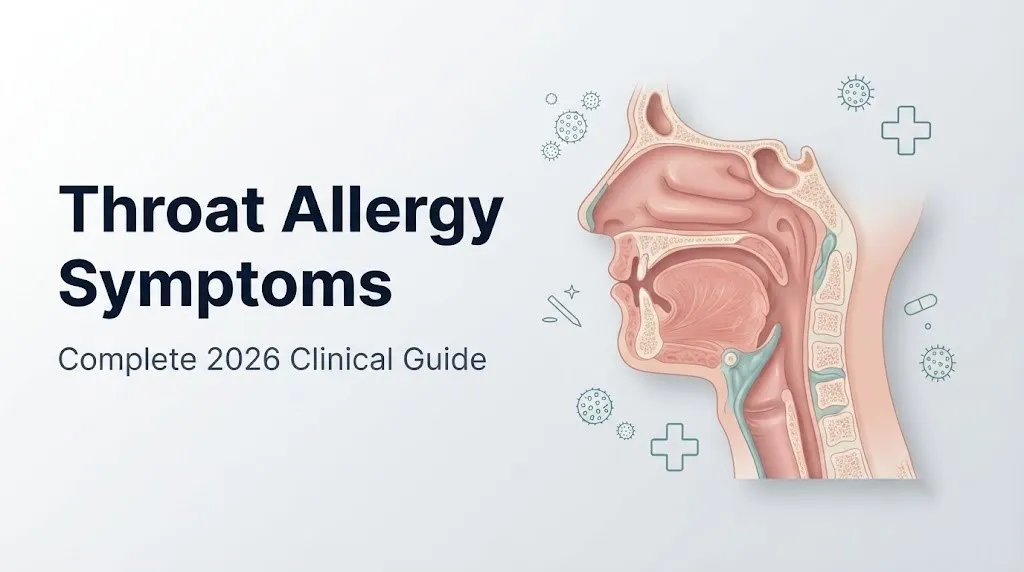
The oropharynx (the middle section of the throat behind the mouth) and nasopharynx (the upper throat behind the nasal cavity) are the two anatomical regions most consistently affected. Both are lined with a ciliated pseudostratified columnar epithelium that contains a dense submucosal layer rich in mast cells. When allergens contact this tissue, those mast cells are the first line of immune response.
Throat allergy symptoms tend to appear alongside other allergy symptoms. You’ll typically see them paired with nasal congestion, rhinorrhea, sneezing, and itchy or watery eyes. When the throat is the only affected area, especially in the absence of nasal symptoms, the clinical picture warrants a closer look at other causes, including streptococcal pharyngitis, viral pharyngitis, gastroesophageal reflux disease (GERD), or in the case of rapid onset after eating, an early food allergic reaction.
Key symptoms in the full allergy throat picture:
- Scratchy or mildly sore posterior throat, typically worse in the morning or evening
- Persistent itching at the back of the throat
- Urge to clear the throat repeatedly
- Sensation of mucus draining down the back of the throat
- Mild hoarseness from laryngeal mucosal swelling or vocal cord irritation by postnasal secretions
- Dry cough triggered by pharyngeal sensory nerve stimulation
- Throat tightness (a symptom requiring evaluation to distinguish allergic edema from early anaphylaxis)
People with a history of asthma or atopic dermatitis have more reactive mast cell populations in their pharyngeal tissue and tend to experience more severe throat symptoms at lower allergen thresholds than non-atopic individuals.
Allergy Throat Symptoms: The Immune Mechanism Behind Them
Allergy throat symptoms are produced by a cascade of immune events beginning in the submucosal tissue of the pharyngeal mucosa, triggered by allergen cross-linking of IgE antibodies bound to the surface of mast cells.
Here’s how the sequence works. On first exposure to an allergen (tree pollen, dust mites, pet dander), the immune system produces immunoglobulin E (IgE) antibodies specific to that allergen, driven by T-helper 2 (Th2) lymphocytes releasing interleukin-4 (IL-4) and interleukin-13 (IL-13). Those IgE antibodies attach to high-affinity IgE receptors (FceRI) on mast cells throughout the pharyngeal submucosa. The immune system is now sensitized but not yet symptomatic.
On subsequent allergen exposure, the allergen physically bridges adjacent IgE molecules on the mast cell surface. This cross-linking triggers mast cell degranulation within seconds, releasing preformed mediators stored in granules: primarily histamine, along with proteases like tryptase and chymase.
Think of sensitized mast cells like loaded mousetraps scattered throughout the throat lining. Allergen contact doesn’t set off one trap; it sets off dozens simultaneously, flooding the tissue with histamine in seconds.
Histamine then binds H1 receptors on three target structures in the pharyngeal wall: sensory nerve endings (producing the characteristic itch and scratchy sensation), submucosal blood vessels (triggering vasodilation and fluid leakage into the tissue, producing swelling and redness), and mucous glands (amplifying mucus secretion that contributes to postnasal drip). Minutes to hours later, the mast cells also synthesize leukotriene C4, D4, and E4 via the 5-lipoxygenase enzyme pathway, producing a sustained late-phase inflammatory response that recruits eosinophils into the pharyngeal tissue and amplifies the swelling and irritation that can persist for hours after the initial allergen exposure.
According to a foundational review published in the Journal of Allergy and Clinical Immunology, this two-phase allergic response (immediate: seconds to 30 minutes; late-phase: 4 to 8 hours after exposure) explains why people with seasonal allergies often experience a second wave of throat soreness several hours after their initial allergen contact.
Women of reproductive age experience more intense mast cell degranulation responses during the follicular and periovulatory phases of the menstrual cycle, when estrogen levels peak. Estrogen activates estrogen receptor alpha on mast cells, increasing FceRI expression and lowering the allergen threshold required to trigger degranulation.
What Does an Allergy Sore Throat Feel Like?
An allergy sore throat feels distinctly different from an infectious sore throat: it presents as a dry, scratchy, or mildly raw sensation at the back of the throat, usually without the severe pain on swallowing, fever, or visible redness and exudate (white patches) associated with streptococcal or viral pharyngitis.
The texture of the discomfort matters here. People consistently describe allergic pharyngeal irritation as a “tickling,” “scratchiness,” or “roughness,” particularly at the posterior pharyngeal wall, where postnasal mucus makes direct physical contact with sensory receptors. The discomfort tends to be bilateral and diffuse rather than localized to one side, which distinguishes it from peritonsillar abscess or unilateral tonsillar pathology.
Swallowing is typically possible and, in mild to moderate cases, not painful. Swallowing with a true bacterial sore throat is sharply painful, often scoring 6 to 9 on a 10-point pain scale. Allergic throat discomfort rarely exceeds a 3 or 4 on the same scale. Pain that wakes you from sleep, or that makes eating or drinking difficult, is not typical of allergy-driven throat symptoms and warrants evaluation by a primary care physician.
| Feature | Allergy Sore Throat | Strep Throat | Viral Pharyngitis |
|---|---|---|---|
| Pain severity | Mild to moderate (1-4/10) | Severe (6-9/10) | Moderate (4-6/10) |
| Onset | Gradual, coincides with allergen exposure | Rapid (12-24 hours) | Gradual (2-3 days) |
| Fever | Absent | Common (above 38C / 100.4F) | Low-grade or absent |
| Exudate (white patches) | Absent | Often present | Absent (except EBV) |
| Nasal symptoms | Usually present | Usually absent | Usually present |
| Duration without treatment | Days to weeks (allergen-dependent) | 7 to 10 days | 5 to 10 days |
| Swallowing difficulty | Mild, if any | Significant | Moderate |
Older adults (65 and above) may not mount the same acute inflammatory response and may describe allergic throat symptoms as simply “dry throat” or “throat irritation” without the itch quality. This can delay appropriate allergy evaluation.
Allergy Symptoms Sore Throat: How the Pattern Develops
The allergy symptoms sore throat pattern develops in a predictable sequence tied to the timing and route of allergen exposure, distinguishing it from the random-onset pattern of infectious pharyngitis.
With airborne allergens like pollen or mold spores, the pattern typically begins within minutes of outdoor exposure and peaks within 30 minutes as the immediate-phase histamine response reaches its maximum. Throat symptoms may ease briefly before returning 4 to 8 hours later during the late-phase inflammatory response driven by leukotrienes and eosinophil recruitment. People who spend the morning outdoors during high pollen counts often notice their sore throat returning in the late afternoon or early evening for exactly this reason.
The progression across an allergy season follows a distinct pattern. Early in the season, when mast cells are freshly loaded with IgE antibodies, even a brief pollen exposure triggers a strong throat response. As the season progresses and repeated exposures reduce the available mast cell mediator stores, some people notice their symptoms moderating. This is distinct from natural desensitization; it reflects temporary mast cell mediator depletion, and symptoms return fully at the start of the next season.
According to the American Academy of Allergy, Asthma and Immunology (AAAAI), the severity of allergic throat symptoms correlates directly with the pollen count on a given day. Days with a pollen count above 500 grains per cubic meter are associated with significantly higher rates of patient-reported sore throat and throat irritation in sensitized individuals.
People taking beta-blockers for blood pressure or cardiac conditions should be aware that this medication class blunts the epinephrine response and can make allergic reactions harder to treat effectively. If you are on a beta-blocker and experience throat allergy symptoms, contact your primary care physician or cardiologist before starting any new allergy medications.
Key Takeaway: Allergy throat symptoms follow allergen exposure timing, peak in two waves (immediate and late-phase), and distinguish themselves from infectious sore throat through the absence of fever, the presence of nasal symptoms, and a scratchy rather than acutely painful quality.
Itchy Throat Allergy Symptoms
An itchy throat is one of the most characteristic and clinically specific allergy throat symptoms, produced when histamine binds H1 receptors on sensory nerve endings in the oropharyngeal and nasopharyngeal mucosa, stimulating the same neural itch-signaling pathway that produces skin itching in urticaria.
The specific sensation targets the posterior oropharynx and sometimes extends toward the palate (roof of the mouth) and the internal ear canal via shared sensory innervation from the glossopharyngeal nerve (cranial nerve IX) and the auricular branch of the vagus nerve (cranial nerve X). This is why people with throat allergies often describe simultaneous itching inside the ears, a phenomenon that does not occur with bacterial pharyngitis.
Itchy throat from allergies almost always accompanies itchy eyes (allergic conjunctivitis) during the same exposure event because both the conjunctival surface and the pharyngeal mucosa contain comparable densities of sensitized mast cells in atopic individuals. If throat itching occurs without any nasal or eye symptoms, particularly after eating a specific food, this presentation pattern more closely resembles oral allergy syndrome or a food allergic reaction rather than airborne allergen exposure.
Notable characteristics of allergy-related throat itching:
- Location: posterior oropharynx, soft palate, sometimes radiating toward ear canals
- Onset: within minutes of allergen contact
- Duration: typically 20 to 60 minutes for the immediate phase; may recur 4 to 6 hours later
- Associated features: simultaneous nasal itching, eye itching, sneezing
- Not associated with: fever, painful swallowing, visible throat redness or exudate
Children between ages 6 and 12 with aeroallergen sensitization are particularly likely to report combined throat and ear itching during high-pollen days, and this symptom cluster in a child is a reliable clinical indicator for allergic rhinitis evaluation by a pediatric allergist.
Scratchy Throat From Allergies
A scratchy throat from allergies results from two simultaneous mechanisms: direct histamine stimulation of oropharyngeal sensory nerve endings producing a surface irritation sensation, and the physical abrasion of the posterior pharyngeal wall by postnasal secretions draining from the inflamed nasal mucosa.
The distinction between “scratchy” and “sore” is clinically useful. Scratchiness from allergies describes a rough, irritated surface sensation without deep pharyngeal pain. True soreness, the kind produced by streptococcal pharyngitis or viral tonsillitis, involves pain originating from deeper tissue inflammation and is felt on swallowing, yawning, or turning the head. Scratchiness stays at the surface. Soreness goes deeper.
Mouth breathing significantly amplifies the scratchy throat sensation in allergic individuals. When nasal congestion from allergic rhinitis forces you to breathe through your mouth during sleep or rest, the warm, humidified air that normally passes through the nasal passages (conditioned by the turbinates and nasal mucosa) bypasses that system entirely. The result is cold, dry, unfiltered air passing directly over the oropharyngeal and hypopharyngeal mucosa, desiccating the mucosal surface and intensifying the scratchy sensation beyond what histamine alone would produce.
Quick Tip:
- Nasal saline irrigation (using an isotonic saline solution via a neti pot or squeeze bottle) reduces allergen load on the nasal mucosa and decreases postnasal drip volume, directly reducing the physical irritation source for scratchy throat
- A bedside humidifier maintaining 40% to 50% room humidity can reduce overnight mouth-breathing throat dryness without changing the underlying allergic response
- Adults with dry mouth caused by antihistamines (a muscarinic receptor side effect particularly pronounced with first-generation antihistamines like diphenhydramine) may experience amplified throat scratchiness; second-generation antihistamines such as cetirizine, loratadine, or fexofenadine have significantly lower anticholinergic profiles
Postnasal Drip Sore Throat Allergies
Postnasal drip is the most consistent contributor to allergy-related sore throat, and it works through a mechanism that is physical as much as immunological: excess mucus secreted by the inflamed nasal mucosa drains downward along the posterior pharyngeal wall, where it makes repetitive direct contact with the dense sensory nerve population of the oropharyngeal mucosa.
The nasal mucosa produces approximately 1 to 1.5 liters of mucus daily under normal conditions. Allergic rhinitis, through histamine-stimulated goblet cell hypersecretion and submucosal gland activation, can increase this output substantially, producing a thicker, more viscous mucus that adheres to the posterior pharyngeal wall rather than clearing efficiently via ciliary transport. This adhesive mucus layer acts as a persistent physical irritant, stimulating sensory receptors continuously and producing the constant rawness that people associate with the morning-after-allergen-exposure sore throat.
The ciliary transport system of the upper airway normally moves mucus toward the nasopharynx at approximately 5 to 10 millimeters per minute. Allergic inflammation reduces ciliary beat frequency through the effects of histamine and leukotrienes on ciliated epithelial cells, impairing clearance further and allowing mucus to pool in the posterior nasopharynx before gravity assists its descent onto the oropharyngeal surface.
| Mucus Characteristic | Normal | Allergic Postnasal Drip |
|---|---|---|
| Volume | 1 to 1.5 liters per day | Increased (volume varies by severity) |
| Consistency | Thin, watery, clears easily | Thicker, more viscous, adhesive |
| Color | Clear | Clear to white (yellow/green suggests secondary infection) |
| Ciliary clearance | Normal (5-10 mm/min) | Reduced (histamine/leukotriene effect on cilia) |
| Throat contact | Minimal | Persistent, especially overnight and in the morning |
Postnasal drip from allergies that shifts from clear or white to yellow or green in color indicates possible secondary bacterial sinusitis or rhinosinusitis, a complication requiring evaluation by a primary care physician, who may refer to an otolaryngologist if symptoms persist beyond 10 days.
Key Takeaway: Postnasal drip is the primary physical driver of allergy sore throat because increased viscous mucus sits on the posterior pharyngeal wall and continuously stimulates sensory nerve endings; ciliary impairment from allergen-driven inflammation makes this worse by slowing clearance.
Allergy Throat Clearing Symptoms
Persistent throat clearing is one of the most frequently reported and least explained allergy throat symptoms, produced when postnasal mucus and sensory nerve stimulation in the hypopharynx (lower throat, just above the larynx) trigger the laryngeal adductor reflex, which closes the vocal cords briefly to clear the airway.
This reflex serves a protective function. The larynx monitors the presence of foreign material above the vocal cords and initiates the throat-clearing motor sequence (a brief, forceful subglottic pressure burst with vocal cord closure and release) to clear the perceived irritant. In allergic individuals, the combination of mucus coating the posterior pharyngeal wall and direct sensory nerve stimulation by histamine keeps this reflex in a state of near-continuous low-level activation.
The problem is that throat clearing itself is physically traumatic to the vocal cords (technically the vocal folds, paired bands of mucosa stretched across the larynx). Each forceful throat-clearing event slams the vocal folds together under high subglottic pressure. Done dozens of times daily during allergy season, this repetitive microtrauma produces vocal fold edema, mucosal irritation, and in some individuals, the development of benign vocal fold lesions over time. This is why hoarseness is a secondary symptom of chronic allergic throat clearing.
According to the American College of Allergy, Asthma and Immunology (ACAAI), habitual throat clearing driven by chronic allergic rhinitis can become a conditioned behavior that persists even after allergy symptoms are treated pharmacologically, because the laryngeal adductor reflex sensitivity can become centrally sensitized over time. In those cases, referral to a speech-language pathologist in addition to an allergist/immunologist may be warranted.
Throat clearing that is associated with hoarseness lasting more than two weeks, or that produces a voice change in a person over 40, should prompt evaluation by an otolaryngologist (ear, nose, and throat specialist) to rule out laryngeal pathology beyond allergic inflammation.
Seasonal Allergy Symptoms Sore Throat
Seasonal allergy symptoms sore throat follows the pollen calendar and peaks predictably based on which allergen class is elevated, with tree pollen (January through May in most U.S. regions), grass pollen (May through July), and weed/ragweed pollen (August through October) each producing a distinct seasonal pattern of throat symptoms in sensitized individuals.
The throat symptom burden during peak pollen season tends to be more severe than during low-count days because allergen dose matters to the IgE-mast cell system. Higher airborne pollen concentrations expose a larger number of sensitized mast cells per breath cycle, triggering more extensive degranulation and a more pronounced inflammatory mediator release in the nasopharyngeal and oropharyngeal tissue.
Climate research published in the Journal of Allergy and Clinical Immunology has documented that rising atmospheric carbon dioxide concentrations since the late twentieth century are correlated with longer pollen seasons (extended by an estimated 11 to 27 days across multiple U.S. regions between 1990 and 2020) and higher pollen concentrations per season. By 2026, people with previously mild seasonal allergy throat symptoms may notice them beginning earlier in the year or persisting later into autumn.
The seasonal pattern is a reliable clinical differentiator. Allergy throat symptoms that begin every year during the same weeks, clear when pollen counts drop or after rain, and return the following season at the same time are almost certainly driven by a specific aeroallergen. Throat symptoms without a seasonal pattern, or that worsen indoors rather than outdoors, suggest perennial allergens (house dust mites, pet dander, mold) or non-allergic causes.
Pregnant women during their second or third trimester may experience amplified seasonal allergy throat symptoms because pregnancy increases nasal mucosal congestion through hormonal mechanisms (estrogen-driven venous dilation of the nasal turbinates), compounding the postnasal drip burden. An obstetrician-gynecologist should be consulted before starting or continuing any allergy medication during pregnancy, including second-generation antihistamines.
Chronic Sore Throat From Allergies
A chronic sore throat from allergies occurs when perennial allergen exposure, meaning allergens present year-round rather than seasonally, produces continuous low-grade pharyngeal inflammation rather than the acute flares seen with seasonal pollen.
The most common perennial allergen triggers for chronic allergic pharyngitis are house dust mites (specifically Dermatophagoides pteronyssinus and Dermatophagoides farinae, which live in bedding, upholstered furniture, and carpeting), pet dander (Fel d 1 from cats, Can f 1 from dogs), cockroach allergens (primarily Bla g 2), and indoor mold species (Alternaria alternata, Cladosporium species). These allergens produce daily, low-intensity IgE-mast cell activation in the pharyngeal mucosa that never fully resolves between exposures.
Chronic low-grade pharyngeal inflammation produces a symptom quality different from the acute scratchy/itchy presentation of seasonal allergy. People with chronic allergic pharyngitis more commonly describe a persistent “rawness” or “roughness,” a feeling that something is stuck in the throat, mild but constant throat clearing, and morning hoarseness that improves through the day as posture changes reduce postnasal drip pooling in the throat overnight.
Distinguishing chronic allergic sore throat from gastroesophageal reflux disease (GERD) is clinically important because both conditions produce persistent pharyngeal irritation. GERD-related laryngopharyngeal reflux causes posterior laryngeal erythema and edema, while allergic pharyngitis causes diffuse oropharyngeal mucosal irritation. GERD-related throat symptoms are typically worse after meals, when lying flat, or after consuming acidic, fatty, or spicy foods. Allergy-related chronic throat symptoms worsen with allergen exposure and improve with antihistamine use.
According to research published in the Annals of Allergy, Asthma and Immunology, up to 25% of patients with chronic unexplained sore throat have undiagnosed allergic rhinitis as a contributing or primary cause, and appropriate allergy evaluation leads to significant symptom improvement in the majority of these cases.
Key Takeaway: Chronic sore throat from allergies is most often driven by perennial allergens like house dust mites and pet dander and presents as persistent rawness and throat clearing rather than the acute scratchy flares of seasonal pollen exposure.
Allergy Throat Symptoms at Night
Throat allergy symptoms often worsen at night for three distinct physiological reasons: allergen load peaks in the sleeping environment, posture-dependent postnasal drip increases during recumbency, and the natural circadian suppression of cortisol after midnight reduces the anti-inflammatory tone that partially moderates allergic responses during waking hours.
The sleeping environment concentrates perennial allergens. A standard pillow and mattress that have not been covered with allergen-proof encasements can contain millions of house dust mites, which thrive in the warm, humid microclimate of bedding. Throughout the sleep cycle, breathing at close range to this allergen reservoir exposes the nasopharyngeal and oropharyngeal mucosa to a continuous low-level allergen concentration. The result is progressive pharyngeal irritation that builds through the night, producing the characteristic “worst in the morning” sore throat that many allergy sufferers recognize.
Posture amplifies the problem. In an upright position, gravity assists postnasal mucus in draining toward the laryngopharynx and being swallowed. In a recumbent position, mucus pools in the nasopharynx and posterior oropharynx rather than clearing, maintaining prolonged contact with the mucosal sensory surface. Elevating the head of the bed by approximately 10 to 15 degrees (using a wedge pillow rather than adding extra pillows under the head, which flexes the neck and worsens drainage) reduces overnight pooling effectively.
Regarding cortisol: the hypothalamic-pituitary-adrenal (HPA) axis produces cortisol in a circadian pattern that peaks in the early morning and reaches its nadir between midnight and 3 a.m. Cortisol suppresses mast cell reactivity and reduces eosinophil activity. During the overnight nadir, this protective suppression is at its minimum, making allergic inflammatory responses more intense during the late-night and early-morning hours. This same mechanism explains why asthma attacks also peak between 2 and 4 a.m.
Adults with obstructive sleep apnea (OSA) who rely on continuous positive airway pressure (CPAP) therapy may experience additional throat dryness from the forced air flow if their CPAP humidifier is inadequately calibrated. An overnight sore throat in a CPAP user with known allergies may reflect both perennial allergen exposure and CPAP-related mucosal drying acting simultaneously.
Environmental Allergy Throat Symptoms
Environmental allergy throat symptoms are triggered by the full range of non-food, non-medication allergens encountered in indoor and outdoor environments, including pollen, mold spores, pet dander, dust mites, and cockroach allergens, all of which access the pharyngeal mucosa through normal breathing.
Outdoor environmental allergens (pollen and outdoor mold spores) produce throat symptoms predominantly during outdoor exposure and clear with avoidance. Indoor environmental allergens produce symptoms that are characteristically worse indoors, worsening in specific rooms (the bedroom for dust mite allergy, any room a pet occupies for pet dander allergy) and improving outdoors or in allergen-reduced environments.
Workplace environmental allergens deserve specific mention. Occupational allergens including latex (in healthcare settings), flour dust (in bakeries and food processing), grain dusts, wood dusts, isocyanates (in spray painting and manufacturing), and laboratory animal allergens can produce occupational allergic rhinitis with prominent throat symptoms in sensitized workers. The ACAAI notes that occupational allergic disease is often underdiagnosed because patients and clinicians fail to connect the workplace timing of symptoms with an allergic etiology.
| Environmental Allergen | Peak Exposure Time | Indoor vs. Outdoor | Throat Symptom Pattern |
|---|---|---|---|
| Tree pollen | Spring (January-May) | Outdoor | Acute scratchy throat, itching, peaks after outdoor time |
| Grass pollen | Late spring/summer (May-July) | Outdoor | Morning and evening peaks with high counts |
| Ragweed/weed pollen | Late summer/fall (Aug-Oct) | Outdoor | Extended duration, often severe |
| House dust mites | Year-round | Indoor (bedding, carpet) | Morning worst, chronic rawness |
| Pet dander (cat, dog) | Year-round | Indoor (any pet-occupied area) | Symptoms within minutes of entering area |
| Indoor mold | Year-round or seasonal | Indoor/outdoor | Worse in damp basements, bathrooms |
| Cockroach | Year-round | Indoor (urban environments) | Chronic, often underrecognized |
Immunocompromised individuals (those on biologics, systemic corticosteroids, chemotherapy, or with primary immunodeficiency disorders) may have blunted IgE-mediated allergic responses but greater mucosal vulnerability. Environmental allergen-triggered pharyngeal inflammation in an immunocompromised person warrants early evaluation by their primary care physician or specialist rather than home management.
Food Allergy Throat Symptoms
Food allergy throat symptoms fall into two distinct clinical categories: the immediate IgE-mediated reaction to a true food allergen (which can progress rapidly toward anaphylaxis) and oral allergy syndrome (OAS), also called pollen-food allergy syndrome, which produces local oropharyngeal symptoms confined to the mouth and throat without systemic progression.
Oral allergy syndrome occurs when proteins in raw fruits, vegetables, or tree nuts cross-react with structural homologs in inhaled pollen allergens to which the person is already sensitized. The classic example is birch pollen sensitivity producing OAS reactions to raw apples, pears, peaches, cherries, hazelnuts, and celery because the major birch allergen (Bet v 1) shares protein structures with Mal d 1 in apples and other rosaceous fruits. The cross-reactive food proteins are heat-labile, which is why cooking the same foods typically eliminates or reduces the throat reaction.
OAS throat symptoms include itching or tingling of the lips, tongue, soft palate, and posterior oropharynx beginning within seconds to two minutes of eating the trigger food. The sensation is typically mild, resolves within 30 minutes, and does not progress to systemic symptoms. This local nature distinguishes OAS from true food allergy.
True food allergy throat symptoms from the major food allergens (peanut, tree nuts, shellfish, fish, wheat, soy, milk, eggs, and sesame, which the FDA recognized as a major allergen under the Food Allergy Safety, Treatment, Education, and Research Act of 2021) can include throat tightening, progressive difficulty swallowing, a choking sensation, and hoarseness, all representing early signs of laryngeal or uvular angioedema. These symptoms can progress to complete airway obstruction within minutes without epinephrine treatment.
A food allergy throat reaction that includes any swelling, tightening, or difficulty breathing is a medical emergency. Call 911 immediately. Do not attempt to treat this with an antihistamine alone, as antihistamines do not reverse laryngeal edema.
According to the NIAID, approximately 2% of U.S. adults have IgE-mediated food allergies, and food is the leading trigger of anaphylaxis treated in emergency departments. Children have higher rates of food allergy (approximately 5.8% of children under 18, according to the CDC), making prompt recognition of food allergy throat symptoms in children a public health priority.
Key Takeaway: Food allergy throat symptoms divide into oral allergy syndrome (local, mild, from pollen cross-reactive foods, resolves quickly) and true food allergy (can progress to laryngeal edema and anaphylaxis, requires epinephrine and 911).
Allergy Throat Symptoms in Children
Allergy throat symptoms in children present through the same IgE-mediated mechanism as in adults, but the clinical picture is complicated by developmental factors: children are less able to articulate the specific quality of their throat discomfort, pharyngeal lymphoid tissue is proportionally larger during childhood (the adenoid is most prominent between ages 3 and 7), and the narrower pediatric airway means that any inflammatory swelling has a greater proportional effect on airway diameter.
Children with allergic rhinitis often present with what parents observe rather than what the child reports. Watch for:
- Repeated sniffing or snorting that the child does not describe as nasal symptoms
- Frequent throat clearing without cough or hoarseness
- Complaints of a “tickle” in the throat rather than pain
- Disrupted sleep with mouth-breathing sounds or snoring (adenoidal hypertrophy from perennial allergen exposure)
- The “allergic salute,” a habitual upward rubbing of the nose with the palm of the hand
- “Allergic shiners” (dark circles under the eyes from venous congestion caused by nasal obstruction)
- Complaints that food “tastes funny” during high pollen periods (altered taste perception from nasal obstruction and postnasal drip)
A child’s first seasonal allergy symptoms, including throat symptoms, most commonly appear between ages 3 and 8, though sensitization can begin in infancy. The American Academy of Pediatrics (AAP) recommends that a child with suspected allergic rhinitis and associated throat symptoms who does not respond adequately to appropriate non-sedating antihistamine therapy be evaluated by a board-certified pediatric allergist/immunologist for formal skin prick testing or serum-specific IgE measurement.
Allergy throat symptoms in a child that are accompanied by snoring, observed apneic pauses during sleep, or recurrent otitis media (middle ear infections from Eustachian tube dysfunction related to adenoidal hypertrophy) require evaluation by both a pediatric allergist and a pediatric otolaryngologist.
Allergy Symptoms Throat Tightness
Throat tightness associated with allergies requires careful clinical triage because it exists on a spectrum from benign mild pharyngeal edema to life-threatening laryngeal angioedema, and distinguishing where on that spectrum a given episode falls is the most important safety decision in this entire article.
Mild throat tightness in a person with known seasonal allergies, occurring during high pollen season and resolving within 15 to 30 minutes of moving indoors, is likely a reflection of mild oropharyngeal mucosal edema from histamine-driven submucosal fluid accumulation. This is uncomfortable but not immediately dangerous.
Throat tightness that involves the larynx or hypopharynx enters a different risk category. The larynx is approximately 4 to 5 centimeters in diameter at the level of the vocal cords in an adult. Inflammatory edema that reduces this diameter by even 50% produces stridor (a high-pitched inspiratory sound), significant breathing difficulty, and a subjective sensation of the throat closing. A child’s larynx is substantially narrower, making the same degree of swelling proportionally more obstructive.
Throat tightness becomes an emergency if any of the following accompany it:
- Sensation of the throat closing or narrowing progressively
- Stridor: a high-pitched, harsh sound on inhaling (not on exhaling, which would suggest bronchospasm)
- Voice change to hoarseness or a muffled quality (indicating laryngeal edema is affecting the vocal cords)
- Difficulty swallowing saliva
- Drooling (because swallowing has become too difficult)
- Facial, lip, or tongue swelling alongside the throat tightness (angioedema pattern)
- Dizziness, faintness, or a sense of impending doom
Call 911 immediately if throat tightness is progressive or accompanied by any of the symptoms listed above. These are the cardinal signs of anaphylaxis. This is not a call-your-doctor situation. This is not an urgent care situation. This is a 911 call and epinephrine administration situation.
People with a known prescription for an epinephrine auto-injector (EpiPen or equivalent) should use it at the first sign of progressive throat tightening and call 911 even after using the epinephrine, because the effects of a single epinephrine dose can wear off before the patient reaches a hospital.
When to See a Doctor for Allergy Throat Symptoms
Knowing when allergy throat symptoms have moved beyond home management is a clinically meaningful decision, because both undertreatment of significant allergic disease and delayed recognition of a different diagnosis (strep throat, epiglottitis, peritonsillar abscess, lymphoma) carry real health consequences.
Contact your primary care physician for evaluation if you experience:
- Throat symptoms that do not improve with a five-day trial of a second-generation antihistamine and allergen avoidance
- Sore throat with fever (temperature above 38C / 100.4F) at any point
- White patches, exudate, or visible swelling of the tonsils
- Pain on one side of the throat only
- Hoarseness that persists for more than two weeks
- Difficulty swallowing solid foods
- Unexplained weight loss alongside chronic throat symptoms
- Night sweats, enlarged lymph nodes in the neck, or persistent fatigue alongside throat symptoms (these warrant urgent evaluation to rule out lymphoma or other systemic causes)
- Symptoms that are “the worst ever” for you, even if you have a known allergy history
Referral to a board-certified allergist/immunologist is appropriate when:
- Throat symptoms recur each allergy season and limit daily function
- Over-the-counter allergy medications are not providing adequate control
- You want formal identification of your specific allergen triggers through skin prick testing or serum-specific IgE (ImmunoCAP) testing
- You are considering allergen immunotherapy (allergy shots or sublingual drops) for long-term desensitization
Referral to an otolaryngologist (ENT specialist) is appropriate when:
- Hoarseness persists for more than two weeks despite allergy treatment
- Voice changes are progressive or interfere with work or daily communication
- Structural concerns (deviated nasal septum, adenoidal hypertrophy, nasal polyps) may be contributing to the postnasal drip burden
A 2023 review in the Annals of Allergy, Asthma and Immunology found that patients with allergic rhinitis who received structured allergen immunotherapy reported a 40% to 60% reduction in overall symptom burden, including throat symptoms, over a two- to three-year treatment period, with effects persisting for years after therapy completion.
Emergency Symptoms: When to Call 911 or Go to the ER
Certain symptoms associated with throat allergies require immediate emergency evaluation. Do not wait to see if these resolve on their own.
Call 911 or go to the nearest emergency room immediately if you experience:
- Progressive throat tightening that feels like the throat is closing or narrowing over minutes
- Stridor: a high-pitched, harsh sound heard when you inhale, indicating that airway narrowing has reached a critical level
- Sudden hoarseness or a muffled voice following allergen exposure, indicating laryngeal edema is affecting the vocal cords
- Difficulty swallowing saliva or drooling because swallowing has become impossible
- Swelling of the tongue, lips, uvula, or face alongside throat symptoms (pattern of systemic angioedema)
- Throat symptoms following ingestion of a known or suspected food allergen, particularly peanuts, tree nuts, shellfish, or other high-risk foods
- Any throat symptom accompanied by hives, flushing, wheezing, chest tightness, rapid heartbeat, drop in blood pressure, dizziness, or loss of consciousness
- Throat symptoms in a child under 5 that include any breathing difficulty, high-pitched breath sounds, or inability to speak or cry normally
If you have a prescribed epinephrine auto-injector, use it at the first sign of progressive throat tightening and call 911 immediately after. Do not delay the 911 call waiting to see if epinephrine works; a second reaction can occur, and emergency medical support must be en route.
These presentations can indicate anaphylaxis, laryngeal edema, or angioedema involving the airway, all of which require emergency medical assessment, airway management capability, and potentially intravenous epinephrine, corticosteroids, and antihistamines that are only available in an emergency room or by emergency medical services.
Frequently Asked Questions About Throat Allergy Symptoms
What does a sore throat from allergies feel like compared to strep throat?
An allergy sore throat feels scratchy, ticklish, and mildly raw at the back of the throat, typically without severe pain on swallowing, fever, or visible white patches.
Strep throat produces sharp, severe pain that makes swallowing difficult, almost always includes fever above 38C (100.4F), and is often accompanied by white or grey exudate on the tonsils and swollen tender lymph nodes in the neck.
If your throat symptoms include fever, severe swallowing pain, or visible throat exudate, contact a primary care physician the same day for a rapid streptococcal antigen test, because untreated strep throat can lead to rheumatic fever.
How long does an allergy sore throat last?
An allergy sore throat typically lasts as long as allergen exposure continues, ranging from hours after a single outdoor outing during high pollen season to weeks during prolonged pollen seasons or continuous perennial allergen exposure.
Removing yourself from the allergen source, using appropriate antihistamine therapy, and performing nasal saline irrigation can reduce symptoms within 24 to 48 hours in most sensitized individuals.
A throat that remains sore for more than two weeks despite allergy treatment, or that worsens rather than improving, warrants evaluation by a primary care physician to rule out non-allergic causes.
Can allergies cause throat tightness or throat swelling?
Allergies can cause throat tightness from mild oropharyngeal mucosal edema, but progressive tightening or swelling of the larynx is a medical emergency and must be treated as anaphylaxis until proven otherwise.
Mild throat tightness during seasonal allergy exposure that resolves within 15 to 30 minutes and is not progressive is a different presentation from the throat tightening of anaphylaxis, which worsens over minutes and is often accompanied by other systemic symptoms.
If your throat tightness is progressive, comes with stridor (a high-pitched breath sound), or follows eating a suspected allergen, call 911 immediately.
Why does my throat hurt worse at night during allergy season?
Throat symptoms worsen at night because allergen exposure from bedding and pillows (particularly house dust mites) continues during sleep, postnasal mucus pools in the posterior throat when lying flat, and the natural anti-inflammatory effect of cortisol reaches its overnight minimum.
Using allergen-proof encasements on your pillow and mattress, elevating your head 10 to 15 degrees with a wedge pillow, and using an intranasal corticosteroid spray (as directed by your physician) before bedtime can meaningfully reduce overnight throat symptom severity.
Persistent morning hoarseness or a morning sore throat that takes more than an hour to resolve despite these measures warrants evaluation by a board-certified allergist/immunologist.
What foods cause allergy throat symptoms?
Foods that most commonly cause allergy throat symptoms fall into two categories: cross-reactive foods that trigger oral allergy syndrome in pollen-sensitized individuals (raw apples, peaches, cherries, hazelnuts, celery in birch pollen-sensitized individuals; melons and bananas in ragweed-sensitized individuals) and true food allergens that can cause immediate IgE-mediated throat reactions.
The nine major food allergens recognized by the FDA in the United States are peanuts, tree nuts, shellfish, fish, wheat, soy, milk, eggs, and sesame.
Oral allergy syndrome throat symptoms (mild tingling, itching) typically resolve within 30 minutes and are managed by avoiding the raw trigger food; true food allergy throat symptoms involving tightening, swelling, or difficulty breathing are emergencies requiring 911 and epinephrine.
When should I go to the ER for throat allergy symptoms?
Go to the emergency room immediately, or call 911, if your throat is tightening progressively, if you hear a high-pitched sound when you inhale (stridor), or if your throat symptoms are accompanied by facial swelling, hives, difficulty breathing, dizziness, or collapse.
These symptoms represent anaphylaxis or laryngeal edema, both of which can progress to complete airway obstruction within minutes without emergency treatment.
Allergy throat symptoms that are scratchy, mildly sore, or involve postnasal drip without any of these features can be assessed during a scheduled or same-day appointment with a primary care physician rather than an emergency visit.
Closing
The most important clinical takeaway from the full picture of throat allergy symptoms is that not all throat discomfort from allergies is the same, and the difference between mild postnasal drip scratchiness and early anaphylaxis is a distinction worth understanding before you need to make it under pressure.
For the vast majority of people, allergy throat symptoms are manageable with the right information: knowing your allergen triggers, addressing the postnasal drip mechanism with saline irrigation and intranasal corticosteroids, choosing a second-generation antihistamine rather than a sedating first-generation option, and protecting your sleeping environment from dust mite exposure. A board-certified allergist/immunologist can formalize all of this with actual allergen testing and, where appropriate, offer immunotherapy that reduces your immune system’s reactivity over time.
What you carry forward from this article is the specific knowledge of what a throat allergy looks like mechanistically, how to read the progression of your own symptoms, and exactly when “this feels different” means it’s time to call 911 rather than wait and see.