Sore Throat No Other Symptoms: Causes and When to Act
A sore throat with no other symptoms is not automatically a sign of infection. It can stem from a wide range of causes, from silent acid reflux to environmental irritants to early strep throat, each with a distinct physiological mechanism and a different level of urgency.
According to the Centers for Disease Control and Prevention (CDC), most sore throats are caused by viral infections, which are self-limiting. But an isolated sore throat that appears without fever, nasal congestion, cough, or fatigue narrows the differential diagnosis considerably, and that narrowing is clinically useful.
This article covers every major cause of an isolated sore throat, explains the specific anatomical and physiological reason behind each one, identifies who is at higher risk depending on age, medications, and health status, and gives you a clear framework for deciding when to monitor at home and when to call your doctor.
Sore Throat No Other Symptoms: What It Means Clinically
An isolated sore throat, clinically called pharyngitis without systemic involvement, means the pain or irritation is localized to the posterior pharyngeal wall, the palatine tonsils, or both, without the fever, malaise, rhinorrhea, or lymphadenopathy that typically accompany a full infectious illness.
This distinction matters because the absence of systemic symptoms changes the probability of each cause. When a sore throat arrives with fever above 38°C (100.4°F), swollen tender neck lymph nodes, and white patches on the tonsils, bacterial streptococcal pharyngitis climbs sharply in probability. Without those findings, the most likely causes shift toward irritant-based, reflux-based, and allergy-based mechanisms.
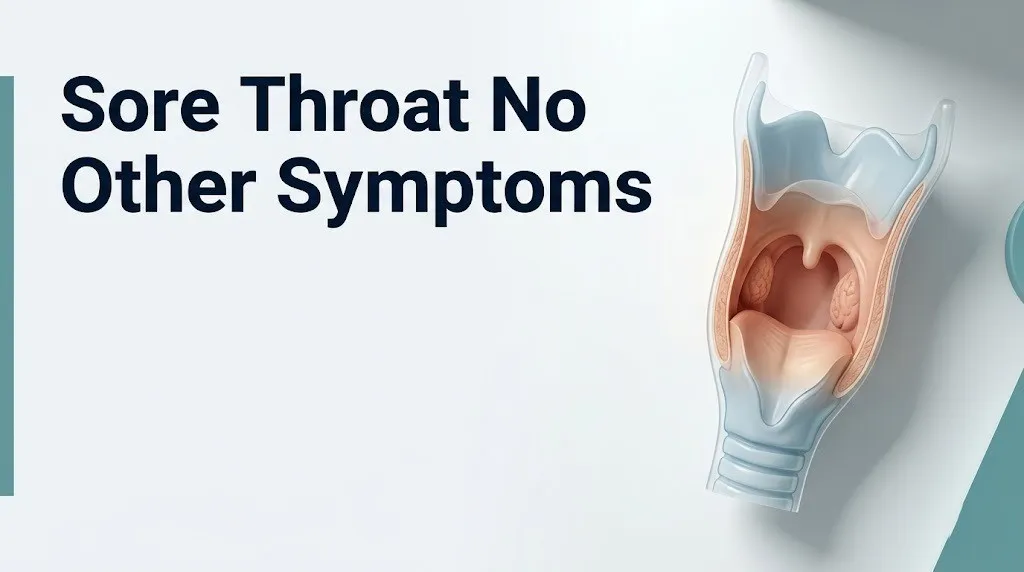
The glossopharyngeal nerve (cranial nerve IX) is the primary sensory nerve supplying the posterior pharynx and tonsils. When pharyngeal mucosal tissue becomes inflamed, infected, dried out, or exposed to acid, it activates nociceptive fibers in this nerve. The brain interprets that signal as throat pain, soreness, or rawness regardless of the underlying trigger.
Think of the posterior pharynx like the back room of a house exposed to multiple entrance points. Cold air, stomach acid, allergen-laden mucus, and bacteria can each enter through different doors but irritate the same room in ways that feel almost identical from the inside.
| Cause Category | Mechanism | Typical Onset Pattern |
|---|---|---|
| Viral pharyngitis | Mucosal invasion by respiratory virus | Gradual over 12 to 48 hours |
| Bacterial (strep) | GAS M protein triggers complement cascade | Often sudden over 12 to 24 hours |
| Laryngopharyngeal reflux (LPR) | Acid/pepsin exposure of posterior pharyngeal wall | Gradual, chronic, worse mornings |
| Allergic postnasal drip | Histamine release onto posterior pharyngeal mucosa | Seasonal or exposure-related |
| Dry air or irritants | Mucosal dehydration and epithelial microtrauma | Morning-predominant |
| ACE inhibitor effect | Bradykinin accumulation at pharyngeal mucosa | Persistent since medication start |
Most Common Causes of an Isolated Sore Throat
The most common causes of a sore throat with no other symptoms, ranked by clinical prevalence in immunocompetent adults, are viral pharyngitis, laryngopharyngeal reflux (LPR), allergic rhinitis with postnasal drip, environmental irritant exposure, and bacterial streptococcal pharyngitis without systemic features.
Viral pharyngitis is the single most frequent trigger. Rhinovirus, adenovirus, and coronavirus strains (including non-COVID variants) can infect the pharyngeal mucosa and produce localized inflammation without triggering the broader systemic immune response that generates fever and fatigue. The virus invades surface epithelial cells, triggering the release of prostaglandins and interleukin-6 locally, which activates nociceptors in cranial nerve IX. The result is throat pain without the body-wide inflammatory cascade.
LPR is frequently underdiagnosed because it presents without the heartburn that signals classic GERD. Gastric acid and the enzyme pepsin travel upward past both the lower esophageal sphincter and the upper esophageal sphincter, reaching the laryngeal and posterior pharyngeal mucosa. These structures lack the protective mechanisms the esophagus has, so even brief acid exposure produces mucosal damage and the sensation of throat irritation.
Key causes to know:
- Viral pharyngitis: Self-limiting in 5 to 7 days. No antibiotics required.
- Laryngopharyngeal reflux (LPR): Chronic or recurring. Responds to acid suppression and dietary changes.
- Allergic postnasal drip: Seasonal or perennial. Responds to antihistamines and nasal corticosteroids.
- Dry ambient air: Worsens overnight. Responds to humidification.
- Streptococcal pharyngitis: Requires antibiotic treatment. Risk of complications without treatment.
- ACE inhibitor class effect: Persistent since drug initiation. Resolves with medication change.
People who smoke tobacco or drink alcohol regularly have higher LPR severity and more frequent pharyngeal mucosal irritation than non-users, regardless of other contributing factors.
Strep Throat With No Other Symptoms
Strep throat (streptococcal pharyngitis) can present as an isolated sore throat, particularly in the earliest 12 to 24 hours before fever or swollen lymph nodes develop.
Group A Streptococcus pyogenes (GAS) is the bacterium responsible. Its surface protein, M protein, enables it to adhere to pharyngeal epithelial cells and resist initial phagocytosis by the immune system. The M protein also activates the complement pathway, triggering a local inflammatory cascade that produces pharyngeal edema, erythema, and pain. In mild or early strep infection, the systemic immune response can lag behind the local mucosal response, meaning throat pain arrives before fever does.
According to the American Academy of Family Physicians (AAFP), clinical scoring tools like the modified Centor (McIsaac) score help estimate the probability of streptococcal pharyngitis. The score awards one point each for: tonsillar exudate, tender anterior cervical lymph nodes, absence of cough, and fever above 38°C. A score of zero or one suggests bacterial strep is unlikely. A score of three or four increases the probability to roughly 32 to 56%, according to the AAFP.
If you have a sore throat with no other symptoms at all and no tonsillar exudate or lymphadenopathy, strep is statistically less likely but cannot be excluded without testing, particularly in children aged 5 to 15 or adults who have been in close contact with a confirmed strep case.
Quick Tip:
- Strep throat sore throat tends to be severe and sudden, not a mild gradual scratchiness.
- Strep in adults over 40 without lymphadenopathy or exudate is statistically uncommon but not impossible.
- Children between ages 5 and 15 have the highest prevalence of streptococcal pharyngitis, per the CDC.
Key Takeaway: An isolated sore throat can be early strep, but the absence of fever, swollen lymph nodes, and tonsillar exudate makes bacterial infection statistically less likely than viral or reflux-related causes in most adults.
Laryngopharyngeal Reflux as a Hidden Cause of Throat Pain
Laryngopharyngeal reflux (LPR) is one of the most commonly missed causes of chronic or recurring isolated throat pain, and it produces its symptoms without the classic heartburn that most people associate with acid reflux.
In classic gastroesophageal reflux disease (GERD), acid stays within the esophagus and produces the familiar burning chest sensation. In LPR, gastric acid and the digestive enzyme pepsin travel all the way to the upper airway. The upper esophageal sphincter, a ring of muscle at the top of the esophagus behind the larynx, normally prevents this. When the UES relaxes abnormally or is under repeated pressure, acid reaches the posterior pharynx and larynx, structures that lack the mucus-bicarbonate defense layer the esophageal lining has.
According to clinical guidelines published by the American Academy of Otolaryngology-Head and Neck Surgery (AAO-HNS), LPR is present in a significant proportion of patients presenting to otolaryngologists with throat clearing, globus sensation (the feeling of something stuck in the throat), hoarseness, and chronic sore throat. The AAO-HNS notes that fewer than half of LPR patients report classic heartburn, which is why the diagnosis is routinely delayed.
Pepsin, once deposited on laryngeal and pharyngeal tissue, remains active even after the acid dissipates. Research suggests pepsin can be reactivated by subsequent acid episodes, producing a cycle of mucosal inflammation that feels like a persistent low-grade sore throat or rawness.
Adults over 40, people with obesity, and individuals who eat large meals late at night are at higher risk for LPR than younger adults with lower body mass index and earlier meal timing. Pregnant women are also at elevated LPR risk due to progesterone-mediated relaxation of the lower esophageal sphincter and upward pressure from the growing uterus.
Allergies and Postnasal Drip Causing Sore Throat Only
Allergic rhinitis produces an isolated sore throat through a specific mechanism: allergen-driven mucus production in the nasal cavity drains down the posterior nasal passage and onto the back of the throat, a process called postnasal drip, depositing histamine-laden mucus directly onto the posterior pharyngeal wall.
When airborne allergens like pollen, dust mite proteins, or pet dander enter the nasal passages, they bind to IgE antibodies on the surface of mast cells lining the nasal mucosa. This triggers immediate mast cell degranulation and the release of histamine, prostaglandins, and leukotrienes. Histamine directly stimulates sensory nerve endings, including nociceptors in the posterior pharynx, and also causes goblet cells in the nasal mucosa to overproduce mucus.
That excess mucus runs backward and downward, pooling on the posterior pharyngeal wall. The throat interprets this constant low-grade irritation as pain or scratchiness, even when the nose itself feels only mildly congested or not congested at all. Some people with allergic postnasal drip produce so little nasal symptoms that the throat discomfort is their only noticeable manifestation.
Seasonal patterns are a useful clue. Tree pollen peaks in spring, grass pollen in early summer, and ragweed in late summer through fall in most of the continental United States. A sore throat that appears predictably during these windows and improves away from pollen or with antihistamine use is highly consistent with allergic postnasal drip rather than infection.
Children with undiagnosed perennial allergic rhinitis (triggered by dust mites or mold year-round rather than seasonally) frequently present to pediatricians with recurrent morning sore throats and no fever, no runny nose, and no other cold symptoms. The allergic origin is often missed because the nasal symptom is subtle.
Key Takeaway: Postnasal drip from allergic rhinitis is a leading cause of isolated sore throat in both adults and children, and its seasonal or allergen-triggered pattern distinguishes it from both infection and reflux-related causes.
Dry Air and Environmental Irritants and Throat Pain
Dry ambient air causes an isolated sore throat by dehydrating the mucous membrane lining the posterior pharynx, reducing its protective mucus layer and leaving the underlying epithelium exposed to airborne irritants and friction from swallowing.
The mucous membrane of the pharynx normally produces a thin layer of mucus that traps particulate matter, lubricates swallowing, and provides a physical barrier to minor chemical irritants. When ambient humidity drops below approximately 30 to 40%, which commonly occurs in winter when indoor heating runs continuously, the mucous layer evaporates faster than goblet cells replenish it. Exposed pharyngeal epithelial cells lose moisture, and their tight junction proteins weaken. Swallowing, which normally glides smoothly, creates microtrauma on the dry surface, activating nociceptors in the glossopharyngeal nerve.
This is why dry-air-related sore throats feel worst first thing in the morning after several hours of mouth breathing or room air exposure during sleep, and typically improve within 30 to 60 minutes of waking, drinking fluids, and breathing humidified air.
Chemical irritants follow a similar mechanism but add a direct toxicological component. Tobacco smoke exposes the posterior pharynx to aldehydes, acrolein, and free radicals that damage mucosal epithelium and suppress the local mucosal immune response. Chlorine vapor in indoor pools, cleaning product fumes, and secondhand smoke produce similar mucosal irritation through reactive oxidative species.
According to the National Institutes of Health, workplace exposure to chemical irritants is an underrecognized cause of chronic pharyngeal discomfort, particularly in healthcare workers exposed to disinfectants, construction workers, and industrial cleaners. A sore throat that occurs specifically during or after work shifts and resolves on days off is a clinically meaningful pattern worth reporting to a primary care physician.
People who sleep with their mouth open due to nasal obstruction from a deviated nasal septum or nasal polyps experience disproportionately severe morning throat dryness compared to nasal breathers. Correcting the nasal obstruction often resolves the throat symptoms.
Sudden Sore Throat No Other Symptoms: What to Watch For
A sudden sore throat with no other symptoms that appears over one to six hours deserves more careful attention than a gradual scratchiness that builds over a day or two, because rapid onset narrows the differential toward bacterial infection, peritonsillar abscess, or epiglottitis.
Streptococcal pharyngitis frequently begins with abrupt-onset throat pain. Some patients describe the sensation of the throat “shutting down” within a few hours. At this early stage, fever and lymphadenopathy may not yet be detectable, which is why sudden-onset isolated throat pain in children or young adults is clinically treated with higher suspicion for GAS even before systemic symptoms emerge.
Peritonsillar abscess, a collection of pus between the palatine tonsil and the pharyngeal wall, can begin as a unilateral sore throat without fever if caught in its early stage. The uvula begins deviating away from the affected side as peritonsillar tissue swells. This is a condition that requires same-day evaluation. It does not resolve without drainage.
What to monitor in the first 12 to 24 hours of a sudden isolated sore throat:
- Track whether pain is one-sided or central. One-sided pain that worsens rapidly raises concern for peritonsillar abscess or, in adults over 50 with tobacco use history, malignancy.
- Check your temperature every 6 hours. Fever developing after an initial fever-free period is not reassurance. It means the infection is progressing.
- Note whether swallowing saliva is becoming more difficult or painful. Increasing odynophagia (pain with swallowing) that worsens over hours is not a self-monitoring situation.
- Watch for any change in voice quality. A muffled, “hot potato” voice quality suggests peritonsillar abscess or epiglottitis until proven otherwise.
- Observe whether the throat pain awakens you from sleep. Sore throats that wake you in pain, rather than just feeling uncomfortable in the morning, tend to be more clinically significant.
- Seek same-day evaluation from a primary care physician or urgent care provider if any of the above changes occur.
Chronic and Recurring Sore Throat Without Other Symptoms
A chronic isolated sore throat, defined as persistent throat discomfort lasting more than three weeks without accompanying infection symptoms, almost never has a bacterial or viral cause. Its differential diagnosis centers on LPR, chronic allergic postnasal drip, tobacco or irritant exposure, thyroid pathology, and in adults over 50 with risk factors, oropharyngeal malignancy.
The clinical significance of chronicity is that the immune system is efficient at clearing bacterial and viral pharyngeal infections within two weeks at most. A sore throat that persists beyond three weeks with no fever, no swollen glands, and no exudate is either irritant-driven, structural, or requires evaluation for less common causes.
According to a clinical review published in the BMJ, chronic throat symptoms lasting more than three weeks in an adult warrant referral to a board-certified otolaryngologist (ENT surgeon), particularly when the following are present: persistent hoarseness, difficulty swallowing, unexplained weight loss, neck mass, or tobacco and alcohol use history. These features in combination with a chronic sore throat raise the clinical probability of oropharyngeal carcinoma to a level that mandates formal evaluation.
Thyroid pathology is an underrecognized structural cause of chronic throat discomfort. The thyroid gland sits directly below the larynx. A thyroid nodule or enlarged thyroid lobe can create a pressure sensation or persistent throat discomfort that patients describe as a sore throat or something stuck in the throat. This is distinct from globus hystericus (functional globus sensation) and is differentiated by thyroid ultrasound.
Older adults and individuals with rheumatological conditions, particularly those with Sjogren’s syndrome, frequently experience a chronic dry, raw, or scratchy throat as a direct result of reduced salivary gland output rather than infection or reflux. Sjogren’s syndrome is an autoimmune condition in which the immune system attacks exocrine glands, reducing saliva and tear production. It affects women at nine times the rate of men, per the National Institutes of Health, and is most commonly diagnosed in women in their 40s and 50s.
Key Takeaway: A sore throat lasting more than three weeks without fever, exudate, or swollen lymph nodes is not a viral infection and should prompt evaluation by a primary care physician, with referral to an ENT surgeon if structural or oncological causes need to be excluded.
Sore Throat in the Morning With No Other Symptoms
A sore throat that appears specifically in the morning and improves during the day is a clinically distinct presentation that points strongly toward two causes: LPR and dry-air-related mucosal dehydration, both of which are worsened by the recumbent sleeping position and overnight breathing patterns.
During sleep, the lower esophageal sphincter is more likely to relax, particularly in the supine position. Gastric contents, including acid and pepsin, can migrate upward more easily when gravity is not assisting esophageal clearance. By the time you wake, the posterior pharynx and larynx may have been exposed to acid intermittently for several hours. The resulting irritation is at its worst in the first 30 to 60 minutes after waking and gradually diminishes as upright posture allows esophageal clearance to work normally.
Dry air compounds this. Most indoor heating systems substantially reduce ambient humidity overnight. Several hours of breathing dry air through an open mouth deposits desiccated air directly onto the posterior pharyngeal mucosa. The combination of acid exposure and mucosal dehydration in the same overnight period often produces a morning sore throat that resolves after a warm drink and upright activity.
If your morning sore throat is accompanied by hoarseness that also improves through the morning, LPR is the most clinically plausible explanation. The vocal cords (true vocal folds) sit within the larynx just below the posterior pharynx, and acid that reaches the pharynx frequently reaches the laryngeal mucosa as well, producing temporary vocal cord edema overnight that clears as the day progresses.
People who take benzodiazepines or muscle relaxants at bedtime are at higher risk for LPR-related morning symptoms because these medications further relax the lower esophageal sphincter during sleep.
Sore Throat No Other Symptoms in Adults vs. Children
The clinical picture and most probable cause of an isolated sore throat differ meaningfully between adults and children, and these differences are grounded in specific immunological and anatomical factors.
In children aged 5 to 15, the CDC reports that group A streptococcal pharyngitis accounts for approximately 15 to 30% of sore throat cases, compared to only 5 to 10% in adults. Children’s tonsillar tissue (part of Waldeyer’s ring, the lymphoid tissue ring encircling the upper airway) is proportionally larger relative to their pharyngeal airway diameter than in adults. This means streptococcal infection produces more prominent tonsillar swelling relative to the child’s throat diameter, and carries more risk for airway compromise if untreated.
Children also lack the lifetime antibody repertoire that adults develop against common viruses. A school-age child encountering a new adenovirus strain for the first time may mount a more pronounced local inflammatory response than an adult with pre-existing immunity, producing a more painful sore throat with fewer systemic symptoms.
In adults, LPR, allergic rhinitis, and environmental irritant exposure are statistically more common causes of isolated sore throat than bacterial pharyngitis. Adults over 50 who use tobacco or alcohol have a meaningfully higher risk for oropharyngeal carcinoma presenting initially as a sore throat without systemic symptoms. The American Academy of Otolaryngology-Head and Neck Surgery recommends that an unexplained sore throat persisting beyond three to four weeks in an adult with tobacco or alcohol use history be evaluated by an ENT surgeon with nasopharyngoscopy.
Adolescents between ages 15 and 24 fall into a distinct risk category for infectious mononucleosis caused by the Epstein-Barr virus (EBV). Mono can present as a severe sore throat with marked tonsillar enlargement before fever and profound fatigue appear, creating an early window where it looks like an isolated throat complaint.
| Age Group | Most Likely Cause | Key Clinical Feature |
|---|---|---|
| Children 5 to 15 | Streptococcal pharyngitis | Sudden onset, possible exudate |
| Adolescents 15 to 24 | EBV/Mono, Strep | Marked tonsillar swelling, fatigue follows |
| Adults 25 to 50 | LPR, viral, allergic | Morning-predominant, chronic, no systemic signs |
| Adults over 50 | LPR, irritant, thyroid, malignancy | Persistent, unilateral, voice change |
Key Takeaway: Children need strep testing more urgently than adults for an isolated sore throat, while adults over 50 with a persistent isolated sore throat and tobacco or alcohol use history need ENT evaluation to exclude oropharyngeal carcinoma.
Sore Throat No Other Symptoms in Immunocompromised Individuals
For immunocompromised individuals, an isolated sore throat without other symptoms carries a fundamentally different risk profile than it does in a healthy adult, and the threshold for professional evaluation is considerably lower.
Immunocompromised status includes: active chemotherapy or recent chemotherapy (within 3 months), solid organ transplant with ongoing immunosuppressant therapy, hematopoietic stem cell transplant recipients, HIV-positive individuals with CD4 counts below 200 cells per microliter, patients on long-term high-dose corticosteroid therapy, and individuals on biologic immunosuppressants used in autoimmune diseases (such as anti-TNF agents).
In these populations, organisms that are entirely harmless in immunocompetent individuals can produce pharyngeal infection. Candida albicans (oral thrush) frequently begins as pharyngeal discomfort before white plaques become visible. Herpes simplex virus (HSV) can cause pharyngeal ulceration producing isolated throat pain. Cytomegalovirus (CMV) pharyngitis is an opportunistic infection that presents as a sore throat in immunocompromised patients and closely resembles EBV mononucleosis clinically.
According to research published in the Annals of Internal Medicine, neutropenic patients (those with absolute neutrophil counts below 500 per microliter, typically from chemotherapy) presenting with pharyngeal pain should be evaluated urgently because even minor infections can progress to bacteremia and sepsis without the usual inflammatory warning signs, specifically because the fever response is impaired.
Any immunocompromised individual with a sore throat that does not clearly resolve within 48 to 72 hours, or that is accompanied by even a low-grade temperature of 37.5°C (99.5°F) or higher, should contact their oncologist, transplant team, or infectious disease specialist the same day rather than waiting for symptoms to worsen. This is not routine watchful waiting territory for these patients.
One-Sided Sore Throat With No Other Symptoms
A sore throat localized to one side of the throat, called unilateral pharyngalgia, is a clinically distinct presentation that requires more attention than bilateral or diffuse throat pain because its differential diagnosis includes conditions that do not resolve without intervention.
The most common benign cause of one-sided sore throat is a tonsillar crypt stone (tonsillolith), a calcified debris deposit in the tonsillar crypt that produces localized pressure and discomfort. Tonsilloliths do not require antibiotics and often dislodge spontaneously.
A more serious cause is peritonsillar abscess, the most common deep neck space infection in adults aged 20 to 40 years. The abscess forms between the capsule of the palatine tonsil and the superior pharyngeal constrictor muscle. Classic findings include uvular deviation toward the unaffected side, “hot potato” voice (muffled quality from soft palate involvement), and drooling. However, in the earliest stages, the presentation can be simply a severe unilateral sore throat without these additional features. An untreated peritonsillar abscess can spread to the parapharyngeal space and eventually cause airway compromise.
In adults over 45 years old who use tobacco or alcohol, a persistent unilateral sore throat lasting more than two to three weeks requires exclusion of oropharyngeal squamous cell carcinoma. The tonsillar fossa and the base of tongue are the two most common sites of human papillomavirus (HPV)-associated oropharyngeal carcinoma, and pain that is unilateral, persistent, and referred to the ipsilateral ear is a recognized early presentation pattern. Referred ear pain (otalgia) from a tonsillar source occurs through the glossopharyngeal nerve, which supplies both the tonsil and the middle ear.
If your one-sided throat pain has been present for more than two weeks without a clear cause, schedule an appointment with a board-certified otolaryngologist (ENT surgeon) rather than waiting for it to resolve on its own.
Sore Throat No Other Symptoms: When to See a Doctor
A sore throat with no other symptoms warrants professional evaluation under specific clinical circumstances, and these are not vague generalities but named thresholds based on what the clinical evidence shows about when self-limiting causes transition into conditions requiring diagnosis and treatment.
See a primary care physician or an urgent care provider within 24 to 48 hours if:
- The sore throat is severe and came on suddenly within hours.
- The throat pain is one-sided rather than bilateral.
- You have been in close contact with someone confirmed to have strep throat in the past 5 days.
- You are between ages 15 and 24 and the sore throat is severe, because the probability of infectious mononucleosis is clinically relevant in this age group.
- You have an autoimmune condition, are on immunosuppressant medications, or are undergoing active cancer treatment.
- Your sore throat has been present for more than 5 to 7 days with no improvement.
See your primary care physician for a scheduled appointment within one week if:
- The sore throat is mild to moderate and improving but recurring weekly or more often.
- You suspect LPR because the discomfort is worst in the morning and you have risk factors (obesity, late-night meals, caffeine use, alcohol use).
- You are on an ACE inhibitor (such as lisinopril, enalapril, or ramipril) and the throat irritation began around the same time as the medication.
- You are postmenopausal and experiencing persistent throat dryness that is not responsive to hydration.
Refer to a board-certified otolaryngologist (ENT surgeon) if:
- The isolated sore throat has persisted for more than three weeks.
- There is any associated hoarseness, voice change, difficulty swallowing, or neck mass.
- You are an adult over 45 with tobacco or alcohol use history and a persistent unilateral sore throat.
Key Takeaway: A sore throat that is one-sided, suddenly severe, or persists beyond 5 to 7 days in someone with risk factors should not be managed with home remedies alone. A same-day evaluation by a primary care physician or urgent care provider is the appropriate clinical path.
How Doctors Diagnose an Isolated Sore Throat
The diagnostic process for a sore throat with no other symptoms begins with a structured clinical evaluation, not automatically with antibiotics or testing, and the approach depends heavily on the onset pattern, duration, and specific clinical features a provider finds on examination.
During a physical examination, the clinician assesses the posterior oropharynx for erythema (redness), tonsillar size, presence of exudate (white or yellow patches), uvular midline position, and soft palate movement. They palpate the anterior and posterior cervical lymph nodes and the submandibular lymph nodes for tenderness and enlargement. The external neck is assessed for swelling and the floor of the mouth for induration.
Named tests used to evaluate an isolated sore throat:
- Rapid antigen detection test (RADT): Detects group A Streptococcus antigens from a throat swab within 5 to 10 minutes. Sensitivity is approximately 86 to 96% in systematic reviews. Specificity is approximately 97 to 99%, per AAFP clinical guidelines.
- Throat culture: The gold-standard test for GAS pharyngitis. Results take 24 to 48 hours but are more sensitive than RADT for low-antigen-load infections. Used to confirm negative RADT results in children per AAFP guidelines.
- Monospot test (heterophile antibody test): Screens for EBV mononucleosis. Most useful in adolescents and young adults. Can be falsely negative in the first week of illness.
- EBV-specific antibody panel: More specific than Monospot. Ordered when clinical suspicion for mono is high but Monospot is negative.
- Laryngoscopy or nasopharyngoscopy: A fiber-optic scope examination performed by an ENT surgeon to visualize the larynx, vocal cords, epiglottis, and posterior pharynx. Used for persistent or unexplained chronic sore throat, suspected LPR, voice change, or structural concern.
- Ambulatory pH monitoring or esophageal impedance testing: Used to confirm LPR by measuring acid exposure in the upper esophagus and hypopharynx over 24 hours. The diagnostic gold standard for LPR per AAO-HNS guidelines.
- Thyroid ultrasound: Ordered when the clinician palpates thyroid enlargement or a nodule as part of the evaluation for chronic throat symptoms.
People taking proton pump inhibitors at the time of pH testing will have falsely reduced acid readings. A physician managing suspected LPR typically conducts a structured proton pump inhibitor (PPI) empirical trial before ordering pH monitoring, using a 4 to 8 week course of twice-daily PPI therapy as both a diagnostic and therapeutic trial.
Emergency Symptoms: When to Call 911 or Go to the ER
Certain symptoms associated with a sore throat require immediate emergency evaluation. Do not wait to see if these resolve on their own.
Call 911 or go to the nearest emergency room immediately if you experience:
- Difficulty breathing, a sensation of your airway closing, or audible stridor (a high-pitched noise when breathing in). This can indicate epiglottitis or severe supraglottic edema.
- Inability to swallow your own saliva or drooling at rest. This is a sign of near-complete airway obstruction.
- A muffled “hot potato” quality to your voice accompanied by worsening one-sided throat pain. This combination suggests peritonsillar abscess with possible impending airway compromise.
- Swelling of the floor of the mouth, jaw, or neck that developed over hours. This can indicate Ludwig’s angina, a rapidly spreading cellulitis of the submandibular space that can close the airway within hours.
- Sudden throat pain severe enough to prevent speaking, accompanied by fever and stiff neck. This combination raises concern for deep neck space infection or retropharyngeal abscess.
- High fever of 40°C (104°F) or above combined with severe throat pain, even without other visible throat findings. In immunocompromised individuals, even 37.5°C (99.5°F) with throat pain requires emergency evaluation.
These presentations can indicate epiglottitis, peritonsillar abscess, Ludwig’s angina, or deep neck space infection. Each can progress from a localized infection to complete airway obstruction within hours. These require emergency medical assessment and airway management, not an urgent care appointment or a phone call to your doctor’s office.
Frequently Asked Questions About Sore Throat With No Other Symptoms
Can you have strep throat with no other symptoms besides a sore throat?
Yes, strep throat can present as an isolated sore throat in its earliest stage, before fever, swollen lymph nodes, or tonsillar exudate appear.
The modified Centor score used by the American Academy of Family Physicians assigns lower strep probability when systemic symptoms are absent, but strep cannot be excluded without a rapid antigen test or throat culture.
Children between ages 5 and 15 and adults with recent strep contact should be tested even if the sore throat appears mild and isolated.
How long should a sore throat last if I have no other symptoms?
A self-limiting viral sore throat typically resolves within 5 to 7 days without treatment, per clinical guidelines from the American Academy of Family Physicians.
A sore throat that persists beyond 7 to 10 days without improvement, or that recurs weekly, is not behaving like a typical viral infection and warrants evaluation by a primary care physician.
Chronic isolated sore throat lasting more than three weeks requires professional assessment to identify non-infectious causes like LPR, allergic postnasal drip, or structural pathology.
Is a sore throat with no other symptoms a sign of COVID-19?
COVID-19 (caused by SARS-CoV-2) can present with an isolated sore throat, particularly with the Omicron variants and subsequent lineages that preferentially infect the upper airway rather than the lower respiratory tract.
A 2022 study published in The Lancet noted that sore throat was among the most commonly reported early symptoms with Omicron-lineage infections, often without fever, cough, or loss of smell.
If you have an isolated sore throat and known COVID-19 exposure, a home rapid antigen test or PCR test is a reasonable first step before seeking in-person care.
Can acid reflux cause a sore throat without heartburn?
Laryngopharyngeal reflux (LPR) causes sore throat without heartburn because the acid bypasses the esophageal pain receptors and goes directly to the posterior pharyngeal and laryngeal mucosa, which lack esophageal protective mechanisms.
According to the American Academy of Otolaryngology-Head and Neck Surgery, fewer than half of patients with confirmed LPR report classic heartburn symptoms.
An empirical 4 to 8 week trial of twice-daily proton pump inhibitor therapy, directed by a physician, is the standard initial diagnostic and therapeutic approach when LPR is suspected.
Should I go to urgent care for a sore throat with no other symptoms?
An isolated mild sore throat that began in the past 24 to 48 hours in a healthy adult can typically be monitored at home for 3 to 5 days before seeking care.
Urgent care evaluation is appropriate if the pain is severe, one-sided, suddenly worsening, or if you are a child, an adolescent, or a person with an immunocompromising condition.
Go to the emergency room rather than urgent care if you have difficulty breathing, cannot swallow your saliva, hear a high-pitched sound when you breathe in, or notice your voice becoming muffled. These are emergency presentations.
What is the most common cause of a sore throat with no other symptoms in adults?
In adults, laryngopharyngeal reflux (LPR) and allergic rhinitis with postnasal drip are collectively the most common causes of a chronic or recurring isolated sore throat, more common than bacterial infection in this age group.
Viral pharyngitis is the most common cause of an acute (sudden-onset) isolated sore throat in adults, typically clearing within one week without antibiotics.
A persistent isolated sore throat in a healthy adult that doesn’t follow seasonal patterns and doesn’t respond to antihistamines or dietary modification warrants evaluation by a primary care physician to assess for LPR, thyroid pathology, or early structural changes.
Closing
An isolated sore throat is almost never nothing, but it’s rarely a medical emergency either. The clinical value in understanding the specific cause is that each one has a different resolution path: viral pharyngitis clears on its own, LPR responds to acid suppression and dietary changes, allergic postnasal drip improves with antihistamines and nasal corticosteroids, and bacterial strep clears with penicillin or amoxicillin before it has the chance to cause post-infectious complications.
The time dimension is your most useful guide. A sore throat that appears suddenly and is resolving by day three or four in a healthy adult is doing what viral pharyngitis does. A sore throat that is still there at day seven, or that keeps coming back, or that is one-sided, or that you’ve had for weeks with no clear explanation, is worth a conversation with your primary care physician.
Know the emergency threshold. If breathing feels obstructed, if you can’t swallow your saliva, or if your voice suddenly sounds muffled alongside worsening throat pain, that’s an emergency room visit, not a wait-and-see moment.