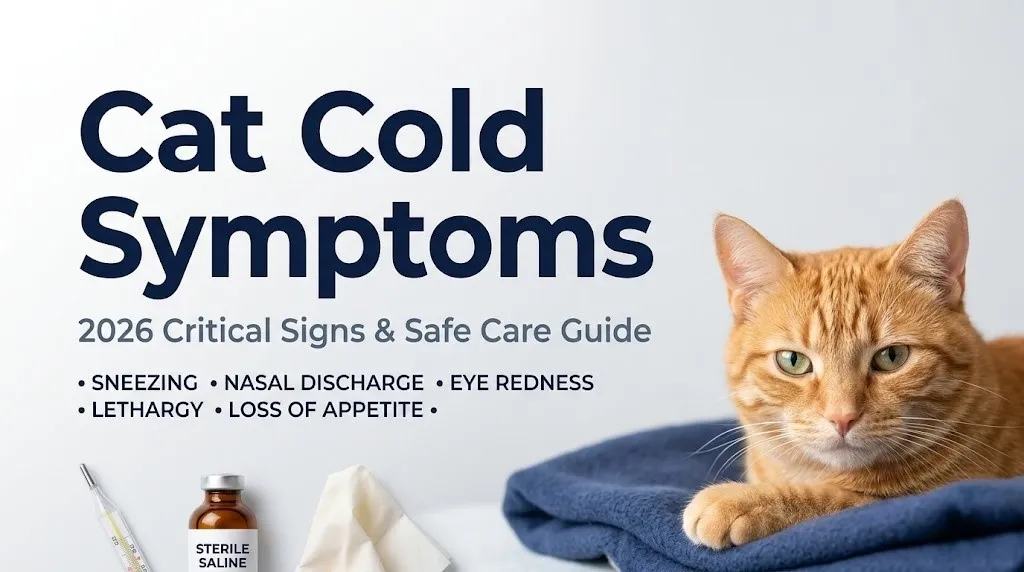
Cat Cold Symptoms 2026: Critical Signs & Safe Care Guide
A cat with cold symptoms is typically suffering from a viral upper respiratory tract disease, often caused by feline herpesvirus type-1 (FHV-1) or feline calicivirus (FCV) . Most cat colds cause sneezing, nasal discharge, and eye inflammation for 7 to 10 days, but recognizing when those symptoms signal a true emergency requires understanding specific, observable clinical signs.
Upper respiratory tract disease is one of the most frequent reasons cats visit a veterinarian, particularly in multi-cat households and shelters where viral transmission is efficient. According to the American Association of Feline Practitioners (AAFP) , nearly all cats are exposed to feline herpesvirus by adulthood, and once infected, a cat carries the virus for life, with stress or illness triggering recurrent cold symptoms.
This guide walks you through the specific symptoms of a feline upper respiratory infection, the physiological reasons behind each sign, how to differentiate a cold from feline allergies, and, most critically, how to use a severity-based triage system to decide if your cat can be monitored at home or needs to be seen at an emergency animal hospital tonight.
What Is a Cat Cold
A cat cold is the common term for feline upper respiratory tract disease (URTD), an infectious syndrome primarily affecting the nose, sinuses, pharynx, and conjunctiva of the eye. Unlike a human cold, which is usually a single viral infection that resolves uneventfully, a feline cold frequently involves co-infection with multiple pathogens and can have life-long consequences due to the biology of feline herpesvirus.
The nasal cavity of a cat contains delicate scroll-like bones called nasal turbinates covered by a highly vascularized mucous membrane. When a respiratory virus invades these tissues, it triggers a rapid inflammatory response, causing blood vessels to dilate, fluid to leak into the tissue, and mucus production to surge. That swelling inside the rigid confines of the nasal passages is what produces the audible congestion and open-mouth distress an owner observes. This is compounded by the fact that cats are obligate nasal breathers, a physiological design that prioritizes smell for environmental assessment and feeding. A cat with complete nasal blockage will not voluntarily breathe through its mouth and can quickly become hypoxic, a phenomenon unknown in human colds.
The condition is so clinically significant that the Merck Veterinary Manual categorizes FHV-1 and FCV as the two most common and clinically impactful feline respiratory pathogens worldwide. The severity of a cold depends on the specific virus, the cat’s age, its vaccination history, and the presence of any underlying immunocompromising disease like feline leukemia virus (FeLV) or feline immunodeficiency virus (FIV) . For a healthy adult cat, a cold is usually a self-limiting nuisance. For a kitten or an unvaccinated senior cat, the same virus can produce life-threatening pneumonia or systemic disease.
Symptoms of a Cat Cold
The symptoms of a cat cold develop 2 to 10 days after exposure and range from mild serous nasal discharge to severe mucopurulent ocular and nasal exudate with systemic illness. The presentation directly reflects the viral damage occurring to the respiratory epithelium and the degree of the body’s inflammatory counter-response.
Sneezing is the earliest and most consistent sign. This occurs because the virus destroys ciliated epithelial cells lining the nasal passages, exposing nerve endings to irritants and triggering the sneeze reflex. Nasal discharge follows as the mucosal blood vessels become more permeable, initially producing a clear fluid known as serous discharge. As the immune system recruits white blood cells to the site and secondary bacteria colonize the damaged tissue, the discharge thickens and turns yellow or green. This is called mucopurulent discharge. Eye involvement happens because the nasolacrimal duct, a drainage channel connecting the eye to the nose, becomes inflamed and blocked, causing tears and inflammatory debris to spill over the eyelid margin as ocular discharge.
| Symptom | Mild Presentation | Moderate to Severe Presentation |
|---|---|---|
| Sneezing | Occasional, 2-4 times per hour | Persistent, uncontrolled paroxysms |
| Nasal Discharge | Clear, thin | Thick, yellow/green, crusts on nostrils |
| Eye Discharge | Clear tears | Thick mucus, eyes sealed shut |
| Appetite | Slightly reduced | Not eating for >24 hours (12 for kittens) |
| Energy Level | Quiet but responds to stimuli | Lethargic, hiding, unresponsive |
A cat with cold symptoms will often show reduced appetite, a phenomenon called anorexia. This is not primarily gastrointestinal; a cat stops eating because its nose is blocked and cats rely on scent to identify food. A cat that cannot smell its food will often refuse it entirely, even if it is hungry. This sensory anorexia rapidly becomes a medical problem in overweight cats, which can develop hepatic lipidosis, a life-threatening liver condition, after just 2 to 3 days of inadequate caloric intake.
Cat Cold Causes
Cat colds are caused predominantly by feline herpesvirus type-1 and feline calicivirus, which together account for over 80% of clinical feline upper respiratory tract infections, according to research published in the Journal of Feline Medicine and Surgery. These pathogens are transmitted through direct contact with infected saliva, nasal droplets, or ocular secretions, often on shared food bowls, bedding, or the hands of caretakers.
Feline herpesvirus is biologically devastating for a specific reason: latency. After a cat recovers from the initial infection, the virus retreats into the trigeminal nerve ganglia, where it remains dormant for the life of the cat. During periods of stress, such as boarding, moving, or other illness, the virus reactivates, travels back down the nerve to the nasal and ocular tissues, and begins shedding again. The cat now has a recurrent cold and is contagious to other felines. Feline calicivirus does not establish latency but can mutate rapidly into strains that cause severe systemic disease, including painful ulceration of the tongue and paw pads.
Secondary bacterial infection is another major cause of worsening symptoms. Once the delicate respiratory epithelium is eroded by the virus, opportunistic bacteria like Bordetella bronchiseptica, Chlamydia felis, and Mycoplasma felis invade the compromised tissue, turning a clear viral discharge into thick, purulent mucus. Chlamydia felis, in particular, is highly associated with severe conjunctivitis. Vaccination exists but is not sterilizing; the FVRCP vaccine reduces clinical signs and shedding but does not fully prevent infection with the field virus. This is why even vaccinated cats can develop mild cold symptoms when exposed.
Key Takeaway: The sneeze is a nerve reflex, the discharge is an immune cascade, and the anorexia is a sensory failure, not a stomach issue. Treat the nose to fix the appetite.
Kitten Cold Symptoms
Kitten cold symptoms are a fundamentally different clinical scenario from an adult cat cold because the kitten’s immune system is immature and its body mass provides a dangerously small margin for dehydration and caloric deficit. A kitten that stops nursing or eating for even 12 hours can become hypoglycemic and hypothermic, cascading into a life-threatening systemic crisis.
The symptoms in a kitten are often more severe and rapidly progressive. While an adult cat may have a serous nasal discharge for several days before developing mucopurulent discharge, a kitten can progress to thick, crusting discharge within 24 hours. Because their nasal passages are physically smaller, they obstruct more completely. Ocular involvement is also more serious in kittens. Feline herpesvirus can produce a severe keratoconjunctivitis that, without antiviral treatment, can lead to symblepharon, a condition where the conjunctiva adheres to the cornea or to itself, causing permanent vision damage. The American Association of Feline Practitioners emphasizes that any kitten with ocular signs should have a fluorescein stain test performed to rule out a corneal ulcer, as these can perforate rapidly.
- A kitten that is too weak to nurse or stand needs emergency care.
- A kitten with audible respiratory crackles or open-mouth breathing is in respiratory distress.
- Bathing a feverish kitten can worsen hypothermia; use an indirect heat source and seek veterinary guidance.
The prophylactic difference is critical here. A kitten receives maternal antibodies through colostrum. As these wane, there is a window of susceptibility before the FVRCP vaccine series can generate full active immunity. Kittens between 6 and 16 weeks of age are at peak risk for contracting a severe respiratory infection. Any cold symptoms in a kitten that has not completed its full initial FVRCP vaccine series should trigger a same-day veterinary visit, not a watch-and-wait approach.
Cat Cold vs Allergies
Distinguishing cat cold symptoms from feline allergies relies on a careful analysis of the discharge type and the presence or absence of systemic illness. Cat allergies, typically triggered by environmental substances like pollen, dust mites, or mold, produce an eosinophilic or allergic inflammation rather than a viral infectious process. The clinical picture is often chronic or seasonal rather than acute.
A cat with allergic rhinitis will typically have clear, watery ocular and nasal discharge without fever, without the thick mucopurulent character that signals bacterial involvement, and without the profound lethargy of a systemic viral infection. The sneezing may be just as frequent, but the cat usually maintains its appetite and energy level because it can still smell food. The discharge in allergic conjunctivitis is also serous and watery, not mucoid, and the conjunctiva is often pink and swollen without the ulceration seen in herpesviral disease. A 2024 review in the Journal of Feline Medicine and Surgery noted that pure allergic respiratory disease in cats is relatively uncommon compared to infectious causes, and many cats labeled as having “allergies” actually have low-grade, recurrent FHV-1 reactivation.
To separate a cold from allergies, observe timing and seasonality. A cat that develops identical respiratory signs every spring when pollen counts rise, with clear discharge and normal appetite, fits an allergic pattern. A cat that suddenly develops symptoms after a boarding stay, a new shelter adoption, or exposure to a sneezing housemate is almost certainly viral. The presence of an oral ulcer, painful swallowing, or drooling immediately rules out allergies, as these are pathognomonic signs of feline calicivirus or severe FHV-1 infection, not an allergic process.
Cat Sneezing and Watery Eyes
Cat sneezing and watery eyes represent the early-stage, viral-dominant phase of a feline upper respiratory infection where the inflammatory response is primarily serous. The viral assault on the nasal mucosa triggers vasodilation and increased vascular permeability, allowing plasma-like fluid to leak into the extracellular space and eventually out of the nose and eyes. This is what creates the thin, clear discharge.
The anatomical connection between the nose and eyes is direct and clinically relevant. The nasolacrimal duct runs from the inner corner of the eye down into the nasal cavity, serving as a drain for tears. When the nasal mucosa swells, it physically pinches this duct shut at the nasal end. Tears cannot drain properly, so they back up, spill over the lower eyelid, and cause the classic watery eye appearance. The eye itself may not be initially infected, but the drainage system is mechanically blocked. As the infection progresses and the immune system mounts a stronger response, neutrophils infiltrate the area, and the discharge in both locations thickens.
| Sign | Cause | What to Watch For |
|---|---|---|
| Clear nasal & eye discharge | Viral inflammation, vasodilation | Progressing to mucoid discharge |
| Frequent sneezing fits | Viral damage to ciliated nasal epithelium | Blood-tinged sneeze, nasal pain |
| Blepharospasm (squinting) | Corneal irritation, possible ulceration | Keeping eye closed, pawing at face |
For a cat with only sneezing and clear watery eyes and a normal appetite and energy level, this is the window where supportive home care is appropriate and often effective. Warm compresses can be gently applied to the eyes three to four times a day to clean the discharge and open the nasolacrimal puncta. However, if the squinting becomes pronounced or the cat keeps the eye fully or partially closed, an ocular ulcer may have formed, and this requires urgent veterinary fluorescein staining. Feline herpesvirus is a leading cause of corneal ulcers in cats, and delaying treatment can result in corneal rupture and vision loss.
Cat Cold Symptoms Eye Discharge
Eye discharge in a cat cold is a clinical marker that tells you exactly how the infection is progressing from a serous to an inflammatory to a potentially organ-threatening stage. The character of the discharge, the appearance of the conjunctiva, and the presence of squinting or pawing at the eye provide a real-time diagnostic window into the severity of the ocular component of the disease.
Initially, the discharge is clear and watery, a product of lacrimal gland hypersecretion and nasolacrimal duct blockage. This is a direct mechanical consequence of swollen nasal mucosa. If the discharge transitions to mucoid or mucopurulent, meaning thick and yellow, green, or grey, it indicates that neutrophils and cellular debris are now being exuded from inflamed conjunctival vessels, often with a secondary bacterial player like Chlamydia felis or Mycoplasma felis. The Merck Veterinary Manual describes this ocular progression as a hallmark of feline herpesviral disease, which has a strong tropism for both nasal and ocular epithelium.
The most dangerous sign is a painful, squinting eye that the cat refuses to open. This is called blepharospasm and, in the context of a feline cold, it raises immediate concern for a corneal ulcer. Feline herpesvirus can cause a dendritic ulcer, a branching, tree-like erosion on the cornea, which is pathognomonic for the virus. A veterinarian will apply a fluorescein dye to the cornea; under a blue light, the ulcer will glow green. This is a same-day veterinary visit, not a watch-and-wait scenario. If the ulcer deepens and perforates, the eye can collapse, requiring emergency enucleation surgery. A cat holding one eye shut tightly, with a watery or thick discharge, is not suffering from a simple cold; it has a potentially vision-threatening ophthalmic emergency.
Key Takeaway: A watery eye is a drainage problem. A squinting eye is a corneal pain problem. The first can be managed at home. The second is an emergency.
Cat Cold Not Eating
A cat with a cold that is not eating has developed sensory anorexia, a potentially dangerous complication driven by the physical obstruction of the nasal passages and the inability to smell food. This is not a primary stomach issue, and treating it with gastrointestinal medications misses the point entirely. The problem is in the nose, not the gut.
Cats are olfaction-driven eaters. The aroma of food is the primary cue that triggers salivation, interest, and the initiation of eating behavior. When the nasal turbinates are covered in thick mucus and inflammatory debris, odorant molecules cannot reach the olfactory epithelium located deep in the nasal cavity. The cat is functionally anosmic. It will stare at a bowl of tuna and see it, but without the confirming olfactory signal, it will turn away. This is clinically different from the anorexia of a systemically ill cat that is nauseous or febrile, though a cat cold can certainly cause both.
The systemic danger is caloric. A cat, especially an overweight cat, that suddenly goes more than 48 hours without adequate caloric intake is at risk of developing hepatic lipidosis, a type of liver failure that is often fatal without aggressive nutritional support through a feeding tube. The threshold is even tighter for a kitten, as the American Association of Feline Practitioners states that a kitten that does not eat for 12 to 24 hours should be seen by a veterinarian immediately due to the risk of hypoglycemia. The immediate home intervention is to clear the nose, not to force-feed. A steamy bathroom for 10 to 15 minutes can thin the mucus and temporarily restore olfactory function. Offering a strong-smelling canned food, slightly warmed to amplify the aroma, directly after the steam session may trigger the cat to eat. If the cat refuses food again, and especially if it is also not drinking water, the vet visit becomes a non-negotiable same-day event.
How Vets Diagnose Cat Colds
Veterinarians diagnose a feline upper respiratory infection primarily through history, a complete physical examination, and a targeted ocular and oral exam, reserving specific pathogen testing for complicated, non-responsive, or epidemic scenarios. The goal is to rule out sight-threatening, life-threatening, and differential diagnoses, not necessarily to identify the exact virus in an otherwise stable cat.
The physical exam begins with auscultation of the heart and lungs to rule out pneumonia. The vet will then perform a systematic examination of the head. An otoscope is used to visualize the nasal passages. An ophthalmoscope with a blue light and a fluorescein stain strip is applied to both eyes to check for corneal ulcers. The mouth is pried open to look for the hallmark oral ulcers of feline calicivirus on the tongue, hard palate, or gums. Calicivirus ulcers are often painful to the touch and can be the defining sign that differentiates it from a herpesvirus-dominant infection.
If the cat is not responding to initial supportive therapy, has recurrent infections, or is part of a shelter outbreak, molecular diagnostics are used. A PCR (polymerase chain reaction) panel is a swab of the conjunctiva, nose, and throat that detects viral and bacterial DNA. This is the gold standard for identifying FHV-1, FCV, Chlamydia felis, Mycoplasma felis, and Bordetella bronchiseptica simultaneously. A complete blood count (CBC) may be run to look for an elevated white blood cell count indicating a robust bacterial or secondary inflammatory response. The Journal of Feline Medicine and Surgery notes that in most simple, first-time cases, a PCR panel is not needed, as the clinical signs and physical exam provide enough diagnostic information to initiate supportive therapy. It becomes essential when a cat fails to improve after 10 to 14 days or has repeated bouts of illness.
Cat Cold Home Remedy
Safe and effective home remedies for a cat cold center exclusively on clearing the nasal passages, maintaining hydration, and reducing environmental stress, not on administering any human or over-the-counter medications. The most powerful tool you have is a steamy bathroom, because moisture is a direct mucolytic.
Run a hot shower and sit with your cat in the closed bathroom for 10 to 15 minutes, up to three times a day. The steam thins the thick, tenacious mucus coating the nasal turbinates, temporarily restoring airflow and, critically, restoring the sense of smell for a subsequent feeding attempt. Use a warm, wet, soft cloth to gently wipe away any crusted discharge from the nose and eyes, always wiping from the inner corner outward to avoid damaging the cornea. Never use human nasal decongestants like oxymetazoline on a cat, even in tiny doses; the vasoconstrictive effects are poorly tolerated in feline physiology and can cause severe hypertension.
- Warm the food. Slightly heating a strong-smelling canned food releases more volatile odorant molecules to help an anosmic cat recognize the food.
- Use a humidifier. A cool-mist humidifier placed near the cat’s preferred sleeping area keeps the nasal passages from drying out and crusting overnight.
- Isolate but stay present. Keep a sick cat in a quiet, stress-free room away from other cats, but visit often. Stress-induced cortisol spikes fuel herpesvirus reactivation.
A frequently discussed home supplement is L-lysine. For years, L-lysine was widely recommended to suppress FHV-1 replication by competing with the amino acid arginine. However, a landmark 2015 study published in the Journal of Feline Medicine and Surgery found no benefit of L-lysine supplementation in reducing the incidence or severity of feline herpesvirus infection in shelter cats, and subsequent reviews have led many veterinary organizations to withdraw their recommendation. Do not rely on L-lysine as a primary treatment. Focus entirely on mucus clearance, hydration, and calorie intake.
Key Takeaway: Clear the nose with steam, wipe the eyes with a warm cloth, and warm the food. That is the entire evidence-based, vet-approved home treatment protocol for a mild cat cold.
When Should I Worry About My Cat’s Cold
You should worry about your cat’s cold and seek veterinary care when the discharge changes from clear to mucopurulent and is accompanied by a failure to eat, marked lethargy, or any sign of respiratory difficulty. The transition from a mild viral syndrome to a serious medical condition is typically marked by changes in three specific areas: the character of the discharge, the respiratory pattern, and the behavioral state of the cat.
A cat that has been sick for more than three days with no improvement is now in the window where secondary bacterial infection is likely. If the nasal or ocular discharge has thickened and turned from clear to yellow, green, or grey, a veterinarian visit is necessary because the cat may need antibiotic therapy. Bacterial infections do not typically resolve on their own in an immunocompromised respiratory tract, and delaying treatment allows the infection to extend into the sinuses or the lower airways. The cat’s respiratory rate and effort become a critical monitoring metric at this stage. A resting respiratory rate over 40 breaths per minute in a sleeping cat, or any visible abdominal push to exhale, indicates lower airway involvement or severe upper airway obstruction.
The third and equally urgent worry point is behavioral withdrawal. A cat that has stopped grooming, is hiding in a closet or under furniture, and does not respond to its name or a treat is not just congested; it is systemically ill. This is often a sign that the cat is febrile. A rectal temperature over 102.5°F (39.2°C) confirms fever. Any cat that has not eaten in over 24 hours, has thick discharge, and is hiding needs a same-day vet appointment for a full exam and likely subcutaneous fluids, injectable antibiotics, and assisted feeding support. This is no longer a home-monitoring scenario.
Emergency Signs: When to Go to the Vet Immediately
Certain symptoms associated with feline upper respiratory tract disease require immediate emergency veterinary evaluation. Do not wait to see if these resolve on their own. The physiological design of the cat’s airway makes some of these signs incompatible with survival without urgent medical intervention.
Go to the nearest emergency animal hospital immediately if your cat shows any of the following:
- Open-mouth breathing in a cat that is not actively panting briefly from heat or extreme stress. A cat that sits with its mouth open, neck extended, and elbows pointed outward is suffocating. Cats are obligate nasal breathers, and open-mouth breathing is a preterminal sign of airway obstruction or severe pulmonary disease.
- Cyanosis of the gums or tongue. If the normally pink mucous membranes appear blue, purple, or grey, the cat is profoundly hypoxemic and cannot oxygenate its blood. This is a direct life-threatening emergency requiring supplemental oxygen and airway intervention immediately.
- Complete collapse, inability to stand, or unresponsiveness. This indicates septic shock, severe hypoglycemia, or cardiovascular collapse secondary to overwhelming infection.
- A profuse, uncontrollable nosebleed or bleeding from the mouth. While rare in simple URI, this can signal a coagulation disorder, severe fungal infection, or trauma that requires immediate diagnostics.
These presentations can indicate impending airway loss, severe pneumonia with sepsis, or profound organ failure and require emergency veterinary assessment, not a scheduled appointment for the next day. Waiting until morning is not safe when these signs are present. Call the animal hospital while you are en route so the team can prepare an oxygen cage for immediate intake.
Recovery and Prevention
Recovery from a cat cold takes 7 to 14 days for an uncomplicated viral case, though the underlying feline herpesvirus is never fully cleared from the body, making stress-managed prevention the defining long-term strategy for an infected cat. A cat that has recovered fully should return to its normal appetite, energy, and grooming behavior within two weeks. A discharge that persists beyond 14 days or a cat that remains clinically “okay but not right” needs a recheck, as chronic rhinosinusitis can develop from the initial viral insult permanently damaging the nasal turbinates.
Prevention rests on three pillars: vaccination, stress reduction, and environmental hygiene. The FVRCP vaccine is a core vaccine recommended by the American Association of Feline Practitioners for every cat, indoor and outdoor. It does not fully prevent infection with the field virus, but it dramatically reduces the severity of clinical signs, the duration of illness, and the amount of viral shedding into the environment. It is given as a kitten series and boostered at regular intervals based on risk assessment by your veterinarian.
Environmental management is the more challenging pillar because feline herpesvirus is ubiquitous in the cat population and stress directly reactivates it. Minimize major environmental upheavals when possible, introduce new pets with a prolonged isolation and scent-swapping protocol, and provide multiple elevated perching areas, hiding boxes, and dedicated feeding stations in multi-cat homes to reduce competition stress. For a cat that has recurrent severe outbreaks, talk with your veterinarian about the therapeutic role of antiviral medications like famciclovir or nutritional support. A board-certified veterinary internal medicine specialist can design a long-term, evidence-based management plan for chronically affected cats. The goal is not to eradicate the virus but to keep the immune system in a state of surveillance and the viral load low enough that the cat lives comfortably, with clear nasal passages and bright, ulcer-free eyes, for years.
Frequently Asked Questions About Cat Cold Symptoms
How can I tell if my cat has a cold?
You can tell if your cat has a cold by observing for the classic triad of sneezing, nasal discharge, and eye discharge, often accompanied by reduced appetite.
The discharge typically starts clear and watery before potentially thickening if secondary bacteria are involved.
These signs develop 2 to 10 days after exposure to an infected cat or a stressful event.
What is the fastest way to help my cat with a cold?
The fastest way to help your cat with a mild cold is to use a steamy bathroom for 10 to 15 minutes up to three times daily to thin the nasal mucus and restore the sense of smell.
Wipe away crusted discharge with a warm, damp cloth and offer a highly aromatic, slightly warmed canned food immediately after the steam session.
Never give human cold medications, as these can be fatal to cats.
When should I take my cat to the vet for a cold?
You should take your cat to the vet for a cold if it has thick yellow or green discharge, has not eaten for more than 24 hours, is lethargic and hiding, or has a fever.
Any kitten with cold symptoms that is not nursing or eating needs a same-day veterinary visit.
Open-mouth breathing or blue gums are grave signs and require an immediate trip to an emergency animal hospital.
Can a cat cold go away by itself?
A mild cat cold with clear discharge and normal appetite often resolves on its own with supportive care within 7 to 10 days.
However, the underlying feline herpesvirus remains in the body for life and can reactivate during future periods of stress, causing recurrent cold symptoms.
A cold with thick discharge, fever, or complete anorexia will not reliably resolve without veterinary intervention.
Can cats catch colds from humans?
Cats cannot catch a cold from humans because human cold viruses are species-specific and cannot bind to feline respiratory epithelial cells.
Similarly, you will not catch feline herpesvirus or feline calicivirus from your cat, as these viruses do not productively infect human tissue.
A cat’s cold symptoms are nearly always caused by cat-specific pathogens transmitted from other felines.
Why is my cat’s cold not getting better?
If a cat’s cold is not getting better after 10 to 14 days, it suggests a secondary bacterial infection has taken hold in the damaged respiratory tissue, or an underlying condition like a nasal polyp or fungal infection is mimicking a viral cold.
Feline herpesvirus can also cause chronic rhinosinusitis, where permanent inflammatory changes in the nasal turbinates produce persistent discharge.
A non-responsive cat needs a veterinarian to perform a full exam, PCR testing, and possibly skull imaging.
Your cat’s sneeze and watery eyes are not just a minor inconvenience; they are a visible manifestation of a viral battle happening on the delicate respiratory epithelium. The single most practical fact you can carry from this guide is that a cat’s nose is its lifeline to food, and a blocked nose becomes a nutritional crisis faster in a feline than in any other domestic animal. Monitor the discharge character, monitor the breathing pattern, and monitor the food intake.
Start tonight by setting up a quiet recovery room with a cool-mist humidifier and a warm, aromatic food bowl. Write down exactly when the discharge changed from clear to colored, and count the resting breaths per minute while your cat sleeps. If you see open-mouth breathing or blue gums, leave for the emergency animal hospital that minute with a phone call ahead to the team. For a stable cat with a clear runny nose and good appetite, supportive home care is appropriate.
You know your cat’s baseline better than any veterinarian does. When the hiding replaces the greeting, when the squinting replaces the curious gaze, and when the silence replaces the purr, act on that knowledge. A feline cold is manageable, but the window for easy intervention is narrow. Trust your observation, apply the triage principles you have learned, and work with a licensed veterinarian to protect your cat’s respiratory health across its full lifespan.