Bad Heater Core Symptoms: Signs, Risks & When to Act
Bad heater core symptoms include fogged windows that clear slowly from inside, a sweet or syrupy smell from the vents, wet floor mats on the passenger side, loss of cabin heat, and unexplained coolant loss, and any of these signs can also expose everyone in the vehicle to coolant vapor with documented health effects. Recognizing each symptom early and understanding what it means physically, both for the vehicle and for the occupants, is the difference between a routine repair appointment and a genuine roadside safety situation.
A failing heater core does not just mean a cold commute. According to the Agency for Toxic Substances and Disease Registry (ATSDR), ethylene glycol, the primary active compound in most conventional vehicle coolants, is a confirmed human toxin that causes acute kidney injury, metabolic acidosis, and central nervous system depression at sufficient exposure levels. The sweet smell most drivers notice is the exact same compound that, at higher concentrations inside a closed cabin, produces headache, dizziness, and nausea.
This article covers every observable symptom of a failing heater core with the mechanical explanation of why it occurs, the specific health consequences of each symptom for vehicle occupants including children and pets, the severity ranking from monitor-and-schedule to stop-driving-now, and the exact steps to take at each stage.
What Is a Heater Core and How Does It Work
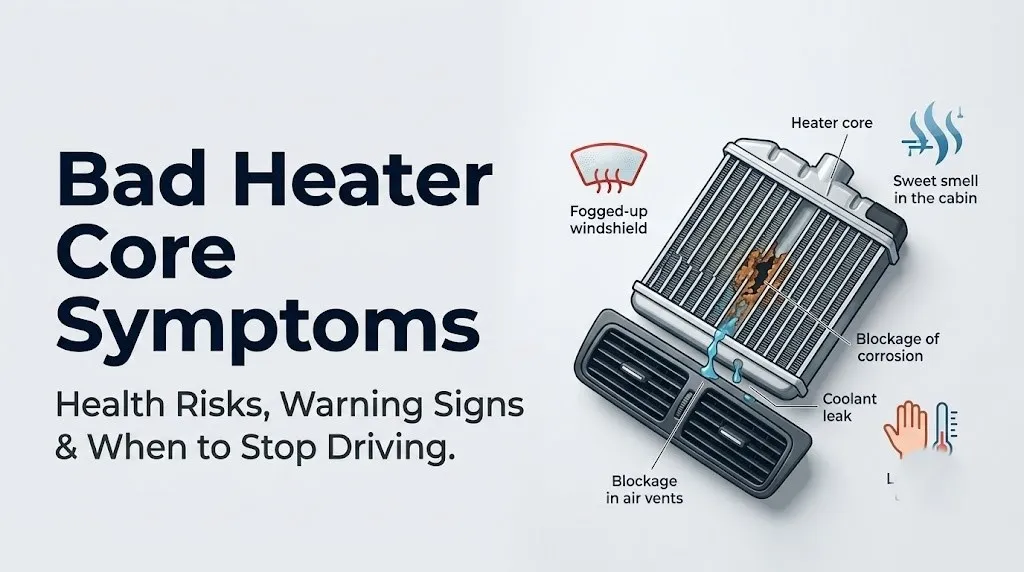
A heater core is a small radiator-like heat exchanger mounted inside the vehicle’s dashboard, through which hot engine coolant flows to warm the passenger cabin air.
The vehicle’s cooling system circulates coolant (a mixture of water and ethylene glycol or propylene glycol antifreeze) from the engine block through a circuit that includes the radiator (for engine cooling) and a parallel branch that runs through the heater core. The heater core consists of rows of metal tubes, typically aluminum or copper-brass, surrounded by thin metal fins that increase surface area. When the driver turns on the heat, the heater control valve opens, hot coolant flows through the heater core tubes, and the blower motor pushes cabin air across the heated fins, warming it before it exits the dashboard vents.
Think of the heater core like a miniature version of the radiator, but one that sits inside your dashboard instead of behind the grille. Where the main radiator is designed to dump heat from the coolant into the outside air, the heater core is designed to dump heat from the coolant into the air you breathe inside the car. The same coolant circuit, the same fluid, just a different destination for the heat.
The heater core sits behind the dashboard, typically on the passenger side, and connects to the engine’s coolant circuit through two rubber hoses that pass through the firewall (the metal bulkhead separating the engine compartment from the passenger cabin). When the heater core develops a leak, coolant escapes from this interior component directly into the passenger cabin space, not onto the ground outside the car.
People who drive older vehicles manufactured before 2000, when copper-brass heater core construction was more common, face higher rates of heater core failure from electrolytic corrosion and solder joint degradation. Drivers of vehicles that have not had coolant flushed and replaced on the manufacturer-recommended schedule also face accelerated heater core deterioration, because depleted coolant inhibitors allow pH to drop and acidic coolant to corrode the core’s internal tubes.
Quick Tip:
- Most manufacturers recommend coolant flushing every 30,000 to 50,000 miles or every two to five years, whichever comes first.
- Mixing coolant types (for example, Dex-Cool OAT coolant with conventional green HOAT coolant) depletes inhibitors faster and accelerates internal corrosion.
- Drivers of high-mileage vehicles above 100,000 miles should have the coolant pH tested annually, as internal heater core corrosion typically begins when coolant pH drops below 7.0.
Bad Heater Core Symptoms: The Complete List
The complete set of bad heater core symptoms falls into two categories: mechanical signs visible inside or outside the vehicle, and health-related signs experienced by the occupants.
Mechanical and observable signs:
- Fogging or misting on the inside of the windshield and front windows that cannot be cleared by the defroster alone
- A sweet, syrupy, or slightly chemical smell from the heater vents or throughout the cabin
- Wet, damp, or oily-feeling floor mats on the passenger side (and sometimes driver side in more severe leaks)
- Coolant level dropping in the reservoir without any visible puddle under the car after parking
- Reduced or absent heat output from the dashboard vents even when the temperature control is set to maximum
- A greasy film on the inside of the windshield that reappears after cleaning
- Engine temperature gauge rising toward the hot zone or fluctuating abnormally
- Visible mist or steam coming from the dashboard vents when the heat is on
Health-related signs experienced by occupants:
- Headache developing during or after time spent in the vehicle
- Mild dizziness or lightheadedness, particularly on longer drives
- Nausea without obvious gastrointestinal cause
- Eye, nose, or throat irritation while using the vehicle’s heater
- A persistent sweet taste in the mouth while driving
| Symptom | Mechanical Cause | Health Risk Level |
|---|---|---|
| Foggy windshield from inside | Coolant vapor condensing on glass | Moderate: impairs visibility, inhalation exposure |
| Sweet smell from vents | Ethylene glycol vapor entering cabin | Moderate to high: direct inhalation |
| Wet passenger floor mat | Liquid coolant dripping into cabin | High: skin contact, ingestion risk to children and pets |
| No heat from vents | Core blocked or coolant bypassed | Low direct health risk, safety risk in cold weather |
| Coolant loss without external leak | Internal leak into cabin or engine burn-off | Moderate: escalating exposure over time |
| Headache or nausea while driving | Ethylene glycol vapor inhalation | High: requires immediate ventilation and evaluation |
| Engine overheating | Coolant depletion from ongoing leak | High: risk of engine damage and vehicle breakdown |
Key Takeaway: The sweet smell inside your car is not just an inconvenience. It is ethylene glycol vapor, a compound that causes kidney and neurological damage at sustained exposure levels, and it requires both mechanical repair and health evaluation if symptoms occur.
Foggy or Misty Windshield From Inside the Car
A foggy windshield that originates on the inside surface of the glass and reappears after cleaning is one of the most reliable early indicators of a heater core leak.
Normal interior condensation from breath and body moisture forms primarily on cold mornings and clears quickly when the defroster runs. Heater core condensation is different. It forms a fine, slightly oily or greasy film on the inner glass surface. The film reappears even after the glass is cleaned, because the source is ongoing coolant vapor in the cabin air rather than the one-time moisture from human exhalation. Running your fingertip across a heater-core-fogged windshield leaves a slightly slick residue that smells faintly sweet.
The physics of this symptom: hot coolant leaking inside the heater core partially vaporizes as it contacts the warmer air in the cabin. This vapor-laden air contacts the cooler inner surface of the windshield glass and condenses, depositing a thin film of ethylene glycol and water. Ethylene glycol has a much higher boiling point (197 degrees Celsius, or 387 degrees Fahrenheit) than water, so it does not fully evaporate at cabin temperatures. The residue persists on the glass after the water portion evaporates.
From a driving safety standpoint, this is an immediate visibility impairment. The National Highway Traffic Safety Administration (NHTSA) identifies impaired windshield visibility as a contributing factor in thousands of vehicle accidents annually. A film on the inside of the windshield that cannot be resolved by the defroster means the driver is operating with reduced forward and peripheral visibility.
Drivers who are pregnant should take particular note of this symptom. Pregnancy increases susceptibility to chemical vapor inhalation because cardiac output and respiratory rate are elevated, increasing the volume of air (and any dissolved vapor) processed per unit time. Any pregnant driver noticing persistent interior windshield fogging should avoid using the vehicle’s heater system until the vehicle has been inspected by a certified automotive technician.
Sweet Smell Inside the Car From the Heater
The sweet, syrupy odor inside a vehicle with a failing heater core is produced by ethylene glycol vapor from conventional antifreeze coolant or propylene glycol vapor from extended-life or biodegradable coolant formulations entering the cabin air through the HVAC system.
Ethylene glycol has a characteristically sweet smell that most people describe as similar to candy, syrup, or a slightly chemical sweetness. This odor is detectable at concentrations well below those that cause acute health effects, which is both useful (you can smell it before dangerous exposure levels are reached) and potentially misleading (the pleasant smell can create a false sense of safety). The ATSDR toxicological profile for ethylene glycol confirms that the sweet odor is produced by the compound’s hydroxyl group structure, which is also the reason it tastes sweet and is accidentally ingested by children and animals.
Propylene glycol, used in certain extended-life coolants (including some marketed as lower-toxicity alternatives), has a similar sweet-faintly-chemical smell. While propylene glycol has a significantly more favorable human safety profile than ethylene glycol at low oral exposures (it is used as a food additive in small quantities), sustained inhalation of propylene glycol vapor at elevated concentrations is associated with respiratory tract irritation, and the ATSDR notes that its safety at high inhalation concentrations is not fully characterized for chronic exposure.
When the sweet smell is faint and only noticeable when the heater is first turned on, the leak is typically small and the core is weeping rather than actively leaking. When the smell is persistent throughout a drive and does not diminish with ventilation, coolant is entering the air stream continuously, and cabin air concentrations are rising toward the range where health effects become relevant.
People with pre-existing asthma or reactive airway disease are at elevated risk from glycol vapor inhalation, because airway irritation from any chemical vapor can trigger bronchospasm in sensitized airways at concentrations that would not affect a non-asthmatic driver. These individuals should not continue using the vehicle’s heating system after noticing the sweet odor.
Coolant Leak Inside the Car Cabin
A heater core that has progressed from weeping to actively leaking releases liquid coolant directly into the passenger compartment through the connection between the heater core and the firewall.
The leak path is from the heater core’s internal tubes (corroded, cracked, or at failed solder joints) into the heater box housing, which is the plastic enclosure inside the dashboard that contains the heater core assembly. Coolant accumulates in the bottom of the heater box and either drains down behind the dashboard onto the passenger-side floor carpet, or, in vehicles where the heater box drain is blocked by debris, backs up until it drips from dashboard vents and seams.
Liquid coolant inside a vehicle cabin creates three distinct health risks. The first is ongoing vapor production from the pooled liquid as it warms with cabin temperature, increasing ethylene glycol vapor concentration in the enclosed space. The second is dermal contact risk for vehicle occupants, particularly children who sit in the passenger seat or rear seats where floor-level coolant may pool. Ethylene glycol absorbed through intact skin occurs at a lower rate than oral ingestion but is documented in the ATSDR profile as a contributing route of exposure. The third is the highest-priority concern: accidental ingestion.
Call Poison Control at 1-800-222-1222 immediately if any child has touched floor mats wet with coolant and then put their hands in their mouth, or if there is any possibility of a child having tasted the coolant liquid. Do not wait for symptoms to develop. Ethylene glycol ingestion is a medical emergency in children.
Call the ASPCA Animal Poison Control Center at 888-426-4435 immediately if a pet has walked on, licked, or consumed any amount of coolant from the vehicle floor. Ethylene glycol is rapidly fatal in dogs and cats even in small quantities. Cats are especially sensitive, with toxicity occurring at doses as low as 1.5 mL per kilogram of body weight.
Key Takeaway: Liquid coolant on your vehicle’s floor mat is not just a carpet problem. It is a direct ingestion and dermal exposure hazard for children and pets, and accidental ingestion of even a small amount of ethylene glycol coolant by a child or pet is a medical emergency requiring immediate Poison Control contact.
Wet or Damp Floor Mats From the Heater Core
Wet passenger-side floor mats without a corresponding rain entry point or spilled drink are one of the clearest physical indicators that the heater core is leaking liquid coolant into the cabin.
The passenger-side concentration of the leak is explained by anatomy: in most vehicle designs, the heater core assembly sits closer to the passenger-side firewall than the driver side, and the heater box drain exits on the passenger-side firewall. When the heater core leaks, gravity directs the accumulating coolant toward the passenger-side floor through the heater box drain passage or through gaps in the dashboard structure.
The floor mat wetness from a heater core leak has a distinctive character that distinguishes it from other sources. Unlike water from a door seal failure (which is typically clear and odorless and appears near the door threshold), heater core coolant wetness is usually slightly colored (green, orange, or pink depending on coolant type), has the characteristic sweet odor, and appears under the dashboard rather than near the door sill. Running a clean white cloth across the wet area and smelling it is a reliable preliminary test: if the cloth shows color and smells sweet, the source is almost certainly the cooling system.
Drivers who incorrectly attribute this wetness to air conditioning drain issues should know the difference. Air conditioning condensate drains through a dedicated drain tube that exits through the firewall to the exterior of the vehicle. AC drain water is clear, odorless, and typically produces wetness that appears after or during AC use in humid conditions. Heater core coolant produces wetness that is present when the heating system is in use and is absent (or drying out) when the heater has not been run recently.
Older adults who may have reduced olfactory sensitivity from age-related changes in smell receptor density may not notice the sweet odor of glycol-contaminated floor mats as readily as younger drivers. For drivers above age 65 with reduced smell sensitivity, the visual and tactile check of floor mat wetness and color is particularly important.
No Heat or Weak Heat From Car Vents
Loss of cabin heat is a late-stage symptom of heater core failure, occurring after the core has deteriorated enough that coolant flow through it has become restricted or completely blocked.
The mechanism works as follows. As the heater core’s internal tubes corrode or become clogged with scale (calcium deposits from hard water in the coolant mix, or corrosion particles from deteriorated inhibitors), coolant flow rate through the core decreases. Less hot coolant flowing through the core means less heat transfer to the cabin air. The result is the heater blowing air that is lukewarm or, in fully blocked cores, barely warmer than ambient temperature even at the highest heat setting.
This symptom is somewhat counterintuitive relative to the others on this list. A heater core that has fully blocked and stopped allowing coolant flow will produce no heat but will also not leak. This is why some drivers experience no cabin heat without noticing any smell, wet mats, or foggy windows: their core has blocked rather than cracked. The engine’s coolant circuit may still pressurize normally because the heater core bypass valve or bypass hose routes coolant around the blocked core rather than through it.
The distinction matters for diagnosis. A heater core that has no heat, no smell, and no fogging is likely internally blocked. A core with reduced heat combined with sweet smell and foggy windows is actively leaking while still partially flowing. The treatment is the same (heater core replacement) but the urgency differs: the blocked core presents no active occupant health risk, while the leaking-and-flowing core does.
People who live in cold climates and depend on cabin heat for defrosting the windshield face an additional safety risk from a blocked heater core in winter: without sufficient defrost heat, front and rear windshield ice removal may be inadequate, creating a visibility impairment in freezing conditions. This is particularly relevant for drivers of older vehicles in northern states and Canada where overnight temperatures regularly fall below freezing.
Engine Overheating Connected to the Heater Core
Engine overheating caused by a failing heater core occurs when coolant loss from an active heater core leak depletes the total volume of coolant in the engine’s cooling system to the point where the engine can no longer maintain safe operating temperature.
The cooling system operates as a closed pressurized circuit. Every drop of coolant that leaks from the heater core into the passenger cabin is a drop removed from the total coolant volume available to keep the engine cool. A small weeping leak may take weeks to deplete coolant noticeably. A larger crack or failed fitting can drain the coolant reservoir substantially within days. When coolant volume falls below the level needed to fill the radiator and engine passages completely, air pockets form in the cooling circuit. Air transfers heat approximately 1,000 times less efficiently than liquid coolant. Engine metal in an air-pocket area can overheat rapidly, risking head gasket failure, warped cylinder head, and in severe cases, engine seizure.
The temperature gauge rising toward the red zone while driving, particularly after a period of unexplained coolant loss, indicates that the cooling system is inadequately filled and the heater core leak has progressed to a stage where it is compromising engine operation.
Do not continue driving a vehicle whose temperature gauge is in the red zone or is rising toward it. Pull over safely, turn off the engine, and allow it to cool completely before checking the coolant reservoir. Do not open the radiator cap on a hot engine: the pressurized coolant system can spray scalding liquid if opened while hot, causing severe thermal burns to the hands, arms, and face.
Drivers with diabetes should be aware that thermal burns require more careful wound management than in non-diabetic individuals, because peripheral neuropathy may reduce pain sensation from mild burns and impaired wound healing increases infection risk. Any thermal burn from hot coolant contact, regardless of apparent severity, should be evaluated by a primary care physician or emergency medicine physician.
Key Takeaway: Engine overheating in the context of unexplained coolant loss means the heater core leak has progressed to a stage that is damaging the engine itself, and the vehicle should not be driven until the cooling system is repaired and properly refilled.
Coolant Loss With No Visible External Leak
Unexplained coolant loss from a vehicle that shows no puddle on the driveway and no visible external leak is one of the most diagnostically useful bad heater core symptoms, because it points directly to an internal leak.
In a properly sealed cooling system, coolant does not disappear. If the reservoir level drops between checks without any visible puddle on the ground, the coolant is going somewhere internal: either into the engine combustion chambers (indicating a blown head gasket, typically accompanied by white exhaust smoke and a sweet exhaust smell), into the engine oil (indicating a cracked block or head gasket failure, producing milky oil), or into the passenger cabin (heater core leak). The absence of visible exhaust symptoms and normal-appearing oil narrows the differential to the heater core in most cases.
Checking the coolant level should be done when the engine is cold. The reservoir (a translucent plastic tank usually near the radiator with minimum and maximum level markings) shows the level through the translucent walls. In a normal system, the level should be at or near the maximum line when cold. A level below the minimum line without explanation indicates active coolant loss.
To track coolant loss systematically and help a mechanic confirm the source:
- Mark the current coolant level on the reservoir with a permanent marker or piece of tape, noting the date.
- Check the level at the same time every two days without adding coolant (unless the level is critically low) for one week.
- Check the driver and passenger side floor mats daily for dampness or sweet odor.
- Inspect the inside of the windshield for oily film each morning before driving.
- Note any sweet smell from the vents during heating system use and record when it first appears during a drive.
- Present this log to a certified automotive technician. The rate of loss, combined with the interior signs, will guide the diagnostic approach.
Older vehicles above 15 years of age are at higher risk for simultaneous multiple cooling system leaks (heater core plus radiator hose seeps, for example), which can complicate identification of the primary source. A coolant pressure test performed by a certified automotive technician applies regulated air pressure to the sealed cooling system and identifies all leak points simultaneously.
Health Effects of Coolant Vapor Inside the Car
Coolant vapor inside a vehicle cabin exposes occupants to ethylene glycol aerosol or propylene glycol aerosol at concentrations that depend on the size of the heater core leak, the duration of exposure, and the degree of vehicle ventilation.
The Agency for Toxic Substances and Disease Registry (ATSDR) has established a toxicological profile for ethylene glycol that identifies three primary routes of occupant concern in a vehicle context: inhalation of vapor, dermal contact with liquid or mist, and ingestion (the highest-risk route, particularly for children and animals). For inhalation specifically, the ATSDR notes that ethylene glycol has low vapor pressure at room temperature, meaning that at ambient cabin temperatures without the heater running, vapor concentrations are low. When the heater is running and coolant is actively leaking into the hot heater box, vapor concentrations in the cabin increase substantially.
The National Institute for Occupational Safety and Health (NIOSH) has established a workplace exposure limit for ethylene glycol vapor of 50 parts per million (ppm) as a ceiling concentration. This is an occupational standard designed for healthy adults in industrial settings with regular fresh air exchange. A closed vehicle cabin with limited ventilation represents a more confined space than most industrial workstations.
Documented health effects of ethylene glycol inhalation at relevant concentrations include: irritation of the nasal mucosa and upper respiratory tract (burning sensation in the nose and throat), headache from vasodilatory effects on cerebral blood vessels, mild dizziness and lightheadedness from CNS depression, and eye irritation from vapor contact with the conjunctival epithelium. These effects at low-to-moderate cabin concentrations are reversible upon removal from exposure and fresh air ventilation.
Children and infants are at disproportionate risk from the same cabin vapor concentration as an adult occupant, because their smaller body mass produces higher blood concentration from the same inhaled dose, and their developing nervous systems and kidneys are more sensitive to toxic compound exposure. Any child who has been repeatedly transported in a vehicle with a known or suspected heater core leak warrants assessment by a pediatrician.
Ethylene Glycol and Propylene Glycol Exposure Risks
Ethylene glycol and propylene glycol are the two compounds used as antifreeze bases in vehicle coolant, and their toxicity profiles are substantially different, which affects how urgently a coolant exposure should be treated.
Ethylene glycol is metabolized in the liver by the enzyme alcohol dehydrogenase through a cascade: ethylene glycol is converted to glycolaldehyde, then to glycolic acid, then to glyoxylic acid, and finally to oxalic acid. Oxalic acid combines with calcium ions in the blood to form calcium oxalate crystals, which deposit in the renal proximal tubule cells of the kidneys, causing direct tubular cell death (tubular necrosis) and acute kidney injury. This is why ethylene glycol poisoning, if untreated, leads to kidney failure within 24 to 72 hours of substantial ingestion.
The three clinical stages of ethylene glycol poisoning from the ATSDR profile are: Stage 1 (30 minutes to 12 hours post-ingestion), CNS depression resembling alcohol intoxication, nausea, vomiting, and metabolic acidosis beginning; Stage 2 (12 to 24 hours post-ingestion), cardiopulmonary effects including tachycardia and hypertension from acidosis; Stage 3 (24 to 72 hours post-ingestion), acute kidney failure from oxalate crystal deposition in renal tubules.
Propylene glycol metabolizes through a different pathway to lactic acid and pyruvic acid. It is used as a food additive (FDA GRAS status for small oral doses in food products) and is found in some pharmaceutical preparations. However, the ATSDR toxicological profile for propylene glycol notes that high-concentration inhalation or very large oral doses can cause lactic acidosis and CNS depression, particularly in people with pre-existing kidney or liver disease who cannot clear it efficiently.
People with chronic kidney disease (CKD) of any stage are at elevated risk from ethylene glycol vapor inhalation because their reduced renal function lessens their ability to excrete oxalate metabolites, allowing them to accumulate at lower exposure levels than would be harmful to someone with normal kidney function. These individuals should treat even faint coolant vapor odor in their vehicle as a reason to stop using the heating system immediately.
| Compound | Metabolic Pathway | Primary Toxic Target | Risk Level (Inhalation) | Risk Level (Ingestion) |
|---|---|---|---|---|
| Ethylene glycol | Alcohol dehydrogenase cascade to oxalic acid | Renal proximal tubules, CNS | Moderate at sustained cabin levels | High: medical emergency |
| Propylene glycol | Liver oxidation to lactic and pyruvic acid | CNS at high doses, minimal renal | Low to moderate | Low to moderate (FDA GRAS at low doses) |
Dizziness, Nausea, or Headache While Driving
Headache, dizziness, or nausea experienced during or after driving in a vehicle with a suspected heater core leak should be treated as direct evidence of ethylene glycol vapor inhalation above the threshold for physiological effect.
The physiological mechanism: ethylene glycol vapor absorbed through the pulmonary alveolar membrane enters the systemic circulation, crosses the blood-brain barrier, and exerts mild CNS depressant effects at relevant concentrations. Headache is produced by the compound’s direct vasodilatory effect on cerebral blood vessels. Dizziness reflects early CNS depression, which reduces the brain’s ability to integrate spatial orientation signals from the vestibular apparatus in the inner ear. Nausea is a non-specific CNS response to chemical insult that occurs across many toxic exposures.
These symptoms are the body’s direct signal that occupant exposure has crossed from negligible to physiologically active. They warrant immediate action: stop the vehicle in a safe location, open the windows and doors to ventilate, exit the vehicle, and breathe fresh air. If symptoms resolve completely within 10 to 15 minutes of fresh air exposure, the exposure level was likely low to moderate. If symptoms persist, worsen, or are accompanied by confusion, difficulty speaking, or altered consciousness, call 911 immediately, and inform emergency services that the exposure is to ethylene glycol vapor in a vehicle.
When describing the situation to an emergency medicine physician, the specific information that will guide their evaluation includes: the duration of time spent in the vehicle before symptoms developed, whether the heater was running, the degree of window closure during exposure (fully closed significantly concentrates vapor compared to partially open), whether any other occupants developed symptoms, and the type of coolant in the vehicle if known (ethylene glycol-based green or orange coolant vs. propylene glycol-based purple or blue coolant).
Older adults above age 70 may experience CNS effects of ethylene glycol vapor at lower concentrations than younger adults, because age-related reductions in blood-brain barrier integrity and hepatic enzyme capacity alter both exposure sensitivity and metabolic clearance rate.
Key Takeaway: Headache, dizziness, or nausea that develops while driving and resolves after exiting the vehicle is direct physiological evidence of coolant vapor inhalation, and that vehicle should not be used again with the heater running until the heater core has been repaired.
Can You Drive With a Bad Heater Core
Whether you can drive with a bad heater core depends entirely on which symptom pattern is present, and the answer ranges from “yes, but schedule the repair this week” to “no, pull over immediately.”
| Symptom Pattern | Drive? | Action Required |
|---|---|---|
| Slightly low coolant, no interior signs, no symptoms | Yes, briefly | Check coolant daily, schedule mechanic appointment within one week |
| Faint sweet smell only when heater first turns on | Yes, with caution | Use recirculation mode to limit fresh outside air mixing, schedule repair within days |
| Persistent sweet smell throughout the drive | No | Stop using heater, crack windows, do not transport children or pets until repaired |
| Foggy windshield that defroster cannot fully clear | No | Visibility impairment is a driving safety risk; repair before driving |
| Wet floor mat plus sweet smell | No | Active liquid leak with vapor and ingestion risk; do not transport children or pets |
| Headache, dizziness, or nausea while driving | Stop immediately | Exit vehicle, fresh air, call Poison Control or 911 as symptoms dictate |
| Engine temperature gauge rising or in red zone | Stop immediately | Engine overheating risk, pull over, turn off engine, allow cooling |
Bypassing the heater core is a short-term option some technicians perform by clamping or looping the two heater core hoses together at the firewall, effectively removing the heater core from the coolant circuit. This stops the leak but also eliminates all cabin heat and windshield defrost capability from the coolant-based heating system. In cold climates this is only a temporary measure, and in any climate it does not address the underlying component failure.
Pregnant women should not continue driving a vehicle with an active heater core leak under any circumstances, even with windows open, because glycol vapor exposure risk to the developing fetus is not well-characterized at low chronic occupational levels, and the precautionary principle applies when a developing fetus is involved.
How to Confirm a Bad Heater Core
Confirming a bad heater core rather than another cooling system component involves a sequence of checks that a driver can partially perform and a certified automotive technician can complete definitively.
Driver-performable checks:
- Check the coolant reservoir level with the engine cold. Mark the level and recheck after two days without driving long distances or adding coolant.
- Check both passenger-side floor mats for dampness. Press firmly with a clean white cloth and smell the cloth for sweetness.
- Run your finger across the inside surface of the windshield and smell it. A faint sweet residue on the glass points to coolant vapor condensation.
- Turn the heater to maximum heat and maximum fan speed with the windows closed for five minutes. Note any sweet smell from the vents.
- Check the condition of the two rubber hoses entering the firewall from the engine compartment side. Cracked, soft, or swollen hoses adjacent to the heater core connections suggest the problem is in that circuit.
Technician-performed confirmations:
A coolant pressure test pressurizes the cooling system to its rated operating pressure (typically 13 to 16 psi) and monitors for pressure drop while inspecting all components including the heater core connections for leakage. A coolant system that loses pressure without an external leak visible on the ground suggests an internal leak into the heater box.
A UV coolant dye test adds fluorescent dye to the coolant, then checks inside the vehicle (under the dashboard, on floor mats, and on the windshield interior surface) with an ultraviolet light. Glowing residue inside the cabin confirms coolant is entering the passenger compartment.
In some vehicles, accessing the heater core for visual inspection requires partial dashboard removal, which is a labor-intensive but definitive diagnostic step. A certified automotive technician should perform this assessment.
When to Stop Driving and What to Do Next
Stop driving immediately and do not restart the vehicle in any of the following situations, each of which indicates the heater core failure has progressed to a stage that is directly dangerous to occupants or to the engine.
Stop driving immediately and contact a mechanic or roadside assistance if:
- The engine temperature gauge is approaching or in the red zone, indicating active coolant depletion and overheating risk
- Mist or steam is visibly coming from the dashboard vents
- The windshield cannot be cleared sufficiently to drive safely
- You or any passenger has developed headache, dizziness, or nausea during the drive
Stop using the vehicle’s heating system and schedule repair within 24 to 48 hours if:
- The sweet smell is persistent throughout a drive rather than brief at startup
- The passenger floor mat is wet or the smell from the mat is sweet
- Coolant level has dropped noticeably in less than one week without external leak
What to do if symptoms of coolant vapor exposure have occurred:
If any occupant experienced headache, dizziness, or nausea during the drive, they should breathe fresh air immediately. If symptoms persist beyond 15 minutes of fresh air exposure, that person should be evaluated by an emergency medicine physician at the nearest emergency department and should specifically state that the exposure was to ethylene glycol or propylene glycol vapor in a vehicle for a specified duration.
Call Poison Control at 1-800-222-1222 if any child or adult may have ingested coolant from the vehicle, including touching wet mats and then their mouth. Do not wait for symptoms.
Call the ASPCA Animal Poison Control Center at 888-426-4435 if a dog, cat, or other pet may have licked or ingested any amount of coolant from the vehicle interior or exterior. Ethylene glycol is acutely fatal to pets and requires immediate treatment.
Call 911 if any occupant lost consciousness, became confused, or developed difficulty breathing after time spent in a vehicle with a known or suspected heater core leak.
Emergency Symptoms: When to Call 911 or Go to the ER
Certain health effects from heater core coolant exposure require immediate emergency evaluation. Do not wait to see if these resolve on their own.
Call 911 or go to the nearest emergency room immediately if any vehicle occupant experiences:
- Loss of consciousness, confusion, or inability to speak clearly after time in a vehicle with a coolant vapor smell (these indicate CNS depression from ethylene glycol at a level requiring antidote treatment, specifically fomepizole or ethanol, administered by an emergency medicine physician)
- Difficulty breathing, wheezing, or chest tightness after coolant vapor inhalation (indicates lower respiratory tract irritation requiring emergency airway assessment)
- Seizure after known or suspected ethylene glycol ingestion or sustained vapor exposure
- Persistent vomiting combined with dizziness and confusion after vehicle coolant exposure
- Back or flank pain developing within 12 to 24 hours of ethylene glycol ingestion (indicates early renal tubular injury from oxalate crystal deposition)
- Any amount of ethylene glycol coolant ingested by a child, regardless of the absence of immediate symptoms (ethylene glycol poisoning from ingestion produces its most serious effects 12 to 72 hours after exposure, well after the initial period when the child may appear normal)
Tell emergency personnel: the specific coolant type if known (conventional ethylene glycol or propylene glycol based), the estimated duration of vapor exposure or the estimated amount ingested, the time of exposure, and any medications the affected person takes (particularly alcohol, which affects the metabolism of ethylene glycol through alcohol dehydrogenase competition).
These presentations require emergency medical assessment and antidote administration, not monitoring at home or a next-day appointment.
Frequently Asked Questions About Bad Heater Core Symptoms
What are the first signs of a bad heater core?
The first signs of a bad heater core are typically a faint sweet smell from the heater vents when the heating system is first turned on, followed by a slight drop in coolant reservoir level without any visible puddle under the car.
A thin oily film on the inside of the windshield that reappears after cleaning is also an early indicator, caused by ethylene glycol vapor from the leaking core condensing on the cooler glass surface.
These early signs typically precede more obvious symptoms like wet floor mats or loss of cabin heat by days to weeks, making them the most actionable warning if caught early.
Is it safe to drive with a bad heater core?
Driving with a bad heater core depends on the specific symptom pattern present at the time.
A mildly low coolant level and faint intermittent smell may allow brief driving with the heater off and windows slightly open, while a persistent sweet smell, wet floor mats, foggy windshield, or any occupant symptoms of headache or dizziness mean the vehicle should not be driven until repaired.
Any vehicle whose heater is producing sustained sweetness inside the cabin should not transport children, pregnant women, or pets under any circumstances until the heater core has been replaced.
What does a bad heater core smell like?
A bad heater core produces a sweet, syrupy, or slightly candy-like odor inside the vehicle cabin, particularly noticeable when the heater system is running.
This smell comes from ethylene glycol vapor (from conventional antifreeze coolant) or propylene glycol vapor (from extended-life coolant) entering the cabin air stream through the HVAC system from the leaking heater core.
The sweet smell is detectable at concentrations below those that cause immediate health effects, but its persistence throughout a drive rather than only at startup indicates rising cabin vapor levels that require immediate action.
Can a bad heater core make you sick?
Yes, a leaking heater core can make occupants sick through inhalation of ethylene glycol vapor inside the closed vehicle cabin.
Documented symptoms of ethylene glycol vapor inhalation include headache, dizziness, lightheadedness, nausea, and eye and throat irritation, all of which should resolve with fresh air exposure if the level was low, but which require emergency evaluation if they persist or are accompanied by confusion or breathing difficulty.
Ingestion of liquid coolant from contaminated floor surfaces, especially by children or pets, is a medical emergency regardless of the amount, and requires immediate contact with Poison Control at 1-800-222-1222 or the ASPCA Animal Poison Control Center at 888-426-4435.
How do I know if it’s the heater core or something else?
A heater core leak is distinguished from other cooling system failures by the combination of interior symptoms: sweet smell inside the cabin, wet passenger-side floor mats, and a greasy film on the inside windshield surface, which do not occur with an external radiator leak, a blown head gasket, or a failed water pump.
A coolant pressure test performed by a certified automotive technician will confirm the diagnosis by identifying pressure loss with no external leak visible, and a UV dye test will show glowing coolant residue inside the cabin if the heater core is the source.
The absence of white exhaust smoke (which would suggest a head gasket) and normal-appearing engine oil (milky oil would suggest oil-coolant mixing from a cracked block) help narrow the source to the heater core specifically.
How much does it cost to fix a bad heater core?
Heater core replacement costs vary widely by vehicle make and model, ranging from approximately $600 to $2,000 for parts and labor combined in most passenger vehicles as of 2026.
The majority of the cost is labor rather than the heater core part itself, because accessing the heater core in most modern vehicles requires partial or complete removal of the dashboard assembly, which takes four to ten hours of technician time depending on the vehicle.
Getting multiple estimates from certified automotive technicians and asking specifically whether they will perform a pressure test to confirm the diagnosis before proceeding with the full repair is recommended.
The single most important thing to do if you are currently noticing any combination of sweet smell inside the cabin, fogged windshield from inside, or wet passenger floor mat is to stop using the vehicle’s heating system today and have a certified automotive technician inspect it within 24 to 48 hours.
Do not transport children or pets in that vehicle with the heater running. Both groups are at disproportionate risk from coolant vapor at the same cabin concentrations that produce only mild effects in a healthy adult. If any occupant has already experienced headache, dizziness, or nausea inside the vehicle, treat that as ethylene glycol vapor exposure until proven otherwise, and contact Poison Control at 1-800-222-1222 if there is any possibility of liquid coolant ingestion.
You now have the complete picture: what each symptom means mechanically, what it means for the health of everyone in the vehicle, and exactly when the situation crosses from a repair appointment into an emergency call.