Do Pregnancy Symptoms Come and Go? What to Expect
Yes, pregnancy symptoms come and go, and this fluctuation is a normal, physiologically expected feature of early pregnancy driven by the rising and falling curve of human chorionic gonadotropin (hCG) and the hormone transitions that occur as pregnancy progresses week by week. The pattern is not random: it follows a predictable hormonal trajectory, and understanding that trajectory is what separates unnecessary anxiety from genuinely useful clinical awareness.
The reassurance that “some variation is normal” is only half of what pregnant people need to hear. According to the American College of Obstetricians and Gynecologists (ACOG), nausea and vomiting of pregnancy affect approximately 70 to 80% of pregnant women, and the intensity varies considerably from day to day and person to person. What the pregnancy content space almost universally fails to explain is why symptoms fluctuate, which specific symptoms are most prone to day-to-day variation, and precisely what pattern of symptom change is a warning sign rather than a normal feature of a healthy pregnancy.
This article covers the complete hormonal mechanism behind pregnancy symptom fluctuation, a week-by-week clinical picture of what to expect, the specific distinction between normal symptom easing and concerning sudden disappearance, how the pattern differs in twin pregnancies, IVF conceptions, and medical conditions like hypothyroidism, and the exact signs that require calling 911 or going to an emergency room rather than waiting for a scheduled prenatal appointment.
Do Pregnancy Symptoms Come and Go
Pregnancy symptoms do come and go throughout the first trimester and into the early second trimester, and this is an expected clinical feature of normal pregnancy rather than a sign that something is wrong.
The fluctuation is not imagined and not random. It reflects the biological reality that the hormones driving pregnancy symptoms, particularly hCG and progesterone, do not rise in a perfectly smooth, linear curve. They pulse, peak, and transition through distinct phases, and each phase change produces a corresponding shift in symptom intensity. A pregnant person who feels significantly nauseated on Monday, noticeably better on Tuesday, and moderately nauseated again on Wednesday is experiencing a hormonally accurate pattern.
The clinical concern arises when fluctuation becomes sudden, complete, and unexpected cessation, particularly before the point in gestation when natural symptom improvement is expected. That distinction, between normal day-to-day variation and clinically concerning disappearance, is what this article is built to help you understand clearly.
The American College of Obstetricians and Gynecologists states that nausea and vomiting of pregnancy typically begin by 6 weeks of gestation, peak in intensity between 8 and 11 weeks, and improve for the majority of women by 14 weeks. Day-to-day variability within that arc is normal.
Women in their first pregnancy often find symptom fluctuation particularly anxiety-provoking because they have no prior experience to compare against. Women who have experienced a prior pregnancy loss may interpret any reduction in symptoms as an ominous sign, regardless of gestational age. Both responses are understandable, but accurate hormonal and clinical context is the most useful tool for distinguishing worry that needs action from worry that needs information.
Why Pregnancy Symptoms Fluctuate: The Hormonal Mechanism
Pregnancy symptoms fluctuate because the hormones that produce them, primarily hCG, progesterone, and estradiol, are not secreted at a constant steady rate but rise, peak, and transition through distinct phases that directly alter symptom intensity.
The central hormone in early pregnancy symptom production is hCG, secreted specifically by the syncytiotrophoblast, the outer cell layer of the early placenta that burrows into the uterine decidua after implantation. The syncytiotrophoblast is not a passive structure: it is an endocrine factory that begins producing hCG within days of implantation and accelerates production rapidly. hCG rises steeply from approximately 4 weeks of gestation, doubling every 48 to 72 hours in a healthy pregnancy.
Think of hCG like the accelerator pedal of an unfamiliar car that you are pressing down for the first time: the force of its effect is not perfectly consistent from press to press. Some mornings the nausea is intense; some afternoons it eases. These fluctuations reflect the pulsatile nature of trophoblastic hCG secretion and its interaction with meal timing, hydration, sleep quality, and individual receptor sensitivity.
The second major hormonal driver is progesterone, produced initially by the corpus luteum (the temporary ovarian structure formed from the follicle that released the egg at ovulation). Progesterone relaxes smooth muscle throughout the body, including the stomach and intestines, slowing gastric emptying and contributing to nausea, bloating, and constipation. It also modulates GABA-A receptors in the central nervous system through its metabolite allopregnanolone, producing sedation and fatigue. Progesterone levels fluctuate throughout the day in pulsatile patterns, which is one reason fatigue and nausea often feel worse at certain times of day.
According to research published in Obstetrics and Gynecology, the hCG curve in a singleton viable pregnancy typically peaks between 8 and 10 weeks of gestation, then declines 20 to 50% before plateauing for the remainder of pregnancy. This peak-and-decline pattern directly corresponds to the typical clinical course of pregnancy nausea: worsening through the first 8 to 10 weeks, then gradually improving. Day-to-day variability throughout this arc is the norm, not the exception.
Which Pregnancy Symptoms Come and Go Most Often
The pregnancy symptoms most prone to day-to-day and hour-to-hour fluctuation are those most directly tied to pulsatile hCG secretion and progesterone variation: nausea, fatigue, and breast tenderness.
The symptoms that fluctuate most predictably include:
- Nausea: directly driven by hCG stimulating serotonin receptors in the gastrointestinal tract and the chemoreceptor trigger zone; highly variable based on hCG pulse amplitude, food intake, hydration, and time of day
- Breast tenderness: driven by progesterone-stimulated lobular-alveolar proliferation in the breast ductal tissue; fluctuates with progesterone pulse amplitude and may be noticeably worse in the morning or before meals
- Fatigue: driven by progesterone’s GABA-A modulation, human placental lactogen metabolic demands, and early pregnancy cardiovascular adaptation; typically worse in the first trimester and again in the third trimester, with relative improvement in the second trimester
- Food aversions and cravings: highly variable, tied to both hCG-mediated olfactory and gustatory sensitivity changes and to gastric motility slowing from progesterone
- Heightened sense of smell (hyperosmia): driven by estradiol-mediated olfactory receptor sensitivity; fluctuates with estradiol levels and can worsen nausea on high-estradiol days
Symptoms that are less prone to come-and-go fluctuation include:
- Frequent urination: increases progressively as the uterus enlarges and blood volume expands; does not typically fluctuate dramatically from day to day
- Constipation: driven by sustained progesterone-mediated bowel motility slowing; persistent rather than fluctuating
- Mild pelvic pressure or heaviness: related to uterine blood flow increase and ligamentous laxity from relaxin; generally persistent
Women who conceived with fertility medications, particularly those involving ovarian stimulation, may experience more pronounced breast tenderness and bloating early in pregnancy due to supraphysiological ovarian response and higher estradiol levels than in natural conception cycles.
Key Takeaway: Nausea, breast tenderness, and fatigue are the three symptoms most prone to normal day-to-day fluctuation in early pregnancy because they are directly tied to the pulsatile nature of hCG and progesterone secretion rather than to structural changes that build progressively.
When Do Early Pregnancy Symptoms Start and Peak
Early pregnancy symptoms typically begin between 4 and 6 weeks of gestation, peak in intensity between 8 and 10 weeks, and begin to ease gradually for most women between 12 and 16 weeks.
The onset of symptoms corresponds directly to the rise of hCG above a physiological threshold. Most sensitive pregnancy tests can detect hCG at levels of 10 to 20 mIU/mL, which typically occurs around the time of a missed period (approximately 4 weeks of gestation). Symptoms begin to appear as hCG rises into the hundreds and then thousands: most women notice nausea, fatigue, or breast tenderness between 4 and 6 weeks.
| Gestational Week | hCG Range (approximate) | Typical Symptom Intensity | What to Expect |
|---|---|---|---|
| 4 to 5 weeks | 200 to 7,000 mIU/mL | Mild: early fatigue, breast changes | Symptoms beginning, often subtle |
| 6 to 8 weeks | 7,000 to 50,000 mIU/mL | Moderate to severe: nausea, fatigue peak beginning | Most women notice clear symptoms |
| 8 to 10 weeks | 25,000 to 290,000 mIU/mL | Peak: nausea most intense | hCG at highest levels |
| 10 to 12 weeks | Declining from peak | Improving: day-to-day variation common | Luteoplacental shift beginning |
| 12 to 16 weeks | Plateau below peak | Most women experience improvement | Placenta fully assumes steroidogenesis |
| Second trimester | Stable plateau | Most first-trimester symptoms resolve | Energy typically improves |
Women with hypothyroidism or Hashimoto’s thyroiditis often experience symptom onset that feels amplified compared to thyroid-healthy pregnant women. This occurs because hCG shares structural homology with TSH and can bind weakly to thyroid TSH receptors, transiently stimulating thyroid hormone production and simultaneously suppressing serum TSH levels in early pregnancy. In a woman with reduced thyroid reserve, this hCG-driven thyroid stimulation may be insufficient to compensate for the increased pregnancy demands, producing more pronounced fatigue and nausea. These women should have their thyroid function tested early in pregnancy, typically before 8 weeks, and their levothyroxine dose adjusted by an obstetrician-gynecologist or endocrinologist as needed.
Morning Sickness Comes and Goes: What Is Normal
Morning sickness comes and goes in most pregnant women because nausea in pregnancy is driven by hCG stimulating serotonin release in the gut and the area postrema of the brainstem, and this stimulation is not constant or uniform throughout the day.
The term “morning sickness” is clinically misleading. Nausea in pregnancy can occur at any time of day or night and, for many women, is actually worst in the late afternoon or evening. The brainstem structure most responsible for translating circulating hCG into the nausea experience is the area postrema (also called the chemoreceptor trigger zone or CTZ), located in the dorsal medulla oblongata at the floor of the fourth ventricle. The area postrema sits outside the blood-brain barrier, allowing it to directly sample blood for hormones and potential toxins. When hCG activates this region, it triggers the nausea-vomiting center in the adjacent nucleus tractus solitarius.
The reason nausea fluctuates across the day is that hCG is secreted in pulses rather than as a constant infusion, gastric emptying rate (affected by food content and progesterone levels) changes throughout the day, blood glucose fluctuations modulate nausea intensity (low glucose worsens it, which is why eating small frequent meals reduces it), and sensory triggers (smells, sights, and sounds) that provoke nausea through cortical-limbic pathways to the vomiting center vary by environment.
For most women, nausea is most intense when the stomach is empty. This explains the classic pattern of waking with severe nausea that improves somewhat after eating a small amount of food, particularly simple carbohydrates that absorb quickly.
According to the American College of Obstetricians and Gynecologists, nausea and vomiting affect 70 to 80% of pregnant women in the first trimester, and for the majority it resolves by 16 weeks. Days with minimal nausea within this window are normal and do not indicate that the pregnancy is in trouble.
Women with a prior history of motion sickness or migraines are more susceptible to severe pregnancy nausea, likely because their CTZ and vestibular pathways have a lower baseline threshold for nausea stimulation.
Breast Tenderness and Fatigue Fluctuation in Pregnancy
Breast tenderness and fatigue fluctuate in early pregnancy because they are driven by progesterone and estradiol, both of which are secreted in pulsatile rather than steady-state patterns throughout the day and across the first trimester.
Breast tenderness in pregnancy results from progesterone-driven proliferation of the lobular-alveolar tissue within the breast ductal system, the same network of milk-producing structures that develops in response to progesterone during the luteal phase of every menstrual cycle. In pregnancy, this stimulation is sustained and accelerating, producing the characteristic heaviness, sensitivity, and tingling that most pregnant women experience from 4 to 6 weeks onward. Because progesterone is secreted in pulses from the corpus luteum (and later the placenta), breast tenderness intensity changes hour to hour and day to day. A day when breast tenderness feels less pronounced is not a sign that progesterone has fallen dangerously: it reflects the normal wave pattern of hormonal secretion.
Fatigue in early pregnancy involves at least three distinct mechanisms. Progesterone’s metabolite allopregnanolone acts as a positive allosteric modulator of GABA-A receptors in the central nervous system, producing sedation in a manner mechanistically similar to benzodiazepines. Rising human placental lactogen (hPL) from the growing placenta shifts maternal metabolism toward increased gluconeogenesis and insulin resistance to preserve glucose for the fetus, creating a metabolic burden that contributes to tiredness. The cardiovascular adaptations of early pregnancy, including the vasodilation produced by relaxin and the 40 to 50% increase in blood volume that begins in the first trimester, require the heart and circulatory system to work harder, further contributing to fatigue.
Because these mechanisms are dynamic rather than static, fatigue in early pregnancy characteristically fluctuates: a relatively energetic day does not mean the pregnancy is failing any more than an exhausted day means something is wrong.
Women who are anemic before conception, or who develop iron deficiency anemia during the first trimester, experience fatigue through an additional pathway: reduced oxygen delivery to tissues from low hemoglobin. Their fatigue may be more persistent and less fluctuating than the progesterone-driven fatigue of uncomplicated pregnancy. Any pregnant woman whose fatigue is severe, progressive, and accompanied by pallor or shortness of breath should have a complete blood count checked by her obstetrician-gynecologist.
Key Takeaway: Breast tenderness and fatigue fluctuate day to day in normal pregnancy because progesterone is secreted in pulses, not at a constant rate; a good-energy day or a day without breast tenderness does not indicate a problem with the pregnancy.
Pregnancy Symptoms by Week: What to Expect Each Trimester
Pregnancy symptoms follow a broadly predictable week-by-week pattern shaped by the hormonal arc of hCG, progesterone, estradiol, and human placental lactogen, and knowing this pattern in advance makes individual day-to-day variation far less alarming.
First Trimester (Weeks 1 to 13):
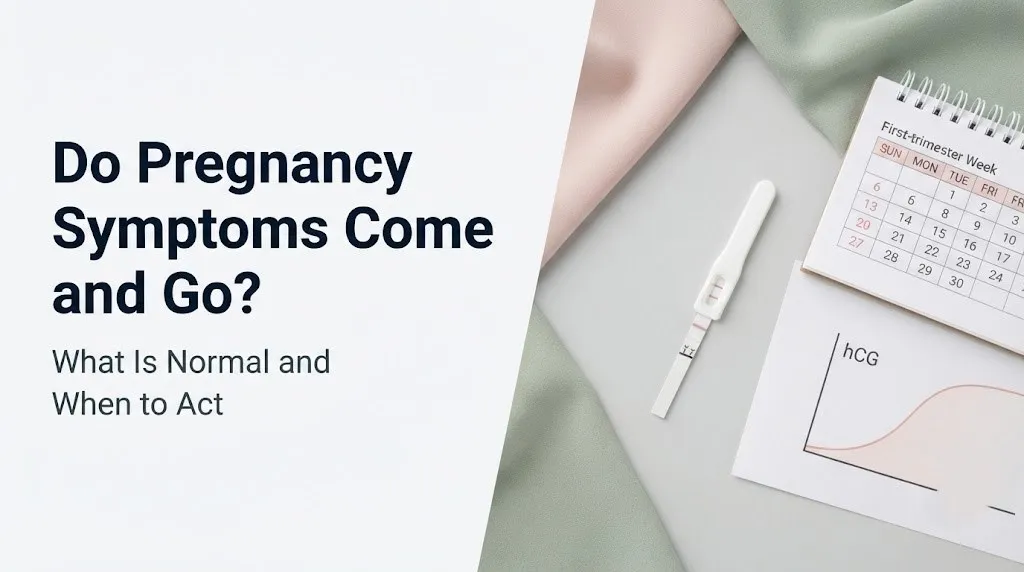
Weeks 4 to 6 bring the first symptoms as hCG rises from implantation levels to thousands of mIU/mL: subtle breast tenderness, mild fatigue, and possible light implantation spotting. Weeks 6 to 8 bring intensifying nausea, stronger fatigue, food aversions, and heightened smell sensitivity as hCG approaches its peak. Weeks 8 to 10 represent the peak of symptom intensity for most women, corresponding to the hCG peak. Weeks 10 to 13 begin the gradual transition of symptom improvement for most women as hCG declines from its peak and the luteoplacental shift completes, with the placenta fully assuming progesterone and estradiol production.
The luteoplacental shift is a specific endocrine transition: the corpus luteum in the ovary progressively reduces progesterone output, and the developing placenta simultaneously ramps up its own progesterone synthesis from cholesterol. This transition is not always seamless, and the brief fluctuation in progesterone levels during this handover period can produce a temporary increase in symptom variability and anxiety around weeks 8 to 12.
Second Trimester (Weeks 14 to 27):
Most first-trimester symptoms resolve or substantially improve. Energy typically returns. Breast tenderness decreases as breast tissue adapts to sustained progesterone stimulation. A small proportion of women continue to experience nausea into the second trimester, which is a normal variant rather than a sign of pathology.
Third Trimester (Weeks 28 to 40):
Fatigue typically returns as the growing fetus creates increasing metabolic demands, the uterus places pressure on the inferior vena cava reducing venous return in supine positions, and sleep quality decreases. Nausea may return in some women in the third trimester due to gastroesophageal reflux from uterine compression of the stomach.
Women who have had a cerclage (cervical stitch placed for cervical insufficiency) should be aware that pelvic pressure and cramping-like sensations are common and may fluctuate across the second and early third trimester; any sharp increase in pelvic pressure or watery discharge should be reported to their obstetrician-gynecologist the same day.
Is It Normal to Have No Pregnancy Symptoms Some Days
Having minimal or no noticeable pregnancy symptoms on a given day during the first trimester is normal for many women, particularly those with milder baseline symptom patterns, and does not indicate that the pregnancy has failed.
The clinical reality is that symptom experience is highly individual. According to research published in BMJ, approximately 25 to 30% of pregnant women report minimal nausea throughout the first trimester, and the absence of severe nausea is not associated with worse pregnancy outcomes in women who have documented viable intrauterine pregnancies on ultrasound. A positive home pregnancy test with a confirmed viable pregnancy on transvaginal ultrasound, even in a woman with essentially no symptoms, is reassuring regardless of symptom intensity.
The concern arises when a woman who has been experiencing consistent, noticeable symptoms suddenly notices that all of them have disappeared simultaneously. The word “suddenly” carries clinical weight here. Gradual fading of symptoms over several days to a week, in a woman who is between 9 and 14 weeks of gestation, is most often consistent with the normal trajectory of the hCG peak and decline. Abrupt, complete cessation of all symptoms in one or two days, particularly before 9 weeks and especially in a woman who has no prior ultrasound confirmation of a viable intrauterine pregnancy, is a pattern that warrants contact with an obstetrician-gynecologist within 24 hours.
Women who have experienced a prior pregnancy loss are particularly sensitive to this distinction and may require an earlier reassurance ultrasound than is typically offered in low-risk pregnancies. This is a clinically reasonable request, and an obstetrician-gynecologist should be asked about scheduling a viability ultrasound at 6 to 8 weeks if prior loss history is creating substantial anxiety that cannot be managed with information alone.
Quick Tip:
- Track whether symptoms disappear suddenly or fade gradually over days to weeks. The pace matters more than the presence or absence on any single day.
- Note your gestational week. Symptom reduction at 10 to 12 weeks is expected. Symptom reduction at 6 to 8 weeks without explanation is worth a call to your obstetrician-gynecologist.
- For women with prior pregnancy loss: request a serum hCG level and transvaginal ultrasound at 6 to 7 weeks to establish viability early, rather than waiting until 10 to 12 weeks for routine first-trimester screening.
When Does Pregnancy Symptom Disappearance Become a Concern
Pregnancy symptom disappearance becomes a clinical concern when it is sudden, complete, and occurs at a gestational age where the physiological hCG decline has not yet begun, particularly if accompanied by any vaginal bleeding, cramping, or pelvic pain.
The distinction between normal and concerning symptom disappearance depends on three factors: the gestational week, the speed of disappearance, and whether it is accompanied by other physical signs.
Normal symptom disappearance: Gradual reduction in nausea, breast tenderness, and fatigue occurring between 10 and 14 weeks of gestation, fading over one to two weeks rather than disappearing in 24 hours, and occurring without bleeding or pain. This pattern reflects the declining hCG curve and the completed luteoplacental shift.
Concerning symptom disappearance: Sudden, complete cessation of all symptoms before 9 weeks of gestation, particularly if the change is noticed over 24 to 48 hours rather than gradually. This pattern can reflect: a falling hCG from a non-viable pregnancy (missed miscarriage or embryonic demise, in which the embryo has stopped developing but the body has not yet expelled it); a pregnancy with abnormal chromosomal content that has slowed growth; or, in a very small minority of cases, an ectopic pregnancy in which hCG levels are lower and rising more slowly than in an intrauterine pregnancy.
It is important to state clearly that sudden symptom disappearance does not confirm pregnancy loss. A missed miscarriage can only be confirmed by transvaginal ultrasound showing absent embryonic cardiac activity, and no symptom pattern alone can make this diagnosis. The appropriate step is to contact an obstetrician-gynecologist for an ultrasound evaluation and serum hCG measurement, not to assume the worst or to reassure yourself without clinical confirmation.
Women with a bicornuate uterus or other uterine structural variants may experience slightly different symptom patterns because implantation location within the uterus affects the local blood supply to the corpus luteum and may alter the precise timing of symptom onset and intensity.
Pregnancy Symptoms and hCG Levels: What the Connection Means
The connection between hCG levels and pregnancy symptoms is direct and specific: higher hCG levels generally correspond to more intense symptoms, and falling hCG levels correspond to symptom improvement, which is why monitoring the hCG curve is clinically informative when symptoms change unexpectedly.
In a viable singleton pregnancy, serum hCG doubles approximately every 48 to 72 hours during the first trimester, according to research published in Obstetrics and Gynecology. This doubling pattern is the clinical benchmark used by obstetricians to assess pregnancy viability when symptoms are concerning or when bleeding occurs. An hCG that fails to double appropriately, increases by less than 53% over 48 hours (the lower limit of expected rise in a viable intrauterine pregnancy per established clinical criteria), or falls, is associated with higher rates of non-viable pregnancy outcomes, including missed miscarriage and ectopic pregnancy.
The relationship between hCG level and symptom intensity is not perfectly linear between individuals: some women with hCG levels of 50,000 mIU/mL experience severe nausea, while others with the same level have minimal symptoms. This reflects individual variation in receptor sensitivity, body weight (which affects hormone distribution volume), and central nervous system responsiveness in the area postrema.
What the hCG curve does reliably predict at the population level is the timing of natural symptom improvement. The hCG peak at 8 to 10 weeks and subsequent decline explains why most women feel better by 12 to 14 weeks, and why persistent symptoms beyond this point may indicate persistently elevated hCG from a molar pregnancy (gestational trophoblastic disease), a twin pregnancy, or hyperemesis gravidarum with sustained high hCG sensitivity.
The National Institute of Child Health and Human Development (NICHD) supports the use of serial serum hCG measurements alongside transvaginal ultrasound as the most reliable combined tool for evaluating pregnancy viability when symptoms raise concern in the first trimester.
Key Takeaway: The hCG doubling time (every 48 to 72 hours in a viable pregnancy) is the most clinically useful number your obstetrician-gynecologist can check when you are concerned that sudden symptom disappearance may reflect a non-viable pregnancy, and it is the test to specifically request if you are sent for bloodwork for this reason.
Pregnancy Symptoms in Twin and Multiple Pregnancies
Women carrying twin or higher-order multiple pregnancies typically experience more intense and longer-lasting pregnancy symptoms because multiple gestations produce substantially higher hCG levels than singleton pregnancies due to the presence of two or more syncytiotrophoblast structures secreting hCG simultaneously.
At any given gestational week in the first trimester, hCG levels in twin pregnancies average approximately 30 to 50% higher than in singleton pregnancies at the same gestational age, according to data from multiple clinical cohort studies published in reproductive medicine journals. This elevated hCG stimulates the area postrema and gastrointestinal serotonin receptors more intensely, producing nausea that is typically more severe, more persistent, and less prone to the day-to-day fluctuation that singleton pregnancy nausea shows.
The practical implication is that a woman pregnant with twins who notices her nausea “coming and going” less than a singleton-pregnant woman should not be surprised: her hCG stimulus is more sustained and intense. Conversely, she may find that her nausea persists past 12 to 14 weeks more often than singleton-pregnant women, which is expected given the higher and slower-to-decline hCG trajectory.
Symptoms that are particularly notable in twin pregnancies include:
- More pronounced breast tenderness starting earlier, from higher hCG and estradiol
- More severe and prolonged fatigue, from the higher metabolic demands of two placentas
- Earlier and more pronounced pregnancy-related nausea, beginning as early as 5 weeks in some cases
- Higher risk of developing hyperemesis gravidarum (requiring medical management) compared to singleton pregnancies
- Earlier onset of lower pelvic pressure and uterine heaviness from the larger uterine volume
Women pregnant with twins should discuss with their obstetrician-gynecologist or maternal-fetal medicine specialist (perinatologist) what symptom intensity is expected for their specific situation, as the typical singleton-pregnancy guidance on “when to worry about symptom disappearance” does not apply uniformly to multiple gestation pregnancies.
Hyperemesis Gravidarum: When Symptoms Do Not Come and Go
Hyperemesis gravidarum (HG) is the severe end of the pregnancy nausea spectrum, and one of its defining clinical features is that symptoms do not come and go in the variable day-to-day pattern of typical pregnancy nausea: they are persistent, severe, and refractory to standard dietary modifications.
ACOG defines hyperemesis gravidarum as nausea and vomiting of pregnancy severe enough to produce more than 5% weight loss from pre-pregnancy weight, along with dehydration, electrolyte imbalance, and ketonuria. The PUQE score (Pregnancy-Unique Quantification of Emesis and Nausea) is a validated clinical tool used to distinguish mild, moderate, and severe nausea and vomiting of pregnancy from hyperemesis gravidarum.
HG affects approximately 0.3 to 3% of pregnancies, according to ACOG data, and its pathophysiology is not fully understood. The available evidence points to elevated hCG sensitivity as a contributing factor, with associations found between higher hCG levels (as in twin pregnancies and molar pregnancies), higher rates of HG. Research published in The Lancet has also identified associations between HG and a protein called GDF15, which acts on receptors in the area postrema and may explain why some individuals are dramatically more susceptible to severe nausea than others.
Unlike typical pregnancy nausea, HG does not produce the reassuring pattern of “better on some days.” Women with HG may feel marginally better on days when they manage to keep fluids down, but the baseline is severe and unremitting. If nausea is severe enough to prevent drinking fluids, causes vomiting more than three to four times daily, produces weight loss, or causes urine to become dark and concentrated (a sign of dehydration), an obstetrician-gynecologist should be contacted the same day. Hospitalization for intravenous fluid and antiemetic therapy may be required.
Women who develop HG in one pregnancy have a substantially higher risk of HG in subsequent pregnancies, which should be discussed with an obstetrician-gynecologist before conception to plan early management.
Pregnancy Symptoms in IVF Pregnancies and Assisted Conception
Women who conceive through in vitro fertilization (IVF) with embryo transfer experience pregnancy symptom patterns that differ from natural conception in specific, clinically explainable ways, primarily because their hormonal support in the weeks immediately following embryo transfer is exogenous rather than corpus luteum-derived.
In natural conception, progesterone from the corpus luteum rises gradually after ovulation and then is sustained and amplified after implantation. In a standard IVF cycle with embryo transfer, the ovaries may have been suppressed by medications, and the corpus luteum is often absent or inadequate. Progesterone is therefore administered as vaginal suppositories, intramuscular injections, or oral capsules. This exogenous progesterone produces the same breast tenderness and fatigue symptoms as corpus luteum-derived progesterone, but the timing and consistency may differ: the dose is fixed rather than physiologically pulsatile, so some of the day-to-day symptom variability seen in natural pregnancies may be reduced.
hCG production begins when the embryo implants and the trophoblast starts secreting, which happens at the same gestational window as in natural conception. However, because IVF cycles involve more precise monitoring, serum hCG is typically measured two weeks after egg retrieval (or the equivalent). Women who have received hCG trigger shots to mature their eggs before retrieval should be aware that residual exogenous hCG from the trigger shot can produce a falsely positive pregnancy test for up to 14 days after injection, and their obstetrician-gynecologist or reproductive endocrinologist should guide interpretation of early hCG values.
Symptom patterns in IVF pregnancies after progesterone support is discontinued (typically around 8 to 12 weeks when the placenta assumes steroidogenesis) may feel more abrupt than in natural pregnancies. Some women experience a brief worsening of nausea and then improvement as the luteoplacental shift occurs without the progesterone supplement bridging the transition. This is not inherently concerning but should be discussed with the managing reproductive endocrinologist or obstetrician-gynecologist.
Pregnancy Symptoms With Pre-Existing Conditions: Thyroid Disease and More
Several pre-existing medical conditions alter how pregnancy symptoms present, when they peak, and what fluctuation pattern is expected, and failing to account for these conditions produces both unnecessary anxiety and missed warning signs.
Hypothyroidism and Hashimoto’s thyroiditis: hCG shares structural homology with thyroid-stimulating hormone (TSH) and binds weakly to TSH receptors on the thyroid gland. In early pregnancy, rising hCG transiently suppresses serum TSH by approximately 20 to 50% and stimulates thyroid hormone production. In a woman with healthy thyroid reserve, this is a benign and self-limited process. In a woman with Hashimoto’s thyroiditis or established hypothyroidism who has reduced thyroid reserve, this hCG-mediated stimulation may be insufficient to meet the 30 to 50% increased thyroid hormone demand of pregnancy, and fatigue and nausea may be more severe and more persistent than in thyroid-healthy women. The American Thyroid Association recommends checking thyroid function (TSH and free T4) in all pregnant women with known thyroid disease in the first trimester (ideally before 8 weeks) and adjusting levothyroxine dose with an endocrinologist or obstetrician-gynecologist as needed.
Autoimmune conditions (lupus, rheumatoid arthritis): Women with active autoimmune conditions may experience symptom patterns that are harder to interpret because their immune and inflammatory milieu is distinct. Fatigue in early pregnancy may be difficult to differentiate from disease flare fatigue. Any pregnant woman with a pre-existing autoimmune condition should have their pregnancy managed in consultation with both a rheumatologist and a maternal-fetal medicine specialist.
Pre-existing anxiety or depression: The hormonal changes of early pregnancy, particularly progesterone’s GABA-A modulation and fluctuating estradiol, can interact with underlying anxiety or depression in ways that amplify symptom anxiety or worsen mood. Women with pre-existing psychiatric conditions who become pregnant should discuss symptom monitoring with both their obstetrician-gynecologist and their mental health care provider early in the first trimester.
If you are experiencing significant distress related to pregnancy, including anxiety about pregnancy outcomes, please know that support is available. If you are in crisis or experiencing thoughts of self-harm or suicide, contact the 988 Suicide and Crisis Lifeline by calling or texting 988 at any time. This service is free, confidential, and available 24 hours a day, 7 days a week.
How to Track Pregnancy Symptom Changes Effectively
Tracking pregnancy symptom changes in a structured way gives you and your obstetrician-gynecologist a clinically useful record that distinguishes normal day-to-day variation from a genuine change in symptom pattern requiring evaluation.
To track your pregnancy symptoms effectively before and between prenatal appointments:
- Record symptoms daily at the same time each day, ideally in the morning and evening, noting which symptoms are present, their intensity on a simple 1 to 10 scale, and any factors that seem to worsen or improve them (specific foods, sleep quality, time of day).
- Note the character of any bleeding or spotting separately from pain or cramping. Record the color (brown vs. bright red), quantity (spotting on underwear vs. filling a pad), and duration, along with whether any cramping accompanies it. This specific information is what your obstetrician-gynecologist will ask about immediately.
- Track nausea separately from vomiting. Feeling nauseated without vomiting is different from vomiting multiple times daily. Record the number of vomiting episodes per day if you are concerned about hyperemesis gravidarum, as this number is part of the PUQE scoring criteria your obstetrician-gynecologist uses.
- Note any sudden shifts: a change that happens over 24 to 48 hours is different from one that happens over 5 to 7 days. Write down the date you first noticed the change, not just that it occurred.
- Bring your symptom log to your prenatal appointment or reference it when calling your obstetrician-gynecologist’s nurse line with a concern. A log that shows nausea going from 7/10 to 3/10 over 10 days at 12 weeks of gestation is clinically reassuring. A log that shows nausea going from 8/10 to 0/10 in 36 hours at 7 weeks of gestation is a reason for a same-day phone consultation.
Women who use pregnancy tracking apps should know that these apps do not provide clinical interpretation of symptom data. They are data recording tools, not diagnostic tools, and any concern about symptom pattern should be directed to a licensed obstetrician-gynecologist rather than to an app’s algorithm or community forum.
Key Takeaway: The date of onset and the speed of any symptom change matter more than the symptom severity alone; a sudden change over 24 to 48 hours at under 10 weeks is worth a same-day call to your obstetrician-gynecologist, while a gradual change over 7 to 10 days at 11 to 14 weeks is most likely the expected hormonal transition.
When Pregnancy Symptom Changes Require Emergency Evaluation
Certain pregnancy symptom changes require immediate emergency evaluation. Do not wait to see if they resolve on their own.
Call 911 or go to the nearest emergency room immediately if you experience:
- Sudden, severe one-sided lower abdominal or pelvic pain in early pregnancy (particularly before 10 weeks with no confirmed intrauterine location on ultrasound): this is the cardinal symptom of a ruptured ectopic pregnancy (fallopian tube pregnancy), a life-threatening surgical emergency caused by the embryo implanting in the fallopian tube and rupturing the tube wall as it grows, causing intra-abdominal hemorrhage
- Shoulder tip pain (referred pain to the tip of one or both shoulders) in early pregnancy: this reflects diaphragmatic irritation from intra-abdominal blood pooling below the diaphragm, a classic sign of ruptured ectopic pregnancy with internal hemorrhage
- Vaginal bleeding heavier than a normal menstrual period, particularly when accompanied by cramping and symptom disappearance in early pregnancy: may indicate a pregnancy loss with hemorrhage or an ectopic pregnancy
- Fainting, severe dizziness, or rapid weak heartbeat in early pregnancy: indicates hemodynamic compromise from significant blood loss, potentially from a ruptured ectopic pregnancy
- Sudden severe abdominal pain at any point in pregnancy: requires emergency evaluation to rule out placental abruption, uterine rupture, or surgical abdominal emergency
- Severe headache with visual disturbances, sudden swelling of the face or hands, or markedly elevated blood pressure in the second or third trimester: signs of preeclampsia or HELLP syndrome, both of which are obstetric emergencies
These presentations can indicate ruptured ectopic pregnancy, placental abruption, or severe preeclampsia, all of which are immediately life-threatening and require emergency medical assessment and obstetric intervention, not a next-day phone call or urgent care visit.
Frequently Asked Questions About Pregnancy Symptoms Coming and Going
Is it normal for pregnancy symptoms to come and go at 6 weeks?
Yes, it is normal for pregnancy symptoms to fluctuate at 6 weeks, as hCG is rising rapidly but has not yet reached its peak, producing variability in nausea and fatigue intensity from day to day.
The area postrema in the brainstem, which translates circulating hCG into nausea, responds to the pulsatile pattern of hCG secretion rather than a constant stimulus, which is why symptoms can be strong one day and milder the next.
Any sudden complete disappearance of all symptoms at 6 weeks, especially with bleeding or pain, should prompt a call to an obstetrician-gynecologist within 24 hours for a serum hCG level and viability ultrasound.
Should I be worried if my morning sickness suddenly stops?
A sudden complete stop in nausea before 9 weeks, particularly if it occurs over 24 to 48 hours, warrants a call to your obstetrician-gynecologist to discuss whether a serum hCG and ultrasound evaluation are indicated.
If the reduction is gradual and you are approaching 11 to 14 weeks, it most likely reflects the normal decline in hCG from its peak and the beginning of the luteoplacental shift rather than a problem.
The key distinction is the speed of change and the gestational week: gradual fading at 11 to 14 weeks is expected, while sudden cessation at 6 to 8 weeks with no prior confirmed viability ultrasound warrants clinical evaluation.
Why do pregnancy symptoms feel worse some days and better others?
Pregnancy symptoms feel worse some days and better others because hCG and progesterone, the hormones that produce nausea, fatigue, and breast tenderness, are secreted in pulses rather than at constant levels throughout the day.
Food timing, hydration status, sleep quality, and environmental sensory triggers (smells, visual stimuli) all modulate how intensely the area postrema and gastrointestinal system respond to the hormonal stimulus on any given day.
This day-to-day variability is a normal physiological feature of early pregnancy, not an indicator of pregnancy health or viability.
Do pregnancy symptoms disappear before a miscarriage?
Pregnancy symptoms sometimes decrease before a recognized miscarriage because falling hCG from a non-viable pregnancy reduces the hormonal stimulus driving nausea, fatigue, and breast tenderness.
However, symptom reduction alone does not confirm or predict miscarriage: many women with completely normal, viable pregnancies experience natural symptom improvement at 10 to 14 weeks when hCG declines from its peak, and this timing overlap creates anxiety that is often unwarranted.
A missed miscarriage can only be confirmed by transvaginal ultrasound showing absent embryonic cardiac activity, and any concern about symptom disappearance before 10 weeks should prompt a conversation with an obstetrician-gynecologist rather than a self-diagnosis.
At what week do pregnancy symptoms usually improve?
For most women, pregnancy symptoms begin improving between 10 and 14 weeks of gestation as hCG declines from its peak at 8 to 10 weeks and the luteoplacental shift completes, with the placenta taking over full steroidogenesis.
According to ACOG, nausea and vomiting of pregnancy resolve by 14 weeks in most women, though approximately 10% continue to experience some nausea into the second trimester.
Women carrying twins, those with hyperemesis gravidarum, and those with high hCG sensitivity may not experience improvement until 16 to 20 weeks.
Can you have a healthy pregnancy with very few symptoms?
Yes, a healthy pregnancy with minimal or no symptoms is possible and does not indicate a higher risk of pregnancy loss in women with a confirmed viable intrauterine pregnancy on ultrasound.
Research published in BMJ found that approximately 25 to 30% of pregnant women report minimal nausea in the first trimester, and symptom intensity does not predict pregnancy outcome once viability is confirmed.
Women who are concerned about the absence of symptoms should discuss an early viability ultrasound with their obstetrician-gynecologist to provide objective reassurance that is not available through symptom monitoring alone.
Closing
The fluctuation of pregnancy symptoms from day to day, and their gradual improvement between 10 and 14 weeks, is not a random or unreliable pattern. It follows the hCG curve with enough predictability that knowing the gestational week and the speed of any symptom change gives you and your obstetrician-gynecologist a genuinely useful clinical framework.
The most actionable guidance from everything covered here: gradual fading of symptoms at 10 to 14 weeks is expected; sudden, complete disappearance of all symptoms before 9 weeks without prior confirmed viability on ultrasound is worth a same-day call, not reassurance from a search result. One-sided pelvic pain with symptom disappearance before confirmed intrauterine location requires 911, not a callback from a nurse line.
You now have the hormonal and clinical context to distinguish a normal pregnancy day from a symptom change that genuinely needs a physician’s assessment. That distinction is the most useful thing any article about early pregnancy symptoms can give you.