SIBO Die Off Symptoms: What Your Body Is Telling You
SIBO die off symptoms are the temporary but often uncomfortable cluster of gastrointestinal, systemic, and neurological reactions that occur when treatment kills bacteria in the small intestine, releasing inflammatory compounds that trigger an immune response throughout the body. These symptoms are real, they have a specific immunological mechanism, and understanding that mechanism is the only reliable way to distinguish a normal die-off response from a medication side effect or a sign that treatment is failing.
According to the North American Consensus Statement on Small Intestinal Bacterial Overgrowth, published in The American Journal of Gastroenterology in 2020, SIBO is defined by an abnormal increase in bacterial concentration in the small intestinal lumen, commonly exceeding 10^3 colony-forming units per milliliter, a threshold that means there are billions of bacteria dying when effective treatment begins. The scale of that bacterial death is what makes die-off symptoms feel so systemic and so far removed from the gut itself.
This article covers every recognized die-off symptom with its specific physiological mechanism, explains how methane and hydrogen sulfide SIBO subtypes produce different die-off patterns, and gives you a clear framework for distinguishing die-off from medication side effects, from treatment failure, and from symptoms that warrant an emergency evaluation.
SIBO Die Off Symptoms: What Your Body Is Actually Experiencing
SIBO die off symptoms are the body’s acute inflammatory response to the rapid release of bacterial structural components, primarily lipopolysaccharide (LPS) and peptidoglycan, when treatment destroys bacterial cells in the small intestinal lumen. This response is not a sign that something has gone wrong. It is the immune system doing exactly what it is designed to do when it encounters a sudden flood of microbial molecular patterns.
The symptom cluster typically includes some combination of worsening bloating, abdominal cramping, loose stools or constipation, fatigue, headache, low-grade fever, joint aching, and cognitive fog. Not every person experiences every symptom, and the pattern depends heavily on which SIBO subtype is being treated and which antimicrobial agent is being used.
The event that triggers these symptoms has a name in clinical medicine: the Jarisch-Herxheimer reaction, originally described in the treatment of syphilis and later observed across multiple bacterial infections. Its application to SIBO is supported by clinical observation and emerging research, though large controlled trials specifically naming and measuring the SIBO Herxheimer reaction are limited as of 2026.
Key symptoms reported during SIBO die off, in approximate order of frequency based on clinical observation:
- Worsening abdominal bloating and distension
- Increased flatulence and gas production
- Abdominal cramping and pain
- Diarrhea or looser stools (more common in hydrogen-dominant SIBO)
- Constipation or harder stools (more common in methane/IMO)
- Fatigue and low energy, disproportionate to activity level
- Headache, often frontal or diffuse
- Low-grade fever (below 100.4°F/38°C in most cases)
- Muscle aching and joint stiffness
- Cognitive fog, difficulty concentrating
- Skin flushing or mild rash
- Mood changes, including irritability and anxiety
What Is SIBO Die Off and How Does It Work?
SIBO die off is the immunological cascade triggered when antibiotics or antimicrobial agents lyse bacterial cells in the small intestine, releasing structural molecular components that activate the innate immune system and produce a temporary systemic inflammatory state. The clinical name for this phenomenon is the Jarisch-Herxheimer reaction, named after Adolf Jarisch and Karl Herxheimer, who first described it in the context of spirochete infection treatment in the late 19th century.
Think of the small intestine as a long tube that, in SIBO, contains a city of bacteria where only a small town should exist. When treatment begins, that overcrowded bacterial population dies rapidly. Each dying bacterial cell ruptures its outer membrane, spilling its contents into the intestinal lumen. Those contents include LPS from gram-negative bacterial outer membranes, peptidoglycan from gram-positive cell walls, and various metabolic byproducts accumulated during the bacteria’s life cycle.
The gut-associated lymphoid tissue (GALT), which lines the small intestinal wall and includes Peyer’s patches and intraepithelial lymphocytes, detects these molecular patterns immediately. Pattern recognition receptors, primarily toll-like receptor 4 (TLR4) for LPS, bind to the released bacterial components and initiate the NF-kB signaling pathway within intestinal macrophages and dendritic cells.
According to research published in Frontiers in Cellular and Infection Microbiology, TLR4 activation by LPS produces a downstream cytokine cascade including TNF-alpha, IL-1beta, IL-6, and IL-8 within minutes to hours of bacterial lysis. These cytokines enter the portal circulation, reach the liver’s Kupffer cells for processing, and then spill into systemic circulation, where they produce the body-wide symptoms patients describe as die-off.
- Patients already on immunosuppressive medications may have a blunted die-off response, making it harder to assess whether treatment is working.
- Individuals with pre-existing intestinal permeability (increased paracellular LPS transit) tend to experience more intense systemic die-off symptoms because more LPS reaches circulation before the liver can clear it.
Bacteria Die Off Symptoms: The Full Inflammatory Picture
The bacteria die off symptoms experienced during SIBO treatment are the downstream result of three specific cytokine actions: IL-1beta acts as a pyrogenic signal at the hypothalamus to raise body temperature; TNF-alpha acts on muscle and joint tissues to produce myalgia and arthralgia; and IL-6 triggers the acute-phase response in the liver, increasing C-reactive protein (CRP) and producing the profound fatigue that characterizes systemic inflammation.
This cytokine-driven symptom pattern is why SIBO die off often feels like a flu. Both involve the same cytokine actors, just with different triggers: a respiratory virus in influenza, and bacterial endotoxin release in SIBO die off. The body’s inflammatory response language is consistent regardless of the trigger source.
Prostaglandin E2 (PGE2), produced downstream of IL-1beta through the cyclooxygenase-2 (COX-2) enzyme pathway in the hypothalamus, is the immediate mediator of die-off fever. PGE2 raises the hypothalamic set point, producing the mild fever and chills some patients experience in the first days of treatment. This is why non-steroidal anti-inflammatory drugs that inhibit COX-2 can reduce die-off fever and myalgia without stopping the underlying bacterial killing process.
According to a 2021 review published in the Journal of Clinical Gastroenterology, systemic endotoxemia from gut-derived LPS is associated with fatigue, cognitive impairment, and mood disturbance in clinical populations, providing a physiological basis for the neurological symptoms patients report during SIBO die off that goes beyond simple “feeling unwell.”
- Women with hormonal cycle-related immune fluctuations (higher estrogen levels in the follicular phase tend to amplify inflammatory cytokine responses) may experience more pronounced die-off symptoms during certain cycle phases than at others.
- Patients taking proton pump inhibitors (PPIs), which are a known risk factor for SIBO development, may have altered gastric acid environments that change the microbial composition responding to treatment, producing different die-off patterns.
Key Takeaway: SIBO die off symptoms are driven by a specific cytokine cascade (TNF-alpha, IL-1beta, IL-6) triggered by LPS and peptidoglycan from dying bacteria binding to TLR4 receptors. They feel like flu because they use exactly the same inflammatory machinery.
Symptoms of SIBO Die Off: Gastrointestinal Signs
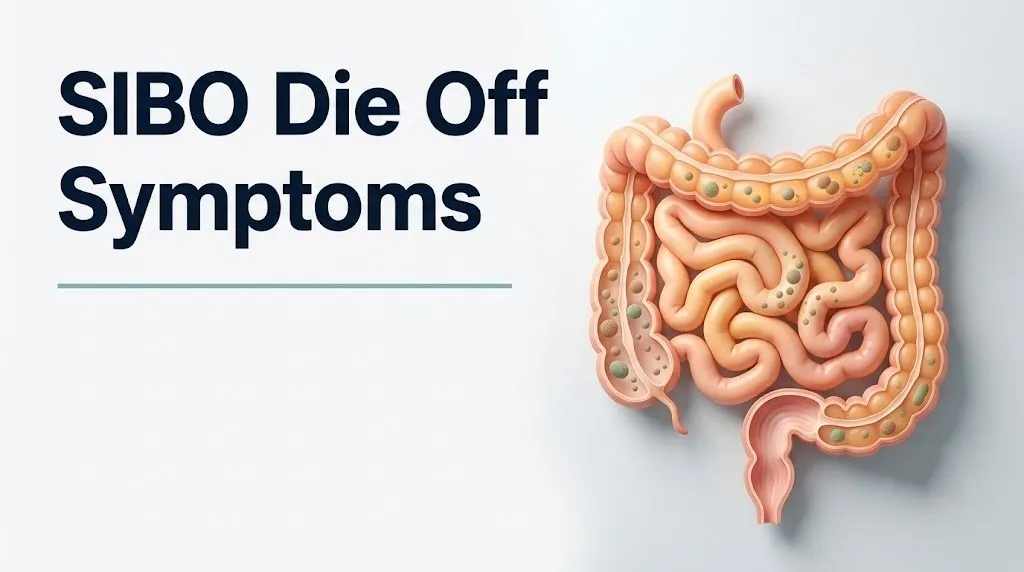
The gastrointestinal symptoms of SIBO die off are the most immediately noticeable and, for most patients, the most distressing, because they feel like the treatment is making the original SIBO symptoms worse rather than better. Worsening bloating, cramping, changes in stool consistency, and increased gas during the first few days of antimicrobial treatment are the most direct local expression of bacterial die-off in the small intestinal lumen.
The bloating worsens for a specific mechanical reason. As bacteria lyse, they release accumulated fermentation gases, including hydrogen and methane, in a final burst before cellular integrity is lost. This gas release happens faster than the intestinal musculature can clear it through the migrating motor complex (MMC), the wave-like contractile pattern that clears the small intestine between meals. The result is a transient but often severe increase in gas pressure and distension in the jejunum and ileum.
Cramping during die-off results from two concurrent processes: direct irritation of the intestinal wall by LPS and bacterial fragments, which activates enteroendocrine cells to release excess serotonin (5-HT) that stimulates smooth muscle contraction; and the increase in mucosal prostaglandin production that heightens intestinal pain sensitivity by lowering the activation threshold of gut nociceptors.
Changes in stool pattern during die-off tend to follow the original SIBO subtype. Hydrogen-dominant SIBO die-off often produces loose stools or diarrhea in the first several days, as the sudden shift in small intestinal bacterial composition alters water reabsorption patterns in the gut lumen. Methane-dominant SIBO (IMO) die-off may paradoxically worsen constipation before improving it, because methane gas itself slows intestinal transit, and the dying archaea release additional methane during lysis.
| Gastrointestinal Symptom | Mechanism | Typical Timing |
|---|---|---|
| Worsening bloating | Gas release from lysing bacteria exceeds MMC clearance | Days 1 to 3 |
| Cramping | Enteroendocrine serotonin release, prostaglandin sensitization | Days 1 to 5 |
| Diarrhea (H2 SIBO) | Altered osmotic gradient, accelerated motility | Days 1 to 4 |
| Worsened constipation (IMO) | Methane from dying archaea slows transit further | Days 2 to 5 |
| Nausea | Vagal afferent stimulation by mucosal inflammation | Days 1 to 3 |
| Increased flatulence | Terminal gas release from bacterial cell lysis | Days 1 to 3 |
SIBO Die Off Fatigue, Brain Fog, and Systemic Symptoms
The fatigue and cognitive symptoms of SIBO die off are among the most alarming to patients because they extend well beyond the gut and can interfere with work, relationships, and daily function at a point when patients are already managing a difficult treatment process. These symptoms are mediated by the systemic circulation of pro-inflammatory cytokines, primarily IL-1beta and IL-6, which cross or signal through the blood-brain barrier via active transport mechanisms and through vagal afferent nerve fibers connecting the gut epithelium to the brainstem.
Brain fog during SIBO die off is not a vague or subjective complaint. It reflects a genuine neuroinflammatory state in which circulating IL-1beta reduces synaptic activity in the prefrontal cortex and hippocampus, the brain regions governing working memory, concentration, and executive function. Research published in Brain, Behavior, and Immunity has found that peripheral IL-1beta elevation consistently reduces cognitive performance measures in human subjects, confirming that the cognitive fog patients describe has a measurable neurobiological basis.
Fatigue during die-off operates through two simultaneous pathways. First, TNF-alpha and IL-6 directly suppress mitochondrial oxidative phosphorylation efficiency in skeletal muscle cells, reducing cellular energy production. Second, the hypothalamic-pituitary-adrenal (HPA) axis is activated by the systemic cytokine load, increasing cortisol output, which in sustained elevation produces the specific quality of fatigue that feels both exhausted and wired simultaneously.
Headache, reported by a substantial proportion of patients during SIBO die off based on clinical practitioner surveys, results from PGE2-mediated cerebrovascular effects, specifically mild dilation of intracranial blood vessels in response to hypothalamic prostaglandin activity, producing a diffuse, pressure-like headache that is typically not positional and does not respond well to position changes.
Quick Tip:
- Brain fog during die-off is typically worst between days 2 and 4 of treatment and begins improving by day 5 to 7 if the die-off is resolving normally.
- Older adults over 65 tend to experience more pronounced cognitive symptoms during systemic inflammatory events because baseline neuroinflammatory tone is already elevated with age; a geriatrician or primary care physician should be informed if cognitive symptoms are severe or persist beyond the expected window.
- Adequate hydration supports hepatic LPS clearance and reduces the duration of systemic cytokine activity.
Methane SIBO Die Off Symptoms
Methane SIBO die off symptoms are distinct from hydrogen-dominant die-off because methane SIBO (now more precisely termed intestinal methanogen overgrowth, or IMO) involves archaea, specifically Methanobrevibacter smithii, rather than true bacteria, and their cellular architecture and metabolic activity differ from gram-negative or gram-positive bacteria in ways that change the die-off symptom profile.
Archaea do not have LPS in their outer membranes. Their cell walls are composed of pseudomurein (similar to peptidoglycan but structurally distinct) and archaeal lipids that are recognized by toll-like receptor 2 (TLR2) rather than TLR4 predominantly. This different receptor pathway produces a somewhat different cytokine profile, with relatively less TNF-alpha and relatively more IL-8 release, which may explain why IMO die-off tends to produce less of the flu-like myalgia seen in hydrogen-dominant die-off and more of the localized GI discomfort and altered motility pattern.
The most characteristic and often most frustrating symptom of methane/IMO die-off is worsened constipation in the first 2 to 5 days of treatment. Methanobrevibacter smithii produces methane gas as a metabolic byproduct, and methane gas has a direct slowing effect on intestinal smooth muscle contractility, as confirmed by research from Dr. Mark Pimentel’s laboratory at Cedars-Sinai Medical Center, published in The American Journal of Gastroenterology. When treatment kills these archaea, they release their accumulated methane stores during lysis before that methane production eventually stops, creating a temporary constipation peak before motility improves.
- Patients treated for IMO with neomycin combined with rifaximin (a commonly used protocol based on Pimentel et al. clinical trial data) may experience die-off symptoms from both the bacterial and archaeal components of their overgrowth, producing a more complex and layered symptom pattern than single-agent treatment.
- Patients with pre-existing slow transit constipation, such as those with gastroparesis or opioid-induced constipation, are at higher risk for severe constipation worsening during IMO die-off and should have this discussed with their gastroenterologist before beginning treatment.
Key Takeaway: Methane SIBO (IMO) die-off involves archaea with different cell wall components, activates TLR2 rather than TLR4, and commonly produces worsened constipation before improvement rather than the diarrhea pattern seen in hydrogen-dominant SIBO die-off.
Hydrogen Sulfide SIBO Die Off Symptoms
Hydrogen sulfide SIBO die off symptoms represent the least understood and most recently recognized SIBO subtype presentation, because hydrogen sulfide SIBO was only formally acknowledged in SIBO research literature in the mid-2010s and reliable breath testing for it remains limited as of 2026. The bacterial species primarily responsible, including Desulfovibrio species and related sulfate-reducing bacteria, produce hydrogen sulfide (H2S) gas rather than hydrogen or methane, creating a distinct symptom profile.
During hydrogen sulfide SIBO treatment, dying Desulfovibrio and other sulfate-reducers release their accumulated H2S and cellular components including LPS (these are gram-negative organisms). The simultaneous release of both LPS (activating TLR4) and H2S (a gasotransmitter with direct effects on intestinal epithelial tight junction integrity and mitochondrial function) produces a die-off picture that tends to include more pronounced intestinal permeability symptoms, systemic inflammatory symptoms, and, anecdotally, more severe neurological complaints than either hydrogen or methane SIBO die-off.
The hallmark GI symptom of hydrogen sulfide SIBO die-off that distinguishes it from other subtypes is increased production of foul-smelling, sulfurous flatulence and, in some cases, darker stools, as H2S combines with iron in the gut lumen. Patients may report a rotten-egg gas odor during die-off that is more intense than their baseline SIBO symptoms.
Neurologically, H2S has direct cellular toxicity at higher concentrations by inhibiting mitochondrial cytochrome c oxidase (Complex IV) in the electron transport chain. At the lower concentrations produced during gut die-off, this mitochondrial effect likely contributes to the more severe fatigue and cognitive symptoms some hydrogen sulfide SIBO patients report during treatment, though this specific mechanism in the context of gut H2S die-off is based on preliminary evidence and clinical observation rather than controlled human trials.
- Standard lactulose breath tests and glucose breath tests do not measure hydrogen sulfide; patients with a flat-line breath test result who still have clinical SIBO symptoms may have the hydrogen sulfide subtype, which requires a three-gas breath test for detection.
- A board-certified gastroenterologist experienced in SIBO subtypes should be involved in treatment planning and monitoring for hydrogen sulfide SIBO, given the complexity of diagnosis and the more intense systemic die-off profile.
SIBO Die Off vs Antibiotic Side Effects: How to Tell the Difference
Distinguishing SIBO die off from direct antibiotic or antimicrobial side effects is one of the most practically important clinical distinctions a patient can make, because the correct response to each is different: die-off typically warrants symptom support and continuation of treatment, while direct side effects may require dose adjustment, antibiotic switching, or discontinuation.
The key differentiating principle is timing and mechanism. True die-off symptoms arise from bacterial lysis products entering circulation and peak within 24 to 72 hours of starting treatment, often beginning within hours of the first dose. They tend to worsen for 2 to 4 days then gradually improve as the bacterial population decreases and the immune response diminishes. Direct antibiotic side effects, such as rifaximin-associated nausea, neomycin-associated diarrhea, or metronidazole-associated metallic taste and peripheral neuropathy with longer-term use, appear more consistently throughout the treatment course rather than peaking and resolving.
| Feature | SIBO Die Off | Antibiotic Side Effect |
|---|---|---|
| Onset | Within hours to 48 hours of starting | May appear anytime during treatment |
| Peak severity | Days 2 to 4 | Consistent throughout course |
| Resolution pattern | Gradually improves by days 5 to 7 | Persists until dose change or discontinuation |
| Fever | Possible (low-grade) | Rare (except drug hypersensitivity) |
| Flu-like symptoms | Common (myalgia, headache, fatigue) | Uncommon |
| GI symptoms | Worsening of existing SIBO symptoms | Often qualitatively different (e.g., metallic taste, drug-induced nausea) |
| Systemic spread | Common | Usually localized to GI or nervous system |
Nausea that begins with the first dose and does not peak or improve is more likely a direct antibiotic effect than die-off. Liver enzyme elevation (elevated ALT, AST) detected on lab work is a medication hepatotoxicity signal, not die-off, and warrants immediate contact with the prescribing physician. A rash appearing with systemic symptoms and rapidly progressive may indicate drug hypersensitivity, not die-off, and requires urgent medical evaluation.
- Patients taking herbal antimicrobials (berberine, allicin, oregano oil) rather than prescription antibiotics still experience die-off but are less likely to experience the specific toxicity patterns associated with prescription antibiotics; however, herbal antimicrobials carry their own hepatotoxicity risks at high doses that should not be dismissed.
SIBO Die Off vs Relapse: When Symptoms Mean Treatment Is Failing
SIBO die off and SIBO treatment failure (relapse or non-response) can produce overlapping symptom patterns, but the clinical trajectory is the essential differentiator: die-off improves with time on treatment, while relapse or non-response produces symptoms that persist, plateau without improvement, or worsen beyond the expected die-off window without any period of symptomatic relief.
The timeline distinction is specific. According to clinical protocols at Cedars-Sinai Medical Center’s GI Motility Program, a true die-off response typically peaks by day 3 to 4 of treatment and shows at least partial improvement by day 7. If symptoms are still worsening at day 7 without any window of improvement, or if symptoms return in full force after a brief period of relief during the same treatment course, treatment failure, antibiotic resistance, or an alternative diagnosis should be seriously considered.
Treatment failure in SIBO can result from antibiotic resistance within the bacterial population, re-inoculation from the colon through an incompetent ileocecal valve, an underlying motility disorder (such as gastroparesis or post-infectious IBS affecting MMC function) that prevents mechanical clearance even after bacterial killing, or structural small bowel problems such as diverticula or adhesions that create protected bacterial niches.
- Patients who have previously undergone multiple courses of SIBO treatment without sustained remission are at higher risk for antibiotic-resistant organisms and should have a gastroenterologist re-evaluate their breath test results and consider alternative treatment protocols rather than repeating the same regimen.
- Patients with Crohn’s disease have structurally altered small bowel anatomy that predisposes to SIBO recurrence; their symptom trajectory during treatment may not follow the standard die-off pattern and requires specialist gastroenterology oversight.
Key Takeaway: If SIBO symptoms are still getting worse at day 7 of treatment without any period of improvement, this is not die-off. Contact your gastroenterologist about possible treatment failure, antibiotic resistance, or an underlying motility problem.
How Long Does SIBO Die Off Last?
SIBO die off typically lasts between 3 and 7 days, with the most intense symptoms peaking between day 2 and day 4 of treatment and gradually resolving as the small intestinal bacterial population decreases and the liver’s Kupffer cells clear the backlog of circulating LPS from portal and systemic circulation.
The 3 to 7 day window reflects the time required for two concurrent processes to resolve: the rate of bacterial lysis (which decreases as the treatment eliminates more of the bacterial load) and the body’s cytokine clearance rate (TNF-alpha has a plasma half-life of approximately 15 to 30 minutes, but IL-6 has a longer half-life and sustained production can maintain symptom intensity for several days). As treatment progresses, fewer bacteria remain to be lysed, LPS input into the system decreases, and cytokine production slows correspondingly.
Some patients, particularly those with the hydrogen sulfide subtype, significant pre-existing intestinal permeability, or high bacterial burden at treatment start, report die-off symptoms extending into days 8 to 10. This is at the outer edge of expected. Symptoms persisting beyond 10 days without any phase of improvement warrant evaluation.
According to clinical observation data from gastroenterology practitioners experienced in SIBO management, patients who begin treatment with a lower-fermentable carbohydrate diet (limiting the substrate available for bacterial fermentation during die-off) tend to experience shorter peak die-off windows, consistent with the hypothesis that reducing bacterial fermentative activity during the die-off period decreases total gas and byproduct release.
| Phase | Typical Days | Expected Pattern |
|---|---|---|
| Onset | Day 1 to 2 | Symptoms begin or worsen shortly after first doses |
| Peak | Day 2 to 4 | Most intense symptoms: bloating, fatigue, headache, myalgia |
| Plateau | Day 4 to 5 | Symptoms stable but not worsening; beginning to tolerate treatment |
| Improvement | Day 5 to 7 | Gradual reduction in intensity |
| Resolution | Day 7 to 10 | Die-off symptoms resolve; original SIBO symptoms may improve |
- Children undergoing SIBO treatment (an off-label pediatric application that requires pediatric gastroenterologist supervision) may experience a shorter die-off window due to faster metabolic clearance rates but may have more pronounced emotional and behavioral changes from cytokine-driven neuroinflammatory effects.
SIBO Die Off Skin Rash and Joint Pain
Skin rash and joint pain during SIBO die off are two of the most alarming symptoms patients report because they suggest the inflammatory response has extended well beyond the gastrointestinal tract, which is precisely correct. Both symptoms result from the systemic distribution of die-off-associated cytokines and inflammatory mediators, particularly histamine released from mast cells activated by LPS and IL-8 driving neutrophil infiltration into peripheral tissues.
The skin rash associated with SIBO die off typically appears as diffuse flushing, scattered hives (urticaria), or a non-specific red blotchy pattern that is more common in patients with concurrent mast cell activation syndrome (MCAS) or histamine intolerance. LPS directly activates mast cells through TLR4 receptors expressed on their surface, triggering degranulation and histamine release into the dermis, producing the urticarial pattern. In patients without MCAS, the rash is typically milder and resolves within 24 to 48 hours as LPS burden decreases.
Joint pain and stiffness during die-off reflect TNF-alpha’s direct action on synovial tissue and the articular surfaces of peripheral joints. TNF-alpha upregulates prostaglandin production in synovial cells and activates local mast cells within joint spaces, producing the achiness and morning stiffness that patients describe as feeling like the flu settled into their joints. This is not joint damage. It is acute, reversible synovial inflammation driven by the cytokine environment.
- Patients with rheumatoid arthritis, psoriatic arthritis, or other autoimmune joint conditions who develop SIBO and undergo treatment should inform both their gastroenterologist and their rheumatologist before beginning antibiotic therapy, as die-off-associated TNF-alpha elevation can transiently worsen their underlying joint disease.
- A diffuse skin rash accompanied by throat tightening, difficulty breathing, or rapidly progressing hives with a racing heart is not die-off. This is anaphylaxis. Call 911 immediately.
SIBO Die Off Anxiety and Neurological Symptoms
Anxiety, mood changes, and neurological symptoms during SIBO die off are mechanistically grounded in the bidirectional communication between the gut immune system and the central nervous system, transmitted primarily through the vagus nerve, through systemic cytokine circulation, and through disruptions to intestinal serotonin production during bacterial die-off.
The vagus nerve carries afferent (sensory) signals from the gut epithelium to the brainstem nucleus tractus solitarius, which then distributes information to limbic system structures including the amygdala (involved in fear and anxiety processing) and the hypothalamus. During SIBO die-off, heightened mucosal inflammatory signaling increases vagal afferent activity, producing increased amygdala activation and the characteristic anxiety, irritability, and sense of unease patients describe that seems disproportionate to the physical symptoms.
Approximately 90% of the body’s serotonin is produced in the intestinal epithelium by enterochromaffin cells, a specialized subtype of enteroendocrine cells. The disruption of the intestinal mucosal environment during bacterial die-off, including changes in mucosal prostaglandin levels, altered bacterial metabolite production, and epithelial inflammation, temporarily disrupts enteroendocrine cell serotonin release patterns. This serotonin disruption does not stay local: gut-derived serotonin signals the enteric nervous system and, through systemic pathways, affects mood and cognitive state.
According to research published in Gastroenterology examining gut-brain interactions during intestinal inflammation, mucosal IL-1beta elevation specifically reduces serotonin transporter expression in the enteric nervous system, prolonging serotonin availability in the gut wall while paradoxically reducing the orderly signaling that depends on precise serotonin timing. The net result is the anxious, unsettled GI-plus-neurological picture patients describe.
- Patients with a history of generalized anxiety disorder or panic disorder should discuss the potential for die-off to transiently worsen anxiety with their prescribing physician before beginning SIBO treatment, as the neurological die-off component may temporarily exacerbate their baseline anxiety in ways that are distressing but not indicative of a psychiatric emergency.
- Patients taking selective serotonin reuptake inhibitors (SSRIs) may experience a modified neurological die-off pattern because SSRIs also affect serotonin transporter activity; their prescribing physician should be aware of SIBO treatment timing.
Key Takeaway: SIBO die off anxiety is not “all in your head.” It is driven by increased vagal afferent activity from gut inflammation and disrupted enteroendocrine serotonin release, both of which are real, measurable physiological events.
Severe SIBO Die Off Symptoms and Red Flags
Severe SIBO die off symptoms are those that exceed the expected inflammatory response of bacterial lysis and enter the territory of either drug toxicity, secondary infection, immune overreaction, or a concurrent serious medical problem that requires prompt professional evaluation. Knowing where that line is, specifically, is the most important safety knowledge a patient undergoing SIBO treatment can have.
The expected die-off response stays within certain physiological boundaries: low-grade fever below 100.4°F (38°C), manageable GI symptoms that do not prevent oral fluid intake, fatigue that is uncomfortable but not incapacitating, and symptoms that follow the expected arc of peaking and improving. When the response crosses outside these boundaries, the clinical picture changes.
Red flag symptoms that warrant prompt contact with your prescribing physician or same-day evaluation by a primary care physician or board-certified gastroenterologist:
- Fever above 101.5°F (38.6°C) that persists beyond 48 hours
- Jaundice (yellowing of the skin or whites of the eyes), or right upper quadrant abdominal pain suggesting liver involvement
- Inability to keep fluids down for more than 12 hours (risk of dehydration and electrolyte imbalance)
- Signs of hepatotoxicity: dark urine, pale stools, nausea with right-sided abdominal pain (particularly with neomycin or herbal antimicrobials at high doses)
- Numbness or tingling in the hands or feet (peripheral neuropathy, particularly associated with metronidazole)
- Neurological symptoms beyond cognitive fog: sudden confusion, difficulty speaking, vision changes
- Rash with systemic symptoms that is rapidly spreading or blistering
- Blood in stool
Symptoms that require emergency evaluation immediately:
- Chest pain or shortness of breath alongside GI symptoms
- Signs of anaphylaxis: throat swelling, difficulty breathing, rapidly spreading hives with racing heart rate
- Sudden severe abdominal pain that is different in character from previous cramping
- Inability to stay conscious or orient to surroundings
Emergency Symptoms: When to Call 911 or Go to the ER
Certain symptoms during SIBO treatment can represent a life-threatening emergency that requires immediate evaluation. Do not wait to see if these resolve on their own.
Call 911 or go to the nearest emergency room immediately if you experience:
- Throat swelling, difficulty swallowing, or difficulty breathing alongside a skin reaction (anaphylaxis, a medical emergency requiring epinephrine)
- Chest pain or shortness of breath not explained by anxiety (possible cardiac event or pulmonary involvement requiring emergency assessment)
- Sudden severe abdominal pain that is qualitatively different from known SIBO cramping (possible perforation, bowel obstruction, or other acute abdominal emergency)
- Loss of consciousness, unresponsiveness, or acute confusion (possible severe systemic infection or neurological emergency)
- Signs of severe dehydration with inability to maintain consciousness or urinate for more than 8 hours
These presentations can indicate systemic sepsis, anaphylaxis, hepatic failure, or an acute abdominal emergency, and require emergency medical assessment, not an urgent care appointment or a phone call.
Who Experiences Worse SIBO Die Off: Individual Variation
The severity of SIBO die off symptoms varies substantially between individuals, and that variation is not random. It is predicted by identifiable biological and clinical factors that determine how much bacterial lysis product enters circulation, how efficiently the liver clears it, and how sensitively the immune system responds to the TLR4 and TLR2 signals from dying organisms.
Individuals who experience worse SIBO die off tend to have a higher bacterial burden at treatment start (greater volume of dying bacteria means more LPS and peptidoglycan released), pre-existing increases in intestinal permeability (more paracellular LPS passage into portal circulation before hepatic clearance), concurrent mast cell activation syndrome (MCAS) (mast cells are exquisitely sensitive to LPS-mediated degranulation, amplifying histamine and PGE2 release), or a history of autoimmune conditions (pre-activated immune baselines amplify the cytokine response to new inflammatory triggers).
| Risk Factor | How It Amplifies Die-Off | Who Is Affected |
|---|---|---|
| High bacterial burden | More LPS released per unit time | Severe or long-standing SIBO |
| Increased intestinal permeability | More LPS reaches systemic circulation | History of celiac disease, IBD, chronic NSAID use |
| Mast cell activation syndrome | LPS-driven mast cell degranulation amplified | MCAS or histamine intolerance diagnosis |
| Liver dysfunction | Reduced Kupffer cell LPS clearance | Fatty liver disease, alcohol use, hepatic disease |
| Immunosuppression | Blunted but potentially dysregulated response | Organ transplant recipients, autoimmune medications |
| Female sex, reproductive years | Higher estrogen amplifies IL-6 production | Cycling females in follicular/ovulatory phase |
- Patients with a history of Lyme disease (which also involves the Jarisch-Herxheimer reaction during antibiotic treatment) may be more familiar with die-off symptom patterns and more psychologically prepared, but they are also potentially sensitized to systemic inflammatory responses in ways that produce more severe die-off with SIBO treatment.
- Older adults may experience more pronounced cognitive symptoms during die-off because of baseline elevation in systemic inflammatory markers (inflammaging) that amplifies the IL-1beta neuroinflammatory effect.
How to Manage SIBO Die Off Symptoms
Managing SIBO die off symptoms is a matter of supporting the body’s natural LPS clearance mechanisms, reducing unnecessary additional inflammatory inputs, and maintaining the physiological conditions that allow treatment to continue without causing distress severe enough to require stopping. None of these strategies require supplements, and none of them should replace the guidance of the gastroenterologist or physician managing the SIBO treatment.
To support the body during SIBO die off:
- Maintain adequate hydration: aim for at least 8 to 10 cups of plain water or electrolyte-containing fluid daily, as hydration directly supports hepatic blood flow and Kupffer cell efficiency in clearing portal LPS. Dehydration increases LPS concentration in portal circulation and prolongs systemic exposure.
- Reduce fermentable carbohydrate intake during the die-off peak (days 1 to 5): limiting substrate available for any remaining bacteria reduces fermentation gas production and decreases the volume of byproducts released during ongoing lysis. A simple low-FODMAP or low-carbohydrate dietary approach during this window is clinically reasonable.
- Prioritize rest during the peak phase: systemic cytokine activity genuinely impairs mitochondrial energy production; pushing through physical activity during the TNF-alpha and IL-6 peak increases oxidative stress and prolongs the inflammatory state.
- Take antimicrobials exactly as prescribed: partial dosing in an attempt to reduce die-off severity may actually prolong the symptom period by creating a slower, drawn-out bacterial lysis curve rather than a rapid, focused die-off peak followed by resolution.
- Contact your prescribing physician before adjusting or stopping treatment: if symptoms are severe enough that you are considering stopping, that conversation should happen with the physician managing your care, not as an independent decision made based on symptom intensity alone.
According to clinical guidelines from the American College of Gastroenterology, patients undergoing SIBO treatment should have follow-up breath testing scheduled approximately 4 weeks after completing treatment to confirm eradication, not during the treatment period when die-off symptoms are present, as mid-treatment breath tests do not accurately reflect final treatment efficacy.
- Pregnant individuals should not undertake SIBO treatment, including herbal antimicrobial protocols, without explicit guidance from an obstetrician-gynecologist and gastroenterologist, as many antimicrobial agents used for SIBO have pregnancy safety restrictions and die-off management strategies require modification for pregnancy.
- Patients with chronic kidney disease should have fluid intake guidance tailored by their nephrologist, as aggressive hydration recommendations standard for die-off management may conflict with fluid restriction requirements in advanced kidney disease.
Key Takeaway: The most evidence-consistent approach to managing SIBO die off is to maintain hydration, reduce fermentable carbohydrate intake during the peak phase, rest, and take the prescribed treatment exactly as directed; stopping treatment early because die-off is uncomfortable is a common reason SIBO treatment fails to achieve complete eradication.
Frequently Asked Questions About SIBO Die Off Symptoms
What does SIBO die off feel like?
SIBO die off feels like a sudden worsening of existing GI symptoms combined with flu-like systemic effects including fatigue, headache, muscle aching, and cognitive fog.
The GI component typically includes intensified bloating, cramping, and changes in stool pattern, while the systemic component reflects the cytokine cascade triggered by LPS from lysing bacteria activating TLR4 receptors on intestinal macrophages.
The combination is often described as “worse than the SIBO itself” for 2 to 4 days, which is an accurate description of an acute but temporary systemic inflammatory response.
How do I know if it’s die off or my treatment isn’t working?
Die-off peaks within 2 to 4 days of starting treatment and begins improving by day 5 to 7, even if imperfectly; treatment failure shows no improvement window and symptoms either plateau or continue worsening beyond day 7.
A brief period of feeling worse followed by gradual improvement is the expected arc of die-off, while persistent worsening with no relief after the first week is the expected arc of non-response.
Contact a board-certified gastroenterologist if symptoms show no sign of improvement after 7 full days of treatment.
Can SIBO die off cause a fever?
SIBO die off can cause a low-grade fever, typically below 100.4°F (38°C), produced when IL-1beta activates COX-2 in the hypothalamus to raise prostaglandin E2 levels and shift the body’s temperature set point upward.
A fever above 101.5°F (38.6°C) that persists beyond 48 hours is not within the expected range of die-off and warrants same-day contact with the prescribing physician or evaluation at a primary care practice.
Fever accompanied by chills, jaundice, right upper quadrant pain, or inability to keep fluids down requires prompt in-person medical evaluation.
How long does SIBO die off last?
SIBO die off typically lasts 3 to 7 days, peaking in intensity between days 2 and 4 and showing gradual improvement by day 5 to 7 as bacterial burden decreases and hepatic LPS clearance catches up with reduced input.
Patients with the hydrogen sulfide SIBO subtype, high baseline bacterial burden, or concurrent intestinal permeability issues may experience die-off extending to 8 to 10 days.
Symptoms persisting beyond 10 days without any period of improvement are outside the expected die-off window and should be evaluated by the treating gastroenterologist.
Is SIBO die off a sign the treatment is working?
SIBO die off is widely interpreted as a sign that bacterial killing is occurring, because the LPS and peptidoglycan that drive die-off symptoms are structural components of the bacteria being eliminated.
However, the absence of die-off symptoms does not mean treatment is not working: some patients have bacterial populations with cell wall compositions that produce less LPS signal, or have more efficient hepatic LPS clearance, and experience minimal die-off while achieving full bacterial eradication.
The definitive confirmation that treatment worked is a follow-up breath test, not the presence or absence of die-off symptoms during treatment.
Should I stop my SIBO treatment if die off symptoms are bad?
Stopping SIBO treatment early because die-off symptoms are uncomfortable is one of the most common reasons SIBO treatment fails to achieve complete eradication and leads to rapid relapse.
If die-off symptoms are within the expected range (manageable GI worsening, fatigue, headache, mild fever) and follow the expected timeline of peaking by day 4 and improving by day 7, continuing treatment while managing symptoms supportively is the appropriate course.
If symptoms are severe (fever above 101.5°F, inability to keep fluids down, signs of liver involvement, or neurological changes beyond mild fog), contact the prescribing physician before stopping, as they may adjust the dose, timing, or protocol rather than simply discontinuing.
Closing
The single most clarifying piece of clinical information in this entire article is the distinction between the three things that feel similar during SIBO treatment but are not: true die-off from bacterial lysis, direct medication side effects, and treatment failure. Getting that distinction right determines whether you continue treatment, adjust it, or seek evaluation, and it is a distinction that requires knowing what your symptoms are doing over time, not just what they feel like on a single day.
If you are in the first 3 to 5 days of SIBO treatment and experiencing a cluster of worsening GI symptoms alongside fatigue, headache, and cognitive fog, that is the expected inflammatory response. Monitor its trajectory. If it peaks and begins to ease by day 5 to 7, the timeline is consistent with die-off.
If it does not ease, or if any symptom crosses a red flag threshold, contact the board-certified gastroenterologist or prescribing physician managing your SIBO treatment promptly. A follow-up breath test 4 weeks after completing treatment, not during it, is the evidence-based standard for confirming whether eradication was successful.