Camshaft Sensor Symptoms: Health Risks for Drivers 2026
Camshaft sensor symptoms are recognized in automotive contexts as mechanical warning signs, but on a health website, what matters is what those symptoms do to the people inside the vehicle when they occur. Engine stalling on a highway, sudden loss of power in traffic, or unexpected engine shutdown are not just repair problems. They are acute physiological and psychological stress events that can cause measurable harm to the human body.
The Centers for Disease Control and Prevention (CDC) identifies motor vehicle crashes as a leading cause of injury death in the United States, with mechanical vehicle failure contributing to a proportion of those events annually. The National Highway Traffic Safety Administration (NHTSA) documents engine-related failures, including those caused by sensor malfunction leading to stall or loss of control, as a category of reported safety defects linked to crashes and occupant injuries.
This article covers what actually happens to your body when a camshaft sensor fails while you’re driving, the acute physiological stress cascade, the injury patterns from associated crashes, the cardiovascular risks, the psychological consequences, and exactly when physical or psychological symptoms require emergency or clinical evaluation.
Camshaft Sensor Symptoms and Their Health Consequences
Camshaft sensor symptoms and their health consequences arise when a failing camshaft position sensor (CMP sensor) causes engine misfires, stalling, or sudden loss of power, creating the conditions for acute physiological stress, traumatic injury, and lasting psychological harm to vehicle occupants.
The CMP sensor monitors the rotational position of the camshaft relative to the crankshaft and transmits this data to the engine control module (ECM). When it fails, the ECM loses the timing reference it needs to control fuel injection and ignition. The engine misfires, stumbles, stalls, or fails to start. Any of these events, occurring without warning in traffic or at highway speed, produces an immediate threat perception in the driver’s brain.
The human brain does not distinguish between a perceived threat and a confirmed physical danger. When an engine unexpectedly stalls in an intersection or on a highway, the amygdala (the brain’s threat detection center in the medial temporal lobe) fires within milliseconds and activates emergency physiological response systems. The driver’s body begins responding before they have consciously processed what is happening.
Health consequences that follow camshaft sensor failure events fall into three categories, each with distinct clinical significance:
| Category | Mechanism | Timeframe | Who Is Most at Risk |
|---|---|---|---|
| Acute stress physiological response | HPA and SAM axis activation, catecholamine surge | Seconds to minutes | People with cardiovascular disease, diabetes, anxiety disorders |
| Traumatic physical injury (if crash occurs) | Kinetic energy transfer to cervical spine, brain, thorax, lumbar spine | Milliseconds to seconds at impact | Elderly drivers, unbelted occupants, pregnant women |
| Psychological sequelae | Amygdala hyperactivation, memory consolidation, avoidance learning | Days to months after event | People with prior trauma, anxiety disorders, women |
People over age 65 face elevated risk across all three categories because their cardiovascular reserve is reduced, their bone density is lower (increasing fracture risk in crashes), and their psychological resilience to acute trauma may be reduced by pre-existing cognitive changes or prior adversity.
Bad Camshaft Position Sensor Symptoms: The Driver Safety Picture
Bad camshaft position sensor symptoms create a specific driver safety profile because the mechanical failures they produce, particularly unexpected stalling and engine misfires, occur without the driver’s ability to anticipate or prepare for them.
A driver who experiences a sudden engine stall at highway speed faces a rapidly evolving emergency. The power steering and brake booster, which rely on engine vacuum in most conventional vehicles, lose their assisted function. Steering becomes heavier. Braking requires significantly more pedal force. The driver must simultaneously manage the vehicle’s coasting deceleration, attempt to restart the engine or signal for help, and avoid rear-end collision from following traffic.
This multi-demand situation taxes the prefrontal cortex (the brain region responsible for executive function, decision-making, and inhibition of panic responses) at exactly the moment when the sympathetic nervous system is flooding the body with epinephrine and norepinephrine. Research in cognitive neuroscience, including studies cited by the National Institute of Mental Health (NIMH), has documented that acute stress and catecholamine release impair prefrontal cortical function, reducing a person’s ability to make calm, sequential decisions under pressure.
The safety consequence of this neurological dynamic is that drivers in engine failure situations are simultaneously facing a complex mechanical emergency and experiencing neurological impairment of their decision-making capacity from their own acute stress response.
Key physical warning signs that occur during or immediately after a CMP sensor failure event:
- Sudden increase in heart rate (tachycardia), often perceived as pounding heart or racing pulse
- Rapid, shallow breathing (hyperventilation) producing tingling in the hands and feet from respiratory alkalosis
- Trembling or shaking in the hands, caused by catecholamine-driven muscle tension
- Cold or clammy skin as peripheral blood vessels constrict to redirect blood to the heart and brain
- Sudden nausea from gut motility changes driven by sympathetic suppression of the parasympathetic digestive system
- Visual narrowing or tunnel vision from pupillary dilation and cortical focus on the threat
Women, on average, mount a stronger emotional memory consolidation response to acute stress events than men per research published in Psychoneuroendocrinology, possibly related to estrogen’s amplifying effect on amygdala consolidation of fear memories. This may contribute to higher rates of driving phobia following vehicle emergencies in female drivers.
Bad Camshaft Sensor Symptoms: What Your Body Experiences
Bad camshaft sensor symptoms, from the perspective of what the driver’s body physically experiences, begin with the acute catecholamine surge and progress through a physiological recovery arc that can take hours to days depending on the severity of the event and the person’s baseline health.
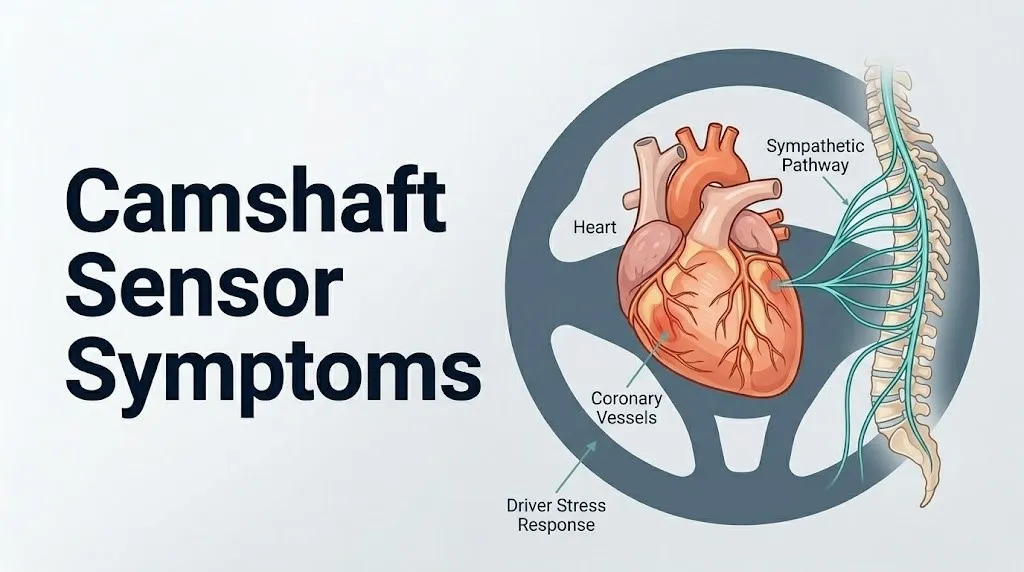
The initial physiological experience during an engine failure event is dominated by the sympathetic-adrenal-medullary (SAM) axis response. The adrenal medulla, located at the center of each adrenal gland sitting atop the kidneys, releases epinephrine (adrenaline) and norepinephrine directly into the bloodstream within seconds of the perceived threat. Epinephrine increases heart rate (positive chronotropic effect) and myocardial contractility (positive inotropic effect) through beta-1 adrenergic receptor activation on the heart. Heart rate can increase from a resting rate of 70 beats per minute to over 130 beats per minute within 30 to 60 seconds of acute threat perception.
Think of the SAM axis response like a car’s turbocharger engaging unexpectedly. Everything about the engine’s output increases dramatically in seconds: power, heat, fuel consumption, mechanical stress. The body produces the same sudden surge of output, and just as a turbocharged engine running at full boost for an extended period generates wear, the body sustains physiological stress from prolonged catecholamine exposure.
The HPA axis response takes longer to peak. Cortisol from the adrenal cortex reaches maximum blood levels 20 to 30 minutes after the acute stressor. Cortisol mobilizes glucose from hepatic glycogen stores (glycogenolysis), raising blood glucose. It temporarily suppresses immune function via glucocorticoid receptor activation on lymphocytes and macrophages. It amplifies the cardiovascular system’s sensitivity to circulating epinephrine.
Physical body experiences in the first 60 minutes after a camshaft sensor failure driving emergency:
- Heart pounding for 10-30 minutes even after the vehicle has stopped safely
- Feeling physically exhausted after the event resolves (post-adrenaline fatigue, as epinephrine levels fall)
- Mild headache from blood pressure elevation and cerebral vasodilation during the stress response
- Muscle stiffness in the neck and shoulders from sustained isometric muscle tension during the driving emergency
- Dry mouth and reduced saliva from sympathetic suppression of salivary gland secretion
- Difficulty sleeping that night from residual cortisol elevation impairing the normal nocturnal cortisol decline
People with type 2 diabetes face a specific risk from the cortisol-mediated blood glucose rise during a driving emergency. The cortisol-induced hepatic glycogenolysis can raise blood glucose substantially in diabetic individuals, particularly those with poor baseline glycemic control, potentially triggering hyperglycemic symptoms on top of the acute stress response.
Key Takeaway: The body’s response to a camshaft sensor failure driving emergency is not just emotional. It is a full physiological cascade involving epinephrine, norepinephrine, and cortisol that produces measurable cardiovascular, metabolic, and neurological changes lasting minutes to hours.
Engine Stalling Symptoms and Acute Physiological Stress Response
Engine stalling symptoms from a camshaft sensor failure trigger the body’s acute physiological stress response within seconds, activating the hypothalamic-pituitary-adrenal (HPA) axis and the sympathetic nervous system simultaneously through the brain’s threat perception pathway.
The neurological sequence begins in the amygdala, located in the medial temporal lobe of each cerebral hemisphere. The amygdala receives rapid, low-resolution sensory input from the thalamus (the “quick and dirty” pathway) and slower, higher-resolution input from the sensory cortex. The thalamo-amygdala pathway fires first, before the driver has consciously processed the situation, already activating the hypothalamic stress response.
The hypothalamus, specifically the paraventricular nucleus, releases corticotropin-releasing hormone (CRH) in response to the amygdala’s threat signal. CRH reaches the anterior pituitary gland via the hypothalamic-pituitary portal blood system within seconds. The anterior pituitary responds by releasing adrenocorticotropic hormone (ACTH) into the systemic circulation. ACTH reaches the adrenal cortex and stimulates cortisol synthesis and release within 10 to 30 minutes.
This entire sequence is the physiological infrastructure of what people describe as “my heart was pounding and I felt shaky for a long time afterward.” It is not psychological weakness. It is a hardwired neurobiological response that evolved for genuine physical emergencies and is triggered by modern vehicle emergency events with the same intensity.
The acute stress response symptoms during engine stalling:
| Symptom | Physiological Mechanism | Typical Duration |
|---|---|---|
| Racing heartbeat | Beta-1 adrenergic receptor activation by epinephrine | 10-40 minutes |
| Trembling or shaking | Muscle catecholamine receptor activation | 10-30 minutes |
| Hyperventilation | Sympathetic drive increasing respiratory rate | 5-20 minutes |
| Tingling in hands and feet | Respiratory alkalosis from CO2 washout | 5-15 minutes |
| Cold sweating | Eccrine sweat gland activation with peripheral vasoconstriction | 5-20 minutes |
| Post-event exhaustion | Epinephrine metabolic depletion and cortisol fatigue | 1-4 hours |
Older adults over age 65 have a reduced ability to clear catecholamines from the bloodstream efficiently, because the beta-adrenergic receptor sensitivity and density change with age, and hepatic clearance of epinephrine slows. This means the physiological stress response to a driving emergency may last longer in older drivers and produce a more prolonged period of elevated heart rate and blood pressure.
Bad Cam Position Sensor Symptoms and Cardiovascular Health Risks
Bad cam position sensor symptoms create cardiovascular health risks for drivers because the acute catecholamine surge produced during engine failure events places sudden, substantial demand on the heart and vascular system, a demand that healthy hearts can meet but compromised ones may not.
The cardiovascular effects of acute stress from an engine failure event are well-documented in the cardiology literature. Research published in Circulation, the journal of the American Heart Association, has found that acute emotional and physiological stress can trigger takotsubo cardiomyopathy (also called stress cardiomyopathy or “broken heart syndrome”), a condition in which sudden catecholamine surge causes transient left ventricular dysfunction. The condition occurs predominantly in postmenopausal women and is triggered by acute emotional or physical stressors. While an engine failure event alone may not be severe enough to trigger this in most people, it is a documented trigger category.
For people with known coronary artery disease (CAD), the catecholamine surge from a driving emergency can trigger demand ischemia: the increased heart rate and myocardial contractility driven by epinephrine and norepinephrine increase the oxygen demand of the heart muscle. If a coronary artery is already narrowed by atherosclerotic plaque, the increased demand may exceed the blood supply capacity at that narrowing, producing myocardial ischemia (angina) or, in severe cases, acute myocardial infarction (heart attack).
Cardiovascular symptoms during or after a driving emergency that require same-day emergency evaluation:
- Chest pain or pressure during or within 30 minutes after the engine failure event
- Shortness of breath at rest or with minimal exertion
- Palpitations that feel irregular, not just fast
- Lightheadedness or near-fainting after the event
- Pain radiating to the jaw, left arm, or back following the stress event
People taking beta-blockers for hypertension or heart disease face a specific nuance. Beta-blockers blunt the heart rate increase during the sympathetic response but do not block the vasoconstrictive effects of norepinephrine on alpha-1 adrenergic receptors. In a beta-blocked person, the epinephrine surge from a driving emergency may paradoxically cause a greater blood pressure rise (unopposed alpha-1 vasoconstriction) without the usual heart rate warning sign.
The Sympathetic Nervous System Response to Engine Failure Events
The sympathetic nervous system response to engine failure events is the physiological mechanism connecting a mechanical camshaft sensor failure to every major health symptom a driver experiences: the racing heart, the shaking hands, the pale sweating face, and the physical exhaustion that follows.
The sympathetic nervous system originates in the lateral horn gray matter of the thoracic and upper lumbar spinal cord (T1 through L2). Its preganglionic fibers exit the spinal cord through the ventral roots, travel to the paravertebral sympathetic chain ganglia (a bilateral chain of 22-24 ganglia running alongside the vertebral column from the cervical to the sacral level), and synapse there or in collateral ganglia. Post-ganglionic fibers then reach target organs, including the heart, blood vessels, sweat glands, adrenal medulla, pupils, and digestive tract.
During an engine failure driving emergency, the sympathetic system activates all of these pathways simultaneously. The heart rate and contractility increase. The pupils dilate, sharpening distance vision. Bronchial smooth muscle relaxes, increasing airway diameter for higher oxygen delivery. Intestinal motility reduces as blood is redirected away from the gut to the skeletal muscles and heart. The liver releases glucose from glycogen. The spleen contracts, releasing stored red blood cells to increase oxygen-carrying capacity.
This is not a partial response. It is a full-body physiological mobilization that redirects resources to physical threat response. For the 60-second duration of managing an engine stall on a highway, this response is adaptive. For someone with pre-existing heart disease, high blood pressure, or an anxiety disorder, the same response can become pathological.
People with generalized anxiety disorder (GAD) have a documented baseline of elevated sympathetic tone and HPA axis reactivity per research published in Psychoneuroendocrinology. A driving emergency in a person with GAD can produce a more intense and longer-lasting acute stress response than in a person without an anxiety disorder, increasing the risk of panic attack during the emergency and the development of specific driving phobia afterward.
Key Takeaway: The sympathetic nervous system’s response to a driving emergency is a total-body mobilization that is adaptive for most people but becomes a cardiovascular or psychiatric risk for people with pre-existing heart disease, hypertension, or anxiety disorders.
Whiplash and Cervical Spine Injury From Engine Stall Rear-End Crashes
Whiplash-associated disorder (WAD) is the most common physical injury following rear-end motor vehicle collisions, and it is directly relevant to camshaft sensor failure events because a stalled vehicle on a highway or at a traffic stop creates the exact scenario, a stationary or slow-moving vehicle struck from behind, that produces the highest whiplash injury rates.
The biomechanics of whiplash in rear-end impact involve a specific cervical spine injury sequence. At impact, the vehicle seat and thorax accelerate forward suddenly. The head, which has inertia and does not move instantly with the body, initially stays behind relative to the moving thorax. This produces a forceful hyperextension of the cervical spine, with the lower cervical segments extending while the upper segments flex, creating an S-shaped deformity in the cervical spine that occurs in the first 50-75 milliseconds of impact, before the driver can react. The subsequent forward rebound of the head produces cervical hyperflexion.
The structures most susceptible to injury in this sequence are the zygapophyseal (facet) joints at C2-C3 through C5-C6 levels, the anterior longitudinal ligament, the cervical intervertebral discs (most often at C4-C5 and C5-C6), and the sternocleidomastoid and anterior scalene muscles, which are stretched beyond their elastic range during the hyperextension phase. Research published in Spine journal has documented that facet joint injury is the single most common source of chronic pain following whiplash, with facet joint cartilage and capsular ligament damage detectable on advanced imaging in a proportion of symptomatic patients.
Physical symptoms of whiplash-associated disorder following a rear-end crash from engine stall:
- Neck pain and stiffness, typically developing 6-24 hours after the crash rather than immediately
- Headache arising from the upper cervical region (C1-C3 facet joint and suboccipital muscle irritation), often described as starting at the base of the skull
- Restricted range of motion in the cervical spine, particularly rotation and lateral flexion
- Arm tingling or numbness in the C5, C6, or C7 dermatomal distribution, suggesting nerve root involvement
- Shoulder blade pain from referred pain via the dorsal scapular nerve
Women report higher severity and longer duration of whiplash symptoms than men after comparable crash forces per epidemiological studies cited in the Spine journal literature. Proposed mechanisms include smaller cervical muscle mass providing less protection, smaller vertebral body dimensions, and possible sex-based differences in pain sensitivity.
Traumatic Brain Injury Patterns in Sensor-Failure-Related Crashes
Traumatic brain injury (TBI) is a documented health consequence of motor vehicle crashes, and crashes caused by engine sensor failure present specific TBI risk patterns depending on the crash type: rear-end impact (stationary stalled vehicle struck), intersection collision (engine stall blocking intersection), or loss-of-control crash (engine failure at highway speed).
The CDC reports that motor vehicle crashes are among the leading causes of TBI in the United States across all age groups, with moderate to severe TBI producing long-term neurological disability in a significant proportion of survivors. Even mild TBI (concussion) produces a constellation of symptoms that affect daily functioning for days to weeks in most people and months to years in a subset.
The brain injury mechanism in motor vehicle crashes involves translational and rotational acceleration of the brain within the skull. At impact, the brain, suspended in cerebrospinal fluid within the rigid skull, accelerates differently from the skull. The brain’s front surface strikes the inner surface of the skull at the impact point (coup injury), while the opposite surface strikes the skull’s inner surface on rebound (contrecoup injury). Rotational forces stretch and shear axonal fibers throughout the white matter, producing diffuse axonal injury (DAI), the substrate of prolonged cognitive symptoms after concussion.
Symptoms of TBI following a crash associated with camshaft sensor failure:
- Loss of consciousness at the time of the crash (any duration requires emergency evaluation)
- Post-traumatic amnesia: the person cannot recall the crash or the events immediately before it
- Persistent headache that is present on waking or that worsens with cognitive activity
- Cognitive symptoms: difficulty concentrating, word-finding problems, slowed processing speed
- Balance difficulty or ataxia: cerebellar and vestibular pathway involvement
- Vision disturbance: blurred vision, difficulty tracking, light sensitivity
- Emotional lability: irritability, crying spells, emotional dysregulation in the days after the crash
The Glasgow Coma Scale (GCS) is the standardized clinical tool emergency medicine physicians use to quantify consciousness level at the scene or emergency department. A GCS score of 13-15 indicates mild TBI; 9-12 indicates moderate TBI; 8 or below indicates severe TBI requiring neurosurgical evaluation.
Older adults (over age 65) face higher TBI severity from equivalent crash forces because cerebral atrophy with age creates greater brain movement within the skull during impact, and anticoagulant or antiplatelet medications, widely used in this age group for cardiovascular disease, increase the risk of intracranial hemorrhage following even minor head impacts.
Key Takeaway: Any loss of consciousness, post-traumatic amnesia, or persistent headache following a crash associated with engine failure requires emergency medicine evaluation, because these symptoms can indicate traumatic brain injury that worsens over hours if undetected.
Lumbar and Thoracic Spine Injuries in Vehicle Mechanical Failure Crashes
Lumbar and thoracic spine injuries in vehicle mechanical failure crashes occur through compression, flexion-extension, and lateral loading forces that act on the lumbar vertebrae (L1-L5) and thoracic vertebrae (T1-T12) of seat-belted occupants during high-force impacts.
The lap belt, while preventing ejection (which dramatically reduces fatality risk), concentrates restraint force across the anterior iliac crests and lower abdomen during a frontal or rear impact. In high-speed impacts, the torso pivots over the restrained pelvis in a flexion motion, applying significant compressive and shear forces to the lumbar spine, particularly the L1-L4 vertebral bodies and their intervening intervertebral discs. Vertebral compression fractures can occur in this mechanism, most commonly at the thoracolumbar junction (T12-L1), the transition between the rigid thoracic spine (stabilized by the rib cage) and the more mobile lumbar spine.
The erector spinae muscle group (comprising the iliocostalis, longissimus, and spinalis muscles running bilaterally along the posterior spine from the sacrum to the cervical region) sustains eccentric loading during the sudden forward flexion of crash impact. The resulting muscle strain produces delayed-onset lower back pain similar in character to severe muscle soreness, typically developing 12-48 hours after the crash and lasting days to weeks.
Thoracic injuries in vehicle crashes include rib fractures from seatbelt contact, pneumothorax (collapsed lung from rib fracture penetrating the pleural space), and, in high-speed frontal impacts, traumatic aortic injury (a deceleration injury to the thoracic aorta at the aortic isthmus, where the mobile descending aorta is tethered by the ligamentum arteriosum). Traumatic aortic injury is a surgical emergency with high mortality if not recognized and treated promptly.
People with osteoporosis or osteopenia, including postmenopausal women and older men, sustain vertebral compression fractures from crash forces that would not fracture healthy bone. A person in this category who has been in any crash associated with engine failure should be evaluated by an emergency medicine physician with spinal imaging, even if pain seems mild initially, because osteoporotic vertebral fractures can be present without severe initial pain.
PTSD and Acute Stress Disorder After Driving Near-Miss Events
Post-traumatic stress disorder (PTSD) and acute stress disorder (ASD) are recognized clinical outcomes following motor vehicle accidents and near-miss events, including those caused by camshaft sensor failure, because the brain’s threat and memory systems process these events as life-threatening experiences regardless of whether a crash actually occurred.
The DSM-5 Criterion A for PTSD and ASD requires that the person has been exposed to actual or threatened death, serious injury, or sexual violence. A sudden engine stall on a highway with following traffic bearing down, or engine failure in an intersection with crossing traffic, meets this criterion in the legal and clinical sense: the event presented a genuine risk of death or serious injury. The psychological and neurological processing of the event follows the same pathway as other trauma types.
Research published in the Journal of Traumatic Stress has documented that motor vehicle accidents are among the most common trauma types leading to PTSD in civilian populations in the United States, accounting for a substantial proportion of community PTSD cases. Studies have found that approximately 9-14% of motor vehicle accident survivors develop full PTSD, with higher rates in people with prior trauma histories, female sex, and those with greater peri-traumatic emotional response.
ASD symptoms appear within three days to one month of the traumatic event. PTSD is diagnosed when symptoms persist beyond one month. Both conditions share the same core symptom clusters:
- Re-experiencing: intrusive memories, nightmares, and flashbacks of the event
- Avoidance: deliberate avoidance of driving, of the road where the event occurred, or of any reminder
- Negative alterations in cognition or mood: persistent negative beliefs (“driving is always dangerous”), emotional numbing, estrangement from others
- Hyperarousal: exaggerated startle response to car sounds or traffic, difficulty sleeping, hypervigilance while riding in vehicles
The PCL-5 (PTSD Checklist for DSM-5) is the validated clinical tool used by primary care physicians and mental health providers to screen for PTSD in people who have experienced a potentially traumatic event. A person with scores suggesting clinical PTSD should be evaluated by a psychiatrist or licensed psychologist trained in trauma-focused therapies.
Panic Attacks and Driving Phobia From Unexpected Engine Failure
Panic attacks and driving phobia are two related but distinct psychological outcomes that can develop after unexpected engine failure while driving, and both can substantially impair a person’s daily functioning and quality of life.
A panic attack is an abrupt surge of intense fear or discomfort that reaches its peak within minutes, accompanied by at least four physical symptoms: palpitations, sweating, trembling, shortness of breath, chest pain, nausea, dizziness, numbness, or feelings of unreality or detachment. During an engine failure event, the acute sympathetic stress response produces many of these physical sensations, and in susceptible individuals, the brain can interpret these physical sensations as evidence of catastrophic medical emergency rather than as the normal stress response they actually are. This misinterpretation fuels a panic attack cycle.
After a frightening engine failure event, driving phobia (classified in the DSM-5 as a specific phobia, situational type, code F40.298) can develop through the mechanism of conditioned fear: the driving context becomes associated with the fear experienced during the event, and subsequent exposure to driving (or even the thought of driving) triggers a fear response disproportionate to the actual risk. The person begins avoiding driving, which reduces short-term distress but strengthens the phobia through negative reinforcement.
Research published in Behaviour Research and Therapy has found that approximately 25-33% of people who develop PTSD following motor vehicle accidents also develop clinically meaningful driving avoidance, and a subset develop full driving phobia meeting DSM-5 criteria. This is not a character weakness. It is a learned neurological association between a stimulus (driving) and a fear response, mediated by the amygdala’s associative learning pathways.
People with a prior history of panic disorder or specific phobia are at elevated risk of developing driving phobia following an engine failure event, because their amygdala’s threat detection threshold is already sensitized. A primary care physician evaluating anxiety after a driving emergency should ask specifically about driving avoidance and fear of recurrence to screen for developing phobia before it becomes entrenched.
Cardiovascular Emergency Risk During and After Engine Failure Events
Cardiovascular emergency risk during and after engine failure events is highest in drivers with known coronary artery disease, hypertension, heart failure, or arrhythmia, because the acute catecholamine surge from the driving emergency places the greatest additional demand on an already-compromised cardiovascular system.
The American Heart Association has published research linking acute emotional and psychological stressors to elevated risk of cardiovascular events, including acute myocardial infarction, in people with underlying cardiovascular disease. The mechanism involves catecholamine-induced coronary artery vasospasm, plaque rupture triggered by the mechanical shear stress of rapidly increased heart rate and blood pressure, and platelet activation amplified by sympathetic nervous system stimulation.
Atrial fibrillation (AF), the most common cardiac arrhythmia, can be triggered by acute sympathetic surges. The AHA has documented that adrenergic triggers, including acute emotional stress, can precipitate new-onset AF or cause AF recurrence in people with paroxysmal AF. A driver with known paroxysmal AF who experiences an engine failure event may develop AF during the crisis, producing palpitations, dizziness, and reduced cardiac output at exactly the moment maximum alertness is needed.
For people with an implanted pacemaker or implantable cardioverter-defibrillator (ICD), the acute stress-induced tachycardia from an engine failure event could theoretically trigger an inappropriate ICD shock if the sinus tachycardia from the stress response reaches the ICD’s detection threshold. People with ICDs who experience palpitations or a device shock during or after a driving emergency should contact their cardiologist or the device clinic promptly.
Women, particularly postmenopausal women, face the specific risk of Takotsubo cardiomyopathy (stress cardiomyopathy) from acute emotional or physical stressors. This condition, in which catecholamine surge causes transient apical ballooning of the left ventricle, mimics acute myocardial infarction clinically and on ECG, and requires emergency cardiac evaluation to differentiate from true MI.
Key Takeaway: People with known coronary artery disease, arrhythmias, or heart failure should treat chest pain, palpitations, or shortness of breath following a driving emergency as a potential cardiac emergency requiring 911 activation, not watchful waiting.
Elderly Driver Health Risks From Camshaft Sensor Failure
Elderly drivers face disproportionately high health risks from camshaft sensor failure events because physiological aging reduces their tolerance for both the acute stress response the event produces and the physical forces of any resulting crash.
Adults over age 65 have measurably reduced cardiovascular reserve. Resting heart rate, maximum achievable heart rate, and cardiac output during stress all decline with age. The catecholamine surge from a driving emergency in an elderly driver produces a higher percentage of their maximum cardiovascular capacity than the same surge would in a younger driver, meaning the physiological stress pushes them closer to their functional limits. The American Heart Association notes that acute stress-induced myocardial demand ischemia is more common in older adults with pre-existing subclinical coronary disease that may not have been previously diagnosed.
Reaction time also declines with age, due to reduced conduction velocity in peripheral sensory and motor nerves, reduced dopaminergic function in the basal ganglia affecting motor planning speed, and reduced prefrontal processing speed. An elderly driver facing a sudden engine stall requiring rapid, correct decisions has both a slower physical response and a more intense physiological stress response than a younger driver in the same situation. These combined factors increase the crash risk following any engine failure event in this population.
In crashes that do occur, elderly drivers sustain more severe injuries from equivalent impact forces. Bone mineral density declines with age, increasing fracture risk. The rib cage becomes stiffer, less able to absorb impact energy through elastic deformation. Cerebral atrophy creates greater brain movement within the skull during impact. Medications including anticoagulants (warfarin, apixaban, rivaroxaban) and antiplatelets (clopidogrel, aspirin) dramatically increase intracranial hemorrhage risk following even minor head impacts.
An elderly driver over age 75 who has experienced any engine failure event, even one that did not result in a crash, should be evaluated by their primary care physician within 24-48 hours to assess cardiovascular response, cognitive function, and medication review, specifically asking whether the vehicle’s mechanical condition represents an ongoing driving safety risk.
Professional Driver Occupational Health and Vehicle Mechanical Failure
Professional drivers face a specific occupational health risk profile from vehicle mechanical failure events because their exposure frequency is orders of magnitude higher than that of private motorists, and cumulative exposure to acute stress events has documented long-term physiological consequences.
Professional drivers including long-haul truckers, taxi and rideshare drivers, bus operators, and delivery drivers spend a substantial proportion of their working lives behind the wheel. Engine mechanical failures, including camshaft sensor deterioration causing intermittent misfires, rough idling, and eventual stalling, are encountered at significantly higher rates by professional drivers than by private vehicle operators because of higher annual mileage, greater vehicle age in commercial fleets, and more variable maintenance standards across fleet operators.
The World Health Organization (WHO) and the National Institute for Occupational Safety and Health (NIOSH) both recognize chronic occupational stress as a risk factor for cardiovascular disease, anxiety disorders, depression, and burnout syndrome in high-stress occupations. Professional driving has been studied as a high-stress occupation in which the combination of time pressure, traffic demands, vehicle mechanical uncertainty, and social isolation creates chronic HPA axis activation. Research published in the Journal of Occupational and Environmental Medicine found that professional drivers have elevated rates of hypertension, cardiovascular disease, and anxiety compared to age-matched non-driving workers.
A professional driver who operates a vehicle with known camshaft sensor symptoms (check engine light for CMP sensor code, rough idle, intermittent stalling) over an extended period is exposed to a cumulative pattern of sub-threshold acute stress responses: each misfire, each rough idle, each unexpected hesitation activates a partial stress response. Over time, this pattern maintains chronically elevated sympathetic tone and HPA axis activity.
Professional drivers who report anxiety about their vehicle’s mechanical reliability should have access to occupational health evaluation through their employer, specifically requesting assessment of cardiovascular risk factors, blood pressure monitoring, and psychological screening for anxiety and occupational burnout.
Emergency Symptoms Requiring 911 During Vehicle Engine Failure
Certain symptoms experienced during or immediately after a vehicle engine failure event from a bad camshaft position sensor require immediate emergency evaluation. Do not wait to see if these resolve on their own.
Call 911 or go to the nearest emergency room immediately if you experience:
- Chest pain, chest pressure, or chest tightness during or within 30 minutes of a driving emergency, because this can indicate acute myocardial infarction or demand ischemia triggered by the catecholamine surge, and requires emergency cardiac evaluation
- Loss of consciousness at any point during or after the event, including brief fainting, because this can indicate cardiac arrhythmia, hypotensive episode, or early traumatic brain injury
- Shortness of breath at rest or with minimal activity following the event, suggesting either cardiac decompensation or pulmonary injury
- Neck pain with arm numbness, tingling, or weakness following any crash, because this can indicate cervical spinal cord injury or severe cervical nerve root compression requiring emergency imaging
- Severe headache that begins during or after the event and is described as “the worst headache of my life,” because this pattern can indicate subarachnoid hemorrhage from head impact
- Confusion, disorientation, or inability to recall the event, because post-traumatic amnesia indicates traumatic brain injury requiring emergency evaluation
- Pain radiating from the back through to the chest in a person involved in a high-speed crash, because this pattern can indicate traumatic aortic injury, a surgical emergency
If you are on a highway with a stalled vehicle and cannot safely exit the vehicle, remain belted, activate hazard lights, call 911 to report your location and situation, and stay low in the seat if following traffic appears not to be stopping.
These presentations can indicate acute myocardial infarction, traumatic brain injury, cervical spinal cord injury, or traumatic aortic injury, and require emergency medical assessment, not urgent care or a delayed appointment.
When to Seek Medical Evaluation After a Vehicle Mechanical Failure Event
Knowing when to seek medical evaluation after a vehicle mechanical failure event prevents two equally serious errors: undertreating injuries that progress to permanent disability, and failing to address the psychological sequelae that, if untreated, can lead to lasting functional impairment.
For physical symptoms, the clinical priority framework is:
| Symptom | Urgency Level | Appropriate Provider |
|---|---|---|
| Chest pain or palpitations | Emergency: same day | Emergency medicine physician; call 911 |
| Loss of consciousness | Emergency: same day | Emergency medicine physician; call 911 |
| Neck pain with arm symptoms | Urgent: same day | Emergency medicine physician |
| Neck pain without arm symptoms | Within 24-48 hours | Primary care physician with imaging referral |
| Back pain without neurological symptoms | Within 1 week | Primary care physician |
| Persistent headache | Within 24-48 hours | Primary care physician or emergency if severe |
| Concussion symptoms (confusion, amnesia) | Same day | Emergency medicine physician |
For psychological symptoms, the key evaluation thresholds are:
- Symptoms of ASD (intrusive memories, avoidance, hyperarousal) persisting beyond three days: evaluation by a primary care physician who can screen with the PCL-5 and refer to a psychiatrist or licensed psychologist
- Driving avoidance lasting more than two weeks: evaluation for developing driving phobia by a licensed psychologist trained in cognitive-behavioral therapy for specific phobias
- Sleep disruption, nightmares, or emotional numbness persisting beyond two to four weeks: evaluation for PTSD by a psychiatrist or licensed psychologist
To prepare for a medical appointment following a vehicle mechanical failure event:
- Write down the exact sequence of events, including what the vehicle did (stalled, misfired, lost power) and exactly when physical symptoms began
- Note whether any collision or impact occurred and estimate the speed involved
- Document all physical symptoms in the order they appeared, especially any head impact, neck pain, arm symptoms, or chest symptoms
- List all current medications, particularly anticoagulants, antiplatelets, beta-blockers, antihypertensives, and any psychiatric medications
- Note any pre-existing cardiovascular disease, anxiety disorder, or prior trauma history, as these significantly affect the clinical evaluation pathway
Key Takeaway: Psychological symptoms after a driving emergency deserve the same medical attention as physical symptoms; driving avoidance lasting more than two weeks or sleep disruption lasting more than one month are clinical thresholds for psychiatric evaluation.
Frequently Asked Questions About Camshaft Sensor Symptoms and Driver Health
Can a bad camshaft sensor cause a crash?
Yes, a bad camshaft position sensor can cause a crash by producing sudden engine stalling, misfiring, or loss of power at highway or intersection speeds, creating an uncontrolled vehicle emergency.
The NHTSA receives thousands of safety complaints annually related to unexpected engine stalling and loss of power in various vehicle models, with a proportion of those complaints involving crashes or near-crashes.
Drivers who experience symptoms of a bad camshaft sensor, including check engine lights with CMP sensor codes, rough idling, or intermittent stalling, should have the vehicle evaluated by a qualified mechanic before operating it in high-traffic or highway conditions.
What physical symptoms can you get from a driving emergency?
Physical symptoms from a driving emergency include rapid heartbeat (tachycardia), trembling hands, cold sweating, hyperventilation, tingling in the extremities from respiratory alkalosis, nausea, and post-event exhaustion.
These symptoms are produced by the acute sympathetic-adrenal-medullary (SAM) axis response, specifically the release of epinephrine and norepinephrine from the adrenal medulla within seconds of the perceived threat.
Symptoms that persist beyond one hour, or that include chest pain, arm tingling, or severe headache, require same-day evaluation by a primary care physician or emergency medicine physician.
Can a sudden engine stall cause whiplash?
Yes, a sudden engine stall that results in a rear-end collision can cause whiplash-associated disorder (WAD) through the cervical spine hyperextension-hyperflexion mechanism that occurs within the first 50-75 milliseconds of rear impact.
The structures most commonly injured are the zygapophyseal (facet) joints at C2-C3 through C5-C6, the anterior longitudinal ligament, and the sternocleidomastoid and anterior scalene muscles.
Neck pain developing 6-24 hours after a rear-end crash, particularly pain associated with restricted range of motion, headache at the base of the skull, or arm tingling, warrants evaluation by a primary care physician or orthopedic spine specialist within 24-48 hours.
How do I know if I have PTSD after a vehicle emergency?
PTSD following a vehicle emergency is characterized by four symptom clusters persisting beyond one month: re-experiencing (intrusive memories or nightmares of the event), avoidance of driving or driving-related reminders, negative alterations in mood or thoughts, and hyperarousal including exaggerated startle response to traffic sounds.
A primary care physician can screen for PTSD using the PCL-5 (PTSD Checklist for DSM-5), a validated 20-item self-report questionnaire that takes approximately five minutes to complete.
A score above the PCL-5 clinical threshold warrants referral to a psychiatrist or licensed psychologist trained in trauma-focused cognitive-behavioral therapy or EMDR (eye movement desensitization and reprocessing).
Who is most at risk for serious health effects from engine failure while driving?
Adults over age 65, people with known coronary artery disease or arrhythmias, people with pre-existing anxiety disorders, and people with osteoporosis are at the highest health risk when a vehicle engine fails while driving.
Elderly drivers face the combined risks of reduced cardiovascular reserve, slower reaction time, higher crash severity from reduced bone density, and higher medication-related bleeding risk from anticoagulants.
People with coronary artery disease face specific risk of demand ischemia or acute myocardial infarction from the catecholamine surge the driving emergency produces, and should treat any chest symptoms following such an event as a medical emergency.
When should I go to the emergency room after a vehicle mechanical failure event?
Go to the emergency room or call 911 immediately for chest pain, shortness of breath, palpitations, loss of consciousness, severe headache, neck pain with arm weakness or numbness, or confusion following a vehicle mechanical failure event.
These symptoms can indicate acute myocardial infarction, traumatic brain injury, cervical spinal cord injury, or other injuries that worsen without emergency treatment.
Symptoms that are mild and resolve within one hour can be monitored, but any symptom that persists, worsens, or is new to the person should be evaluated by a primary care physician within 24-48 hours, not dismissed as “just nerves.”
Closing
A camshaft sensor failure is a mechanical event. What happens to your body during and after it is a medical event. The physiological cascade from the moment of perceived threat, through the epinephrine surge, the cortisol rise, and the sustained sympathetic activation, is real, measurable, and clinically relevant, especially for anyone with cardiovascular disease, diabetes, anxiety disorders, or advanced age.
If you experienced chest pain, lost consciousness, or have neck or back pain following a vehicle emergency, seek evaluation by an emergency medicine physician or primary care physician today, bringing your medication list and a written account of the event’s sequence.
The psychological symptoms matter as much as the physical ones. Driving avoidance, nightmares, or intrusive memories that persist beyond two weeks after a frightening driving event are clinical indicators that deserve evaluation by a primary care physician or a licensed psychologist, not dismissal as overreaction to a mechanical inconvenience.