Symptoms of Rabies in Cats: Signs Every Owner Must Know
The symptoms of rabies in cats progress through three distinct stages: a prodromal phase of subtle behavioral change, a furious phase of extreme aggression and neurological crisis, and a paralytic phase ending in respiratory failure and death. Rabies in cats is always fatal once clinical signs appear, and there is no treatment that can reverse the infection at any stage.
According to the Centers for Disease Control and Prevention, cats are the most commonly reported rabid domestic animal in the United States, consistently outnumbering rabid dogs in annual surveillance data. This matters for every cat owner because the risk is not theoretical: it is a documented public health reality, and cats’ tendency to hunt and encounter wildlife makes exposure possible even for animals that appear to stay close to home.
This article covers every observable symptom of rabies in cats with the specific neurological mechanism behind each one, explains how the three clinical stages differ, clarifies how quickly symptoms develop based on where a cat was bitten, and gives you direct, specific guidance on what to do if your cat is showing these signs right now.
Symptoms of Rabies in Cats: What Every Owner Needs to Know
The symptoms of rabies in cats are caused by progressive viral encephalitis that destroys neurons in the brainstem, limbic system, and cerebral cortex, producing behavioral, neurological, and physical signs that worsen over days until death from respiratory failure.
Every symptom seen in a rabid cat corresponds to a specific region of the nervous system being destroyed by the virus. This is not a generalized illness. The rabies lyssavirus targets the brain with neuroanatomical precision, which is why the behavioral changes come first (limbic system involvement), followed by the physical neurological signs (brainstem and spinal cord involvement), followed by paralysis and respiratory failure (motor neuron and respiratory center involvement).
The American Veterinary Medical Association (AVMA) states that rabies is reportable in all 50 states and that confirmed or suspected cases in domestic animals require immediate notification of local animal control and public health authorities. An owner who observes these signs should not attempt to handle the cat without heavy protective gloves and should call a licensed veterinarian and local animal control before touching the animal.
Key observable symptoms of rabies in cats, by phase:
- Prodromal phase (days 1 to 3): personality change, withdrawal or unusual affection, fever, hiding, restlessness, self-mutilation at the bite site
- Furious phase (days 2 to 7): unprovoked aggression, biting and attacking without warning, howling and yowling, seizures, extreme restlessness, light and sound sensitivity, apparent disorientation
- Paralytic phase (days 3 to 10): progressive weakness, lower jaw drop, inability to swallow, excessive drooling, hindlimb paralysis, collapse, coma
Not every cat displays all three phases clearly. Some cats move rapidly from prodromal signs directly into the paralytic phase without a pronounced furious period.
What Is Rabies in Cats and How Does It Affect the Feline Brain
Rabies in cats is a fatal viral encephalitis caused by rabies lyssavirus, a negative-sense single-stranded RNA virus in the family Rhabdoviridae, which infects and kills neurons in the feline central nervous system through a process of retrograde axonal transport followed by progressive limbic and brainstem destruction.
Think of the rabies virus as a biological package that hijacks the cat’s own nerve cell machinery to deliver itself from the bite wound to the brain. It doesn’t travel through the blood. It rides backward along the nerve fibers, moving from neuron to neuron toward the spinal cord and brain, which is why it cannot be stopped once it reaches the central nervous system and why no antiviral treatment exists for cats (or humans) once symptoms begin.
Once the virus reaches the brain, it preferentially replicates in the limbic system, specifically in the hippocampus and amygdala, the structures governing memory, fear, aggression, and emotional regulation. Hippocampal and amygdalar neuron destruction produces the characteristic behavioral changes: unprovoked aggression, disorientation, and loss of normal fear responses. This is the biological mechanism behind why a normally gentle cat becomes suddenly vicious, and why wildlife that normally avoids humans may approach without fear.
According to the Merck Veterinary Manual, intracytoplasmic inclusion bodies called Negri bodies form in infected neurons, particularly in hippocampal neurons and Purkinje cells of the cerebellum. While historically described as pathognomonic for rabies, modern veterinary diagnosis relies primarily on the direct fluorescent antibody test rather than Negri body identification alone, as Negri bodies are not present in all infected neurons.
The feline brainstem is affected as the virus spreads from the limbic system, disrupting the nucleus ambiguus (which controls pharyngeal and laryngeal muscles), the reticular formation (which governs consciousness and arousal), and ultimately the respiratory centers of the medulla. This brainstem destruction is what produces hypersalivation, dysphagia, and eventually respiratory failure.
Early Rabies Symptoms in Cats: The Prodromal Phase
The prodromal phase is the first stage of rabies symptoms in cats, typically lasting 1 to 3 days, and it is characterized by subtle behavioral and personality changes that many owners initially attribute to illness, stress, or aging rather than rabies.
During the prodromal phase, the rabies virus has reached the limbic system and is beginning to disrupt normal emotional and behavioral regulation. The behavioral changes at this stage reflect early hippocampal and amygdalar involvement before the full encephalitic picture develops. Because the signs are non-specific, this is the stage most frequently missed or misinterpreted by owners and, in some cases, even by veterinarians without a clear wildlife exposure history.
| Prodromal Phase Sign | What the Owner Sees | Neurological Mechanism |
|---|---|---|
| Personality change | Normally sociable cat becomes withdrawn; normally shy cat becomes unusually affectionate | Early limbic system (amygdala) disruption altering social behavior regulation |
| Low-grade fever | Cat feels warm; lethargy | Initial systemic immune response to CNS viral invasion |
| Restlessness and anxiety | Pacing, inability to settle | Early hippocampal hyperexcitability |
| Self-mutilation at bite site | Excessive licking, chewing, or scratching at a healed wound location | Viral-induced hyperesthesia (sensory nerve hypersensitivity) at the entry point |
| Hiding and avoidance | Cat retreats to unusual locations, avoids people | Early light and sound sensitivity from CNS inflammation |
Self-mutilation at a previous bite site is one of the most clinically specific early signs of rabies in cats and often goes unrecognized because the original bite wound may have healed weeks earlier. The hyperesthesia at the bite site occurs because the virus triggers inflammatory changes in the peripheral sensory nerves where viral replication began.
Kittens may show prodromal signs for a shorter duration than adult cats before progressing to later stages, because the shorter axonal transport distance from a bite site to the brain means the virus reaches the limbic system faster. If your kitten had any outdoor wildlife contact and is now behaving unusually, contact a licensed veterinarian the same day rather than waiting to observe further.
Furious Phase: The Most Dangerous Rabies Symptoms in Cats
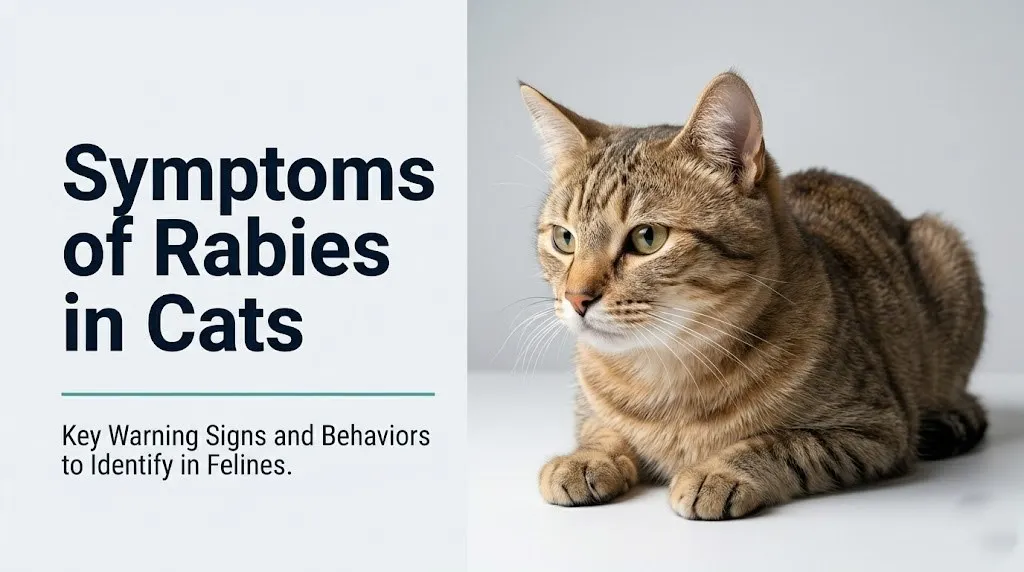
The furious phase is the most dangerous stage of rabies in cats, producing unprovoked violent aggression, seizures, extreme restlessness, and frenzied biting behavior driven by progressive destruction of the hippocampus, amygdala, and frontal cortex by the replicating virus.
Cats are more likely to display a pronounced furious phase than dogs, according to clinical observations documented in the Merck Veterinary Manual and confirmed by veterinary clinical practice data. This species difference reflects the feline limbic system’s architecture and the higher amygdalar sensitivity to viral encephalitis in cats. The practical implication: a cat in the furious phase of rabies is one of the most dangerous animals a person can encounter, because it will attack without warning, without provocation, and without the normal inhibitory behavior that cats display under other circumstances.
Observable signs during the furious phase:
- Unprovoked attacking of people, other animals, or objects
- Biting with extreme force and repeated biting without releasing
- Howling, yowling, and unusual vocalizations
- Grand mal seizures or focal seizures (facial twitching, limb paddling)
- Extreme agitation and inability to rest
- Photophobia (retreating from light sources)
- Phonophobia (reacting violently to sounds)
- Disorientation and circling behavior
- Apparent loss of learned inhibitions (attacking owners with whom the cat had a normal bond)
A cat displaying furious phase symptoms must not be approached without thick protective gloves and full arm coverage. Do not attempt to restrain a cat in the furious phase of rabies without professional assistance. Call animal control immediately. If you or anyone in the household has already been bitten or scratched, that is a medical emergency addressed in the human exposure section.
Cats with feline immunodeficiency virus (FIV) or feline leukemia virus (FeLV) may have reduced immune surveillance, potentially allowing faster viral replication in the CNS, though specific feline data on immunosuppression and rabies disease course remain limited in the published literature.
Paralytic Phase Symptoms of Rabies in Cats
The paralytic phase of rabies in cats, also called the dumb phase, begins as the virus spreads from the brainstem to the motor neurons controlling swallowing, breathing, and limb movement, producing progressive ascending paralysis, jaw drop, inability to swallow, and eventual respiratory arrest.
The paralytic phase follows the furious phase in most cats, though some cats skip the obvious furious period and proceed relatively quickly to the paralytic presentation. This is the stage where the virus has moved beyond the limbic system and is now destroying the nucleus ambiguus in the medulla and the lower motor neurons of the spinal cord. The nucleus ambiguus governs the motor neurons controlling the pharyngeal constrictors, laryngeal muscles, and palatal muscles. When these neurons are destroyed, the cat loses the ability to coordinate swallowing.
The result is a cat that appears defeated: jaw hanging open, saliva running continuously because swallowing is impossible, hindlegs progressively weaker, and coordination completely lost. This presentation can be mistaken for a cat that has suffered a stroke, ingested a toxin, or developed another form of encephalitis. The wildlife exposure history and the behavioral prodrome distinguish rabies from these alternatives, though definitive confirmation requires post-mortem testing.
Key signs of the paralytic phase:
- Lower jaw paralysis (mandibular drop, mouth hanging open)
- Excessive continuous drooling from inability to swallow
- Progressive hindlimb weakness and ataxia
- Inability to stand or walk normally
- Labored or irregular breathing
- Loss of consciousness (stupor progressing to coma)
- Death from respiratory failure, typically within 2 to 4 days of paralytic phase onset
According to the World Health Organization, the total clinical course of rabies from first symptom to death in domestic animals typically spans 3 to 10 days, with the paralytic phase representing the terminal progression. There is no recovery from clinical rabies in an unvaccinated cat. No antiviral treatment reverses the neural destruction once symptoms begin.
Key Takeaway: Cats are more likely than dogs to display the furious (violently aggressive) form of rabies before the paralytic phase, making a symptomatic cat an extreme handling risk for everyone in the household.
How Long Does It Take for Rabies Symptoms to Appear in Cats
The incubation period of rabies in cats, the time from viral exposure (bite or scratch from a rabid animal) to first observable symptoms, is typically 3 to 8 weeks, but has been documented in a range from as short as 9 days to as long as 6 months depending on the bite site, viral dose, and the cat’s size.
This variable timeline has a specific physiological explanation. The rabies lyssavirus does not enter the bloodstream after a bite. Instead, it replicates in muscle cells near the wound and then invades local peripheral nerve terminals. From there it travels by retrograde axonal transport, moving against the normal direction of nerve signaling, back toward the cell bodies in the dorsal root ganglia and then up the spinal cord to the brain. Retrograde axonal transport in mammalian neurons proceeds at an estimated rate of 8 to 20 mm per day.
A bite on the cat’s face, near the jaw, or on the neck places the entry point only a few centimeters from the brainstem. At 8 to 20 mm per day transport velocity, the virus reaches the brain quickly, producing a shorter incubation. A bite on the hindpaw, by contrast, means the virus must travel the entire length of the sciatic nerve, lumbar spinal cord, and thoracic and cervical spinal cord before reaching the brain: a journey of potentially 50 cm or more in an adult cat, which at transport rates of 8 to 20 mm per day could take 25 to 60 days before CNS invasion occurs.
This is why incubation period is not fixed. It is a direct mathematical consequence of how far the virus has to travel.
Quick Tip:
- A cat bitten near the face or head by a rabid animal may show symptoms within 2 weeks
- A cat bitten on a hindlimb may not show symptoms for 6 to 8 weeks or longer
- This incubation variation means an apparently healthy cat can be in the pre-symptomatic phase of rabies for weeks after exposure, appearing completely normal
- Unvaccinated cats with any recent wildlife contact should be reported to a licensed veterinarian regardless of whether symptoms are present
Behavioral Changes: How a Cat Acts When It Has Rabies
A cat with rabies acts in ways that are neurologically specific rather than randomly strange: the behavioral changes directly reflect which brain regions the virus has destroyed, progressing from subtle emotional dysregulation (limbic system) to extreme aggression and disorientation (full limbic and frontal cortex involvement) to stupor and unresponsiveness (brainstem failure).
The behavioral changes of rabies are sometimes described casually as “acting weird,” but the clinical picture is specific enough that veterinarians and experienced animal control officers can recognize it. The pattern typically begins with changes in the cat’s baseline social behavior. A normally outdoor-loving cat may seek confined hiding spots. A normally independent cat may become unusually clingy for a brief period. These changes are driven by early hippocampal dysfunction and limbic hypersensitivity, not by a cat “feeling sick” in the way a cat with an upper respiratory infection might behave.
According to the American Association of Feline Practitioners (AAFP), sudden unexplained behavioral change in a cat with known or possible wildlife exposure history is a clinical flag that warrants immediate veterinary evaluation, because the differential diagnosis includes rabies and other forms of viral encephalitis that require urgent professional assessment.
Observable behavioral changes in a rabid cat, in approximate clinical order:
- Initial withdrawal or, paradoxically, increased social contact
- Loss of normal fear responses (outdoor cats appearing less alert, indoor cats that escaped may lose normal caution)
- Restlessness, pacing, inability to sleep normally
- Sudden unprovoked aggression toward familiar people or animals
- Self-directed behavior (chewing or licking at old wound sites)
- Progressive disorientation (walking into walls, appearing lost in familiar spaces)
- Loss of litter box training or normal feeding behavior
- Stupor, unresponsiveness to usual stimuli
Elderly cats may present with atypical behavioral changes that overlap with feline cognitive dysfunction syndrome (a form of feline senile dementia). The key differentiator is wildlife exposure history and the speed of onset: rabies produces rapid behavioral deterioration over days, while cognitive dysfunction develops over months to years.
Hypersalivation and Drooling as Rabies Symptoms in Cats
Hypersalivation (also called ptyalism) in a rabid cat is caused by progressive destruction of the motor neurons in the nucleus ambiguus of the medulla oblongata, which control the pharyngeal and laryngeal muscles needed for swallowing, causing saliva to accumulate in the mouth and overflow rather than being regularly swallowed.
Think of it like a drain becoming blocked. The salivary glands themselves continue functioning normally and producing saliva at their usual rate. The cat’s swallowing mechanism, however, fails because the brainstem motor neurons governing the throat muscles have been destroyed by the virus. The saliva builds up and spills out because there is no longer a functional mechanism to clear it. This is fundamentally different from the hypersalivation seen in motion sickness, oral pain, or nausea, all of which involve intact swallowing with exaggerated salivary production.
The presence of saliva-soaked fur around the mouth and chin, combined with a cat that appears to be unable to close its mouth or swallow normally, is a specific clinical sign of advancing rabies encephalitis. By the time prominent hypersalivation is visible, the cat has progressed well beyond the prodromal phase and into at minimum the later furious or early paralytic stage.
This symptom is also the primary route of human and animal transmission risk. Rabies virus is shed in saliva, and in infected animals the virus is present in saliva during the late incubation and clinical phases. Any contact between an infected cat’s saliva and a human’s mucous membranes, open wound, or scratch represents potential rabies exposure.
The Centers for Disease Control and Prevention states that rabies virus can be transmitted through saliva introduced into a bite wound, into an open cut in the skin, or onto mucous membranes (eyes, nose, mouth). Contact with drool from a cat displaying these signs on intact skin is generally considered low risk, but any wound or mucous membrane exposure requires immediate evaluation.
Children and elderly individuals in the household have higher vulnerability to serious rabies exposure consequences if they have been in close contact with a drooling cat showing these signs. Contact your state or local health department immediately if any household member has been in contact with saliva from a cat suspected of having rabies.
Key Takeaway: Hypersalivation in a cat is not the cause of rabies transmission risk — it is the visible sign that the virus is already destroying the brainstem, and it marks a stage where human exposure risk from saliva contact is at its highest.
How Cats Get Rabies: Transmission and Wildlife Exposure
Cats get rabies almost exclusively through bite wounds from infected wildlife, because the rabies lyssavirus is present in the saliva of infected animals and is transmitted when infected saliva enters a wound, most efficiently through the deep puncture wound produced by a bite from a rabid animal.
The primary wildlife reservoirs for rabies in the United States vary by region. According to CDC rabies surveillance data, the major wildlife reservoirs include raccoons (predominant on the Eastern seaboard and Southeast), bats (present in all 48 contiguous states), skunks (predominantly in the Midwest, South, and California), and foxes and coyotes (regionally distributed). Cats that hunt, roam outdoors, or have any contact with wildlife are at ongoing exposure risk from all of these reservoir species.
Bats represent a specific and underappreciated risk because their bites are small, may not produce a visible wound, and can occur while a cat is sleeping or indoors if a bat enters the home. The CDC specifically notes that any contact between a cat and a bat should be evaluated by a licensed veterinarian, particularly if the cat is unvaccinated or overdue for vaccination.
Less common routes of rabies transmission include:
- Scratch exposure (if saliva is on the claws)
- Mucous membrane contact with infected saliva (eyes, nose, mouth)
- Aerosol exposure in confined spaces with extremely high viral concentrations (documented primarily in laboratory settings and bat caves; not a practical risk in domestic settings)
The virus does not survive long outside a host body under normal environmental conditions. Contact with surfaces contaminated by a rabid animal’s saliva is not a documented transmission risk under typical household or outdoor conditions.
Cats that fight with other cats can theoretically transmit rabies if one cat is infected and bites another. This is why unvaccinated outdoor cats in areas with active wildlife rabies transmission face compounding exposure risk: not only from wildlife directly but from other free-roaming unvaccinated cats in the neighborhood.
Can Indoor Cats Get Rabies
Indoor cats can get rabies, though their risk is substantially lower than outdoor cats, because exposure requires contact with an infected animal, and indoor cats can be exposed through bat entry into the home, brief outdoor escapes, or contact with infected wildlife through screen doors or windows if the wildlife breaks through.
The American Association of Feline Practitioners (AAFP) includes indoor cats in its core rabies vaccination recommendations precisely because the indoor-only designation does not eliminate exposure risk entirely. Bats regularly enter homes through gaps around plumbing, ventilation, and electrical conduits, through open windows without intact screens, and through chimney openings. A bat that enters a home and comes into contact with a cat represents a genuine rabies exposure scenario that occurs in documented cases each year.
According to CDC guidance, if you wake up in your home and find a bat in the room or a bat has been in contact with a pet, the bat should be captured if possible (without direct hand contact) and submitted for rabies testing. Even if the indoor cat appears unharmed, a licensed veterinarian should evaluate the exposure situation the same day, and the local animal control authority should be notified.
Additional indoor cat exposure scenarios that pet owners frequently underestimate:
- Cat escapes outside briefly and returns: even a few minutes outdoors provides wildlife encounter opportunity
- Contact through a window screen that a bat or small animal has touched (lower risk but not zero)
- Multi-pet households where an outdoor cat brings an infected animal inside
- Handling an injured bat or small wildlife animal and then touching the cat (owner-mediated exposure)
The vaccination status of an indoor cat matters significantly in the event of bat exposure. A vaccinated indoor cat with a documented bat exposure may be managed under a 45-day booster observation protocol in many states. An unvaccinated indoor cat with documented bat exposure may face either strict quarantine (up to 6 months) or humane euthanasia and testing under state public health regulations, depending on local law.
Can a Vaccinated Cat Get Rabies
A vaccinated cat can develop rabies in rare circumstances, but appropriately vaccinated cats have dramatically lower risk, and the rabies vaccines currently approved for use in cats by the AVMA and AAFP are highly effective at preventing infection when administered correctly and kept current.
The killed virus rabies vaccines and recombinant canarypox-vectored vaccines licensed for use in cats stimulate production of virus-neutralizing antibodies targeting the rabies lyssavirus glycoprotein G. When a vaccinated cat is exposed to the virus, these circulating antibodies neutralize the virus before it can establish infection in peripheral nerve terminals. Vaccine failure, while rare, can occur under specific circumstances including vaccine storage failure (cold chain disruption), administration error, immune suppression in the individual cat, or vaccination given too close to an exposure event for an adequate immune response to develop.
The AAFP Feline Vaccination Guidelines recommend that rabies vaccination be considered a core vaccine for all cats, indoor and outdoor, and that the specific schedule (one-year versus three-year booster intervals) depend on the licensed product used and the applicable state law. Some states legally mandate specific rabies vaccine schedules for cats regardless of indoor-only status.
Important considerations about vaccinated cat exposure events:
- A vaccinated cat bitten by a confirmed or suspected rabid animal should be reported to a licensed veterinarian and animal control immediately
- Most state public health guidelines recommend a rabies booster vaccine be administered promptly (within 96 hours) to a vaccinated cat after a rabies exposure event
- The vaccinated cat is then typically placed under owner observation for 45 days
- An unvaccinated cat bitten by a confirmed rabid animal faces a very different protocol, potentially including strict quarantine for up to 6 months or euthanasia and testing depending on state law
- Cats with FIV or FeLV may have reduced vaccine-induced immune responses; their veterinarian should assess antibody titer levels if exposure risk is high
Key Takeaway: Indoor cats are not fully protected from rabies exposure due to bat entry risk, and the vaccination status of an indoor cat critically determines the management protocol if any exposure event occurs.
What to Do if Your Cat Shows Symptoms of Rabies
If your cat is showing symptoms consistent with rabies, do not touch the cat with bare hands, do not attempt to contain the cat without protective equipment, call a licensed veterinarian and local animal control authority immediately, and if any person in the household has been scratched or bitten by the cat, that person must go to an emergency department or urgent care for post-exposure prophylaxis evaluation the same day.
These steps matter because speed is the critical variable in both the cat’s situation and the human exposure situation. There is no treatment that can save a cat once clinical rabies signs have begun. The actions you take in the first hour determine whether human members of the household receive life-saving post-exposure prophylaxis in time.
To report a suspected rabies case and protect your household:
- Keep all household members, including children, away from the cat immediately without exception
- Do not handle the cat with bare hands; if you must approach, use thick leather gloves and cover exposed skin
- Call your licensed veterinarian and describe the specific symptoms you are observing, including any known wildlife exposure in recent weeks
- Call your local animal control authority; they have the equipment and training to safely contain a potentially rabid animal
- Contact your state or local health department if any human in the household has been bitten, scratched, or had mucous membrane contact with the cat’s saliva
- Write down the specific symptoms you have observed and when each first appeared; this information is important for both veterinary evaluation and any human post-exposure assessment
If animal control is not immediately available and the cat is actively attacking household members, call 911. This is not an overreaction. An actively aggressive rabid cat is a genuine physical threat and a public health emergency.
Do not attempt to kill the cat yourself. The brain must be preserved intact for the diagnostic direct fluorescent antibody (DFA) test, and improper euthanasia methods can compromise the specimen.
Human Exposure to a Cat With Rabies Symptoms: The Emergency
A human bite, scratch, or saliva-to-wound contact from a cat displaying symptoms consistent with rabies is a medical emergency requiring immediate evaluation for rabies post-exposure prophylaxis (PEP), which is the only intervention that prevents rabies in a human after exposure and is effective only when begun before symptoms develop.
The World Health Organization states that prompt and appropriate wound care combined with the complete PEP regimen is virtually 100% effective at preventing rabies death in exposed humans when initiated before symptoms appear. Once rabies symptoms begin in a human, there is no established treatment with proven survival benefit. The urgency of this guidance cannot be softened: delayed PEP is the primary preventable cause of human rabies deaths in developed countries.
If you or anyone in your household has been bitten, scratched, or had mucous membrane contact with saliva from a cat showing possible rabies signs:
Go to the nearest hospital emergency department immediately. Do not wait.
The emergency department physician will assess the wound, begin the PEP series if indicated (which includes rabies immune globulin administered at the wound site and a series of human diploid cell vaccine injections on a defined schedule), and coordinate with local public health authorities. Do not wait for laboratory confirmation that the cat has rabies before seeking PEP evaluation: the clinical decision for PEP does not require a confirmed diagnosis in the animal.
People who are immunocompromised (those on chemotherapy, systemic corticosteroids, or immunosuppressive therapy for organ transplant or autoimmune conditions) face higher risk of inadequate PEP response and should notify the treating physician of their immune status immediately so that antibody titer monitoring can be arranged.
Children and elderly adults in the household who had any contact with the cat during its symptomatic period should also be evaluated at the emergency department, even if they do not have visible bite wounds, because mucous membrane exposure (saliva contact with eyes, nose, or mouth) also constitutes a potential exposure requiring assessment.
How Is Rabies Diagnosed in Cats
Definitive rabies diagnosis in a cat requires post-mortem brain tissue testing using the direct fluorescent antibody (DFA) test, because no currently available clinical test can confirm rabies infection in a living cat with the reliability needed for public health decision-making.
This is the single most important clinical fact about rabies diagnosis that most pet owners do not know, and it has direct consequences for how a suspected rabies case must be handled. When a cat is showing signs consistent with rabies, there is no blood test, no urine test, no brain MRI, and no cerebrospinal fluid analysis that will give you a definitive yes or no answer while the cat is alive. The DFA test uses fluorescently labeled anti-rabies antibodies applied to brain tissue sections (specifically hippocampus, cerebellum, and brainstem) under microscopy to detect viral antigen. It requires fresh brain tissue obtained at necropsy.
Some ante-mortem tests exist, including PCR testing of saliva, skin biopsy examination for viral antigen in cutaneous nerves at the nape of the neck, and corneal impression smear testing, but these have sensitivity limitations and are not universally available or accepted as definitive for public health management decisions. According to the CDC, ante-mortem diagnosis in animals is not the standard of care, and management decisions (human PEP, quarantine protocols) are typically made based on clinical signs and exposure history rather than waiting for laboratory confirmation.
What a veterinarian typically does when rabies is suspected:
- Documents the clinical signs and exposure history thoroughly
- Notifies local animal control and state veterinarian’s office (legally required in all U.S. states)
- Coordinates with local public health department for human exposure assessment
- Facilitates humane euthanasia and brain specimen preservation for DFA testing through the appropriate state or county public health laboratory
- Does not perform routine blood panels, radiographs, or imaging as the primary diagnostic approach when rabies is the primary concern
A board-certified veterinary neurologist may evaluate a cat with neurological signs when the exposure history is ambiguous and the differential diagnosis includes encephalitis from feline herpesvirus, toxoplasmosis, cryptococcal meningitis, or inflammatory CNS disease, but if rabies is genuinely in the differential, public health protocols take precedence over diagnostic workup.
Key Takeaway: There is no blood test or imaging study that can confirm or rule out rabies in a living cat; definitive diagnosis requires post-mortem brain testing, which is why human PEP decisions are made based on exposure history and clinical signs, not laboratory results.
Rabies Prevention for Cats: Vaccination and Risk Reduction
Rabies vaccination is the single most effective measure for preventing rabies in cats, and the AVMA and AAFP both classify rabies vaccination as a core vaccine recommended for all cats regardless of indoor or outdoor lifestyle because exposure risk from bat contact cannot be eliminated for any cat living in a home.
The licensed rabies vaccines for cats in the United States include killed (inactivated) virus vaccines and recombinant canarypox-vectored vaccines (which use a modified canarypox virus to deliver the rabies glycoprotein G antigen without containing any live rabies virus). The recombinant product has been associated with a lower risk of feline injection-site sarcoma compared to some adjuvanted killed virus products, a consideration relevant for cats that will receive long-term vaccination series. The choice between vaccine products should be made in consultation with a licensed veterinarian who knows the cat’s individual health history.
AAFP vaccination guidelines recommend the following schedule for cats:
- Initial rabies vaccination: administered at 12 to 16 weeks of age (or earlier if legally required by local ordinance)
- First booster: 1 year after initial vaccination
- Subsequent boosters: every 1 or 3 years depending on the specific licensed vaccine product used and state law requirements
Risk reduction measures beyond vaccination:
- Keep cats indoors as much as possible, particularly at night when bats and wildlife are most active
- Inspect the home regularly for bat entry points (gaps around pipes, vents, and chimney openings) and seal them
- Do not allow cats to hunt or consume wildlife, even dead animals found in the yard
- If a cat fights with another cat or animal outside, examine the cat for bite wounds and contact a licensed veterinarian the same day
- Ensure vaccination records are current and accessible; in a rabies exposure event, proof of current vaccination dramatically changes the management protocol for both the cat and any exposed humans
Cats in areas with active wildlife rabies transmission (confirmed raccoon, bat, skunk, or fox rabies circulation in the county) represent a higher priority for strict vaccination currency than cats in areas with historically low wildlife rabies incidence, though no region in the continental United States is considered rabies-free.
When to Go to the Vet Immediately for Rabies Symptoms in Cats
Any cat with sudden unexplained behavioral changes, aggression, hypersalivation, dysphagia, seizures, ataxia, or known wildlife contact history requires immediate contact with a licensed veterinarian and local animal control authority, not a scheduled appointment, not a call to a pet advice line, and not a wait-and-see approach.
Rabies is one of the very few conditions in veterinary medicine where the clinical suspicion itself, before any diagnostic confirmation, triggers mandatory reporting, public health notification, and immediate action protocols. The licensed veterinarian will not simply examine the cat and send you home. They will coordinate with animal control and the local health department because state law requires it.
Take your cat to a veterinary emergency center and call animal control immediately if your cat shows any of the following:
| Sign | Urgency Level | Action Required |
|---|---|---|
| Sudden unexplained aggression with wildlife exposure history | Emergency | Call vet and animal control NOW |
| Seizures in a cat with outdoor or wildlife contact history | Emergency | Call vet and animal control NOW |
| Jaw drop, inability to swallow, continuous drooling | Emergency | Call vet and animal control NOW |
| Progressive hindlimb weakness after outdoor exposure | Emergency | Call vet and animal control NOW |
| Hypersalivation with behavioral change | Emergency | Call vet and animal control NOW |
| Bat found in home; cat had access to bat | Same day | Call vet and animal control same day |
| Cat bitten by raccoon, skunk, or fox | Same day | Call vet and animal control same day |
| Unvaccinated cat with any wildlife contact | Same day | Call vet for evaluation same day |
| Vaccinated cat with confirmed wildlife bite | Same day | Call vet for booster assessment same day |
Do not transport an actively aggressive cat in an open carrier or loose in a vehicle. Use a secure hard-sided carrier. If the cat cannot be safely contained, call animal control for assistance before attempting transport.
The AVMA recommends that any animal bite involving wildlife be reported to local animal control regardless of the cat’s vaccination status, because public health tracking of rabies exposure events is a legal and community safety requirement, not optional reporting.
Emergency Signs: When to Take Your Cat to the Vet Immediately
Certain signs in a cat require immediate emergency evaluation without any delay. Do not wait to see if these resolve.
Take your cat to a veterinary emergency center and call local animal control immediately if your cat shows:
- Sudden unprovoked aggression toward people or other animals, particularly with any recent outdoor or wildlife contact (furious rabies phase requiring immediate containment and veterinary and animal control notification)
- Jaw hanging open, inability to swallow, and continuous drooling (nucleus ambiguus destruction in brainstem indicating advanced encephalitic rabies)
- Seizures in a cat with any outdoor access or known wildlife encounter (rabies must be in the differential for any new-onset seizures with exposure history)
- Progressive hindlimb weakness, stumbling, or collapse after outdoor activity or wildlife contact (ascending motor neuron involvement in paralytic rabies)
- A bat found inside the home where an unvaccinated cat has access (documented potential exposure requiring same-day veterinary and animal control evaluation)
- Any bite wound inflicted on a human or other household pet by a cat showing neurological signs (immediate human exposure assessment required at a hospital emergency department)
If a person in your household has been bitten or scratched by a cat showing any of these signs, that person must go to the nearest hospital emergency department immediately. Call 911 if the cat is actively aggressive and cannot be safely contained.
These presentations indicate possible rabies encephalitis in the cat and constitute a concurrent veterinary emergency and human public health emergency requiring simultaneous response, not sequential evaluation.
Frequently Asked Questions About Symptoms of Rabies in Cats
What are the first signs of rabies in a cat?
The first signs of rabies in a cat are behavioral changes during the prodromal phase, including unexplained personality shifts, restlessness, hiding, and in some cases increased affection or withdrawal from people they normally approach.
A cat may also exhibit excessive licking or biting at a previous wound site (hyperesthesia at the viral entry point) and show mild fever, which an owner may observe as lethargy or reduced appetite.
The prodromal phase typically lasts 1 to 3 days before progressing to more obvious neurological signs, and it is often misidentified as stress, illness, or aging without a known wildlife exposure history.
How long after a bite will a cat show rabies symptoms?
A cat typically shows rabies symptoms 3 to 8 weeks after being bitten by a rabid animal, though the documented range extends from as short as 9 days to as long as 6 months.
The incubation period is determined by the distance between the bite site and the brain: a bite on the face or neck produces a shorter incubation because the virus has less distance to travel via retrograde axonal transport than a bite on a hindlimb.
Any cat with a known or suspected bite from wildlife should be evaluated by a licensed veterinarian immediately, before symptoms develop, because post-exposure management is most effective during the incubation period.
Can a cat with rabies be cured?
No, a cat with rabies cannot be cured once clinical symptoms have begun.
Rabies in cats is uniformly fatal after the onset of neurological signs because the virus destroys central nervous system neurons and there is no antiviral treatment that can reverse the encephalitic damage.
The only effective interventions are prevention through vaccination before exposure or, for vaccinated cats with known exposures, prompt post-exposure booster vaccination and observation under veterinary and animal control supervision.
Can you get rabies from a scratch from a cat?
Yes, you can potentially get rabies from a cat scratch if the cat’s claws carry infected saliva and the scratch breaks the skin, allowing the virus to enter.
The Centers for Disease Control and Prevention classifies scratch exposure from a potentially rabid animal as a category of exposure warranting assessment for post-exposure prophylaxis, particularly if the cat has any signs of rabies or a history of wildlife exposure.
Anyone scratched by a cat suspected of having rabies should go to a hospital emergency department the same day for wound assessment and PEP evaluation.
How do I know if my indoor cat has rabies?
An indoor cat that has had no possible bat exposure, no outdoor escapes, and no contact with potentially infected animals has extremely low rabies risk, but the possibility is not zero because bats can enter homes undetected.
Rabies in an indoor cat would present with the same symptom progression as in any cat: behavioral changes first, followed by aggression or paralytic signs depending on which phase dominates.
If your indoor cat develops sudden unexplained neurological signs or behavioral changes and a bat has been found in the home recently, contact a licensed veterinarian and local animal control the same day rather than waiting.
What happens to a cat in the final stages of rabies?
In the final stages of rabies, a cat enters the paralytic phase, characterized by complete inability to swallow, continuous drooling, progressive hindlimb and then forelimb paralysis, loss of consciousness, and death from respiratory failure.
The brainstem respiratory centers are destroyed by the virus in the terminal phase, and the cat typically dies within 2 to 4 days of the onset of paralytic signs.
Humane euthanasia administered by a licensed veterinarian is the standard of care for a cat diagnosed or strongly suspected of having rabies, both to prevent suffering and to allow brain tissue collection for the definitive direct fluorescent antibody diagnostic test.
Closing
Rabies in cats is not a theoretical risk. It is the most commonly reported domestic animal rabies in the United States, it is universally fatal once symptoms appear, and it is directly transmissible to everyone in the household. The symptoms progress fast, the furious phase makes an infected cat dangerous to handle, and the window for effective human post-exposure prophylaxis closes the moment a person develops their own symptoms.
If your cat is showing sudden aggression, inability to swallow, seizures, or has had any wildlife contact you’re uncertain about, call a licensed veterinarian and your local animal control authority today. If anyone in your household has been bitten or scratched by a cat showing these signs, go directly to a hospital emergency department.
Annual vaccination is the action that keeps everything else from becoming relevant. If your cat’s rabies vaccination is current, keep it that way. If it isn’t, make that appointment now.