What Causes Liver Pain? Causes, Signs & When to Act
What causes liver pain is one of the most clinically important questions a person with right upper abdominal discomfort can ask, because the liver itself has no pain receptors inside it, meaning every cause of liver pain works through a single anatomical mechanism: stretching, inflaming, or invading the fibrous covering that surrounds it. Understanding that mechanism changes how you interpret your pain, how urgently you act, and what information you give a physician.
The National Institute of Diabetes and Digestive and Kidney Diseases (NIDDK) reports that liver disease affects tens of millions of Americans, with non-alcoholic fatty liver disease alone estimated to affect approximately 24 percent of the U.S. adult population. Many people with early liver disease experience no pain at all, because their capsule has not yet been stretched beyond its resting state. When pain does appear, it tells a specific story about what is happening inside that capsule.
This article covers every major cause of liver pain with the specific physiological mechanism behind each one, the population groups most at risk for each cause, the clinical character of the pain each condition produces, when liver pain can be monitored and when it requires same-day or emergency evaluation, and the referred pain patterns that connect liver disease to right shoulder discomfort.
What Causes Liver Pain
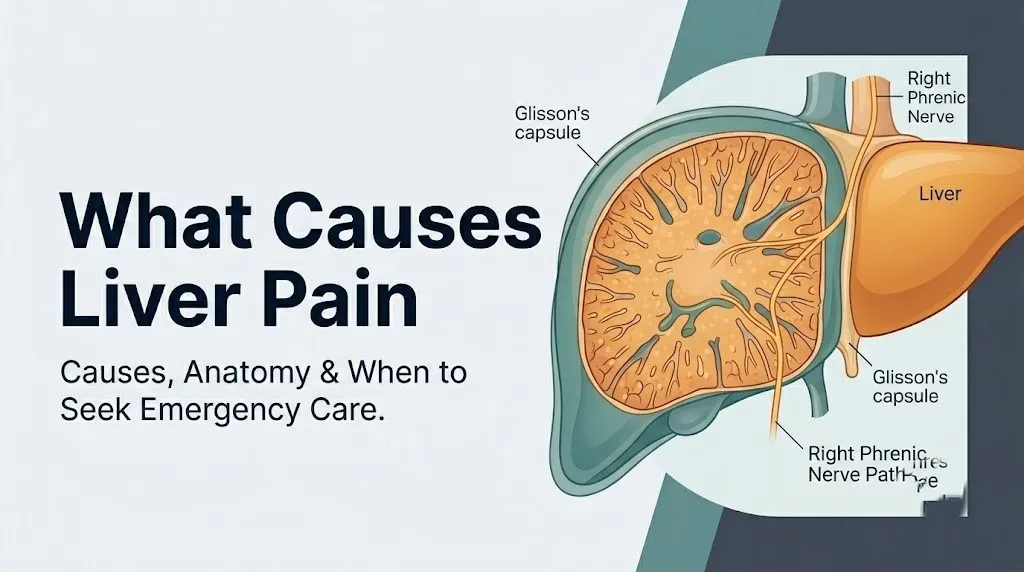
Liver pain is caused by conditions that stretch, distend, inflame, or directly invade Glisson’s capsule, the fibrous connective tissue envelope surrounding the liver, which is the only structure in and around the liver that contains sensory pain-conducting nerve fibers.
The liver parenchyma, the functional tissue where hepatocytes perform metabolism, detoxification, bile production, and protein synthesis, contains no nociceptors. You can damage hepatocytes substantially, as occurs in early hepatitis or early fatty liver disease, without generating any pain signal at all. Pain only begins when the pathological process inside the liver is large enough or inflammatory enough to produce hepatomegaly (liver enlargement) that stretches the capsule outward, or when a disease process directly infiltrates or inflames the capsule itself.
The causes of liver pain range from conditions that are extremely prevalent and often manageable (non-alcoholic fatty liver disease, mild alcoholic liver disease) to conditions that are less common but urgently serious (hepatocellular carcinoma, pyogenic liver abscess, HELLP syndrome in pregnancy). The common thread across all of them is Glisson’s capsule.
Key causes, ordered from most to least prevalent in the general adult U.S. population:
- Non-alcoholic fatty liver disease (NAFLD) and its inflammatory form, non-alcoholic steatohepatitis (NASH): most prevalent, driven by metabolic syndrome
- Alcoholic liver disease (ALD): second major category, dose-dependent on alcohol consumption
- Viral hepatitis (hepatitis B and C most commonly in adults): affects approximately 2.4 million Americans with chronic hepatitis C alone per CDC data
- Drug-induced liver injury (DILI): includes acetaminophen toxicity, the leading cause of acute liver failure in the United States
- Cirrhosis from any cause, with associated hepatomegaly or portal hypertension
- Hepatocellular carcinoma (HCC) and other primary or secondary liver tumors
- Hepatic abscess (pyogenic or amebic)
- Hepatic cysts
- Pregnancy-related hepatic conditions: HELLP syndrome, intrahepatic cholestasis of pregnancy, acute fatty liver of pregnancy
Older adults above age 65 are at disproportionate risk for hepatocellular carcinoma arising from previously undiagnosed hepatitis B or C, because the lag time between chronic viral infection and HCC development is typically 20 to 40 years, putting peak HCC risk in the sixth and seventh decades.
Liver Anatomy: Why the Liver Produces Pain
The liver produces pain only through Glisson’s capsule, a layer of dense fibrous connective tissue (composed primarily of type I collagen) that envelops the entire outer surface of the liver and sends internal extensions (the portal tracts) into the liver along blood vessels and bile ducts.
Glisson’s capsule is richly innervated by sensory fibers from two sources: the right phrenic nerve (arising from cervical nerve roots C3, C4, and C5), which supplies the superior surface of the liver adjacent to the right hemidiaphragm; and branches of the lower intercostal nerves (thoracic segments T6 through T11), which supply the lateral and inferior aspects of the capsule. These sensory fibers are capable of detecting mechanical stretch (from capsular distension due to hepatomegaly), chemical irritation (from inflammatory mediators including prostaglandins and cytokines), and thermal stimuli. There are no equivalent sensory nerve fibers anywhere within the liver parenchyma itself.
This anatomy has a direct clinical consequence. A person can have substantial hepatocyte injury (elevated ALT and AST on blood tests), representing meaningful liver inflammation, without experiencing any pain whatsoever if the inflammatory process has not yet produced enough hepatomegaly to stretch the capsule. Conversely, a condition that rapidly distends the liver (acute alcoholic hepatitis with sudden hepatic edema, or a rapidly expanding liver abscess) produces acute, severe pain because the capsule is stretched quickly.
Think of Glisson’s capsule like the skin of a balloon. The air inside the balloon (the liver parenchyma) can change substantially in composition without the balloon feeling any different from the outside. It is only when you fill the balloon past its comfortable capacity, or when something sharp presses against the skin from inside, that you feel the stretch and the pain.
The internal portal tracts, which are extensions of Glisson’s capsule surrounding the portal triads (portal vein, hepatic artery branch, and bile duct), also carry sensory fibers. Inflammatory processes concentrated around the portal triads (as in autoimmune hepatitis and primary biliary cholangitis) can generate pain through these internal capsular extensions even before significant hepatomegaly develops.
Quick Tip:
- The absence of pain does not mean the liver is undamaged. Many serious liver conditions produce no pain until late stages.
- Pain localized to the right upper quadrant, particularly if it is worsened by pressing gently on the area just below the right rib margin, is the clinical pattern most consistent with hepatic capsular involvement.
- People with diabetes are at higher risk for painless liver disease progression because peripheral neuropathy reduces pain sensitivity from visceral structures in the abdomen.
Key Takeaway: All liver pain originates from Glisson’s capsule, the liver’s outer fibrous covering, because the liver parenchyma has no pain receptors, meaning no pain is felt until the capsule is stretched, inflamed, or directly invaded.
Non-Alcoholic Fatty Liver Disease as a Cause of Liver Pain
Non-alcoholic fatty liver disease (NAFLD), now increasingly reclassified by the American Association for the Study of Liver Diseases (AASLD) as metabolic dysfunction-associated steatotic liver disease (MASLD), causes liver pain through progressive hepatomegaly from lipid accumulation in hepatocytes and, in the inflammatory form (NASH), from cytokine-mediated capsular inflammation.
In NAFLD, triglycerides and other lipids accumulate within hepatocytes, causing the liver to enlarge. As the liver volume increases, Glisson’s capsule is distended outward. The pain produced is typically a dull, constant ache or a sense of fullness or pressure in the right upper quadrant, under the right rib cage. It is rarely severe. Most patients with simple hepatic steatosis (fatty liver without inflammation) rate their pain as mild, often describing it more as discomfort or heaviness than frank pain.
When NAFLD progresses to NASH (non-alcoholic steatohepatitis), the picture changes. Hepatocyte death triggers the release of inflammatory cytokines from the liver’s resident immune cells, the Kupffer cells, including TNF-alpha, IL-6, and IL-1 beta. These cytokines sensitize pain receptors in Glisson’s capsule, lowering the threshold for pain signaling and producing a more consistently painful pattern. The pain becomes more noticeable, may awaken the person at night, and may be accompanied by fatigue and right upper quadrant tenderness on palpation.
The NIDDK reports that NAFLD affects approximately 24 percent of U.S. adults, making it the most prevalent chronic liver condition. Of those with NAFLD, approximately 20 percent are estimated to have NASH, and of those with NASH, approximately 20 percent will develop significant fibrosis or cirrhosis over time.
People with type 2 diabetes mellitus, obesity (body mass index above 30), dyslipidemia, and metabolic syndrome are at the highest risk for NAFLD and NASH. Women with polycystic ovary syndrome (PCOS) have a particularly elevated NAFLD risk due to the combination of insulin resistance and androgen excess that characterizes PCOS.
Alcoholic Liver Disease and Liver Pain
Alcoholic liver disease (ALD) causes liver pain through a spectrum of mechanisms that correspond to the three histological stages of alcohol-related hepatic injury: hepatic steatosis (fatty change), alcoholic hepatitis, and alcoholic cirrhosis.
Ethanol is metabolized in the liver primarily by alcohol dehydrogenase (ADH) in the cytosol of hepatocytes, producing acetaldehyde. Acetaldehyde is a highly reactive aldehyde that forms protein adducts with hepatocyte proteins, disrupts mitochondrial function, triggers oxidative stress through reactive oxygen species production, and activates the inflammatory cascade via Kupffer cell stimulation. Acetaldehyde-driven hepatocyte injury leads to lipid accumulation (steatosis), cell death (necrosis), and inflammatory infiltration (hepatitis), each producing different degrees of hepatomegaly and capsular distension.
Alcoholic steatosis produces mild, often intermittent right upper quadrant discomfort that may be noticed only after heavy drinking episodes when hepatomegaly is most pronounced. The pain is similar in character to NAFLD pain: dull, aching, pressure-like.
Alcoholic hepatitis, the acute inflammatory stage, can produce severe right upper quadrant pain with fever, jaundice, and systemic illness. The pain is sharper and more intense because rapid inflammatory edema within the liver produces rapid capsular stretch rather than the gradual distension of steatosis. According to a landmark study in the New England Journal of Medicine, severe alcoholic hepatitis carries a 28-day mortality rate of approximately 25 to 30 percent without treatment, making it one of the most urgent presentations in this category.
Men develop alcoholic liver disease at lower total alcohol exposure thresholds than previously thought, and women are more susceptible to alcohol-related hepatic injury than men at equivalent consumption levels. This sex difference occurs because women have lower body water content and lower gastric ADH activity, resulting in higher blood acetaldehyde concentrations per standard drink compared to men of equivalent weight.
Hepatitis and Liver Pain
Viral hepatitis causes liver pain through immune-mediated hepatocyte destruction that produces hepatomegaly from inflammatory edema and, in acute severe cases, from the inflammatory exudate accumulating within and around the liver capsule.
The five main hepatitis viruses (A, B, C, D, and E) differ substantially in their transmission routes, chronicity, and severity, but they share the same basic pain-generating mechanism: the immune system recognizes virus-infected hepatocytes and mounts a cytotoxic T-lymphocyte (CTL) response against them. As infected hepatocytes are destroyed and replaced by inflammatory infiltrate, the liver swells. Acute hepatitis, from any viral cause, typically produces a rapidly developing right upper quadrant ache accompanied by nausea, fatigue, and jaundice (yellowing of the skin and sclera from elevated bilirubin as the liver’s conjugating capacity is overwhelmed).
The CDC reports that approximately 2.4 million Americans were living with chronic hepatitis C infection in recent years, and approximately 880,000 Americans had chronic hepatitis B infection. Both can progress from asymptomatic infection to cirrhosis and hepatocellular carcinoma over decades, with pain becoming a prominent feature typically only in the advanced fibrotic or cirrhotic stages.
Autoimmune hepatitis, a non-viral cause, involves the immune system attacking hepatocytes directly through autoantibodies (anti-smooth muscle antibody, anti-nuclear antibody). It is two to four times more common in women than in men, according to the American College of Gastroenterology, and often presents in a fluctuating pattern of exacerbation and partial remission that makes pain episodic rather than constant.
People who are immunocompromised (from HIV infection, organ transplant immunosuppression, or chemotherapy) may develop unusual hepatitis presentations, including reactivation of latent hepatitis B, with more rapid progression and less typical pain patterns due to blunted immune response.
Key Takeaway: Viral hepatitis causes liver pain through immune-mediated hepatocyte destruction producing inflammatory hepatomegaly and capsular stretch, with pain appearing prominently in acute phases and in advanced chronic disease but often absent in the middle stages of chronic infection.
Liver Pain From Medications and Acetaminophen
Drug-induced liver injury (DILI) causes liver pain through direct hepatotoxicity or immune-mediated liver inflammation triggered by drugs or their metabolites, and acetaminophen (paracetamol) toxicity is the leading cause of acute liver failure in the United States.
Acetaminophen is metabolized in the liver via three pathways: glucuronidation, sulfation, and oxidation by the cytochrome P450 2E1 (CYP2E1) enzyme. The CYP2E1 pathway produces N-acetyl-p-benzoquinone imine (NAPQI), a highly reactive and toxic metabolite that is normally conjugated and neutralized by hepatic glutathione stores. When acetaminophen is taken at doses that overwhelm glutathione capacity (typically above 7.5 to 10 grams in a single acute ingestion in adults, though lower doses cause injury in people with depleted glutathione from malnutrition or alcohol use), NAPQI accumulates and causes direct oxidative necrosis of the centrilobular hepatocytes (the hepatocytes surrounding the central vein, where CYP2E1 activity is highest).
This centrilobular necrosis produces rapid hepatomegaly from cell death and inflammatory edema, causing severe right upper quadrant pain that develops within 24 to 72 hours of a toxic ingestion. The pain may be accompanied by nausea and vomiting in the first 24 hours, followed by apparent improvement at 24 to 48 hours, followed by frank liver failure at 72 to 96 hours if untreated.
Call Poison Control at 1-800-222-1222 immediately if any amount of acetaminophen has been taken in excess of the recommended dose, intentionally or accidentally. Do not wait for pain to develop. The antidote N-acetylcysteine (NAC) is most effective when given within 8 to 10 hours of ingestion and becomes less effective as time passes.
Chronic heavy alcohol users are at higher risk for acetaminophen-induced liver injury at lower doses because alcohol upregulates CYP2E1 activity (increasing NAPQI production) while simultaneously depleting hepatic glutathione stores (reducing NAPQI detoxification capacity). The combination makes standard “safe” doses of acetaminophen potentially hepatotoxic in this population.
Liver Cancer and Liver Pain
Hepatocellular carcinoma (HCC), the most common primary liver cancer, causes liver pain through two distinct mechanisms depending on tumor size and location: direct invasion of Glisson’s capsule by tumor tissue, and hepatomegaly from the mass effect of tumor growth displacing normal liver tissue.
Small HCCs confined within the hepatic parenchyma may produce no pain at all if they have not reached the capsule or produced sufficient hepatomegaly. Pain typically emerges when the tumor reaches 5 centimeters or more, directly contacts the capsule, or when multiple tumor deposits collectively enlarge the liver. The pain produced by capsular invasion is typically sharper and more constant than the dull ache of NAFLD or hepatitis, because tumor cells infiltrating the capsule produce direct mechanical disruption of capsular nerve fibers rather than the diffuse stretch of hepatomegaly.
The World Health Organization (WHO) reports that liver cancer is the sixth most commonly diagnosed cancer globally and the third leading cause of cancer death worldwide. In the United States, the CDC notes that liver cancer incidence has more than tripled since 1980, largely driven by the cohort of people infected with hepatitis C during the 1960s to 1980s now reaching the age of peak HCC risk.
Secondary liver cancers (metastases from colorectal cancer, breast cancer, lung cancer, and others) can produce similar pain patterns through comparable mechanisms. Metastatic disease that diffusely infiltrates the liver parenchyma often produces the most pronounced hepatomegaly and the most severe capsular pain.
People with known chronic hepatitis B or C, cirrhosis of any cause, heavy alcohol use history, or non-alcoholic steatohepatitis should receive surveillance imaging (liver ultrasound every six months) as recommended by the AASLD, because early detection of HCC dramatically improves treatment options. New right upper quadrant pain in any person with these risk factors warrants urgent hepatology evaluation rather than watchful waiting.
Liver Abscess and Liver Cyst Pain
A liver abscess causes acute, often severe right upper quadrant pain through rapid expansion of a pus-filled cavity within the hepatic parenchyma that distends Glisson’s capsule from within, combined with the systemic inflammatory response from the underlying infection.
Liver abscesses are classified as pyogenic (bacterial, typically from enteric organisms including Escherichia coli, Klebsiella pneumoniae, Streptococcus species, and anaerobes) or amebic (from Entamoeba histolytica, typically acquired through contaminated water in endemic regions). Pyogenic abscesses often develop as a complication of biliary tract disease, abdominal infection (appendicitis, diverticulitis, or colon cancer with bacteremia), or post-procedural seeding. The pus accumulates under pressure within the liver, producing rapid capsular stretch and severe pain.
The pain of a liver abscess is typically much more severe and acute in onset than the pain of NAFLD or hepatitis. It is accompanied by high fever (often spiking above 38.5 degrees Celsius), rigors (shaking chills), and systemic illness. Tenderness on palpation over the liver is typically pronounced. Without treatment (antibiotics and drainage), a pyogenic liver abscess can rupture into the peritoneum or pleural space, producing peritonitis or empyema.
Simple hepatic cysts, by contrast, are common incidental findings on abdominal imaging. Mayo Clinic reports that simple hepatic cysts occur in approximately 5 percent of the general population and are usually asymptomatic. When large (above 5 to 10 centimeters) or when they undergo hemorrhage into the cyst lumen (hemorrhagic cyst), they can produce a persistent dull right upper quadrant ache from capsular pressure. Polycystic liver disease, an inherited condition, produces massive hepatomegaly from innumerable cysts and can cause severe chronic pain.
Older adults and people with diabetes are at elevated risk for pyogenic liver abscess, because diabetes impairs leukocyte function and increases susceptibility to bacterial infections in multiple organ systems including the biliary tract.
Key Takeaway: Liver abscess produces acute severe pain with high fever and is a medical emergency, while hepatic cysts produce chronic dull discomfort when large, and these two causes must be distinguished urgently because their management and urgency are completely different.
Cirrhosis and Portal Hypertension Liver Pain
Cirrhosis causes liver pain through two mechanisms that can coexist: hepatomegaly from nodular regenerative growth of hepatic tissue and chronic inflammatory activity at the capsule, and congestive hepatomegaly from portal hypertension impairing venous outflow from the liver.
Cirrhosis is the end-stage of hepatic fibrosis, in which progressive replacement of normal hepatic parenchyma by collagen scar tissue (produced by activated hepatic stellate cells in response to chronic injury) distorts the liver’s architecture. In the early stages of cirrhosis, the liver may actually be enlarged from regenerative nodule formation, producing capsular stretch and right upper quadrant aching. In late-stage cirrhosis, the liver may shrink as fibrosis contracts the parenchyma.
Portal hypertension, the elevation of pressure in the portal venous system above normal (normal portal pressure is approximately 5 to 10 mmHg; clinically significant portal hypertension begins above 10 to 12 mmHg), occurs because fibrotic scar tissue in cirrhosis obstructs normal blood flow through the liver. This creates back-pressure in the portal system, and the resulting hepatic venous congestion produces painful hepatomegaly independent of any active hepatocyte inflammation.
According to a review in Hepatology, approximately 50 percent of patients with cirrhosis develop clinically significant portal hypertension, which can produce not only liver pain but also ascites (fluid accumulation in the peritoneal cavity from portal hypertension-driven hydrostatic pressure), painful abdominal distension, and risk of esophageal variceal bleeding.
People with cirrhosis and any new or worsening right upper quadrant pain warrant evaluation by a board-certified hepatologist, because pain change in a cirrhotic patient can signal a serious complication including hepatocellular carcinoma developing within the cirrhotic liver (a known risk), spontaneous bacterial peritonitis, or variceal hemorrhage.
What Does Liver Pain Feel Like and Where Is It Located
Liver pain typically feels like a dull, aching, pressure-like discomfort located in the right upper quadrant of the abdomen, beneath the right side of the rib cage, and may sometimes extend to the right mid-back or right flank.
The quality of pain tells something about the underlying cause. Slow, gradual hepatomegaly from NAFLD or chronic hepatitis produces a dull, constant ache or a sense of fullness and pressure under the right ribs. Rapid capsular distension from acute alcoholic hepatitis, liver abscess, or hepatic vein occlusion produces sharper, more intense pain that may be severe. Direct capsular invasion by tumor produces a persistent, boring pain that may be worse at night and does not significantly change with position or meals.
The precise location of hepatic pain reflects the liver’s anatomy. The liver occupies the right upper quadrant and extends across the midline into the epigastric region (the area below the sternum). Pain may be felt across this entire zone. The superior surface of the liver is in direct contact with the right hemidiaphragm, meaning that breathing, particularly deep inhalation, can worsen liver pain by pressing the diaphragm against a distended or inflamed capsule.
Pain that worsens with deep breathing, particularly if it is sharp and severe, may indicate hepatic disease with diaphragmatic involvement and warrants urgent evaluation to exclude diaphragmatic irritation from a subphrenic process or pleural involvement from a liver abscess tracking upward.
Women with liver disease may experience the pain differently from men due to generally lower visceral pain thresholds and differing autonomic nervous system regulation of abdominal pain processing. Women are also more likely to have overlapping gynecological pain sources in the right lower quadrant (ovarian cysts, endometriosis, Fitz-Hugh-Curtis syndrome from pelvic inflammatory disease) that can be confused with right upper quadrant liver pain, making clinical examination and imaging particularly important for accurate localization.
Liver Pain Referred to the Right Shoulder
Liver pain referred to the right shoulder occurs because the right phrenic nerve supplies sensory fibers to both the right hemidiaphragm and the skin over the right shoulder and right scapular tip (the C4 dermatome), creating a shared neurological pathway that causes the brain to misattribute diaphragmatic irritation as shoulder pain.
The anatomy of referred pain from the liver: the superior surface of the liver is directly adherent to the peritoneum covering the inferior surface of the right hemidiaphragm. When the liver is enlarged or when an inflammatory or infectious process involves the hepatic capsule at the diaphragmatic interface, the irritation signals travel along the right phrenic nerve to the cervical spinal cord at C3, C4, and C5 levels. These same spinal segments also receive cutaneous sensory input from the right shoulder skin and right scapular area. The brain’s sensory cortex, receiving signals from the C4 dermatome, cannot always distinguish between input coming from the shoulder skin and input coming from the diaphragm via the phrenic nerve. The result is perceived pain in the right shoulder, right scapular tip, or right upper trapezius area.
This referred pain pattern is identical in mechanism to the shoulder tip pain that occurs with blood under the diaphragm from a ruptured ectopic pregnancy (Kehr’s sign), or with right-sided pleural effusion irritating the diaphragm. It is a well-established clinical phenomenon documented across hepatology, gastroenterology, and emergency medicine literature.
The clinical significance: a person with right shoulder pain and right upper quadrant discomfort who assumes the shoulder pain is from a rotator cuff problem or sleeping position may have liver disease as the actual cause. Any right shoulder pain occurring alongside right upper quadrant abdominal discomfort, jaundice, or systemic illness should prompt consideration of hepatic pathology rather than isolated musculoskeletal evaluation.
Older adults are particularly at risk for delayed diagnosis here, because right shoulder pain is frequently attributed to degenerative joint disease (osteoarthritis of the glenohumeral or acromioclavicular joint) in this age group, and the liver disease component may be missed unless specifically asked about abdominal symptoms.
Key Takeaway: Right shoulder pain combined with right upper quadrant abdominal discomfort is a referred pain pattern from the liver’s phrenic nerve connection and should prompt evaluation for liver disease, not just musculoskeletal shoulder assessment.
Liver Pain in Women and Sex-Specific Causes
Several liver conditions that cause right upper quadrant pain are specifically more prevalent in women or occur exclusively in women, and understanding these sex-specific patterns is essential for accurate diagnosis.
Autoimmune hepatitis (AIH) affects women approximately two to four times more often than men, according to the American College of Gastroenterology. The female predominance is thought to reflect the general pattern of autoimmune conditions being more common in women, likely related to the immunomodulatory effects of estrogen on T-regulatory cell function and autoantibody production. AIH can present acutely with jaundice, significant right upper quadrant pain, and markedly elevated liver enzymes, or more insidiously with chronic fatigue, intermittent right-sided discomfort, and fluctuating enzyme elevations.
Primary biliary cholangitis (PBC), formerly called primary biliary cirrhosis, is an autoimmune disease targeting the intrahepatic bile ducts (specifically the small bile ductules within the portal triads, the same structures that are extensions of Glisson’s capsule). It is estimated to affect women approximately 10 times more often than men, per data reviewed in Hepatology journal. PBC produces right upper quadrant aching from portal tract inflammation (since bile ducts run within Glisson’s capsule extensions), along with pruritis from bile salt accumulation.
Fitz-Hugh-Curtis syndrome is peri-hepatic inflammation (perihepatitis) occurring as a complication of pelvic inflammatory disease (PID), almost exclusively in women. Chlamydia trachomatis or Neisseria gonorrhoeae ascending from the pelvis infects the liver capsule surface, producing acute right upper quadrant pain that can be severe and pleuritic in character, sometimes confused with pleurisy or cholecystitis. The classic clinical description is right upper quadrant pain in a sexually active woman of reproductive age without gallbladder disease.
Women taking oral contraceptive pills containing estrogen and progestin have an elevated risk for hepatic adenoma, a benign liver tumor that can cause right upper quadrant pain when large, and carries a risk of rupture with internal bleeding (a surgical emergency).
Liver Pain During Pregnancy
Liver pain during pregnancy is produced by three specific obstetric conditions, each with a distinct mechanism and a different level of urgency, and all three require same-day evaluation by an obstetrician-gynecologist because of the risk they pose to both the pregnant woman and the fetus.
HELLP syndrome (Hemolysis, Elevated Liver enzymes, Low Platelets) is the most urgent. It is a variant of severe pre-eclampsia in which immune-mediated endothelial injury in the hepatic vasculature produces hepatic ischemia, periportal hemorrhage, and subcapsular hematoma formation. The subcapsular hematoma distends Glisson’s capsule acutely and dramatically, producing severe right upper quadrant or epigastric pain. If the subcapsular hematoma ruptures, it constitutes a life-threatening hemorrhagic emergency. HELLP typically occurs in the third trimester or immediately postpartum. A pregnant woman with right upper quadrant pain, headache, and visual disturbances has HELLP syndrome until proven otherwise and requires immediate emergency evaluation.
Intrahepatic cholestasis of pregnancy (ICP) occurs when elevated estrogen and progesterone in the second and third trimester impair the function of the ABCB4 and ABCB11 transporters in hepatocyte membranes that export bile acids from hepatocytes into bile canaliculi. Bile acid accumulation in the liver produces hepatomegaly and mild capsular stretch, causing right upper quadrant discomfort, and systemic bile acid accumulation causes intense pruritis (itching). ICP carries a risk of sudden fetal death, making prompt recognition and management by an obstetrician essential.
Acute fatty liver of pregnancy (AFLP) is a rare but severe condition in which mitochondrial fatty acid beta-oxidation defects (often related to long-chain 3-hydroxyacyl-CoA dehydrogenase deficiency in the fetus) cause microvesicular fat accumulation in maternal hepatocytes, producing acute liver failure. Pain, nausea, jaundice, and encephalopathy develop rapidly in the third trimester. AFLP carries maternal mortality risk and requires emergency delivery and intensive care management.
Any pregnant woman with new right upper quadrant pain should be evaluated by her obstetrician-gynecologist the same day, without exception.
How Liver Pain Is Diagnosed
The diagnostic evaluation of liver pain begins with a structured clinical history and physical examination, followed by targeted blood tests, and confirmed with imaging, with liver biopsy reserved for specific clinical situations where tissue characterization is needed.
The initial diagnostic sequence:
- Clinical history: location, quality, onset timing, duration, radiation pattern (including right shoulder), relationship to meals or alcohol, associated symptoms (jaundice, fatigue, fever, nausea, dark urine, pale stools, pruritis), medication list including over-the-counter drugs, alcohol intake, and any pregnancy status.
- Physical examination: assessment of hepatomegaly (liver enlargement detected by palpation and percussion below the right costal margin), tenderness on palpation of the right upper quadrant, presence of jaundice in the skin and sclera, signs of portal hypertension (ascites, caput medusae, splenomegaly), and signs of chronic liver disease (palmar erythema, spider angiomata, gynecomastia in men, leukonychia).
- Blood tests: liver function tests (LFTs) including ALT, AST, alkaline phosphatase (ALP), gamma-glutamyl transferase (GGT), and total and direct bilirubin. Additionally: prothrombin time/INR (measures synthetic function), complete blood count (CBC) to detect thrombocytopenia from hypersplenism, and viral hepatitis serologies if clinically indicated.
- Abdominal ultrasound: first-line imaging that identifies hepatomegaly, hepatic steatosis (fatty liver appearance), focal lesions (abscess, cyst, tumor), biliary dilation, and gallstones. Non-invasive, inexpensive, no radiation.
- CT scan of the abdomen with contrast: provides more detailed characterization of hepatic masses, abscesses, and vascular structures. Used when ultrasound is inconclusive or when malignancy is suspected.
- MRI of the liver with and without gadolinium contrast: highest resolution for characterizing focal hepatic lesions, particularly distinguishing hepatocellular carcinoma from benign tumors.
- Liver biopsy or FibroScan (transient elastography): FibroScan is used to non-invasively assess the degree of hepatic fibrosis. Liver biopsy (percutaneous, laparoscopic, or transjugular) remains the reference standard for tissue diagnosis in selected cases.
A board-certified gastroenterologist or hepatologist should direct the workup when initial tests suggest significant liver disease, abnormal liver function tests, or hepatic mass lesions.
When Liver Pain Is a Medical Emergency
Liver pain is a medical emergency when it is accompanied by any symptom indicating liver failure, infection, hemorrhage, or a rapidly progressing disease process that is life-threatening without immediate intervention.
Certain causes of liver pain, including HELLP syndrome in pregnancy, ruptured hepatic abscess, acute acetaminophen overdose, variceal bleeding from portal hypertension, and acute fulminant hepatic failure from any cause, can produce death within hours to days without emergency treatment. The emergency threshold is not defined by pain intensity alone. Some of the most urgent presentations have moderate pain with alarming systemic features.
Call 911 or go to the nearest emergency room immediately if liver pain is accompanied by:
- Jaundice (yellow skin or yellow whites of the eyes) combined with fever and right upper quadrant pain: suggests ascending cholangitis or severe hepatitis requiring emergency management
- Confusion, disorientation, or inappropriate behavior: suggests hepatic encephalopathy, which indicates severe liver failure
- Vomiting blood or passing black tarry stools: suggests esophageal or gastric variceal bleeding from portal hypertension
- Sudden severe right upper quadrant pain in a pregnant woman, especially in the third trimester or postpartum: suggests HELLP syndrome or ruptured hepatic hematoma
- High fever with shaking chills and severe right upper quadrant pain: suggests pyogenic liver abscess or septic cholangitis
- Right upper quadrant pain after known or suspected acetaminophen overdose: warrants emergency evaluation and antidote treatment; Call Poison Control at 1-800-222-1222 immediately
- Abdominal rigidity or severe generalized abdominal pain after right upper quadrant pain: suggests ruptured liver abscess or hepatic tumor with hemorrhage causing peritonitis
- Hemodynamic instability: rapid heart rate, low blood pressure, lightheadedness, or fainting with abdominal pain
These presentations indicate life-threatening liver disease or complications and require emergency medical assessment, not an urgent care appointment or scheduled physician visit.
Frequently Asked Questions About Liver Pain Causes
What does liver pain feel like?
Liver pain typically feels like a dull, aching, pressure-type discomfort located in the right upper abdomen, beneath the right rib cage, and sometimes extending to the right mid-back or right shoulder.
The pain quality varies by underlying cause: gradual hepatomegaly from fatty liver produces a persistent heaviness or fullness, rapid capsular distension from liver abscess or acute hepatitis produces sharper and more intense pain, and tumor invasion of the capsule produces a constant boring pain often worse at night.
Pain that worsens with deep breathing reflects involvement of the liver’s superior surface where it contacts the right hemidiaphragm.
Where exactly is liver pain located?
Liver pain is located in the right upper quadrant of the abdomen, specifically the area beneath the right costal margin (right rib cage) extending to the right side of the epigastrium (the area below the sternum).
The liver occupies the right hypochondriac region and extends across the midline, so pain from significant hepatomegaly can be felt across a wide area from the right flank to the central upper abdomen.
Pain from the liver’s superior diaphragmatic surface may be referred to the right shoulder and right scapular tip through the right phrenic nerve, a pattern that can be confused with musculoskeletal shoulder problems.
Can fatty liver disease cause pain?
Fatty liver disease can cause pain when lipid accumulation in hepatocytes produces hepatomegaly large enough to stretch Glisson’s capsule, the fibrous covering of the liver that contains the sensory nerve fibers.
Simple hepatic steatosis typically produces only mild right upper quadrant discomfort or a sense of fullness, while the inflammatory form (non-alcoholic steatohepatitis, NASH) produces more consistent pain from cytokine-mediated capsular sensitization.
People with fatty liver who develop worsening right upper quadrant pain, particularly accompanied by fatigue or appetite loss, should be evaluated by a primary care physician with liver function tests and abdominal ultrasound to assess for disease progression.
What causes sharp liver pain?
Sharp liver pain is caused by rapid distension of Glisson’s capsule, which occurs with acute alcoholic hepatitis, liver abscess, hepatic hematoma, or direct tumor invasion of the capsule.
Gradual conditions like NAFLD and chronic hepatitis produce dull aching pain because the capsule stretches slowly, while rapid processes that suddenly increase liver volume or directly damage capsular nerve fibers produce sharp, intense pain.
Any sharp liver pain that is severe, accompanied by fever, jaundice, or systemic illness, or that develops acutely in a pregnant woman requires same-day emergency evaluation.
Can liver pain go away on its own?
Liver pain from mild and self-limiting causes (such as transient hepatomegaly from a brief viral illness or a single episode of heavy alcohol consumption without underlying disease) may resolve within days as the triggering process resolves.
However, liver pain should not be assumed to be self-limiting without medical evaluation, because many serious liver conditions (cirrhosis, hepatocellular carcinoma, hepatitis B or C) can produce pain that fluctuates and temporarily improves without the underlying disease resolving.
Any liver pain lasting more than 48 to 72 hours, or any liver pain accompanied by jaundice, fever, or unexplained weight loss, warrants evaluation by a primary care physician rather than watchful waiting at home.
How do I know if my liver pain is serious?
Liver pain is most likely serious when it is accompanied by any systemic sign including jaundice, fever, confusion, vomiting blood, weight loss, or hemodynamic changes such as rapid heart rate or low blood pressure.
Pain that is worsening rather than improving over 24 to 48 hours, pain occurring in a pregnant woman, or pain in a person with known liver disease that has changed in character or intensity also warrants urgent medical evaluation.
Contact a primary care physician the same day for any new liver pain with systemic symptoms, and go to the emergency room immediately for severe pain with fever and jaundice, confusion, bloody vomiting, or any acute severe pain in a pregnant woman.
Liver pain deserves specific medical attention, not watchful waiting, because its cause cannot be determined from symptoms alone. The same right upper quadrant aching can come from benign fatty liver disease, from curable viral hepatitis, or from hepatocellular carcinoma, and the only way to distinguish them is through blood tests and imaging.
The practical next step is a same-day appointment with a primary care physician if you have new or persistent right upper quadrant pain. Ask specifically for liver function tests (ALT, AST, ALP, GGT, bilirubin), a complete blood count, and an abdominal ultrasound. If you are pregnant and experiencing right upper quadrant pain, contact your obstetrician-gynecologist immediately and do not wait for a scheduled appointment.
The anatomical clarity in this article gives you the clinical framework to describe your pain precisely and ask the right questions. You now know that pain in your right shoulder alongside right upper abdominal discomfort has a specific named neurological explanation, that the quality of your pain (dull vs. sharp, gradual vs. acute) reflects the rate at which the liver’s capsule is being stretched, and that the combination of pain with fever, jaundice, or confusion is never a reason to monitor at home.