What Causes Dry Nose at Night: 16 Reasons Explained
Dry nose at night is most often caused by low bedroom humidity, mouth breathing during sleep, or medications that reduce nasal mucosal secretion, but in a smaller number of cases it points to an underlying systemic condition that requires medical attention. Understanding which cause is driving your symptoms makes a genuine difference in whether the right fix is a humidifier or a rheumatologist’s appointment.
The nasal mucosa produces between one and two liters of mucus every 24 hours under normal conditions, according to nasal physiology research published in The Laryngoscope. That output depends on intact parasympathetic nerve signaling, adequate nasal blood flow, and reasonable ambient humidity. When any of those three factors is disrupted during the hours you sleep, the protective mucous layer thins, dries, and cracks.
This article covers every clinically recognized cause of nighttime nasal dryness, explains the specific physiological mechanism behind each one, identifies the populations most affected, and tells you precisely when environmental management is sufficient and when a board-certified otolaryngologist or rheumatologist needs to be involved.
What Causes Dry Nose at Night
Dry nose at night is caused by a combination of reduced nasal mucosal secretion, lower ambient bedroom humidity, altered airflow through the nasal passages during sleep, and in some cases medications or systemic diseases that impair the secretory glands lining the nasal cavity.
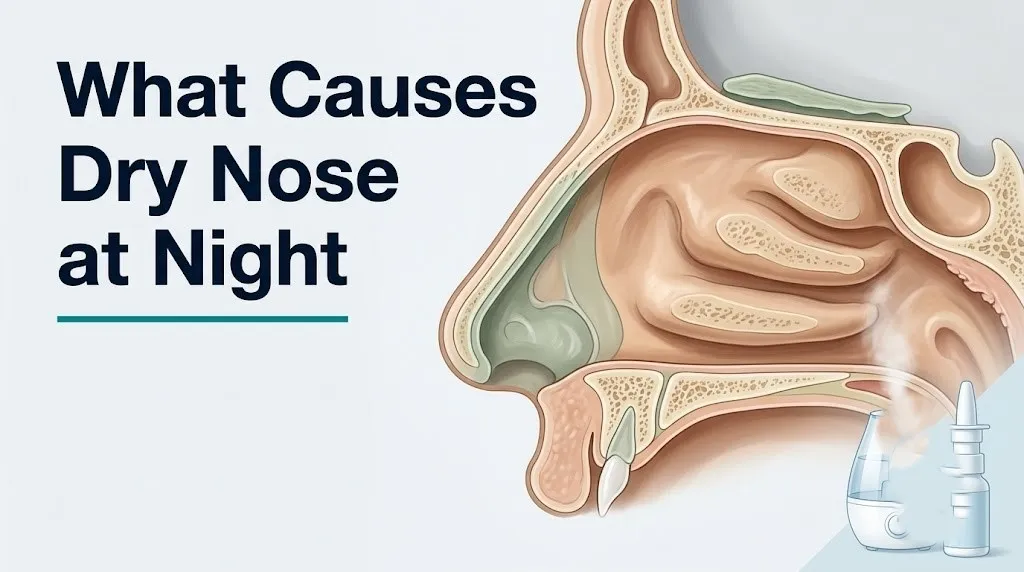
The nasal cavity is lined by respiratory epithelium, a specialized tissue containing goblet cells and submucosal serous and mucous glands. These structures work together to coat the nasal surface in a two-layer mucous blanket: a thin, watery periciliary layer that allows cilia to beat freely, and a thicker, sticky outer gel layer that traps particles and pathogens. When secretion falls below the rate needed to maintain this blanket, the tissue underneath dries out.
Sleep creates a specific physiological environment that strains this system. Ambient bedroom temperatures drop at night in most climates, reducing the absolute moisture content of indoor air. Heating systems in winter actively remove humidity from indoor environments. Body position shifts from upright to supine, redistributing blood flow through the nasal vascular plexus. Conscious breathing patterns change.
The causes of dry nose at night fall into six broad categories:
- Environmental: low bedroom humidity, forced air heating, arid climates, high-altitude settings
- Behavioral: mouth breathing during sleep, dehydration, sleeping with a fan directed at the face
- Pharmacological: antihistamines, decongestants, anticholinergics, systemic retinoids, antidepressants, diuretics, beta-blockers
- Medical device-related: CPAP therapy without humidification, supplemental oxygen therapy via nasal cannula
- Structural and mucosal disease: atrophic rhinitis, rhinitis sicca, nasal septal perforation
- Systemic autoimmune disease: Sjogren’s syndrome, granulomatosis with polyangiitis, sarcoidosis
Quick Tip:
- Most cases of nighttime nasal dryness are environmental or medication-related and respond well to targeted management.
- When dryness is accompanied by dry eyes, dry mouth, or joint pain, systemic disease investigation is warranted before environmental fixes are attempted.
- Older adults and people on multiple medications are the most likely to have overlapping causes requiring separate assessment.
How Nasal Mucosa Function Changes During Sleep
During sleep, reduced parasympathetic drive to the nasal submucosal glands measurably decreases nasal secretion output, making the nasal mucosa more vulnerable to drying out from ambient air.
The parasympathetic nervous system is the primary driver of nasal glandular secretion. Parasympathetic fibers traveling through the pterygopalatine ganglion release acetylcholine onto muscarinic M3 receptors located on the secretory cells of the nasal submucosal glands. This acetylcholine signal triggers active secretion of the watery serous component of nasal mucus. During sleep, global parasympathetic tone does not disappear, but the autonomic balance shifts in ways that reduce active secretory output compared to the waking state.
Sleep also changes how air moves through your nose. The nasal cycle is a naturally occurring, alternating pattern of congestion and decongestion between the left and right nasal cavities, driven by cyclical shifts in blood volume within the inferior turbinate vascular sinusoids. This cycle continues during sleep. The practical consequence is that one side of the nasal passage is always more congested and the other is always more patent at any given time, altering airflow distribution and the rate at which dry air contacts the mucosal surface.
Think of the nasal mucosa like the inside of a greenhouse. During the day, active ventilation keeps moisture circulating. At night, when the ventilation system slows and the outside air gets drier, the greenhouse interior begins to dry out unless a separate moisture source compensates. Your nasal cavity faces the same physics problem every night you sleep.
| Sleep Physiological Change | Effect on Nasal Mucosa | Clinical Result |
|---|---|---|
| Reduced parasympathetic output | Lower acetylcholine release to M3 receptors | Decreased secretory gland output |
| Supine positioning | Altered nasal vascular congestion pattern | Changed airflow resistance and mucus distribution |
| Lower overnight ambient temperature | Reduced absolute air humidity | Faster evaporation of mucous layer |
| Reduced swallowing frequency | Less nasopharyngeal moisture redistribution | Drier posterior nasal passages |
| Possible mouth breathing shift | Bypasses nasal humidification system | Direct delivery of dry air to nasopharynx |
For people with pre-existing conditions that already reduce nasal secretion, such as Sjogren’s syndrome or atrophic rhinitis, this normal nocturnal physiological shift pushes their already-reduced secretion into the clinically symptomatic range.
Low Bedroom Humidity as a Cause of Nighttime Nasal Dryness
Low bedroom humidity is the single most common environmental cause of dry nose at night, because the nasal mucosa cannot maintain its protective moisture layer when the surrounding air is pulling water away from it faster than the mucosal glands can replenish it.
Relative humidity measures the percentage of water vapor present in air relative to the maximum it can hold at a given temperature. The American Society of Heating, Refrigerating and Air-Conditioning Engineers (ASHRAE) recommends indoor humidity levels between 30% and 60% for human comfort and health. Forced-air heating systems commonly reduce indoor humidity to 15% to 25% during winter months in cold climates, particularly in the northern United States. At those levels, the nasal mucosa loses water through evaporation faster than the goblet cells and submucosal glands can replace it.
The physics here matters. Cold outdoor air contains very little water vapor by absolute measure. When that air enters a home and is heated to 68 to 72 degrees Fahrenheit, its relative humidity drops dramatically without any moisture being added. The result is an indoor environment that is, from the nasal mucosa’s perspective, functionally as dry as a desert.
According to research summarized by the American Academy of Otolaryngology-Head and Neck Surgery, nasal mucosal tissues begin to show measurable impairment of the mucociliary clearance system at relative humidity levels below 30%. Mucociliary clearance depends on cilia beating at the correct rhythm through the periciliary fluid layer. When that fluid layer evaporates, cilia are trapped in thickened mucus and cannot clear it effectively, producing the sensation of congestion or crusting that many people experience alongside dryness.
People who sleep in rooms with electric baseboards, wood stoves, or gas furnaces without attached humidifiers are at highest risk. Individuals living at high altitudes face chronically low absolute humidity in addition to the effects of heating systems.
Mouth Breathing During Sleep and Dry Nasal Passages
Mouth breathing during sleep bypasses the nasal cavity’s humidification system entirely, delivering unhumidified, unfiltered air directly to the nasopharynx and upper airway, which rapidly dries both the oral and nasal mucous membranes.
The nasal cavity is an extraordinary conditioning system. Air entering through the nose is warmed to near body temperature and humidified to approximately 95% relative humidity by the time it reaches the nasopharynx, all within the 10 to 12 centimeters of the nasal passage. The inferior turbinates, with their dense network of capacitance vessels and thin overlying mucosa, are primarily responsible for this warming and humidifying function. When a person breathes through their mouth, all of that conditioning is bypassed.
Mouth breathing during sleep happens for several reasons: nasal congestion from allergic rhinitis, a deviated nasal septum that reduces one side’s airway, obstructive sleep apnea causing partial arousal and mouth-breathing episodes, enlarged adenoids in children, or simply a habitual behavioral pattern. Regardless of cause, the downstream effect on the nasal mucosa is the same. The turbinate mucosa, not actively conditioned by inspiratory airflow, sits exposed to the relatively dry bedroom air while simultaneously losing moisture to the external environment.
Research published in the Annals of Allergy Asthma and Immunology has found that individuals with allergic rhinitis who experience nocturnal nasal congestion frequently shift to partial or complete mouth breathing during sleep, and this shift is associated with greater next-morning nasal dryness symptoms compared to those who maintain nasal breathing throughout the night.
Children with enlarged adenoids or tonsillar hypertrophy are particularly prone to chronic mouth breathing during sleep, and the American Academy of Pediatrics recommends evaluation by a pediatric otolaryngologist when chronic mouth breathing is suspected in a child, as it can affect palate development and sleep quality in addition to nasal mucosal health.
Key Takeaway: The nasal cavity’s job at night is to condition the air you breathe, and low humidity, mouth breathing, and reduced parasympathetic secretory drive all undermine that function simultaneously, which is exactly why dry nose is worse at night than during the day.
Medications That Cause Dry Nose at Night
Multiple medication classes cause dry nose at night by blocking the parasympathetic signals that drive nasal glandular secretion, constricting the nasal blood vessels that supply mucosal tissue, or both.
First-generation antihistamines (including diphenhydramine and chlorphenamine) cause pronounced nasal dryness because they block the H1 histamine receptor while simultaneously blocking muscarinic acetylcholine receptors on nasal secretory glands. The anticholinergic effect is the primary driver of dryness. Because these medications are commonly taken at bedtime as sleep aids, their peak anticholinergic effect coincides directly with the hours of sleep when nasal secretion is already reduced. Second-generation antihistamines (cetirizine, loratadine, fexofenadine) have significantly lower anticholinergic activity and cause less nasal dryness, though they are not entirely free of this effect.
Nasal decongestants (oxymetazoline nasal spray, pseudoephedrine oral tablets) act as alpha-adrenergic agonists, constricting the arteriovenous anastomoses and capacitance vessels within the nasal turbinate vascular plexus. This constriction reduces mucosal blood flow, which is needed to provide the vascular substrate for mucus production and tissue hydration. Chronic use of topical decongestants for more than three to five days produces rhinitis medicamentosa, a rebound cycle of congestion and shrinkage that can leave nasal mucosa chronically inflamed and dry.
| Medication Class | Mechanism of Dryness | Common Examples |
|---|---|---|
| First-generation antihistamines | Muscarinic M3 receptor blockade reduces glandular secretion | Diphenhydramine, chlorphenamine |
| Second-generation antihistamines | Mild H1 blockade with lower anticholinergic activity | Cetirizine, loratadine, fexofenadine |
| Topical nasal decongestants | Alpha-adrenergic vasoconstriction of nasal vascular plexus | Oxymetazoline, xylometazoline |
| Oral decongestants | Systemic alpha-adrenergic vasoconstriction | Pseudoephedrine |
| Anticholinergic medications | Direct blockade of M3 receptors on nasal glands | Ipratropium, oxybutynin, tolterodine |
| Tricyclic antidepressants | Combined anticholinergic and alpha-blocking effects | Amitriptyline, nortriptyline |
| Systemic retinoids | Reduce sebaceous and mucosal gland secretory activity | Isotretinoin |
| Diuretics | Systemic dehydration reducing mucosal tissue hydration | Furosemide, hydrochlorothiazide |
| Beta-blockers | Reduced nasal mucosal blood flow via vascular effects | Atenolol, metoprolol |
If you take any of these medications and experience nighttime nasal dryness, bring a complete medication list to your prescribing physician or primary care physician before making any changes to your regimen. Do not discontinue prescribed medications without medical guidance.
CPAP and Oxygen Therapy as Causes of Dry Nasal Passages
CPAP therapy and supplemental oxygen delivered via nasal cannula are among the most direct and mechanically predictable causes of dry nose at night, because both systems deliver airflow to the nasal passages at volumes and velocities that overwhelm the nasal mucosa’s natural humidification capacity.
Continuous positive airway pressure (CPAP) therapy, used to treat obstructive sleep apnea, forces a pressurized stream of air through the nasal passages continuously throughout the night. The air delivered by most CPAP machines is room air, which in many bedroom environments has a relative humidity below 40% during heating season. When that volume of air passes continuously over the nasal turbinate mucosa, evaporative water loss from the mucosal surface substantially exceeds what the submucosal glands can replace.
Research published in JAMA Otolaryngology-Head and Neck Surgery has found that nasal symptoms including dryness, congestion, and nosebleeds affect between 40% and 65% of CPAP users in the first weeks of therapy, and that these symptoms are the most common reason people discontinue CPAP use despite its benefits for sleep apnea. Integrated heated humidification systems, which add warmed, humidified air to the CPAP circuit, reduce nasal dryness symptoms substantially in controlled trials.
Supplemental oxygen delivered via nasal cannula creates a similar evaporative problem. Oxygen tanks and concentrators deliver dry gas at flow rates between 1 and 6 liters per minute, and without a bubble humidifier attached to the oxygen delivery system, that dry gas stream continuously desiccates the nasal epithelium. At flow rates above 4 liters per minute, humidification is considered medically standard to prevent mucosal injury.
For CPAP users experiencing dry nose: discuss the addition of a heated passover humidifier with your sleep medicine physician or respiratory therapist. For supplemental oxygen users: ask your prescribing pulmonologist or primary care physician about attaching a bubble humidifier to the oxygen delivery tubing.
Atrophic Rhinitis and Rhinitis Sicca
Atrophic rhinitis is a chronic condition characterized by progressive atrophy of the nasal mucosal glands, nasal epithelium, and underlying turbinate bone, producing severe dryness, crusting, and a paradoxical sensation of nasal obstruction despite the nasal cavity being abnormally wide.
Rhinitis sicca is a closely related but less structurally destructive form of nasal dryness. It describes chronic nasal mucosal dryness with crusting without the turbinate bone destruction seen in classical atrophic rhinitis. Both conditions share the primary mechanism of insufficient submucosal glandular tissue to produce adequate mucus, leaving the epithelial surface unprotected.
Primary atrophic rhinitis, also called ozena, is believed to result from a combination of chronic bacterial colonization (particularly by Klebsiella ozaenae in classical cases), nutritional deficiencies (specifically iron deficiency and vitamin D deficiency have been associated), and possibly genetic mucosal susceptibility factors, according to reviews published in The Laryngoscope. Secondary atrophic rhinitis develops following events that directly destroy nasal mucosal tissue: aggressive turbinate reduction surgery, nasal radiation therapy, granulomatous infection, or chronic topical decongestant overuse.
The characteristic symptom pattern of atrophic rhinitis is distinctly different from simple environmental nasal dryness. People with atrophic rhinitis experience:
- Severe, persistent nasal dryness worse at night and upon waking
- Visible thick crusts within the nasal cavity, often dark green or brown
- Paradoxical sensation of nasal blockage despite an abnormally open airway (because the turbinates have atrophied and the normal airflow resistance feedback is lost)
- A fetid nasal odor in classical primary atrophic rhinitis, caused by bacterial metabolites
- Recurrent nosebleeds from friable, poorly perfused mucosal tissue
- Loss of smell (anosmia) in advanced cases
People with atrophic rhinitis should be evaluated by a board-certified otolaryngologist. Management typically includes regular saline nasal irrigation, topical nasal emollients, and in some cases nasal reconstructive procedures to reduce the abnormally wide nasal cavity. Do not attempt self-management of suspected atrophic rhinitis without confirming the diagnosis with nasal endoscopy.
Key Takeaway: Rhinitis sicca and atrophic rhinitis are distinct from simple environmental nasal dryness and require a nasal endoscopy by a board-certified otolaryngologist for accurate diagnosis, not just a humidifier.
Sjogren’s Syndrome and Autoimmune Causes of Dry Nose
Sjogren’s syndrome causes dry nose at night as part of a systemic exocrine gland failure that simultaneously dries the eyes, mouth, and nasal passages, driven by immune-mediated destruction of the glandular tissue that produces secretions across all mucosal surfaces.
Sjogren’s syndrome is a systemic autoimmune condition in which lymphocytic infiltration progressively destroys lacrimal glands (tear-producing), salivary glands, and the nasal submucosal secretory glands. According to the Sjogren’s Syndrome Foundation, the condition affects approximately 4 million Americans and presents predominantly in women at a 9:1 female-to-male ratio, most commonly diagnosed between ages 40 and 60. Nasal dryness is a recognized sicca symptom of the condition, though it receives less clinical attention than dry eyes and dry mouth.
The immune mechanism involves CD4-positive T lymphocytes infiltrating glandular tissue and producing pro-inflammatory cytokines (including interferon-gamma and tumor necrosis factor-alpha) that impair glandular secretory cell function and eventually cause glandular destruction. The nasal submucosal glands are affected by this same lymphocytic infiltration process. The result is a structurally diminished secretory capacity that cannot be compensated by environmental correction alone.
The 2016 classification criteria for Sjogren’s syndrome established by the American College of Rheumatology and the European League Against Rheumatism use a weighted scoring system that includes anti-SSA/Ro antibody positivity, focal lymphocytic sialadenitis on lip biopsy, abnormal ocular staining, Schirmer’s test for lacrimal function below 5 mm in 5 minutes, and salivary flow rate measurement.
If you experience all three of the following, bring this combination specifically to your primary care physician’s attention: dry nose worsening at night, dry eyes (gritty sensation, light sensitivity), and dry mouth (difficulty swallowing dry foods, waking to drink water). This triad warrants an antinuclear antibody (ANA) panel, anti-SSA/Ro, and anti-SSB/La antibody testing before other explanations are assumed. A rheumatologist should manage confirmed or strongly suspected Sjogren’s syndrome.
Other autoimmune conditions associated with nasal dryness include granulomatosis with polyangiitis (formerly Wegener’s granulomatosis) and sarcoidosis, both of which cause granulomatous inflammation of nasal mucosal tissue. Granulomatosis with polyangiitis can cause nasal septal perforation and the characteristic “saddle nose” deformity from cartilage destruction. These conditions require urgent rheumatology and otolaryngology evaluation.
Symptoms of Dry Nose at Night: What to Look For
Dry nose at night produces a recognizable pattern of symptoms ranging from mild morning nasal stiffness to severe crusting, visible bleeding, and persistent nasal pain, depending on the severity and underlying cause of the dryness.
The most common symptom most people recognize is waking up with a sensation of tightness or stiffness inside the nose, often described as feeling “sealed shut” despite being able to breathe. This happens because the mucous layer that normally coats the nasal epithelium has dried and thickened overnight, reducing airflow sensation even when physical obstruction is minimal.
Visible symptoms that accompany nasal dryness include:
- Dried mucus crusts visible at the nostril openings or deeper in the nasal cavity, often yellow or brown-tinged
- Small cracks or fissures in the skin just inside the nostril opening (the nasal vestibule), particularly at the mucocutaneous junction
- A sensation of rawness or burning inside the nose, produced when dry mucosal epithelium loses its protective mucous coating and becomes directly exposed to inspired air
- Thin streaks of blood in morning nasal discharge, indicating minor surface bleeding from the Kiesselbach’s plexus on the anteroinferior nasal septum
- Reduced sense of smell in more severe cases, because olfactory receptor neurons in the superior nasal concha require adequate mucosal hydration to detect odorant molecules in solution
- Headache or facial pressure from impaired mucociliary drainage creating mild sinus pressure changes
The distinction between symptoms that are self-resolving and symptoms that indicate a more serious underlying cause comes down to pattern and accompaniments. Dryness that appears in winter, resolves in spring or summer, and responds to a humidifier is most likely environmental. Dryness that is year-round, worsening, accompanied by dry eyes or mouth, associated with visible mucosal crusting deeper in the nose, or producing recurrent bloody discharge warrants professional evaluation.
Dry Nose and Nosebleeds at Night
Nighttime nasal dryness is one of the most common precipitating factors for nosebleeds that occur during sleep or immediately upon waking, because a dry nasal mucosa becomes friable and the thin-walled vessels of the Kiesselbach’s plexus rupture easily under minimal mechanical stress.
Kiesselbach’s plexus, located on the anteroinferior nasal septum, is a vascular anastomosis between four arteries: the anterior ethmoidal artery (a branch of the ophthalmic artery from the internal carotid circulation), the sphenopalatine artery (the terminal branch of the maxillary artery from the external carotid circulation), the greater palatine artery, and the superior labial artery. This network is responsible for approximately 90% of all anterior nosebleeds (epistaxis). The vessels within this plexus are subepithelial, meaning they sit just beneath a very thin mucosal layer. When that layer dries out and cracks, the mechanical protection over these vessels disappears.
According to the American Academy of Otolaryngology-Head and Neck Surgery, anterior epistaxis accounts for the vast majority of nosebleeds in the general population. Low humidity and nasal dryness are among the most commonly identified contributing factors in non-traumatic anterior epistaxis, particularly in winter months.
To manage a nosebleed from nighttime nasal dryness:
- Sit upright and lean slightly forward to prevent blood from flowing down the throat.
- Pinch the soft cartilaginous part of the nose, not the bony bridge, firmly between thumb and forefinger.
- Hold firm, uninterrupted pressure for 10 to 15 minutes without checking whether bleeding has stopped.
- Breathe through your mouth during this time.
- Apply a thin layer of petrolatum (plain petroleum jelly) inside the nostril after bleeding stops, using a clean cotton swab, to re-moisturize the mucosa.
People taking anticoagulant medications (warfarin, apixaban, rivaroxaban, aspirin at therapeutic doses) or antiplatelet agents should contact their prescribing cardiologist or primary care physician after any nosebleed that requires more than 10 minutes of pressure to control, as their bleeding risk profile changes the standard management threshold.
Key Takeaway: Nosebleeds from nighttime nasal dryness originate almost always from the Kiesselbach’s plexus on the anteroinferior septum, and proper first aid requires 10 to 15 continuous minutes of pinching pressure on the soft nose while leaning forward, not backward.
Dry Nose at Night in Older Adults
Older adults experience dry nose at night more frequently and more severely than younger adults because nasal mucosal gland density decreases with age, mucosal blood flow reduces with vascular aging, and older adults disproportionately take multiple medications with anticholinergic or vascular effects.
The nasal mucosa undergoes measurable structural change as part of normal aging. Research published in the journal The Laryngoscope has documented a progressive reduction in the density of submucosal serous and mucous glands with advancing age, beginning as early as the fifth decade of life and accelerating beyond age 65. This structural change reduces the baseline secretory reserve of the nasal mucosa, meaning that environmental or pharmacological stressors that younger adults tolerate without symptoms will consistently produce symptomatic dryness in older individuals.
Vascular aging compounds this effect. The capacitance vessels within the inferior turbinate undergo a gradual reduction in elasticity and responsiveness with age, impairing the dynamic vasodilation that is needed to supply the blood-derived serous component of nasal mucus. The combination of reduced gland density and reduced turbinate vascular reactivity means an older adult’s nasal mucosa has significantly less secretory capacity than a younger person’s, even before environmental or pharmacological stressors are added.
Polypharmacy is the third compounding factor. The National Institutes of Health reports that approximately 40% of adults over age 65 in the United States take five or more prescription medications daily. Many of these medications, including bladder anticholinergics, tricyclic antidepressants, first-generation antihistamines used as sleep aids, beta-blockers, and diuretics, carry nasal dryness as a mechanism-based side effect. The cumulative anticholinergic burden across multiple medications can be substantial even when no single medication is prescribed at a dose expected to cause dryness.
Older adults with persistent nighttime nasal dryness should have a complete medication review performed by their primary care physician or clinical pharmacologist to assess cumulative anticholinergic burden before environmental causes are assumed to be the sole driver.
Dry Nose at Night During Pregnancy
Pregnancy causes nasal dryness at night through estrogen-mediated engorgement of the nasal mucosal vascular plexus, which produces simultaneous nasal congestion and, paradoxically, greater moisture loss from an engorged, high-flow mucosal surface exposed to dry air.
Pregnancy rhinitis is a condition affecting up to 30% of pregnant women, according to a review published in the Annals of Allergy Asthma and Immunology. It is characterized by nasal congestion, increased nasal secretion during the day, and paradoxical nasal dryness at night, driven by the effects of elevated estrogen and progesterone on the nasal vascular plexus. Estrogen causes vasodilation and increased vascular permeability in the nasal mucosal capillaries, producing congestion and mucosal swelling. When a pregnant woman lies down at night, venous drainage from the nasal turbinates shifts with body position, and the combination of increased blood volume in nasal capacitance vessels and supine positioning produces severe nasal congestion that forces mouth breathing.
Once mouth breathing begins, the nasal humidification system is bypassed, and the bedroom air, which is often further dried by heating systems, reaches the nasopharynx and posterior nasal passages unconditioned. The net experience for many pregnant women is a nose that feels simultaneously blocked and dry at night, which is physiologically accurate: the turbinates are engorged (producing the blocked sensation) while the mucosal surface moisture is depleted by mouth-breathing-driven evaporation.
Management in pregnancy requires avoiding most systemic decongestants, as pseudoephedrine carries teratogenic risk concerns, particularly in the first trimester, according to guidance from the American College of Obstetricians and Gynecologists. Saline nasal spray (isotonic) is the recommended first-line approach and is safe throughout all trimesters. Nasal strips that physically widen the nasal aperture can improve nighttime nasal airflow without pharmaceutical intervention. Sleeping with the head of the bed elevated 30 to 45 degrees reduces turbinate congestion by improving venous drainage.
Key Takeaway: Pregnancy rhinitis drives nighttime nasal dryness through the counterintuitive mechanism of estrogen-driven nasal congestion that forces mouth breathing, which then bypasses nasal humidification, making saline spray and positional adjustments the safest evidence-based starting point.
How to Relieve Dry Nose at Night: Evidence-Based Options
The most effective relief for dry nose at night addresses the specific underlying cause rather than applying a single generic remedy, but several evidence-supported interventions work across most causes and are appropriate as first-line management.
The strongest body of evidence supports two primary interventions: increasing bedroom humidity and maintaining nasal mucosal moisture with saline or emollient application. A systematic review referenced in JAMA Otolaryngology-Head and Neck Surgery found that isotonic saline nasal irrigation performed before bedtime reduced nasal dryness symptoms and improved mucociliary clearance in adults with chronic rhinitis symptoms. Saline works by physically rehydrating the mucous layer, washing out dried crusts that impair mucociliary function, and reducing the concentration of inflammatory mediators in nasal secretions.
For bedroom humidity, the target is 40% to 50% relative humidity, which stays within the ASHRAE comfort and health range. An ultrasonic or evaporative cool-mist humidifier placed within two to three meters of the bed is more effective than placement at the far side of the room. Improperly maintained humidifiers with standing water reservoirs can harbor mold and bacteria, which then aerosolize into bedroom air, so regular cleaning per manufacturer guidance is not optional.
Evidence-based options by cause:
- Environmental/low humidity: Cool-mist humidifier, isotonic nasal saline spray, nasal emollient (petrolatum, sesame oil-based nasal gel, or commercially available nasal moisturizing gel) applied to the nasal vestibule before sleep
- Mouth breathing: Nasal dilator strips (evidence from controlled trials supports improved nasal airflow), address underlying allergic rhinitis with prescriber-guided intranasal corticosteroid spray if appropriate
- Medication-induced: Discuss switching to a lower anticholinergic-burden alternative with your prescribing physician, particularly for sleep aids and antihistamines
- CPAP-related: Add or increase the temperature setting on your CPAP integrated heated humidifier; discuss with your sleep medicine physician or respiratory therapist
- Pregnancy-related: Isotonic saline nasal spray, positional adjustment (head elevated 30 to 45 degrees), nasal dilator strips; avoid systemic decongestants without obstetric guidance
Avoid using nasal decongestant sprays (oxymetazoline) as a chronic remedy for nasal dryness. They cause initial relief by reducing mucosal swelling but then produce rebound congestion and worsening dryness with repeated use beyond three to five days.
Nasal Saline and Humidification for Nighttime Nasal Dryness
Nasal saline application and bedroom humidification are the two most evidence-supported first-line interventions for nighttime nasal dryness, with distinct mechanisms that make them more effective when used together than either alone.
Isotonic saline (0.9% sodium chloride) nasal spray or rinse works by supplementing the water content of the nasal mucous layer directly. The solution’s isotonic concentration matches the osmolarity of nasal secretions, preventing osmotic water movement out of mucosal cells, unlike hypertonic saline (2% to 3% sodium chloride), which draws water out of mucosal tissue through osmosis and works better for clearing congestion than for relieving dryness. For dry nose specifically, isotonic saline is the appropriate concentration. Hypertonic saline used habitually for nasal dryness can paradoxically worsen mucosal dehydration.
According to a clinical review published in the Annals of Allergy Asthma and Immunology, nasal saline irrigation performed once before bedtime consistently outperforms saline spray alone in terms of total mucus clearance and symptom duration reduction, because irrigation volume and mechanical flushing remove dried crusts that resist simple spray application.
Humidification works upstream of the nasal mucosa. By raising bedroom relative humidity to the 40% to 50% range, a humidifier reduces the rate at which moisture evaporates from the nasal surface during each breath, reducing the net secretory demand on nasal glands throughout the night.
| Intervention | Mechanism | Best Evidence Use Case | Frequency |
|---|---|---|---|
| Isotonic saline spray | Direct mucosal rehydration | Mild nighttime dryness, morning crust prevention | 1 to 2 sprays per nostril before bed |
| Isotonic nasal irrigation | Mechanical crust removal plus mucosal rehydration | Moderate dryness, atrophic rhinitis, post-surgery | Once nightly before sleep |
| Nasal emollient (petrolatum) | Physical barrier reducing evaporative loss from vestibule | Nasal vestibule cracking and fissure | Applied to nasal vestibule with cotton swab |
| Cool-mist humidifier | Raises ambient relative humidity, reduces mucosal evaporation | Environmental/winter dryness, CPAP users | Running continuously during sleep hours |
| Nasal dilator strip | Increases nasal airway cross-section, reduces mouth breathing | Mouth breathing, mild obstruction, pregnancy rhinitis | Applied per package direction nightly |
Sesame oil-based nasal drops have been studied as an alternative emollient in small controlled trials published in rhinology literature, with results suggesting comparable symptom relief to petrolatum-based preparations for mild nasal dryness. Discuss which option is appropriate for your specific nasal condition with a board-certified otolaryngologist before using any nasal oil preparation if you have a history of aspiration risk.
Key Takeaway: Isotonic saline (not hypertonic) before bed combined with a bedroom humidifier set to 40% to 50% relative humidity is the best-supported first-line combination for most causes of dry nose at night.
When Dry Nose at Night Requires Medical Evaluation
Dry nose at night requires medical evaluation when it persists despite environmental correction, worsens over time, is associated with systemic symptoms, produces visible mucosal damage, or occurs in the context of anticoagulant use or multiple medications with drying effects.
A straightforward environmental cause of nighttime nasal dryness, such as a forced-air heating system in winter, should respond within two to four weeks of consistent humidification and isotonic saline use. If it does not, the cause has not been correctly identified and needs professional assessment.
Specific circumstances that warrant a medical appointment:
- Dry nose persisting year-round despite optimal bedroom humidity management
- Visible thick crusting inside the nasal cavity, particularly dark-colored or foul-smelling crusts
- Recurrent nosebleeds occurring more than once per week or requiring more than 15 minutes of pressure to control
- Dry nose combined with dry eyes, dry mouth, joint pain, fatigue, or swollen glands (lymph nodes): this combination warrants an ANA, anti-SSA/Ro, and anti-SSB/La antibody panel from your primary care physician as a minimum first step
- Nasal dryness beginning or worsening after starting a new prescription medication: review the medication with your prescribing physician before assuming the cause is environmental
- Any change in nasal shape, saddle-nose deformity, or sensation of a hole developing in the nasal septum
- Nasal dryness in the context of CPAP use that is not responding to heated humidifier adjustment: your sleep medicine physician or respiratory therapist can adjust pressure settings, humidifier temperature, or mask type
- Nasal dryness in a person with a known autoimmune disease such as rheumatoid arthritis, systemic lupus erythematosus, or thyroid disease, where Sjogren’s syndrome overlap is diagnostically probable
Your primary care physician can perform initial blood work, review your medication list, and refer you appropriately. A board-certified otolaryngologist (ENT specialist) is the appropriate specialist for persistent nasal dryness, visible mucosal changes, or suspected atrophic rhinitis. A rheumatologist manages confirmed or suspected Sjogren’s syndrome, granulomatosis with polyangiitis, or sarcoidosis affecting the nasal passages.
Emergency Symptoms: When Nasal Dryness Signals Something Serious
Certain presentations associated with dry nose at night require immediate emergency evaluation. Do not wait to see if these resolve on their own.
Call 911 or go to the nearest emergency room immediately if you experience:
- Nasal bleeding that does not stop after 20 continuous minutes of correct first aid (firm pinching of the soft nose, leaning forward): this may indicate a ruptured posterior nasal artery, a bleeding disorder, or a blood pressure crisis requiring emergency intervention
- Nasal bleeding occurring alongside a severe headache, confusion, one-sided weakness, or difficulty speaking: these symptoms together may indicate a hypertensive emergency or intracranial hemorrhage
- Nosebleed with a large volume of blood loss producing dizziness, fainting, or rapid heart rate: severe epistaxis can cause clinically significant blood volume loss and requires emergency management
- New-onset saddle nose deformity (a visible collapse of the nasal bridge), nasal septal perforation symptoms, or a visible hole in the nasal septum accompanied by facial pain, bloody crusting, or constitutional symptoms (fever, weight loss, night sweats): this combination can represent granulomatosis with polyangiitis, a systemic vasculitis that requires urgent rheumatological and otolaryngological evaluation
- Nasal bleeding in a person taking anticoagulants (warfarin, apixaban, rivaroxaban, dabigatran) that does not stop within 10 minutes: contact your prescribing cardiologist or go to the emergency room, as your therapeutic anticoagulation may require emergency adjustment
For nosebleeds specifically: Go to the nearest emergency room if bleeding is heavy, continues past 20 minutes despite correct first aid, or is accompanied by any of the above systemic warning signs.
These presentations can indicate a posterior nasal artery hemorrhage, a hypertensive crisis, a systemic vasculitis, or a coagulation disorder, and they require emergency medical assessment, not an urgent care appointment or a phone call.
Frequently Asked Questions About Dry Nose at Night
Why does my nose get so dry when I sleep?
Your nose gets dry when you sleep because parasympathetic drive to nasal secretory glands decreases slightly during sleep, bedroom air humidity drops with heating systems in cooler months, and supine positioning changes nasal airflow patterns, all of which combine to reduce the moisture layer protecting the nasal mucosa.
Mouth breathing during sleep compounds this by bypassing the nasal cavity’s humidification system entirely, delivering unhumidified air directly to the nasopharynx.
Medications taken at bedtime, particularly antihistamines and anticholinergics, further suppress nasal gland secretion during the hours you sleep.
Can dry nose at night be a sign of something serious?
Dry nose at night can be a sign of something serious when it is accompanied by dry eyes, dry mouth, joint pain, or fatigue, which together suggest possible Sjogren’s syndrome, a systemic autoimmune condition affecting exocrine glands.
Nasal dryness combined with visible mucosal crusting, recurrent nosebleeds, or a change in nasal shape can indicate atrophic rhinitis, granulomatosis with polyangiitis, or sarcoidosis, all of which require specialist evaluation.
Simple environmental nighttime nasal dryness that responds to a humidifier and saline spray within two to four weeks is unlikely to indicate systemic disease.
What is the fastest way to relieve dry nose at night?
The fastest way to relieve dry nose at night is to apply isotonic saline nasal spray to both nostrils immediately before bed and run a cool-mist humidifier set to 40% to 50% relative humidity in the bedroom throughout the night.
Applying a thin layer of plain petrolatum to the inner nasal vestibule using a cotton swab before sleep adds a physical moisture barrier that reduces evaporative loss through the first hours of sleep.
If your nasal dryness is medication-related, these measures will partially but not fully compensate until the contributing medication is reviewed with your prescribing physician.
Does drinking more water help dry nose at night?
Drinking more water helps dry nose at night only when systemic dehydration is genuinely contributing to reduced nasal mucosal secretion, which is a less common cause than environmental dryness or medication effects.
The nasal mucosa draws its secretory substrate primarily from local mucosal blood supply and parasympathetic glandular stimulation rather than directly from total body hydration status, so rehydration alone rarely resolves nighttime nasal dryness caused by low bedroom humidity or anticholinergic medications.
Adequate fluid intake throughout the day (the National Institutes of Health recommends approximately 3.7 liters per day for adult men and 2.7 liters per day for adult women from all sources) supports general mucosal health, but it is not a substitute for addressing the specific cause.
Can my CPAP machine cause dry nose at night?
Yes, CPAP therapy is a direct and common cause of dry nose at night, affecting between 40% and 65% of CPAP users in the early weeks of therapy, according to research published in JAMA Otolaryngology-Head and Neck Surgery.
The continuous pressurized airflow delivered by the CPAP circuit passes over the nasal turbinate mucosa throughout the night, causing evaporative moisture loss that the nasal glands cannot fully replace.
An integrated heated passover humidifier built into or attached to the CPAP circuit substantially reduces this drying effect; discuss the optimal humidifier temperature setting and humidification level with your sleep medicine physician or respiratory therapist.
When should I see a doctor about dry nose at night?
You should see your primary care physician about dry nose at night if it persists for more than four weeks despite consistent use of a humidifier and isotonic saline, worsens progressively over time, or is accompanied by dry eyes, dry mouth, joint pain, recurrent nosebleeds, or visible mucosal crusting inside the nasal cavity.
A board-certified otolaryngologist should evaluate you specifically when visible crusting, a change in nasal shape, a septal perforation, or recurrent nosebleeds requiring more than 15 minutes of pressure to stop are present.
A rheumatologist is the appropriate specialist when the clinical picture suggests Sjogren’s syndrome or another systemic autoimmune condition driving your nasal dryness.
Most cases of dry nose at night trace back to a bedroom humidity problem, a medication effect, or a breathing pattern during sleep. Each of those causes has a specific, targeted fix. Running a humidifier at 40% to 50% relative humidity, applying isotonic saline before bed, and reviewing your medication list with your prescribing physician covers the vast majority of situations.
When the usual fixes do not work within four weeks, or when dry eyes and dry mouth are part of the picture, the cause runs deeper. Get blood work that includes an ANA, anti-SSA/Ro, and anti-SSB/La panel from your primary care physician, and request a referral to an otolaryngologist or rheumatologist depending on where your other symptoms point.
Your nasal mucosa is doing a specific, physiologically demanding job every night. Understanding what is disrupting it puts you in a position to fix it precisely rather than guessing.