What Causes Chest Acne? 16 Clinical Causes Explained
What causes chest acne is a question with multiple, specific physiological answers, ranging from androgen-driven sebum overproduction and bacterial colonization to dietary insulin spikes and friction from tight clothing. Unlike facial acne, truncal acne on the chest often involves larger, deeper sebaceous glands and a distinct hormonal and environmental profile that makes it behave differently from breakouts on the face.
According to the National Institute of Arthritis and Musculoskeletal and Skin Diseases (NIAMS), acne is the most common skin condition in the United States, affecting up to 50 million people annually, with truncal acne affecting a substantial proportion of those with moderate to severe facial acne. What most general health content misses is that chest acne is not simply facial acne relocated. The anatomy is different, the sebaceous gland biology is different, and some causes are specific to the trunk.
This article covers every clinically recognized cause of chest acne with the physiological mechanism behind each one, explains why certain populations face higher risk, and tells you exactly when a chest breakout crosses into territory that requires professional evaluation rather than a trip to the drugstore.
What Causes Chest Acne: The Complete Clinical Picture
Chest acne is caused by the interplay of four core pathogenic factors: excess sebum production, abnormal follicular shedding, colonization by Cutibacterium acnes (the bacterium formerly known as Propionibacterium acnes), and an inflammatory immune response that converts a blocked pore into a visible lesion.
No single factor alone produces acne. It takes at least two, and typically all four, acting together. This four-factor model, established through decades of clinical research and outlined in the American Academy of Dermatology (AAD) acne treatment guidelines, explains why acne is not simply “dirty skin” and why washing alone does not resolve it.
The chest is anatomically predisposed to acne for a specific structural reason. The sebaceous glands on the chest are substantially larger than those on most other body regions outside the face. They have high sebum output capacity relative to the relatively small opening at the top of the follicle (the follicular ostium). That imbalance creates the conditions for sebum buildup and follicular impaction that seeding the formation of both non-inflammatory comedones and inflammatory lesions.
| Acne Lesion Type | Formation Mechanism | Inflammatory Status |
|---|---|---|
| Open comedone (blackhead) | Sebum and dead keratinocytes fill follicular canal; ostium widens | Non-inflammatory |
| Closed comedone (whitehead) | Same as above but ostium stays narrow, trapping contents | Non-inflammatory |
| Papule | Comedone wall ruptures; immune cells recruited to site | Inflammatory |
| Pustule | Neutrophils fill ruptured follicle; visible pus forms | Inflammatory |
| Nodule | Deep follicular rupture; inflammation extends into dermis | Inflammatory, severe |
| Cyst | Liquefied cellular debris encapsulated in dermis | Inflammatory, severe |
Adolescents are the population most commonly affected during the initial onset of acne because puberty drives the first major surge in androgen production. However, chest acne in adults over 25 is increasingly documented, particularly in women experiencing hormonal fluctuations during the menstrual cycle and in men using performance-enhancing substances.
How the Pilosebaceous Unit Produces Chest Acne
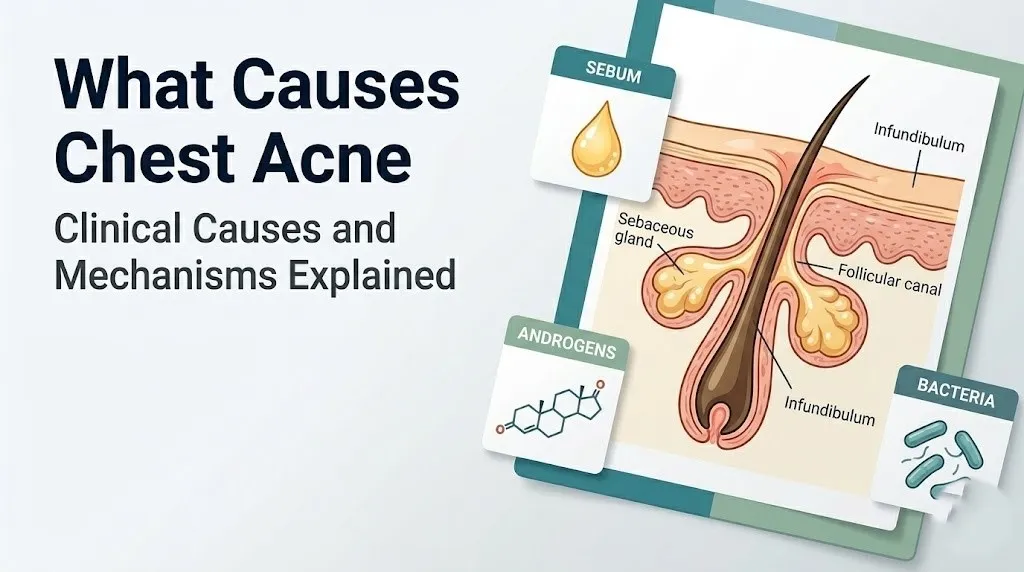
The pilosebaceous unit is the anatomical structure at the center of every acne lesion. It consists of a hair follicle plus the sebaceous gland attached to it, both embedded in the dermis.
Understanding why the chest is vulnerable starts with the infundibulum, the uppermost segment of the hair follicle canal between the skin surface (follicular ostium) and the point where the sebaceous duct empties into the follicle. This is the anatomical site where comedones form. In normal skin, keratinocytes lining the infundibulum shed continuously into the follicular canal, mix with sebum, and exit at the skin surface. In acne-prone skin, keratinocytes in the infundibulum proliferate abnormally and fail to separate properly from one another (a process called follicular hyperkeratinization). The resulting mass of desquamated cells and sebum forms the microcomedone, invisible to the naked eye, which is the precursor to every visible acne lesion.
Think of the pilosebaceous unit like a plumbing system with a pipe (the follicle), a grease trap (the sebaceous gland), and a drain opening (the ostium). When the grease trap overproduces and the pipe walls start shedding debris faster than it can drain, the pipe clogs. Once clogged, the stagnant contents become a growth medium for bacteria. That is where inflammation starts.
The chest’s pilosebaceous units are particularly large on the upper central chest, the presternal area, and the upper back, forming what dermatologists call the sebaceous trunk. These areas have sebaceous glands producing several times the volume of sebum per gland compared to the skin on the arms or legs, which is why the trunk is acne-prone while the lower extremities almost never break out.
The Journal of Investigative Dermatology has published evidence showing that sebaceous gland activity on the chest responds to androgen stimulation at a level approaching that of facial sebaceous glands, unlike the sebaceous glands on the arms or abdomen. This is why chest acne and facial acne tend to occur together and respond to similar treatments.
For individuals with oily skin types, the pilosebaceous units on the chest produce measurably higher baseline sebum output than in individuals with dry or combination skin. This does not mean oily skin causes acne independently; sebum overproduction is only one of four required factors. But it does mean higher baseline sebum output lowers the threshold at which the other three factors can tip the system into active acne formation.
Hormonal Causes of Chest Acne
Androgens are the primary hormonal driver of chest acne, specifically because they directly stimulate sebaceous gland growth, sebocyte proliferation, and sebum production through androgen receptor activation within sebaceous gland cells.
Testosterone, produced by the testes in males and by the ovaries and adrenal cortex in females, is converted within sebocytes to dihydrotestosterone (DHT) by the enzyme 5-alpha reductase type 1. DHT binds androgen receptors in sebocyte nuclei with approximately five times the affinity of testosterone itself. This binding triggers gene expression changes that enlarge the sebaceous gland, increase the rate of sebocyte differentiation, and raise sebum output per gland. The chest’s large sebaceous glands have substantial androgen receptor density, making them highly responsive to even moderate shifts in circulating androgen levels.
This hormonal mechanism explains several clinical patterns that patients notice but often cannot explain. Chest acne that flares regularly in women during the week before their menstrual period corresponds to the luteal phase of the menstrual cycle, when progesterone is elevated and contributes a mild androgenic effect on sebaceous glands. Acne that worsens in women during perimenopause is driven partly by the relative increase in androgen activity as estrogen levels fall. Severe chest and back acne in a teenage boy corresponds directly to the testosterone surge of puberty.
According to the AAD clinical guidelines for acne, hormonal evaluation is recommended in women with acne that is persistent, treatment-resistant, or accompanied by other signs of androgen excess (irregular menstrual cycles, excessive facial hair, scalp hair thinning, or acanthosis nigricans).
For men, the most important hormone-related risk factor for severe chest acne is exogenous androgen exposure, which is covered in detail in the section on anabolic steroid use. For women, the most important hormonal condition associated with chest and truncal acne is polycystic ovary syndrome (PCOS), which involves elevated circulating androgens, insulin resistance, and elevated luteinizing hormone (LH) levels that collectively drive aggressive sebaceous gland stimulation.
Key Takeaway: Androgens drive chest acne by activating androgen receptors in sebocytes, converting testosterone to DHT via 5-alpha reductase, which enlarges sebaceous glands and raises sebum output. Hormonal evaluation is indicated when acne is severe, persistent, or accompanied by signs of androgen excess.
Sebum Overproduction and Follicular Blockage in Chest Acne
Excess sebum production is a necessary but insufficient cause of chest acne. It becomes pathogenic specifically when it combines with follicular hyperkeratinization to create the anaerobic, lipid-rich environment that Cutibacterium acnes requires.
Sebum is a complex lipid mixture produced by sebocytes via a holocrine secretion process (the entire cell ruptures and its contents become the secretion). Human sebum contains triglycerides (approximately 57 percent), wax esters (26 percent), squalene (12 percent), and free fatty acids produced by bacterial enzymatic activity. Squalene oxidizes on the skin surface when exposed to UV light, producing peroxidized forms that are independently comedogenic and pro-inflammatory, which is one reason sun exposure does not reliably improve acne despite older beliefs to the contrary.
When sebum production outpaces follicular clearance, the infundibulum fills. The lipid-rich, low-oxygen environment created by this sebum accumulation is optimal for C. acnes growth. C. acnes produces lipase enzymes that hydrolyze sebum triglycerides into glycerol and free fatty acids (FFAs). These FFAs are both directly comedogenic (they promote abnormal keratinocyte desquamation in the infundibulum) and directly pro-inflammatory (they activate TLR2 on immune cells).
Individuals with insulin resistance produce higher circulating levels of insulin and IGF-1. Both insulin and IGF-1 act on sebocytes to stimulate lipogenesis (fat production within the cell), increasing total sebum output per gland. This is the biochemical bridge between metabolic conditions such as PCOS and obesity and worsening chest acne, independent of androgen levels alone.
Quick Tip:
- Showering within 20 to 30 minutes of exercise removes sweat, sebum, and surface bacteria from the chest before follicular occlusion can begin.
- Non-comedogenic body moisturizers (labeled as such) do not add to follicular blockage the way standard lotions containing petrolatum or lanolin can.
- People with known insulin resistance or type 2 diabetes should inform their dermatologist, as this metabolic context changes which treatments are most likely to be effective.
Chest and Back Acne Causes Related to Sweat and Heat
Sweat contributes to chest and back acne not by clogging pores directly but by creating the warm, moist, occluded surface environment that accelerates follicular hyperkeratinization and bacterial overgrowth.
Eccrine sweat glands produce sweat primarily for thermoregulation. Sweat itself is not comedogenic. What sweat does on the chest is two things relevant to acne pathogenesis. First, it softens and saturates the stratum corneum (the outermost layer of epidermis), altering the normal desquamation process at the follicular ostium and contributing to the retention of keratinocytes within the infundibulum. Second, sweat creates a humid microenvironment on the skin surface that lowers the local pH in complex ways and supports bacterial proliferation, including both C. acnes and, in a distinct condition called Malassezia folliculitis (pityrosporum folliculitis), the yeast Malassezia furfur.
Malassezia folliculitis is worth distinguishing here because it is frequently mistaken for acne vulgaris on the chest. It presents as small, monomorphic, itchy papules and pustules on the chest and upper back, often without comedones. It is caused by an overgrowth of Malassezia yeast within hair follicles, worsened by heat, humidity, sweating, and occlusive clothing. It does not respond to standard acne treatments targeting C. acnes and requires antifungal therapy. This distinction is clinically relevant because treating Malassezia folliculitis with antibiotics alone (a common first-line acne treatment) can worsen the yeast overgrowth by disrupting the bacterial flora that normally competes with Malassezia.
According to the Mayo Clinic, leaving sweaty clothing on for extended periods after physical activity is a frequently cited behavioral contributor to truncal acne flares, particularly in athletes and people who work in hot environments.
Individuals with hyperhidrosis (a condition of excessive sweating beyond thermoregulatory needs, medically distinct from normal exercise-related sweating) are at elevated risk for sweat-related follicular occlusion on the chest and back. The continuous moisture exposure in hyperhidrosis creates a sustained occlusive microenvironment that chronically predisposes the chest skin to both acne vulgaris and Malassezia folliculitis.
Diet and Chest Acne: High-Glycemic Foods and Whey Protein
A high-glycemic diet and regular whey protein consumption can worsen chest acne through a specific and well-characterized hormonal pathway: activation of the insulin/IGF-1/mTORC1 signaling axis in sebocytes.
When you consume high-glycemic index foods (white bread, sugary drinks, refined grains, processed snacks), blood glucose rises sharply. The pancreas responds with an insulin surge. Elevated insulin acts on the liver to increase insulin-like growth factor 1 (IGF-1) secretion. Both insulin and IGF-1 bind receptors on sebocytes and activate mTORC1 (mechanistic target of rapamycin complex 1), a nutrient-sensing kinase complex that upregulates lipid synthesis and sebocyte proliferation. At the same time, elevated insulin suppresses forkhead box protein O1 (FOXO1), a transcription factor that normally restrains androgen receptor activity and sebaceous gland function. With FOXO1 suppressed, androgen receptor activity in sebocytes increases, compounding the sebum-stimulating effect.
A randomized controlled trial published in the American Journal of Clinical Nutrition in 2007 by Smith and colleagues found that a low-glycemic-load diet produced a statistically meaningful reduction in acne lesion count compared to a high-glycemic control diet over 12 weeks. The improvement was associated with measurable reductions in free androgen index and improvements in insulin sensitivity, directly supporting the insulin/IGF-1 mechanism.
Whey protein deserves specific discussion because it is heavily used by people who exercise regularly, exactly the population most likely to also experience chest and back acne from sweat and friction. Whey protein is rich in leucine and other branched-chain amino acids that are potent activators of mTORC1, independent of the glycemic effect. Several case series published in the Journal of the American Academy of Dermatology have documented worsening truncal acne in individuals who began using whey protein supplements, with resolution or improvement when whey was discontinued or replaced with alternative protein sources such as pea or rice protein.
The evidence for diet and acne is now classified by the AAD as sufficient to recommend dietary modification as an adjunct (not a replacement) to medical acne treatment in appropriately selected patients. The evidence base is strongest for high-glycemic diet reduction and weakest for dairy broadly, where the data across studies is inconsistent.
Stress, Cortisol, and Chest Acne
Stress worsens chest acne through at least two distinct physiological pathways: direct stimulation of sebaceous gland activity by corticotropin-releasing hormone (CRH) and cortisol, and indirect inflammatory amplification via stress-induced neuropeptide release in the skin.
The hypothalamic-pituitary-adrenal (HPA) axis is the primary stress-response system. Psychological stress activates the hypothalamus to release CRH, which signals the anterior pituitary to release adrenocorticotropic hormone (ACTH), which stimulates the adrenal cortex to produce cortisol. Cortisol has a direct effect on sebaceous glands: it stimulates CRH receptor-expressing sebocytes (sebaceous glands express CRH receptors) to increase sebum production and inflammatory cytokine release. Research published in the Journal of Investigative Dermatology has demonstrated that human sebocytes express functional CRH receptors and respond to CRH stimulation with increased lipid synthesis and elevated IL-6 production.
The second pathway involves substance P, a neuropeptide released from cutaneous sensory nerve terminals during psychological and physiological stress. Substance P has receptors on sebocytes and mast cells in the skin. Substance P stimulation increases sebum production and triggers mast cell degranulation, releasing histamine and additional pro-inflammatory mediators that lower the threshold for inflammatory acne lesion formation.
This is why exam periods, work deadlines, and other acute stress events reliably precede or coincide with acne flares in many individuals. The timing reflects the 24 to 72-hour lag between the hormonal and neurochemical stress response and the formation of a visible inflammatory lesion from an existing microcomedone.
Individuals with anxiety disorders or chronic stress exposure face a sustained rather than episodic elevation in HPA axis activity and cortisol output. Chronic cortisol elevation also has mild immunosuppressive effects that can alter the skin’s normal immune surveillance of C. acnes, further complicating the picture.
Quick Tip:
- Acne flares that consistently follow high-stress periods by two to four days are a recognized clinical pattern worth documenting and bringing to a dermatologist appointment.
- Stress is a modifier of acne, not an independent cause in most people. Addressing stress without addressing other causes rarely resolves acne on its own.
- Adults with pre-existing anxiety or chronic stress conditions should mention this context to their prescribing dermatologist, as it may influence the treatment approach.
Key Takeaway: High-glycemic foods and whey protein worsen chest acne by activating the IGF-1/mTORC1 pathway in sebocytes, which increases sebum production and amplifies androgen receptor activity. Reducing dietary glycemic load is now recognized by the AAD as a legitimate adjunct to medical acne treatment.
Friction and Occlusion as Causes for Acne on Chest
Friction and occlusion cause a specific type of acne on the chest called acne mechanica, which forms when repeated mechanical pressure, rubbing, or skin coverage by a non-breathable material traps heat, sweat, and sebum against the follicular openings.
Acne mechanica is common on the chest in people who wear tight-fitting athletic wear during exercise, carry heavy backpack straps across the upper chest, wear sports pads or chest guards, or sleep pressed against synthetic bedding materials for prolonged periods. The mechanism is direct physical compression and occlusion of the follicular ostium. When the ostium is mechanically compressed, sebum and desquamated keratinocytes cannot exit normally. The follicular canal fills. Combined with the heat and moisture trapped by the occlusive material, this creates ideal conditions for microcomedone formation and C. acnes overgrowth.
Acne mechanica on the chest tends to appear specifically in the areas of friction or occlusion rather than diffusely. Breakouts that appear precisely where a bra strap, backpack strap, or athletic pad contacts the skin are almost always mechanically driven. This distribution pattern is diagnostically useful.
Tight synthetic fabrics (polyester, nylon, spandex blends) create a worse occlusive environment than natural fibers (cotton, linen, moisture-wicking technical fabrics designed to pull sweat away from the skin). This is not because synthetic fabrics are inherently comedogenic, but because they trap heat and moisture more effectively, raising the local skin temperature and humidity to levels that accelerate follicular hyperkeratinization and bacterial growth.
| Friction/Occlusion Source | Chest Area Affected | Modification |
|---|---|---|
| Tight athletic bra (synthetic) | Upper and mid-chest, under breast crease | Switch to moisture-wicking natural fiber |
| Backpack straps | Upper chest and sternum area | Adjust fit; shower within 30 min of wear |
| Sports chest guard/pad | Mid and lower chest | Wear moisture-wicking underlayer |
| Tight collar or neckline | Upper chest and decolletage | Choose wider necklines in breathable fabric |
| Sleeping face-down on synthetic pillow | Central chest | Switch to cotton pillowcase; shower before bed |
Individuals with larger body habitus may experience persistent skin-to-skin friction and occlusion beneath the breast fold or at skin overlap areas on the chest, creating a chronic acne mechanica pattern that does not respond well to topical treatment alone without addressing the mechanical cause.
Medication and Supplement Causes of Chest Acne
Several medications and supplements cause chest acne through mechanisms entirely distinct from the hormonal and follicular pathways that drive typical acne vulgaris, which is why these drug-induced presentations often look different and respond differently to standard treatments.
The most clinically distinct of these is corticosteroid-induced acne (steroid acne). Unlike typical acne vulgaris, steroid acne does not produce comedones. It presents as a monomorphic eruption of small papules and pustules concentrated on the chest, upper back, and shoulders. This occurs because corticosteroids suppress the normal immune surveillance of the follicle while promoting follicular hyperkeratinization through a direct glucocorticoid receptor mechanism in keratinocytes. The clinical appearance is distinct enough that an experienced dermatologist can often identify it on inspection without additional testing.
Lithium, used to treat bipolar disorder, causes acne through a different mechanism: it increases neutrophil chemotaxis and promotes comedone formation via its effect on inositol phosphate signaling pathways in keratinocytes. Lithium-induced acne can be severe and affects the trunk prominently. For individuals with bipolar disorder who develop worsening chest acne after starting lithium, the connection is often missed by primary care providers who treat the skin and the psychiatric condition separately.
Medications and substances associated with chest acne formation include:
- Anabolic androgenic steroids (direct androgen receptor activation in sebocytes; produces the most severe truncal acne, often nodular or cystic)
- Systemic corticosteroids (prednisone, dexamethasone; monomorphic follicular pustule eruption, no comedones)
- Topical corticosteroids applied to the chest or upper body in high potency for prolonged periods
- Lithium carbonate (comedogenic through keratinocyte inositol pathway mechanism)
- Iodides (from certain radiocontrast agents, iodine-containing supplements, or kelp-based products; trigger acneiform eruptions via poorly understood inflammatory mechanism)
- Certain anticonvulsants (phenytoin, in particular, is associated with acneiform eruptions)
- Progestins with androgenic activity in some oral contraceptive formulations (levonorgestrel, norgestrel)
- Whey protein and creatine supplements (via IGF-1/mTORC1 pathway activation rather than direct hormonal mechanism)
According to the Global Alliance to Improve Outcomes in Acne, medication history is a critical component of the acne evaluation because drug-induced acne often requires modification of the causative medication rather than addition of standard acne treatments. Patients should bring a complete medication and supplement list to any dermatology appointment for chest acne.
Key Takeaway: Corticosteroid-induced acne on the chest produces a distinctive monomorphic pustule pattern without comedones. Lithium and anabolic steroids cause mechanistically different acne types that require identifying and addressing the causative agent, not just treating the skin.
Causes for Chest Acne in Women and Hormonal Variation
Chest acne in women is driven by hormonal variation across the menstrual cycle, reproductive milestones, and endocrine conditions that shift the androgen-to-estrogen balance in ways that directly stimulate sebaceous gland activity.
During the luteal phase of the menstrual cycle (roughly days 15 to 28), progesterone is elevated. Progesterone has a mild androgenic effect via partial androgen receptor agonism and also increases body temperature slightly, which raises skin surface temperature and sebum fluidity. This is why many women notice chest acne flares in the week before their period and improvement in the follicular phase when estrogen is relatively dominant.
Polycystic ovary syndrome (PCOS) is the endocrine condition most commonly associated with severe, treatment-resistant truncal acne in women. PCOS involves elevated LH levels relative to FSH, which drives excess ovarian androgen production. Additionally, the insulin resistance associated with PCOS elevates circulating insulin and IGF-1, providing a second independent pathway to sebaceous gland overstimulation. Women with PCOS often have chest and back acne that is more severe than their facial acne and that responds poorly to topical treatments without addressing the underlying hormonal abnormality.
Pregnancy causes complex hormonal shifts. In the first trimester, rising human chorionic gonadotropin (hCG) stimulates ovarian progesterone and can transiently worsen acne. In later pregnancy, placental progesterone production increases substantially. Some women experience significant chest acne improvement during pregnancy while others experience worsening; the direction depends on individual hormonal response patterns and prior acne history.
For women taking oral contraceptives, the androgenic or anti-androgenic activity of the progestin component matters. Formulations containing levonorgestrel or norgestrel have mild androgenic activity that can worsen acne. Formulations containing drospirenone, norgestimate, or desogestrel have lower androgenic activity and may improve acne. Women whose chest acne worsened after starting or switching oral contraceptive formulations should discuss this specific pattern with their prescribing obstetrician-gynecologist or a board-certified dermatologist who can recommend an appropriate alternative formulation.
Chest Acne Causes in Men and Anabolic Steroid Use
In men, chest acne has several causes operating simultaneously, but the one that produces the most severe and clinically distinct pattern is the use of anabolic androgenic steroids (AAS).
Testosterone and its synthetic derivatives, including nandrolone, stanozolol, and trenbolone, are used by bodybuilders, competitive athletes, and some recreational exercisers to increase muscle mass and reduce recovery time. When administered exogenously, these androgens circulate at levels far exceeding physiological production. They bind androgen receptors in sebocytes throughout the skin, but the chest, back, and shoulders have particularly high sebaceous gland density and androgen receptor concentration, which is why AAS-related acne is heavily truncal in its distribution.
The acne produced by AAS use is frequently nodular or cystic rather than comedonal or papular. Nodules and cysts form because the degree of sebum overproduction is extreme, the inflammatory response is intense, and the follicular rupture extends deep into the dermis. AAS-related chest acne carries a high risk of scarring for this reason. In some users, AAS-induced acne progresses to acne fulminans (covered in detail in the following section), a systemic inflammatory condition that can be triggered by both endogenous androgen surges and exogenous AAS exposure.
The natural progression of male chest acne without AAS influence follows a different trajectory. Adolescent males typically develop chest acne during and after peak puberty (ages 14 to 18 for most), driven by endogenous testosterone rise. For most, this improves through the early to mid-20s as androgen receptor sensitivity in sebaceous glands moderates. Men who develop new-onset or worsening chest acne in their 30s and 40s without AAS use warrant evaluation for other contributing factors including new medications, dietary changes, or stress exposure.
According to a 2021 review published in JAMA Dermatology, truncal acne severity in men correlates with total testosterone levels more strongly than with free testosterone or DHT levels in non-AAS-using populations, suggesting that the volume of circulating testosterone reaching sebaceous gland androgen receptors matters even before enzymatic conversion to DHT.
Men with chest acne should disclose any use of AAS, testosterone replacement therapy, DHEA supplements, or other testosterone-modifying substances to their treating dermatologist, as these agents substantially change the treatment algorithm.
Chest Acne in Adults Over 40: Why It Happens
Adult-onset chest acne after age 40 is mechanistically distinct from adolescent acne in most cases, and identifying the specific cause in this age group requires ruling out several contributors that are uncommon in younger patients.
In women over 40, perimenopause produces a hormonal shift that is among the most common drivers of new or worsening chest acne in this age group. As ovarian estrogen production declines erratically during the perimenopausal transition (typically beginning in the mid-40s), the relative androgenic effect at sebaceous glands increases. Estrogen normally moderates sebaceous gland activity and promotes skin barrier integrity; as it withdraws, the sebaceous glands respond more strongly to the unchanged (or relatively elevated) androgen signal. This is why some women develop acne for the first time in their 40s after decades of clear skin.
In men over 40, the most relevant new contributors to chest acne are testosterone replacement therapy (prescribed or obtained otherwise), new medications for chronic conditions (statins and other drugs do not typically cause acne, but antipsychotics and mood stabilizers sometimes do), and insulin resistance developing in the context of metabolic syndrome.
For both sexes, chronic stress tends to accumulate in the 40s and 50s in ways that may represent a sustained rather than episodic HPA axis activation, creating a persistent low-grade cortisol elevation that keeps sebaceous glands mildly overstimulated.
A practical point about skin changes in this age group: the stratum corneum thickens slightly with age and cell turnover slows, which means the desquamation process in the follicular infundibulum can become less efficient. This reduced cell turnover does not cause acne independently, but it means that mild factors that would not have tipped a younger person into an acne flare may be sufficient to do so in a person over 40.
Adults over 40 with new-onset chest acne should be evaluated by a board-certified dermatologist who can perform a full medication review, assess for hormonal contributors, and distinguish true acne vulgaris from acne-mimicking conditions including rosacea variants and drug reactions.
Key Takeaway: Perimenopausal hormonal shifts in women over 40, specifically declining estrogen with maintained androgen activity, are among the most clinically underrecognized causes of new-onset adult chest acne in this age group.
Chest Acne Versus Folliculitis Versus Hidradenitis Suppurativa
Not every breakout on the chest is acne vulgaris, and correctly identifying the condition matters because folliculitis, Malassezia folliculitis, and hidradenitis suppurativa respond to entirely different treatments and carry different clinical implications.
Folliculitis is a bacterial infection of the hair follicle, most commonly caused by Staphylococcus aureus. It produces tender, erythematous papules and pustules centered on individual hair follicles. Unlike acne vulgaris, folliculitis typically does not include comedones, tends to be more uniform in size, may itch or burn more prominently than typical acne lesions, and can appear suddenly after shaving, swimming in unchlorinated water (hot tub folliculitis, caused by Pseudomonas aeruginosa), or prolonged antibiotic therapy that disrupts normal skin flora (gram-negative folliculitis).
Malassezia folliculitis (pityrosporum folliculitis) appears as small, itchy, uniform papules and pustules on the chest and upper back, typically without comedones, often worsening in hot and humid conditions. It is caused by yeast overgrowth in follicles, not bacteria, and does not respond to antibiotic treatment. Dermatologists confirm it with a potassium hydroxide (KOH) preparation of a surface scraping showing yeast cells within follicular material.
Hidradenitis suppurativa (HS) is a chronic, inflammatory skin condition affecting areas with apocrine glands, primarily the axillae, groin, and inframammary folds. When HS occurs in the inframammary chest area, it can be confused with chest acne. Key differentiating features of HS include recurrent, painful nodules and abscesses that form tunnel-like tracts under the skin (sinus tracts), heal with firm scarring and cordlike fibrous bands, do not produce comedones in typical distribution, and are strongly associated with tobacco use, obesity, and metabolic syndrome.
| Condition | Comedones Present | Typical Distribution | Key Feature | Treatment Direction |
|---|---|---|---|---|
| Acne vulgaris | Yes | Central chest, upper back | All lesion types present | Topical/oral acne treatment |
| Bacterial folliculitis | No | Hair-bearing areas | Tender, uniform pustules | Antibacterial treatment |
| Malassezia folliculitis | No | Chest and upper back | Itchy, monomorphic | Antifungal treatment |
| Hidradenitis suppurativa | No | Inframammary, axillary | Sinus tracts, scarring | Specialist management |
If your chest breakouts are persistent, severely painful, recurrently form deep lumps that tunnel or drain, or occur primarily in the lower chest fold or armpit area rather than the central chest, evaluation by a board-certified dermatologist is the appropriate next step, as these features point away from standard acne vulgaris.
Acne Fulminans and Acne Conglobata on the Chest
Acne fulminans and acne conglobata are two severe and medically distinct forms of acne that preferentially affect the chest and back, and both require urgent professional evaluation rather than self-management.
Acne conglobata (ICD-10: L70.1) is a chronic, severe form of acne characterized by large, interconnected nodules, cysts, and abscesses on the trunk, particularly the chest and back, that heal with significant scarring. It occurs more often in men and is associated with a higher androgen burden, whether endogenous or exogenous. The interconnected nodules form because individual follicular ruptures coalesce into shared inflammatory cavities under the dermis, producing the characteristic “bridged” comedones and draining sinus tracts that distinguish it from standard nodular acne. Acne conglobata does not typically cause systemic symptoms but causes severe, permanent scarring without aggressive medical treatment.
Acne fulminans (ICD-10: L70.3) is rarer and considerably more medically serious. It is characterized by the sudden onset of severe, ulcerating, hemorrhagic nodules primarily on the chest and back, accompanied by systemic symptoms: fever, arthralgia (joint pain), weight loss, and elevated inflammatory markers including C-reactive protein (CRP) and erythrocyte sedimentation rate (ESR). The skin lesions can ulcerate and crust extensively. Lytic bone lesions affecting the sternum, clavicles, and long bones have been documented in severe cases, published in case series in the British Journal of Dermatology.
Acne fulminans is most commonly triggered in adolescent males with severe pre-existing acne who begin isotretinoin therapy, though it can also be triggered by anabolic steroid use. The proposed mechanism involves a sudden, intense immune reaction to C. acnes antigens in patients with a predisposing immunological sensitivity.
Any patient with chest acne accompanied by fever, joint pain, or significant constitutional symptoms (fatigue, weight loss) should be evaluated urgently by a board-certified dermatologist or emergency medicine physician the same day.
How to Identify the Cause of Your Chest Acne
Identifying the specific cause of your chest acne involves a structured, systematic assessment of your skin, your history, and your current circumstances that a board-certified dermatologist formalizes but that you can begin organizing before your appointment.
To systematically assess your chest acne cause before a professional evaluation:
- Document the distribution pattern: Is the acne confined to the upper central chest, the lower chest, or the areas under clothing straps or pads? Central upper chest acne suggests sebaceous/hormonal causes. Strap-area acne suggests mechanical causes. Lower chest fold acne warrants consideration of hidradenitis suppurativa.
- Assess the lesion types present: Are there visible blackheads or whiteheads? If yes, comedonal acne vulgaris is present. If pustules appear without any comedones, drug-induced acne, Malassezia folliculitis, or bacterial folliculitis are more likely.
- Map the timing: Does the acne worsen at a predictable time in the menstrual cycle (for women)? After workouts or prolonged sweat exposure? After starting or changing a medication or supplement? After a high-stress period?
- List all current medications and supplements: Include everything: prescription drugs, over-the-counter medications, vitamins, protein powders, creatine, pre-workout formulas, herbal supplements, and any topical products applied to the chest.
- Note any systemic symptoms: Fever, joint pain, or constitutional symptoms alongside chest acne breakouts are red flags that require same-day evaluation rather than a scheduled appointment.
- Photograph the distribution and lesion types: Serial photographs taken two to four weeks apart help dermatologists assess progression pattern and response to any interventions. Natural lighting photographs without filters provide the most diagnostically useful images.
Completing this assessment before your appointment gives a board-certified dermatologist the information needed to distinguish acne vulgaris from its mimics and to identify the most likely causal category.
When Chest Acne Requires Evaluation by a Dermatologist
Chest acne requires evaluation by a board-certified dermatologist under specific clinical circumstances, and recognizing these thresholds prevents both under-treatment of serious conditions and overuse of prescription-strength agents for mild, self-resolving presentations.
Mild comedonal chest acne (blackheads and whiteheads, no or minimal inflammation, no pain) that has been present for less than two to three months can reasonably be approached initially with over-the-counter topical agents including benzoyl peroxide 2.5 to 5 percent (targets C. acnes via oxidative mechanism) and salicylic acid (beta-hydroxy acid that exfoliates within the follicle via keratolytic mechanism). If there is no improvement after 8 to 12 weeks of consistent use, professional evaluation is appropriate.
The following clinical circumstances warrant evaluation by a board-certified dermatologist without a prior trial of self-management:
- Inflammatory chest acne (papules, pustules, nodules, or cysts) rather than purely comedonal lesions
- Any nodular or cystic chest acne, regardless of severity rating
- Chest acne causing or threatening scarring
- Chest acne that began or worsened after starting a medication or supplement
- Chest acne in a woman with irregular periods, excessive facial hair, scalp hair thinning, or other signs of androgen excess (to assess for PCOS or other endocrine conditions)
- Chest acne that differs from the typical distribution: lower chest fold, axillary extension, or recurring in the same location and forming draining tracks
- Chest acne in a patient with known diabetes, insulin resistance, or metabolic syndrome
- Any chest acne accompanied by systemic symptoms: fever, joint pain, weight loss, or malaise
For suspected hormonal causes in women, the dermatologist may refer to or co-manage with an endocrinologist for evaluation including serum testosterone (total and free), DHEAS, LH, FSH, and sex hormone-binding globulin (SHBG). For suspected Malassezia folliculitis, a KOH preparation or skin surface biopsy may be performed.
When to Seek Urgent Medical Care for Chest Acne
Certain presentations associated with severe chest acne require urgent medical evaluation. Do not wait to see if these resolve on their own.
Seek same-day evaluation by a board-certified dermatologist or go to the nearest emergency room immediately if you experience:
- Sudden onset of severe, rapidly spreading ulcerating or hemorrhagic chest skin lesions combined with fever above 38 degrees Celsius (100.4 degrees Fahrenheit)
- Joint pain or swelling (arthralgia or arthritis) occurring alongside a sudden acne flare on the chest or back
- Constitutional symptoms including significant fatigue, weight loss, or malaise accompanying a skin flare
- A chest acne flare that appeared or dramatically worsened within days to two weeks of starting isotretinoin therapy
- Rapidly enlarging, deeply painful nodules or abscesses on the chest that feel warm to the touch and show systemic signs of infection
These presentations can indicate acne fulminans, a systemic inflammatory condition that can cause bone lesions and requires emergency dermatological and potentially systemic corticosteroid management, not a standard acne treatment plan. Early recognition and urgent treatment substantially improve outcomes.
Frequently Asked Questions About What Causes Chest Acne
Why do I keep getting acne only on my chest and not my face?
The chest has large sebaceous glands with high sebum output capacity relative to their follicular opening size, making them structurally prone to follicular impaction even when facial sebaceous glands are less active.
The chest is also more subject to friction, occlusion by clothing, and post-exercise sweat retention than the face, and these mechanical factors contribute to acne formation specifically on the trunk.
If your chest acne is persistent, widespread, or nodular, a board-certified dermatologist can evaluate whether a hormonal or structural factor is driving the truncal distribution.
Is chest acne a sign of a hormonal problem?
Chest acne can be a sign of a hormonal problem, particularly when it is moderate to severe, treatment-resistant, or accompanied by other signs of androgen excess such as irregular periods, excessive facial hair, or scalp hair thinning in women.
The most common underlying hormonal condition associated with truncal acne in women is polycystic ovary syndrome (PCOS), which involves elevated androgens and insulin resistance that both independently stimulate sebaceous gland activity.
Hormonal evaluation by a board-certified dermatologist or endocrinologist, including serum testosterone, DHEAS, LH, FSH, and SHBG, is appropriate when these clinical features are present.
Can what I eat really cause chest acne?
Yes. A high-glycemic diet and whey protein consumption can worsen chest acne by activating the IGF-1/mTORC1 signaling pathway in sebocytes, which increases sebum production and sebaceous gland activity.
A randomized controlled trial published in the American Journal of Clinical Nutrition in 2007 found that a low-glycemic-load diet produced a measurable reduction in acne lesion count and free androgen index over 12 weeks compared to a high-glycemic control diet.
Dietary modification is recognized by the American Academy of Dermatology as a valid adjunct to medical acne treatment, not a standalone cure.
How is chest acne different from back acne?
Chest acne and back acne share the same four-factor pathogenic mechanism but differ in sebaceous gland density and the predominant contributing causes.
The upper back has extremely high sebaceous gland density comparable to the scalp, making it the most common truncal acne site; chest acne tends to concentrate on the upper and central presternal area where gland density is also high.
Friction and occlusion from backpacks and posterior clothing are more commonly implicated in back acne, while bra straps, chest padding, and front-worn sports equipment contribute more specifically to chest acne distribution.
When should I see a doctor about chest acne?
Chest acne warrants evaluation by a board-certified dermatologist when it involves inflammatory lesions (papules, pustules, nodules, or cysts), when it is associated with suspected scarring, or when it has not improved after 8 to 12 weeks of consistent over-the-counter treatment.
Prompt evaluation is needed when chest acne begins or worsens after a new medication or supplement, when it occurs in a woman with signs of androgen excess, or when it appears in an unusual distribution such as the lower chest fold or armpit.
Same-day emergency evaluation is required when severe chest acne is accompanied by fever, joint pain, or systemic symptoms, as this combination can indicate acne fulminans.
Can chest acne leave permanent scars?
Yes. Inflammatory chest acne, particularly nodules and cysts, carries a high risk of permanent scarring because the inflammatory process extends into the deep dermis, where matrix metalloproteinase activity and neutrophil-driven tissue damage break down collagen and elastin.
The chest is particularly prone to keloid and hypertrophic scar formation compared to the face because the presternal skin has a higher intrinsic tendency to form raised scars due to the mechanical tension on the skin from thoracic movement.
Early effective treatment that prevents nodule and cyst formation is the only reliable way to prevent chest acne scarring, which is why delayed treatment of severe inflammatory chest acne is clinically inadvisable.
Closing
The central clinical fact about chest acne is this: it has a specific, identifiable cause in nearly every case. Whether the driver is androgen receptor stimulation in sebocytes, a high-glycemic diet activating the IGF-1/mTORC1 pathway, friction from athletic gear, or a medication you started three months ago, the physiology is traceable. Understanding your specific cause is not academic. It determines what will actually work.
If your chest acne is mild and recently developed, start with consistent use of benzoyl peroxide on the chest skin, shower promptly after exercise, and assess any recent dietary or supplement changes. If it is inflammatory, nodular, scarring, or accompanied by any systemic symptoms, schedule an appointment with a board-certified dermatologist now. Bring a complete medication and supplement list, photographs of the distribution, and notes on timing patterns.
Chest acne that is addressed at the right level for its severity, with the right treatment for its specific cause, responds well. The mistake most people make is treating severe inflammatory acne with over-the-counter-level interventions for months while scarring accumulates. Know your cause. Match your response to it.