What Causes a Blown Head Gasket: The Complete 2026 Guide
A blown head gasket is caused primarily by engine overheating, but detonation, poor installation, coolant chemistry failure, and manufacturer design defects each account for real-world failures that overheating alone does not explain. Understanding the specific cause matters because the repair approach, the likely extent of additional engine damage, and the cost can differ substantially depending on which mechanical or thermal failure mechanism actually destroyed the gasket.
Head gasket repairs rank among the most expensive standard engine repairs a vehicle owner will face, with professional labor and parts costs ranging from roughly $1,500 to over $3,000 in 2026 depending on vehicle make, engine configuration, and the extent of associated cylinder head damage. According to data compiled by the National Institute for Automotive Service Excellence, head gasket failure is consistently among the top five engine repair categories handled by ASE-certified engine repair technicians across all vehicle ages and mileages.
This article covers every named cause of head gasket failure with the specific mechanical, thermal, and chemical mechanism behind each one. It explains why certain engine designs and vehicle models fail more often than others, what distinguishes a partial gasket leak from a complete breach, and what you can actually do to reduce your risk of facing this failure.
What Is a Head Gasket and What Does It Do
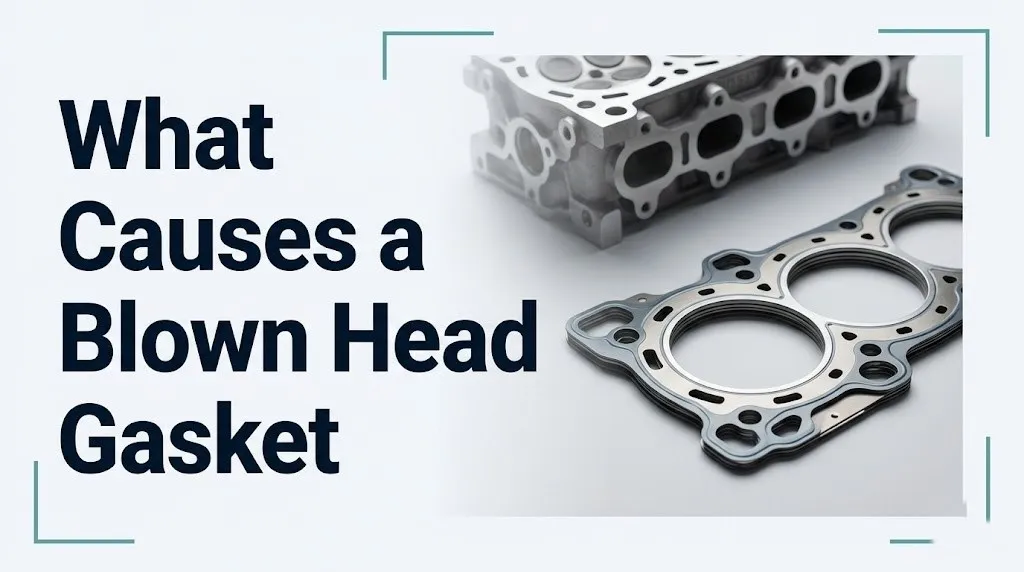
The head gasket is a precision-engineered sealing component clamped between the cylinder head and the engine block, sealing three completely separate fluid and pressure environments simultaneously within a space often thinner than a coin.
Those three environments are: the combustion chamber (where fuel and air ignite and pressures can exceed 1,000 psi in a petrol engine under load), the coolant passages (carrying ethylene glycol-based coolant at 15 to 20 psi above atmospheric pressure through channels that run alongside the combustion chambers), and the oil passages (carrying pressurized engine oil to the cylinder head for lubrication of camshafts, valvetrain components, and variable valve timing mechanisms). The gasket must seal all three simultaneously, continuously, through every engine start, every temperature swing from cold to operating temperature, and every combustion cycle.
Modern engines use multi-layer steel (MLS) gaskets as the dominant design. An MLS gasket consists of two to five thin stamped steel layers, typically with a rubber or elastomer coating on the outer surfaces. The innermost steel layers are embossed with raised beads around the combustion bore called the fire ring, which concentrates clamping load at the highest-pressure area of the seal. Older vehicles used composite gaskets made from compressed fiber, asbestos substitutes, or graphite with metal eyelets reinforcing the combustion bore. Some high-performance and racing applications still use solid copper gaskets that require precision O-ring grooves machined into the cylinder head and block deck.
The gasket depends entirely on correct clamping force from the head bolts or studs, a perfectly flat mating surface on both the cylinder head and block deck, and a cylinder head surface finish within the manufacturer’s specified roughness tolerance (typically Ra 60 to 125 microinches for MLS gaskets, which is smoother than composite gaskets required). Any deviation in clamping force, surface flatness, or surface finish compromises the seal before the engine ever starts.
Think of the head gasket like a perfectly engineered gasket in a pressure cooker, except it has to handle pressures twenty times higher, three separate fluid types, and tens of thousands of heat cycles over its service life.
| Head Gasket Type | Primary Material | Common Applications | Key Failure Mode |
|---|---|---|---|
| Multi-layer steel (MLS) | Stamped steel layers with elastomer coating | Most post-1990 vehicles | Fire ring breach from overheating or detonation |
| Composite fiber | Compressed fiber/graphite with metal eyelets | Pre-1990s vehicles, some budget replacements | Compression creep, coolant wick-through |
| Solid copper | Solid copper sheet | Racing, high-performance rebuilds | Requires machined O-ring grooves; fails if not installed correctly |
| Bimetal | Steel core with soft metal facing | Some OEM specific applications | Corrosion of soft metal layer from electrolysis |
What Causes a Blown Head Gasket: The Core Explanation
A head gasket blows when the mechanical, thermal, or chemical stress applied to the gasket exceeds the designed sealing capacity of the gasket material and the clamping force holding it in compression.
The gasket does not fail randomly. Every blown head gasket has a specific mechanical narrative: a threshold was crossed, a force exceeded the design limit, a material degraded below its functional minimum, or a combination of stresses compounded over time until the seal gave way. According to published SAE International technical papers on engine sealing systems, the three most common real-world causes in order of documented frequency are engine overheating (responsible for an estimated 50 to 65% of head gasket failures in field repair data), detonation or pre-ignition (estimated 20 to 25%), and poor installation during a previous repair (estimated 10 to 15%). All remaining causes, including coolant electrolysis, manufacturer design defects, and pure age-related fatigue, account for the remaining fraction but are no less real or costly when they occur.
What matters in diagnosing cause after the fact is the pattern of failure on the gasket itself. A gasket that failed from overheating typically shows distortion, fire ring erosion, or burning at the area of hottest combustion. A gasket that failed from detonation shows sudden, localized breach at the fire ring, often on one or two specific cylinders. A gasket that failed from electrolysis shows pitting and material loss at the coolant passage sealing areas, not at the fire ring.
Drivers who experience recurrent head gasket failures after repair almost always have an unresolved underlying cause: a cooling system deficiency that was not corrected, a cylinder head that was not resurfaced to specification, or an underlying engine management issue that continues to produce detonation.
Key causes ranked by estimated frequency in professional repair shop data:
- Engine overheating: the single most common cause, responsible for the majority of failures
- Detonation and pre-ignition: second most frequent, often underdiagnosed because the engine may appear to run normally otherwise
- Poor or incorrect installation: third most common, entirely preventable with correct technique
- Coolant system neglect (low coolant, thermostat failure, water pump failure): a contributing cause that enables overheating
- Coolant electrolysis: underrecognized, affects older vehicles with neglected coolant chemistry
- Manufacturer design defects: affects specific vehicle models and engine generations
- Pure age and thermal fatigue: contributes in high-mileage vehicles but rarely acts alone
Engine Overheating and Head Gasket Failure
Engine overheating is the most common cause of a blown head gasket because sustained high temperature causes the aluminum cylinder head to expand beyond the gasket’s ability to maintain a seal, permanently distorting the head and breaching the fire ring.
Here is the specific mechanical sequence. The cylinder head, typically cast from aluminum alloy, expands as temperature rises. When coolant temperature climbs above the normal operating range (typically 195 to 220 degrees Fahrenheit / 91 to 104 degrees Celsius for most vehicles), the rate of expansion accelerates. The aluminum cylinder head expands against the gasket. The gasket, clamped between the head and the iron or aluminum block, undergoes increased compressive stress. If the temperature rise is severe enough or sustained long enough, the cylinder head begins to distort, specifically across the cylinder bore area where combustion heat is most concentrated. This distortion creates micro-gaps in the fire ring seal. Combustion gases at over 1,000 psi burst through those gaps with each cylinder firing, eroding the seal further with every cycle.
A single severe overheating event, particularly one where the driver continued operating the vehicle after the temperature warning activated, can breach a gasket in minutes. The National Highway Traffic Safety Administration notes that ignoring a temperature warning light is one of the most common triggers of catastrophic engine damage claims in vehicle incident reports.
Older drivers and younger drivers who have never learned to read the temperature gauge are at highest risk of this category of failure. Vehicles with failing coolant temperature sensors are doubly at risk: the gauge reads normal while actual coolant temperature is critically elevated.
The sub-causes of overheating that lead to gasket failure include:
- Thermostat failure (stuck closed): the thermostat normally opens at operating temperature to allow coolant to flow through the radiator; a stuck thermostat traps hot coolant in the engine block, driving temperatures to dangerous levels within minutes
- Water pump failure: the impeller-driven water pump forces coolant through the cooling system; a failed water pump stops circulation, producing rapid localized overheating even if coolant volume is full
- Radiator blockage or external leak: reduced radiator capacity means coolant cannot shed heat effectively even with the water pump functioning
- Low coolant level from a slow leak: as coolant level drops, air pockets form in the system; air does not conduct heat the way liquid coolant does, creating hot spots that stress the gasket unevenly
- Radiator cap pressure failure: a radiator cap that cannot hold its rated pressure (typically 14 to 16 psi) lowers the boiling point of the coolant, allowing localized boiling near the combustion chambers
Quick Tip:
- Pull over and shut the engine off immediately if the temperature gauge enters the red zone or an overheat warning activates. Do not try to “make it home.” Every mile driven with a critically hot engine increases the probability of destroying a cylinder head beyond resurfacing tolerance, turning a $1,800 gasket job into a $4,500 cylinder head replacement or engine replacement.
- Check the coolant reservoir level monthly. Low coolant is always a warning, not a minor inconvenience.
- Vehicles with automatic transmissions running a transmission oil cooler routed through the radiator should have both the transmission fluid and coolant checked together during maintenance, as cross-contamination from a cracked internal radiator divider can dilute both fluids simultaneously.
Detonation and Pre-Ignition as Causes of Head Gasket Failure
Detonation causes head gasket failure by generating explosive pressure spikes in the combustion chamber that exceed the fire ring’s design load capacity, physically punching through the gasket seal rather than gradually eroding it the way heat does.
Normal combustion is a controlled burn. The spark plug ignites the air-fuel mixture, and a flame front travels across the combustion chamber in a precisely timed sequence. Detonation (also called knock) occurs when unburned fuel-air mixture in the end-gas zone of the combustion chamber spontaneously ignites from heat and pressure before the flame front reaches it. Two flame fronts collide, creating a pressure spike that can be three to five times higher than normal peak combustion pressure. That spike hits the fire ring of the head gasket with a hammer-like impulse on every affected combustion cycle.
Pre-ignition is related but distinct. Pre-ignition happens when the air-fuel mixture ignites before the spark plug fires, triggered by a hot spot in the combustion chamber such as a carbon deposit, an overheated valve, or a glowing exhaust particle. Pre-ignition produces even higher pressure spikes than detonation and is far more destructive over short periods. According to SAE Technical Paper 2019-01-0582, sustained pre-ignition events (sometimes called low-speed pre-ignition or LSPI in turbocharged direct-injection engines) can destroy a head gasket fire ring within a single drive cycle under the right conditions.
Causes of detonation and pre-ignition include:
- Incorrect ignition timing: advance that is too aggressive causes end-gas ignition before combustion pressure peaks at the optimal crank angle
- Fuel octane mismatch: using regular-grade fuel in an engine calibrated for premium causes detonation on high-load acceleration events; the engine control module’s knock sensor system may compensate partially but cannot fully protect against sustained detonation
- Carbon buildup in combustion chambers: deposits from intake valve carbon accumulation (especially in direct-injection engines without port fuel washing) create hot spots that trigger pre-ignition
- Lean air-fuel mixture: insufficient fuel relative to air produces higher combustion temperatures, promoting end-gas autoignition
- Failed knock sensor or EGR system: a knock sensor that cannot detect detonation prevents the engine control module from retarding timing to protect the engine
Turbocharged engines in vehicles produced after approximately 2010, particularly those using direct injection, have shown elevated LSPI rates in professional technical literature. The Society of Automotive Engineers (SAE) documented LSPI as a specific failure mode in boosted direct-injection engines, prompting ILSAC GF-6 and API SP motor oil specification changes designed to reduce LSPI events through revised additive chemistry.
Key Takeaway: Engine overheating and detonation together account for an estimated 70 to 90% of real-world head gasket failures. If you address neither the cooling system condition nor the engine’s combustion calibration after a gasket replacement, the new gasket will fail for the same reason the original one did.
Thermal Expansion and Gasket Material Fatigue
Thermal expansion fatigue causes head gasket failure through the accumulated mechanical damage of thousands of heat-up and cool-down cycles that progressively compress, stretch, and weaken the gasket material’s ability to maintain its sealing load.
Every time an engine starts cold and warms to operating temperature, the cylinder head and engine block expand. Every time it cools down, they contract. This cycle, repeated daily over years and tens of thousands of miles, subjects the gasket to continuous compression and relaxation. According to Fel-Pro gasket engineering documentation, a modern MLS gasket is designed to withstand this thermal cycling over a typical service life of 100,000 to 150,000 miles under normal operating conditions, assuming correct installation and the absence of overheating events. Each overheating event that falls short of causing immediate failure still accelerates fatigue by exposing the gasket to compression loads beyond its design norm.
The fire ring embossed into MLS gasket layers works by maintaining concentrated clamping pressure at the combustion bore perimeter. As the gasket ages, the elastomeric coatings on the steel layers can harden and lose their ability to conform to minor surface irregularities. What was originally a microinch-tight seal under the fire ring can develop micro-passages as the coating material stiffens. The result is not a catastrophic breach but a gradual leak that grows over time as combustion gases scour the opening with each firing cycle.
Composite gaskets, which predate MLS designs in most applications, are particularly susceptible to compression creep: the phenomenon where the compressed fiber material slowly flows under sustained load, reducing the height of the gasket and therefore the clamping force the head bolts can generate. According to the Society of Tribologists and Lubrication Engineers, composite sealing materials under sustained compressive load lose between 5 and 15% of their original installed height over long service periods, which translates directly to reduced sealing force at the combustion bore.
Vehicles operated primarily in climates with extreme temperature swings from very cold starts to hot operating temperatures experience more thermal cycles per service mile than vehicles operated in moderate climates, placing additional cumulative stress on the gasket material.
| Gasket Stress Type | Mechanism | Affected Gasket Type | Typical Onset Mileage |
|---|---|---|---|
| Thermal expansion fatigue | Repeated compression/relaxation cycles | All types | 80,000 to 150,000+ miles |
| Fire ring compression set | Loss of elastomer coating compliance | MLS gaskets | Accelerated by overheating events |
| Composite creep | Fiber material flow under sustained load | Composite gaskets | 60,000 to 100,000 miles |
| Coating degradation | Hardening of elastomer surface layer | MLS gaskets | Accelerated by high coolant temperatures |
Coolant System Neglect and Head Gasket Failure
Neglecting the engine cooling system causes head gasket failure by creating the conditions under which overheating, air entrainment, and uneven thermal loading become inevitable rather than preventable.
The cooling system is the head gasket’s primary protector. Its job is to maintain engine temperature within the operating range where the gasket can function as designed. When the cooling system is compromised, that protection disappears. According to ASE (National Institute for Automotive Service Excellence) training curriculum for the Engine Repair (A1) certification, cooling system failures are the primary contributing factor in the majority of heat-related head gasket failures seen in professional repair shops.
The most commonly neglected element is coolant itself. Ethylene glycol-based coolant contains inhibitor packages (silicates, carboxylates, phosphates, or organic acid technology compounds depending on the vehicle manufacturer’s specification) that protect cooling system metals from corrosion and maintain the coolant’s ability to transfer heat efficiently. These inhibitors deplete over time. According to coolant chemistry data published by automotive fluid manufacturers, conventional silicated green coolant loses effective inhibitor protection within approximately two years or 30,000 miles. Extended-life coolant formulations (OAT and HOAT types) maintain protection for five years or 150,000 miles under normal conditions. Coolant that has exceeded its service interval becomes acidic (pH dropping below 7.0), forms corrosion products that reduce thermal conductivity, and begins to attack metal surfaces including the metal layers of the head gasket.
Beyond coolant chemistry, the following cooling system components directly threaten head gasket integrity when they fail:
- Thermostat: a stuck-closed thermostat is the fastest path to an overheating-induced blown gasket
- Water pump: impeller erosion or seal failure reduces coolant flow rates, producing hot spots at the cylinder head
- Radiator: internal blockage from sediment or external fin damage reduces heat rejection capacity
- Coolant hoses: a collapsing lower radiator hose restricts coolant return flow; a slow hose leak reduces system pressure and coolant volume
- Radiator cap: a cap that cannot hold rated pressure reduces the system boiling point, increasing the risk of localized steam formation near hot cylinder walls
Vehicles owned by multiple consecutive owners are statistically at highest risk for coolant system neglect because maintenance history gaps mean no one can confirm when (or whether) the coolant was last serviced.
Coolant Electrolysis and Head Gasket Degradation
Coolant electrolysis causes head gasket failure by generating a low-voltage electrical current within the coolant circuit that slowly corrodes the metal layers of the gasket from the coolant passage side, a failure pattern entirely different from heat-related or mechanical failure.
This mechanism is underrecognized and frequently misattributed. Coolant electrolysis occurs when the coolant’s inhibitor package is depleted or when dissimilar metals in the cooling system (aluminum heads, iron blocks, copper radiators, steel water pump housings) generate a galvanic cell in the presence of an electrolyte solution. Old, acidic coolant is an excellent electrolyte. Stray electrical current from improperly grounded accessories or from a vehicle’s own electrical system can add to the effect. The result is electrochemical corrosion that pits and erodes the metal sealing surfaces within the head gasket at the coolant passage borders.
A simple test confirms electrolysis: a digital voltmeter probe placed in the coolant reservoir (not touching metal) with the engine running at operating temperature and electrical accessories switched on should read less than 0.1 volt. Readings above 0.3 volt indicate active electrolysis, and anything above 0.5 volt represents a level of corrosion potential that can damage the gasket and cooling system components within a relatively short service period. This test is standard in professional coolant system evaluation and takes under two minutes to perform.
According to technical service information published by Prestone and Zerex, two of the primary OEM-approved coolant chemistry suppliers for North American vehicles, electrolysis is a documented cause of aluminum radiator and heater core failure and has been identified as a contributing factor in head gasket coolant passage corrosion in vehicles with neglected coolant systems.
Vehicles most vulnerable to electrolysis-related gasket failure:
- Vehicles with coolant that has not been replaced within the manufacturer’s specified interval
- Vehicles that have had aftermarket accessories (audio systems, lighting, winches) installed without proper ground connections
- Older vehicles with mixed-metal cooling systems (copper radiators with aluminum cylinder heads)
- Vehicles that have experienced previous coolant contamination events (oil in coolant, combustion gases in coolant) that compromised inhibitor function
Key Takeaway: Coolant electrolysis can destroy a head gasket’s coolant passage seals without producing overheating symptoms, making it one of the most deceptive causes of what appears to be an unexplained gasket leak in an otherwise well-maintained vehicle.
Poor Installation as a Cause of Head Gasket Failure
Poor installation causes a head gasket to fail prematurely because the gasket depends absolutely on correct head bolt torque, proper torque sequence, correct cylinder head surface preparation, and the right surface finish, and any single error in this process can compromise the seal before the engine ever starts.
Head gasket installation is a precision procedure, not a task where “close enough” produces acceptable results. The head bolts or studs must be torqued to the manufacturer’s exact specification, in the correct sequence (typically starting from the center bolts and spiraling outward), and in the correct number of stages. Most modern engines use torque-to-yield (TTY) head bolts, which are designed to be used once and discarded. TTY bolts are deliberately stretched into the yield region of the steel during installation to achieve precise, consistent clamping load. Reinstalling used TTY bolts is a documented cause of insufficient or uneven clamping force, which allows the fire ring to lift off the sealing surface under combustion pressure.
The cylinder head and block deck surfaces must be flat to within the manufacturer’s specification, typically within 0.002 to 0.004 inches across the full mating surface length, and machined to the correct surface finish. MLS gaskets require a surface finish of Ra 60 to 125 microinches (smoother). Composite gaskets function acceptably on surfaces up to Ra 250 microinches (rougher). A machine shop that resurfaces a head for an MLS gasket application to composite gasket surface finish tolerance leaves the fire ring seated on a surface that is effectively too rough for the MLS design to seal against reliably.
Common installation errors that produce early gasket failure:
- Reinstalling TTY head bolts that should have been replaced with new fasteners
- Skipping the torque-to-angle (degree) specification in favor of torque-only tightening on TTY applications
- Failing to check and correct cylinder head flatness before reinstallation
- Using a surface finish roughness (Ra value) inappropriate for the gasket type installed
- Failing to clean oil, coolant, and old gasket material from the block deck and cylinder head surfaces before installation
- Installing the gasket dry when the manufacturer specifies sealant on specific areas (or applying sealant where the manufacturer specifies none)
- Incorrect application of head bolt thread lubricant when specified, altering the torque-to-clamp relationship
Professional machine shops and ASE-certified engine technicians who specialize in engine repair follow manufacturer workshop manual specifications exactly during gasket installation. Budget repair operations that skip the machine shop resurfacing step to reduce cost are the most common source of installation-related gasket failures seen in repeat repairs.
High Mileage and Age-Related Head Gasket Failure
High mileage and engine age cause head gasket failure through the accumulated effects of thermal cycling, material fatigue, and corrosion that gradually reduce the gasket’s sealing capacity below the threshold required to contain combustion pressure and separate coolant from oil.
No head gasket lasts forever, but the rate at which age becomes the primary failure driver depends heavily on maintenance history and operating conditions. According to engine rebuilder industry data compiled by the Automotive Engine Rebuilders Association (AERA), head gasket failure rates increase meaningfully in vehicles beyond 120,000 to 150,000 miles, particularly in engines that have experienced even one overheating event during that mileage span.
The mechanism of age-related failure is cumulative. The elastomeric coatings on MLS gaskets harden over time as the polymer chains cross-link further under sustained heat exposure. The fire ring’s ability to conform to microscopic surface irregularities decreases. Head bolt stretch, accumulated over thousands of thermal cycles, reduces the clamping force the bolt provides even without TTY bolt over-extension. In aluminum cylinder head applications, the head bolt threads in the aluminum block gradually lose their thread engagement depth as microscopic deformation accumulates at the thread contact points under cyclic loading.
Vehicles that are both high-mileage and high-age (older than 12 to 15 years regardless of mileage) face the additional risk of coolant chemistry degradation becoming a secondary compounding factor. A vehicle with 140,000 miles and a coolant system that has not been serviced in five years may have sufficient mechanical gasket integrity to survive normal operation, but the depleted, acidic coolant creates corrosion conditions that accelerate the final stages of gasket material fatigue.
Drivers of vehicles with over 100,000 miles should treat any symptom of head gasket compromise (white exhaust smoke at warmup, unexplained coolant loss, overheating, oil with a milky or foamy appearance) with urgency rather than a “wait and see” approach. Early detection of a developing gasket leak is what separates a resurfacing and gasket replacement job from a warped head or cracked block that requires far more extensive repair.
Key Takeaway: A head gasket at 130,000 miles is not a ticking time bomb by definition, but it is a component operating with reduced margin. A single overheating event, a coolant system failure, or an installation error during an unrelated repair at that mileage is far more likely to produce a fatal breach than the same event at 40,000 miles.
Manufacturer Design Defects and Head Gasket Failure
Manufacturer design defects cause head gasket failure in specific vehicle models because the original gasket material, head bolt pattern, bore spacing, or cylinder head design was insufficient for the thermal and combustion loads the engine actually produces in service.
This is not speculation. OEM manufacturer technical service bulletins (TSBs), which are the automotive industry’s equivalent of a safety notice or field correction notice, document known head gasket design problems for specific engine families. A TSB does not constitute a recall and does not obligate the manufacturer to cover repair costs beyond the warranty period, but it confirms that the manufacturer identified and revised the gasket design because the original specification proved inadequate.
Documented examples of engine-specific head gasket design vulnerabilities include:
- Subaru EJ-series engines (EJ25 in particular, used in Outback, Legacy, and Forester models from approximately 1996 to 2010): the original multi-layer composite-style gaskets proved insufficient at the coolant passage borders, producing a characteristic slow external coolant leak between the cylinder head and block. Subaru released revised MLS gaskets and updated head bolt specifications through TSBs, acknowledging the design limitation.
- General Motors 3.8-liter V6 (Series II and III) (used in Buick, Chevrolet, Pontiac, and Oldsmobile models from approximately 1988 to 2008): lower intake manifold gasket failures in these engines are sometimes conflated with head gasket failures because the symptoms (coolant loss, overheating) overlap, but genuine head gasket failures also occurred in high-mileage examples.
- Honda B-series and H-series engines (Civic, Integra, Accord): certain production years showed higher-than-expected gasket failure rates associated with inadequate fire ring width for the bore size and firing pressures of higher-performance variants, prompting revised OEM gasket specifications.
Design defect-related failures are worth identifying separately because the correct repair requires installing the revised replacement gasket specification, not simply replacing the failed original with an identical original-spec part. Installing the same inadequate original design into an engine that has already failed because of that design guarantees recurrence.
Turbocharged and High-Performance Engine Head Gasket Risk
Turbocharged and high-performance engines face elevated head gasket failure risk because turbocharging dramatically increases combustion chamber pressure, thermal load, and the mechanical stress applied to the fire ring seal.
A naturally aspirated petrol engine typically produces peak cylinder pressures in the range of 700 to 1,000 psi at maximum load. A turbocharged engine running 15 to 20 psi of boost can generate peak cylinder pressures exceeding 1,400 to 1,600 psi in the same combustion bore area. Every increment of boost above atmospheric pressure adds clamping load demand to the head gasket fire ring. The gasket’s ability to resist this increased pressure depends on the head bolt clamping force, the fire ring design, and the gasket material strength, all of which are engineered to specific limits that become increasingly marginal as boost pressure rises above the original design specification.
Low-speed pre-ignition (LSPI) is a failure mode documented specifically in small-displacement turbocharged direct-injection (TSDI) engines, including popular four-cylinder engines from multiple manufacturers. LSPI produces combustion pressure spikes several times higher than normal peak pressure, and according to the Society of Automotive Engineers (SAE), a single severe LSPI event can generate in-cylinder pressures sufficient to exceed the yield strength of connecting rods and cause catastrophic head gasket breach within one driving event.
Owners who modify turbocharged engines by increasing boost pressure above factory specification without simultaneously upgrading to a performance head gasket designed for higher clamping loads face a predictable consequence. Aftermarket performance head gaskets for forced-induction applications typically use thicker MLS designs with wider fire rings and higher-strength stopper layer materials to resist the increased combustion pressure without requiring impractically high head bolt torque.
The practical reality for owners of factory-turbocharged vehicles operated within stock parameters is that the OEM gasket is engineered for the rated boost level, assuming correct maintenance of the coolant system, the use of the correct engine oil grade (particularly important for LSPI prevention in TSDI engines, where ILSAC GF-6 or API SP rated oils are specifically recommended), and the use of the correct octane fuel.
Key Takeaway: Adding boost pressure to a turbocharged engine without upgrading the head gasket is not a question of if the gasket will fail, but when. Factory head gaskets are engineered to the factory boost specification with minimal margin for modification.
Aluminum Versus Cast-Iron Engine Head Gasket Vulnerability
The combination of an aluminum cylinder head on a cast-iron engine block creates a higher head gasket failure risk than all-aluminum or all-iron assemblies because the two metals expand at significantly different rates when heated, generating shear forces across the gasket surface that purely matched-metal assemblies do not experience.
The thermal expansion coefficient of aluminum alloy is approximately 23 micrometers per meter per degree Celsius. Cast iron expands at approximately 11 to 12 micrometers per meter per degree Celsius. Over the length of a V6 or inline-four cylinder head at operating temperature, this difference produces measurable relative movement between the head and block surfaces. The head gasket must accommodate this differential movement while maintaining its seal. MLS gaskets are specifically designed with sliding layers to allow controlled relative motion between the gasket layers, which is one reason MLS designs replaced composite gaskets in most mixed-metal engine applications during the 1990s.
When an engine overheats, the rate of aluminum expansion accelerates far faster than iron expansion. The cylinder head grows faster than the block, the differential movement across the gasket surface increases sharply, and the fire ring is subjected to lateral shear forces in addition to the normal compression load from combustion pressure. These combined forces are what make overheating events so reliably destructive to head gaskets in aluminum-head, iron-block configurations.
All-aluminum engines (aluminum head on aluminum block) experience lower differential thermal expansion stress because both components expand at the same rate. However, all-aluminum engines introduce their own vulnerability: aluminum block thread engagement for head bolts is inherently weaker than iron block threads, meaning the clamping force that can be achieved without stripping the block threads is lower in absolute terms. Engine designers compensate with larger-diameter bolts, thread inserts, or stud-and-nut configurations rather than bolt-into-block designs.
Owners of vehicles with aluminum heads on iron blocks (which describes the majority of Japanese and European four-cylinder engines from the 1980s through approximately 2005, and many American V8 and V6 designs) should treat cooling system maintenance with particular attention because the thermal differential failure mechanism means overheating events in their engine are more gasket-destructive per degree of temperature excess than the same event would be in an all-aluminum or all-iron engine.
What Causes a Head Gasket to Leak
A head gasket leaks, rather than fully failing, when a breach in the sealing material is small enough to allow a slow passage of coolant, oil, or combustion gases rather than a sudden, complete loss of seal across a full combustion bore.
The distinction between a leak and a full blown head gasket matters practically. A partial gasket leak may present for weeks or months before producing obvious engine damage. It is often detectable through low-level symptoms: a slow, unexplained coolant loss without visible puddles under the vehicle (coolant is being consumed into the combustion chamber and expelled as steam through the exhaust), a slight white steam from the exhaust on warm days when condensation alone would not explain it, or a sweet, antifreeze smell from the heating vents when the heater is running.
The specific type of leak depends on which area of the gasket is compromised:
- Coolant to combustion breach: coolant enters the combustion chamber; the driver notices white exhaust smoke, coolant loss, and sometimes a sweet smell from the exhaust; the cooling system pressure test will show pressure loss; a block tester (combustion gas detection tool) placed over the radiator or coolant reservoir opening detects combustion gases in the coolant
- Combustion to coolant breach: high-pressure combustion gases push into the coolant passages; bubbling or pressurization is visible in the coolant reservoir; this also triggers the block tester; this pattern is more damaging to the cooling system than the reverse because combustion gases create hot spots in the coolant stream
- Oil to coolant breach: engine oil enters the coolant system, producing the characteristic milky or chocolate-milk appearance of the coolant and oil; this is a severe leak requiring immediate attention because oil-contaminated coolant loses its heat transfer capacity rapidly
- External leak: coolant or oil leaks outward from the gasket edge, visible as a seep or stain at the cylinder head-to-block junction line; the least immediately damaging type but still requires repair before the seep enlarges
A cylinder leakdown test performed by a qualified mechanic will identify whether combustion chamber sealing is compromised and which specific cylinder is affected, providing directional evidence of where the gasket has breached before disassembly.
Vehicle Models Most Prone to Head Gasket Failure
Certain vehicle models have documented, higher-than-average head gasket failure rates because of specific engine design characteristics, original gasket material choices, or cooling system architectures that proved insufficient for real-world service conditions.
The most documented examples based on field repair data, consumer complaints, and manufacturer technical service bulletins include:
- Subaru EJ25 (2.5-liter flat-four engine) in Legacy, Outback, Forester, and Baja models from approximately 1999 to 2010: this engine family produced more head gasket complaints than almost any other Japanese engine in its era, driven by the original composite-style gaskets’ failure to seal coolant passages at the combustion bore border. The failure was so pervasive that many independent mechanics became EJ25 gasket specialists by necessity.
- Chevrolet and GMC 5.7-liter Vortec V8 (LT1 and L31) in trucks and SUVs from approximately 1996 to 2002: the centrally located cooling water passage design combined with the original composite gasket specification produced documented failures particularly on the driver’s side cylinder bank.
- BMW M54 and M52 six-cylinder engines (3 Series, 5 Series, Z3, Z4 from approximately 1998 to 2005): the plastic cooling system components in these engines (plastic thermostat housing, plastic coolant flanges) fail at a high rate, producing overheating events that in turn damage head gaskets. The root cause is cooling system component failure, but the head gasket is a reliable victim.
- Dodge Neon 2.0-liter SOHC and DOHC engines from approximately 1995 to 2005: documented higher-than-average head gasket failure rates attributed to a combination of thin cylinder head design, marginal cooling system capacity, and original gasket material limitations.
Owning a vehicle on this list does not mean a head gasket failure is certain, but it does mean that diligent cooling system maintenance, prompt attention to any overheating event, and proactive coolant replacement at the recommended interval are higher-return investments for these specific vehicles than for average ones.
Key Takeaway: If your vehicle has a documented history of elevated head gasket failure rates for its specific engine family, the best investment is a proactive cooling system inspection every 30,000 miles and immediate attention to any temperature gauge deviation, not waiting for symptoms to declare themselves.
Can You Prevent a Head Gasket From Blowing
You can substantially reduce the risk of a blown head gasket through consistent cooling system maintenance, prompt attention to overheating events, and correct repair practices, but no maintenance program eliminates the risk entirely because gasket material does have a finite service life under the thermal and mechanical loads of engine operation.
Prevention strategy addresses each of the primary causes directly:
For overheating prevention:
- Replace engine coolant at the manufacturer’s specified interval (typically every two years for conventional green coolant, every five years for OAT/HOAT extended-life coolant).
- Test coolant concentration and pH annually using a coolant test strip or refractometer; coolant below pH 7.0 should be flushed and replaced immediately regardless of age or mileage.
- Replace the thermostat as a preventive measure during major cooling system services, particularly in vehicles beyond 100,000 miles; thermostat replacement costs $20 to $60 in parts and is trivial compared to a gasket failure.
- Pressure-test the cooling system annually on older high-mileage vehicles to identify hose weakness, radiator seep, and water pump seal degradation before they produce a coolant loss event.
- Replace the radiator cap at the manufacturer’s service interval or every five to seven years; a $10 to $20 radiator cap that cannot hold rated pressure is a common and entirely preventable contributor to marginal overheating.
For detonation prevention:
- Use the fuel octane grade specified by the vehicle manufacturer (found on the fuel door label or in the owner’s manual), not the lowest grade available.
- Service direct-injection engines with intake valve cleaning at 30,000 to 60,000 mile intervals to prevent carbon buildup that causes pre-ignition.
- Address a check engine light that codes for knock sensor activity or misfires immediately; these are direct warnings of combustion events that stress the head gasket.
For installation quality:
- When a head gasket is replaced, insist on machine shop inspection and resurfacing of the cylinder head to manufacturer flatness and surface finish specifications.
- Verify that new TTY head bolts (not reused originals) are part of the repair parts list before approving the job.
Emergency Warning: Pull Over Immediately in These Situations
Certain conditions during engine operation indicate that head gasket failure is either occurring now or is imminent. Continuing to drive through these conditions converts a repairable gasket failure into catastrophic engine damage.
Pull over immediately and shut the engine off if you experience:
- The temperature gauge entering the red zone or an engine temperature warning light activating
- White or grey steam coming from under the hood, not from the exhaust pipe
- A sudden loss of coolant noted on the dashboard gauge or warning light
- A sweet, syrupy smell from the engine bay while driving
- The oil pressure warning light activating in combination with any temperature abnormality
- Knocking or pinging sounds from the engine that intensify on acceleration
Do not continue driving. Do not attempt to “cool it down and push through.” An engine that continues to run while critically overheated can warp the cylinder head beyond the resurfacing tolerance, crack the cylinder head, or experience hydrostatic lock if coolant floods a combustion chamber, which can bend or snap connecting rods within a single engine rotation. What begins as a $1,800 head gasket replacement can become an $8,000 to $12,000 engine replacement within minutes of continued operation.
Contact a roadside assistance service and have the vehicle towed to a qualified repair facility. Do not add cold water to a severely overheated engine; the thermal shock to an aluminum cylinder head can cause cracking.
Frequently Asked Questions About Blown Head Gasket Causes
What is the most common cause of a blown head gasket?
Engine overheating is the single most common cause of a blown head gasket, accounting for an estimated 50 to 65% of failures in professional repair shop data.
Overheating causes the aluminum cylinder head to expand faster than the gasket can accommodate, breaching the fire ring seal at the combustion bore.
Thermostat failure, water pump failure, low coolant, and radiator blockage are the most frequent reasons engines overheat to the point of gasket failure.
Can you drive with a blown head gasket?
Driving with a blown head gasket is not advisable and can rapidly convert a repairable failure into catastrophic engine damage.
If coolant is entering the combustion chamber or combustion gases are pressurizing the cooling system, continued driving causes progressive overheating, cylinder head warping, and potential hydrostatic lock within a very short operating period.
Have the vehicle assessed by an ASE-certified mechanic before driving; some partial external leaks are less immediately critical than internal coolant-to-combustion breaches, but professional evaluation is the only way to confirm the leak type and urgency.
How do I know if my head gasket is blown or just leaking?
A fully blown head gasket typically produces obvious symptoms: white exhaust smoke that persists after warmup, milky or foamy oil on the dipstick, rapid coolant loss, and visible overheating.
A partial leak may show only one or two of these signs at low intensity, such as slow unexplained coolant loss or occasional white exhaust smoke on cold starts that clears quickly.
A block tester (combustion gas detection test), cooling system pressure test, and cylinder leakdown test performed by a mechanic can distinguish partial from complete failure and identify which cylinder is affected.
Can a head gasket blow without the engine overheating?
Yes, a head gasket can fail without an overheating event, most commonly from detonation, pre-ignition, poor installation, coolant electrolysis, or manufacturer design defects.
Detonation-related failures can occur in engines that never exceed normal operating temperature if the combustion pressure spike from knocking exceeds the fire ring’s design load.
Electrolysis-related failure and age-related fatigue can also produce gasket failure in engines with consistently normal coolant temperatures, because these mechanisms act on the gasket material independently of operating temperature.
How much does it cost to fix a blown head gasket in 2026?
Head gasket replacement in 2026 typically costs between $1,500 and $3,500 for most passenger vehicles at a professional repair shop, depending on vehicle make, engine configuration, and whether the cylinder head requires resurfacing or replacement.
Luxury vehicles, all-wheel-drive configurations that require significant disassembly for engine access, and engines with warped or cracked cylinder heads can cost $4,000 to $6,000 or more.
Engine stop-leak products are not a substitute for professional repair of an internal gasket failure and typically do not produce lasting results on significant breaches.
Does using a head gasket sealer actually work?
Chemical head gasket sealers (products containing sodium silicate, copper particles, or fiber compounds) can temporarily slow or stop minor external coolant seeps in some cases.
They are not effective for internal failures where combustion gases are entering the coolant system or where coolant is entering the combustion chamber, because the combustion pressures involved are far beyond what any chemical sealer can withstand.
A mechanic’s assessment of the specific type and location of the gasket failure is necessary before deciding whether a sealer is a reasonable temporary measure or a way to delay a repair while worsening the underlying damage.
Closing
The core truth about what causes a blown head gasket is that it is almost always a story with a preventable chapter. Overheating, detonation, coolant neglect, and poor installation are not random acts. They are the predictable consequences of deferred maintenance, ignored warning lights, and repair work done without the proper tools, specifications, or machine shop steps.
The most productive action you can take after reading this is to check your coolant: its level, its color, and its age relative to the manufacturer’s replacement interval. Then take your temperature gauge seriously. An engine that runs at normal temperature on properly maintained coolant, with correctly maintained ignition timing and the right octane fuel, rarely destroys a head gasket through overheating or detonation before the 150,000-mile mark under normal driving conditions.
If your vehicle has already developed any of the warning signs covered here, take it to an ASE-certified mechanic for a block tester test, a cooling system pressure test, and a cylinder leakdown evaluation. The difference between catching this early and ignoring it for another 2,000 miles is often the difference between a $2,000 repair and an engine replacement.