Parvo Symptoms Day by Day: What Owners Must Know
Parvo symptoms day by day follow a predictable but rapidly escalating pattern: lethargy and appetite loss appear first, followed within 24 to 48 hours by vomiting and then bloody, foul-smelling diarrhea as the virus destroys the intestinal lining. Recognizing which stage your dog is in can mean the difference between successful treatment and a fatal outcome.
According to the American Veterinary Medical Association (AVMA), canine parvovirus is one of the leading infectious causes of death in unvaccinated dogs, with puppies under 6 months at the greatest risk of rapid deterioration. The virus moves fast. Untreated dogs can progress from first symptoms to death within 48 to 72 hours.
This article walks through exactly what parvo looks like at each stage, what is happening inside your dog’s body at every phase, which symptoms demand an emergency vet visit right now, and what to expect during recovery. Every section is written for the pet owner watching their dog closely at home, not for a veterinary textbook.
What Is Parvo in Dogs
Canine parvoviral enteritis is a highly contagious, potentially fatal viral disease caused by canine parvovirus type 2 (CPV-2), a small, non-enveloped DNA virus that first emerged in dogs in the late 1970s and has since evolved into three dominant variants: CPV-2a, CPV-2b, and CPV-2c.
The virus belongs to the family Parvoviridae. Unlike the human parvovirus B19 (which causes Fifth disease and targets red blood cell precursors), CPV-2 attacks cells that divide rapidly, specifically the epithelial cells lining the intestinal crypts of Lieberkuhn and the progenitor cells in the bone marrow. This combination gives parvo its characteristic double punch: gastrointestinal devastation plus immune system collapse.
The Merck Veterinary Manual classifies parvoviral enteritis as one of the most common and clinically severe infectious gastrointestinal diseases in dogs worldwide. The virus is remarkably durable in the environment. It can survive on surfaces, soil, and objects for months to years and is resistant to most common household disinfectants (with the exception of diluted bleach: sodium hypochlorite at a 1:30 ratio).
Think of the intestinal lining like a self-renewing conveyor belt. The crypt cells at the base constantly generate new epithelial cells that travel up each villus to replace worn-out surface cells. CPV-2 halts that conveyor belt completely. With no new cells being generated, the villi collapse, and the intestinal surface loses its ability to absorb nutrients or maintain a barrier against bacteria.
Key facts about canine parvovirus:
- Caused by CPV-2 and its variants (CPV-2a, CPV-2b, CPV-2c)
- Attacks intestinal crypt cells and bone marrow progenitor cells simultaneously
- Resistant to freezing, heat, and most disinfectants
- Infectious viral shedding begins before visible symptoms appear (3 to 4 days post-infection)
- Vaccine-preventable with a properly timed DHPP vaccine series
Dogs of any age can be infected. Puppies between 6 and 20 weeks of age face the highest clinical risk because their immune systems are developing and their vaccine series is not yet complete.
How Do Dogs Get Parvo
Dogs contract parvo primarily through fecal-oral transmission, meaning a susceptible dog ingests fecal material or fecal particles contaminated with CPV-2, either by direct contact with an infected dog’s feces or through indirect contact with contaminated surfaces, objects, soil, clothing, or footwear.
The virus sheds in enormous quantities from infected dogs. A single gram of feces from an infected dog can contain up to 10 billion viral particles, according to data published in Veterinary Clinics of North America Small Animal Practice. The infectious dose required to cause disease in a susceptible dog is comparatively tiny, making environmental contamination the most underestimated transmission route.
After ingestion, CPV-2 first replicates in the lymphoid tissue of the oropharynx (tonsils, cervical lymph nodes). Within 1 to 3 days, it enters the bloodstream in a phase called viremia. From the bloodstream, it homes to the two tissue types it targets most aggressively: the rapidly dividing crypt epithelial cells of the small intestine and the rapidly dividing progenitor cells of the bone marrow.
Common transmission sources pet owners often overlook:
- Dog parks, kennels, grooming facilities, pet stores
- Shared food and water bowls
- Contaminated grass, soil, or ground cover in yards visited by infected dogs
- Human shoes and clothing that have contacted contaminated ground
- Leashes, collars, and toys from infected dogs
A dog does not need to be near another visibly sick dog to be exposed. Because the virus survives so long in the environment, a puppy can contract parvo by walking through a yard where an infected dog defecated weeks earlier.
Dogs who have not completed the full DHPP vaccine series (typically at 8, 12, and 16 weeks) or who have never been vaccinated carry the highest infection risk. Older dogs with up-to-date vaccination are at considerably lower risk, though not zero risk, particularly if they are immunocompromised.
Early Signs of Parvo in Dogs
The earliest signs of parvo in dogs are lethargy, loss of appetite, and mild depression, appearing 3 to 7 days after exposure as the virus enters the bloodstream and begins replicating in lymphoid tissue before intestinal symptoms begin.
This prodromal phase is deceptive. The dog may seem “a little off” or “not himself” without the dramatic vomiting or diarrhea that most owners associate with parvo. Owners often assume their dog is tired, stressed, or mildly under the weather. During this window, the virus is actively replicating and destroying bone marrow progenitor cells, setting the stage for the immune collapse that follows.
According to clinical guidelines from the American Animal Hospital Association (AAHA), early recognition of parvo is among the strongest predictors of survival because treatment initiated before severe dehydration develops has a dramatically better outcome than treatment started during the acute phase.
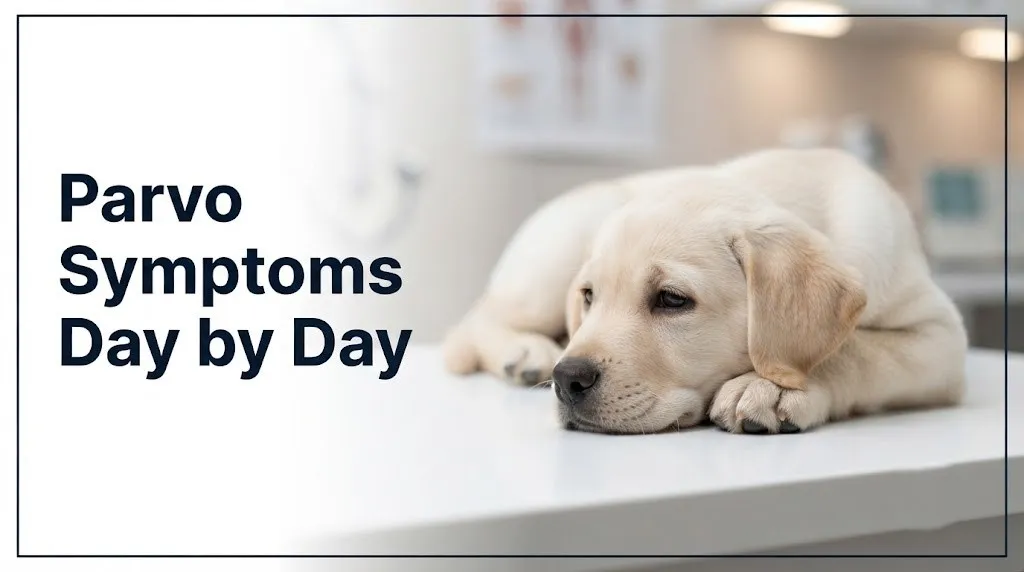
Early signs to watch for:
- Unusual quietness or unwillingness to engage in normal activity
- Decreased appetite or complete refusal to eat
- Mild fever (rectal temperature above 39.5°C / 103.1°F)
- Subtle lethargy distinct from normal tiredness (difficulty rising, reluctance to move)
- Mild or absent diarrhea at this very early stage
The challenge: these early signs mimic dozens of less serious conditions. A puppy who has eaten something it shouldn’t have, a dog stressed by a new environment, a dog with mild dietary indiscretion, all can look exactly like early parvo. The key differentiating factor is context: Is the dog under 6 months old? Is the vaccination series incomplete? Has the dog had recent exposure to unfamiliar dogs, dog parks, or contaminated environments?
If the answer to any of these is yes and your dog is showing any early signs, contact your veterinarian the same day. Early testing with the in-clinic fecal ELISA antigen test can confirm or rule out parvo within minutes.
Parvo Symptoms Day by Day
Parvo symptoms day by day follow a clear clinical timeline: the incubation phase (Days 1 to 7 post-exposure) is symptom-free but infectious, the prodromal phase (Days 1 to 2 of illness) brings lethargy and appetite loss, the acute phase (Days 3 to 5 of illness) brings vomiting, bloody diarrhea, and dehydration, and the critical juncture (Days 5 to 7 of illness) determines survival or deterioration.
| Day/Phase | What You See | What’s Happening Internally | Action Required |
|---|---|---|---|
| Days 1-7 post-exposure (Incubation) | No visible symptoms | Virus replicating in oropharyngeal lymphoid tissue, then viremia | Viral shedding begins; other dogs at risk |
| Day 1-2 of illness (Prodromal) | Lethargy, appetite loss, mild fever | Virus spreading via bloodstream to intestinal crypts and bone marrow | Call your vet; get SNAP test same day |
| Day 3-4 of illness (Acute phase) | Vomiting, diarrhea (initially soft, then liquid) | Intestinal crypt cell destruction; villous atrophy beginning; leukopenia developing | See vet immediately; IV fluids likely needed |
| Day 4-5 of illness (Severe acute) | Bloody diarrhea, persistent vomiting, severe lethargy | Mucosal barrier breakdown; bacterial translocation; septicemia risk | Emergency vet now; do not wait |
| Day 5-7 of illness (Critical juncture) | Either stabilization with treatment or rapid deterioration without | Immune system at lowest point; highest risk of secondary bacterial sepsis and septic shock | Intensive veterinary care required |
| Day 7-10 of illness (Recovery initiation) | Appetite slowly returning, vomiting decreasing with treatment | Intestinal crypt regeneration beginning; bone marrow recovery; white cell counts rising | Continue hospitalization or close home monitoring per vet instruction |
The prodromal-to-acute transition is the moment most owners realize something is seriously wrong. It can happen within a matter of hours, not days.
A dog who was simply quiet and not eating at 8 a.m. can be vomiting repeatedly and passing bloody diarrhea by 8 p.m. of the same day. This is not a condition to observe overnight before deciding whether to call a vet.
Older dogs (fully vaccinated adults) who do become infected sometimes have a compressed version of this timeline with milder symptoms, though they are still capable of serious illness. Puppies under 12 weeks, because of their smaller fluid reserves and less mature immune systems, can deteriorate within the first 24 hours of the acute phase.
Key Takeaway: Parvo symptoms progress from subtle lethargy to bloody diarrhea and life-threatening dehydration within 48 to 72 hours in untreated dogs; if your puppy is lethargic and refusing food, call your vet the same day rather than waiting to see whether symptoms develop further.
Parvo Vomiting and Diarrhea Explained
Parvo causes vomiting and diarrhea because the virus destroys the rapidly dividing epithelial cells at the base of the intestinal crypts of Lieberkuhn, collapsing the regenerative capacity of the intestinal villi and breaking down the mucosal barrier that normally separates the intestinal contents from the bloodstream.
Vomiting in parvo typically begins on Days 3 to 4 of clinical illness, initially appearing as clear fluid, yellow bile, or white foam. As the condition progresses and the intestinal lining deteriorates, vomiting becomes persistent, profuse, and relentless. The dog cannot keep down water. Even small amounts of fluid trigger additional vomiting, rapidly accelerating fluid and electrolyte loss.
The diarrhea follows a distinct progression that many owners find alarming. It begins as soft and yellowish, transitions to liquid and watery within hours, and then becomes bloody, often described as appearing raspberry-colored or rust-colored, with a distinctively foul, metallic odor. This odor is specifically recognized by experienced veterinarians as characteristic of parvoviral enteritis because it results from the breakdown of intestinal wall tissue and hemorrhage into the intestinal lumen.
According to published clinical reviews in the Journal of Veterinary Internal Medicine, the combination of vomiting and hemorrhagic diarrhea in parvo-infected dogs can result in fluid losses equivalent to 8% to 12% of body weight within the first 24 to 48 hours of the acute phase, a rate that rapidly produces life-threatening dehydration in animals without intravenous fluid replacement.
What parvo diarrhea typically looks like by stage:
- Early acute phase: soft, yellowish or greenish, increased frequency
- Mid-acute phase: liquid, brownish, strong odor, blood streaks beginning
- Late acute phase: bright red or dark red blood, extremely foul-smelling, watery
- Hypothermia stage (late, severe): dog may stop producing diarrhea as gut motility shuts down, which is not improvement but a sign of worsening systemic collapse
Owners sometimes interpret the cessation of diarrhea in a severely ill dog as a sign of improvement. It is not. A dog in shock may simply stop moving fluid through its intestines. This requires immediate emergency veterinary evaluation.
Parvo Dehydration and What It Looks Like
Dehydration from parvo occurs when the combined fluid losses from persistent vomiting and hemorrhagic diarrhea exceed the dog’s ability to compensate, typically within 24 to 48 hours of the acute phase beginning, and it rapidly becomes life-threatening without intravenous fluid therapy.
Because a dog cannot keep water down during active parvo, oral rehydration is insufficient and frequently makes vomiting worse. The body responds to volume loss by activating the renin-angiotensin-aldosterone system, which triggers kidney conservation of sodium and water, and by releasing antidiuretic hormone (ADH) from the posterior pituitary gland. Both responses are emergency compensatory mechanisms that buy time but cannot replace lost fluid volume fast enough in a dog with ongoing hemorrhagic losses.
Owners can perform a simple but telling physical assessment at home using three observable signs. These are not substitutes for veterinary evaluation but help gauge urgency:
Three-Step Home Dehydration Assessment for a Sick Dog:
- Skin turgor test (skin tent test): Gently pinch a fold of skin on the back of the neck or between the shoulder blades. Release it. In a well-hydrated dog, the skin snaps back immediately. In a dehydrated dog, the skin remains tented or returns slowly.
- Mucous membrane check: Lift your dog’s upper lip and look at the gum tissue. Normal: pink and moist. Mild dehydration: slightly tacky or pale pink. Moderate to severe dehydration: dry, tacky, pale, gray, or white gums.
- Capillary refill time (CRT): Press your fingertip briefly against the gum tissue until it blanches white. Release and count the seconds until the pink color returns. Normal: 1 to 2 seconds. Prolonged CRT (more than 2 seconds) indicates poor cardiovascular perfusion and is an emergency sign.
| Dehydration Level | Skin Turgor | Gum Appearance | CRT | Action |
|---|---|---|---|---|
| Mild (under 5%) | Normal | Slightly tacky | Under 2 seconds | Call vet immediately |
| Moderate (6-8%) | Slow return | Pale and dry | 2 seconds | Emergency vet now |
| Severe (8-10%+) | Remains tented | White, gray, or blue | Over 2 seconds | Emergency vet: life-threatening |
Puppies decompensate faster than adult dogs because they have a proportionally smaller total blood volume. A puppy who appears moderately dehydrated at noon can be in hypovolemic shock by mid-afternoon without intervention.
Key Takeaway: Dehydration from parvo progresses from mild to life-threatening within hours because the dog cannot absorb oral fluids during active vomiting, making intravenous fluid therapy at a veterinary hospital the only effective treatment for moderate or severe dehydration.
Parvo Fever and Lethargy Explained
Parvo causes fever because the body’s immune response to viral replication triggers the release of inflammatory cytokines, specifically tumor necrosis factor-alpha (TNF-alpha), interleukin-1 beta (IL-1beta), and interleukin-6 (IL-6), which act on the hypothalamus to raise the thermoregulatory set point and produce fever.
In the early phase of parvo, fever is a common finding. A dog’s normal rectal temperature ranges from 38.3°C to 39.2°C (101°F to 102.5°F). A dog with early-stage parvo typically shows a fever of 39.5°C to 41°C (103°F to 106°F). Paradoxically, as the disease progresses to severe stages, body temperature can drop below normal (below 37.8°C / 100°F), a condition called hypothermia. This temperature drop is not a sign of recovery; it indicates cardiovascular compromise and the beginning of shock.
Lethargy is one of the earliest and most consistent parvo symptoms, and it has a specific physiological basis. As CPV-2 replicates in oropharyngeal lymphoid tissue and then spreads via viremia, the systemic inflammatory cytokine release produces sickness behavior: the dog feels profoundly unwell, becomes inactive, loses interest in food, play, and social interaction, and may seek a quiet corner or simply lie still and resist handling.
Think of it like how a person with severe influenza feels: the fever and cytokine response produce a whole-body heavy, achy, exhausted sensation before the worst gastrointestinal symptoms even begin. Your dog’s lethargy at Day 1 or 2 of illness is that same cytokine-mediated sickness behavior.
Observable lethargy signs in a dog with early parvo:
- Remains lying down when the owner enters the room (abnormal for most dogs)
- Does not respond to food, treats, or a favorite toy
- Moves slowly, with a hunched posture or guarded abdomen
- Avoids bright light or activity that normally excites them
- Shows reluctance to walk or climb stairs
- Appears glassy-eyed or unresponsive to normal environmental stimuli
In older dogs (over 2 years, fully vaccinated) who become infected, lethargy may be the predominant symptom with milder gastrointestinal involvement. This atypical presentation can delay recognition. If an older dog shows unexplained sudden lethargy without an obvious cause, parvo should still be considered if vaccination history is uncertain.
How Does Parvo Kill Dogs
Parvo kills dogs through three interconnected mechanisms: severe dehydration producing hypovolemic shock, secondary bacterial sepsis producing septic shock, and systemic inflammatory response syndrome (SIRS) resulting from the combined cytokine cascade and endotoxin release from translocating gut bacteria.
The intestinal mucosal barrier is the body’s physical wall between the trillions of bacteria living in the intestinal lumen and the sterile bloodstream. CPV-2 destroys the crypt cells responsible for regenerating that wall. Once the barrier fails, gram-negative bacteria from the gut, including Escherichia coli and Clostridium species, cross into the blood. These bacteria release lipopolysaccharide (LPS) endotoxin from their cell walls, triggering a massive systemic inflammatory response.
Simultaneously, the bone marrow suppression from CPV-2 reduces the dog’s ability to produce the neutrophils needed to fight off that bacterial invasion. The dog faces a bacterial invasion it cannot respond to with a severely depleted immune system.
The third mechanism is fluid. A puppy losing 10% of body weight in fluid within 48 hours through vomiting and diarrhea experiences a catastrophic drop in circulating blood volume. The heart attempts to compensate by beating faster (tachycardia), but without replacement fluid volume, cardiac output drops, blood pressure falls, and organs begin to fail from inadequate perfusion.
According to published data in the Journal of Veterinary Internal Medicine, untreated canine parvoviral enteritis carries a mortality rate of approximately 91% in clinical studies, while intensive veterinary treatment including IV fluid therapy and appropriate supportive care reduces that mortality rate to approximately 16% to 48% depending on the severity at presentation and the patient’s age and vaccination status.
Causes of death in parvo-infected dogs, in order of clinical frequency:
- Hypovolemic shock from severe fluid loss
- Secondary gram-negative bacterial septicemia and septic shock
- Systemic inflammatory response syndrome (SIRS) and multi-organ dysfunction
- Hypoglycemia (particularly in small-breed puppies, whose glycogen reserves are limited)
- Aspiration pneumonia (from repeated vomiting in a recumbent dog)
Hypoglycemia deserves special mention in puppies under 8 weeks. Small puppies have limited glycogen stores in the liver. With no food intake and ongoing metabolic stress from infection, blood glucose can drop precipitously, producing seizures and loss of consciousness on top of the gastrointestinal crisis.
Key Takeaway: Parvo kills through three simultaneous mechanisms (hypovolemic shock, bacterial sepsis, and systemic inflammatory response), which is why home management is not appropriate for a dog showing more than the earliest symptoms, and intravenous hospital care dramatically improves survival.
Parvo Symptoms in Puppies vs Adult Dogs
Parvo symptoms in puppies are more severe, more rapid in onset, and more likely to be fatal than in adult dogs because puppies have a smaller physiological reserve, an immature immune system, and an incomplete vaccine-induced immunity, making them the population at highest risk for death from CPV-2 infection.
Puppies between 6 and 20 weeks of age occupy a critical immunological window. Maternal antibodies acquired through colostrum (the first milk produced immediately after birth) provide some initial protection against CPV-2. However, these maternal antibodies wane progressively between 6 and 16 weeks of age. During this same window, maternal antibodies can actually interfere with vaccine-induced immunity by neutralizing the live attenuated virus in the DHPP vaccine before the puppy’s immune system can mount its own protective response. This creates a “susceptibility gap” during which neither maternal immunity nor vaccine-induced immunity fully protects the puppy.
According to Cornell University College of Veterinary Medicine, this is why the DHPP vaccine series requires multiple doses at 8, 12, and 16 weeks (and sometimes a booster at 20 weeks in high-risk environments), rather than a single vaccination.
| Factor | Puppies (Under 6 Months) | Adult Dogs (Over 1 Year, Vaccinated) |
|---|---|---|
| Immune reserve | Immature; maternal antibodies waning | Established vaccine-induced immunity |
| Fluid reserve | Smaller total blood volume; decompensates faster | Greater reserve; slower decompensation |
| Symptom severity | Typically severe; rapid progression | Often milder; sometimes subclinical |
| Hypoglycemia risk | High (limited hepatic glycogen stores) | Low in healthy adults |
| Mortality without treatment | Extremely high (approximately 85-91%) | Still high but lower than puppy mortality |
| Time to critical illness | Can be under 24 hours from first symptoms | Typically 48 to 72 hours |
Adult unvaccinated dogs can develop severe parvo and die from it. Vaccination history is not a trivial question. An adult dog who has never been vaccinated or whose vaccination has lapsed carries a risk profile closer to a puppy than to a properly vaccinated adult.
Neonatal pups under 4 weeks can also develop a cardiac form of parvovirus (parvoviral myocarditis) if they are infected in the first weeks of life. This form affects the rapidly dividing cardiac muscle cells, producing heart failure. The cardiac form is now rare due to widespread maternal vaccination, but it is not extinct.
Breeds Most at Risk for Parvo
Certain dog breeds face statistically higher risk of contracting severe parvoviral enteritis, with Rottweilers, Doberman Pinschers, American Pit Bull Terriers, German Shepherds, and Alaskan Sled Dogs consistently identified in veterinary epidemiological research as having elevated susceptibility beyond what vaccination status alone explains.
The reason for this breed-specific susceptibility is not fully understood at a molecular level, but veterinary immunologists have proposed several mechanisms. One is that certain breeds may have innate immune differences in their toll-like receptor pathways (the cellular sensors that detect viral presence) that reduce the efficiency of the initial innate immune response to CPV-2. Another proposed mechanism involves differences in the mucosal immune response in the intestinal wall, specifically in the density and maturation rate of Peyer’s patches (the lymphoid aggregates embedded in the intestinal wall).
A study published in the Journal of Veterinary Internal Medicine found that Rottweilers vaccinated according to standard AAHA protocols still showed higher seroconversion failure rates compared to most other breeds, suggesting a genuine breed-level difference in vaccine response, not simply inadequate vaccination. This means Rottweiler owners should discuss with their veterinarian whether additional vaccine doses or earlier titering is appropriate.
Breeds with documented elevated parvo risk:
- Rottweilers (highest documented risk; may show lower seroconversion after standard vaccine series)
- Doberman Pinschers (elevated risk; tends toward severe clinical presentation)
- American Pit Bull Terriers and related bully breeds
- German Shepherds (documented higher susceptibility in kenneled populations)
- Alaskan Sled Dogs (elevated risk in sled dog populations)
- Labrador Retrievers (some epidemiological data suggests moderately elevated risk compared to mixed-breed dogs)
Mixed-breed dogs are generally considered to have lower parvo risk than the purebred high-risk group, likely because heterozygosity in immune-relevant gene variants provides a broader innate immune response.
Dog size matters too. Smaller-body-weight dogs and puppies have less total blood volume and therefore less tolerance for the fluid losses that parvo produces.
Parvo Survival Rate and Prognosis
The parvo survival rate with prompt, appropriate veterinary treatment is approximately 68% to 92% depending on age, severity at presentation, time elapsed before treatment began, and the presence of secondary infections, while untreated parvo carries a mortality rate approaching 91% according to clinical data published in veterinary internal medicine literature.
Prognosis is not uniform. Several clinical factors at the time of veterinary presentation predict outcome with reasonable reliability. Dogs who present early in the acute phase (Day 2 to 3 of illness) before severe dehydration has developed have a substantially better prognosis than dogs who arrive after 48 hours of vomiting and diarrhea without treatment.
According to the Merck Veterinary Manual, the following factors predict a worse outcome:
- White blood cell count below 2,000 cells per microliter (severe leukopenia) at presentation
- Serum albumin below 2.0 g/dL (indicating intestinal protein loss from severe mucosal damage)
- Age under 8 weeks at time of illness
- Concurrent infection with intestinal parasites (roundworms, hookworms, Giardia) or other pathogens
- High-risk breed status (Rottweiler, Doberman Pinscher)
- Presence of secondary bacterial sepsis at presentation (fever over 41°C or hypothermia below 37.5°C, with tachycardia)
| Prognostic Factor | Better Prognosis | Worse Prognosis |
|---|---|---|
| Time to treatment | Under 24 hours of acute symptoms | Over 48 hours of acute symptoms |
| Age | Over 6 months | Under 12 weeks |
| WBC count at presentation | Above 4,000 cells/mcL | Below 2,000 cells/mcL |
| Albumin level | Above 2.5 g/dL | Below 2.0 g/dL |
| Dehydration at presentation | Mild (under 5%) | Severe (over 8%) |
| Secondary infection | None detected | Septicemia confirmed |
Cost of treatment is a real-world factor for many families. Hospitalization for parvo typically ranges from $1,500 to $3,500 in the United States for a 3 to 7 day stay, depending on geographic location, severity, and specific treatments required. Some veterinary schools offer reduced-cost hospitalization. This should not delay the decision to seek care: time to treatment is the strongest single modifiable predictor of survival.
Key Takeaway: Parvo survival rates jump dramatically with early veterinary treatment, from near-certain death without care to approximately 70% to 90% survival with hospitalization, making immediate veterinary evaluation the single most important action a dog owner can take.
How Vets Diagnose Parvo
Veterinarians diagnose parvo primarily with the fecal ELISA antigen test (commercially called the SNAP Parvo test), an in-clinic rapid diagnostic test that detects CPV-2 antigen in a small fecal sample and delivers results in approximately 8 to 10 minutes, providing a working diagnosis fast enough to guide immediate treatment decisions.
The SNAP test has good sensitivity and specificity for clinical use, but it is not infallible. A dog who has received a modified live virus (MLV) parvovirus vaccine within the preceding 5 to 15 days may produce a false positive result because the vaccine itself sheds attenuated live virus. A dog very early in the incubation phase before significant viral shedding begins may produce a false negative. In either ambiguous case, the clinical picture (symptoms, CBC findings, patient history) guides the veterinarian’s decision.
The complete blood count (CBC) is the second most important diagnostic test. CPV-2’s attack on bone marrow progenitor cells produces a characteristic leukopenia (reduction in total white blood cell count) with specific reductions in lymphocytes (lymphopenia) and neutrophils (neutropenia). A dog presenting with hemorrhagic diarrhea, vomiting, and a low white blood cell count is a clinically compelling parvo case even if the rapid fecal test is negative.
Additional diagnostic steps veterinarians typically perform:
- Serum chemistry panel: Assesses kidney function (BUN, creatinine), liver enzymes, electrolytes (sodium, potassium, chloride), and blood glucose. Hypokalemia (low potassium) from diarrhea losses is common and must be corrected in IV fluids.
- Serum albumin: Albumin level reflects severity of protein loss through the damaged intestinal mucosa. Severely low albumin indicates a need for plasma or colloid supplementation.
- Packed cell volume (PCV) and total solids: Estimates the degree of dehydration and monitors for anemia from hemorrhagic blood loss.
- PCR (polymerase chain reaction) fecal assay: The most sensitive and specific test for CPV-2 and can distinguish vaccine virus from wild-type infection. Used in reference laboratories when SNAP test results are ambiguous.
- Abdominal radiography or ultrasound: Performed when intestinal obstruction (foreign body, intussusception, which can occur secondary to parvo) needs to be ruled out.
The physical examination provides supporting evidence: dehydration scoring via skin turgor, mucous membrane assessment, and capillary refill time, combined with abdominal palpation for pain, gas, and intestinal wall changes.
Parvo Treatment Options
Parvo treatment is supportive, not curative: no antiviral drug currently eliminates CPV-2 directly, so treatment focuses on maintaining fluid balance, controlling vomiting, preventing and treating secondary bacterial infection, and supporting the immune system while the dog’s body mounts its own response to the virus.
Intravenous (IV) fluid therapy is the cornerstone of parvo treatment and the primary reason hospitalization improves survival so dramatically. IV fluids replace the enormous volumes lost through vomiting and hemorrhagic diarrhea, correct electrolyte imbalances (particularly hypokalemia), maintain blood pressure and cardiac output, and support organ perfusion while the intestinal lining regenerates. The rate and composition of IV fluids are adjusted continuously based on the dog’s hydration status, blood pressure, electrolyte levels, and albumin.
The American Animal Hospital Association (AAHA) canine parvovirus treatment guidelines support the following components of standard hospital care:
Standard components of in-hospital parvo treatment:
- IV crystalloid fluid therapy (lactated Ringer’s solution or normal saline with potassium supplementation) at rates calculated to replace ongoing losses plus deficit correction
- Colloid supplementation (fresh frozen plasma or synthetic colloids) when albumin falls below 2.0 g/dL to maintain oncotic pressure and prevent fluid leaking from blood vessels into tissues
- Antiemetic medication (maropitant/Cerenia is the first-line antiemetic in dogs with parvo; ondansetron is sometimes used as a second agent) to reduce vomiting and allow eventual oral fluid intake
- Broad-spectrum antibiotics (most commonly a combination of ampicillin and enrofloxacin, or a beta-lactam antibiotic with a fluoroquinolone) to prevent or treat secondary bacterial translocation and septicemia
- Blood glucose monitoring every 4 to 6 hours in puppies under 12 weeks, with dextrose supplementation in IV fluids if hypoglycemia develops
- Nutritional support: Early enteral feeding (small amounts of easily digestible food via feeding tube or oral encouragement once vomiting is controlled) is associated with faster intestinal recovery per current veterinary practice guidelines
Regarding home treatment: veterinary outpatient management is sometimes considered for dogs who are only mildly dehydrated and still able to tolerate small amounts of oral fluid, but this is reserved for exceptional clinical circumstances under close veterinary supervision. Home treatment of a dog with parvo without veterinary guidance, IV fluids, or antiemetics carries a mortality rate approaching the untreated rate. Do not attempt to treat parvo at home with electrolyte drinks, Pepto-Bismol, or other human remedies. These do not replace IV fluid therapy and can waste critical treatment time.
Emergency Signs: When to Take Your Dog to the Vet Immediately
Certain signs associated with parvo require immediate emergency veterinary evaluation. Do not wait to see if these resolve on their own.
Take your dog to an emergency veterinary clinic immediately if you observe any of the following:
- Bloody diarrhea or diarrhea with a foul, metallic odor: indicates intestinal mucosal breakdown and is a confirmed emergency, not a “watch and wait” symptom
- Repeated vomiting that prevents keeping any water down for more than 2 to 3 hours in a puppy or 4 to 6 hours in an adult dog
- Gum color that is pale, white, gray, or has a blue tint: indicates cardiovascular compromise and shock
- Skin tent test that remains elevated for more than 2 seconds after releasing a pinched fold of skin: indicates moderate to severe dehydration
- Capillary refill time greater than 2 seconds: indicates poor perfusion and is a cardiovascular emergency sign
- Collapse or inability to stand: indicates cardiovascular or neurological compromise from shock or hypoglycemia
- Seizures: in young puppies, may indicate hypoglycemia as a parvo complication
- Body temperature below 37.8°C (100°F) in a dog who has been vomiting and has diarrhea: hypothermia in this context indicates shock, not improvement
- Any puppy under 6 months with vomiting and diarrhea who has not completed a full 3-dose DHPP vaccine series: treat this as a parvo emergency until proven otherwise
Call ASPCA Animal Poison Control at 888-426-4435 if you have given your dog any home remedy, essential oil, herbal product, or human medication in an attempt to treat symptoms before reading this.
These presentations indicate parvoviral enteritis with potentially life-threatening complications and require a licensed veterinarian or board-certified veterinary emergency and critical care specialist, not home monitoring.
Parvo Recovery Timeline and What to Expect
The parvo recovery timeline typically spans 7 to 10 days from the start of acute symptoms in dogs who receive prompt, appropriate veterinary treatment, with the most dangerous period being Days 3 to 7 when dehydration, immune suppression, and secondary bacterial infection risk peak simultaneously.
Recovery does not happen linearly. Pet owners should understand that parvo patients often appear to worsen slightly before they improve, even in the hospital. This is because the bone marrow takes 4 to 6 days to resume normal white blood cell production after the bone marrow progenitor cell damage, and the intestinal lining takes a similar period to regenerate new crypt cells and rebuild functional villi. Improvement in clinical signs (reduction in vomiting frequency, firming of stool, return of interest in food) typically begins between Days 7 and 10 of illness in surviving dogs under veterinary care.
The Merck Veterinary Manual notes that dogs who survive parvoviral enteritis develop strong, long-lasting immunity to the specific CPV-2 strain they were infected with, and this immunity generally persists for years. This does not mean vaccination is unnecessary going forward: the dog should still be maintained on a regular DHPP booster schedule as recommended by their veterinarian.
What to expect during the recovery phase:
- Gradual reduction in vomiting frequency over Days 7 to 10
- Stool progressing from bloody and liquid to formed and brownish over Days 7 to 14
- Return of appetite typically beginning Days 7 to 10; start with small amounts of a bland, highly digestible diet (veterinary prescription gastrointestinal food or boiled chicken and white rice in small portions) before transitioning back to regular food
- Energy and activity levels returning slowly over 2 to 4 weeks post-illness
- Continued isolation from other dogs for at least 10 to 14 days after full recovery, as the dog may still shed low levels of virus in feces
After recovery, environmental decontamination is essential. CPV-2 survives for months to over a year in soil and on surfaces. All areas where the sick dog spent time should be cleaned with a 1:30 bleach and water solution (approximately half a cup of bleach per gallon of water), which is one of the only household disinfectants effective against parvovirus.
Any dog in the household who may have been exposed but is not yet showing symptoms should be examined by a licensed veterinarian for a fecal SNAP test and placed on appropriate monitoring or isolation protocols.
Key Takeaway: Recovery from parvo takes 7 to 14 days with proper veterinary treatment, begins with a gradual return of appetite and firming of stool around Day 7 to 10, and requires environmental decontamination with diluted bleach afterward because the virus persists in the home for months.
Frequently Asked Questions About Parvo Symptoms Day by Day
What are the first signs of parvo in dogs?
The first signs of parvo in dogs are lethargy, loss of appetite, and mild fever, appearing 1 to 2 days before vomiting and diarrhea begin as the virus spreads through the bloodstream to the intestines.
These early signs are easy to miss because they resemble less serious conditions, but in an unvaccinated puppy or a dog with uncertain vaccination history, they warrant same-day veterinary contact.
A fecal ELISA antigen test (SNAP Parvo test) can confirm or rule out parvo at this stage in as little as 8 to 10 minutes at the veterinary clinic.
How quickly do parvo symptoms progress?
Parvo symptoms can progress from mild lethargy to bloody diarrhea within 24 to 48 hours in puppies and young dogs, making rapid veterinary evaluation essential at the first sign of illness.
The acute phase, marked by vomiting, hemorrhagic diarrhea, and dehydration, typically occurs between Days 3 and 5 of clinical illness.
Dogs who do not receive treatment during this window face a mortality rate approaching 91%, according to published veterinary clinical data.
Can a dog survive parvo without treatment?
Some adult dogs with partial immunity from prior vaccination may survive mild parvo without intensive treatment, but this outcome cannot be predicted or relied upon.
Puppies under 6 months who do not receive veterinary care have an extremely high mortality rate, with survival rates dropping to approximately 9% in untreated clinical cases.
Any dog showing signs consistent with parvo should be evaluated by a licensed veterinarian as soon as possible rather than managed at home.
How do I know if my dog is dehydrated from parvo?
Signs of dehydration from parvo include skin that remains tented after a gentle pinch and release, gums that appear dry, tacky, pale, or white instead of moist and pink, and a capillary refill time greater than 2 seconds when gum tissue is pressed and released.
Sunken eyes and extreme weakness are signs of severe dehydration requiring immediate emergency veterinary treatment.
A dog who cannot keep any water down for more than 2 to 3 hours is losing fluid faster than it can be replaced and requires intravenous fluids at a veterinary hospital.
How long is a dog with parvo contagious to other dogs?
A dog infected with parvo begins shedding the virus in feces approximately 3 to 4 days after exposure, before any visible symptoms appear, and continues shedding for approximately 10 to 14 days after clinical recovery.
The virus survives in the environment for months to over a year on surfaces and soil, meaning areas where the dog defecated remain contaminated long after the dog has recovered.
Recovered dogs should be isolated from unvaccinated or incompletely vaccinated dogs for at least 2 weeks after all symptoms have resolved, and their environment should be disinfected with a 1:30 bleach-to-water solution.
Can vaccinated dogs still get parvo?
Vaccinated dogs can still contract parvo in rare circumstances, most commonly when the vaccine series was not completed, when vaccination occurred too early and maternal antibodies interfered with immune response, or when dogs belong to high-susceptibility breeds like Rottweilers with documented lower seroconversion rates.
The DHPP vaccine series (given at 8, 12, and 16 weeks) is highly protective when completed correctly, with published data indicating protection rates above 95% in properly vaccinated dogs.
Dogs in the susceptibility gap between maternal antibody waning and full vaccine-induced immunity (approximately 6 to 16 weeks of age) remain at risk even if their first dose has been administered.
Parvo moves faster than most pet owners expect. The gap between “acting a little off” and “in critical condition” can be less than a single day in young puppies, and the only thing that consistently closes that gap in favor of survival is early veterinary intervention with intravenous fluids and supportive care. No home remedy, electrolyte drink, or watchful waiting approach replaces that.
If your dog is a puppy under 6 months, has an incomplete vaccine history, or is showing any combination of lethargy, vomiting, and diarrhea, contact a licensed veterinarian today. Ask for a fecal SNAP Parvo test. Ask about your puppy’s vaccine timing. Ask about environmental exposure risk. These are the three questions that give a veterinarian the information needed to assess risk quickly and accurately.
You now understand what parvo looks like at each stage, why each symptom occurs at the mechanistic level, which signs demand an emergency clinic visit, and what to expect if your dog is treated. That knowledge is specific, actionable, and likely better than what you had before you started reading.