Lip Twitching Causes: Benign, Medical, and When to Act Now
The most common lip twitching causes are benign and temporary: caffeine overload, magnesium or potassium depletion, stress, and fatigue each produce the same involuntary firing of the facial nerve that makes the lip muscle twitch without any underlying disease. A small but clinically important subset of cases involves neurological conditions including hemifacial spasm, Parkinson’s disease, Bell’s palsy, amyotrophic lateral sclerosis (ALS), or medication-induced movement disorders that require medical evaluation.
The National Institute of Neurological Disorders and Stroke classifies fasciculations, the involuntary spontaneous muscle contractions that produce twitching, as a recognized sign of peripheral or central nervous system dysfunction when they are persistent, widespread, or accompanied by weakness or atrophy. Understanding which causes involve the peripheral nerve versus the brain is the key clinical distinction that separates a self-resolving annoyance from a symptom worth taking seriously.
This article covers every named cause of lip twitching with the specific physiological mechanism behind each one. It explains which causes are benign and self-resolving, which require a doctor’s evaluation, and which specific combinations of symptoms with lip twitching require calling 911 immediately.
Lip Twitching Causes: Overview and Clinical Picture
Lip twitching causes encompass a spectrum from transient lifestyle-related neuromuscular irritability to serious neurological diseases, all producing the same visible end result: an involuntary, repetitive contraction of the muscle fibers around the mouth.
The clinical term for this phenomenon is fasciculation, which refers to a spontaneous, involuntary contraction of a single motor unit, the group of muscle fibers controlled by one motor neuron. In the lip, fasciculations originate in the motor neurons of the facial nerve (cranial nerve VII) that control the orbicularis oris muscle. When these motor neurons fire without a voluntary command from the motor cortex, the muscle fiber group they control contracts briefly and visibly. That brief flicker is what you see and feel as a lip twitch.
The range of causes spans from reversible to progressive:
| Cause Category | Examples | Mechanism Type | Typical Urgency |
|---|---|---|---|
| Lifestyle/dietary | Caffeine, magnesium depletion, fatigue, stress | Peripheral neuromuscular excitability | Self-resolving, low urgency |
| Peripheral nerve | Hemifacial spasm, Bell’s palsy | Facial nerve compression or demyelination | Requires medical evaluation |
| Central nervous system | Parkinson’s disease, ALS, stroke | Basal ganglia or motor neuron degeneration | Requires neurological evaluation |
| Medication-related | Tardive dyskinesia, stimulants | Dopamine receptor supersensitivity or CNS stimulation | Requires medication review |
| Substance-related | Alcohol withdrawal, caffeine toxicity | GABA deficiency, adenosine blockade | Varies by severity |
Isolated, brief lip twitching lasting seconds to minutes, occurring without any other neurological symptom and in the context of known triggers like high caffeine intake or poor sleep, is generally self-resolving and does not indicate underlying neurological disease. Persistent, progressive, or accompaniment-laden twitching requires clinical evaluation. The distinction between these two clinical pictures is what this article explains systematically.
People with pre-existing anxiety disorders deserve early mention here. Anxiety-related neuromuscular hypersensitivity produces fasciculations more readily than in the general population, and these individuals often present convinced they have ALS or Parkinson’s disease because they have read about lip twitching online. Accurate information about mechanism helps distinguish anxiety-driven hypervigilance to normal fasciculations from a clinically meaningful symptom pattern.
The Anatomy of Lip Twitching: Orbicularis Oris and the Facial Nerve
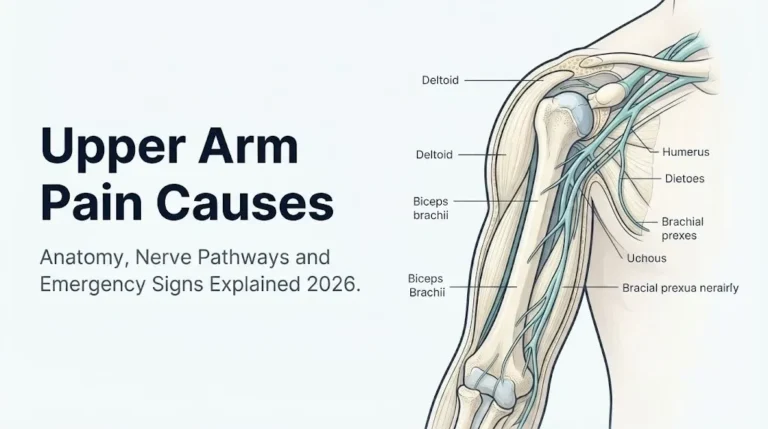
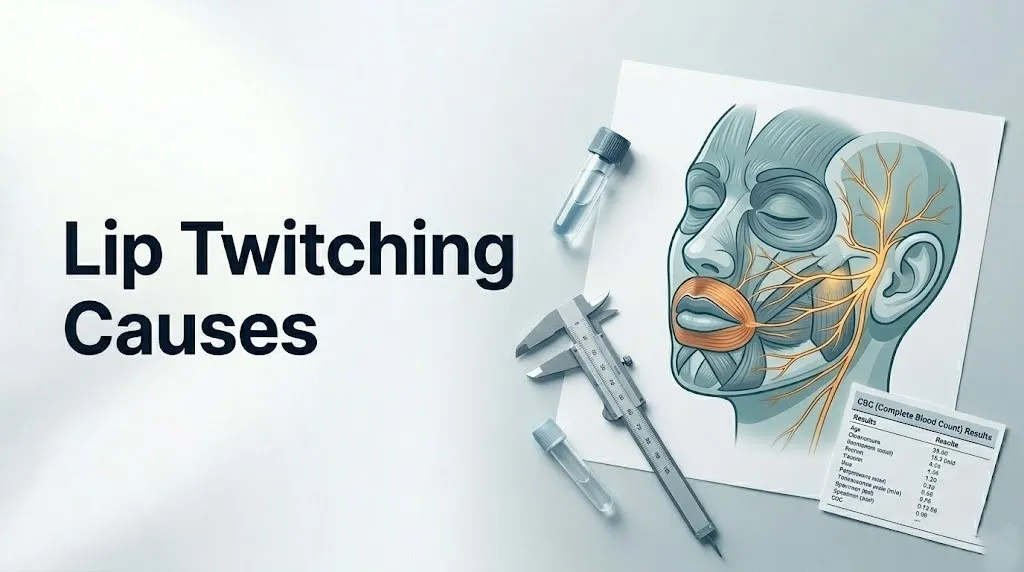
Lip twitching originates in the orbicularis oris muscle, the circumferential sphincter muscle that encircles the mouth and controls lip movement for speaking, eating, and facial expression, which is innervated by the buccal branch and marginal mandibular branch of the facial nerve (cranial nerve VII).
The facial nerve exits the brainstem at the cerebellopontine angle, travels through the internal auditory canal, enters the temporal bone, traverses the facial canal (Fallopian canal), exits the skull at the stylomastoid foramen, and then fans out into five major peripheral branches: temporal, zygomatic, buccal, marginal mandibular, and cervical. The buccal branch travels across the cheek and innervates the upper lip portion of the orbicularis oris. The marginal mandibular branch travels along the lower jaw and innervates the lower lip portion.
Think of the facial nerve like a tree trunk that splits into branches reaching different regions of the face. The orbicularis oris muscle is irrigated by two of those branches simultaneously. When something irritates or misfires in either branch, the motor signal to the orbicularis oris fires spontaneously, producing a visible twitch. The exact location of the twitch, upper versus lower lip, and the spreading pattern of the twitching if it involves other facial muscles, provides a clinical clue about where in the nerve the problem originates.
The motor end plate is where the facial nerve terminal meets each orbicularis oris muscle fiber. Acetylcholine is released from the nerve terminal, crosses the synaptic cleft, binds to nicotinic acetylcholine receptors on the muscle fiber membrane, and triggers the action potential that causes contraction. Any factor that lowers the threshold for this spontaneous acetylcholine release, or that increases the spontaneous firing rate of the motor neuron axon itself, produces fasciculations at the orbicularis oris.
Older adults over 65 have measurably slower facial nerve conduction velocities and reduced facial nerve myelination density compared to younger adults, according to clinical neurophysiological data. This means their facial nerve motor neurons are more susceptible to spontaneous firing from electrolyte changes, medication effects, and vascular factors than those of younger people, which partly explains the higher prevalence of hemifacial spasm and facial fasciculations in this age group.
How Electrolyte Imbalances Cause Lip Twitching
Hypomagnesemia (low magnesium), hypokalemia (low potassium), and hypocalcemia (low calcium) each cause lip twitching by reducing the electrochemical threshold at which motor neurons spontaneously depolarize, making the facial nerve motor units more likely to fire without a voluntary command.
Magnesium plays a specific and well-established role in neuromuscular stability. At normal serum magnesium levels (0.75 to 0.95 mmol/L), magnesium ions occupy the pore of NMDA receptors at a voltage-dependent block, preventing their inappropriate activation by ambient glutamate. When serum magnesium drops below 0.75 mmol/L, this block is reduced. NMDA receptors become more easily activated, increasing neuronal excitability throughout the nervous system, including the motor neurons of the facial nerve. Simultaneously, magnesium normally stabilizes voltage-gated calcium channels in neuronal membranes; deficiency allows increased calcium influx, further lowering the depolarization threshold.
Potassium depletion reduces the resting membrane potential of neurons and muscle fibers, bringing them closer to their firing threshold. This is why hypokalemia produces muscle cramps, weakness, and fasciculations that can include the perioral region. Serum potassium below 3.5 mEq/L is clinically defined as hypokalemia, and the neuromuscular effects become noticeable at levels below 3.0 mEq/L in most adults.
According to the National Institute of Neurological Disorders and Stroke, muscle fasciculations from electrolyte imbalance are typically benign and resolve with correction of the underlying deficiency. However, they require laboratory confirmation before the cause can be attributed to electrolyte depletion rather than a neurological condition.
Athletes who sweat heavily during endurance training lose significant magnesium and potassium through perspiration and are at elevated risk for electrolyte-related fasciculations, including in the lips and perioral area. Any athlete experiencing persistent lip or facial twitching after intense exercise should have serum magnesium, potassium, and calcium levels measured by their primary care physician before attributing the symptom to muscle fatigue alone.
Caffeine and Stimulant-Related Lip Twitching
Caffeine causes lip twitching by blocking adenosine A1 receptors in the central and peripheral nervous system, removing adenosine’s natural neuronal inhibitory effect and increasing the spontaneous firing rate of motor neurons throughout the body, including those controlling the orbicularis oris.
Adenosine is produced continuously by active neurons and accumulates in the synaptic environment, progressively reducing neuronal excitability through A1 receptor binding. This is the physiological basis of the drowsiness that builds during waking hours. Caffeine’s mechanism of action is competitive antagonism of these A1 receptors. At moderate doses, this increases alertness. At higher doses, it produces a state of diffuse neuronal hyperexcitability that manifests as anxiety, tremor, and fasciculations in peripheral muscles, including the lips.
The dose at which caffeine produces lip twitching varies considerably between individuals based on genetic variation in CYP1A2, the hepatic enzyme responsible for caffeine metabolism. People who are slow metabolizers of caffeine through CYP1A2 accumulate higher plasma caffeine concentrations from the same dose, making them more susceptible to caffeine-induced fasciculations at caffeine intakes that would not affect fast metabolizers. The Mayo Clinic notes that caffeine intake above 400 mg per day in most adults is associated with neurological excitability symptoms including tremor and muscle twitching.
Other stimulants produce lip twitching through related but distinct mechanisms:
- Amphetamines and methylphenidate increase synaptic dopamine and norepinephrine, producing central nervous system hyperexcitability and peripheral motor neuron sensitization
- Pseudoephedrine (decongestants) stimulates adrenergic receptors, increasing neuronal excitability
- Ephedrine in some dietary supplements produces similar adrenergic nervous system stimulation
- High-dose theophylline (used for respiratory conditions) blocks adenosine receptors with even more potency than caffeine and is a recognized cause of muscle fasciculations at elevated plasma levels
People with cardiac arrhythmias or hypertension should discuss any stimulant-related twitching with their primary care physician, as the same excitability threshold changes that produce fasciculations can also affect cardiac conduction.
Key Takeaway: If your lip twitching started or worsened after increasing caffeine intake, the most likely mechanism is adenosine receptor blockade lowering your motor neuron firing threshold, and reducing caffeine is the first and most appropriate intervention before pursuing any further evaluation.
Stress, Anxiety, and Lip Twitching
Stress and anxiety cause lip twitching by activating the hypothalamic-pituitary-adrenal (HPA) axis and the sympathetic nervous system, releasing cortisol and epinephrine that sensitize peripheral neuromuscular junctions and lower the threshold for spontaneous motor neuron firing in the facial nerve.
When the brain perceives psychological stress, the hypothalamus releases corticotropin-releasing hormone (CRH), which triggers the pituitary gland to release adrenocorticotropic hormone (ACTH), which in turn stimulates the adrenal cortex to release cortisol. Simultaneously, the sympathetic nervous system releases epinephrine from the adrenal medulla. Both cortisol and epinephrine increase overall neuronal excitability, preparing the body for a perceived threat. At the level of the neuromuscular junction, this increased excitability lowers the threshold at which the orbicularis oris motor neurons spontaneously discharge.
Chronic anxiety produces a state of sustained HPA axis activation where cortisol and epinephrine levels remain chronically elevated above baseline. This sustained neuroexcitability state means that motor neurons throughout the body, including the facial nerve branches supplying the lips, are operating closer to their spontaneous firing threshold continuously. The result is more frequent, easily triggered fasciculations that people with anxiety disorders notice and focus on more intensely than non-anxious individuals.
Anxiety-related lip twitching creates a clinically recognized pattern of health anxiety. A person notices lip twitching, researches the cause online, reads that lip twitching can indicate ALS or Parkinson’s disease, and becomes more anxious. The increased anxiety further elevates HPA axis activity, which produces more fasciculations, which the person interprets as confirmation of serious disease. Breaking this cycle requires accurate information about mechanism, not reassurance alone.
Research published in the Journal of Neurology has documented that patients with anxiety disorders report fasciculations as a recognized somatic symptom, with facial and perioral fasciculations among the reported locations. The distinction from ALS-related fasciculations is clinical: anxiety-driven fasciculations do not progress, are not accompanied by weakness or atrophy, and do not spread beyond the initial location into other body regions over weeks to months.
People with generalized anxiety disorder should discuss recurrent lip and facial fasciculations with their primary care physician, who can evaluate for both anxiety-related causes and confirm the absence of electrolyte abnormalities or thyroid dysfunction through a targeted laboratory panel.
Hemifacial Spasm as a Cause of Lip Twitching
Hemifacial spasm is a neurovascular condition in which aberrant pulsatile compression of the facial nerve root at the cerebellopontine angle by a blood vessel, most often the anterior inferior cerebellar artery (AICA) or posterior inferior cerebellar artery (PICA), generates spontaneous repetitive discharges throughout the entire distribution of the facial nerve on one side of the face, including the orbicularis oris and lip.
The mechanism is well-established by surgical and neuroimaging research published in Neurology: the pulsatile arterial compression at the nerve root entry zone causes focal demyelination of the facial nerve axons. This demyelination creates a zone of ephaptic transmission, where electrical signals can jump between adjacent axons that are no longer properly insulated from each other. A single motor signal intended for one facial muscle group can spread to activate neighboring facial muscles, producing the characteristic involuntary spreading contractions that define hemifacial spasm.
Hemifacial spasm almost always begins with unilateral twitching of the orbicularis oculi (the muscle around the eye) and gradually spreads over months to years to involve the cheek muscles and then the orbicularis oris (lip). This downward progression pattern, starting at the eye and moving toward the lip on the same side of the face, is a clinical hallmark that distinguishes hemifacial spasm from other causes of isolated lip twitching. The spasms can eventually become so frequent and forceful that the affected side of the face contracts into a sustained grimace.
According to the National Institute of Neurological Disorders and Stroke, hemifacial spasm affects approximately 11 per 100,000 people, with a higher prevalence in women and in people of Asian descent. The condition is almost always unilateral; bilateral facial spasms suggest a different diagnosis.
Anyone experiencing unilateral facial twitching that started around the eye and has progressively moved toward the mouth and lip should be evaluated by a board-certified neurologist. The diagnostic workup includes MRI of the brain and posterior fossa with specific attention to the facial nerve root entry zone at the cerebellopontine angle to identify the offending vascular loop. Treatment options range from botulinum toxin injection for symptomatic management to microvascular decompression (MVD) surgery for definitive treatment in appropriate candidates.
Bell’s Palsy and Lip Twitching
Bell’s palsy causes lip twitching through acute demyelination of the facial nerve within the Fallopian canal of the temporal bone, which can produce fasciculations, synkinesis (abnormal co-contraction of facial muscles), and aberrant reinnervation during the recovery phase that manifests as involuntary lip twitching.
Bell’s palsy is the most common cause of acute unilateral facial nerve palsy, and the National Institute of Neurological Disorders and Stroke states that it affects approximately 40,000 Americans annually. The leading proposed mechanism involves reactivation of herpes simplex virus type 1 (HSV-1) in the geniculate ganglion of the facial nerve, producing inflammatory demyelination within the tight confines of the Fallopian canal where the nerve cannot expand to accommodate swelling. The resulting compression and demyelination produce acute unilateral facial weakness.
The relationship to lip twitching is specifically a recovery-phase phenomenon. During acute Bell’s palsy, the facial nerve is suppressed, producing weakness rather than twitching. As the nerve regenerates over weeks to months, regrowth of axons can go astray. An axon that previously innervated the orbicularis oculi (eye muscle) may reinnervate the orbicularis oris (lip muscle), and vice versa. This aberrant reinnervation produces synkinesis: when the person blinks, the lip twitches involuntarily; when the person smiles, the eye narrows involuntarily.
People experiencing new-onset unilateral facial weakness, whether described as drooping, heaviness, or difficulty closing the eye, alongside lip changes should be evaluated by a primary care physician or emergency medicine physician on the same day of symptom onset. Early treatment with oral corticosteroids within 72 hours of Bell’s palsy onset, as supported by the American Academy of Neurology clinical practice guidelines, improves the rate of complete recovery. The most clinically important task in any acute facial palsy presentation is ruling out stroke as the cause before attributing the finding to Bell’s palsy.
Parkinson’s Disease and Lip Twitching
Parkinson’s disease produces lip twitching and perioral tremor through the progressive loss of dopaminergic neurons in the substantia nigra pars compacta, which disrupts the normal inhibitory modulation of the striatum, producing the characteristic 4 to 6 Hz rest tremor that can involve the lips, jaw, and tongue.
The basal ganglia circuit regulates the smooth initiation and execution of voluntary movement. Under normal physiology, dopamine released from substantia nigra neurons into the striatum modulates the activity of the direct and indirect basal ganglia pathways, maintaining smooth, controlled motor output. In Parkinson’s disease, dopaminergic neuron loss produces a net increase in inhibitory output from the globus pallidus interna to the thalamus, reducing thalamo-cortical drive and producing the resting tremor, rigidity, and bradykinesia that characterize the condition.
The lip and jaw tremor of Parkinson’s disease has a characteristic quality that distinguishes it from other causes. It is most prominent at rest, diminishes or disappears briefly during voluntary movement of the lips (such as speaking or eating), and returns when the lips are again at rest. This rest tremor pattern is the opposite of essential tremor, which worsens with intentional movement. The tremor also frequently accompanies other Parkinson’s signs: reduced arm swing while walking, soft or monotone voice, small shuffling steps, masked facial expression, and pill-rolling tremor of the hands.
According to the National Parkinson Foundation, approximately 60 to 70 percent of people with Parkinson’s disease experience tremor as part of their clinical presentation, and perioral and jaw involvement is present in a subset of these individuals, particularly those with more advanced disease or certain genetic variants of the condition.
Any person over 50 noticing a new rest tremor of the lip or jaw, particularly when combined with any other motor change including reduced arm swing, softer voice, or stiffness, should be evaluated by a primary care physician who can make a referral to a movement disorder specialist for formal neurological assessment. The diagnostic workup for Parkinson’s disease is clinical, based on the presence of specific motor signs, but may include MRI brain and DaTscan (dopamine transporter SPECT imaging) to support or exclude the diagnosis.
Key Takeaway: Lip twitching in Parkinson’s disease has a specific quality: it is most visible at rest and quiets during intentional lip movement. If someone’s lip tremor disappears when they speak and returns when they stop, that rest-tremor pattern warrants evaluation by a movement disorder specialist.
ALS and Lip Twitching
Amyotrophic lateral sclerosis (ALS) causes lip twitching through degeneration of both upper motor neurons in the motor cortex and lower motor neurons in the brainstem and spinal cord, producing denervation hypersensitivity and spontaneous firing of surviving motor units throughout the body, including those of the facial nerve controlling the orbicularis oris.
ALS is a progressive neurodegenerative disease that destroys the motor neurons required for voluntary movement. As lower motor neurons die, the muscle fibers they previously controlled lose their innervation. Surviving adjacent motor neurons may send sprouts to reinnervate orphaned muscle fibers, creating enlarged motor units. These enlarged, partially denervated motor units are electrically unstable and fire spontaneously, producing fasciculations that are visible through the skin as rippling muscle movements.
The ALS Association states that fasciculations are a recognized feature of ALS, though they occur in many other conditions as well. The clinical context that distinguishes ALS-related fasciculations from benign fasciculations is the co-presence of progressive weakness and muscle atrophy. Fasciculations alone, without accompanying weakness, are rarely caused by ALS. Fasciculations of the lips or tongue combined with difficulty swallowing, slurred speech, or weakness in the hands or feet represent a combination that warrants urgent evaluation by a board-certified neurologist.
Bulbar ALS, the form of the disease that primarily affects the brainstem motor nuclei controlling speech and swallowing, presents with tongue fasciculations, lip fasciculations, slurred or nasal-quality speech, and dysphagia before limb weakness becomes prominent. Lip twitching in this context is accompanied by a progressive deterioration in the clarity of speech and the ability to swallow rather than occurring in isolation.
The diagnostic workup for suspected ALS includes electromyography (EMG), which can detect the pattern of ongoing denervation and reinnervation characteristic of ALS across multiple body regions, and nerve conduction velocity (NCV) studies, which can exclude other motor neuropathies. The El Escorial revised criteria from the World Federation of Neurology are the standard diagnostic framework used by neurologists to classify ALS certainty levels. Anyone with progressive fasciculations, weakness, and atrophy spreading across body regions should be referred urgently to a board-certified neurologist with ALS experience.
Medication-Induced Lip Twitching and Tardive Dyskinesia
Tardive dyskinesia is the most clinically important medication-induced cause of lip twitching, producing involuntary repetitive perioral movements through dopamine receptor supersensitivity in the basal ganglia following prolonged exposure to dopamine receptor blocking agents, primarily typical antipsychotic medications.
The mechanism of tardive dyskinesia is well-established in pharmacological literature. When dopamine D2 receptors in the striatum are chronically blocked by antipsychotic medications (haloperidol, chlorpromazine, and other typical agents, and to a lesser extent atypical agents like risperidone and olanzapine), the postsynaptic receptors respond by upregulating in both number and sensitivity. This receptor supersensitivity means that even normal amounts of dopamine produce exaggerated postsynaptic stimulation. The resulting basal ganglia circuit dysregulation produces the characteristic involuntary movements of tardive dyskinesia, which frequently target the perioral region.
The perioral movements of tardive dyskinesia have a characteristic appearance: repetitive, stereotyped lip smacking, puckering, or rolling movements that are semi-continuous rather than the brief fasciculations of other causes. The movements persist during wakefulness and may temporarily suppress with voluntary lip movement, only to return. They typically appear after months to years of antipsychotic medication use, though in older adults and women, tardive dyskinesia can develop with shorter exposure durations.
According to research published in the Journal of Neurology Neurosurgery and Psychiatry, the prevalence of tardive dyskinesia among patients treated with typical antipsychotics is estimated at 15 to 30 percent with long-term exposure. Atypical antipsychotics carry a lower but non-negligible risk.
Other medications that can produce lip fasciculations or twitching include:
- Selective serotonin reuptake inhibitors (SSRIs): can produce muscle fasciculations as a side effect through serotonin-mediated central nervous system excitability changes
- Lithium: at elevated plasma levels, produces neuromuscular hyperexcitability including fasciculations
- Stimulant medications (amphetamine salts, methylphenidate): increase dopamine and norepinephrine, producing central nervous system excitability and peripheral motor neuron sensitization
- Metoclopramide: a dopamine antagonist used for nausea with a recognized risk of tardive dyskinesia from prolonged use
Anyone taking psychiatric medications or other dopamine-affecting drugs who develops new lip or perioral movements should bring a complete medication list to their primary care physician or prescribing psychiatrist and ask specifically whether their current medications carry a tardive dyskinesia risk.
Alcohol Withdrawal and Lip Twitching
Alcohol withdrawal causes lip twitching through acute depletion of GABA (gamma-aminobutyric acid) activity and rebound hyperexcitability of the nervous system when chronic alcohol suppression of neuronal activity is abruptly removed, producing fasciculations, tremor, and in severe cases, generalized seizures.
Chronic alcohol use enhances the activity of GABA-A receptors (the primary inhibitory receptor in the brain) and suppresses the activity of NMDA glutamate receptors (the primary excitatory receptor). The nervous system compensates by downregulating GABA receptors and upregulating NMDA receptors to maintain balance. When alcohol is abruptly stopped, GABA inhibition drops precipitously while NMDA excitatory activity surges, creating a state of severe neurological hyperexcitability.
This withdrawal hyperexcitability produces a spectrum of symptoms. Mild alcohol withdrawal begins 6 to 24 hours after the last drink and includes tremor, anxiety, sweating, and fasciculations that can include the lip and perioral muscles. Moderate withdrawal at 12 to 48 hours can include more pronounced tremor and autonomic instability. Severe withdrawal at 24 to 72 hours can progress to delirium tremens, characterized by confusion, agitation, hallucinations, and generalized tonic-clonic seizures. The Clinical Institute Withdrawal Assessment for Alcohol (CIWA-Ar) is the validated clinical tool used to assess alcohol withdrawal severity.
Lip twitching in the context of alcohol withdrawal is not an isolated finding. It occurs alongside the broader tremor and anxiety picture of the withdrawal syndrome. The practical clinical point is that any person with known heavy alcohol use who develops new fasciculations, tremor, or unusual movements after reducing or stopping alcohol intake should be evaluated by a primary care physician or emergency medicine physician, because the progression to severe withdrawal can be rapid and life-threatening.
People with liver disease from chronic alcohol use have additional electrolyte and metabolic derangements, including hypomagnesemia and hypokalemia from poor nutrition and altered renal handling, that compound the withdrawal-related neuromuscular excitability and can independently cause lip twitching beyond the direct withdrawal mechanism.
Key Takeaway: Alcohol withdrawal can produce lip twitching as part of a broader neurological hyperexcitability syndrome, and anyone with known heavy alcohol use who develops new fasciculations after reducing intake should be evaluated medically the same day, as withdrawal can escalate to seizures.
Lip Twitching in Specific Populations
Lip twitching occurs across all age groups but presents with different underlying causes, clinical patterns, and urgency thresholds depending on the specific population, making population-aware assessment more accurate than a one-size-fits-all approach.
Pregnant women face a specific combination of risk factors. Progesterone-driven vasodilation and increased renal blood flow during pregnancy alter electrolyte handling; magnesium is particularly affected because fetal demands and increased renal clearance can deplete maternal magnesium stores, especially in the third trimester. Bell’s palsy occurs at three times the rate during pregnancy compared to non-pregnant women of the same age, according to observational data, with the third trimester carrying the highest risk. Any pregnant woman experiencing new facial weakness, lip drooping, or inability to fully close one eye alongside lip twitching should be evaluated by her obstetrician-gynecologist on the same day.
Children and adolescents most commonly develop lip twitching from transient tic disorder or Tourette syndrome, both of which involve cortical-striatal-thalamic-cortical circuit dysregulation rather than peripheral facial nerve fasciculation. Facial tics, including lip pulling, puckering, or twitching movements, are the most common tic location in pediatric tic disorders. The American Academy of Pediatrics recognizes that transient tic disorder, lasting less than one year, is the most prevalent tic disorder in children, affecting an estimated 5 to 20 percent of school-age children at some point. Children with persistent or complex tics warrant evaluation by a pediatric neurologist.
Older adults over 65 have elevated risk for hemifacial spasm, Parkinson’s disease, and medication-induced lip movements compared to younger populations. Multiple medications in this age group (antipsychotics for dementia-related agitation, metoclopramide for nausea, certain antiemetics) carry tardive dyskinesia risk. Any new-onset perioral movement in an older adult on multiple medications warrants a comprehensive medication review by their primary care physician or a board-certified geriatrician.
People with chronic kidney disease are at increased risk for electrolyte-related lip twitching because the kidneys normally reabsorb magnesium and potassium; when renal function is impaired, these electrolytes are lost in urine regardless of dietary intake. Routine electrolyte monitoring by a nephrologist or primary care physician is appropriate for patients with chronic kidney disease stage 3 or higher who develop new fasciculations.
How Lip Twitching Is Diagnosed Clinically
Lip twitching is diagnosed through a systematic clinical approach that combines a detailed history, neurological examination, targeted laboratory testing, and in some cases, neurophysiological and neuroimaging studies selected based on the suspected cause.
The clinical history is the most diagnostically informative first step. A board-certified neurologist or primary care physician will ask:
- When did the twitching begin, and has it been getting better, staying the same, or getting worse over time?
- Is the twitching isolated to the lip, or have you noticed twitching in other facial muscles, the tongue, hands, legs, or elsewhere in the body?
- Does the twitching affect one side of the face or both sides equally?
- Have you noticed any accompanying weakness, numbness, difficulty swallowing, or speech changes?
- What medications are you taking, including any antipsychotics, antiemetics, antidepressants, or stimulants?
- What is your caffeine and alcohol intake? Have you recently changed either?
- Do you have a history of anxiety, heavy exercise with sweating, or recent illness with vomiting or diarrhea that might indicate electrolyte depletion?
The laboratory panel ordered for new-onset lip twitching without an obvious benign cause typically includes:
- Serum magnesium, potassium, and calcium: to identify electrolyte-related causes
- Thyroid-stimulating hormone (TSH): hyperthyroidism produces diffuse neuromuscular hyperexcitability including facial fasciculations
- Complete blood count (CBC): to assess general health and nutritional status
- Comprehensive metabolic panel: to assess kidney and liver function affecting electrolyte homeostasis
When a neurological cause is suspected, electromyography (EMG) is the primary diagnostic tool. EMG records the electrical activity of muscle fibers using needle electrodes and can distinguish benign fasciculations from the denervation-reinnervation pattern of ALS, the myokymic discharges of hemifacial spasm, or the abnormal firing patterns of other neuromuscular conditions.
MRI of the brain and posterior fossa is ordered when hemifacial spasm, Bell’s palsy with atypical features, or central neurological cause is suspected. High-resolution MRI sequences at the cerebellopontine angle can visualize the vascular loop compressing the facial nerve root in hemifacial spasm.
Red Flag Symptoms: When Lip Twitching Is a Neurological Emergency
Certain lip twitching presentations combined with other symptoms require immediate emergency evaluation and cannot safely wait for a scheduled doctor’s appointment.
Call 911 or go to the nearest emergency room immediately if lip twitching occurs alongside:
- Sudden facial drooping on one side, inability to smile evenly, or inability to raise one eyebrow, which can indicate a stroke affecting the facial motor cortex or its descending pathways in the brainstem
- Sudden arm or leg weakness or numbness, particularly on one side of the body, which combined with facial involvement constitutes a classic stroke presentation requiring emergency evaluation within the thrombolysis window (typically 3 to 4.5 hours from symptom onset)
- Sudden slurred speech, difficulty finding words, or inability to understand spoken language, which indicates possible stroke or transient ischemic attack
- Sudden severe headache described as the worst headache of your life, occurring alongside facial twitching, which can indicate subarachnoid hemorrhage
- Rapidly progressive fasciculations spreading from the lips to the tongue, hands, or legs over days to weeks, combined with any new weakness or muscle atrophy, which warrants urgent neurological evaluation for ALS or other motor neuron disease
- Severe tremor, confusion, agitation, or sweating alongside lip twitching in a person who recently stopped or reduced heavy alcohol use, which indicates possible alcohol withdrawal syndrome with seizure risk
These presentations can indicate acute stroke, subarachnoid hemorrhage, ALS, or severe alcohol withdrawal syndrome, all of which require emergency medical assessment. Do not wait to see if these symptoms resolve, and do not drive yourself to the hospital if you are experiencing weakness, confusion, or slurred speech.
Frequently Asked Questions About Lip Twitching Causes
Why is my lip twitching randomly?
Random lip twitching most often results from spontaneous firing of the orbicularis oris motor neurons due to caffeine, magnesium or potassium depletion, fatigue, or stress-related increases in neuromuscular excitability.
These causes are generally self-resolving and do not indicate neurological disease when the twitching is brief, non-progressive, and not accompanied by any other symptom.
If random lip twitching occurs daily for more than 2 weeks or spreads to other facial muscles, evaluation by a primary care physician with a serum electrolyte panel is the appropriate next step.
Can stress cause my lip to twitch?
Yes, stress causes lip twitching by activating the hypothalamic-pituitary-adrenal axis and releasing cortisol and epinephrine, which lower the threshold at which motor neurons in the facial nerve spontaneously fire.
The involuntary contractions this produces in the orbicularis oris muscle are real fasciculations with a well-established physiological mechanism, not imagined symptoms.
Stress-related lip twitching typically resolves when the stress resolves and does not cause progressive weakness or spread to other body areas, which distinguishes it from neurological causes.
Is lip twitching a sign of Parkinson’s disease?
Lip twitching can be a sign of Parkinson’s disease, specifically in the form of a rest tremor of the perioral muscles, but it is rarely the only or first sign of the disease.
Parkinson’s-related lip tremor has a characteristic pattern: it is most prominent at rest, diminishes briefly with voluntary mouth movement such as speaking or eating, and returns when the lips are relaxed again.
Any person over 50 with a new lip or jaw rest tremor combined with reduced arm swing, soft voice, or stiffness should be evaluated by a primary care physician for referral to a movement disorder specialist.
When should I worry about lip twitching?
Lip twitching warrants medical evaluation if it lasts more than 2 weeks without an obvious trigger, spreads to involve other facial muscles or body regions, or is accompanied by any weakness, numbness, swallowing difficulty, or speech change.
Call 911 immediately if lip twitching appears alongside sudden facial drooping, arm weakness, slurred speech, or sudden severe headache, as these combinations can indicate a stroke.
Isolated, brief lip twitching with a known trigger such as caffeine or stress in an otherwise healthy person does not require urgent evaluation.
What deficiency causes lip twitching?
Magnesium deficiency is the most clinically recognized electrolyte deficiency causing lip twitching, as low serum magnesium reduces the NMDA receptor block and increases voltage-gated calcium channel activity, lowering motor neuron firing thresholds throughout the nervous system.
Potassium deficiency (hypokalemia) and calcium deficiency (hypocalcemia) also cause muscle fasciculations including in the perioral area through related mechanisms involving altered neuronal resting membrane potential.
A simple serum electrolyte panel ordered by your primary care physician can confirm or exclude all three deficiencies as a cause of your lip twitching.
Can lip twitching be a sign of a stroke?
Lip twitching alone is rarely the presenting sign of a stroke, but lip or facial twitching combined with sudden facial drooping, arm weakness, slurred speech, or confusion on one side of the body can indicate a stroke and requires immediate emergency evaluation.
Call 911 immediately if you or someone nearby develops sudden facial changes with any of these additional symptoms, as stroke treatment is time-critical.
Isolated lip twitching without other neurological symptoms is almost never caused by stroke, as stroke typically produces weakness and loss of movement rather than the spontaneous firing that produces twitching.
Most lip twitching is benign and self-resolving. Caffeine reduction, better sleep, and attention to magnesium intake through dietary sources address the majority of cases without medical intervention. The critical clinical skill is recognizing when twitching crosses from benign into a pattern that warrants professional evaluation.
The two questions that determine your next step: Is the twitching isolated to the lip only, and is it staying that way? And is there any other neurological symptom alongside it? If the twitching is spreading to other facial muscles, if it affects one side of the face only with a progression that started near the eye, or if there is any accompanying weakness, speech change, or swallowing difficulty, your next call should be to your primary care physician for a referral to a board-certified neurologist.
You now know what each cause actually does to your nervous system. Use that knowledge to match your specific pattern to the right clinical pathway.