What Causes Sticky Poop in Adults? 16 Real Reasons
Sticky poop in adults is most often caused by one of three distinct problems: excess unabsorbed fat passing through the colon, excess mucus coating the stool from intestinal inflammation or infection, or digested blood from an upper gastrointestinal bleed creating a dark, tarlike consistency. Each of these mechanisms involves a different anatomical structure, a different physiological pathway, and a different level of clinical urgency.
According to the National Institute of Diabetes and Digestive and Kidney Diseases (NIDDK), gastrointestinal symptoms including changes in stool consistency, color, and texture are among the most common reasons adults seek medical care, with tens of millions of Americans experiencing digestive conditions annually. Understanding which type of sticky stool you are dealing with determines whether this is a benign dietary issue or a sign requiring same-day medical evaluation.
This article covers every clinically recognized cause of sticky stool in adults, with specific physiological explanations for why each cause produces this change, a severity framework to help you determine urgency, population-specific considerations for older adults, pregnant women, and people on specific medications, and a complete diagnostic overview of how gastroenterologists evaluate this symptom.
What Causes Sticky Poop in Adults?
Sticky poop in adults is caused by the presence of excess fat, abnormal amounts of mucus, or digested blood in the stool, each produced by a distinct failure in a specific part of the gastrointestinal system.
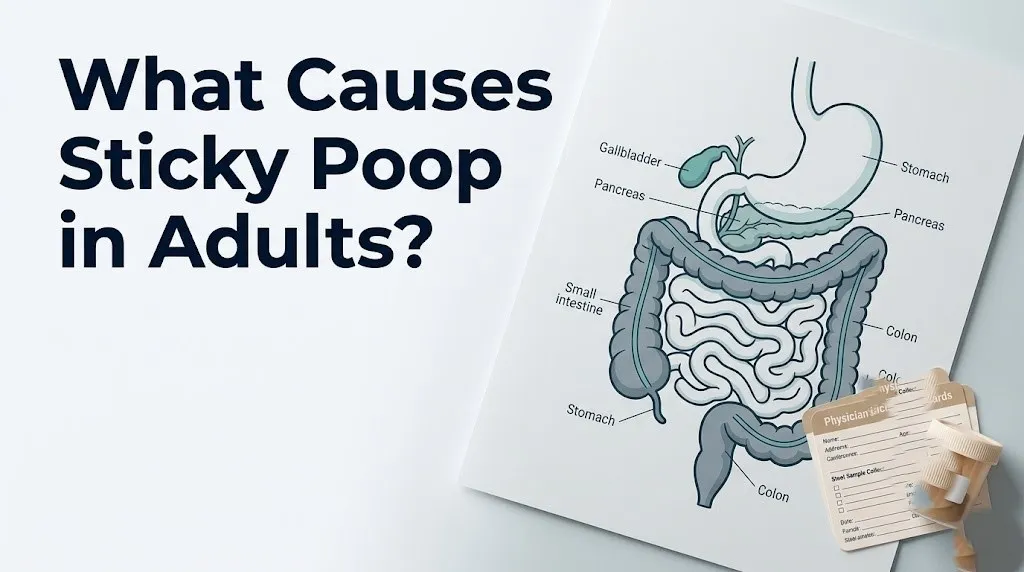
Normal stool consists of approximately 75 percent water, with the remaining 25 percent made up of dead intestinal bacteria, undigested food fiber, intestinal mucus in small amounts, and cells shed from the intestinal lining. When the gastrointestinal system is functioning normally, dietary fat is broken down in the small intestine by pancreatic lipase (an enzyme secreted by the exocrine pancreas) and emulsified by bile salts produced by the liver and stored in the gallbladder. The resulting fatty acids and monoglycerides are absorbed through intestinal villi and packaged into chylomicrons for transport into the lymphatic system.
When any part of this process fails, fat passes undigested into the colon. Colonic bacteria partially ferment this undigested fat, creating a greasy, oily coating on the stool. That coating makes it sticky, difficult to flush, and often foul-smelling.
The mucus pathway is different. The intestinal lining contains specialized cells called goblet cells that continuously secrete mucin proteins (primarily MUC2) forming a thin, protective mucus layer over the intestinal wall. In states of intestinal inflammation, infection, or irritation, goblet cells dramatically increase mucin output. This excess mucus mixes with stool, producing the mucus-coated sticky appearance familiar to people with inflammatory bowel conditions.
The third pathway is melena: black, tarlike sticky stool produced when blood from an upper gastrointestinal bleed is chemically altered by gastric acid and intestinal bacteria, converting hemoglobin to a dark compound called hematin.
Key red flag distinction: oily sticky stool is usually not an emergency; black tarlike sticky stool often is.
What Does Sticky Poop Look Like?
Sticky poop typically appears in one of three distinct forms, and recognizing which type you are seeing is the first step toward understanding the likely cause.
The three clinically relevant types of sticky stool are:
| Type | Appearance | Typical Smell | Likely Cause Category |
|---|---|---|---|
| Fatty/oily sticky stool | Pale, yellowish, greasy, floats or sticks to toilet bowl | Foul, rancid, unusually strong | Fat malabsorption (EPI, celiac, gallbladder) |
| Mucus-coated sticky stool | Brown to yellow-brown, with visible whitish or clear coating | Variable, often mild | Intestinal inflammation, infection, IBD |
| Tarlike black sticky stool | Black, very dark, shiny, paste-like | Extremely foul, metallic | Upper GI bleeding (melena) |
Fatty sticky stool tends to leave a greasy residue on the toilet bowl that is difficult to flush. It often floats due to its high fat content and entrapped gas. This is the presentation most people mean when they say their stool is “oily” or “greasy.”
Mucus-coated stool may look normal in shape but have a visible slimy or jelly-like coating. The amount of mucus can range from a thin film to large amounts of whitish or clear gel mixed with or surrounding the stool.
Tarlike melena looks and behaves differently from both. It is pasty, very dark (often described as black as tar or coffee grounds), and has a consistency that makes it adhere to the toilet bowl more than normal stool. The smell is distinctively foul due to bacterial degradation of blood proteins.
One practical detail worth knowing: stool that is simply very dark brown (from eating beets, blueberries, or large amounts of dark leafy vegetables) will not have the sticky, paste-like quality of true melena. True melena looks like and smells like nothing else.
People who have taken bismuth subsalicylate (Pepto-Bismol) or iron supplements may notice dark, almost black stool that is slightly sticky but lacks the extremely foul odor of melena and has a firmer consistency.
Fatty or Oily Stool from Fat Malabsorption
Fatty, oily sticky stool results directly from fat malabsorption, a state in which the small intestine fails to absorb dietary fat completely, allowing it to pass into the colon where it creates the greasy, adhesive stool quality.
Fat digestion is a tightly coordinated process. After a meal, enteroendocrine cells in the duodenal mucosa release cholecystokinin (CCK), a hormone that simultaneously signals the gallbladder to contract and release bile salts into the duodenum and triggers the pancreatic acinar cells to secrete lipase-rich pancreatic juice. The bile salts emulsify fat globules into tiny droplets, dramatically increasing the surface area available for pancreatic lipase to work on. Without adequate bile or adequate lipase, fat passes through the small intestine in large, poorly processed globules.
Think of this system like a dishwasher: bile acts as the dish soap breaking up the grease, and pancreatic lipase acts as the hot water completing the job. Disable either component and the fat stays on the plate.
When fat reaches the colon undigested, colonic bacteria metabolize it, generating short-chain fatty acids and gas. The fat itself coats the stool, creating the greasy, sticky film that clings to the toilet bowl. The excess gas produced during this bacterial fermentation is why fatty malabsorptive stool often floats.
Fat malabsorption also prevents absorption of fat-soluble vitamins A, D, E, and K. According to the NIDDK, people with chronic fat malabsorption syndromes frequently develop deficiencies in these vitamins, which can produce additional symptoms including night blindness (vitamin A), bone pain or fractures (vitamin D), neurological symptoms (vitamin E), and abnormal bleeding (vitamin K).
Older adults over 65 are at elevated risk for fat malabsorption because pancreatic exocrine function naturally declines with age, producing what is sometimes called age-related exocrine pancreatic insufficiency even without diagnosable chronic pancreatitis.
Red flags requiring evaluation:
- Fatty stools lasting more than 2 weeks with no obvious dietary explanation
- Unintentional weight loss accompanying oily stool
- Vitamin deficiency symptoms (night blindness, easy bruising, bone pain)
- Abdominal pain with fatty stools (suggests active pancreatic or biliary disease)
Steatorrhea: What It Is and Why It Happens
Steatorrhea is the clinical term for stools with an abnormally high fat content, defined by the American Gastroenterological Association (AGA) as excreting more than 7 grams of fat per day in stool when consuming a normal fat-containing diet.
Steatorrhea is not a diagnosis itself. It is a measurable clinical finding that indicates fat malabsorption is occurring at a degree severe enough to be detected either visually or on laboratory testing. Visually, steatorrhea produces the pale, greasy, foul-smelling, floating stool described in the previous section. On laboratory testing, a 72-hour quantitative fecal fat collection measures the total fat content in stool collected over three days.
The causes of steatorrhea fall into three anatomical categories: failure at the level of the pancreas (insufficient lipase production), failure at the level of the biliary system (insufficient bile salt delivery), or failure at the level of the intestinal mucosa itself (insufficient absorptive surface area).
A 2022 review published in Clinical Gastroenterology and Hepatology noted that exocrine pancreatic insufficiency (EPI) is significantly underdiagnosed in adults, with many patients experiencing years of steatorrhea before receiving a confirmed diagnosis. The review found that a fecal elastase-1 test (measuring the concentration of pancreatic elastase enzyme in stool, with values below 200 mcg/g indicating EPI) offers a reliable non-invasive initial screening test.
Women are disproportionately affected by celiac disease, which is one of the most common mucosal causes of steatorrhea. According to a 2019 analysis in the American Journal of Gastroenterology, celiac disease affects approximately 1 in 100 people worldwide and is roughly twice as common in females as in males.
Quick Tip:
- Steatorrhea that persists despite eliminating fatty foods from the diet for 5 to 7 days requires evaluation by a primary care physician.
- The smell of steatorrhea is often described as more offensive than typical stool: rancid, greasy, sometimes compared to old cooking oil.
- People with steatorrhea may notice their stool leaves an oily ring around the toilet bowl waterline even after flushing.
Sticky Poop from Pancreatic Conditions
Pancreatic conditions cause sticky, fatty stool by reducing or eliminating the output of pancreatic lipase, the enzyme directly responsible for breaking down dietary triglycerides in the small intestine.
The pancreas produces approximately 1.5 to 2 liters of enzyme-rich fluid per day through its exocrine acinar cells. This fluid travels through the pancreatic duct and empties into the duodenum through the ampulla of Vater. When the pancreas is damaged by chronic inflammation, scarring, or obstruction, this enzyme output drops. Lipase is the enzyme most sensitive to pancreatic damage, falling below functional levels before other enzymes become deficient.
Chronic pancreatitis is the most common pancreatic cause of steatorrhea in adults. According to the NIDDK, chronic pancreatitis affects approximately 5 to 12 per 100,000 adults in the United States, with alcohol use disorder and certain genetic mutations (PRSS1, SPINK1) as the most common risk factors. Steatorrhea typically appears when pancreatic function falls below 10 percent of normal output, meaning it is a late manifestation of significant pancreatic damage.
Pancreatic cancer can produce steatorrhea through a different mechanism: tumor growth in the head of the pancreas can obstruct the pancreatic duct, blocking enzyme delivery to the duodenum entirely. Importantly, pancreatic cancer-related steatorrhea is frequently accompanied by painless jaundice (yellowing of skin and eyes from bile duct obstruction), unintentional weight loss, and new-onset diabetes. This symptom combination in any adult over 40 warrants urgent evaluation by a primary care physician with same-day gastroenterology or oncology referral.
Men with a history of heavy alcohol use are at substantially higher risk for chronic pancreatitis-related steatorrhea. Alcohol is the most common modifiable cause of chronic pancreatitis in the United States, responsible for approximately 45 to 70 percent of all cases, according to data published in Gastroenterology (AGA journal).
Key diagnostic tests for pancreatic causes:
- Fecal elastase-1 (stool test, non-invasive, detects EPI)
- Serum lipase and amylase (elevated in active pancreatitis)
- CT scan of the abdomen (evaluates pancreatic structure, calcifications, tumors)
- MRCP (magnetic resonance cholangiopancreatography, evaluates pancreatic and bile ducts without radiation)
Key Takeaway: Sticky, greasy stool caused by fat malabsorption, steatorrhea, or pancreatic disease all share the same root failure: dietary fat is not being broken down and absorbed in the small intestine, so it passes into the colon where it creates an oily, adhesive coating on stool.
Celiac Disease and Sticky Greasy Stool
Celiac disease causes sticky, greasy, fatty stool by destroying the intestinal villi, the finger-like projections lining the small intestine that are responsible for absorbing nutrients including fat.
In celiac disease, dietary gluten (the protein found in wheat, rye, and barley) triggers an autoimmune response mediated by T-lymphocytes in the intestinal mucosa. This immune attack targets the intestinal lining, causing progressive villous atrophy (flattening of the villi) and crypt hyperplasia. The result is a dramatically reduced absorptive surface area in the small intestine. The National Institute of Diabetes and Digestive and Kidney Diseases (NIDDK) reports that untreated celiac disease reduces intestinal absorptive capacity by up to 70 percent in severe cases.
With severely reduced villous surface area, fat absorption fails. The mechanism is distinct from pancreatic causes: the enzymes and bile are present and functional, but the intestinal wall cannot complete the absorption step. Unabsorbed fat flows into the colon, producing the same pale, greasy, foul-smelling sticky stool seen in pancreatic EPI.
The diagnostic marker for celiac disease is the immunoglobulin A anti-tissue transglutaminase antibody (IgA anti-tTG), recommended as the initial screening test by the American College of Gastroenterology (ACG). A small intestinal biopsy obtained during upper endoscopy (esophagogastroduodenoscopy/EGD) remains the gold standard for diagnosis, showing the characteristic villous atrophy graded on the Marsh classification scale.
A critical clinical point: celiac disease is frequently misdiagnosed. The ACG estimates an average diagnostic delay of 6 to 10 years from symptom onset to confirmed diagnosis in the United States. Adults presenting with chronic greasy stool, unexplained iron deficiency anemia, fatigue, bone density loss, or neurological symptoms alongside gastrointestinal changes should be screened for celiac disease. It is not exclusively a childhood condition.
Celiac disease affects women approximately twice as frequently as men, likely due to sex-based immunological differences. People with type 1 diabetes, autoimmune thyroid disease, or Down syndrome have substantially higher rates of celiac disease and should be screened more proactively.
Sticky Poop After Gallbladder Removal
Sticky, greasy, or loose oily stool after cholecystectomy (gallbladder removal surgery) occurs because the gallbladder is no longer available to store and concentrate bile salts, disrupting the coordinated delivery of bile to the small intestine during meals.
In a functioning biliary system, the gallbladder stores bile produced by the liver and releases a concentrated bolus of bile salts into the duodenum in response to cholecystokinin (CCK) triggered by a meal. After cholecystectomy, bile drips continuously from the liver directly into the duodenum at a low, steady rate rather than arriving in a timed, meal-synchronized burst.
The clinical consequence for fat digestion is significant: the amount of bile available at the moment a fat-containing meal enters the duodenum is insufficient for complete fat emulsification. Some dietary fat passes through incompletely absorbed. This produces stool that is softer, looser, more frequent, and sometimes greasy or sticky, particularly after high-fat meals.
According to the Mayo Clinic, postcholecystectomy diarrhea and oily stool occur in approximately 5 to 10 percent of people after gallbladder removal. This is sometimes classified as postcholecystectomy syndrome, which also includes a broader range of persistent symptoms after surgery.
For most people, the GI changes after cholecystectomy improve within 4 to 8 weeks as the liver gradually adapts its bile production pattern. However, people who continue to have greasy, sticky stool beyond 3 months after gallbladder removal should inform their primary care physician, who may refer them to a gastroenterologist for evaluation of bile acid malabsorption as a contributing factor.
Women undergo cholecystectomy at higher rates than men. Gallstone disease, the most common reason for cholecystectomy, affects approximately twice as many women as men, particularly during pregnancy and in the postpartum period due to estrogen-driven changes in bile composition.
Sticky Poop with Mucus: Inflammatory and Infectious Causes
Sticky poop with visible mucus occurs when goblet cells in the intestinal lining dramatically increase their output of mucin proteins in response to inflammation, infection, or irritation in the gastrointestinal tract.
Mucus-coated stool is different in character from fatty stool. It tends to have a more normal brown color but is surrounded by or mixed with a clear, white, or yellowish slimy gel. The stool itself is not necessarily loose or discolored; the defining feature is the visible coating.
A small amount of mucus in stool is normal. Goblet cells continuously produce mucus as a protective layer over the intestinal mucosa. When this mucus increases to the point of being visible to the naked eye, it indicates that something is stimulating excess mucin secretion.
Infectious causes are among the most common. Bacterial gastroenteritis caused by pathogens including Salmonella species, Campylobacter jejuni, and Shigella species can produce pronounced mucus in stool during the acute illness phase. Clostridioides difficile (C. diff) infection, which the Centers for Disease Control and Prevention (CDC) reports causes approximately 500,000 infections annually in the United States, commonly produces mucus-mixed stool alongside watery diarrhea and abdominal cramping, particularly in people who have recently taken antibiotics.
Irritable bowel syndrome (IBS) with diarrhea or mixed subtype frequently produces mucus-coated stool without any structural damage to the intestinal wall, driven instead by altered gut motility and visceral hypersensitivity rather than true inflammation.
People who are immunocompromised (including those receiving chemotherapy, long-term corticosteroid therapy, or living with HIV) are at elevated risk for infectious causes of mucus-coated sticky stool, including parasitic infections such as Giardia lamblia and Cryptosporidium parvum. These infections produce persistent greasy, mucus-mixed stool and require stool microscopy or specific antigen testing for diagnosis.
Red flags within mucus stool presentations:
- Mucus mixed with visible red blood (distinct from mucus alone)
- Mucus with fever above 38.5 degrees C (101.3 degrees F)
- Mucus stool persisting beyond 2 weeks without antibiotic use as a known trigger
- Mucus stool with unintentional weight loss or nocturnal waking to use the toilet
Key Takeaway: Mucus-coated sticky stool differs mechanically from fatty sticky stool: it results from excess goblet cell mucin secretion driven by intestinal inflammation or infection, not from failed fat digestion, and these two types require different diagnostic approaches and carry different clinical implications.
Crohn’s Disease and Ulcerative Colitis as Causes of Sticky Stool
Both Crohn’s disease and ulcerative colitis (the two primary forms of inflammatory bowel disease/IBD) produce sticky stool, but through mechanisms that reflect the distinct anatomical distribution and inflammatory character of each condition.
In ulcerative colitis, inflammation is confined to the mucosa (innermost lining) of the colon and rectum and is continuous, beginning at the rectum and extending proximally. The constant inflammatory activation in the colonic mucosa dramatically upregulates goblet cell activity, producing copious mucus. Because ulcerative colitis often involves the rectum, the mucus is frequently passed independently of formed stool, or coats stool as it exits. Blood is mixed with mucus in most active-phase cases, giving the stool a distinctive mixed bloody-mucus appearance.
In Crohn’s disease, inflammation can affect any segment of the gastrointestinal tract from the mouth to the anus and extends through all layers of the intestinal wall (transmural inflammation). When Crohn’s involves the small intestine, particularly the terminal ileum, it disrupts fat absorption directly by damaging the intestinal mucosa and by impairing the reabsorption of bile salts (which normally occurs in the terminal ileum). This produces a malabsorptive sticky stool pattern in addition to the mucus-coated presentation.
According to the NIDDK, approximately 3 million adults in the United States have been diagnosed with IBD, with Crohn’s disease and ulcerative colitis having broadly comparable prevalence. Both conditions follow a relapsing-remitting course, meaning sticky stool may appear during flares and resolve during periods of remission.
A 2021 study published in Gastroenterology found that fecal calprotectin levels above 250 mcg/g reliably distinguished active IBD from IBS in adults presenting with similar symptom profiles, offering a non-invasive initial differentiation tool before colonoscopy is performed.
Crohn’s disease has a bimodal age of onset, with the first peak between ages 20 and 30 and a second smaller peak in adults over 60. Young adults presenting with chronic mucus-coated or greasy sticky stool, abdominal cramping, and weight loss should have IBD included in the differential diagnosis.
Black Sticky Tarry Stool and Upper Gastrointestinal Bleeding
Black, tarlike, sticky stool called melena is a direct sign of bleeding in the upper gastrointestinal tract, specifically from a source above the ligament of Treitz (the anatomical boundary between the duodenum and jejunum, approximately 4 feet into the small intestine from the stomach).
When blood from an upper GI bleed enters the stomach or small intestine, it is exposed to gastric acid and intestinal bacterial enzymes. These processes degrade hemoglobin in the red blood cells, converting it to a black compound called hematin. As this digested blood moves through the intestinal tract over 8 to 14 hours, it mixes with stool, producing the black, paste-like, extremely foul-smelling sticky stool that clinicians call melena.
The most common causes of upper GI bleeding producing melena include:
- Peptic ulcer disease (gastric or duodenal ulcers, often from Helicobacter pylori infection or NSAID use): the most common cause of melena in adults
- Esophageal varices (enlarged veins in the esophagus from portal hypertension, typically in people with liver cirrhosis): extremely high-risk for life-threatening hemorrhage
- Mallory-Weiss tears (longitudinal tears in the esophageal or gastric mucosa, often from forceful vomiting)
- Gastric cancer: melena may be among the earliest signs in some presentations
- Arteriovenous malformations (AVMs) in the upper GI tract: more common in older adults over 65
According to a 2020 review in Gut (the BMJ gastroenterology journal), upper GI bleeding carries an overall mortality rate of approximately 2 to 10 percent in hospitalized patients, with significantly higher mortality in older adults, people on anticoagulant therapy, and those with liver disease.
Melena must never be attributed to diet, supplements, or other benign causes without first ruling out an upper GI bleed. People who take nonsteroidal anti-inflammatory drugs (NSAIDs) regularly, use anticoagulant medications, or have a history of peptic ulcer disease are at elevated risk.
This is a medical emergency. Black tarlike stool with dizziness, fainting, rapid heartbeat, vomiting blood, or abdominal pain requires immediate emergency evaluation.
Key Takeaway: Black, tarlike, sticky stool (melena) is not a dietary change or a medication artifact when the smell is distinctively foul and the consistency is paste-like; it indicates upper gastrointestinal bleeding until proven otherwise and warrants same-day emergency evaluation, not watchful waiting.
Medications That Cause Sticky or Dark Stool
Several commonly used medications change stool consistency, color, and texture through direct pharmacological mechanisms, producing stool that appears sticky, dark, or tarlike without representing an underlying disease.
The most clinically important examples:
| Medication | Mechanism | Stool Appearance | How to Distinguish from Disease |
|---|---|---|---|
| Orlistat (Alli, Xenical) | Inhibits pancreatic lipase; fat passes unabsorbed into colon | Oily, greasy, orange-ish, sticky | Expected side effect; resolves with low-fat diet. No pain, no fever, no weight loss |
| Iron supplements (ferrous sulfate) | Unabsorbed iron oxidizes in the colon; forms iron sulfide | Dark green to black, slightly sticky | Lacks foul odor of melena; firmer consistency; clears within days of stopping iron |
| Bismuth subsalicylate (Pepto-Bismol) | Bismuth reacts with sulfur in saliva and GI tract to form bismuth sulfide | Black, slightly sticky | No odor change; resolves within 1 to 2 days of stopping; no associated symptoms |
| Activated charcoal | Charcoal passes unabsorbed; coats stool | Black, tarlike in appearance | Resolves immediately; known ingestion history; typically given in emergency settings |
| Certain antibiotics (broad-spectrum) | Alter intestinal microbiome; increase risk of C. diff infection or bile acid malabsorption | Variable; may produce mucus-coated stool | Often accompanied by diarrhea; onset correlates with antibiotic course |
Orlistat is particularly important to understand. As an FDA-approved weight loss medication, it works precisely by blocking fat absorption. The greasy, oily, sticky stool it produces (called “treatment effects” in clinical trials) is a direct consequence of its mechanism, not a sign of a GI problem. However, if sticky stool persists after stopping orlistat, a different underlying cause should be evaluated.
According to the NIDDK, iron deficiency anemia is the most common nutritional deficiency in the United States, meaning iron supplementation is widely used. Adults taking iron supplements who notice dark, slightly sticky stool should not assume melena without checking for the odor distinction (melena smells far more offensive) and confirming whether the color resolves within 48 hours of stopping the supplement.
Pregnant women frequently take iron supplements as part of prenatal nutrition, making medication-related dark stool particularly common in this population.
Diet and Lifestyle Causes of Sticky Poop
Dietary factors are among the most common causes of temporary changes in stool stickiness, particularly after meals very high in fat content, and these changes typically resolve within 24 to 48 hours without requiring medical evaluation.
When an adult consumes a significantly high-fat meal (a large portion of fried food, a very rich fatty meal, or a large amount of certain oils), the demand placed on the gallbladder, pancreas, and small intestine temporarily exceeds the digestive capacity. Bile salt delivery and pancreatic lipase output are both volume-limited. Even in a healthy person, an unusually large fat load can overwhelm these systems temporarily, allowing some fat to reach the colon unprocessed.
Foods most consistently associated with temporary sticky stool:
- Fried foods consumed in large quantities (french fries, fried chicken, doughnuts)
- Fatty red meat (high-fat cuts like ribeye or brisket in large portions)
- Coconut oil and palm oil in large amounts (high saturated fat content)
- Olestra (a fat substitute used in some snack foods): not absorbed by the body, passes directly into the colon, well-documented to produce oily, sticky stool
- Certain artificial fat substitutes in commercially produced low-calorie foods
Alcohol affects stool consistency through multiple pathways. Acute heavy alcohol intake accelerates intestinal transit, reducing absorption time. Chronic alcohol use damages both the pancreatic exocrine cells and the intestinal mucosa, producing more persistent malabsorptive changes. Chronic alcohol use is also the leading modifiable cause of chronic pancreatitis, which produces steatorrhea as described in the earlier pancreatic section.
The practical self-assessment test: if sticky or greasy stool appears within 12 to 24 hours of a noticeably high-fat or high-alcohol intake and resolves to normal within 24 to 48 hours with normal eating, a dietary cause is the most likely explanation. If it persists beyond 48 hours without dietary change as the trigger, or recurs consistently without a high-fat meal as the identifiable cause, evaluation by a primary care physician is warranted.
Older adults with reduced baseline pancreatic reserve have a lower threshold for dietary fat causing steatorrhea. A meal that produces no stool change in a 35-year-old may produce fatty sticky stool in a person over 65.
Key Takeaway: Temporary dietary causes of sticky stool are common and typically self-resolving within 24 to 48 hours, but recurrent sticky stool that appears without an obvious high-fat dietary explanation always deserves professional evaluation because the underlying cause cannot be reliably self-determined.
Sticky Poop in Specific Populations: Older Adults, Pregnancy, and Children
The causes of sticky poop in adults shift meaningfully based on age, reproductive status, and pre-existing conditions, and the clinical urgency thresholds differ across these populations.
Older adults (over 65):
Older adults face a higher baseline risk of several causes of sticky stool simultaneously. Age-related decline in exocrine pancreatic output (natural reduction in acinar cell mass with aging) lowers the threshold for fat malabsorption even without diagnosed chronic pancreatitis. The incidence of colorectal cancer and upper gastrointestinal malignancy increases substantially with age; the American Cancer Society reports that more than 90 percent of colorectal cancer cases occur in adults over 45. Older adults on anticoagulant therapy (warfarin, apixaban, rivaroxaban) are at elevated risk for GI bleeding producing melena. Any new-onset black or sticky stool in an adult over 65 without a clear medication-related explanation warrants prompt evaluation by a primary care physician with same-day consideration of gastroenterology referral.
Pregnancy:
Pregnancy increases intestinal mucus production as a normal physiological response to elevated progesterone and changes in GI motility. Iron supplementation (nearly universal in prenatal care) produces dark, slightly sticky stool in the majority of pregnant women. These are expected and benign. However, pregnant women who develop black tarlike stool with foul odor, abdominal pain, or dizziness must seek emergency evaluation because upper GI bleeding during pregnancy, while uncommon, requires immediate assessment. Pregnant women should contact their obstetrician-gynecologist if they are uncertain whether dark or sticky stool represents iron supplementation effects or something more serious.
Younger adults with undiagnosed IBD:
Crohn’s disease and ulcerative colitis most commonly present in adults aged 15 to 35. A young adult experiencing recurring mucus-coated stool, cramping abdominal pain, rectal urgency, and fatigue without another explanation should be evaluated by a primary care physician for IBD, with referral to a gastroenterologist for colonoscopy if IBD is suspected.
When Sticky Poop Signals Something Serious
Certain features accompanying sticky stool indicate that the underlying cause may be serious and requires prompt evaluation rather than watchful waiting at home.
The following table outlines the clinical features that separate benign, self-resolving sticky stool from presentations that require medical attention:
| Feature | Self-Monitoring Appropriate | Seek Medical Evaluation | Seek Same-Day or Emergency Evaluation |
|---|---|---|---|
| Duration | Less than 48 hours, clear dietary trigger | More than 2 weeks, no dietary explanation | Any duration with black tarlike appearance |
| Stool color | Pale/yellowish after high-fat meal | Pale/yellowish persisting without diet trigger | Black, tarlike, very dark |
| Smell | Mildly more foul than usual | Persistently very foul without dietary cause | Extremely foul, metallic (melena-like) |
| Associated pain | None | Intermittent abdominal cramping | Severe, sudden abdominal pain |
| Blood | None visible | Streaks of red blood on stool surface | Blood mixed with black tarlike stool |
| Mucus | Small amount, short-lived | Persistent or large amounts of mucus | Mucus with blood and fever |
| Weight | Stable | Unintentional loss over 4 to 8 weeks | Rapid unexplained weight loss with new GI symptoms |
| Systemic symptoms | None | Fatigue, mild bloating | Dizziness, fainting, rapid heartbeat, vomiting blood |
Three specific symptom combinations should never be treated as self-managing situations:
- Black, tarlike, foul-smelling stool with dizziness or fainting: this is a medical emergency consistent with active upper gastrointestinal hemorrhage. Call 911 or go to the nearest emergency room immediately.
- Pale, greasy sticky stool with painless jaundice and weight loss in an adult over 40: this combination raises concern for pancreatic cancer causing biliary and pancreatic duct obstruction. Same-day evaluation by a primary care physician is warranted.
- Mucus-mixed bloody stool with fever and severe abdominal pain: this may indicate a severe infectious colitis, a severe IBD flare, or another inflammatory emergency. Same-day evaluation in an emergency department is appropriate.
How Doctors Diagnose the Cause of Sticky Stool
Doctors diagnose the cause of sticky stool by matching the stool’s specific characteristics to targeted laboratory, stool, imaging, and endoscopic tests, following a logical sequence from least invasive to most invasive.
Step 1: Detailed history and physical examination. A gastroenterologist or primary care physician will ask specifically about: stool color and consistency, duration of the change, diet changes, medications, alcohol use, family history of GI malignancy, IBD, or celiac disease, weight changes, associated symptoms (pain, fever, bloating, blood), and prior GI surgeries (particularly cholecystectomy).
Step 2: Basic laboratory tests. A complete blood count (CBC) identifies anemia (suggesting chronic blood loss or malabsorption). A comprehensive metabolic panel (CMP) evaluates liver and kidney function. Serum lipase and amylase are elevated in acute pancreatitis. An albumin level reflects nutritional status affected by malabsorption. Vitamin D, vitamin B12, and iron studies detect deficiencies consistent with malabsorption.
Step 3: Targeted stool tests.
- Fecal elastase-1: screens for exocrine pancreatic insufficiency non-invasively
- 72-hour quantitative fecal fat: confirms steatorrhea diagnosis with greater precision
- Fecal calprotectin: screens for intestinal inflammation (elevated in IBD, low in IBS)
- Fecal occult blood test (FOBT): detects occult blood in stool when bleeding is not visible
- Stool culture and ova and parasites examination: identifies infectious causes (Salmonella, Campylobacter, Giardia, Cryptosporidium, C. diff antigen test)
Step 4: Serological testing for celiac disease. The IgA anti-tissue transglutaminase antibody (IgA anti-tTG) is the recommended initial screening test per ACG guidelines. IgA deficiency must be excluded (with a total IgA level) before interpreting a negative anti-tTG result.
Step 5: Imaging. Abdominal ultrasound evaluates gallbladder, bile ducts, liver, and pancreas for structural abnormalities. CT scan of the abdomen and pelvis evaluates pancreatic structure, masses, ductal dilation, and lymphadenopathy. MRCP offers detailed imaging of bile and pancreatic ducts without radiation.
Step 6: Endoscopy. Upper endoscopy (EGD) visualizes the esophagus, stomach, and duodenum, allowing biopsy for celiac disease diagnosis and evaluation of upper GI bleeding sources. Colonoscopy evaluates the entire colon and terminal ileum for IBD, colorectal polyps, cancer, and sources of GI bleeding.
Adults over 45 who have not completed colorectal cancer screening and present with new-onset sticky stool, rectal bleeding, or bowel habit changes should be referred to a gastroenterologist for colonoscopy as part of this evaluation.
Emergency Symptoms: When to Call 911 or Go to the ER
Certain presentations of sticky stool represent potential life-threatening emergencies. Do not wait to see if these symptoms resolve on their own.
Call 911 or go to the nearest emergency room immediately if your stool is black and tarlike, and you are also experiencing any of the following:
- Dizziness, lightheadedness, or fainting: these symptoms alongside black stool indicate significant blood loss from upper GI hemorrhage and hemodynamic instability
- Rapid or irregular heartbeat (palpitations): compensatory tachycardia in response to blood volume loss
- Vomiting blood or material that looks like coffee grounds: confirms an active upper GI bleeding source
- Sudden severe abdominal pain: may indicate a perforated ulcer or other abdominal emergency
- Pale, clammy, cold skin: signs of shock from acute blood loss
- Extreme weakness or inability to stand without feeling faint: hemodynamic compromise requiring IV access, fluid resuscitation, and urgent endoscopy
Also go to the emergency room immediately if:
- Bloody, mucus-mixed stool is accompanied by high fever (above 38.5 C / 101.3 F) and severe abdominal cramping: may indicate severe infectious colitis or toxic megacolon, a life-threatening complication of IBD or C. diff infection
- Sticky pale stool appears alongside rapidly worsening jaundice and confusion: may indicate acute liver failure or acute cholangitis (bile duct infection), both medical emergencies
These presentations can indicate active gastrointestinal hemorrhage, bowel perforation, toxic megacolon, or acute liver failure, all of which require emergency medical assessment in a hospital setting, not an urgent care appointment or a phone call to a nurse line.
Frequently Asked Questions About Sticky Poop in Adults
Why does my poop stick to the toilet bowl and won’t flush?
Stool that sticks to the toilet bowl and resists flushing typically contains excess unabsorbed fat, which creates a greasy, adhesive coating on the stool surface.
This oily film is produced when dietary fat passes through the small intestine without being fully absorbed, often due to insufficient pancreatic lipase, inadequate bile salt delivery, or intestinal mucosal damage, and then reaches the colon where bacteria partially break it down, releasing fatty acids that coat the stool.
If this happens consistently rather than just after one unusually fatty meal, evaluation by a primary care physician is appropriate, as persistent fat in stool indicates an underlying digestive condition requiring diagnosis.
What does it mean when your poop is black and sticky?
Black, sticky, tarlike stool called melena is a sign of bleeding in the upper gastrointestinal tract, specifically from the stomach, duodenum, or esophagus.
Blood exposed to gastric acid and intestinal bacteria undergoes chemical conversion of hemoglobin to a dark compound called hematin, which gives the stool its characteristic black, paste-like, very foul-smelling appearance.
Black sticky stool is a medical emergency if accompanied by dizziness, vomiting blood, rapid heartbeat, or fainting; call 911 or go to the nearest emergency room immediately if these symptoms are present.
Is sticky poop a sign of bowel cancer?
Sticky poop alone is not a specific indicator of bowel (colorectal) cancer, but certain sticky stool presentations warrant evaluation to rule it out.
Colorectal cancer can produce blood-mixed stool, mucus in stool, or changes in bowel habits, and the American Cancer Society recommends that adults over 45 undergo regular colorectal cancer screening, with those experiencing new-onset blood in stool, persistent mucus in stool, or unexplained weight loss alongside bowel changes seen by a primary care physician or gastroenterologist promptly.
A single episode of greasy sticky stool after a high-fat meal does not require cancer screening, but persistent changes lasting more than 2 weeks without a clear dietary cause always merit evaluation.
What does sticky poop with mucus mean?
Sticky poop with visible mucus means that the goblet cells lining the intestinal wall have dramatically increased their output of mucin proteins, typically in response to intestinal inflammation, infection, or irritation.
Common causes include inflammatory bowel disease (Crohn’s disease or ulcerative colitis), bacterial gastroenteritis, Clostridioides difficile infection following antibiotic use, and irritable bowel syndrome with diarrhea subtype.
Mucus in stool lasting more than 2 weeks, or mucus mixed with blood or accompanied by fever and abdominal pain, requires evaluation by a primary care physician, who may refer you to a gastroenterologist for colonoscopy or stool testing.
Can certain foods cause sticky poop?
Yes, certain foods directly cause temporary sticky or oily stool by overwhelming the fat-digesting capacity of the gallbladder and pancreas, allowing excess fat to reach the colon.
Foods consistently associated with this effect include large portions of fried food, very fatty cuts of meat, large amounts of coconut or palm oil, the fat substitute olestra found in some snack products, and significantly elevated alcohol intake.
Sticky stool from dietary causes typically resolves within 24 to 48 hours of returning to normal eating and does not require medical evaluation unless it persists or recurs consistently without an obvious high-fat trigger.
When should I see a doctor about sticky poop?
See a primary care physician about sticky poop if it persists beyond 2 weeks without an obvious dietary cause, is accompanied by abdominal pain, weight loss, fatigue, or visible mucus or blood.
Go to the emergency room the same day if your stool is black and tarlike with a very foul odor, particularly if you also feel dizzy, faint, have a rapid heartbeat, or have vomited blood.
A gastroenterologist referral is typically the next step after initial evaluation, and the specific tests ordered (fecal elastase, fecal calprotectin, colonoscopy, upper endoscopy, or celiac serology) will depend on which type of sticky stool you are experiencing and what your history reveals.
Sticky poop in adults is not a single condition with a single answer. It is a sign produced by at least three distinct physiological mechanisms, each pointing toward a different part of the gastrointestinal system and a different clinical workup. Whether the stool is greasy and pale (suggesting fat malabsorption from the pancreas, biliary system, or small intestine), mucus-coated (suggesting intestinal inflammation or infection), or black and tarlike (demanding immediate evaluation for upper GI bleeding), the specific character of the stool matters enormously to the diagnosis.
The most actionable thing you can do right now: match your stool’s specific characteristics to the types described here. If it is consistently greasy and pale without a high-fat dietary explanation, ask your primary care physician about fecal elastase testing and celiac serology. If it contains visible mucus with abdominal pain or rectal urgency, a gastroenterology referral and fecal calprotectin test are the logical next steps.
If your stool is black, paste-like, and smells unlike anything you have encountered before, do not wait for a regular appointment. That presentation requires evaluation today.