Bad Differential Symptoms: What They Mean for Your Health
Bad differential symptoms are not just warning signs for your vehicle. They are also warning signs for your body. When a vehicle’s differential or drivetrain fails, the abnormal vibration, noise, and handling changes it produces expose every person inside that vehicle to mechanical forces that can damage the lumbar spine, peripheral nerves, and vascular system.
Research reviewed by the National Institute for Occupational Safety and Health (NIOSH) shows that professional drivers exposed to whole-body vibration at frequencies between 4 and 8 Hz, the range most commonly produced by deteriorating drivetrain components, face a measurably elevated risk of intervertebral disc degeneration, lumbar radiculopathy, and chronic musculoskeletal pain compared to non-driving workers. The World Health Organization (WHO) classifies occupational vibration as a recognized cause of musculoskeletal and neurological disease.
This article covers what bad differential symptoms mean for the health of drivers and vehicle occupants, how the vibration and mechanical forces from a failing differential affect the lumbar spine, cervical spine, peripheral nerves, and vestibular system, and exactly when physical symptoms require medical evaluation.
Bad Differential Symptoms: What Drivers Actually Experience
Bad differential symptoms, from a driver’s physical health perspective, are the collection of musculoskeletal, neurological, and vascular changes that develop when a failing vehicle differential exposes the body to abnormal vibration, asymmetric mechanical forces, and compensatory postural strain over time.
A differential is the drivetrain component that distributes engine torque between wheels while allowing them to rotate at different speeds during turns. When it deteriorates, it produces vibration, grinding, and instability that transmit directly through the vehicle frame, seat, steering column, and floor to the driver’s body.
The body is not designed to absorb continuous high-amplitude vibration. The lumbar spine, specifically the intervertebral discs between the L1 and L5 vertebrae, is the primary shock-absorbing structure in the torso. When vibration at 4-8 Hz repeatedly loads the lumbar disc in a seated driver, it mimics millions of tiny compression events in a short time period.
Think of a lumbar disc like a gel-filled pillow compressed between two hard surfaces. Normal loading, like standing and walking, applies varied pressures that let the disc rehydrate and recover. Vibration from a failing drivetrain applies rapid, repetitive compression at the same frequency, preventing recovery. Over months and years, this accelerates the disc’s natural aging process.
Key physical symptoms that drivers report with known bad differential conditions:
- Persistent lower back ache that worsens during drives and improves after several hours at rest
- Tingling or numbness in the hands, particularly in the ring and little finger (ulnar nerve distribution)
- Neck stiffness and cervical pain after highway driving
- Fatigue disproportionate to the length of the drive
- Dull hip pain that is worse on the side closer to the vibration source
- Difficulty concentrating after extended drives on rough-riding vehicles
Older drivers and those with pre-existing lumbar disc disease experience these symptoms at lower exposure durations because their disc hydration is already reduced. For a 60-year-old long-haul driver with moderate disc degeneration at L4-L5, six hours in a vehicle with a failing rear differential may produce symptomatic flares that a 30-year-old with healthy discs would not notice from the same exposure.
Symptoms of a Bad Differential and How They Affect Your Body
Symptoms of a bad differential affect the body through three distinct physical pathways: whole-body vibration transfer, asymmetric postural compensation, and prolonged static muscle loading.
The whole-body vibration (WBV) pathway is the most extensively studied. Per the ISO 2631-1 international standard for human vibration measurement, WBV is assessed by the vibration acceleration reaching the seated occupant through the seat pan and backrest. A deteriorating differential increases vibration acceleration in the 1-80 Hz frequency range. The lumbar spine’s resonance frequency sits at approximately 4-8 Hz per NIOSH technical reports. When differential-generated vibration falls in this range, the spine absorbs energy at its maximum efficiency, which means maximum mechanical stress on the nucleus pulposus and annulus fibrosus of each lumbar disc.
The asymmetric compensation pathway occurs because a failing differential on one axle side often produces uneven torque or vibration. Drivers unconsciously shift their weight, grip the steering wheel harder on one side, or brace one shoulder to compensate for vehicle instability. These postural adaptations load the erector spinae and multifidus muscles asymmetrically, producing muscle imbalance and trigger points on one side of the lumbar region.
The static muscle loading pathway develops because driving requires sustained isometric contraction of the paraspinal muscles to maintain seated posture. When vehicle vibration is added, these muscles must contract against a moving load, increasing their metabolic demand and waste product accumulation.
| Pathway | Primary Anatomical Target | Resulting Symptom | Timeframe |
|---|---|---|---|
| Whole-body vibration | L1-L5 intervertebral discs | Lower back ache, disc bulge | Months to years |
| Asymmetric loading | Erector spinae, multifidus (one side) | One-sided back pain, hip pain | Weeks to months |
| Static muscle loading | Lumbar paraspinal muscles bilaterally | Muscle fatigue, ache, spasm | Hours to days |
| Grip vibration | Median and ulnar nerves in hands | Tingling, numbness, grip weakness | Months to years |
Women, on average, have smaller lumbar disc cross-sectional area than men at equivalent body mass, which means per-unit vibration loading on the disc is higher. Research published in Spine journal has found that female professional drivers may reach clinically symptomatic disc degeneration thresholds at shorter cumulative vibration exposure durations than male counterparts.
Bad Rear Differential Symptoms and Their Physical Effects
Bad rear differential symptoms produce a specific physical symptom pattern in drivers because the rear differential transmits vibration primarily through the vehicle’s floor pan and seat structure.
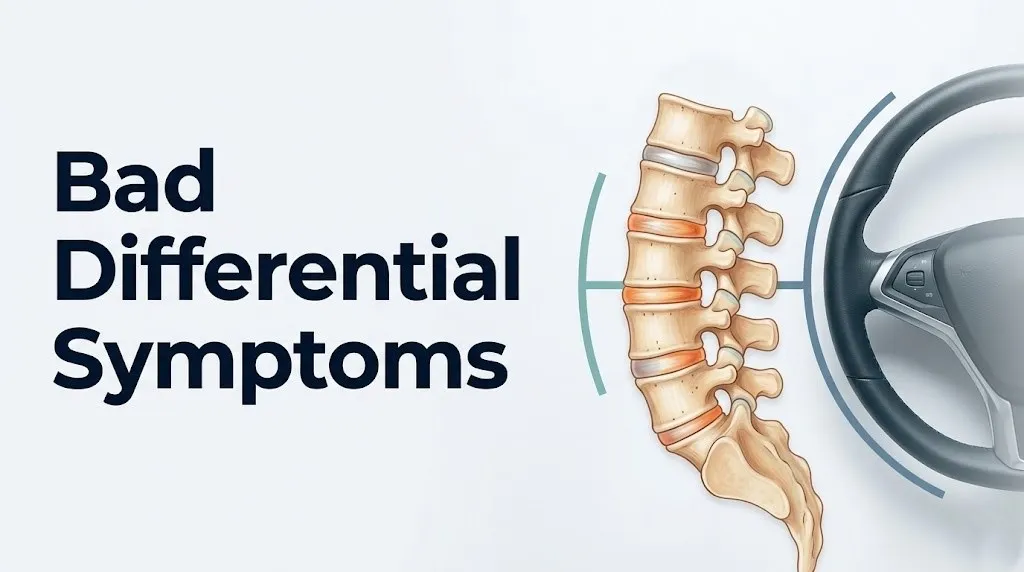
When the rear differential deteriorates, worn gear teeth, depleted lubricant, or damaged bearings generate vibration in the 10-60 Hz frequency range in addition to lower-frequency resonance. This vibration travels through the seat pan directly to the ischial tuberosities (sitting bones), transfers into the pelvis, loads the sacroiliac joint, and continues up the lumbar spine.
The sacroiliac joint is particularly vulnerable. This joint sits at the junction of the sacrum and the iliac bones of the pelvis. It has very limited normal motion: approximately 2-4 degrees of rotation and 1-2 mm of translation per biomechanical studies cited in the Journal of Biomechanics. When vibration repetitively microshears this joint, the posterior sacroiliac ligaments and the joint capsule become inflamed. The resulting pain is typically felt as a deep ache in the lower back and buttock area on one or both sides.
Rear differential problems also frequently produce a rhythmic grinding or rumbling that matches vehicle speed. As a driver, this rhythmic input can affect concentration and stress response. Cortisol elevation from chronic noise and vibration stress compounds the pain experience by lowering the nociceptive threshold, meaning the nervous system becomes more sensitive to pain signals that were previously sub-threshold.
Physical effects specifically associated with bad rear differential exposure:
- Deep sacroiliac joint pain, often described as a persistent bruised feeling in the buttock
- Posterior hip pain that worsens after sitting for more than 30 minutes
- A sensation of vibration or buzzing in the legs even after leaving the vehicle (vibration after-effect, recognized in occupational medicine literature)
- Lower extremity fatigue out of proportion to activity
- Sleep disturbance from residual muscle tension in the lumbar and gluteal regions
Drivers with a known diagnosis of sacroiliac joint dysfunction or piriformis syndrome are especially vulnerable. Rear differential vibration in these individuals can trigger acute pain flares that require rest of several days to resolve, whereas the same exposure in a driver without these conditions might produce only mild fatigue.
Key Takeaway: A failing rear differential does not just damage your car. The vibration it generates transfers directly into your sacroiliac joint and lumbar discs, and for drivers with pre-existing back conditions, it can trigger pain flares that last days.
Bad Front Differential Symptoms and Upper Body Health Impact
Bad front differential symptoms primarily affect the driver’s upper body because the front differential connects directly to the front axles, which link to the steering system and front suspension.
When a front differential degrades, vibration and torque irregularities transmit through the front axle shafts into the steering column. The driver’s hands grip a wheel that is now transmitting both normal steering feedback and abnormal vibratory input from a failing differential. This is the entry point for hand-arm vibration (HAV) exposure.
HAV travels from the steering wheel, through the palms, along the median nerve (running through the carpal tunnel of the wrist) and the ulnar nerve (passing through the Guyon’s canal at the wrist and the cubital tunnel at the elbow). Prolonged vibration along these nerve pathways causes progressive demyelination of the sensory nerve fibers, reducing the speed of electrical conduction and distorting touch and temperature sensation in the fingers and hands.
The cervical spine also bears disproportionate impact from front differential problems. Vibration from the steering column causes low-amplitude oscillation in the driver’s arms and shoulders. The neck muscles, particularly the upper trapezius and levator scapulae, contract to stabilize the head during this oscillation. Sustained contraction of these muscles, combined with the forward-head posture typical of driving, increases compressive loading on the cervical intervertebral discs, particularly at C5-C6 and C6-C7, the two most commonly degenerating cervical disc levels.
Quick Tip:
- Grip the steering wheel with a relaxed, 9-and-3 hand position rather than a tight 10-and-2 grip to reduce vibration transmission to the median nerve
- Take both hands off the wheel briefly at safe stops to allow digital circulation to recover
- Drivers with pre-existing carpal tunnel syndrome should report any worsening of hand symptoms to a neurologist promptly, as front differential deterioration may accelerate nerve compression
Older drivers and those who drive vehicles with worn suspension components (amplifying vibration transmission) should be especially aware that front differential symptoms may accelerate existing cervical disc disease without producing dramatic warning signs early in the degenerative process.
Symptoms of a Bad Rear Differential: Recognizing the Full Pattern
Symptoms of a bad rear differential, when viewed through a health lens, form a recognizable clinical pattern in drivers and occupants: posterior body-dominant symptoms (back, buttocks, and posterior legs), vibration-related fatigue, and sleep disruption from chronic pain.
The full physical symptom pattern of rear differential deterioration in a frequent driver includes both acute and cumulative effects. Acutely, after a single long drive in a vehicle with a bad rear differential, the driver may experience:
- Temporary lower back stiffness that resolves with 20 minutes of walking
- Mild posterior hip ache on the seat-dominant side
- Leg heaviness or mild tingling in the posterior thigh along the sciatic nerve distribution
- Unusual fatigue, partly from the increased muscular effort of driving in an unstable vehicle
The cumulative pattern, developing over months of regular driving in a deteriorating vehicle, looks quite different:
| Symptom | Anatomical Origin | Stage at Which It Typically Appears |
|---|---|---|
| Persistent lower back ache | L3-L5 disc and facet joints | Early, within weeks to months |
| Sacroiliac joint pain | SI joint posterior ligaments | Early to mid-stage |
| Posterior thigh ache | Sciatic nerve L4-S1 roots | Mid-stage, after disc changes begin |
| Calf numbness or tingling | S1 nerve root | Mid to late, suggests disc protrusion |
| Lower leg weakness | L4-L5 or S1 nerve root motor fibers | Late, requires urgent evaluation |
According to research reviewed by NIOSH, cumulative WBV exposure above the daily action value of 0.5 m/s² (the threshold set by the EU Physical Agents Directive) is associated with a statistically elevated risk of lumbar disc prolapse in professional drivers. A failing rear differential can push a vehicle’s seat-level vibration well above this threshold.
Drivers under age 30 with flexible spines may tolerate months of rear differential deterioration without overt symptoms, then experience an acute disc herniation event during a single long trip because cumulative disc fatigue reaches a critical threshold. This pattern is why symptoms of a bad rear differential should not be dismissed based on the absence of significant pain in previous drives.
Bad Rear Axle Symptoms and What They Do to Your Spine
Bad rear axle symptoms overlap with rear differential symptoms in their physical effects, but the axle’s failure mode can produce abrupt shock loading events that differ from the chronic vibration of differential deterioration.
The rear axle transfers torque from the differential to the rear wheels via the axle shafts. When an axle shaft develops a crack, wear groove, or damaged bearing, it can generate sudden lurches, clicks on turns, or intermittent loss of traction. These events produce unpredictable mechanical impulses through the vehicle structure.
A sudden lurch or unexpected vehicle movement causes the driver to react with an involuntary bracing response. The erector spinae and quadratus lumborum muscles contract forcefully and asymmetrically to stabilize the torso. When this happens repeatedly during a drive, it mimics the physiological effect of repeated unexpected physical perturbations, which research published in the Journal of Electromyography and Kinesiology associates with increased paraspinal muscle fatigue and delayed-onset muscle soreness in the lumbar region.
There is also a passenger safety dimension. Occupants who are not gripping the wheel or bracing actively have no warning of sudden vehicle lurches. A lateral jolt from an axle failure event can cause the torso to strike the door panel or armrest, producing acute lateral thoracic or lumbar musculoskeletal strain that may not manifest as pain until 24-48 hours after the injury (consistent with the inflammatory cascade of musculoskeletal soft tissue injury, in which prostaglandin E2 and bradykinin build up over this timeframe).
Physical symptoms associated with bad rear axle exposure:
- Acute onset lower back pain following a driving episode with pronounced vehicle jolting
- One-sided lumbar pain worse on the side of the axle with greater bearing wear
- Intercostal muscle strain from door/seatbelt impact during vehicle instability
- Cervical whiplash-pattern symptoms if a sudden jolt causes unexpected head and neck movement
- Increased anxiety and muscle tension from the unpredictability of vehicle instability
For drivers with osteoporosis or osteopenia, particularly postmenopausal women and older men, sudden axle-related vehicle jolts represent a more serious injury risk. Vertebral compression fractures in osteoporotic bone can occur from forces lower than those required to injure normal bone, and a severe vehicle jolt in a compromised axle situation may be sufficient to cause a vertebral end plate fracture.
Key Takeaway: Bad rear axle symptoms can cause more acute spinal injury than rear differential symptoms because axle failure produces sudden lurching events rather than chronic vibration, and for drivers with osteoporosis, these events carry fracture risk.
Bad Rear End Symptoms and the Lower Back Connection
Bad rear end symptoms, a term covering both rear differential and rear axle deterioration, connect to the lower back through a clearly mapped anatomical pathway: vibration at the seat pan transfers directly into the lumbar spine.
The seated position already places the lumbar spine in a position of mechanical disadvantage. Standing with normal lordotic curve distributes compressive load evenly across the disc surface. Seated, the lumbar lordosis flattens. This shifts the compressive axis posterior, increasing the load on the posterior annulus fibrosus. Research published in Spine journal by Nachemson (foundational biomechanical work widely referenced in spine research) showed that intradiscal pressure in the lumbar spine is approximately 40% higher in the seated position than in standing.
When bad rear end symptoms add vibration to this already-elevated baseline disc pressure, the cumulative mechanical effect on the posterior annulus becomes substantial. The posterior annulus fibrosus is the disc’s structural barrier against nerve root compression. It is also the region that fails first in disc herniation events. Chronic vibration causes fatigue cracking in the annular lamellae, much like repeated bending of a plastic ruler eventually splits it at the stress concentration point.
The sciatic nerve, formed from the L4, L5, S1, S2, and S3 nerve roots, passes through the piriformis muscle in the deep gluteal region before traveling down the posterior thigh. Vibration-related swelling and muscle tension in the piriformis can compress the sciatic nerve even without disc herniation, producing a symptom pattern that mimics lumbar disc disease but originates in the gluteal region. Clinicians call this piriformis syndrome, and it is commonly seen in professional drivers and heavy equipment operators.
For drivers who are pregnant, the lower back connection from bad rear end symptoms deserves special consideration. Pregnancy causes relaxin-mediated ligament laxity throughout the pelvis and lumbar spine, increasing the vulnerability of the sacroiliac joint and lumbar discs to vibration-induced injury. A pregnant driver operating a vehicle with known drivetrain deterioration is exposed to a higher musculoskeletal injury risk than a non-pregnant driver in the same situation. This is not a theoretical concern: OSHA’s technical guidance on whole-body vibration specifically identifies pregnancy as a risk modifier for vibration exposure.
Front Differential Symptoms and Cervical Spine Effects
Front differential symptoms, in the health context, refer to the physical changes that occur in the cervical spine, shoulder girdle, and upper extremities of drivers who regularly operate vehicles with front differential deterioration.
The cervical spine consists of seven vertebrae (C1-C7) with intervertebral discs at C2-C3 through C6-C7 levels. The discs at C5-C6 and C6-C7 bear the highest compressive and shear loads in the seated driving position due to the forward flexion and slight rotation that driving typically requires. When steering column vibration from a bad front differential adds oscillatory loading to these already-stressed discs, it creates the conditions for accelerated cervical disc degeneration and, eventually, cervical disc herniation.
Vibration from the front differential also loads the upper trapezius, levator scapulae, and sternocleidomastoid muscles. These muscles are constantly active during driving to stabilize the head. Vibration forces them into a pattern of fine, continuous, involuntary contraction, generating significant metabolic by-products including lactate and hydrogen ions that trigger the pain receptor activity called sensitization of the group III and IV muscle afferents. Clinically, this presents as neck stiffness, occipital headaches, and a feeling of muscle tightness across the shoulders after driving.
According to the American College of Occupational and Environmental Medicine (ACOEM) clinical guidelines on musculoskeletal disorders, neck and shoulder complaints are among the most frequently reported occupational symptoms in professional drivers, alongside lumbar disorders. Front differential-related vibration exposure is a specific contributing factor that distinguishes the cervical symptoms of drivers from those of sedentary desk workers.
Front differential symptom health effects include:
- Cervical stiffness and restricted rotation that is worse in the morning after a long day of driving
- Occipital headaches originating at the C2-C3 level and radiating toward the forehead (cervicogenic headache)
- Arm tingling or numbness in the C6 distribution (thumb, index finger, and lateral forearm)
- Shoulder blade pain from referred pain via the dorsal scapular nerve (C5 root)
- Reduced grip strength in the dominant hand with prolonged front differential vibration exposure
Drivers over age 50 with existing cervical spondylosis (degenerative disc and bone change in the cervical spine) should be aware that front differential symptoms may be the triggering factor for an acute cervical radiculopathy flare. If arm tingling or weakness develops or worsens after a period of increased driving in a vehicle with front end vibration, a neurological evaluation including NCV testing is appropriate within days, not weeks.
Key Takeaway: Front differential symptoms directly load the cervical spine’s most vulnerable discs at C5-C6 and C6-C7, and for drivers with pre-existing cervical spondylosis, this exposure can trigger acute nerve root compression requiring prompt neurological evaluation.
Whole-Body Vibration Health Effects in Drivers
Whole-body vibration health effects in drivers are among the most extensively studied occupational health risks in transportation and construction industries, with clear evidence linking chronic WBV exposure to lumbar disc degeneration, sciatica, and digestive disruption.
Whole-body vibration (WBV) is defined by ISO 2631-1 as mechanical vibration transmitted to the human body through the supporting surface, in the case of drivers, primarily through the seat and secondarily through the floor and backrest. The ISO standard quantifies exposure using a frequency-weighted root-mean-square acceleration (in meters per second squared, m/s²), which accounts for the human body’s varying sensitivity across the vibration frequency spectrum.
A deteriorating differential, rear axle, or drivetrain component directly increases measured WBV levels in the driver’s seat. Research published in the Journal of Occupational and Environmental Medicine has found that professional truck drivers routinely exceed the EU Physical Agents Directive daily action value of 0.5 m/s² and frequently approach the daily exposure limit of 1.15 m/s², even in well-maintained vehicles. In vehicles with known drivetrain mechanical problems, seat vibration levels can exceed these thresholds by a factor of two or more.
The health consequences of chronic WBV exposure are not limited to the lumbar spine. Research has documented:
- Accelerated degeneration of lumbar intervertebral discs (well-established by prospective cohort studies)
- Increased prevalence of sciatic nerve pain and lumbar radiculopathy (supported by meta-analyses)
- Gastrointestinal symptoms including nausea, early satiety, and changes in bowel habit (supported by clinical observation and smaller studies, mechanism involves mechanical irritation of abdominal viscera and vagal nerve effects)
- Fatigue and sleep disruption (supported by clinical observation; mechanism involves cortisol dysregulation and muscle recovery impairment)
- Reduced proprioceptive accuracy (emerging evidence from sensorimotor research)
Individual WBV health response varies by body composition. A driver with lower body weight has less muscular mass to absorb vibration before it reaches the spine, potentially increasing spinal loading per unit of vibration. Higher body weight, conversely, increases the static compressive load on discs, adding to the vibration-induced dynamic loading. Neither extreme is protective.
Lumbar Spine Symptoms From Vehicle Vibration
Lumbar spine symptoms from vehicle vibration follow a predictable anatomical progression because the lumbar intervertebral discs are the primary vibration-absorbing structures in the seated human body.
The lumbar spine contains five vertebral segments: L1 through L5. Each segment has an intervertebral disc composed of a gel-like nucleus pulposus surrounded by fibrocartilaginous annulus fibrosus rings. The nucleus pulposus is approximately 70-80% water in young adults, dropping to around 60-65% in middle age. This water content is what gives the disc its shock-absorbing capability, and it is precisely this property that vibration degrades over time.
Research published in Spine journal by Seidel and colleagues demonstrated that seated vibration at 4-6 Hz produces the greatest disc loading because it matches the resonance frequency of the lumbar motion segment. At this frequency, the vertebral end plates flex rhythmically against the disc, disrupting the microscopic blood vessel network that supplies nutrients to the avascular disc. Over months, this produces disc dehydration, height loss, and annular fiber fatigue, the anatomical precursors to disc bulge and herniation.
Lumbar spine symptom progression in drivers with chronic WBV exposure:
- Early stage (months of exposure): Intermittent lower back ache after long drives, resolves with rest and position change. Stiffness in the morning that improves within 30 minutes. No leg symptoms.
- Mid-stage (one to three years of exposure): Back pain that persists for days after heavy driving weeks. Occasional posterior hip ache. Morning stiffness lasting more than 30 minutes. Possible intermittent sciatic nerve tingling in the posterior thigh.
- Late stage (three or more years of heavy WBV exposure): Persistent lower back pain affecting non-driving days. Leg pain or numbness in a dermatomal pattern (specific skin territory supplied by a specific spinal nerve root). Reduced lumbar range of motion. Possible bladder or bowel hesitancy (immediate evaluation required if this appears).
For professional drivers aged 40 and older, the NIOSH criteria document on occupational low back disorders recommends WBV monitoring and medical surveillance when daily WBV exposure regularly exceeds the 0.5 m/s² action value. A vehicle with mechanical drivetrain problems, including differential or axle deterioration, is a primary source of elevated WBV that directly triggers this threshold.
Hand-Arm Vibration Syndrome Symptoms
Hand-arm vibration syndrome (HAVS) is a recognized occupational disease in drivers and equipment operators who experience chronic vibration transmission through the steering wheel, gear lever, or hand controls of vehicles with mechanical drivetrain problems.
Hand-arm vibration syndrome (HAVS) affects three distinct body systems through three distinct mechanisms. The vascular system is affected by vibration-induced vasospasm in the digital arteries of the fingers, triggered by sympathetic nervous system activation via norepinephrine release. The peripheral sensory nervous system is affected by demyelination of the Meissner’s corpuscles (responsible for fine-touch detection) and Pacinian corpuscles (responsible for vibration detection) in the fingertip skin. The musculoskeletal system is affected by tenosynovitis and joint damage in the wrist and hand.
The Stockholm Workshop Scale, the internationally recognized clinical classification system for HAVS, categorizes symptoms into vascular and sensorineural stages:
| Stage | Vascular Symptoms | Sensorineural Symptoms |
|---|---|---|
| 0V / 0SN | No blanching of fingers | No numbness or tingling |
| 1V | Occasional blanching of one or more fingertips in cold | Occasional numbness or tingling |
| 2V | Occasional blanching of fingers, mid-phalanges and tips | Numbness or tingling, some interference with daily activities |
| 3V | Frequent blanching, all phalanges | Reduced sensitivity, interference with work and activities |
| 4V | Blanching of all fingers in all seasons, trophic changes | Severe reduction in dexterity and sensation |
First symptoms of HAVS in drivers typically include tingling or numbness in the fingertips that appears or worsens in cold weather, followed by finger blanching episodes (the skin of one or more fingers suddenly turns white, then blue, then red as circulation returns). These episodes are called Raynaud-like attacks and reflect episodic vasospasm of the digital arteries.
HAVS progresses if the vibration exposure continues. The ACOEM clinical guidelines on hand-arm vibration recommend that any driver reporting finger blanching episodes after vibration exposure undergo cold provocation testing and nerve conduction velocity assessment. Established HAVS is not reversible in its later stages, making early detection essential.
Women may experience Raynaud-like attacks at lower vibration exposure thresholds than men, possibly related to baseline differences in digital arterial vasomotor tone. Drivers who already have primary Raynaud’s phenomenon (idiopathic episodic vasospasm) are at higher risk of developing HAVS from lower cumulative vibration exposure.
Occupational Back Pain in Professional Drivers
Occupational back pain in professional drivers is one of the most prevalent work-related musculoskeletal conditions globally, with the vehicle’s mechanical condition, including differential and drivetrain status, being a modifiable contributing factor.
The WHO Global Status Report on Noncommunicable Diseases and occupational health data from the EU-OSHA both identify professional driving as among the highest-risk occupations for chronic low back pain. A meta-analysis published in Occupational and Environmental Medicine (BMJ) found that professional drivers have approximately 1.5 to 2 times the prevalence of lumbar disc herniation compared to the general working population, after adjusting for age and other factors.
This elevated risk is not inevitable. It arises from the intersection of three occupational exposures that are each modifiable:
- WBV from vehicle mechanical condition (differential, axle, and suspension status)
- Duration of uninterrupted sitting without movement breaks
- Awkward posture from seat design and driving position
A deteriorating differential directly worsens the first exposure factor. Maintaining a vehicle in good mechanical condition is, from an occupational health standpoint, a back pain prevention measure, not merely a vehicle maintenance concern.
Occupational back pain in drivers differs from general population back pain in its distribution pattern. Professional drivers more commonly develop symptoms at L4-L5 and L5-S1 disc levels, the segments that bear the greatest compressive load in the seated posture and that are closest to the resonance frequency vibration concentration zone in the lumbar spine. Symptoms at these levels include:
- Lower back pain radiating to the buttock (L5-S1 disc involvement)
- Pain or weakness in the outer shin and great toe dorsiflexion (L4-L5 nerve root)
- Calf pain and reduced ankle reflex (S1 nerve root involvement)
Drivers who smoke have accelerated disc degeneration independent of vibration exposure, because nicotine reduces capillary blood flow to the vertebral end plates, impairing disc nutrition. The combination of smoking and regular WBV exposure from a failing differential creates a substantially greater risk than either factor alone, per research published in Spine journal.
Key Takeaway: Professional drivers have 1.5 to 2 times the rate of lumbar disc herniation compared to non-drivers, and a vehicle with a bad differential worsens the single most modifiable risk factor in that equation.
Vestibular and Balance Symptoms From Abnormal Vehicle Dynamics
Vestibular and balance symptoms from abnormal vehicle dynamics occur when a failing differential or drivetrain component introduces unpredictable motion patterns that the brain’s vestibular system cannot anticipate or suppress.
The vestibular system is housed in the inner ear and consists of the utricle and saccule (which detect linear acceleration and gravity orientation) and the three semicircular canals (which detect rotational head movement). Under normal vehicle operation, the brain learns to anticipate the motion pattern and partially suppress vestibular responses to routine road input. This adaptation is called habituation.
When a bad differential produces unpredictable vibration bursts, sudden lurches, or irregular rotational inputs, the vestibular system receives motion signals that the brain has not habituated to. The resulting mismatch between visual input (a stable road scene viewed through the windshield) and vestibular input (irregular motion signals) can produce motion sickness, dizziness, difficulty maintaining balance after exiting the vehicle, and, in more sensitive individuals, nausea or disorientation.
Research in occupational health literature (cited in NIOSH technical reports on motion sickness in transportation workers) identifies frequencies below 0.5 Hz as the most potent inducers of vestibular motion sickness, called low-frequency motion sickness. Differential vibration at this range is particularly common in vehicles with worn differential carrier bearings that produce oscillatory vehicle body movement at road speeds.
Specific vestibular symptoms associated with bad differential dynamics:
- Dizziness or lightheadedness that begins during extended drives and persists for 30-60 minutes after stopping
- Nausea during drives that otherwise does not appear in the same driver when riding as a passenger in a different vehicle
- Difficulty walking steadily immediately after exiting the vehicle (transient gait unsteadiness)
- Oscillopsia: the visual perception that stationary objects are vibrating, occurring during or immediately after high-vibration driving episodes
Older drivers (over age 65) and those with pre-existing vestibular disorders (benign paroxysmal positional vertigo, Meniere’s disease) are more sensitive to these effects. For this population, driving a vehicle with significant drivetrain vibration may produce vestibular symptoms that last several hours and that create a genuine safety risk for walking and standing activities after the drive.
How to Tell if Driving Symptoms Are From the Vehicle or Your Body
Telling whether driving symptoms originate from the vehicle’s mechanical failure or from a pre-existing musculoskeletal or neurological condition in the driver requires a systematic clinical approach that examines symptom pattern, timing, and provocation.
This question is, at its core, a differential diagnosis question: the same clinical process that physicians use to distinguish between two conditions with overlapping presentations. Here is how to approach it practically before seeing a doctor:
- Assess symptom onset timing. Symptoms that begin or worsen during or immediately after driving, and resolve within 24 hours of rest, are more likely vehicle-exposure-related. Symptoms present at rest or on days without driving suggest a body-origin condition independent of vehicle exposure.
- Note laterality. Symptoms that are clearly worse on the side closer to a known vibration source (the side with a worn differential bearing, for example) suggest a vehicle-origin component. Bilateral symmetric symptoms are more consistent with a systemic musculoskeletal condition.
- Assess symptom type. Tingling and numbness in a dermatomal pattern (following the skin territory of a specific spinal nerve) suggest nerve root involvement from a disc or spinal stenosis condition. Diffuse aching without clear dermatomal boundaries is more consistent with muscle fatigue from vibration exposure.
- Compare to a known different vehicle. Drive a different vehicle for one to two weeks and document whether symptoms improve. This is the most practical self-experiment to separate vehicle and body contributions. Significant improvement in a different vehicle points to the original vehicle as a contributing cause.
- Identify other exposure factors. If you also use vibrating tools at work (jackhammer, chainsaw, power drill), the hand-arm vibration exposure is cumulative from both sources. Report both to your doctor.
- Look for vehicle-correlated timing. Symptoms that worsen after routes with road surfaces known to generate high vibration (unpaved roads, highway expansion joints) and improve after smooth-road routes suggest a vehicle-exposure component.
| Symptom Feature | Points Toward Vehicle Cause | Points Toward Body Cause |
|---|---|---|
| Onset during driving | Yes | Possible |
| Resolves fully with rest | Usually | Depends on condition |
| Matches vehicle vibration laterality | Often | Unlikely |
| Present on non-driving days | Rarely | Usually |
| Dermatomal nerve distribution | Possible in late-stage WBV | More typical of disc/nerve disease |
| Improves with different vehicle | Yes | No |
This framework helps structure the conversation with your physician but cannot replace clinical examination, imaging, or nerve testing in distinguishing the two causes.
Red Flag Symptoms in Drivers That Require Medical Evaluation
Red flag symptoms in drivers are specific clinical warning signs that indicate the musculoskeletal or neurological effects of vibration exposure or vehicle-related injury have crossed the threshold requiring professional evaluation rather than watchful waiting.
These symptoms are not the routine aching and stiffness that many drivers experience. They are specific clinical patterns that point to potentially serious spinal, neurological, or vascular pathology.
Red flag symptoms requiring prompt evaluation by an occupational medicine physician, primary care physician, or spine specialist:
- Lower back pain that radiates below the knee in a dermatomal pattern, particularly if it includes numbness or tingling (suggests lumbar nerve root compression requiring MRI evaluation)
- Leg weakness that is new or worsening, particularly difficulty lifting the foot (foot drop) or pushing off the calf (suggests L4-L5 or S1 motor nerve root involvement)
- Finger blanching episodes that occur during or after every drive in cold weather, followed by color recovery sequence of white, blue, then red (suggests HAVS stage 1-2 or higher requiring cold provocation testing)
- Progressive reduction in grip strength in the dominant hand without an acute injury explanation (suggests advanced HAVS or carpal tunnel syndrome from vibration and sustained gripping)
- Persistent dizziness or balance difficulty that continues more than two hours after leaving the vehicle (may indicate acquired vestibular dysfunction requiring audiological and neurological evaluation)
- Back pain accompanied by changes in bladder function, such as difficulty initiating urination, incomplete bladder emptying, or incontinence (see Emergency section below: this symptom pattern requires immediate emergency evaluation)
- Night pain that wakes the driver from sleep, is not relieved by position change, and is associated with unintended weight loss (these features, called red flags in clinical spine guidelines per the American College of Radiology Appropriateness Criteria, raise concern for non-mechanical spinal pathology including infection or malignancy)
The clinical rule for these symptoms is simple: do not wait for a scheduled routine physical. Contact a primary care physician or occupational medicine physician within days to weeks for most of these, and the same day or emergency department for bladder or bowel changes.
Key Takeaway: Leg numbness below the knee, finger blanching after driving, new grip weakness, and any bladder or bowel changes in a professional driver are not “normal” consequences of driving. Each requires medical evaluation, with the last requiring same-day emergency evaluation.
Emergency Symptoms: When to Call 911 or Go to the ER
Certain physical symptoms in drivers, particularly those with significant vibration exposure history or those involved in sudden vehicle stability events, require immediate emergency evaluation. Do not wait to see if these resolve on their own.
Call 911 or go to the nearest emergency room immediately if you experience:
- Sudden loss of bladder or bowel control, or inability to urinate despite a full bladder, associated with lower back pain or numbness. This combination can indicate cauda equina syndrome, a neurosurgical emergency in which the nerve bundle at the base of the spinal cord is compressed. Cauda equina syndrome requires surgical decompression within hours to prevent permanent paralysis and incontinence.
- Sudden severe lower back pain (described as the “worst back pain of my life”) that begins immediately after a vehicle jolt, especially in a driver over age 60 or with known osteoporosis. This can indicate a vertebral compression fracture or, in rare cases, an acute aortic event (the abdominal aorta runs immediately anterior to the lumbar spine and can refer pain similarly).
- Numbness in the saddle area, meaning the inner thighs, perineum, and genitals. This specific distribution of numbness indicates compression of the S2-S4 nerve roots and is a hallmark of cauda equina syndrome.
- Progressive lower extremity weakness developing over hours to days after a significant driving event or vehicle jolt, especially if combined with any change in bladder or bowel function.
- Sudden severe neck pain with arm weakness or difficulty walking after a vehicle jolt or accident. This can indicate acute cervical spinal cord compression, a neurological emergency.
- Chest pain, shortness of breath, or left arm pain during or after driving (while not vibration-specific, these symptoms in a driver who has been under physical stress warrant immediate cardiac evaluation).
These presentations can indicate cauda equina syndrome, vertebral fracture, acute cervical myelopathy, or cardiac events, and require emergency medical assessment, not an urgent care appointment or a phone call.
When to See a Doctor for Driving-Related Physical Symptoms
Knowing when to seek medical evaluation for driving-related physical symptoms prevents two equally poor outcomes: under-treating symptoms that will progress to permanent injury, or over-responding to temporary aches that resolve with rest and activity modification.
The appropriate provider depends on the symptom type:
| Symptom | Appropriate Provider | Urgency | What to Ask About |
|---|---|---|---|
| Lower back pain, no leg symptoms, duration under 6 weeks | Primary care physician | Within 1-2 weeks | Occupational history form, WBV exposure documentation |
| Back pain with leg tingling below the knee | Primary care or spine specialist | Within 1 week | MRI lumbar spine, nerve root evaluation |
| Finger blanching after driving in cold | Occupational medicine physician | Within 2-4 weeks | Stockholm Workshop Scale assessment, cold provocation test |
| Hand numbness on ulnar or median nerve distribution | Neurologist | Within 2 weeks | NCV and EMG testing |
| Dizziness persisting more than 2 hours post-drive | Primary care or neurologist | Within 1-2 weeks | Vestibular function testing |
| Cervical pain with arm weakness | Neurologist or spine specialist | Within days | Cervical MRI, NCV/EMG |
| Any bladder or bowel change with back pain | Emergency medicine physician | Immediately | Go to ER now |
When you see any of these providers, bring a written driving history that includes: years of professional or frequent driving, average daily hours behind the wheel, vehicle types operated (truck, passenger car, construction equipment), and any known vehicle mechanical problems. This occupational history is essential for the physician to interpret your symptom pattern accurately in the context of WBV exposure.
The ACOEM recommends that employers of professional drivers conduct periodic medical surveillance of drivers exposed to regular WBV above the 0.5 m/s² action value, including spinal health assessment and HAVS screening. If you are a professional driver and your employer has not offered this surveillance, requesting it from an occupational medicine physician is appropriate.
Drivers with a documented history of bad differential symptoms, drivetrain problems, or WBV-heavy routes should discuss spinal MRI timing with a spine specialist even in the absence of current acute symptoms, because the cumulative exposure history informs the risk picture for future acute disc events.
Frequently Asked Questions About Bad Differential Symptoms and Driver Health
Can a bad differential cause back pain?
Yes, a bad differential can contribute to back pain by increasing whole-body vibration levels transmitted to the driver’s seat.
Vibration at frequencies of 4-8 Hz, which a deteriorating differential can generate, matches the resonance frequency of the lumbar spine and accelerates intervertebral disc degeneration over time.
NIOSH research shows professional drivers exposed to these vibration levels have measurably higher rates of lumbar disc disease than non-driving workers.
What does whole-body vibration do to your spine over time?
Whole-body vibration causes repetitive micro-compression of the lumbar intervertebral discs, disrupting the fluid dynamics of the nucleus pulposus and accelerating disc dehydration and annular fiber fatigue.
Over months to years of regular exposure, this process produces disc height loss, increased risk of disc bulge or herniation, and facet joint degeneration, particularly at the L4-L5 and L5-S1 segments.
Research published in Spine journal has documented this progression in prospective cohort studies of professional drivers.
How do I know if my driving symptoms are from my car or my body?
Try driving a mechanically sound different vehicle for one to two weeks. If back pain, tingling, or dizziness improves significantly in the different vehicle, the original vehicle’s mechanical condition is likely a contributing cause.
Symptoms that are clearly worse on driving days and improve with rest tend to be exposure-related, while symptoms present equally on non-driving days suggest an underlying body condition.
A primary care physician or occupational medicine physician can help interpret the pattern using your occupational history and clinical examination.
What are the first symptoms of hand-arm vibration syndrome?
The first symptoms of hand-arm vibration syndrome are typically tingling and numbness in the fingertips, often appearing first in cold environments after vibration exposure.
Finger blanching episodes, where one or more fingers suddenly turn white due to digital artery vasospasm, typically follow the sensory symptoms as HAVS progresses to a more advanced stage.
Any driver experiencing these symptoms should report them promptly to an occupational medicine physician for Stockholm Workshop Scale assessment and cold provocation testing.
How long does it take for vibration to damage your lumbar disc?
The timeline for measurable lumbar disc damage from occupational vibration varies by exposure intensity, posture, individual disc health, and age, but studies in professional drivers show detectable disc degeneration changes after approximately two to five years of daily WBV exposure above NIOSH recommended limits.
Drivers over age 40, those who smoke, and those with pre-existing disc disease can reach this threshold faster, sometimes within one to two years of regular high-vibration exposure.
This timeline underscores why addressing vehicle mechanical problems, including differential deterioration, is a health matter and not only a repair cost question.
When should a professional driver see a doctor about back or hand symptoms?
A professional driver should see a primary care physician or occupational medicine physician within one to two weeks for back pain that persists beyond six weeks, any leg tingling or numbness below the knee, or hand tingling after driving.
Finger blanching episodes, reduced grip strength, or persistent dizziness after driving each warrant evaluation within two to four weeks by an occupational medicine physician or neurologist, with nerve conduction velocity testing requested.
Any back pain accompanied by bladder or bowel changes requires emergency room evaluation the same day because this combination can indicate cauda equina syndrome, a surgical emergency.
Closing
Bad differential symptoms, viewed through the lens of driver and occupant health, are a legitimate occupational and personal health concern with a clear anatomical and physiological basis. The vibration a failing differential generates does not stop at the vehicle frame. It travels into the lumbar spine, the sacroiliac joint, the hands, and the vestibular system of every person in that vehicle.
The single most practical takeaway from this article: if you are a professional driver or a frequent long-distance driver experiencing back pain, leg tingling, hand numbness, or post-drive dizziness, the mechanical condition of your vehicle is part of the clinical picture. An occupational medicine physician or primary care physician familiar with driver health can evaluate your symptoms in the context of your vibration exposure history, order appropriate imaging and nerve testing, and give you a clear picture of whether intervention is needed now.
You now have the anatomical framework, the symptom progression timeline, and the specific clinical thresholds to act on this information. Do not wait for symptoms to become severe before having that conversation with your physician.