Rare Fibromyalgia Symptoms: Every Sign Explained 2026
Rare fibromyalgia symptoms include allodynia (pain from light touch), vestibular disturbances producing dizziness, visual sensitivity, speech difficulties, skin hypersensitivity, and urinary urgency, all arising from the same central pain processing dysfunction that produces the more widely recognized widespread pain and fatigue. These symptoms often go unrecognized because most general health content describes only the primary fibromyalgia picture, leaving people who experience the less common presentations without a clinical framework for understanding their own bodies.
According to the American College of Rheumatology (ACR), fibromyalgia affects an estimated 2 to 4 percent of the global population, with approximately 75 to 90 percent of diagnosed patients being women. Yet the condition is chronically underdiagnosed and frequently misattributed to psychological factors, particularly when the rare and atypical symptoms are the dominant presentation. Research published in Arthritis and Rheumatology has found that patients with fibromyalgia wait an average of 2.3 years from symptom onset to confirmed diagnosis, with rare symptom presentations contributing substantially to that delay.
This article covers all clinically recognized and patient-documented rare fibromyalgia symptoms with precise physiological explanations, evidence quality grading for each, population-specific variation, and specific guidance on when rare symptoms require evaluation by a named specialist rather than self-monitoring.
Rare Fibromyalgia Symptoms: What the Standard Lists Leave Out
Rare fibromyalgia symptoms are those that fall outside the primary diagnostic triad of widespread pain, fatigue, and cognitive disturbance, yet arise from the same underlying central pain processing dysfunction and affect a clinically meaningful proportion of fibromyalgia patients. Understanding why these symptoms are underrecognized matters as much as recognizing the symptoms themselves.
Standard health content about fibromyalgia focuses on what the ACR 2016 revised diagnostic criteria measure: widespread pain index (WPI) score, symptom severity scale (SSS) score, and a minimum 3-month symptom duration. The SSS covers fatigue, non-restorative sleep, and cognitive symptoms alongside somatic symptoms, but it does not capture vestibular disturbances, visual sensitivity, speech difficulties, or small fiber neuropathy, even though clinical observational data and patient registry studies consistently document these presentations.
The rarer symptoms fall into four categories:
- Sensory amplification symptoms: allodynia, hyperalgesia, paresthesia, skin hypersensitivity, photophobia, phonophobia, and osmophobia (light, sound, and smell sensitivity)
- Neurological symptoms: vestibular disturbances, visual changes, speech and word-finding difficulties, and electric shock sensations
- Autonomic symptoms: heart rate variability dysfunction, orthostatic intolerance, Raynaud-like vasospasm, hyperhidrosis (excessive sweating), and temperature dysregulation
- Pelvic and urological symptoms: urinary urgency, pelvic floor hypersensitivity, and interstitial cystitis overlap
Research published in the Journal of Pain found that when patients with confirmed fibromyalgia were systematically asked about the full symptom spectrum, over 70 percent reported at least one rare symptom category in addition to their primary pain and fatigue complaints. These symptoms are not peripheral. They are part of the same clinical picture.
Adolescents with fibromyalgia, a recognized but underdiagnosed group, disproportionately present with the rare symptom categories rather than the classic widespread pain pattern, which contributes significantly to diagnostic delay in this age group.
Fibromyalgia and Central Sensitization: The Mechanism Behind Rare Symptoms
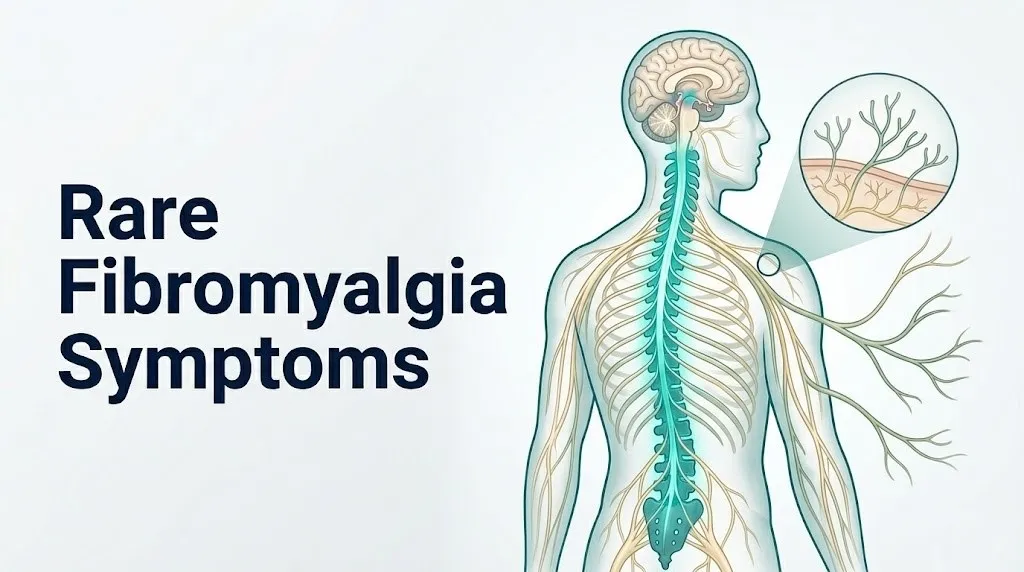
Central sensitization is the core physiological mechanism that explains not only widespread pain in fibromyalgia but every rare symptom that accompanies it, from skin burning to vestibular disturbance to urinary urgency.
Central sensitization occurs when the dorsal horn of the spinal cord, the first processing station for incoming pain signals, becomes pathologically hyperexcitable. Under normal physiology, pain signals from peripheral tissues travel via C-fiber and A-delta afferent neurons to the dorsal horn, where they synapse on wide dynamic range (WDR) neurons. WDR neurons process this signal and relay it upward to the thalamus and cortex. In fibromyalgia, repeated nociceptive input activates N-methyl-D-aspartate (NMDA) receptors on WDR neurons, triggering a process called wind-up: progressive amplification of each subsequent pain signal so that lower and lower stimulus thresholds produce increasingly intense responses.
Think of the pain processing system like a sound amplifier with a broken volume dial. A normal sound system turns down the volume on persistent noise. In fibromyalgia, the volume dial is stuck at maximum and the input signal keeps getting amplified further with each repeat. The same stimulus that should register as slight pressure registers as pain. A light touch registers as burning. A mild temperature change registers as extreme heat or cold.
Simultaneously, microglia and astrocytes in the spinal cord (the central nervous system’s resident immune cells) are activated by this repeated signaling, releasing interleukin-1 beta, interleukin-6, and tumor necrosis factor alpha. These pro-inflammatory cytokines further sensitize the dorsal horn neurons in a self-perpetuating cycle. According to research published in the Pain journal, this glial activation pattern has been confirmed in fibromyalgia patients using spinal fluid analysis and neuroimaging with positron emission tomography.
The descending inhibitory pathway, which normally suppresses pain by releasing serotonin and norepinephrine from the periaqueductal gray matter (PAG) and rostral ventromedial medulla (RVM), shows reduced activity in fibromyalgia. This bidirectional failure (amplified ascending input plus reduced descending suppression) is why every sensory modality becomes hyperprocessed, producing the full spectrum of rare symptoms across all sensory systems.
People with a history of post-traumatic stress disorder (PTSD) show higher rates of central sensitization and fibromyalgia, likely because PTSD produces overlapping HPA axis dysregulation and altered descending inhibitory pathway activity. A board-certified rheumatologist and a board-certified psychiatrist should both be involved in care when PTSD and fibromyalgia coexist.
Fibromyalgia Diagnostic Criteria and What They Miss
The current standard for fibromyalgia diagnosis relies on the ACR 2016 revised diagnostic criteria, an update to the landmark 2010 criteria that eliminated the previous requirement for tender point examination. The 2016 criteria require a widespread pain index score of 7 or higher with a symptom severity scale score of 5 or higher (or a WPI of 4 to 6 with an SSS of 9 or higher), symptom presence for at least 3 months, and the absence of another disorder that would fully explain the pain.
What the formal criteria measure well: widespread pain distribution, fatigue severity, non-restorative sleep, and cognitive symptoms. These four domains capture the core fibromyalgia presentation for most patients and represent the symptoms best supported by controlled clinical research.
What the formal criteria do not capture:
- Allodynia and hyperalgesia severity (these are assessed separately by quantitative sensory testing in research settings but not required for diagnosis)
- Vestibular symptoms, visual disturbances, and speech difficulties
- Autonomic nervous system dysfunction (heart rate variability, orthostatic intolerance)
- Small fiber neuropathy (which can be objectively measured by skin punch biopsy and is present in a substantial subset of fibromyalgia patients)
- Pelvic floor and urinary symptoms (classified separately as interstitial cystitis in many patients but mechanistically part of the same central sensitization picture)
The NIAMS notes that fibromyalgia diagnosis remains clinical, meaning it is based on symptom history and physical examination rather than laboratory tests or imaging. This clinical framework is appropriate given current evidence, but it means that rare symptoms that fall outside the formal criteria can be dismissed as unrelated or psychosomatic when they are in fact mechanistically integral to the condition.
Older adults over 65 present a specific diagnostic challenge because fibromyalgia symptoms overlap with those of osteoarthritis, polymyalgia rheumatica, and hypothyroidism, all of which are more prevalent in this age group. A board-certified rheumatologist should evaluate all fibromyalgia presentations in adults over 65 to exclude these competing diagnoses before attributing the full symptom picture to fibromyalgia.
Key Takeaway: The ACR 2016 criteria diagnose fibromyalgia based on widespread pain, fatigue, sleep disturbance, and cognitive symptoms, but they do not formally capture allodynia, vestibular disturbances, autonomic dysfunction, or small fiber neuropathy, which are documented rare symptoms arising from the same central sensitization mechanism.
Fibromyalgia Allodynia and Hyperalgesia
Allodynia in fibromyalgia is the experience of pain from stimuli that should not cause pain, such as light touch, clothing fabric against skin, a gentle handshake, or mild temperature change. Hyperalgesia is the experience of disproportionately intense pain from stimuli that would normally cause only mild discomfort. Both arise directly from dorsal horn wind-up and NMDA receptor hyperexcitability, and both are among the more distressing rare presentations of fibromyalgia because they are difficult to explain to people who have not experienced them.
Research using quantitative sensory testing (QST), a standardized battery of sensory threshold measurements, has consistently demonstrated reduced pain thresholds and enhanced temporal summation in fibromyalgia patients compared to healthy controls. A 2019 study published in Arthritis and Rheumatology found that allodynia was present in approximately 62 percent of fibromyalgia patients tested by standardized QST protocol, making it one of the most clinically common of the formally underrecognized rare symptoms.
Types of allodynia observed in fibromyalgia:
- Mechanical allodynia: pain from light skin touch (a brush of fabric, a handshake, medical palpation)
- Thermal allodynia: pain from temperatures that should be neutral or only mildly uncomfortable (cool air, warm water, cold surfaces)
- Movement-related allodynia: pain triggered by normal physical activity (walking, bending, reaching) at intensities that would be non-painful in a person without central sensitization
- Pressure allodynia: pain from normal weight bearing, clothing waistbands, or bra straps
The distinction between allodynia (pain from non-painful stimuli) and hyperalgesia (amplified pain from normally mild stimuli) matters clinically because they reflect slightly different aspects of dorsal horn sensitization. Clinicians assess both using QST and standardized pressure algometry.
Pregnant women with fibromyalgia may experience altered allodynia patterns during pregnancy, because gestational changes in estrogen and progesterone affect serotonin pathway activity and the efficiency of the descending inhibitory system. A board-certified obstetrician working in collaboration with a board-certified rheumatologist should manage fibromyalgia care during pregnancy, as many standard pharmacological approaches carry teratogenic risk.
Fibromyalgia Paresthesia and Skin Hypersensitivity Symptoms
Paresthesia in fibromyalgia refers to abnormal spontaneous sensations including numbness, tingling, prickling, burning, crawling, or electric shock-like sensations occurring without an identifiable peripheral nerve lesion. These sensations can affect the hands, feet, arms, legs, face, and scalp, and they may be constant, intermittent, or triggered by specific postures or touch.
The mechanism differs from peripheral neuropathy paresthesia. In classic peripheral neuropathy (such as diabetic neuropathy), sensory nerve fibers are damaged and generate aberrant electrical signals. In fibromyalgia, the peripheral nerve fibers themselves may be intact, but the central processing of their signals is distorted by dorsal horn hyperexcitability. The brain interprets normal low-level background neural activity as tingling, burning, or crawling because the amplification dial in the dorsal horn is turned too high.
Skin hypersensitivity in fibromyalgia presents as a heightened discomfort response to everyday skin contact: clothing seams, temperature changes, wind, and mild pressure can all produce burning or aching sensations disproportionate to the actual physical stimulus. Some patients describe a sensation that their skin hurts to touch even when nothing is touching it, a phenomenon consistent with spontaneous dorsal horn sensitization generating pain signals in the absence of peripheral input.
According to a clinical study published in the Journal of Pain, burning skin sensations were reported by approximately 45 percent of fibromyalgia patients in a large multi-center registry, and electric shock-like sensations (called dysesthesia) were reported by approximately 34 percent.
Quick Tip:
- When documenting paresthesia for a physician appointment, note the specific body locations, the quality (burning, tingling, numbness, crawling), the timing (constant versus intermittent), and any triggers (posture, touch, temperature, activity level).
- People taking serotonin-norepinephrine reuptake inhibitors (SNRIs) such as duloxetine for fibromyalgia may experience transient paresthesia as a side effect during dose initiation, which is distinct from fibromyalgia-related paresthesia. Report any new or worsening paresthesia during medication changes to the prescribing physician.
Fibromyalgia Cognitive Symptoms and Fibro Fog
Fibro fog is the informal term for the cognitive dysfunction that occurs in fibromyalgia, clinically described as dyscognition: impairment in working memory, processing speed, attention, word retrieval, and executive function that is not attributable to the normal cognitive effects of pain or fatigue alone.
Fibro fog is not a metaphor for being tired. The neurological mechanism is specific. Functional MRI studies, including research published in the Journal of Pain using resting-state fMRI in fibromyalgia patients versus healthy controls, have identified reduced functional connectivity in the default mode network and reduced perfusion in the prefrontal cortex during cognitive tasks. The prefrontal cortex is the primary site for working memory, attention allocation, and executive planning. Reduced blood flow and altered neural connectivity in this region directly impairs the cognitive functions fibromyalgia patients describe as “brain fog.”
The hypothalamic-pituitary-adrenal (HPA) axis dysregulation documented in fibromyalgia contributes to cognitive symptoms through altered cortisol signaling. Cortisol, produced by the adrenal cortex in response to signals from the hypothalamus and anterior pituitary, plays a regulatory role in hippocampal memory consolidation and prefrontal cortex function. In fibromyalgia, the cortisol awakening response is blunted, the circadian cortisol rhythm is flattened, and sustained pain itself elevates glucocorticoid exposure, which over time impairs hippocampal neuronal function.
| Cognitive Domain | Fibro Fog Manifestation | Neurological Basis |
|---|---|---|
| Working memory | Forgetting mid-sentence, losing track of tasks | Reduced prefrontal cortex perfusion |
| Processing speed | Slow responses, difficulty following fast conversation | Altered thalamic sensory gating |
| Word retrieval | Tip-of-tongue failures, substituting wrong words | Disrupted prefrontal-temporal connectivity |
| Attention | Difficulty concentrating with background stimuli | Prefrontal executive control impairment |
| Executive function | Difficulty planning multi-step tasks | Default mode network dysfunction |
Menopausal women with fibromyalgia experience compounded cognitive impairment because estrogen’s neuroprotective effects on prefrontal cortex function and hippocampal neurogenesis are reduced in the postmenopausal period. A board-certified neurologist or neuropsychologist should evaluate fibromyalgia patients whose cognitive symptoms are severe enough to affect occupational or daily functioning, to exclude dementia, multiple sclerosis, or other primary neurological conditions.
Key Takeaway: Fibro fog is not simply tiredness. Functional MRI research shows reduced prefrontal cortex perfusion and disrupted default mode network connectivity in fibromyalgia, producing objective deficits in working memory, processing speed, and word retrieval that are distinct from fatigue-related cognitive changes.
Fibromyalgia Vestibular Symptoms and Balance Problems
Vestibular symptoms in fibromyalgia include dizziness, a rocking or swaying sensation (called oscillopsia), difficulty maintaining balance on uneven surfaces, and a persistent feeling of spatial disorientation that worsens with visual motion (moving crowds, scrolling screens, riding in a car). These symptoms reflect central sensitization extending to the processing of vestibular and proprioceptive input rather than a primary disease of the inner ear itself.
The vestibular system integrates signals from three sources: the peripheral vestibular apparatus (the semicircular canals and otolith organs of the inner ear), the visual system, and proprioceptive input from muscles and joints. Under normal circumstances, the vestibular nuclei in the brainstem reconcile these three streams of sensory information to produce stable spatial orientation. In fibromyalgia, central sensitization alters the processing of all three input streams, and the sensory mismatch between them produces the characteristic dizziness and balance disruption without any primary pathology in the vestibular apparatus itself.
Clinical observational data published in Seminars in Arthritis and Rheumatism found that vestibular complaints were present in approximately 45 to 50 percent of fibromyalgia patients surveyed, with a subset meeting diagnostic criteria for vestibular migraine as a comorbid condition (fibromyalgia and vestibular migraine share overlapping central sensitization pathways).
Key vestibular symptoms specific to fibromyalgia:
- A rocking, swaying, or “walking on a boat” sensation without actual head movement
- Dizziness triggered by scrolling screens, driving, or watching moving objects
- Difficulty walking on uneven or dark surfaces due to impaired proprioceptive integration
- Sensitivity to visual motion (visual vertigo) in busy environments
- Worsening balance problems during fibromyalgia flares
A board-certified neurologist with vestibular subspecialty training, or a board-certified otolaryngologist specializing in vestibular disorders, should evaluate fibromyalgia patients with prominent balance problems and dizziness to rule out benign paroxysmal positional vertigo, vestibular neuritis, Ménière’s disease, and vestibular migraine as primary or contributing diagnoses before attributing the full picture to fibromyalgia’s central sensitization.
Fibromyalgia Visual Disturbances and Eye Symptoms
Visual disturbances in fibromyalgia include photophobia (pain or discomfort from normal light levels), difficulty tolerating bright or flickering light, blurred vision during flares, visual floaters perceived as more distressing than baseline, and dry or burning eye discomfort without an identified ocular surface pathology. These symptoms arise from the same sensory amplification mechanism operating in the visual processing pathways.
Photophobia in fibromyalgia is not an eye disease. It represents central sensitization of the pathway that carries light-intensity information from the retina through the optic nerve to the visual cortex and the anterior cingulate cortex, a pain-processing region that is hyperactive in fibromyalgia. Light that would register as comfortably bright in a healthy person registers as painful in a person with central sensitization affecting the visual pathway.
Dry eye symptoms and ocular surface discomfort in fibromyalgia have a separate mechanism. Small fiber neuropathy affecting the corneal nerve plexus (the trigeminal nerve’s nasociliary branch providing corneal sensation) can reduce blink reflex sensitivity, impair tear film regulation, and produce chronic dry eye symptoms independent of environmental factors. A 2020 study published in the journal Pain found that corneal nerve fiber density, assessed by in-vivo confocal microscopy, was reduced in fibromyalgia patients compared to healthy controls, mirroring the small fiber neuropathy findings in skin biopsies.
Visual disturbance severity in fibromyalgia tends to correlate with overall flare severity, which is consistent with the central sensitization mechanism (during a flare, dorsal horn hyperexcitability increases, amplifying all sensory inputs including visual).
People with fibromyalgia and concurrent Sjögren’s syndrome experience an additive visual symptom burden: Sjögren’s syndrome directly damages the lacrimal glands and conjunctival goblet cells, producing aqueous-deficient dry eye, while fibromyalgia’s small fiber neuropathy component contributes corneal sensitivity dysregulation. A board-certified ophthalmologist and a board-certified rheumatologist should both evaluate persistent visual symptoms in fibromyalgia patients to distinguish these mechanisms and manage them appropriately.
Fibromyalgia Speech Difficulties and Word-Finding Problems
Speech difficulties and word-finding problems in fibromyalgia are among the most distressing rare symptoms because they interfere with social and professional functioning and are frequently dismissed as anxiety or inattention rather than recognized as a neurological feature of the condition.
The core presentation is anomia, a difficulty retrieving specific words from memory during speech, producing the classic “tip-of-the-tongue” failure where the speaker knows what they want to say but cannot access the word. This is distinct from the language deficits seen in aphasia (which involves damage to specific language-producing cortical areas). In fibromyalgia, the lexical retrieval network is functionally impaired by reduced connectivity between the prefrontal cortex, temporal lobe language areas, and the hippocampus, driven by the same central sensitization and cortisol-related hippocampal impairment that produces fibro fog.
Other reported speech manifestations include:
- Paraphasias: substituting similar-sounding or related words for the intended word involuntarily
- Reduced verbal fluency: difficulty generating word lists, naming items in a category
- Speech slowness during flares: responses slower than the speaker intends, producing social awkwardness
- Difficulty following multi-step verbal instructions without written reinforcement
According to the Arthritis Foundation, word-finding difficulties are among the top five most reported cognitive complaints in fibromyalgia patient surveys, alongside memory lapses, concentration difficulties, mental fatigue, and processing speed reduction.
People with fibromyalgia who use opioid analgesics for pain management face compounded speech and cognitive impairment, as opioid-induced cognitive effects (sedation, reduced processing speed, impaired recall) layer onto the fibromyalgia-specific dyscognition. This interaction should be discussed explicitly with the prescribing physician. A board-certified pain medicine specialist or a board-certified rheumatologist should review the analgesic regimen in any fibromyalgia patient with worsening cognitive symptoms.
Key Takeaway: Word-finding failures and speech slowness in fibromyalgia reflect impaired functional connectivity between prefrontal cortex and temporal lobe language networks, not simple inattention or anxiety, and they worsen during flares because central sensitization directly reduces the neural processing efficiency of these pathways.
Fibromyalgia Autonomic Nervous System Dysfunction Symptoms
Autonomic nervous system (ANS) dysfunction in fibromyalgia produces a range of rare symptoms that often seem completely unrelated to pain: rapid or irregular heartbeat at rest, dizziness on standing (orthostatic intolerance), cold hands and feet with color changes suggesting vasospasm, excessive or reduced sweating, and temperature dysregulation producing unpredictable hot and cold sensations without fever.
The mechanism involves sympathetic nervous system hyperactivation combined with reduced parasympathetic nervous system tone. Research measuring heart rate variability (HRV), an objective index of autonomic balance, consistently finds reduced HRV in fibromyalgia patients compared to healthy controls, indicating a shift toward sympathetic dominance. A 2021 systematic review published in Seminars in Arthritis and Rheumatism found that HRV was reduced in fibromyalgia across 14 of 17 studies reviewed, supporting autonomic dysregulation as a consistent feature of the condition rather than an incidental finding.
Orthostatic intolerance in fibromyalgia presents as dizziness, light-headedness, or near-fainting when moving from sitting to standing, caused by impaired sympathetic reflex vasoconstriction in the peripheral vasculature. The vagus nerve (cranial nerve X, the primary parasympathetic effector of the heart and abdominal viscera) shows reduced tone in fibromyalgia, reducing the normal counterbalance to sympathetic activity.
Raynaud-like vasospasm (color changes in the fingers and toes from white to blue to red in response to cold or stress) occurs in some fibromyalgia patients due to exaggerated sympathetic vasoconstriction in small peripheral vessels. This presentation requires distinction from true Raynaud’s phenomenon (primary) and Raynaud’s secondary to systemic connective tissue disease (particularly scleroderma and lupus). A board-certified rheumatologist should evaluate any fibromyalgia patient with Raynaud-like color changes in the digits and a positive antinuclear antibody (ANA) test to exclude secondary causes.
Temperature dysregulation in fibromyalgia, experienced as unpredictable episodes of feeling intensely hot or cold without environmental temperature change, reflects hypothalamic thermoregulatory pathway dysfunction caused by HPA axis dysregulation and altered sympathetic control of peripheral vascular tone.
Fibromyalgia Urinary and Bladder Symptoms
Urinary symptoms in fibromyalgia include urinary urgency (a sudden, compelling need to urinate), urinary frequency, incomplete bladder emptying, and pelvic pain associated with bladder filling. These symptoms occur in a subset of fibromyalgia patients and reflect the same central sensitization mechanism extended to the visceral sensory pathways of the urinary tract.
The bladder is innervated by both the autonomic nervous system (sympathetic L1-L2 and parasympathetic S2-S4 pathways controlling the detrusor muscle and urethral sphincter) and by the pudendal nerve (somatic innervation of the pelvic floor). In fibromyalgia, central sensitization of the spinal cord segments processing bladder afferent input produces visceral hypersensitivity of the bladder wall, so normal bladder filling volumes produce urgency and discomfort at a lower threshold than in individuals without central sensitization.
A clinically distinct but mechanistically overlapping condition, interstitial cystitis (IC), is diagnosed in a subset of fibromyalgia patients who meet criteria for both conditions simultaneously. According to research published in Arthritis and Rheumatology, approximately 30 percent of women diagnosed with interstitial cystitis also meet criteria for fibromyalgia, reflecting the shared central sensitization substrate rather than coincidental comorbidity.
Pelvic floor muscle tension is a secondary contributor to urinary symptoms in fibromyalgia. Generalized muscle hypertonicity (the chronic guarding response that accompanies central sensitization) extends to the pelvic floor muscles, producing a pattern of pelvic floor dysfunction that worsens urgency and can cause dyspareunia (painful intercourse) as an additional rare fibromyalgia symptom.
Men with fibromyalgia who experience urinary symptoms face an added diagnostic challenge: urinary urgency and frequency in men is clinically associated with benign prostatic hyperplasia (BPH), and the fibromyalgia-related visceral hypersensitivity component may be missed unless the evaluating provider specifically considers central sensitization as a contributing mechanism. A board-certified urologist and a board-certified rheumatologist should collaborate when urinary symptoms coexist with fibromyalgia in male patients.
Fibromyalgia Temporomandibular Joint and Jaw Pain
Jaw pain and temporomandibular joint disorder (TMD) are recognized rare symptoms of fibromyalgia, present in an estimated 35 to 45 percent of fibromyalgia patients according to observational data published in the Journal of Pain. The temporomandibular joint (the joint connecting the mandible to the temporal bone of the skull) and the surrounding muscles (the masseter, temporalis, medial pterygoid, and lateral pterygoid muscles) are innervated by the trigeminal nerve (cranial nerve V), the primary sensory nerve of the face.
Central sensitization in fibromyalgia extends to the trigeminal nerve’s central processing in the spinal trigeminal nucleus (a column of neurons in the brainstem that processes trigeminal sensory input using the same dorsal horn mechanisms as spinal cord pain processing). When this nucleus is sensitized, normal jaw movement, chewing, and yawning produce pain, and the muscles of mastication develop secondary hypertonicity (jaw clenching), creating a self-perpetuating cycle.
Symptoms of fibromyalgia-related TMD include:
- Jaw pain or aching at rest and with chewing
- Clicking, popping, or grating sounds in the temporomandibular joint during movement
- Jaw stiffness, particularly in the morning
- Headaches originating from the temporalis muscle (temple headaches)
- Facial pain extending from the jaw into the cheek, ear, or temporal region
- Difficulty opening the mouth fully due to masseter muscle hypertonicity
The distinction between fibromyalgia-related TMD and structural TMD (caused by disc displacement, joint arthritis, or condylar pathology) requires clinical examination by a board-certified oral and maxillofacial surgeon or a dentist with TMD subspecialty training, using history, palpation of the joint and muscles of mastication, and imaging with cone-beam CT or MRI of the temporomandibular joint when structural pathology is suspected.
Women in the perimenopausal period experience higher rates of TMD alongside fibromyalgia, because fluctuating estrogen levels during perimenopause alter trigeminal nerve sensitization thresholds and jaw muscle tone, compounding the central sensitization effects of fibromyalgia.
Key Takeaway: Temporomandibular joint pain affects an estimated 35 to 45 percent of fibromyalgia patients through central sensitization of the trigeminal nerve’s spinal nucleus, producing jaw aching, facial pain, and morning stiffness that is mechanistically identical to the widespread pain of fibromyalgia but confined to the masticatory system.
Fibromyalgia Small Fiber Neuropathy Symptoms
Small fiber neuropathy (SFN) is one of the most clinically important recent discoveries in fibromyalgia research, because it provides an objective, measurable peripheral nerve abnormality in a subset of patients whose fibromyalgia has historically been characterized as a purely central nervous system disorder.
Small fiber neuropathy involves degeneration of the C-fiber and A-delta peripheral nerve fibers, the unmyelinated and lightly myelinated small-diameter fibers that transmit pain, temperature sensation, and autonomic signals. These fibers terminate in the skin as intraepidermal nerve fibers (IENFs), and their density can be measured objectively by counting them in a skin punch biopsy specimen processed with immunohistochemical staining for the protein gene product 9.5 (PGP 9.5).
Multiple studies, including research published in Pain and the Journal of Neurology, have found reduced IENF density in approximately 40 to 50 percent of fibromyalgia patients, indicating that a clinically significant subgroup has a peripheral nerve pathology component alongside or underlying their central sensitization.
Symptoms specific to small fiber neuropathy in fibromyalgia:
- Burning pain in the feet and legs, often worse at night and with heat
- Electric shock sensations in the extremities without postural or movement trigger
- Reduced or altered temperature sensation in the feet (difficulty distinguishing warm from hot)
- Small patches of numbness or tingling in a stocking-and-glove or mottled distribution (not a single nerve root distribution as in classical radiculopathy)
- Autonomic features: reduced sweating in affected areas, dry skin, impaired vasomotor responses in the feet
The key clinical implication: a negative nerve conduction velocity (NCV) study and electromyography (EMG) does not rule out small fiber neuropathy, because standard NCV/EMG measures only large fiber nerve function. A skin punch biopsy for IENF density is the definitive test. A board-certified neurologist specializing in peripheral nerve disorders should evaluate fibromyalgia patients with prominent burning foot pain, temperature dysesthesia, and nocturnal pain worsening to determine whether SFN is contributing to the clinical picture.
People with type 2 diabetes who also have fibromyalgia face a diagnostic challenge: diabetic peripheral neuropathy independently reduces IENF density and produces burning foot pain. The fibromyalgia-related small fiber neuropathy is clinically indistinguishable from diabetic SFN on skin biopsy alone, requiring careful clinical integration of the full symptom picture by a board-certified neurologist and endocrinologist working collaboratively.
Rare Fibromyalgia Symptoms in Men vs. Women
Rare fibromyalgia symptoms present differently in men and women, and understanding this variation matters both for recognition and for appropriate clinical management. The documented sex differences are not incidental; they reflect specific biological mechanisms involving sex hormones, HPA axis reactivity, and descending inhibitory pathway efficiency.
The ACR estimates that women account for 75 to 90 percent of fibromyalgia diagnoses. The biological basis for this disparity involves multiple mechanisms: estrogen modulates serotonin receptor expression and availability in the descending inhibitory pathway, meaning that women have a hormonally dynamic inhibitory pain system that is more vulnerable to dysregulation. Progesterone fluctuations during the menstrual cycle alter GABA receptor sensitivity in the dorsal horn, contributing to perimenstrual fibromyalgia flares. Women also show greater temporal summation of pain (a neurophysiological measure of central sensitization) than men in matched controlled studies, suggesting intrinsically higher central sensitization vulnerability.
In women, rare fibromyalgia symptoms that are more prominent include:
- Allodynia severity and skin hypersensitivity (higher rates and greater severity)
- Vestibular symptoms and visual disturbances
- TMD and facial pain
- Urinary urgency and pelvic floor symptoms
- Perimenstrual symptom amplification (flares timed to menstrual cycle hormonal nadir)
In men, rare fibromyalgia symptoms that present differently include:
- Less widespread pain distribution but more prominent fatigue and post-exertional malaise
- Higher rates of sleep apnea as a comorbidity amplifying the fibromyalgia symptom picture (requiring polysomnography evaluation)
- Lower healthcare-seeking rates leading to later diagnosis and more advanced symptom burden at the time of first rheumatology evaluation
- Autonomic dysfunction symptoms (orthostatic intolerance, heart rate variability changes) may be more prominent relative to the pain complaint
Adolescents with fibromyalgia (both sexes) more commonly present with prominent functional disability (school absenteeism, avoidance of physical activity) and rare symptoms (cognitive dysfunction, headaches, vestibular complaints) as the dominant complaints, with less clearly articulated widespread pain, which is a primary reason adolescent fibromyalgia is underdiagnosed for an average of 1.8 years from symptom onset according to pediatric rheumatology observational data.
Fibromyalgia Conditions That Overlap and Cause Diagnostic Confusion
Fibromyalgia frequently coexists with other conditions and shares symptom features with several others, creating a diagnostic challenge that affects how rare symptoms are interpreted and which specialist should evaluate them.
The most clinically important overlapping conditions are:
| Condition | Shared Symptoms with Fibromyalgia | Key Differentiating Feature |
|---|---|---|
| Systemic lupus erythematosus (SLE) | Widespread pain, fatigue, cognitive symptoms, photosensitivity | ANA, anti-dsDNA antibodies positive; malar rash; renal involvement |
| Rheumatoid arthritis (RA) | Joint pain, fatigue, morning stiffness | Symmetric synovitis on examination; RF or anti-CCP antibody positive; joint erosions on imaging |
| Sjögren’s syndrome | Fatigue, cognitive symptoms, dry eye, joint pain | Positive SSA/SSB antibodies; salivary gland biopsy; Schirmer’s test |
| Myalgic encephalomyelitis/chronic fatigue syndrome (ME/CFS) | Fatigue, post-exertional malaise, cognitive symptoms, pain | Post-exertional malaise is more severe and prolonged; orthostatic intolerance often more prominent |
| Multiple sclerosis (MS) | Fatigue, cognitive symptoms, paresthesia, vision changes | MRI white matter lesions; oligoclonal bands in CSF; clinical relapses |
| Hypothyroidism | Fatigue, cognitive symptoms, muscle pain, cold intolerance | TSH elevated on laboratory testing; responds to thyroid hormone replacement |
The fibromyalgia-MS distinction is particularly important when rare symptoms are the presenting complaint. A fibromyalgia patient with prominent paresthesia, visual disturbances, and balance problems has a symptom profile that overlaps meaningfully with multiple sclerosis. A board-certified neurologist should evaluate this presentation using MRI of the brain and spinal cord with gadolinium, cerebrospinal fluid analysis for oligoclonal bands, and visual evoked potentials before the full symptom picture is attributed to fibromyalgia’s central sensitization alone.
Research published in Arthritis and Rheumatology found that fibromyalgia coexists with systemic lupus erythematosus in approximately 20 to 30 percent of lupus patients, with the fibromyalgia component often accounting for a larger proportion of the functional disability than the active lupus disease itself.
When Rare Fibromyalgia Symptoms Require Specialist Evaluation
Rare fibromyalgia symptoms require specialist evaluation when their severity, pattern, or quality raises the possibility of a concurrent condition requiring independent diagnosis and treatment, or when the symptom is severe enough to warrant targeted management beyond the general fibromyalgia treatment framework.
To prepare for a specialist appointment when rare fibromyalgia symptoms are the concern:
- Document each rare symptom with its onset date, frequency, severity on a 0-to-10 Visual Analog Scale, and any identified triggers or relieving factors.
- Record the relationship between rare symptoms and fibromyalgia flares (do they worsen together or occur independently?).
- List all current medications, including prescription drugs, over-the-counter analgesics, and any supplements, as many interact with fibromyalgia-targeted treatments.
- Bring results of any prior laboratory testing, including ANA, complete blood count, thyroid-stimulating hormone, and inflammatory markers (erythrocyte sedimentation rate, C-reactive protein).
- Specify which rare symptoms have the greatest impact on daily function, as this guides the specialist’s prioritization of evaluation.
- Ask the specialist specifically: “Could this symptom be part of my fibromyalgia’s central sensitization, or does it warrant independent investigation?”
Referral guidance by symptom category:
- Neurological rare symptoms (paresthesia, vestibular problems, visual disturbances, balance problems): board-certified neurologist, with MRI brain and spine, NCV/EMG, and skin punch biopsy for IENF density when small fiber neuropathy is suspected
- Urinary symptoms (urgency, frequency, pelvic pain): board-certified urologist and board-certified urogynecologist, with cystoscopy if interstitial cystitis is suspected
- Jaw and facial pain: dentist with TMD subspecialty training or board-certified oral and maxillofacial surgeon
- Autonomic dysfunction (orthostatic intolerance, heart rate variability changes): board-certified cardiologist with autonomic subspecialty, using tilt table testing
- Cognitive symptoms severe enough to affect occupational function: board-certified neuropsychologist for formal neuropsychological testing
- Suspected autoimmune overlap (positive ANA, Raynaud’s phenomenon, persistent joint swelling): board-certified rheumatologist
The most important clinical message: a symptom being explainable by fibromyalgia’s central sensitization mechanism does not mean it should be attributed to fibromyalgia without appropriate evaluation to exclude a concurrent condition. Fibromyalgia is a diagnosis of clinical inclusion (it has its own positive criteria) but not a diagnosis that eliminates the possibility of additional pathology.
When Fibromyalgia Symptoms Require Emergency Evaluation
Certain symptoms occurring in people with fibromyalgia require immediate emergency assessment and must not be attributed to fibromyalgia without emergency evaluation. Do not wait to see if these resolve on their own.
Call 911 or go to the nearest emergency room immediately if you experience:
- A sudden severe headache described as the worst of your life, even if you have had fibromyalgia-related headaches before. This presentation is the hallmark of subarachnoid hemorrhage, a medical emergency requiring immediate CT imaging and neurosurgical evaluation.
- Sudden loss of vision in one eye, sudden double vision, or sudden severe blurring of vision that differs in character from your baseline fibromyalgia visual sensitivity. These can indicate retinal artery occlusion, optic neuritis in the setting of multiple sclerosis, or transient ischemic attack.
- Sudden one-sided weakness, facial drooping, arm drift, or speech loss developing over minutes. Fibromyalgia does not produce focal, one-sided, sudden-onset neurological symptoms. This presentation requires emergency stroke evaluation.
- Syncope (loss of consciousness) with autonomic symptoms, particularly in a fibromyalgia patient with known orthostatic intolerance. This warrants cardiac evaluation to rule out arrhythmia, not attribution to autonomic dysautonomia alone.
- New onset of urinary retention (inability to urinate despite bladder fullness, with lower abdominal pressure). This is not a fibromyalgia symptom. It indicates possible neurological compromise of the sacral micturition center (S2-S4 segments) and requires emergency evaluation.
These presentations can indicate subarachnoid hemorrhage, acute stroke, retinal vascular occlusion, cardiac arrhythmia, or spinal cord compression, and they require emergency medical assessment, not a fibromyalgia flare management protocol.
Frequently Asked Questions About Rare Fibromyalgia Symptoms
What are the strangest or most unusual fibromyalgia symptoms?
The rarest and most unusual fibromyalgia symptoms include allodynia (pain from light touch or fabric contact), vestibular disturbances producing a persistent rocking sensation, electric shock-like dysesthesias in the extremities, word-finding failures during speech, and visual photosensitivity beyond typical headache-associated light sensitivity.
All of these arise from the same central sensitization mechanism that produces widespread pain, but they affect sensory systems beyond the musculoskeletal system.
A board-certified rheumatologist should evaluate any of these rare presentations to confirm they fit the fibromyalgia picture and to exclude concurrent neurological or autoimmune conditions.
Can fibromyalgia cause vision problems or eye symptoms?
Fibromyalgia can cause photophobia (pain from normal light levels), visual contrast sensitivity changes, and dry burning eye sensations through central sensitization of visual processing pathways and small fiber neuropathy affecting corneal nerve fibers.
A 2020 study published in the Pain journal found reduced corneal nerve fiber density in fibromyalgia patients on in-vivo confocal microscopy, providing an objective structural basis for dry eye symptoms in this population.
Sudden vision changes (vision loss, double vision, or new severe blurring) require emergency evaluation to rule out retinal or neurological causes and must not be attributed to fibromyalgia without assessment.
What does fibromyalgia feel like on the skin?
Fibromyalgia skin hypersensitivity produces burning pain, crawling sensations, electric shock-like feelings, and pain from light touch including clothing contact, all arising from dorsal horn hyperexcitability amplifying the normal low-level neural signals from skin C-fiber receptors.
According to research published in the Journal of Pain, approximately 45 percent of fibromyalgia patients report burning skin sensations, and approximately 34 percent report spontaneous electric shock-like dysesthesias.
These sensations are not caused by skin disease but by altered central processing of normal peripheral sensory input.
Can fibromyalgia cause dizziness and balance problems?
Fibromyalgia can produce dizziness, a persistent rocking or swaying sensation, and difficulty maintaining balance on uneven surfaces through central sensitization affecting vestibular and proprioceptive sensory processing in the brainstem’s vestibular nuclei.
Clinical observational data published in Seminars in Arthritis and Rheumatism found vestibular complaints in approximately 45 to 50 percent of surveyed fibromyalgia patients, with the symptom severity correlating with overall fibromyalgia flare intensity.
A board-certified neurologist with vestibular subspecialty experience should evaluate fibromyalgia patients with prominent balance problems to exclude benign paroxysmal positional vertigo, Ménière’s disease, and vestibular migraine as primary or contributing diagnoses.
How do I know if my neurological symptoms are fibromyalgia or something else?
Fibromyalgia-related neurological symptoms (paresthesia, balance problems, visual sensitivity, cognitive difficulties) are typically bilateral, fluctuate with fibromyalgia flares, and do not follow the distribution of a single nerve root or tract.
Symptoms suggesting a separate neurological condition rather than fibromyalgia include strictly unilateral sensory or motor symptoms, symptoms that are sudden in onset and maximal immediately, symptoms that are progressively worsening without flare-related fluctuation, or any focal weakness.
A board-certified neurologist should evaluate fibromyalgia patients with prominent neurological symptoms using MRI of the brain and spine, NCV/EMG, and where small fiber neuropathy is suspected, a skin punch biopsy for intraepidermal nerve fiber density.
When should someone with fibromyalgia see a neurologist?
A person with fibromyalgia should see a board-certified neurologist when they have prominent paresthesia, vestibular symptoms, or visual disturbances that do not clearly correlate with fibromyalgia flares, or when any neurological symptom is focal, sudden, or progressive.
Small fiber neuropathy evaluation by a neurologist is warranted when burning foot pain, nocturnal pain worsening, and temperature dysesthesia are present, because standard NCV and EMG do not detect SFN and a skin punch biopsy for IENF density is needed.
Any sudden severe headache, sudden vision loss, or sudden focal weakness occurring in a fibromyalgia patient requires emergency evaluation by an emergency medicine physician before attribution to fibromyalgia.
Closing
The rare symptoms of fibromyalgia are not random or disconnected from the core condition. Every one of them, from the crawling skin sensations to the vestibular disorientation to the word-finding failures, traces back to the same central sensitization mechanism: a dorsal horn that is permanently turned too loud, a descending inhibitory pathway running too quiet, and a nervous system that has lost its normal capacity to filter sensory input at appropriate thresholds.
Knowing that these symptoms have a specific physiological basis matters for two reasons. First, it means they are real and documentable, not psychosomatic or imagined. Second, it means some of them can be specifically tested for (quantitative sensory testing, skin punch biopsy, heart rate variability measurement) and addressed in targeted ways by the right specialists.
If you are experiencing any of the rare symptoms described here, bring a documented symptom diary to your next appointment with your primary care physician or board-certified rheumatologist and ask specifically about central sensitization as a unifying mechanism. That conversation is where better care begins.