MCHC Low Symptoms: What Your Blood Test Is Telling You
Low MCHC symptoms occur because your red blood cells are carrying less hemoglobin than they should, reducing the amount of oxygen delivered to every tissue in your body. The most recognizable mchc low symptoms are persistent fatigue, pale or yellowish skin, shortness of breath with minimal exertion, dizziness, and heart palpitations that feel unexplained.
According to the National Heart Lung and Blood Institute (NHLBI), anemia affects more than 3 million Americans at any given time, and a low mean corpuscular hemoglobin concentration (MCHC) is one of the key laboratory markers that reveals it. The MCHC value on your complete blood count (CBC) tells your doctor how concentrated the hemoglobin is inside each red blood cell, which directly predicts how effectively those cells can carry oxygen.
This article explains every clinically recognized low MCHC symptom with the physiological reason it occurs, the four main causes behind the finding, how the results differ by population, what the numbers on your CBC actually mean together, and which specific symptoms require same-day medical attention versus a routine appointment.
What Is MCHC and Why Does It Matter
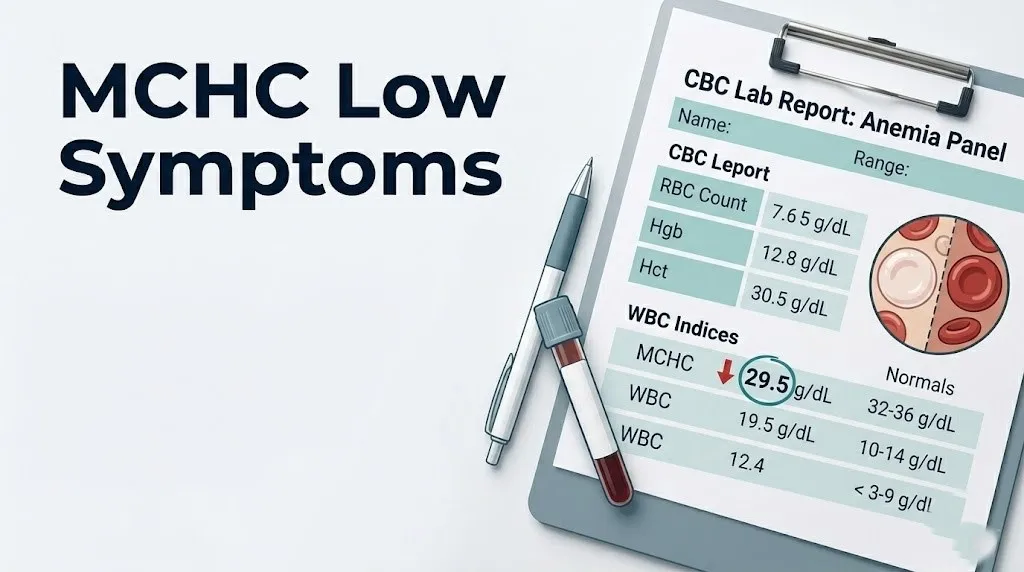
Mean corpuscular hemoglobin concentration (MCHC) is a measurement on a CBC that expresses the average concentration of hemoglobin inside a single red blood cell, reported in grams per deciliter (g/dL). The normal reference range for adults is 32 to 36 g/dL, though this varies slightly by laboratory. When the value falls below 32 g/dL, the result is classified as low MCHC, also called hypochromia.
Think of each red blood cell as a tiny delivery truck. MCHC tells you how full each truck is loaded with oxygen-carrying cargo. When MCHC is low, every truck is only partially loaded. Your body has to send more trucks to deliver the same amount of oxygen, and when it cannot keep up with demand, symptoms begin.
MCHC is one part of a three-parameter index alongside mean corpuscular volume (MCV) and mean corpuscular hemoglobin (MCH). These three values work together to characterize what type of anemia is present. Low MCHC combined with low MCV almost always points toward iron deficiency anemia or thalassemia. Low MCHC with normal or elevated MCV suggests a different mechanism entirely, including sideroblastic anemia.
The clinical significance of MCHC goes beyond labeling a condition. It helps your physician determine not just that oxygen delivery is impaired, but why at a cellular and biochemical level. Understanding the cause determines which treatment will actually correct the problem.
According to the American Society of Hematology, MCHC is particularly useful when evaluated alongside the red cell distribution width (RDW), because the combination of a high RDW with low MCHC is strongly associated with iron deficiency anemia, while a normal RDW with low MCHC more often suggests thalassemia trait.
Individuals over the age of 65 should note that a low MCHC in the absence of obvious dietary deficiency may be the first signal of occult gastrointestinal blood loss, which warrants prompt evaluation by a primary care physician to rule out colorectal pathology.
MCHC Low Symptoms: The Full Clinical Picture
The symptoms of low MCHC are produced directly by reduced oxygen delivery to tissues throughout the body, and they range from barely noticeable in mild cases to incapacitating and medically urgent in severe ones. The specific symptoms you experience, and how strongly, depends on how low your MCHC is, how quickly it developed, and how well your cardiovascular system is compensating.
Low MCHC does not always cause obvious symptoms, particularly when the reduction develops slowly over months. Chronic gradual-onset hypochromic anemia allows the cardiovascular and respiratory systems to adapt through compensatory mechanisms, which is why some people with MCHC values of 28 to 30 g/dL feel only mildly tired, while someone whose MCHC dropped rapidly from acute blood loss at the same level may feel severely symptomatic.
Core symptoms by clinical frequency:
| Symptom | Estimated Frequency in Hypochromic Anemia | Primary Mechanism |
|---|---|---|
| Fatigue and weakness | Present in approximately 80-85% of cases | Reduced oxygen delivery to skeletal muscle mitochondria |
| Pale skin and mucous membranes | Present in approximately 70-75% of cases | Reduced hemoglobin in superficial vasculature |
| Shortness of breath on exertion | Present in approximately 60-65% of cases | Compensatory increased respiratory rate |
| Dizziness or lightheadedness | Present in approximately 50-55% of cases | Reduced cerebral oxygen delivery |
| Heart palpitations | Present in approximately 40-50% of cases | Compensatory increase in cardiac output |
| Headache | Present in approximately 35-45% of cases | Cerebral vasodilation in response to hypoxia |
| Cold hands and feet | Present in approximately 30-40% of cases | Peripheral vasoconstriction to preserve core perfusion |
| Impaired concentration | Present in approximately 30-40% of cases | Frontal lobe oxygen insufficiency |
| Brittle nails or koilonychia | Present in a subset specific to iron deficiency | Direct iron deficiency effect on keratin synthesis |
| Hair loss | Present in a subset specific to iron deficiency | Iron-dependent hair follicle cycling disruption |
Frequency estimates are drawn from clinical hematology observational studies and consensus descriptions in MedlinePlus (U.S. National Library of Medicine) and the American Society of Hematology patient education resources. Individual variation is significant.
Biological sex matters here. Females of reproductive age are more likely to have low MCHC accompanied by menstrual-pattern fatigue, which can make attribution of symptoms to the blood count finding less straightforward than in males.
Fatigue and Low Energy With Low MCHC
Fatigue is the most consistent symptom of low MCHC, and it occurs because skeletal muscle cells receive less oxygen per heartbeat than they need to generate adenosine triphosphate (ATP) efficiently through aerobic metabolism. When oxygen supply falls short, muscle cells shift partially to anaerobic glycolysis, which produces ATP less efficiently and generates lactic acid as a byproduct. The accumulation of lactate in muscle tissue produces the heavy, aching tiredness that most people describe as bone-deep exhaustion rather than ordinary sleepiness.
This is different from feeling tired after a poor night’s sleep. The fatigue from low MCHC does not improve fully after rest because the underlying oxygen delivery problem persists. Activities that would normally feel effortless, such as climbing one flight of stairs or carrying groceries, may feel disproportionately draining.
The mitochondria inside every muscle cell depend on a continuous oxygen supply to run the electron transport chain. When hemoglobin concentration per red blood cell is low, the oxygen partial pressure arriving at mitochondria drops. The mitochondria respond by reducing the rate of ATP production, which the person experiences as weakness and inability to sustain physical effort at their usual level.
According to a clinical review published in the American Journal of Hematology, fatigue severity in iron deficiency anemia correlates with the degree of hemoglobin reduction rather than any single CBC parameter, which is why fatigue severity should be communicated clearly to your physician rather than assumed to be mild just because the MCHC reduction is moderate.
Key signs that fatigue from low MCHC is worsening:
- Fatigue that was previously only present with exertion now occurs at rest
- Difficulty completing basic daily tasks that were previously easy
- Sleep is not restorative, and tiredness is present from the moment of waking
- Fatigue is accompanied by any new breathlessness or chest discomfort
Older adults may attribute this type of fatigue to aging and delay reporting it to their physician. This delay matters clinically because fatigue in an older adult with low MCHC may indicate gastrointestinal blood loss requiring urgent investigation. Any adult over 60 with new-onset, unexplained fatigue and a low MCHC on CBC should be evaluated by a primary care physician within one to two weeks.
Pale Skin and Cold Extremities With Low MCHC
Pale or washed-out skin with low MCHC is a direct reflection of reduced hemoglobin visible in the superficial blood vessels, combined with peripheral vasoconstriction that shunts blood away from the skin to protect oxygen delivery to the heart and brain. Hemoglobin is what gives blood its red color. When individual red blood cells contain less hemoglobin than normal, the blood in surface capillaries appears lighter, and the skin, lips, and mucous membranes lose their normal pink tone.
The most reliable place to assess pallor is not always the face. Clinicians check the conjunctiva (the lining of the lower eyelid, which should be pink), the nail beds, and the palmar creases. In darker skin tones, facial pallor may be subtle, but pallor in the conjunctiva and oral mucous membranes is visible across all skin tones.
Cold hands and feet occur through a different but related mechanism. When the body detects reduced oxygen delivery, the autonomic nervous system activates the sympathetic branch, which releases norepinephrine and triggers vasoconstriction in peripheral blood vessels. This reduces blood flow to the hands, feet, and skin surface to preserve delivery to vital organs. The result is extremities that feel cold even in a warm environment, sometimes accompanied by a slightly bluish tinge to the fingertips in severe cases.
Quick Tip:
- Check the inner lower eyelid: pull it down gently. It should be distinctly pink. Pale or white coloring suggests reduced hemoglobin in superficial vessels.
- Cold hands in a warm room that have appeared alongside unusual tiredness are worth reporting to your physician alongside your CBC results.
- For individuals with Raynaud’s phenomenon or peripheral vascular disease, distinguishing cold extremities from MCHC-related vasoconstriction requires clinical evaluation, as the two conditions can coexist and amplify each other.
A 2021 study published in Blood (the journal of the American Society of Hematology) found that cutaneous pallor assessed by trained clinicians correlates significantly with hemoglobin levels below 9 g/dL, reinforcing that visible pallor represents a clinically meaningful degree of anemia rather than a cosmetic finding.
Key Takeaway: Low MCHC causes fatigue through a failure of aerobic energy production in muscle mitochondria, pale skin through reduced hemoglobin in surface capillaries, and cold extremities through sympathetic-driven peripheral vasoconstriction, all three of which reflect the body’s attempt to prioritize oxygen delivery to the heart and brain when red cell oxygen-carrying capacity is reduced.
Shortness of Breath and Heart Palpitations With Low MCHC
Shortness of breath with low MCHC is produced by a compensatory increase in respiratory rate that the body initiates when tissue oxygen delivery falls short of demand. Your brainstem respiratory control centers, specifically the dorsal respiratory group in the medulla oblongata, detect rising carbon dioxide levels and falling blood oxygen content and respond by increasing the rate and depth of breathing. This feels like breathlessness: the sensation that breathing requires more effort than it should.
In mild low MCHC, this shortness of breath appears only during exertion, specifically activities that demand elevated oxygen consumption, such as climbing stairs, walking briskly, or exercising. In moderate to severe cases, breathlessness can appear at rest, particularly when lying flat (orthopnea), because supine positioning redistributes blood volume toward the thorax and increases cardiac preload, which the already-stressed cardiovascular system may not tolerate well.
Heart palpitations, the uncomfortable awareness of your heartbeat, occur because the cardiovascular system compensates for low oxygen delivery by increasing cardiac output. Your heart achieves this primarily by increasing rate (compensatory tachycardia). A normal resting heart rate is 60 to 100 beats per minute; in moderate symptomatic anemia, resting rates of 100 to 115 beats per minute are common. The stronger, faster heartbeat becomes perceptible, and the person notices it as fluttering, pounding, or racing, particularly at rest or during transitions from sitting to standing.
The National Heart Lung and Blood Institute states that compensatory tachycardia in anemia can, over time, impose additional workload on the myocardium. In people with pre-existing coronary artery disease or heart failure, even moderate anemia may precipitate chest discomfort or worsen existing cardiac symptoms, which is why palpitations in someone with known heart disease and a low MCHC require evaluation by a cardiologist, not just a primary care physician.
When shortness of breath or palpitations from low MCHC need same-day evaluation:
- Shortness of breath is present at rest and has appeared within days rather than months
- Heart rate at rest exceeds 110 beats per minute consistently
- Palpitations are accompanied by chest pain, chest tightness, or pressure
- Shortness of breath is accompanied by leg swelling or inability to lie flat
- These symptoms have appeared in someone with a known heart condition or lung condition
Dizziness, Headache, and Concentration Problems With Low MCHC
Dizziness and lightheadedness with low MCHC arise from reduced oxygen delivery to the brain, specifically to the vestibular processing centers in the brainstem and cerebellum and to the cerebral cortex more broadly. The brain accounts for approximately 20% of the body’s total oxygen consumption despite representing only about 2% of body weight. When MCHC is low and oxygen delivery per unit of blood decreases, the brain is one of the first organs to signal its distress.
The dizziness from low MCHC is typically positional. It worsens on standing up quickly (orthostatic dizziness), because the cardiovascular system cannot maintain adequate cerebral perfusion pressure fast enough during the positional change when cardiac output is already working at its upper compensatory limit. This is different from vertigo, which involves a spinning sensation and originates in the inner ear. Anemia-related dizziness is more of a “gray out” or lightheaded feeling than a true rotational sensation.
Headache in low MCHC occurs through cerebral vasodilation, the brain’s response to low oxygen supply. When oxygen partial pressure in cerebral blood falls, arterioles in the brain dilate to increase blood flow and compensate for low oxygen content per unit volume. This vasodilation stretches pain-sensitive structures in the dural and vascular walls, producing a dull, diffuse headache that typically worsens with exertion and improves somewhat at rest.
Impaired concentration and “brain fog” reflect frontal lobe oxygen insufficiency. The prefrontal cortex, which manages working memory, attention, decision-making, and executive function, is metabolically demanding and among the earliest brain regions to show functional impairment when oxygen delivery is reduced. A 2019 study published in JAMA Internal Medicine found that cognitive performance measures, particularly working memory and processing speed, were significantly worse in women with iron deficiency anemia compared with non-anemic controls, and improved following iron repletion.
Distinguishing anemia-related cognitive symptoms from other causes:
| Feature | Low MCHC-Related Brain Fog | Anxiety or Depression-Related Cognitive Symptoms |
|---|---|---|
| Onset pattern | Gradual, correlates with other physical symptoms | May be sudden or episodic |
| Physical symptoms alongside | Fatigue, pallor, shortness of breath | Often sleep disturbance, mood changes, appetite changes |
| Improves with rest | Partially but not fully | Variable |
| Worsens with exertion | Yes, particularly physical exertion | Not specifically tied to physical exertion |
| Confirmed on CBC | Low MCHC, possibly low hemoglobin | Normal CBC typical |
Adolescent females are particularly likely to experience cognitive symptoms of iron deficiency anemia without recognizing the cause. The American Academy of Pediatrics recommends routine iron deficiency screening in adolescent females, particularly those with heavy menstrual periods or poor dietary iron intake.
What Causes Low MCHC
Low MCHC on a CBC results from any process that impairs hemoglobin synthesis inside developing red blood cells or that causes red blood cells to expand in volume without a proportional increase in hemoglobin content. Hemoglobin synthesis requires three components: iron (to form the heme group), protoporphyrin (the organic scaffold of the heme ring), and globin protein chains. A deficiency or structural problem in any of these three components can reduce the hemoglobin packed into each cell, lowering MCHC.
The four major pathophysiological categories that produce low MCHC are iron deficiency anemia, thalassemia, sideroblastic anemia, and anemia of chronic disease or inflammation. These four categories account for the vast majority of low MCHC findings in clinical practice. Rarer causes include lead toxicity, copper deficiency, and certain medications that interfere with heme biosynthesis.
Major causes of low MCHC by mechanism:
| Cause | Core Mechanism | Typical Associated CBC Pattern |
|---|---|---|
| Iron deficiency anemia | Insufficient heme iron for hemoglobin synthesis | Low MCHC, low MCV, high RDW |
| Thalassemia (alpha or beta) | Reduced or absent globin chain production | Low MCHC, low MCV, normal or low RDW |
| Sideroblastic anemia | Defect in protoporphyrin synthesis; iron accumulates in mitochondria | Low MCHC, variable MCV, ringed sideroblasts on smear |
| Anemia of chronic disease | Hepcidin blocks iron release from macrophage stores | Low MCHC, normal or low MCV, elevated ferritin |
| Lead toxicity | Lead inhibits heme biosynthesis enzymes | Low MCHC, basophilic stippling on smear |
| Pyridoxine (B6) deficiency | B6 is cofactor for aminolevulinic acid synthase in heme pathway | Low MCHC, responds to B6 supplementation |
According to the Centers for Disease Control and Prevention, iron deficiency is the most common nutritional deficiency in the United States and the most frequent cause of low MCHC in clinical practice, affecting approximately 10 million Americans, with the highest prevalence in children under 5 and females of reproductive age.
Key Takeaway: Low MCHC is not a diagnosis in itself but a laboratory signal pointing toward one of four major pathophysiological mechanisms, each of which has a distinct cause, a different treatment, and a different expected clinical course. Knowing which one applies requires additional blood tests beyond the CBC alone.
Iron Deficiency Anemia and Low MCHC
Iron deficiency anemia produces low MCHC through a direct failure of heme iron availability in developing red blood cell precursors (erythroblasts) in the bone marrow. During the final stages of red blood cell production, erythroblasts require iron delivered by transferrin to synthesize four heme groups per hemoglobin molecule. When systemic iron stores are depleted, transferrin-bound iron delivery to the marrow falls, and the developing cells cannot fully load each hemoglobin molecule with its four iron-oxygen binding sites. The result is small, pale, iron-poor red blood cells that enter the circulation with reduced hemoglobin concentration per cell, and MCHC falls.
The sequence of iron depletion in the body follows a predictable order. Serum ferritin falls first, reflecting depletion of iron storage depots in the liver, spleen, and bone marrow. Transferrin saturation falls next as circulating iron decreases. Only after these upstream depletion stages does hemoglobin synthesis impairment appear on CBC as low MCHC, low MCV, and eventually low hemoglobin. This is why a person can have low ferritin and feel symptomatic while their MCHC is still at the lower end of normal: the CBC lags behind the metabolic reality.
The most common causes of iron deficiency leading to low MCHC include:
- Inadequate dietary iron intake (vegetarian or vegan diets without adequate non-heme iron sources, very restrictive eating patterns)
- Chronic blood loss from heavy menstrual periods (menorrhagia), which the NHLBI identifies as the leading cause in premenopausal females
- Gastrointestinal blood loss from peptic ulcer disease, colorectal polyps, colorectal cancer, or inflammatory bowel disease
- Impaired intestinal iron absorption due to celiac disease, gastric bypass surgery, or chronic use of proton pump inhibitors
- Increased iron demand during rapid growth in infants, toddlers, and adolescents
A 2022 systematic review published in the Annals of Internal Medicine found that serum ferritin below 15 nanograms per milliliter had a specificity of greater than 99% for iron deficiency, making it the single most useful initial test to confirm iron deficiency as the cause of low MCHC. A normal or elevated ferritin points strongly away from simple iron deficiency and toward another mechanism.
Postmenopausal females and all males who present with iron deficiency anemia and low MCHC without an obvious dietary explanation should be referred to a gastroenterologist for evaluation of gastrointestinal blood loss, as the American College of Gastroenterology identifies this group as high priority for colorectal investigation.
Thalassemia and Low MCHC
Thalassemia produces low MCHC through a fundamentally different mechanism than iron deficiency. In thalassemia, iron stores are normal or even elevated, but the globin chain synthesis machinery is defective. Hemoglobin is a tetramer: two alpha globin chains paired with two beta globin chains. Beta-thalassemia produces insufficient beta-globin; alpha-thalassemia produces insufficient alpha-globin. Without the correct ratio of globin chains, the hemoglobin molecule cannot assemble normally, and red blood cells end up with less functional hemoglobin despite having adequate iron. MCHC falls as a result.
The severity of thalassemia-related low MCHC depends on how many of the relevant globin genes are affected. Thalassemia trait (also called thalassemia minor), the mild carrier state, typically produces a persistently low MCHC and low MCV with minimal or no symptoms. People with thalassemia trait often feel entirely well and may discover the finding only incidentally on a routine CBC. They may mistakenly receive iron supplementation for years without improvement, because their iron stores are already normal or elevated. This is one of the most clinically important misdiagnoses in outpatient medicine involving MCHC.
More severe forms, including thalassemia intermedia and thalassemia major (also called Cooley’s anemia), produce progressively more severe anemia, bone marrow expansion causing facial and skeletal changes, splenomegaly, and growth restriction in children. These severe forms produce all the symptoms of severe anemia: profound fatigue, marked pallor, significant shortness of breath, and developmental delays in pediatric patients.
How to distinguish thalassemia trait from iron deficiency on a CBC:
| Feature | Iron Deficiency Anemia | Thalassemia Trait |
|---|---|---|
| MCHC | Low | Low |
| MCV | Low | Low (often very low, below 70 fL) |
| RDW | High (above 14.5%) | Normal or slightly elevated |
| Serum ferritin | Low | Normal or elevated |
| Response to iron supplementation | Improves | Does not improve |
| Hemoglobin electrophoresis | Normal | Elevated HbA2 in beta-thalassemia trait |
Thalassemia trait is most common in people with ancestry from the Mediterranean region, the Middle East, sub-Saharan Africa, Southeast Asia, and the Indian subcontinent. Hemoglobin electrophoresis is the definitive test to confirm the diagnosis. Anyone with persistently low MCHC and low MCV who does not respond to iron therapy should have hemoglobin electrophoresis ordered by their primary care physician or a referred hematologist.
Key Takeaway: Thalassemia trait produces a low MCHC that looks nearly identical to iron deficiency on a CBC but does not respond to iron supplementation; the key distinguishing tests are serum ferritin and hemoglobin electrophoresis, and treating thalassemia trait with iron when iron stores are already normal can cause iron overload.
Sideroblastic Anemia and Anemia of Chronic Disease With Low MCHC
Sideroblastic anemia is a category of conditions in which iron is available and enters erythroblast mitochondria but cannot be incorporated into the protoporphyrin ring to complete heme synthesis. The biochemical defect is in the heme synthesis pathway, usually at the step catalyzed by delta-aminolevulinic acid synthase (ALAS2), which requires pyridoxine (vitamin B6) as a cofactor. Iron accumulates in a ring pattern around the mitochondria of developing red blood cells, which is visible on a bone marrow biopsy as the characteristic “ringed sideroblasts” that define the condition.
Sideroblastic anemia can be hereditary (X-linked, predominantly affecting males) or acquired. Acquired causes include chronic alcohol use (which impairs pyridoxine metabolism), isoniazid therapy for tuberculosis (which is a pyridoxine antagonist), lead poisoning, and certain myelodysplastic syndromes. The low MCHC in sideroblastic anemia is accompanied by a characteristic mixed blood picture on the peripheral blood smear, showing both hypochromic and normochromic red cells, which creates a distinctive pattern that an experienced hematologist can recognize.
Anemia of chronic disease, also called anemia of inflammation, produces low MCHC through a completely different mechanism. In inflammatory states, including rheumatoid arthritis, inflammatory bowel disease, chronic kidney disease, HIV infection, and cancer, the liver increases production of hepcidin, a peptide hormone that blocks the release of iron from macrophage storage cells and reduces iron absorption in the duodenum. Iron is effectively trapped in storage and unavailable for hemoglobin synthesis. The stimulus for hepcidin upregulation is primarily interleukin-6 (IL-6), a pro-inflammatory cytokine.
The practical implication is that anemia of chronic disease produces low MCHC with a normal or elevated ferritin, the opposite pattern from iron deficiency. Giving iron supplementation in this setting does not help and may cause harm. The American Society of Hematology states that treatment of anemia of chronic disease focuses on managing the underlying inflammatory condition rather than empiric iron replacement. Erythropoiesis-stimulating agents may be appropriate in specific clinical settings such as chronic kidney disease or chemotherapy-related anemia, but only under specialist supervision.
Individuals with chronic inflammatory conditions should have their low MCHC evaluated in the context of their inflammatory markers, including C-reactive protein and erythrocyte sedimentation rate, to distinguish iron deficiency from anemia of chronic disease before any treatment is initiated.
Dangerously Low MCHC Levels and Severe Symptoms
A dangerously low MCHC is a value that has fallen far enough below normal, typically below 28 g/dL, that the cardiovascular system’s compensatory mechanisms are no longer sufficient to maintain adequate oxygen delivery to the brain, heart, and other vital organs. At this level, symptoms shift from uncomfortable to medically urgent. The threshold at which symptoms become severe varies by how quickly the MCHC declined and by individual cardiovascular reserve.
The MCHC value alone does not fully predict symptom severity. The accompanying hemoglobin level is equally important. The World Health Organization defines severe anemia as a hemoglobin below 7 g/dL in adults. At this level, regardless of whether MCHC is the contributing factor, the risk of cardiovascular compromise, including myocardial hypoxia in people with coronary artery disease, becomes clinically serious.
Symptoms that indicate severe or dangerous anemia requiring immediate medical evaluation:
- Shortness of breath at rest, not only with exertion
- Chest pain or chest pressure at rest or with minimal movement
- Heart rate persistently above 110 to 120 beats per minute at rest
- Fainting or loss of consciousness (syncope)
- Severe lightheadedness that prevents standing or walking
- Confusion, disorientation, or sudden difficulty thinking clearly
- Lips or fingernails turning blue (cyanosis)
- Swelling in the legs or abdomen alongside breathlessness
Older adults are at particular risk for severe consequences from rapidly declining MCHC because their cardiovascular systems have less reserve to compensate through increased cardiac output. A 75-year-old with a moderate reduction in MCHC may become acutely symptomatic at a hemoglobin level where a healthy 30-year-old would have minimal complaints.
People with pre-existing coronary artery disease or heart failure face a specific risk: the compensatory tachycardia that anemia demands may precipitate angina or, in severe cases, myocardial infarction by increasing myocardial oxygen demand at the same time the blood is less able to deliver oxygen. Any person with known cardiac disease who develops new palpitations, chest discomfort, or worsening shortness of breath alongside a confirmed low MCHC should be evaluated by both a cardiologist and a hematologist, not managed with watchful waiting.
Emergency Symptoms: When to Call 911 or Go to the ER
Certain symptoms associated with low MCHC and severe anemia require immediate emergency evaluation. Do not wait to see if these resolve on their own.
Call 911 or go to the nearest emergency room immediately if you experience:
- Chest pain or chest pressure at rest or with minimal movement, particularly in anyone with known heart disease
- Severe difficulty breathing at rest that began suddenly or has worsened rapidly
- Fainting or loss of consciousness
- Heart rate above 120 beats per minute at rest that you can feel as pounding or racing
- Confusion, sudden difficulty speaking, or loss of orientation
- Blue or grayish discoloration of the lips, fingertips, or nail beds
- Severe weakness preventing you from standing or walking
- Any combination of breathlessness at rest plus chest discomfort plus rapid heart rate, regardless of whether a low MCHC was previously known
These presentations can indicate severe symptomatic anemia with cardiovascular decompensation or acute blood loss causing rapid hemoglobin decline, and they require emergency medical assessment with IV access, blood typing, and urgent hemoglobin measurement, not an urgent care appointment or a phone call to your primary care office.
Low MCHC in Pregnancy
Low MCHC in pregnancy occurs against a background of physiological hemodilution, one of the most clinically important individual variation factors in interpreting this laboratory result. During a normal pregnancy, plasma volume expands by approximately 40 to 50% while red blood cell mass increases by only 20 to 30%. This dilutional effect lowers the concentration of red blood cells and hemoglobin per unit of blood volume, which can reduce MCHC readings without representing true iron deficiency or pathological anemia. The American College of Obstetricians and Gynecologists (ACOG) defines anemia in pregnancy as a hemoglobin below 11 g/dL in the first and third trimesters and below 10.5 g/dL in the second trimester, thresholds that are lower than standard non-pregnant adult thresholds specifically to account for this hemodilution.
Pregnancy simultaneously creates a state of dramatically increased iron demand. The growing fetus draws iron from maternal stores to build its own hemoglobin. The placenta develops its own vascular network. Maternal blood volume expansion requires additional iron for new red blood cell production. If dietary iron and maternal iron stores do not meet this elevated demand, true iron deficiency anemia develops on top of physiological hemodilution, producing a combined pattern that lowers MCHC beyond the dilutional effect alone.
Symptoms of low MCHC in pregnancy that warrant same-day contact with an obstetrician-gynecologist include:
- Shortness of breath at rest that is new or worsening beyond the mild breathlessness typical of late pregnancy
- Heart rate consistently above 100 beats per minute at rest
- Fainting or near-fainting episodes
- Reduced fetal movement alongside maternal breathlessness
According to ACOG, routine iron supplementation is recommended for all pregnant women, with a suggested elemental iron intake of 27 milligrams per day during pregnancy. Women with confirmed iron deficiency anemia in pregnancy typically require higher doses under physician guidance, with response monitored by repeat CBC at four to six weeks. Women with thalassemia trait who are pregnant require hemoglobin electrophoresis and genetic counseling, as thalassemia can be passed to the fetus.
Low MCHC in Children, Infants, and Older Adults
In infants and young children, low MCHC most commonly reflects iron deficiency anemia stemming from the transition from breast milk or formula, which contains limited or differently bioavailable iron, to solid foods without adequate iron-rich options. The American Academy of Pediatrics (AAP) recommends that breastfed infants receive iron supplementation beginning at 4 months of age because breast milk alone does not supply sufficient iron for the rapidly growing infant. Exclusively formula-fed infants typically receive iron-fortified formula that meets this need. The AAP recommends universal hemoglobin or hematocrit screening at 12 months of age, which is when iron deficiency anemia from dietary sources peaks in frequency.
In young children aged 1 to 3, low MCHC most often presents as irritability, decreased activity compared with peers, reduced appetite, and pale gums and conjunctiva. Importantly, the neurodevelopmental consequences of iron deficiency in this age group extend beyond the CBC. Iron is required for myelin synthesis and dopamine metabolism in the developing brain, and a 2018 systematic review published in Pediatrics found that iron deficiency anemia in children under 2 is associated with measurable deficits in cognitive development that may persist even after iron repletion. Early identification and treatment are therefore particularly time-sensitive in this age group.
In older adults, a low MCHC carries different clinical weight. The National Institutes of Health has reported that anemia affects approximately 10% of community-dwelling adults over age 65 and up to 40% of nursing home residents. In this population, low MCHC may indicate:
- Occult gastrointestinal blood loss from polyps, colorectal cancer, or peptic ulcer disease
- Nutritional deficiency from reduced appetite, social isolation, or medication-food interactions
- Anemia of chronic disease secondary to underlying inflammatory conditions
- Myelodysplastic syndrome in adults over 70
Any older adult with a new low MCHC finding who cannot attribute it to a clear dietary cause should have both ferritin and C-reactive protein measured, and should discuss gastrointestinal evaluation with their primary care physician promptly.
Key Takeaway: Low MCHC in infants requires urgent dietary correction and close developmental monitoring because early iron deficiency in children under 2 has documented, lasting effects on brain development; in older adults, a new low MCHC should prompt investigation for occult gastrointestinal blood loss before attributing it to diet alone.
Low MCHC in Athletes and Endurance Sports
Endurance athletes, including marathon runners, cyclists, swimmers, and triathletes, frequently show mildly low MCHC values on routine blood testing that do not represent pathological anemia. This finding is sometimes called sports anemia or athletic pseudoanemia, and it results from a well-documented physiological adaptation rather than a disease process.
The mechanism involves plasma volume expansion, which is one of the primary cardiovascular adaptations to sustained aerobic training. Regular endurance exercise stimulates the kidneys to retain sodium and water, increasing plasma volume by 10 to 20% or more compared with sedentary individuals. This dilutes the concentration of red blood cells per unit of blood volume, reducing MCV, MCH, and MCHC readings on CBC without reducing the actual total number of red blood cells or the total hemoglobin mass in the body. In effect, the delivery truck fleet is the same size, but each truck is driving through a wider road, so the traffic density looks lower.
This athletic pseudoanemia typically produces:
- Mildly reduced MCHC, often in the 30 to 32 g/dL range rather than severely low
- Normal or low-normal ferritin (above 20 nanograms per milliliter in most well-nourished athletes)
- Normal or mildly low hemoglobin without clinical symptoms of anemia
- Absence of the cardinal symptoms of true anemia (profound fatigue, pallor, palpitations at normal training loads)
However, athletes are also at genuine risk for true iron deficiency anemia through several real mechanisms:
- Foot strike hemolysis: red blood cells are mechanically destroyed by repetitive foot impact during running, releasing hemoglobin that is excreted in urine
- Gastrointestinal blood loss: up to 85% of long-distance runners experience some gastrointestinal bleeding during events, according to research published in the American Journal of Gastroenterology
- Sweat iron losses: small but cumulative across high-volume training
- Inadequate dietary iron: particularly in female athletes following plant-based diets
A 2020 study published in the British Journal of Sports Medicine found that female endurance athletes had significantly higher rates of iron deficiency anemia than male athletes, with up to 30% of elite female runners showing ferritin below 20 nanograms per milliliter during competitive training periods.
Any athlete whose low MCHC is accompanied by a declining ferritin, worsening training performance, or classic anemia symptoms should be evaluated by their primary care physician with a full iron panel before assuming the finding is benign exercise adaptation.
How to Interpret Low MCHC on a CBC With RDW and MCV
Interpreting a low MCHC in isolation gives only part of the clinical picture. The real diagnostic value emerges when MCHC is read together with MCV (mean corpuscular volume), RDW (red cell distribution width), and MCH (mean corpuscular hemoglobin), because different combinations point toward fundamentally different causes.
MCV measures the average size of red blood cells. A low MCV (below 80 femtoliters) alongside low MCHC indicates that cells are both small and pale, the classic pattern of either iron deficiency anemia or thalassemia. A normal MCV with low MCHC is less common and suggests early or mild hypochromia or sideroblastic anemia. An elevated MCV with low MCHC is unusual and typically signals a mixed deficiency state or a lab artifact.
RDW measures the variability in red blood cell size. A high RDW (above 14.5%) means red cells are varying significantly in size, which occurs in iron deficiency anemia as the bone marrow produces cells of increasingly poor quality. Thalassemia trait typically produces a low RDW because all the cells are uniformly small, even if pale.
How to read the key CBC combinations:
| MCHC | MCV | RDW | Most Likely Cause | Next Test |
|---|---|---|---|---|
| Low | Low | High | Iron deficiency anemia | Serum ferritin, serum iron, TIBC |
| Low | Low | Normal or low | Thalassemia trait | Hemoglobin electrophoresis |
| Low | Low | High | Mixed iron deficiency plus thalassemia | Ferritin plus hemoglobin electrophoresis |
| Low | Normal | Normal or high | Sideroblastic anemia or early iron deficiency | Peripheral blood smear, ferritin, B6 level |
| Low | Normal or low | Normal | Anemia of chronic disease | Ferritin, CRP, ESR |
| Low | Variable | Variable | Lead toxicity | Serum lead level |
According to a clinical hematology reference standard published in the New England Journal of Medicine, the combination of low MCHC, low MCV, high RDW, and low ferritin is the most predictive CBC pattern for iron deficiency anemia, with a positive predictive value exceeding 90% in populations without concurrent chronic inflammatory disease.
When receiving CBC results, the specific numbers to note and bring to your primary care physician appointment include: your MCHC value, your MCV, your RDW, your hemoglobin, and your hematocrit. Ask specifically whether a ferritin level was ordered alongside the CBC, as many routine CBC orders do not automatically include ferritin, and without it, the cause of a low MCHC cannot be reliably determined.
Low MCHC Treatment and When to See a Doctor
Treatment of low MCHC targets the specific underlying cause, which is why establishing the cause with appropriate laboratory testing is the essential prerequisite to any intervention. Treating empirically with iron supplements before confirming iron deficiency may be ineffective (if the cause is thalassemia or anemia of chronic disease) and potentially harmful (iron overload in thalassemia or anemia of chronic disease with elevated ferritin).
When confirmed iron deficiency is the cause, the standard treatment approach involves:
- Identifying and addressing the source of iron loss or deficiency (dietary, menstrual, gastrointestinal)
- Oral iron supplementation, typically ferrous sulfate 325 mg, providing approximately 65 mg of elemental iron per tablet, taken on an empty stomach with vitamin C to maximize absorption; dose and formulation should be directed by your physician
- Monitoring response with a repeat CBC and ferritin at 4 to 6 weeks
- Continuing supplementation for 3 to 6 months after hemoglobin normalization to replenish iron stores
- If oral iron is not tolerated or absorption is impaired (post-gastric bypass, celiac disease), intravenous iron infusion administered by a hematologist or internist is an effective alternative
For thalassemia trait, no treatment is needed for the low MCHC itself, as it does not cause significant anemia in the trait (carrier) state. Genetic counseling is recommended for individuals who may have children with a partner who is also a thalassemia carrier, as thalassemia major can occur in offspring when both parents carry the trait.
For anemia of chronic disease, treatment focuses on the underlying inflammatory or chronic condition. The American Society of Hematology recommends against routine iron supplementation in this setting unless concurrent true iron deficiency is confirmed by a low transferrin saturation alongside the ferritin level.
Specific circumstances requiring evaluation by a primary care physician:
- Any confirmed low MCHC on a CBC result should be discussed with your primary care physician within two weeks if you are symptomatic, or at your next scheduled appointment if you are asymptomatic
- Low MCHC that does not improve after 6 to 8 weeks of confirmed iron therapy warrants referral to a hematologist
- Low MCHC in a male or postmenopausal female without a clear dietary explanation warrants referral to a gastroenterologist for gastrointestinal blood loss evaluation
- Low MCHC with severe symptoms (severe breathlessness, syncope, chest pain) requires emergency evaluation, not an outpatient appointment
Dietary iron strategies as supportive measures (not treatment replacements for confirmed deficiency requiring supplementation) include prioritizing heme iron sources such as lean red meat, poultry dark meat, and shellfish, which are absorbed at 15 to 35% efficiency, and pairing non-heme iron sources such as legumes, spinach, and fortified cereals with vitamin C-containing foods to improve absorption from a 2 to 5% to 6 to 8% range.
Key Takeaway: You cannot accurately treat low MCHC without first knowing which of the four major causes is responsible; starting iron supplements before confirming iron deficiency with a ferritin level is one of the most common clinical errors made when a low MCHC is found, and it delays correct diagnosis of thalassemia and anemia of chronic disease.
Frequently Asked Questions About MCHC Low Symptoms
What are the most common symptoms of low MCHC?
The most common symptoms of low MCHC are persistent fatigue, pale skin, shortness of breath with exertion, dizziness, and heart palpitations.
These symptoms are produced by reduced oxygen delivery to tissues when red blood cells carry less hemoglobin than normal.
Symptom severity depends on how low the MCHC has fallen and how quickly the reduction occurred.
How low does MCHC have to be before you feel symptoms?
Many people begin noticing symptoms when MCHC falls below 30 g/dL, though the accompanying hemoglobin level is equally important in predicting symptom severity.
People whose MCHC declined slowly over months often feel symptoms later than those with a rapid decline at the same absolute value, because the cardiovascular system has time to compensate.
Severe symptoms typically appear when hemoglobin falls below 8 to 9 g/dL, regardless of which MCHC level corresponds to that point.
Can low MCHC go away on its own without treatment?
Low MCHC rarely resolves without identifying and addressing the underlying cause.
If the cause is temporary, such as acute blood loss followed by adequate dietary iron recovery, the MCHC may normalize over weeks to months, but this outcome requires the cause to have genuinely resolved.
Most causes of low MCHC, including iron deficiency, thalassemia, and anemia of chronic disease, require either specific treatment or ongoing management under physician supervision.
Is low MCHC the same as being anemic?
Low MCHC is a laboratory finding that indicates hypochromic red blood cells, which is one of the defining features of certain types of anemia but is not synonymous with all anemia.
Anemia is defined as a hemoglobin level below the normal threshold (below 13.5 g/dL in adult males and below 12 g/dL in adult non-pregnant females, according to the World Health Organization), and a person can have low MCHC with hemoglobin still in the low-normal range, particularly in early iron deficiency.
Your physician will evaluate both your MCHC and your hemoglobin together to determine whether the clinical threshold for anemia has been crossed.
What is the difference between low MCHC and low MCH on a blood test?
MCH (mean corpuscular hemoglobin) measures the average total amount of hemoglobin inside a single red blood cell, expressed in picograms.
MCHC measures the concentration of hemoglobin per volume of red blood cells, expressed in grams per deciliter, and is therefore a proportional measure that reflects how densely packed the hemoglobin is.
Both values fall in iron deficiency anemia and thalassemia, but MCHC is considered a more reliable indicator of true hypochromia because it accounts for cell size, while MCH alone can be low simply because the cells are small rather than pale.
How quickly can symptoms improve after treating low MCHC?
Fatigue and other symptoms of low MCHC typically begin improving within 2 to 4 weeks of starting effective treatment for iron deficiency anemia, as new hemoglobin-replete red blood cells enter the circulation.
The CBC values, including MCHC, usually begin normalizing within 4 to 6 weeks of treatment, with full normalization of iron stores requiring 3 to 6 months.
If symptoms do not begin improving within 4 to 6 weeks of confirmed iron therapy, the diagnosis should be reconsidered and the patient should be re-evaluated by their primary care physician or referred to a hematologist.
Getting the Right Answer From Your Blood Test Results
A low MCHC on a CBC tells you something specific and correctable is happening at the level of your red blood cells. It is not a reason to panic, and it is not something to ignore. The path forward starts with one action: bringing your full CBC results, including your MCHC, MCV, RDW, hemoglobin, and hematocrit, to your primary care physician along with a clear description of your symptoms, how long they have been present, and any relevant history of diet, menstrual blood loss, or chronic illness.
Ask your physician whether a ferritin level was included in your blood work. If it was not, request one before any treatment decision is made. That single additional test separates iron deficiency from thalassemia from anemia of chronic disease and determines whether iron supplementation will help or be irrelevant to your situation.
Your symptoms are real, and they have a physiological explanation. The level of clarity you now have about what low MCHC means in your body puts you in a far better position to have a productive conversation with your physician, ask the right questions, and understand the answers you receiv