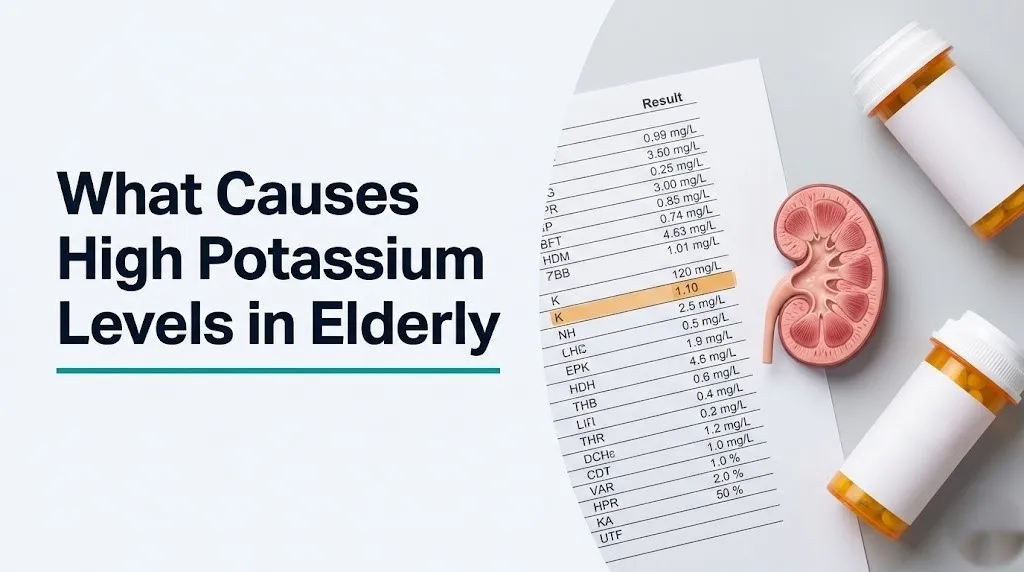
What Causes High Potassium Levels in Elderly Adults 2026
What causes high potassium levels in elderly adults is primarily a combination of age-related kidney function decline, the accumulation of medications that suppress potassium excretion, and the physiological blunting of the hormonal systems that normally regulate serum potassium, making older adults far more vulnerable to this dangerous electrolyte imbalance than younger adults on the same medications or diet. The condition is called hyperkalemia (ICD-10 E87.5), defined as a serum potassium level above 5.0 milliequivalents per liter (mEq/L).
According to the National Kidney Foundation, kidney function declines at an estimated rate of approximately 1 mL/min/1.73m² per year after age 40 in otherwise healthy adults. By age 75, many individuals have lost 30 to 40% of their original kidney filtration capacity without any formal diagnosis of kidney disease, creating a biological vulnerability to potassium accumulation that no dietary change or medication label currently warns about explicitly.
This article covers every named cause of hyperkalemia in older adults with the specific physiological mechanism behind each one, addresses the most dangerous cardiac consequences, identifies which medications carry the highest risk in this population, and tells you exactly when an elevated potassium level requires emergency evaluation.
Why Elderly Are More Vulnerable to High Potassium Levels
Elderly adults are more vulnerable to high potassium levels because aging produces three concurrent physiological changes that each impair the body’s ability to maintain safe serum potassium: declining kidney filtration capacity, blunted aldosterone secretion, and reduced total body muscle mass.
The kidney excretes approximately 90% of the potassium consumed each day. This excretion happens primarily in the cortical collecting duct of the kidney’s nephrons, where the hormone aldosterone drives potassium out through specialized channels in principal cells. Each of these three links in the excretion chain weakens with age, independently. Together, their combined effect is substantially greater than any single change would produce alone.
Think of the body’s potassium management system like a drain with three separate filters. Younger adults with all three filters working can handle a wide variation in potassium intake and medication exposure without accumulating dangerous levels. An older adult with all three filters partially blocked by age alone is already operating with far less margin. Adding a single medication that further impairs any one of the three filters may be enough to push serum potassium from safe to dangerous.
The American Geriatrics Society notes in its 2023 Beers Criteria that older adults are at heightened risk from potassium-elevating medications precisely because these age-related physiological changes create a narrowed safety margin that younger populations do not share. Women face an additional nuance: estrogen has modest natriuretic and RAAS-modulating effects, and postmenopausal women who lose these effects may have a subtle shift in baseline potassium handling that amplifies their medication-related risk.
Quick Tip:
- Ask a primary care physician to calculate estimated GFR (eGFR) from a standard creatinine test before starting any new medication that affects potassium, particularly ACE inhibitors, ARBs, or potassium-sparing diuretics.
- Older adults with eGFR below 45 mL/min/1.73m² (CKD Stage 3b) have substantially reduced capacity to excrete potassium under any additional stress.
- Older women taking estrogen therapy may have a marginally more stable potassium baseline than age-matched women without hormone therapy, though this distinction is not yet a basis for clinical decision-making.
What Causes High Potassium Levels in Elderly: The Main Drivers
High potassium levels in elderly adults are caused by a convergence of age-related renal decline, medication effects on the renin-angiotensin-aldosterone system (RAAS), metabolic acidosis, and, in some cases, dietary potassium intake that exceeds the reduced excretion capacity of an aging kidney.
Unlike younger adults, where a single cause is usually identifiable, most elderly patients with hyperkalemia have two or three contributing causes acting simultaneously. A 78-year-old man with stage 3 chronic kidney disease (CKD), taking an ACE inhibitor for hypertension and a potassium-sparing diuretic for heart failure, who then develops a urinary tract infection causing dehydration, may tip from a stable serum potassium of 4.8 mEq/L to a dangerous level of 6.2 mEq/L within days, without changing his diet at all.
According to a review published in the Journal of the American Geriatrics Society, medication-related hyperkalemia accounts for the majority of clinically significant potassium elevations in hospitalized older adults, with renal impairment present as a compounding factor in over 75% of those cases. Diet alone rarely causes hyperkalemia in adults with normal kidney function; it becomes a relevant contributing factor when kidney function is already impaired.
The main drivers ranked by frequency in elderly populations:
- Reduced renal potassium excretion from age-related GFR decline and nephron loss
- RAAS-suppressing medications (ACE inhibitors, ARBs) reducing aldosterone-driven excretion
- Potassium-sparing diuretics blocking aldosterone action or sodium channels in the cortical collecting duct
- Metabolic acidosis shifting potassium from cells to bloodstream
- Chronic kidney disease compounding all of the above
- Diabetes-related type 4 renal tubular acidosis
- Dietary potassium intake exceeding the reduced excretion capacity
How Aging Kidneys Reduce Potassium Excretion
Aging kidneys reduce potassium excretion through the progressive loss of functional nephrons, the structural units responsible for filtering blood and secreting potassium into the urine, combined with a blunted hormonal response to hyperkalemia that reduces the kidney’s ability to compensate when potassium levels rise.
Each kidney contains approximately 1 million nephrons at birth. Nephron number declines with age through a process of progressive sclerosis (scarring) of individual glomeruli (the filtering units at the start of each nephron). By age 70, the average adult retains approximately 60 to 70% of their original nephron mass, according to data from the National Institute on Aging. Fewer functional nephrons means less total surface area for potassium secretion, even if each remaining nephron functions normally.
The compensatory response to a potassium load in younger adults is rapid and precise: rising serum potassium triggers the adrenal cortex’s zona glomerulosa to increase aldosterone production within minutes. Aldosterone travels to the principal cells of the cortical collecting duct, binds mineralocorticoid receptors, and upregulates the ROMK (renal outer medullary potassium) channel and the Na+/K+-ATPase pump on the basolateral membrane. Together, these drive potassium secretion into the tubular lumen where it passes into the urine. This compensatory surge is blunted in older adults: their zona glomerulosa produces less aldosterone in response to the same potassium stimulus, a finding documented in published endocrinology literature.
Sarcopenia compounds the problem from a different angle. Skeletal muscle is the body’s largest reservoir of intracellular potassium, with approximately 98% of total body potassium residing inside cells. As muscle mass declines with age, the total cellular potassium storage capacity decreases, meaning a given dietary or medication-related potassium load distributes into a smaller intracellular space and raises serum levels more sharply than it would in a younger adult with greater muscle mass.
The Cleveland Clinic notes that in older adults, even moderate dietary potassium intake or a single medication change can produce hyperkalemia that would not occur in a younger adult with the same kidney function.
Key Takeaway: An older adult’s kidney is not simply a “slower” younger kidney. The combination of nephron loss, blunted aldosterone response, and reduced muscle mass creates a qualitatively different potassium handling system that requires a fundamentally different medication risk assessment.
Chronic Kidney Disease and High Potassium in Older Adults
Chronic kidney disease (CKD) causes high potassium in older adults by reducing the total filtration and secretory capacity of the kidneys below the threshold needed to excrete daily dietary potassium loads, particularly as CKD progresses beyond stage 3 (eGFR below 60 mL/min/1.73m²).
CKD is defined by the National Kidney Foundation’s KDOQI guidelines as a persistent reduction in kidney function below eGFR of 60 mL/min/1.73m² for three months or more, or evidence of kidney damage regardless of eGFR level. CKD is extraordinarily prevalent in older adults: the Centers for Disease Control and Prevention reports that CKD affects approximately 38% of adults age 65 and older in the United States, making it one of the most common chronic conditions in this age group.
The potassium risk escalates at later CKD stages. At stage 3 (eGFR 30-59), compensatory hypertrophy of remaining nephrons can maintain near-normal potassium excretion at rest, but the reserve capacity to handle increased loads (dietary, medication-related, or from metabolic acidosis) is substantially reduced. At stage 4 (eGFR 15-29), hyperkalemia becomes a frequent clinical problem requiring active dietary and medication management. At stage 5 (eGFR below 15, also called kidney failure), the kidneys can no longer excrete sufficient potassium without dialysis.
CKD in older adults is often diagnosed later than in younger adults because serum creatinine, the standard surrogate for kidney function, reflects muscle mass. Older adults with significant sarcopenia may have a serum creatinine in the “normal” range despite substantially reduced kidney function, because they have less muscle producing creatinine. The eGFR calculation adjusts for age and sex but may still overestimate true filtration capacity in very frail older adults. A geriatrician or board-certified nephrologist evaluating an older patient with hyperkalemia should consider cystatin C-based eGFR estimation, which is less dependent on muscle mass and may be more accurate in this population.
Medications That Cause High Potassium in Elderly
Medications are the most common modifiable cause of high potassium in elderly patients, with five specific drug classes accounting for the vast majority of drug-induced hyperkalemia in this population.
The American Geriatrics Society 2023 Beers Criteria specifically identifies medications that affect the RAAS or directly block potassium excretion as high-risk in older adults, recommending careful monitoring of serum potassium and renal function when these medications are initiated or dose-adjusted. The criteria exist precisely because these medications are also among the most frequently prescribed to older adults for hypertension, heart failure, diabetes, and edema, creating a situation where the medications treating the most common elderly conditions are simultaneously the medications most likely to cause dangerous electrolyte imbalance.
Medications most commonly causing hyperkalemia in elderly patients:
- ACE inhibitors (lisinopril, enalapril, ramipril, named for clinical context): reduce angiotensin II production, reducing aldosterone secretion, reducing cortical collecting duct potassium excretion
- Angiotensin receptor blockers (ARBs) (losartan, valsartan, irbesartan, named for clinical context): block angiotensin II receptors directly, producing the same downstream reduction in aldosterone secretion and potassium excretion
- Potassium-sparing diuretics (spironolactone, eplerenone, amiloride, triamterene, named for clinical context): directly block potassium excretion in the cortical collecting duct through either aldosterone receptor blockade (spironolactone, eplerenone) or apical sodium channel blockade (amiloride, triamterene)
- NSAIDs (ibuprofen, naproxen, named for clinical context): suppress prostaglandin E2 production, reducing juxtaglomerular renin secretion, suppressing the full RAAS cascade and reducing aldosterone-driven potassium excretion
- Beta-blockers (metoprolol, atenolol, carvedilol, named for clinical context): block beta-2 adrenergic receptors on skeletal muscle and liver cells, impairing catecholamine-mediated potassium uptake into cells and raising serum potassium levels
Combining any two of these drug classes substantially amplifies the hyperkalemia risk. An older adult taking both an ACE inhibitor and a potassium-sparing diuretic faces a dual blockade of aldosterone-mediated potassium excretion that can produce clinically dangerous levels even with normal dietary intake and preserved renal function.
ACE Inhibitors, ARBs, and Potassium Elevation in Seniors
ACE inhibitors and ARBs cause high potassium in elderly patients by suppressing the production or action of angiotensin II, which in turn reduces aldosterone secretion from the adrenal cortex, ultimately reducing the principal cells’ ability to secrete potassium into the cortical collecting duct’s tubular lumen.
The RAAS is a hormonal cascade that begins in the kidney. When blood pressure or blood volume falls, juxtaglomerular cells of the afferent arteriole release renin into the bloodstream. Renin converts angiotensinogen (produced by the liver) to angiotensin I. Angiotensin-converting enzyme (ACE) in the pulmonary vasculature converts angiotensin I to angiotensin II. Angiotensin II then acts on the adrenal cortex’s zona glomerulosa to stimulate aldosterone secretion. Aldosterone drives potassium excretion in the cortical collecting duct.
ACE inhibitors block the ACE conversion step, reducing angiotensin II and therefore aldosterone. ARBs block the angiotensin II receptor directly at the adrenal cortex, producing the same downstream reduction in aldosterone. Both classes eliminate much of the aldosterone-driven potassium excretion that the kidney depends on to clear daily potassium loads.
In younger adults with normal kidney function, the remaining non-RAAS potassium excretion pathways can compensate. In older adults with reduced nephron mass and already-blunted aldosterone responses, these compensatory pathways may not be sufficient. According to a 2019 review published in JAMA Internal Medicine, ACE inhibitor or ARB use is associated with a two to four-fold higher rate of clinically significant hyperkalemia compared with patients not taking these medications, with the risk increasing substantially in patients with CKD, diabetes, and advanced age.
Older adults starting ACE inhibitors or ARBs should have a repeat comprehensive metabolic panel (CMP) within one to two weeks of initiation to check serum potassium and creatinine, a practice recommended in prescribing guidelines but inconsistently applied in real-world primary care settings.
Potassium-Sparing Diuretics and Hyperkalemia in Elderly Patients
Potassium-sparing diuretics cause hyperkalemia in elderly patients by directly blocking the hormonal or channel-based mechanisms that drive potassium out of the body through the kidney’s cortical collecting duct, with the effect being additive to any concurrent RAAS suppression from ACE inhibitors or ARBs.
Two distinct mechanisms are involved, depending on the specific drug. Spironolactone and eplerenone are mineralocorticoid receptor antagonists: they bind the same intracellular receptor in principal cells that aldosterone would normally bind, blocking aldosterone’s effects entirely at that cell level. Without aldosterone signaling, ROMK channel expression drops, basolateral Na+/K+-ATPase activity decreases, and potassium secretion into the tubular lumen stops. Amiloride and triamterene work through a different mechanism: they block the epithelial sodium channel (ENaC) on the apical (luminal) membrane of principal cells. Without sodium entering through ENaC, the electrical gradient that drives potassium out through the ROMK channel disappears. The result is the same: potassium stays in the body.
Spironolactone and eplerenone are widely prescribed in older adults with heart failure because they reduce mortality in this population, per landmark clinical trials including RALES (Randomized Aldactone Evaluation Study). However, the same mechanism that reduces cardiac mortality by blocking aldosterone’s harmful fibrotic effects on the heart simultaneously blocks its beneficial potassium-excreting effects in the kidney. The clinical challenge is that these drugs are both beneficial and potassium-elevating, requiring regular monitoring rather than avoidance.
According to the American Geriatrics Society 2023 Beers Criteria, spironolactone at doses above 25 mg/day in older adults with heart failure carries particularly high hyperkalemia risk and should only be used with frequent potassium monitoring. Older women are not inherently more protected from this drug class than older men; postmenopausal status eliminates any estrogen-related buffering effect.
Key Takeaway: The combination of an ACE inhibitor plus a potassium-sparing diuretic in an elderly patient with CKD is one of the highest-risk medication combinations for life-threatening hyperkalemia in geriatric medicine, yet it is also one of the most clinically necessary combinations for treating heart failure.
NSAIDs, Beta-Blockers, and Potassium Levels in Older Adults
NSAIDs and beta-blockers both raise serum potassium in elderly patients through mechanisms distinct from RAAS suppression, and both are medications that older adults frequently take, often without understanding their effect on potassium balance.
NSAIDs impair potassium excretion by reducing the production of prostaglandin E2 in the kidney. Prostaglandin E2 normally stimulates renin secretion from the juxtaglomerular apparatus. When NSAIDs inhibit the cyclooxygenase (COX) enzyme responsible for prostaglandin synthesis, renin secretion falls. Lower renin means less angiotensin II, less aldosterone, and less potassium excretion in the cortical collecting duct. This NSAID-driven RAAS suppression is pharmacologically additive to the RAAS suppression already produced by ACE inhibitors or ARBs. An elderly patient taking an NSAID for arthritis and an ACE inhibitor for hypertension faces a compounded suppression of aldosterone-driven potassium excretion that neither drug alone would produce.
Beta-blockers raise potassium through a different route. Beta-2 adrenergic receptors on skeletal muscle and liver cells normally respond to epinephrine and norepinephrine by activating the Na+/K+-ATPase pump, driving potassium into cells. This catecholamine-driven cellular uptake is a rapid buffering mechanism that protects against transient post-meal potassium spikes. Beta-blockers (particularly non-selective beta-blockers like propranolol and carvedilol) block these receptors, impairing this buffering mechanism and raising serum potassium, particularly in the hours following a potassium-rich meal.
The effect of beta-blockers on potassium is clinically modest in isolation, but in an older adult already vulnerable from nephron loss, blunted aldosterone, and concurrent RAAS-suppressing medications, even a modest additional impairment can tip the balance. Older adults taking both a beta-blocker and any RAAS-suppressing medication should have potassium monitored at least every six months, or sooner if kidney function changes.
Metabolic Acidosis and Potassium Shifts in Elderly
Metabolic acidosis raises serum potassium in elderly patients by driving potassium out of cells through a hydrogen-potassium exchange mechanism across the cell membrane, adding extracellular potassium from the body’s own cellular stores rather than from dietary intake or reduced excretion.
The mechanism is based on the body’s attempt to buffer excess acid. When the blood becomes acidic (pH below 7.35), hydrogen ions (H+) accumulate in the extracellular fluid. The body attempts to shift some of these hydrogen ions into cells, where they can be buffered by intracellular proteins. The exchange is not electrically neutral: for roughly every 0.1 unit drop in blood pH, approximately 0.6 mEq/L of potassium moves from the intracellular space to the extracellular (bloodstream) compartment in exchange for the entering hydrogen ions. An older adult whose blood pH drops from 7.40 to 7.20, a drop of 0.20 pH units, may see their serum potassium rise by approximately 1.2 mEq/L from this shift alone, with no change in dietary intake or excretion.
Metabolic acidosis is common in elderly adults for several reasons: CKD reduces the kidney’s ability to excrete the daily acid load from metabolism (renal tubular acidosis); type 2 diabetes produces lactic acidosis during episodes of poor glucose control; and dehydration concentrates organic acids in the blood. Each of these conditions is more prevalent in older adults than in younger populations.
According to data published in the Annals of Internal Medicine, metabolic acidosis is present in a substantial proportion of patients hospitalized with clinically significant hyperkalemia, frequently as a compounding factor alongside medication-related and renal causes rather than as a sole cause. Recognizing and treating the acidosis is therefore part of managing the hyperkalemia, not a separate issue.
Older adults with diabetes who use sodium-glucose cotransporter-2 (SGLT2) inhibitors may face a complex interaction: SGLT2 inhibitors have a mild natriuretic effect that can slightly lower potassium, but they also carry a risk of euglycemic diabetic ketoacidosis in specific clinical situations, which would raise potassium through the acidosis-driven transcellular shift mechanism.
Diabetes and High Potassium in Elderly: Type 4 Renal Tubular Acidosis
Type 4 renal tubular acidosis (type 4 RTA), also called hyporeninemic hypoaldosteronism, causes high potassium in elderly diabetic patients because diabetic nephropathy damages the juxtaglomerular apparatus, reducing renin secretion, which reduces aldosterone, which reduces cortical collecting duct potassium excretion even when kidney GFR is only mildly reduced.
Type 4 RTA is the most common form of renal tubular acidosis in adults, and it is particularly prevalent in older adults with long-standing type 2 diabetes and mild to moderate CKD. The mechanism differs from the RAAS suppression produced by medications: here, the damage is structural. Diabetic nephropathy progressively scars the juxtaglomerular apparatus of the afferent arteriole, the specialized structure that senses renal perfusion and releases renin in response. When the juxtaglomerular apparatus is scarred, it secretes less renin even when potassium is elevated and additional aldosterone is needed. The result is a state of functional hypoaldosteronism that is not responsive to potassium intake changes and not correctable by stopping medications.
The biochemical signature of type 4 RTA is the combination of hyperkalemia, mild metabolic acidosis, and plasma renin activity that is inappropriately low given the degree of hyperkalemia and acidosis. A 24-hour urine potassium or a spot urine potassium-to-creatinine ratio can help distinguish type 4 RTA (inappropriately low urinary potassium for the degree of hyperkalemia) from hyperkalemia from dietary excess (appropriately high urinary potassium as kidneys try to compensate).
Elderly men with type 2 diabetes are at particularly high risk for type 4 RTA because diabetic nephropathy is more prevalent in men, and because older men have lower baseline renin activity than younger men. A board-certified endocrinologist or board-certified nephrologist should be involved in managing hyperkalemia in elderly diabetic patients where type 4 RTA is suspected, as the management approach differs from simple dietary potassium restriction.
Key Takeaway: Older adults with type 2 diabetes and high potassium may have type 4 RTA from juxtaglomerular scarring, a structural cause that dietary changes alone cannot address and that requires nephrology or endocrinology evaluation for appropriate long-term management.
Dietary Potassium and High Levels in Elderly
Dietary potassium rarely causes hyperkalemia on its own in elderly adults with functional kidneys, but it becomes a clinically relevant contributing factor when it is added to an already-impaired excretion system from CKD, medication effects, or metabolic acidosis.
Healthy kidneys in younger adults can excrete several times the daily dietary potassium intake without allowing serum levels to rise. The problem in elderly adults is that the excretion system’s reserve capacity has been reduced by the age-related and disease-related factors described in preceding sections. When reserve is limited, dietary intake that would be perfectly safe in a younger adult can push an older adult’s potassium from the upper range of normal to a genuinely dangerous level.
Foods with the highest potassium content that clinicians routinely counsel elderly patients to monitor include:
- Potassium-dense fruits: bananas (approximately 422 mg per medium banana), avocados (approximately 708 mg per half), oranges, kiwis, and dried apricots
- Vegetables: potatoes (particularly baked with skin, approximately 900 mg), sweet potatoes, tomatoes, tomato sauce, winter squash, and spinach
- Legumes and beans: white beans, lima beans, and lentils (approximately 600 to 900 mg per cup cooked)
- Dairy: milk and yogurt (approximately 380 mg per cup)
- Salt substitutes: potassium chloride-based salt substitutes (marketed as “lite salt” or “heart-healthy salt”) can contain up to 2,800 mg of potassium per teaspoon and are a particularly dangerous hidden source for elderly patients with any degree of renal impairment
The last item is one of the most clinically underrecognized dietary risks. Many older adults switch to potassium chloride salt substitutes on the advice of physicians or family members concerned about their sodium intake and blood pressure, without realizing that the substitution introduces a large potassium load that their reduced kidneys cannot handle. According to MedlinePlus (U.S. National Library of Medicine), this specific dietary substitution has been documented as a contributing cause of hyperkalemia in older adults taking RAAS-suppressing medications.
Elderly adults with CKD stage 3 or above, or those taking any of the medications discussed in preceding sections, should discuss dietary potassium specifically with their primary care physician or a registered dietitian before making any dietary changes related to potassium-containing foods.
Pseudohyperkalemia in Elderly: When the Test Is Wrong
Pseudohyperkalemia is a falsely elevated serum potassium result caused by potassium leaking from blood cells during or after the blood draw, and it is disproportionately common in elderly patients because of age-related vein fragility, difficult venous access, and prolonged sample processing times.
True serum potassium is measured from the fluid portion of blood after blood cells have been separated. If blood cells rupture during or after the draw (a process called hemolysis), the intracellular potassium they contain spills into the serum sample, artificially raising the measured result without any change in the patient’s actual blood potassium. The same effect occurs if the drawn sample sits at room temperature for too long before processing, because potassium leaks out of cells passively as they deteriorate ex vivo.
In older adults, the following factors increase the probability of a pseudohyperkalemia result:
- Fragile, rolling veins requiring multiple needle repositioning attempts, increasing mechanical trauma to red blood cells during draw
- Prolonged tourniquet application to find a usable vein, which increases venous stasis and promotes red cell rupture
- Small-caliber veins requiring a smaller gauge needle with higher turbulence, increasing shear stress on red cells
- Low platelet count or high white cell count (from hematological conditions common in elderly patients), which increases cell fragility
Clinicians routinely repeat a borderline high potassium result before initiating treatment in an older adult. A repeated draw from a different site, using the smallest effective needle gauge and the shortest possible tourniquet time, with immediate sample transport to the laboratory, can distinguish pseudohyperkalemia from a true result. The plasma potassium (measured from a heparinized tube before serum separation) is typically 0.1 to 0.5 mEq/L lower than serum potassium even in healthy individuals; a plasma potassium result within normal limits despite an elevated serum result strongly suggests pseudohyperkalemia.
Elderly patients whose caregivers receive a “high potassium” phone call from a physician should not panic before asking whether the result has been confirmed with a repeated draw. The answer to that question determines the urgency of next steps.
Heart Failure and High Potassium in Elderly Patients
Heart failure creates a paradoxical potassium situation in elderly patients: the disease itself activates the RAAS (which would tend to lower potassium), but the medications used to treat heart failure are precisely the drugs most likely to suppress the RAAS and raise potassium, often producing hyperkalemia in patients who most need the life-saving drugs causing it.
Heart failure reduces cardiac output, which reduces renal perfusion pressure, which activates the RAAS as a compensatory response. Angiotensin II is produced, aldosterone rises, and the kidneys retain sodium and water to restore blood volume. This RAAS activation would ordinarily protect against hyperkalemia. However, the standard medication regimen for heart failure in elderly adults typically includes an ACE inhibitor or ARB, a mineralocorticoid receptor antagonist (spironolactone or eplerenone), and sometimes a beta-blocker, each of which suppresses or bypasses the RAAS’s potassium-excreting function through the mechanisms described in preceding sections.
The result is that elderly heart failure patients frequently oscillate between the two directions of potassium imbalance depending on their volume and medication status. When they are volume-overloaded and the RAAS is maximally activated (before diuresis), potassium may be in the normal to low range. After aggressive diuresis with a loop diuretic (which can cause potassium loss), potassium may fall. If they then develop any degree of acute kidney injury from inadequate perfusion, potassium rises rapidly because the kidneys’ excretion capacity, already compromised by CKD, now fails acutely as well.
According to a 2021 analysis published in the Journal of the American College of Cardiology, hyperkalemia occurs in 10 to 20% of heart failure patients on guideline-directed medical therapy, with rates highest in those with concurrent CKD and age above 70. Older women with heart failure face the same risk as older men; sex does not provide a protective advantage in this clinical context.
A board-certified cardiologist and a board-certified nephrologist working together to manage an elderly heart failure patient’s medication regimen and potassium monitoring schedule is the appropriate model of care for this complex situation.
Symptoms of High Potassium in Elderly
High potassium in elderly adults produces symptoms across the cardiovascular system, the neuromuscular system, and the gastrointestinal tract, but the most dangerous aspect of hyperkalemia is that its early symptoms are non-specific and can be easily attributed to other common elderly conditions.
At mildly elevated levels (5.0 to 5.5 mEq/L), many elderly patients have no symptoms at all, or only fatigue and mild generalized weakness that is indistinguishable from deconditioning or anemia. This is precisely what makes routine blood testing important in older adults on high-risk medications: they may feel no different while their potassium climbs to a dangerous level.
| Serum Potassium Level | Typical Symptoms | Cardiac Risk Level |
|---|---|---|
| 5.0 to 5.5 mEq/L (mild) | Often asymptomatic; mild fatigue, subtle muscle heaviness | Low to moderate; repeat testing warranted |
| 5.5 to 6.0 mEq/L (moderate) | Muscle weakness (proximal limb muscles), tingling in hands and feet, nausea | Moderate; peaked T waves may appear on ECG |
| 6.0 to 6.5 mEq/L (severe) | Pronounced weakness, difficulty rising from a chair, palpitations, flattening of P wave on ECG | High; widened QRS complex, atrial standstill possible |
| Above 6.5 mEq/L (critical) | Ascending muscle paralysis, irregular heartbeat, chest pressure, pre-syncope or syncope | Critical; sine wave ECG pattern, risk of ventricular fibrillation and cardiac arrest |
Neuromuscular symptoms occur because elevated extracellular potassium reduces the electrical gradient across the cell membrane resting potential of skeletal muscle cells. Normally, the large difference between intracellular potassium (approximately 150 mEq/L) and extracellular potassium (approximately 4 mEq/L) maintains the muscle cell at a resting potential of approximately negative 90 millivolts, ready to fire when stimulated. As extracellular potassium rises, this gradient narrows, the resting potential becomes less negative, and the cell enters a state of partial depolarization that impairs its ability to generate a full action potential. Muscle weakness is the clinical consequence.
Elderly adults may attribute weakness, palpitations, and nausea to any of a dozen other conditions common in this age group. Any of these symptoms in an older adult on potassium-elevating medications should prompt same-day potassium testing.
Emergency Symptoms of High Potassium in Elderly: When to Call 911
Certain presentations of high potassium in elderly patients represent immediately life-threatening cardiac emergencies. Do not wait to see if these resolve on their own.
Call 911 or go to the nearest emergency room immediately if an elderly person experiences:
- Palpitations or an irregular heartbeat: elevated potassium disrupts normal cardiac conduction through the sinoatrial node and atrioventricular node, producing arrhythmias that can progress to ventricular fibrillation within minutes at critical potassium levels
- Chest pain or pressure: may indicate cardiac arrhythmia or ischemia triggered by potassium-induced conduction abnormalities in the ventricular myocardium
- Sudden severe muscle weakness or inability to move a limb: ascending muscle paralysis from critically elevated potassium can rapidly progress to respiratory muscle involvement
- Difficulty breathing or shortness of breath at rest: may indicate respiratory muscle weakness from hyperkalemia or a cardiac arrhythmia compromising cardiac output
- Fainting, pre-syncope (near-fainting), or loss of consciousness: indicates compromise of cardiac output from arrhythmia or hemodynamic instability
- Known or suspected potassium above 6.0 mEq/L: at this level, life-threatening cardiac arrhythmias can occur without preceding symptom warning, particularly in elderly adults with concurrent cardiac disease
These presentations indicate potentially fatal cardiac arrhythmia from hyperkalemia and require emergency medical assessment and treatment, not a phone call to the primary care office or a trip to urgent care.
Frequently Asked Questions About High Potassium in Elderly
What is a dangerous potassium level in an elderly person?
A serum potassium level above 6.0 mEq/L is considered dangerous in elderly patients and warrants emergency evaluation regardless of symptoms.
Even levels above 5.5 mEq/L in an older adult with heart disease, diabetes, or significant CKD should prompt same-day contact with a primary care physician rather than watchful waiting.
According to the American Heart Association, the risk of life-threatening ventricular arrhythmia increases substantially as serum potassium rises above 6.0 to 6.5 mEq/L, with the specific threshold varying by the speed of rise and the presence of concurrent cardiac disease.
Which medications most commonly cause high potassium in elderly patients?
ACE inhibitors, angiotensin receptor blockers (ARBs), potassium-sparing diuretics (spironolactone, eplerenone, amiloride, triamterene), NSAIDs, and beta-blockers are the five drug classes most commonly associated with high potassium in elderly patients.
The American Geriatrics Society 2023 Beers Criteria specifically flags RAAS-suppressing medications and potassium-sparing diuretics as high-risk for hyperkalemia in older adults, particularly in those with CKD or diabetes.
Any older adult starting or having a dose increase of these medications should have a repeat serum potassium check within one to two weeks.
Can high potassium in elderly patients cause a heart attack?
High potassium does not directly cause a myocardial infarction (heart attack from coronary artery blockage), but it can cause fatal cardiac arrhythmias including ventricular fibrillation, which stops the heart from pumping effectively.
At levels above 6.5 mEq/L, the cardiac conduction system may produce a sinusoidal ECG pattern that precedes ventricular fibrillation, a rhythm that is fatal without immediate defibrillation.
Older adults with pre-existing coronary artery disease face a compounded risk because their hearts are already more vulnerable to the conduction disturbances that hyperkalemia produces.
What foods should elderly people with high potassium avoid?
Elderly adults with high potassium should reduce intake of potassium-dense foods including bananas, avocados, potatoes (especially baked with skin), sweet potatoes, tomatoes, tomato-based sauces, dried fruits, and most legumes.
Potassium chloride-based salt substitutes, marketed as heart-healthy alternatives to sodium chloride, are a particularly important source to avoid because a single teaspoon can contain up to 2,800 mg of potassium.
Dietary changes should always be discussed with a primary care physician or registered dietitian before implementation, as the appropriate restriction level depends on the degree of kidney impairment and the medications being taken.
Can dehydration cause high potassium in elderly people?
Dehydration raises potassium in elderly patients through two concurrent mechanisms: it reduces urine output and tubular fluid flow in the cortical collecting duct (reducing potassium excretion), and it concentrates existing blood potassium into a smaller fluid volume.
Older adults are at higher risk of dehydration than younger adults because the thirst mechanism weakens with age, reducing spontaneous fluid intake, and because common elderly medications including loop diuretics increase fluid losses.
Any elderly patient with high potassium who is also dehydrated needs medical evaluation for both conditions, as treating the dehydration alone may improve potassium levels substantially.
How is high potassium treated in elderly patients?
Treatment of high potassium in elderly patients depends on the serum level, the rate of rise, and whether cardiac symptoms are present.
Emergency treatments for critically high or symptomatic potassium include intravenous calcium gluconate (to stabilize cardiac cell membranes), insulin plus glucose (to drive potassium into cells), and sodium bicarbonate (to correct acidosis), all administered in a hospital setting by emergency medicine physicians.
For confirmed mild to moderate hyperkalemia without cardiac symptoms, the primary care physician typically reviews and adjusts contributing medications, recommends dietary potassium restriction, and rechecks potassium within days to confirm improvement.
Closing
High potassium in an elderly person is not a lab result to file away and revisit at the next annual visit. The mechanisms that make older adults vulnerable, declining nephron mass, blunted aldosterone response, reduced muscle potassium storage, and a medication list that compounds all three, can allow serum potassium to climb silently to cardiac-risk levels before any obvious symptom appears.
The most productive step right now is to bring every confirmed elevated potassium result to a primary care physician, with the complete medication list, the eGFR from the same panel, and a list of any dietary changes (particularly salt substitute use) made in recent weeks. If the potassium is above 5.5 mEq/L, that conversation should happen within days, not at the next scheduled appointment.
Any palpitations, chest discomfort, or sudden muscle weakness in an elderly person with a history of high potassium is a 911 call, not a wait-and-see situation