Fever With No Other Symptoms in Child: A Parent’s Guide 2026
Fever with no other symptoms in a child is one of the most common reasons parents call their pediatrician at midnight, and understanding what it means depends almost entirely on how old your child is and how sick they appear. In many cases the cause is a self-limiting viral illness. In a smaller but important number of cases, it signals a hidden bacterial infection that won’t announce itself with any other sign until it becomes serious.
The American Academy of Pediatrics (AAP) estimates that fever accounts for approximately 30% of all outpatient pediatric visits in the United States each year. Not all fevers carry the same weight. A fever in a 2-week-old is a clinical emergency that requires hospital evaluation. The same temperature in a well-appearing 3-year-old who has already received age-appropriate vaccinations is usually something a parent can monitor at home for 24 to 48 hours.
This article covers the named causes of isolated fever in children across specific age groups, the physiological mechanism behind why fever can appear without any other symptoms, the exact temperature thresholds that change what you should do, and the specific warning signs that mean you should not wait for morning.
Fever With No Other Symptoms in Child: What Parents Need to Know
A fever with no other symptoms in a child refers to a temperature at or above 100.4°F (38.0°C) measured rectally, without any accompanying signs such as cough, runny nose, rash, vomiting, diarrhea, ear pain, or sore throat. Clinicians call this presentation “fever without localizing signs” or “fever without focus.”
The most important factor in evaluating isolated fever is the child’s age. The younger the child, the narrower the window for watchful waiting. Neonates under 28 days have an immune system that cannot contain bacterial infections the way older children’s bodies can. A fever in a neonate represents a potential emergency until proven otherwise, regardless of how comfortable the baby appears.
In children older than 3 months who appear well, isolated fever is most often caused by a viral illness in the early stage before other symptoms develop. The virus has triggered the body’s immune alarm system. The fever starts first, typically 12 to 48 hours before any rash, congestion, or gastrointestinal symptoms appear. This is the prodromal phase of many viral infections.
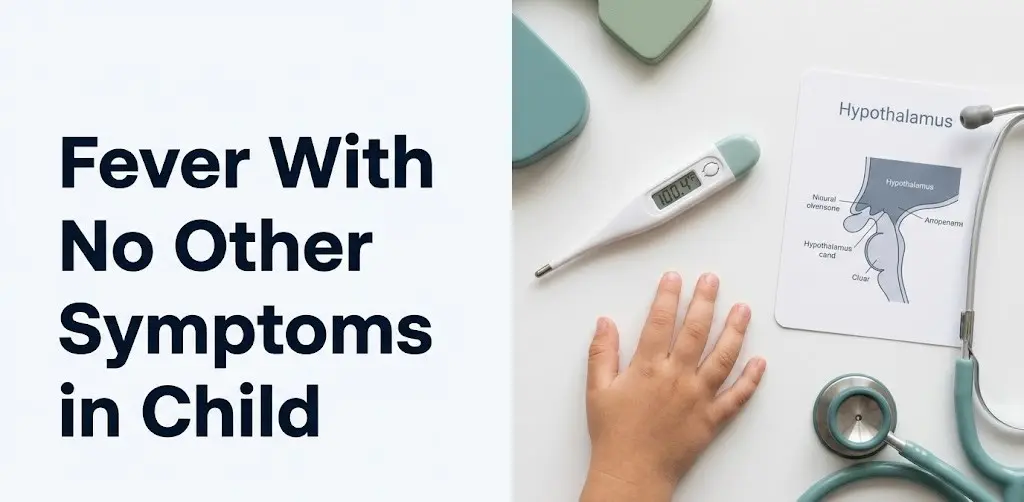
Key clinical point: A child who is well-appearing between fever spikes, who is drinking fluids, producing tears when crying, and responding to their surroundings normally, is far less likely to have a serious bacterial infection than a child who appears lethargic, glassy-eyed, or inconsolable even when the fever has been reduced.
Parental concern about isolated fever is valid because the cause is genuinely invisible. There is no rash to point to, no ear to show the doctor, no obvious source. That invisibility is exactly what makes the clinical assessment of the child’s overall appearance, age, vaccination status, and fever duration the primary diagnostic tools.
- Age under 28 days: Any fever is a medical emergency. Go to the emergency room immediately.
- Age 29 to 60 days: Isolated fever requires same-day evaluation by a pediatrician or at a pediatric emergency setting.
- Age 2 to 24 months: Well-appearing child with isolated fever can typically be monitored 24 to 48 hours; call pediatrician if fever persists beyond 48 to 72 hours or child appears ill.
- Age over 24 months: Well-appearing child with isolated fever and no other symptoms can typically be monitored at home with antipyretic support for up to 5 days before evaluation becomes necessary.
What Causes a Fever in a Child With No Other Symptoms
Fever in a child with no other symptoms is produced when the child’s innate immune system detects a pathogen or immune trigger and initiates the same biochemical cascade regardless of where in the body that threat is located. The result is a rise in body temperature that may be the only externally visible sign for hours, days, or, in some conditions, even longer.
The mechanism works like a building fire alarm. The alarm sounds throughout the entire building even if the fire is in one room with the door closed. The fever is the alarm. The “room” might be the urinary tract, the bloodstream, or a lymph node, all locations where infection produces no surface-level symptoms that a parent could notice.
The most common causes of isolated fever in children include:
- Human herpesvirus 6 (HHV-6) and roseola infantum: The most common single cause of isolated high fever in children 6 to 24 months. Fever precedes the characteristic rash by 3 to 5 days.
- Occult urinary tract infection (UTI): Particularly common in girls under 24 months, who frequently show no urinary symptoms.
- Early-phase viral illnesses: Adenovirus, enterovirus, influenza, and parainfluenza can all produce 24 to 48 hours of isolated fever before respiratory or gastrointestinal symptoms appear.
- Occult bacteremia: Now rare in vaccinated children but still possible; Streptococcus pneumoniae and Salmonella species are the most common remaining bacterial causes.
- Post-vaccination immune response: A specific, self-limiting fever triggered by the immune response to vaccines rather than by an active infection.
- Kawasaki disease (early or incomplete form): A rare but important cause of prolonged fever in children under 5, sometimes without the full classic symptom set in its early phase.
- Autoinflammatory syndromes: Conditions such as PFAPA (periodic fever, aphthous stomatitis, pharyngitis, adenitis) produce recurrent isolated fevers on a predictable schedule.
A 2021 study published in the journal Pediatrics found that among febrile children under 36 months presenting without localizing signs in a post-PCV13 vaccination era, viral illness accounted for the majority of cases, while serious bacterial infections (primarily UTI) were identified in approximately 7 to 9% of well-appearing children who underwent complete urinalysis testing.
Individual variation matters significantly here. Uncircumcised boys under 12 months have a UTI risk comparable to that of girls under 24 months, approximately 2 to 4%, making urinalysis a reasonable diagnostic step in this specific population even when urinary symptoms are absent.
Baby Fever No Other Symptoms: How Age Changes the Clinical Picture
The clinical significance of a fever with no other symptoms in a child shifts dramatically based on the child’s age because neonatal and infant immune physiology is fundamentally different from that of older children.
A newborn’s immune system is still developing. The thymus, which trains T-lymphocytes to distinguish self from pathogen, is active from birth but the cell-mediated immune response in the first weeks of life is not capable of confining bacterial infection to a single site. A bacterium that enters the bloodstream in a 2-week-old can spread to the meninges, the lungs, or the kidneys far more rapidly than it would in a 6-month-old whose immune architecture is more mature. This is why the same temperature that is manageable in a toddler is a potential emergency in a newborn.
Think of the infant’s immune system as a security team that is still learning the layout of the building. They can raise the alarm (fever), but they may not be able to stop the threat from spreading to other floors before help arrives.
| Age Group | Clinical Risk Level for Isolated Fever | Standard Clinical Approach |
|---|---|---|
| 0 to 28 days | High. Neonatal sepsis, meningitis, and herpes simplex encephalitis must be ruled out. | Emergency room evaluation. Do not wait. |
| 29 to 60 days | Moderate to high. Serious bacterial infection risk remains elevated. | Same-day evaluation by a pediatrician or pediatric emergency medicine physician. |
| 2 to 12 months | Moderate. UTI risk highest in this group, especially in girls and uncircumcised boys. | Pediatrician evaluation within 24 to 48 hours if fever persists without a clear source. |
| 12 to 36 months | Lower but not negligible. Roseola most common in this range. | Monitor at home if child appears well; call pediatrician at 48 to 72 hours if no source identified. |
| Over 36 months | Lower still. Viral illness predominant. | Home monitoring appropriate for well-appearing child; evaluate at 5 to 7 days if fever persists. |
According to the 2021 AAP Clinical Practice Guideline on febrile infants 8 to 60 days of age, temperature above 100.4°F (38.0°C) rectal measurement in any infant in this age range warrants a structured clinical evaluation including urinalysis, complete blood count, and inflammatory markers such as C-reactive protein or procalcitonin.
Key Takeaway: The single most important factor in deciding how urgently to respond to a child’s isolated fever is the child’s age. Any fever in a baby under 28 days requires emergency evaluation the same day, regardless of how the baby appears.
Toddler Has Fever but No Other Symptoms: The Physiological Explanation
When a toddler has a fever but no other symptoms, the underlying physiological event is the body’s thermoregulatory set point being raised by the hypothalamic preoptic nucleus in response to signals from the immune system.
Here is exactly what happens. An immune threat, whether a virus entering cells or a bacterium in the bloodstream, activates the child’s innate immune cells: primarily macrophages, monocytes, and dendritic cells. These cells release endogenous pyrogens: interleukin-1 beta (IL-1β), interleukin-6 (IL-6), and tumor necrosis factor-alpha (TNF-α). These cytokines travel to the brain’s vascular network and stimulate cyclooxygenase-2 (COX-2) in hypothalamic endothelial cells to produce prostaglandin E2 (PGE2). PGE2 then crosses into the hypothalamic preoptic area and raises the thermoregulatory set point, signaling the body to generate and conserve heat until the core temperature matches the new, elevated target.
The reason no other symptoms appear in the early phase is location. If the infection is in the urinary tract, the lungs, or the bloodstream rather than in the upper respiratory mucosa, there is no cough, no congestion, no nasal discharge, no sore throat. The immune alarm (fever) has been triggered, but the fire is not in a room with windows.
What parents typically observe in a toddler with isolated fever:
- Temperature spiking between 101°F and 104°F (38.3°C to 40°C), often highest in the late afternoon and early evening.
- The child appears reasonably well when the temperature is brought down with acetaminophen or ibuprofen.
- The child remains playful between fever spikes, maintains some appetite, and produces tears when crying.
- No rash, cough, ear pulling, sore throat, or vomiting is present, at least in the first 24 to 48 hours.
A child who is well-appearing between fever spikes has a much lower probability of serious bacterial infection than the temperature number alone would suggest. A child who appears unwell, glassy-eyed, or inconsolable even after the fever is treated is showing a clinical signal that warrants prompt professional evaluation regardless of the exact temperature reading.
Children who have been given over-the-counter antipyretics before a pediatric evaluation may appear artificially well. Parents should tell the pediatrician the exact doses and timing of any fever-reducing medication the child has received before the appointment.
Roseola and HHV-6: The Most Common Cause of Isolated Fever in Toddlers
Roseola infantum, caused almost exclusively by human herpesvirus 6 (HHV-6) and less commonly by human herpesvirus 7 (HHV-7), is the most common single identifiable cause of isolated high fever in children between 6 months and 24 months of age.
The clinical pattern of roseola is almost uniquely suited to producing parental anxiety. The child develops a high fever, typically 103°F to 105°F (39.4°C to 40.6°C), which lasts for 3 to 5 days with no accompanying symptoms. The child often appears reasonably well between fever spikes, eating and playing with something approaching normalcy. Then, as the fever breaks, a distinctive rose-pink, flat or slightly raised rash appears on the trunk and spreads to the neck, arms, and legs. The rash typically fades within 1 to 2 days without treatment. Once the rash appears, the diagnosis becomes clear. Before the rash, there is no way to distinguish roseola from more serious causes without testing.
How the HHV-6 fever mechanism works specifically:
HHV-6 is a beta-herpesvirus that initially replicates in CD4-positive T-lymphocytes and monocytes. During the acute viremic phase (the 3 to 5 days before rash), the virus triggers a strong IL-6 response from infected monocytes. This drives the sustained high fever. The absence of upper respiratory symptoms reflects the fact that HHV-6 primary infection in young children is primarily a bloodstream-mediated illness, not a mucosal one. The virus is not primarily replicating in the nasal mucosa or pharynx, so there is no congestion or sore throat.
According to a study published in the New England Journal of Medicine, by age 2, approximately 77% of children have detectable HHV-6 antibodies, indicating prior infection. Primary HHV-6 infection accounts for an estimated 20% of all febrile emergency department visits in children under 24 months.
Roseola has no specific antiviral treatment. The fever phase is managed with appropriate weight-based antipyretic doses of acetaminophen or ibuprofen (ibuprofen is not recommended for infants under 6 months of age). Parents of children with a prior febrile seizure history should discuss fever management strategy with their pediatrician specifically before HHV-6 season peaks, which typically runs late winter through early spring in the Northern Hemisphere.
Occult Infection: When UTI or Bacteremia Hides Behind Isolated Fever
Occult infection is the clinical term for a bacterial infection producing isolated fever without any localizing symptoms pointing to the infected site. In children, the two most clinically important occult infections are urinary tract infection (UTI) and occult bacteremia.
A urinary tract infection in a toddler or young child almost never presents the way it does in an adult. There is no burning on urination described by the child, no urinary frequency reported, no flank pain. The infection is present in the renal pelvis or bladder mucosa, driving the systemic cytokine cascade and producing fever, but the child cannot articulate urinary discomfort and shows no behavioral sign that points to the urinary tract. The fever appears to have no source.
The AAP 2016 Clinical Practice Guideline on UTI in febrile infants and young children recommends urinalysis testing for all febrile girls under 24 months and for uncircumcised boys under 12 months presenting with fever without localizing signs. In febrile girls under 24 months, the prevalence of UTI is approximately 8%. In uncircumcised boys under 12 months, the prevalence approaches 2 to 4%. In circumcised boys, UTI risk is substantially lower, approximately 0.2 to 0.4%.
Occult bacteremia, the presence of bacteria in the bloodstream in a child who appears well without a localizing source, was historically caused primarily by Streptococcus pneumoniae and accounted for approximately 3 to 5% of febrile children under 36 months. Following widespread adoption of the pneumococcal conjugate vaccine (PCV13), a 2019 study published in JAMA Pediatrics found that occult bacteremia rates in fully vaccinated, well-appearing febrile children under 36 months had dropped to below 0.5%. Salmonella species and Haemophilus influenzae type b (in incompletely vaccinated children) remain occasional bacterial causes.
Key things to tell your pediatrician at the appointment:
- The child’s vaccination status and exact vaccine history
- How many days the fever has lasted and the highest temperature recorded, and whether measurement was rectal, oral, axillary, or temporal
- Whether the child is producing tears when crying (indicating adequate hydration)
- Whether the child’s urine appears darker than usual or has an unusual odor
- Any medications given, including antipyretics and their exact doses and timing
- Whether the child has had any recent travel, animal exposure, or contact with a sick individual
Key Takeaway: A child with an isolated fever and no other symptoms may have a urinary tract infection that produces no urinary symptoms at all. Urinalysis is a standard part of the evaluation for febrile girls under 24 months and uncircumcised boys under 12 months, per AAP guidelines.
Post-Vaccination Fever in Child With No Other Symptoms
Post-vaccination fever is a specific, self-limiting form of isolated fever that occurs when a child’s immune system responds to vaccine antigens, not to an active infection. It is one of the most common and most benign causes of isolated fever in children during the first 2 years of life, when the immunization schedule is most intensive.
The mechanism is direct and predictable. When a vaccine delivers antigens (either inactivated pathogen components or mRNA instructions for antigen production), the immune system launches exactly the same cytokine cascade as it would against a real infection: IL-1β, IL-6, and TNF-α are released, driving the same hypothalamic PGE2-mediated fever response. The body cannot distinguish between an immune response to a real pathogen and an immune response to a vaccine antigen at the molecular level of the thermoregulatory cascade.
The timing of post-vaccination fever follows predictable patterns:
- Fevers from inactivated vaccines (DTaP, PCV13, Hib, hepatitis B, IPV): typically begin within 24 hours of vaccination and resolve within 1 to 2 days.
- Fevers from live attenuated vaccines (MMR, varicella): may appear 7 to 12 days after vaccination when the attenuated virus replicates enough to trigger immune recognition.
- Fever from mRNA vaccines: typically begins within 24 hours and resolves within 48 hours.
According to the Centers for Disease Control and Prevention (CDC), low-grade fever (below 102°F / 38.9°C) following vaccination is an expected immune response, not a sign of vaccine-induced illness or damage. High fever (above 104°F / 40°C) following any vaccine, or fever beginning more than 72 hours after an inactivated vaccine, is less likely to represent a vaccine reaction and should prompt a call to the child’s pediatrician to rule out a coincidentally acquired infection.
Parents often present to urgent care or emergency departments with a febrile infant without realizing the child received vaccinations 24 hours earlier. Always inform the medical team of any vaccinations administered within the preceding 2 weeks, including the specific vaccines given, when evaluating a febrile child.
High Fever With No Other Symptoms in Child: What Temperature Numbers Mean
A high fever in a child is not defined by a single temperature number but by the combination of temperature, age, and the clinical appearance of the child. Temperature thresholds have specific clinical meanings that change depending on how old the child is.
It’s worth being precise about how temperature is measured, because the method matters. Rectal temperature is the most accurate measurement in children under 3 years. According to the American Academy of Pediatrics, rectal measurement is the clinical standard for infants and toddlers. Temporal artery thermometers and tympanic thermometers are less accurate in young infants. Axillary (underarm) temperature can run 0.5°F to 1°F lower than core temperature and should not be used for diagnostic decisions in infants under 6 months.
| Temperature | Clinical Significance by Age |
|---|---|
| 100.4°F (38.0°C) rectal | Emergency in any child under 28 days. Requires immediate hospital evaluation. |
| 100.4°F to 102°F (38.0°C to 38.9°C) | Low-grade fever in older children; typical of early viral illness or post-vaccination response. Usually monitorable at home if child appears well and is over 3 months. |
| 102°F to 104°F (38.9°C to 40°C) | Moderate fever. Common in roseola, UTI, occult viral illness. Well-appearing child over 3 months can be monitored with antipyretic support. Call pediatrician at 48 hours if no source found. |
| Above 104°F (40°C) | High fever. Contact pediatrician same day regardless of child’s appearance. Not inherently dangerous in itself, but warrants evaluation to rule out serious bacterial infection. |
| Above 107°F (41.7°C) | Hyperpyrexia. Rare. Associated with serious bacterial or viral CNS infection. Go to emergency room immediately. |
A high temperature number does not automatically mean a high danger level. A child with a temperature of 104°F who is running around, drinking juice, and asking for a story is clinically different from a child with 101°F who is lying still, glassy-eyed, and impossible to console. The child’s clinical appearance between fever spikes carries more diagnostic weight than the peak temperature reading, particularly in children over 3 months.
Children with febrile seizure history may have additional parental anxiety around any fever. The seizure risk is not proportional to fever height but to how rapidly the temperature rises, particularly between 38°C and 39°C. Parents in this situation should discuss a specific fever management plan with their pediatrician in advance.
Key Takeaway: A child’s age and clinical appearance between fever spikes matter more than the exact temperature reading in determining whether isolated fever requires same-day evaluation, watchful waiting at home, or an emergency room visit.
Fever for 7 Days in a Child With No Other Symptoms
A fever lasting 7 or more days in a child without a clear identified source is a clinical signal that warrants professional evaluation regardless of the child’s age or apparent wellness, and regardless of whether any other symptoms are present. Clinicians refer to fever lasting more than 7 to 14 days without a confirmed etiology as fever of unknown origin (FUO) when it meets specific criteria.
Most self-limiting viral illnesses in children resolve within 3 to 5 days. A fever persisting beyond 7 days without the emergence of localizing symptoms is statistically less likely to represent a simple self-limiting viral illness and more likely to represent one of the following:
- An occult bacterial infection that has not been tested for or identified
- A viral illness with an unusually prolonged course (such as Epstein-Barr virus / mononucleosis, which can cause fever for 1 to 3 weeks in older children)
- An inflammatory or autoimmune process such as juvenile idiopathic arthritis (systemic onset)
- Kawasaki disease, which requires fever lasting at least 5 consecutive days with at least two of five classic features: rash, conjunctival injection, oral changes, lymphadenopathy, extremity changes. However, the incomplete form can present with prolonged isolated fever.
- A rare autoinflammatory syndrome such as PFAPA, which produces recurrent fever episodes of predictable duration and timing
According to clinical guidelines reviewed in the journal Pediatrics, children with fever lasting more than 7 to 10 days without an identified source should undergo a structured diagnostic workup including complete blood count with differential, erythrocyte sedimentation rate (ESR), C-reactive protein (CRP), procalcitonin, urinalysis with culture, and potentially additional testing directed at the clinical picture.
Parents should be aware that antipyretic use can reduce fever but does not shorten the illness or hide a fever that would otherwise be visible. A child who consistently has a fever that comes down with acetaminophen or ibuprofen and returns as the medication wears off is still febrile. Intermittent absence of fever due to medication timing does not mean the child is improving.
Toddler Fever Only at Night With No Other Symptoms
A pattern of fever appearing only at night in a toddler, while the child appears normal during the day, is a real clinical phenomenon that has a physiological explanation rooted in the body’s circadian thermoregulatory rhythm.
Core body temperature naturally rises in the late afternoon and evening as part of the normal 24-hour circadian cycle controlled by the suprachiasmatic nucleus of the hypothalamus, which governs the body’s internal clock. In healthy individuals this produces a temperature peak in the late afternoon to early evening, typically 1°F to 2°F (0.6°C to 1.1°C) above morning baseline. In a child with an active but low-grade immune response (a mild viral illness, early occult infection, or post-vaccination response), this natural temperature rise at night can push a borderline temperature into fever range when it otherwise wouldn’t be detectable during the day.
This pattern does not mean the fever is “fake” or insignificant. It means the immune response is mild enough during the day that the body’s temperature stays in the normal range, but the evening circadian peak adds enough to cross the fever threshold.
When should nocturnal-only fever in a toddler prompt a call to the pediatrician?
- Nocturnal fever persisting for more than 3 to 4 consecutive nights without any emerging localizing symptoms
- Nocturnal fever in a child under 12 months, even if the child appears completely well during the day
- Nocturnal fever with any change in the child’s behavior, appetite, or urination pattern
- Nocturnal fever in a child with any chronic illness, immunocompromising condition, or known febrile seizure history
Parents monitoring nocturnal fever should take the child’s temperature at consistent times, record the readings, and report the full pattern to the pediatrician. This temperature log provides more useful clinical information than a single emergency-visit temperature reading.
Child With Fever and Fatigue No Other Symptoms
When a child has fever with fatigue but no other identifiable symptoms, the fatigue itself is a physiologically meaningful sign that the immune response is generating a more sustained systemic effect than uncomplicated low-grade fever alone.
Fever-associated fatigue in children is produced by cytokine-mediated sickness behavior. The same IL-1β, IL-6, and TNF-α that raise body temperature also act on specific regions of the brain, including the basal ganglia and hypothalamus, to reduce motor activity, decrease appetite, promote sleep, and dampen social engagement. This is not simply the child feeling tired because of a high temperature. It is an active, evolutionarily conserved immune strategy that conserves metabolic resources for immune function.
The key clinical distinction between normal fever-associated fatigue and fatigue that signals something more serious is how the child responds when the fever is treated.
- A child who improves significantly and becomes alert, interactive, and interested in their environment when the temperature is lowered is showing normal fever-associated fatigue. This pattern is reassuring.
- A child who remains lethargic, unresponsive to their environment, or impossible to console even when their temperature has been successfully reduced by antipyretics is showing a concerning fatigue pattern that warrants same-day evaluation by a board-certified pediatrician or pediatric emergency medicine physician.
According to the National Institutes of Health, fever-induced fatigue in pediatric patients is mediated primarily through IL-1 receptor signaling in the central nervous system, which directly inhibits dopaminergic reward pathways and reduces locomotor drive. This effect typically resolves within hours of effective antipyretic treatment in self-limiting viral illness.
Persistent fatigue extending beyond the fever resolution, particularly fatigue lasting more than 2 to 3 weeks after fever resolves, may signal post-viral fatigue or, in older children, early symptoms of infectious mononucleosis caused by Epstein-Barr virus (EBV). This pattern warrants evaluation by the child’s primary care pediatrician.
Key Takeaway: A child with fever and fatigue who becomes alert and interactive when their temperature is brought down is showing a reassuring pattern. A child who remains lethargic or inconsolable even after successful temperature reduction needs same-day evaluation.
Fever and Headache in Child No Other Symptoms
Fever and headache together in a child with no other symptoms requires a different level of clinical attention than isolated fever alone, because headache is a symptom that the brain’s meningeal covering (the meninges) can produce when inflamed, and early bacterial meningitis often presents with fever and headache before the classic triad of fever, stiff neck, and photophobia fully develops.
That said, most headaches in febrile children are not caused by meningitis. Fever itself raises brain temperature and increases intracranial pressure modestly through cerebral vasodilation. The resulting headache is typically diffuse, bilateral, and mild to moderate in intensity. It improves when the fever is reduced. This type of headache is a direct physiological consequence of the fever, not a sign of meningeal inflammation.
The features that distinguish fever-associated headache (benign) from headache that may signal meningitis or other serious intracranial pathology:
| Feature | Fever-Associated Headache (Benign) | Headache Requiring Urgent Evaluation |
|---|---|---|
| Onset | Gradual, parallels fever course | Sudden or rapidly worsening |
| Location | Diffuse, bilateral | Severe or localized to the back of the neck |
| Response to antipyretic | Improves as fever comes down | Persists or worsens despite fever reduction |
| Neck movement | Normal range of motion, no pain | Stiff neck, pain with chin-to-chest movement |
| Photophobia | Mild or absent | Marked sensitivity to light |
| Associated findings | None | Rash, altered consciousness, seizure |
A stiff neck in a febrile child is a medical emergency. Nuchal rigidity (resistance to passive flexion of the neck toward the chest) in the context of fever suggests bacterial meningitis until proven otherwise. Go to the emergency room immediately. Do not wait for a pediatrician appointment.
Children under 18 months may not demonstrate classic nuchal rigidity even in bacterial meningitis because their neck musculature is less developed. In this age group, a bulging fontanelle (the soft spot on the top of the head), a high-pitched unusual cry, and extreme irritability that increases when the child is held are the warning signs parents should know.
Febrile Seizures and Isolated Fever in Children
A febrile seizure is a convulsion that occurs in a child between the ages of 6 months and 5 years in association with fever, without evidence of an intracranial infection or metabolic cause. The National Institute of Neurological Disorders and Stroke (NINDS) reports that febrile seizures affect approximately 2 to 5% of children in this age range, making them the most common seizure type in childhood.
Febrile seizures are classified as simple or complex:
- Simple febrile seizure: Lasts less than 15 minutes, involves the whole body (generalized tonic-clonic), does not recur within 24 hours, and resolves completely. This is the most common type and carries no increased risk of epilepsy in children who were neurologically normal before the seizure.
- Complex febrile seizure: Lasts more than 15 minutes, involves only one side of the body (focal), or recurs within 24 hours. This pattern warrants prompt evaluation by a board-certified pediatric neurologist.
The physiological driver of febrile seizure susceptibility in young children is developmental immaturity of the ion channels in neuronal membranes. In children under 5, these channels are more sensitive to the rapid temperature changes that occur during fever onset. The seizure risk is highest not at the fever’s peak but during the rapid upward phase of temperature rise, particularly between 38°C and 39°C.
What to do if your child has a febrile seizure:
- Place the child on their side (recovery position) on a soft flat surface to prevent aspiration if vomiting occurs.
- Note the start time of the seizure and monitor its duration.
- Do not place anything in the child’s mouth. The child will not swallow their tongue.
- Stay with the child throughout the seizure.
- Call 911 immediately if the seizure lasts more than 5 minutes, if the child does not return to normal consciousness within 30 minutes, if the child has difficulty breathing, or if this is the child’s first seizure and you are uncertain of the cause.
- After a brief febrile seizure that has resolved, the child should be evaluated by a pediatrician the same day or within 24 hours.
A prior history of febrile seizure does not automatically change the emergency threshold for a fever. However, parents of children with prior febrile seizures should have a specific fever management plan discussed and documented with their child’s pediatrician before the next febrile illness.
Key Takeaway: Febrile seizures affect 2 to 5% of children under 5 years and are triggered during the rapid rise in temperature, not at the fever’s peak. Most simple febrile seizures are self-limiting, but any seizure lasting more than 5 minutes requires calling 911 immediately.
High-Risk Children: When Isolated Fever Needs Urgent Evaluation
Certain pediatric populations cannot be managed with the standard watchful-waiting approach that applies to a healthy, well-appearing, vaccinated toddler with isolated fever. In these populations, isolated fever is a clinical signal that requires urgent professional evaluation even when all other signs appear normal.
Sickle cell disease: Children with sickle cell disease have functional asplenia due to repeated splenic infarcts from sickling red blood cells. The spleen is the body’s primary filter for encapsulated bacteria (Streptococcus pneumoniae, Haemophilus influenzae, Neisseria meningitidis). Without a functioning spleen, bacteremia from these organisms can progress to overwhelming sepsis within hours. The American Academy of Pediatrics recommends that any child with sickle cell disease who has a temperature above 101.3°F (38.5°C) should receive immediate evaluation, typically including blood cultures, complete blood count, and empiric antibiotic therapy, rather than any period of home observation.
Immunocompromised children: Children receiving chemotherapy for malignancy, post-organ transplant children on immunosuppressive therapy, children with primary immunodeficiency disorders, and children on high-dose corticosteroids for more than 2 weeks may not mount a normal fever response. Neutropenic fever (fever in a child with an absolute neutrophil count below 500 cells per microliter due to chemotherapy) is a medical emergency requiring immediate hospital evaluation and empiric broad-spectrum antibiotic therapy. Paradoxically, corticosteroids can blunt the fever signal, meaning a child on chronic steroids may have a serious infection with a lower-than-expected temperature.
Infants with central venous catheters or implanted devices: These children have a portal for bacterial entry that bypasses normal skin defenses. Fever in this group always warrants evaluation for line-associated infection.
Children with anatomical abnormalities of the urinary tract: Children with known vesicoureteral reflux, obstructive uropathy, or a history of recurrent UTIs have a higher threshold for structural renal damage from untreated pyelonephritis and warrant earlier urinalysis in any febrile episode.
How a Pediatrician Evaluates Fever With No Other Symptoms
When a child is brought to a pediatrician or pediatric emergency medicine physician with isolated fever and no other symptoms, the clinical evaluation follows a structured approach designed to stratify the child’s risk for serious bacterial infection based on age, vaccination status, inflammatory markers, and clinical appearance.
For neonates (birth to 28 days): The standard evaluation, as outlined in the 2021 AAP Clinical Practice Guideline, typically includes complete blood count with differential, C-reactive protein or procalcitonin, blood culture, urinalysis with culture, and lumbar puncture for cerebrospinal fluid analysis. This is because in this age group, the clinical appearance of the child is not a reliable indicator of serious bacterial infection.
For infants 29 to 60 days: The 2021 AAP guideline recommends a risk-stratified approach. Children meeting low-risk criteria (normal urinalysis, procalcitonin below 0.5 ng/mL, ANC below 4090 cells/μL, and well appearance) may be managed with close outpatient follow-up rather than full sepsis workup, but this decision requires in-person clinical assessment by a trained pediatric clinician.
For children 2 to 24 months:
- Complete clinical examination including skin inspection (for early roseola rash, petechiae, or purpura), lymph node palpation, ear examination, throat inspection, and abdominal assessment.
- Temperature measurement by rectal thermometer.
- Urinalysis and urine culture by catheterization or suprapubic aspiration (not bag specimen, which has a high contamination rate) if UTI is suspected.
- Complete blood count with differential to assess white blood cell count, absolute neutrophil count, and presence of immature white cells (bands, suggesting bacterial infection).
- C-reactive protein (CRP) and procalcitonin (PCT) as inflammatory markers. Research published in JAMA Pediatrics found that procalcitonin above 0.5 ng/mL in febrile young children has a sensitivity of approximately 76% and specificity of approximately 80% for serious bacterial infection.
- Blood culture if bacteremia is clinically suspected.
- Chest X-ray if respiratory rate is elevated even without cough.
The diagnostic approach is guided by the child’s clinical appearance, duration of fever, vaccination status, and inflammatory marker results. Antibiotic treatment is not initiated unless a bacterial source is identified or the child appears ill enough to warrant empiric coverage while cultures are pending.
Emergency Symptoms: When to Call 911 or Go to the ER
Certain symptoms in a febrile child require immediate emergency evaluation. Do not wait to see if these resolve on their own.
Call 911 or go to the nearest emergency room immediately if your child has any of the following:
- Any fever (above 100.4°F / 38.0°C rectal) in a newborn under 28 days of age. This is a pediatric emergency regardless of how the baby appears.
- A stiff neck or resistance to bending the chin toward the chest. This may indicate bacterial meningitis, which is life-threatening and time-sensitive.
- A non-blanching rash (small red or purple spots that do not fade when you press on them with a clear glass or fingertip). This pattern, called petechiae or purpura, can indicate meningococcal septicemia, a rapidly progressing bacterial infection.
- A bulging fontanelle (the soft spot on the top of the head) in an infant, combined with fever and irritability.
- A seizure that lasts more than 5 minutes, or any seizure in a child with no prior febrile seizure history.
- Extreme difficulty breathing: rapid breathing, labored breathing with the muscles between the ribs visibly sucking in, or nostrils flaring at rest.
- Inability to be awakened or extreme difficulty rousing from sleep.
- Inconsolable crying for more than 2 hours that does not respond to comfort or fever reduction.
- Fever above 107°F (41.7°C) at any age.
- Signs of severe dehydration: no tears when crying, no urine output for 8 hours or more, sunken eyes, very dry mouth, mottled or pale skin.
These presentations can indicate bacterial meningitis, septicemia, acute respiratory failure, or other life-threatening conditions that require emergency medical assessment, not an urgent care appointment or a phone call.
Frequently Asked Questions About Fever With No Other Symptoms in Children
Why does my child have a fever but no other symptoms?
Fever without other symptoms occurs when your child’s immune system detects an infection or immune trigger in a location that doesn’t produce surface-level signs, such as the urinary tract, bloodstream, or early in a viral infection before other symptoms develop.
The body’s fever response is driven by cytokines released by immune cells, which raise the thermostat in the brain’s hypothalamus regardless of where the infection is located.
In children aged 6 to 24 months, roseola caused by human herpesvirus 6 is the most common single identifiable cause, producing 3 to 5 days of high fever before any rash appears.
When should I take my child to the doctor for a fever with no other symptoms?
Take your child to the emergency room immediately if they are under 28 days old and have any temperature above 100.4°F (38.0°C), or if any child of any age develops a stiff neck, non-blanching rash, seizure, extreme difficulty breathing, or inability to be roused.
For infants 29 to 60 days old with isolated fever, same-day evaluation by a pediatrician or pediatric emergency medicine physician is recommended by the American Academy of Pediatrics.
For well-appearing children over 3 months, call your pediatrician if isolated fever persists beyond 48 to 72 hours without an identified source.
Can a child have a serious infection without any symptoms other than fever?
Yes. Urinary tract infections in toddlers, occult bacteremia, and early bacterial meningitis can all present with fever as the only detectable external sign, particularly in children under 24 months who cannot describe symptoms like painful urination or headache.
The American Academy of Pediatrics estimates that approximately 8% of febrile girls under 24 months with no other symptoms have an underlying urinary tract infection detectable on urinalysis and culture.
This is why evaluation by a pediatrician, including urinalysis, is recommended rather than watchful waiting alone for febrile infants and young toddlers with no identified source.
How long is it normal for a child to have a fever with no other symptoms?
Most self-limiting viral fevers in children resolve within 3 to 5 days.
A fever lasting more than 7 days without a clear identified cause warrants evaluation by a board-certified pediatrician regardless of how well the child appears, as prolonged isolated fever increases the likelihood of occult bacterial infection, Kawasaki disease, or an inflammatory condition requiring specific diagnosis.
Roseola, the most common cause of isolated high fever in toddlers, typically lasts 3 to 5 days before the fever breaks and the diagnostic rash appears.
What is the difference between a normal fever and a dangerous fever in a child?
Any fever in a child under 28 days old is considered a potential emergency regardless of the exact temperature, because neonates can have serious bacterial infections that progress rapidly.
In older children, the clinical appearance of the child between fever spikes matters more than the temperature number: a well-appearing child with 104°F who is alert and interactive is clinically different from a lethargic, inconsolable child with 101°F.
Fever above 107°F (41.7°C), fever with a stiff neck, or fever with a non-blanching rash at any temperature in any age child requires immediate emergency evaluation.
Should I give my child fever-reducing medicine if they have no other symptoms?
Acetaminophen or ibuprofen can be used to reduce fever and improve the child’s comfort, but neither shortens the duration of the underlying illness or clears an infection.
The American Academy of Pediatrics notes that ibuprofen should not be used in infants under 6 months and acetaminophen should be dosed by weight, not age, to avoid underdosing or overdosing.
If giving fever-reducing medication, tell your child’s pediatrician the exact dose and timing before the appointment, as a child who received antipyretics an hour before the visit may appear artificially well during the examination.
Closing
Isolated fever in a child is one of those clinical situations where the right response depends almost entirely on knowing which specific factors actually change the risk level, rather than reacting to the temperature number alone. Age, vaccination status, how the child appears when the fever is down, and the duration of the fever are the four pieces of information that guide every evidence-based decision in this situation.
If your child is under 28 days old and has any fever at all, go to the emergency room now. If your child is between 1 and 3 months with isolated fever, call your pediatrician today. For well-appearing vaccinated children over 3 months, monitor closely at home, track temperatures at consistent times, and call your pediatrician if the fever has not resolved in 48 to 72 hours or if any new symptom appears.
What you’ve read here gives you a clinical framework that the generic fever guides don’t provide. If your child develops a stiff neck, a non-blanching rash, or you cannot rouse them, stop reading and call 911.