Greening Out Symptoms: Full Guide and When to Act 2026
Greening out symptoms are the physical and psychological effects of acute cannabis overconsumption, produced by excessive activation of cannabinoid CB1 receptors throughout the brain and autonomic nervous system, and typically include nausea, vomiting, rapid heart rate, pale sweating, dizziness, anxiety, and in some cases a loss of consciousness or profound dissociation. Most episodes in healthy adults are self-resolving within one to six hours, but certain presentations require immediate emergency evaluation.
According to the National Institute on Drug Abuse (NIDA), cannabis use disorder and cannabis-related emergency department visits have increased substantially in parallel with the rising availability of high-potency cannabis products, including concentrates and edibles with THC concentrations far exceeding what was available in previous decades. The Substance Abuse and Mental Health Services Administration (SAMHSA) reports that cannabis-related emergency department visits number in the hundreds of thousands annually in the United States.
This article explains every greening out symptom with its specific neuroanatomical and pharmacological mechanism, explains why edibles produce more severe reactions than inhaled cannabis, distinguishes greening out from cannabis-induced psychosis and marijuana withdrawal, and provides clear clinical thresholds for when emergency care is required versus supportive home management.
Greening Out Symptoms: An Overview
Greening out symptoms are the collection of physical and psychological effects that occur when cannabis consumption exceeds an individual’s tolerance threshold, producing a predictable pattern of acute adverse effects driven by CB1 receptor overactivation across multiple brain regions and body systems.
The symptom pattern of greening out is not random. Each symptom reflects activation of CB1 receptors in a specific anatomical location, producing a specific physiological disruption. Understanding which symptoms are expected and self-resolving versus which indicate a clinically concerning escalation is the most practically important knowledge for anyone who uses cannabis or who cares for someone experiencing an acute cannabis reaction.
| Symptom | Anatomical Origin | Severity | Typical Duration |
|---|---|---|---|
| Nausea | Area postrema, dorsal vagal complex | Mild to severe | 30 minutes to 4 hours |
| Vomiting | Emetic reflex arc via vagus nerve | Moderate to severe | 30 minutes to 3 hours |
| Dizziness | Cerebellar vermis, vestibular nuclei | Mild to moderate | 1 to 4 hours |
| Tachycardia | Sympathetic activation, CB1 vascular effects | Mild to moderate | 30 minutes to 2 hours |
| Anxiety/paranoia | Amygdala CB1 overactivation | Mild to severe | 1 to 6 hours |
| Pallor and sweating | Autonomic/vasovagal response | Mild to moderate | 30 minutes to 2 hours |
| Dissociation | Prefrontal cortex and hippocampus | Moderate to severe | 2 to 6 hours |
| Loss of consciousness | Vasovagal syncope or severe hypotension | Emergency level | Requires evaluation |
According to the Centers for Disease Control and Prevention (CDC), high-potency cannabis products with THC concentrations exceeding 20 to 30% are now widely available in legal markets, whereas cannabis available decades ago typically contained less than 4% THC. This potency increase is a primary driver of the rising frequency of adverse reactions including greening out.
Women appear to be more sensitive to THC-induced tachycardia and cardiovascular effects than men at equivalent doses, based on pharmacokinetic and pharmacodynamic sex differences documented in clinical research. This population-level difference means that at the same administered dose, women may experience more pronounced cardiovascular symptoms than men of the same body weight.
What Causes Greening Out and How THC Affects the Brain
Greening out is caused by excessive activation of cannabinoid CB1 receptors throughout the central and peripheral nervous system by delta-9-tetrahydrocannabinol (THC), the primary psychoactive compound in cannabis, when consumed in quantities that overwhelm the regulatory capacity of the endocannabinoid system.
The endocannabinoid system normally uses its own internally produced ligands, anandamide and 2-arachidonoylglycerol (2-AG), to modulate neurotransmitter release through retrograde signaling at synapses. CB1 receptors are Gi-coupled receptors located on presynaptic nerve terminals throughout the brain, where they reduce the release of neurotransmitters including GABA (inhibitory) and glutamate (excitatory) based on context and dose. This system functions like a volume control for synaptic activity.
Think of the endocannabinoid system as a sophisticated thermostat. At low doses, THC makes small, modulatory adjustments across the system, producing a sense of relaxation. At high doses, it’s as if someone jammed the thermostat to maximum and broke the dial. Every regulated system in the brain gets flooded with an unmodulated CB1 signal simultaneously, and the results are disruptive: the balance between excitatory and inhibitory signaling collapses in ways that produce the specific greening out symptoms.
CB1 receptors are concentrated in specific brain regions, and the symptoms of greening out map directly onto those regions. The nucleus accumbens and ventral tegmental area govern reward and dopamine signaling. The cerebellum and vestibular nuclei govern balance and spatial orientation. The amygdala governs threat detection and fear. The prefrontal cortex governs executive function and emotional regulation. The area postrema and dorsal vagal complex govern emesis. Flooding all of these simultaneously with CB1 agonist activity produces the characteristic multi-symptom greening out pattern.
Adolescents face particular vulnerability because the prefrontal cortex, which provides top-down inhibitory control of the amygdala and emotional responses, is not fully myelinated until the mid-20s. The American Academy of Pediatrics (AAP) states that cannabis use in adolescents carries specific risks to the developing brain that are not present in adults, including greater susceptibility to cannabis-induced anxiety and psychosis.
The Pharmacokinetics of Greening Out: Why Edibles Are More Dangerous
Edibles cause more severe and unpredictable greening out than inhaled cannabis because oral THC undergoes hepatic first-pass metabolism by the enzyme CYP2C9, converting a substantial portion of the ingested THC to 11-hydroxy-THC (11-OH-THC), a metabolite that crosses the blood-brain barrier more efficiently than THC itself and produces CNS effects that are more potent, longer-lasting, and have a delayed and variable onset.
When cannabis is inhaled, THC enters the bloodstream directly through the pulmonary alveoli and reaches the brain within minutes. The onset is rapid, the peak is predictable, and the duration is typically two to four hours. When cannabis is consumed as an edible, THC must first pass through the gastrointestinal mucosa and then through the liver before entering systemic circulation. During hepatic first-pass metabolism, CYP2C9 converts a significant fraction of THC to 11-OH-THC, which is approximately three to seven times more potent as a CB1 agonist than THC itself, based on pharmacological research.
The clinical consequence of this metabolic difference is profound. Edible effects take 30 minutes to two hours to begin (depending on stomach content, individual GI motility, and metabolism rate), reach their peak one to three hours after ingestion, and last four to eight hours or longer. The most common pattern leading to greening out from edibles is consumption of an initial dose, perceiving no effect after 30 to 60 minutes, consuming more, and then experiencing the cumulative effects of both doses as they simultaneously reach peak blood levels and CB1 receptor saturation.
Individuals with CYP2C9 poor metabolizer genetic variants process THC to 11-OH-THC more slowly, leading to higher and more sustained peak THC plasma concentrations from oral cannabis. People taking medications that inhibit CYP2C9 (including fluconazole, amiodarone, and certain NSAID medications) have impaired THC metabolism and may experience more intense and prolonged edible effects at standard doses.
Key Takeaway: Edibles are the most common cause of severe greening out because 11-hydroxy-THC produced during hepatic metabolism is far more potent than inhaled THC, has a delayed onset of up to two hours, and a total duration of four to eight hours. Never redose edibles within two hours of the initial dose.
Nausea and Vomiting as Greening Out Symptoms
Nausea and vomiting in greening out are produced by excessive CB1 receptor activation in the area postrema (the chemoreceptor trigger zone in the caudal medulla oblongata) and the dorsal vagal complex (including the nucleus tractus solitarius), both of which receive direct input from the bloodstream and coordinate the emetic reflex arc via the vagus nerve (cranial nerve X).
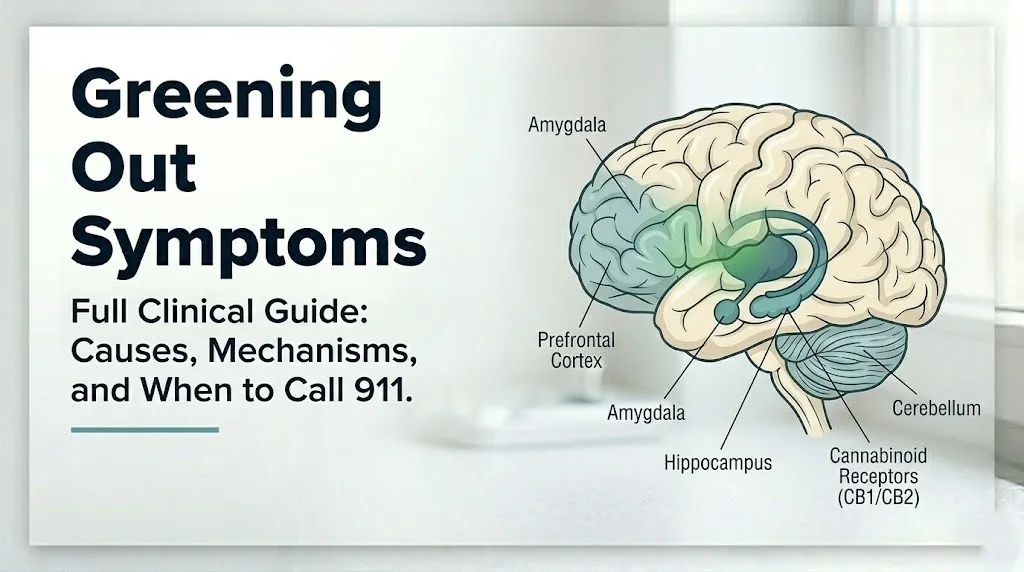
The area postrema sits outside the blood-brain barrier, which means it is directly exposed to circulating blood concentrations of THC and 11-OH-THC without the barrier protection available to most brain regions. At low to moderate doses, CB1 receptor activation in this region can actually suppress nausea (which is the basis for using cannabis-derived medications in chemotherapy-induced nausea). At high doses, however, CB1 receptor saturation in the area postrema disrupts normal gastrointestinal regulatory signaling and triggers the emetic reflex rather than suppressing it.
The nausea of greening out typically begins 15 to 60 minutes after peak blood THC levels are reached. It is often preceded by pallor, sweating, and a cold, clammy sensation as the autonomic nervous system begins to shift into a vasovagal state. Vomiting, when it occurs, typically follows the same course as nausea and generally provides temporary subjective relief.
A clinically distinct and more serious condition called cannabinoid hyperemesis syndrome (CHS) can develop in chronic, heavy cannabis users and produces recurrent, cyclical episodes of severe vomiting that do not respond to standard antiemetics but are temporarily relieved by hot bathing or showering. CHS is not the same as greening out and requires evaluation by a primary care physician or emergency medicine physician, as it typically requires intravenous fluid replacement and specific antiemetic treatment.
Older adults with pre-existing gastrointestinal conditions such as gastroparesis or esophageal dysmotility may experience more severe or prolonged vomiting episodes from cannabis overconsumption because their baseline gastrointestinal regulatory function is already impaired. These individuals should discuss cannabis use with their gastroenterologist before using cannabis-containing products.
Dizziness and Spatial Disorientation in Greening Out
Dizziness in greening out is produced by CB1 receptor-mediated disruption of balance and spatial orientation processing in the cerebellar vermis and vestibular nuclei (located in the pons and medulla), which normally integrate proprioceptive, visual, and vestibular inputs to maintain spatial awareness and postural stability.
The cerebellum is one of the regions with the highest CB1 receptor density in the brain. Its primary function is coordinating motor activity and integrating sensory information about body position and movement. When CB1 receptors in the cerebellar vermis and vestibular nuclei are flooded with THC, the precise timing and integration of proprioceptive signals is disrupted. The result is a sense that the room is spinning, that the ground is moving, or that maintaining a stable body position requires unusual effort.
CB1 receptor activation in the cerebellum also disrupts the calibration of the vestibulo-ocular reflex, the mechanism that keeps visual images stable when the head moves. This explains why greening out dizziness is often worsened by head movements and by attempts to focus visually on specific objects.
The practical distinction between greening out dizziness and serious vestibular pathology is important. Greening out dizziness typically:
- Begins within 30 to 90 minutes of peak cannabis effect
- Improves when lying still in a reclined position
- Does not produce nystagmus (involuntary rhythmic eye movements) visible without special equipment
- Is associated with the other symptoms of cannabis overconsumption
Dizziness that persists beyond the expected cannabis effect window, that is accompanied by one-sided facial numbness, double vision, slurred speech, or severe unsteadiness, may indicate a neurological event rather than cannabis intoxication and requires emergency evaluation regardless of recent cannabis use.
Tachycardia and Cardiovascular Symptoms During Greening Out
Tachycardia during greening out occurs because THC produces a simultaneous increase in sympathetic nervous system activity (releasing norepinephrine and increasing heart rate) and peripheral vasodilation (through CB1-mediated relaxation of vascular smooth muscle), creating a compensatory cardiovascular response in which the heart rate accelerates to maintain adequate blood pressure.
The cardiovascular effects of cannabis are among the most clinically documented aspects of THC pharmacology. According to research published in JAMA Internal Medicine, cannabis use produces a dose-dependent increase in heart rate of approximately 20 to 50 beats per minute above baseline within 10 to 15 minutes of inhalation, lasting 60 to 90 minutes. With edibles, the heart rate elevation may be sustained for two to four hours due to the prolonged blood THC levels produced by 11-OH-THC.
The tachycardia of greening out is typically a sinus tachycardia (originating in the sinoatrial node, maintaining normal rhythm but at elevated rate) rather than a dangerous arrhythmia in healthy individuals. However, in people with pre-existing cardiovascular disease, this catecholamine-driven tachycardia can trigger clinically meaningful consequences.
People with known coronary artery disease face a specific elevated risk. The increased myocardial oxygen demand from tachycardia, combined with cannabis-induced sympathetic activation, can precipitate angina or myocardial ischemia. Research published in JAMA Internal Medicine found that cannabis use was associated with increased risk of cardiac events in individuals with pre-existing coronary disease. Any cannabis user with chest pain, pressure, or jaw pain alongside tachycardia requires immediate emergency room evaluation.
Additionally, cannabis is associated with rare cases of cannabis-induced vasospasm (coronary artery spasm), which can occur even in young, otherwise healthy individuals without traditional cardiovascular risk factors. This presentation typically includes severe chest pain, tachycardia, and diaphoresis during or shortly after cannabis use.
Key Takeaway: Tachycardia from greening out is usually sinus tachycardia that resolves as THC is metabolized. Chest pain or pressure occurring alongside the racing heart rate is not a greening out symptom to wait out. It requires 911 or emergency room evaluation the same moment it appears.
Anxiety, Paranoia, and Panic as Greening Out Symptoms
Anxiety and paranoia during greening out are produced by excessive CB1 receptor activation in the amygdala, the brain’s primary threat-detection and fear-processing center, combined with impaired inhibitory control from the prefrontal cortex, which under normal circumstances provides top-down modulation of amygdala fear responses via GABAergic inhibitory projections.
At low doses, THC can produce anxiolytic effects by enhancing GABAergic inhibition in certain neural circuits. At high doses, CB1 receptor overactivation disrupts the normal balance of excitatory and inhibitory signaling in the amygdala-prefrontal cortex circuit. The prefrontal cortex’s ability to contextualize threats and inhibit excessive fear responses is compromised, while the amygdala receives an exaggerated threat signal without adequate inhibitory modulation. The subjective experience is intense, disproportionate fear that feels fully real to the person experiencing it.
Paranoia in greening out typically presents as a conviction that others present are hostile, judgmental, or threatening, or as a belief that something is seriously medically wrong even when objectively it is not. This paranoid ideation is driven by the same amygdala hyperactivation and is worsened by social environments, unfamiliar settings, and any concurrent sympathetic arousal (racing heart, sweating) that the brain interprets as further evidence of threat.
A research review published in the Journal of Psychopharmacology confirmed that high THC exposure reliably produces transient paranoia in a dose-dependent manner in both cannabis-experienced and cannabis-naive individuals, with cannabis-naive individuals showing more pronounced responses.
For people with pre-existing anxiety disorders, the anxiety produced by greening out can reach panic attack intensity. The physiological overlap between a panic attack and greening out is real: tachycardia, hyperventilation, sweating, a sense of derealization, and a conviction that something catastrophic is happening are features of both. A primary care physician or psychiatrist should be consulted by anyone whose greening out anxiety becomes indistinguishable from or triggers a clinical panic disorder pattern.
Pallor, Sweating, and Vasovagal Response in Greening Out
Pallor and diaphoresis (profuse sweating) during greening out reflect a vasovagal response in which the autonomic nervous system shifts from sympathetic dominance toward paradoxical parasympathetic activation, causing peripheral blood vessels to dilate suddenly, blood pressure to drop, and the body to shunt blood away from the skin (producing pallor) while simultaneously activating the eccrine sweat glands (producing cold, clammy sweating).
The vasovagal mechanism in greening out develops when the initial sympathetic activation from THC (producing tachycardia and anxiety) reaches a threshold that triggers a compensatory parasympathetic response through the vagus nerve (cranial nerve X). This is the same mechanism that causes people to faint from pain, needle phobia, or extreme stress: a sudden surge of vagal activity dramatically reduces heart rate and blood pressure. Blood pools in the peripheral vessels rather than returning to the heart, cerebral perfusion falls, and if the person is standing, syncope (fainting) may follow.
The pallor of a vasovagal response is distinctive and clinically recognizable: the person’s face becomes strikingly pale or gray, their lips may take on a bluish tinge, and they typically feel cold and look clammy despite potentially sweating. Someone observing a person greening out who notices this sudden pallor change should take immediate action to prevent a fall.
Quick Tip:
- Have the greening out person lie down flat immediately if pallor and sweating appear, because the supine position restores cerebral blood flow and prevents syncope
- Do not leave a pale, sweating person alone while they are in this state, as syncopal loss of consciousness can occur within minutes without warning
- Elevating the legs slightly above the level of the heart (modified Trendelenburg position) further assists venous return to the heart and reduces the risk of fainting
- People who are pregnant should not lie flat on their back; a left lateral decubitus position is safer to avoid uterine compression of the inferior vena cava
Dissociation and Altered Consciousness in Greening Out
Dissociation during greening out, including depersonalization (feeling detached from one’s own body or thoughts, as if watching oneself from outside) and derealization (feeling that the surrounding environment is unreal, dreamlike, or distorted), is produced by CB1 receptor-mediated disruption of the default mode network and the hippocampus-prefrontal cortex integration systems that normally maintain a coherent sense of self and environmental reality.
The hippocampus has a particularly high concentration of CB1 receptors. Its functions include spatial memory, episodic memory formation, and integration of sensory experiences into a coherent narrative of ongoing reality. When THC floods hippocampal CB1 receptors, this integration process is disrupted. Memory encoding fails in real time: the person may forget what they were just thinking or saying, lose track of time, or be unable to maintain a continuous thread of thought. Combined with prefrontal cortex disruption, this produces the floating, unanchored quality of severe cannabis intoxication.
The clinical problem with dissociation during greening out is that it amplifies all other symptoms. A person experiencing derealization who notices their heart racing may become convinced the racing heart is a heart attack, because they cannot apply the contextual judgment needed to evaluate it proportionately. A person experiencing depersonalization may become terrified by the experience of their own body feeling foreign.
Dissociation from greening out typically resolves as blood THC levels fall. However, dissociative experiences that persist beyond 12 hours, that are accompanied by ongoing psychotic features (hallucinations, disorganized speech), or that produce ongoing significant distress may indicate cannabis-induced psychosis rather than simple greening out, and warrant evaluation by an emergency medicine physician or psychiatrist.
People with pre-existing depersonalization disorder, dissociative disorder, or a history of trauma-related dissociation may experience more severe and prolonged dissociative episodes from cannabis overconsumption than the general population, because their baseline dissociative threshold is already lower.
Key Takeaway: Depersonalization and derealization during greening out are CB1-mediated disruptions of hippocampal reality integration and are expected to resolve as THC is metabolized. Dissociation persisting beyond 12 hours or accompanied by hallucinations or disorganized speech is not self-resolving greening out and requires psychiatric evaluation.
Greening Out Versus Cannabis-Induced Psychosis: Distinguishing the Two
Cannabis-induced psychosis is a distinct clinical condition in which high-dose THC exposure triggers psychotic symptoms (hallucinations, delusions, disorganized thinking) that represent a qualitative departure from the normal subjective effects of cannabis rather than simply an intensification of them, and which may persist beyond the expected window of cannabis intoxication.
Greening out and cannabis-induced psychosis share overlapping features including anxiety, paranoia, and perceptual disturbances. Distinguishing the two is clinically important because cannabis-induced psychosis requires psychiatric evaluation and may indicate an underlying vulnerability to schizophrenia spectrum disorder that cannabis use can precipitate in predisposed individuals.
| Feature | Greening Out | Cannabis-Induced Psychosis |
|---|---|---|
| Paranoia type | Fear-based, responsive to reassurance | Fixed delusions, not responsive to reassurance |
| Perceptual disturbances | Derealization, mild sensory distortion | True hallucinations (hearing or seeing things not present) |
| Speech and thought | Slowed or racing, but coherent | Disorganized, tangential, incoherent |
| Response to reassurance | Improves with calm environment | Does not improve with reassurance |
| Duration | Resolves with intoxication (hours) | May persist days to weeks after cannabis clears |
| Orientation | Person knows they used cannabis | May have impaired insight into cause |
Research published in The Lancet and JAMA Psychiatry has established that daily use of high-potency cannabis (THC greater than 10%) is associated with a substantially elevated risk of psychotic disorders in genetically predisposed individuals, with the risk particularly concentrated in people with a first-degree relative with schizophrenia spectrum disorder and in adolescents.
Any person experiencing true auditory or visual hallucinations, paranoid delusions that do not respond to reassurance, or disorganized speech after cannabis use requires evaluation by an emergency medicine physician, regardless of whether the symptoms seem to be improving.
How Long Greening Out Lasts and What Affects Recovery Time
Greening out from inhaled cannabis typically resolves within one to four hours in most healthy adults, while greening out from edibles or cannabis concentrates may last four to twelve hours, reflecting the longer plasma half-life of 11-OH-THC and the higher total THC burden consumed in these product categories.
Recovery time from greening out is determined primarily by four factors: the total amount of THC consumed (dose), the route of administration (inhaled vs. oral vs. concentrate), the individual’s personal tolerance and history of cannabis use, and their liver’s metabolic efficiency (CYP2C9 activity). There is no pharmacological intervention available outside of a hospital setting that accelerates THC clearance. Recovery is a time-dependent process.
Factors that affect how long greening out symptoms persist:
- Dose consumed: Higher doses produce longer-lasting symptoms as more CB1 receptors are occupied for a longer duration
- Route of administration: Edibles and concentrates produce the longest recovery times; inhaled cannabis produces the shortest
- Cannabis tolerance: Regular cannabis users with established CB1 receptor downregulation typically recover faster than cannabis-naive individuals or irregular users
- Individual metabolism: CYP2C9 poor metabolizers clear 11-OH-THC more slowly
- Concurrent substances: Alcohol potentiates THC effects by increasing intestinal permeability and THC absorption; benzodiazepines, opioids, and other CNS depressants extend the sedation component; stimulants like caffeine do not counteract THC
People who are pregnant metabolize THC more slowly because pregnancy alters hepatic enzyme activity and increases plasma volume, diluting but also prolonging the presence of THC and its metabolites. A pregnant person experiencing greening out should seek obstetric evaluation, as THC and its metabolites cross the placenta.
Greening Out in Specific Populations: Adolescents, Pregnancy, and Pre-Existing Conditions
Adolescents are disproportionately vulnerable to severe greening out and to its most serious potential consequence, cannabis-induced psychosis, because the prefrontal cortex continues active myelination through the mid-20s, and CB1 receptor density in the developing brain is higher during this period than in adult brains, meaning THC’s disruptive effects on prefrontal-amygdala regulatory circuits are exaggerated.
According to the American Academy of Pediatrics (AAP), cannabis use during adolescence is associated with impaired working memory, reduced academic performance, and elevated risk of developing cannabis use disorder compared to adults who begin using cannabis after age 25. In adolescents who have a family history of psychotic disorder, even a single episode of high-dose cannabis exposure may be sufficient to trigger a first psychotic episode in a predisposed individual.
Pregnant women face a different risk profile. THC and its metabolites cross the placenta and are detectable in breast milk. The American College of Obstetricians and Gynecologists (ACOG) advises against any cannabis use during pregnancy. If a pregnant person experiences greening out, they should contact their obstetrician-gynecologist for evaluation, as the fetal exposure and any hemodynamic effects (maternal tachycardia, vasodilation) warrant monitoring.
People with pre-existing cardiovascular disease should be aware that the combination of CB1-mediated vasodilation, compensatory tachycardia, and sympathetic activation during greening out creates a specific hemodynamic stress pattern that can trigger angina or arrhythmia. Anyone in this population who experiences chest pain, pressure, or irregular heartbeat alongside cannabis-related symptoms should call 911 without delay.
People taking CYP3A4 or CYP2C9 inhibitor medications (including certain antifungals, antibiotics, and cardiac medications) may experience dramatically elevated and prolonged cannabis effects from edibles because these drugs reduce the hepatic metabolism of THC and 11-OH-THC, allowing much higher plasma levels to accumulate.
Marijuana Withdrawal Symptoms: What They Are and How They Differ From Greening Out
Marijuana withdrawal symptoms are a distinct clinical syndrome that develops when a person who has been using cannabis regularly and heavily reduces or stops use abruptly, producing symptoms driven by the neurological rebound from chronic CB1 receptor downregulation, and these symptoms are fundamentally different from the acute overconsumption effects of greening out.
The American Psychiatric Association (APA) formally recognizes cannabis withdrawal syndrome in the DSM-5, with specific diagnostic criteria requiring at least three of the following symptoms developing within one week of cessation in a heavy cannabis user: irritability or anger or aggression; anxiety or nervousness; sleep difficulty including insomnia and disturbing dreams; decreased appetite or weight loss; restlessness; depressed mood; at least one physical symptom causing discomfort (abdominal pain, shakiness, sweating, fever, chills, or headache).
The neurobiological basis of cannabis withdrawal is the rebound hyperactivity of neural circuits that were chronically suppressed by CB1 receptor activation. During regular cannabis use, the brain downregulates CB1 receptor density and sensitivity as a compensatory response to chronic agonist exposure. When cannabis is stopped, these downregulated receptors are no longer receiving their CB1 input, and the circuits they regulated rebound into a hyperactive state. The locus coeruleus (the brain’s primary noradrenergic nucleus) becomes particularly hyperactive, producing the anxiety, irritability, and autonomic symptoms of withdrawal.
| Feature | Greening Out | Marijuana Withdrawal |
|---|---|---|
| Cause | Too much cannabis taken | Regular cannabis use stopped |
| Timing | During or shortly after cannabis use | 1 to 3 days after last use |
| Nausea | Yes, during intoxication | Mild, as a withdrawal symptom |
| Anxiety | Acute, intense, resolves with intoxication | Chronic, building over days |
| Sleep | Sedation or impairment | Insomnia, vivid disturbing dreams |
| Heart rate | Elevated (tachycardia) | Normal to mildly elevated |
| Resolution | Hours | Days to weeks |
Key Takeaway: Greening out is caused by too much cannabis and happens during intoxication. Marijuana withdrawal is caused by stopping regular cannabis use and begins one to three days after cessation. They have overlapping anxiety symptoms but opposite causes, opposite timing, and require completely different management.
Cannabis Withdrawal Timeline and Symptom Progression
The cannabis withdrawal timeline follows a predictable progression in daily or near-daily users who stop abruptly, with symptoms appearing within 24 to 72 hours of the last use, reaching peak intensity at days 2 to 4, and gradually resolving over one to four weeks for most symptoms, though sleep disturbances and vivid dreams may persist for several weeks beyond that.
According to research published in Drug and Alcohol Dependence, cannabis withdrawal symptoms are present in approximately 50 to 95% of regular, heavy cannabis users who attempt abstinence, making it one of the more clinically common withdrawal syndromes despite being less recognized than alcohol or opioid withdrawal. Unlike alcohol or benzodiazepine withdrawal, cannabis withdrawal is not life-threatening and does not require medical detoxification for safety in most people.
The typical timeline for cannabis withdrawal symptoms:
| Phase | Timing | Dominant Symptoms |
|---|---|---|
| Onset | Hours 12 to 24 after last use | Irritability, restlessness, mild anxiety |
| Acute peak | Days 2 to 4 | Peak anxiety, irritability, insomnia, decreased appetite, sweating |
| Subacute | Days 5 to 14 | Gradual mood improvement; sleep remains disturbed; appetite begins returning |
| Resolution | Weeks 2 to 4 | Most symptoms resolved; vivid dreams may persist |
| Prolonged (subset) | Weeks 4 to 8+ | Persistent anxiety, depression, or cravings in heavy users or people with cannabis use disorder |
People who have been using cannabis to self-medicate pre-existing anxiety or sleep disorders face particular difficulty during withdrawal, because the symptoms of withdrawal (anxiety, insomnia) overlap with the original symptoms they were using cannabis to manage, making it difficult to distinguish withdrawal from a return of the underlying condition.
Any person experiencing severe depression, inability to sleep for more than two consecutive nights, or thoughts of self-harm during cannabis withdrawal should contact a psychiatrist or call the 988 Suicide and Crisis Lifeline by calling or texting 988, as severe cannabis withdrawal can precipitate depressive episodes in people with vulnerability to mood disorders.
First Aid and Supportive Care During Greening Out
First aid for greening out centers on creating conditions that allow the body’s natural metabolism to process the excess THC as safely and comfortably as possible, because there is no pharmacological antidote to THC intoxication available outside of a hospital setting.
To provide supportive care during greening out:
- Move the person to a calm, quiet, dimly lit space away from crowds, loud music, and visually overwhelming environments, as sensory stimulation amplifies anxiety and nausea from CB1 overactivation
- Have the person sit or lie down, placing them in the recovery position (on their side) if they are vomiting or in danger of losing consciousness, to prevent aspiration
- Offer cool water to sip slowly; do not force drinking, as gulping fluids can worsen nausea; avoid alcohol, caffeine, and carbonated beverages
- Use calm, reassuring speech: remind the person that what they are experiencing is a physiological response to cannabis, that it will pass as THC is metabolized, and that they are physically safe
- Do not leave them alone if they are pale, sweating, dissociating, or expressing extreme fear; a calm, present support person is the most effective intervention for cannabis anxiety
- If they are willing, a light non-spicy snack may help settle gastrointestinal symptoms (crackers or toast), but do not pressure eating
- Monitor for escalating symptoms: if tachycardia becomes severe (heart racing to the point of chest pain or pressure), if they become unresponsive, if hallucinations or disorganized speech appear, or if syncope occurs, call 911 immediately
The phrase “calm the mind, support the body” summarizes the physiological rationale: the anxiety of greening out is CB1-mediated amygdala overactivation, and an external environment that reduces sensory threat input directly reduces the cognitive amplification of symptoms.
Emergency Symptoms: When Greening Out Requires Calling 911
Certain presentations during a cannabis overconsumption episode require immediate emergency evaluation. Do not wait to see if these resolve on their own.
Call 911 or go to the nearest emergency room immediately if the person experiences:
- Chest pain, chest pressure, or jaw pain alongside tachycardia (possible cannabis-induced coronary vasospasm or myocardial ischemia, particularly in people with pre-existing cardiovascular disease)
- Loss of consciousness (syncope) that does not self-resolve within 60 seconds or that recurs
- Seizure activity (convulsions, repetitive limb movements, loss of bladder control with collapse)
- True hallucinations (hearing voices or seeing things that others present do not see or hear), disorganized speech, or severe paranoid delusions that do not respond to calm reassurance (possible cannabis-induced psychosis requiring psychiatric evaluation)
- Inability to be roused or significant reduction in consciousness that is not simple drowsiness
- Respiratory distress: labored breathing, blue tinge to the lips or fingertips, choking
- Any symptoms in a child who has ingested cannabis edibles: Call Poison Control at 1-800-222-1222 immediately and follow their guidance; pediatric cannabis edible ingestion can produce respiratory depression in young children
These presentations can indicate cannabis-induced cardiac emergency, cannabis-induced psychosis, severe vasovagal collapse, or acute respiratory compromise, all of which require emergency medical assessment in a hospital setting, not watchful waiting.
If you or someone you know is experiencing thoughts of self-harm during or after a cannabis episode, contact the 988 Suicide and Crisis Lifeline by calling or texting 988 immediately.
Frequently Asked Questions About Greening Out Symptoms
What does greening out feel like?
Greening out typically feels like a combination of intense nausea, a racing heart rate, cold sweating, dizziness, and overwhelming anxiety or paranoia that develops rapidly after consuming more cannabis than the individual’s body can comfortably process.
The experience often includes a sense of physical unease, pale or clammy skin, and a feeling of wanting to lie down and remain still, combined with cognitive disruption including difficulty tracking thoughts or feeling detached from reality.
Most symptoms begin to improve within 30 to 90 minutes for inhaled cannabis, but edible-related greening out can maintain peak intensity for one to three hours and may last up to eight hours or more in severe cases.
How long does greening out last?
Greening out from inhaled cannabis typically resolves within one to four hours in healthy adults with average cannabis tolerance.
From edibles or concentrates, greening out can last four to twelve hours because 11-hydroxy-THC produced during hepatic first-pass metabolism is more potent, has greater blood-brain barrier penetrance, and has a longer plasma half-life than inhaled THC.
No pharmacological intervention available at home shortens the duration; supportive care in a calm environment is the only appropriate approach while waiting for THC to metabolize.
Can you pass out from greening out?
Yes, greening out can cause syncope (fainting) through a vasovagal mechanism in which the initial sympathetic activation from THC is followed by a compensatory parasympathetic surge via the vagus nerve, producing a sudden drop in blood pressure and cerebral perfusion.
Pallor and cold sweating appearing during greening out are early warning signs of imminent vasovagal syncope, and the person should be moved to a lying-down position immediately to prevent a fall and restore cerebral blood flow.
Any loss of consciousness that does not self-resolve within 60 seconds or that recurs requires a 911 call, as persistent unresponsiveness can indicate a more serious cardiovascular or neurological event.
Why do edibles cause worse greening out than smoking?
Edibles cause more severe greening out because oral THC undergoes hepatic first-pass metabolism by the enzyme CYP2C9, converting a significant portion to 11-hydroxy-THC, a metabolite that is approximately three to seven times more potent as a CB1 agonist than THC itself and crosses the blood-brain barrier more efficiently.
The delayed onset of edibles (30 minutes to two hours) also causes many people to consume additional doses before feeling the first dose, resulting in a dramatic combined peak when both doses’ effects arrive simultaneously.
The total duration of edible intoxication is also two to three times longer than inhaled cannabis, meaning greening out from edibles can last four to twelve hours rather than one to four hours.
Is greening out the same as cannabis-induced psychosis?
Greening out and cannabis-induced psychosis are distinct clinical entities: greening out is an acute overconsumption syndrome that produces intensified cannabis effects including anxiety and paranoia that resolve with intoxication, while cannabis-induced psychosis produces true hallucinations, fixed delusions, and disorganized thinking that persist beyond the intoxication window.
The key distinguishing feature is responsiveness: greening out anxiety and paranoia typically respond to calm reassurance and a quiet environment, while cannabis-induced psychosis paranoia and hallucinations do not respond to reassurance.
Research published in The Lancet has established that cannabis-induced psychosis is associated with family history of schizophrenia spectrum disorder and regular use of high-potency cannabis products, and any psychotic features that persist after cannabis has metabolized require emergency psychiatric evaluation.
What should you do when someone is greening out?
When someone is greening out, move them to a calm, quiet, dimly lit space, have them sit or lie down, and offer small sips of cool water while staying with them and providing steady, calm reassurance that the experience is temporary and will resolve.
Do not leave them alone if they are pale, sweating heavily, or expressing extreme distress, and monitor continuously for escalating symptoms including chest pain, loss of consciousness, seizures, or the appearance of hallucinations or disorganized speech.
Call 911 immediately if any of those escalating symptoms appear, if they lose consciousness and do not quickly recover, or if a child has ingested cannabis edibles, calling Poison Control at 1-800-222-1222 for pediatric ingestion.
Closing
The most practically useful takeaway is the distinction between greening out and its two clinical mimics: cannabis-induced psychosis (distinguished by hallucinations and delusions that persist beyond intoxication) and marijuana withdrawal (distinguished by occurring after stopping use rather than after consuming). Getting this distinction right determines whether supportive home care is appropriate or whether emergency or psychiatric evaluation is needed.
For any current cannabis user experiencing uncomfortable reactions: your most effective prevention tool is starting with a dramatically lower dose than you think you need, waiting the full two-hour window before any additional dose with edibles, and avoiding high-THC concentrates entirely if you have any history of anxiety or family history of psychotic disorder.
If you’re supporting someone through a greening out episode right now, lie them down, stay calm, stay present, and call 911 for chest pain, hallucinations, or any loss of consciousness that doesn’t quickly reverse