What Causes Frequent Urination in Men and Why It Happens
Frequent urination in men is most often caused by benign prostatic hyperplasia, overactive bladder syndrome, diabetes mellitus, or a urinary tract infection, but the actual physiological reason differs completely depending on which cause is at play. Understanding which mechanism is driving the symptom matters because the causes range from easily managed lifestyle factors to conditions that require urgent medical evaluation.
According to the National Institute of Diabetes and Digestive and Kidney Diseases (NIDDK), approximately 37 million adults in the United States have diabetes, and frequent urination is one of its earliest and most consistent symptoms. Separately, the American Urological Association (AUA) estimates that benign prostatic hyperplasia affects more than 50% of men by age 60 and up to 90% of men by age 85, making prostate-related urinary frequency the single most prevalent structural cause in middle-aged and older men.
This article examines 15 specific, physiologically grounded causes of frequent urination in men. It covers the mechanism behind each cause, who is most at risk, how common versus rare each cause is, and what the clinical thresholds are for seeking professional evaluation.
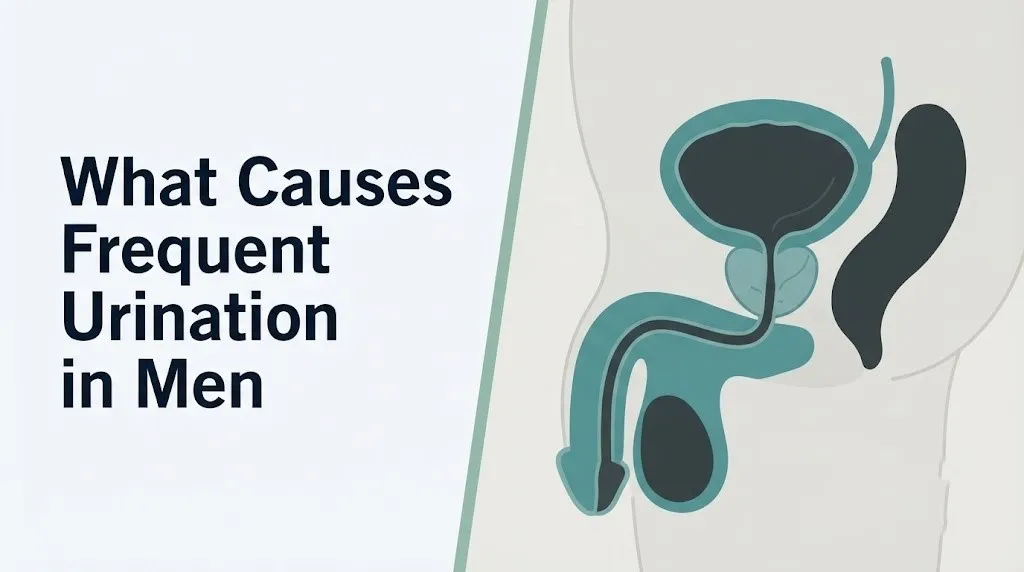
What Causes Frequent Urination in Men
Frequent urination in men occurs when any of several distinct physiological disruptions interfere with the normal bladder filling and emptying cycle, producing urination more than eight times in a 24-hour period or waking a man from sleep to urinate more than once per night.
The urinary bladder’s normal function depends on a precisely coordinated balance between two branches of the autonomic nervous system. During filling, the sympathetic nervous system (via the hypogastric nerve, originating from thoracic and lumbar spinal cord segments T10 through L2) relaxes the detrusor muscle in the bladder wall and contracts the internal urethral sphincter, allowing urine to accumulate without leakage. When the bladder reaches approximately 300 to 400 milliliters, stretch receptors in the detrusor wall signal the sacral spinal cord, triggering the parasympathetic micturition reflex via the pelvic nerve (sacral segments S2 through S4). This causes the detrusor to contract and both urethral sphincters to relax.
Frequent urination occurs when this system is disrupted in one of four primary ways:
- Outflow obstruction (enlarged prostate compresses the prostatic urethra, increasing post-void residual urine and triggering more frequent fill-void cycles)
- Detrusor overactivity (the bladder muscle contracts prematurely, before it has reached normal capacity, producing urgency and frequency)
- High urine volume (osmotic diuresis from diabetes or excess fluid intake floods the bladder faster than normal)
- Neurological dysregulation (damaged nerve pathways from Parkinson’s disease, multiple sclerosis, or diabetic autonomic neuropathy alter the sensory threshold for the micturition reflex)
Men over 50 face a distinctly different risk profile than younger men. Younger men are more likely to present with UTI-related or anxiety-related frequency, while men over 50 carry significantly elevated risk from BPH, type 2 diabetes, and neurological comorbidities.
How Many Times Should a Man Urinate Per Day
A healthy adult man should urinate between six and eight times per 24 hours, with no more than one episode of nighttime urination, under conditions of normal fluid intake (approximately 2 to 2.5 liters per day).
This range is not arbitrary. The average adult bladder holds 400 to 600 milliliters at functional capacity. The kidneys produce approximately 1 to 1.5 liters of urine per day under normal conditions. Dividing normal daily urine production by bladder capacity yields roughly six to eight voiding episodes. Urinating more than eight times in 24 hours is the clinical definition of urinary frequency used by the AUA and the European Association of Urology (EAU) in their published lower urinary tract symptom guidelines.
Context matters significantly here. A man who drinks four cups of coffee and two liters of water per day may legitimately urinate 10 to 12 times without any underlying disease. The clinical concern arises when the frequency is new, unexplained by fluid intake, accompanied by urgency, pain, incomplete emptying, or blood, or consistently wakes a man more than once per night.
| Voiding Pattern | Times Per Day | Clinical Interpretation |
|---|---|---|
| Normal | 6 to 8 | No cause for concern in absence of other symptoms |
| Mild frequency | 8 to 10 | Worth monitoring; dietary and fluid review first |
| Moderate frequency | 10 to 14 | Warrants evaluation by a primary care physician |
| Severe frequency | More than 14 | Prompt evaluation needed; consider OAB, diabetes, obstruction |
| Nocturia | 2 or more episodes per night | Warrants evaluation regardless of daytime frequency |
Men who take diuretic medications for high blood pressure or heart failure will predictably urinate more frequently, particularly in the hours after taking their dose. This is an expected pharmacological effect rather than a sign of a new urological problem, though it should still be discussed with the prescribing physician if it becomes disruptive.
Benign Prostatic Hyperplasia and Frequent Urination
Benign prostatic hyperplasia (BPH) is the most common structural cause of frequent urination in men, driven by the hormone dihydrotestosterone (DHT), which accumulates in prostate tissue as men age and drives progressive glandular and stromal proliferation in the transitional zone of the prostate.
Here is the mechanism that no competitor article explains. Testosterone circulating in the blood enters prostate stromal cells, where the enzyme 5-alpha reductase converts it to DHT. DHT binds to androgen receptors in prostate fibromuscular stromal cells and glandular epithelium, triggering cell proliferation. Over years and decades, this produces a gradual expansion of the transitional zone, the region of the prostate that directly surrounds the prostatic urethra. As the transitional zone enlarges, it compresses the prostatic urethra from the inside, narrowing the lumen through which urine must pass during voiding.
Think of the prostatic urethra like a garden hose with a hand squeezing it from the outside. The water pressure upstream builds, flow becomes turbulent and slow, and the person downstream (the bladder) compensates by working harder. The detrusor muscle hypertrophies initially to overcome the resistance. But over time, this compensation leads to detrusor overactivity: the bladder wall becomes hypersensitive, contracting prematurely at lower fill volumes than normal, producing the urgency and frequency that men with BPH experience.
A 2022 systematic review published in European Urology confirmed that bladder outlet obstruction from BPH produces secondary detrusor overactivity in approximately 60% of affected men, meaning many men with prostate-related frequency are experiencing two simultaneous mechanisms rather than one.
- Symptoms of BPH-related urinary frequency include:
- Needing to urinate more than eight times per day
- Urgency that is difficult to defer
- Weak or interrupted urine stream (hesitancy)
- Sense of incomplete bladder emptying after voiding
- Nocturia (waking more than once per night to urinate)
- Post-void dribbling
Men with a family history of BPH, obesity, type 2 diabetes, or cardiovascular disease have elevated risk of symptomatic BPH at younger ages, according to AUA clinical guidelines.
Overactive Bladder in Men
Overactive bladder (OAB) in men is characterized by involuntary contractions of the detrusor muscle that occur before the bladder reaches normal capacity, producing urgency, frequency, and sometimes urgency incontinence even when the bladder contains only 150 to 200 milliliters of urine.
The National Institutes of Health (NIH) estimates that OAB affects approximately 16% of adult men in the United States, making it one of the most prevalent urological conditions. OAB in men is frequently secondary to bladder outlet obstruction from BPH, but it can also occur independently through idiopathic neurogenic mechanisms.
The cellular mechanism behind idiopathic OAB involves spontaneous spreading of electrical activity between detrusor smooth muscle cells via gap junctions. Normally, these cells are electrically isolated and contract only when the micturition reflex is triggered. In OAB, altered gap junction connectivity allows a local spontaneous contraction to propagate across the entire detrusor wall, producing the sensation of sudden, powerful urgency.
OAB is clinically distinct from BPH even though both produce urinary frequency. BPH produces obstructive symptoms (slow stream, hesitancy, straining, incomplete emptying) in addition to urgency and frequency. Pure OAB typically presents with urgency and frequency without obstructive symptoms. Many men have both conditions simultaneously.
| Feature | BPH-Related Frequency | Pure OAB |
|---|---|---|
| Urine stream | Weak, slow, intermittent | Normal strength |
| Sensation before voiding | Urgency or gradual pressure | Sudden, powerful urgency |
| Post-void sense | Incomplete emptying | Usually complete emptying |
| Nocturia | Common | Common |
| Age group | Predominantly over 50 | Any age, more common over 40 |
| Diagnostic key | Post-void residual elevated on ultrasound | Urodynamics showing detrusor overactivity |
Men with neurological conditions including Parkinson’s disease, multiple sclerosis, or spinal cord injuries have significantly higher rates of OAB due to loss of supraspinal inhibition of the micturition reflex. For these men, OAB is a neurogenic condition requiring a neurourologist in addition to a urologist.
Key Takeaway: The most common causes of frequent urination in men are benign prostatic hyperplasia (driving mechanical obstruction and secondary detrusor overactivity) and overactive bladder syndrome (driving premature detrusor contractions), and many men experience both simultaneously through different but interacting mechanisms.
Urinary Tract Infection Symptoms in Men
Urinary tract infections (UTIs) cause frequent urination in men by triggering inflammatory activation of the urothelium (the specialized epithelial lining of the bladder and urethra), which lowers the sensory threshold for urgency signaling and produces painful, frequent voiding of small urine volumes.
Male UTIs are far less common than female UTIs because the male urethra is approximately 18 to 20 centimeters long (compared to 3 to 4 centimeters in women), creating a significant physical barrier to ascending bacterial colonization. The Centers for Disease Control and Prevention (CDC) notes that UTIs account for approximately 8 million physician visits annually in the United States, the vast majority in women. In men, UTI should always prompt investigation for an underlying structural or functional predisposing factor such as BPH causing urinary retention, urethral stricture, or an immunocompromising condition such as diabetes.
When bacteria (most commonly Escherichia coli, which accounts for approximately 75 to 85% of uncomplicated UTIs regardless of sex, according to data published in Clinical Infectious Diseases) colonize the bladder wall, they activate toll-like receptors on urothelial cells. This triggers release of pro-inflammatory cytokines including interleukin-6 (IL-6) and interleukin-8 (IL-8) and activates mast cells in the subepithelial layer. The resulting inflammatory response produces mucosal edema, reduces the sensory threshold of stretch receptors in the bladder wall, and causes the urgent, burning, high-frequency voiding pattern characteristic of a bladder infection.
Key symptoms distinguishing a UTI-related urinary frequency from prostate-related or OAB-related frequency:
- Dysuria: burning pain during urination (absent in BPH, usually absent in pure OAB)
- Hematuria: blood in the urine (possible in UTI; also possible in bladder cancer or kidney stones)
- Fever, chills, or flank pain: suggests upper urinary tract involvement (pyelonephritis, a kidney infection requiring urgent antibiotic treatment)
- Cloudy or foul-smelling urine: consistent with bacterial infection
- Recent urological instrumentation or catheterization: major risk factor for hospital-acquired UTI in men
Men with diabetes have impaired neutrophil function due to chronic hyperglycemia, making them significantly more susceptible to severe or recurrent UTIs and to progression to pyelonephritis or urosepsis. A primary care physician should evaluate any man with a suspected UTI, particularly if fever is present, as male UTIs are considered complicated infections requiring culture-guided antibiotic selection.
Diabetes and Frequent Urination in Men
Diabetes mellitus causes frequent urination in men through osmotic diuresis: when blood glucose exceeds the renal tubular reabsorption threshold (approximately 180 mg/dL), glucose spills into the urine and draws water with it osmotically, dramatically increasing urine volume and forcing the bladder to fill and empty much more often than normal.
The renal tubular maximum for glucose reabsorption in the proximal convoluted tubule of the nephron is approximately 375 milligrams per minute. When serum glucose rises above this threshold (the renal glucose threshold), glucose appears in the urine (glucosuria). Glucose in the tubular lumen is osmotically active: it retains water that would otherwise be reabsorbed, producing a urine volume that can be two to three times the normal daily output. A man producing 3 to 4 liters of urine per day instead of 1 to 1.5 liters will urinate proportionally more often.
The NIDDK identifies frequent urination (polyuria), excessive thirst (polydipsia), and unexplained weight loss as the three cardinal symptoms of uncontrolled diabetes. In type 2 diabetes, these symptoms often develop gradually over months, which means many men dismiss them as aging or prostate-related before a diagnosis is made.
Type 1 diabetes typically produces a more acute, rapid-onset presentation of polyuria compared to type 2 diabetes. In young men under 30 presenting with sudden onset of marked urinary frequency combined with thirst, weight loss, and fatigue, type 1 diabetes is a medical emergency requiring immediate evaluation; diabetic ketoacidosis can develop rapidly.
Diabetes insipidus, a separate and less common condition involving either ADH deficiency (central diabetes insipidus) or ADH resistance in the collecting duct (nephrogenic diabetes insipidus), produces extreme polyuria (up to 10 to 20 liters per day) without glucose in the urine. It is diagnosed by a water deprivation test and managed by an endocrinologist. Men taking lithium for bipolar disorder are at elevated risk of lithium-induced nephrogenic diabetes insipidus, one of lithium’s recognized renal side effects.
Nocturia: Causes of Frequent Urination at Night in Men
Nocturia, defined as waking from sleep to urinate two or more times per night, is one of the most disruptive forms of urinary frequency in men and has multiple distinct causes that require different approaches depending on the underlying mechanism.
Waking once per night to urinate is considered within normal limits for adult men, particularly those over 50. Waking twice or more per night consistently signals a physiological problem. The Journal of the American Geriatrics Society has published research showing that nocturia waking men two or more times per night is associated with significantly increased risk of falls, sleep fragmentation, and reduced quality of life, particularly in men over 65.
The three primary mechanisms of nocturia in men are:
- Nocturnal polyuria: The kidneys produce an abnormally large proportion of the daily urine output during nighttime hours. Normally, the posterior pituitary increases release of antidiuretic hormone (ADH, also called arginine vasopressin) during sleep, concentrating urine and reducing overnight urine production. In older men, ADH secretion rhythm deteriorates, so the kidneys continue producing dilute urine throughout the night. Heart failure and chronic venous insufficiency also cause nocturnal polyuria by mobilizing peripheral edema fluid (which has pooled in the legs during the day) when the man lies flat, sending a large fluid volume to the kidneys at night.
- Reduced bladder capacity: From BPH-related detrusor overactivity or OAB, the bladder reaches its effective voiding threshold at smaller volumes, so even normal overnight urine production triggers voiding.
- Sleep disorder interaction: Men with obstructive sleep apnea experience pressure changes in the chest during apnea episodes that stimulate release of atrial natriuretic peptide (ANP) from cardiac atrial cells. ANP signals the kidneys to excrete sodium and water, increasing overnight urine production. A 2019 study published in the Journal of Urology found that treating obstructive sleep apnea reduced nocturia episodes in affected men by an average of 50%, without any urological treatment.
Men experiencing nocturia should tell their primary care physician not just how many times per night they wake, but also whether their urine volume per episode seems large or small. Large-volume nocturia points toward nocturnal polyuria (cardiac, ADH-related, or sleep apnea-related). Small-volume nocturia with urgency points toward BPH or OAB.
Key Takeaway: Nocturia in men has three distinct physiological mechanisms (nocturnal polyuria from ADH rhythm disruption, reduced bladder capacity from BPH or OAB, and atrial natriuretic peptide release from sleep apnea), and distinguishing between them determines whether the solution involves urology, cardiology, or sleep medicine.
Neurogenic Bladder Causes in Men
Neurogenic bladder refers to urinary dysfunction caused by damage or disease affecting the neural pathways that govern bladder filling and voiding, and it is a clinically important cause of frequent urination in men that no competing article currently addresses with physiological specificity.
The micturition reflex arc depends on intact neural communication between the bladder, the sacral spinal cord (S2-S4), the pontine micturition center in the brainstem, and the frontal lobe’s cortical voiding center, which provides voluntary suppression of the micturition reflex. Damage at any of these levels produces a different pattern of bladder dysfunction:
| Level of Neurological Injury | Bladder Effect | Urinary Symptom Pattern |
|---|---|---|
| Frontal lobe (stroke, dementia) | Loss of cortical inhibition | Urgency, frequency, urgency incontinence |
| Pontine center (brainstem lesion) | Detrusor-sphincter dyssynergia | Incomplete emptying, frequency, high post-void residual |
| Spinal cord above S2-S4 (MS, spinal injury) | Hyperreflexic neurogenic bladder | Severe urgency, frequency, incontinence |
| Peripheral nerves (diabetic neuropathy, pelvic surgery) | Underactive or acontractile bladder | Overflow incontinence, large post-void residual, frequency by overflow |
| Parkinson’s disease | Dopaminergic deficit reduces inhibition | OAB pattern with urgency and frequency |
Parkinson’s disease is particularly relevant here. Dopaminergic neurons in the basal ganglia normally modulate the micturition reflex. As Parkinson’s disease progressively depletes these neurons, the inhibitory brake on the micturition reflex weakens, producing detrusor overactivity with urgency and frequency that can be mistaken for age-related BPH. A 2021 study published in European Urology estimated that 60 to 80% of men with Parkinson’s disease experience clinically relevant lower urinary tract symptoms.
Diabetic autonomic neuropathy damages the pelvic autonomic plexus through accumulation of advanced glycation end-products (AGEs) in peripheral nerve axons. Early damage produces overactivity; advanced damage produces an underactive, high-capacity bladder with overflow incontinence. Men with long-standing poorly controlled type 2 diabetes who notice a change in their urination pattern should specifically ask their primary care physician whether diabetic cystopathy may be a factor.
Interstitial Cystitis and Urethral Stricture in Men
Interstitial cystitis/bladder pain syndrome (IC/BPS) and urethral stricture are two distinct structural and inflammatory causes of urinary frequency in men that are frequently underdiagnosed because they do not fit the common clinical expectation of prostate-related disease.
Interstitial cystitis in men is characterized by chronic bladder pain or pelvic pressure combined with urgency and frequency, and it is estimated to affect approximately 1 to 4% of men, according to Mayo Clinic clinical data. The primary mechanism involves mast cell infiltration of the lamina propria beneath the urothelium, combined with disruption of the glycosaminoglycan (GAG) layer that normally protects the urothelial surface from urinary constituents. When this protective layer breaks down, potassium, toxins, and other urine components penetrate the urothelium and trigger neural hypersensitivity, producing chronic pain and heightened urgency signaling at very low bladder fill volumes.
In men, interstitial cystitis is frequently misdiagnosed as chronic prostatitis or prostatodynia because the pelvic pain pattern overlaps. The NIH classification system for prostatitis (the NIH Classification) includes Category III (chronic prostatitis/chronic pelvic pain syndrome), which shares significant symptom overlap with IC/BPS and is sometimes the same underlying condition viewed through different diagnostic lenses.
Urethral stricture refers to fibrotic narrowing of the urethra at any point along its length, most commonly the bulbar or anterior urethra. This narrowing is caused by scar tissue from prior urethral injury (instrumentation, catheterization, sexually transmitted infections such as gonorrhea, or perineal trauma). As with BPH, urethral stricture impedes urine outflow, increases post-void residual volume, and secondarily produces urgency and frequency. A weak, thin, or split urine stream in a younger man (under 50) is a specific clinical indicator pointing toward stricture rather than BPH.
Diagnosis of both conditions requires cystoscopy. A urologist should evaluate any man with chronic pelvic pain combined with urinary frequency, particularly if PSA and digital rectal examination have been normal.
Medications That Cause Frequent Urination in Men
Several commonly prescribed medication classes directly cause urinary frequency in men through specific pharmacological mechanisms, and this cause is almost entirely absent from competing health content despite being clinically relevant to millions of men taking these drugs.
Diuretic medications are the most predictable cause. Loop diuretics such as furosemide block sodium-potassium-chloride cotransporters in the thick ascending limb of the loop of Henle in the kidney nephron, dramatically increasing urine output. Thiazide diuretics such as hydrochlorothiazide block sodium-chloride cotransporters in the distal convoluted tubule with a similar result. Men prescribed these agents for hypertension or heart failure should expect significantly increased urinary frequency in the hours following each dose. Morning dosing minimizes nighttime disruption.
Lithium carbonate, used for bipolar disorder, can cause nephrogenic diabetes insipidus by blocking ADH’s effect on the collecting duct’s aquaporin-2 water channels. This produces large-volume urine output that is not suppressible by normal ADH levels. Men on long-term lithium who develop polyuria should notify their psychiatrist and primary care physician, as dose adjustment or nephrology consultation may be warranted.
Alpha-1 adrenergic agonists (pseudoephedrine, phenylephrine, used in decongestants) can transiently worsen urinary retention and frequency in men with BPH by increasing internal sphincter tone, worsening outflow obstruction. Conversely, alpha-1 adrenergic blockers (tamsulosin, alfuzosin, used to treat BPH) can cause urinary frequency in the initial weeks of therapy as the bladder adjusts to changes in sphincter tone.
Common medications associated with urinary frequency in men:
- Loop diuretics (furosemide, bumetanide, torsemide)
- Thiazide diuretics (hydrochlorothiazide, chlorthalidone)
- Lithium carbonate (via nephrogenic diabetes insipidus mechanism)
- Alpha-1 agonists (decongestants containing pseudoephedrine)
- Caffeine-containing prescription compounds
- Certain antipsychotics (clozapine has anticholinergic effects that alter bladder dynamics)
Any man who noticed a change in urinary frequency after starting a new medication should raise this specifically with his prescribing physician rather than assuming it is unrelated.
Key Takeaway: Medications, particularly diuretics, lithium, and alpha-adrenergic agents, are a clinically significant and commonly overlooked cause of urinary frequency in men, and any new medication started within weeks of the onset of increased frequency should be reviewed with the prescribing physician.
Caffeine, Alcohol, and Fluid Intake as Causes of Urinary Frequency
Caffeine and alcohol are the two most common dietary causes of urinary frequency in men, acting through distinct physiological mechanisms rather than simply through volume effects.
Caffeine increases urinary frequency through two separate pathways. First, it acts as a mild diuretic by inhibiting renal tubular sodium reabsorption and increasing glomerular filtration rate, though this effect is modest in habitual coffee drinkers who develop tolerance. More significantly for bladder symptoms, caffeine has a direct effect on the bladder urothelium and detrusor muscle: it antagonizes adenosine receptors on detrusor smooth muscle cells, increasing their contractile excitability and lowering the sensory threshold for urgency. A 2020 study published in JAMA Internal Medicine found that men consuming more than 400 milligrams of caffeine daily (roughly four standard cups of coffee) had a 35% higher prevalence of lower urinary tract symptoms including frequency and urgency compared to men consuming less than 100 milligrams daily.
Alcohol suppresses ADH release from the posterior pituitary by inhibiting activity of hypothalamic osmoreceptors. With less ADH circulating, the renal collecting duct fails to reabsorb water normally, producing dilute, high-volume urine that can exceed normal daily output during and following alcohol consumption. This is why alcohol causes both a rapid increase in urinary frequency during consumption and a relative dehydration afterward.
Beyond caffeine and alcohol, total fluid intake timing matters significantly for nocturia. Men who consume the majority of their daily fluid in the evening hours deliver a predictable load to the bladder during the first four to six hours of sleep. Redistributing fluid intake toward morning and midday hours, and limiting fluid intake in the two to three hours before bed, is a practical first-line approach for mild nocturia that a primary care physician may recommend before prescribing medication.
Men with kidney stones should not restrict fluid intake to reduce urinary frequency, as adequate hydration (typically targeting at least 2.5 liters of urine output per day) is the primary prevention strategy for stone recurrence. In this population, the frequency may need to be accepted as a feature of adequate hydration rather than treated.
Anxiety and Pelvic Floor Dysfunction as Causes in Men
Anxiety disorders cause urinary frequency in men through activation of the sympathetic nervous system and its downstream effects on the pelvic floor musculature and bladder sensory pathways, a mechanism that is real and physiologically grounded rather than purely psychological.
When the sympathetic nervous system activates in response to stress or anxiety, circulating epinephrine and norepinephrine lower the sensory threshold of visceral afferent nerve fibers throughout the body, including those in the bladder wall. The bladder becomes hypersensitive: it registers urgency at fill volumes well below the normal 300 to 400 milliliter threshold. Men with generalized anxiety disorder or panic disorder often notice urinary urgency and frequency that correlates directly with anxiety episodes and resolves during calm periods.
Pelvic floor dysfunction in men refers to abnormal tension or incoordination of the levator ani, puborectalis, and urethral sphincter complex muscles that form the pelvic floor. In some men, chronic stress or anxiety produces persistent hypertonicity of these muscles, which alters bladder neck mechanics and increases sensory urgency signals from the bladder trigone. This is distinct from the relaxed pelvic floor associated with incontinence: these men have an overactive, overtight pelvic floor.
A 2021 review published in BJU International found that pelvic floor physical therapy, delivered by a trained pelvic health physiotherapist, significantly reduced urinary frequency and urgency scores in men with pelvic floor hypertonicity, independent of any pharmacological treatment. This is a specific, evidence-based option that a urologist or primary care physician can refer a man to if pelvic floor hypertonicity is suspected.
Men under 40 presenting with urinary frequency, pelvic pressure, and no structural findings on imaging or cystoscopy should specifically ask their urologist whether pelvic floor dysfunction may be a contributing factor. This population is frequently under-evaluated for this mechanism.
Prostate Cancer and Frequent Urination in Men
Prostate cancer can cause urinary frequency when the tumor grows large enough to compress the prostatic urethra or invades surrounding bladder tissue, but this is a less common presentation than BPH-related frequency and appears more often in advanced disease than in early-stage prostate cancer.
This distinction is clinically important. Early-stage prostate cancer, which is confined to the prostate gland’s peripheral zone (the outer region of the prostate, away from the urethra), typically causes no urinary symptoms whatsoever. This is why the AUA and the United States Preventive Services Task Force (USPSTF) recommend prostate-specific antigen (PSA) screening discussions for men aged 55 to 69, rather than relying on symptoms to identify early disease. Waiting for urinary symptoms to appear before investigating prostate cancer means waiting for a stage at which treatment options may be more limited.
When prostate cancer does cause urinary frequency, the tumor is typically in the transitional zone (which directly borders the prostatic urethra) or has spread locally into the bladder neck. The resulting symptom pattern can be indistinguishable from BPH-related frequency, which is why PSA testing and digital rectal examination are used to differentiate them rather than symptoms alone.
Specific features that raise concern for prostate cancer rather than benign BPH:
- Rapid progression of urinary symptoms over weeks rather than the gradual progression typical of BPH
- Hematuria (blood in the urine or semen)
- Bone pain, particularly in the lower back, pelvis, or hips (suggesting metastatic disease)
- Elevated PSA on blood testing
- Abnormal digital rectal examination (asymmetry, induration, or a palpable nodule in the prostate)
- Unexplained weight loss accompanying urinary symptoms
A man with any of these features alongside urinary frequency should be evaluated by a urologist rather than waiting for a routine primary care appointment. According to European Urology, approximately 10 to 15% of men presenting to urology clinics with lower urinary tract symptoms are found to have prostate cancer on subsequent evaluation.
Key Takeaway: Prostate cancer causes urinary frequency primarily in advanced or locally advanced disease, not in early-stage cancer, which is why PSA screening matters independently of whether a man has urinary symptoms.
Frequent Urination in Men Over 50
Men over 50 experience urinary frequency at significantly higher rates than younger men because multiple age-related physiological changes converge simultaneously: BPH prevalence rises sharply, ADH secretion rhythm deteriorates producing nocturnal polyuria, detrusor muscle contractility changes, and the prevalence of diabetes, cardiovascular disease, and neurological conditions all increase.
The AUA reports that lower urinary tract symptoms (LUTS) affect approximately 50% of men in their 50s, rising to approximately 80% of men in their 70s. This is not an inevitable consequence of aging to be silently accepted; these symptoms are treatable once their cause is identified.
Several age-specific physiological changes drive this increased prevalence:
- DHT-mediated prostatic hyperplasia: the conversion of testosterone to DHT by 5-alpha reductase in prostate stromal cells is cumulative over decades, meaning prostate growth is proportional to age and lifetime androgen exposure
- Deteriorating ADH circadian rhythm: the normal nocturnal surge in ADH secretion from the posterior pituitary diminishes with age, so overnight urine concentration falls and nocturia frequency rises
- Detrusor compliance changes: the detrusor muscle’s collagen-to-smooth-muscle ratio increases with age, reducing bladder compliance and effective capacity
- Cardiovascular comorbidity: hypertension and heart failure, which increase sharply in prevalence over 50, are treated with diuretics that directly increase urinary frequency
- Neurological comorbidity: Parkinson’s disease, post-stroke changes, and early cognitive decline all emerge more frequently after 60 and alter bladder neurology
Men over 50 with new-onset or worsening urinary frequency should complete the International Prostate Symptom Score (IPSS), a validated seven-question questionnaire that quantifies the severity of lower urinary tract symptoms and helps guide clinical management. A score of 8 or higher indicates moderate to severe LUTS and warrants a formal urology evaluation. The IPSS is freely available through the AUA and most primary care physicians’ offices.
When to See a Doctor for Frequent Urination in Men
A man should see his primary care physician about urinary frequency if he has been urinating more than eight times per 24 hours for more than two weeks without an obvious dietary explanation, or if he is waking twice or more per night to urinate consistently.
Beyond this baseline threshold, several features upgrade the urgency of evaluation:
| Symptom | Urgency Level | Action |
|---|---|---|
| Frequency alone, no other symptoms, 2+ weeks | Moderate | Primary care physician within 1 to 2 weeks |
| Frequency with burning pain during urination | Moderate-High | Primary care physician within 1 to 3 days |
| Frequency with nocturia (2+ times per night) | Moderate | Primary care physician within 1 to 2 weeks |
| Frequency with weak or thin urine stream | Moderate | Urologist referral; primary care first |
| Frequency with visible blood in urine | High | Primary care or urgent care within 24 hours |
| Frequency with fever and flank or back pain | High | Primary care or urgent care same day |
| Difficulty urinating or inability to urinate | Emergency | Emergency room immediately |
| Frequency with unexplained weight loss | High | Primary care within 1 week; discuss PSA testing |
| Frequency with new bone or pelvic pain | High | Primary care within 1 week |
When seeing a primary care physician for urinary frequency, a man should bring:
- A 48-hour voiding diary: record the time of each urination, the approximate volume (using a measuring cup if possible), and the urgency level on a 0 to 3 scale
- A list of all current medications including over-the-counter drugs and supplements
- An account of daily caffeine and alcohol intake (in mg and drinks per day, respectively)
- A description of when the frequency started, whether it has changed in character over time, and whether any symptom pattern (timing with meals, time of day, anxiety states) influences it
- Any associated symptoms: pain, blood in urine, changes in urine color or odor, incomplete emptying, dribbling
The physician will typically order a urinalysis (to check for infection, blood, glucose, and ketones), a blood glucose or HbA1c (to screen for diabetes), serum creatinine and estimated glomerular filtration rate (to assess kidney function), and may order a PSA test depending on age and risk factors. If structural causes are suspected, a post-void residual ultrasound (a quick, non-invasive bedside measurement of how much urine remains in the bladder after voiding) is often the next step.
Emergency Symptoms: When to Call 911 or Go to the ER
Certain symptoms associated with urinary frequency in men require immediate emergency evaluation. Do not wait to see if these resolve on their own.
Call 911 or go to the nearest emergency room immediately if you experience:
- Complete inability to urinate (acute urinary retention) despite strong urgency and a full sensation in the bladder: this represents a urological emergency requiring immediate catheterization and can cause bladder or kidney damage within hours
- High fever (above 38.9°C or 102°F) combined with urinary symptoms and shaking chills: suggests urosepsis (a bacterial infection spreading from the urinary tract to the bloodstream), which can progress to septic shock and is life-threatening
- Visible blood in the urine combined with sudden, severe pelvic or flank pain: can indicate a kidney stone causing ureteral obstruction, a ruptured kidney cyst, or bladder hemorrhage
- Sudden loss of bladder control combined with leg weakness, numbness in the groin or inner thighs, or difficulty walking: suggests cauda equina syndrome, a spinal cord emergency requiring immediate neurosurgical evaluation
- Severe lower abdominal distension and pain combined with inability to void: can indicate bladder rupture or acute urinary retention with bladder overdistension
These presentations can indicate acute urinary retention, urosepsis, or cauda equina syndrome and require emergency medical assessment in an emergency department, not an urgent care appointment or a phone call to a medical helpline.
Frequently Asked Questions About Frequent Urination in Men
What is the most common cause of frequent urination in men?
Benign prostatic hyperplasia (BPH) is the most common structural cause of frequent urination in men, affecting more than 50% of men by age 60, according to the American Urological Association.
In younger men under 40, urinary tract infections, anxiety-related pelvic floor dysfunction, and high caffeine or fluid intake are more common causes.
A primary care physician can determine the most likely cause through a physical examination, urinalysis, and post-void residual ultrasound.
How many times a day should a man urinate normally?
A healthy adult man should urinate six to eight times per 24 hours under conditions of normal fluid intake (approximately 2 to 2.5 liters per day).
Urinating more than eight times in 24 hours consistently, or waking more than once per night to urinate, falls outside the clinically normal range and warrants evaluation.
Fluid intake, caffeine consumption, and diuretic medication use all influence daily urination frequency and should be considered before assuming a pathological cause.
Can frequent urination in men go away on its own?
Frequent urination caused by high caffeine intake, alcohol consumption, or temporary increases in fluid intake will typically resolve when these dietary factors are adjusted.
Frequent urination caused by a urinary tract infection will resolve with appropriate antibiotic treatment, which requires a urine culture and physician evaluation.
Structural causes such as BPH, urethral stricture, neurogenic bladder, or diabetes do not resolve without targeted medical treatment and require a physician’s evaluation for proper management.
Does frequent urination at night always mean prostate problems?
Nocturia in men does not always indicate a prostate problem; it can also be caused by nocturnal polyuria from deteriorating ADH secretion rhythm, obstructive sleep apnea, heart failure, or overactive bladder syndrome unrelated to the prostate.
The prostate is the most common cause in men over 50, but a physician will typically evaluate the voiding pattern, urine volume per episode, and associated conditions before attributing nocturia to the prostate alone.
A voiding diary recording the time and volume of each urination over 48 hours can help a physician determine whether the problem is nocturnal polyuria (large-volume nighttime voids) or a bladder capacity issue (small-volume frequent voids).
What tests does a doctor run for frequent urination in men?
A physician typically begins with a urinalysis (checking for infection, blood, glucose, and protein), a post-void residual bladder ultrasound, and a blood glucose or HbA1c test to screen for diabetes.
Additional testing may include a serum creatinine to assess kidney function, a prostate-specific antigen (PSA) blood test for men over 50, and in complex cases, urodynamic studies to measure bladder pressure and detrusor function.
A urine culture is ordered when a urinary tract infection is suspected to identify the specific bacteria and guide antibiotic selection.
Can anxiety cause frequent urination in men?
Yes, anxiety causes urinary frequency in men by activating the sympathetic nervous system, which lowers the sensory threshold of bladder wall nerve fibers and produces urgency at lower bladder fill volumes than normal.
Chronic anxiety can also produce pelvic floor hypertonicity (excessive tension in the levator ani and urethral sphincter muscles), which alters bladder neck mechanics and worsens urgency and frequency.
A urologist or pelvic health physiotherapist can assess whether pelvic floor dysfunction is contributing to the symptom pattern; pelvic floor physical therapy has demonstrated meaningful improvement in urinary frequency scores in men with this mechanism, according to research published in BJU International.
Urinary frequency in men is not a single problem with a single answer. The cause is almost always traceable to a specific physiological mechanism, and identifying the right mechanism is what determines the right solution.
If you have been urinating more than eight times per day for more than two weeks, waking twice or more per night, noticing burning pain with urination, or feeling that your bladder never fully empties, start with a primary care physician. Bring a 48-hour voiding diary, your full medication list, and a clear account of when the symptom started. That combination of information gives any clinician a meaningful head start.
The symptom is your body reporting a change in its normal physiology. That report is worth taking seriously and evaluating specifically.