10 Root Causes of Fibromyalgia: The Science Behind the Pain
The 10 root causes of fibromyalgia are not a mystery list of vague triggers. They are specific, documented physiological and pathophysiological mechanisms involving the central nervous system, the endocrine system, the autonomic nervous system, the immune system, and the sleep architecture, all of which converge to produce the chronic widespread pain that defines this condition. Fibromyalgia is not psychosomatic, not imagined, and not simply stress. It is a disorder of pain processing with identifiable biological underpinnings.
The National Institute of Arthritis and Musculoskeletal and Skin Diseases (NIAMS) estimates that fibromyalgia affects approximately 4 million adults in the United States, with the American College of Rheumatology (ACR) noting it occurs approximately two to three times more frequently in women than in men. It is among the most disabling chronic pain conditions in terms of functional impairment and quality of life reduction, yet it remains underdiagnosed because its causes operate at the neurological and neuroendocrine level rather than producing visible inflammation or tissue damage on standard blood tests.
This article covers each of the 10 named root causes with the specific named mechanism, the anatomical structures involved, the evidence quality behind the association, and what that cause means clinically for the person experiencing it.
What Is Fibromyalgia and What Causes It
Fibromyalgia is a chronic pain disorder characterized by widespread musculoskeletal pain, fatigue, sleep disturbance, and cognitive difficulty, produced not by tissue damage or peripheral inflammation but by dysfunction of the central nervous system’s pain processing and modulation systems.
The condition is classified under ICD-10 code M79.7 and is recognized by the ACR, the NIAMS, and the World Health Organization as a distinct clinical entity. It was historically dismissed as a psychiatric condition or contested diagnosis. Decades of neuroimaging research, cerebrospinal fluid analysis, and genetic studies have since established its biological basis beyond reasonable clinical dispute.
Fibromyalgia does not have a single cause. The current scientific understanding describes it as a condition with multiple converging root causes that each contribute to the central nervous system dysfunction at its core. Some causes are established with strong clinical evidence, some are supported by observational data, and some are emerging from preliminary research.
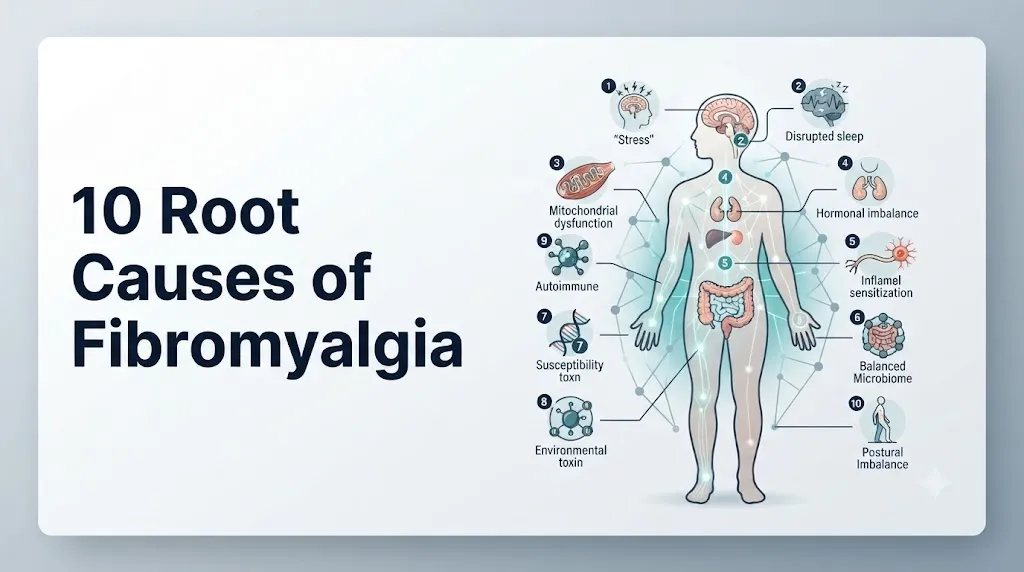
The 10 primary root causes supported by the current clinical literature are:
- Central sensitization of the dorsal horn and descending pain modulatory pathway dysfunction
- Genetic predisposition involving variants in serotonin, dopamine, and catecholamine metabolism genes
- HPA axis dysregulation from chronic psychological or physiological stress
- Sleep architecture disruption, specifically loss of NREM stage 3 slow-wave sleep
- Physical trauma as a precipitating event
- Psychological trauma and PTSD as a precipitating mechanism
- Autonomic nervous system dysfunction with sympathetic predominance
- Infections as acute triggers in genetically predisposed individuals
- Serotonin and norepinephrine deficiency in the descending pain inhibitory pathway
- Neuroinflammation from microglial and astrocyte activation
Each of these is addressed in its own section below with the specific physiological mechanism named and explained.
Children and adolescents can develop fibromyalgia, though it is less frequently recognized in this age group. Pediatric fibromyalgia typically presents differently from adult fibromyalgia in that fatigue and school absence may be more prominent than pain as the chief complaint, requiring evaluation by a pediatric rheumatologist rather than an adult specialist.
Central Sensitization: The Primary Root Cause of Fibromyalgia
Central sensitization is the primary and most well-established root cause of fibromyalgia: it is a state of amplified pain processing within the central nervous system in which normal or low-intensity stimuli are perceived as painful because the neural pain-signaling threshold has been pathologically lowered.
The mechanism operates in the dorsal horn of the spinal cord. Under normal physiology, pain signals from peripheral nociceptors travel via C-fiber and A-delta fiber afferents to the dorsal horn, where they synapse onto second-order neurons. The primary excitatory neurotransmitters at these synapses are substance P and glutamate. Repeated or sustained nociceptive input activates NMDA (N-methyl-D-aspartate) receptors at the dorsal horn synapse. NMDA receptor activation allows calcium influx into the postsynaptic neuron, progressively amplifying that neuron’s responsiveness to subsequent inputs. This is called wind-up: the same input stimulus produces a progressively larger postsynaptic response with each repetition.
Think of the dorsal horn in central sensitization like a fire alarm whose sensitivity dial has been turned to maximum. A slight touch that would normally not register produces the same alarm as a serious injury. The alarm itself is real, physiologically real, but the calibration is wrong.
The second component is dysfunction of the descending pain modulatory system. Under normal conditions, the periaqueductal gray (PAG) in the midbrain and the rostral ventromedial medulla (RVM) in the brainstem send inhibitory signals down through the dorsolateral funiculus to the dorsal horn, suppressing pain transmission via serotonin and norepinephrine release. In fibromyalgia, this descending inhibitory tone is reduced, meaning the system that should be turning the volume down on pain signals is operating at reduced efficiency.
Research published in the Journal of Pain has documented elevated levels of substance P and glutamate in the cerebrospinal fluid of fibromyalgia patients compared to healthy controls, providing direct biochemical evidence of dorsal horn sensitization that is measurably different from the normal state.
Older adults with fibromyalgia may have additional contributions to central sensitization from age-related reduction in endogenous opioid capacity and declining serotonin system efficiency, making the clinical picture more severe and less responsive to standard interventions in this population.
Genetic Root Causes of Fibromyalgia
Fibromyalgia has a documented genetic component: first-degree relatives of individuals with fibromyalgia have approximately eight times the risk of developing the condition compared to the general population, according to a family aggregation study published in Arthritis and Rheumatology.
The genetic contribution is polygenic, meaning multiple gene variants each contribute modestly rather than a single gene causing the condition. The most consistently implicated variants are in genes regulating serotonin and catecholamine metabolism:
| Gene Variant | Protein Affected | Mechanism Relevant to Fibromyalgia |
|---|---|---|
| SLC6A4 (serotonin transporter gene) | Serotonin reuptake transporter | Reduced serotonin availability at synapses in descending pain pathways |
| COMT (catechol-O-methyltransferase) | Enzyme breaking down dopamine and epinephrine | Reduced catecholamine degradation alters pain threshold regulation |
| HTR2A (serotonin receptor 2A gene) | 5-HT2A receptor | Altered serotonin receptor sensitivity affecting pain modulation |
| TRPV1 (transient receptor potential vanilloid 1 gene) | Heat and pain receptor on nociceptors | Increased nociceptor sensitivity to thermal and mechanical stimuli |
| GCH1 (GTP cyclohydrolase 1 gene) | Rate-limiting enzyme in serotonin and dopamine synthesis | Reduced pain-inhibitory neurotransmitter production |
These variants do not individually cause fibromyalgia. They create a biological predisposition, a nervous system that is more likely to develop central sensitization when exposed to sufficient environmental triggers such as trauma, infection, or chronic stress.
Women carrying the low-activity SLC6A4 variant (the short allele of the 5-HTTLPR polymorphism) have been found in multiple studies to have elevated pain sensitivity and greater risk of depression when exposed to adverse life events, linking genetic predisposition to both fibromyalgia and its most common psychiatric comorbidity.
Key Takeaway: Central sensitization in the dorsal horn of the spinal cord, producing amplified pain signaling via NMDA receptor wind-up and reduced descending inhibition from the periaqueductal gray, is the single most mechanistically established root cause of fibromyalgia, and it is supported by direct cerebrospinal fluid substance P and glutamate measurements, not just symptom reports.
HPA Axis Dysregulation and Chronic Stress as Fibromyalgia Causes
HPA axis dysregulation is a well-documented physiological root cause of fibromyalgia, representing a disruption of the body’s primary stress response system that produces abnormal cortisol patterns, blunted inflammatory responses, and altered pain threshold regulation.
The hypothalamic-pituitary-adrenal (HPA) axis is the body’s core stress response circuit. The hypothalamus releases corticotropin-releasing hormone (CRH), which stimulates the anterior pituitary to release adrenocorticotropic hormone (ACTH), which in turn stimulates the adrenal cortex to produce cortisol. Under normal physiology, cortisol feeds back negatively to suppress further CRH and ACTH release, maintaining a stable diurnal rhythm (highest in the morning, lowest at night).
In fibromyalgia, research published in the Journal of Pain documents a characteristic pattern of HPA axis dysregulation: blunted cortisol response to acute stressors, disrupted diurnal cortisol rhythm, and in some patients, low overall cortisol output. This pattern is consistent with HPA axis exhaustion following prolonged activation, the kind produced by years of chronic psychological or physical stress. The consequence is reduced cortisol’s anti-inflammatory and analgesic modulating functions, which contributes to lowered pain thresholds and amplified inflammatory sensitivity.
Chronic psychological stress also activates the sympathetic nervous system and sustains elevated levels of norepinephrine and epinephrine from the adrenal medulla. Sustained sympathetic activation sensitizes peripheral nociceptors and contributes to the autonomic dysfunction described later.
Individuals with documented adverse childhood experiences (ACEs) show dysregulated HPA axis function in adulthood, which the available evidence associates with higher rates of fibromyalgia. A 2019 systematic review examining ACE exposure and chronic pain conditions found that higher ACE scores were consistently associated with increased fibromyalgia risk, though this relationship is correlational rather than proven causal.
Men with fibromyalgia show a different HPA dysregulation pattern than women on average: men tend to present with greater fatigue and cognitive symptoms relative to pain intensity, which may reflect sex-based differences in how HPA dysregulation affects central nervous system function specifically in the prefrontal cortex and hippocampus.
Sleep Architecture Disruption as a Root Cause of Fibromyalgia
Sleep architecture disruption, specifically loss of NREM stage 3 slow-wave sleep, is both a root cause and an amplifying factor in fibromyalgia: it directly reduces growth hormone availability, impairs neural repair processes, and lowers pain thresholds in a way that is physiologically measurable and independent of other fibromyalgia mechanisms.
The connection was first identified by Harvey Moldofsky’s sleep research in the 1970s, published in the journal Psychosomatic Medicine, which demonstrated that interrupting NREM stage 3 sleep in healthy volunteers produced fibromyalgia-like symptoms including widespread musculoskeletal pain and tenderness. This remains one of the clearest experimental demonstrations that a specific physiological disruption can directly produce fibromyalgia symptoms in previously healthy individuals.
NREM stage 3 sleep is the deepest stage of non-rapid eye movement sleep, constituting approximately 20% of total sleep time in healthy young adults. During this stage, the anterior pituitary secretes the majority of its daily growth hormone (GH) output. Growth hormone drives tissue repair, muscle protein synthesis, and immune cell replenishment overnight. When NREM stage 3 is disrupted by the alpha-wave intrusions documented on polysomnography in fibromyalgia patients (a pattern called alpha-delta sleep), GH secretion falls. Downstream, insulin-like growth factor 1 (IGF-1) levels from the liver also fall. Both GH and IGF-1 have analgesic properties; their reduction amplifies pain sensitivity.
The NIAMS states that sleep disturbance is present in the majority of fibromyalgia patients, and that treating the sleep disorder is a component of fibromyalgia management alongside pain-specific interventions.
Older adults, who physiologically spend less time in NREM stage 3 as a normal function of aging, may find that this root cause is more dominant in their fibromyalgia presentation than in younger patients, making sleep evaluation with polysomnography particularly informative in adults over 60 presenting with suspected fibromyalgia.
Physical Trauma and Injury as Fibromyalgia Triggers
Physical trauma is a documented precipitating trigger for fibromyalgia in genetically predisposed individuals, capable of initiating the central sensitization cascade that characterizes the condition even when the initial injury itself has fully healed.
The proposed mechanism involves the sustained activation of peripheral nociceptors following significant tissue injury, particularly injuries to the spine (whiplash, lumbar disc injury), major joints, or multiple body regions. Sustained nociceptive input from the injured periphery activates the dorsal horn wind-up mechanism described in the central sensitization section. In most individuals, this sensitization resolves as the injury heals and peripheral nociceptor input diminishes. In individuals with genetic predisposition to impaired descending pain modulation, the central sensitization outlasts the injury, persisting and spreading beyond the original injury site.
Clinical evidence supporting this pathway includes multiple studies documenting higher rates of fibromyalgia onset following motor vehicle accidents, surgical procedures with prolonged recovery, and repetitive occupational injuries compared to the general population. A study published in Arthritis and Rheumatology found that acute widespread pain following whiplash injury was a predictor of subsequent fibromyalgia diagnosis at one-year follow-up in a subgroup of patients, supporting the concept of trauma-initiated sensitization.
Physical trauma as a fibromyalgia trigger does not mean the fibromyalgia is “caused by” the injury in a simple linear sense. The injury is the initiating event, but the underlying neurological predisposition determines whether the pain amplification persists after the tissue heals.
Workers in physically demanding occupations with repetitive injury exposure, particularly those without adequate ergonomic support or recovery time, represent a population with elevated fibromyalgia risk via this pathway. An occupational medicine evaluation may be relevant for these individuals alongside rheumatological assessment.
Key Takeaway: Physical trauma can trigger fibromyalgia not by causing lasting tissue damage, but by initiating the central sensitization cascade in people whose descending pain inhibitory system is already genetically predisposed to dysfunction. The pain outlasting the injury is the clinical signal.
Psychological Trauma and PTSD as Fibromyalgia Root Causes
Post-traumatic stress disorder (PTSD) and prior psychological trauma are among the most consistently documented precipitating root causes of fibromyalgia, with research documenting comorbidity rates between PTSD and fibromyalgia ranging from 45% to 57% in affected populations, according to studies published in Arthritis Care and Research.
The physiological mechanism linking PTSD to fibromyalgia involves convergent dysregulation of the same systems: the HPA axis (producing the cortisol pattern described above), the sympathetic nervous system (producing sustained catecholamine elevation), and the descending pain modulatory pathway (where chronic stress exposure reduces the efficiency of serotonergic and noradrenergic inhibitory tone from the raphe nuclei and locus coeruleus). PTSD and fibromyalgia share these mechanistic pathways, which is why they co-occur at such high rates and why treating one condition often partially improves the other.
Adverse childhood experiences (ACEs), defined as categories of abuse, neglect, and household dysfunction occurring before age 18, have a dose-response relationship with fibromyalgia risk in adulthood: individuals with four or more ACE categories have substantially higher rates of chronic pain conditions including fibromyalgia compared to those with zero ACE categories, based on data from the CDC-Kaiser ACE Study.
The relationship between psychological trauma and fibromyalgia is not that fibromyalgia is “all in the mind.” Psychological trauma produces measurable, sustained changes in HPA axis regulation, sympathetic nervous system tone, and central pain processing, and these changes have documented biological downstream effects on the same neural structures involved in central sensitization.
Individuals with concurrent fibromyalgia and PTSD should receive evaluation and treatment from both a board-certified rheumatologist for the fibromyalgia and a psychiatrist or licensed clinical psychologist for PTSD, as evidence-based treatments for PTSD (including trauma-focused cognitive behavioral therapy and EMDR) have also been associated with fibromyalgia symptom improvement in observational studies.
If you are experiencing symptoms of PTSD alongside fibromyalgia, or if you are in psychological distress related to your chronic pain condition, contact the 988 Suicide and Crisis Lifeline by calling or texting 988. This service is free, confidential, and available around the clock.
Autonomic Nervous System Dysfunction in Fibromyalgia
Autonomic nervous system (ANS) dysfunction, specifically a chronic imbalance toward sympathetic nervous system dominance with reduced parasympathetic nervous system tone, is a documented root cause and perpetuating mechanism in fibromyalgia, measurable through heart rate variability (HRV) analysis.
Under normal physiology, the sympathetic nervous system (fight-or-flight response, mediated by norepinephrine and epinephrine from the adrenal medulla and sympathetic nerve terminals) and the parasympathetic nervous system (rest-and-digest response, mediated by acetylcholine from the vagus nerve and cranial nerve nuclei) maintain a dynamic balance. HRV, the variation in time intervals between consecutive heartbeats, reflects this balance: high HRV indicates healthy parasympathetic modulation and cardiovascular adaptability.
Multiple studies published in the Pain journal have documented reduced HRV in fibromyalgia patients compared to healthy controls, indicating chronic sympathetic predominance. This sustained sympathetic activation has multiple consequences relevant to fibromyalgia: it maintains peripheral nociceptors in a sensitized state (sympathetic nerve terminals release norepinephrine that directly lowers the activation threshold of nociceptors), disrupts restorative sleep by suppressing parasympathetic tone during sleep onset, and sustains a low-grade inflammatory state via sympathetic modulation of immune cell function.
The clinical consequence is that fibromyalgia patients often report heightened reactivity to temperature, light, sound, and emotional stimuli. This is not psychological oversensitivity. It is the physiological consequence of sustained sympathetic dominance acting on multiple sensory systems simultaneously.
Women with fibromyalgia show greater HRV reduction than men with fibromyalgia on average, which research published in Arthritis and Rheumatology has attributed partly to sex-based differences in baseline autonomic regulation and partly to the greater frequency of concurrent anxiety disorders in women, which independently suppress parasympathetic tone.
Infections as Fibromyalgia Triggers
Infections serve as acute precipitating triggers for fibromyalgia in genetically predisposed individuals, with several specific pathogens documented in the clinical literature as capable of initiating the central sensitization cascade that persists beyond the acute infectious illness.
The documented infectious triggers include Epstein-Barr virus (EBV, the cause of infectious mononucleosis), Lyme disease (caused by the spirochete Borrelia burgdorferi, which can produce post-treatment Lyme disease syndrome with fibromyalgia-like widespread pain and fatigue), hepatitis C virus (associated with elevated fibromyalgia rates in infected populations), Chlamydia trachomatis, and less specifically, other viral respiratory illnesses including influenza.
The proposed mechanism is that the acute inflammatory response during infection produces systemic release of pro-inflammatory cytokines (IL-6, TNF-alpha, IL-1beta) that cross the blood-brain barrier and activate microglial cells in the CNS. Activated microglia release additional pro-inflammatory mediators that lower the pain threshold of dorsal horn neurons. In most individuals, this process resolves with recovery. In predisposed individuals, the microglial activation and dorsal horn sensitization persist, producing post-infectious fibromyalgia.
According to the NIAMS, approximately one-third of fibromyalgia patients report that their symptoms began after an acute illness or infection, supporting the infection-trigger model in a meaningful proportion of cases.
Mayo Clinic notes that “post-COVID syndrome” (now formally termed “Long COVID”) includes a subset of patients with widespread pain, fatigue, and cognitive difficulty that meets fibromyalgia diagnostic criteria, suggesting that SARS-CoV-2 infection can precipitate fibromyalgia through the same post-infectious sensitization pathway documented with other pathogens.
Immunocompromised individuals, including those receiving long-term corticosteroid therapy or biologic immunosuppressants, may not mount a standard infectious immune response, making the post-infectious fibromyalgia pathway less predictably present in these populations.
Key Takeaway: Several specific infections, including Epstein-Barr virus, Lyme disease, and hepatitis C, are documented precipitating triggers for fibromyalgia, and a significant proportion of fibromyalgia patients can identify an acute illness as the event after which their pain and fatigue began. This does not mean the fibromyalgia is infectious: it means the infection initiated a neurological process that then became self-sustaining.
Serotonin and Norepinephrine Deficiency in Fibromyalgia
Deficiency in the functional availability of serotonin and norepinephrine within the descending pain modulatory pathway is a well-established neurochemical root cause of fibromyalgia, supported by both cerebrospinal fluid analysis and the clinical response to medications that increase these neurotransmitters in the CNS.
Serotonin is synthesized primarily in the raphe nuclei of the brainstem and projects widely throughout the CNS. In the context of pain modulation, serotonin released from descending raphe projections through the dorsolateral funiculus to the dorsal horn suppresses pain signal transmission by inhibiting the release of substance P from C-fiber terminals. When serotonin availability is reduced, this inhibitory signal weakens, and dorsal horn pain transmission becomes easier to trigger and harder to suppress.
Norepinephrine, produced primarily in the locus coeruleus of the brainstem, plays a parallel role: noradrenergic projections from the locus coeruleus through the descending inhibitory pathway activate alpha-2-adrenergic receptors on dorsal horn interneurons, suppressing pain transmission. Reduced norepinephrine efficacy at these receptors further undermines the descending inhibitory system.
The clinical evidence for this mechanism is partially supported by the documented efficacy of serotonin-norepinephrine reuptake inhibitors (SNRIs) such as duloxetine and milnacipran (both FDA-approved for fibromyalgia) in reducing fibromyalgia pain. These medications work by blocking reuptake of both serotonin and norepinephrine at the synapse, increasing their synaptic concentration and restoring some of the descending inhibitory tone that is deficient in fibromyalgia. The fact that they produce measurable pain reduction confirms that the serotonin-norepinephrine pathway is functionally relevant to fibromyalgia pain, not merely associated with it.
Individuals taking opioid medications long-term for fibromyalgia pain should be aware that opioids paradoxically worsen central sensitization over time through opioid-induced hyperalgesia, a condition in which opioid receptor activation activates pronociceptive pathways, further reducing the pain threshold. This is one reason why specialty society guidelines from the ACR do not recommend opioids as primary fibromyalgia treatment.
Neuroinflammation and Glial Cell Activation in Fibromyalgia
Neuroinflammation driven by activated microglial cells and astrocytes in the brain and spinal cord represents an emerging root cause of fibromyalgia with growing evidence support, though the evidence level is currently at the emerging-to-supported level rather than the well-established standard.
Microglia are the resident immune cells of the central nervous system, comprising approximately 10 to 15% of all CNS cells. Under normal conditions, microglia are in a resting surveillance state. When activated by infectious agents, tissue injury, chronic stress, or sustained pain signaling, they shift to a pro-inflammatory phenotype and release IL-6, TNF-alpha, IL-1beta, and nerve growth factor (NGF). These mediators directly lower the activation threshold of pain-processing neurons in the dorsal horn and brain, contributing to and perpetuating central sensitization.
Positron emission tomography (PET) imaging studies using markers for microglial activation have documented elevated microglial activity in specific brain regions of fibromyalgia patients compared to healthy controls, including the thalamus, somatosensory cortex, and cingulate cortex, which are regions involved in pain processing and emotional pain modulation. A landmark PET imaging study by Loggia and colleagues, published in the journal Brain in 2015, documented these findings in a controlled study of fibromyalgia patients versus healthy controls, providing the first direct in vivo evidence of neuroinflammation in this condition.
Astrocytes, which regulate synaptic glutamate levels, also show evidence of activation in fibromyalgia research. Overactive astrocytes fail to clear glutamate efficiently from the dorsal horn synapse, allowing accumulation of this excitatory neurotransmitter and perpetuating NMDA receptor sensitization.
This evidence remains emerging and is not yet at the level that makes neuroinflammation a confirmed primary cause rather than a contributing and amplifying mechanism. Older adults may have higher baseline levels of microglial activation from age-related neuroinflammation, which could amplify fibromyalgia mechanisms in this population.
Gut Dysbiosis and Intestinal Permeability as Fibromyalgia Contributors
Gut dysbiosis and intestinal permeability are emerging, preliminary contributors to fibromyalgia through the gut-brain axis, with current evidence placing them as plausible contributing mechanisms rather than established primary root causes.
The gut-brain axis refers to the bidirectional communication network between the enteric nervous system (the 500 million neurons embedded in the walls of the gastrointestinal tract, running from the esophagus to the rectum within the myenteric plexus and submucosal plexus) and the central nervous system, primarily via the vagus nerve (cranial nerve X) and through the systemic circulation of neuroactive metabolites produced by gut microbiota.
Research has documented that approximately 30 to 70% of fibromyalgia patients also have irritable bowel syndrome (IBS), a rate far exceeding the 10 to 15% IBS prevalence in the general population. The co-occurrence suggests shared mechanistic pathways rather than coincidence. Both conditions involve central sensitization, autonomic dysfunction, and HPA axis dysregulation.
A 2019 study published in the journal Pain found altered gut microbiome composition in fibromyalgia patients compared to healthy controls, with specific reductions in bacterial species known to produce short-chain fatty acids (such as butyrate), which normally maintain intestinal barrier integrity and reduce systemic inflammatory signaling. When the intestinal barrier is compromised (intestinal permeability, sometimes informally called “leaky gut”), bacterial products including lipopolysaccharide (LPS) can enter the systemic circulation and trigger low-grade systemic inflammation that further activates central neuroinflammatory mechanisms.
This gut dysbiosis connection requires significantly more controlled research before clinical recommendations can be made. The available evidence points to it as a modulating factor rather than a primary initiating cause in most fibromyalgia cases. Individuals with concurrent fibromyalgia and significant gastrointestinal symptoms should mention both to their primary care physician and request gastroenterology evaluation for conditions including SIBO and IBS.
Key Takeaway: The gut-brain axis via the vagus nerve and systemic microbiome metabolites is an emerging fibromyalgia contributing mechanism, with gut dysbiosis potentially amplifying central neuroinflammation, but the evidence is preliminary and this cause requires evaluation in clinical context rather than self-managed gut interventions.
Fibromyalgia Causes in Women: Estrogen, Hormones, and Sex-Based Mechanisms
Fibromyalgia affects women two to three times more frequently than men, a disparity rooted in specific, named biological mechanisms involving estrogen’s role in pain modulation, sex-based differences in HPA axis reactivity, and estrogen’s influence on serotonin synthesis in the raphe nuclei.
Estrogen modulates pain sensitivity through multiple named pathways. First, estrogen upregulates mu-opioid receptor expression in key pain-modulating brain regions including the periaqueductal gray and nucleus accumbens. Higher mu-opioid receptor density increases the efficacy of endogenous opioids (endorphins, enkephalins) at these sites, providing stronger pain inhibition. When estrogen levels fall (during the late luteal phase of the menstrual cycle, during perimenopause, or after menopause), this receptor density decreases and endogenous pain inhibition weakens.
Second, estrogen stimulates serotonin synthesis and increases the sensitivity of serotonin receptors in the raphe nuclei. Higher estrogen levels correlate with greater serotonergic tone in descending pain inhibitory pathways. Lower estrogen states (menopause, late luteal phase) reduce this serotonergic support and may be one reason fibromyalgia symptoms frequently worsen perimenstrually and at menopause in women already affected.
Third, women demonstrate greater HPA axis cortisol reactivity to psychological stressors than men on average, based on multiple controlled laboratory stress challenge studies. This greater stress-response amplitude, while not a disease in itself, means women accumulate more total HPA axis activation over equivalent stress exposures, accelerating the HPA dysregulation described as a root cause.
Perimenopausal and postmenopausal women with new or worsening fibromyalgia symptoms should have a thyroid function panel (TSH, free T4) performed, as hypothyroidism, which is more prevalent in postmenopausal women and produces overlapping symptoms including widespread pain, fatigue, and cognitive difficulty, must be excluded before fibromyalgia is confirmed.
Comorbidities That Amplify Fibromyalgia Causes
Several comorbid conditions do not simply co-occur with fibromyalgia but actively amplify its root cause mechanisms, creating a cycle where each condition makes the other more severe and more difficult to manage.
Depression and anxiety are the most clinically important comorbidities. Research published in Arthritis Care and Research documents that approximately 30 to 50% of fibromyalgia patients have concurrent major depressive disorder or generalized anxiety disorder. Both depression and anxiety reduce serotonergic and noradrenergic tone in the descending pain inhibitory pathway, directly worsening the neurochemical deficiency that is a fibromyalgia root cause. Pain worsens depression, depression worsens pain threshold, and the cycle reinforces itself.
Rheumatoid arthritis (RA) and systemic lupus erythematosus (SLE) are inflammatory autoimmune conditions that produce persistent peripheral nociceptor activation through joint and tissue inflammation. This sustained peripheral input can initiate or perpetuate the central sensitization mechanism. Approximately 20 to 30% of patients with RA and 20 to 25% of patients with SLE also meet fibromyalgia diagnostic criteria, meaning the inflammatory condition has triggered secondary central sensitization that now produces pain independent of peripheral inflammation.
Hypothyroidism reduces metabolic rate in neurons, including pain-modulating neurons, and is associated with widespread musculoskeletal pain, fatigue, and cognitive symptoms. It must always be excluded before diagnosing fibromyalgia.
Key comorbidities to disclose to your provider:
- Major depressive disorder or generalized anxiety disorder
- Rheumatoid arthritis or systemic lupus erythematosus
- Irritable bowel syndrome
- Hypothyroidism or other thyroid disorder
- Obstructive sleep apnea (worsens sleep architecture disruption)
- Post-traumatic stress disorder
- Restless legs syndrome (disrupts NREM stage 3 sleep)
Individuals with multiple comorbidities require coordinated care between their primary care physician, board-certified rheumatologist, and relevant specialists, as treating fibromyalgia in isolation while leaving co-occurring conditions untreated produces incomplete clinical outcomes.
How Fibromyalgia Is Diagnosed Using ACR Criteria
Fibromyalgia is diagnosed using the 2016 revised American College of Rheumatology (ACR) diagnostic criteria, which replaced the original 1990 tender point examination model with a questionnaire-based approach using the Widespread Pain Index (WPI) and the Symptom Severity Scale (SSS).
The Widespread Pain Index asks the patient to indicate which of 19 named body areas have been painful in the past week. Areas include the jaw, chest, abdomen, upper and lower back, and specific regions of each limb. The WPI score ranges from 0 (no pain areas) to 19 (all areas painful).
The Symptom Severity Scale scores the severity of fatigue, waking unrefreshed, and cognitive symptoms each on a 0 to 3 scale, and asks about the presence of somatic symptoms including headache, pain or cramps in the lower abdomen, and depression. The SSS ranges from 0 to 12.
ACR 2016 criteria for fibromyalgia diagnosis:
To meet diagnostic criteria, all three of the following conditions must be present:
- WPI score of 7 or greater with SSS score of 5 or greater, OR WPI score of 4 to 6 with SSS score of 9 or greater.
- Generalized pain, defined as pain in at least four of five regions (upper left body, upper right body, lower left body, lower right body, axial region), must be present.
- Symptoms have been present at a similar level for at least three months.
Additionally, the diagnosis requires that no other disorder better explains the pain. This is why evaluation to exclude inflammatory arthritis (via erythrocyte sedimentation rate, C-reactive protein, rheumatoid factor, anti-CCP antibodies), thyroid disease (TSH), and connective tissue disease (ANA panel) must be completed before fibromyalgia is diagnosed.
Fibromyalgia can coexist with these conditions: having confirmed RA or lupus does not preclude a concurrent fibromyalgia diagnosis if the ACR criteria are met and the pain pattern is not fully explained by the inflammatory disease activity.
Adolescents may require modified diagnostic assessment by a pediatric rheumatologist, as the 2016 criteria were developed and validated primarily in adult populations.
When to See a Doctor and What Treatment Approaches Address Root Causes
Seeking professional evaluation is appropriate when widespread musculoskeletal pain has been present for more than three months without an identified cause, when fatigue and cognitive symptoms accompany the pain pattern, or when the symptoms are preventing normal daily function.
The appropriate first provider is a primary care physician, who can order the exclusionary laboratory workup, apply the ACR diagnostic criteria, and begin first-line management. Referral to a board-certified rheumatologist is appropriate for diagnostic uncertainty, when autoimmune or inflammatory conditions need to be definitively excluded or confirmed, or when initial management is not producing functional improvement.
A board-certified pain medicine specialist is appropriate for refractory fibromyalgia that has not responded to first-line and second-line interventions. A psychiatrist or licensed psychologist is appropriate for co-occurring PTSD, major depression, or generalized anxiety disorder that requires independent treatment. A board-certified physiatrist (physical medicine and rehabilitation specialist) is appropriate for supervised graded exercise planning and functional rehabilitation.
Treatment approaches that address root causes include:
| Treatment Approach | Root Cause Targeted | Evidence Basis |
|---|---|---|
| SNRI medications (duloxetine, milnacipran) | Serotonin-norepinephrine deficiency in descending pathway | Well-established (FDA-approved for fibromyalgia) |
| Calcium channel alpha-2-delta ligands (pregabalin) | Central sensitization, dorsal horn excitability | Well-established (FDA-approved for fibromyalgia) |
| Graded aerobic exercise | Central sensitization, HPA axis normalization, HRV improvement | Well-established by multiple randomized controlled trials |
| Cognitive behavioral therapy (CBT) | HPA axis dysregulation, catastrophizing amplifying central sensitization | Well-established by controlled trials (Cochrane review) |
| Sleep-targeted interventions | NREM stage 3 disruption | Well-supported by observational and interventional research |
| PTSD-specific trauma therapy (CBT, EMDR) | Psychological trauma root cause | Supported by observational studies for fibromyalgia improvement |
| Treatment of underlying autoimmune disease | Peripheral sensitization driving central sensitization | Well-established indirectly |
To prepare for your first appointment with a primary care physician or rheumatologist for suspected fibromyalgia:
- Complete the WPI on your own: mark which of the 19 body areas have hurt in the past week.
- Rate your fatigue, sleep quality, and cognitive difficulty each on a 0 to 10 scale.
- List any prior infections, physical traumas, or significant psychological stressors preceding your symptoms.
- List all prior laboratory work and imaging with dates and results.
- Write down any first-degree relatives with fibromyalgia, chronic widespread pain, or related conditions.
Frequently Asked Questions About 10 Root Causes of Fibromyalgia
What is the main root cause of fibromyalgia?
The primary and most mechanistically established root cause of fibromyalgia is central sensitization: amplified pain processing in the dorsal horn of the spinal cord combined with dysfunction of the descending pain inhibitory pathway from the periaqueductal gray.
This produces a state in which the nervous system generates and amplifies pain signals out of proportion to any peripheral tissue injury, as confirmed by elevated substance P and glutamate levels in the cerebrospinal fluid of fibromyalgia patients compared to healthy controls.
Multiple other contributing root causes including genetics, HPA axis dysregulation, sleep disruption, and trauma either initiate or perpetuate this central sensitization mechanism.
Can fibromyalgia be caused by trauma or stress?
Both physical trauma and psychological trauma are documented precipitating root causes of fibromyalgia in genetically predisposed individuals, acting by initiating the central sensitization cascade in the dorsal horn of the spinal cord.
Psychological trauma, including PTSD and adverse childhood experiences, produces measurable HPA axis dysregulation and reduced serotonergic and noradrenergic tone in the descending pain inhibitory pathway, the same neurochemical changes seen in fibromyalgia independent of trauma.
Research published in Arthritis Care and Research documents PTSD comorbidity rates of 45 to 57% in fibromyalgia populations, supporting the close biological relationship between trauma and fibromyalgia development.
Is fibromyalgia genetic or hereditary?
Fibromyalgia has a documented genetic component: first-degree relatives of fibromyalgia patients have approximately eight times the population risk of developing the condition, based on family aggregation research published in Arthritis and Rheumatology.
The genetic contribution is polygenic, involving multiple gene variants including the serotonin transporter gene (SLC6A4), COMT, HTR2A, and TRPV1, which collectively increase predisposition to central sensitization rather than directly causing the condition.
Genetics represent a predisposition, not a predetermined outcome: environmental triggers including trauma, infection, and chronic stress are typically required to convert the genetic vulnerability into the clinical condition.
Why do women get fibromyalgia more than men?
Women develop fibromyalgia two to three times more frequently than men because of estrogen’s role in upregulating mu-opioid receptor expression and serotonin synthesis in the descending pain inhibitory pathway, providing greater pain modulation capacity that is reduced when estrogen fluctuates or declines.
Women also mount larger HPA axis cortisol responses to psychological stressors on average than men, producing greater cumulative HPA dysregulation over equivalent stress exposures.
Men with fibromyalgia are significantly underdiagnosed because their presentation tends to emphasize fatigue and cognitive symptoms more than pain, which does not match the stereotypical fibromyalgia picture that clinicians are trained to recognize.
What triggers a fibromyalgia flare?
Fibromyalgia flares are typically triggered by factors that acutely worsen central sensitization or reduce descending pain inhibition: poor sleep (particularly disruption of NREM stage 3), psychological stress, physical overexertion, infections, weather changes, and hormonal fluctuations in women.
The autonomic nervous system response to these triggers, primarily a surge in sympathetic tone and reduction in parasympathetic modulation, sensitizes peripheral nociceptors and reduces HRV, amplifying the perception of pain throughout the body.
Identifying personal flare triggers through a symptom diary and discussing them with a board-certified rheumatologist can help structure management to minimize their impact.
Can fibromyalgia be cured if you address the root causes?
Fibromyalgia cannot be cured in the sense of complete permanent elimination of all symptoms, but the available evidence indicates that addressing root causes, particularly central sensitization through graded exercise, sleep normalization, and SNRI or pregabalin treatment, can produce sustained reduction in pain severity and functional improvement.
The NIAMS and ACR both frame fibromyalgia management as long-term condition management rather than cure, with realistic treatment goals including reduced pain intensity, improved sleep quality, and greater daily function.
Patients who receive diagnosis, appropriate pharmacological management, and structured non-pharmacological treatment including cognitive behavioral therapy and graded aerobic exercise show measurably better outcomes than those who receive pain management alone without addressing the underlying neurological mechanisms.
Fibromyalgia’s root causes are not a mystery to clinical science, though they remain complex and typically multiple in any individual patient. Central sensitization in the dorsal horn of the spinal cord is the primary mechanism. Genetics, HPA dysregulation, sleep disruption, trauma, infections, and hormonal factors are the contributing and precipitating causes that activate it.
The single most actionable step if you are living with undiagnosed or newly diagnosed fibromyalgia is to request a formal evaluation using the 2016 ACR criteria from a primary care physician, with referral to a board-certified rheumatologist if initial evaluation does not resolve the diagnostic picture. Bring your WPI self-assessment, your symptom timeline, and your list of prior medical conditions to that appointment.
You deserve a clinician who understands the neuroscience behind this condition, not one who treats it as unexplained or psychogenic. The evidence for its biological basis is there. You now have the framework to ask for the care that addresses it