Face Twitching Near Mouth: All Causes Explained 2026
Face twitching near the mouth is caused by involuntary electrical activity in the buccal or marginal mandibular branches of cranial nerve VII, which controls the muscles of facial expression around the lips and lower cheeks. Most episodes are benign and linked to identifiable triggers like sleep deprivation, caffeine, or electrolyte changes, but a subset of cases reflects conditions that require medical evaluation.
According to the National Institute of Neurological Disorders and Stroke (NINDS), involuntary facial movements affect a clinically meaningful portion of the adult population, with hemifacial spasm alone estimated to affect approximately 11 per 100,000 individuals in the general population. The wide gap between benign fasciculations and serious neurological disorders makes accurate cause identification genuinely important, not just reassuring.
This article covers every recognized physiological cause of face twitching near the mouth, from the most common and self-resolving triggers to the rare but serious conditions that require specialist evaluation. Each cause is explained with its specific anatomical and physiological mechanism so you can assess your situation with the precision it deserves.
Face Twitching Near Mouth Causes: An Overview
Face twitching near the mouth occurs when the muscles of the lower face contract involuntarily, producing a brief, repetitive, or sustained flutter or spasm in the perioral region (the area surrounding the lips, chin, and lower cheeks). The involuntary contraction happens because the motor nerves controlling those muscles fire without a voluntary signal from the brain’s motor cortex.
The causes span a wide clinical range. At one end sit entirely benign, self-resolving triggers: fatigue, excess caffeine, electrolyte shifts after heavy sweating, or the heightened nervous system excitability that accompanies anxiety. At the other end sit conditions like hemifacial spasm, tardive dyskinesia, multiple sclerosis (MS), and hyperthyroidism, each of which involves a distinct physiological disruption that requires clinical investigation.
| Cause Category | Examples | Requires Medical Evaluation? |
|---|---|---|
| Lifestyle/Benign | Fatigue, caffeine, stress, dehydration | No, if brief and self-resolving |
| Nutritional/Metabolic | Calcium, magnesium, or potassium deficiency | Yes, if persistent or recurrent |
| Neurological | Hemifacial spasm, MS, Bell’s palsy | Yes, promptly |
| Drug-Induced | Tardive dyskinesia, metoclopramide | Yes, urgent medication review |
| Structural/Traumatic | Post-dental nerve irritation, facial trauma | Yes, if not resolving |
| Endocrine | Hyperthyroidism | Yes, with thyroid testing |
The location near the mouth is clinically specific. Twitching at the corner of the mouth, the upper or lower lip, or the cheek just lateral to the mouth implicates different nerve branches and different potential causes than twitching around the eye or forehead, which means the location itself is diagnostically useful.
Individual variation is real here. Older adults are more likely to have a neurological or medication-related cause. Young, physically active adults are more likely to have an electrolyte-related cause. People under sustained psychological stress of any age are more likely to experience benign stress-related fasciculation.
What Causes Facial Twitching? The Nerve and Muscle Anatomy Explained
Facial twitching is produced when peripheral motor neurons fire action potentials that reach facial muscles without voluntary cortical input, causing those muscles to contract without the person deciding to move them. Understanding which nerve supplies which part of the face is the key to understanding why twitching near the mouth feels and behaves differently from eye twitching or forehead twitching.
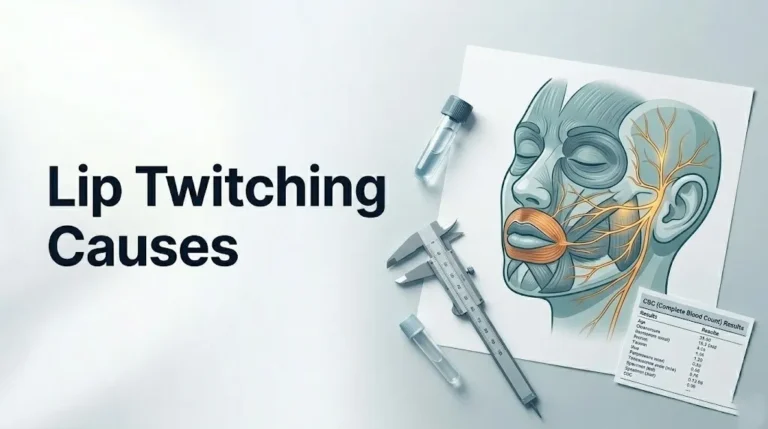
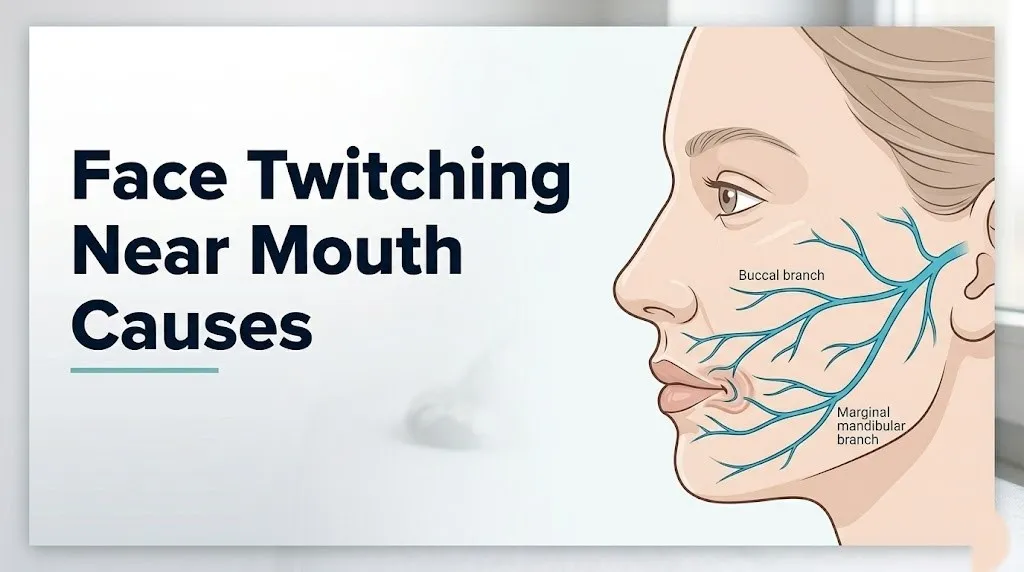
Cranial nerve VII, the facial nerve, is the primary motor nerve of the face. After exiting the brainstem at the cerebellopontine angle and passing through the parotid gland, it divides into five main branches: temporal, zygomatic, buccal, marginal mandibular, and cervical. The buccal branch supplies the cheek muscles, including the buccinator, zygomaticus major, and the middle portion of the orbicularis oris, the ring-shaped muscle encircling the lips. The marginal mandibular branch supplies the depressor anguli oris, mentalis, and lower fibers of the orbicularis oris, controlling the corner and lower edge of the mouth.
Think of the facial nerve like a tree, with the brainstem as the trunk. A problem at the trunk level (brainstem, cerebellopontine angle) produces twitching across the entire half of the face. A problem at a branch level produces twitching only in the muscles that branch supplies. This is why a twitch localized just to the corner of the mouth tells a clinician something different from a twitch that also involves the cheek, eyelid, and forehead on the same side.
At the muscle end, contraction begins at the motor end plate, the specialized junction between a nerve terminal and a muscle fiber. When an action potential reaches the motor end plate, it triggers the release of acetylcholine, which binds to receptors on the muscle fiber and initiates contraction. Spontaneous or abnormal action potentials anywhere along the chain from the motor cortex down through the nerve branches to the end plate can produce an involuntary twitch.
Postmenopausal women need particular awareness here. The drop in estrogen after menopause affects both calcium absorption from the gastrointestinal tract and peripheral nerve sensitivity, making metabolic causes of facial twitching relatively more common in this population than in younger women.
Facial Muscle Twitching Causes: From Benign to Serious
Facial muscle twitching causes fall into a clear frequency hierarchy: the most common causes are benign and self-limiting, the intermediate causes involve correctable metabolic imbalances, and the least common causes are neurological or systemic conditions that require specialist evaluation.
Understanding this hierarchy prevents two equally unhelpful errors: dismissing a persistent or progressive symptom as “just stress” when it warrants investigation, or panicking about a harmless fasciculation that will disappear after a good night’s sleep.
Here is the frequency and clinical weight of each major cause category:
- Most common (the vast majority of acute, self-resolving cases): Fatigue, caffeine overconsumption, psychological stress, dehydration, and electrolyte shifts are the most frequent drivers, particularly in adults under 50.
- Common and correctable: Subclinical magnesium deficiency, hypocalcemia, and hypokalemia are frequently identified in adults with recurrent facial twitching and respond well to dietary or supplemental correction confirmed by a physician.
- Less common but clinically important: Hemifacial spasm, MS-related facial symptoms, drug-induced tardive dyskinesia, hyperthyroidism, and post-traumatic nerve irritation. These require named diagnostic evaluation.
- Rare: Tumors compressing cranial nerve VII, brainstem lesions other than MS, epileptic foci producing focal motor seizures mimicking twitching, and rare metabolic disorders.
According to the American Academy of Family Physicians (AAFP), any involuntary facial movement that persists beyond two weeks, progresses in frequency or distribution, or occurs alongside other neurological symptoms warrants evaluation by a primary care physician to screen for correctable metabolic causes and identify indications for neurological referral.
Adults over 60 should be assessed with a lower threshold for imaging referral, as the prevalence of neurovascular compression syndromes and cerebrovascular disease increases substantially with age. For people of any age taking dopamine-blocking medications, including many antipsychotics and the antiemetic metoclopramide, any new facial twitching near the mouth should prompt immediate discussion with the prescribing physician.
Key Takeaway: Most face twitching near the mouth is benign and self-resolving, but twitching that persists beyond two weeks, worsens over time, or occurs in someone on dopamine-blocking medications needs medical evaluation, not watchful waiting.
Benign Fasciculation Syndrome and Face Twitching
Benign fasciculation syndrome (BFS) is the involuntary, spontaneous twitching of muscle fibers caused by random, self-terminating depolarization events at motor nerve terminals, producing visible or palpable twitches without any underlying structural disease of the nervous system. Near the mouth, this manifests as a brief flutter or ripple in the lip, cheek, or chin that appears without pain, weakness, or other neurological symptoms.
The physiological mechanism is spontaneous firing at the motor end plate without a pathological cause in the nerve or brain itself. At the molecular level, transient instability in the resting membrane potential, often from mild intracellular electrolyte shifts or heightened sympathetic nervous system tone, causes the motor terminal to reach threshold and fire. The muscle fiber twitches. The event terminates. No structural damage occurs.
Research published in the journal Muscle and Nerve has documented that BFS is significantly more common than many clinicians appreciate, affecting a notable portion of healthy adults who present concerned about motor neuron disease. The distinguishing feature is that BFS produces no weakness, no muscle wasting, and no other neurological signs. The twitching in BFS is frequently reported as more noticeable when the person is at rest, in a quiet room, or trying to fall asleep, which is when there is no competing sensory input to distract attention from the fasciculation.
Key warning sign for distinguishing BFS from something serious: if the twitching is accompanied by weakness in the same muscles that are twitching, difficulty chewing, slurred speech, or progressive spread to other body regions, BFS is no longer the appropriate working assumption.
- Twitching present at rest, worsens with observation or anxiety about the twitching itself
- No associated facial weakness or drooping
- No difficulty closing the eye on the same side, chewing, or swallowing
- Comes and goes over days to weeks without clear progression
- Often bilateral or shifting location, rather than fixed to one specific spot
Younger adults, particularly those in high-stress occupations or with a history of health anxiety, are disproportionately represented among BFS presentations according to clinical observational literature. A primary care physician can confirm a BFS clinical pattern through history and neurological examination, which is sufficient to reassure when no red flags are present.
Stress and Anxiety as Causes of Facial Twitching
Psychological stress and anxiety cause face twitching near the mouth through the activation of the sympathetic nervous system, which elevates circulating epinephrine and norepinephrine. These catecholamines increase the excitability of peripheral motor neurons, effectively lowering the threshold at which a nerve fiber fires spontaneously.
The mechanism is similar to turning up the sensitivity dial on a smoke alarm. The alarm (your motor nerve) is not broken and there is no fire (no structural disease), but the sensitivity is set high enough that small, normal fluctuations in nerve membrane potential are enough to trigger it. The result is a twitch in whatever muscle group happens to be at threshold at that moment, and the perioral muscles of the lower face are commonly affected because the buccal and marginal mandibular branches of cranial nerve VII have high innervation density and low mechanical load, making their fasciculations particularly noticeable.
According to the Mayo Clinic, stress-related muscle twitching is one of the most common benign causes of facial spasms in otherwise healthy adults and typically resolves when the underlying stressor is addressed or when the person’s sleep, nutrition, and nervous system baseline are restored.
Anxiety disorders add a specific compounding layer. People with generalized anxiety disorder (GAD) or health anxiety may notice that paying attention to a twitching area increases the perceived frequency or intensity of the twitch. This is a real physiological phenomenon: heightened sympathetic arousal increases muscle fasciculation, and the cognitive focus on the symptom sustains the sympathetic state.
Individual variation matters here. Adults with pre-existing anxiety disorders are significantly more likely to experience prolonged stress-related facial twitching compared to adults without anxiety history. In this population, a primary care physician or psychiatrist should be part of the care team if stress-related twitching is occurring alongside other physical anxiety symptoms such as palpitations, hyperventilation, or insomnia.
Caffeine, Sleep Deprivation, and Facial Twitching
Caffeine causes facial twitching near the mouth by blocking adenosine receptors in the central and peripheral nervous system, which normally suppress neuronal excitability during periods of rest. By blocking adenosine, caffeine keeps motor neurons in a higher state of readiness, reducing the stimulus needed for spontaneous depolarization and fasciculation. High caffeine intake from coffee, energy drinks, pre-workout formulations, or caffeine-containing medications compounds this effect substantially.
Sleep deprivation acts through a distinct but overlapping mechanism. During deep sleep (slow-wave sleep), the hypothalamic-pituitary-adrenal (HPA) axis downregulates, cortisol levels fall, and peripheral nervous system excitability decreases. When sleep is cut short or fragmented, this restorative downregulation doesn’t complete. Motor neurons remain at elevated excitability through the waking day. The combination of high caffeine intake plus poor sleep creates a state of sustained neuromuscular hyperexcitability where facial fasciculations near the mouth are a predictable output.
A 2019 review in the Journal of Clinical Neuroscience confirmed that lifestyle factors including sleep deprivation and stimulant use are among the most frequently reported triggers in patient accounts of benign myokymia, the medical term for the repetitive, worm-like movement of muscle fibers seen in conditions like eyelid or lip twitching.
Reducing caffeine by 25 to 50% over one to two weeks (rather than abruptly stopping, which causes headaches) and extending sleep time by even 60 to 90 minutes per night are the two most effective first-line adjustments for caffeineand sleep-related perioral twitching, according to guidance from the American Academy of Family Physicians.
Athletes and people who train intensively need a specific note here. High-volume exercise combined with caffeine pre-workout and shortened sleep is a triple threat for facial fasciculation because it simultaneously elevates catecholamines, depletes electrolytes through sweat, and prevents the nervous system downregulation that sleep provides.
Key Takeaway: High caffeine intake combined with poor sleep creates a state of sustained motor neuron excitability that directly causes face twitching near the mouth. Cutting caffeine gradually and extending sleep by 60 to 90 minutes are the most effective first adjustments.
Electrolyte Imbalance and Facial Twitching
Electrolyte imbalances cause face twitching near the mouth by disrupting the electrochemical balance across nerve and muscle cell membranes, which is the fundamental mechanism that controls whether a cell fires or stays quiet. The resting state of a motor neuron depends on precise gradients of sodium, potassium, calcium, and magnesium across its membrane. When those gradients shift outside of normal range, spontaneous depolarization becomes more likely.
The key process is the stability of the resting membrane potential, which in a healthy nerve cell sits at approximately negative 70 millivolts. Sodium rushes into the cell through voltage-gated channels to create an action potential. Potassium then rushes out to restore the resting state. Calcium modulates the threshold of this process. Magnesium stabilizes the entire system by acting as a cofactor for sodium-potassium ATPase, the membrane pump that actively restores ion gradients after each firing. When any of these ions is significantly depleted, the membrane becomes unstable and fires without a proper trigger.
| Electrolyte Imbalance | Primary Mechanism | Associated Symptoms Beyond Twitching |
|---|---|---|
| Hypocalcemia | Voltage-gated calcium channel instability | Tingling lips and fingertips, muscle cramps, Chvostek’s sign |
| Hypomagnesemia | Reduced sodium-potassium ATPase function | Tremor, nausea, muscle cramps, cardiac arrhythmia risk |
| Hypokalemia | Altered potassium gradient across nerve membranes | Muscle weakness, fatigue, cramps, palpitations |
| Hyponatremia | Broad cell membrane dysfunction | Headache, confusion, severe cases cause seizures |
According to the National Institutes of Health, electrolyte disorders are among the most common correctable metabolic causes of neuromuscular symptoms, including facial twitching, in otherwise healthy adults. A comprehensive metabolic panel ordered by a primary care physician identifies all four relevant imbalances in a single blood draw.
People who sweat heavily through exercise, hot weather exposure, or manual labor are at elevated risk for acute electrolyte shifts. Individuals with inflammatory bowel disease, chronic kidney disease, or who take diuretic medications are also at higher background risk for clinically relevant electrolyte depletion.
Calcium Deficiency and Face Twitching Near the Mouth
Hypocalcemia (low blood calcium) produces face twitching near the mouth through a specific and well-characterized mechanism: when extracellular calcium concentration falls, the threshold for nerve depolarization decreases, meaning nerves fire more easily and more frequently. The perioral region is classically one of the first areas to manifest hypocalcemic neuromuscular excitability.
Clinicians have long recognized this pattern. Chvostek’s sign, a clinical test where tapping the facial nerve just anterior to the ear produces ipsilateral facial muscle twitching, is a classic bedside marker for hypocalcemia that specifically demonstrates how low calcium raises facial nerve excitability. A positive Chvostek’s sign in the context of perioral twitching strongly supports hypocalcemia as a contributing cause.
The calcium involved here is ionized serum calcium, not total body calcium stores. A person can have adequate dietary calcium intake but still develop hypocalcemia if their parathyroid hormone (PTH) levels are low (hypoparathyroidism), if their vitamin D levels are insufficient for gastrointestinal calcium absorption, or if alkalosis (excess blood pH from hyperventilation or other causes) shifts ionized calcium to its bound form, effectively reducing the active fraction.
Diagnosis requires a serum ionized calcium measurement, a total calcium level (with albumin correction), and typically a vitamin D 25-OH level, all ordered by a primary care physician. Treatment depends on the cause: vitamin D supplementation for deficiency-driven hypocalcemia, dietary calcium adjustment for intake-related cases, or parathyroid evaluation for persistent cases.
Postmenopausal women are at disproportionately higher risk. Estrogen directly supports intestinal calcium absorption. Its decline after menopause reduces absorption efficiency, and if dietary intake is not compensatorily increased, subclinical hypocalcemia develops over time, potentially producing intermittent facial twitching among other symptoms.
Magnesium Deficiency and Facial Muscle Spasms
Hypomagnesemia (low magnesium) causes facial muscle spasms and twitching near the mouth through a dual mechanism: impaired sodium-potassium ATPase function and direct effects on voltage-gated calcium channels. Magnesium is an essential cofactor for the sodium-potassium ATPase pump, which restores normal ion gradients after each nerve firing. Without adequate magnesium, this pump runs inefficiently, ion gradients drift out of normal range, and spontaneous firing increases.
Magnesium also acts as a physiological blocker of certain calcium channels. When magnesium is low, calcium flows more freely into nerve terminals, increasing the probability of spontaneous acetylcholine release at the neuromuscular junction. The result is more frequent, less controlled muscle contractions in the muscles supplied by the affected nerve.
The National Institutes of Health Office of Dietary Supplements reports that approximately 48% of Americans consume less than the recommended daily amount of magnesium from dietary sources alone. Subclinical magnesium insufficiency is therefore far more common than frank clinical hypomagnesemia detected on standard blood tests, because standard serum magnesium levels reflect only approximately 1% of total body magnesium stores. A person can have a normal serum magnesium reading and still have meaningfully depleted intracellular magnesium stores that affect neuromuscular excitability.
This is an important clinical nuance. If a primary care physician tests serum magnesium and reports it as normal but the patient continues to have facial fasciculation and other magnesium-deficiency-adjacent symptoms (muscle cramps, difficulty sleeping, constipation, fatigue), a more detailed magnesium status assessment including red blood cell magnesium or a magnesium loading test may be warranted.
Adults with type 2 diabetes are at elevated risk for magnesium deficiency due to increased urinary magnesium losses associated with hyperglycemia-driven osmotic diuresis. This population should specifically discuss magnesium status with their physician if facial twitching is present.
Key Takeaway: Magnesium deficiency is underdetected by standard blood tests because serum magnesium reflects less than 1% of total body stores. Persistent facial muscle twitching near the mouth in someone with normal serum magnesium may still warrant a more specific assessment of magnesium status through a red blood cell magnesium test.
Hemifacial Spasm: Causes and Mechanism
Hemifacial spasm is an involuntary, intermittent, and progressive twitching and spasming of muscles on one side of the face, caused in the majority of cases by a blood vessel compressing cranial nerve VII at its nerve root entry zone where the nerve exits the brainstem. The anterior inferior cerebellar artery (AICA) and the posterior inferior cerebellar artery (PICA) are the vessels most frequently implicated in this compression.
The compression produces a specific pathological phenomenon called ephaptic transmission: electrical signals from one nerve fiber cross over to adjacent nerve fibers without a synapse, generating abnormal, coordinated contractions across multiple facial muscles simultaneously. This is why hemifacial spasm often starts with small twitches near the eye and progressively involves the cheek muscles and the muscles around the mouth over months to years, because the ephaptic transmission spreads along the nerve distribution as compression continues.
According to the National Institute of Neurological Disorders and Stroke (NINDS), hemifacial spasm is more common in women than in men and most frequently presents in middle-aged adults between 40 and 60 years of age. The prevalence is estimated at approximately 11 per 100,000 persons. Left untreated, hemifacial spasm tends to progress rather than resolve, which distinguishes it from benign fasciculation.
The diagnostic approach for suspected hemifacial spasm includes an MRI of the brain with contrast, specifically ordered to assess the cerebellopontine angle and evaluate for neurovascular contact at the nerve root entry zone. Electromyography (EMG) and lateral spread response testing can confirm the diagnosis physiologically.
Treatment options include botulinum toxin type A injections into the affected muscles (effective for 70 to 90% of patients according to research published in JAMA Neurology, with typical relief lasting three to six months per injection cycle) and microvascular decompression surgery, a neurosurgical procedure that places a small cushion between the offending vessel and the nerve, with a high long-term cure rate for appropriate candidates.
Facial Twitching and Multiple Sclerosis
Multiple sclerosis (MS) causes facial twitching near the mouth when demyelinating plaques form within the corticobulbar tracts (the neural pathways connecting the motor cortex to the brainstem motor nuclei) or within the brainstem itself near the facial nerve nucleus. The loss of myelin, the insulating sheath around nerve fibers produced by oligodendrocytes, disrupts the precise timing and conduction velocity of motor signals, producing abnormal spontaneous discharges in the affected pathway.
Facial involvement in MS can take several forms. Some people with MS experience trigeminal neuralgia (sharp, electric-shock facial pain) as a distinct presentation. Others experience facial myokymia, a rippling, worm-like involuntary movement of the facial muscles including those near the mouth, caused by ectopic firing in a partially demyelinated facial nerve or its central connections. Facial myokymia in a young adult without a prior history of neurological symptoms can be one of the first clinically recognized signs of MS.
A 2022 study published in Neurology found that facial symptoms, including involuntary movements, were present in approximately 15 to 20% of MS patients over the course of their disease, with brainstem-localized plaques being the specific lesion type responsible for facial motor involvement.
The critical clinical point: facial twitching associated with MS is almost never the only symptom. Other symptoms including optic neuritis (pain with eye movement, vision blurring in one eye), vertigo, balance problems, limb weakness or numbness, or bladder dysfunction are typically present or emerge over time. Isolated facial twitching as the sole neurological symptom is unlikely to represent MS in an otherwise healthy adult, but any combination of facial twitching with other neurological symptoms in someone between 20 and 50 years old warrants urgent referral to a neurologist.
Women are approximately two to three times more likely than men to develop MS, according to the National Multiple Sclerosis Society, making sex-specific awareness of neurological symptoms in women of reproductive and perimenopausal age particularly relevant.
Drug-Induced Facial Twitching and Tardive Dyskinesia
Tardive dyskinesia (TD) is a potentially irreversible movement disorder caused by prolonged use of medications that block dopamine D2 receptors, most commonly antipsychotic medications and the antiemetic metoclopramide. The mechanism involves dopamine receptor supersensitivity in the striatum: when D2 receptors are chronically blocked, the striatum upregulates receptor density and sensitivity as a compensatory response. When the medication is reduced or discontinued, the supersensitized receptors generate excessive, disinhibited motor activity that produces involuntary, repetitive movements classically distributed to the perioral region, the mouth, lips, cheeks, and tongue.
The perioral pattern of TD is clinically recognizable. Lip smacking, pursing, or chewing movements, repetitive tongue protrusion, and twitching or grimacing near the mouth that occurs without the person’s awareness are characteristic presentations. These movements are distinct from benign fasciculations in that they are more rhythmic, more complex (involving coordinated sequences of muscle groups rather than single fiber twitches), and typically persist at rest.
The American Academy of Neurology published updated clinical practice guidelines on tardive dyskinesia in 2018, recommending that any patient who has been on dopamine receptor-blocking therapy for more than three months and develops involuntary oral or facial movements should be promptly evaluated using the Abnormal Involuntary Movement Scale (AIMS) and should have their medication regimen reviewed by their prescribing physician.
Importantly, TD risk is not limited to psychiatric medications. Metoclopramide, which is prescribed for gastroparesis, nausea during pregnancy, and diabetic gastric emptying problems, carries a black box warning from the FDA specifically for tardive dyskinesia risk with prolonged use. Anyone taking metoclopramide for more than 12 weeks who develops facial twitching near the mouth should contact their prescribing physician promptly.
Older adults face the highest risk of persistent TD because striatal D2 receptor recovery is slower and less complete with aging. Any involuntary facial movement in an older adult on antipsychotic, antiemetic, or prokinetic medication should be treated as possible TD until proven otherwise.
Key Takeaway: Tardive dyskinesia from dopamine-blocking medications including metoclopramide is a partially irreversible cause of perioral facial twitching. Anyone on these medications who develops face twitching near the mouth should contact their prescribing physician promptly, not wait for the next scheduled appointment.
Facial Twitching After Dental Work or Facial Trauma
Facial twitching near the mouth after dental work is caused by temporary or, in rare cases, persistent irritation of the peripheral branches of cranial nerve VII or, more commonly, the inferior alveolar nerve and buccal nerve (branches of cranial nerve V, the trigeminal nerve), which share anatomical territory with the facial nerve distribution in the lower face. Local anesthetic injections, particularly inferior alveolar nerve blocks and buccal nerve blocks used in lower jaw dental procedures, can produce transient irritation or inflammation at the nerve, leading to tingling, numbness, and occasionally fasciculation in the perioral region as the anesthetic wears off.
This post-anesthetic fasciculation is typically self-resolving within 24 to 72 hours. It does not reflect nerve damage in most cases. The local anesthetic temporarily disrupts the ionic gradient across the nerve membrane by blocking sodium channels, and as this effect wears off, the nerve membrane passes through a brief hyperexcitable phase before returning to its normal resting state.
More sustained facial twitching following dental procedures, lasting beyond one week, can occasionally reflect:
- Hematoma formation near the nerve following injection, causing local pressure and inflammation
- Transient inflammation of the inferior alveolar nerve from proximity to extensive drilling or surgical extraction
- In rare cases, direct nerve trauma from a misplaced injection, producing a more prolonged neuropraxia (disruption without structural damage)
Facial trauma from direct impact (sports injuries, falls, motor vehicle accidents affecting the lower jaw or cheek area) can produce similar patterns through periosteal bleeding near nerve pathways or direct contusion of the nerve.
A person who develops new facial twitching following a dental procedure should inform their dentist immediately if the twitching persists beyond 72 hours, spreads in distribution, or is accompanied by increasing pain or numbness rather than resolution. A dental professional can determine whether nerve monitoring is appropriate or whether referral to an oral and maxillofacial surgeon is warranted.
Hyperthyroidism and Facial Twitching
Hyperthyroidism causes facial twitching near the mouth through the systemic effects of elevated thyroid hormones T3 (triiodothyronine) and T4 (thyroxine) on peripheral nerve excitability and neuromuscular junction function. Excess thyroid hormone accelerates cellular metabolism throughout the body, including in nerve and muscle tissue. This metabolic acceleration lowers the threshold for spontaneous nerve firing and increases the rate at which neuromuscular junctions depolarize, producing tremor, fasciculation, and muscle twitching as recognizable neuromuscular manifestations.
Hyperthyroidism-related muscle symptoms typically do not occur in isolation. The broader clinical picture includes at least several of the following:
- Rapid or irregular heartbeat (palpitations)
- Unexplained weight loss despite normal or increased appetite
- Heat intolerance and increased sweating
- Anxiety, irritability, or a feeling of internal trembling
- Fine tremor of the hands
- Increased bowel frequency
- Fatigue or muscle weakness, particularly in the thighs and upper arms
- Menstrual irregularities in women
The American Thyroid Association notes that hyperthyroidism affects approximately 1.2% of the United States population, with women being five to ten times more commonly affected than men. Graves’ disease, an autoimmune condition in which thyroid-stimulating antibodies activate the thyroid gland continuously, accounts for approximately 60 to 80% of hyperthyroidism cases.
Diagnosis requires a thyroid-stimulating hormone (TSH) test, which is low or undetectable in hyperthyroidism, combined with free T4 and free T3 measurements. A primary care physician orders these as part of a standard thyroid function panel. Anyone with facial twitching near the mouth plus any three or more of the systemic symptoms listed above should discuss thyroid function testing at their next physician appointment or sooner if symptoms are worsening.
Cheek Twitching Causes and Perioral Nerve Anatomy
Cheek twitching near the mouth is specifically caused by abnormal activity in the buccal branch of cranial nerve VII and its innervated muscles: the buccinator (the main cheek muscle), the zygomaticus major (which pulls the corner of the mouth upward during smiling), and the upper fibers of the orbicularis oris. Understanding this specific nerve branch anatomy explains why cheek twitching near the mouth can occur independently of eye or forehead twitching, and why certain causes are more likely to produce cheek-specific versus more widespread facial twitching.
The buccal branch travels in close proximity to the parotid duct and parotid gland after exiting the parotid plexus. Parotid gland pathology, including parotitis (inflammation of the parotid gland, most commonly from mumps infection or a salivary stone), can occasionally irritate the buccal branch as it passes through the gland, producing cheek fasciculation alongside facial swelling and jaw pain. This cause is uncommon but anatomically logical.
Dental abscess or infection in the upper molars can also irritate the adjacent buccal nerve fibers through local inflammatory spread, producing referred twitching or sensory changes in the cheek. This type of twitching is typically accompanied by toothache, facial tenderness, or swelling.
| Cheek Twitching Pattern | Most Likely Cause | Distinguishing Feature |
|---|---|---|
| Brief, intermittent, no other symptoms | Benign fasciculation, fatigue, caffeine | Self-resolving within days to two weeks |
| Persistent, same spot, one side only | Hemifacial spasm | Progressive, involves eye or forehead over time |
| After dental procedure | Post-anesthetic nerve irritation | Resolves within 72 hours in most cases |
| With facial swelling or jaw pain | Parotitis or dental infection | Accompanied by localized pain or swelling |
| With lip smacking or repetitive mouth movements | Tardive dyskinesia | History of dopamine-blocking medication use |
| With tremor, palpitations, heat intolerance | Hyperthyroidism | Systemic thyroid symptoms present |
This anatomical specificity has a practical implication. Telling your doctor that the twitching is specifically in the cheek, on one side, without any involvement of the eye or forehead, and whether it is occasional versus constant, provides the clinical information that helps narrow the differential diagnosis before any testing is ordered.
When to See a Doctor for Face Twitching Near the Mouth
See a primary care physician for face twitching near the mouth if the twitching has persisted for more than two weeks without an obvious and resolving lifestyle trigger (such as a period of high stress or excessive caffeine that has since been addressed). This is the clinical threshold most consistently recommended by the American Academy of Family Physicians for evaluation of benign-appearing involuntary facial movements.
Specifically, book a physician appointment if any of the following apply:
- The twitching has lasted more than two weeks with no improvement
- The twitching is getting more frequent, longer in duration, or spreading to involve more muscles
- Other symptoms are present alongside the twitching, including facial weakness, drooping, numbness, difficulty chewing or swallowing, double vision, or balance problems
- You are currently taking antipsychotic medications, metoclopramide, or any other dopamine-blocking drug
- You have a known thyroid disorder, autoimmune condition, or history of a neurological condition
- The twitching began after a dental procedure and has not resolved within one week
- You are over age 60 and have had no prior evaluation of the twitching
What to bring to your appointment:
- A detailed log of when the twitching occurs (time of day, activity, what you ate or drank beforehand)
- A list of all medications, supplements, and caffeine sources
- A note of any other symptoms you’ve noticed, even if they seem unrelated to your face
- A short video on your smartphone showing the twitching if you can capture it during an episode (this is genuinely useful for a neurologist)
Your physician will likely start with a physical and neurological examination, order a comprehensive metabolic panel to check electrolytes, calcium, and kidney function, a thyroid-stimulating hormone (TSH) level, and potentially a magnesium level. Based on those results, referral to a neurologist for MRI brain imaging and electrophysiological testing may follow.
Key Takeaway: A physician appointment is warranted after two weeks of persistent twitching, sooner if you’re on dopamine-blocking medications or have additional neurological symptoms. Bringing a video of the episode to the appointment gives the evaluating clinician more diagnostic information than a description alone.
Emergency Symptoms: When to Call 911 or Go to the ER
Certain symptoms associated with facial twitching near the mouth require immediate emergency evaluation. Do not wait to see if these resolve on their own.
Call 911 or go to the nearest emergency room immediately if you experience:
- Sudden onset facial twitching on one side accompanied by facial drooping, inability to smile symmetrically, or inability to close one eye (possible stroke or Bell’s palsy requiring urgent evaluation)
- Facial twitching with sudden arm or leg weakness, numbness, or paralysis on either side of the body
- Facial twitching with sudden difficulty speaking, slurred speech, or inability to understand speech
- Facial twitching with sudden severe headache described as the worst headache of your life (possible subarachnoid hemorrhage)
- Facial twitching with sudden vision loss or double vision in one or both eyes
- Rhythmic twitching of the face that spreads to involve the arm or leg on the same side, especially with a period of confusion or loss of awareness (possible focal to bilateral tonic-clonic seizure)
- Facial twitching with muscle stiffness throughout the body, arching of the back, or loss of consciousness
These presentations can indicate ischemic stroke, transient ischemic attack (TIA), hemorrhagic stroke, or focal motor seizure activity, all of which require emergency medical assessment at a hospital with neurological capabilities, not an urgent care appointment or a telephone triage consultation.
Stroke symptoms that involve the face, even if the twitching appears mild, should be evaluated using the FAST acronym (Face drooping, Arm weakness, Speech difficulty, Time to call 911) recommended by the American Heart Association. When in doubt, call 911. The diagnostic technology to distinguish a benign fasciculation from a stroke symptom requires clinical imaging that is only available in an emergency department.
Frequently Asked Questions About Face Twitching Near the Mouth
What is the most common cause of face twitching near the mouth?
The most common cause of face twitching near the mouth in otherwise healthy adults is benign fasciculation driven by lifestyle factors, specifically fatigue, excess caffeine, psychological stress, or subclinical electrolyte changes.
These causes account for the vast majority of short-duration, self-resolving perioral twitching episodes in people under 60 who have no other neurological symptoms.
When the twitching persists beyond two weeks or occurs with other symptoms, a medical evaluation to screen for correctable metabolic causes or neurological conditions is recommended by the American Academy of Family Physicians.
Can stress really cause facial twitching near the mouth?
Yes, psychological stress causes facial twitching near the mouth by activating the sympathetic nervous system, which elevates epinephrine and norepinephrine and lowers the threshold for spontaneous motor neuron firing.
The facial muscles around the mouth, supplied by the buccal and marginal mandibular branches of cranial nerve VII, are among the most commonly affected because of their high innervation density and low mechanical load.
Stress-related perioral twitching typically resolves as the stressor resolves, but in people with generalized anxiety disorder it can persist and warrant evaluation alongside other anxiety symptoms.
What deficiency causes twitching near the mouth?
Calcium deficiency (hypocalcemia) and magnesium deficiency (hypomagnesemia) are the two mineral deficiencies most closely associated with twitching near the mouth through their roles in regulating nerve membrane excitability.
Hypocalcemia specifically destabilizes voltage-gated calcium channels, lowering the threshold for spontaneous nerve firing in the facial nerve distribution, and is clinically identified through a serum ionized calcium and 25-OH vitamin D measurement ordered by a primary care physician.
Magnesium deficiency impairs the sodium-potassium ATPase pump, and standard serum magnesium testing may miss deficiency in up to 48% of Americans who are insufficient but not yet frankly deficient.
When is face twitching near the mouth a sign of something serious?
Face twitching near the mouth is a sign of something serious when it persists beyond two weeks without a clear resolving trigger, spreads to involve other parts of the same side of the face, or occurs alongside other neurological symptoms such as weakness, speech difficulty, or vision changes.
Drug-induced twitching from dopamine-blocking medications, including antipsychotics and metoclopramide, requires prompt physician review because tardive dyskinesia can become irreversible without timely medication adjustment.
Any facial twitching that occurs suddenly alongside facial drooping, arm weakness, or speech difficulty requires calling 911 immediately because these combinations can indicate stroke.
What does hemifacial spasm feel like near the mouth?
Hemifacial spasm near the mouth feels like an involuntary, forceful twitching or clenching of the cheek, lip corner, or lower face muscles on one side, which the person cannot control and which occurs without warning.
Unlike benign fasciculation, hemifacial spasm often starts near the eye and progressively involves the cheek and mouth muscles over months to years, producing increasingly sustained and forceful contractions that can be socially disabling.
The diagnosis is confirmed by a neurologist through brain MRI and electrophysiological testing, and the most effective treatments are botulinum toxin injections (providing three to six months of relief per cycle) and microvascular decompression surgery for appropriate candidates.
Can medications cause twitching near the mouth?
Yes, dopamine receptor-blocking medications, including antipsychotics and the antiemetic metoclopramide, can cause twitching near the mouth through a mechanism called tardive dyskinesia, which involves striatal dopamine receptor supersensitivity after prolonged D2 receptor blockade.
The FDA has placed a black box warning on metoclopramide specifically for tardive dyskinesia risk with use beyond 12 weeks, and the American Academy of Neurology recommends prompt evaluation using the Abnormal Involuntary Movement Scale for any patient on these medications who develops perioral movements.
Anyone on a dopamine-blocking medication who notices new twitching, lip smacking, or repetitive mouth movements should contact their prescribing physician as soon as possible rather than waiting for their next scheduled appointment.
Closing
Face twitching near the mouth most commonly has an identifiable, correctable cause. Start by reviewing the obvious triggers: caffeine intake, sleep quality, and recent periods of high stress. If you’re able to link the twitching to one of these and the twitching resolves within one to two weeks of addressing the trigger, you likely have your answer.
If the twitching persists, see a primary care physician. The evaluation is straightforward: a comprehensive metabolic panel, a thyroid-stimulating hormone level, and a magnesium measurement can rule out the most common metabolic causes in a single visit. If those come back normal and the twitching continues, a neurologist referral for brain MRI and electrophysiological testing is the logical next step, not a reason for alarm.
The one thing to act on immediately: if your facial twitching appears suddenly alongside any weakness, speech difficulty, or vision change, call 911 without delay. The window for effective stroke treatment is narrow, and no online article, including this one, can replace the imaging available in an emergency department.